50,000 Norman Rockwell Photographs Now Digitized and Available Online
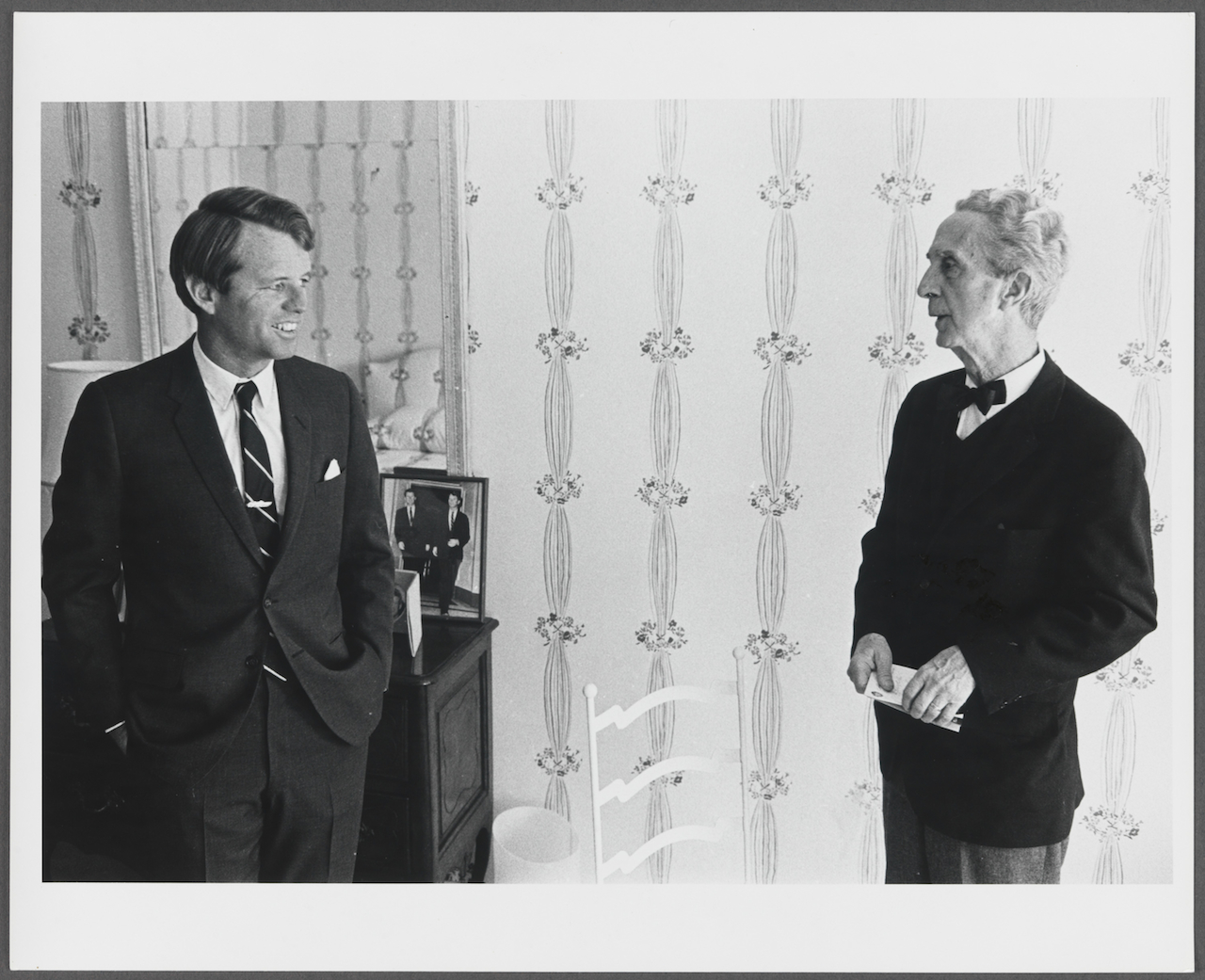
Reference photo for Norman Rockwell’s portrait of Robert F. Kennedy, c. 1968. Courtesy of the Norman Rockwell Museum Collections.
Whatever you think of Norman Rockwell’s paintings and illustrations, you can’t deny them the status of enduring Americana. For my money, Rockwell’s images certainly make for more interesting representations of the culture than those of, say, Thomas Kinkade. But even if you have little interest in the America Rockwell created on paper and canvas, you’ll surely find compelling the America he captured in photographs. We now have unprecedented access to these thanks to a $150,000 grant from the Institute of Museum and Library Services that has enabled the Norman Rockwell Museum to digitize what they call the Norman Rockwell Photographic Print Collection: approximately 50,000 images that, according to archivist Venus Van Ness, “provide a unique window into Mr. Rockwell’s working process, his personal life, and the times in which he lived.”
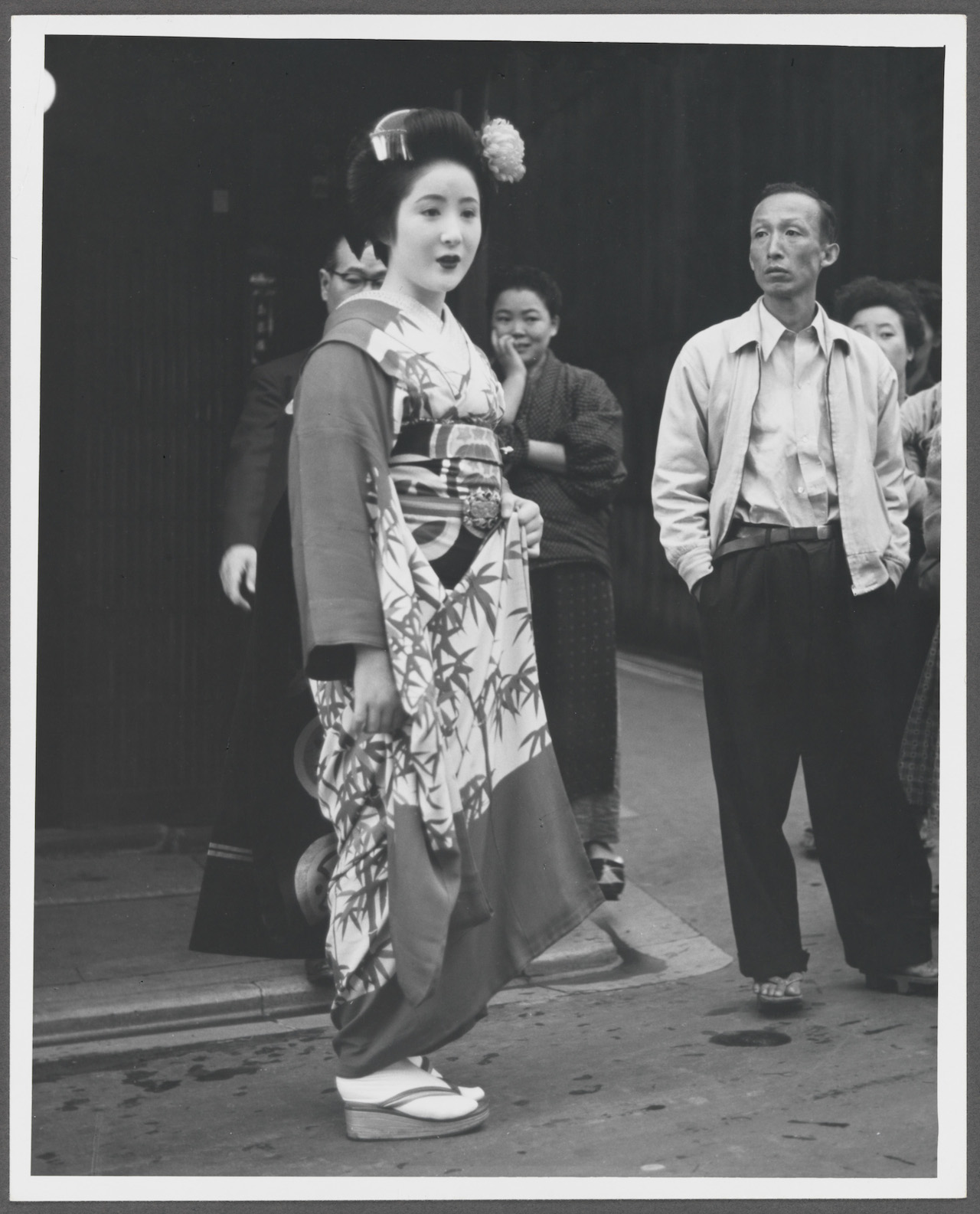
Reference photo for “Portrait of a Geisha Girl,” Pan American- Japan (1956)
These images include “reference photos Rockwell used to compose his paintings, photos of work in progress, and candid shots of him working and interacting with John Wayne, Ann-Margret, Presidents Dwight D. Eisenhower and John F. Kennedy, and many other twentieth-century icons who posed for the artist in his Stockbridge studio, on location at a movie set, at the White House, or — as in the case of Kennedy — at his Hyannis Port home on Cape Cod.”
You can browse them on this page, which displays the search results for the word “photograph” in the Norman Rockwell Museum’s archives. And if you want to dig up those photos of Wayne, Ann-Margret, Kennedy, or other icons of what they call the American century, you can also add particular terms to search for specific subjects. Or you can even search for specific places, for instance Rockwell’s many reference photos for the ads he did for flights to Japan by Pan Am — naturally, the iconically American airline.
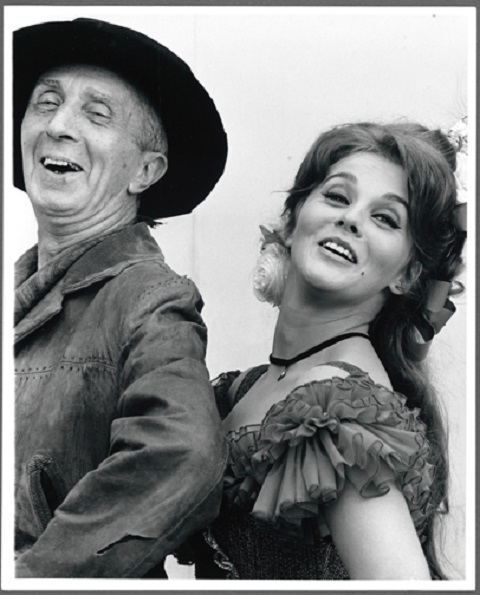
Reference photo of Norman Rockwell’s Portrait of Ann-Margret, c. 1965.
“To anyone who saw the exhibition Norman Rockwell: Behind the Camera, which was organized by the Norman Rockwell Museum and opened at the Brooklyn Museum in November 2010,” writes Hyperallergic’s Benjamin Sutton, “the importance of photography to Rockwell’s practice is not news. That show juxtaposed some of Rockwell’s best known paintings like ‘New Kids in the Neighborhood’ (1967) and ‘Boy in a Dining Car’ (1946) with the many, many studio and documentary photos the artist took and spliced together before putting pencil to paper or paintbrush to canvas.” But now “the public and art historians can get a better sense of the laborious preliminary photography work that went into each of Rockwell’s images, and the exceptional level of access he was given to his subjects.” And though the process of browsing them may remain tricky for the time being, rest assured that, according to the official site, “the Museum’s new digital experiences project is getting underway with support from yet another IMLS matching grant awarded in September.” And so American innovation continues, on a level Rockwell could never have imagined.
This post comes via Hyperallergic, where you can see more photos in a nice, large format.
Related Content:
Norman Rockwell’s Typewritten Recipe for His Favorite Oatmeal Cookies
Yale Launches an Archive of 170,000 Photographs Documenting the Great Depression
Photography by Ludwig Wittgenstein Displayed by Archives at Cambridge
Colin Marshall hosts and produces Notebook on Cities and Culture and writes essays on cities, language, Asia, and men’s style. He’s at work on a book about Los Angeles, A Los Angeles Primer. Follow him on Twitter at @colinmarshall or on Facebook.
Read More...Walter Benjamin’s Radio Plays for Kids (1929–1932)

Image by Walter Benjamin Archiv, via Wikimedia Commons
Many novelists and poets—from Oscar Wilde to Neil Gaiman—have excelled at reaching adults as well as kids, but it’s incredibly rare to find an academic who can do so. Two of the few exceptions that come to mind are the ever popular C.S. Lewis and J.R.R. Tolkien, both well-respected Oxford scholars and more-than-able children’s authors. We can add to that short list a rather unexpected name—that of Walter Benjamin: apocalyptic Marxist theorist and literary critic, student of mystical Judaism and Kabbalah, mentor and friend to Hannah Arendt, Theodor Adorno, Bertolt Brecht, and Herman Hesse, and children’s radio host. During the years 1927 and 1933, while working on his monumental, and unfinished, Arcades Project and teaching at the University of Heidelberg, Benjamin also maintained a lively presence as a broadcaster, where “he found himself,” Critical Theory tells us, “writing on a variety of topics for… all ages, including children and adolescents.”
Benjamin’s youth and adult programming has been collected by Verso press in a new book entitled Radio Benjamin, which “brings together some of his most accessible” thinking. “Fascinated by the impact of new technology on culture,” writes Verso, Benjamin “wrote and presented something in the region of eighty broadcasts using the new medium of radio.” Between 1929 and 1932, he delivered around 30 broadcasts he called “Enlightenment for Children” (Aufklärung für Kinder), many of which you can hear read in the original German by Harald Wiesner at Ubuweb (German speakers, listen to an episode above). These, Ubuweb informs us, focused on “introducing the youth to various, some of them classical, natural catastrophes, for instance the Lisbon earthquake of the 1750’s that so shook the optimism of Voltaire and the century.”
Another of Benjamin’s subjects was “various episodes of lawlessness, fraud and deceit, much of it recent.” During one such broadcast, “The Bootleggers,” Benjamin wonders aloud rhetorically, “should children even hear these kinds of stories? Stories of swindlers and miscreants who break the law trying to make a pile of dough, and often succeed?” He admits, “It’s a legitimate question.” He then goes on to elucidate “the laws and grand intentions that create the backdrop for the stories in which alcohol smugglers are heroes” and tells, in fascinating detail, a few “little tales” of said heroes.
Benjamin, writes Critical Theory, played the role of “a German Ira Glass for teens,” with a kind of pop sociology that also taught lessons about language, philosophy, and class prejudice. In another episode, “Berlin Dialect,” he “celebrates ‘Berlinish,” a crude dialect of the working class that was ditched as Berliners sought to become more ‘refined.’” “Berlinish is a language that comes from work,” he explained, “It developed not from writers or scholars, but rather from the locker room and the card table, on the bus and at the pawn shop, at sporting arenas and in factories.”
The typescripts of Benjamin’s radio plays for children were seized by the Gestapo after his suicide in 1940 and “only escaped destruction by bureaucratic error.” They were only published in German in 1985. The high theorist himself apparently looked down upon this work but, Verso writes, these “plays, readings, book reviews, and fiction reveal Benjamin in a creative, rather than critical, mode… channeling his sophisticated thinking to a wide audience.” As such, these radio broadcasts may—as Jeffrey Mehlman argues in Walter Benjamin for Children—help us better understand “one of this century’s most suggestive and perplexing critics.”
Related Content:
Walter Benjamin’s Mystical Thought Presented by Two Experimental Films
Free Audio: Download the Complete Chronicles of Narnia by C.S. Lewis
Hear Theodor Adorno’s Avant-Garde Musical Compositions
Josh Jones is a writer and musician based in Durham, NC. Follow him at @jdmagness
Read More...Charles & Ray Eames’ Short Film on the Mexican Day of the Dead (1957)
As much fun as Americans have on Halloween, we could learn a thing or two from the Mexicans. Their Día de los Muertos, the celebration of which spans October 31 to November 2, gets more elaborate, more serious, and somehow more jovial at the same time. The robust Mexican culture of Los Angeles, where I live, assures us a range of Día de los Muertos festivities each and every year, most impressively the well-known cross-cultural blow-out at the Hollywood Forever Cemetery. But I passed my most memorable Día de los Muertos on the campus of the Universidad Nacional Autónoma de México where, the year I went, they’d put together an entire field of shrines to the dead, normal enough for the holiday, but that time around they’d decided to theme them all after Jorge Luis Borges stories. (An Argentine, yes, but this has become a Latin American holiday.) Every so often, the power went out — Mexico City, remember — plunging the thousands of us there amid the hundreds of representations of “The Aleph,” “Funes the Memorious,” and, appropriately, “The Garden of Forking Paths,” into periodic darkness.
As much as I would recommend such an experience, maybe you wouldn’t want to make it your introduction to the Mexican Day of the Dead. Maybe you’d prefer this short film from famed designers (and, perhaps not coincidentally, Angelenos) Charles and Ray Eames, a film that paints a portrait of Día de los Muertos through its icons and artifacts just as their acclaimed Powers of Ten painted a portrait of Earth at every scale. “In Mexico,” explains its narrator, “an intimate acceptance of death extends far back into pre-Hispanic times. In the Aztec culture which preceded the coming of the Spaniards, death shows itself again and again — a familiar image. These ancient things of this land were joined over the centuries with the Spanish celebration of All Souls. Together they form a universal festival of many facets and many dimensions — the Day of the Dead.” Through its cempasúchitl flowers, its sugar skulls, and, yes, its angel-guiding rockets, The Day of the Dead examines just what this endlessly fascinating holiday has, over the centuries, come to mean.
The Day of the Dead (1957) will be added to our big collection, 4,000+ Free Movies Online: Great Classics, Indies, Noir, Westerns, Documentaries & More.
Related Content:
Down to the Bone: A Claymation for The Day of the Dead
Charles & Ray Eames’ Iconic Film Powers of Ten (1977) and the Lesser-Known Prototype from 1968
Charles and Ray Eames’ Powers of Ten: The Classic Film Re-Imagined By 40 Artists
Colin Marshall hosts and produces Notebook on Cities and Culture and writes essays on cities, language, Asia, and men’s style. He’s at work on a book about Los Angeles, A Los Angeles Primer. Follow him on Twitter at @colinmarshall or on Facebook.
Read More...Springsteen’s Favorite Books & Reading List
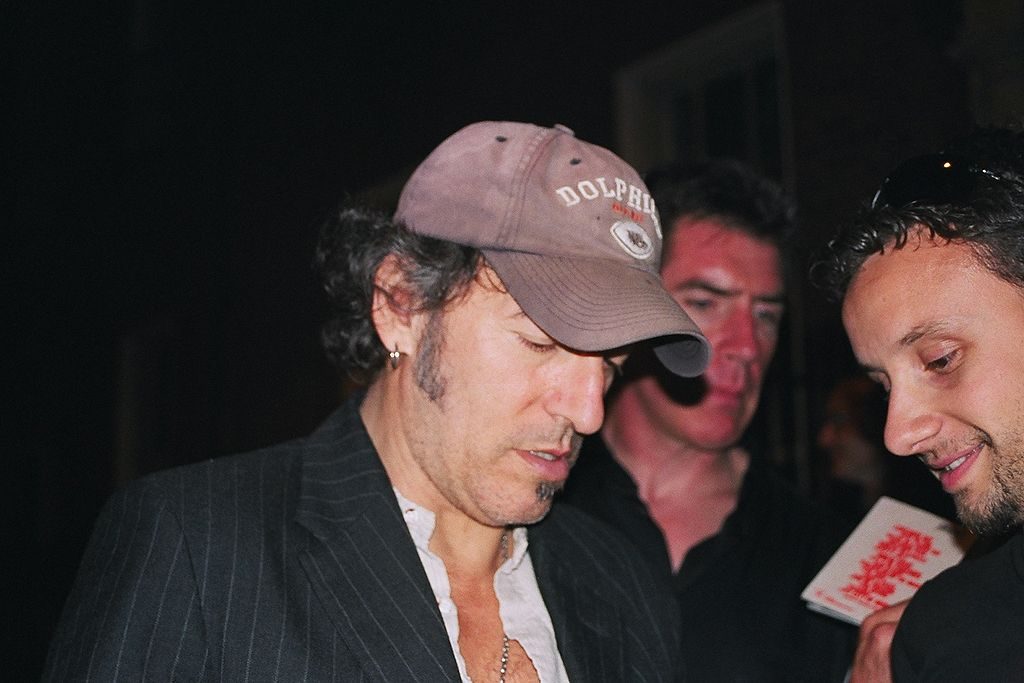
Image by Michele Lucon, via Wikimedia Commons
Bruce Springsteen will make his debut as a children’s author next Tuesday, with the release of Outlaw Pete. In advance of that literary event, The New York Times interviewed Springsteen about the books on his reading list and his literary tastes. They ask:
What books are currently on your night stand?
I just finished “Moby-Dick,” which scared me off for a long time due to the hype of its difficulty. I found it to be a beautiful boy’s adventure story and not that difficult to read. Warning: You will learn more about whales than you have ever wished to know. On the other hand, I never wanted it to end. Also, “Love in the Time of Cholera,” by Gabriel García Márquez. It simply touched on so many aspects of human love.
Who is your favorite novelist of all time, and your favorite novelist writing today?
I like the Russians, the Chekhov short stories, Tolstoy and Dostoyevsky. I never read any of them until the past four years, and found them to be thoroughly psychologically modern. Personal favorites: “The Brothers Karamazov” and, of course, “Anna Karenina.”
Current favorites: Philip Roth, Cormac McCarthy and Richard Ford. It’s hard to beat “American Pastoral,” “I Married a Communist” and “Sabbath’s Theater.” Cormac McCarthy’s “Blood Meridian” remains a watermark in my reading. It’s the combination of Faulkner and Sergio Leone’s spaghetti westerns that gives the book its spark for me. I love the way Richard Ford writes about New Jersey. “The Sportswriter,” “Independence Day” and “The Lay of the Land” are all set on my stomping grounds and, besides being poignant and hilarious, nail the Jersey Shore perfectly.
The rest of the interview touches on his favorite New Jersey writer (had to ask that); the writers who most inspired his songwriting (spoiler alert, Flannery O’Connor is one of them); his favorite book about music; the unexpected books on his shelves (hello Bertrand Russell’s “The History of Western Philosophy”); and much more. Read the interview in its entirety here, and also see today’s Times piece on the new, open-access, academic journal about Springsteen. It’s called Boss.
Note, you can find most of the classic books he mentions in our collection, 800 Free eBooks for iPad, Kindle & Other Devices.
Related Content:
Heat Mapping the Rise of Bruce Springsteen: How the Boss Went Viral in a Pre-Internet Era
Read More...Vintage Photos of Veterans of the Napoleonic Wars, Taken Circa 1858
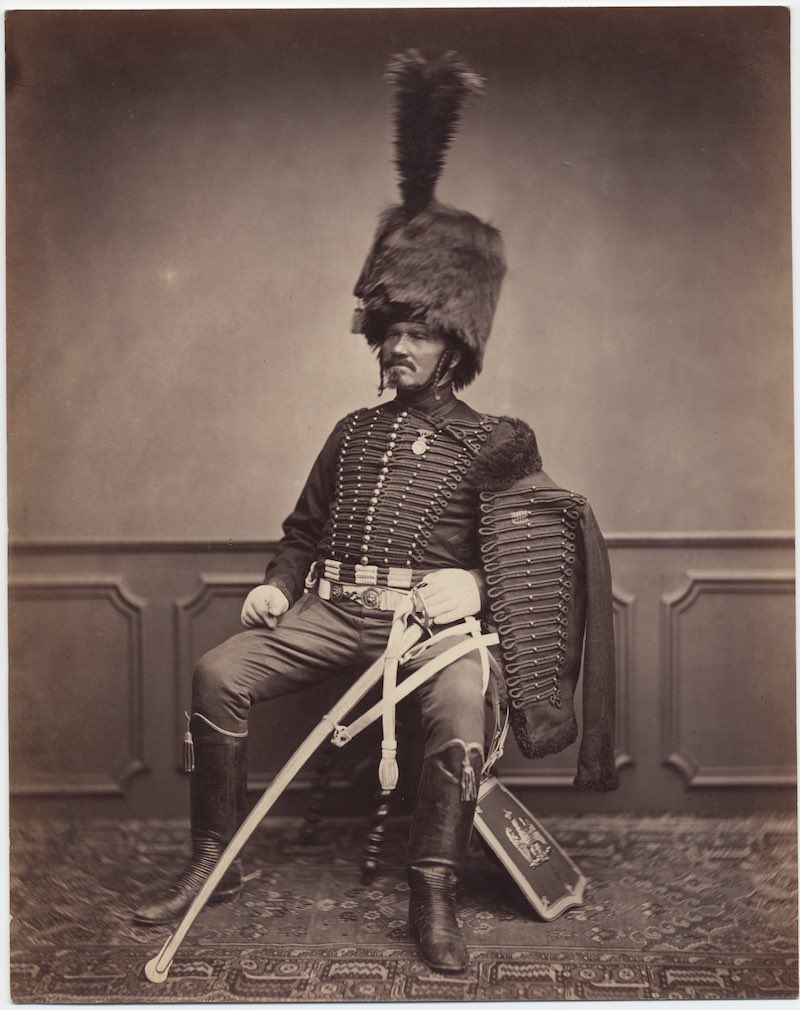
Historians have debated for centuries how Napoleon Bonaparte managed to turn the same men who once overthrew a king in the name of liberté, égalité and fraternité into a formidable fighting force devoted to an emperor. But that’s precisely what he did. As he swept through Italy, Spain and Egypt, his army grew rapidly and not just with French troops. Polish, German, Dutch and Italian soldiers took up arms under Napoleon’s banner. In 1805, in a French village facing the English Channel, Napoleon christened his massive multinational army the Grande Armée.
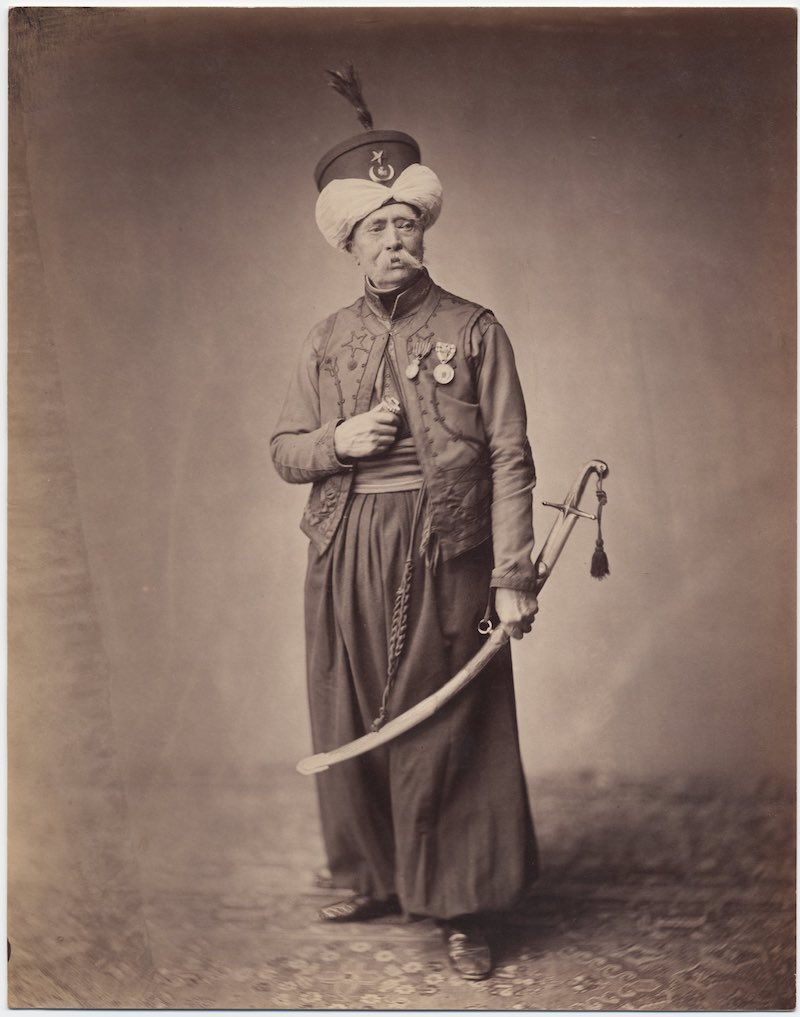
Originally, the diminutive despot from Corsica planned to use the force to invade Britain but that ultimately never happened. Instead, he directed his force to take out some of his continental rivals. The Grande Armée destroyed the Holy Roman Empire at Austerlitz. After it forced the Austrians into submission following the Battle of Wagram in 1809, the Grande Armée set out for Napoleon’s disastrous campaign in Russia. As it marched towards Moscow in 1812, its ranks swelled to over a half million troops. As it retreated, it was reduced to less than 120,000.
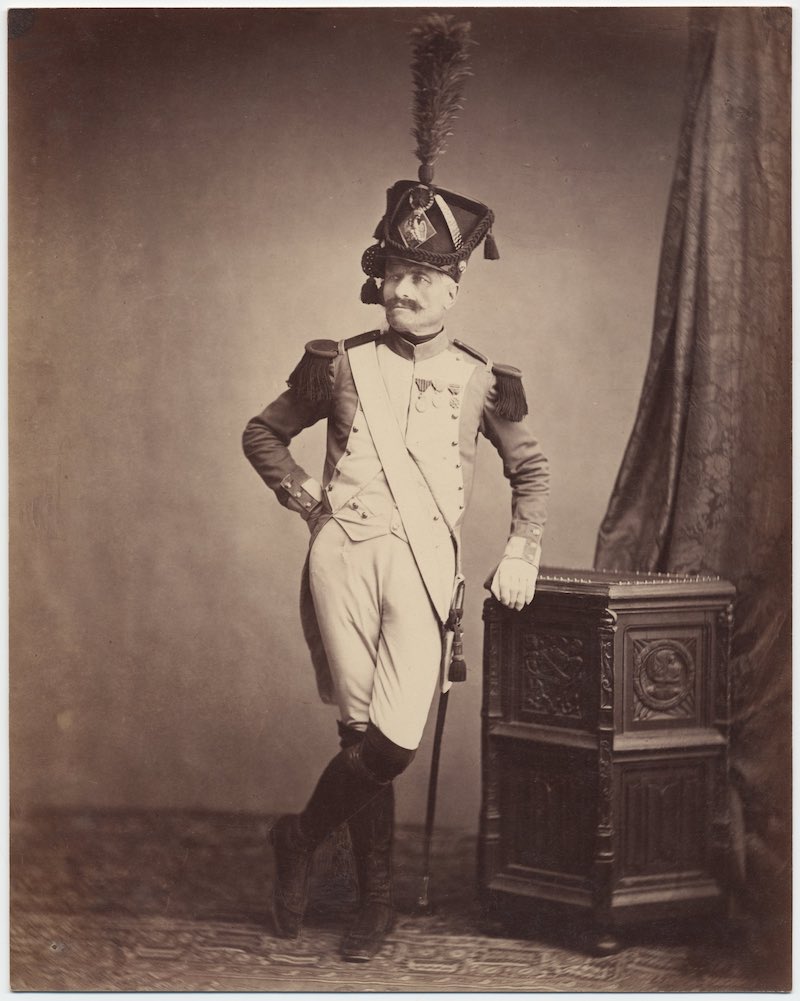
Napoleon and the Grande Armée were finally defeated in 1815 during the Battle of Waterloo. And though Napoleon was ignominiously exiled to Elba, he, and his army, continued to be revered by the French. On the anniversary of his death, May 5th, veterans of the Napoleonic wars would pay homage to the Emperor by marching in full uniform through Paris’ Place Vendôme.
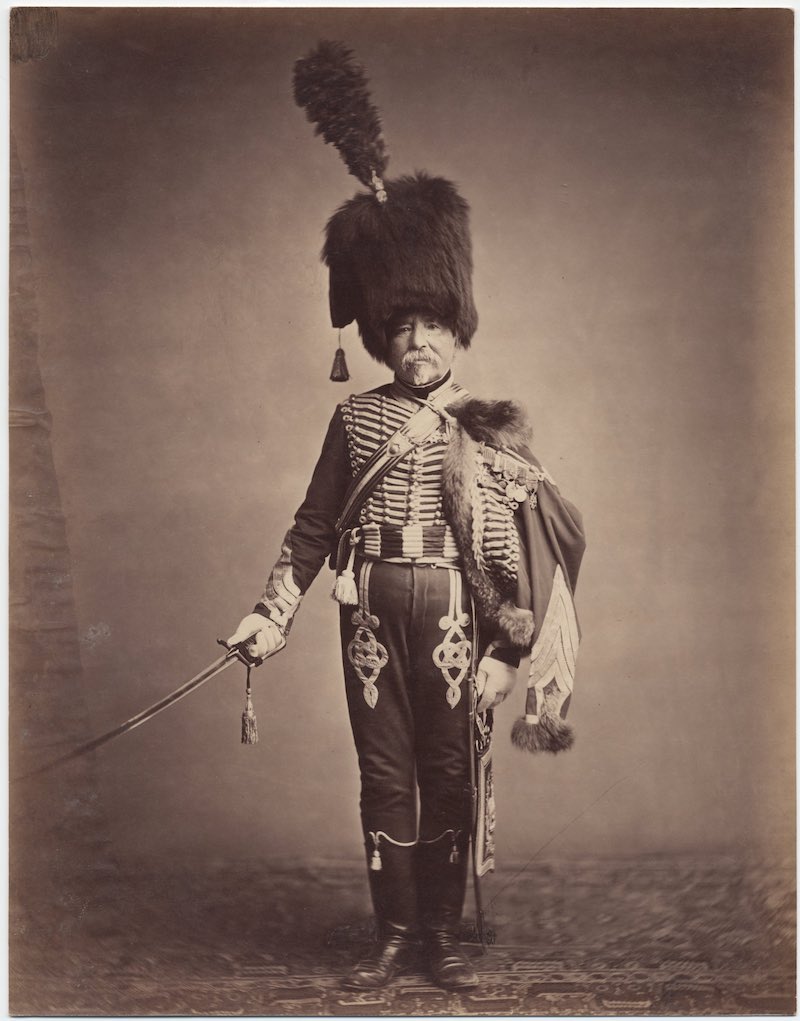
In 1858, someone took portraits of the veterans using that newfangled technology called photography. The men were well into old age when the pictures were taken, and some were clearly struggling to stay still for the length of the camera’s exposure. But they all look impressive in their uniforms complete with epaulettes, medals, sashes and plumes. You can see some of the images above. Click on each to enlarge them.
The photographs, highlighted this week on Mashable, come from a website hosted by Brown University. There you can see more images from the collection.
via Mashable
Related Content:
14,000 Free Images from the French Revolution Now Available Online
The First Color Photos From World War I: The German Front
Napoleon: The Greatest Movie Stanley Kubrick Never Made
Jonathan Crow is a Los Angeles-based writer and filmmaker whose work has appeared in Yahoo!, The Hollywood Reporter, and other publications. You can follow him at @jonccrow. And check out his blog Veeptopus, featuring lots of pictures of vice presidents with octopuses on their heads. The Veeptopus store is here.
Read More...Charlie Chaplin Does Cocaine and Saves the Day in Modern Times (1936)
When you think of drug movies, flicks like Easy Rider, Drugstore Cowboy and pretty much everything by Cheech and Chong might spring to mind. Add to this list Charlie Chaplin’s masterpiece Modern Times. In the movie, Chaplin’s iconic Little Tramp character does a whole lot of blow and ends up a better man for it. You can see a clip above.
After getting mistaken for a Communist demonstrator, the Tramp is thrown in the clink. In the prison mess hall, a hulking prisoner sitting next to him refuses to let him have any of the communal bread. Meanwhile, the shifty looking guy on the other side of him dumps a bunch of “nose powder” into a saltshaker before getting hauled away by the prison guards. Chaplin sprinkles liberal amounts of this “salt” on his meal and soon he starts showing all of the telltale symptoms of cocaine use – bugged out eyes, excessive energy and unshakeable self-confidence. He also shows some less common side effects like compulsive twirling and a propensity to jam food in his ear.
With his newfound chemical courage, Chaplin not only faces down this thuggish neighbor but he also single-handedly thwarts a prison break. The authorities are so pleased with Chaplin’s coke-addled heroics that they release him. So remember, kids, drugs can get you out of (and more likely back into) jail.
Of course, this wasn’t the first time that Chaplin depicted drug use in his movies. In his classic short Easy Street, Chaplin’s love interest, a virginal pastor’s daughter, gets locked in a basement with a remarkably energetic heroin addict. You can watch it below. And if you’re jonesing for some more Chaplin, there are 60+ Free Chaplin Movies you can watch right here.
Related Content
6o+ Free Charlie Chaplin Films Online
Charlie Chaplin Films a Scene Inside a Lion’s Cage in 200 Takes
Read More...H.P. Lovecraft Gives Five Tips for Writing a Horror Story, or Any Piece of “Weird Fiction”
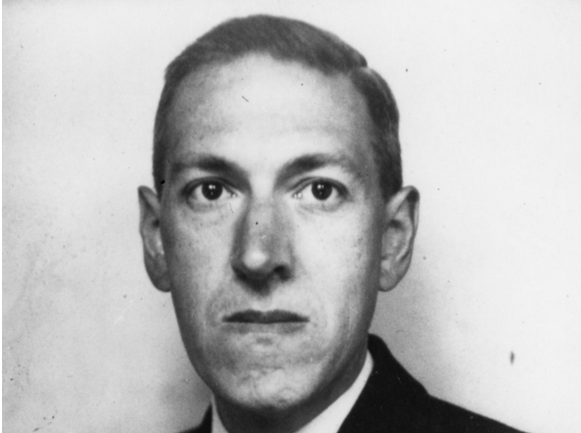
Image by Lucius B. Truesdell, via Wikimedia Commons
Though the term “weird fiction” came into being in the 19th century—originally used by Irish gothic writer Sheridan Le Fanu—it was picked up by H.P. Lovecraft in the 20th century as a way, primarily, of describing his own work. Lovecraft produced copious amounts of the stuff, as you can see from our post highlighting online collections of nearly his entire corpus. He also wrote in depth about writing itself. He did so in generally prescriptive ways, as in his 1920 essay “Literary Composition,” and in ways specific to his chosen mode—as in the 1927 “Supernatural Horror in Literature,” in which he defined weird fiction very differently than Le Fanu or modern authors like China Miéville. For Lovecraft,
The true weird tale has something more than secret murder, bloody bones, or a sheeted form clanking chains according to rule. A certain atmosphere of breathless and unexplainable dread of outer, unknown forces must be present; and there must be a hint, expressed with a seriousness and portentousness becoming its subject, of that most terrible conception of the human brain–a malign and particular suspension or defeat of those fixed laws of Nature which are our only safeguard against the assaults of chaos and the daemons of unplumbed space.
Here we have, broadly, the template for a very Lovecraftian tale indeed. Ten years later, in a 1937 essay titled “Notes on Writing Weird Fiction,” Lovecraft would return to the theme and elaborate more fully on how to produce such an artifact.
Weird Fiction, wrote Lovecraft in that later essay, is “obviously a special and perhaps a narrow” kind of “story-writing,” a form in which “horror and the unknown or the strange are always closely connected,” and one that “frequently emphasize[s] the element of horror because fear is our deepest and strongest emotion.” Although Lovecraft self-deprecatingly calls himself an “insignificant amateur,” he nonetheless situates himself in the company of “great authors” who mastered horror writing of one kind or another: “[Lord] Dunsany, Poe, Arthur Machen, M.R. James, Algernon Blackwood, and Walter de la Mare.” Even if you only know the name of Poe, it’s weighty company indeed.
But be not intimidated—Lovecraft wasn’t. As our traditional holiday celebration of fear approaches, perhaps you’d be so inclined to try your hand at a little weird fiction of your own. You should certainly, Lovecraft would stress, spend some time reading these writers’ works. But he goes further, and offers us a very concise, five point “set of rules” for writing a weird fiction story that he says might be “deduced… if the history of all my tales were analyzed.” See an abridged version below:
- Prepare a synopsis or scenario of events in the order of their absolute occurrence—not the order of their narrations.
This is a practice adhered to by writers from J.K. Rowling and William Faulkner to Norman Mailer. It seems an excellent general piece of advice for any kind of fiction.
- Prepare a second synopsis or scenario of events—this one in order of narration (not actual occurrence), with ample fullness and detail, and with notes as to changing perspective, stresses, and climax.
- Write out the story—rapidly, fluently, and not too critically—following the second or narrative-order synopsis. Change incidents and plot whenever the developing process seems to suggest such change, never being bound by any previous design.
It may be that the second rule is made just to be broken, but it provides the weird fiction practitioner with a beginning. The third stage here brings us back to a process every writer on writing, such as Stephen King, will highlight as key—free, unfettered drafting, followed by…
- Revise the entire text, paying attention to vocabulary, syntax, rhythm of prose, proportioning of parts, niceties of tone, grace and convincingness of transitions…
And finally….
- Prepare a neatly typed copy—not hesitating to add final revisory touches where they seem in order.
You will notice right away that these five “rules” tell us nothing about what to put in our weird fiction, and could apply to any sort of fiction at all, really. This is part of the admirably comprehensive quality of the otherwise succinct essay. Lovecraft tells us why he writes, why he writes what he writes, and how he goes about it. The content of his fictional universe is entirely his own, a method of visualizing “vague, elusive, fragmentary impressions.” Your mileage, and your method, will indeed vary.
Lovecraft goes on to describe “four distinct types of weird story” that fit “into two rough categories—those in which the marvel or horror concerns some condition or phenomenon, and those in which it concerns some action of persons in connection with a bizarre condition or phenonmenon.” If this doesn’t clear things up for you, then perhaps a careful reading of Lovecraft’s complete “Notes on Writing Weird Fiction” will. Ultimately, however, “there is no one way” to write a story. But with some practice—and no small amount of imagination—you may find yourself joining the company of Poe, Lovecraft, and a host of contemporary writers who continue to push the boundaries of weird fiction past the sometimes parochial, often profoundly bigoted, limits that Lovecraft set out.
Related Content:
H.P. Lovecraft’s Classic Horror Stories Free Online: Download Audio Books, eBooks & More
Lovecraft: Fear of the Unknown (Free Documentary)
Stephen King’s Top 20 Rules for Writers
Writing Tips by Henry Miller, Elmore Leonard, Margaret Atwood, Neil Gaiman & George Orwell
Josh Jones is a writer and musician based in Durham, NC. Follow him at @jdmagness
Read More...David Lynch’s Photographs of Old Factories

David Lynch’s break out movie, Eraserhead, is the sort of movie that will seep into your unconscious and stay with you for days or weeks – like a particularly unnerving nightmare. Shot in inky black and white, the film achieves its uncanny power in part because of its setting — a rotting industrial moonscape bereft of nature. Much of the film’s soundtrack is filled with the clanking of distant machines and the hissing of steam escaping pipes.
Lynch’s obsession with the remnants of the industrial revolution have punctuated much of his work since — from the grimy, claustrophobic Victorian streets in The Elephant Man to the opening titles of Twin Peaks to his 1990 avant-garde multimedia extravaganza Industrial Symphony No. 1.
“Well…if you said to me, ‘Okay, we’re either going down to Disneyland or we’re going to see this abandoned factory,’ there would be no choice,” said Lynch once in an interview. “I’d be down there at the factory. I don’t really know why. It just seems like such a great place to set a story.”
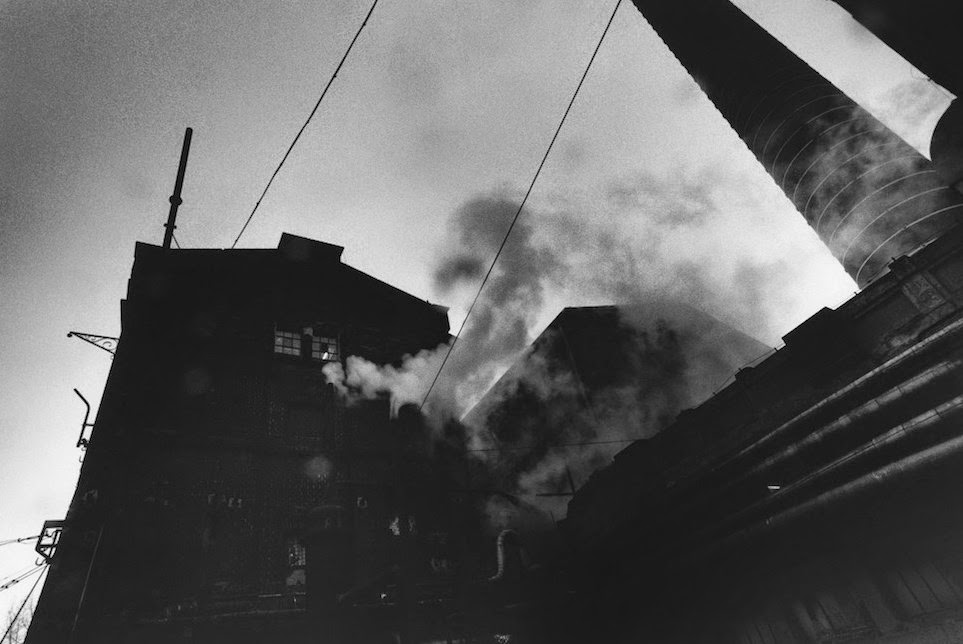
Earlier this year, Lynch exhibited at a London gallery a series of photographs he shot of, yes, rotting factories around New York, England and particularly Poland. The subjects of the photos are pretty mundane – a door, a window, a wall – but he imbues them with this odd tone of foreboding and menace. In other words, Lynch makes them seem Lynchian.
“It’s an incredible mood,” Lynch told Dazed Magazine. “I feel like I’m in a place that’s just magical, where nature is reclaiming these derelict factories. It’s very dreamy. Every place you turn, there’s something so sensational and surprising – it’s the Beatles’ Magical Mystery Tour. All the cities are looking more and more the same. The real treasures are going away; the mood they create is going away.”
See more photos below and, if you’re so inclined, you can buy the book to the exhibit here.
A door in Lodz, Poland

A window and a real estate opportunity in Lodz
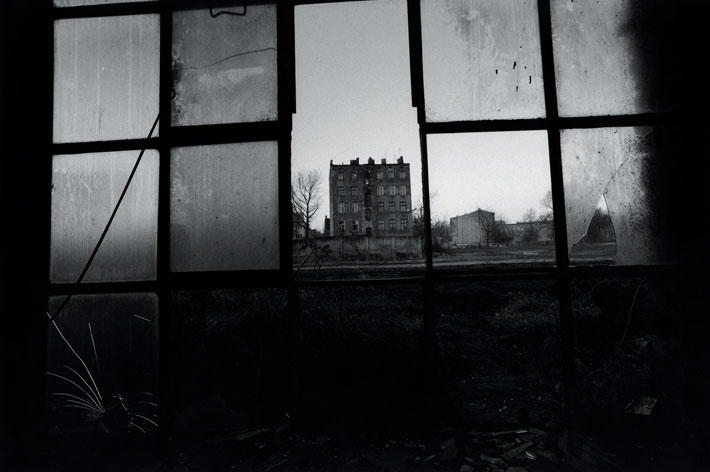
A factory. Lodz, Poland.
Related Content:
The Masterful Polaroid Pictures Taken by Filmmaker Andrei Tarkovsky
David Lynch Presents the History of Surrealist Film (1987)
David Lynch Lists His Favorite Films & Directors, Including Fellini, Wilder, Tati & Hitchcock
Stanley Kubrick’s Jazz Photography and The Film He Almost Made About Jazz Under Nazi Rule
Young Stanley Kubrick’s Noirish Pictures of Chicago, 1949
Jonathan Crow is a Los Angeles-based writer and filmmaker whose work has appeared in Yahoo!, The Hollywood Reporter, and other publications. You can follow him at @jonccrow. And check out his blog Veeptopus, featuring lots of pictures of vice presidents with octopuses on their heads. The Veeptopus store is here.
Read More...
Edward Snowden Explains Why He Blew the Whistle on the NSA in Video Interview with Lawrence Lessig
Most likely everything you know about Edward Snowden’s unmasking of government surveillance programs has come through an indirect source — meaning, you haven’t had the chance to learn about Snowden’s motivations, thought processes, goals, etc. from Snowden himself. Here’s a chance to change that.
In the video interview recorded on October 20th at Harvard Law School, Lawrence Lessig spent an hour talking with Snowden on a Google Hangout. Lessig, a law professor with dual interests in keeping information open and limiting government corruption, was a natural choice to conduct the interview. However, I wouldn’t say that he gives Snowden a soft interview. He asks some good questions, which gives Snowden the chance to spell out his thinking — to explain the problem he observed while working in the NSA and how he went about addressing it.
One thing that comes across is that Snowden has thought things through. Snowden might not have the credentials of the Harvard Law students in the audience — he got a GED and took a few community college courses, after all — but you get the sense that he could teach a pretty good Introduction to American Government course, if not a thought-provoking seminar on constitutional law. Regardless of what position you take on Snowden, it’s worth watching this interview before you declare final judgement.
Follow us on Facebook, Twitter and Google Plus and share intelligent media with your friends. Or better yet, sign up for our daily email and get a daily dose of Open Culture in your inbox.
Read More...
On the Importance of the Creative Brief: Frank Gehry, Maira Kalman & Others Explain its Essential Role
Every project starts with a brief.
From the layman’s perspective, the project above starts with a bit of self-mythologizing.
Bassett & Partners, the “award-winning, disruptive brand and design strategy firm” and maker of the video above, seems not to subscribe to TED-Ed’s practice of educating viewers from the get-go.
A couple of minutes in, I hit pause in order to do a little research on the word “brief.”
I’m familiar with male underpants (though technically those are plural, even if the garment is singular).
I have the average moviegoers handle on the meaning of legal briefs.
And now I know what the noted architects, illustrator, designer, and ad execs are talking about above! If only they’d referred to it as an elevator pitch, I’d have been on board from the start. Of course, why would they? Only those of us who want to sound all Hollywood call it that.
Whatever you call it, it’s a concise statement that gets right to the heart of what you—or your project—are about. No history. No campaign plans or citations. Just a whole lot of passion and truth tightly packed into a small vessel.
Architect David Rockwell defines a brief as a short-form communication tool from a client.
Art Director John Jay says its purpose is to inspire the creatives…
…without (as per ad exec John Boiler) dictating creative terms. Of all the interviewees, the trucker hatted Boiler exudes the schmooziest, most off-putting Hollywood vibe. I’d rather do lunch with Frank Gehry. Does this make me guilty of comparing apples to oranges, when director (and “disruptive brand and design” strategist) Tom Bassett leveled the playing field by giving them equal time?
Perhaps if Boiler had humbled himself by sharing an experience as heartbreaking as Gehry’s ill-fated Eisenhower Memorial. (Skip ahead to the 16:16 mark if you want to hear how outside opinion can pound context, research, poetry, and many months of thoughtful work to a heap of rubble.)
I love Maira Kalman, but remain unclear as to whether she’s fielding or submitting briefs. If the latter, how do those differ from book proposals?
What if the emotion, creativity, and enthusiastic research that went into Nike’s 1996 Olympics ads resulted in an equally fierce campaign to end hunger in a country with no Olympic teams?
What if the client’s problem was cancer? Could the brief demand a cure? That sounds simple.
Let us acknowledge that most grand scale visions require a fleet of underlings to come to fruition. I wonder what plumbers and electricians would make of seeing their contributions described in such poetic terms. Never underestimate the power of a soundtrack.
Related Content:
David Byrne: How Architecture Helped Music Evolve
Bauhaus, Modernism & Other Design Movements Explained by New Animated Video Series
Ayun Halliday is an author, homeschooler, and Chief Primatologist of the East Village Inky zine. Follow her @AyunHalliday
Read More...
Support Us
We're hoping to rely on loyal readers, rather than erratic ads. Please click the Donate button and support Open Culture. You can use Paypal, Venmo, Patreon, even Crypto! We thank you!

About Us

Open Culture scours the web for the best educational media. We find the free courses and audio books you need, the language lessons & educational videos you want, and plenty of enlightenment in between.
Advertise With Us

FREE UPDATES!
GET OUR DAILY EMAIL
Get the best cultural and educational resources on the web curated for you in a daily email. We never spam. Unsubscribe at any time.
FOLLOW ON SOCIAL MEDIA

Open Culture editor Dan Colman scours the web for the best educational media. He finds the free courses and audio books you need, the language lessons & movies you want, and plenty of enlightenment in between.
Advertise With Us


