Spike Lee’s List of 95 Essential Movies — Now with Women Filmmakers

Image by José Cruz/ABr CC-BY-SA‑3.0
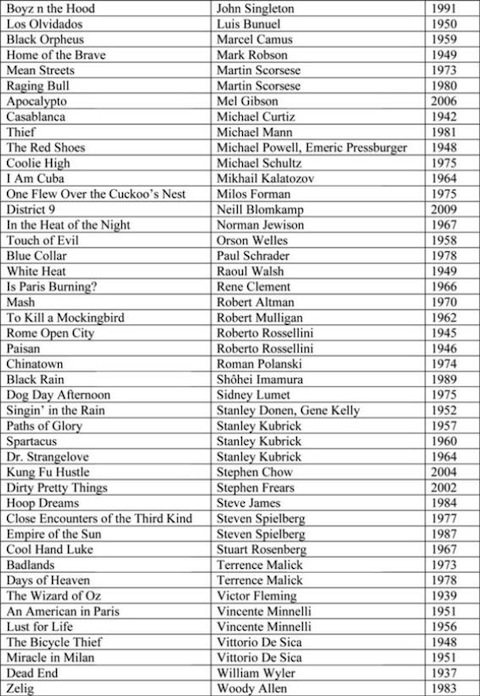
Last year, independent film icon and NYU professor Spike Lee turned to the crowdsourcing site Kickstarter to raise $1.25 million dollars for his latest film. To drum up publicity, he published his list of 87 “essential” movies that he hands out in his graduate film classes. And it is a very idiosyncratic list. Some great, overlooked movies like Charles Burnett’s Killer of Sheep and Steve James’s Hoop Dreams make the cut while other inclusions are more puzzling — Mel Gibson’s Apocalypto, for instance. Or Abel Ferrera’s Bad Lieutenant. The list’s exclusions, however, raised eyebrows. Citizen Kane (?!) somehow didn’t get a mention. Neither did Seven Samurai. Stanley Kubrick’s Spartacus somehow won out over 2001: A Space Odyssey. And such canonical directors as Yasujiro Ozu, Ingmar Bergman, Fritz Lang, John Ford and Charlie Chaplin were left out entirely.
But the internet really took Lee to task for the list’s most glaring omission – there are no women. To that last issue, Lee made amends. In his updated blog entry – “Thank You For That Coat Pulling” – Lee revamped the list to include eight movies by five female directors, bringing the total to 95.
- The Piano- Jane Campion (1993)
- Daughters of the Dust- Julie Dash (1991)
- The Hurt Locker- Kathryn Bigelow (2008)
- Sugar Cane Alley - Euzhan Palcy (1983)
- The Seduction of Mimi- Lina Wertmuller (1972)
- Love and Anarchy - Lina Wertmuller (1973)
- Swept Away - Lina Wertmuller (1974)
- Seven Beauties — Lina Wertmuller (1975)
Three of the four women ever to be nominated for a Best Director Oscar wound up on the list – Wertmuller, Campion, Bigelow. I guess Lee isn’t a fan of Sophia Coppola.
Lina Wertmuller managed to get four films on the new list – a feat not shared by any of her male counterparts. That’s right, she bested Kurosawa, Kubrick and Hitchcock. In her heyday, Wertmuller courted controversy by combining sex and left wing politics, which sounds right up Lee’s alley. Fairly or not, Wertmuller’s reputation hasn’t aged well, mostly because feminist critics pilloried her movie for being misogynous. And Guy Ritchie’s unfortunate remake of her 1974 movie Swept Away, starring Madonna, did little to burnish her prestige.
Also on the list is Julie Dash’s Daughter of the Dust, a lyrical landmark of indie cinema about Gullah women living on one of South Carolina’s barrier islands, and French director Euzhan Palcy’s little seen Sugar Cane Alley is about blacks toiling in the sugar cane fields of rural Martinique.
Indiewire notes that Lee’s additions bump the gender disparity up from 0% to about 8.7%. That’s not a lot, but according to Celluloid Ceiling’s 2013 report, it’s better than it is currently in Hollywood. Of the top 250 earning movies last year, only 6 were directed by women.
You can see Lee’s original list below:
Related Content:
Martin Scorsese Creates a List of 39 Essential Foreign Films for a Young Filmmaker
44 Essential Movies for the Student of Philosophy
The 10 Greatest Films of All Time According to 846 Film Critics
Jonathan Crow is a Los Angeles-based writer and filmmaker whose work has appeared in Yahoo!, The Hollywood Reporter, and other publications. You can follow him at @jonccrow. And check out his blog Veeptopus, featuring lots of pictures of vice presidents with octopuses on their heads. The Veeptopus store is here.
Read More...Wittgenstein Day-by-Day: Facebook Page Tracks the Philosopher’s Wartime Experience 100 Years Ago

Last week we told you about an ambitious video series — The Great War — that will document how World War I unfolded, week-by-week, over a four-year period, from 1914 to 1918. A new video will be released every Thursday, and it will reflect on what happened during the same week 100 years prior. When complete, there should be close to 300 videos in the series.
Today, we’re staying in the same time period, but getting even more micro. Wittgenstein Day-by-Day is a Facebook page that “tracks [Ludwig] Wittgenstein’s diary entries as they were written 100 years ago,” writes Levi Asher on his blog Literary Kicks. During World War I, Wittgenstein served on the frontlines in a howitzer regiment in Galicia and was decorated several times for his courage (more on that here). While fighting, he continued writing philosophy — texts that would be gathered in Notebooks, 1914–1916 – while also recording his experiences in his diaries. Today’s entry on Wittgenstein Day-by-Day reads:
Wednesday 18th November, 1914: In his private diary, LW reports hearing more thunder from the front-line, as well as machine-gun fire and heavy artillery fire. He records feeling pleased that their commander is again being replaced by their Lieutenant. He notes that he has done quite a lot of (philosophical) work, and is in a good mood. However, he also notes that in his work there has been at a standstill, as he needs a major incident to move forward (GT2, S.22).
Continuing his thought from yesterday, LW tells himself that it is all simply a matter of the existence of the logical place. ‘But what the devil is this “logical place”?’, he then asks himself (NB, p.31).
You can like and follow Wittgenstein Day-by-Day on Facebook. And, while you’re at it, do the same with Open Culture’s FB page here.
via Literary Kicks
Related Content:
Wittgenstein: Watch Derek Jarman’s Tribute to the Philosopher, Featuring Tilda Swinton (1993)
Bertrand Russell on His Student Ludwig Wittgenstein: Man of Genius or Merely an Eccentric?
Photography of Ludwig Wittgenstein Released by Archives at Cambridge
Download 110 Free Philosophy eBooks: From Aristotle to Nietzsche & Wittgenstein
Read More...Charles Dickens Gave His Cat “Bob” a Second Life as a Letter Opener
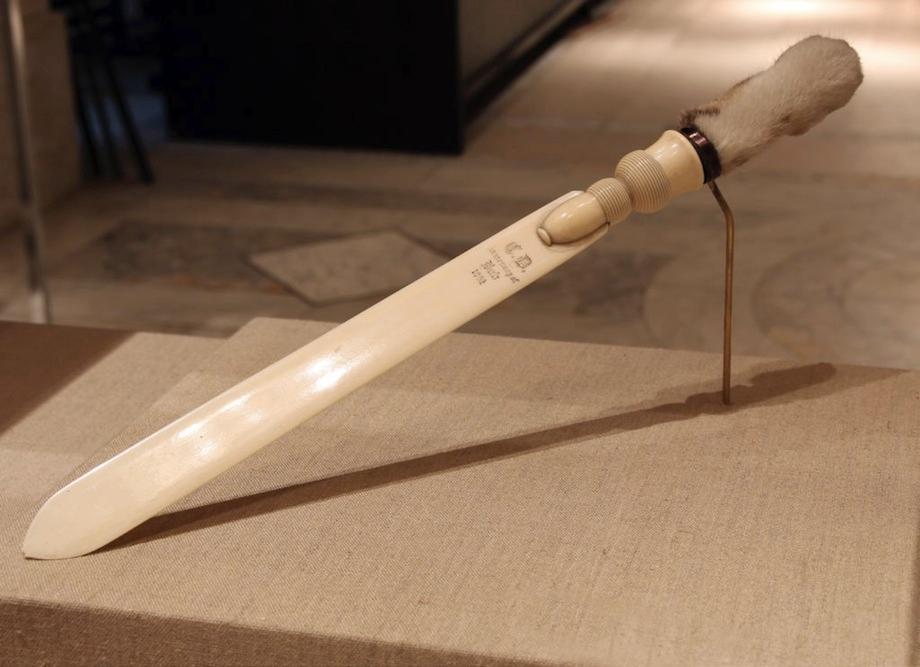
Image via New York Public Library
Increasingly Facebook seems a virtual pet cemetery, with images of recently departed cats and dogs buttressed with words of heartbreak and consolation. It feels hard-hearted to scroll past without laying a comment at each freshly dug cyber-mound, even when one has no personal relationship with the deceased, or, to large degree, the owner. The lazy man may “like” news of a beloved Airedale’s demise, but acknowledgment cannot always be said to equal respect.
And what, pray tell, is the protocol after? How many minutes should elapse before it is acceptable to post Throwback Thursday shots of one’s younger, big-haired self? What if one accidentally sends a Farmville notification to the bereaved?
If only we had a Victorian we could ask.
Preferably, Charles Dickens.
He went to his reward eleven years before “Poor Cherry,” the first dog planted in Hyde Park’s small pet cemetery, but he was a keen observer of mourning customs.
He was also an animal lover, as his daughter, Mamie noted in My Father as I Recall Him:
On account of our birds, cats were not allowed in the house; but from a friend in London I received a present of a white kitten — Williamina — and she and her numerous offspring had a happy home at “Gad’s Hill.” … As the kittens grow older they became more and more frolicsome, swarming up the curtains, playing about on the writing table and scampering behind the bookshelves. But they were never complained of and lived happily in the study until the time came for finding them other homes. One of these kittens was kept, who, as he was quite deaf, was left unnamed, and became known by servants as “the master’s cat,” because of his devotion to my father. He was always with him, and used to follow him about the garden like a dog, and sit with him while he wrote. One evening we were all, except father, going to a ball, and when we started, left “the master” and his cat in the drawing-room together. “The master” was reading at a small table, on which a lighted candle was placed. Suddenly the candle went out. My father, who was much interested in his book, relighted the candle, stroked the cat, who was looking at him pathetically he noticed, and continued his reading. A few minutes later, as the light became dim, he looked up just in time to see puss deliberately put out the candle with his paw, and then look appealingly towards him. This second and unmistakable hint was not disregarded, and puss was given the petting he craved. Father was full of this anecdote when all met at breakfast the next morning.
One anecdote Mamie chose not to include is that when Dickens’ Bob, the deaf kitten mentioned above, left this earthly plane, the master turned him into a letter opener.
Well, not the whole cat, actually. Just a single paw, which the author had stuffed and attached to an ivory blade. The blade is engraved “C.D. In Memory of Bob 1862” which is more grave marker than most pussycats can hope for.
Should anyone ever publish a History of Charles Dickens in 100 Objects, count on this object to make the cut.
Still, it’s an oddity most contemporary Westerners would view with distaste. (But not all. The Morbid Anatomy Museum’s frequent small mammal taxidermy workshops draw mightily from the ranks of Brooklyn hipsters.)
I certainly felt the need to hustle my then 12-year-old son past this unusual souvenir when it was displayed as part of the New York Public Library’s cozy exhibit, Charles Dickens: The Key to Character. The kid’s an animal lover who was in Oliver! at the time. I feared he’d respond with Tale of Two Cities-level peasant rage, which is acceptable, except when there’s a show that must go on.
Preserved!, a British taxidermy blog sponsored by the Arts and Humanities Research Council offers a tender take on Dickens’ motivation. Over the years, he had several animals, including a pet raven, stuffed, but his closeness with Bob called for a special approach. 19th-century literature scholar Jenny Pyke writes that “the taxidermied cat paw stands out in its tactile softness and emotional tenderness. Most often, as popular as it was in the nineteenth century, taxidermy was consumed visually only, displayed in glass cases or crowded cabinets. With Bob’s paw, Dickens created an object meant to be held daily.”
It’s not for the squeamish, but I can see how this cannily orchestrated hand-holding could bring ongoing comfort. More than the fleeting condolences proliferating on Facebook, anyway.
Related Content:
Charles Dickens’ Hand-Edited Copy of His Classic Holiday Tale, A Christmas Carol
T.S. Eliot Reads Old Possum’s Book of Practical Cats & Other Classic Poems (75 Minutes, 1955)
Ayun Halliday is an author, homeschooler, and Chief Primatologist of the East Village Inky zine. Follow her @AyunHalliday
Read More...Download 135 Free Philosophy eBooks: From Aristotle to Nietzsche & Wittgenstein
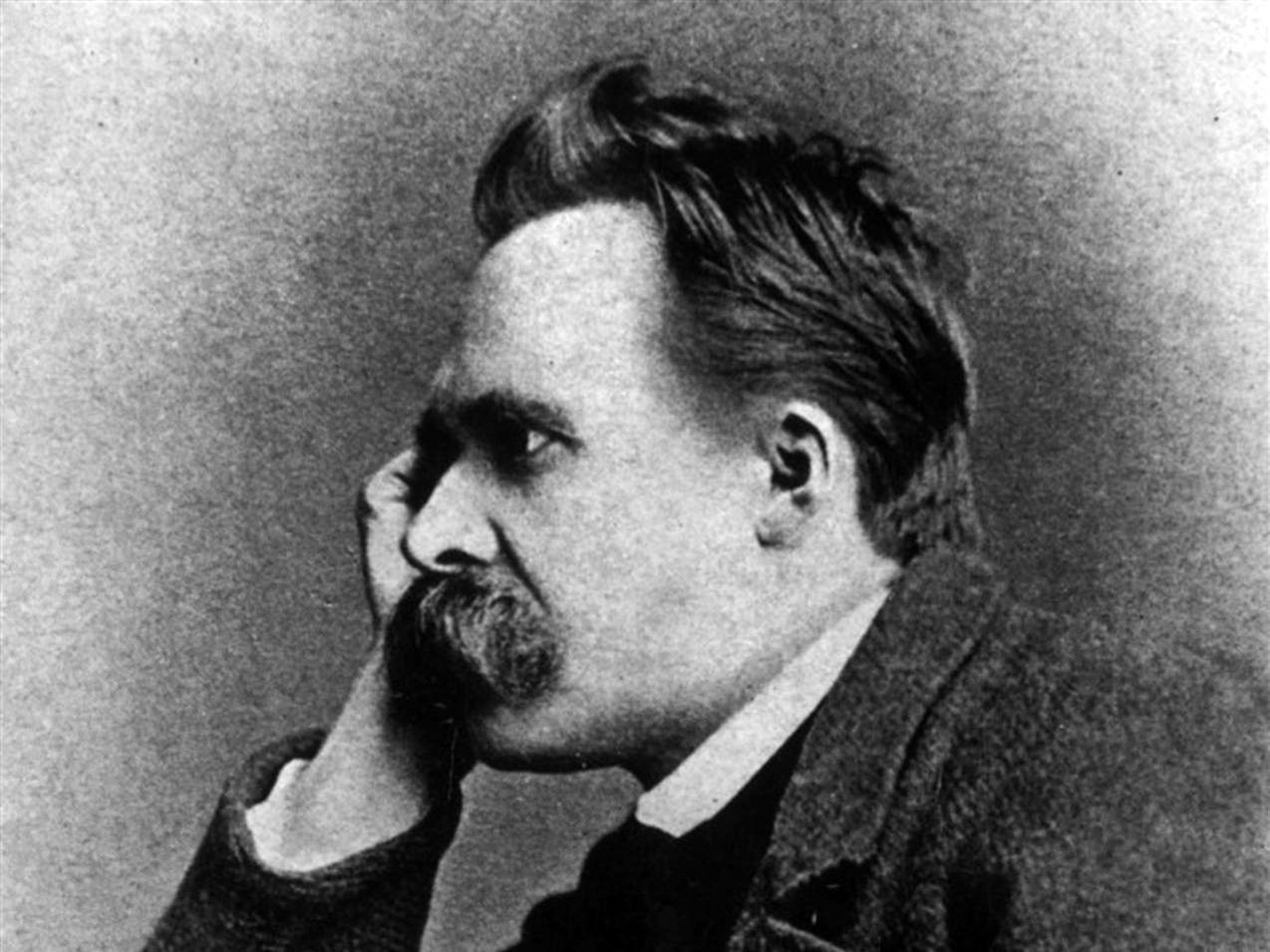
Just wanted to give you a quick heads up that we’ve recently spun out a collection of Free Philosophy eBooks (from our larger, more diverse collection of 600 Free eBooks). Right now, you will find 110 classic works on the new list — foundational texts written by Aristotle, Descartes, Hegel and Kant, not to mention Kierkegaard, Wittgenstein and Nietzsche, too. The list will keep growing at a steady clip. But if you see any crucial texts missing, please let us know, and we will try to get them added ASAP. Of course, we’re looking for works in the public domain.
You can generally download the Free Philosophy eBooks to your Kindle, iPad, iPhone and other devices. (Kindle users can use these instructions to get .mobi files onto their devices.) Or, in most cases, we give you the option to read the books in your web browser. Take your pick.
As a quick last note, you might want to complement the Philosophy eBooks with our big list of Free Online Philosophy Courses. The two collections go hand in hand.
Follow us on Facebook, Twitter and Google Plus and share intelligent media with your friends. Or better yet, sign up for our daily email and get a daily dose of Open Culture in your inbox.
Related Content:
28 Important Philosophers List the Books That Influenced Them Most During Their College Days
The Epistemology of Dr. Seuss & More Philosophy Lessons from Great Children’s Stories
44 Essential Movies for the Student of Philosophy
Download 100 Free Philosophy Courses and Start Living the Examined Life
The Harvard Classics: A Free, Digital Collection
1,700 Free Online Courses from Top Universities
Read More...Hear J.R.R. Tolkien Read From The Lord of the Rings and The Hobbit

In “Epic Pooh,” a lengthy, cantankerous essay on J.R.R. Tolkien’s Lord of the Rings that savages the trilogy’s nostalgic, middle-class ideology, fantasy maven Michael Moorcock takes a long quotation from a 1969 review by Clyde S. Kilby as his epigraph. Articulating just the view Moorcock rails against, Kilby writes,
For a century at least the world has been increasingly demythologized. But such a condition is apparently alien to the real nature of men. Now comes a writer such as John Ronald Reuel Tolkien and, as remythologizer, strangely warms our souls.
We may uncritically enjoy Tolkien as “redolent of timelessness,” as does Kilby, or see in his work—as does the skeptical Moorcock—a reactionary sentimentalism, “the prose of the nursery-room… meant to soothe and console….”
In either case, the effect is achieved: whatever else we make of The Lord of the Rings—Orthodox allegory, anti-modern polemic, environmentalist fable, etc.—it is also, without a doubt, possessed of a strange power to soothe, to envelop, to transport readers to a plane where all human action (or hobbit, elf, or dwarf) is amplified a hundredfold and given immeasurable significance. In this respect, his work may be compared to the ancient epics that inspired it, though some may think it heretical to say so.
Tolkien fans couldn’t care less. As his biographer at the Tolkien Society observes, “he has regularly been condemned by the Eng. Lit. establishment, with honourable exceptions, but loved by literally millions of readers worldwide.” While hardly a representative of the “establishment,” Moorcock echoes their critical judgments. I am sympathetic to some of them. But then I pick up the books, or watch the sweeping Peter Jackson adaptations, and my suspicions drop away. I can become again the thirteen-year-old reader who spent hours fully immersed in the grandeur, heroism, humor and dread of Middle Earth. This respite from the frequent, harried confusion and fatigue of adulthood is most welcome, even if, in the end, it is found in what Moorcock calls “comforting lies.” But perhaps that’s what we want from epic fantasy, after all, Moorcock’s high literary seriousness notwithstanding.
And as for myself, at least, the full immersion in Tolkien’s world goes double when I hear the author himself read his work. We’ve featured many selections of Tolkien reading in the past—from The Fellowship of the Ring (in Elvish!), The Two Towers, and Rings precursor The Hobbit. Above, you can hear many of these readings and much more, compiled by University of Edinburgh researcher Sean Williams for his podcast Voice on Record (Part 1 at the top, Part 2 above). Along the way, Williams offers much helpful context and reads the liner notes from the original LPs from which these recordings come. And yes, Tolkien does, indeed, lapse into nursery rhyme, in “The Man in the Moon Came Down Too Soon” (or “There is an Inn,” at 10:30 in Part 1), a poem from The Hobbit. In his voice, it is delightful to hear.
Related Content:
Listen to J.R.R. Tolkien Read a Lengthy Excerpt from The Hobbit (1952)
“The Tolkien Professor” Presents Three Free Courses on The Lord of the Rings
Josh Jones is a writer and musician based in Durham, NC. Follow him at @jdmagness
Read More...Learn The History of Philosophy in 247 Podcasts (With More to Come)
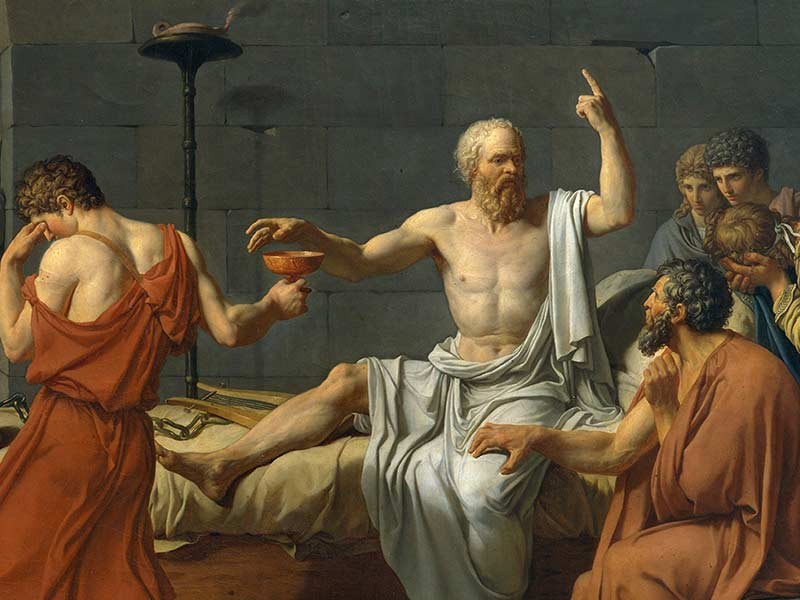
Yesterday we took a look at, or rather a listen to, the “podcasting renaissance,” highlighting a few of the new wave of shows and recommending some of the pre-existing ones you may have missed. Many Open Culture readers will remember our addiction to philosophy podcasts — The Partially Examined Life, Philosophy Bites, and Philosophize This!, to name but three of our favorites — and some may wonder if The History of Philosophy Without Any Gaps (iTunes – RSS Feed – Web Site), which we featured back in 2011 and again in 2012, survived the dark ages into which podcasting had apparently fallen. Could its host Peter Adamson, professor at Ludwig Maximilian University of Munich and King’s College London, have succumbed to the dreaded podfade somewhere between Plotnius on the soul and Christian asceticism?
Worry not, students of thought, for Adamson has continued these past few years, still regularly and gaplessly, to provide “the ideas and lives of the major philosophers as well as the lesser-known figures of the tradition.” Just this past weekend, he put up a twenty-minute episode on the Carolingian Renaissance. If you haven’t kept up with the show since we last posted about it, you’ve got a great deal of intellectually rich catching up to do. You will find more than 100 new podcasts, featuring short talks on Latin Platonism, Aristotelian philosophy’s “Baghdad school,” philosophy’s reign in Spain, Illuminationism, and women scholars and Islam. If you’ve wanted to learn the entire history philosophy in the most convenient possible manner, now’s the time to jump aboard. If you planned on waiting until Adamson gets to, say, Derrida, I fear you’ll have a bit of a daunting backlog on your hands — not to mention your ears and brain.
Note: This article was first published in November, 2014. As of February, 2016, there are 247 episodes in this series. The title of the post has been updated to reflect that.
Related Content:
The Partially Examined Life: A Philosophy Podcast
The History of Philosophy Without Any Gaps – Peter Adamson’s Podcast Still Going Strong
Philosophy Bites: Podcasting Ideas From Plato to Singularity Since 2007
Download 100 Free Philosophy Courses and Start Living the Examined Life
Take First-Class Philosophy Courses Anywhere with Free Oxford Podcasts
Colin Marshall hosts and produces Notebook on Cities and Culture and writes essays on cities, language, Asia, and men’s style. He’s at work on a book about Los Angeles, A Los Angeles Primer. Follow him on Twitter at @colinmarshall or on Facebook.
Read More...8‑Bit Philosophy: Plato, Sartre, Derrida & Other Thinkers Explained With Vintage Video Games
You thought video games were a waste of time? Well, think again. These 8‑bit video games can teach you philosophy. Plato, Descartes, Nietzsche, Derrida and the rest. Created by Napkin Note Productions, 8‑Bit Philosophy attempts to “communicate even the most complex of philosophical concepts in a fun, easy-to-understand way.”
Launched in April, the series now features 15 episodes. The very first one used the 1986 Nintendo game Zelda to unpack Plato’s concept of the Real. Later episodes grappled with Hegel’s concept of history; Sartre’s notion of freedom (above); and Nietzsche’s thoughts on the limits of science (also above).
The most recent episode explores the philosophy of Jacques Derrida using scenes from the 1987 beat’ em up video game, Double Dragon. Does that game ring a bell? It didn’t for me either. Until I googled it and suddenly remembered wasting countless hours and quarters on it, almost three decades ago. It’s all coming back to me now.
You can watch all 15 episodes of 8‑Bit Philosophy on YouTube. To play real vintage arcade games, see our post from last week: The Internet Arcade Lets You Play 900 Vintage Video Games in Your Web Browser (Free). And to get more immersed in philosophy, see our collection: 125 Free Online Philosophy Courses.
Related Content:
135 Free Philosophy eBooksWatch The Idea, the First Animated Film to Deal with Big, Philosophical Ideas (1932)
Read More...The Red Hot Chili Orchestra
Chili Klaus, a Danish entertainer/chili enthusiast, asked some members of the Danish National Chamber Orchestra to perform Tango Jalousie … but with a twist. Midway through their performance, they ate “the world’s hottest chili peppers” and then continued on with the show. Over two million people have enjoyed what happens next.
The orchestra, created in Copenhagen in 1937, is unfortunately going to be shut down at the end of the year by its cash-strapped parent company, the Danish Broadcasting Corporation (DBC). The video above seems to be just a funny final act. Too bad it wasn’t used as part of a campaign to get the DBC to reconsider its decision.
Related Content:
What Happens When Everyday People Get a Chance to Conduct a World-Class Orchestra
Harry Partch’s Kooky Orchestra of DIY Musical Instruments
Pakistani Musicians Play Amazing Version of Dave Brubeck’s Jazz Classic, “Take Five”
Read More...135 Free Philosophy eBooks
This page features a growing list of Free Philosophy eBooks, presenting essential works by Aristotle, Hegel, Kant, Nietzsche, Wittgenstein and many other philosophers. You can generally read these texts on your Kindle, iPad & iPhone, or web browser. For those interested in philosophy, you won’t want to miss our collection of Free Online Philosophy Courses.
- Aquinas, Thomas — Summa Theologiae
- Aristotle — Collected Works
- Aristotle — Nicomachean Ethics
- Aristotle — Physics
- Aristotle - Politics
- Aristotle — The Categories
- Aurelius, Marcus - Meditations
- Ayer, Alfred — Language, Truth and Logic
- Bacon, Sir Francis — Novum Organum
- Benjamin, Walter — “The Work of Art in the Age of Mechanical Reproduction”
- Bentham, Jeremy — An Introduction to the Principles of Morals and Legislation
- Berkeley, George — Three Dialogues between Hylas and Philonous
- Boethius — Consolation of Philosophy
- Burke, Edmund - On the Sublime and Beautiful
- Carroll, Lewis — Symbolic Logic
- Carroll, Lewis — The Game of Logic
- Confucius — The Analects
- Confucius — The Great Learning
- Derrida, Jacques — “Structure, Sign, and Play in the Discourse of the Human Sciences”
- Descartes, Rene - Discourse on the Method
- Dewey, John - Democracy & Education
- Dostoevsky, Fyodor - Brothers Karamazov
- Dostoevsky, Fyodor - Crime and Punishment
- Eliot, Charles - The Harvard Classics (51 Volumes)
- Emerson, Ralph Waldo – Essays
- Emerson, Ralph Waldo - The Complete Works
- Foucault, Michel - Die Ordnung des Diskurses
- Gramsci, Antonio — Selected Writings
- Hegel, GWF — Lectures on the History of Philosophy
- Hegel, GWF — Philosophy of Mind
- Hegel, GWF — Philosophy of Right
- Hegel, GWF — The Phenomenology of the Spirit
- Hobbes, Thomas - Leviathan
- Hume, David - A Treatise of Human Nature
- Hume, David - Dialogues Concerning Natural Religion
- Hume, David - Enquiry into the Principles of Morals
- Hume, David — An Enquiry Concerning Human Understanding
- Hume David — Political Discourses
- James, William — Essay in Radical Empiricism
- James, William - Pragmatism
- James, William - Varieties of Religious Experience
- Kant, Immanuel - Critique of Judgement
- Kant, Immanuel - Critique of Practical Reason
- Kant, Immanuel - Critique of Pure Reason
- Kant, Immanuel - Groundwork for the Metaphysics of Morals
- Kant, Immanuel - Perpetual Peace
- Kant, Immanuel - What is Enlightenment?
- Kierkegaard, Søren - Fear and Trembling
- Kierkegaard, Søren — Philosophical Fragments
- Kierkegaard, Søren - Purity of Heart Is to Will One Thing
- Kierkegaard, Søren — The Sickness Unto Death
- Kierkegaard, Søren - Two Discourses on God and Man
- Leibniz — Theodicy
- Locke, John — An Essay on Human Understanding
- Locke, John - Second Treatise on Government
- Lucretius - On the Nature of the Things
- Machiavelli, Niccolò - The Prince
- Madison, Hamilton & Jay - The Federalist Papers
- Maimonides — Guide for the Perplexed
- Marx and Engels - The Communist Manifesto
- Marx, Karl — Das Kapital
- Mencken, H.L. — The Philosophy of Friedrich Nietzsche
- Mill, John Stuart- On Liberty
- Mill, John Stuart - Utilitarianism
- Montaigne — Essays
- Montesquieu - The Persian Letters
- Montesquieu - The Spirit of the Laws
- More, Thomas - Utopia
- Nietzsche, Friedrich - Beyond Good and Evil
- Nietzsche, Friedrich- Ecce Homo
- Nietzsche, Friedrich — Genealogy of Morals
- Nietzsche, Friedrich - Homer and Classical Philology
- Nietzsche, Friedrich - Human, All Too Human
- Nietzsche, Friedrich - Selected Letters
- Nietzsche, Friedrich - The Anti Christ
- Nietzsche, Friedrich — The Birth of Tragedy
- Nietzsche, Friedrich - The Case Against Wagner
- Nietzsche, Friedrich — The Dawn of Day
- Nietzsche, Friedrich - The Gay Science
- Nietzsche, Friedrich - Thus Spake Zarathustra
- Nietzsche, Friedrich - Twilight of the Idols
- Paine, Thomas - Common Sense
- Paine, Thomas - Rights of Man
- Paine, Thomas — The Age of Reason
- Pascal, Blaise — The Pensées
- Pascal, Blaise — The Provincial Letters
- Plato — Collected Works
- Plato - Symposium
- Plato - The Apology, Phaedo, and Crito of Plato
- Plato - The Republic
- Popper, Karl — The Logic of Scientific Discovery
- Read Online Now
- Rousseau, Jean Jacques — Emile
- Rousseau, Jean Jacques — Julie; ou, la Nouvelle Héloïse
- Rousseau, Jean-Jacques - The Confessions
- Rousseau, Jean-Jacques - The Social Contract & Discourses
- Russell, Bertrand — Free Thought and Official Propaganda
- Russell, Bertrand - Introduction to Mathematical Philosophy
- Russell, Bertrand — Mysticism and Logic and Other Essays
- Russell, Bertrand - Political Ideals
- Russell, Bertrand — The Conquest of Happiness
- Russell, Bertrand - The Problems of Philosophy
- Russell, Bertrand - Western Philosophy
- Russell, Bertrand — Why I Am Not a Christian
- Santayana, George — Some Turns of Thought in Modern Philosophy: Five Essays
- Santayana, George — The Life of Reason
- Santayana, George — These Sense of Beauty
- Santayana, George — Three Philosophical Poets: Lucretius, Dante and Goethe
- Sartre, Jean-Paul - Existentialism Is a Humanism
- Sartre, Jean-Paul — Nausea
- Read Online Now (French versions)
- Schopenhauer, Arthur - The World as Will and Representation
- Schopenhauer, Arthur — The Essays of Arthur Schopenhauer; On Human Nature
- iPad/iPhone — Kindle + Other Formats (find German version here)
- Schopenhauer, Arthur — Studies in Pessimism
- Seneca - On Benefits
- Smith, Adam - The Theory of Moral Sentiments
- Smith, Adam - The Wealth of Nations
- Spinoza — The Chief Works of Benedict de Spinoza, 2 vols.
- Spinoza — Ethics
- St. Augustine — Confessions
- Sun Tzu - The Art of War
- Tocqueville, Alexis de - Democracy in America Vol 1.
- Tocqueville, Alexis de - Democracy in America Vol 2.
- Thoreau, Henry David - Walden
- Tolstoy, Leo — What is Art?
- Voltaire - Candide
- Voltaire — Micromégas
- Voltaire — The Philosophical Dictionary
- Voltaire — The Works of Voltaire
- Wittgenstein, Ludwig — The Blue Book
- Wittgenstein, Ludwig — The Brown Book
- Wittgenstein, Ludwig - Notebooks, 1914–1916
- Wittgenstein, Ludwig — Notes on Logic
- Wittgenstein, Ludwig — Philosophical Investigations (German)
- Wittgenstein, Ludwig - Tractatus Logico-Philosophicus
- Wittgenstein, Ludwig - Tractatus Logico-Philosophicus (German-English Side by Side Edition)
- Wollstonecraft, Mary — A Vindication of the Rights of Women
General Resources
- 80 Philosophy ebooks from UC Press
- 70 Philosophy eBooks from University of Pittsburgh Press
Hear The Clash’s Vanilla Tapes, Demos of Nearly Every Song From London Calling
Every creative work begins with a draft—or two, or three, or four. Great American novel, iconic painting, generation-defining poem, album of the decade… each represents a palimpsest of sketches, blind alleys, dead ends, demos, and outtakes. So it’s no great surprise to learn that London Calling, the Clash’s double-album masterpiece, exists as an earlier version, recorded by the band themselves on four-track tape machines at their rehearsal space in central London. What is maybe surprising is how good these early recordings are, and that they exist at all. Called The Vanilla Tapes, after the name of their studio, the tapes—though certainly rough—represent what The Guardian calls “a collection of demos and rehearsals that still manage to sound more focused, intelligent and relevant than most of today’s young pretenders.” No need to name names; it’s not much of a stretch to say that no rock and roll band today sounds as interesting as the Clash did in their practices 35 years ago.
Recorded in 1979, then lost, it seemed, forever, the tapes lived only in rumors and sly hints dropped by Joe Strummer of a self-recorded LP. That is until March of 2004, when Mick Jones discovered them in a box and “recognized them instantly for what they were.” The tapes, he said, “hadn’t been heard since before the record was made. It was pretty amazing.” These versions, writes Pat Gilbert at Mojo, are “clean, bright recordings that reveal a group who are evidently enjoying creating something organic and musical.”
Paul’s bass walks, hops and lopes as he feels himself into jazz, funk and disco. Mick plays economically, expertly and fluidly – intelligent licks and chops. Joe’s rhythm guitar cuts through like a man who learned his craft from old Bo Diddley, Bukka White and Chuck Berry records. Topper is magnificent – light, precise and clever. It’s London Calling stripped bare for combo playing: no horns, Hammond, piano, whistling.
At the top of the post, hear a rough take of “London Calling.” Aside from some hesitancy in Strummer’s delivery and a somewhat plodding opening, the recording captures—perhaps even more than the studio take—the apocalyptic dread of the song’s lyrical imagery. Some of the lines are different—London calls to the “the fools and the clowns” and “the mods on the run.” But this early version does have Strummer’s werewolf howl and canny summation of the turn-of-the decade zeitgeist. Above, we have the Vanilla Tapes version of “Rudie Can’t Fail” in all its funky ska immediacy. (Notice the descending melody in the chorus—which I almost like better than the album version’s ascending chorus—and the toasting interjections.) Just below, hear “Heart and Mind,” one of “five completely unknown Clash songs” that appears on the tapes, “a rocker,” writes Gilbert, “pitched somewhere between ‘The Prisoner’ and ‘Death or Glory.’”
Why this didn’t make the album, we’ll maybe never know, but the chorus is great—“You’ve got a heart / You’ve got a mind / But you can’t / Keep them in time.” The other four unearthed outtakes are “Where You Gonna Go (Soweto),” a rockabilly tune called “Lonesome Me,” “bluesy instrumental “Walking the Sidewalk,” and a reggae version of Bob Dylan’s “The Man in Me.” The tapes “included 37 tracks in total… pared down” for release “to the 21 best versions.” Missing from The Vanilla Tapes are London Calling tracks “Spanish Bombs,” “The Card Cheat,” “Wrong ‘Em Boyo,” and “Train in Vain,” confirming “the received wisdom that (except “Wrong ‘Em Boyo”), these were written when The Clash were in Wessex recording the album proper.”
“Muddy, raw, and insistently vague,” writes Pitchfork, the tapes see the band “working hard, but also grasping for a muse.” They found a guiding creative force in producer Guy Stevens, who crafted their demos into the more polished, but still rough enough for punk, studio versions we know well. But even without the benefit of comparison with the brilliant realizations on the record, these early versions stand up on their own as the sound of a band with more rangy creative energy than most groups can muster over their entire careers. The tapes were included in the 25th anniversary legacy edition of London Calling, but you can hear them all on Youtube (listen to “Lost in the Supermarket” above). Like some commenters, you might be surprised to find you like some of these raw demos even better than their celebrated studio versions.
Related Content:
Surviving Members of The Clash Recount the Making of “London Calling” & Discuss New Box Set
Josh Jones is a writer and musician based in Durham, NC. Follow him at @jdmagness
Read More...Support Us
We're hoping to rely on loyal readers, rather than erratic ads. Please click the Donate button and support Open Culture. You can use Paypal, Venmo, Patreon, even Crypto! We thank you!

About Us

Open Culture scours the web for the best educational media. We find the free courses and audio books you need, the language lessons & educational videos you want, and plenty of enlightenment in between.
Advertise With Us

FREE UPDATES!
GET OUR DAILY EMAIL
Get the best cultural and educational resources on the web curated for you in a daily email. We never spam. Unsubscribe at any time.
FOLLOW ON SOCIAL MEDIA

Open Culture editor Dan Colman scours the web for the best educational media. He finds the free courses and audio books you need, the language lessons & movies you want, and plenty of enlightenment in between.
Advertise With Us

