The Only Known Recordings of C.S. Lewis (1944–1948)
When we come to know the work of novelist and scholar C.S. Lewis, we usually do it through a textual medium — specifically in childhood, through that thrilling written artifact known as The Lion, the Witch, and the Wardrobe. Often this leads us into the rest of his seven-volume Chronicles of Narnia series (find a free audio version here), and those most deeply intrigued by the worldview that shaped that high-fantasy world may find themselves eventually reading even Lewis’ Christian apologetics, of which 1952’s well-known Mere Christianity came as only the first. That book drew its content from a series of theological lectures Lewis gave on BBC radio between 1942 and 1944, during the Second World War. Little material from these talks survives — in fact, we have precious few minutes of his voice on tape in any context, and nothings at all of him on film — but you can hear about fifteen minutes of it in the clips above and below.
These excerpts come from “The New Men”, the last episode of Lewis’series Beyond Personality originally broadcast on March 21, 1944, and an introduction to The Great Divorce, his theological novel written in response to William Blake’s The Marriage of Heaven and Hell. “If I’ve written of their divorce,” Lewis says, “this is not because I think myself a fit antagonist for so great a genius, nor even because I feel at all sure that I knew what he meant.” The statement exemplifies the clarity and humility with which he always wrote, even when essentially trumpeting the benefits of his own faith. Given the off-puttingly combative tenor of most high-profile religious arguments made today, both for and against, the remains of Lewis’ broadcasts remind us how much we could use more thinkers like him today — in any form of media.
Related content:
C.S. Lewis’ Prescient 1937 Review of The Hobbit by J.R.R. Tolkien: It “May Well Prove a Classic”
Watch Hand-Drawn Animations of 7 Stories & Essays by C.S. Lewis
Free Audio: Download the Complete Chronicles of Narnia by C.S. Lewis
Colin Marshall hosts and produces Notebook on Cities and Culture and writes essays on cities, language, Asia, and men’s style. He’s at work on a book about Los Angeles, A Los Angeles Primer. Follow him on Twitter at @colinmarshall or on Facebook.
Read More...Cartoonist Lynda Barry Reveals the Best Way to Memorize Poetry
Cartoonist and Patron Saint of Honoring the Creative Impulse, Lynda Barry, believes that the secret to understanding poetry is to commit it to memory. Effortless recall is key. Get that poem lodged inside your brain as if it were a Top 40 hit of your youth.
That’s all well and good, but is there a secret to memorizing poetry?
According to Barry (or Professor Chewbacca, as she is known to students in her Making Comics course at the University of Wisconsin), the secret to memorizing poetry is to set it to music.
The work of Emily Dickinson, a Barry favorite, is particularly well suited to this tactic, as this Internet-sourced “hillbilly rendition” of “I Felt a Funeral in My Brain” proves.
As Barry demonstrates, above, the Belle of Amherst also lends herself well to “The Girl from Ipanema” and a certain movement of Gershwin’s “Rhapsody in Blue”.
It does the soul good to see poetry offering this lady the sort of joyful release her dog experiences, rolling around in a dead squirrel.
Perhaps you, too, are in need of such an outlet. Odds are, we all are. Barry, who traces her passion for poetry to the 1974 anthology Mad Sad & Glad: Poems from Scholastic Creative Writing Awards, claims that the best poems deal with our darkest feelings. Dickinson, she posits, wrote what she did to stay alive, a theory she supports with a hilarious impersonation of Dickinson’s perceived handwriting versus Dickinson’s actual handwriting.
Dickinson wrote volumes, but as Barry points out, she also wrote short. Look at how many there are to choose from, were you to challenge yourself to learn one by heart today. (Don’t think about it. Just do it. Whatever happens, it’s sure to be a more gratifying experience than listening to the female robot charged with reciting “A Day! Help! Help! Another Day!” here.)
- Ayun Halliday believes that Lynda Barry has enough milk of human kindness & funk power supreme to be the Patron Saint of Everything. Follow her @AyunHalliday
Related Content
Join Cartoonist Lynda Barry for a University-Level Course on Doodling and Neuroscience
The Second Known Photo of Emily Dickinson Emerges
Bill Murray Reads Poetry at a Construction Site
Read More...Stephen King Reveals in His First TV Interview Whether He Sleeps With the Lights On (1982)
The look of this 1982 video magazine interview with Stephen King comes right out of a Laverne and Shirley episode, which makes it doubly charming. Broadcast at the time only in Bangor and Portland, this University of Maine production marks the first “up close and personal” TV interview with King, who represents one of the school’s “high achievers,” many of whom Henry Nevison interviewed for the local series. The interview takes place at King’s home in Bangor. Nevison describes the circumstances on his website:
At the time, King had just finished writing his novel “Christine” and one year earlier had starred in Creepshow, a campy horror/sci-fi movie based on several of his shorter stories. Initially, I conducted a radio interview and we discovered that we had a lot of similar interests, most importantly the same warped sense of humor. He then agreed to an extended “sit-down” television interview, even though he had avoided that concept up to this point. I think he did it because he knew it would be good for the university.
In his video intro, Nevison points out that King had published most of the horror novels that made his career—including Carrie, The Dead Zone, The Shining, The Stand, and Firestarter—and had already sold movie rights for those books. Which means he was a veritable pop-lit superstar even at this early point in his career. Through a bushy beard the size of a small woodchuck, King genially opines on whether leaving the light on at night keeps the monsters away (“bottom line,” it does) and how he keeps the scares fresh after so many stories and novels. We see him hunt and peck on an ancient, hulking word processor (perhaps composing “Word Processor of the Gods”) and look generally creepy but good-natured.
King and Nevison spend most of the nearly half-hour interview discussing the differences between books and film (they’re “diametrically opposed”). It’s a subject King has returned to several times over the years, often in complaint, venting for example over Stanley Kubrick’s 1980 take on The Shining. King glosses over his hatred of Kubrick’s film here, saying the book will outlive the movie (not likely, in this case). He also talks Hitchcock, and we see clips from a fairly decent student film production of his story “The Boogyman.” Much of the credit for this engaging interview should go to Nevison, who does what a good interviewer should: keeps the conversation going in new directions without getting in the way of it. It’s vintage King and sets the tone for the hundreds of televised interviews to come.
Related Content:
Stephen King’s Top 20 Rules for Writers
Stephen King Creates a List of 96 Books for Aspiring Writers to Read
Stephen King Reads from His Upcoming Sequel to The Shining
Stanley Kubrick’s Annotated Copy of Stephen King’s The Shining
Josh Jones is a writer and musician based in Durham, NC. Follow him at @jdmagness.
Read More...Jimmy Page Describes the Creation of Led Zeppelin’s “Whole Lotta Love”
For all the praise deservedly heaped on Jimmy Page for his technique as an innovative rock-blues shredder—with his violin-bowed walls of noise and motor speedway licks—one can lose sight of just how great he was as a driving rhythm player. The rough mix of Led Zeppelin’s “Whole Lotta Love”—which chugs along without the studio version’s signature stock car-engine sound in the refrain—brings Page’s rhythms to the fore. The song’s production also demonstrates Page’s skill in the studio. The guitarist masterminded the sound of “Whole Lotta Love” and the recording of AOR groundbreaker Led Zeppelin II, and he tells the story of the song’s creation, along with that unforgettable riff, in an interview with The Wall Street Journal:
I came up with the guitar riff for “Whole Lotta Love” in the summer of ’68, on my houseboat along the Thames in Pangbourne, England. I suppose my early love for big intros by rockabilly guitarists was an inspiration, but as soon as I developed the riff, I knew it was strong enough to drive the entire song, not just open it. When I played the riff for the band in my living room several weeks later during rehearsals for our first album, the excitement was immediate and collective. We felt the riff was addictive, like a forbidden thing.
The rough mix above traveled with the band as they toured the U.S. in May and June of 1969, overdubbing in studios in Los Angeles and New York. Page describes how he, engineer George Chkiantz, and mixer Eddie Kramer created the song’s reverb-drenched sonic envelope, designing each piece to work specifically for stereo FM radio. “For the song to work as this panoramic audio experience,” he says, “I needed Bonzo [drummer John Bonham] to really stand out, so that every stick stroke sounded clear and you could really feel them. If the drums were recorded just right, we could lay in everything else.” He compares Robert Plant’s searing vocal to his guitar work:
Robert’s vocal was just as extreme. He kept gaining confidence during the session and gave it everything he had. His vocals, like my solos, were about performance. He was pushing to see what he could get out of his voice. We were performing for each other, almost competitively.
As for the pre-echo and massive amounts of reverb on Plant’s vocals in the song’s breakdown—all of this came about by accident. An alternate take of Plant’s voice bled through on the master tape. Page and Kramer decided to leave it in and add the effects to make it seem intentional. More improvisational studio wizardry between the two produced the crazed outro. “Jimmy and I went nuts on the knobs,” recalls Kramer, “We had eight dials controlling the levels on eight individual tracks, so we rehearsed the choreography of what we were going to do to create the far-out sounds.”
Like current claims against the band for musical theft in “Stairway to Heaven,” “Whole Lotta Love” engendered a lawsuit from Willie Dixon, who wrote Muddy Water’s “You Need Love.” Page and Plant both admit the debt, but Page defends his contribution, saying “if you take Robert’s vocal out, there’s no musical reference.” In any case, they were eventually forced to give Dixon co-credit for the song. In a 1990 interview with Musician, Plant waxed philosophical about the controversy: “Page’s riff was Page’s riff. It was there before anything else. I just thought, ‘well, what am I going to sing?’ That was it, a nick. Now happily paid for. At the time, there was a lot of conversation about what to do. It was decided that it was so far away in time and influence that… well, you only get caught when you’re successful. That’s the game.”
Of course, the essence of the blues is musical quotation, and the affair was more a matter of money, not a case against the song’s creative power or the originality of that killer riff. Read more about the making of “Whole Lotta Love” from Page, Chkiantz, and Kramer at The Wall Street Journal.
Related Content:
Jimmy Page Tells the Story of “Kashmir”
Hear Led Zeppelin’s Mind-Blowing First Recorded Concert Ever (1968)
Josh Jones is a writer and musician based in Durham, NC. Follow him at @jdmagness.
Read More...Dick Cavett’s Worst Show: Starring John Cassavetes, Peter Falk & Ben Gazzara (1970)
“Nearly seventeen minutes into an episode of The Dick Cavett Show,” writes the New Yorker’s Elon Green, “the host, who had walked off and then returned to the set, asked his guests — John Cassavetes, Peter Falk, and Ben Gazzara — ‘Are you guys all smashed?’ The September 18, 1970 appearance by the Husbands director and his two actors — who had, in fact, been drinking—was excruciating. They were on hand to promote their new movie, but for thirty-five minutes they smoked, flopped around on the floor, and generally tormented Cavett, whose questions they’d planned to ignore.” You can watch the infamous broadcast at the top of the post and judge for yourself: embarrassing television talk-show debacle for the ages, or brilliant piece of promotional performance art by three of the brightest dramatic lights of their generation? If you’ve never seen Husbands — or if you’ve seen and disliked it — you’ll lean toward the former. But if, like many enthusiasts of American independent cinema, you hold the film and the rest of Cassavetes’ directorial oeuvre in high regard, you may well find the latter self-evident.
Husbands tells the tale, in Cassavetes’ harshly realistic and personal fashion, of three men behaving quite badly. The director stars alongside Falk and Gazzara as a trio of middle-aged professional suburbanites shaken by the sudden death of their coterie’s former fourth member. Plunged into a drunken lost weekend of irresponsibility and self-destruction, serious even by the standard of the classic frustrated midcentury male, they all three eventually find themselves in London, trying haplessly to bed down with girls they’ve picked up at a casino. This unrelenting film still divides audiences and critics alike: Pauline Kael thought it “infantile and offensive” and Roger Ebert said it “shows an important director not merely failing, but not even understanding why,” but Richard Brody now finds it a “formally radical, deeply personal work [that] still packs plenty of surprises.” Cassavetes, he writes, “built these characters around the real-life ways of the actors who played them, filled the story with incidents from his own life, and wrote the dialogue after improvising with Gazzara and Falk.” You can learn more about this method in the BBC documentary on the making of Husbands just above. If I had to guess, I’d say the improvisation didn’t stop when production wrapped.
via The New Yorker
Related Content:
The Haircut: A Student Film Starring the Great John Cassavetes (1982)
David Bowie Talks and Sings on The Dick Cavett Show (1974)
Watch John Lennon and Yoko Ono’s Two Appearances on The Dick Cavett Show in 1971 and 72
4,000+ Free Movies Online: Great Classics, Indies, Noir, Westerns, Documentaries & More
Colin Marshall hosts and produces Notebook on Cities and Culture and writes essays on cities, language, Asia, and men’s style. He’s at work on a book about Los Angeles, A Los Angeles Primer. Follow him on Twitter at @colinmarshall or on Facebook.
Read More...Ballet Dancers Do Their Hardest Moves in Slow Motion
The Washington Post went behind the scenes at the Washington Ballet to get “six professional dancers to show off the most difficult moves in their repertoire.” If this intrigues you, you can turn back to a 2012 post where we featured Marina Kanno and Giacomo Bevilaqua, both from the Staatsballett Berlin, performing several jumps, each captured in slow motion at 1000 frames per second. And it’s all set to Radiohead’s “Everything In Its Right Place.” Enjoy.
via The Creators Project/Boing Boing
Related Content:
James Brown Gives You Dancing Lessons: From The Funky Chicken to The Boogaloo
Statistics Explained Through Modern Dance: A New Way of Teaching a Tough Subject
Read More...Anyone Can Change the World: The Animated Wisdom of Nobel Peace Prize Winner Jody Williams
Here’s a little animation for those times when the unlikelihood of winning public recognition for your work has you dejected to the point of inaction.
Children are repeatedly told that they can change the world, and, in my experience, most of them seem to believe that this is true.
How is it, then, that so many adults are paralyzed by feelings of powerlessness? Did something happen in middle school, or are the problems of the world so immense? (Both, probably.) Why bother, right?
Activist Jody Williams may have won a Nobel Prize, but she’s also a fan of starting small.
The Royal Society for the Arts enlisted animator Katy Davis to mine William’s lecture “Anyone Can Change the World” for its narrative possibilities. It’s a good argument against succumbing to the siren song of your flat screen TVs. It’s also a good argument for engaging with your community.
Williams crusaded against land mines, but her advice holds true for more modest endeavors, too, be it school lunch policy reform or finishing that novel or short story.
If a couple of minutes of doggies don’t set you to rights, her complete lecture is below.
Related Content:
The Power of Empathy: A Quick Animated Lesson That Can Make You a Better Person
Ayun Halliday is an author, illustrator, and Chief Primatologist of the long running zine, The East Village Inky. Follow her @AyunHalliday
Read More...Patti Smith Presents Top Webby Award to Banksy; He Accepts with Self-Mocking Video
Presenting at the 18th annual Webby Awards last week, Godmother of Punk Patti Smith managed to Adele Dazeem street art provocateur Banksy not once, but twice. Banksky? Ban-ski? It’s a measure of the lady’s august standing that emcee Patton Oswalt passed on the comic opportunities of this giant blunder. He did call her “fucking adorable,” but I like to think he did so with the kindest of intentions.
As to why an artist famous for using the real world as his canvas should be dubbed “Person of the Year” by an outfit that recognizes excellence on the Internet, Smith was nothing short of eloquent. The impermanence of his oft-illegally installed creations make them the perfect candidate “to be archived, shared and stored … through the World Wide Web.” (Apparently, she only just realized this is a synonym for the Internet, but no matter. I’m with Oswalt! It would be a cringeworthy admission in just about anybody else, but from her, it’s pretty dang cute.)
The necessarily low-profile honoree surprised no one by failing to accept his award in person. Rather than sending Sacheen Littlefeather as his proxy, he proffered a delightful, self-mocking short film, which you can see above.
The short revisits some of the high points of “Better In Than Out,” last fall’s month-long, piece-a-day takeover of New York City. Keep your eyes peeled for Sirens of the Lambs, a truck hauling a load of squeaking, ostensibly doomed plush farm animal toys and Queens, an inflatable tag thrown up on his final day as “Artist in Residence for the City of New York.”
My favorite work from his autumnal siege of my city was Art Sale, in which he stocked a Central Park vendor table with half a million dollars’ worth of uncredited stencil art, then installed a decidedly unhip-looking senior citizen to man it. The day’s receipts totaled $420 from a handful of tourists, one of whom successfully bargained her way into a 2‑for‑1 deal.
I want to know more about these people who unwittingly lucked into such a lucrative role in 21st-century art history, but to my consternation, they seem to be flying incognito, just like the artist who so increased their value. You know, the guy who’s all over the internet, without revealing his identity? The Webby Awards’ Person of the Year!?
Maybe if I spend another hour poking around online… (A bad use of time, for all but Patti Smith, who claimed it took her 48 minutes to unsuccessfully download the video we can click with such ease, above.)
Related Content:
Banksy Creates a Tiny Replica of The Great Sphinx Of Giza In Queens
Hear Patti Smith Read 12 Poems From Seventh Heaven, Her First Collection (1972)
Ayun Halliday occasionally tears herself free of the Internet to labor over The East Village Inky, an entirely handwritten, illustrated zine. Follow her @AyunHalliday
Read More...Matthew Weiner on The Art of Writing Mad Men: The Paris Review Interview
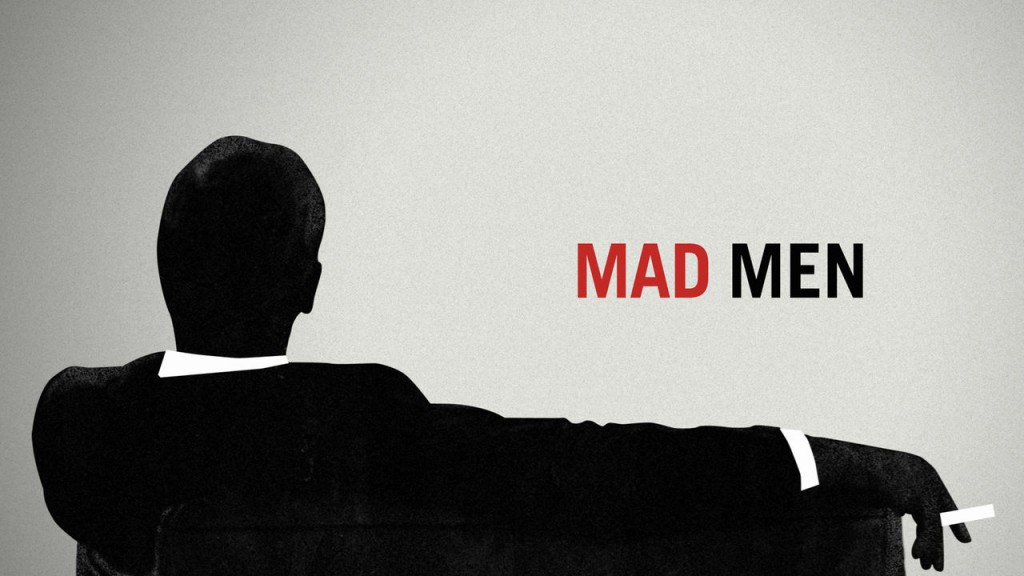
This weekend, AMC aired episode 7 of Mad Men’s final season. The show will now take a break, until episodes 8–14 hit the airwaves early next year. Before you turn your attention elsewhere, you may want to spend some time with the Paris Review’s big interview with Matthew Weiner, the creator of Mad Men. The interview covers a lot of ground.
We learn that Weiner is a particular fan of John Cheever. “[W]ith John Cheever, I recognized myself in the voice of the narrator.” “Cheever holds my attention more than any other writer. He is in every aspect of Mad Men, starting with the fact that Don lives in Ossining on Bullet Park Road.” (Find the Paris Review’s 1976 interview with Cheever here.)
We also discover that Weiner studied poetry in college with Christopher Reeve’s father, Frank Reeve, and there were a couple of years when Weiner considered T.S. Eliot’s The Waste Land “the most interesting thing in the world.”
Then the conversation turns to Mad Men, where Weiner reveals what’s at the heart of the show: “I’ve always said this is a show about becoming white. That’s the definition of success in America—becoming a WASP. A WASP male.” “Don Draper knows he’s poor, very much in the model of [Lee] Iacocca or [Sam] Walton, who came out of the Great Depression, out of really humble beginnings. Or like Conrad Hilton, on the show. These men don’t take no for an answer, they build these big businesses, these empires, but really it’s all based on failure, insecurity, and an identity modeled on some abstract ideal of white power.”
Weiner has lots more to say, including about his days writing for The Sopranos. Read the complete interview here.
Related Content:
Gay Talese: Drinking at New York Times Put Mad Men to Shame
The Paris Review Interviews Now Online
Read More...
Read 9 Free Books By Noam Chomsky Online

Image by Andrew Rusk, via Wikimedia Commons
The gross and ever-increasing degree of economic inequality in the United States has become a phenomenon that even the country’s elites can no longer ignore since the explosive publication of Thomas Piketty’s Capital in the 21st Century. The book’s highly technical marshaling of data speaks primarily to economists and secondarily to liberal policymakers. Piketty’s calls for redistribution have lead to charges of “Marxism” from the other end of the political spectrum—due to some inevitable degree to the book’s provocative title. Yet in the reckoning of actual Marxist Slavoj Žižek, the French economist is still “a good Keynsian” who believes that “capitalism is ultimately the only game in town.” While the Marxist left may critique Piketty’s policy recommendations for their reliance on state capitalism, another fierce leftist thinker—Žižek’s sometime intellectual rival Noam Chomsky—might critique them for their acquiescence to state power.
Chomsky’s role as a public intellectual has placed him at the forefront of the left-anarchist fight against neoliberal political economy and the U.S. foreign and domestic policies that drive it. Whether those policies come from nominally liberal or conservative administrations, Chomsky asserts time and again that they ultimately serve the needs of elites at the expense of masses of people at home and abroad who pay the very dear cost of perpetual wars over resources and markets. In his 2013 book On Anarchism, Chomsky leaves little room for equivocation in his assessment of the role elites play in maintaining a state apparatus that suppresses popular movements:
If it is plausible that ideology will in general serve as a mask for self-interest, then it is a natural presumption that intellectuals, in interpreting history or formulating policy, will tend to adopt an elitist position, condemning popular movements and mass participation in decision making, and emphasizing rather the necessity for supervision by those who possess the knowledge and understanding that is required (so they claim) to manage society and control social change.
This excerpt is but one minute example of Chomsky’s fiercely independent stance against abuse of power in all its forms and his tireless advocacy for popular social movements. As Henry Giroux writes in a recent assessment of Chomsky’s voluminous body of work, what his many diverse books share is “a luminous theoretical, political, and forensic analysis of the functioning of the current global power structure, new and old modes of oppressive authority, and the ways in which neoliberal economic and social policies have produced more savage forms of global domination and corporate sovereignty.” And while he can sound like a doomsayer, Chomsky’s work also offers “the possibility of political and economic alternatives” and “a fresh language for a collective sense of agency and resistance.”
Today we offer a collection of Chomsky’s political books and interviews free to read online, courtesy of Znet. While these texts come from the 1990s, it’s surprising how fresh and relevant they still sound today. Chomsky’s granular parsing of economic, social, and military operations explains the engineering of the economic situation Piketty details, one ever more characterized by the title of a Chomsky interview, “The Prosperous Few and the Restless Many.” See links to nine books below. To read, click on links to either the “Content Overview” or “Table of Contents.” The books can also be found in our collection, 800 Free eBooks for iPad, Kindle & Other Devices.
Necessary Illusions: Thought Control in Democratic Societies (1989): Based on the Massey Lectures, delivered in Canada in November 1988, Necessary Illusions argues that, far from performing a watchdog role, the “free press” serves the needs of those in power.
Deterring Democracy (1991): Chomsky details the major shift in global politics that has left the United States unchallenged as the preeminent military power even as its economic might has declined drastically in the face of competition from Germany and Japan. Deterring Democracy points to the potentially catastrophic consequences of this new imbalance, and reveals a world in which the United States exploits its advantage ruthlessly to enforce its national interests — from Nicaragua to the Philippines, Panama to the Middle East.
Year 501: The Conquest Continues (1993): Analyzing Haiti, Latin America, Cuba, Indonesia, and even pockets of the Third World developing in the United States, Noam Chomsky draws parallels between the genocide of colonial times and the murder and exploitation associated with modern-day imperialism.
Rethinking Camelot: JFK, the Vietnam War, and U.S. Political Culture (1993)
What Uncle Sam Really Wants (1993): A brilliant distillation of the real motivations behind U.S. foreign policy, compiled from talks and interviews completed between 1986 and 1991, with particular attention to Central America. [Note: If you have problems accessing this text, you can read it via this PDF.]
The Prosperous Few and the Restless Many (1994): A fascinating state-of-the-world report from the man the New York Times called “arguably the most important intellectual alive.”
Secrets, Lies and Democracy (1994): An interview with David Barsamian
Keeping the Rabble in Line (1994): Interviews with David Barsamian
Excerpts from Powers and Prospects: Reflections on Human Nature and the Social Order (1996): A scathing critique of orthodox views and government policy. See full text in pdf form here.
And for exponentially more Chomsky, see Chomsky.info, which hosts well over a hundred of his topical articles from the Vietnam era to the present.
Related Content:
Noam Chomsky Calls Postmodern Critiques of Science Over-Inflated “Polysyllabic Truisms”
Filmmaker Michel Gondry Presents an Animated Conversation with Noam Chomsky
Clash of the Titans: Noam Chomsky & Michel Foucault Debate Human Nature & Power on Dutch TV, 1971
Josh Jones is a writer and musician based in Durham, NC. Follow him at @jdmagness.
Read More...Support Us
We're hoping to rely on loyal readers, rather than erratic ads. Please click the Donate button and support Open Culture. You can use Paypal, Venmo, Patreon, even Crypto! We thank you!

About Us

Open Culture scours the web for the best educational media. We find the free courses and audio books you need, the language lessons & educational videos you want, and plenty of enlightenment in between.
Advertise With Us

FREE UPDATES!
GET OUR DAILY EMAIL
Get the best cultural and educational resources on the web curated for you in a daily email. We never spam. Unsubscribe at any time.
FOLLOW ON SOCIAL MEDIA

Open Culture editor Dan Colman scours the web for the best educational media. He finds the free courses and audio books you need, the language lessons & movies you want, and plenty of enlightenment in between.
Advertise With Us


