Nelson Mandela Archive Goes Online (With Help From Google)
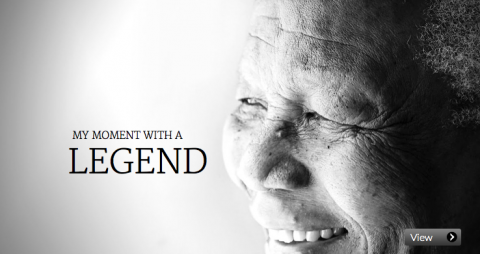 Last week, the Albert Einstein Archive went online, bringing thousands of the physicist’s papers and letters to the web. This week, we get the launch of the Nelson Mandela Digital Archive, which makes available thousands of papers belonging to the man who galvanized the anti-apartheid movement in South Africa, before eventually becoming the leader of the nation. (Don’t miss his first recorded TV interview from 1961 here.)
Made possible by a $1.25 million grant from Google, the archive organizes Mandela’s papers chronologically and thematically. You can jump into sections covering his Early Life, Prison Years, and Presidential Years, or explore his extensive book collections and work with youngsters. And, much like Einstein, you’ll get to know a different side of Mandela, the private side that was often hidden from public view.
Note: We recently mentioned that Google Street View will let you take a virtual tour of the Amazon basin. Now, it turns out, you can also use the software to take a train ride through the Swiss Alps. Start your journey here.
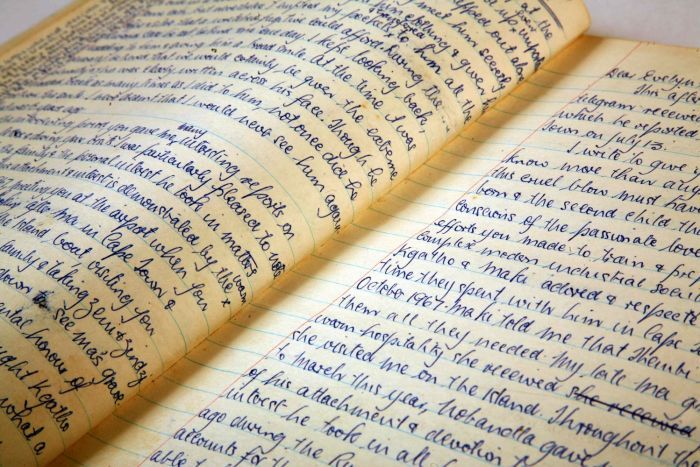
Image from Nelson Mandela’s prison journals.
Read More...Richard Dawkins Rallies for Reason in Washington DC
This weekend, an estimated 20,000 agnostics, atheists and ardent secularists gathered on the National Mall in rainy Washington DC. They were attending the first Reason Rally, an event intended to “unify, energize, and embolden secular people nationwide, while dispelling the negative opinions held by so much of American society… and having a damn good time doing it!” Lawrence Krauss, Michael Shermer, Eddie Izzard — they all spoke to the crowd. And then came Richard Dawkins, the high priest of reason, the author of The Selfish Gene, who spent decades teaching evolutionary biology at Oxford. In the middle of his 16 minute talk, he tells the audience, “We’re here to stand up for reason, to stand up for science, to stand up for logic, to stand up for the beauty of reality, and the beauty of the fact that we can understand reality.” I’m with you Richard on that. But then comes the scorn we’re now so accustomed to (“I don’t despise religious people; I despise what they stand for.”), and my guess is that changing perceptions of agnostics, atheists and secularists will need to wait for another day.
Read More...Newly Discovered Piece by Mozart Performed on His Own Fortepiano
A music scholar made an astounding discovery recently while going through the personal belongings from the attic of a recently deceased church musician and band leader in the Lech Valley of the Austrian Tyrol.
Combing through the dead man’s collection of old music manuscripts, Hildegard Herrmann-Schneider of the Institute for Tyrolean Music Research noticed a hand-written book with the date “1780” on the cover. On pages 12 to 14 she found an unidentified sonata movement with the tempo mark “allegro molto,” Italian for “very quickly.” On the upper right-hand side of page 12 was written “Del Signore Giovane Wolfgango Mozart,” or “The young Wolfgango Mozart.”
“Wolfgango” was a name Mozart’s father, Leopold, called him when he was a boy. Looking further into the manuscript, Herrmann-Schneider found several pieces that were already known to have been written by Leopold Mozart. Those compositions were respectfully marked “Signore Mozart,” or “Lord Mozart.”
Although the writing was clearly not in the hand of either the elder or the younger Mozart, the meticulousness of the transcriptions, along with the accuracy of every verifiable detail throughout the 160-page book, led Herrmann-Schneider to suspect that the composition by “The Young Wolfgango Mozart” was an authentic, previously unknown piece.
On the back of the manuscript was the copyist’s name: Johannes Reiserer. After an extensive investigation, Herrmann-Schneider was able to learn that Reiserer was born in 1765 and had gone to gymnasium, or high school, in Salzburg, where he was a member of the cathedral choir from 1778 to 1780. That would have placed him in close proximity to Leopold Mozart. “Researchers have thus concluded,” writes The History Blog, “that Johannes Reiserer used the notebook to copy compositions as part of a rigorous program of music instruction by Kapellhaus music masters, perhaps Leopold himself.”
Based on the style and the level of accomplishment in the piece, now known as the “Allegro Molto in C Major,” researchers place the date of composition at around 1767, when Mozart was 11 years old. A press release from the Institute for Tyrolean Music Research describes the piece:
Mozart frequently selected a C‑major key, and the Allegro molto has a sonata form with a length of 84 measures. Its ambitus is tailored to the clavichord. The Allegro molto could be a first major attempt by Wolfgang Amadé to assert himself in the area of the sonata form. This is suggested by the relatively high level of compositional technique.…Throughout the Allegro molto, thematic formation, compositional setting and harmony have a number of components that are found repeated in other Mozart piano works. Hardly a compositional detail points to a contradiction with the general characteristics of Mozart’s comsummate musical composition. According to current scholarly knowledge, it must therefore be regarded as an authentic sonata movement by Wolfgang Amadeus Mozart.
Austrian musician Florian Birsak, who specializes in playing early keyboard instruments, gave the premier performance of the piece on Mozart’s own fortepiano last Friday at the Mozart family home in Salzburg, which is now a museum of the Salzburg Mozarteum Foundation. You can watch a video, above, which was recorded sometime earlier in the same place and on the same instrument. You can also read a PDF of the score, and download Birsak’s recording at iTunes.
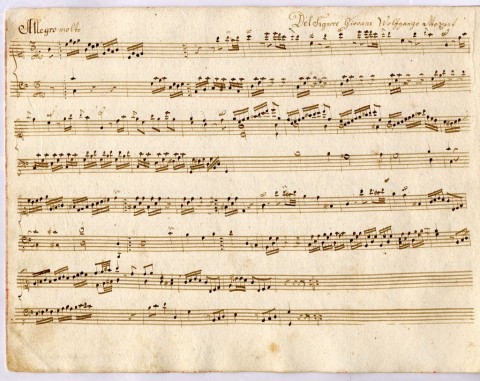
The first page of Mozart’s Allegro Molto in C Major (above) from the 1780 notebook. Credit: Salzburg Mozarteum Foundation.
via @MatthiasRascher
Read More...Robert Frost Recites ‘Stopping by Woods on a Snowy Evening’
Today is the birthday of Robert Frost, who once said that a poem cannot be worried into being, but rather, “Like a piece of ice on a hot stove the poem must ride on its own melting.” Those words are from Frost’s 1939 essay, “The Figure a Poem Makes,” which includes the famous passage:
The figure a poem makes. It begins in delight and ends in wisdom. The figure is the same as for love. No one can really hold that the ecstasy should be static and stand still in one place. It begins in delight, it inclines to the impulse, it assumes direction with the first line laid down, it runs a course of lucky events, and ends in a clarification of life–not necessarily a great clarification, such as sects and cults are founded on, but in a momentary stay against confusion.
To celebrate the 138th anniversary of the poet’s birth, we bring you rare footage of Frost reciting his classic poem, “Stopping by Woods on a Snowy Evening.” You can also listen to a four-part recording (below) of Frost reading a selection of his poems in 1956, courtesy of Harper Audio.
- Robert Frost Reading, Part One: “The Road Not Taken,” “The Pasture,” “Mowing,” “Birches,” “After Apple-Picking,” and “The Tuft of Flowers.”
- Robert Frost Reading, Part Two: “West-Running Brook” and “The Death of the Hired Man.”
- Robert Frost Reading, Part Three: “Mending Wall,” “One More Brevity,” “Departmental,” “A Considerable Speck,” and “Why Wait for Science.”
- Robert Frost Reading, Part Four: “Etherealizing,” “Provide, Provide,” “One Step Backward Taken,” “Choose Something Like a Star,” “Happiness Makes Up in Height,” and “Reluctance.”
The Animation of Billy Collins’ Poetry: Everyday Moments in Motion
The first time I saw Billy Collins speak, he appeared at my college convocation, toward the end of his years as United States Poet Laureate. Now, the second time I’ve seen Billy Collins speak, he appears giving this TEDTalk, “Everyday Moments, Caught in Time,” in which he makes fun of his own tendency to mention his years as United States Poet Laureate. But he mostly uses his fifteen minutes onstage in Long Beach in front of TED’s swooping cameras to talk about how the Sundance Channel animated five of his poems. A booster of poetry “off the shelf” and into public places — subways, billboards, cereal boxes — he figured that even such an “unnatural and unnecessary” merger could further the cause of eluding humanity’s “anti-poetry deflector shields that were installed in high school.”
Collins also notes that the idea for the project stirred the embers of his “cartoon junkie” childhood, when Bugs Bunny was his muse. Stylistically, however, the producers at the Sundance Channel kept quite far indeed from the Merrie Melodies. These animated poems opt instead for an aesthetic that takes pieces of visual reality and repurposes them in ways we don’t expect: look at the real arm slithering across the pages in the first poem, the tangible-looking dolls and doll environments of the second poem, or the drifting photographic cutouts of the third. Not to get too grand about it, but isn’t this what poetry itself is supposed to do? Don’t the words themselves also cut out fragments of actual existence and position them, recontextualize them, and move them around in ways that surprise us? The substance of these shorts — fountain pens, figurines, car keys, paper boats, matchsticks, mice — may seem like the last word in mundanity, but perceived through the differently “real” lenses of Collins’ poetry and this unusual animation, they inspire curiosity again.
Related content:
3 Year Old Recites Poem, “Litany” By Billy Collins
Bill Murray Reads Poetry At Construction Site
Colin Marshall hosts and produces Notebook on Cities and Culture. Follow him on Twitter at @colinmarshall.
Read More...The Art and Science of Violin Making
Sam Zygmuntowicz is a world-renowned luthier, or maker of stringed instruments. Joshua Bell and Yo-Yo Ma play his instruments. In 2003, a violin he made for Isaac Stern sold at auction for $130,000–the highest price ever for an instrument by a living luthier. To sum up Zygmuntowicz’s stature as a builder of fine instruments, Tim J. Ingles, director of musical instruments for Sotheby’s, told Forbes magazine: “There are no more than six people who are at his level.”
Zygmuntowicz is the subject of a 2007 book by John Marchese called The Violin Maker: Finding a Centuries-Old Tradition in a Brooklyn Workshop. In one passage, Marchese writes about the mysterious acoustical qualities of the violin, which he likens to a magic box:
The laws that govern the building of this box were decided upon a short time before the laws of gravity were discovered, and they have remained remarkably unchanged since then. It is commonly thought that the violin is the most perfect acoustically of all musical instruments. It is quite uncommon to find someone who can explain exactly why. One physicist who spent decades trying to understand why the violin works so well said that it was the world’s most analyzed musical instrument–and the least understood.
The most famous, and fabled, stringed instruments are those that were made in Cremona, Italy, in the late 17th and early 18th centuries by Antonio Stradivari and a handful of other masters. In Zygmuntowicz’s workshop in the Park Slope neighborhood of Brooklyn, New York, there is a bumper sticker that says, “My other fiddle is a Strad.” Behind the joke lies a serious point. Zygmuntowicz wants great musicians to use his instruments–not because they are cheaper than a Stradivarius, but because they are better. He’s trying to break a barrier that has been firmly in place for centuries. “I call it the ‘Strad Ceiling,’ ” he told NPR in 2008. “You know, if someone has a Strad in their case, will they play your fiddle?”
Although Joshua Bell owns a Zygmuntowicz, he mostly calls on the luthier to make fine adjustments to his Stradivarius. But Eugene Drucker of the Emerson String Quartet told Forbes that he actually prefers his Zygmuntowicz to his 1686 Stradivarius in certain situations. “In a large space like Carnegie Hall,” he said, “the Zygmuntowicz is superior to my Strad. It has more power and punch.” In spite of the mystique that surrounds Stradivari and the other Cremona masters, Zygmuntowicz sees no reason why a modern luthier couldn’t make a better instrument. “There isn’t any ineffable essence,” he told the The New York Times earlier this year, “only a physical object that works better or worse in a variety of circumstances.”
For a quick introduction to Zygmuntowicz’s work, watch a new video, above, by photographer and filmmaker Dustin Cohen, and an earlier piece by Jon Groat of Newsweek, below. And to dive deeper into the science of the violin, be sure to visit the “Strad3D” Web site, which features fascinating excerpts from Eugene Schenkman’s film about Zygmuntowicz’s collaboration with physicist George Bissinger on a project using 3D laser scans, CT scans and other technologies to analyze the acoustical properties of violins by Stradivari and Giuseppe Guarneri. As Zygmuntowicz told Strings magazine in 2006, “What makes those violins work is more knowable now than it ever was.” H/T Kottke
Note: if you have any problems watching the video below, you can watch an alternate version here.
Read More...‘Keep Calm and Carry On’: The Story of the Iconic World War II Poster
In an old Victorian railway station in the picturesque village of Alnwick, Northumberland, just South of the Scottish border, is a one-of-a-kind bookstore called Barter Books. The New Statesman called it “The British Library of secondhand books.” A model railway winds along a track laid out across row upon row of bookshelves in what was once the departure hall. During the winter months, customers sit and read by a roaring fire in the old waiting room.
One day in 2000, the store’s co-owner, Stuart Manley, was searching through a dusty box of books that were bought at auction, when he found a folded-up piece of paper at the bottom. He took the paper out, opened it and showed it to his wife and business partner, Mary Manley. Neither of them had seen it before. It said: “Keep Calm and Carry On.” As the BBC’s Stuart Hughes later put it, “the simple five-word message is the very model of British restraint and stiff upper lip.”
It turned out that the poster was one of millions that were printed on the eve of World War II but never distributed. The Manleys decided to frame the poster and hang it in the shop. Before long, customers were offering to buy it, so the Manleys decided to print some copies. Then in 2005 a national newspaper supplement recommended the poster as a Christmas gift and, as Stuart Manley put it, “all hell broke loose.”
Since that time, tens of thousands of the posters have been sold, and the slogan has found its way onto t‑shirts and coffee mugs and has been the inspiration of countless parodies like “Keep Calm and Party On” and “Freak Out and Run Like Hell.” Removed from its original context, the wartime slogan has an uncanny resonance in today’s world. “It’s very good, almost zen,” psychologist Lesley Prince told the BBC. “It works as a personal mantra now.”
For the story of this most improbable of 21st century icons, watch the three-minute film above, which was made by Temujin Doran in collaboration with the design and production studio Nation.
Read More...Van Gogh to Rothko in 30 Seconds
What if you took great works of art, stacked them side by side, and had them tell a story? You’d have a decidedly artful video … and a great teaser for the new artCircles iPad app that brings you collections of images curated by well-known figures including Yves Behar (named one of the “World’s 7 Most Important People in Design”) and John Maeda (president of Rhode Island School of Design). The app is free on iTunes, and if you pick up the new iPad with retina display, you can see where the device really excels. Or at least that was my experience when I gave it a spin.
And while we’re on the topic, here’s another free app worth checking out: “The Life of Art.” Produced by the Getty Museum in LA, the “Life of Art” gives users a chance to understand how objects end up in a museum in the first place. Photography, animations, video, and 360 degree rotations narrate the artistic lives of these objects. Find the app here. H/T Kottke
Related Content:
Free: The Guggenheim Puts 65 Modern Art Books Online
Google App Enhances Museum Visits; Launched at the Getty
MoMA Puts Pollock, Rothko & de Kooning on Your iPad
Follow us on Facebook, Twitter and now Google Plus and share intelligent media with your friends! It will brighten their day.
Read More...ParaHawking in Nepal: What It’s Really Like to Fly with Birds
We’ve always had the desire to leave our earth-bound bodies and take flight with the birds. We achieved the miracle of flight over a century ago. But only recently did we create a robot that can mechanically reproduce the beauty of birds in flight. And now we’ve taken the next step, actually joining birds high in the air. Above you can watch ParaHawking in action, a fusion between falconry and paragliding that lets you interact with birds of prey in their own environment. It all takes place in Nepal. And it’s all part of an effort to conserve Asia’s threatened vulture population. Learn more about these conservation efforts and ParaHawking itself at, of course, Parahawking.com.
And if you want to see what happens when a paraglider (not affiliated with this project) accidentally runs into an eagle, watch below:
H/T Metafilter
Follow us on Facebook, Twitter and now Google Plus and share intelligent media with your friends! They’ll thank you for it.
Read More...Hitchcock on Happiness
It’s a simple recipe for happiness. Eliminate all negative emotions, anything that creates bad feelings and distracts from the project at hand. Clear it all away, and what’s left? The space for creativity pure and simple. That’s happiness for Hitch. Watch 20 Free Hitchcock Films online here.
Follow us on Facebook, Twitter and now Google Plus and share intelligent media with your friends! They’ll thank you for it.
Support Us
We're hoping to rely on loyal readers, rather than erratic ads. Please click the Donate button and support Open Culture. You can use Paypal, Venmo, Patreon, even Crypto! We thank you!

About Us

Open Culture scours the web for the best educational media. We find the free courses and audio books you need, the language lessons & educational videos you want, and plenty of enlightenment in between.
Advertise With Us

FREE UPDATES!
GET OUR DAILY EMAIL
Get the best cultural and educational resources on the web curated for you in a daily email. We never spam. Unsubscribe at any time.
FOLLOW ON SOCIAL MEDIA

Open Culture editor Dan Colman scours the web for the best educational media. He finds the free courses and audio books you need, the language lessons & movies you want, and plenty of enlightenment in between.
Advertise With Us

