David Bowie Became Ziggy Stardust 48 Years Ago This Week: Watch Original Footage
For all the not-quite-believable material in the annals of 1970s rock history, is any more difficult to accept than the fact that Ziggy Stardust first materialized in the suburbs? Specifically, he materialized in Tolworth, greater London, at the Toby Jug pub, whose storied history as a live-music venue also includes performances by Led Zeppelin, Fleetwood Mac, Genesis, and King Crimson. There, on the night of February 10, 1972, David Bowie — until that point known, to the extent he was known, as the intriguing but not wholly unconventional young rocker of “Space Oddity” — took the stage as his androgynous Martian alter ego, bedecked in otherworldly colors and acting as no rocker ever had before.
History.com quotes Bowie in an interview published in Melody Maker less than three weeks before the Toby Jug show: “I’m going to be huge, and it’s quite frightening in a way, because I know that when I reach my peak and it’s time for me to be brought down it will be with a bump.”
He was certainly right about the first part: while Bowie’s performance as Ziggy Stardust brought him serious attention, the release that summer of his concept album The Rise and Fall of Ziggy Stardust and the Spiders from Mars would launch him permanently into the popular-culture canon. Later described as “a boot in the collective sagging denim behind of hippie singer-songwhiners,” the album expanded the listening public’s sense of what rock and rock stars could be.
In a sense, Bowie was also correct about the time coming for him to be brought down — if “him” means Ziggy Stardust, that deliberately doomed creation, his fall foretold in the title of the very album on which he stars. As we’ve previously posted about here on Open Culture, Bowie-as-Ziggy famously bid the Earth farewell onstage in 1973, not much over a year after his arrival. Of course, what to some looked like the end of Bowie’s career proved to be only the end of one chapter: the saga would continue in such incarnations as Aladdin Sane, the Thin White Duke, and a variety of others known only as “David Bowie.” But this much-mythologized and hugely influential shapeshifting all goes back to that February night in Tolworth, real footage of which you can see above. The sound comes spliced in from a different show, played that same year in Santa Monica — but then, Bowie was about nothing if not artifice.
via Boing Boing
Related Content:
The Story of Ziggy Stardust: How David Bowie Created the Character that Made Him Famous
David Bowie Recalls the Strange Experience of Inventing the Character Ziggy Stardust (1977)
Hear Demo Recordings of David Bowie’s “Ziggy Stardust,” “Space Oddity” & “Changes”
David Bowie Remembers His Ziggy Stardust Days in Animated Video
Based in Seoul, Colin Marshall writes and broadcasts on cities, language, and culture. His projects include the book The Stateless City: a Walk through 21st-Century Los Angeles and the video series The City in Cinema. Follow him on Twitter at @colinmarshall or on Facebook.
Read More...The Experimental Abstract Films of Pioneering American Animator Mary Ellen Bute (1930s-1950s)
There’s been a lot of talk about the blurring of national and linguistic boundaries at the Academy Awards this year. Have we entered a new era of moviemaking internationalism? “History, that never-failing fount of irony,” writes Anthony Lane at The New Yorker, “may be of assistance at this point.” When Louis B. Mayer first proposed the Academy in 1927 at the Ambassador Hotel in Los Angeles, it was to be called the International Academy of Motion Picture Arts and Sciences. “The word ‘International’ didn’t last long. It smacked of places other than America, so it had to go.”
As every student of the medium knows, however, not only have various international styles dominated film since its inception, but so too have various international cinematic languages—among them the production of abstract “visual music” films like those pioneered by German-American artist and filmmaker Oskar Fischinger, who worked on the special effects for Fritz Lang’s 1929 Woman in the Moon, created several dozen short films, and inspired Walt Disney’s Fantasia.
Fischinger’s work also inspired another, far less famous American filmmaker, Mary Ellen Bute, a Houston-born, Yale-educated animator and experimental director who “produced over a dozen short abstract animations between the 1930s to the 1950s,” notes Ubuweb, “set to classical music by the likes of Bach, Saint-Saens or Shostakovich, and filled with colorful forms, elegant design and sprightly, dance-like rhythms.” See several of her short films above and below.
Bute collaborated with many prominent creators, including composer Joseph Schillinger, musician and inventor Thomas Wilfred, Leon Theremin, animator and director Norman McLaren, and cinematographer Ted Nemeth, whom she married in 1940.
The films in Bute’s Seeing Sound series are “like a marriage of high modernism and Merrie Melodies”—and the shorts proved so compelling they were screened regularly at Radio City Music Hall in the 1930s.
Like Fischinger’s, her animations spoke a purely abstract language, though they sometimes gestured at story (as in “Spook Sport,” further down). “We need a new kinetic, visual art form—one that unites sound, color and form,” she told the New York World-Telegram in 1936. She conceived of sounds and images as working in harmony or counterpoint, along the same mathematical principles. “I wanted to manipulate light to produce visual compositions in time continuity,” Bute wrote in 1954, “much as a musician manipulates sound to produce music.”
The language of film has narrowed considerably in the decades since Bute made her films, it seems, excluding experiments like visual music. In so doing, contemporary cinema—with its reliance on narrative plotting and dialogue as its central engines—has excluded a significant part of the human experience. In her last film, her only feature, Bute adapted passages from James Joyce’s Finnegans Wake, a book that turned literature into music as Bute had sought to do with film.
She opens her Finnegans Wake with title cards bearing quotations from Joyce, including a quote she also used to explain her transition from abstract, animated film to a movie with actors and sets: “One great part of every human existence is passed in a state which cannot be rendered sensible by the use of wide-awake language, cut-and-dry grammar and go-ahead plot.” Such modernist abstraction in cinema, Bute wrote, adds up to more than “novelty,” a word sometimes used to describe her work to the public. Like Joyce, her use of abstraction, she wrote, “is about the essence of our Being.”
via @reaktorplayer
Related Content:
Optical Poems by Oskar Fischinger, the Avant-Garde Animator Hated by Hitler, Dissed by Disney
The First Avant Garde Animation: Watch Walter Ruttmann’s Lichtspiel Opus 1 (1921)
Watch the Meditative Cinepoem “H20”: A Landmark Avant-Garde Art Film from 1929
Josh Jones is a writer and musician based in Durham, NC. Follow him at @jdmagness
Read More...Old Book Illustrations: An Online Database Lets You Download Thousands of Illustrations from the 19th & 20th Centuries
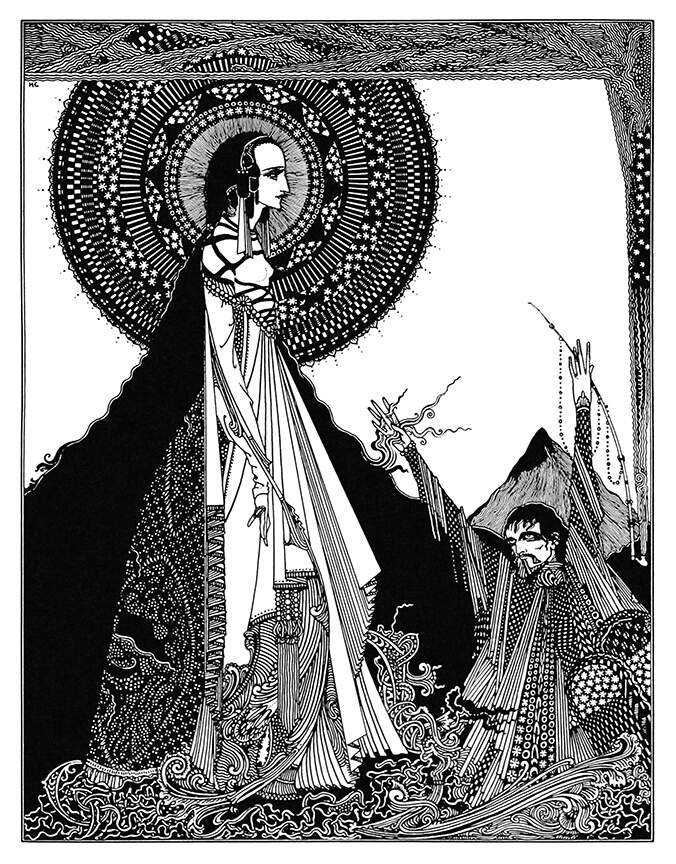
The Golden Age of Illustration is typically dated between 1880 and the early decades of the 20th century. This was “a period of unprecedented excellence in book and magazine illustration,” writes Artcyclopedia; the time of artists like John Tenniel, Beatrix Potter (below), Arthur Rackham, and Aubrey Beardsley. Some of the most prominent illustrators, such as Beardsley and Harry Clarke (see one of his Poe illustrations above), also became internationally known artists in the Art Nouveau, Arts and Crafts, and Pre-Raphaelite movements.
But extensive book illustration as the primary visual culture of print precedes this period by several decades. One of the most revered and prolific of fine art book illustrators, Gustave Doré, did some of his best work in the mid-nineteenth century.
Other French illustrators, such as Alphonse de Neuville and Emile-Antoine Bayard, made impressive contributions in the 1860s and 70s—for example, to Jules Verne’s lavishly illustrated, 54-volume Voyages Extraordinaires.

As Colin Marshall wrote in a recent post here, these copious illustrations (4,000 in all) served more than a just decorative purpose. A less than “fully literate public” benefited from the picture-book style. So too did readers hungry for stylish visual humor, for documentary representations of nature, architecture, fashion, etc., before photography became not only possible but also inexpensive to reproduce. Whatever the reason, readers throughout the nineteenth and early twentieth centuries would generally expect their reading material to come with pictures, and very finely rendered ones at that.
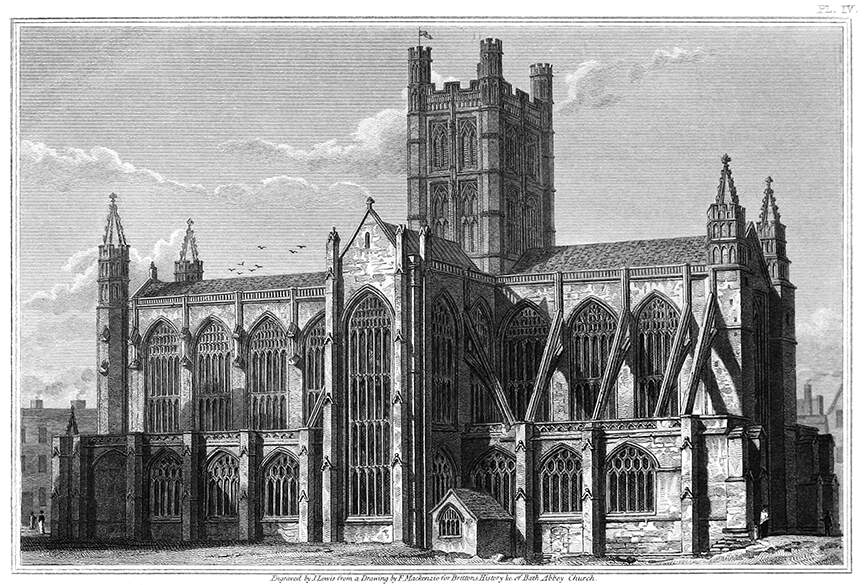
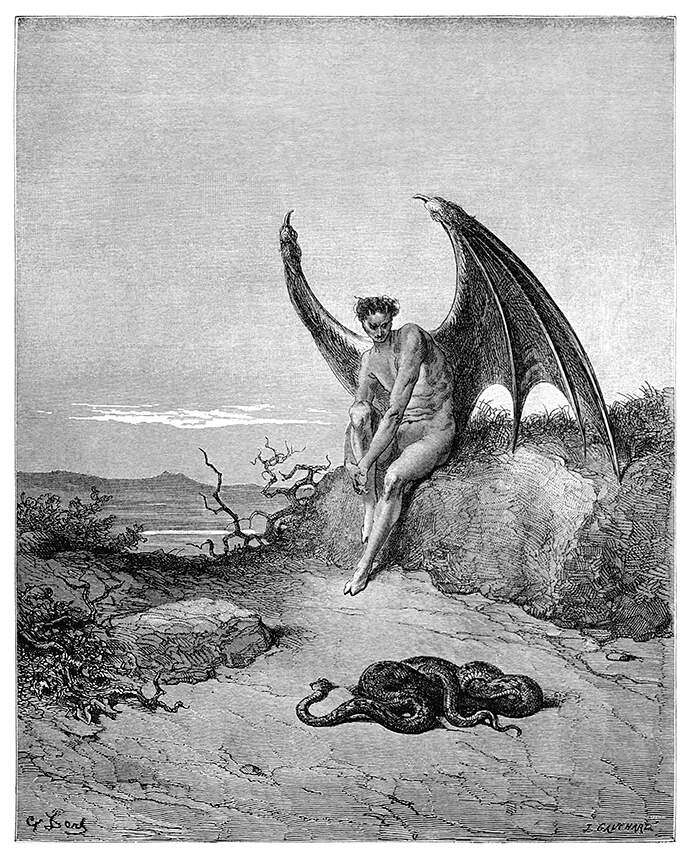
The online database Old Book Illustrations has catalogued thousands of these illustrations, lifted from their original context and searchable by artist name, source, date, book title, techniques, formats, publishers, subject, etc. “There are also a number of collections to browse through,” notes Kottke, “and each are tagged with multiple keywords.” Not all of the work represented here is up to the uniquely high standards of a Gustave Doré (below), Aubrey Beardsley, or John Tenniel, all of whom, along with hundreds of other artists, get their own categories. But that’s not entirely the point of this library.
Old Book Illustrations presents itself as a scholarly resource, including a digitized Dictionary of the Art of Printing and short articles on some of the most famous artists and significant texts from the period. The site’s publishers are also transparent about their selection process. They are guided by their “reasons pertaining to taste, consistency, and practicality,” they write. The archive might have broadened its focus, but “due to obvious legal restrictions, [they] had to stay within the limits of the public domain.”
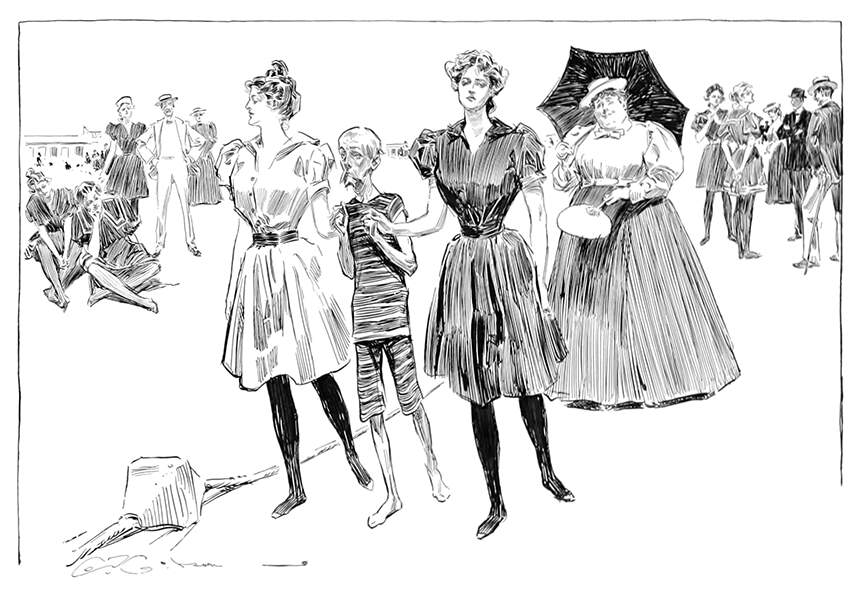
Likewise, they note that the digitized images on the site have been restored to “make them as close as possible to the perfect print the artist probably had in mind when at work.” Visitors who would prefer to see the illustrations as “time handed them to us” can click on “Raw Scan” to the right of the list of resolution options at the top of each image. (See a processed and unprocessed scan above and below of fashion illustrator and humorist Charles Dana Gibson’s “overworked American father” on “his day off in August.”)
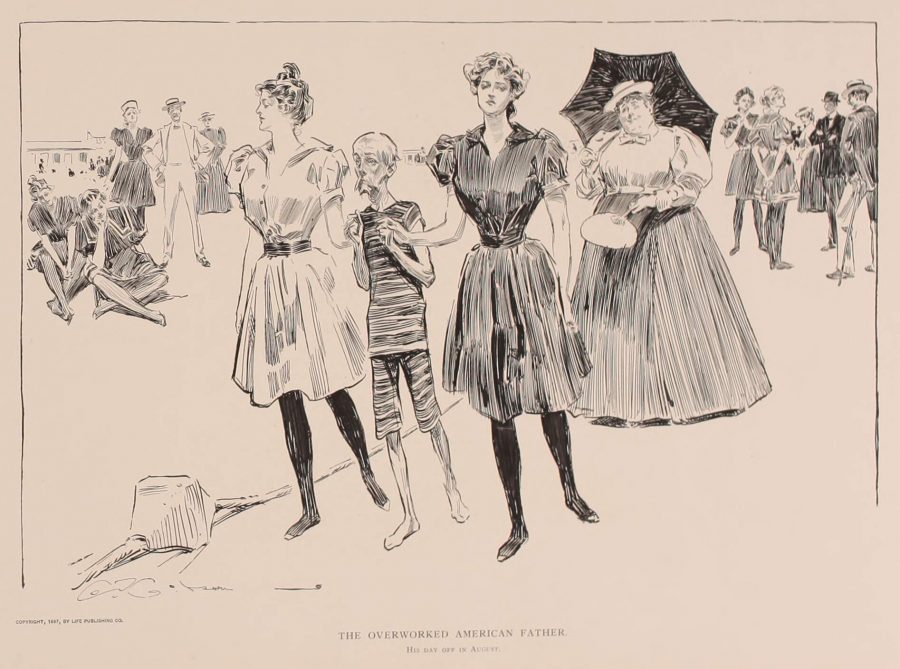
All of the images on Old Book Illustrations are available in high resolution, and the site authors intend to add more articles and to make available in English articles on French Romanticism unavailable anywhere else. “We are not the only image collection on the web,” they write, “neither will we ever be the largest one. We hope however to be a destination of choice for visitors more particularly interested in Victorian and French Romantic illustrations.” They give visitors who fit that description plenty of incentive to keep coming back.
Related Content:
Aubrey Beardsley’s Macabre Illustrations of Edgar Allan Poe’s Short Stories (1894)
Harry Clarke’s Hallucinatory Illustrations for Edgar Allan Poe’s Stories (1923)
Gustave Doré’s Splendid Illustrations of Edgar Allan Poe’s “The Raven” (1884)
Josh Jones is a writer and musician based in Durham, NC. Follow him at @jdmagness
Read More...When Miles Davis Discovered and Then Channeled the Musical Spirit of Jimi Hendrix
After the release of Bitches Brew in 1970, Columbia Records pushed Miles Davis to play a series of dates at the Fillmore West and East supporting major rock bands like Neil Young and Crazy Horse, the Grateful Dead, and the Steve Miller Band. Miles “went nuts,” Columbia’s Clive Davis later remembered. “He told me he had no interest in playing for ‘those fucking long-haired kids.’”
The reaction does not reflect Miles’ attitude toward all the music enjoyed by long-haired kids, especially—it should go without saying—the psych rock he embraced and transformed in the early seventies. Miles admired a handful of rock musicians, and none more so than Jimi Hendrix, whom he discovered, notes the short excerpt from The Miles Davis Story above, through guitarist John McLaughlin.
As McLaughlin tells it, Davis was dumbfounded when he first saw Hendrix play on film in D.A. Pennebaker’s documentary Monterey Pop. “As the 70s dawned,” Tim Cumming writes at The Guardian, Hendrix had his Band of Gypsys, and Davis was in the audience for their legendary new-year set at Fillmore East, marveling at Machine Gun and the powerful drumming of Buddy Miles.”
Miles’ appreciation of Hendrix, James Brown, and Sly Stone birthed the album Jack Johnson in 1971, a “concentrated take on rock and funk that defies categorization.” As you can hear in “Right Off, Pt. 1” above, it was also a return to the blues, a legacy he shared with Hendrix. “Jimi… came from the blues, like me,” Davis wrote in his autobiography. “We understood each other right away because of that. He was a great blues guitarist.”
In the year before Hendrix’s death, the two jammed at Davis’ house and planned to record an album, though it never came to pass. The idea remains an impossibly compelling musical what-if. (So does the time Hendrix invited Paul McCartney to create a super group with Miles Davis.) “Some things are simply beyond conception,” writes Kollibri Terre Sonnenblume in an appreciation of Live-Evil, Miles’ most direct channeling of Hendrix. As Davis himself later wrote, “By now I was using the wah-wah on my trumpet all the time so I could get closer to that voice Jimi had when he used a wah-wah on his guitar.”
Davis “lifted musical elements from Hendrix’s oeuvre,” notes Sonnenblume, pointing out the many specific references throughout the album’s four live and four studio tracks. The first song on the album, “Sivad,” kicks things off with an aggressive solo almost right off the mark:
First-time listeners often mistakenly assume they are hearing a guitar coming in at the 49 second mark, but they’re wrong. That squealing, distorted sound, chattering with rabid ferocity, lunging like a rabid dog and circling like a dervish – complete with what sounds for all the world like a pick-glissando – is coming out of Davis’ horn, not McLaughlin’s guitar.
Hendrix’s death upset Miles deeply. “He was so young and had so much ahead of him,” he wrote. It’s hard even to imagine what might have lay ahead for both of them in the studio, but Davis’ take on Jimi’s musical personality might give us a good idea of where they were headed—into territory far beyond the blues, jazz, rock, world-funk, and any other genre label you might care to name.
Related Content:
In 1969 Telegram, Jimi Hendrix Invites Paul McCartney to Join a Super Group with Miles Davis
Listen to The Night When Miles Davis Opened for the Grateful Dead in 1970
Josh Jones is a writer and musician based in Durham, NC. Follow him at @jdmagness
Read More...The Biodiversity Heritage Library Makes 150,000 High-Res Illustrations of the Natural World Free to Download
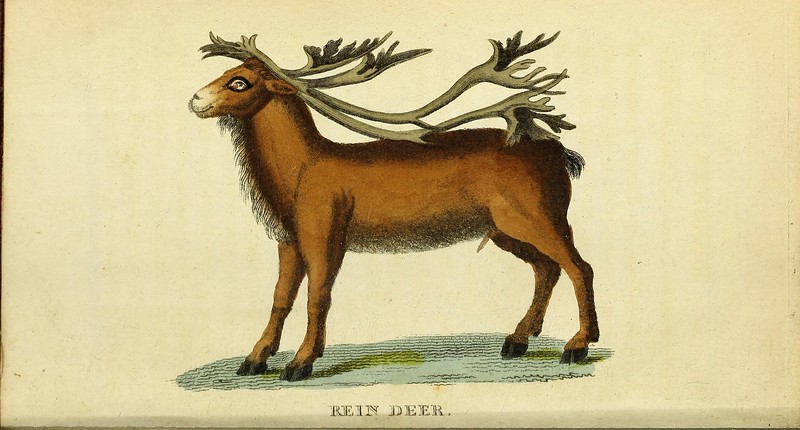
You may have heard of “plant blindness,” a condition defined about 20 years ago that has started to get more press in recent years. As its name suggests, it refers to an inability to identify or even notice the many plant species around us in our everyday lives. Some have connected it to a potentially more widespread affliction they call “nature deficit disorder,” which is also just what it sounds like: a set of impairments brought on by insufficient exposure to the natural world. One might also draw a line from these concepts to our attitudes about climate change, or to our ever-less-interrupted immersion in the digital world. But if any part of that digital world can open our eyes to nature once again, it’s the Biodiversity Heritage Library (present also on Flickr and Instagram.)
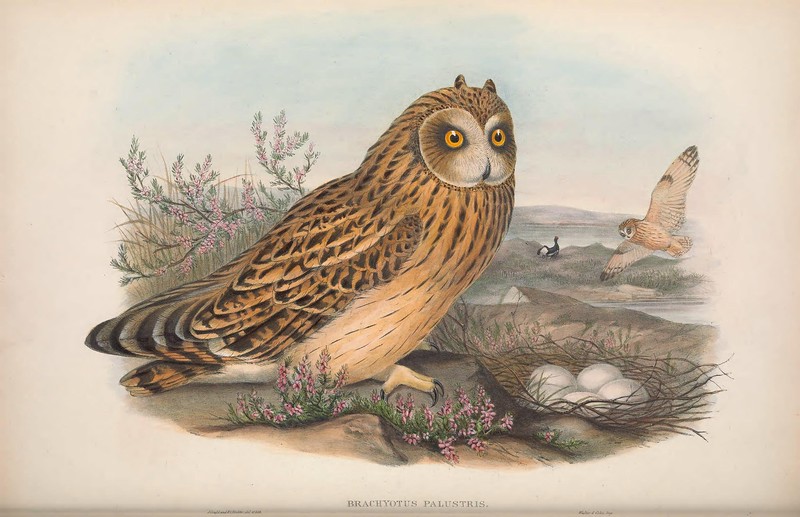
Previously featured here on Open Culture for its vast archive of two million illustrations of the natural world, the BHL has received more coverage this year for the more than 150,000 it’s made available for copyright-free download. Hyperallergic’s Hakim Bishara quotes Henry David Thoreau — “We need the tonic of wildness. We can never get enough of nature” — before writing of how thrilled Thoreau would have been by the existence of such a resource for images of nature.
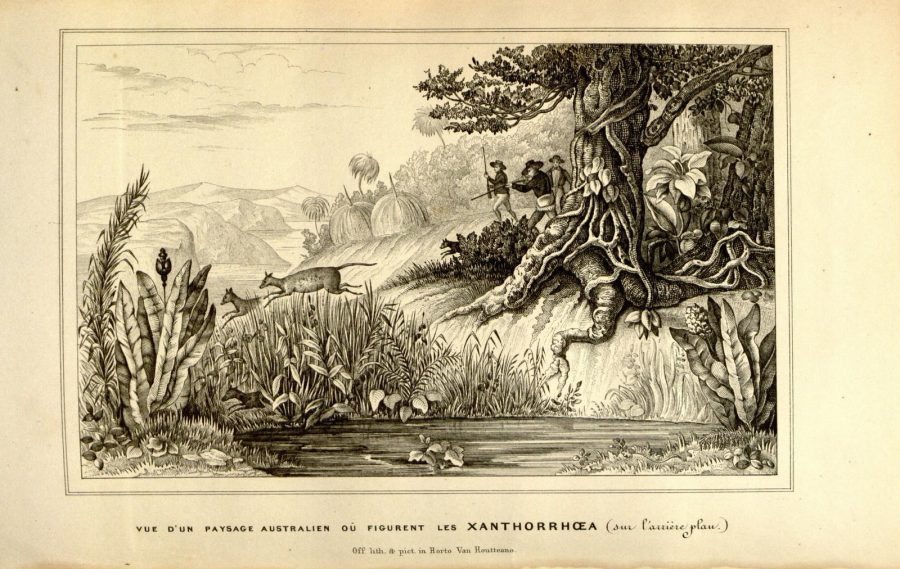
These images include “animal sketches, historical diagrams, botanical studies, and scientific research collected from hundreds of thousands of journals and libraries across the world,” some dating to the 15th century. He highlights “Joseph Wolf’s 19th-century book Zoological Sketches, containing about 100 lithographs depicting wild animals in London’s Regent’s Park” and “watercolors depicting flowers indigenous to the Hawaiian islands” as well as “an 1833 DIY Taxidermist’s Manual.”
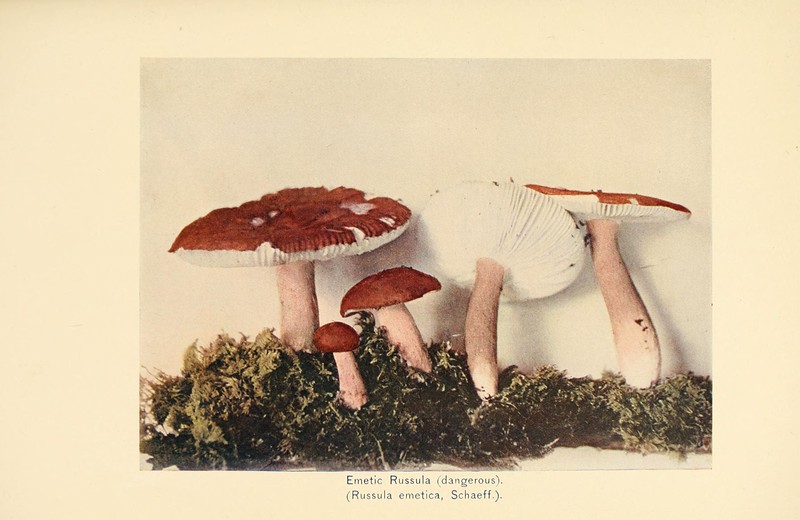
As Smithsonian.com’s Theresa Machemer notes, “The practice of creating detailed illustrations of flora and fauna, whether to document an expedition or a medical practice, gained popularity well before photography was up to the task.” Hence such ambitious projects as the United States government’s commissioning, in 1866, of watercolor paintings depicting every fruit known to man. But even today, “an illustration can offer more clarity than a photograph,” as you’ll find when you zoom in on any of the BHL’s high-resolution illustrations. According to the BHL, “a worldwide consortium of natural history, botanical, research, and national libraries,” its mission is to provide “access to the world’s collective knowledge about biodiversity,” in order to help researchers “document Earth’s species and understand the complexities of swiftly-changing ecosystems in the midst of a major extinction crisis and widespread climate change.” But by revealing how our predecessors saw nature, it can also help all of us see nature again. Access the illustrations here.
Related Content:
Two Million Wondrous Nature Illustrations Put Online by The Biodiversity Heritage Library
Based in Seoul, Colin Marshall writes and broadcasts on cities, language, and culture. His projects include the book The Stateless City: a Walk through 21st-Century Los Angeles and the video series The City in Cinema. Follow him on Twitter at @colinmarshall or on Facebook.
Read More...Jules Verne’s Most Famous Books Were Part of a 54-Volume Masterpiece, Featuring 4,000 Illustrations: See Them Online
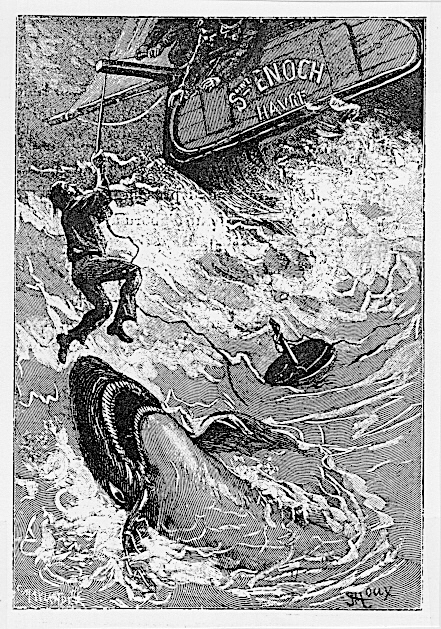
Not many readers of the 21st century seek out the work of popular writers of the 19th century, but when they do, they often seek out the work of Jules Verne. Journey to the Center of the Earth, Twenty Thousand Leagues Under the Sea, Around the World in Eighty Days: fair to say that we all know the titles of these fantastical French tales from the 1860s and 70s, and more than a few of us have actually read them. But how many of us know that they all belong to a single series, the 54-volume Voyages Extraordinaires, that Verne published from 1863 until the end of his life? Verne described the project’s goal to an interviewer thus: “to conclude in story form my whole survey of the world’s surface and the heavens.”
Verne intended to educate, but at the same time to entertain and even artistically impress: “My object has been to depict the earth, and not the earth alone, but the universe,” he said. “And I have tried at the same time to realize a very high ideal of beauty of style.” This he accomplished with great success in a time and place without even what we would now consider a fully literate public.
As philosopher Marc Soriano writes of the 1860s when Verne began publishing, “The drive for literacy in France has been underway since the Guizot Law of 1833, but there is still much to do. Any well-advised editor must aid his readers who have not yet achieved a good reading proficiency.”
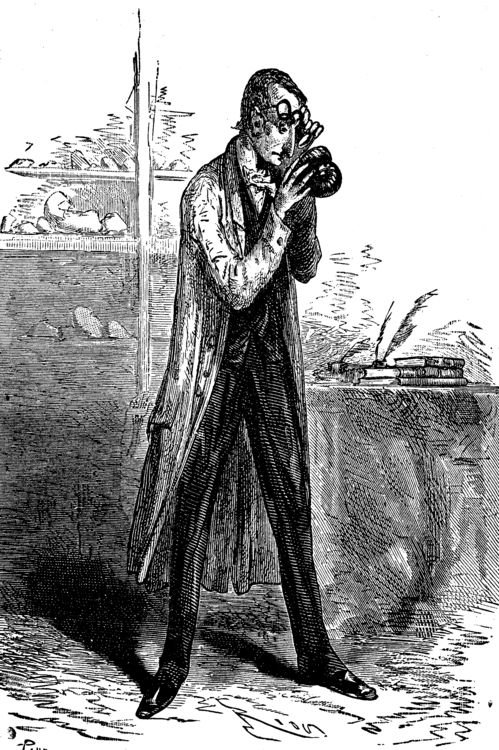
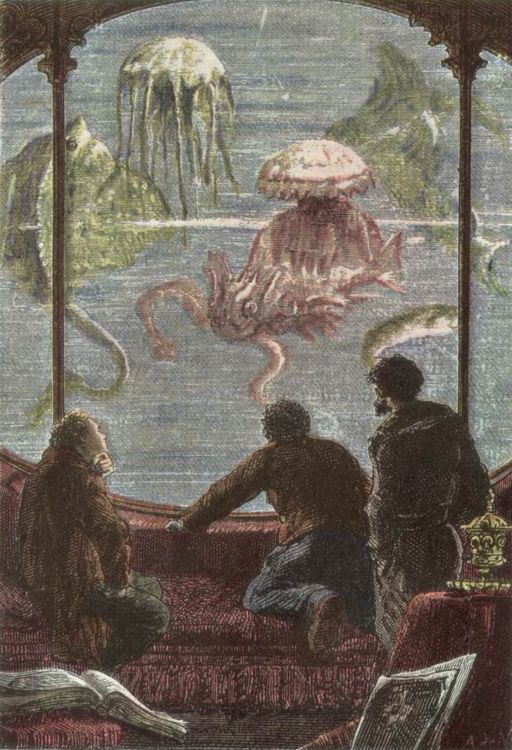
Hence the need for illustrations: beautiful illustrations, scientifically and narratively faithful illustrations, and above all a great many illustrations: over 4,000 of them, by the count of Arthur B. Evans in his essay on the series’ artists, “an average of 60+ illustrations per novel, one for every 6–8 pages of text.” Still today, “most modern French reprints of the Voyages Extraordinaires continue to feature their original illustrations — recapturing the ‘feel’ of Verne’s socio-historical milieu and evoking that sense of faraway exoticism and futuristic awe which the original readers once experienced from these texts. And yet, to date, the bulk of Vernian criticism has virtually ignored the crucial role played by these illustrations in Verne’s oeuvre.”
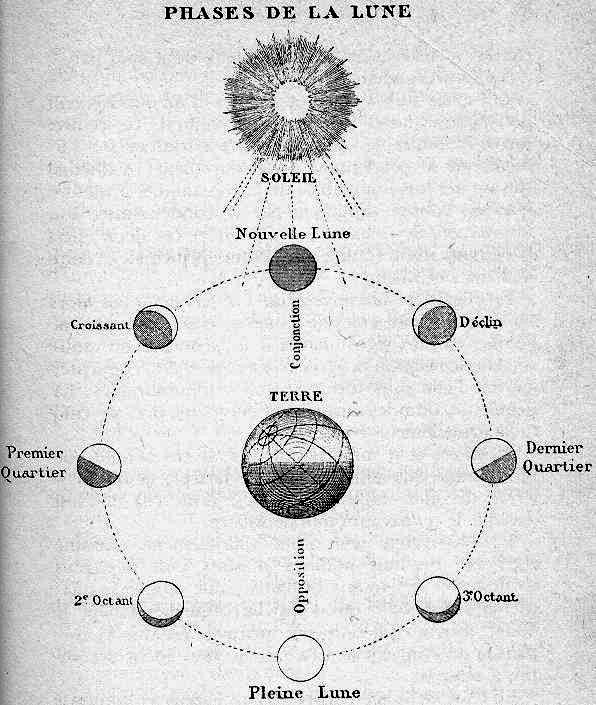
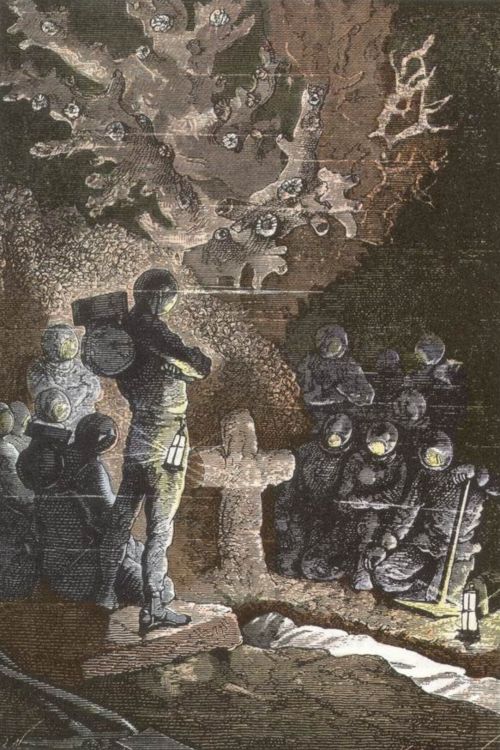
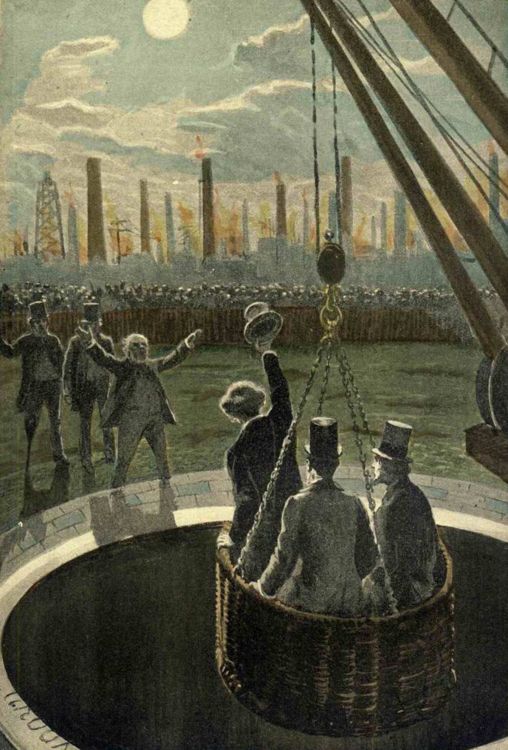
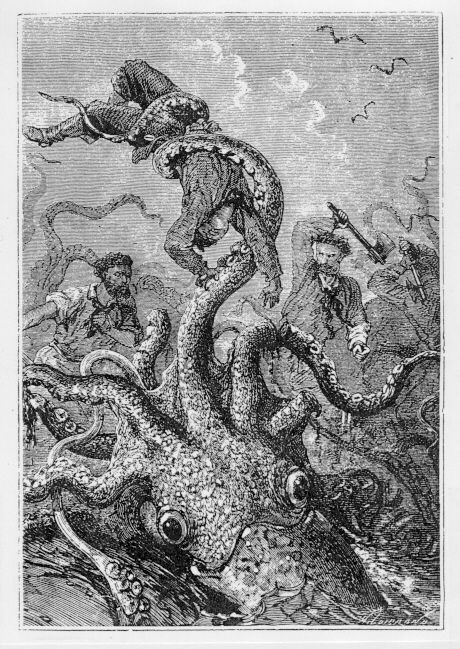
Evans identifies four different types of illustrations in the series: “renderings of the protagonists of the story — e.g., portraits like the one of Impey Barbicane in De la terre à la lune”; “panoramic and postcard-like” views of the “exotic locales, unusual sights, and flora and fauna which the heroes encounter during their journey, like the one from Vingt mille lieues sous les mers depicting divers walking on the ocean floor”; “documentational” illustrations like “the map of the Polar regions (hand-drawn by Verne himself) for his 1864 novel Les Voyages et aventures du capitaine Hatteras”; and portayals of “a specific moment of action in the narrative—e.g., the one from Voyage au centre de la terre where Prof. Lidenbrock, Axel, and Hans are suddenly caught in a lightning storm on a subterranean ocean.”
Verne and his editor Pierre-Jules Hetzel commissioned these illustrations from no fewer than eight artists, a group including Edouard Riou, Alphonse de Neuville, Emile-Antoine Bayard (previously featured here on Open Culture), and Léon Benett — all well-known artists in late 19th-century France, and made even more so by their work in the Voyages Extraordinaires. You can browse a complete gallery of the series’ original illustrations here, and if you like, enrich the experience with this extensive essay by Terry Harpold on “reading” these images in context.
Together with the stories themselves, on the back of which Verne remains the most translated science-fiction author of all time, they allow Harpold to make the credible claim that “the textual-graphic domain constituted by these objects is unmatched in its breadth and variety; no other corpus associated with a single author is comparable.” Human knowledge of the universe has widened and deepened since Verne’s day, but for sheer intellectual and adventurous wonder about what that universe might contain, has any writer, from any era or land, outdone him since?
Related Content:
How French Artists in 1899 Envisioned Life in the Year 2000: Drawing the Future
Petite Planète: Discover Chris Marker’s Influential 1950s Travel Photobook Series
The Art of Sci-Fi Book Covers: From the Fantastical 1920s to the Psychedelic 1960s & Beyond
Based in Seoul, Colin Marshall writes and broadcasts on cities, language, and culture. His projects include the book The Stateless City: a Walk through 21st-Century Los Angeles and the video series The City in Cinema. Follow him on Twitter at @colinmarshall or on Facebook.
Read More...Chick Corea (RIP) Offers 16 Pieces of “Cheap But Good Advice for Playing Music in a Group” (1985)
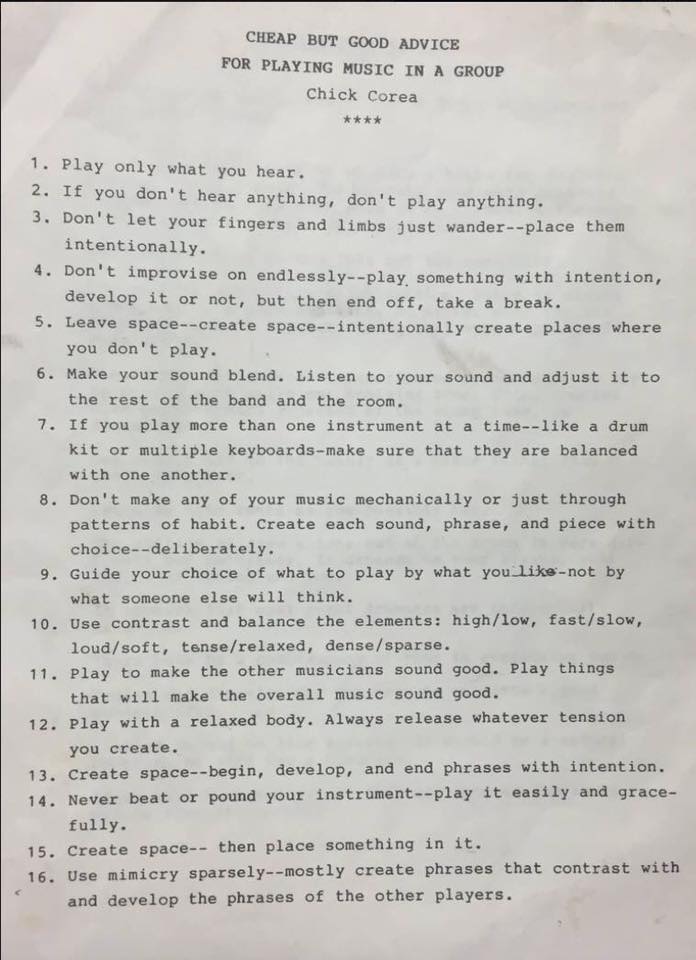
Jazz instrumentalists who “play the changes” have learned to make improvisation look easy. In live performance, the audience shouldn’t see the years of study and practice behind what Willie Thomas calls at Jazz Everyone, “a system that combines the basic jazz language with the important music theory concepts” and at the same time “allows a player to focus on how the music fits the tune and not the chord symbols and scales that often incumber performance.”
That may seem like a wordy explanation, but Thomas is careful to explicate the cliché “play the changes” for maximum meaning, drawing on over forty years of experience himself learning the principle as a “useful tool for self expression through jazz music.” The idea of playing to the tune may seem fundamentally obvious, but the more one develops as a student, the farther away one can get from lived experience.
How might musicians apply ideals about ensemble playing to actual ensemble playing? For answers to this question, we might turn to jazz legend Chick Corea, member of Miles Davis’s band during the pathbreaking In a Silent Way and Bitches Brew sessions; player in and leader of more Grammy-winning ensembles than perhaps anyone else (he’s collected 23 awards so far); and “one of the jazz world’s most thoughtful and lucid champions.”
This description comes from a Christian Science Monitor write-up of Corea’s appearance in a two-hour Q&A session at Berklee College of Music in 1985, where the pianist and jazz fusion keyboard master had students pick up the typed handout above at the door. He begins with the simplest, but most important advice, “Play only what you hear,” then elaborates in 16 rules which you can read in full below.
Corea’s primary metaphor is architectural—performance, he says, is about creating spaces and tastefully filling them. Doing this well requires serious study and practice. Then it requires remembering some basic rules, or Chick Corea’s “Cheap But Good Advice for Playing Music in a Group.” My favorite: “always release whatever tension you create.” Like much of you we find here, it’s good all-around advice for every endeavor.
- Play only what you hear.
- If you don’t hear anything, don’t play anything.
- Don’t let your fingers and limbs just wander—place these intentionally.
- Don’t improvise on endlessly—play something with intention, develop it or not, but then end off, take a break.
- Leave space—create space—intentionally create places where you don’t play.
- Make your sound blend. Listen to your sound and adjust it to the rest of the band and the room.
- If you play more than one instrument at a time—like a drum kit or multiple keyboards—make sure that they are balanced with one another.
- Don’t make any of your music mechanically or just through patterns of habit. Create each sound, phrase, and piece with choice—deliberately.
- Guide your choice of what to play by what you like—not by what someone else will think.
- Use contrast and balance the elements: high/low, fast/slow, loud/soft, tense/relaxed, dense/sparse.
- Play to make the other musicians sound good. Play things that will make the overall music sound good.
- Play with a relaxed body. Always release whatever tension you create.
- Create space—begin, develop, and end phrases with intention.
- Never beat or pound your instrument—play it easily and gracefully.
- Create space—then place something in it.
- Use mimicry sparsely—mostly create phrases that contrast with and develop the phrases of the other players.
via Nate Chinen
Related Content:
Thelonious Monk’s 25 Tips for Musicians (1960)
John Coltrane Draws a Picture Illustrating the Mathematics of Music
Josh Jones is a writer and musician based in Durham, NC. Follow him at @jdmagness
Read More...The Woman Who Invented Rock n’ Roll: An Introduction to Sister Rosetta Tharpe
When people would ask her about her music, she would say, “Oh, these kids and rock and roll — this is just sped up rhythm and blues. I’ve been doing that forever.”
- Gayle Wald, author of Shout, Sister, Shout!: The Untold Story of Rock-and-Roll Trailblazer Sister Rosetta Tharpe
What do rock and roll pioneers Elvis Presley, Chuck Berry, and Little Richard have in common, besides belonging to the inaugural (and all male) class of Rock and Roll Hall of Fame inductees?
They were all deeply influenced by Sister Rosetta Tharpe, the Godmother of Rock and Roll, and the subject of the collage-happy Polyphonic video essay, above.
(I’d rethink the essayist’s choice to obscure Tharpe’s right hand with an unnecessary cut out of a floating guitar superimposed over archival concert footage. Here’s an unobstructed view.)
Berry described his career as “one long Rosetta Tharpe impersonation.”
Presley was captivated by her unique guitar-picking style, recording several songs that had been hits for the church-reared Tharpe, including “Up Above My Head,” “Just A Closer Walk With Thee,” “This Train and Down By The Riverside.”
And Little Richard’s first big break at 14 came compliments of Tharpe, who overheard him singing some of her gospel tunes, and spontaneously invited him to open for her at the Macon City Auditorium.
She was the trailblazers’ trail blazer in ways that go beyond rock and roll:
She was one of the few African-American female performers to appear on a V‑Disc, a joint effort on the part of the government and the record industry to ship morale-boosting 78RPM records to overseas troops during World War II.
Her personalized—and self-designed—tour bus was a music industry first, ensuring that she and her tourmate (and alleged lover), Marie Knight, would be able to dine and sleep in comfort as African-Americans traveling during segregation.
She hired the all-white, all-male Grand Old Opry stars the Jordanaires to back her up, a bold move for an artist of color in 1938.
Her style, and likely personal mettle, owed a lot to her mother, the singing, mandolin-playing evangelist Katie Bell Nubin, who relocated from Arkansas to Chicago, to join a Pentecostal congregation where women were allowed to preach and six-year-old “Rosie” was placed atop the piano, so people in the back could see her as she performed.
After a brief marriage to a preacher, Tharpe hit New York City, where she embarked on a secular career, performing in nightclubs with the likes of Duke Ellington and Cab Calloway.
The flip side of adulation by soon-to-be rock and roll greats was rejection by many of the devout Christians who had celebrated her gifts when they were offered up in a purely gospel context.
Her fame was eclipsed by the rise of those she’d influenced.
The public may have forgotten her for a time, but the starry names in her debt did not.
Johnny Cash singled her out as one of his heroes in his 1992 Rock and Roll Hall of Fame induction speech.
And three years ago, the Godmother of Rock and Roll was finally inducted into the Rock and Roll Hall of Fame herself.
Related Content:
Watch the Hot Guitar Solos of Sister Rosetta Tharpe, “America’s First Gospel Rock Star”
Revisit The Life & Music of Sister Rosetta Tharpe: ‘The Godmother of Rock and Roll’
New Web Project Immortalizes the Overlooked Women Who Helped Create Rock and Roll in the 1950s
Ayun Halliday is an author, illustrator, theater maker and Chief Primatologist of the East Village Inky zine. Join Ayun’s company Theater of the Apes in New York City this March for her book-based variety series, Necromancers of the Public Domain, and the world premiere of Greg Kotis’ new musical, I AM NOBODY. Follow her @AyunHalliday.
Read More...Free Coloring Books from World-Class Libraries & Museums: Download & Color Hundreds of Free Images

There are many roads to wellness. Meditation, yoga, exercise, and healthy diet are all effective therapies for bringing down stress levels. But we shouldn’t discount an activity we once used to while hours away as children, and that adults by the millions have taken to in recent years. Coloring takes us out of ourselves, say experts like Doctor of Psychiatry Scott M. Bea, “it’s very much like a meditative exercise.” It relaxes our brain by focusing our attention and pushing distracting and disturbing thoughts to the margins. The low stakes make the activity easy and pleasurable, qualities grown-ups don’t get to ascribe to most of what they spend their time doing.
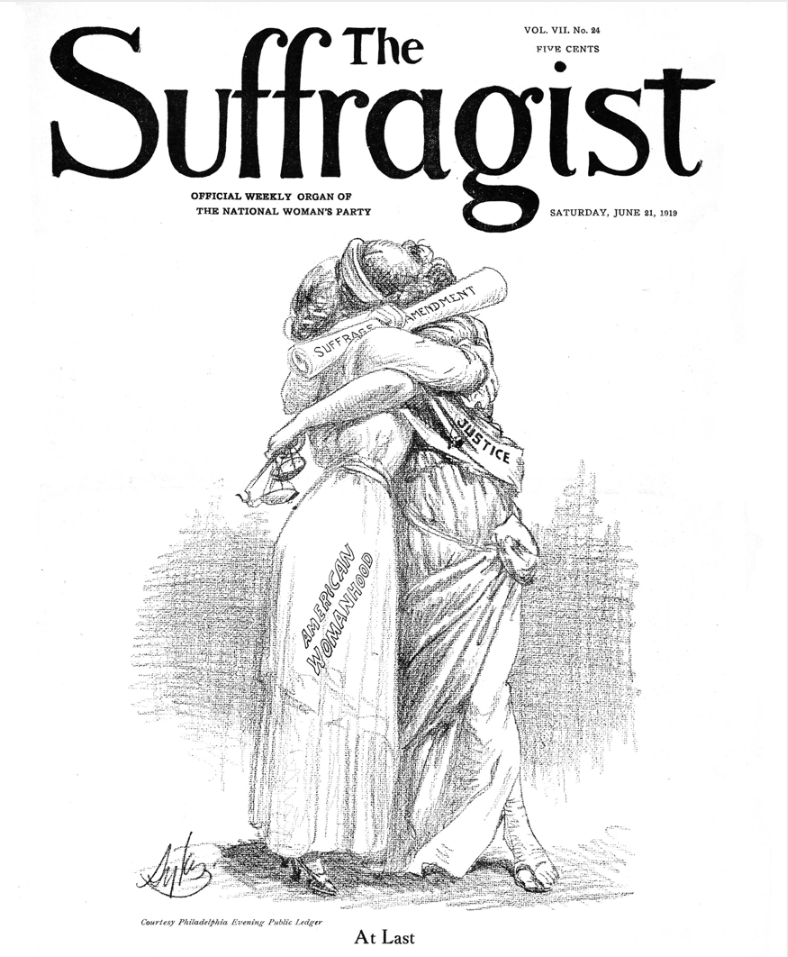
Reducing anxiety is all well and good, but some art and history lovers can’t accept just any old mass-market coloring book. Luckily, a consortium of over a hundred museums and libraries has given these special customers a reason to stick with it. Since 2016, the annual #ColorOurCollections campaign, led by the New York Academy of Medicine (NYAM), has made available, for free, adult coloring books. The range of images offers something for everyone, from early modern illustrations like the cat at the top, from Edward Topsell’s Historie of Foure-Footed Beastes (1607)—courtesy of Trinity Hall Cambridge; to the poignant cover of The Suffragist, below, from July 1919, a month after U.S. women won the right to the vote (from the Huntington Library, Art Museum, and Botanical Gardens).
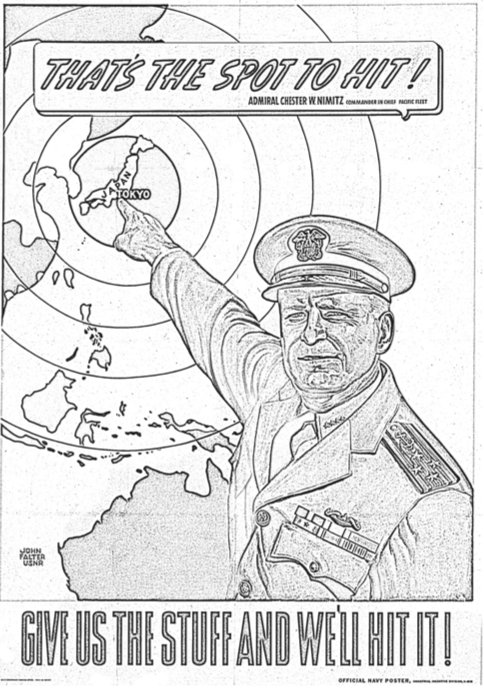
There are, unsurprisingly, copious illustrations of medical procedures and anatomy, like that below from the Library at the University of Barcelona. There are vintage advertisements, “canoe-heavy content” from a Canadian museum, as Katherine Wu reports at Smithsonian, and war posters like that further down of Admiral Chester Nimitz asking for “the stuff” to hit “the spot,” i.e. Tokyo –from the Pritzker Military Museum. “The only commonality shared by the thousands of prints and drawings available on the NYAM website is their black-and-white appearance: The pages otherwise span just about every taste and illustrative predilection a coloring connoisseur could conjure.”

One Twitter fan pointed out that the initiative provides “a great way to get to know some of the collections held in libraries around the world.” Their enthusiasm is catching. But note that few of the institutions (see full collection here) have uploaded a large quantity of colorable images. Most of the “coloring books” consist of only a handful of pages, some only one or two. Taken altogether, however, the combined strength of one hundred institutions, over four years (see previous years at the links below), adds up to many hundreds of pages of coloring fun and relaxation. If that’s your thing, start here. If you don’t know if it’s your thing, #ColorOurCollections is a free (minus the cost of printer ink and paper), educational way to find out. Grab those crayons, oil pastels, colored pencils, etc. and calm down again the way you did when you were six years old.
Related Content:
Download Free Coloring Books from 113 Museums
Josh Jones is a writer and musician based in Durham, NC. Follow him at @jdmagness
Read More...Daphne Oram Created the BBC’s First-Ever Piece of Electronic Music (1957)
To the question of who created electronic music, there can be no one answer. The form’s emergence took decades, beginning with the earliest electronic instruments in the late 19th century, developing toward the first music produced solely from electronic sources in the early 1950s, and arriving at such artistic destinations as Wendy Carlos’ 1968 album Switched-On Bach. Driving this evolutionary process were artists of a variety of nationalities and musical sensibilities, a group including several especially unignorable figures. Take, for instance, Daphne Oram, the composer and co-founder of BBC’s storied Radiophonic Workshop who created the very first piece of electronic music ever commissioned by the network.
Oram composed that music in 1957, the year before the establishment of the Radiophonic Workshop. She did it to score a BBC production of Jean Giraudoux’s play Amphitryon 38, using an electronic sine wave oscillator, a tape recorder, and a few filters — a synthesizer, in other words, of her own creation.
Experience had positioned her well to design and compose with such a device and the processes it demanded: she grew up studying the piano, organ, and composition, and as a teenager she’d taken a job as a studio engineer at the BBC, an environment that gave her access to all the latest technologies for creating and recording sound. Despite having rejected Still Point, an acoustic-electronic piece she composed for turntables, five microphones, and a “double orchestra,” the BBC aired Amphitryon 38 with her score full of “sounds unlike any ever heard before.”
That’s how Oram’s music is described in the 1950s television clip above, a visit to the “country studio in Kent” where, “unlike the traditional composer, she uses no musical instruments and no musicians.” And indeed, “she needs no concert hall or opera house to put on a performance: she can do it on a tape recorder.” As outlandish as Oram’s setup might have looked to BBC viewers at home back then, the narrator informs them that “already, electronic music is being used in films, television, and the theater,” and that some people even think her collages of unnatural sounds will be “the music of the future.” Vindicating that notion is the odd familiarity every electronic musician today will feel when they watch Oram at work among the devices of her studio, surrounded as they themselves happily are by those devices’ technological descendants.
If you would like to support the mission of Open Culture, consider making a donation to our site. It’s hard to rely 100% on ads, and your contributions will help us continue providing the best free cultural and educational materials to learners everywhere. You can contribute through PayPal, Patreon, and Venmo (@openculture). Thanks!
via reaktorplayer
Related Content:
Two Documentaries Introduce Delia Derbyshire, the Pioneer in Electronic Music
Hear Seven Hours of Women Making Electronic Music (1938- 2014)
Based in Seoul, Colin Marshall writes and broadcasts on cities, language, and culture. His projects include the book The Stateless City: a Walk through 21st-Century Los Angeles and the video series The City in Cinema. Follow him on Twitter at @colinmarshall or on Facebook.
Read More...Support Us
We're hoping to rely on loyal readers, rather than erratic ads. Please click the Donate button and support Open Culture. You can use Paypal, Venmo, Patreon, even Crypto! We thank you!

About Us

Open Culture scours the web for the best educational media. We find the free courses and audio books you need, the language lessons & educational videos you want, and plenty of enlightenment in between.
Advertise With Us

FREE UPDATES!
GET OUR DAILY EMAIL
Get the best cultural and educational resources on the web curated for you in a daily email. We never spam. Unsubscribe at any time.
FOLLOW ON SOCIAL MEDIA

Open Culture editor Dan Colman scours the web for the best educational media. He finds the free courses and audio books you need, the language lessons & movies you want, and plenty of enlightenment in between.
Advertise With Us

