Watch a Hand-Drawn Animation of Neil Gaiman’s Poem “The Mushroom Hunters,” Narrated by Amanda Palmer
The arrival of a newborn son has inspired no few poets to compose works preserving the occasion. When Neil Gaiman wrote such a poem, he used its words to pay tribute to not just the creation of new life but to the scientific method as well. “Science, as you know, my little one, is the study / of the nature and behavior of the universe,” begins Gaiman’s “The Mushroom Hunters.” An important thing for a child to know, certainly, but Gaiman doesn’t hesitate to get into even more detail: “It’s based on observation, on experiment, and measurement / and the formulation of laws to describe the facts revealed.” Go slightly over the head of a newborn as all this may, any parent of an older but still young child knows what question naturally comes next: “Why?”
As if in anticipation of that inevitable expression of curiosity, Gaiman harks back to “the old times,” when “men came already fitted with brains / designed to follow flesh-beasts at a run,” and with any luck to come back with a slain antelope for dinner. The women, “who did not need to run down prey / had brains that spotted landmarks and made paths between them,” taking special note of the spots where they could find mushrooms. It was these mushroom hunters who used “the first tool of all,” a sling to hold the baby but also to “put the berries and the mushrooms in / the roots and the good leaves, the seeds and the crawlers. / Then a flint pestle to smash, to crush, to grind or break.” But how to know which of the mushrooms — to say nothing of the berries, roots, and leaves — will kill you, which will “show you gods,” and which will “feed the hunger in our bellies?”
“Observe everything.” That’s what Gaiman’s poem recommends, and what it memorializes these mushroom hunters for having done: observing the conditions under which mushrooms aren’t deadly to eat, observing childbirth to “discover how to bring babies safely into the world,” observing everything around them in order to create “the tools we make to build our lives / our clothes, our food, our path home…” In Gaiman’s poetic view, the observations and formulations made by these early mushroom-hunting women to serve only the imperative of survival lead straight (if over a long distance), to the modern scientific enterprise, with its continued gathering of facts, as well as its constant proposal and revision of laws to describe the patterns in those facts.
You can see “The Mushroom Hunters” brought to life in the video above, a hand-drawn animation by Creative Connection scored by the composer Jherek Bischoff (previously heard in the David Bowie tribute Strung Out in Heaven). You can read the poem at Brain Pickings, whose creator Maria Popova hosts “The Universe in Verse,” an annual “charitable celebration of science through poetry” where “The Mushroom Hunters” made its debut in 2017. There it was read aloud by the musician Amanda Palmer, Gaiman’s wife and the mother of the aforementioned son, and so it is in this more recent animated video. Young Ash will surely grow up faced with few obstacles to the appreciation of science, and even less so to the kind of imagination that science requires. As for all the other children in the world — well, it certainly wouldn’t hurt to show them the mushroom hunters at work.
This reading will be added to our collection, 1,000 Free Audio Books: Download Great Books for Free.
via Brain Pickings
Related Content:
Watch Neil Gaiman & Amanda Palmer’s Haunting, Animated Take on Leonard Cohen’s “Democracy”
Amanda Palmer Animates & Narrates Husband Neil Gaiman’s Unconscious Musings
Watch Lovebirds Amanda Palmer and Neil Gaiman Sing “Makin’ Whoopee!” Live
Neil Gaiman’s Dark Christmas Poem Animated
Based in Seoul, Colin Marshall writes and broadcasts on cities and culture. He’s at work on a book about Los Angeles, A Los Angeles Primer, the video series The City in Cinema, and the crowdfunded journalism project Where Is the City of the Future? Follow him on Twitter at @colinmarshall or on Facebook.
Read More...You Can Sleep in an Edward Hopper Painting at the Virginia Museum of Fine Arts: Is This the Next New Museum Trend?
Let’s pretend our Fairy Art Mother is granting one wish—to spend the night inside the painting of your choice.
What painting will we each choose, and why?
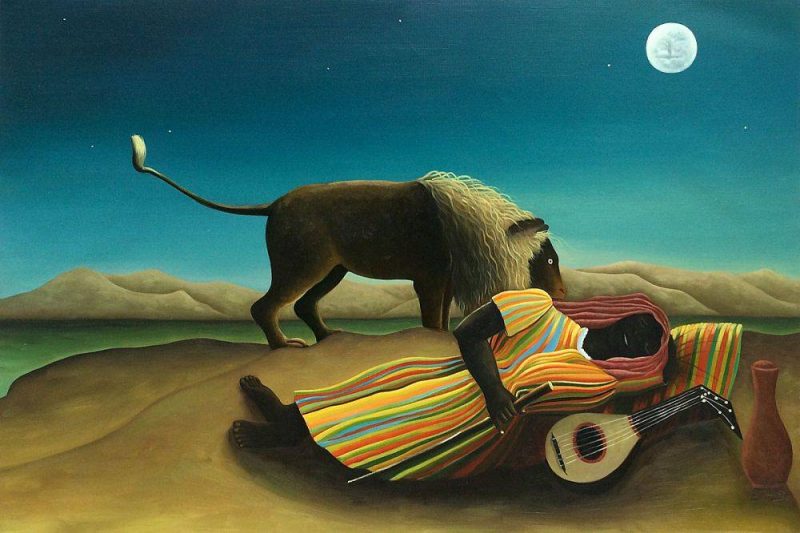
Will you sleep out in the open, undisturbed by lions, a la Rousseau’s The Sleeping Gypsy?
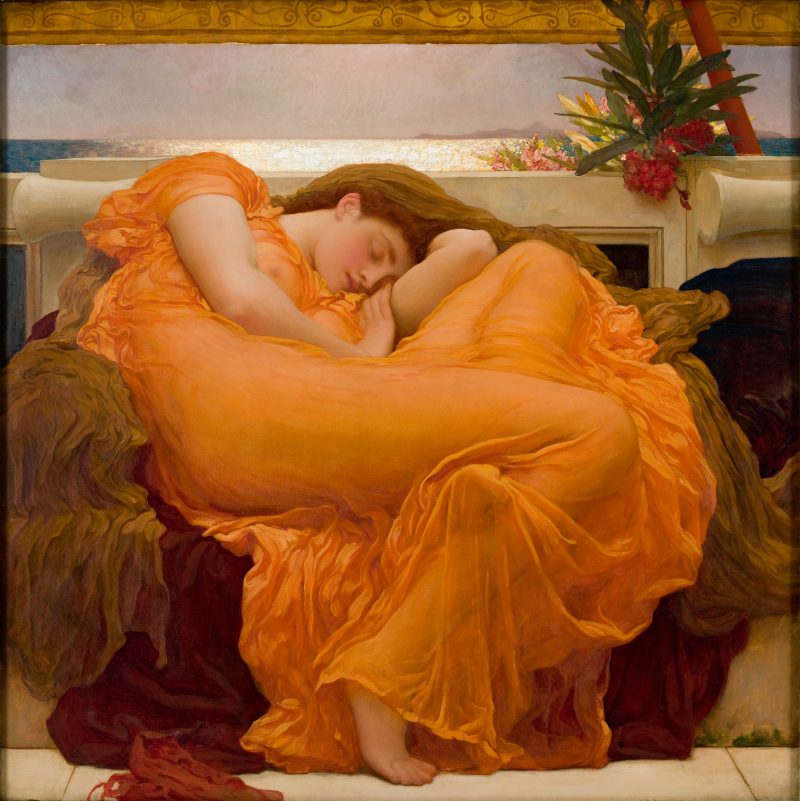
Or experience the voluptuous dreams of Frederic Leighton’s Flaming June?
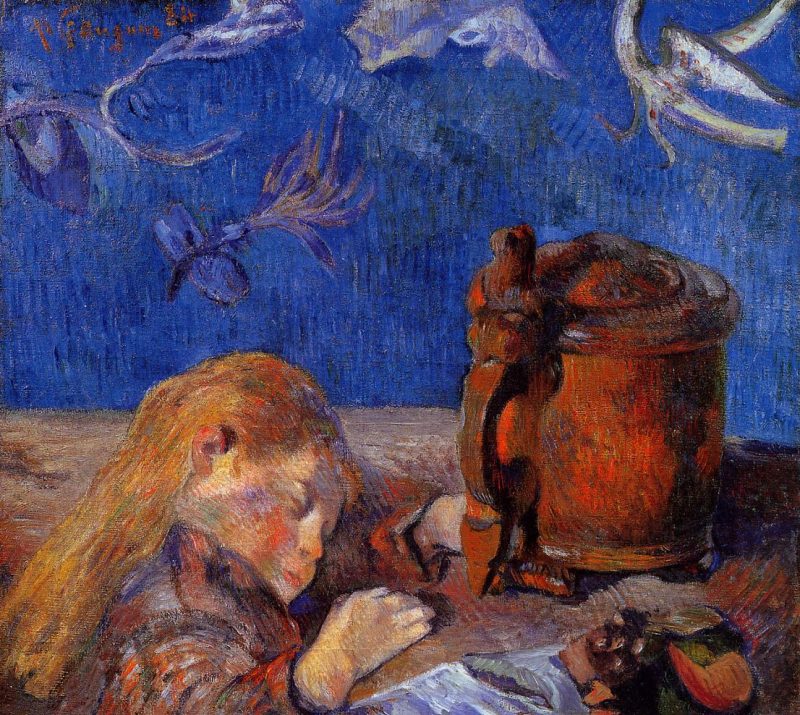
Paul Gauguin’s portrait of his son, Clovis presents a tantalizing prospect for those of us who haven’t slept like a baby in decades…
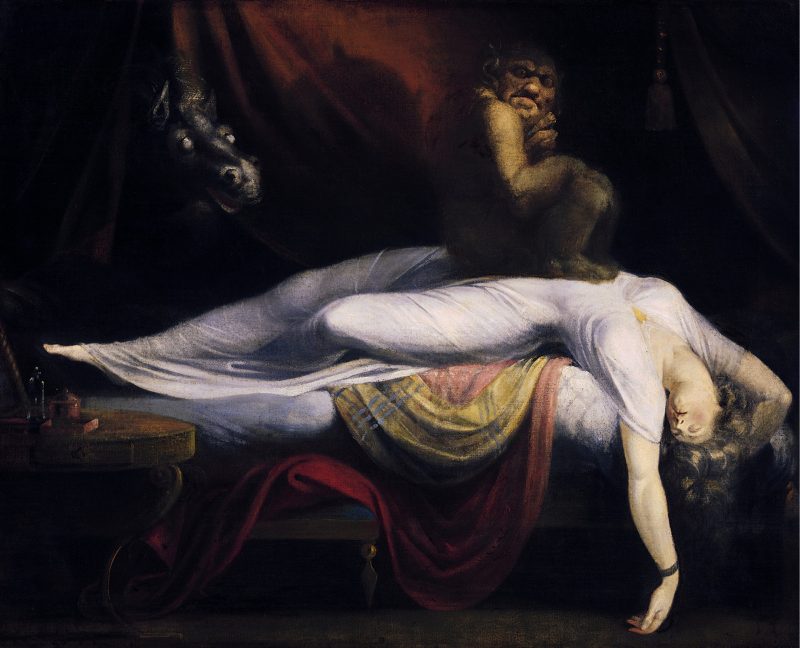
The Nightmare by Herny Fuseli should chime with Gothic sensibilities…
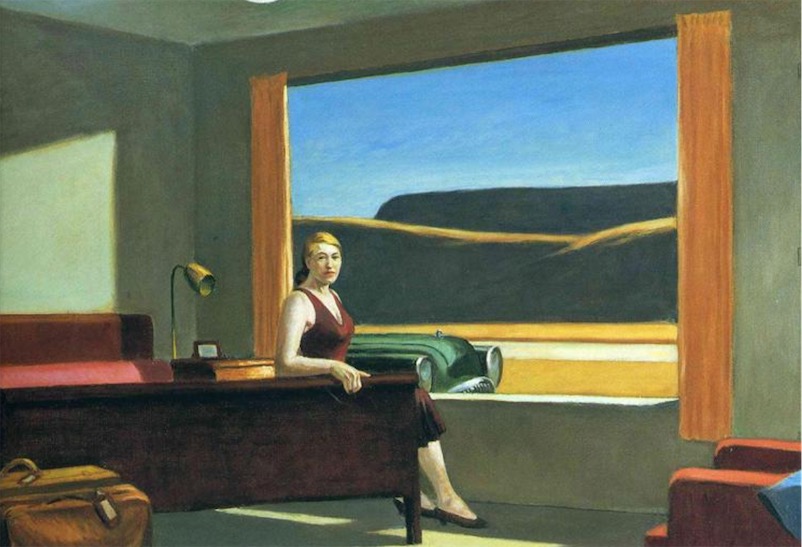
And it’s a fairly safe bet that some of us will select Edward Hopper’s Western Motel, at the top of this post, if only because we heard the Virginia Museum of Fine Arts was accepting double occupancy bookings for an extremely faithful facsimile, as part of its Edward Hopper and the American Hotel exhibition.
Alas, if unsurprisingly, the Hopper Hotel Experience, with mini golf and a curated tour, sold out quickly, with prices ranging from $150 to $500 for an off-hours stay.
Ticket-holding visitors can still peer in at the room any time the exhibit is open to the public, but it’s after hours when the Instagramming kicks into high gear.
What guest could resist the temptation to strike a pose amid the vintage luggage and (bluetooth-enabled) wood paneled radio, filling in for the 1957 painting’s lone figure, an iconic Hopper woman in a burgundy dress?
The Art Institute of Chicago notes that she is singular among Hopper’s subjects, in that she appears to be gazing directly at the viewer.
But as per the Yale University Art Gallery, from which Western Motel is on loan:
The woman staring across the room does not seem to see us; the pensiveness of her stare and her tense posture accentuate the sense of some impending event. She appears to be waiting: the luggage is packed, the room is devoid of personal objects, the bed is made, and a car is parked outside the window.
Hopefully, those lucky enough to have secured a booking will have perfected the pose in the mirror at home prior to arrival. This “motel” is a bit of a stage set, in that guests must leave the painting to access the public bathroom that constitutes the facilities.
(No word on whether the theme extends to a paper “sanitized for your protection” band across the toilet, but there’s no shower and a security officer is stationed outside the room for the duration of each stay.)
The popularity of this once-in-a-lifetime exhibit tie-in may spark other museums to follow suit.
The Art Institute of Chicago started the trend in 2016 with a painstaking recreation of Vincent Van Gogh’s room at Arles, which it listed on Air BnB for $10/night.
Think of all the fun we could have if the bedrooms of art history opened to us…
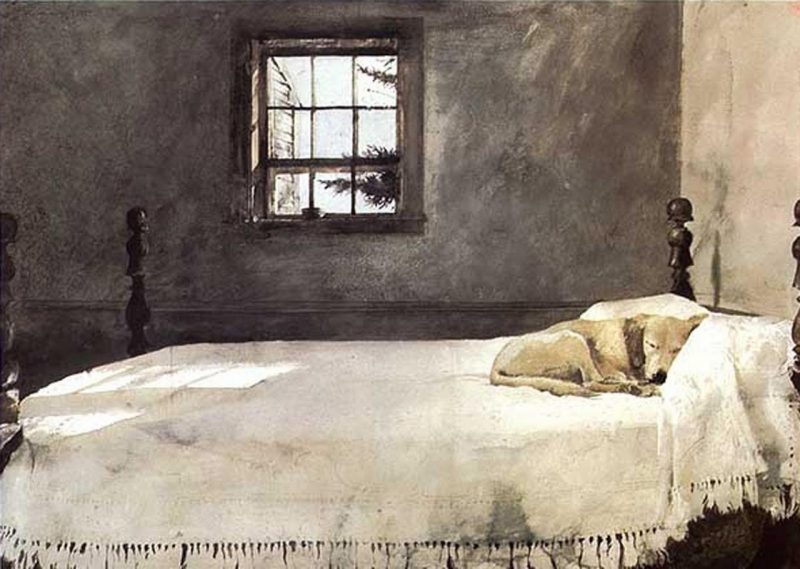
Dog lovers could get cozy in Andrew Wyeth’s Master Bedroom.
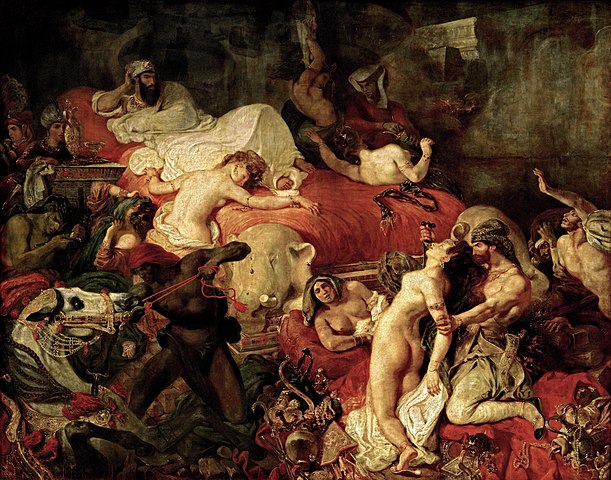
Delacroix’s The Death of Sardanapalus (1827) would require something more than double occupancy for proper Instagramming.
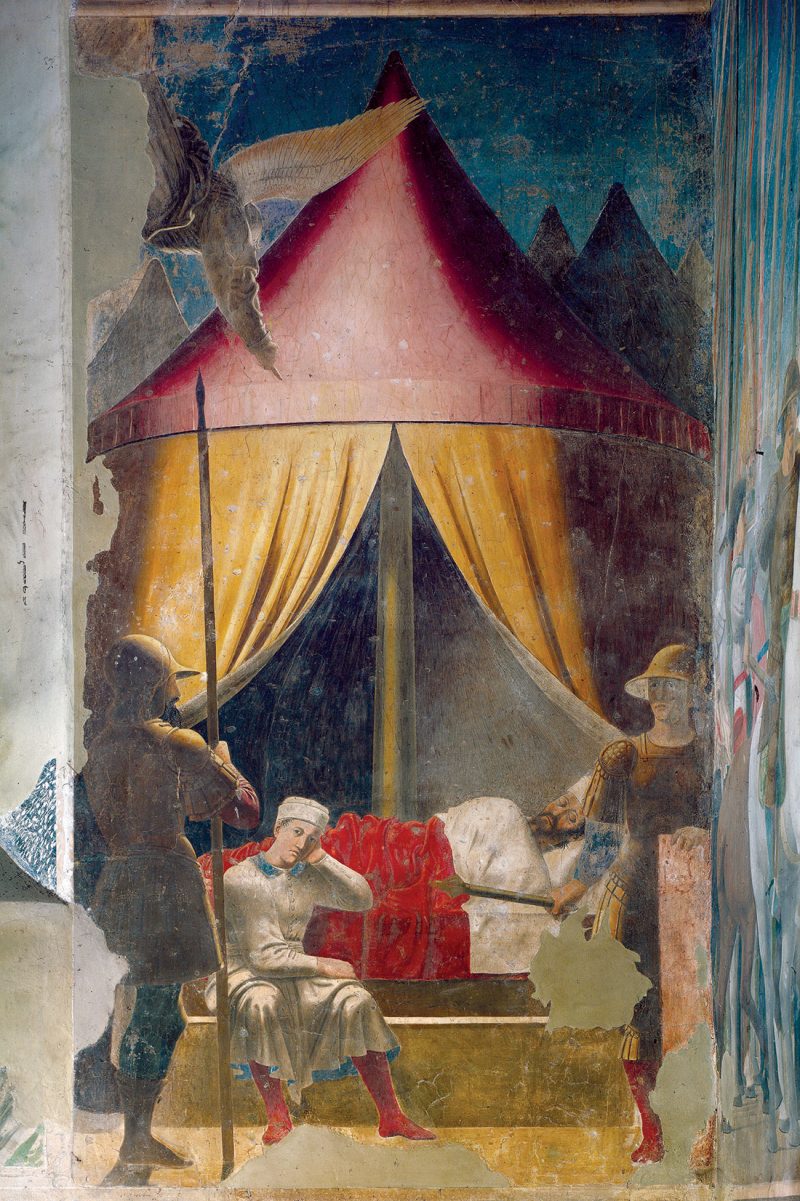
Piero della Francesca’s The Dream of Constantine might elicit impressive messages from the sub-conscience…
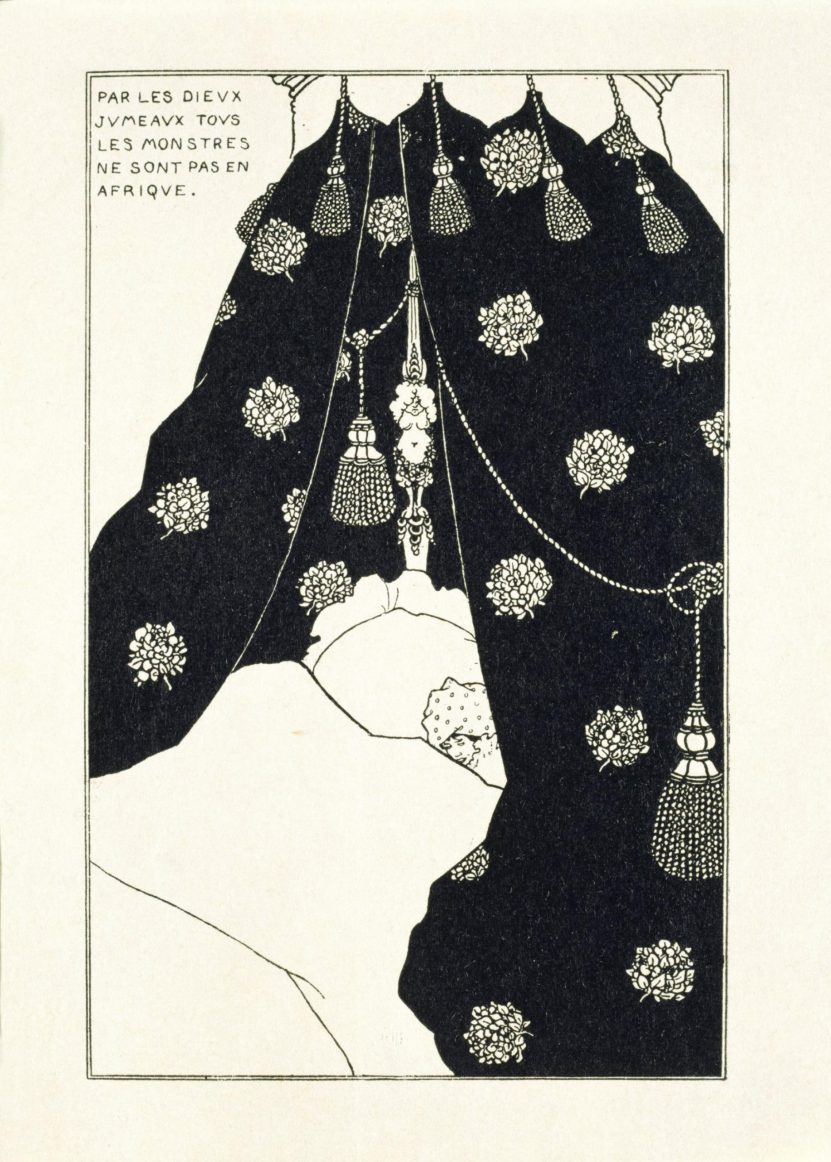
Tuberculosis nothwithstanding, Aubrey Beardsley’s Self Portrait in Bed is rife with possibilities.
Or skip the cultural foreplay and head straight for the NSFW pleasures of The French Bed, a la Rembrandt’s etching.
Edward Hopper and the American Hotel will be traveling to the Indianapolis Museum of Art at Newfields in June 2020.
Related Content:
Take a Journey Inside Vincent Van Gogh’s Paintings with a New Digital Exhibition
How Edward Hopper “Storyboarded” His Iconic Painting Nighthawks
Ayun Halliday is an author, illustrator, theater maker and Chief Primatologist of the East Village Inky zine. Join her in NYC on Monday, December 9 when her monthly book-based variety show, Necromancers of the Public Domain celebrates Dennison’s Christmas Book (1921). Follow her @AyunHalliday.
Read More...Masterclass Is Running a “Buy One, Give One Free” Deal: It Gives You and a Family Member/Friend Access to Their Complete Course Catalog

FYI: This special deal is now over…
You can see their standard 0ffer–an all-access pass to their catalogue of 70+ courses–here.
Read More...A New Online Archive Lets You Listen to 40 Years Worth of Terry Gross’ Fresh Air Interviews: Stream 22,000 Segment Online
As the weather grows colder, we look for reasons to stay inside, snuggled up under a blanket, steamy mug in hand.
Or sometimes we look for an incentive to bundle up and go for a long freezing constitutional.
Either way, 40 years’ worth of Fresh Air, Peabody award-winning radio journalist Terry Gross’ interview show, is just the ticket.
A complete digital database of over 22,000 segments is now available for your listening pleasure.
Feeling overwhelmed?
Scroll down on the home page to delve into a recent episode.
Or dial it back to one of the earliest extant installments.
(In the first decade of the show’s history, many episodes went untaped or got recorded over.)
The massive database, created with help from library scientists at Drexel University, is also searchable by guest and topic.
If you feel like handing over the controls, home station WHYY in Philadelphia has some suggested collections—Jazz Legends, Saturday Night Live, How the Brain Works…
If you’re open to anything, try the wild card option at the bottom of the screen. Click play for a random episode.
Or try typing one of your interests into the search bar.
“Cats” yielded 1713 results, from a chat with author John Bradshaw on the evolution of house cats to an interview with zoologist Alan Rabinowitz on endangered large cats to some training tips, courtesy of feline behavior specialist Sarah Ellis.
Of less direct relevance, but of no less interest, are:
A review of Iranian director Bahman Ghobadi’s film No One Knows about Persian Cats, which netted the 2009 Special Jury Prize at Cannes.
A review of Margaret Atwood’s 1989 novel Cat’s Eye.
A History of Catskills resorts.
A post-mortem with comedian (and avowed cat person) Mark Maron following then-President Barack Obama’s 2015 appearance on his WTF podcast (an occasion which required Maron’s house cats to be corralled in his bedroom).
Gross: So how do you cast a cat for your film?
One Coen brother: Ooh, that was horrible. We just used on the advice of the trainer—the animal trainer, kind of an orange, kind of a marmalade tabby cat, just because they are, you know, common, and so easy to double, triple, quadruple. There were, you know, many cats playing the one cat and, you know, the whole thing is actually pretty, it comes across well in the movie, but the whole exercise of shooting a cat is pretty nightmarish because they don’t care about anything; they don’t want to do what you want them to do. As the animal trainer said to us, a dog wants to please you; a cat only wants to please itself. It was just long, painstaking, frustrating days shooting the cat.
Other Coen brother: What you have to do is basically find the cat that’s predisposed to doing whatever particular piece of action it is that you have to film. So you find the cat that can—isn’t afraid to run down a fire escape or this, you know, the cat that’s very docile and will let the actor just hold them for extended periods of time without being fidgety. And then you want the fidgety cat—the squirrely cat—for when you want the cat to run away and you just keep swapping them out—depending on what the task at hand is.
If something really catches your fancy, you can add it to a playlist to share via social media or email.
Readers, what would you have us add to ours?
Begin your exploration of Fresh Air’s archive here.
Related Content:
What Happens When a Terry Gross/Fresh Air Interview Ends: A Comic Look
Listen to Ira Glass’ 10 Favorite Episodes of This American Life
Ayun Halliday is an author, illustrator, theater maker and Chief Primatologist of the East Village Inky zine. Join her in NYC on Monday, December 9 when her monthly book-based variety show, Necromancers of the Public Domain celebrates Dennison’s Christmas Book (1921). Follow her @AyunHalliday.
Read More...Depeche Mode Before They Were Actually Depeche Mode: Stream Their Early Demo Recordings from 1980
After their 1986 album Black Celebration, new wave legends Depeche Mode fully committed to being the most gloriously gloomy band next to The Cure to appear on stadium stages. Earnest pleas for tolerance like “People are People” and playfully suggestive vamps like “Master and Servant” gave way to atmospheric dirge‑y washes and funereal tempos made for moping, not dancing. The move defined them after their early breakout with an image as a kind of New Romantic boy band.
The Depeche Mode of the early 80s was always edgier than most of their peers, even if they looked clean cut and cherubic. They were also more experimental, drawing from Kraftwerk’s deadpan German disco in their minimalist first single “Dreaming of Me” and making industrial pop in Construction Time Again’s “Everything Counts.” Theirs is a body of work, for better or worse, that launched a hundred darkwave bands decades on, and their very first incarnation may remind indie fans of other lo-fi indie pop artists of recent years.
Before they were Depeche Mode, they were a minimalist post-punk/new wave band called Composition of Sound. They recorded two demo tapes under the name, “one with Vince Clarke on vocals and guitar,” notes Post-Punk.com, “Andy Fletcher on bass and Martin L. Gore on synthesizers, and one [above] just after the arrival of Dave Gahan in the band, shortly before they were renamed.” These tapes, from 1980, are the first recorded manifestation of the Depeche Mode lineup.
Clarke and Fletcher began playing together in the 1977 Cure-influenced band No Romance in China. They formed Composition of Sound with Gore, who’d played guitar in an acoustic duo, in 1980 and recruited Gahan that same year whey they heard him sing Bowie’s “’Heroes’” at a jam session. By that time, they’d mostly given up on guitars, after Clarke—who left Depeche Mode after Speak & Spell to form the hugely influential synthpop band Yazoo (or Yaz in the U.S.)—encountered Orchestral Maneuvers in the Dark. The three-song demo at the top represents that evolutionary step in action.
The first track, “Ice Machine,” was released as the b‑side of “Dreaming of Me,” Depeche Mode’s first artistic statement of intent on their longtime label Mute. Fletcher plays bass guitar on this and the other two tracks, “Radio News” and “Photographic,” but the songs are otherwise rudimentary ancestors of Depeche Mode’s synth-dominated sound, which would persist until they brought guitars back into the foreground in the 90s.
It appears they did play a “handful of gigs” in the transitional phase of Composition of Sound, as Martin Schneider writes at Dangerous Minds: “The first COS show with Dave Gahan on vocals happened on June 14, 1980 at Nicholas Comprehensive in Basildon.” The gig went well, according to Clarke, “because Gahan ‘had all his trendy mates there.’” Their last show in this incarnation “sounds like something out of This is Spinal Tap.”
They played at a youth club at Woodlands School in their hometown of Basildon. “Their audience consisted of a bunch of nine-year-olds. ‘They loved the synths, which were a novelty then,’ remembers Fletcher. ‘The kids were onstage twiddling the knobs while we played!” One wonders if any of those kids went on to start their own fashionably minimalist synthpop bands….
via Dangerous Minds/Post-Punk
Related Content:
Lost Depeche Mode Documentary Is Now Online: Watch Our Hobby is Depeche Mode
Depeche Mode Releases a Goosebump-Inducing Cover of David Bowie’s “Heroes”
Josh Jones is a writer and musician based in Durham, NC. Follow him at @jdmagness
Read More...The Dream-Driven Filmmaking of Werner Herzog: Watch the Video Essay, “The Inner Chronicle of What We Are: Understanding Werner Herzog”
An insane conquistador, a dwarf rebellion, cattle auctioneers, ancient cave paintings, flaming oil rigs, televangelism, ski jumping, strongmen, Nicolas Cage: at first glance, the filmography of Werner Herzog may seem willfully bizarre. A closer look, which reveals his films’ unusual mixture of fact and fiction delivered through images that lodge permanently in the subconscious, may not dispel that impression. But the prolific Herzog, who has steadily worked in and ever more idiosyncratically defined his own realm of cinema since making his first short Herakles 57 years ago, is engaged in a consistent venture — or so argues Tom van der Linden in his video essay “The Inner Chronicle of What We Are: Understanding Werner Herzog.”
“I have always thought of my films as being one big work,” Van der Linden quotes Herzog himself as saying. “The characters in this story are all desperate and solitary rebels with no language with which to communicate. Inevitably, they suffer because of this. They know their rebellion is doomed to failure, but they continue without respite, wounded, struggling on their own without assistance.” Van der Linden identifies that struggle as much in Herzog’s askew dramatized vision of Kaspar Hauser, the 19th-century youth who claimed to have grown up in total isolation, as he does in Land of Silence and Darkness, Herzog’s documentary about the blind-deaf Fini Straubinger. In Herzog’s film, such characters are not outsiders but “saints, embodiments of the human spirit that exists within each and every one of us, longing to manifest itself.”
But then, every Herzog fan knows how little sense it makes to draw a line between the “fiction” and the “nonfiction” in his work. “As well known as Herzog is for bringing reality into his fictional films, just as well known is he for bringing his fiction into his documentaries,” says Van der Linden, an imperative that has entailed “unorthodox directorial decisions.” These include putting nearly an entire cast of Heart of Glass under hypnosis, releasing 11,000 rats into a city for his remake of Nosferatu, and most famously, for Fitzcarraldo, a film about a rubber baron who drags a steamship over a hill in Peru, dragging a real steamship over a real hill in Peru — a singular cinematic effort that inspired a documentary of its own, Les Blank’s Burden of Dreams.
“My belief is that all these dreams are yours as well,” Herzog says to Blank, “and the only distinction between me and you is that I can articulate them, and that is what poetry or painting or literature of filmmaking is all about.” On some level, Herzog’s interest in dreams still explains the nature of his filmmaking. This manifests especially in his documentaries, says van der Linden, where he “always seems to wander off the actual subject by including a variety of seemingly random stories from the people he encounters. He’s not interested in their facts; he’s interested in their dreams.” Like no other filmmaker working today, Herzog articulates the kind of truth we feel in our own dreams as well: the “poetic, ecstatic truth” he spoke of in his “Minnesota Declaration,” which “can be reached only through fabrication and imagination and stylization.” No wonder he’s dedicated himself to cinema, still the most dreamlike medium of them all.
Related Content:
Watch Werner Herzog’s Very First Film, Herakles, Made When He Was Only 19 Years Old (1962)
Werner Herzog Creates Required Reading & Movie Viewing Lists for Enrolling in His Film School
Portrait Werner Herzog: The Director’s Autobiographical Short Film from 1986
Werner Herzog Offers 24 Pieces of Filmmaking and Life Advice
Based in Seoul, Colin Marshall writes and broadcasts on cities and culture. He’s at work on a book about Los Angeles, A Los Angeles Primer, the video series The City in Cinema, and the crowdfunded journalism project Where Is the City of the Future? Follow him on Twitter at @colinmarshall or on Facebook.
Read More...The Great Courses (Formerly The Teaching Company) Offers Every Course at $60 or Less Until the End of Black Friday

Here’s a holiday season deal worth mentioning. The Great Courses (formerly The Teaching Company) is offering every course on sale for $60 or less in DVD format, including free shipping (in the US and Canada). Instant video formats go for $40 across the board. The deal lasts through midnight on Black Friday.
If you’re not familiar with it, the company provides a very nice service. They travel across the U.S., recording great professors lecturing on great topics that will appeal to any lifelong learner. They then make the courses available to customers in different formats (DVD, CD, Video & Audio Downloads, etc.). The courses are very polished and complete, and they can be quite reasonably priced, especially when they’re on sale, as they are today. Click here, or on the banner above, to explore the offer.
Note: The Great Courses is a partner with Open Culture. So if you purchase a course, it benefits not just you and Great Courses. It benefits Open Culture too. So consider it win-win-win.
Read More...The Illustrated Version of “Alice’s Restaurant”: Watch Arlo Guthrie’s Thanksgiving Counterculture Classic
Alice’s Restaurant. It’s now a Thanksgiving classic, and something of a tradition around here. Recorded in 1967, the 18+ minute counterculture song recounts Arlo Guthrie’s real encounter with the law, starting on Thanksgiving Day 1965. As the long song unfolds, we hear all about how a hippie-bating police officer, by the name of William “Obie” Obanhein, arrested Arlo for littering. (Cultural footnote: Obie previously posed for several Norman Rockwell paintings, including the well-known painting, “The Runaway,” that graced a 1958 cover of The Saturday Evening Post.) In fairly short order, Arlo pleads guilty to a misdemeanor charge, pays a $25 fine, and cleans up the thrash. But the story isn’t over. Not by a long shot. Later, when Arlo (son of Woody Guthrie) gets called up for the draft, the petty crime ironically becomes a basis for disqualifying him from military service in the Vietnam War. Guthrie recounts this with some bitterness as the song builds into a satirical protest against the war: “I’m sittin’ here on the Group W bench ’cause you want to know if I’m moral enough to join the Army, burn women, kids, houses and villages after bein’ a litterbug.” And then we’re back to the cheery chorus again: “You can get anything you want, at Alice’s Restaurant.”
We have featured Guthrie’s classic during past years. But, for this Thanksgiving, we give you the illustrated version. Happy Thanksgiving to everyone who plans to celebrate the holiday today.
If you would like to support the mission of Open Culture, consider making a donation to our site. It’s hard to rely 100% on ads, and your contributions will help us continue providing the best free cultural and educational materials to learners everywhere. You can contribute through PayPal, Patreon, and Venmo (@openculture). Thanks!
Related Content:
William S. Burroughs Reads His Sarcastic “Thanksgiving Prayer” in a 1988 Film By Gus Van Sant
Marilyn Monroe’s Handwritten Turkey-and-Stuffing Recipe
William Shatner Raps About How to Not Kill Yourself Deep Frying a Turkey
F. Scott Fitzgerald’s 13 Tips for What to Do with Your Leftover Thanksgiving Turkey
Read More...An Illustrated Map of Every Known Object in Space: Asteroids, Dwarf Planets, Black Holes & Much More
Name all the things in space in 20 minutes. Impossible, you say? Well, if there’s anyone who might come close to summarizing the contents of the universe in less than half an hour, with the aid of a handy infographic map also available as a poster, it’s physicist Dominic Walliman, who has explored other vast scientific regions in condensed, yet comprehensive maps on physics, mathematics, chemistry, biology, and computer science.
These are all academic disciplines with more or less defined boundaries. But space? It’s potentially endless, a point Walliman grants up front. Space is “infinitely big and there are an infinite number of things in it,” he says. However, these things can still be named and categorized, since “there are not an infinite number of different kinds of things.” We begin at home, so to speak, with the Earth, our Sun, the solar system (and a dog), and the planets: terrestrial, gas, and ice giant.
Asteroids, meteors, comets, dwarf planets, moons, the Kuyper Belt, Dort Cloud, and heliosphere, cosmic dust, black holes…. We’re only two minutes in and that’s a lot of things already—but it’s also a lot of kinds of things, and those kinds repeat over and over. The supermassive black hole at the center of the Milky Way may be a type representing a whole class of things “at the center of every galaxy.”
The universe might contain an infinite number of stars—or a number so large it might as well be infinite. But that doesn’t mean we can’t extrapolate from the comparatively tiny number we’re able to observe as representative of general star behavior: from the “main sequence stars”—Red, Orange, and Yellow Dwarves (like our sun)—to blue giants to variable stars, which pulsate and change in size and brightness.
Massive Red Giants explode into nebulae at the end of their 100 million to 2 billion year lives. They also, along with Red and Orange Dwarf stars, leave behind a core known as a White Dwarf, which will become a Black Dwarf, which does not exist yet because the universe it not old enough to have produced any. “White dwarves,” Walliman says, “will be the fate of 97% of the stars in the universe.” The number of kinds of stars expands, we get into the different shapes galaxies can take, and learn about cosmic radiation and “mysteries.”
This project does not have the scope to include explanations of how we know about these many kinds of space objects, but Walliman does an excellent job of turning what may be the biggest picture imaginable into a thumbnail—or poster-sized (purchase here, download here)—outline of the universe. We cannot ask more from a twenty-minute video promising to name “Every Kind of Thing in Space.”
See other science-defining video maps, all written, researched, animated, edited, and scored by Walliman, at the links below.
Related Content:
The Map of Physics: Animation Shows How All the Different Fields in Physics Fit Together
The Map of Mathematics: Animation Shows How All the Different Fields in Math Fit Together
The Map of Chemistry: New Animation Summarizes the Entire Field of Chemistry in 12 Minutes
The Map of Biology: Animation Shows How All the Different Fields in Biology Fit Together
Josh Jones is a writer and musician based in Durham, NC. Follow him at @jdmagness
Read More...William S. Burroughs Reads His “Thanksgiving Prayer” in a 1988 Film By Gus Van Sant
Having moved to Korea a couple weeks ago, I won’t have the chance to partake this year in the beloved institution of American culture known as Thanksgiving. (Korea has its own Thanksgiving, but it happened two months ago.) Maybe you live in the United States and thus almost certainly have a Thanksgiving dinner of some kind, big or small, coming soon. Or maybe you, like me, live elsewhere in the world, and thus in a place without the same tradition. Either way, you can surely partake this Thanksgiving in the beloved institution of American culture known as the work of William S. Burroughs.
Here we have a short film of Burroughs, best known as the author of a body of controversial and experimental literature, including books like Junky and Naked Lunch, shot by Gus Van Sant, best known as the director of films like Good Will Hunting, My Own Private Idaho, and Drugstore Cowboy, the last of which includes a memorable appearance by Burroughs himself.
It captures Burroughs reading his poem “Thanksgiving Day, Nov. 28, 1986,” also known as his “Thanksgiving Prayer.” Van Sant shot it two Thanksgivings after that one, in 1988, the year before Drugstore Cowboy (and six years after adapting Burrough’s story “The Discipline of D.E.” into an early short film).
Burroughs, a lifelong critic of America, fills his prayer with bitterly sarcastic “thanks” for things like “a continent to despoil and poison,” “Indians to provide a modicum of challenge and danger,” “the KKK,” and “Prohibition and the war against drugs” (about which his character in Drugstore Cowboy had some particularly choice words). He ends by expressing ironic, Great Gatsby-quoting gratitude for “the last and greatest betrayal of the last and greatest of human dreams.”
Like him — like most everybody — I have my own, if less deep-seated, frustrations with our homeland, and perhaps in leaving I subconsciously emulated his stretches of expatriatism in Mexico, England, France, and Morocco. But I sincerely doubt that I’ve had my last Thanksgiving on U.S. soil; for all its failings, America remains too interesting to stay away from entirely. After all, what other country could possibly produce a writer, a personality, or a critic like William S. Burroughs?
Note: An earlier version of this post appeared on our site in 2015.
Related Content:
How David Bowie Used William S. Burroughs’ Cut-Up Method to Write His Unforgettable Lyrics
The Making of Drugstore Cowboy, Gus Van Sant’s First Major Film (1989)
William S. Burroughs Teaches a Free Course on Creative Reading and Writing (1979)
The Discipline of D.E.: Gus Van Sant Adapts a Story by William S. Burroughs
Based in Seoul, Colin Marshall writes and broadcasts on cities and culture. He’s at work on a book about Los Angeles, A Los Angeles Primer, the video series The City in Cinema, and the crowdfunded journalism project Where Is the City of the Future? Follow him on Twitter at @colinmarshall or on Facebook.
Read More...Support Us
We're hoping to rely on loyal readers, rather than erratic ads. Please click the Donate button and support Open Culture. You can use Paypal, Venmo, Patreon, even Crypto! We thank you!

About Us

Open Culture scours the web for the best educational media. We find the free courses and audio books you need, the language lessons & educational videos you want, and plenty of enlightenment in between.
Advertise With Us

FREE UPDATES!
GET OUR DAILY EMAIL
Get the best cultural and educational resources on the web curated for you in a daily email. We never spam. Unsubscribe at any time.
FOLLOW ON SOCIAL MEDIA

Open Culture editor Dan Colman scours the web for the best educational media. He finds the free courses and audio books you need, the language lessons & movies you want, and plenty of enlightenment in between.
Advertise With Us


