How to Behave in a British Pub: A World War II Training Film from 1943, Featuring Burgess Meredith
Forewarned is forearmed, so in 1943, the United States Office of War Information created a training film to prevent soldiers bound for Great Britain from earning their Ugly American stripes.
The excerpt above concentrates on pub etiquette, casting actor and Army Air Corps captain Burgess Meredith in the role of a discreet military Virgil, explaining in hushed tones the British penchant for non-chilled beer and smoking or reading the paper unmolested.
He also cautions incoming GIs against throwing their money around or making fun of kilt-wearing Scotsmen—commonsense advice that still applies.
To ensure the message sticks, he conjures a cringeworthy, semi-sloshed bad apple, who struts around in uniform, braying insults at the locals, until he disappears in a puff of smoke.
No wonder the reception’s a bit frosty, when Meredith, ventures forth, also in uniform. But unlike the brash baddie who went before, Meredith has vetted his hosts, approaching as one might a skittish animal. He offers cigarettes, enjoys a game of darts as a spectator, and buys his new friends drinks, being careful to choose something in their price range, knowing that they will insist on reciprocating in kind.
The film is primarily concerned with teaching restraint.
In another section of the not-quite-38-minute film officially called A Welcome to Britain (see below), Meredith cautions young recruits to take small portions of food, knowing how restricted their hosts’ rations are.
The most uncomfortable teachable moment comes when an elderly Englishwoman spontaneously invites a black GI to tea, after thanking him for his service:
Now look men, you heard that conversation, that’s not unusual here. It’s the sort of thing that happens quite a lot. Now let’s be frank about it, there are colored soldiers as well as white here, and there are less social restrictions in this country. An English woman asking a colored boy to tea, he was polite about it, and she was polite about it. Now, that might not happen at home, but the point is, we’re not at home, and the point is too, if we bring a lot of prejudices here, what are we going to do about them?
(No advice to young black soldiers on whether they’re honor bound to accept, should an elderly Englishwoman invite them to tea, when they were perhaps en route to the pub.)
Watch the entirety of A Welcome to Britain, including a cameo by Bob Hope at the 30 minute mark, here.
For an updated guide to British pub etiquette, check out the American expats of Postmodern Family reaction video here.
via Daniel Holland
Related Content:
Free: British Pathé Puts Over 85,000 Historical Films on YouTube
1,000,000 Minutes of Newsreel Footage by AP & British Movietone Released on YouTube
Ayun Halliday is an author, illustrator, theater maker and Chief Primatologist of the East Village Inky zine. Join her in NYC on Monday, December 9 when her monthly book-based variety show, Necromancers of the Public Domain celebrates Dennison’s Christmas Book (1921). Follow her @AyunHalliday.
Read More...Neurosymphony: A High-Resolution Look into the Brain, Set to the Music of Brain Waves
We can’t talk about how music moves us without talking about what, exactly, music does to our brains. The musicophile neurologist Oliver Sacks made the relationship between music and the brain one of the themes of his career, and were he alive today, he would surely enjoy Neurosymphony, a new audiovisual experience of the brain now up at Aeon. It takes the highest-resolution MRI scan of the human brain in existence, featured earlier this year here at Open Culture, and mashes it up with music suitable for a journey through the cross-sections of our most impressive organ — suitable not just aesthetically, but also in the sense that it, too, was made from the stuff of the brain.
Originally scanned by the Laboratory for NeuroImaging of Coma and Consciousness (NICC) at Massachusetts General Hospital in Boston, this brain imagery is soundtracked in Neurosymphony by “an excerpt from the album Chapel by the US electronic musician and music-cognition researcher Grace Leslie, in which she converts her brainwaves into music.” On her web site, Leslie describes herself as “committed to harnessing the expression granted by new music interfaces to better understand the link between music and emotion, with an ultimate goal of employing musical brain-computer interfaces to promote wellness.”
A few years ago, Leslie revealed her process of converting brain waves to musical sounds to BBC Future. “Using equipment that monitors the electrical activity of her brain, changes in her heart rate and subtle shifts in the conductance of her skin, she is creating music from the signals produced by her own body while on stage,” writes Richard Gray. “Leslie plays these signals through an electronic synthesizer to produce ambient sounds that reflect what is going on in her body. She can also filter the sounds from musical instruments, like a flute, with the signals from her body to mix them together in a computer.” You can watch Leslie’s 2017 performance of another such piece, Audible, in the video below.
While Leslie’s methods produce music quite unlike what most of us are used to, her goals go beyond the performative. “Ultimately, Leslie believes this innovative form of musical expression could be used to help those who have difficulty interacting with the world, such as those with autism,” writes Gray. In this way she has something in common, beyond pure interest in the brain, with the team at the NICC, who produced their groundbreaking scans as a part of their mission to further the understanding of recovery from traumatic brain injury. All worthy pursuits, of course, but it certainly doesn’t hurt that their by-products include works like Neurosymphony that motivate us all to learn a bit more about the nature of our own brains.
Related Content:
The Neuroscience of Bass: New Study Explains Why Bass Instruments Are Fundamental to Music
The Neuroscience of Drumming: Researchers Discover the Secrets of Drumming & The Human Brain
The Science of Singing: New, High-Speed MRI Machine Images Man Singing ‘If I Only Had a Brain’
Based in Seoul, Colin Marshall writes and broadcasts on cities, language, and culture. His projects include the book The Stateless City: a Walk through 21st-Century Los Angeles and the video series The City in Cinema. Follow him on Twitter at @colinmarshall or on Facebook.
Read More...How Blade Runner Captured the Imagination of a Generation of Electronic Musicians
“I feel that there is ‘Before Blade Runner’ and ‘After Blade Runner,’” says director Denis Villeneuve. “The movie was like a landmark in film history aesthetic.” The quote comes from this FACTmagazine promo released ahead of Villeneuve’s 2017 sequel Blade Runner 2049, which examines the impact the soundtrack had on science fiction films and electronic music, as well how its entire aesthetic echoed into the ‘90s and beyond.
Composer Vangelis and director Ridley Scott had worked together previously on a Chanel commercial, and the composer had thought the choice to use his music was “brave,” according to Villeneuve. A few years later Vangelis would be asked to compose the score, which he did, improvising over footage.
The gearheads in the doc point out the Lexicon 224 reverb, a great analog effects unit, as well as the “beast,” the Yahama CS80, which would often go out of tune. (Check out YouTube user Perfect Circuit trying out some of its features).
“The best time (the synth) found its voice was on that album,” says musician Kuedo.
The doc also interviews Tricky, Gary Numan, Ikonika, Abayomi, Clare Wieck, Kuedo, Mogwai’s Stuart Braithwaite, and music producer Hans Berg, all of whom have found Blade Runner creeping into their work intentionally or subliminally. Ikonika even calls her music alter-ego a “replicant,” after the film’s androids. But the film for her was a warning: “You could see the future taking over and it would be the good times,” she says about the early ‘80s. And “then Blade Runner was like, after that, this is going to happen.” The soundtrack has gone on to have its own series of re-releases, just like Scott has released a Director’s Cut of the film.
First, it was never properly released as an album until 1994. Immediately bootlegs appeared collecting much more of the score from the film. In 2002, the best of them, the “Esper Edition,” delivered 33 tracks from the score. (And there’s a further “Retirement Edition” of the “Esper” kicking around out there.) Then in 2007, Universal Music released a 25th anniversary edition, with an extra disc of music composed for the film and *another* disc of *new* music Vangelis composed for the release. All of which shows a work that is beloved and held dear by fans.
Now that we’ve hit the month depicted in the film, and Los Angeles doesn’t exactly look like the opening scene (smoke and fire, yes; rain, not so much), it’s time to take stock of its dystopian vision.
As musician Kuedo says, “Almost 40 years later we’re still chasing it, but it’s still there ahead of us.”
Note: Villeneuve chose Christopher Nolan favorite Hans Zimmer to compose the sequel’s score, working with Benjamin Wallfisch…both much safer choices than Vangelis.
Related Content:
Stream 72 Hours of Ambient Sounds from Blade Runner: Relax, Go to Sleep in a Dystopian Future
Ted Mills is a freelance writer on the arts who currently hosts the artist interview-based FunkZone Podcast and is the producer of KCRW’s Curious Coast. You can also follow him on Twitter at @tedmills, read his other arts writing at tedmills.com and/or watch his films here.
Read More...Dramatic Color Footage Shows a Bombed-Out Berlin a Month After Germany’s WWII Defeat (1945)
From Kronos Media comes a pretty astounding montage of video showing Berlin in July 1945 — just two months after the Nazis lost The Battle of Berlin and Hitler committed suicide, and a month after the allies signed the Declaration Regarding the Defeat of Germany and the Assumption of Supreme Authority by Allied Powers.
The nearly 75-year-old footage shows a city in shambles. You see the wounded, and buildings reduced to piles of rubble. The Reichstag makes an appearance, as does the worn-out Brandenburg Gate, through which residents passed from British-controlled Berlin to Soviet-controlled Berlin. And mostly you see everyday people trying to get on with their lives. Most chilling is the final scene, where an aerial shot carries you over miles and miles of desolation. To see Berlin during an earlier, certainly better time, visit our 2013 post: Berlin Street Scenes Beautifully Caught on Film Between 1900 and 1914.
Note: An earlier version of this post appeared on our site in May 2015.
If you would like to support the mission of Open Culture, consider making a donation to our site. It’s hard to rely 100% on ads, and your contributions will help us continue providing the best free cultural and educational materials to learners everywhere. You can contribute through PayPal, Patreon, and Venmo (@openculture). Thanks!
Related Content
Watch World War II Rage Across Europe in a 7 Minute Time-Lapse Film: Every Day From 1939 to 1945
The Finland Wartime Photo Archive: 160,000 Images From World War II Now Online
22-Year-Old P.O.W. Kurt Vonnegut Writes Home from World War II: “I’ll Be Damned If It Was Worth It”
Download 78 Free Online History Courses: From Ancient Greece to The Modern World
Read More...Watch 9 Classic & Lost Punk Films (1976–1981): All Restored and Now Streaming Online
There is a purist feeling about punk to which I’m sometimes sympathetic: punk died, and its death was an inevitable consequence of its live-fast-die-young philosophy and thus should be reverently respected. To immortalize and commercialize punk is to betray its anarchist spirit, full stop. This kind of piety doesn’t stand up to scrutiny. For one thing, some of punk’s most influential impresarios were shameless hawkers of a sensationalized product. For another, from the critic’s perspective, “there is probably no one such thing as ‘punk.’”
So writes editor Bob Mehr at Nicholas Winding Refn’s online curatorial project Ears, Eyes and Throats: Restored Classic and Lost Punk Films 1976–1981. Punk emerged as a series of rock and roll art pranks and anti-pop stances; it also emerged in publishing, photography, poetry readings, performance art, graphic art, fashion, and, yes, film. Like earlier movements devoted to multiple media (Dada especially comes to mind, and like Dada, punk’s defining feature may be the manifesto), punk names an assemblage of creative gestures, loosely related more by attitude than aesthetic.
Punk’s looseness “presents a golden opportunity” for film curators, writes Mehr. “If there aren’t a lot of barriers thrown in your way, you’ve got a potentially wide array of work to choose from that can click together in illuminating ways.” The films showcased in Ears, Eyes and Throats feature few of the punk superstars memorialized in the usual tributes. Instead, to “illustrate the breadth of this material”—that is, the breadth of what might qualify as “punk film”—Mehr has chosen “films (and bands) which the general public probably wasn’t familiar with.”
This includes “San Francisco-by-way-of-Bloomington-Indiana’s MX-80 Sound and their Why Are We Here? (1980), Richard Galkowski’s Deaf/Punk, featuring The Offs (1979) [see a clip above] and Stephanie Beroes’ Pittsburth-based Debt Begins at 20 (1980).” There are other rare and obscure films, like Galkowski’s Moody Teenager (1980) and Liz Keim and Karen Merchant’s never-before-seen In the Red (1978). And there are films from more recognizable names—two from “legendary anonymous collective” The Residents, whom many might say are more Dada than punk, and a “2K digital restoration of the legendary first film by DEVO, In the Beginning Was the End: The Truth About De-Evolution (1976).”
Is punk relevant? Maybe the question rashly assumes we know what punk is. Expand your definitions with the nine films at Ears, Eyes and Throats, all of which you can stream there. And revise your sense of a time when punk, like hip-hop, as Public Enemy’s Chuck D says in an essay featured on the site, wasn’t something you “could go out and just buy… Couldn’t slide yourself into punk. You had to kind of get creative.”
Related Content:
The 100 Top Punk Songs of All Time, Curated by Readers of the UK’s Sounds Magazine in 1981
“Stay Free: The Story of the Clash” Narrated by Public Enemy’s Chuck D: A New 8‑Episode Podcast
Josh Jones is a writer and musician based in Durham, NC. Follow him at @jdmagness
Read More...Every Nuclear Bomb Explosion in History, Animated
I suspect many fewer people are assigned John Hersey’s Hiroshima, a book most everyone in my cohort read at some stage in their education. And certainly, far fewer people are subjected to the kind of alarmist (and reasonably so) propaganda films that dramatized the grisly details of fallout and nuclear winter. Even the recent HBO miniseries Chernobyl, with its grotesque depiction of radiation poisoning, prompted a wave of tourism to the site, drawing Instagram generation gawkers born too late to have heard the terrifying news firsthand.
Yet, the threat of a nuclear disaster and its attendant horrors has hardly gone away. The UN General Assembly issued a statement this year warning of the highest potential for a devastating incident since the Cuban Missile Crisis. We are entering a new era of nuclear proliferation, with many countries who have no love for each other joining the race. “As the risk of nuclear confrontation grows,” writes Simon Tisdall at The Guardian, “the cold war system of treaties that helped prevent Armageddon is being dismantled, largely at Trump’s behest.” Calls for a No-First-Use policy in the U.S. have grown more urgent.
Living memory of the period in which two global superpowers almost destroyed each other, and took everyone else with them, has not deterred the architects of today’s geopolitics. But remembering that history should nonetheless be required of us all. In the Business Insider video above, you can get a sense of the scope of nuclear testing that escalated throughout the Cold War, in an animated timeline showing every single explosion in Japan and the various testing sites in Russia, New Mexico, Australia, and the Pacific Islands from 1945 into the 1990s, when they finally drop off. As the decades progress, more countries amass arsenals and conduct their own testing.
Despite the expert warnings, something certainly has changed since the fall of the Soviet Union. Over a forty year period, the U.S. and the U.S.S.R. trained to annihilate the other, and the prospect of nuclear war became an extinction-level event. That may not be the case in a fragmented, multipolar world with many smaller countries vying for regional supremacy. But a nuclear event, intention or accidental, could still be catastrophic on the order of thousands or millions of deaths. The animation shows us how we got here, through decades of normalizing the stockpiling and testing of the ultimate weapons of mass destruction.
Related Content:
53 Years of Nuclear Testing in 14 Minutes: A Time Lapse Film by Japanese Artist Isao Hashimoto
Protect and Survive: 1970s British Instructional Films on How to Live Through a Nuclear Attack
Josh Jones is a writer and musician based in Durham, NC. Follow him at @jdmagness
Read More...The 1926 Silent Film The Flying Ace Tells the Alternative Universe Story of a Black Fighter Pilot, Many Years Before African-Americans Were Allowed to Serve as Pilots in the US Army
The origin of dramatic storytelling in cinema is often traced to a single movie, D.W. Griffith’s The Birth of a Nation. It also happens to be a film that celebrates the racist violence of the Ku Klux Klan, based on a novel, The Clansman, that does the same. The film’s technical achievements and its racism became integral to Hollywood thereafter. Only relatively recently have black filmmakers begun entering the mainstream with very different kinds of stories, winning major awards and making record profits.
This would have been unthinkable in the 1920s, a period of intense racial violence when black WWI veterans came home to find their country armed against them. “When the soldiers returned,” writes Megan Pugh for the San Francisco Silent Film Festival, “Jim Crow still reigned supreme and lynch mobs continued to terrorize the South.” Hollywood placated white audiences by only ever featuring black characters in subservient, stereotypical roles, or casting white actors in blackface.
Against these oppressive representations, black filmmakers like Oscar Micheaux and George and Noble Jackson “used cinema to confront American racism,” responding to Griffith with films like Micheaux’s Within Our Gates and the Jacksons’ uplifting The Realization of a Negro’s Ambition. There were also several white filmmakers who made so-called “race movies.” But most of their films avoid any explicit political commentary.
These include the films of Richard Norman, who between 1920 and 1928 made seven feature-length silent movies with all-black casts, “geared toward black audiences.” He made romances, comedies, and adventure films, casting black actors in serious, “dignified” roles. “Instead of tackling discrimination head-on in his films,” writes Pugh, “Norman created a kind of world where whites—and consequently racism—didn’t even exist.”
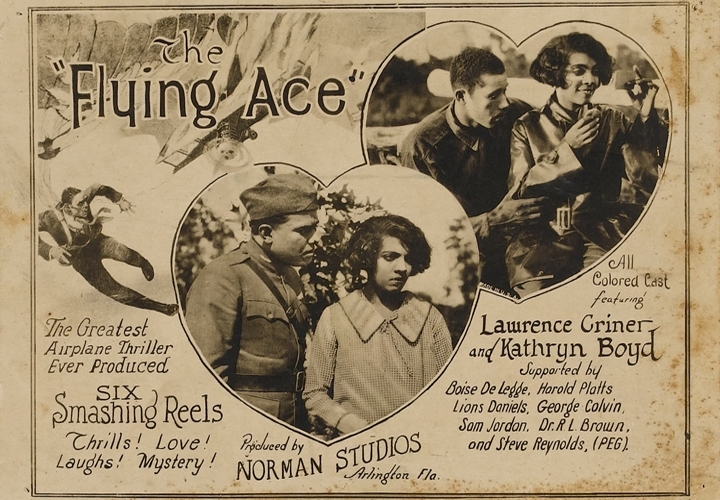
Though we may see this as a cynical commercial decision, and its own kind of appeasement to segregation, the approach also enabled Norman to tell powerful, alternate-universe stories that a more realist bent would not allow. 1926’s The Flying Ace, for example, Norman’s only surviving film, is about a black fighter pilot returning home to “resume his civilian career as a railroad detective—without removing his Army Air Service uniform, a constant reminder of his patriotism and valor.”
Norman tells the moving story of Captain Billy Stokes (see Part 1 at the top), “a model for the ideals of racial uplift,” despite the fact that “African-Americans were not allowed to serve as pilots in the United States Armed Forces until 1940.” One might say that rewriting recent history as wish-fulfillment has always been a function of cinema since… well, at least since The Birth of a Nation, if not further back to The Great Train Robbery.
Norman takes this impulse and dramatizes the life of an impossibly heroic black WWI serviceman, at a time when such men faced widespread abuse and discrimination in reality. While he insisted that he only made genre films, and avoided what he called the “propaganda nature” of Micheaux’s films, it’s hard not to read The Flying Ace as a political statement of its own, and not only for its oblique topical commentary.
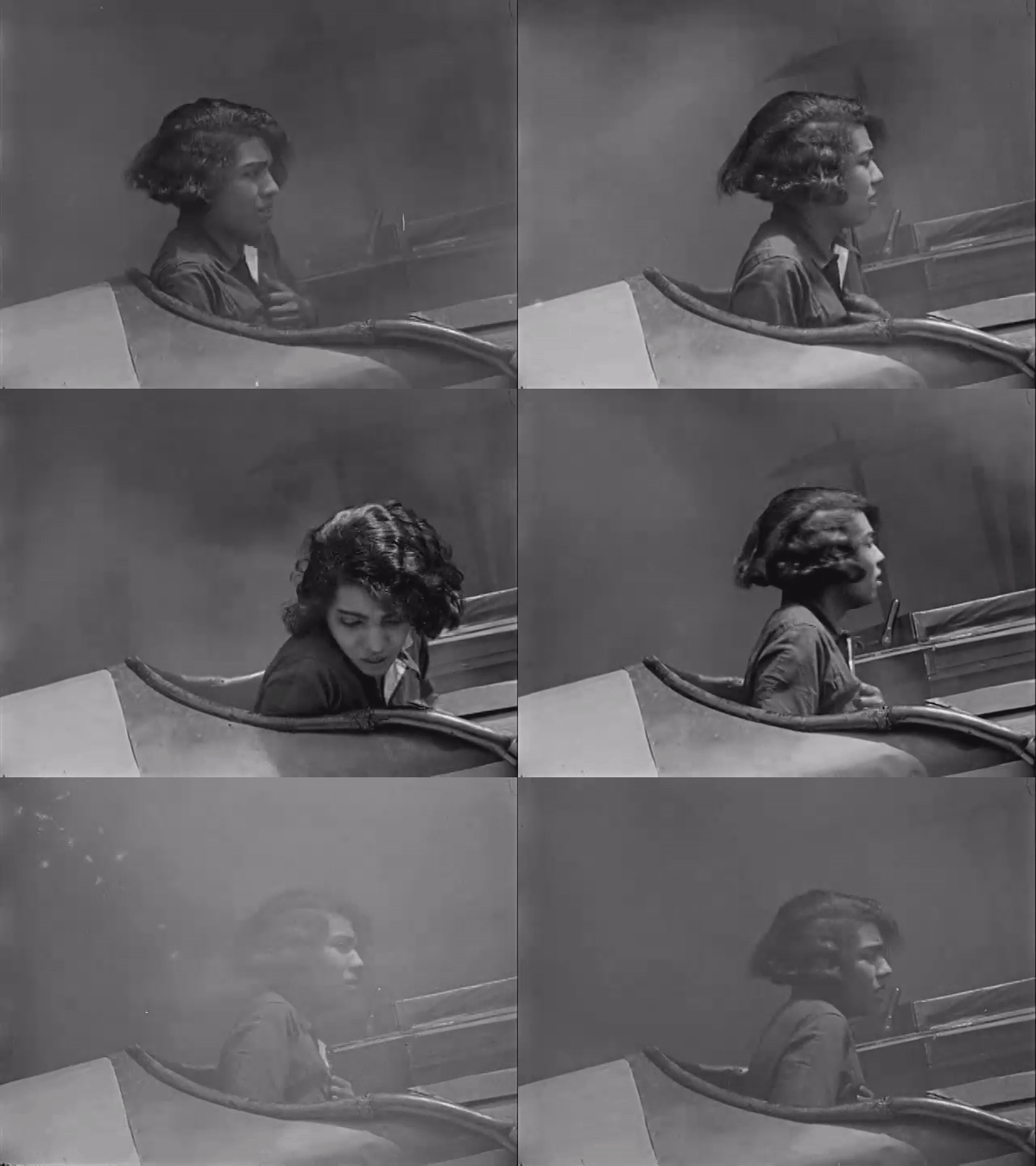
The film centers on positive, complex black characters at a time when studios made quite a bit of money doing exactly the opposite. Norman gave black audiences heroes of their own to root for. In The Flying Ace, Captain Stokes not only returns from flying dangerous missions for his country, but he then goes on to capture a band of thieves who stole his employer’s payroll. The character “never would have made it onscreen in a Hollywood movie of the time.”
Norman established his studio in Jacksonville Florida, at the time considered “the Winter Film Capital of the World.” Many major studios decamped there from New York until WWI, when they moved west to L.A. Norman, who grew up in Middleburg, Florida, made a fortune inventing soft drinks before turning to movies. He returned to his home state to find little competition left in Jacksonville in the 1920s.
His studio would become “one of the three leading producers of race films in America,” next to the Micheaux Film Corporation and the Jacksons’ Lincoln Motion Picture Company. In 2016, Norman Studios was designated a National Historic Landmark. The filmmaker’s son, Richard Norman Jr. became a pilot, inspired by The Flying Ace, and has plans to turn the building into a museum celebrating Jacksonville’s, and Norman’s, cinema legacy.
Related Content:
Watch the Pioneering Films of Oscar Micheaux, America’s First Great African-American Filmmaker
101 Free Silent Films: The Great Classics
Josh Jones is a writer and musician based in Durham, NC. Follow him at @jdmagness
Read More...10 Paintings by Edward Hopper, the Most Cinematic American Painter of All, Turned into Animated GIFs
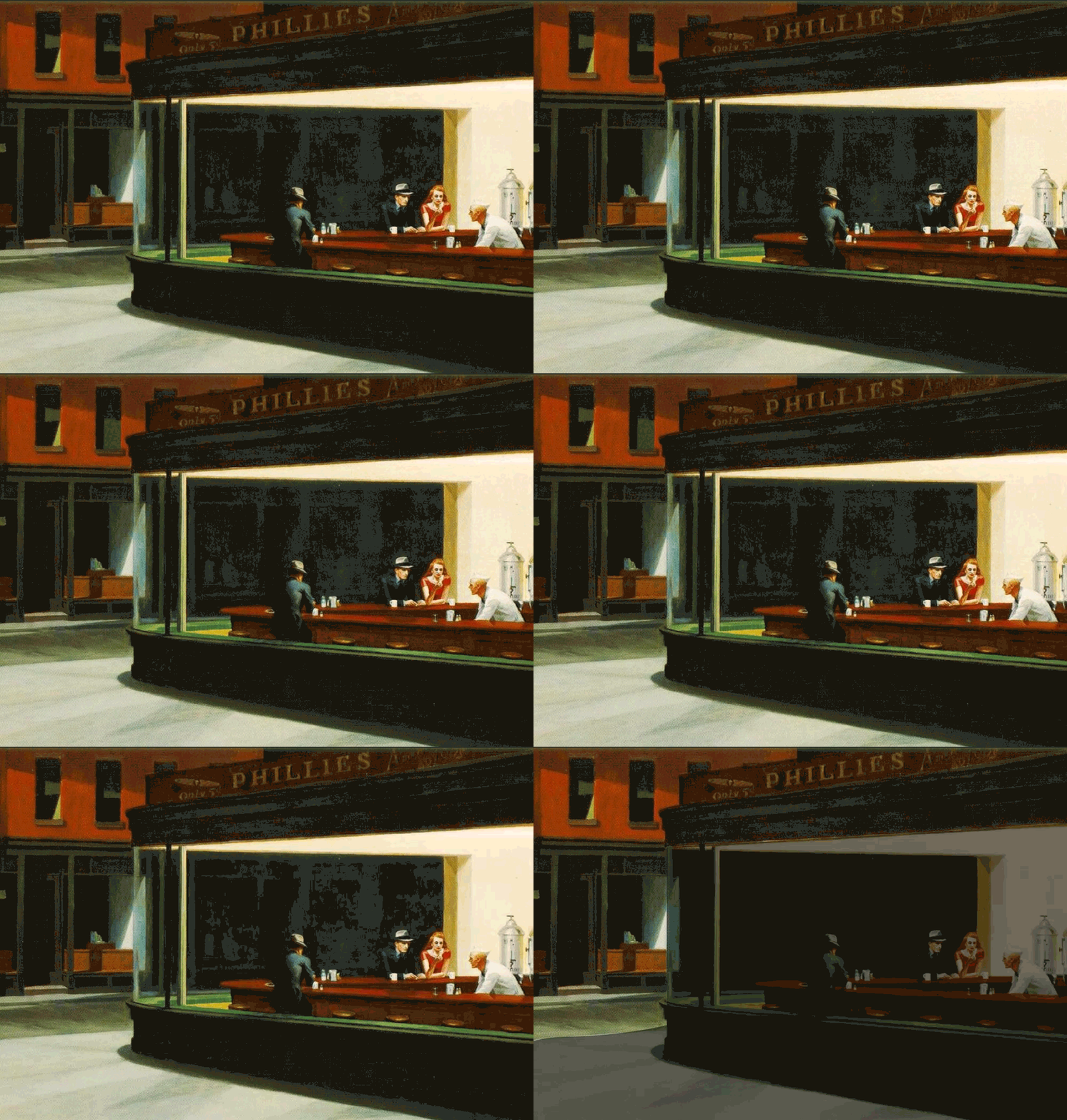
The image of America is an image bound up with the movies. That even goes for America as represented in media other than film, suggesting a certain cinematic character in American life itself. No painter understood that character more thoroughly than Edward Hopper, an avid filmgoer who worked for a time creating movie posters. He even “storyboarded” his most famous 1942 Nighthawks, whose late-night diner remains the visual definition of U.S. urban alienation. And though Hopper’s America also encompasses the countryside, never would his views of it feel out of place in a work of film noir. His cinematic paintings have in turn influenced cinema itself, shaping the visual sensibilities of auteurs across countries and generations.
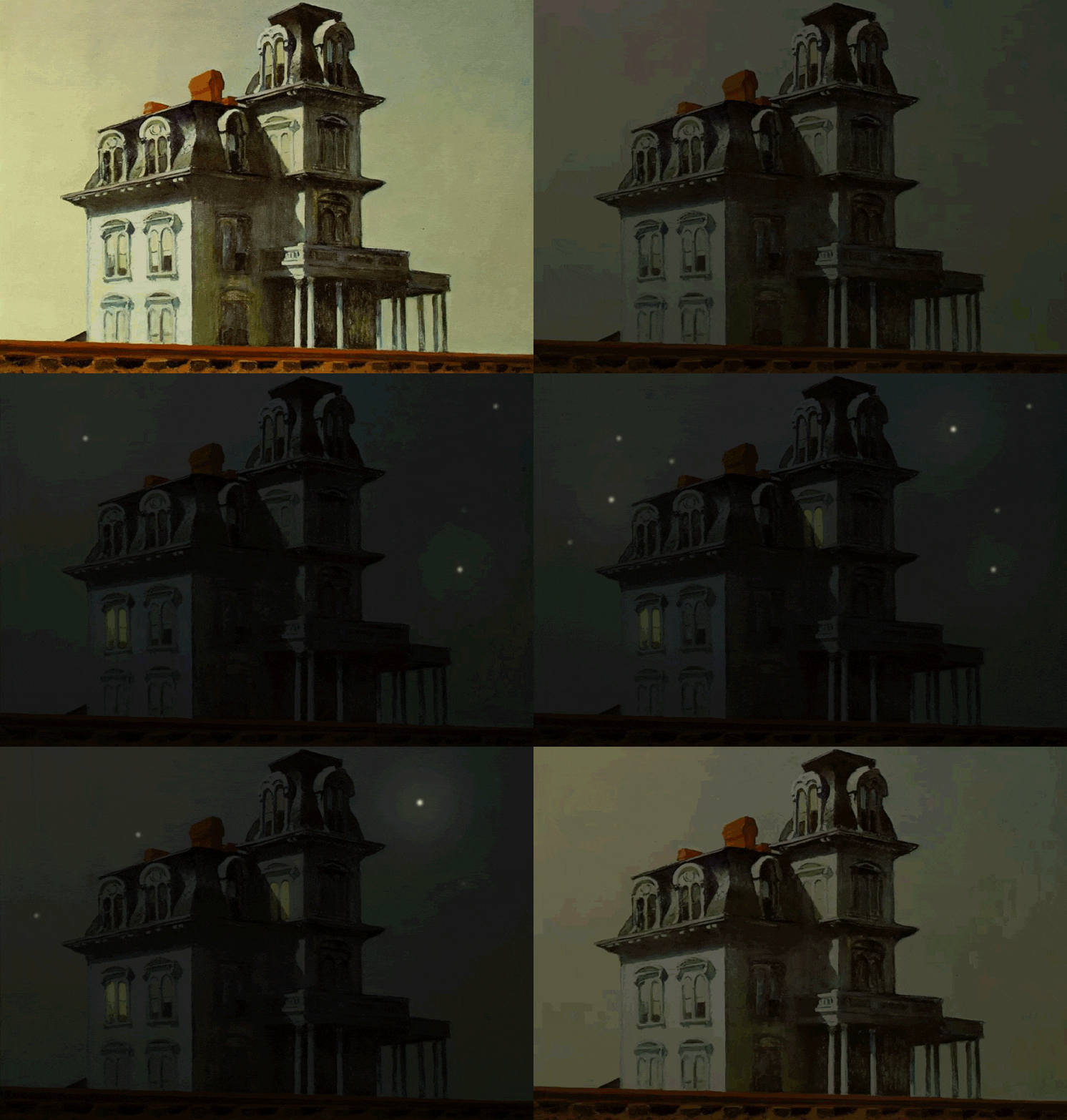
Nighthawks, cited as an influence on urban visions like Ridley Scott’s Blade Runner, has also been faithfully recreated in films like Herbert Ross’ Pennies from Heaven, Wim Wenders’ The End of Violence, and Dario Argento’ Deep Red. 1952’s House by the Railroad has inspired directors from Alfred Hitchcock in Psycho to Terrence Malick in Days of Heaven.
A glance across the rest of Hopper’s body of work reminds each of us of countless shots from throughout cinema history, American and otherwise. Perhaps even more films will be brought to mind by the Hopper-paintings-turned-animated GIFs commissioned by travel site Orbitz as “a 21st-century tribute to this titan of 20th-century art, for the younger generation who may not have been directly introduced to his work.”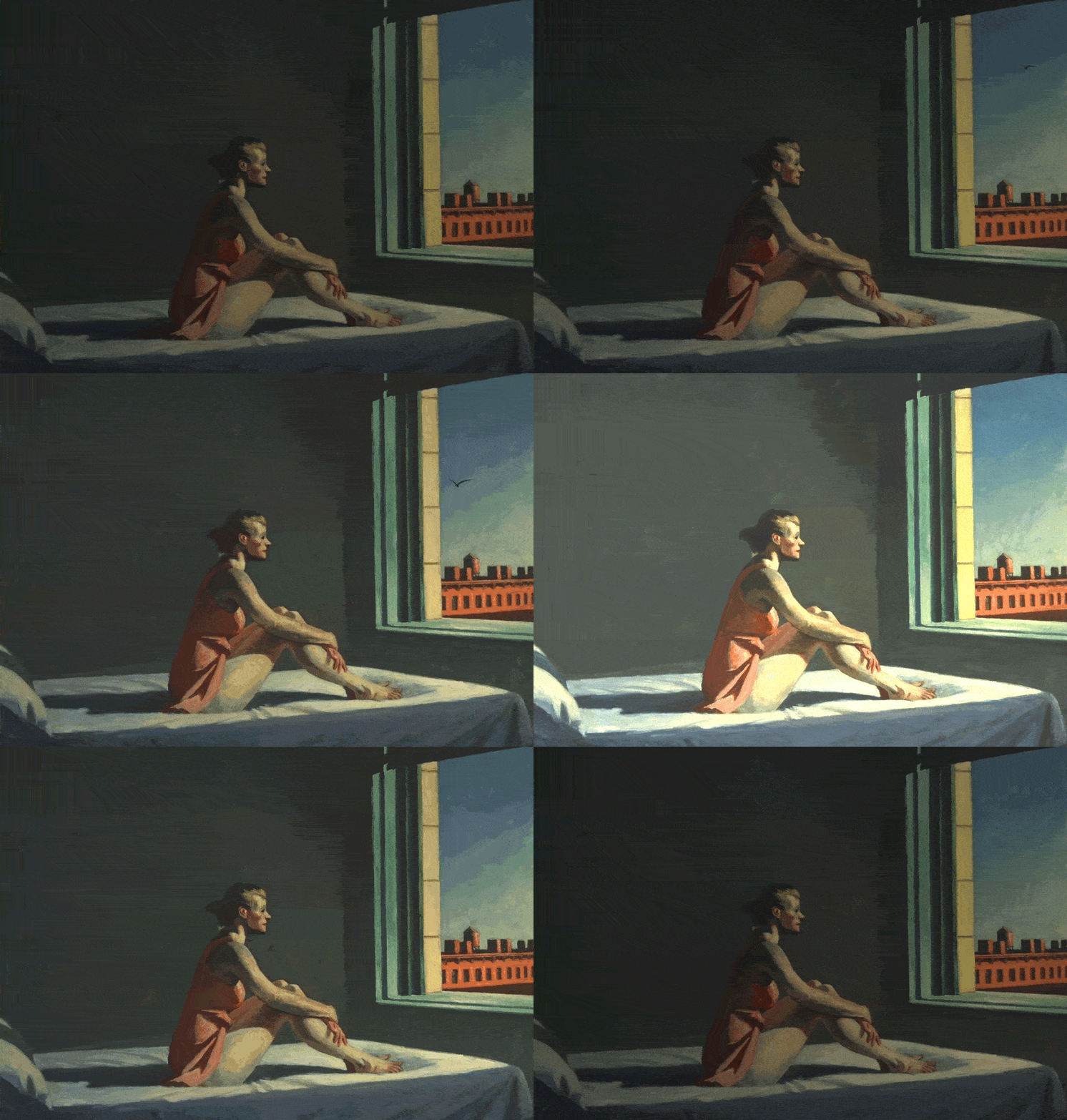
The ten of Hopper’s works thus brought to life include, of course, Nighthawks and House by the Railroad, as well as other of his paintings both early and late, such as 1927’s Automat and 1952’s Morning Sun. Both paintings depict a woman alone, a motif emphasized by the notes accompanying the animations. In the nighttime of Automat, she “has an empty plate in front of her, suggesting she’s already had something to eat with her coffee,” and the window’s reflection of lamps extending into the darkness suggests her “possible loneliness.” In the daytime of Morning Sun, the building outside the window “suggests that the woman’s view is not a particularly scenic one,” and “the fact that she is sitting merely to enjoy the sun could be interpreted as her desire to be closer to the outdoors, to nature, and escape the bleakness of urban life.”
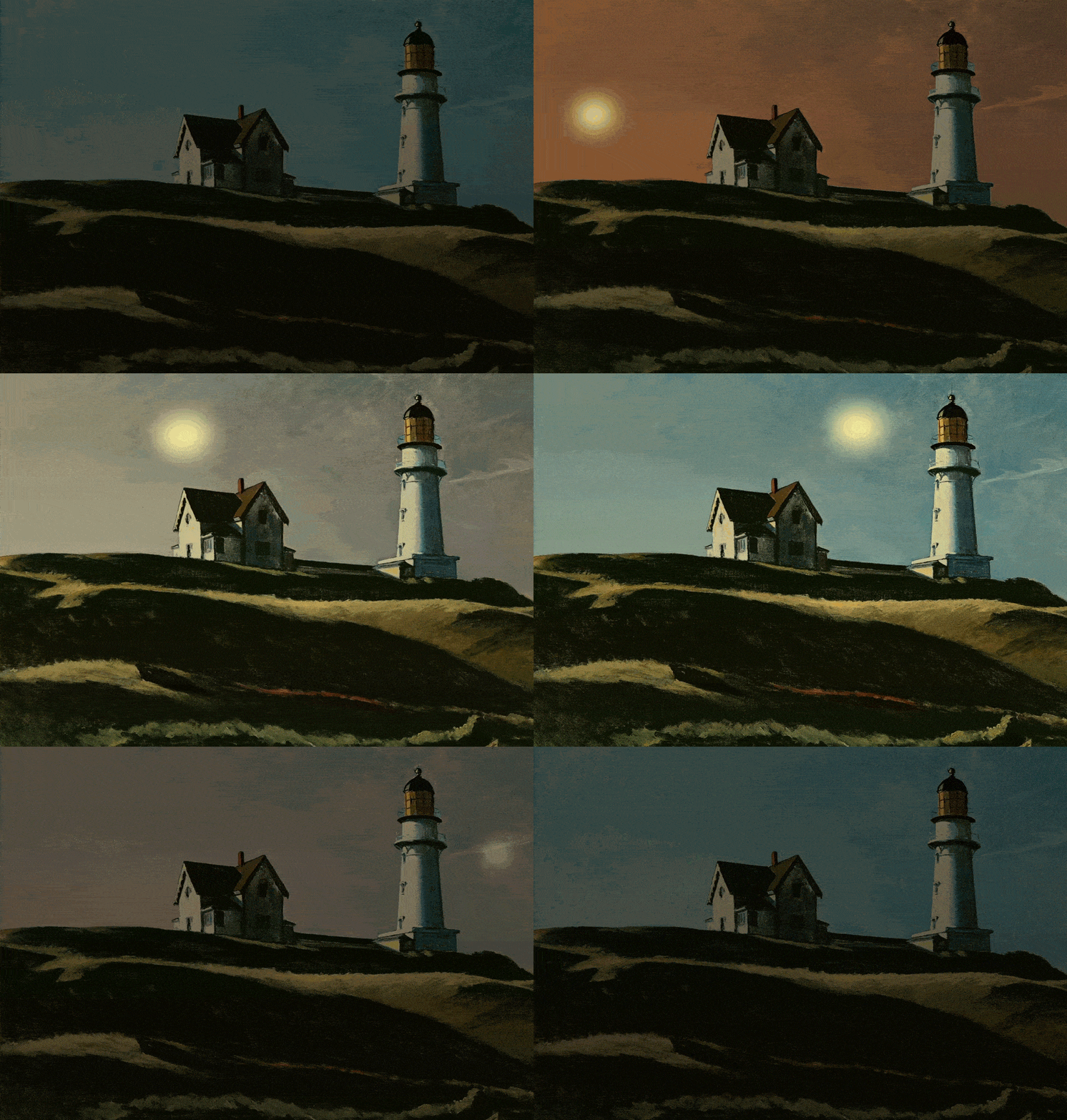
Even in a more scenic setting, like the Cape Elizabeth, Maine of 1927’s Lighthouse Hill, an enriching touch of bleakness nevertheless comes through. “Both the lighthouse and cottage are the focal points of the painting, yet despite the blue sky and calm scenery displayed, the shadows bring an ominous feeling to what one would assume is an inviting house.” Befitting the work of a painter whose use of light and shadow still inspires artists of all kinds today, these GIFs mostly animate light sources: the blink of a neon sign, the sun’s daily arc across the sky.
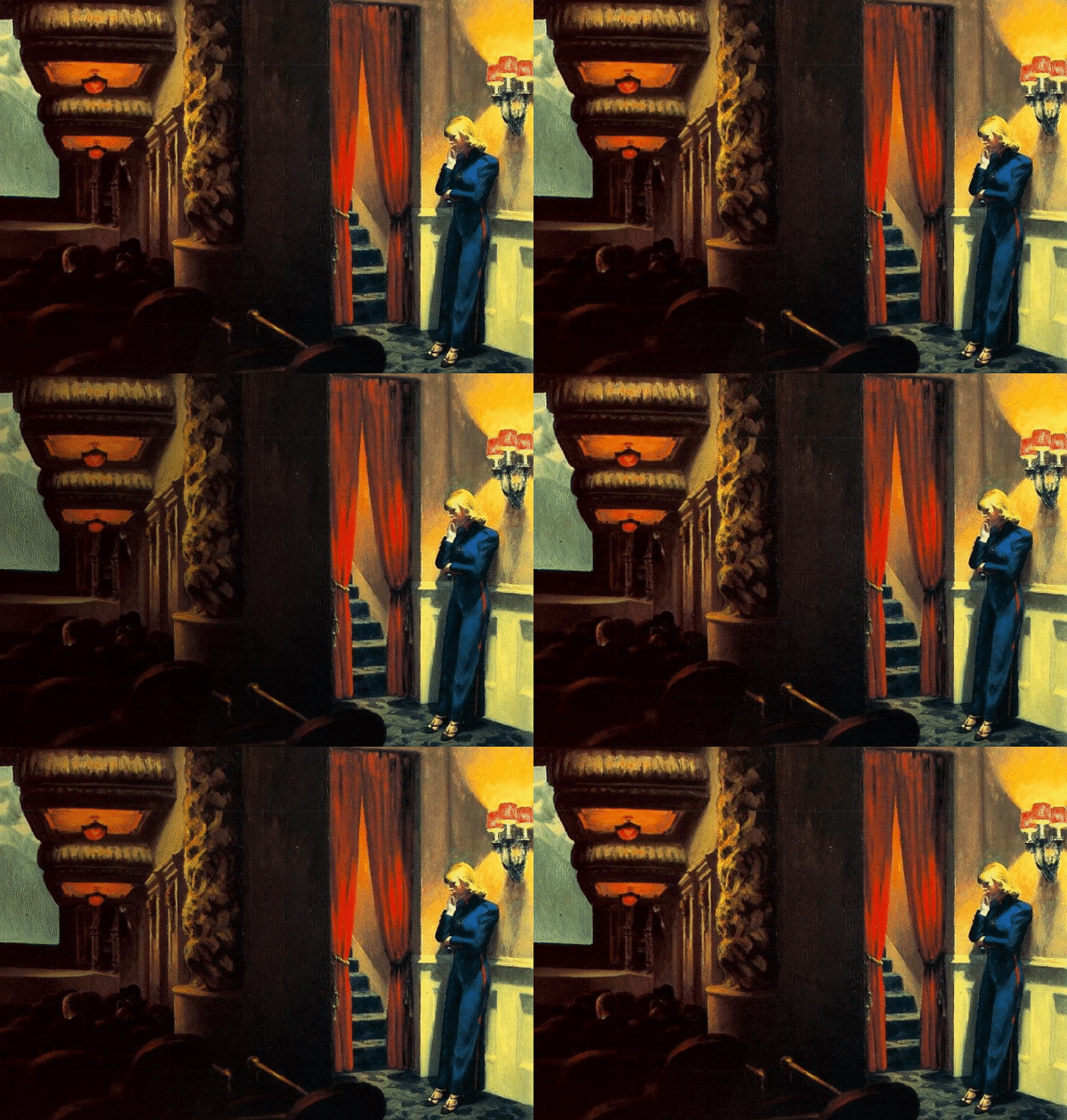
The GIF of 1939’s New York Movie, Hopper’s most overt tribute to the cinema, introduces the flickering of the film projector. Purists may not appreciate these touches, but many of us will realize that Hopper’s projectors have always been flickering, his neon signs always blinking, his cups of coffee always steaming, and his suns always setting, at least in our minds. See all of the animated gifs here.
Related Content:
How Edward Hopper “Storyboarded” His Iconic Painting Nighthawks
Edward Hopper’s Iconic Painting Nighthawks Explained in a 7‑Minute Video Introduction
9‑Year-Old Edward Hopper Draws a Picture on the Back of His 3rd Grade Report Card
Paintings by Caravaggio, Vermeer, & Other Great Masters Come to Life in a New Animated Video
See Classic Japanese Woodblocks Brought Surreally to Life as Animated GIFs
Based in Seoul, Colin Marshall writes and broadcasts on cities, language, and culture. His projects include the book The Stateless City: a Walk through 21st-Century Los Angeles and the video series The City in Cinema. Follow him on Twitter at @colinmarshall or on Facebook.
Read More...Alice B. Toklas Reads Her Famous Recipe for Hashish Fudge (1963)
Alice Babette Toklas met Gertrude Stein in 1907, the day she arrived in Paris. They remained together for 39 years until Stein’s death in 1946. While Stein became the center of the avant-garde art world, hosting an exclusive salon that welcomed the likes of Ernest Hemingway, Pablo Picasso, James Joyce, Ezra Pound and F. Scott Fitzgerald, Toklas largely preferred to stay in Stein’s shadow, serving as her secretary, editor and assistant.
That changed in 1933 when Stein wrote The Autobiography of Alice B. Toklas – a retelling of the couple’s life together with Toklas serving as narrator. The book is Stein’s most accessible and best-selling work. It also turned the shy, self-effacing Toklas into a literary figure.
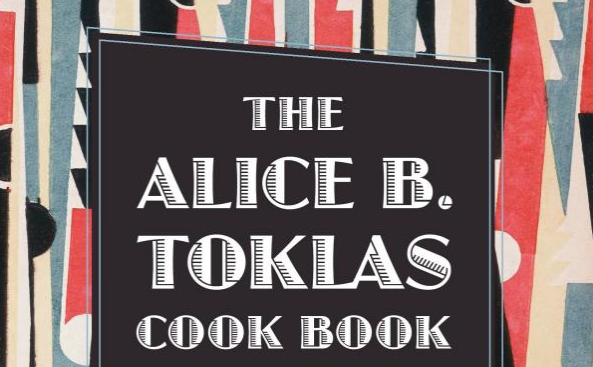
After Stein’s death, Toklas published The Alice B. Toklas Cookbook in 1954, which combined personal recollections of her time with Stein along with recipes and musings about French cuisine. Yet it wasn’t her stories about tending to the wounded during WWI or her opinions on mussels that made the book famous. Instead, it was the inclusion of a recipe given to her by Moroccan-based artist Brion Gysin called “Hashish Fudge.”
In this 1963 recording from Pacifica Radio, Toklas reads her notorious recipe. The snack “might provide an entertaining refreshment for a Ladies’ Bridge Club or a chapter meeting of the DAR,” Toklas notes in her reedy, dignified voice. Then she gets on to the recipe itself:
Take one teaspoon black peppercorns, one whole nutmeg, four average sticks of cinnamon, one teaspoon coriander. These should all be pulverized in a mortar. About a handful each of stoned dates, dried figs, shelled almonds and peanuts: chop these and mix them together. A bunch of Cannabis sativa can be pulverized. This along with the spices should be dusted over the mixed fruit and nuts, kneaded together. About a cup of sugar dissolved in a big pat of butter. Rolled into a cake and cut into pieces or made into balls about the size of a walnut, it should be eaten with care. Two pieces are quite sufficient.
Toklas concedes that getting the key ingredient “can present certain difficulties” and recommends finding the stuff in the wild, which might have been possible to do in the early 1960s. Nowadays, the best course of action is to move to Washington, Colorado or Uruguay.
In the recording, Toklas then goes on to recall how hashish fudge came to be included into her book.
“The recipe was innocently included without my realizing that the hashish was the accented part of the recipe,” she says without a trace of facetiousness. “I was shocked to find that America wouldn’t accept it because it was too dangerous.”
“It never went into the American edition,” she says. “The English are braver. We’re not courageous about that sort of thing.”
Note: An earlier version of this post appeared on our site in January 2014.
Jonathan Crow is a Los Angeles-based writer and filmmaker whose work has appeared in Yahoo!, The Hollywood Reporter, and other publications. You can follow him at @jonccrow.
Related Content:
Gertrude Stein Gets a Snarky Rejection Letter from Publisher (1912)
Hear Gertrude Stein Read Works Inspired by Matisse, Picasso, and T.S. Eliot (1934)
Gertrude Stein Recites ‘If I Told Him: A Completed Portrait of Picasso’
Read More...Improv Comedy (Live and Otherwise) Examined on Pretty Much Pop: A Culture Podcast #20

What role does improv comedy play in popular culture? It shows up in the work of certain film directors (like Christopher Guest, Adam McKay, and Robert Altman) and has surfaced in some of the TV work of Larry David, Robin Williams, et al. But only in the rare case of a show like Whose Line Is It Anyway? is the presence of improvisation obvious. So is this art form doomed to live on the fringes of entertainment? Is it maybe of more apparent benefit to its practitioners than to audiences?
Mark, Erica, and Brian are joined by Tim Sniffen, announcer on the popular Hello From the Magic Tavern podcast, and a member of the Improvised Shakespeare Company and Baby Wants Candy (improvised musicals). He’s also written for Live From Here and other things. We discuss different types of improv, a bit of the history and structure of Second City, improv’s alleged self-help benefits, how improvisation relates to regular acting, writing, podcasting, and other arts, and more.
Here are a few improv productions to check out:
- ASSSCAT, a recurring show by the Upright Citizens Brigade (Amy Poehler’s start)
- This Improvised Shakespeare Company performance includes Thomas Middleditch of Silicon Valley
- Paul Provenza’s Set List (this one features Robin Williams)
- Baby Wants Candy including Tim performing a satire of Mary Poppins
- Off Book, The Improvised Musical podcast
- More improv TV shows (Drew Carey seems to be involved with half of these.), and even more on this Reddit thread
- “Top 20 Improvised Movie Moments” from WatchMojo.com
- The long-running (and just now ending) Improvised Star Trek podcast
- Of the hundreds of Hello from The Magic Tavern episodes, you may want to try #3 as an introduction and then #10 where Tim really gets to shine
- Here are more improv podcasts; Paul F. Tompkins has probably been a guest on all of them. Though really, aren’t nearly all podcasts (and reality TV shows, for that matter) improv? There are several other lists of best improv podcasts you can easily find with a quick web search.
- There are also some podcasts about techniques of improv, for example the Improv Resource Center Podcast with Kevin Mullaney
- And don’t forget role-playing games and their associated podcasts and YouTube streams; those are definitely improv of some sort, and occasionally done by professional actors or comedians, as in Critical Role and HarmonQuest.
For further reading, check out:
- Something Wonderful Right Away by Jeffrey Sweet (2004)
- “What Exactly Is Improv in the Filmmaking Process?” by Lauren McGrail
- “The Philosophy Behind The Inspired Silliness Of ‘Anchorman,’ 10 Years Later” by Lauren Duca
- “Philadelphia Theatre Company hosts ‘Improv Is the Future of Theater’ panel discussion: Improvising an improv economy” by Judy Weightman
- “Applying Improv Techniques to Threat Intelligence” by David Peduto
For musical improv, try Nakedly Examined Music #30 with Paul Wertico and David Cain, and also #55 with Don Preston (Zappa’s keyboardist) whom Mark quoted in this discussion.
This episode includes bonus discussion that you can only hear by supporting the podcast at patreon.com/prettymuchpop. This podcast is part of the Partially Examined Life podcast network.
Pretty Much Pop: A Culture Podcast is the first podcast curated by Open Culture. Browse all Pretty Much Pop posts or start with the first episode.
Read More...
Support Us
We're hoping to rely on loyal readers, rather than erratic ads. Please click the Donate button and support Open Culture. You can use Paypal, Venmo, Patreon, even Crypto! We thank you!

About Us

Open Culture scours the web for the best educational media. We find the free courses and audio books you need, the language lessons & educational videos you want, and plenty of enlightenment in between.
Advertise With Us

FREE UPDATES!
GET OUR DAILY EMAIL
Get the best cultural and educational resources on the web curated for you in a daily email. We never spam. Unsubscribe at any time.
FOLLOW ON SOCIAL MEDIA

Open Culture editor Dan Colman scours the web for the best educational media. He finds the free courses and audio books you need, the language lessons & movies you want, and plenty of enlightenment in between.
Advertise With Us

