How Blondie’s Debbie Harry Learned to Deal With Superficial, Demeaning Interviewers
Unprofessional, obnoxious, rude, boring, bullying—all adjectives that can apply when middle-aged men comment incessantly on a woman’s looks, when that woman has met with them to talk about her career. The cringe-factor is magnified a thousandfold when it’s broadcast over airwaves, or fiber and 4G. The actresses and singers who have endured such abuse in front of audiences spans the history of radio and TV.
Blondie’s Deborah Harry got the treatment. Subjected to “years of superficial, tedious, and demeaning questions from journalists,” notes documentary production company Public Interest, she finally “devises a brilliant way to turn interviews on their head.” The video above pulls together a montage of interview clips in which both male and female talking heads start nearly every conversation with Harry by referring to her as “a reincarnation of Marilyn Monroe” or something to that effect. She is visibly annoyed but keeps her cool, which a couple interviewers take as an invitation for near-harassment.
Some might claim the crude interest in Harry’s looks was justified, given her early persona as a punk-rock pinup, but note that most of the interviewers never get around to talking about the music—the reason we know and admire her in the first place. Instead, one British TV presenter follows up the Marilyn Monroe question (if it can be so called) by asking if Harry is “thinking about going into marriage.”
The questions aren’t always lecherous but they are always inane. Harry is clear about one thing. It’s an obligation; she’s there to sell a product. How does she turn the tables? A stuffed animal mascot, a few well-placed “can you believe this shit?” looks at the camera, and a flat-out refusal to answer any questions about Madonna, for a start. Lou Reed and Bob Dylan get credit for being some of the crankiest interview subjects in rock and roll, but Harry had more reason than either of them to hate this part of the job.
See how she handles it, and for contrast, read an interview she did with Bill Brewster in 2014, when Blondie released the reunion album Ghosts of Download. Brewster keeps the focus on the music, and she seems totally thrilled to get the chance to talk about it.
Related Content:
Blondie Plays CBGB in the Mid-70s in Two Vintage Clips
Josh Jones is a writer and musician based in Durham, NC. Follow him at @jdmagness
Read More...When Stanley Kubrick Banned His Own Film, A Clockwork Orange: It Was the “Most Effective Censorship of a Film in British History”
“What in hell is Kubrick up to here?” asked Roger Ebert in his original 1972 review of A Clockwork Orange, whose marketing announced it as a film about “the adventures of a young man whose principal interests are rape, ultra-violence, and Beethoven.” How could this acclaimed director really want to involve us in the “psychopathic little life” of this dubious protagonist? “In a world where society is criminal, of course, a good man must live outside the law. But that isn’t what Kubrick is saying. He actually seems to be implying something simpler and more frightening: that in a world where society is criminal, the citizen might as well be a criminal, too.”
Others in the press leveled similar criticisms at A Clockwork Orange, most of them much simpler and more accusatory. They had more serious consequences for the picture in Kubrick’s adopted homeland of England. Within two weeks of its release there, writes David Hughes in The Complete Kubrick, “right-wingers and tub-thumping MPs were baying for the film to be banned there before copycat violence could spread among the nation’s impressionable youth. Under a headline that read ‘CLOCKWORK ORANGES ARE TICKING BOMBS,’ the Evening News predicted that the film would ‘lead to a clockwork cult which will magnify teen violence.’ ”
The direct attributions of violent incidents involving young people to A Clockwork Orange continued until the film was finally pulled from British theaters — by the filmmaker himself. “In early 1974, Kubrick and Warner Bros quietly withdrew it from circulation,” Hughes writes, “refusing to allow it to be shown under any circumstances.” Attempted breaches of this “most effective censorship of a film in British history” were dealt with harshly: London’s Scala Cinema, for example, was forced to shut its doors forever after showing the film in 1992. A Clockwork Orange finally received a British re-release in 2000, the year after Kubrick’s death.
That same year the documentary Still Tickin’: The Return of A Clockwork Orange, which you can watch on YouTube, told the story of the film’s suppression and re-emergence. But why would such a forcefully individualistic filmmaker as Stanley Kubrick pull his own film from circulation in the first place? “Stanley was very insulted by the reaction, and hurt,” Hughes quotes his widow Christiane as saying. Kubrick “didn’t want to be misunderstood and misinterpreted,” nor did he want to keep receiving the “death threats” that the bad press had been drawing.
Kubrick “never spoke about the decision” to ban his own movie, writes Devin Faraci at Birth.Movies.Death., and surely didn’t see it as to blame for youth violence in Britain, but “he was still sickened to see the clothes of his characters hung on these perpetrators. The message of his film was being missed, and he refused to let the movie take on a life of its own.” Kubrick had discussed his own opposition to the idea that art promotes violent behavior during the initial promotion of A Clockwork Orange: “There has always been violence in art,” he said to journalist Michel Ciment. “There is violence in the Bible, violence in Homer, violence in Shakespeare, and many psychiatrists believe that it serves as a catharsis rather than a model.”
In Kubrick’s view, “the people who commit violent crime are not ordinary people who are transformed into vicious thugs by the wrong diet of films or TV. Rather, it is a fact that violent crime is invariably committed by people with a long record of anti-social behavior, or by the unexpected blossoming of a psychopath who is described afterward as having been ‘…such a nice, quiet boy.’ ” Either way, “immensely complicated social, economic and psychological forces are involved,” and “the simplistic notion that films and TV can transform an otherwise innocent and good person into a criminal has strong overtones of the Salem witch trials.” Whether or not Kubrick went too far in withdrawing A Clockwork Orange, he certainly had a clearer sense of what creates the kind of malevolent characters it depicts than many of its early viewers did.
Related Content:
The Making of Stanley Kubrick’s A Clockwork Orange
Stanley Kubrick’s Rare 1965 Interview with The New Yorker
Based in Seoul, Colin Marshall writes and broadcasts on cities, language, and culture. His projects include the book The Stateless City: a Walk through 21st-Century Los Angeles and the video series The City in Cinema. Follow him on Twitter at @colinmarshall, on Facebook, or on Instagram.
Read More...Michel Foucault and Noam Chomsky Debate Human Nature & Power on Dutch TV (1971)
Two academic stars and heroes of anti-authoritarian leftist political thought sit down to debate human nature—nowadays such events occur more rarely than they did in the 60s and 70s, when the counterculture and anti-war movements made both Michel Foucault and Noam Chomsky famous. Now, when two thinkers of such caliber sit down together, their conversation is immediately distilled into tweeted commentary, sometimes illustrated with gifs and video clips. We get the gist and move on to the next link.
In 1971, when Foucault and Chomsky joined host Fons Elders on Dutch TV, those viewers who tuned in would have to follow the conversation for themselves—for the most part—though it aired in a partly abridged version with commentary from a Professor L.W. Nauta. “Chomsky is at the height of his linguistic-scientific mode,” notes New Inquiry, where “Foucault performs a genealogy of scientific truth itself.”
After an introduction in Dutch by Dr. Nauta, Elders welcomes his guests onstage in English as “tonight’s debaters,” two “mountain diggers, working at the opposite sides of the same mountains, with different tools, without knowing even if they are working in each other’s direction.” It’s a characterization that amuses both Chomsky and Foucault, who aren’t discovering each other’s differences so much as enacting them for the studio audience of “early-70s Dutch intelligentsia.”
The two do find some common ground, in Foucault’s critique of the dominant history of science, for example. Where they differ, they seem to be speaking different languages, and they are also literally speaking different languages. Chomsky begins in English, Foucault responds in English with apologies for his lack of fluency, then switches to French. Those of us who aren’t fluent in both languages will have to rely on the translation, as many of us do when reading Foucault as well, a situation that should give us pause before we draw conclusions about what we think he’s saying.
Still, those inclined to reject Foucault as a rejector of science should pay closer attention to him, even in translation (into English, Portuguese, and Japanese subtitles in the video above). He does not reject the notion of scientific fact, but rather, as Wittgenstein had decades earlier, points out that much of what we take as conceptual reality is no more than vague, meaningless abstraction, “peripheral” words and phrases that do “not all have the same degree of elaboration” as more precise scientific terms.
Fuzzy ideas, for example, like “human nature… do not play an ‘organizing’ role within science.” Neither “instruments of analysis” nor “descriptive either,” they “simply serve to point out some problems, or rather to point out certain fields in need of study.” They are signposts for the unknown, a “scientific shopping list,” as Professor Nauta puts it when he breaks in to helpfully explain to viewers at home what he thinks Foucault means. Nauta’s interventions are drier than the main action—apparently no one thought in 1971 to sensationalize the event.
Well, almost no one thought to sensationalize the event. Anarchist host Elders “wanted to jazz things up a bit,” writes Eugene Wolters at Critical Theory. “Aside from offering Foucault hashish for part of his payment, Elder tried repeatedly to get Foucault to wear a bright red wig.” According to the James Miller in The Passion of Michel Foucault, Elders “kept poking Foucault under the table, pointing to the red wig on his lap, and whispering, ‘put it on, put it on.”
Chomsky found the exchange less than amusing, later calling Foucault “totally amoral” and saying that he “wildly exaggerates.” These minor spectacles aside, the Chomsky-Foucault debate is less epic showdown and more two mostly parallel, only occasionally intersecting, discourses on “a wide range of topics, from science, history, and behaviorism to creativity, freedom, and the struggle for justice in the realm of politics.” If some of that discussion seems overly obscure at times, just imagine Foucault in a bright red wig, and later enjoying what he and his friends called “Chomsky hash.”
The text of their debate has been published. Read The Chomsky-Foucault Debate: On Human Nature.
Related Content:
Michel Foucault Offers a Clear, Compelling Introduction to His Philosophical Project (1966)
Noam Chomsky Makes His First Power Point Presentation
Josh Jones is a writer and musician based in Durham, NC. Follow him at @jdmagness
Read More...How the Universe Will Come to Its Explosive End: Trillions of Years Covered in 29 Timelapse Minutes
We all know that Earth won’t last forever. But nothing else in the universe will either, and you can witness the series of explosions, evaporations, expirations, and other kinds of cosmic deaths that will constitute the next one trillion trillion trillion trillion trillion trillion trillion trillion years in the video above. Conveniently, it doesn’t take quite that long to watch: the time-lapse gets from just a few years into the future to the time at which the last black hole vanishes in under half an hour, doubling its own speed every five seconds. Not only does Earth go first, destroyed by the dying sun, but it happens at the 3:20 mark.
Most of us have no idea what might possibly play out in the universe over the next 26 or so time-lapsed minutes. But more astrophysics-inclined minds like Brian Cox, Neil deGrasse Tyson, Sean Carroll, Janna Levin, and Michio Kaku have put a great deal of thought into just that, and it is from their words that this video’s creator John D. Boswell, known on Youtube as melodysheep, crafts its narration.
And what this formidable cast of scientists narrates resembles sequences from the biggest-budget science-fiction movies, which shows how far visual effects have come since A Brief History of Time, Errol Morris’ thematically similar 1991 documentary on the late Stephen Hawking — a figure who has also appeared in Boswell’s previous work.
However it’s told, the narrative remains the same: “the death of the sun, the end of all stars, proton decay, zombie galaxies, possible future civilizations, exploding black holes, the effects of dark energy, alternate universes, the final fate of the cosmos,” as Boswell puts it. “This is a picture of the future as painted by modern science,” and one that “gives a profound perspective — that we are living inside the hot flash of the Big Bang, the perfect moment to soak in the sights and sounds of a universe in its glory days, before it all fades away.” Thanks to the work of generation upon generation of scientists, as well as the work of creators like Boswell who interpret their findings in far-reaching ways (this time-lapse of the future has already racked up nearly 12.5 million views), we know how the story of the universe ends. Now what will we do with the chapters granted to us?
Related Content:
NASA Archive Collects Great Time-Lapse Videos of our Planet
Supermassive Black Hole Shreds a Star, and You Get to Watch
Watch A Brief History of Time, Errol Morris’ Film About the Life & Work of Stephen Hawking
Based in Seoul, Colin Marshall writes and broadcasts on cities, language, and culture. His projects include the book The Stateless City: a Walk through 21st-Century Los Angeles and the video series The City in Cinema. Follow him on Twitter at @colinmarshall, on Facebook, or on Instagram.
Read More...The Ruins of Chernobyl Captured in Three Haunting, Drone-Shot Videos
Voices of Chernobyl—Svetlana Alexievich’s oral history of the 1986 nuclear explosion in Ukraine—brings together the harrowing testimonies of over 500 eyewitnesses to the accident: Firefighters, nurses, soldiers, former Soviet officials, engineers, nuclear scientists, and ordinary Soviet citizens (at the time), who saw, but could not understand, events that would cost tens, perhaps hundreds, of thousands of lives.
We will never know the exact toll, due to both internal cover-ups and the immeasurable long-term effect of over 50 million curies of radionuclides spread out over the Soviet Union, Europe, and the globe for over three decades. But Alexievich’s book eschews “the usual approach of trying to quantify a disaster in terms of losses and displacement,” notes Robert Matthews at the Journal of Nuclear Medicine. She opted instead to tell the stories “of individuals and how the disaster affected their lives.”
The inherently moving, dramatic stories of people like Lyudmilla Ignatenko—the wife of a doomed firefighter whose unforgettable journey opens the book—immediately draw us into the “psychologic and personal tragedy” of the disaster. For their vividness and sheer emotional impact, these stories have a cinematic effect, filling our imagination with images of grisly tragedy and a grim persistence we might not exactly call heroism but which certainly counts as a close cousin.
It’s no wonder, then, that parts of Alexievich’s deservedly-Nobel-winning history made such a brilliant transition to the screen in Craig Mazin’s HBO miniseries, which draws from stories like Lyudmilla’s in its portrait of the explosion and its containment. The series’ psychological focus, and the need to create individual heroes and villains, creates “confrontation where confrontation was unthinkable” in reality, as Masha Gessen writes in her critique at The New Yorker. We cannot trust Chernobyl as history, though it is incredibly compelling as historical fiction.
Rather what the show gives viewers, writes Gessen, is a stunningly accurate visual portrayal of the time period, one that seems at times to have recreated historical footage shot-for-shot. The show’s total immersion in the bleak, bureaucratic world of mid-eighties Soviet Russia has so enthralled viewers that people have taken to posting Instagram photos of themselves inside the Chernobyl exclusion zone. Though it may seem like a foolish thing to do given the levels of radiation still present in much of the area, Chernobyl has in fact been slated for redevelopment since 2007. Tourists began visiting the area not long afterwards.
Since the zone became accessible, hours of footage from Chernobyl and nearby city of Pripyat, former home of Lyudmilla Ignatenko, have appeared in amateur video and and more professional productions like “Postcards from Pripyat” (top), shot by Danny Cooke for CBS, “The Fallout,” a demo reel shot by Aerobo Designs, and the drone footage in the Wall Street Journal video just above. These are stunning montages of decaying Soviet cities left behind in time. Even emptied of the individuals whose stories keep us compulsively reading eyewitness accounts like Alexievich’s and watching fictionalized dramas like Mazin’s, the videos still have a story to tell, a visual account of the remains of an empire brought low by corruption, fear, and lies.
Related Content:
Scenes from HBO’s Chernobyl v. Real Footage Shot in 1986: A Side-By-Side Comparison
A Haunting Drone’s‑Eye View of Chernobyl
Josh Jones is a writer and musician based in Durham, NC. Follow him at @jdmagness
Read More...Lost Miles Davis Album, Rubberband, Will Finally Be Released This Fall: Hear the Title Track, “Rubberband,” in Five Different Versions
Jazz is a collaborative art, no matter how big the egos and outsized the personalities involved. Even bandleaders as autocratic as Miles Davis are referred to in the context of their ensembles and in the company of their finest players. Davis knew how good his collaborators were. He gave them ample space to prove it and pushed them to improve. Usually pushed them out the door, to legendary solo careers and new musical dynasties: John Coltrane and Herbie Hancock come to mind immediately.
As the 80s dawned, popular music on the whole became increasingly producer-driven. Digital synthesizers and samplers took prominence, and jazz greats like Davis and Hancock followed suit. (Would Coltrane have made computer music in the 80s had he lived to see them?) In 1986, Davis’s album Tutu fiercely “divided fans and critics,” notes Jazzwise magazine. “Miles recorded his trumpet parts over a lush electric soundscape, produced from a battery of samplers, synthesizers, sequencers and drum machines.”
Mostly “produced, arranged, played, and composed,” by bassist Marcus Miller—anticipating the current phenomenon of producer-created albums—Tutu “was a product of the 80s, a decade where music was often in danger of becoming subservient to technology.” In Davis’ hands, the technological approach to jazz produced a classic that “continues to thrive” in the jazz world, covered by several major artists. Another album Davis recorded around the same time, Rubberband, never got the chance to have this kind of impact—but we will soon get to imagine what might have happened had he released the 1986 funk, soul, dance album at the time.
In its finished form—finished, that is, by original producers Randy Hall and Zane Giles, and Davis’ nephew Vince Wilburn, Jr., who played drums on the album—Rubberband sounds ahead of its time, seeming to forecast the smooth neo-soul sound of a decade later. But who knows how much this is an artifact of recent studio decisions. The impression, in any case, comes only from the title track, released last year in five different versions on the Rubberband EP. Featuring singer Ledisi, the song presages the hip-hop-adjacent, horn-and-female-vocal-driven funk of the Brand New Heavies, Erykah Badu, and Meshell Ndegeocello.
At the same time, “Rubberband” incorporates some of the more banal elements of the genre, such as an upbeat, somewhat insipid chorus about making a better life. The track crosses fully over into contemporary dance music—it is no longer jazz at all, really. Whether or not we can say that about the entire album remains to be seen. The full, completed, album will be released on September 6th (pre-order here), with a cover painting by Davis himself. “Set to be his first album for Warner Bros. Records following his departure from longtime label Columbia,” reports Pitchfork, “that record was ultimately shelved” in favor of Tutu.
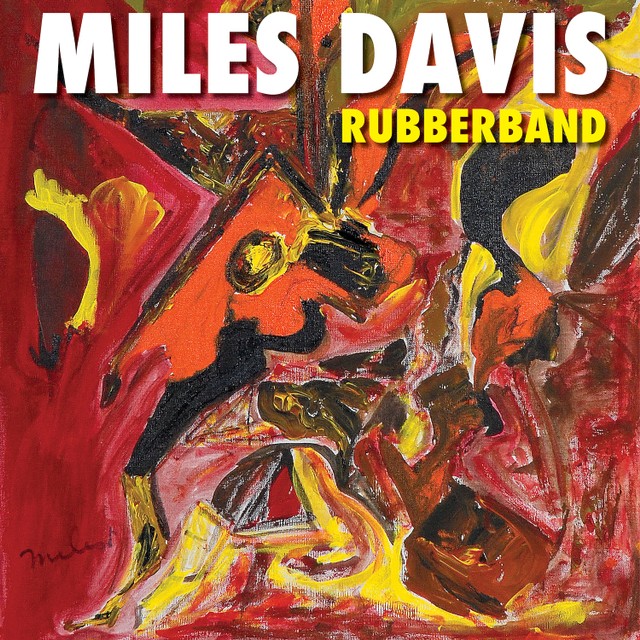
The record features other guest singers, so we might expect more jams like “Rubberband,” but one never really knows with Davis, who arguably invented—or at least perfected—producer-driven, studio-made jazz records many years earlier, first on the groundbreaking In a Silent Way in 1969, then on the even more groundbreaking Bitches Brew in 1970. Even as his music began to sound more commercial, its roots in four decades of radically changing jazz every few years made it wholly original to the minds of Miles Davis and his collaborators.
via Pitchfork
Related Content:
Kind of Blue: How Miles Davis Changed Jazz
Hear a 65-Hour, Chronological Playlist of Miles Davis’ Revolutionary Jazz Albums
Listen to The Night When Miles Davis Opened for the Grateful Dead in 1970
Josh Jones is a writer and musician based in Durham, NC. Follow him at @jdmagness
Read More...Women Who Draw: Explore an Open Directory That Showcases the Work of 5,000+ Female Illustrators
The seemingly never-ending era of female artists laboring in the shadows cast by their male colleagues is coming to a close.
Ditto the tyranny of the male gaze.
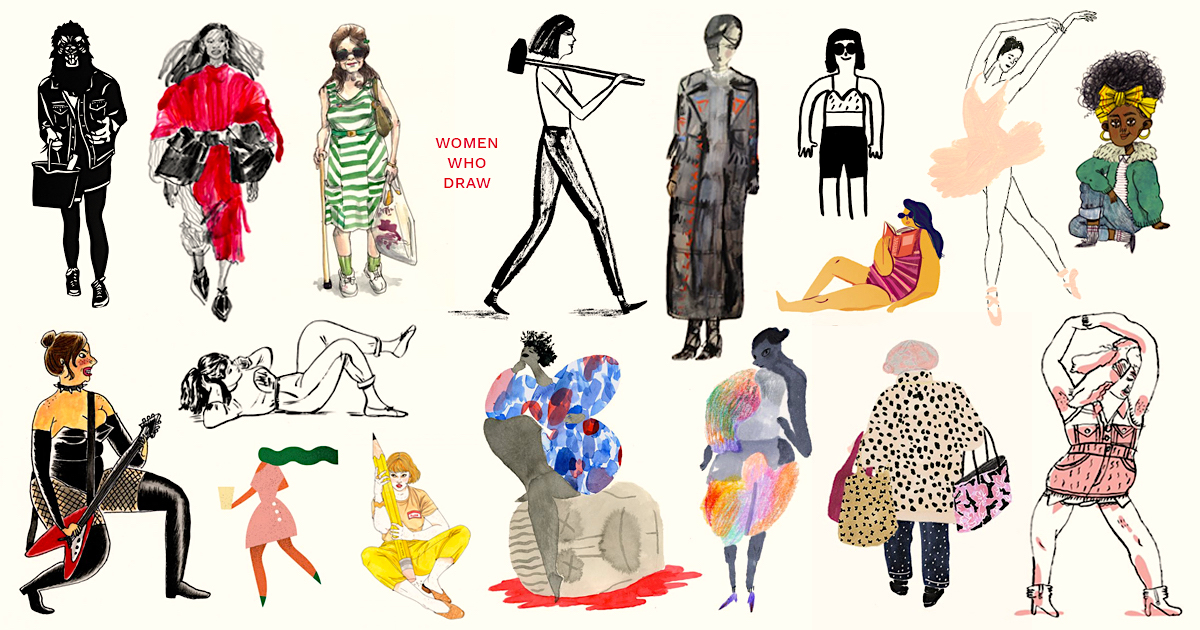
Women Who Draw, a database of over 5,000 professional artists, offers a thrillingly diverse panoply of female imagery, all created, as the site’s name suggests, by artists who identify as women.
Launched by illustrators Julia Rothman and Wendy MacNaughton in response to a dismaying lack of gender parity among cover artists of a prominent magazine—in 2015, men were responsible for 92%—the site aims to channel work to female artists by boosting visibility.
To that end, each illustrator tossing her hat in the ring is required to upload an illustration of a woman, ideally a full body view, on a white background.
The result is an astonishing range of styles, from an international cast of creators.
Not surprisingly, the majority of contributors are based on the East Coast of the United States, but given the site’s mission to promote female illustrators of color, as well as LBTQ+ and other less visible groups, expect to see growing numbers from Africa, the Caribbean, the Middle East, and Central and South America.
In addition to indicating their location, artists can checklist their religion, orientation, and ethnicity/race. (Those who would check“white” or “straight” should be prepared to accept that those categories are tabled as “WWD encourages people to seek out underrepresented groups of women.”)
Bean counting aside, the personalities of individual contributors shine through.
Some, like Paris-based American Laura Park, choose explicit self-portraiture.

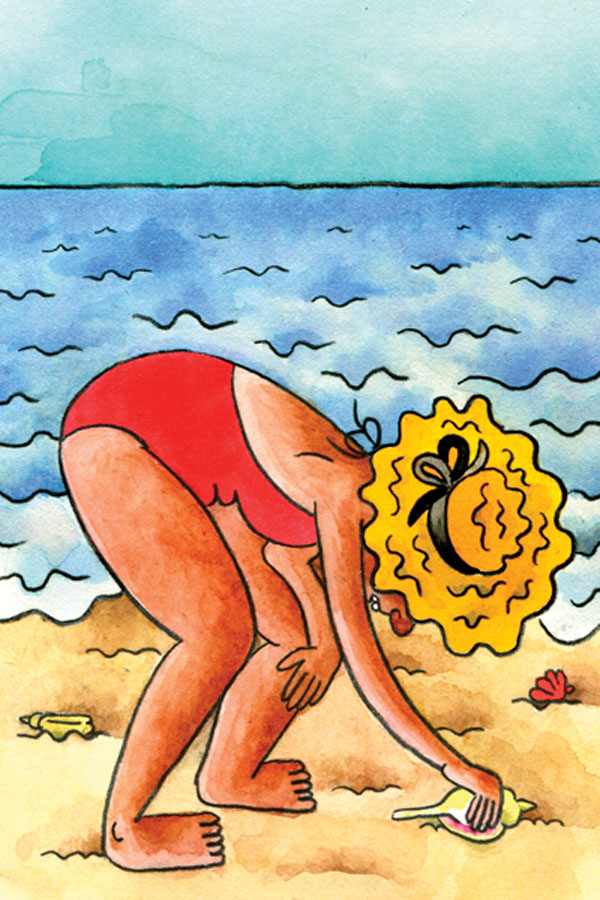
Vanessa Davis gives the lie to bikini season
SouthAsian illustrator Baani makes an impression, documenting women of her community even as she reinterprets tropes of Western art.

Pé-de-Ovo Studio corners the market on plushies.

Women Who Draw’s latest crowd-sourced project is concerned with personal stories of immigration.
Final words of encouragement from Lindsey Andrews, Assistant Art Director for the Penguin Young Readers Design Group:
Just keep putting your work out there in any form you can think of. Update your various social platforms regularly. Mail postcards of your work. Send emails. Network when you can. But, mainly, do what you love. Even if you have a portfolio full of commissioned pieces, I still like to see what you create when you get to create whatever you want. Also, let me know your process!
Related Content:
Ayun Halliday is an author, illustrator, theater maker and Chief Primatologist of the East Village Inkyzine. Join her in NYC tonight, Monday, June 17 for another monthly installment of her book-based variety show, Necromancers of the Public Domain. Follow her @AyunHalliday.
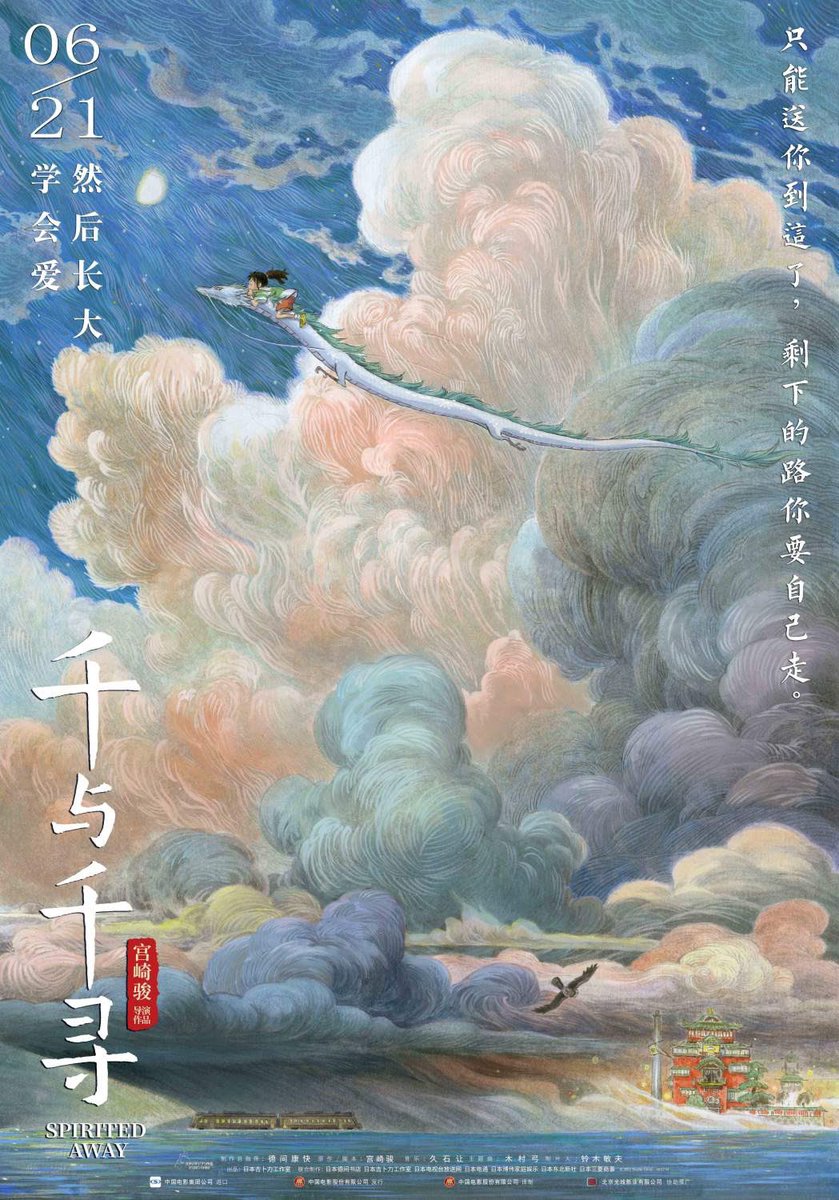
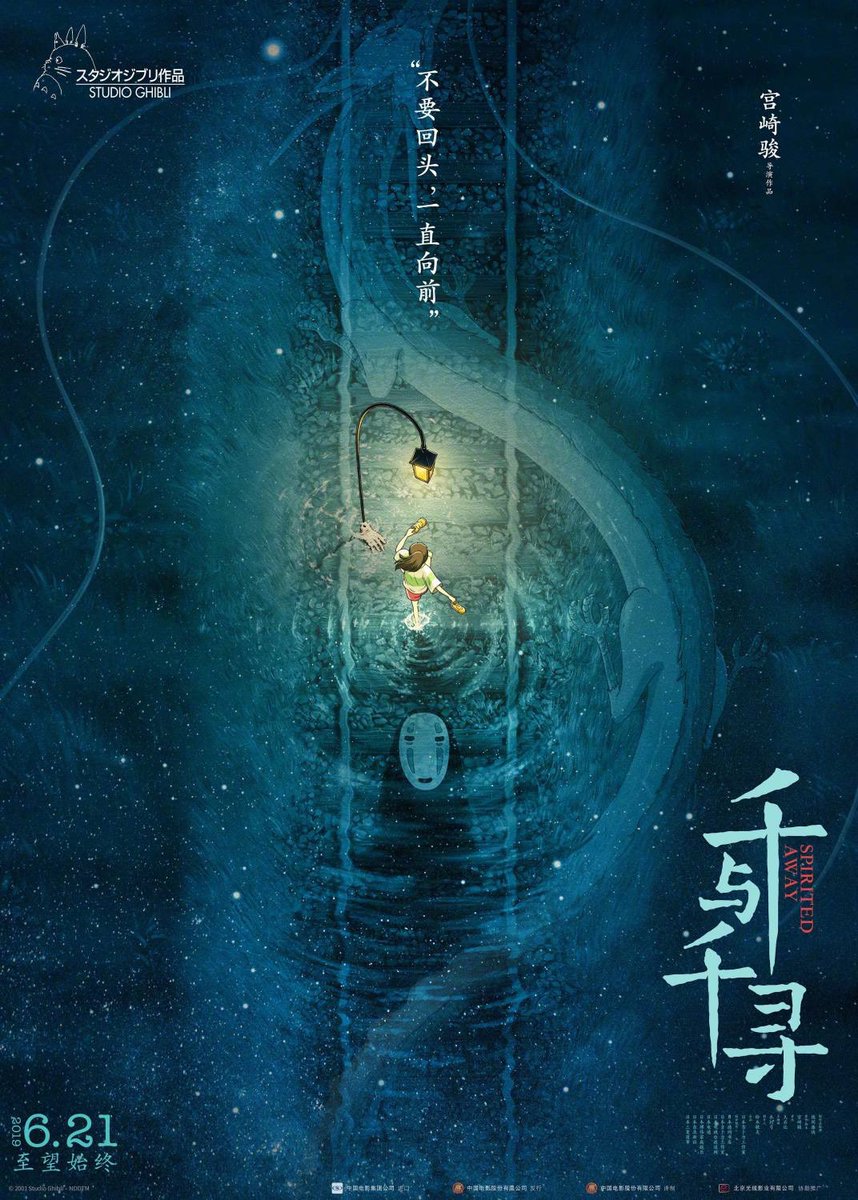
Read More...Hayao Miyazaki’s Spirited Away Opens in China 18 Years After Its Original Release: See Beautiful New Posters for the Film
Animation fans all over the world love the films of Japanese animator Hayao Miyazaki, but animation fans in China have never, until very recently, been able to see them on the big screen. Part of the problem has to do with the sensitivity of Chinese authorities to what sort of media enters the country — especially media from a country like Japan, with which China has not always seen eye to eye. “Miyazaki films did not open theatrically in China until a re-release of My Neighbor Totoro in December 2018,” writes Indiewire’s Zack Scharf, “one sign that the relationship between Japan and China is getting less tense.”
Miyazaki’s Studio Ghibli has produced few characters as winning as Totoro — the outsized guardian of the forest who resembles a cross between a cat, an owl, and maybe a bear — and his winning over of China’s censors seemed to have opened the gates to the Middle Kingdom for the rest of Miyazaki’s beloved filmography. “The Totoro release was a huge box office success with more than $26 million,” writes Scharf, “and Spirited Away is widely expected to perform even better given its enduring popularity.” Having opened in Japan back in 2001 as 千と千尋の神隠し, or “The Spiriting-Away of Sen and Chihiro,” it stands not only as the top-grossing film of all time at the Japanese box office, but one of the several undisputed masterpieces among Miyazaki’s works.
Spirited Away tells the story of a ten-year-old girl who, lost in an abandoned amusement park, finds her way into a parallel world populated with the countless spirit creatures enumerated in the Japanese folk religion of shinto — which, as revealed in Wisecrack’s video essay “The Philosophy of Hayao Miyazaki,” figures heavily into some, and perhaps all of the master’s work. As displeasing as the presence of religion, let alone a Japanese religion, may long have been to Chinese higher-ups, the Chinese public’s enthusiasm for Miyazaki’s films can hardly be disputed.
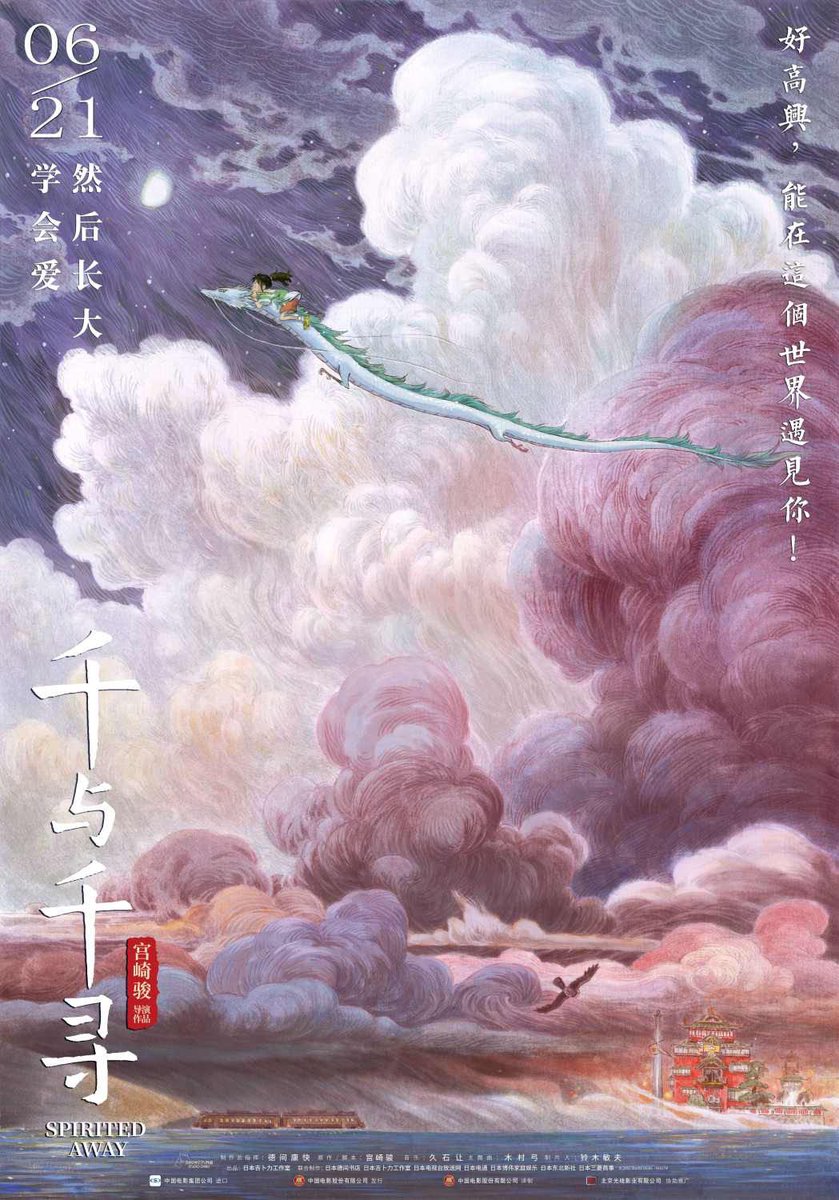
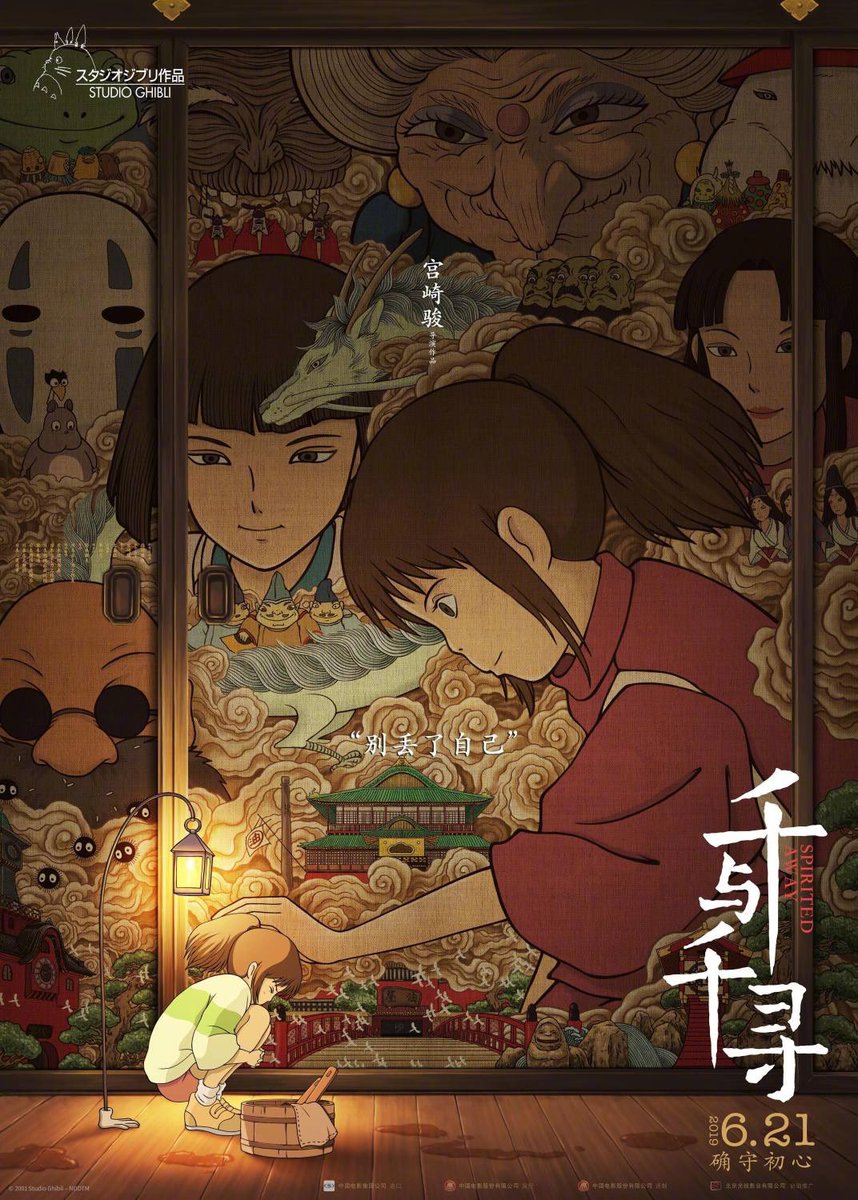
That powerful force could even return to Spirited Away the title of most successful Japanese animated film ever, which it held until Makoto Shinkai’s Your Name came along in 2017. The marketing of Spirited Away’s eighteen-year-late Chinese theatrical release, which includes this series of posters newly designed by artist Zao Dao, will certainly help give it a push. Every Ghibli enthusiast in China will certainly come out for it, and with luck, they may also be able to see the upcoming How Do You Live? — Miyazaki’s next and perhaps final film, for whose production he came out of the latest of his retirements — in theaters along with the rest of the world.
Related Content:
Watch Hayao Miyazaki’s Beloved Characters Enter the Real World
How the Films of Hayao Miyazaki Work Their Animated Magic, Explained in 4 Video Essays
Watch Hayao Miyazaki Animate the Final Shot of His Final Feature Film, The Wind Rises
Hayao Miyazaki’s Masterpieces Spirited Away and Princess Mononoke Imagined as 8‑Bit Video Games
The Simpsons Pay Wonderful Tribute to the Anime of Hayao Miyazaki
Based in Seoul, Colin Marshall writes and broadcasts on cities, language, and culture. His projects include the book The Stateless City: a Walk through 21st-Century Los Angeles and the video series The City in Cinema. Follow him on Twitter at @colinmarshall, on Facebook, or on Instagram.
Read More...
A Wild 40-Minute Race Down Alpe D’Huez
Damien Oton, winner of last summer’s Megavalanche, mounted a camera on his helmet and recorded his race down Alpe D’Huez. Buckle in, and enjoy the exhilarating wild ride. Once you start, it’s hard to stop.
If you would like to support the mission of Open Culture, consider making a donation to our site. It’s hard to rely 100% on ads, and your contributions will help us continue providing the best free cultural and educational materials to learners everywhere. You can contribute through PayPal, Patreon, and Venmo (@openculture). Thanks!
Read More...The Brilliant Colors of the Great Barrier Revealed in a Historic Illustrated Book from 1893

Paul Simon’s famous lyric about everything looking worse in black and white
is hardly a universal truth, but when it comes to William Saville-Kent’s groundbreaking 1893 book The Great Barrier Reef of Australia: its products and potentialities, the assertion may have some merit.
Saville-Kent, a naturalist whose work in various British aquariums eventually led to a gig rebuilding depleted Tasmanian oyster beds, fell hard for the colorful fish, bêche-de-mer, corals, sponges, turtles, and other marine species he encountered in Australia.
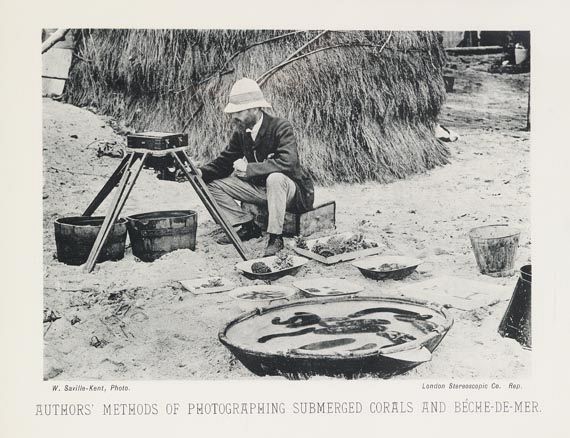
He photographed the Great Barrier Reef while serving in Queensland as Commissioner of Fisheries. 48 of his images were published in the aforementioned book, offering readers an unprecedented armchair tour of a coral reef, albeit in black and white.
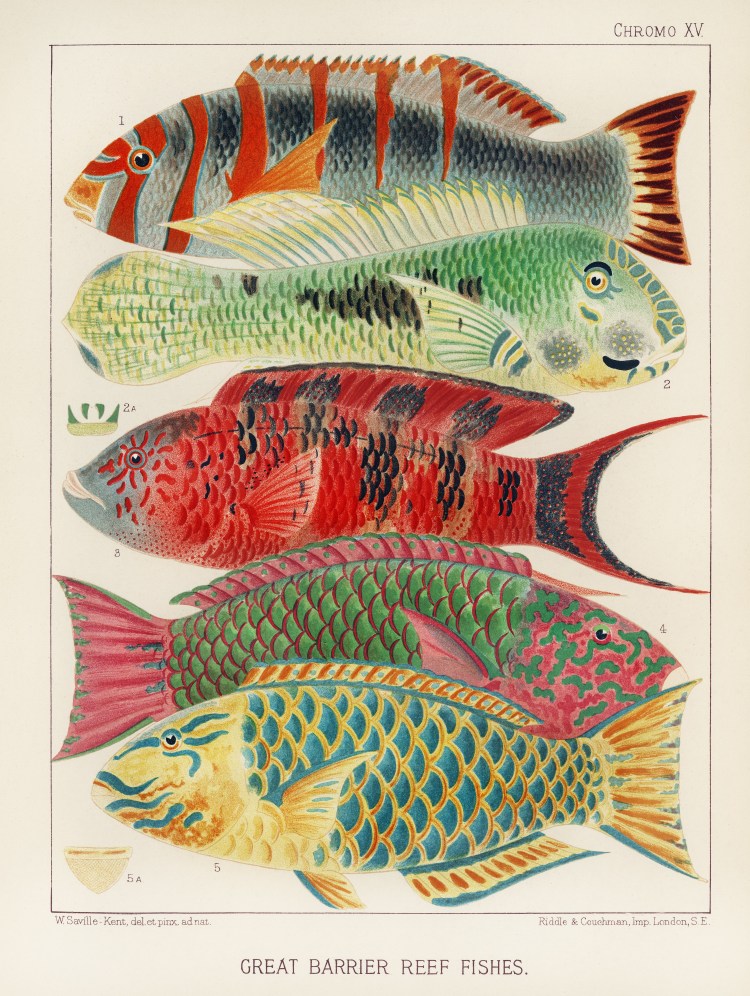
While Saville-Kent definitely achieved his goal of furthering the public’s awareness of the reef, he also upstaged himself by including 16 color lithographs inspired by his original watercolors.

These plates, by London-based lithographers Riddle and Couchman—whose work usually ran toward portraits of well-born gentlemen—exude a lively Seussian appeal.

Saville-Kent’s carefully captured fish, echinoderms, and anemones literally pale in comparison to the bright specimens the lithographers, who presumably lacked his firsthand experience of the forms they were depicting, brought to such vibrant life in the back of the book.

These days, alas, the Great Barrier Reef resembles Saville-Kent’s photos more closely than those gorgeous lithographs, the victim of back-to-back bleaching events brought on by pollution-related climate change.
Saville-Kent is buried at All Saints Churchin Milford-on-Sea, Hampshire, England. His grave is decorated with coral.
Browse a digital copy of The Great Barrier Reef of Australia: its products and potentialities here.
Related Content:
Two Million Wondrous Nature Illustrations Put Online by The Biodiversity Heritage Library
Ayun Halliday is an author, illustrator, theater maker and Chief Primatologist of the East Village Inkyzine. Join her in NYC on Monday, June 17 for another monthly installment of her public domain-based variety show, Necromancers of the Public Domain. Follow her @AyunHalliday.
Read More...Support Us
We're hoping to rely on loyal readers, rather than erratic ads. Please click the Donate button and support Open Culture. You can use Paypal, Venmo, Patreon, even Crypto! We thank you!

About Us

Open Culture scours the web for the best educational media. We find the free courses and audio books you need, the language lessons & educational videos you want, and plenty of enlightenment in between.
Advertise With Us

FREE UPDATES!
GET OUR DAILY EMAIL
Get the best cultural and educational resources on the web curated for you in a daily email. We never spam. Unsubscribe at any time.
FOLLOW ON SOCIAL MEDIA

Open Culture editor Dan Colman scours the web for the best educational media. He finds the free courses and audio books you need, the language lessons & movies you want, and plenty of enlightenment in between.
Advertise With Us

