The Assassin’s Cabinet: A Hollowed Out Book, Containing Secret Cabinets Full of Poison Plants, Made in 1682
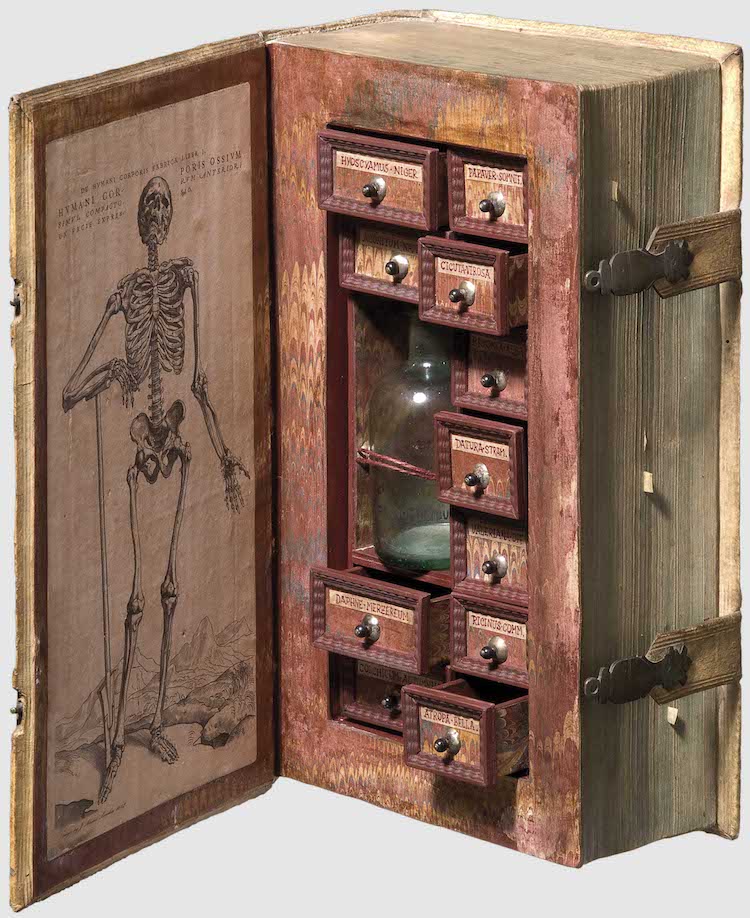
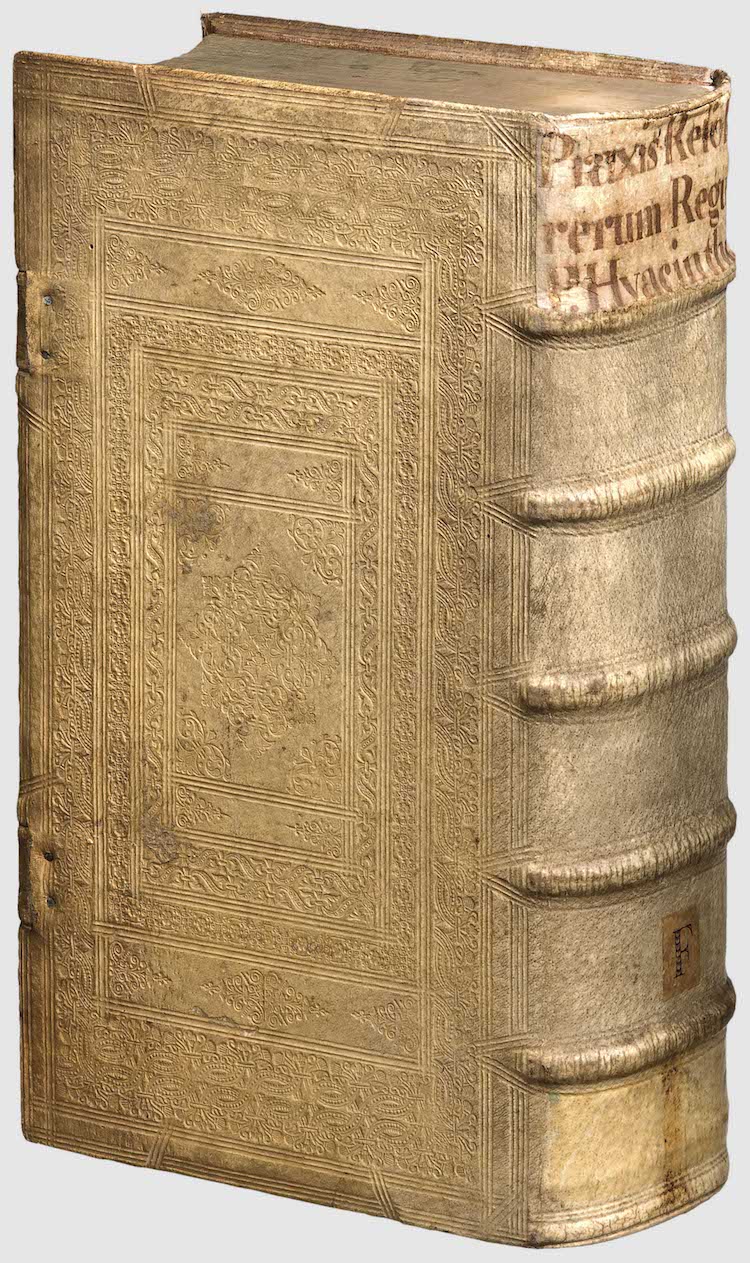
Hasn’t every child dreamed of a having a hollowed-out book on their shelf, inside of which they can hide whatever forbidden objects of mischief they like without fear of discovery? The idea surely goes back many generations, and possibly even to the era when not many adults, let along children, owned any books at all. A decade ago, a hollowed-out book dated 1682 went up on the auction block at German house Hermann Historica, and these photos of its elaborate design have captivated the imaginations of even we 21st-century beholders. But what are all the spaces within meant to contain?
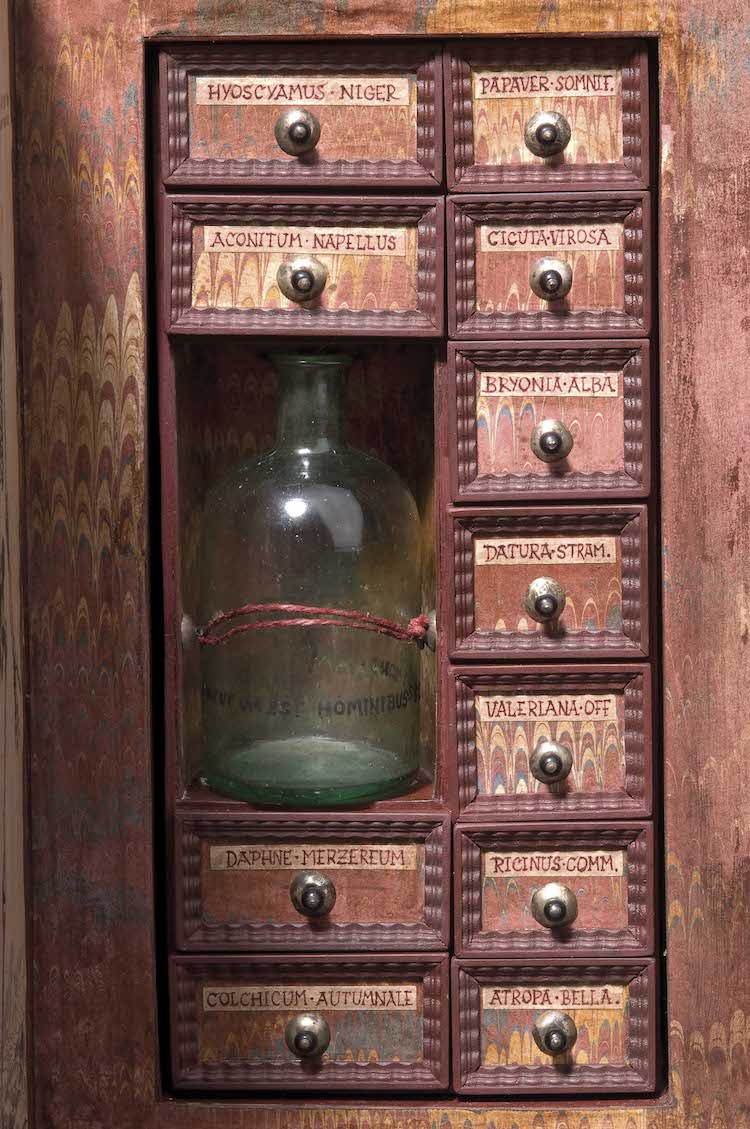
Herrman Historica’s listing describes the item as “a hollow book used as secret poison cabinet,” a conclusion presumably arrived at after examining its drawers’ “handwritten paper labels with the Latin names of different poisonous plants (among them castor-oil plant, thorn apple, deadly nightshade, valerian, etc.).” My Modern Met’s Jessica Stewart adds that “calling it an assassin’s cabinet may be a bit exaggerated,” noting that “many of these plants, while poisonous, were also part of herbal remedies —making it equally possible we are looking at an ornate medicine cabinet.”
Book Addiction breaks down the nature and uses of the plants meant to be stored in the drawers, including Hyoscyamus Niger, which in medieval times “was often used in combination with other plants to a make ‘magic brews’ with psychoactive properties”; Aconitum Napellus, which in ancient Roman times “was a such a common poison of choice among murders and assassins that its cultivation was prohibited”; and Cicuta Virosa, which some have speculated “was the hemlock used by the ancient Greek Republic as the state poison but as it is a native of northern Europe this may not be true,” but “is so toxic that a single bite into its root can be fatal” regardless.
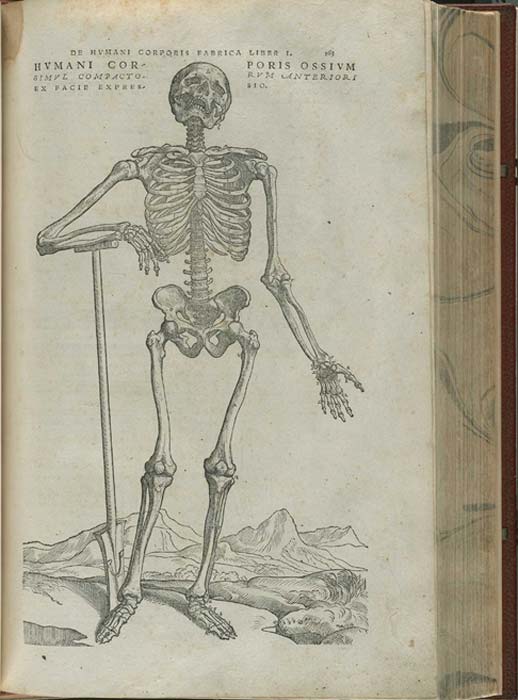
Strong stuff, whether for killing or curing. The ambiguity between those two purposes has surely stoked our modern interest in this secretly repurposed book, as has its nature as what Herrman Historica calls an “elaborately worked Kunstkammer object” — a “cabinet of curiosities” of the kind that has long fascinated mankind — “with strong reference to the memento mori theme.” That reference comes chiefly in the form of not just the proud-looking skeleton on the inside cover, but the label on the bottle provided its own compartment in the book: “Statutum est hominibus semel mori,” or “It is a fact that man must die one day.” But did the owner of this book and the tools hidden within want to hasten that day, or delay it?
Related Content:
Napoleon’s Kindle: See the Miniaturized Traveling Library He Took on Military Campaigns
1,000-Year-Old Illustrated Guide to the Medicinal Use of Plants Now Digitized & Put Online
Wearable Books: In Medieval Times, They Took Old Manuscripts & Turned Them into Clothes
Old Books Bound in Human Skin Found in Harvard Libraries (and Elsewhere in Boston)
Discover the Jacobean Traveling Library: The 17th Century Precursor to the Kindle
Wonderfully Weird & Ingenious Medieval Books
Based in Seoul, Colin Marshall writes and broadcasts on cities and culture. His projects include the book The Stateless City: a Walk through 21st-Century Los Angeles and the video series The City in Cinema. Follow him on Twitter at @colinmarshall or on Facebook.
Read More...The History of Cartography, “the Most Ambitious Overview of Map Making Ever Undertaken,” Is Free Online
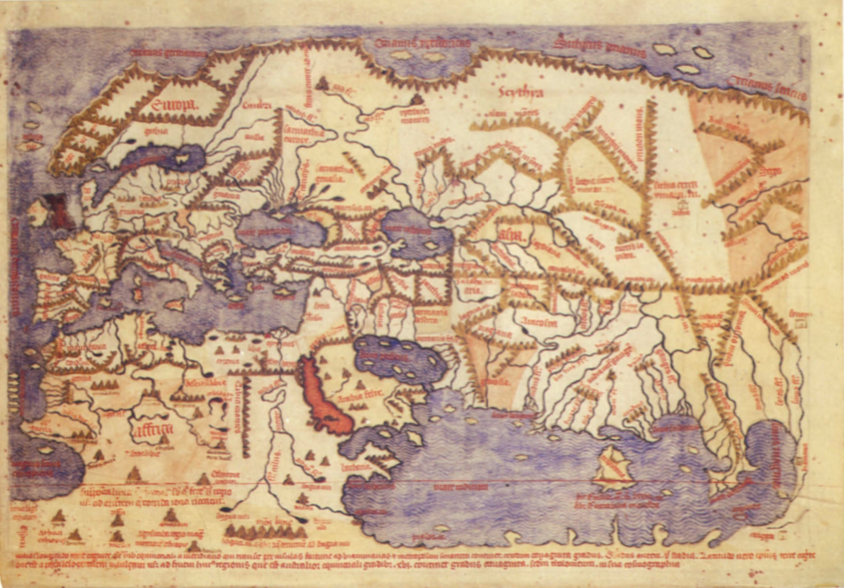
“Cartography was not born full-fledged as a science or even an art,” wrote map historian Lloyd Brown in 1949. “It evolved slowly and painfully from obscure origins.” Many ancient maps made no attempt to reproduce actual geography but served as abstract visual representations of political or theological concepts. Written geography has an ancient pedigree, usually traced back to the Greeks and Phoenicians and the Roman historian Strabo. But the making of visual approximations of the world seemed of little interest until later in world history. As “mediators between an inner mental world and an outer physical world”—in the words of historian J.B. Harley—the maps of the ancients tended to favor the former. This is, at least, a very general outline of the early history of maps.
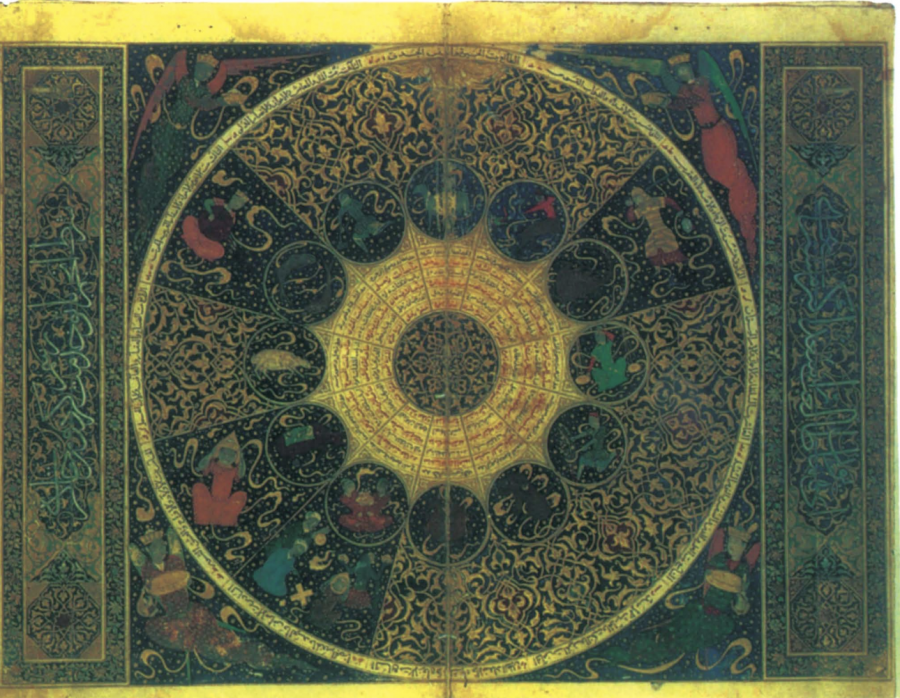
Harley’s definition occurs in the first chapter of Volume One of The History of Cartography, a massive six-volume, multi-author work tracing map making from prehistoric times up to the twentieth century; “the most ambitious overview of map making ever undertaken,” Edward Rothstein writes at The New York Times.
The University of Chicago project, begun in the mid-80s, combines “essays based on original research by authoritative scholars with extensive illustrations of rare and unusual maps.” Unlike histories like Brown’s, however, this one aims to move beyond “a deeply entrenched Eurocentricity.” The project includes non-Western and pre-medieval maps, presenting itself as “the first serious global attempt” to describe the cartography of African, American, Arctic, Asian, Australian, and Pacific societies as well as European. In so doing, it illuminates many of those “obscure origins.”
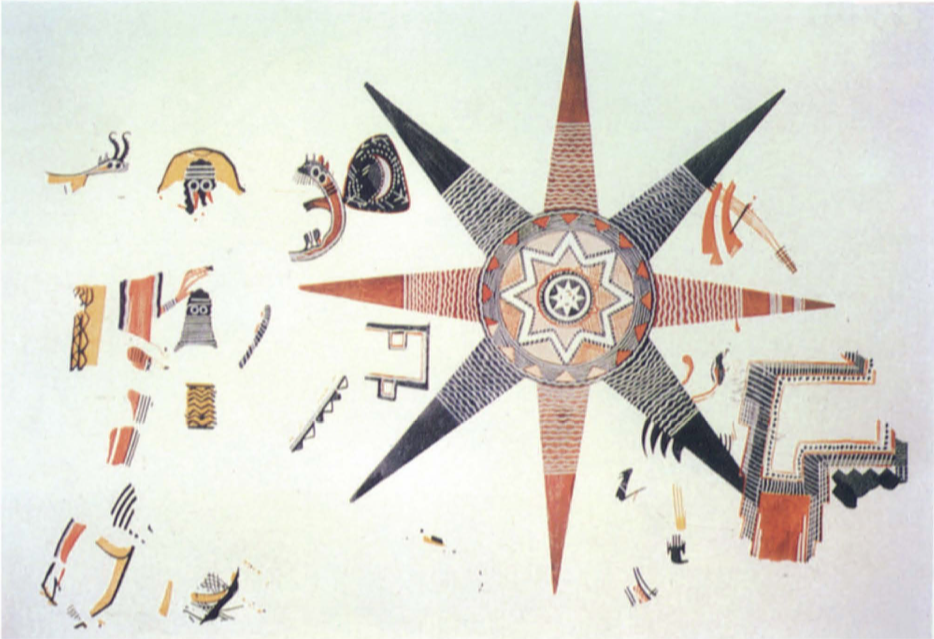
You might expect such an ambitious offering to come with an equally ambitious pricetag, and you’d be right. But rather than pay over $200 dollars for each individual book in the series, you can read and download Volumes One through Three and Volume Six as free PDFs at the University of Chicago Press’s site. In these extraordinary scholarly works, you’ll find maps reproduced nowhere else—like the Star Fresco from Jordan just above—with deeply learned commentary explaining how they correspond to very different ways of seeing the world.
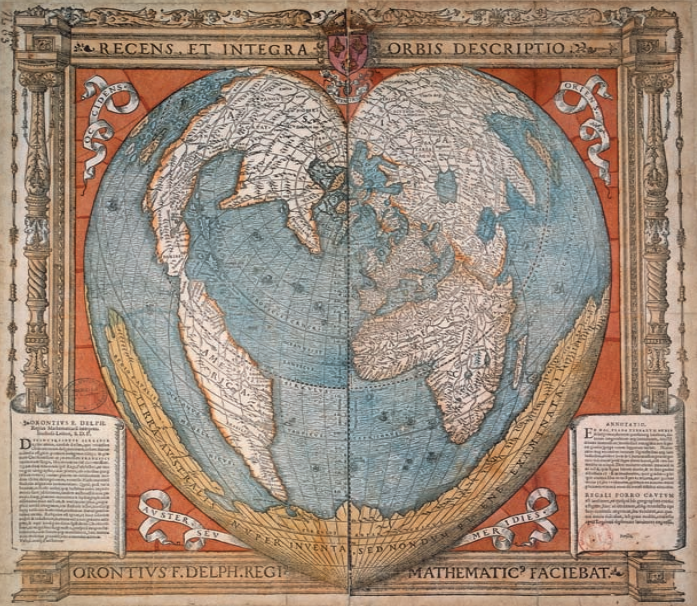
At the links below, see images of maps from all over the globe and throughout recorded human history, and begin to see the history of cartography in very different ways yourself.
Volume 1
Gallery of Color Illustrations
Volume 2: Part 1
Gallery of Color Illustrations (Plates 1–24)
Gallery of Color Illustrations (Plates 25–40)Volume 2: Part 2
Gallery of Color Illustrations (Plates 1–16)
Gallery of Color Illustrations (Plates 17–40)Volume 2: Part 3
Gallery of Color Illustrations (Plates 1–8)
Gallery of Color Illustrations (Plates 9 –24)Volume 3: Part 1
Gallery of Color Illustrations (Plates 1–24)
Gallery of Color Illustrations (Plates 25–40)Volume 3: Part 2
Gallery of Color Illustrations (Plates 41–56)
Gallery of Color Illustrations (Plates 57–80)
Related Content:
A Map Showing How the Ancient Romans Envisioned the World in 40 AD
Josh Jones is a writer and musician based in Durham, NC. Follow him at @jdmagness
Read More...The Hobo Code: An Introduction to the Hieroglyphic Language of Early 1900s Train-Hoppers
Many of us now use the word hobo to refer to any homeless individual, but back in the America of the late 19th and early 20th century, to be a hobo meant something more. It meant, specifically, to count yourself as part of a robust culture of itinerant laborers who criss-crossed the country by hitching illegal rides on freight trains. Living such a lifestyle on the margins of society demanded the mastery of certain techniques as well as a body of secret knowledge, an aspect of the heyday of hobodom symbolized in the “hobo code,” a special hieroglyphic language explained in the Vox video above.
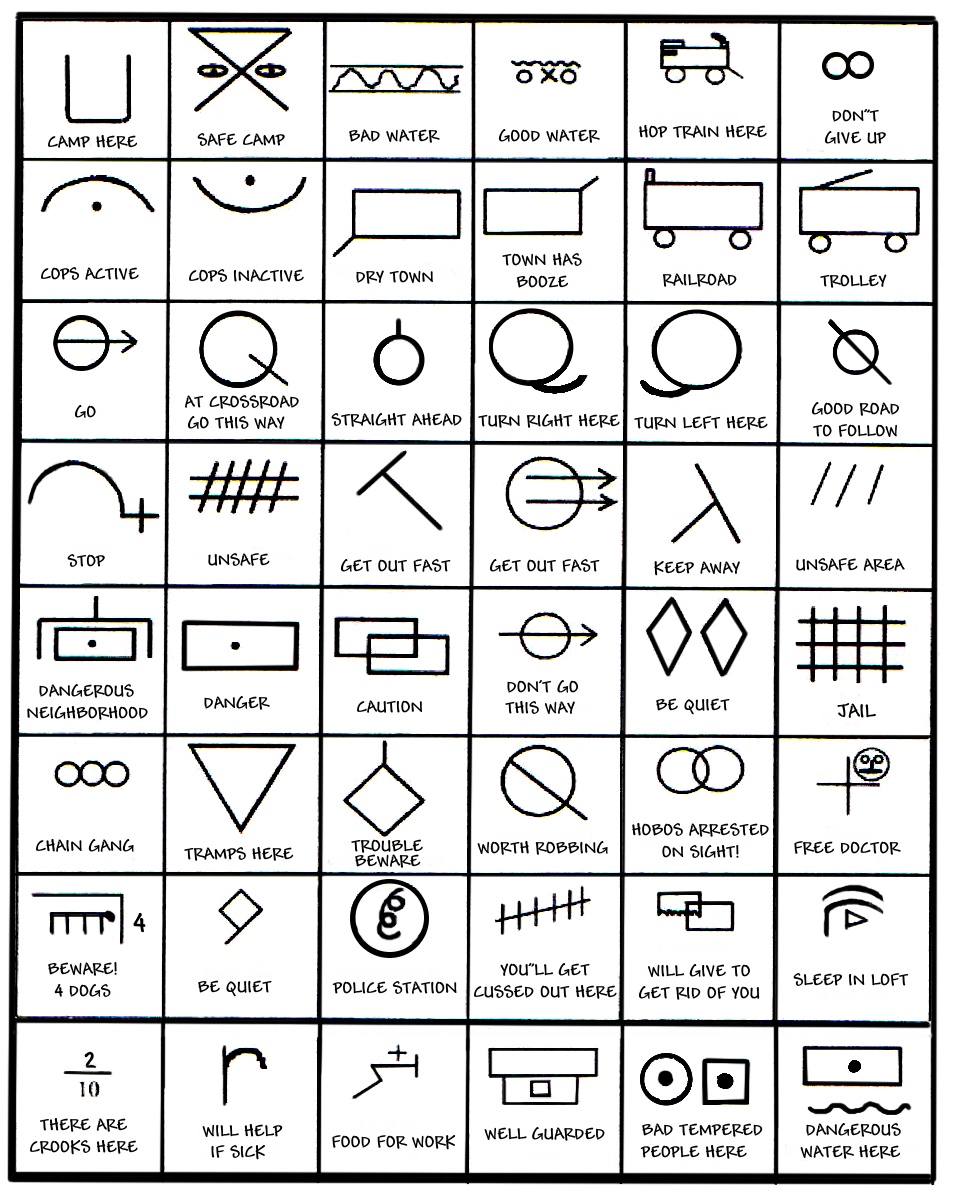
“Wandering from place to place and performing odd jobs in exchange for food and money, hobos were met with both open arms and firearms,” writes Antique Archaeology’s Sarah Buckholtz. “From illegally jumping trains to stealing scraps from a farmers market, the hobo community needed to create a secret language to warn and welcome fellow hobos that were either new to town or just passing through.”
The code, written on brick walls, bases of water towers, or any other surface that didn’t move, “assigned circles and arrows for general directions like, where to find a meal or the best place to camp. Hashtags signaled danger ahead, like bad water or an inhospitable town.”
Hashtags sounds a bit Millennial for hobo culture, but on some level the term does make sense. Some of the abstracted symbols of the hobo code look a bit more like emoji: a locomotive meaning “good place to catch a train,” a building with a barred door meaning “this is a well-guarded house,” a cat meaning “a kind lady lives here.” But how much use did the hobo code actually see? “The problem is, all this information came from hobos, a group that took pride in their elusiveness and embellished storytelling,” says the Vox video’s narrator. “The truth is, there really isn’t any evidence that these signs were as widely used as the literature suggests.”
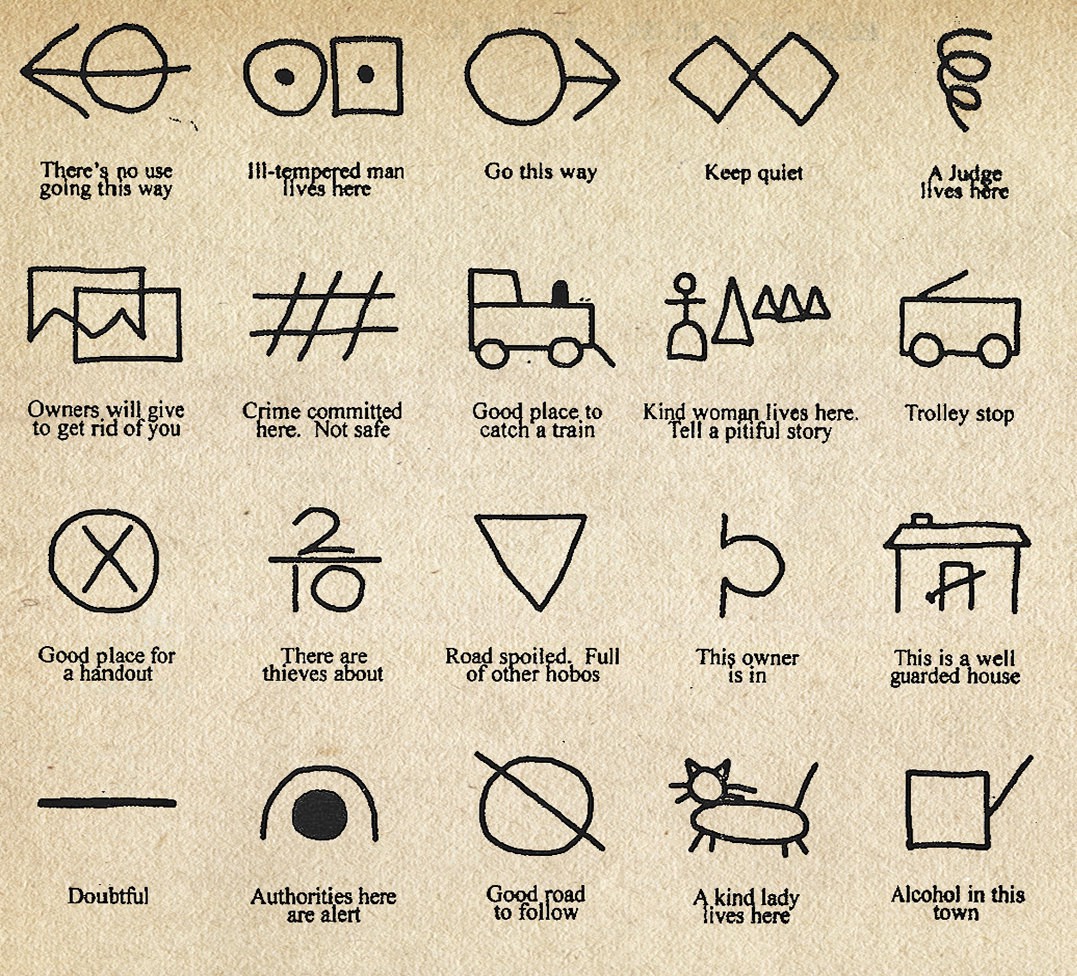
“Hobos used their mythology as a kind of cover,” says hobo historian Bill Daniel. “The tall tales, the drawings, even the books” — especially volumes penned by “A‑No.1,” the most famous hobo of them all — “were ways to project an image of themselves that both blew them up, but also kept them hidden.” Yet hobo ways, which encompassed even an ethical code that we’ve previously featured here on Open Culture, have their descendants. Take, for instance, the hobo practice of writing their nicknames, or “monikers,” on trains and elsewhere to show the world where they’d been and where they were headed. The line to modern urban graffiti almost draws itself, especially in the practice of subway-car “bombing” in 1970s and 80s New York. The hobo has gone, but the characteristically hardy hobo spirit finds a way to live on.
Related Content:
You Could Soon Be Able to Text with 2,000 Ancient Egyptian Hieroglyphs
Google Puts Online 10,000 Works of Street Art from Across the Globe
‘Boom Boom’ and ‘Hobo Blues’: Great Performances by John Lee Hooker
Based in Seoul, Colin Marshall writes and broadcasts on cities and culture. His projects include the book The Stateless City: a Walk through 21st-Century Los Angeles and the video series The City in Cinema. Follow him on Twitter at @colinmarshall or on Facebook.
Read More...A Karlheinz Stockhausen Branded Car: A Playful Tribute to the Groundbreaking Electronic Composer

A Karlheinz Stockhausen Opel. That’s what Kenneth Goldsmith (poet, critic and founding editor of UbuWeb) spotted in Trieste, Italy several days ago.
No, it’s not an official model. It’s just an Opel Karl lovingly re-branded by its owner, an homage to one of the groundbreaking electronic composers of the 20th century.
Related Content:
The Fascinating Story of How Delia Derbyshire Created the Original Doctor Who Theme
Hear Seven Hours of Women Making Electronic Music (1938- 2014)
Read More...
This Is Your Kids’ Brains on Internet Algorithms: A Chilling Case Study Shows What’s Wrong with the Internet Today
Multimedia artist and writer James Bridle has a new book out, and it’s terrifying—appropriately so, I would say—in its analysis of “the dangers of trusting computers to explain (and, increasingly, run) the world,” as Adi Robertson writes at The Verge. Summing up one of his arguments in his New Dark Age: Technology and the End of the Future, Bridle writes, “We know more and more about the world, while being less and less able to do anything about it.” As Bridle tells Robertson in a short interview, he doesn’t see the problems as irremediable, provided we gain “some kind of agency within these systems.” But he insists that we must face head-on certain facts about our dystopian, sci-fi-like reality.
In the brief TED talk above, you can see Bridle do just that, beginning with an analysis of the millions of proliferating videos for children, with billions of views, on YouTube, a case study that quickly goes to some disturbing places. Videos showing a pair of hands unwrapping chocolate eggs to reveal a toy within “are like crack for little kids,” says Bridle, who watch them over and over. Autoplay ferries them on to weirder and weirder iterations, which eventually end up with dancing Hitlers and their favorite cartoon characters performing lewd and violent acts. Some of the videos seem to be made by professional animators and “wholesome kid’s entertainers,” some seem assembled by software, some by “people who clearly shouldn’t be around children at all.”
The algorithms that drive the bizarre universe of these videos are used to “hack the brains of very small children in return for advertising revenue,” says Bridle. “At least that what I hope they’re doing it for.” Bridle soon bridges the machinery of kids’ YouTube with the adult version. “It’s impossible to know,” he says, who’s posting these millions of videos, “or what their motives might be…. Really it’s exactly the same mechanism that’s happening across most of our digital services, where it’s impossible to know where this information is coming from.” The children’s videos are “basically fake news for kids. We’re training them from birth to click on the very first link that comes along, regardless of what the source is.”
High school and college teachers already deal with the problem of students who cannot judge good information from bad—and who cannot really be blamed for it, since millions of adults seem unable to do so as well. In surveying YouTube children’s videos, Bridle finds himself asking the same questions that arise in response to so much online content: “Is this a bot? Is this a person? Is this a troll? What does it mean that we can’t tell the difference between these things anymore?” The language of online content is a hash of popular tags meant to be read by machine algorithms, not humans. But real people performing in an “algorithmically optimized system” seem forced to “act out these increasingly bizarre combinations of words.”
Within this culture, he says, “even if you’re human, you have to end up behaving like a machine just to survive.” What makes the scenario even darker is that machines replicate the worst aspects of human behavior, not because they’re evil but because that’s what they’re taught to do. To think that technology is neutral is a dangerously naïve view, Bridle argues. Humans encode their historical biases into the data, then entrust to A.I. such critical functions as not only children’s entertainment, but also predictive policing and recommending criminal sentences. As Bridle notes in the short video above, A.I. inherits the racism of its creators, rather than acting as a “leveling force.”
As we’ve seen the CEOs of tech companies taken to task for the use of their platforms for propaganda, disinformation, hate speech, and wild conspiracy theories, we’ve also seen them respond to the problem by promising to solve it with more automated machine learning algorithms. In other words, to address the issues with the same technology that created them—technology that no one really seems to understand. Letting “unaccountable systems” driven almost solely by ads control global networks with ever-increasing influence over world affairs seems wildly irresponsible, and has already created a situation, Bridle argues in his book, in which imperialism has “moved up to infrastructure level” and conspiracy theories are the most “powerful narratives of our time,” as he says below.
Bridle’s claims might themselves sound like alarmist conspiracies if they weren’t so alarmingly obvious to most anyone paying attention. In an essay on Medium he writes a much more in-depth analysis of YouTube kids’ content, developing one of the arguments in his book. Bridle is one of many writers and researchers covering this terrain. Some other good popular books on the subject come from scholars and technologists like Tim Wu and Jaron Lanier. They are well worth reading and paying attention to, even if we might disagree with some of their arguments and prescriptions.
As Bridle himself argues in his interview at The Verge, the best approach to dealing with what seems like a nightmarish situation is to develop a “systemic literacy,” learning “to think clearly about subjects that seem difficult and complex,” but which nonetheless, as we can clearly see, have tremendous impact on our everyday lives and the society our kids will inherit.
Related Content:
How Information Overload Robs Us of Our Creativity: What the Scientific Research Shows
Josh Jones is a writer and musician based in Durham, NC. Follow him at @jdmagness
Read More...Charles Bukowski Explains How to Beat Depression: Spend 3–4 Days in Bed and You’ll Get the Juices Flowing Again (NSFW)
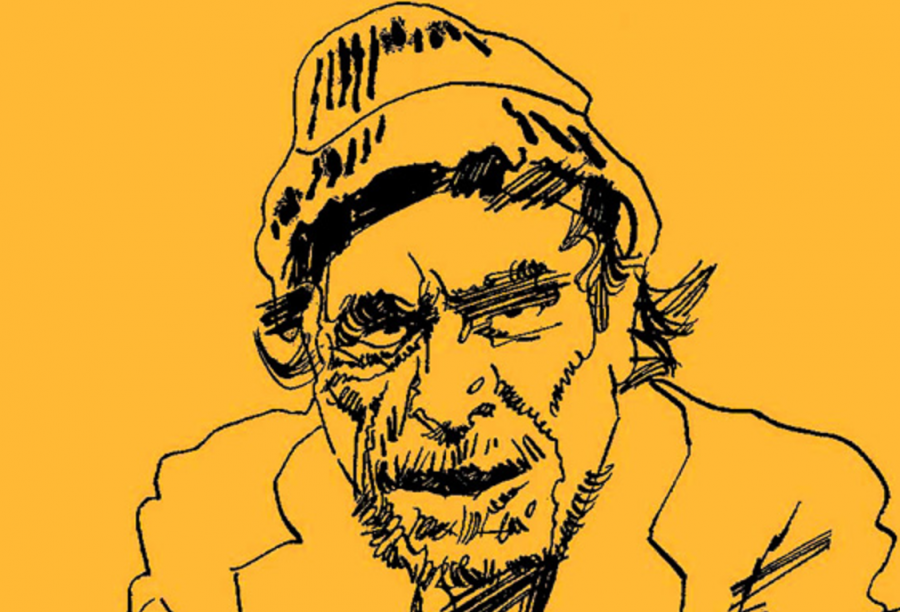
Image by Graziano Origa, via Wikimedia Commons
I felt like sleeping for five years but they wouldn’t let me
—Charles Bukowski, Ham on Rye
I don’t know about you, but the grind gets me down. Day in, day out, the same routine, never a break but the odd vacation. And you know what they say about vacations; when you get back, you need another one. Used to be days were more regular, in the heydays of the unions. You put in your time and you get some back, enough at least for a good night’s sleep. No more. The machine never sleeps, and neither can we. If you have the good fortune to live in the U.S., you and I can call ourselves blessed residents of the most overworked nation in the world. Europeans may have it better, but maybe not by much.
Screw it, you want to say sometimes. I just want to get some rest. We’re entitled to it. According to that great folk theorist of the grind, Charles Bukowski, three or four days in bed may be just the thing to get the juices flowing again when spirits are low, and we don’t even have enough gas in the tank to revolt against a culture that’s trying to work us all to death. At the dawn of the age of deregulation and supply-side dominance, Bukowski saw the perils of mind-numbing, soul-killing, work, castigating the “9 to 5,” which is “never 9 to 5,” in a brutally honest letter to his publisher and benefactor, John Martin.
Bukowski’s prescription for the depression engendered by modern life (aside from blackout drinking, that is): Sleep, a need as physically urgent as food or water. It wards off morbid rumination: “sleeping in the rain,” he wrote, “helps me forget things like I am going to die and you are going to die and the cats are going to die.” And when “the Wheaties aren’t going down right,” he says in the spoken word piece above, “when I feel a little weak or depressed,” it’s sleep he recommends.
I just go to bed for three days and four nights, pull down all the shades and just go to bed. Get up. Shit. Piss. Drink a beer now and then and go back to bed. I come out of that completely re-enlightened for 2 or 3 months. I get power from that.
I think someday…they’ll say this psychotic guy knew something that…you know in days ahead and medicine, and how they figure these things out. Everybody should go to bed now and then, when they’re down low and give it up for three or four days. Then they’ll come back good for a while. But we’re so obsessed with, we have to get up and do it and go back to sleep.
Can you get time off for three or four days in bed? Probably not. But hey, maybe there are more humane days ahead, as Bukowski forecasts in a rare moment of optimism, when jobs won’t literally kill us, when medical science will give us license to take “sleep leave.”
People are nailed to the processes. Up. Down. Do something. Get up, do something, go to sleep. Get up. They can’t get out of that circle. You’ll see, someday they’ll say: “Bukowski knew.” Lay down for 3 or 4 days till you get your juices back, then get up, look around and do it. But who the hell can do it cause you need a dollar. That’s all. That’s a long speech, isn’t it?”
It’s not a long speech at all, but it’s a damned good one.
Related Content:
Charles Bukowski Rails Against 9‑to‑5 Jobs in a Brutally Honest Letter (1986)
“Don’t Try”: Charles Bukowski’s Concise Philosophy of Art and Life
The Last (Faxed) Poem of Charles Bukowski
Josh Jones is a writer and musician based in Durham, NC. Follow him at @jdmagness
Read More...Free: Download 70,000+ High-Resolution Images of Chinese Art from Taipei’s National Palace Museum
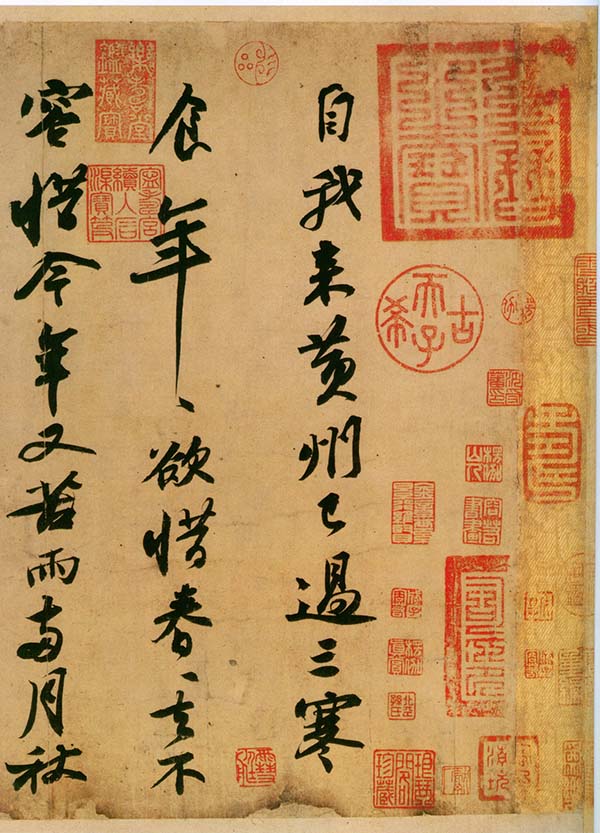
During China’s Ming and Qing dynasties, which together spanned the years 1386 to 1912, few in the Middle Kingdom, let alone elsewhere, could hope for even a glimpse of the finest Chinese artworks of their time. But recently one museum has made a trove of art and artifacts from those dynasties and others digitally accessible to the world, and a museum outside mainland China at that. “According to popular news website The Paper,” writes the BBC’s Kerry Allen, “Taipei’s National Palace Museum has placed 70,000 high-quality electronic images in a free-to-download archive so that online users can enjoy its exhibitions” — and without the hassles of “glass barrier and lighting restrictions.”
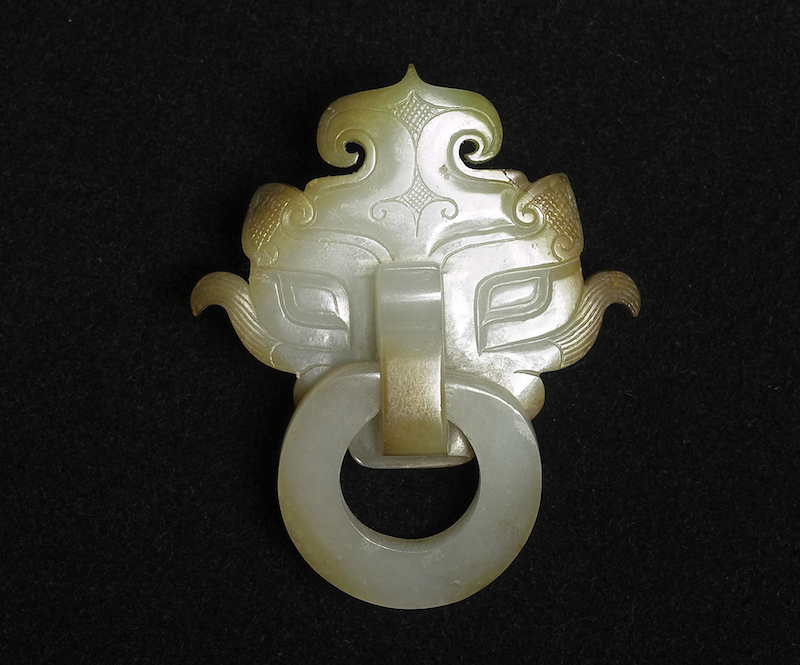
First established as the Palace Museum in 1925, after the expulsion of China’s last emperor Puyi, the National Palace Museum began its collection with valuables belonging to the former Imperial family. Now, writes Hyperallergic’s Claire Voon, it boasts “one of the largest troves of ancient Chinese imperial artifacts, from paintings to rare books to all sorts of objects made of jade, bronze, ceramic, and more.”
The digitization and uploading project, called National Palace Museum Open Data, offers an English version site, “although that is currently a rather limited and incomplete resource. The Chinese version features two portals to more efficiently comb through the museum’s relics. One is specifically for painting and calligraphy works; the other, for everything else.”
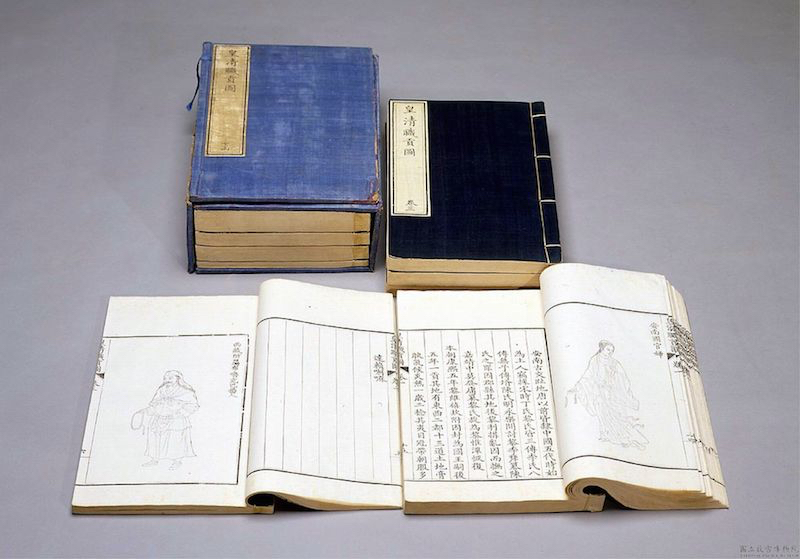
Still, the National Palace Museum has been improving its English portal, which allows searches not just by category of object but by dynasty, a list that now reaches far beyond the Ming and Qing, all the way back to the Shang Dynasty of 1600 BC to 1046 BC. But even as the English version catches up to the Chinese one — as of this writing, it contains more than 4700 items — it will surely take some time before National Palace Museum Open Data catches up with the complete holdings of the National Palace Museum, with its permanent collection of about 700,000 Chinese imperial artifacts and artworks spanning eight millennia. As with Chinese history itself, a formidable subject of study if ever there was one, it has to be taken one piece at a time.
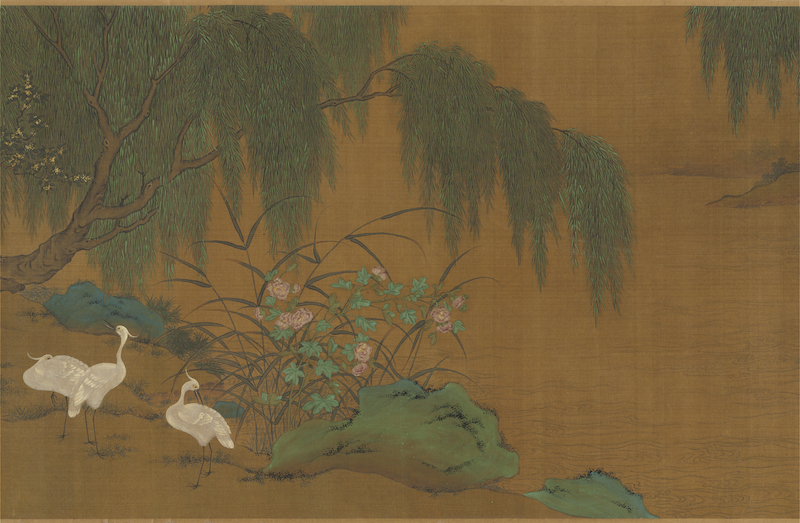
via Hyperallergic
Related Content:
1.8 Million Free Works of Art from World-Class Museums: A Meta List of Great Art Available Online
China’s New Luminous White Library: A Striking Visual Introduction
Based in Seoul, Colin Marshall writes and broadcasts on cities and culture. His projects include the book The Stateless City: a Walk through 21st-Century Los Angeles and the video series The City in Cinema. Follow him on Twitter at @colinmarshall or on Facebook.
Read More...French Illustrator Revives the Byzantine Empire with Magnificently Detailed Drawings of Its Monuments & Buildings: Hagia Sophia, Great Palace & More
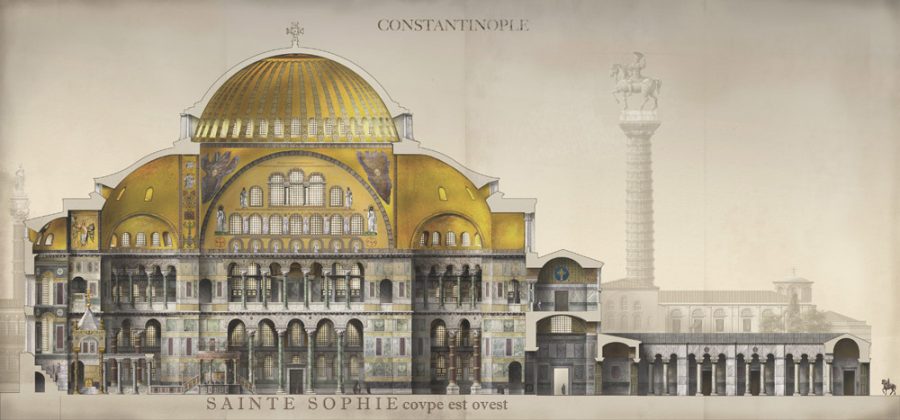
The Byzantine Empire fell in the mid-15th century, but something of its spirit still lives on. A great deal of it lives on in the work of the French illustrator Antoine Helbert. “This passion was kindled by a birthday gift from his mother,” writes a blogger named Herve Risson in a post about it. “This gift was a book about Byzantium. Helbert was 7 years old.” Like many an interest instilled early and deeply enough in childhood, Helbert’s fascination turned into an obsession — or anyway, what looks like it must be an obsession, since it has motivated him to create such magnificently detailed recreations of Byzantium in its heyday.
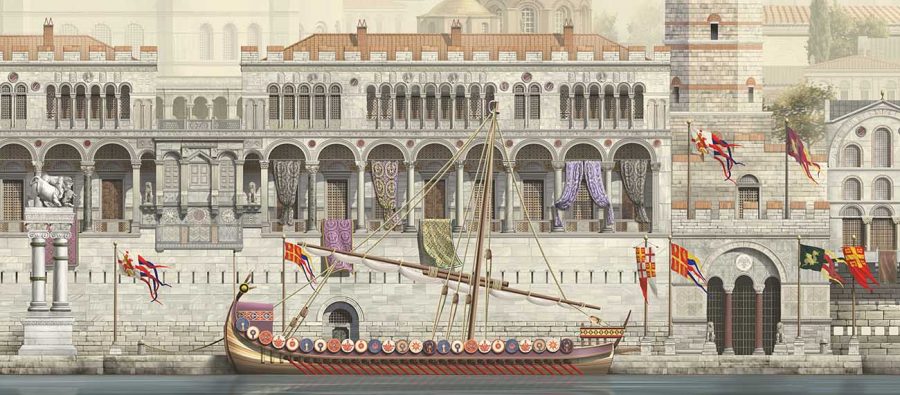
“Attracted by the architecture,” Risson writes of Helbert, “he has also a strong passion for the history of the Byzantine Empire, much maligned and despised, in comparison with the history of the ‘real’ Roman Empire.”
That’s not to say that the Byzantine Empire, also known as the Eastern Roman Empire, has received no attention, but undoubtedly it has received less than the Western Roman Empire it survived in the fifth century. Still, few historical empires of any kind receive such an exquisite degree of attention from any single living artist.
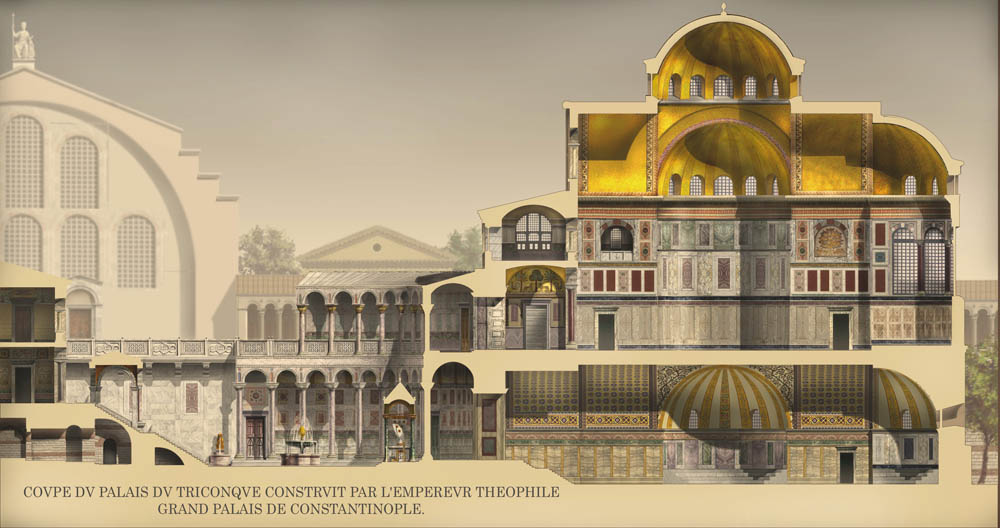
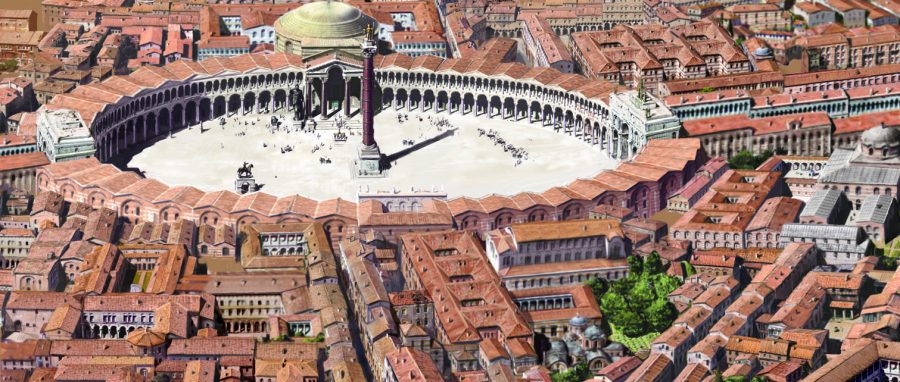
You can see some of Helbert’s work on his site, which is divided into two sections: one for scenes of Byzantium, and one for the architecture of Byzantium. The latter category, images from which you see here, includes such world-famous landmarks as Hagia Sophia, Boukoleon Palace, and the Great Palace of Constantinople — the city now known as Istanbul, Turkey. The intact Hagia Sophia continues to attract tourists in huge numbers, but those who visit the Great Palace, or what remains of it, have to use their imagination to get a sense of what it must have looked like in the Byzantine Empire’s heyday.
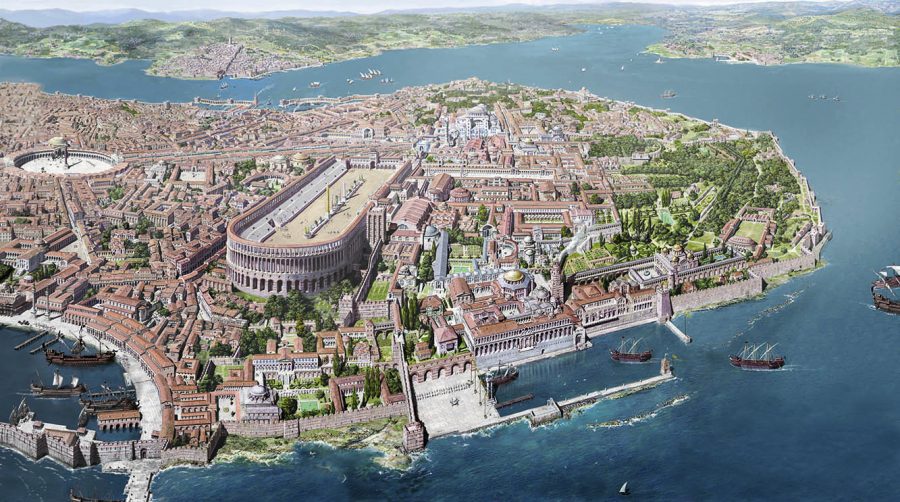
Helbert, who only made his first visit to Istanbul at the age of 35, has put in that amount of imaginative work and much more besides. “Since then,” writes Risson, Helbert “has taken great care to resurrect the city of the emperors, with great attention to details and to the sources available. What he can’t find, he invents, but always with a great care for the historical accuracy.” Indeed, many of Helbert’s illustrations don’t, at first glance, look like illustrations at all, but more like what you’d come up with if you traveled back to the Constantinople of fifteen or so centuries ago with a camera. “The project has no lucrative goal,” Risson notes. “It’s a passion. A byzantine passion!”
Related Content:
The History of Byzantium Podcast Picks Up Where The History of Rome Left Off
How Arabic Translators Helped Preserve Greek Philosophy … and the Classical Tradition
Read More...How Aretha Franklin Turned Otis Redding’s “Respect” Into a Civil Rights and Feminist Anthem
“R‑E-S-P-E-C‑T…” You know the rest.
When R&B legend Otis Redding, who wrote and first recorded “Respect,” heard Aretha Franklin’s version of the song, he reportedly said, “well, I guess it’s that girl’s song now.”
Aretha didn’t just cover Redding’s song, she “flipped the script,” notes The Washington Post video above, turning his call for entitlement into a demand for empowerment and creating a feminist and civil rights anthem. She changed the lyrics to suit her, spelled it out in the chorus, and added the “sock it to me” refrain with her sisters Carolyn and Erma—both successful soul singers in their own right—backing her up.
Franklin’s 1967 recording was “a declaration of independence that was unapologetic, uncompromising and unflinching… a demand for something that could no longer be denied…. The country had never heard anything like it.”
After Aretha reshaped it, the song “took on a universality the original never had,” says Franklin’s biographer David Ritz. “It is a credit to her genius she was able to do so much with it. She should have been listed as a co-producer of the song.”
Indeed, she might have been credited as a co-writer of her version, but in a tragic irony, her biggest hit, in which she proclaimed financial independence and personal power, netted her exactly zero in royalties.
“For the roughly seven million times the song has been played on American radio stations,” notes Ben Sisario at The New York Times, “she was paid nothing” due to “an aspect of copyright law that has long irked the record business,” in which radio stations pay the writers and publishers of songs and not the performers. This inequity has made Aretha’s “Respect” an anthem for musicians fighting for their rights as well.
But first and foremost, Franklin’s “’Respect’… caught on with the black power movement and feminists and human rights activists across the world,” notes the Post’s DeNeen Brown. “The country was a tinder box, as people of color demanded equality and justice that had been too long in coming.” Despite landmark civil rights cases in the Supreme Court and passage of the 1964 Civil Rights Act, resistance to change in both the North and South was sustained and often brutally violent.
For all its deep resonance in the black community, “Respect” spoke to everyone, characterizing defiance to a social order that seemed intent on preserving oppressive hierarchies and historic injustices; “the song immediately crossed over, obliterating color lines.” Released in April of 1967, it hit Number One on the charts and “stayed there for at least 12 weeks.” It may not have made Franklin the money she deserved—though it made a mint for Otis Redding—but her recording propelled her from stardom to international superstardom. Hear her version further up and Redding’s original recording just above.
Related Content:
Josh Jones is a writer and musician based in Durham, NC. Follow him at @jdmagness
Read More...How an Art Conservator Completely Restores a Damaged Painting: A Short, Meditative Documentary
We here at Open Culture take great pleasure in soup to nuts documentaries of master craftspeople at work, particularly when the narration has been left out deliberately.
The meditative effect is more powerful that way, as is our wonderment.
We can always go rabbiting after the technical specs of the trade being plied if we’re not entirely sure what we’re seeing.
For instance, those tiny strands conservationist Julian Baumgartner of Baumgartner Fine Art Restoration places ever so carefully across a tear in painter Emma Gaggiotti Richards’ untitled 38”x29” self portrait?
A technique known as bridging, wherein a rip is sutured using individual strands of Belgian linen and reversible conservation adhesive.
(We found that out on Baumgartner’s Instagram…)
We also take geeky delight in still life-like presentations of tools both specialized and shockingly ordinary.
Baumgartner’s include an over-the-counter iron and a pair of orange-handled scissors, labelled so that no one walks away with them…
And who couldn’t think of alternative uses for those giant Q‑tips, though watching Richards’ skin tones go from dingy to dewy in just a few measured swabs implies that art conservation is the reason they were put on earth.
The conservator’s own painterly skills are very much on display as he recreates damaged areas with filler and conservation quality oils.
As he has noted elsewhere:
Just as difficult as faces but no less important is fabric. Getting the color and volume just right is very rewarding.
The goal of conservation is that the damage no longer affects the image as a whole. So we’re not terribly concerned with whether under a microscope or extremely close examination the restoration is visible. If you look close enough all conservation is visible.
Our philosophy is to alter the artwork as little as possible with respect to the original intention of the artist.
There is one question left unmet by filmmaker Jack Brandtman’s video portrait, one that casual online research seems unlikely to satisfy.
What kind of music does the conservator listen to in the studio? Not that soporific instrumental soundtrack, we hope!
Perhaps Northwestern University’s great listener-supported, student run station, WNUR?
WBEZ, the legendary public radio statio?
Or CHIRP, the latest addition to Chicago’s radio pedigree?
It’d be a pleasant surprise to find him powering through his daily tasks to the tune of the local rock featured in Brantman’s other Made in Chicago series entries on forging knives and making jeans.
We live to have our expectations defied!
Follow Baumgartner Fine Art Restoration’s Instagram here.
Related Content:
The Art of Restoring a 400-Year-Old Painting: A Five-Minute Primer
The Art of Restoring Classic Films: Criterion Shows You How It Refreshed Two Hitchcock Movies
Ayun Halliday is an author, illustrator, theater maker and Chief Primatologist of the East Village Inky zine. Join her in NYC on Monday, September 24 for another monthly installment of her book-based variety show, Necromancers of the Public Domain. Follow her @AyunHalliday.
Read More...Support Us
We're hoping to rely on loyal readers, rather than erratic ads. Please click the Donate button and support Open Culture. You can use Paypal, Venmo, Patreon, even Crypto! We thank you!

About Us

Open Culture scours the web for the best educational media. We find the free courses and audio books you need, the language lessons & educational videos you want, and plenty of enlightenment in between.
Advertise With Us

FREE UPDATES!
GET OUR DAILY EMAIL
Get the best cultural and educational resources on the web curated for you in a daily email. We never spam. Unsubscribe at any time.
FOLLOW ON SOCIAL MEDIA

Open Culture editor Dan Colman scours the web for the best educational media. He finds the free courses and audio books you need, the language lessons & movies you want, and plenty of enlightenment in between.
Advertise With Us


