How Jim Jarmusch Gets Creative Ideas from William S. Burroughs’ Cut-Up Method and Brian Eno’s Oblique Strategies
As the nameless assassin protagonist of Jim Jarmusch’s The Limits of Control makes his way through Spain, he meets several different, similarly mysterious figures, each time at a different café. Each time he orders two espressos — not a double espresso, but two espressos in separate cups. Each time his contact arrives and asks, in Spanish, whether he speaks Spanish, to which he responds that he doesn’t. Each conversation that follows ends with an exchange of matchboxes, and each one the assassin receives contains a slip of paper with a coded message, which he eats after reading, containing directions to his next destination.
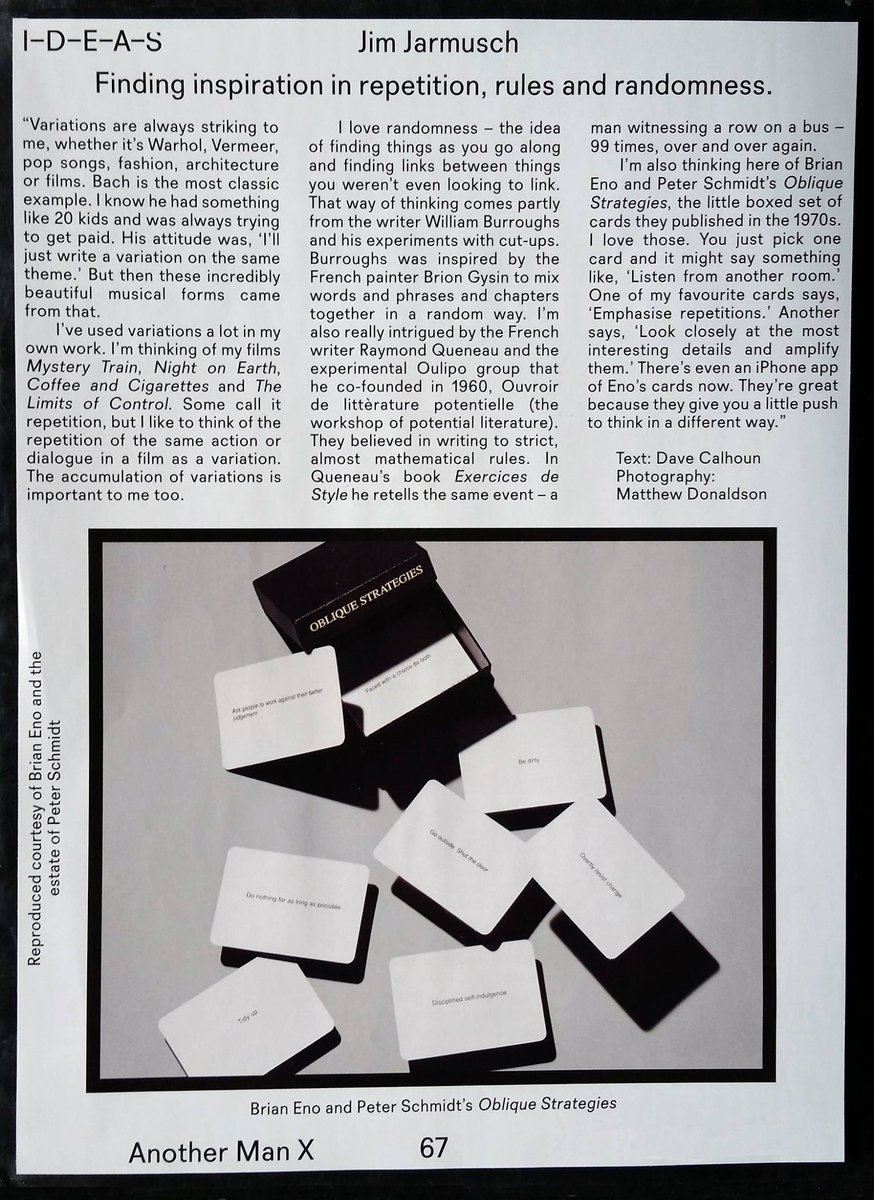
All these elements remain the same while everything else changes, a structure that showcases Jarmusch’s interest in theme and variation as clearly as anything he’s ever made. “Some call it repetition,” he says in the page above from fashion and culture biannual Another Man, “but I like to think of the repetition of the same action or dialogue in a film as a variation. The accumulation of variations is important to me too.” But to enrich the repetition and variations, he also makes use of randomness, “the idea of finding things as you go along and finding links between things you weren’t even looking to link.”
Jarmusch credits this way of thinking to William S. Burroughs (author, incidentally, of an essay called “The Limits of Control”), and specifically the “cut-up” technique, which Burroughs and the artist Brion Gysin came up with, literally cutting up texts in order to then “mix words and phrases and chapters together in a random way.” He’s also found a source of randomness in the Oblique Strategies, the deck of cards published in the 1970s by artist and music producer Brian Eno and painter Peter Schmidt. “You just pick one card and it might say something like, ‘Listen from another room.’ One of my favorite cards says, ‘Emphasize repetitions.’ ” That last comes as no surprise, and he surely also appreciates the one that says, “Repetition is a form of change.”
Those who know both the Oblique Strategies and Jarmusch’s filmography — from his breakout indie hit Stranger Than Paradise to recent work like Paterson, the story of a bus-driving poet in William Carlos Williams’ hometown — could think of many that apply to his signature cinematic style: “Disconnect from desire,” “Emphasize the flaws,” “Use ‘unqualified’ people,” “Remove specifics and convert to ambiguities” (or indeed “Remove ambiguities and convert to specifics”). His next project, which will feature regular collaborators Bill Murray and Tilda Swinton as well as such newcomers to the Jarmusch fold as former teen pop idol Selena Gomez, should offer another satisfying set of variations on his usual themes. And given that it’s about zombies, it will no doubt come with a strong dose of randomness as well.
Related Content:
Jump Start Your Creative Process with Brian Eno’s “Oblique Strategies” Deck of Cards (1975)
Marshall McLuhan’s 1969 Deck of Cards, Designed For Out-of-the-Box Thinking
How to Jumpstart Your Creative Process with William S. Burroughs’ Cut-Up Technique
How David Bowie, Kurt Cobain & Thom Yorke Write Songs With William Burroughs’ Cut-Up Technique
Based in Seoul, Colin Marshall writes and broadcasts on cities and culture. His projects include the book The Stateless City: a Walk through 21st-Century Los Angeles and the video series The City in Cinema. Follow him on Twitter at @colinmarshall or on Facebook.
Read More...Japanese Musicians Turn Obsolete Machines Into Musical Instruments: Cathode Ray Tube TVs, Overhead Projectors, Reel-to-Reel Tape Machines & More
In the 1940s and 50s, experimental composers like Halim El-Dabh, Pierre Schaeffer, and Pierre Henry began making experimental compositions that Schaeffer would call musique concrete. They used tape recorders, phonographs, microphones and other analog electro-acoustic devices to create music, as Henry put it, from “non-musical sounds.” These techniques became mainstays of more familiar audio art, such as the radio and television sound designs of the BBC’s Radiophonic Workshop. With the advent of synthesizers, electronic music overtook these sound experiments, just as other new technologies replaced the playback and recording devices used to make them.
A Japanese group called Open Reel Ensemble recalls this legacy of musique concrete, deploying reel-to-reel tape machines, cathode ray tube TVs, overhead projectors, and other analog technology to make 21st century music with “non-musical sounds.” Headed by programmer-turned-composer Ei Wada, the group embraces a very different compositional philosophy than the experimental electro-acoustic composers of the past, who worked in reaction to European classical music, opposing “concrete” sounds to abstract musical ideas. Wada, on the other hand, was first inspired by hearing a gamelan ensemble at a performance in Indonesia as a very small child.
Given a collection of 70s reel-to-reel recorders by a family friend, he attempted to re-create the polyphony of those traditional Javanese gong ensembles. He has, writes Motherboard, “been on a quest to reproduce otherworldly sounds with tech that nobody wants.” But he freely combines these outdated machines with contemporary mixers, amplifiers, light shows, beats, and tempos. Formed with friends Haruka Yoshida and Masaru Yoshida, Wada’s Open Reel Ensemble might be compared to both the avant-garde experiments of composers like John Cage and the popular experiments of hip hop turntablists, both of whom used analog technology in innovative, unconventional ways.
Some of the group’s work is a kind of experimental dance music, as you can see in the live performance further up; some is more ambient sound art, as in Wada’s solo ventilation fan performance above, with implicit commentary on Japan’s economy and the disposable nature of consumer technology. “All these tech objects are a symbol of Japan’s economic growth,” says Wada. “but they also get thrown away in great numbers. It’s good to not just say bye to things that are thrown away but to instill old things with new meaning, and celebrate their unique points.”
The detourning of technology that would otherwise end up as landfill requires some ingenuity, given the increasing rarity of such instruments. In the performance above, we see Wada play with invented devices his group calls in English the “Exhaust Fancillator” and in Japanese a kankisenthizer, a neologism formed from the word for ventilation fan. “We used laser cutters and 3D printers to design the ventilation fans,” he says. This willingness to improvise, invent, and repurpose whatever works makes for some fascinating experiments that are as much performance art as sound composition.
In the Wada performance above from 2010, he uses old tube TVs as drums, hitting the screens to trigger both sound and light effects and bringing to mind not only the sound art of the early 20th century, but also the 1980s video installations of Nam June Paik, fully immersive experiences that foreground their technological artifice even as they produce an inexplicable kind of magic.
Related Content:
Hear the One Night Sun Ra & John Cage Played Together in Concert (1986)
Josh Jones is a writer and musician based in Durham, NC. Follow him at @jdmagness
Read More...Conserve the Sound, an Online Museum Preserves the Sounds of Past Technologies–from Typewriters, Electric Shavers and Cassette Recorders, to Cameras & Classic Nintendo
The unmistakable zip and whirr of a rotary phone, the ungodly squeal of dial-up modems, the satisfying thunk of a cartridge in a classic Nintendo console, a VCR rewinding, the click-clack sound of a Walkman’s buttons…. I date myself in saying that these sounds immediately send me back to various moments in my childhood with Proustian immersion. The sense of smell is most closely linked to memory, but hearing cannot be far behind given how sound embeds itself in time, and most especially the sounds of technologies, which are by nature fated for obsolescence. A museum-quality aura surrounds the Walkman and the first iPods. These are triumphs of consumer design, but only one of them makes distinctive mechanical noises.
As analog recedes, it can seem that noisy tech in general becomes more and more dated. It is hard to hear the rubbing of thumbs and fingers across screens and touchpads. Voice commands make buttons and switches redundant. How much tech from now will one day feature in Conserve the Sound, the “online museum for vanishing and endangered sounds”?
Its collection gives the impression of a bygone age, quaint in its dozens of examples of mechanical ingenuity. The visual juxtaposition of handheld film cameras, typewriters, car window handles, electric shavers, boom boxes, stopwatches, and so on has the effect of making these things seem all of a piece, assorted artifacts in a great hall of wonders called “the Sound the 20th Century.”
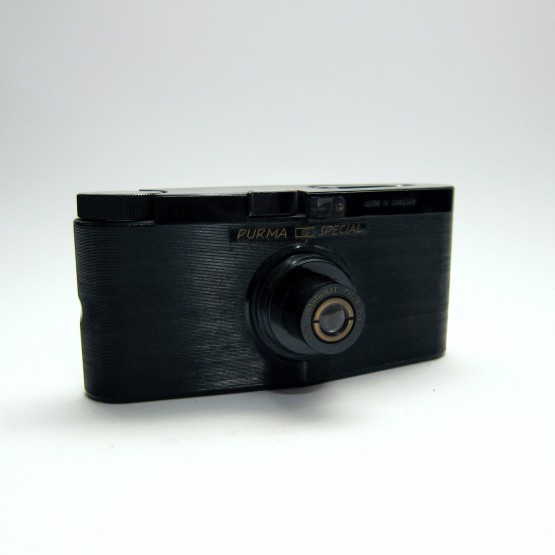
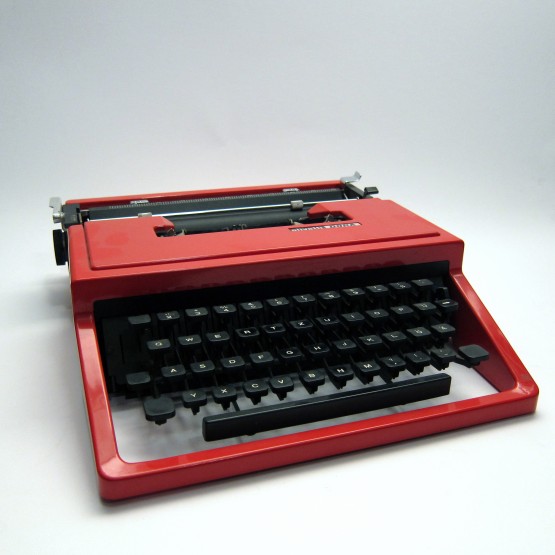
At the top of the site’s “Sound” page, timeline navigation allows users to visit every decade from the 1910s to the 2000s, a category that contains only two objects. Other displays are more plentiful, and colorful. The 1960s, for example showcases the incredibly sexy red Schreibmaschine Olivetti Dora further up. It sounds as sleek and sophisticated as it looks. The virtual display case of the 30s holds the sounds of a twin-engine propeller plane and a handful of beautiful moving and still cameras, like the Fotokamera Purma Special above. It also features the humble and enduring library stamp, a sound I pine for as I slide books under the self-checkout laser scanner at my local branch.
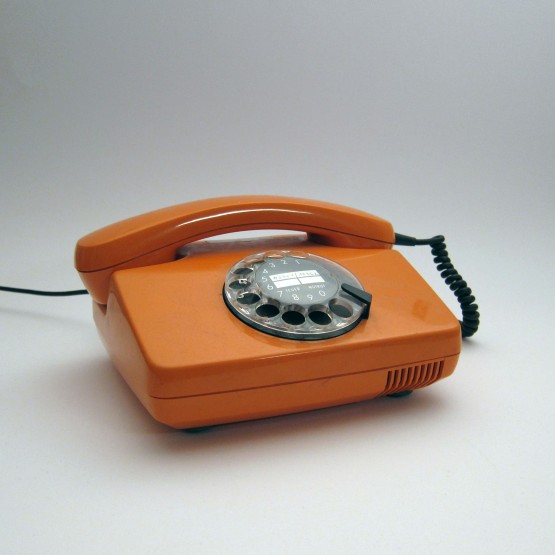
Given just the few images here, you can already see that Conserve the Sound is as much a feast for the eyes as for the ears, each object lovingly photographed against an austere white background. In order for the full nostalgic effect to work, however, you need to visit these pages and hit “play.” It even magically works with objects from before our times, given how prominently their sounds feature in film and audio recordings that define the periods. You’ve likely also noticed how many of these products are of European origin, and many of them, like the robotic head of the Kassettenrekorder Weltron Model 2004, are perhaps unfamiliar to many consumers from elsewhere in the world.
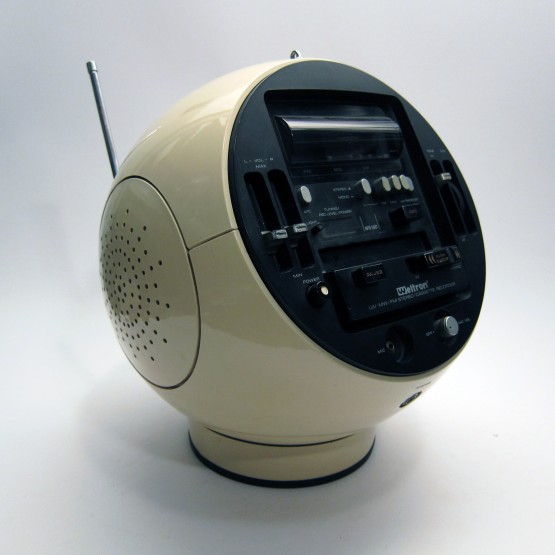
Conserve the Sound is a European project, funded by the Film & Medienstiftung NRW in Germany, thus its selection skews toward European-made products. But the sound of a fan or an adding machine in Germany is the sound of a fan or adding machine in Chile, China, Kenya, or Nebraska. See a trailer for the project at the top of the post, and below, one of the many interviews in which German public figures, scholars, librarians, technicians, and students answer questions about their mnemonic associations with technological sound. In this interview, radio presenter Bianca Hauda describes one of her favorite old sounds from a favorite old machine, a 1970s portable cassette recorder.
via WFMU
Related Content:
Brian Eno Once Composed Music for Windows 95; Now He Lets You Create Music with an iPad App
Josh Jones is a writer and musician based in Durham, NC. Follow him at @jdmagness
Read More...NASA Captures the World on Fire
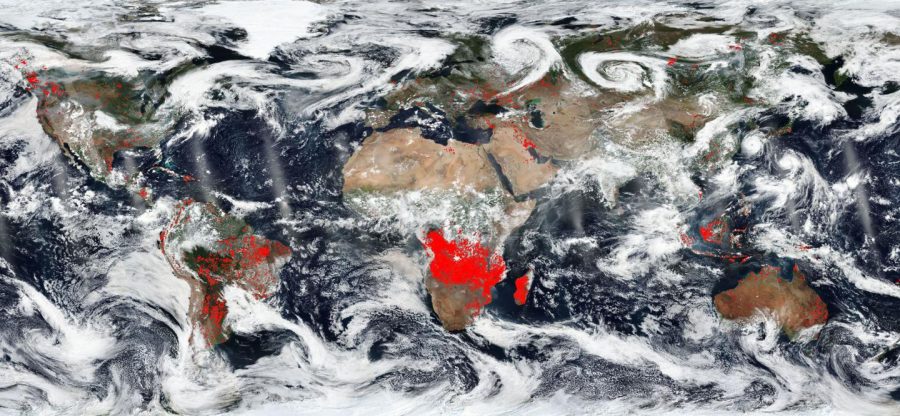
“The world is on fire. Or so it appears in this image from NASA’s Worldview. The red points overlaid on the image designate those areas that by using thermal bands detect actively burning fires.”
The image and caption above come from NASA’s Goddard Space Flight Center. On a related page, they go into some more detail, explaining why good parts of Africa, Chile, Brazil and North America are aflame this summer. Droughts, extreme temperatures, agricultural practices–they’re all part of a worrying picture. View NASA’s picture in a larger format here.
If you would like to support the mission of Open Culture, consider making a donation to our site. It’s hard to rely 100% on ads, and your contributions will help us continue providing the best free cultural and educational materials to learners everywhere. You can contribute through PayPal, Patreon, and Venmo (@openculture). Thanks!
Related Content:
A Century of Global Warming Visualized in a 35 Second Video
Global Warming: A Free Course from UChicago Explains Climate Change
Frank Capra’s Science Film The Unchained Goddess Warns of Climate Change in 1958
Read More...V.S. Naipaul Creates a List of 7 Rules for Beginning Writers

Photo by Faizul Latif Chowdhury, via Wikimedia Commons
As even his harshest critics admitted, V.S. Naipaul knew how to write. The death earlier this month of the author of A House for Mr Biswas, A Bend in the River, and The Enigma of Arrival got readers thinking again about the nature of his art. A Trinidad-born Indian who went to England on a government scholarship to Oxford, he eventually achieved a literary mastery of the English language that few of his peers in England — or anyone else there, for that matter — could hope to match.
Like any celebrated creator, Naipaul has long had his imitators. But instead of trying to replicate what they read in his books, they would do better to replicate how he made himself a writer. “It took a lot of work to do it,” Naipaul once told an interviewer. “In the beginning I had to forget everything I had written by the age of 22. I abandoned everything and began to write like a child at school. Almost writing ‘the cat sat on the mat.’” Amitava Kumar quotes that line in an essay on his own development as a writer, influenced not just by Naipaul’s memories of starting out but Naipaul’s seven rules.
“There was a pen-and-ink portrait of Naipaul on the wall,” writes Kumar about his first day working at the Indian newspaper Tehelka. “High above someone’s computer was a sheet of paper that said ‘V. S. Naipaul’s Rules for Beginners.’ ” Tehelka reporters had asked the famed writer “if he could give them some basic suggestions for improving their language. Naipaul had come up with some rules. He had fussed over their formulation, corrected them, and then faxed back the corrections.” Kumar decided to follow the rules and found they were “a wonderful antidote to my practice of using academic jargon, and they made me conscious of my own writing habits. I was discovering language as if it were a new country.”
Naipaul’s list of rules for beginning writers runs as follows:
Do not write long sentences. A sentence should not have more than 10 or 12 words.
Each sentence should make a clear statement. It should add to the statement that went before. A good paragraph is a series of clear, linked statements.
Do not use big words. If your computer tells you that your average word is more than five letters long, there is something wrong. The use of small words compels you to think about what you are writing. Even difficult ideas can be broken down into small words.
Never use words whose meanings you are not sure of. If you break this rule you should look for other work.
The beginner should avoid using adjectives, except those of color, size and number. Use as few adverbs as possible.
Avoid the abstract. Always go for the concrete.
Every day, for six months at least, practice writing in this way. Small words; clear, concrete sentences. It may be awkward, but it’s training you in the use of language. It may even be getting rid of the bad language habits you picked up at the university. You may go beyond these rules after you have thoroughly understood and mastered them.
If you’ve read other writers’ tips, especially those we’ve featured before here on Open Culture, some of Naipaul’s rules may sound familiar. “Never use a long word where a short one will do,” says George Orwell. “The more abstract a truth which one wishes to teach, the more one must first entice the senses,” says Nietzsche. “The adverb is not your friend,” says Stephen King. Naipaul’s rules may strike you as overly restrictive, but bear in mind that he composed them for newspapermen looking to make improvements in their prose, and recommended following them for six months as a kind of course of treatment to rid themselves of “bad language habits.”
The seasoned writer, however, can work according to rules of his own. Naipaul once explained this in no uncertain terms to Knopf editor-in-chief Sonny Mehta. “It happens that English — the history of the language — was my subject at Oxford,” he wrote in a letter reprimanding the house for its overzealous copy editing, laboriously adherent to French-style “court rules,” of one of his manuscripts. “The glory of English is that it is without these court rules: it is a language made by the people who write it. My name goes on my book. I am responsible for the way the words are put together. It is one reason why I became a writer.”
via Lithub
Related content:
Writing Tips by Henry Miller, Elmore Leonard, Margaret Atwood, Neil Gaiman & George Orwell
George Orwell’s Six Rules for Writing Clear and Tight Prose
Nietzsche’s 10 Rules for Writing with Style (1882)
Stephen King’s Top 20 Rules for Writers
Based in Seoul, Colin Marshall writes and broadcasts on cities and culture. His projects include the book The Stateless City: a Walk through 21st-Century Los Angeles and the video series The City in Cinema. Follow him on Twitter at @colinmarshall or on Facebook.
Read More...The New York Public Library Puts Classic Stories on Instagram: Start with Alice’s Adventures in Wonderland and Read Kafka’s The Metamorphosis Soon
I’d be happy if I could think that the role of the library was sustained and even enhanced in the age of the computer. —Bill Gates
The New York Public Library excels at keeping a foot in both worlds, particularly when it comes to engaging younger readers.
Visitors from all over the world make the pilgrimage to see the real live Winnie-the-Pooh and friends in the main branch’s hopping children’s center.
And now anyone with a smartphone and an Instagram account can “check out” their digital age take on Lewis Carroll’s Alice’s Adventures in Wonderland—no library card required. See Part 1 here and Part 2 here.
Working with the design firm Mother, the library has found a way to make great page-turning use of the Instagram Stories platform—more commonly used to share blow-by-blow photographic evidence of road trips, restaurant outings, and hash-tagged weddings.
The Wonderland experience remains primarily text-based.
In other words, sorry, harried caregivers! There’s no handing your phone off to the pre-reading set this time around!
No trippy Disney teacups…
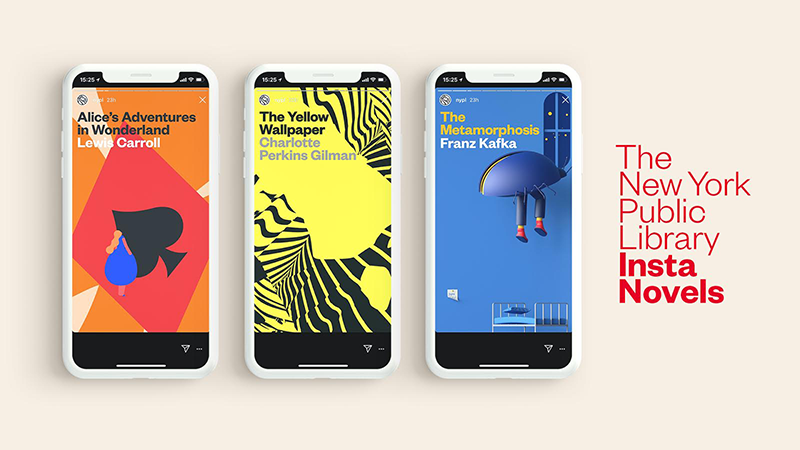
Sir John Tenniel’s classic illustrations won’t be springing to animated life. Instead, you’ll find conceptual artist Magoz’s bright minimalist dingbats of keyholes, teacups, and pocket watches in the lower right hand corner. Tap your screen in rapid succession and they function as a crowd-pleasing, all ages flip book.
Elsewhere, animation allows the text to take on clever shapes or reveal itself line by line—a pleasantly theatrical, Cheshire Cat like approach to Carroll’s impudent poetry.
Remember the famous scene where the Duchess and the Cook force Alice to mind a baby who turns into a pig? Grab some friends and hunch over the phone for a communal read aloud! (It’s on page 75 of part 1)
Speak roughly to your little boy,
And beat him when he sneezes:
He only does it to annoy,
Because he knows it teases
CHORUS
(In which the cook and the baby joined)
‘Wow! wow! wow!’
Navigating this new media can be a bit confusing for those whose social media fluency is not quite up to speed, but it’s not hard once you get the hang of the controls.
Tapping the right side of the screen turns the page.
Tapping left goes back a page.
And keeping a thumb (or any finger, actually) on the screen will keep the page as is until you’re ready to move on. You’ll definitely want to do this on animated pages like the one cited above. Pretend you’re playing the flute and you’ll save a lot of frustration.
The library plans to introduce your phone to Charlotte Perkins Gilman’s short story “The Yellow Wallpaper” and Franz Kafka’s The Metamorphosis via Instagram Stories over the next couple of months. Like Alice, both works are in the public domain and share an appropriate common theme: transformation.
Use these links to go directly to part 1 and part 2 of Alice’s Adventures in Wonderland on Instagram Stories. Both parts are currently pinned to the top of the library’s Instagram account.
Related Content:
Alice in Wonderland: The Original 1903 Film Adaptation
Ayun Halliday is an author, illustrator, theater maker and Chief Primatologist of the East Village Inky zine. Join her in NYC on Monday, September 24 for another monthly installment of her book-based variety show, Necromancers of the Public Domain. Follow her @AyunHalliday.
Read More...Salvador Dalí & Walt Disney’s Short Animated Film, Destino, Set to the Music of Pink Floyd
In 1945, Walt Disney and Salvador Dalí began collaborating on an animated film. 58 years later, with Dalí long gone and Disney gone longer still, it came out. The delayed arrival of Destino had to do with money trouble at the Walt Disney Studios not long after the project began, and it seems that few laid eyes on its unfinished materials again until Disney’s nephew Roy E. Disney came across them in 1999. Completed, it premiered at the 2003 New York Film Festival and received an Oscar nomination for Best Animated Short Film. Now, fifteen years later, we know for sure that Destino has found a place in the culture, because someone has mashed it up with Pink Floyd.
Unlike The Wizard of Oz, which has in Pink Floyd’s Dark Side of the Moon the best-known inadvertent soundtrack of all time, the seven-minute Destino can hardly accommodate an entire album. But it does match nicely with “Time,” Dark Side of the Moon’s fourth track, in length as well as in theme.
Though in many ways a more visual experience than a narrative one — if completed in the 1940s, it might have become part of a Fantasia-like “package film” — Destino does tell a story, showing a graceful woman who catches the eye of Chronos, the mythical personification of time itself. This allows the film to indulge in some clock imagery, which one might expect from Dalí, though it also includes clocks of the non-melting variety.
Only with “Time” as its soundtrack does Destino include the sound of clocks as well. All the ringing and bonging that opens the song came as a contribution from famed producer Alan Parsons, who worked on Dark Side of the Moon as an engineer. Before the album’s sessions, he’d happened to go out to an antique shop and record its clocks as a test of the then-novel Quadraphonic recording technique. The transition from Parsons’ clocks to Nick Mason’s drums fits uncannily well with the opening of Destino, as does much that follows. “Every year is getting shorter, never seem to find the time,” sings David Gilmour. “Plans that either come to naught or half a page of scribbled lines.” Though Disney and Dalí came up with much more than half a page of scribbled lines, both of them probably assumed Destino had come to naught. Or might they have suspected that the project would find its way in time?
You can watch a documentary on the Disney-Dali collaboration here.
If you would like to support the mission of Open Culture, consider making a donation to our site. It’s hard to rely 100% on ads, and your contributions will help us continue providing the best free cultural and educational materials to learners everywhere. You can contribute through PayPal, Patreon, and Venmo (@openculture). Thanks!
Related Content:
Dark Side of the Rainbow: Pink Floyd Meets The Wizard of Oz in One of the Earliest Mash-Ups
Pink Floyd’s “Echoes” Provides a Soundtrack for the Final Scene of Kubrick’s 2001: A Space Odyssey
Based in Seoul, Colin Marshall writes and broadcasts on cities and culture. His projects include the book The Stateless City: a Walk through 21st-Century Los Angeles and the video series The City in Cinema. Follow him on Twitter at @colinmarshall or on Facebook.
Read More...Songs by David Bowie, Elvis Costello, Talking Heads & More Re-Imagined as Pulp Fiction Book Covers
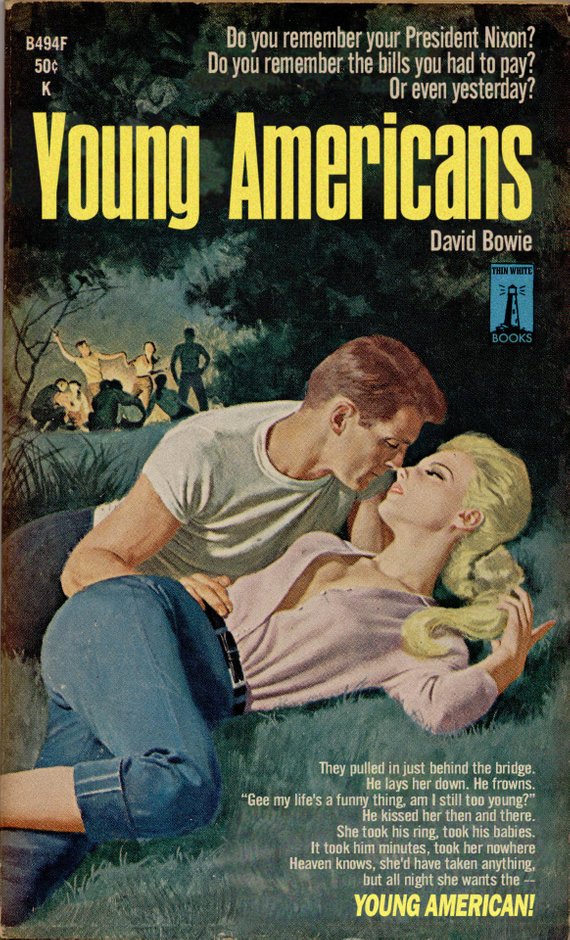
As David Bowie himself implied in a 1975 interview, “Young Americans” doesn’t have much of a narrative.
Rather, it’s a portrait of ambivalence, viewed at some remove.
The same cannot be said for Young Americans, the wholly imaginary midcentury pulp novel.
One look at the lurid cover, above, and one can guess the sort of steamy passages contained within. Bowie’s sweaty palmed classmates at Bromley Technical High School could probably have recited them from memory!
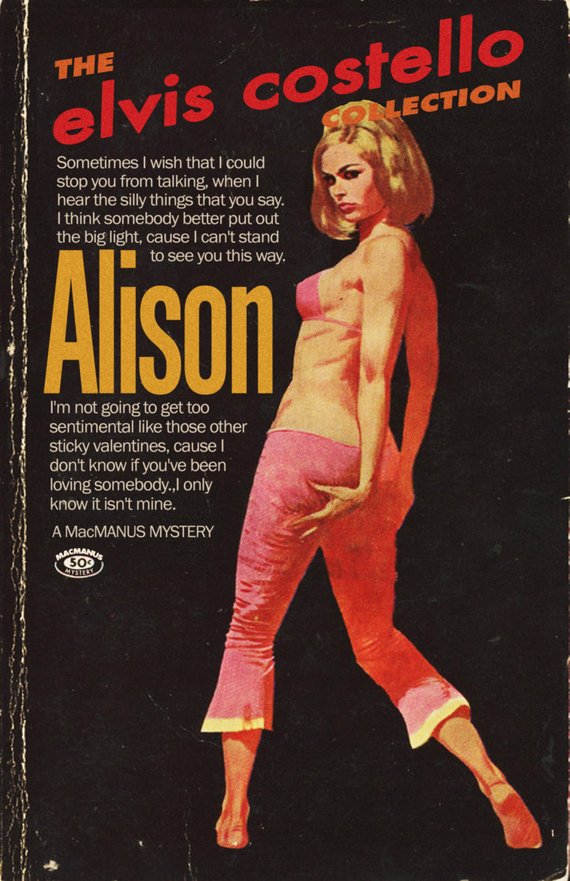
Ditto Alison. The tawdry paperback, not Elvis Costello’s evergreen 1977 ballad. There’s a reason its spine is falling apart, and it’s not because young lads like Elvis Costello are fearful their hearts might prove untrue. That skimpy pink bikini top and hip huggers get-up is appealing to an entirely different organ.
Here we must reiterate that these books do not exist and never did.
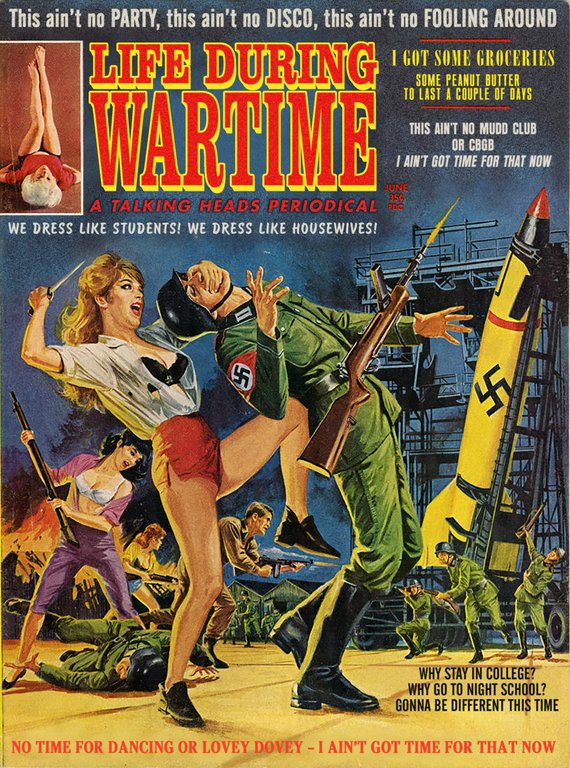
Though there’s a lot of fun to be had in pretending that they do.
Screenwriter Todd Alcott, the true author of these digital mashups, is keenly attuned to the overripe visual language of midcentury paperbacks.
He’s also got quite a knack for extracting lyrics from their original context and rendering them in the period font, magically retooling them as the sort of suggestive quotes that once beckoned from drugstore book racks.
Font has been important to him since the age of 13, when a school art project required him to combine text with an image:
I decided that I wanted the text to look like the text I’d seen in an ad for a John Lennon album, so I copied that font style. I didn’t know that the font style had a name, but I knew that my instincts for how to draw those letters didn’t match how the letters ended up looking. The font, as it turns out, was Franklin Gothic, and, as a 13-year-old, all I remember was that I would start to draw the “S” and then realize that my “S” didn’t look like Franklin Gothic’s “S,” and that the curvy letters, like “G” and “O,” didn’t look right when they sat on the lines I’d made for the other letters, because of course for a font, the curvy letters have to be a little bit bigger than the straight letters, or else they end up looking too small. I became fascinated with that kind of thing, how one font would give off one kind of feeling, and other one would give off a completely different feeling. And it turns out there’s a reason for all of that, that every font carries with it a specific cultural connotation whether the reader is aware of it or not. When I drive down the street in LA, I see billboards and I can’t just look at one and say “Okay, got it,” I get a whole other layer of meaning from them because their design and font choices tell me a whole history of the people who designed them.
While Alcott discovers many of his visuals online, he has a soft spot for the battered originals he finds in second hand shops. Their wear and tear confers the sort of verisimilitude he seeks. The rest is equal parts inspiration, Photoshop, and a growing understanding of a design form he once dismissed as the tawdry fruit of Low Culture:
I’d never understood pulp design until I started this project. As I started looking at it, I realized that the aesthetic of pulp is so deeply attached to its product that it’s impossible to separate the two. And that’s what great design is, a graphic representation of ideas. When I started examining the designs, to see why some work and some don’t, I was overwhelmed with the sheer amount of artistry involved in the covers. Pulp was a huge cultural force, there were dozens of magazines and publishers, cranking out stuff every month for decades, detective stories and police stories and noir stories and mysteries. It employed thousands of artists, writers and painters and illustrators. And the energy of the paintings is just off the charts. It had to be, because any given book cover had to compete with the ten thousand other covers that were on display. It had to grab the viewer fast, and make that person pick up the book instead of some other book. I love all kinds of midcentury stuff, but nothing grabs you the way a good pulp cover does.
Not all of his mash ups traffic in mid-century drugstore rack nymphomania.
New Order’s “Bizarre Love Triangle” is the ideal recipient of the abstract approach so common to psychology and philosophy titles of the period.
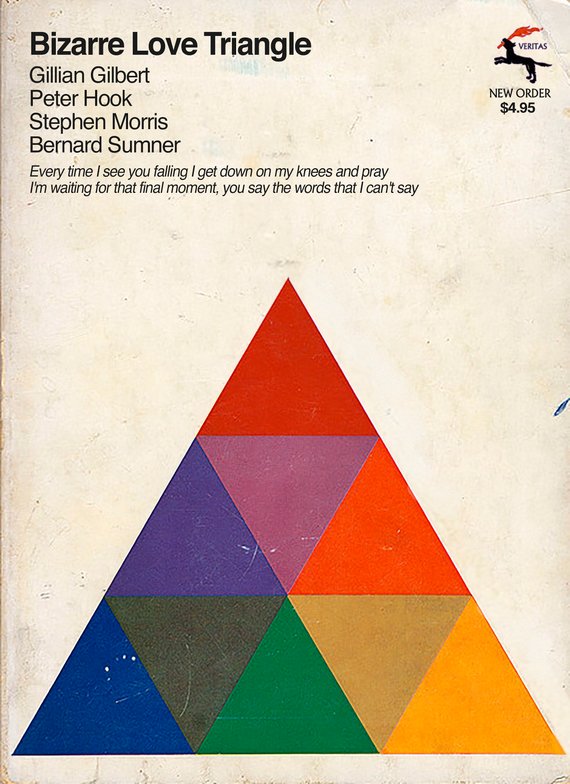
Needless to say, Alcott’s covers are also a tribute to the musicians he lists as authors, particularly those dating to his New Wave era youth—Bowie, Costello, Joy Division, Talking Heads, King Crimson…
I know I could find more popular contemporary artists to make tributes for, but these are the artists I love, I connect to their work on a deep level, and I try to make things that they would see and think “Yeah, this guy gets me.”
My favorite thing is when people think the pieces are real. That’s the highest compliment I can receive. I’ve had band members contact me and say “Where did you find this?” or “I don’t even remember doing this album” or “Where did you find this?” That’s when I know I’ve successfully combined ideas.
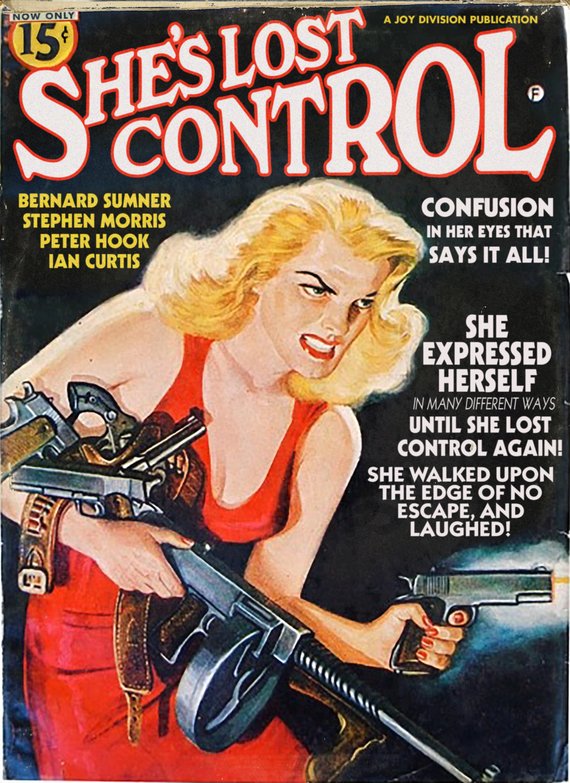
Todd Alcott’s Mid-Century Mash Up Book Covers can be purchased as prints from his Etsy store.
All images published with the permission of Todd Alcott.
Related Content:
French Bookstore Blends Real People’s Faces with Book Cover Art
Ayun Halliday is an author, illustrator, theater maker and Chief Primatologist of the East Village Inky zine. Join her in NYC on Monday, September 24 for another monthly installment of her book-based variety show, Necromancers of the Public Domain. Follow her @AyunHalliday.
Read More...V.S. Naipaul Writes an Enraged Letter to His Publisher After a Copy-Editor Revises His Book, A Turn in the South
Photo by Faizul Latif Chowdhury, via Wikimedia Commons
There are many ways for travel writers to get their subject badly wrong. Perhaps the worst is solely relying on uninformed observation rather than seeking the wisdom and experience of knowledgeable locals. To his credit, celebrated Nobel prize-winning novelist V.S. Naipaul—who passed away on August 11th at age 85—met, mingled, and spoke freely with individuals from every walk of life (including Eudora Welty) in the process of writing A Turn in the South, a travelogue of his sojourn through the much-mythologized and maligned Southern states of the U.S.
Naipaul’s voice alone might have overwhelmed the work with the extremely harsh, some have said bigoted, judgments he became known for in novels like A Bend in the River, Guerillas, and The Enigma of Arrival. Instead, he won praise from reviewers like Southern historian C. Vann Woodward, who wrote that Naipaul “brings new understanding of the subject to his reader.” Woodward also noted that Naipaul “confesses to ‘writing anxieties’ about undertaking this book on people unknown to him.”
Though he consulted and quoted local voices in his survey of the South, it is ultimately Naipaul’s voice that organizes the work, and his precise, erudite prose the reader hears. It was a voice he took great pride in, as he should. For his many faults, Naipaul was a masterful literary stylist. One wonders, then, why a copy editor at Knopf would feel it necessary to make extensive revisions to the manuscript of A Turn in the South before its publication.
Copy-editing is an essential function, writes Letters of Note, without which many books would go to print “peppered with redundant hyphens, needless repetition, misplaced semicolons,” etc. But it is also a task that should interfere as little as possible with the matters of diction, style, and syntax that characterize an authorial voice. Like a conscientious backpacker, a good copy editor should endeavor to leave almost no trace unless the text is full of serious problems.
Clearly, as Naipaul’s irritated letter below shows, something went wrong. Upon receiving the copy-edited text, he writes, he was obliged to restore the original from memory. Naipaul assures Knopf’s editor-in-chief Sonny Mehta that he understands the English language and its history very well, and knows that, unlike French, it has no “court rules,” and can be bent any number of ways without breaking. He implies it is the job of every “serious or dedicated” writer in English to use the language as they see fit, and the job of an editor to mostly get out of the way.
No doubt this relationship can prove complicated and frustrating for both parties. Still, though we only get Naipaul’s side of the story, it’s hard not to take it when he points out he had written 20 books by that time, all of them acclaimed for the quality of their writing. “My name goes on my book,” he declares. (So does the name “Knopf,” Mehta might have replied.) “I am responsible for the way the words are put together.” Read the letter in full below. And see Literary Hub for Naipaul’s Ten Rules of Writing if you’re interested in his prescriptions for clear English prose—advice he had earned license to take or leave in his own work.
10 May 1988
Dear Sonny,
The copy-edited text of A Turn in the South came yesterday; it is such an appalling piece of work that I feel I have to write about it. This kind of copy-editing gets in the way of creative reading. I spend so much time restoring the text I wrote (and as a result know rather well). I thought it might have been known in the office that after 34 years and 20 books I knew certain things about writing and didn’t want a copy-editor’s help with punctuation or the thing called repetition; and certainly didn’t want help with ways of getting round repetition. It is utterly absurd to have someone pointing out to me repetitions in the use of “and” or “like” or “that” or “she”. I didn’t want anyone undoing my semi-colons; with all their different ways of linking.
It happens that English — the history of the language — was my subject at Oxford. It happens that I know very well that these so-called “rules” have nothing to do with the language and are really rules about French usage. The glory of English is that it is without these court rules: it is a language made by the people who write it. My name goes on my book. I am responsible for the way the words are put together. It is one reason why I became a writer.
Every writer has his own voice. (Every serious or dedicated writer.) This is achieved by the way he punctuates; the rhythm of his phrases; the way the writing reflects the processes of the writer’s thought: all the nervousness, all the links, all the curious associations. An assiduous copy-editor can undo this very quickly, can make A write like B and Ms C.
And what a waste of spirit it is for the writer, who is in effect re-doing bits of his manuscript all the time instead of giving it a truly creative, revising read. Consider how it has made me sit down this morning, not to my work, but to write this enraged letter.
Yours
Vidia
via Letters of Note
Related Content:
Kurt Vonnegut Explains “How to Write With Style”
Cormac McCarthy’s Three Punctuation Rules, and How They All Go Back to James Joyce
Josh Jones is a writer and musician based in Durham, NC. Follow him at @jdmagness
Read More...The Beach Party Film: A Short Appreciation of One of the Oddest Subgenres in Film History
Dallas, TX cinephile Andrew Saladino has a fabulous film critique channel called The Royal Ocean Film Society, which he’s been operating since 2016, following in the footsteps of Every Frame a Painting (RIP) and Press Play (RIP). In this recent essay, he turns his eye to the mostly forgotten and never particularly good “dead genre” known as the Beach Party film.
You’ve probably seen one, or at least a parody of one, somewhere along the way–formulaic and harmless surf’n’fun films sold to teens, set in a world with very few adults, and most probably starring Frankie Avalon and Annette Funicello as the central will-they-or-won’t-they romantic couple. These weren’t troubled juvenile delinquents like ones played by Marlon Brando or James Dean–these were squeaky clean kids. These weren’t movies *about* teens like John Hughes films, he points out, but they were sold to teens.
The Beach Party genre drew from two early films–Gidget (1959) and Where the Boys Are (1960)–and dumbed them down into pure formula. And hell yes they were successful after the premiere of the first Frankie and Annette team-up, Beach Party (1963).
Saladino uses his essay to make a case for the films not as great cinema–his greatest compliment is “they’re not evil”–but as the beginning of modern marketing practices in Hollywood. And if you take a glance at the superhero and YA dystopian fantasy genres still filling up our multiplexes, these marketing ideas are still with us. Especially in how a good idea is copied over and over until audiences stop coming.
It was American International Pictures, home to filmmakers Roger Corman (now considered an indie film legend), James Nicholson, and Samuel Z. Arkoff, that started it all. Cheaply made, these films would start with a cool poster, raise funds based on the promise of the artwork, and only then would they write a script. (If you don’t think that happens anymore, check out Snakes on a Plane.)
Of interest to the casual viewer these days are the various cameos of older stars in some of these films as comic relief. Vincent Price stars in the original Beach Party. Buster Keaton, Don Rickles, and Paul Lynde appear in Beach Blanket Bingo (1965).
One can also watch these for the musical acts: surf guitarist Dick Dale appears in Beach Party:
And Stevie Wonder pops up in Muscle Beach Party:
The original AIP run of beach party films topped out at seven, but in total Saladino counts over 30 films from various indie companies that finally ran aground in 1967 with the execrable (and Mystery Science Theater 3000/em> favorite) Catalina Caper, which features an allegedly very coked out Little Richard. Then it was on to another fad–outlaw racing films apparently.
Andrew Saladino has many other essays worth checking out on his site, and he funds it all through a Patreon account, so do check him out.
Related Content:
Hear the Beach Boys’ Angelic Vocal Harmonies in Four Isolated Tracks from Pet Sounds: “Wouldn’t It Be Nice,” “God Only Knows,” “Sloop John B” & “Good Vibrations”
http://www.openculture.com/2017/08/hear-the-beach-boys-celestial-vocal-harmonies-in-four-isolated-tracks-from-pet-sounds.html
A Supercut of Buster Keaton’s Most Amazing Stunts–and Keaton’s 5 Rules of Comic Storytelling
Ted Mills is a freelance writer on the arts who currently hosts the artist interview-based FunkZone Podcast and is the producer of KCRW’s Curious Coast. You can also follow him on Twitter at @tedmills, read his other arts writing at tedmills.com and/or watch his films here.
Read More...Support Us
We're hoping to rely on loyal readers, rather than erratic ads. Please click the Donate button and support Open Culture. You can use Paypal, Venmo, Patreon, even Crypto! We thank you!

About Us

Open Culture scours the web for the best educational media. We find the free courses and audio books you need, the language lessons & educational videos you want, and plenty of enlightenment in between.
Advertise With Us

FREE UPDATES!
GET OUR DAILY EMAIL
Get the best cultural and educational resources on the web curated for you in a daily email. We never spam. Unsubscribe at any time.
FOLLOW ON SOCIAL MEDIA

Open Culture editor Dan Colman scours the web for the best educational media. He finds the free courses and audio books you need, the language lessons & movies you want, and plenty of enlightenment in between.
Advertise With Us


