A New Series About A Young Crime-Fighting Sigmund Freud Is Coming to Netflix

A recently announced, as-yet-uncast Netflix series centering on the exploits of young, crimefighting Sigmund Freud, tracking a serial killer in 19th-century Vienna, has been causing great excitement.
Though as Chelsea Steiner points out in the Mary Sue, Freud’s equation of clitoral orgasms with sexual immaturity and mental illness could put a damper on any sex scene in which a female character takes an active role.
Perhaps the youthful Father of Psychology won’t be hooking up with his female sidekick—a medium (always so helpful in cases involving serial killers!)
Perhaps instead the real love interest will be the intriguingly named Kiss, a testy war veteran cop. As Freud wrote in a 1935 letter:
Homosexuality is assuredly no advantage, but it is nothing to be ashamed of, no vice, no degradation; it cannot be classified as an illness; we consider it to be a variation of the sexual function, produced by a certain arrest of sexual development. Many highly respectable individuals of ancient and modern times have been homosexuals, several of the greatest men among them. (Plato, Michelangelo, Leonardo da Vinci, etc). It is a great injustice to persecute homosexuality as a crime –and a cruelty, too. If you do not believe me, read the books of Havelock Ellis.
The eight-part German-language series will be directed by a Marvin Kren, who seems, in the translated press release, as if he might be equal to the task.
I more or less grew up underneath Sigmund Freud’s original sofa, meaning: in the same district in Vienna where he had his office. The difference: When I was born the world already profited from Sigmund Freud’s groundbreaking discoveries for almost a century. We, the modern human beings, live in post-Freudian times. It is very appealing and challenging for me to imagine a world in this series in which the ‘self’ was just a blind spot on the map of cognition, a world that hasn’t seen Sigmund Freud yet. I would like to emerge with ‘Freud’ into Vienna’s dark alleys before the turn of the century, to discover the reflection of the labyrinth of the human soul inspiring his life’s work. Abysmal, dubious and dangerous!
The series will debut on Austrian television. Netflix will control international streaming rights. Production is due to begin this fall.
Related Content:
Sigmund Freud, Father of Psychoanalysis, Introduced in a Monty Python-Style Animation
Sigmund Freud Speaks: The Only Known Recording of His Voice, 1938
Ayun Halliday is an author, illustrator, theater maker and Chief Primatologist of the East Village Inky zine. Follow her @AyunHalliday.
Read More...Pianist Plays Beethoven, Bach, Chopin, Ravel & Debussy for Blind Elephants in Thailand
Romsai the elephant wore a red rope around his neck to warn approaching humans that he was a danger to both them and elephants. A dark patch on his head from a temporin secretion indicated that he was in the musth cycle, which only heightened his aggression. His mahouts at the ElephantsWorld sanctuary in Kanchanaburi, Thailand observed that the old, blind elephant was growing more dangerous with age.
And yet, he is the personification of sweetness, as pianist Paul Barton serenades him with a performance of Beethoven’s Sonata Pathétique, repeating the melody section several times “as he seems to like it.”
In lieu of applause, Romsai places his trunk over the top of Barton’s upright piano again and again, in no way aggressive, more the gesture of a grateful audience member.
As Barton, a Yorkshireman who went to Thailand over twenty years ago for what he thought would be a short piano teaching stint only to wind up marrying a local artist and animal rights activist, said in an interview with YourStory:
All animals like music. Dogs, cats, etc. But elephants are the closest to human beings in the sense that they have the same neurons in the brains as us. Also they have a very good memory. If you are treated badly as a child, you are going to remember that all your life. It’s the same with elephants. The elephant shares that part of the brain with us which has flashbacks. They can never forget the terrible things they have seen and suffered… If you play classical music to an elephant, something soft and beautiful, something that human beings have been listening to for hundreds for hundreds of years, something that is timeless—and you play that to an elephant that is blind and they’ve never heard music before—the reaction is priceless. There is a special bond between you and the elephant. You are communicating with them in a different language. That language is neither ours nor theirs. There is something infinitesimally wonderful in a piece of Beethoven that connects me to that elephant and that feeling is otherworldly.
The impulse to play live concerts for Romsai and other blind sanctuary dwellers was partly born from seeing the positive effect music had on some blind children with whom Barton worked.
He also wanted to make amends for the deforestation of the elephant’s homeland, and the way the teak industry exploited their labor. It was while thus employed that many of them suffered scratched corneas and other eye injuries that blinded them, rendering them doubly vulnerable when the Thai government enacted a ban on commercial timber logging in 1989:
The elephant has worked for humans for too long. It was used in wars, it was used to deforest its own home. What is the little thing I can do as a human to say sorry, for my species for what we have done to them? I’ll carry this heavy thing myself and play some music for the elephant while it is having some breakfast.
Removed from the plush seats of a concert hall, Ravel feels right at home. A rooster crows, a nearby child pipes up, and Romsai wanders in and out of the frame, at times appearing to keep time with his trunk.
Cicadas underscore Schubert’s Serenade.
Another ElephantsWorld resident, Lam Duan’s (aka “Tree with Yellow Flowers”) stillness as she listens to Bach is reminiscent of Barton’s first musical outing with the elephants:
Elephants eat a lot of food. A lot. It is exhausting trying to procure that much food for so many elephants. When an elephant gets to eat, it’s a bit like a dog. A dog will eat its food so quickly because it’s not sure if it will ever eat again. And elephants are the same. Once they get their hands on some juicy leaves, they will eat and eat and nothing can tear them away from their food. That morning I brought the piano in early to the sanctuary. Pla-Ra was taken to a field full of juicy bamboo shoots and she began eating with a single minded dedication. I started to play Beethoven and she stopped eating. There was this half eaten bamboo shoot sticking out of her trunk while she stared at me. That was a reaction never seen before. An elephant stopped eating because of music.
Barton’s latest recording features 80-year-old Ampan, blind in one eye and near blind in the other, enjoying Debussy’s Clair de Lune.
Support Paul Barton’s Patreon here. Learn about volunteer opportunities or make a donation to ElephantsWorld here
via Laughing Squid
Related Content:
Stream 58 Hours of Free Classical Music Selected to Help You Study, Work, or Simply Relax
Watch Classical Music Get Perfectly Visualized as an Emotional Roller Coaster Ride
Ayun Halliday is an author, illustrator, theater maker and Chief Primatologist of the East Village Inky zine. Follow her @AyunHalliday.
Read More...The Genius of Tina Weymouth: Breaking Down the Style of Talking Heads and Tom Tom Club’s Basslines
The best part about watching videos of my favorite musicians talking about their playing is the moment they reveal that certain stylistic quirks–the ones that made them who they are–came about more-or-less by accident. Dinosaur Jr.’s J. Mascis, for example, well-known for his huge, open chords as well as his long, expressive solos, recently told Matt Sweeney that he only learned to palm-mute (dampen the strings to muffle excessive ringing) a couple years ago. Maybe he was joking, but the idea that an essential element of his massive sound emerged because he didn’t know another way to play fills me with joy.
Another of my favorite players is also a self-confessed “complete autodidact,” Tina Weymouth of Talking Heads and Tom Tom Club. As distinctive a player as Mascis, it’s impossible to mistake her style for anyone else’s. “I was only playing bass for five months when the band first played [live],” she told an audience in 2014 at the Red Bull Music Academy in Tokyo. “I did not take a lesson. Nobody taught me.” But unlike many of her self-taught male counterparts with roots in punk and a decades-long association with a band that defined an era, Weymouth, argues Carrie Courogen at PAPER, has been tragically under-recognized.
Yet “without her there would be no ‘Psycho Killer,’ no ‘Burning Down the House,’ no ‘Once in a Lifetime,’—grooves which are immediately recognizable.” It takes nothing away from the smarts of David Byrne’s songwriting to point out that Talking Heads was just as much a product of its top-notch rhythm section. Weymouth’s “basslines became the pulse of the band,” writes Courogen, “infusing downtown punk with a new sound: a danceable combination of the soulful, funky jams of Parliament and James Brown with the rock steadiness of Carol Kaye.” In the video above from Reverb.com, our host Jeremy walks us through the elements of Weymouth’s playing
As Jeremy points out, unlike many players, Weymouth’s sound was not defined by one particular instrument: throughout her long career, she played Fender Mustang and Jazz basses, a Hofner Club, and several custom basses. “She really used what she needed,” he says, “to fit the sound to the tune.” Jeremy himself demonstrates her basslines on a Fender Mustang. He gives her high praise indeed by comparing her simple yet melodic lines to those of greats Donald “Duck” Dunn and James Jamerson—long considered two of the best players in funk and soul. It’s a well-deserved comparison, and Weymouth has mentioned both as influences.
That she took their Motown and Memphis sounds and turned them into angular art-rock makes her all the more interesting a player to study, and a reason for her major influence on generations of bassists who draw as much from classic funk as from 80s New Wave. There may be no more perfect fusion of the two than in Weymouth’s playing—and in her songwriting too, as Tom Tom Club’s 1981 “Genius of Love” made abundantly clear. Jeremy covers this one as well, and if you’re a bass player, you should too.
Related Content:
7 Female Bass Players Who Helped Shape Modern Music: Kim Gordon, Tina Weymouth, Kim Deal & More
What Makes Flea Such an Amazing Bass Player? A Video Essay Breaks Down His Style
Josh Jones is a writer and musician based in Durham, NC. Follow him at @jdmagness
Read More...
96-Year-Old Holocaust Survivor Fronts a Death Metal Band
As we get older, family and friends may pass away or leave us somehow, but for many of us creativity can be our solace. (Yes, it could also make us immortal, like Bach or Shakespeare, but we won’t be around to find out.) In the case of nonagenarian Inge Ginsberg that has been the case in the unlikeliest of outlets: death metal.
This charming New York Times documentary by Leah Galant details the unlikely team-up between Ginsberg–who spends her time between Switzerland and New York City–and the young musicians who became her friends and got her into performing her poems live with full death metal accompaniment.
Half earnest and half good-natured stunt, the center of it all is Ginsberg’s poems, which she has been writing for years, and only a tiny glimpse of which we get to hear. The poems take on heavy subjects of mortality, our destruction of the earth, loneliness. At one point Ginsberg was writing these with no audience, and, as she says in the doc, society is not interested in hearing from the elderly (especially when it’s this dark.) It took her younger friends to make the connection between her poems and the usual preoccupations of death metal and insist Ginsberg perform them in that hectoring, doom laden-style of the genre. She was game.
Galant’s mini doc rewinds history halfway through to explain Ginsberg’s upbringing: a “Jewish princess” who survived the Holocaust, fled to America, and wound up writing songs with her husband (Dean Martin’s “Try Me” was one of their hits). Tired of the war, they moved back to Zurich, and, well, fast forward three husbands and several decades later, Ginsberg was back in the spotlight, performing on the Swiss version of America’s Got Talent.
We won’t spoil the ending of the doc, as the band try to get Ginsberg to try out for the actual America’s Got Talent, because we’ve already said enough. But we’ll leave you with this quote from the singer herself: “My concept of heaven and hell is that in the moment of death you realize your life was full and good–that is heaven. And if you think, ‘Oh, I should have done this or that,’ I think that’s hell.”
Related Content:
John Cage’s Silent, Avant-Garde Piece 4’33” Gets Covered by a Death Metal Band
Ted Mills is a freelance writer on the arts who currently hosts the artist interview-based FunkZone Podcast and is the producer of KCRW’s Curious Coast. You can also follow him on Twitter at @tedmills, read his other arts writing at tedmills.com and/or watch his films here.
Read More...The Encyclopedia Of Alternate Guitar Tunings
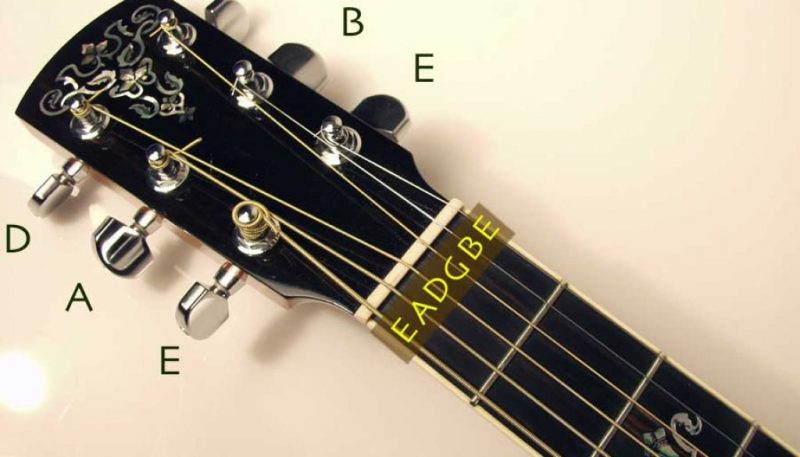
Joni Mitchell, Keith Richards, Robert Johnson, Ani DiFranco, and Bob Dylan. What do they have in common? For one, they’ve experimented with alternate guitar tunings, going beyond the standard EADGBE tuning most commonly used by musicians. Keith Richards used the Open G tuning (GDGBD) to write some of the Stones’ classic tracks–“Honky Tonk Woman,” “Brown Sugar,” “Beast of Burden,” “Gimme Shelter,” “Happy,” and “Start Me Up.” Try playing them in a standard tuning and they’ll never sound quite right.
If you’re a guitarist looking for a different sound, spend some time with Warren Allen’s Encyclopedia of Alternate Guitar Tunings. It’s a handy resource. First created in 1997, this vintage web page presents a library of unconventional tunings, complete with a list of songs where they were artistically put to use. Enter the Encyclopedia here.
If you would like to support the mission of Open Culture, consider making a donation to our site. It’s hard to rely 100% on ads, and your contributions will help us continue providing the best free cultural and educational materials to learners everywhere. You can contribute through PayPal, Patreon, and Venmo (@openculture). Thanks!
Related Content:
B.B. King Changes Broken Guitar String Mid-Song at Farm Aid, 1985 and Doesn’t Miss a Beat
Read More...Who Was Joan Vollmer, the Wife William Burroughs Allegedly Shot While Playing William Tell?
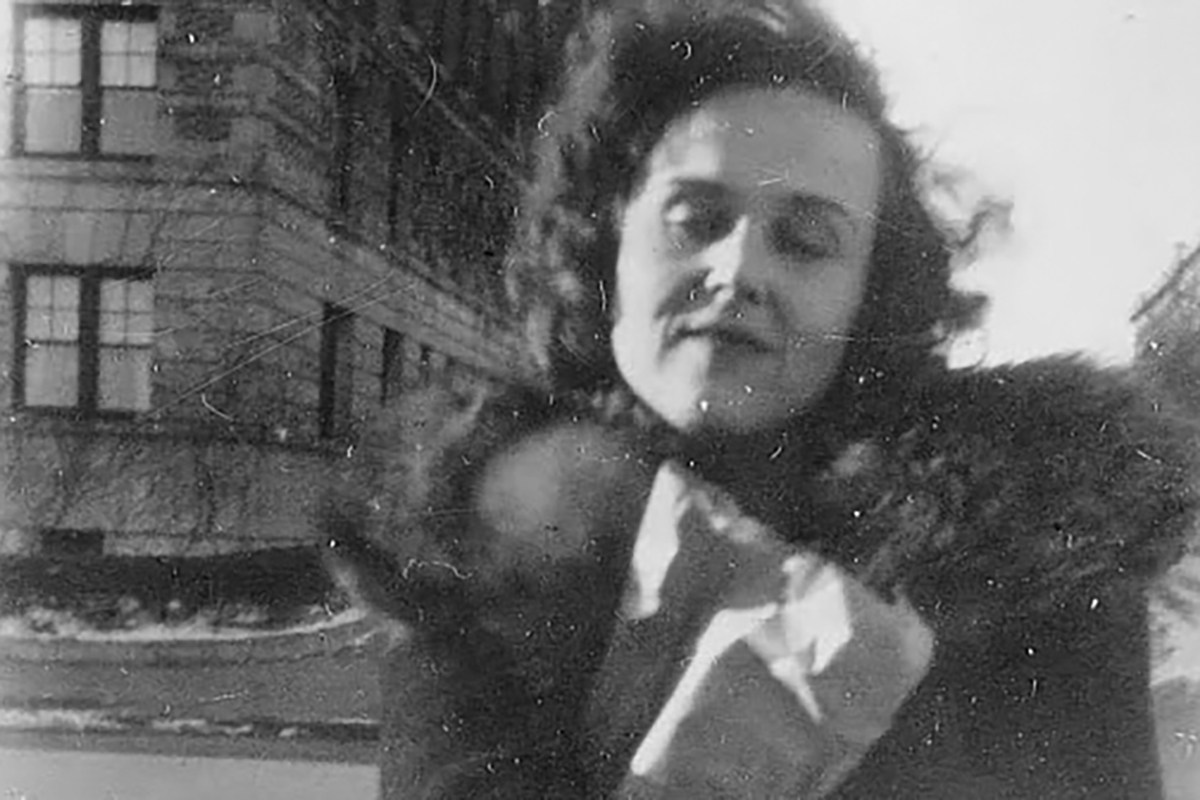
Popular culture knows William S. Burroughs primarily for three of the things he did in life: using drugs, writing Naked Lunch, and killing his wife. If popular culture remembers that wife, Joan Vollmer, it mostly remembers her for the manner of her death: shot, they say, as a result of Burroughs’ drunken imitation of William Tell. But in life she played an important role in the intellectual development of not just Burroughs but other major Beat writers as well, including Allen Ginsberg and Jack Kerouac. As Brenda Knight writes in Women of the Beat Generation, Vollmer “was seminal in the creation of the Beat revolution; indeed the fires that stoked the Beat engine were started with Joan as patron and muse.”
When her first husband Paul Adams was drafted into World War II, Vollmer moved in with her fellow future woman of the Beat Generation, and future wife of Jack Kerouac, Edie Parker. Into their series of Upper West Side apartments came a wide variety of substance-abusing artists, Burroughs, Kerouac, and Ginsberg included. Vollmer’s new coterie, as well as her own amphetamine addiction, so appalled Adams that he left her upon his return from the military. She took up with Burroughs in 1946, later becoming his common-law wife and the mother of their child, William Burroughs, Jr.. In seemingly constant flight from the law, they moved from New York to Texas to New Orleans to Mexico City, where the fateful game of William Tell would happen in 1951.
But did that game of William Tell happen? History has recorded that Vollmer did indeed die by gunshot, but as to exactly how or why it happened, nobody quite knows. Hence the investigations that academics, Beat Generation enthusiasts, and others have conducted since. The Burroughs-themed site RealityStudio has one page on Burroughs and the William Tell Legend and another gathering documents on the death of Joan Vollmer. You can get further in depth by reading “The Death of Joan Vollmer Burroughs: What Really Happened?”, a 70-page research paper by James Grauerholz, Burroughs’ biographer and the executor of his literary estate.
Despite his considerable interest in Burroughs, Grauerholz doesn’t show an outsized interest in absolving the writer of his crime. But he does know more than enough to cast doubt on, or at least add nuance to, the simple story everyone “knows.” Burroughs himself, though he gave contradictory accounts of the event at different times, never denied shooting Vollmer. He did, however, blame a kind of demonic possession for it: “I am forced to the appalling conclusion that I would have never become a writer but for Joan’s death,” he wrote in the introduction to a 1985 edition of his novel Queer. “I live with the constant threat of possession, and a constant need to escape from possession, from Control.”
Vollmer’s death, in Burroughs’ view, “brought me in contact with the invader, the Ugly Spirit, and maneuvered me into a life long struggle, in which I have had no choice except to write my way out.” Sound like self-justification though that may, the fact remains that Burroughs’ life freighted him with plenty of conditions to write his way out of. It also went on for 46 years after the end of Vollmer’s which, though short, saw her become, as Knight writes, “the whetstone against which the main Beat writers — Allen, Jack, and Bill — sharpened their intellect. Widely considered one of the most perceptive people in the group, her strong mind and independent nature helped bulldoze the Beats toward a new sensibility.”
Related Content:
William S. Burroughs Reads & Sings His Experimental Prose in a Big, Free 7‑Hour Playlist
How to Jumpstart Your Creative Process with William S. Burroughs’ Cut-Up Technique
Hear a Great Radio Documentary on William S. Burroughs Narrated by Iggy Pop
Based in Seoul, Colin Marshall writes and broadcasts on cities and culture. His projects include the book The Stateless City: a Walk through 21st-Century Los Angeles and the video series The City in Cinema. Follow him on Twitter at @colinmarshall or on Facebook.
Read More...The Doors’ Ray Manzarek Walks You Through the Writing of the Band’s Iconic Song, “Riders on the Storm”
“An old cowpoke went ridin’ out one dark and windy day….”
So begins Vaughn Monroe’s 1949 cowboy song “Riders in the Sky,” a tale about a “ghost herd in the sky.”
And so began, at first, The Doors’ “Riders on the Storm,” one of the band’s most iconic tunes, which, as Ray Manzarek explains above, started out with him and guitarist Robby Krieger playing around on Krieger’s “twang guitar” in their rehearsal studio. As Manzarek tells it, Jim Morrison burst in on the jam session with lyrics. To turn the Monroe-inspired tune into a Doors’ song, Manzarek decided “we got to put some jazz to it, make it dark.”
Watch him reenact the magic: bassist Jerry Scheff (formerly of Elvis’ TCB Band) stretches himself to learn the bass part, Manzarek simulates rain with a descending scale, engineer Bruce Botnick pulls out the pre-recorded thunder….
The haunted Old West feel of Monroe’s “Riders in the Sky” remains—in the quavering tremolo of Krieger’s guitar lines—but crooner Vaughn Monroe would never sing a line about a killer’s brain “squirmin’ like a toad.” Instead of ghost cowboys, the “insane part” of the second verse features a murderous drifter who might just kill your family.
This creepy image hearkens back to the centerpiece of The Doors’ self-titled debut album, “The End,” with its homicidal spoken word section that seemed to announce the band as the soundtrack to the sixties’ dark demise, capped off by their last 1971, album, L.A. Woman, and “Riders on the Storm.” (Jazz & Pop magazine called L.A. Woman “a return to the tight fury of early Doors’ music.”)
In the video—an extra from the documentary The Doors: Mr. Mojo Risin’—the Story of L.A. Woman—Manzarek sings the lyrics, but hardly does justice to Morrison’s smooth delivery. It’s fitting in a way that the band’s last album would feature a blues derived from a Monroe song, whose muscular baritone (he was called “the Baritone with Muscles”) was such a prominent sound in an earlier, less anarchic, time.
“Riders on the Storm” contains within it the seeds of Morrison’s idea for a “movie about a hitchhiking killer,” says Manzarek, “but he couldn’t leave it at that. The song was just too haunted and too beautiful. It was almost as if he had a premonition” of his own death. He also had a premonition of ‘70s cinema, with its disaffected loner killers and bleak neo-Westerns, reflections of the decades’ own Vietnam-era darkness.
Related Content:
“The Lost Paris Tapes” Preserves Jim Morrison’s Final Poetry Recordings from 1971
The Doors Play Live in Denmark & LA in 1968: See Jim Morrison Near His Charismatic Peak
William S. Burroughs “Sings” R.E.M. and The Doors, Backed by the Original Bands
Josh Jones is a writer and musician based in Durham, NC. Follow him at @jdmagness
Read More...Watch Jean Cocteau’s Short Film About the Elegant House He Painted/“Tattooed” on the French Riviera (1952)
“Villa Santo-Sospir belongs to Madame Alec Weisweiller,” says the narrator. “It dominates Cape Santo Sospir, the last point on the map before arriving on Cape Ferrat. The villa is situated on the road to the lighthouse and its rocks descend to the sea.” So far this could be any of the myriad popular television houses about big, expensive houses in exotic places. Then it turns personal: “It looks out on Antibes, Cannes, Nice, and to the right, Villefranche, where I have lived for a long time.” The narrator is avant-garde writer, artist, and filmmaker Jean Cocteau; the house is one he and other artists spent twelve years “tattooing.”
Weisweiller, writes Vogue’s Stephen Todd, was “a Parisian socialite and patron of Yves Saint Laurent,” and the cousin of Nicole Stéphane, Elisabeth in Cocteau’s Les Enfants Terribles. “It was Stéphane who introduced the two during filming. It was un coup de foudre, the pair of eccentrics hitting it off right away.” Invited in 1949 to stay at Weisweiller’s Riviera house for a week, Cocteau soon found himself, as he put it, “tired of idleness,” and asked Weisweiller’s permission to paint the head of the Greek god Apollo above the living-room fireplace. ”
So delighted were the new pals with the result that they decided Cocteau should carry on,” writes Todd, quoting Cocteau: “I was imprudent enough to decorate one wall and Matisse said to me, ‘If you decorate one wall of a room, you have to do them all.’”
Matisse contributed to the decoration of the house, as did Picasso and Chagall. You can see it in La villa Santo Sospir, the 40-minute film he made about the project in 1952, with more recent images available at Atlas Obscura. Most of the house’s imagery comes from Greek mythology, even the entryway mosaics, one of which depicts the head of Orpheus. Eight years later, Cocteau would return to both Orpheus and Villa Santo-Sospir to shoot his final film Testament of Orpheus. “We have tried to overcome the spirit of destruction that dominates the time; we decorated the surfaces that men dreamed to demolish,” says Cocteau in the earlier film. “Perhaps, the love of our work will protect them against bombs.” And even if Villa Santo-Sospir should fall, cinema has preserved it for all time.
Related Content:
Jean Cocteau Delivers a Speech to the Year 2000 in 1962: “I Hope You Have Not Become Robots”
Jean Cocteau’s Avante-Garde Film From 1930, The Blood of a Poet
The Postcards That Picasso Illustrated and Sent to Jean Cocteau, Apollinaire & Gertrude Stein
Based in Seoul, Colin Marshall writes and broadcasts on cities and culture. His projects include the book The Stateless City: a Walk through 21st-Century Los Angeles and the video series The City in Cinema. Follow him on Twitter at @colinmarshall or on Facebook.
Read More...What Is ASMR? Watch the The New Yorker’s Introduction to the Whispering & Crinkling Sounds That Help Calm Anxiety and Induce Euphoria
ASMR… is it a medical condition? A sexual fetish? A desire for peace and quiet coupled with an inability to turn off YouTube? Maybe all or none of the above?
Maybe you caught Act One of This American Life’s “Tribes” episode, in which novelist Andrea Seigel describes her passionate need for whispering, and finds a community of people who need the same. She discovered the “tingle” early in life, when a friend came over to inspect her shell collection, describing each item in a gentle whisper and provoking in Seigel an “autonomous sensory meridian response,” a euphoric reaction thousands crave as though it were a drug. They get their fix, as we learn in the New Yorker video above, from videos in which male and female “ASMR artists” gently handle, manipulate, and describe objects in low murmurs.
Sensual sibilance, the sounds of a brush through hair, scissors clipping, plastic quietly crinkling, tapping, spraying… all producing the same effect as Bob Ross’s happy little clouds and trees, a pioneering source of ASMR, though it had not yet been identified as such.
Many of Ross’s viewers were not, in fact, aspiring artists, but people who responded to his calming demeanor and the swishing sounds of his brush on the canvas. (Watch all episodes of his show here.) ASMR artist Maria of the YouTube channel “Gentle Whispering” is not only a purveyor of ASMR sounds, she’s also a client who herself shivers at fingertips on paper and breathy whispers. See one of her videos below (and many more here).
“No one’s been able to unravel the biochemistry or the exact physiological experience that people are having,” says Shenandoah University’s Craig Richard, an ASMR enthusiast. Oxytocin—the “love hormone”—seems to be involved, which may explain why many ASMR videos have a slightly sexy feel to them. Sensation, touch, and closeness define the genre (often hosted by young, conventionally attractive women). ASMR videos may adhere to some specific cultural constructions, but the phenomenon seems real enough. And it has a psychological nemesis, misophonia, “an extreme dislike of certain sounds,” such as just those that set ASMR folks a‑tingling.
“How can a sound be so relaxing for group A,” asks Richard, “and really make group B angry?” Maybe there is a genetic component, he speculates. And maybe the popularity of ASMR videos shows a softer, G‑rated side of how lonely people meet a need online. ASMR artists “tend to be people with really kind and caring dispositions,” says Richard. “You’re brought into this world and this moment with you and another person. And this person just seems to really care about you.” Role-playing plays a big role in ASMR videos, which can make them seem even more like adult movies.
But it’s not at all about sex, but about intimacy, calm, and connection, which many people understandably hunger for in a noisy, alienating world. As Richard points out, many say that ASMR videos help with anxiety and insomnia. Stressed-out students, single mothers, veterans with PTSD—all have reported finding peace through ASMR. “Our society has become quicker in every possible way,” says Maria. “Everything is pushed to the top, to the limit. ASMR slows down your perception of everything.” It’s a meditative art, she suggests, and an antidote to the brain-scrambling disorientation of contemporary life.
Related Content:
10 Hours of Ambient Arctic Sounds Will Help You Relax, Meditate, Study & Sleep
Josh Jones is a writer and musician based in Durham, NC. Follow him at @jdmagness
Read More...Hunter S. Thompson’s Many Strange, Unpredictable Appearances on The David Letterman Show
?si=JtttMzoKK6_IzBVA
An old quote from Joseph de Maistre gets thrown around a lot lately: Toute nation a le gouvernement qu’elle mérite—“every nation gets the government it deserves.” As a historical claim it is impossible to verify. But the aphorism has an authoritative ring, the unmistakable sound of truism.
What if we put it another way? Every age gets the journalism it deserves. How does that sound?
I offer as exhibit one Hunter S. Thompson. Only a gonzo time like the late 60s and 70s could have produced the gonzo journalist, just as only such a time could have nurtured the journalistic writing of Tom Wolfe, Terry Southern, Joan Didion, James Baldwin, etc.
Do we find our current crop of journalists lacking in moral courage, righteous fury, death-defying risk-taking, gallows humor, literary reach, thoroughgoing independence of thought? The failing industry may be to blame, one might argue, and with good reason.
Or perhaps, with deference to de Maistre, we have not deserved better.
The New Journalism from which Thompson emerged dispensed with any pretense to “polite neutrality,” as novelist Hari Kunzru writes at the London Review of Books. And “no one took the voice of the journalist further away from ‘neutral background’ (or seemed less able to stop himself from doing it) than Hunter S. Thompson.” He exemplified Esquire editor Lee Eisenberg’s description of the sixties New Journalist as “a liberated army of one.”
Thompson’s “ability to articulate the undercurrent of ‘fear and loathing’ running through America”—not as a cynical spokesperson, but as somehow both an embodiment and a surprisingly lucid, moralistic observer—“ultimately led to his adoption as a kind of soothsaying holy fool for the counterculture.” In his later years, the legend turned his reputation for excess into a kind of schtick. Or maybe it’s more accurate to say that the culture changed but Hunter didn’t, for better or worse.
As Kunzru points out, “later in his career the ‘story’ as independent entity was to disappear almost entirely from his work, which became a fractured series of tales about Hunter (mad, bad and dangerous) and his behavior (inspired, erratic, paranoid).” While this shift (and his daily diet) may have dulled his journalistic edge, it made him an ideal late-night talk show guest, and such he remained, reliably, on the David Letterman show for many years.
In the clips here, you can see many of those appearances, first, at the top, from 1987, then below it, from 1988. Further up, see Letterman interview Thompson in an ‘87 episode inexplicably conducted in a Times Square hotel room. The show was “a strange beast,” writes Vulture’s Ramsey Ess. “For most of the episode it feels unruly, nerve-wracking, and a little dangerous,” all adjectives Thompson could have trademarked. Just above, Thompson meets Letterman to discuss his just-published The Rum Diary, the novel he worked on for forty years, “a hard-bitten story,” writes Kunzru, “of love, journalism and heavy drinking.”
All of Thompson’s appearances are unpredictable and slightly unnerving, and become more so in later years. “Thompson would become more dramatic and more twisted,” writes Jason Nawara. “Whatever led up to the moment Thompson stepped on stage was probably far more astonishing (or terrifying) than anything caught on camera. Why is his hand bandaged? Why is he so paranoid? What is happening? When have you slept last, Hunter?” If late night television has become safe and boring, full of pandering patter largely devoid of true surprises, perhaps it is because Hunter S. Thompson has passed on. And perhaps, as Nawara seems to suggest, every generation gets the late-night TV it deserves.
Related Content:
Read 11 Free Articles by Hunter S. Thompson That Span His Gonzo Journalist Career (1965–2005)
Josh Jones is a writer and musician based in Durham, NC. Follow him at @jdmagness
Read More...Support Us
We're hoping to rely on loyal readers, rather than erratic ads. Please click the Donate button and support Open Culture. You can use Paypal, Venmo, Patreon, even Crypto! We thank you!

About Us

Open Culture scours the web for the best educational media. We find the free courses and audio books you need, the language lessons & educational videos you want, and plenty of enlightenment in between.
Advertise With Us

FREE UPDATES!
GET OUR DAILY EMAIL
Get the best cultural and educational resources on the web curated for you in a daily email. We never spam. Unsubscribe at any time.
FOLLOW ON SOCIAL MEDIA

Open Culture editor Dan Colman scours the web for the best educational media. He finds the free courses and audio books you need, the language lessons & movies you want, and plenty of enlightenment in between.
Advertise With Us

