What Happens When a Jazz Musician Accidentally Texts His Wife with Voice Recognition…While Playing the Trombone
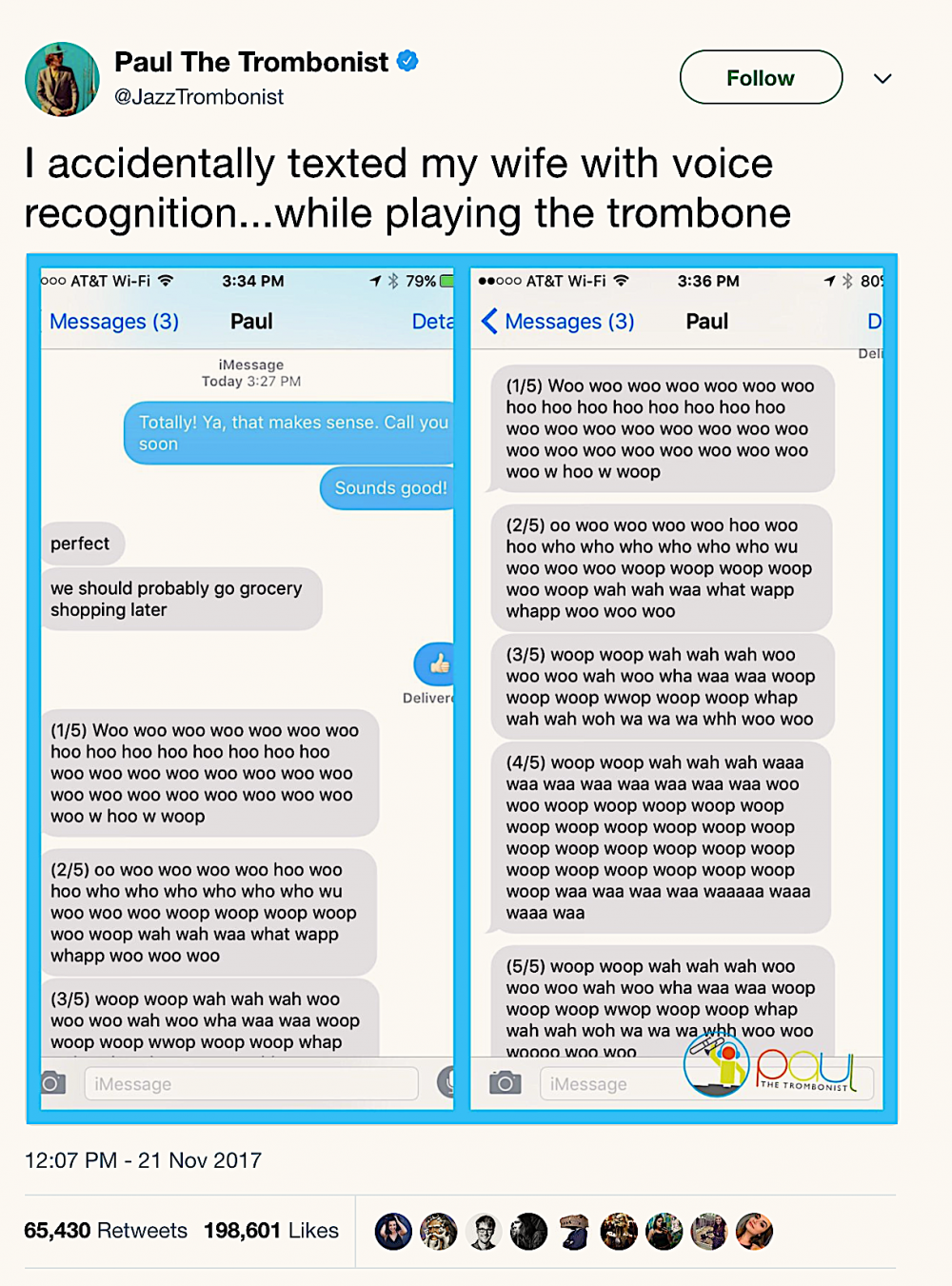
A couple of days ago, Paul Nowell (aka Paul the Trombonist) sent out this simple tweet, showing what happened when his iPhone’s voice recognition system happened to capture his trombone session and turned it into words. The tweet went viral. And now, 65,000 “Retweets” and 198,000 “Likes” later, you can see how the original recording session went down. Enjoy the demo below:
If you would like to support the mission of Open Culture, consider making a donation to our site. It’s hard to rely 100% on ads, and your contributions will help us continue providing the best free cultural and educational materials to learners everywhere. You can contribute through PayPal, Patreon, and Venmo (@openculture). Thanks!
Related Content:
Farmer Serenades Cows by Playing Lorde’s “Royals” on the Trombone
Read More...Watch At the Museum, MoMA’s 8‑Part Documentary on What it Takes to Run a World-Class Museum
If you’ve ever visited the Museum of Modern Art — and probably even if you haven’t — you’ll have a sense that the place doesn’t exactly run itself. As much or even more so than other museums, MoMA keeps the behind-the-scenes operations behind the scenes, presenting visitors with coherent art experiences that seem to have materialized whole. But that very purity of presentation itself stokes our curiosity: No, really, how do they do it? Now, MoMA has offered us a chance to see for ourselves through a new series of short documentaries called At the Museum, a look at and a listen to the nuts and bolts of one of America’s mostly highly regarded art institutions.
The series, which will run to eight episodes total, has released four thus far. In “Shipping & Receiving,” some of the museum’s staff prepare 200 works of art in its collection to ship to Paris for a special exhibition at the Louis Vuitton Foundation while others get new shows installed at MoMA itself.
In “The Making of Max Ernst,” a couple of curators design a show of work by that surrealist painter-sculptor-poet. In “Pressing Matters,” the opening of both the Ernst exhibition, “Beyond Painting,” and “Louise Bourgeois: An Unfolding Portrait” fast approach, but several important decisions remain to be made as well as works to be installed. In “Art Speaks,” MoMA staff and visitors take a step back and contemplate the purpose of modern art itself.
At the Museum could have assumed a highly traditional form, stopping methodically to witness the daily labors of everyone from MoMA’s directors to curators to installers to security guards as narration earnestly explains to us their place in the art ecosystem. From the very first episode, however, the series takes a different and much more compelling tack, providing an uncommented-upon series of fly-on-the-wall views of MoMA people at work, eavesdropping on their conversations, and occasionally weaving in their reflections spoken directly to the filmmakers. But just as the experience of MoMA changes with each new exhibition, so does the form of At the Museum with each new episode, one of which will continue appearing every Friday until December 15th. Watch them all (here), and you’ll never look at MoMA, or indeed any other museum, in quite the same way.
At the Museum will be added to our collection of Free Documentaries, a subset of our collection, 4,000+ Free Movies Online: Great Classics, Indies, Noir, Westerns, Documentaries & More
Related Content:
Browse Every Art Exhibition Held at MoMA Since 1929 with the New “MoMA Exhibition Spelunker”
The Museum of Modern Art (MoMA) Puts Online 75,000 Works of Modern Art
The Metropolitan Museum of Art Puts 400,000 High-Res Images Online & Makes Them Free to Use
Kids Record Audio Tours of NY’s Museum of Modern Art (with Some Silly Results)
Museum of Modern Art (MoMA) Launches Free Course on Looking at Photographs as Art
Free: The Metropolitan Museum of Art and the Guggenheim Offer 474 Free Art Books Online
Based in Seoul, Colin Marshall writes and broadcasts on cities and culture. His projects include the book The Stateless City: a Walk through 21st-Century Los Angeles and the video series The City in Cinema. Follow him on Twitter at @colinmarshall or on Facebook.
Read More...Watch the Illustrated Version of “Alice’s Restaurant,” Arlo Guthrie’s Thanksgiving Counterculture Classic
Alice’s Restaurant. It’s now a Thanksgiving classic, and something of a tradition around here. Recorded in 1967, the 18+ minute counterculture song recounts Arlo Guthrie’s real encounter with the law, starting on Thanksgiving Day 1965. As the long song unfolds, we hear all about how a hippie-bating police officer, by the name of William “Obie” Obanhein, arrested Arlo for littering. (Cultural footnote: Obie previously posed for several Norman Rockwell paintings, including the well-known painting, “The Runaway,” that graced a 1958 cover of The Saturday Evening Post.) In fairly short order, Arlo pleads guilty to a misdemeanor charge, pays a $25 fine, and cleans up the thrash. But the story isn’t over. Not by a long shot. Later, when Arlo (son of Woody Guthrie) gets called up for the draft, the petty crime ironically becomes a basis for disqualifying him from military service in the Vietnam War. Guthrie recounts this with some bitterness as the song builds into a satirical protest against the war: “I’m sittin’ here on the Group W bench ’cause you want to know if I’m moral enough to join the Army, burn women, kids, houses and villages after bein’ a litterbug.” And then we’re back to the cheery chorus again: “You can get anything you want, at Alice’s Restaurant.”
We have featured Guthrie’s classic during past years. But, for this Thanksgiving, we give you the illustrated version. Happy Thanksgiving to everyone who plans to celebrate the holiday today.
If you would like to support the mission of Open Culture, consider making a donation to our site. It’s hard to rely 100% on ads, and your contributions will help us continue providing the best free cultural and educational materials to learners everywhere. You can contribute through PayPal, Patreon, and Venmo (@openculture). Thanks!
Related Content:
Bob Dylan’s Thanksgiving Radio Show: A Playlist of 18 Delectable Songs
William S. Burroughs Reads His Sarcastic “Thanksgiving Prayer” in a 1988 Film By Gus Van Sant
Marilyn Monroe’s Handwritten Turkey-and-Stuffing Recipe
William Shatner Raps About How to Not Kill Yourself Deep Frying a Turkey
F. Scott Fitzgerald’s 13 Tips for What to Do with Your Leftover Thanksgiving Turkey
Read More...Watch Classical Music Get Perfectly Visualized as an Emotional Roller Coaster Ride
When the Zurich Chamber Orchestra aka the Zürcher Kammerorchester wanted to promote its new season in 2012 it commissioned studio Virtual Republic to think about listening to a symphony as a ride, or more exactly an emotional rollercoaster. And it returned with this brief interpretation of the first violin score for the fourth movement of Ferdinand Ries’ Second Symphony.
It might not be as easy to follow as the Music Animation Machine we posted about last week, but the building crescendo of the violin’s line makes for a lovely ascent, but once over the peak, the furious drop is all vertiginous runs until its sudden stop.
Or as Virtual Republic described their own work:
The notes and bars were exactly synchronized with the progression in the animation so that the typical movements of a rollercoaster ride match the dramatic composition of the music.
The production company’s Vimeo page shows a lot of domestic product commercial CGI work, from dishwashers to paint, so the chance to jump on something a bit more artistic must have been a relief.
Watch a Making-of video below…
Related Content:
Watch “Geometry of Circles,” the Abstract Sesame Street Animation Scored by Philip Glass (1979)
Read More...Net Neutrality Explained and Defended in a Doodle-Filled Video by Vi Hart: The Time to Save the Open Web is Now
By the end of December, net neutrality may be a thing of the past. We’ll pay the price. You’ll pay the price. Comcast, Verizon and AT&T will make out like bandits.
If you need a quick reminder of what net neutrality is, what benefits it brings and what you stand to lose, watch Vi Hart’s 11-minute explainer above. It lays things out quite well. Then, once you have a handle on things, write or call Congress now and make a last stand for the open web.
If you would like to support the mission of Open Culture, consider making a donation to our site. It’s hard to rely 100% on ads, and your contributions will help us continue providing the best free cultural and educational materials to learners everywhere. You can contribute through PayPal, Patreon, and Venmo (@openculture). Thanks!
Read More...The 1991 Tokyo Museum Exhibition That Was Only Accessible by Telephone, Fax & Modem: Features Works by Laurie Anderson, John Cage, William S. Burroughs, J.G. Ballard & Merce Cunningham
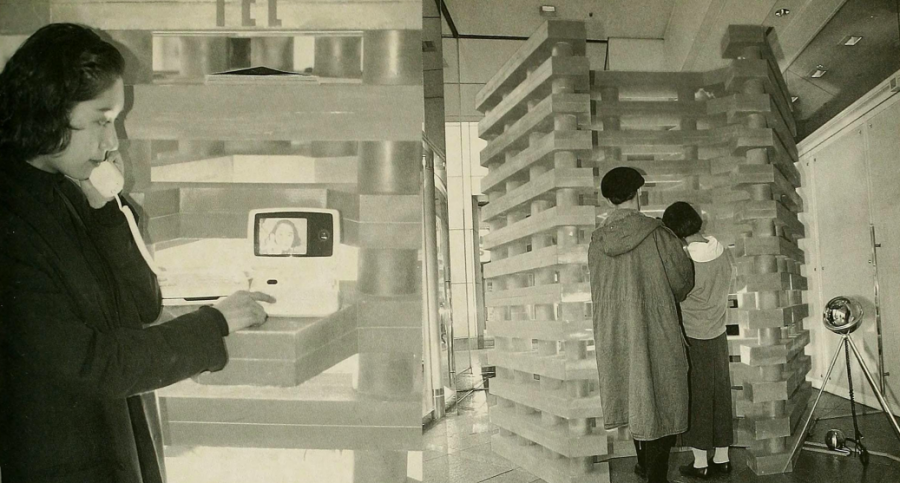
The deeper we get into the 21st century, the more energy and resources museums put into digitizing their offerings and making them available, free and worldwide, as virtual experiences on the internet. But what form would a virtual museum have taken before the internet as we know it today? Japanese telecommunications giant NTT (best known today in the form of the cellphone service provider NTT DoCoMo) developed one answer to that question in 1991: The Museum Inside the Telephone Network, an elaborate art exhibit accessible nowhere in the physical world but everywhere in Japan by telephone, fax, and even — in a highly limited, pre-World-Wide-Web fashion — computer modem.
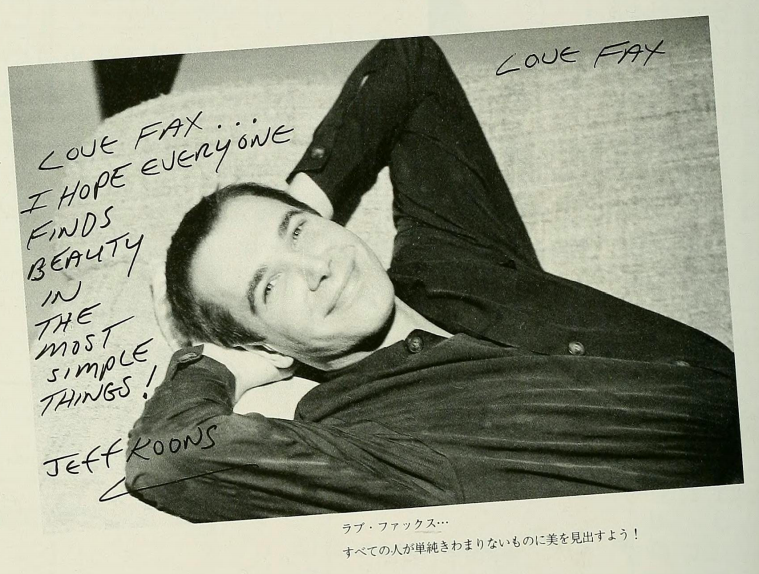
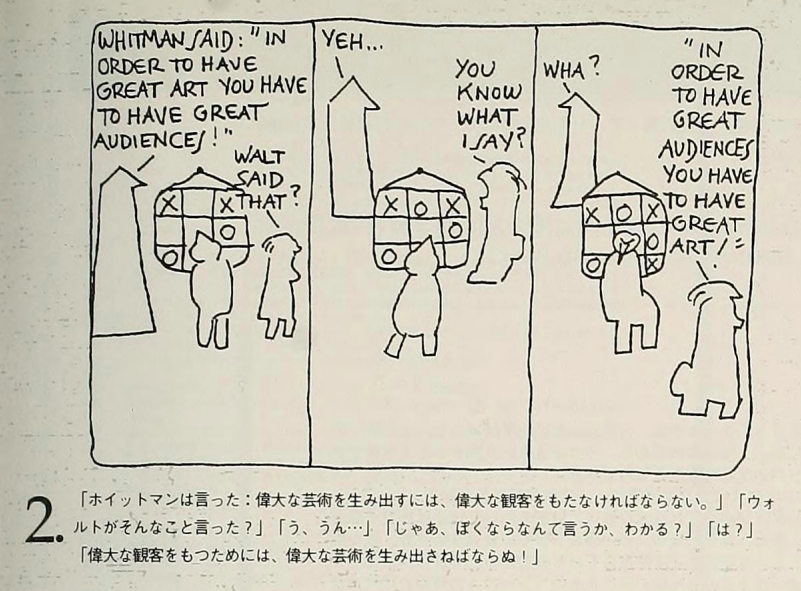
“The works and messages from almost 100 artists, writers, and cultural figures were available through five channels,” says Monoskop, where you can download The Museum Inside the Telephone Network’s catalog (also available in high resolution). “The works in ‘Voice & sound channel’ such as talks and readings on the theme of communication could be listened to by telephone. The ‘Interactive channel’ offered participants to create musical tunes by pushing buttons on a telephone. Works of art, novels, comics and essays could be received at home through ‘Fax channel.’ The ‘Live channel’ offered artists’ live performances and telephone dialogues between invited intellectuals to be heard by telephone. Additionally, computer graphics works could be accessed by modem and downloaded to one’s personal computer screen for viewing.”
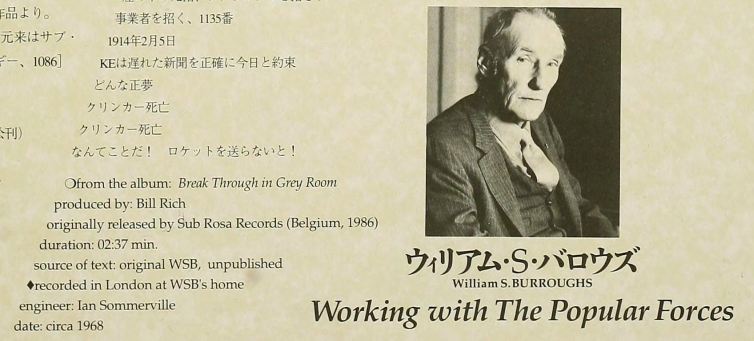
“We need to recognize honestly that there were numerous problems with The Museum Inside the Telephone Network,” writes curator and critic Asada Akira in the catalog’s introduction. “Neither the preparation time nor the means for carrying it out was sufficient. Thus there were not a few creative artists whose participation would have been a great asset to the project, but whom we were forced to do without.” Yet its list of contributors, which still reads like a Who’s-Who of the avant-garde and otherwise adventurous creators of the day, includes architects like Isozaki Arata and Renzo Piano, musicians like Laurie Anderson and Sakamoto Ryuichi, directors like Kurosawa Kiyoshi and Derek Jarman, writers like William S. Burroughs and J.G. Ballard, composers like John Cage and Philip Glass, choreographers like William Forsythe, Merce Cunningham, and visual artists like Yokoo Tadanori and Jeff Koons.
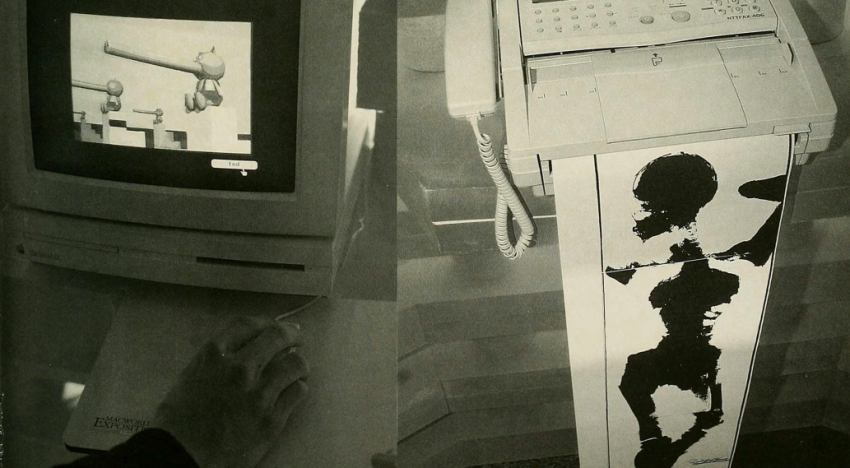
The Museum Inside the Telephone Network launched as the first venture of NTT’s InterCommunication Center (ICC), a “21st-century museum that will provide interface between science and technology and art and culture in the coming electronic age,” as Asada described it in 1991. Having recently celebrated its 20th year open in Tokyo’s Opera City Tower, the ICC continues to put on a variety of non-virtual exhibitions very much in the spirit of the original, and involving some of the very same artists as well (as of this writing, they’re readying a music installation co-created by Sakamoto). But offline or on, any union of art and technology is only as interesting as the spirit motivating it, and the creators of such projects would do well to keep in mind the words of The Museum Inside the Telephone Network contributor Kondou Kouji: “I hope that people will think of this as the experience of accidentally drifting into a telephone network, wherein awaits a vast world of pleasure and fun.”
Related Content:
Take a Virtual Tour of the 1913 Exhibition That Introduced Avant-Garde Art to America
Take a Virtual Reality Tour of the World’s Stolen Art
Based in Seoul, Colin Marshall writes and broadcasts on cities and culture. His projects include the book The Stateless City: a Walk through 21st-Century Los Angeles and the video series The City in Cinema. Follow him on Twitter at @colinmarshall or on Facebook.
Read More...A Digital Archive of 1,800+ Children’s Books from UCLA
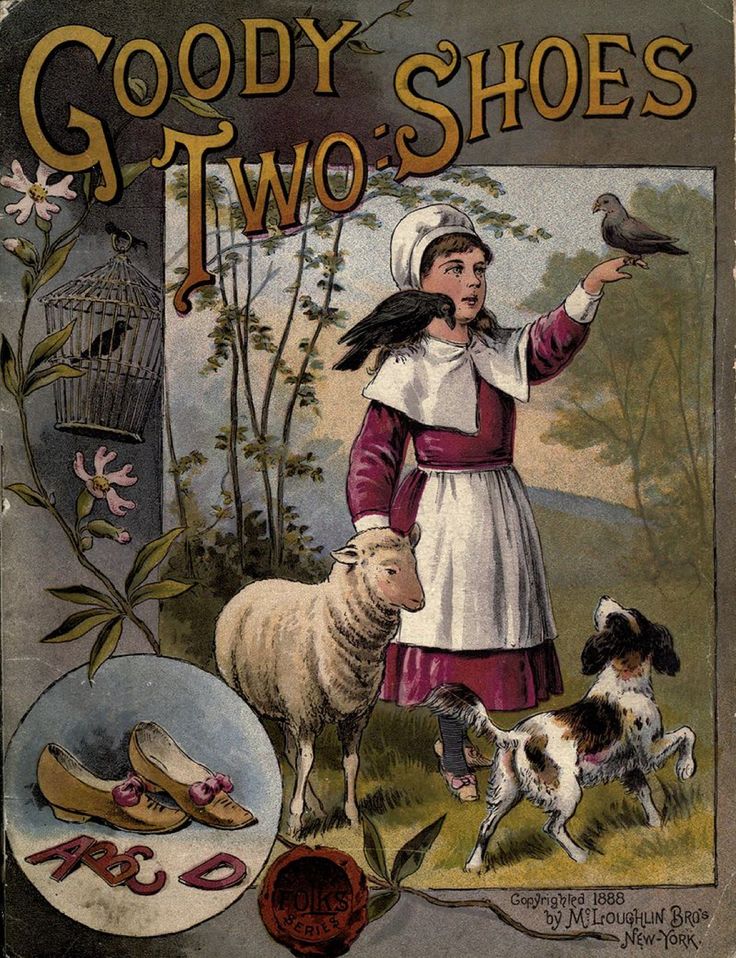
In the early 18th century, the novel was seen as a frivolous and trivial form at best, a morally corrupting one at worst. Given that the primary readers of novels were women, the belief smacks of patriarchal condescension and a kind of thought control. Fiction is a place where readers can imaginatively live out fantasies and tragedies through the eyes of an imagined other. Respectable middle-class women were expected instead to read conduct manuals and devotionals.
English novelist Samuel Richardson sought to bring respectability to his art in the form of Pamela in 1740, a novel which began as a conduct manual and whose subtitle rather bluntly states the moral of the story: “Virtue Rewarded.”
This moralizing expressed itself in another literary form as well. Children’s books, such as there were, also tended toward the moralistic and didactic, in attempts to steer their readers away from the dangers of what was then called “enthusiasm.”
“Prior to the mid-eighteenth century,” notes the UCLA Children’s Book Collection—a digital repository of over 1800 children’s books dating from 1728 to 1999—“books were rarely created specifically for children, and children’s reading was generally confined to literature intended for their education and moral edification rather than for their amusement. Religious works, grammar books, and ‘courtesy books’ (which offered instruction on proper behavior) were virtually the only early books directed at children.” But a change was in the making in the middle of the century.
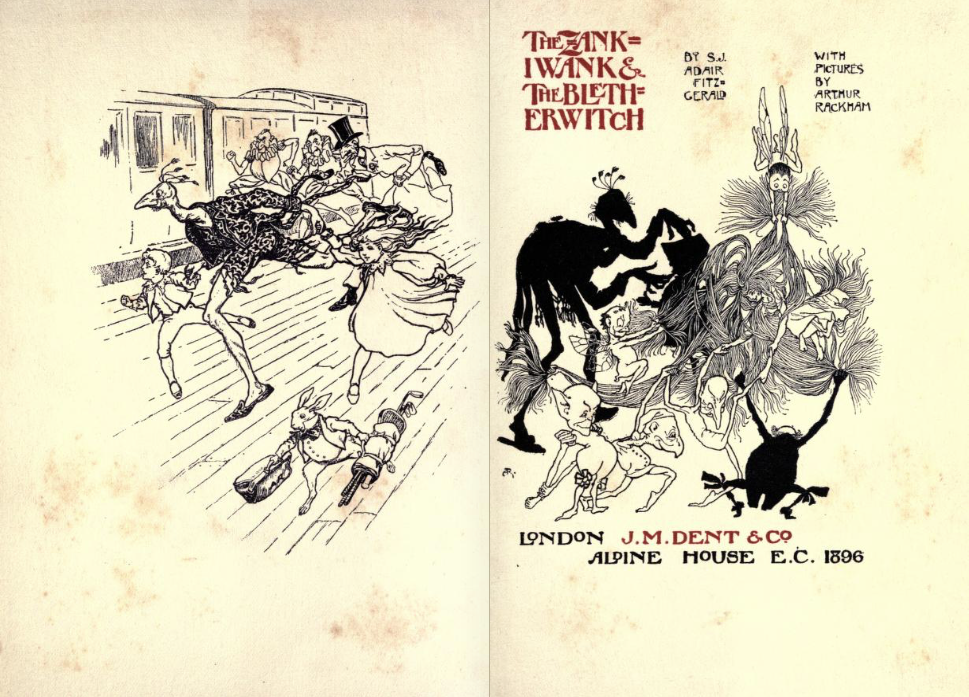
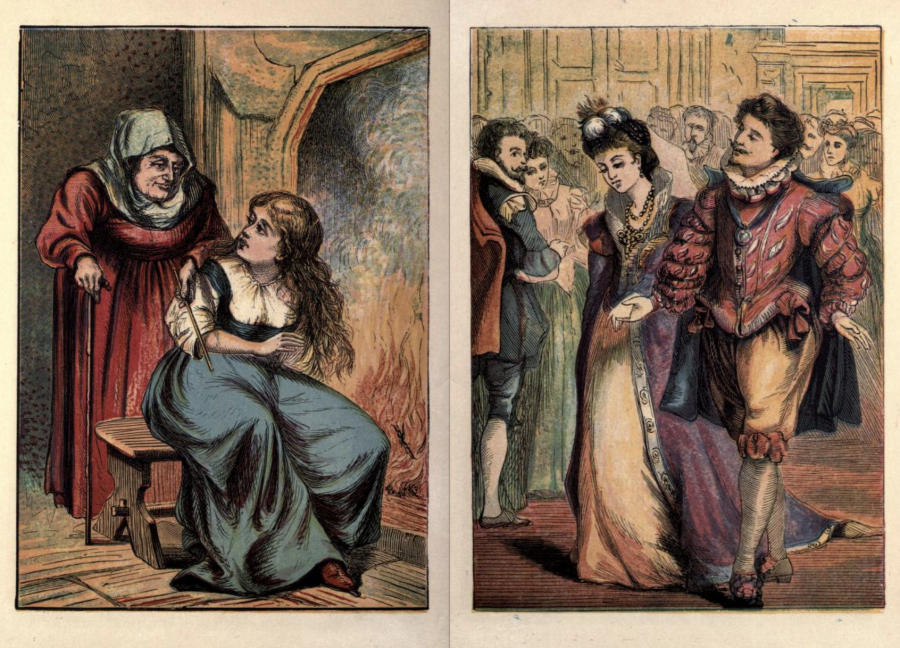
Pamela attracted a ribald, even pornographic, response—most notably in Henry Fielding’s satire An Apology for the Life of Mrs. Shamela Andrews and the Marquis de Sade’s Justine Meanwhile, the world of children’s literature also underwent a radical shift. “The notion of pleasure in learning was becoming more widely accepted.” Illustrations, previously “consisting of small woodcut vignettes,” slowly began to move to the fore, and “innovations in typography and printing allowed greater freedom in reproducing art.”
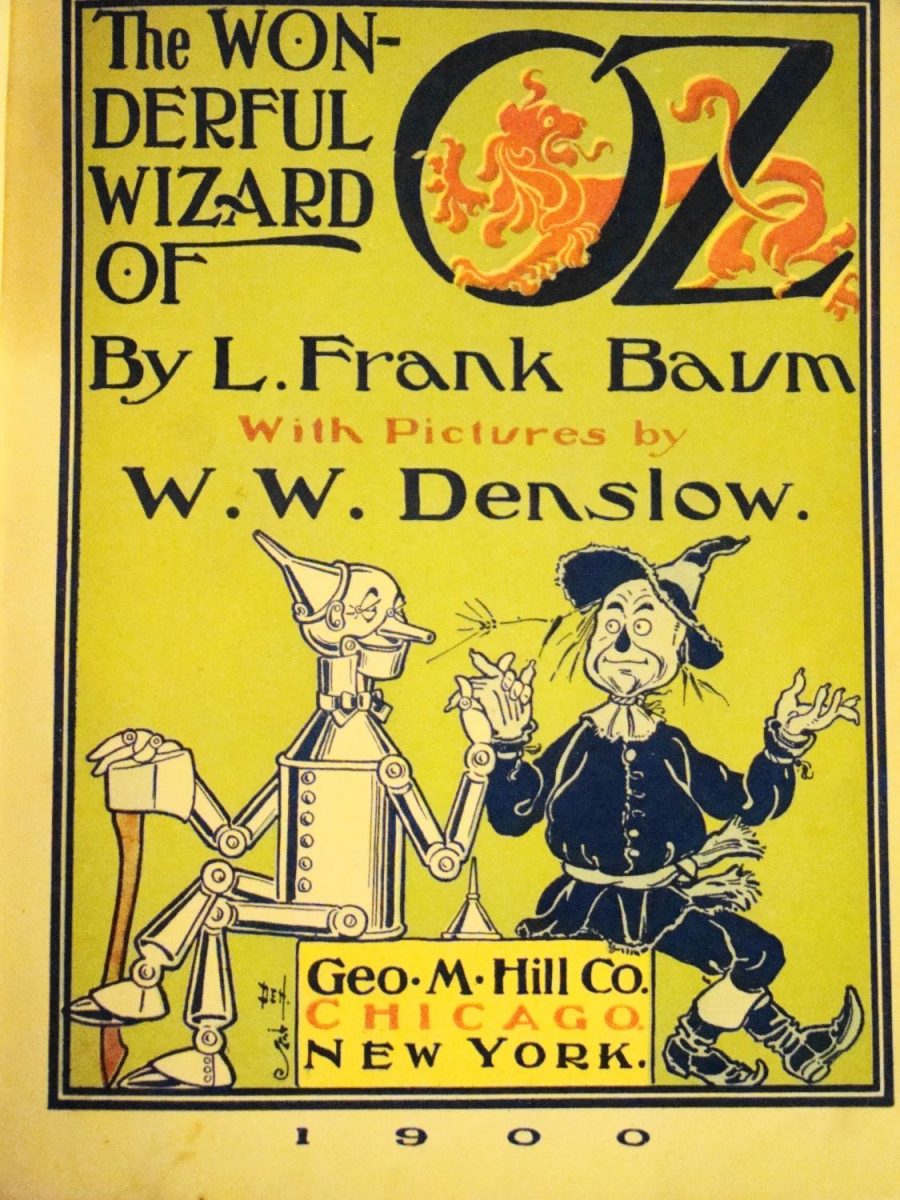
That’s not to say that the didactic attitude was dispelled—we see codes of conduct and overt religious themes embedded in children’s literature throughout the 19th century. But as we pointed out in a post on another children’s book archive from the University of Florida, the more staid and traditional books increasingly competed with adventure stories, works of fantasy, and what we call today Young Adult literature like that of Mark Twain and Louisa May Alcott. You can see this tension in the UCLA collection, between pleasure and duty, leisure and work, and education as moral and social training and as a means of achieving personal freedom.
Of the adult literary imagination of the time, Leo Bersani writes in A Future for Astyanax that “the confrontation in nineteenth-century works between a structured, socially viable and verbally analyzable self and the wish to shatter psychic and social structures produces considerable stress and conflict.” I think we can see a similar conflict, expressed much more playfully, in books for children of the past two hundred years or so. Enter the UCLA collection, which includes not only historic children’s books but present-day exhibit catalogs and more, here.
Related Content:
Enter an Archive of 6,000 Historical Children’s Books, All Digitized and Free to Read Online
The First Children’s Picture Book, 1658’s Orbis Sensualium Pictus
The Anti-Slavery Alphabet: 1846 Book Teaches Kids the ABCs of Slavery’s Evils
Josh Jones is a writer and musician based in Durham, NC. Follow him at @jdmagness
Read More...1934 Map Resizes the World to Show Which Country Drinks the Most Tea
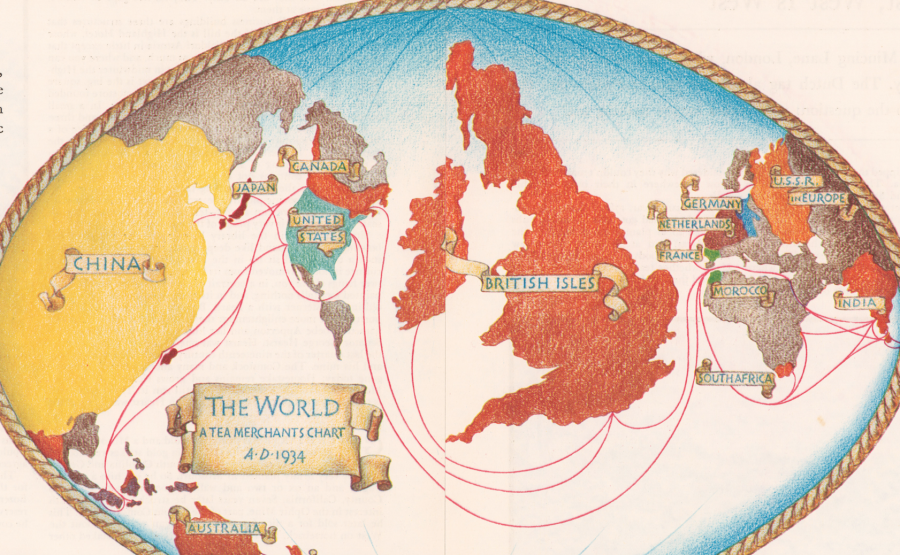
Not a day goes by that I don’t use Google Maps for something or other, whether it’s basic navigation, researching an address, or finding a dry cleaner. Though some of us might resent the dominance such mapping technology has over our daily interactions, there’s no denying its endless utility. But maps can be so much more than useful tools for getting around—they are works of art, thought experiments, imaginative flights of fancy, and data visualization tools, to name but a few of their overlapping functions. For the imperialists of previous ages, maps displayed a mastery of the world, whether cataloguing travel times from London to everywhere else on the globe, or—as in the example we have here—resizing countries according to how much tea their people drank.
But this is not a map we should look to for accuracy. Like many such cartographic data charts, it promotes a particular agenda. “George Orwell once wrote that tea was one of the mainstays of civilization,” notes Jack Goodman at Atlas Obscura. “Tea, asserted Orwell, has the power to make one feel braver, wiser, and more optimistic. The man spoke for a nation.” (And he spoke to a nation in a 1946 Evening Standard essay, “A Nice Cup of Tea.”) From the map above, titled “The Tea is Drunk” and published by Fortune Magazine in 1934, we learn, writes Goodman, that “Britain consumed 485,000 pounds of tea per year. That’s one hundred billion cups of tea, or around six cups a day for each person.” We might note however, that “the population of China was then nine times bigger than that of the U.K., and they drank roughly twice as much tea as the Brits did.” Why isn’t China at the center of the map? “The author made a tenuous point about the cultural differences between the two: the Chinese drank tea as a necessity, the British by choice.”
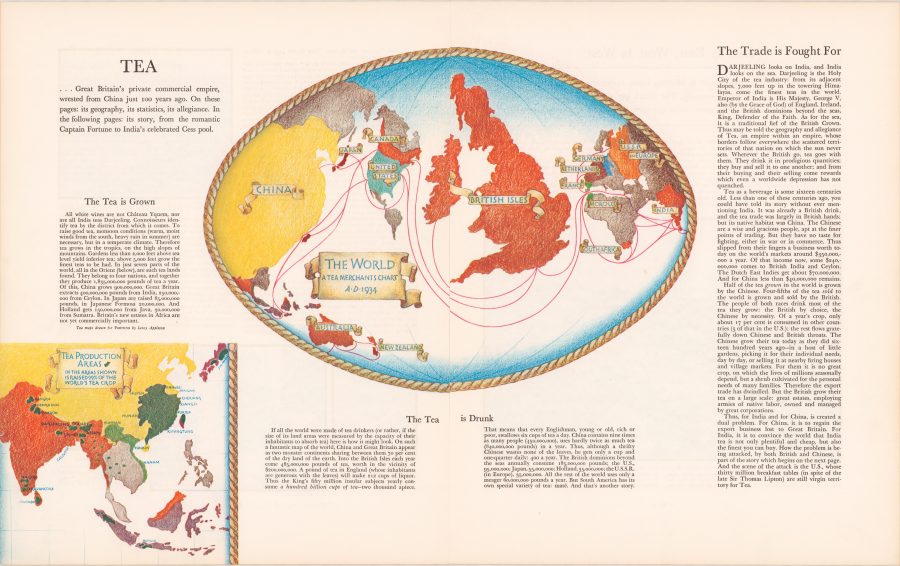
Cornell University library’s description of the map is more forthright: “While China actually consumed twice as much tea as Britain, its position at the edge of the map assured that the focus will be on the British Isles.” That focus is commercial in nature, meant to encourage and inform British tea merchants for whom tea was more than a beverage; it was one of the nation’s pre-eminent commodities, though most of what was sold as a national product was Indian tea grown in India. Yet the map brims with pride in the British tea trade. “Thus may be told the geography and allegiance of Tea,” its author proclaims, “an empire within an empire, whose borders follow everywhere the scattered territories of that nation on which the sun never sets.” A little over a decade later, India won its independence, and the empire began to fall apart. But the British never lost their taste for or their national pride in tea. View and download a high-resolution scan of the “Tea is Drunk” map at the Cornell Library site.
via Atlas Obscura
Related Content:
George Orwell Explains How to Make a Proper Cup of Tea
10 Golden Rules for Making the Perfect Cup of Tea (1941)
Josh Jones is a writer and musician based in Durham, NC. Follow him at @jdmagness
Read More...Expensive Wine Is for Dupes: Scientific Study Finds No Strong Correlation Between Quality & Price
If wine is on your Thanksgiving menu tomorrow, then keep this scientific finding in mind: According to a 2008 study published in the Journal of Wine Economics, the quality of wine doesn’t generally correlate with its price. At least not for most people. Written by researchers from Yale, UC Davis and the Stockholm School of Economics, the abstract for the study states:
Individuals who are unaware of the price do not derive more enjoyment from more expensive wine. In a sample of more than 6,000 blind tastings, we find that the correlation between price and overall rating is small and negative, suggesting that individuals on average enjoy more expensive wines slightly less. For individuals with wine training, however, we find indications of a non-negative relationship between price and enjoyment. Our results are robust to the inclusion of individual fixed effects, and are not driven by outliers: when omitting the top and bottom deciles of the price distribution, our qualitative results are strengthened, and the statistical significance is improved further. These findings suggest that non-expert wine consumers should not anticipate greater enjoyment of the intrinsic qualities of a wine simply because it is expensive or is appreciated by experts.
You can read online the complete study, “Do More Expensive Wines Taste Better? Evidence from a Large Sample of Blind Tastings.” But if you’re looking for something that puts the science into more quotidien English and makes the larger case for keeping your hard-earned cash, watch the video from Vox above.
Related Content:
The Oldest Unopened Bottle of Wine in the World (Circa 350 AD)
Vintage Wine in our Collection of 1100 Free Online Courses
The Corkscrew: The 700-Pound Mechanical Sculpture That Opens a Wine Bottle & Pours the Wine
Read More...Watch “Alike,” a Poignant Short Animated Film About the Enduring Conflict Between Creativity and Conformity
From Barcelona comes “Alike,” a short animated film by Daniel Martínez Lara and Rafa Cano Méndez. Made with Blender, an open-source 3D rendering program, “Alike” has won a heap of awards and clocked an impressive 10 million views on Youtube and Vimeo. A labor of love made over four years, the film revolves around this question: “In a busy life, Copi is a father who tries to teach the right way to his son, Paste. But … What is the correct path?” To find the answer, they have to let a drama play out. Which will prevail? Creativity? Or conformity? It’s an internal conflict we’re all familiar with.
Watch the film when you’re not in a rush, when you have seven unburdened minutes to take it in. “Alike” will be added to our list of Free Animations, a subset of our collection, 4,000+ Free Movies Online: Great Classics, Indies, Noir, Westerns, Documentaries & More.
If you would like to support the mission of Open Culture, consider making a donation to our site. It’s hard to rely 100% on ads, and your contributions will help us continue providing the best free cultural and educational materials to learners everywhere. You can contribute through PayPal, Patreon, and Venmo (@openculture). Thanks!
Related Content:
The Employment: A Prize-Winning Animation About Why We’re So Disenchanted with Work Today
Bertrand Russell & Buckminster Fuller on Why We Should Work Less, and Live & Learn More
Charles Bukowski Rails Against 9‑to‑5 Jobs in a Brutally Honest Letter (1986)
William Faulkner Resigns From His Post Office Job With a Spectacular Letter (1924)
Read More...Support Us
We're hoping to rely on loyal readers, rather than erratic ads. Please click the Donate button and support Open Culture. You can use Paypal, Venmo, Patreon, even Crypto! We thank you!

About Us

Open Culture scours the web for the best educational media. We find the free courses and audio books you need, the language lessons & educational videos you want, and plenty of enlightenment in between.
Advertise With Us

FREE UPDATES!
GET OUR DAILY EMAIL
Get the best cultural and educational resources on the web curated for you in a daily email. We never spam. Unsubscribe at any time.
FOLLOW ON SOCIAL MEDIA

Open Culture editor Dan Colman scours the web for the best educational media. He finds the free courses and audio books you need, the language lessons & movies you want, and plenty of enlightenment in between.
Advertise With Us


