Watch Author Chuck Palahniuk Read Fight Club 4 Kids
The first rule of Horsing Around Club is: You do not talk about Horsing Around Club. ― Chuck Palahniuk, Fight Club for Kids
Retooling a popular show, film, or comic to feature younger versions of the characters, their personalities and relationships virtually unchanged, can be a serious, if cynical source of income for the original creators.
The Muppets, Archie, Sherlock Holmes, and James Bond have all given birth to spin-off babies.
So why not author Chuck Palahniuk?
Perhaps because spin-off babies are designed to gently ensnare a new and younger audience, and Palahniuk, whose 2002 novel Lullaby hinged on a nursery rhyme that kills children in their cribs, is unlikely to file down the dark, twisted edges that have won him a cult following.
That said, his most recent title is formatted as a coloring book, with another due to drop later this fall.

The same spirit of mischief drives Fight Club for Kids, which mercifully will not be hitting the children’s section of your local bookstore in time for the upcoming holiday season (or ever).
Much like Tyler Durden, Palahniuk’s most infamous creation, this title is but a figment, existing only in the above video, where it is read by its putative author.
If you think Samuel L. Jackson’s narration of Go the F**k to Sleep—which can actually be purchased in book form—represents the height of adult readers running off the rails, you ain’t heard nothing yet:
The horseplay would go on until it was done
And everyone who did it would always have fun
Especially the Boy Who Had No Name
Who once just, like, beat this dude, who was actually Jared Leto in the movie, which was so fuckin’ cool and intense, and he’s just pummeling this guy and of course, being Jared Leto, he was essentially a model, but when our guy is done with him, he’s just this purple, bloated, chewed up bubblegum-looking motherfucker covered in blood, head to toe!
(The second rule of Horsing Around Club is: You DO NOT TALK ABOUT HORSING AROUND CLUB!)
Find more printable Chuck Palahniuk coloring pages here.
via Mashable
Related Content:
David Foster Wallace’s Famous Commencement Speech “This is Water” Visualized in a Short Film
Ayun Halliday is an author, illustrator, theater maker and Chief Primatologist of the East Village Inky zine. Follow her @AyunHalliday.
Read More...Dr. Jane Goodall Is Now Teaching an Online Course on Conservation, Animal Intelligence & Activism
FYI: If you sign up for a MasterClass course by clicking on the affiliate links in this post, Open Culture will receive a small fee that helps support our operation.
Back in June, we mentioned that the great primatologist and anthropologist Dr. Jane Goodall was gearing up to teach her first online course on environmental conservation, animal intelligence, and activism. Now, it seemed worth giving this quick update–Goodall’s course is ready to go. It features 29 lessons and costs $90. You can sign up and take the course through MasterClass here. (You can purchase an All-Access Annual Pass for every course in the MasterClass catalog for $180.)
Above watch a trailer that introduces the course. Below see her discuss the course on the Tonight Show with Jimmy Fallon.
Other courses currently offered by Masterclass include:
- Werner Herzog on Filmmaking
- David Mamet on Dramatic Writing
- Steve Martin on Comedy
- Aaron Sorkin on Screenwriting
Find more courses taught by star instructors here.
Note: MasterClass is one of our partners. So if you sign up for a course, it benefits not just you and MasterClass. It benefits Open Culture too. So consider it win-win-win.
If you would like to support the mission of Open Culture, consider making a donation to our site. It’s hard to rely 100% on ads, and your contributions will help us continue providing the best free cultural and educational materials to learners everywhere. You can contribute through PayPal, Patreon, and Venmo (@openculture). Thanks!
Read More...When Michel Foucault Tripped on Acid in Death Valley and Called It “The Greatest Experience of My Life” (1975)
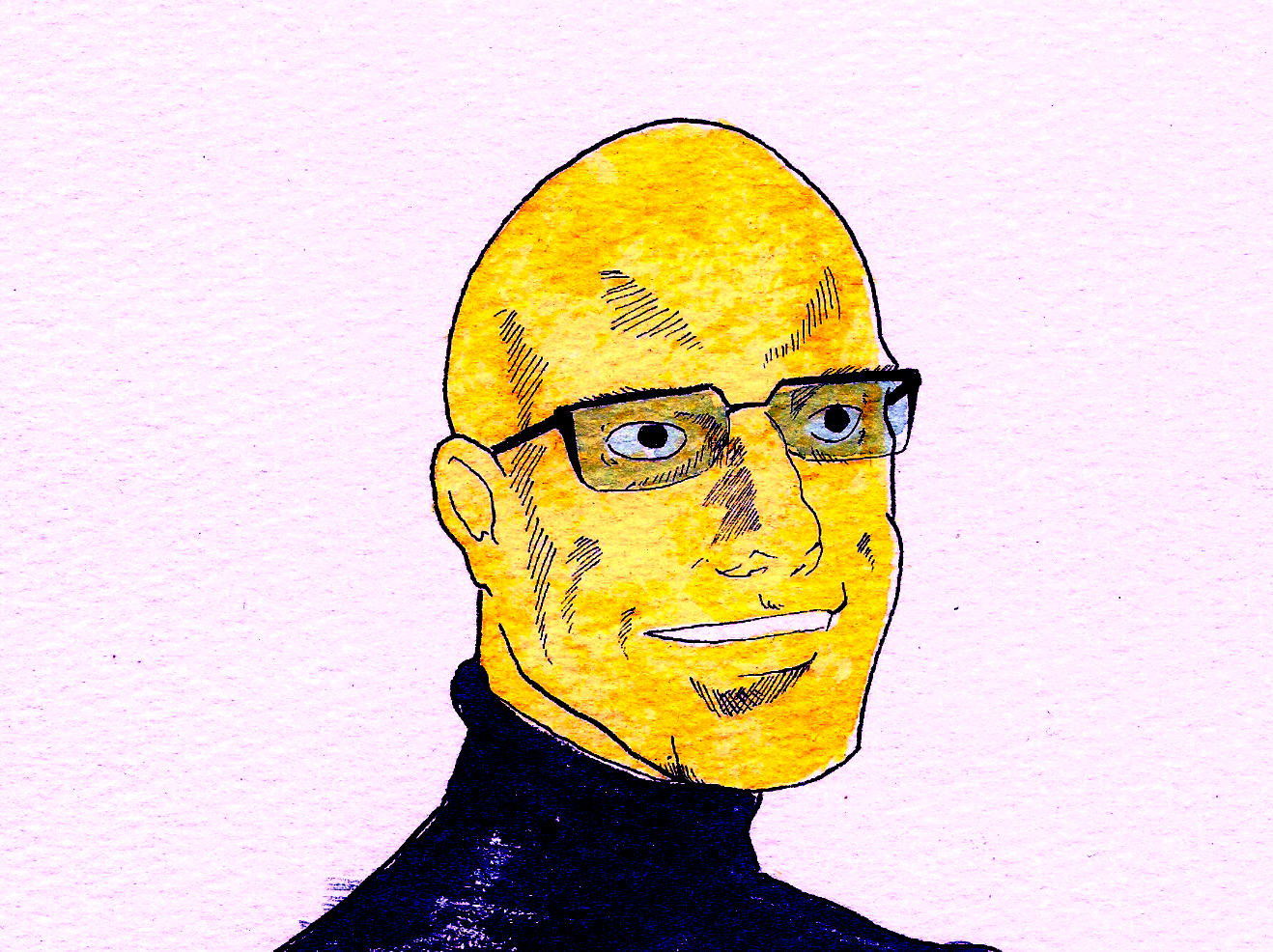
Image by Nemomain, via Wikimedia Commons
French theorist Michel Foucault rose to international prominence with his critical histories—or “archaeologies”—of scientific knowledge and technocratic power. His first book, Madness and Civilization, described the Enlightenment-era creation of insanity as a category set apart from reason, which enabled those labeled mad to be subjected to painful, invasive treatments and lose their freedom and agency during a period he called “the Great Confinement.”
A follow-up, The Birth of the Clinic, appeared in 1963, introducing the notion of the “medical gaze,” a cold, probing ideological instrument that dehumanizes patients and allows people to be made into objects of experimentation. Foucault tended to view the world through a particularly grim, claustrophobic, even paranoid lens, though one arguably warranted by the well-documented histories he unearthed and the contemporary technocratic police states they gave rise to.
But Foucault also insisted that in all relations of power, “there is necessarily the possibility of resistance.” His own forms of resistance tended toward political activism, adventurous sexual exploits, Zen meditation, and drugs. He grew pot on his balcony in Paris, did cocaine, smoked opium, and “deanatomized the localization of pleasure,” as he put it, with LSD. The experimentation constituted what he called a “limit experience” that transgressed the boundaries of a socially-imposed identity.
But in a strange irony, the first time Foucault dropped acid, he himself became the subject of an experiment conducted on him by one of his followers, Simeon Wade, an assistant professor of history at Claremont Graduate School. In 1975 Foucault gave a seminar at UC Berkeley, where he would later finish his career in the years before his death in 1984. While in California, he accepted an invitation from Wade and his partner Michael Stoneman to take a road trip to Death Valley. “I was performing an experiment,” Wade remembered in a recent interview on Boom California. “I wanted to see [how] one of the greatest minds in history would be affected by an experience he had never had before.”
We went to Zabriskie Point to see Venus appear. Michael placed speakers all around us, as no one else was there, and we listened to Elisabeth Schwarzkopf sing Richard Strauss’s, Four Last Songs. I saw tears in Foucault’s eyes. We went into one of the hollows and laid on our backs, like James Turrell’s volcano, and watched Venus come forth and the stars come out later. We stayed at Zabriskie Point for about ten hours.
The desert acid trip, Wade says, changed Foucault permanently, for the better. “Everything after this experience in 1975,” he says, “is the new Foucault, neo-Foucault…. Foucault from 1975 to 1984 was a new being.” The evidence seems clear enough. Foucault wrote Wade and Stoneman a few months later to tell them “it was the greatest experience of his life, and that it profoundly changed his life and his work…. He wrote us that he had thrown volumes two and three of his History of Sexuality into the fire and that he had to start over again.”
Foucault had succumbed to despair prior to his Death Valley trip, Wade says, contemplating in his 1966 The Order of Things “the death of humanity…. To the point of saying that the face of man has been effaced.” Afterward, he was “immediately” seized by a new energy and focus. The titles of those last two, rewritten, books “are emblematic of the impact this experience had on him: The Uses of Pleasure and The Care of the Self, with no mention of finitude.” Foucault biographer James Miller tells us in the documentary above (at 27:30) —Michel Foucault Beyond Good and Evil— that everyone he spoke to about Foucault had heard about Death Valley, since Foucault told anyone who would listen that it was “the most transformative experience in his life.”
There were some people, notes interviewer Heather Dundas, who believed that Wade’s experiment was unethical, that he had been “reckless with Foucault’s welfare.” To this challenge Wade replies, “Foucault was well aware of what was involved, and we were with him the entire time.” Asked whether he thought of the repercussions to his own career, however, he replies, “in retrospect, I should have.” Two years later, he left Claremont and could not find another full-time academic position. After obtaining a nursing license, he made a career as a nurse at the Los Angeles County Psychiatric Hospital and Ventura County Hospital, exactly the sort of institutions Foucault had found so threatening in his earlier work.
Wade also authored a 121-page account of the Death Valley trip, and in 1978 published Chez Foucault, a mimeographed fanzine introduction to the philosopher’s work, including an unpublished interview with Foucault. For his part, Foucault threw himself vigorously into the final phase of his career, in which he developed his concept of biopower, an ethical theory of self-care and a critical take on classical philosophical and religious themes about the nature of truth and subjectivity. He spent the last 9 years of his life pursuing the new pathways of thought that opened to him during those extraordinary ten hours under the hot sun and cool stars of the Death Valley desert.
You can read the complete interview with Wade at BoomCalifornia.com.
Related Content:
Michel Foucault: Free Lectures on Truth, Discourse & The Self (UC Berkeley, 1980–1983)
Watch a “Lost Interview” With Michel Foucault: Missing for 30 Years But Now Recovered
Josh Jones is a writer and musician based in Durham, NC. Follow him at @jdmagness
Read More...Enter a Digital Archive of 213,000+ Beautiful Japanese Woodblock Prints
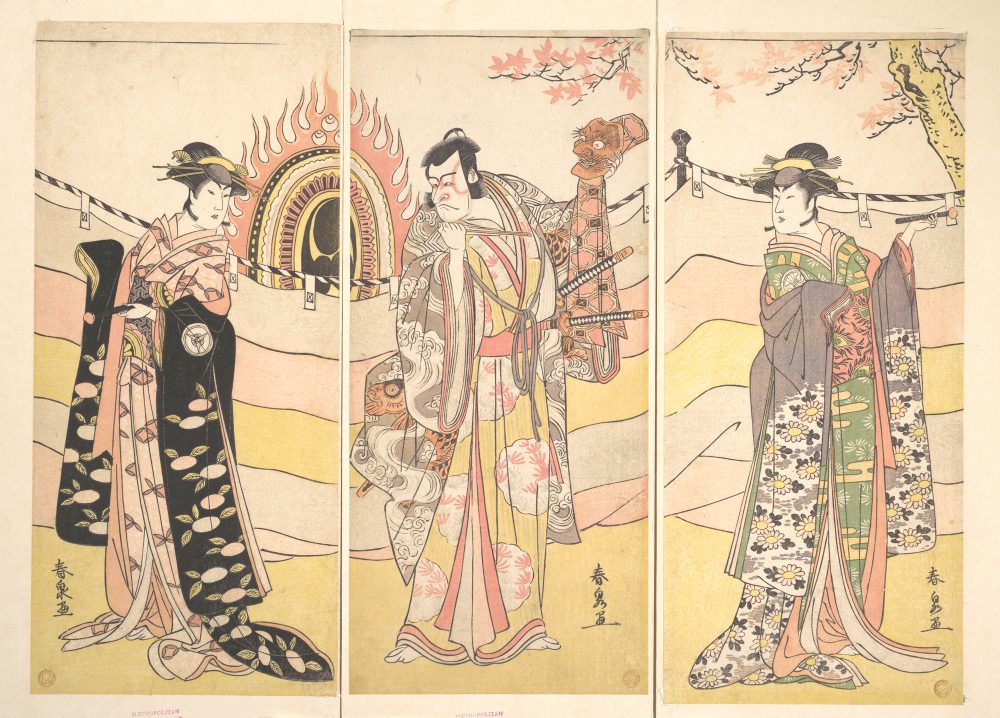
Most of us have now and again seen and appreciated Japanese woodblock prints, especially those in the tradition of ukiyo‑e, those “captivating images of seductive courtesans, exciting kabuki actors, and famous romantic vistas.” Those words come from the Metropolitan Museum of Art, whose essay on the art form describes how, “in the late seventeenth and early eighteenth century, woodblock prints depicting courtesans and actors were much sought after by tourists to Edo and came to be known as ‘Edo pictures.’ In 1765, new technology made possible the production of single-sheet prints in a range of colors,” which brought about “the golden age of printmaking.”
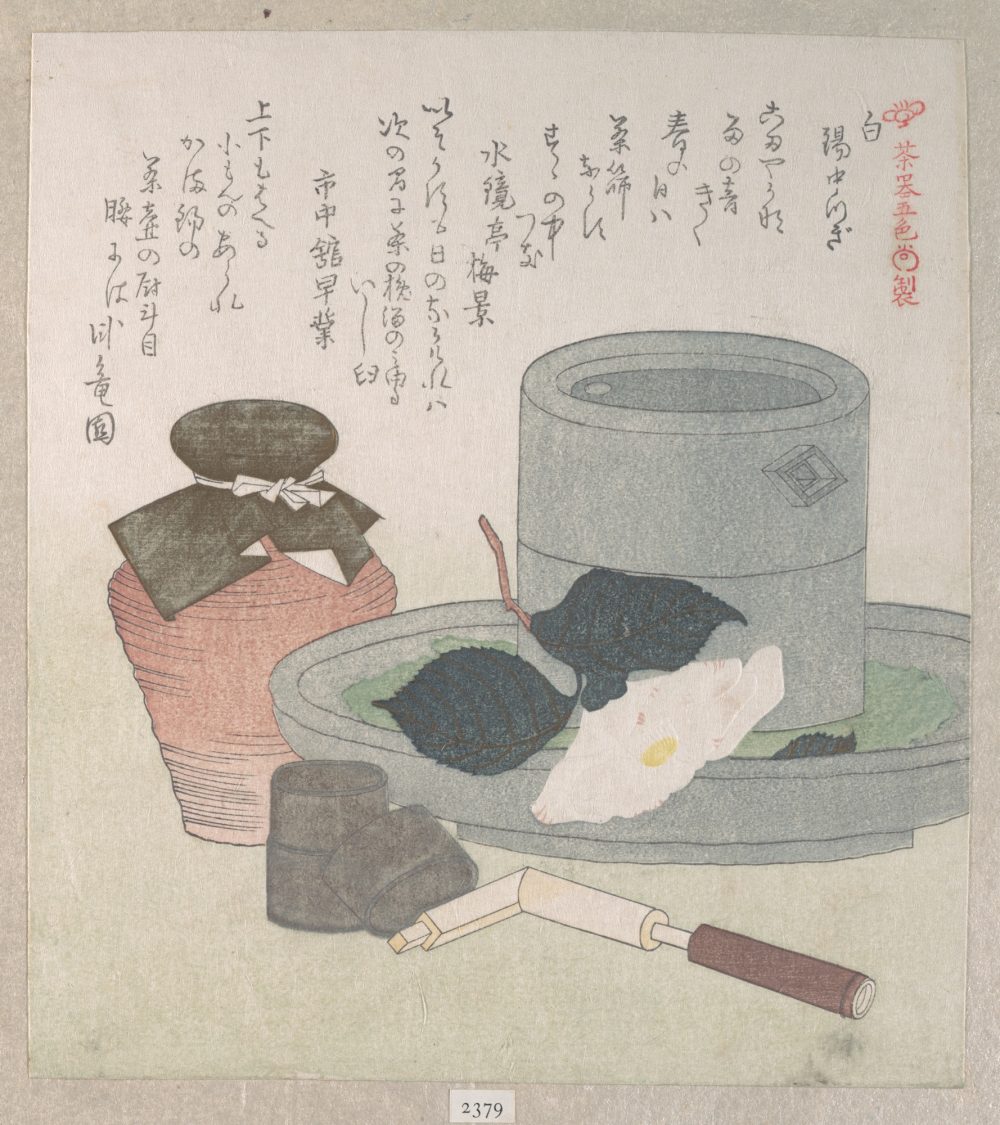
At that time, “the popularity of women and actors as subjects began to decline. During the early nineteenth century, Utagawa Hiroshige (1797–1858) and Katsushika Hokusai (1760–1849) brought the art of ukiyo‑e full circle, back to landscape views, often with a seasonal theme, that are among the masterpieces of world printmaking.”
Even if you’ve only seen a few Japanese woodblock prints, you’ve seen the work of Hiroshige and Hokusai, thousands of examples of which you can find in the vast Japanese woodblock database of Ukiyo‑e.org.
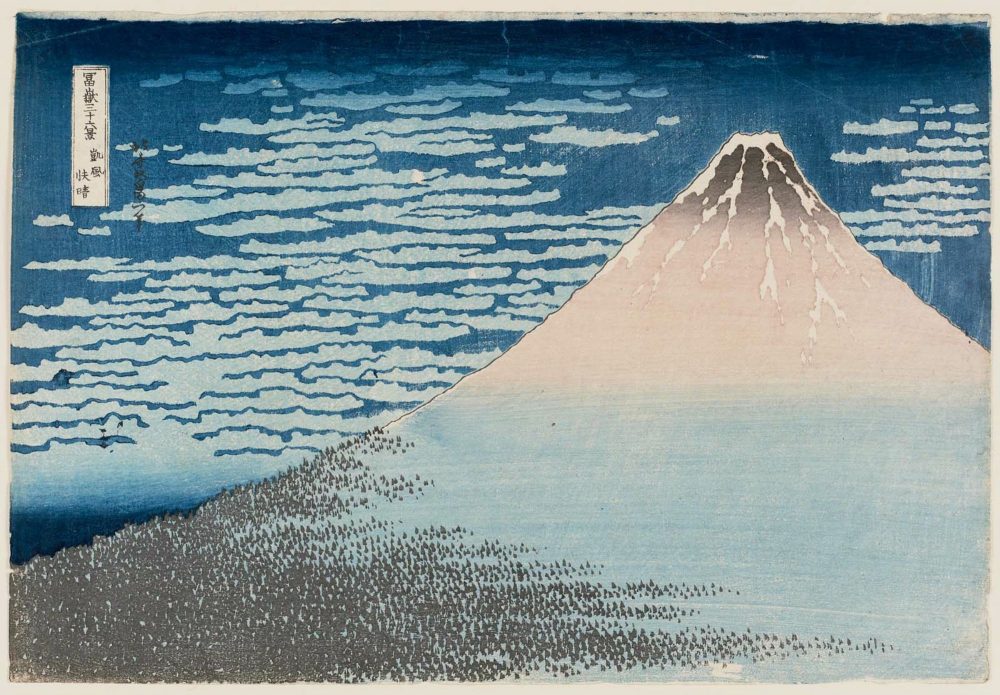
This English-Japanese bilingual site, a project of programmer and Khan Academy engineer John Resig, launched in 2012 and now boasts 213,000 prints from 24 museums, universities, libraries, auction houses, and dealers worldwide. You can search it by text or image (if you happen to have one of a print you’d like to identify), or you can browse by period and artist: not just the “golden age” of Hiroshige and Hokusai (1804 to 1868), but ukiyo-e’s early years (early-mid 1700s), the birth of full-color printing (1740s to 1780s), the popularization of woodblock printing (1804 to 1868), the Meiji period (1868 to 1912), the artist-centric Shin Hanga and Sosaku Hanga movements (1915 to 1940s), and even the modern and contemporary era (1950s to now).
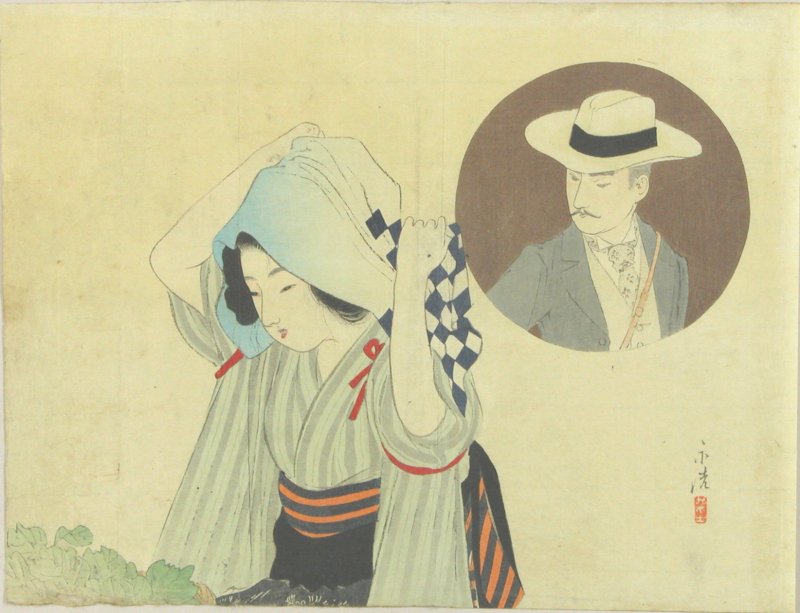
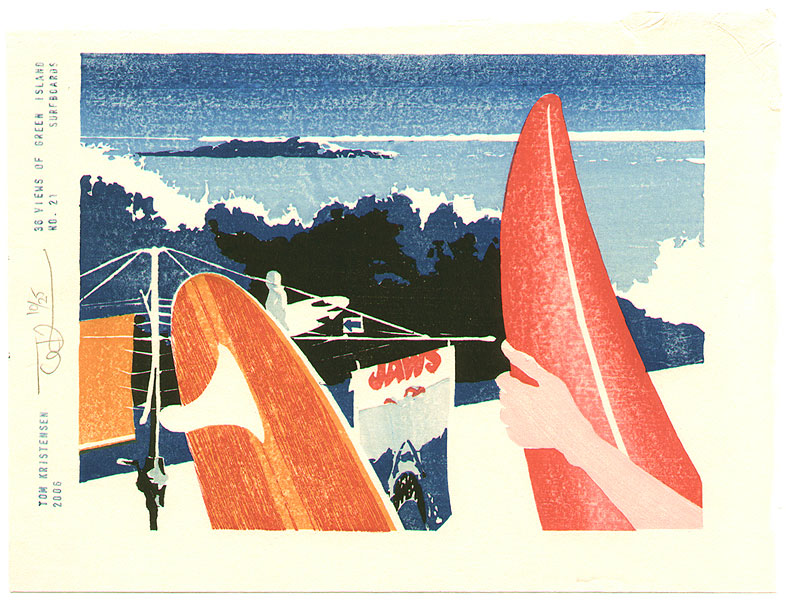
That last group includes woodblock prints of styles and subject matter one certainly wouldn’t expect from classic ukiyo‑e, though the works never go completely without connection to the tradition of previous masters. Some of these more recent practitioners, like Danish-German-Australian printmaker Tom Kristensen, have even gone so far as to not be Japanese. Kristensen, who “works in typically Japanese ‘sosaku hanga’ style: self-carved and self-printed with natural Japanese pigments on hand-made washi paper,” has produced works like the 36 Views of Green Island series, of which number 21 appears below. The surfboards may at first seem incongruous, but one imagines that Hiroshige and Hokusai, those two great appreciators of waves, might approve. Enter the digital archive here, and note that if you click on an image, and then click on it again, you can view it in a larger format.
Related Content:
Download 2,500 Beautiful Woodblock Prints and Drawings by Japanese Masters (1600–1915)
Download Hundreds of 19th-Century Japanese Woodblock Prints by Masters of the Tradition
Based in Seoul, Colin Marshall writes and broadcasts on cities and culture. He’s at work on the book The Stateless City: a Walk through 21st-Century Los Angeles, the video series The City in Cinema, the crowdfunded journalism project Where Is the City of the Future?, and the Los Angeles Review of Books’ Korea Blog. Follow him on Twitter at @colinmarshall or on Facebook.
Read More...Harry Dean Stanton (RIP) Reads Poems by Charles Bukowski
Variety is reporting tonight that Harry Dean Stanton has died in Los Angeles, at the age of 91. He’s best remembered, of course, for his roles in David Lynch’s Twin Peaks, HBO’s Big Love, Alex Cox’s Repo Man, and Wim Wender’s Paris, Texas. Over a 60 year career, Stanton made appearances in 116 films, 77 TV shows, and several music videos. He also lent his voice to an Alien video game and recorded poems by Charles Bukowski. Above and below, hear him read “Bluebird” and “Torched Out.” Both recordings come from the 2003 documentary, Bukowski: Born Into This. Back in 2012, Stanton headlined an L.A. tribute to the Los Angeles poet.
If you would like to support the mission of Open Culture, consider making a donation to our site. It’s hard to rely 100% on ads, and your contributions will help us continue providing the best free cultural and educational materials to learners everywhere. You can contribute through PayPal, Patreon, and Venmo (@openculture). Thanks!
Related Content:
1,000 Free Audio Books: Download Great Books for Free
Tom Waits Reads Two Charles Bukowski Poems, “The Laughing Heart” and “Nirvana”
Read More...Download Theft! A History of Music, a New Free Graphic Novel Exploring 2,000 Years of Musical Borrowing
From the team behind the 2006 fair use comic Bound by Law comes a new fair use comic, Theft! A History of Music. Created by James Boyle and Jennifer Jenkins, two law school profs from Duke University, Theft! A History of Music is “a graphic novel laying out a 2000-year long history of musical borrowing from Plato to rap.” The book’s blurb adds:
This comic lays out 2000 years of musical history. … Again and again there have been attempts to police music; to restrict borrowing and cultural cross-fertilization. But music builds on itself. To those who think that mash-ups and sampling started with YouTube or the DJ’s turntables, it might be shocking to find that musicians have been borrowing – extensively borrowing – from each other since music began. Then why try to stop that process? The reasons varied. Philosophy, religion, politics, race – again and again, race – and law. And because music affects us so deeply, those struggles were passionate ones. They still are.
The history in this book runs from Plato to Blurred Lines and beyond. You will read about the Holy Roman Empire’s attempts to standardize religious music using the first great musical technology (notation) and the inevitable backfire of that attempt. You will read about troubadours and church composers, swapping tunes (and remarkably profane lyrics), changing both religion and music in the process. You will see diatribes against jazz for corrupting musical culture, against rock and roll for breaching the color-line. You will learn about the lawsuits that, surprisingly, shaped rap. You will read the story of some of music’s iconoclasts – from Handel and Beethoven to Robert Johnson, Chuck Berry, Little Richard, Ray Charles, the British Invasion and Public Enemy.
To understand this history fully, one has to roam wider still – into musical technologies from notation to the sample deck, aesthetics, the incentive systems that got musicians paid, and law’s 250 year struggle to assimilate music, without destroying it in the process. Would jazz, soul or rock and roll be legal if they were reinvented today? We are not sure. Which as you will read, is profoundly worrying because today, more than ever, we need the arts.
All of this makes up our story. It is assuredly not the only history of music. But it is definitely a part – and a fascinating part – of that history…
Released under a Creative Commons license, the book is free to download online. Or you can buy a nice paperback version on Amazon.
The video above offers another introduction to the graphic novel. And you can read an interview with the authors over on the Creative Commons website.
If you would like to support the mission of Open Culture, consider making a donation to our site. It’s hard to rely 100% on ads, and your contributions will help us continue providing the best free cultural and educational materials to learners everywhere. You can contribute through PayPal, Patreon, and Venmo (@openculture). Thanks!
Related Content:
Bound by Law?: Free Comic Book Explains How Copyright Complicates Art
Download 15,000+ Free Golden Age Comics from the Digital Comic Museum
Download Over 22,000 Golden & Silver Age Comic Books from the Comic Book Plus Archive
Read More...Free Courses on Design from the Famous California Design Firm IDEO Start This Week
A quick fyi: This week, the famous California design firm IDEO has launched two free courses–a 7‑week Introduction to Human-Centered Design and a 4‑week course on Prototyping.
As you might recall, we recently featured A Crash Course in Design Thinking from Stanford’s Design School. If that piqued your interest in design and design thinking, then IDEO’s courses might hold appeal. You can enroll in both courses, at no cost, today.
More free courses can be found in our collection, 1,700 Free Online Courses from Top Universities.
If you would like to support the mission of Open Culture, consider making a donation to our site. It’s hard to rely 100% on ads, and your contributions will help us continue providing the best free cultural and educational materials to learners everywhere. You can contribute through PayPal, Patreon, and Venmo (@openculture). Thanks!
Related Content:
Download 20 Free eBooks on Design from O’Reilly Media
Saul Bass’ Advice for Designers: Make Something Beautiful and Don’t Worry About the Money
Bauhaus, Modernism & Other Design Movements Explained by New Animated Video Series
Abstract: Netflix’s New Documentary Series About “the Art of Design” Premieres Today
Read More...The Velvet Underground Meets Lawrence Welk
The worlds of the Velvet Underground and Lawrence Welk are pretty far apart. On the one side, you have a gritty New York band city writing lyrics about shooting up heroin. On the other, a bandleader whose “champagne music” charmed TV viewers across Middle America for 27 straight years. And yet. And yet.
In this 2007 YouTube classic, director/producer Darren Hacker found a way to cross the chasm, mashing up VU’s 1968 song “Sister Ray” with footage from the Lawrence Welk Show. As he explained to Dangerous Minds, “I rigged up 2 ancient VCRs and a CD player across my living room floor, layed down on my stomach, cued everything up and then manually activated all 3 devices at precise intervals, live…in real time. One take, no edits…” Everything lined up, just like that.
Enjoy “Lawrence Welk Meets Velvet Underground” and imagine a moment when, circa 1968, VU went mainstream on the milquetoast Lawrence Welk Show.
Related Content:
An Animation of The Velvet Underground’s “Sunday Morning” … for Your Sunday Morning
Hear Lost Acetate Versions of Songs from The Velvet Underground & Nico (1966)
Read More...Watch a Musician Improvise on a 500-Year-Old Music Instrument, The Carillon
Last year we featured the Wintergatan Music Machine, a lovingly handcrafted in wood automated instrument created by artist/musician Martin Mollin. Over 2,000 marbles travel through a complex series of gears, cranks, and tubes, eventually striking notes on a xylophone and creating beats on two closely mic’d pads to make bass and snare drum sounds. There’s more layers to follow in the video, and it’s all been programed by Mollin.
His video earned over 55 million views on Youtube. What inspired the Wintergatan Music Machine?The collection of old automata at the Speelklok Museum, where Mollin’s machine now resides. In an interview, he told Wired:
Even before digital they made fantastic, programmable music instruments. In bell towers and church towers that play a melody they always have a programming wheel exactly like the one that is on the marble machine.
Which leads to today’s video, where Mollin gets to improvise on the machine that inspired him to make his own: a 500-year-old carillon. This carillon uses a programmable wheel (or “repinnable musical drum” as it is officially called), which allowed melodies to be played on church bells.
Those patterns are set on the drum by a series of movable stops, but this carillon also has a second set of keys that are arranged like a piano, and must be played with a fist. Mollin has a go, and improvises a melody near the end.
Mollin also hosts “Music Machine Mondays” on his YouTube channel, where he explores more of the museum’s collection of automata, like this insane Self-Playing Orchestra with 17 Instruments (above). If you are into some pre-transistor coolness, before steam or punk was even a thing, do check it out.
Related content:
Hear a 9,000 Year Old Flute—the World’s Oldest Playable Instrument—Get Played Again
Ted Mills is a freelance writer on the arts who currently hosts the FunkZone Podcast. You can also follow him on Twitter at @tedmills, read his other arts writing at tedmills.com and/or watch his films here.
Read More...Behold the Beautiful Designs of Brazil’s 1920s Art Deco Magazine, Para Todos
Art Nouveau, Art Deco… these are terms we associate not only with a particular period in history—the turn of the 20th century and the ensuing jazz-age of the 20s—but also with particular locales: Paris, New York, L.A., London, Vienna, or the Jugendstil of Weimar Munich. We probably do not think of Rio de Janeiro. This may be due to biases about the privileged location of culture, such that most people in Europe and North America, even those with an arts education, know very little about art from “the colonies.”
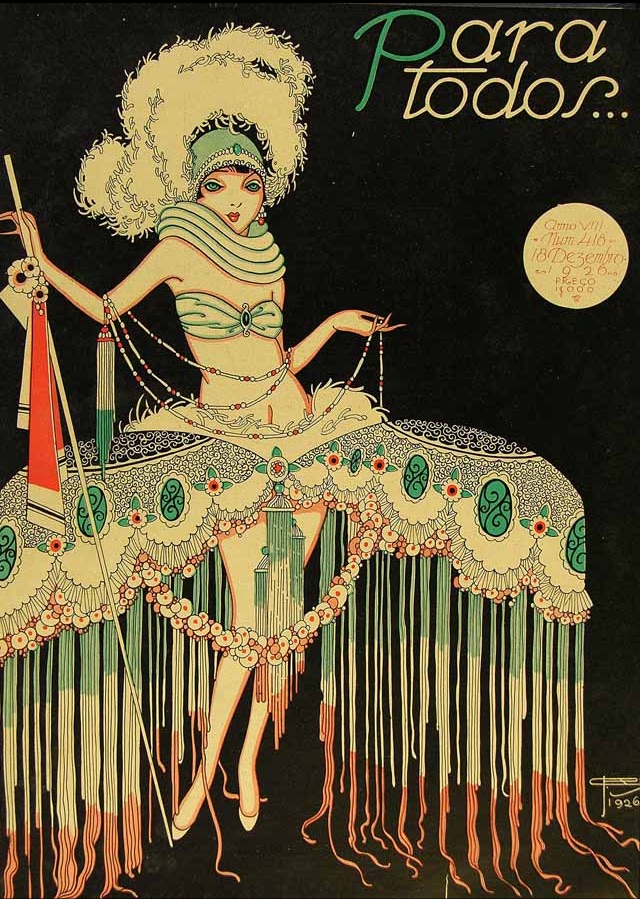
But it is also the case that Brazil had its own modern art movement, one that strove for a distinctly Brazilian sensibility even as it remained in dialogue with Europe and the U.S. The movement announced itself in 1922, the centennial of the South American nation’s independence from Portugal.
In celebration, artists from São Paulo held the Semana de Arte Moderna, seven days in which, the BBC writes, they “constructed, deconstructed, performed, sculpted, gave lectures, read poetry and created some of the most avant-garde works ever seen in Brazil.”
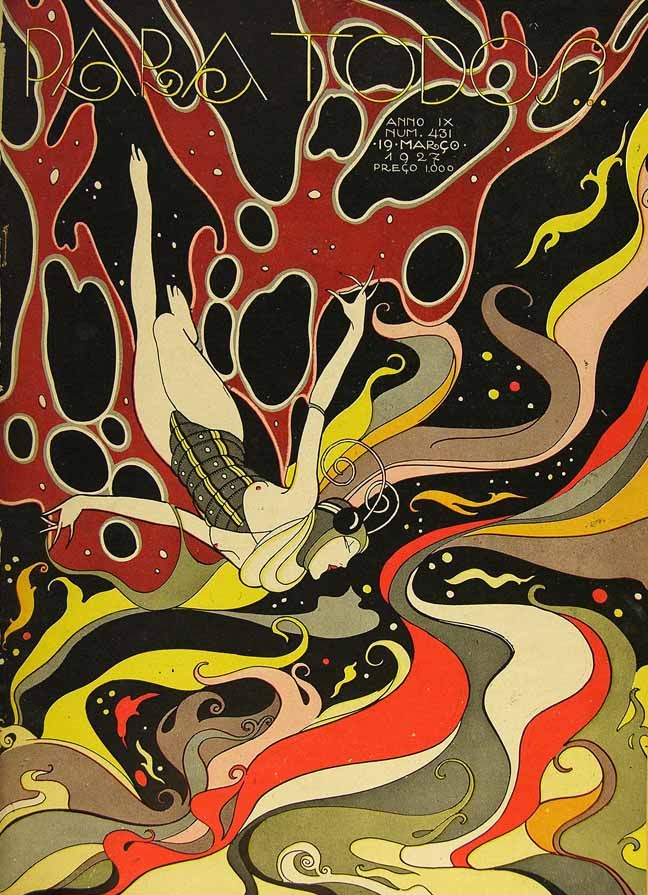
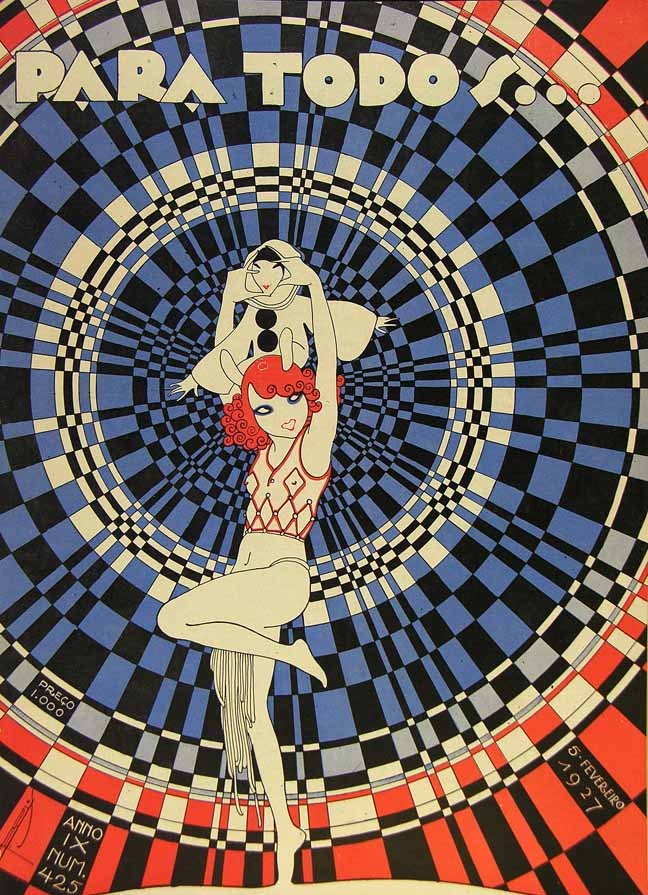
1922 also happened to be the year that a Rio de Janeiro-born artist, illustrator, and graphic designer who went by the name J. Carlos (José Carlos de Brito e Cunha) took over the direction of the magazine Para Todos. Founded in 1918, the magazine began as a film rag, and its covers faithfully featured photo spreads of movie stars. But in 1926, Carlos, who had already proven himself a “major talent in Brazilian Art Deco graphic design,” writes Messy Nessy, began drawing his own cover illustrations, and he continued to do so for the next four years, as well as drawing thousands of cartoons and writing vaudeville plays and samba lyrics.
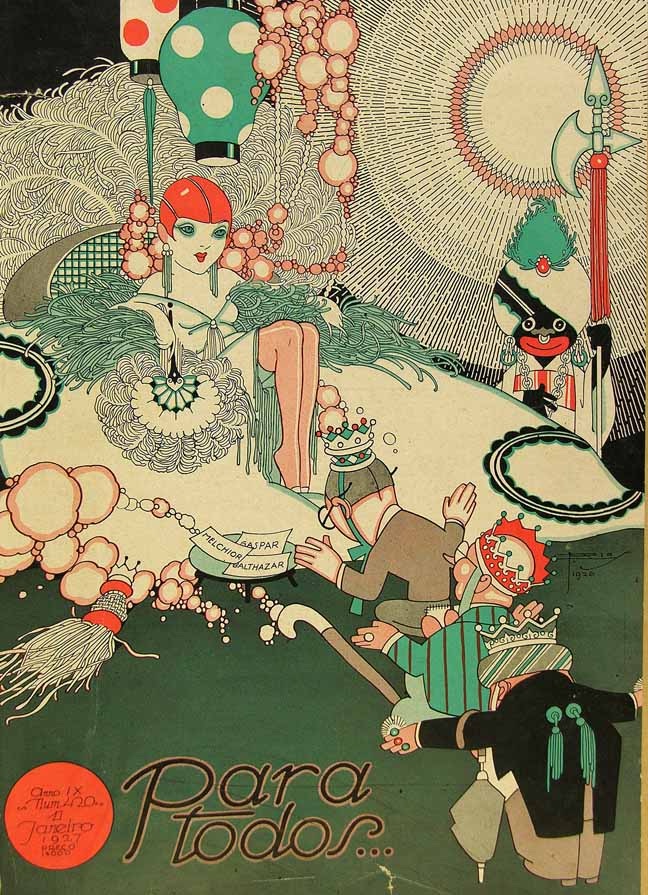
His work clearly draws from Euro-American sources, including several unfortunate racial caricatures. But it also introduces some uniquely Brazilian elements, or uniquely Carlos-ian elements, that seem almost proto-psychedelic (we might imagine a jazz-age Os Mutantes accompanying these trippy designs). J. Carlos was a prolific artist who “collaborated in design and illustration in all the major publications of Brazil from the 1920s until the 1950s.” In all, it’s estimated that he left behind over 100,000 illustrations. So devoted was Carlos to the art and culture of his native city that he apparently turned down an invitation by Walt Disney to work in Hollywood.
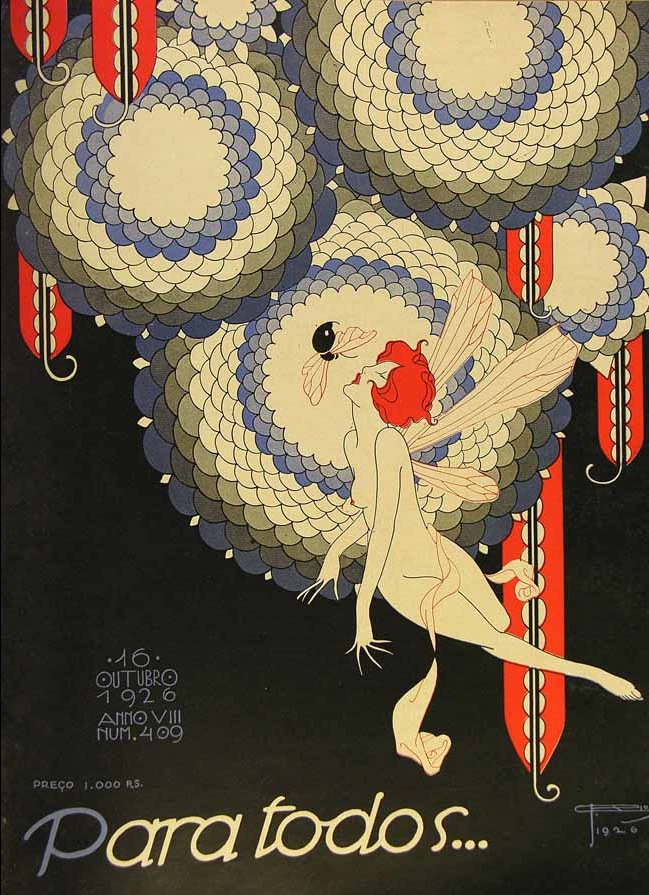
Print magazine describes Carlos’ work as “a cross between Aubrey Beardsley and John Held Jr.,” and while there is no shortage of the willowy, doll-like flappers, elongated, elfin figures, and intricate, spidery patterns we would expect from this derivation, Carlos is also doing something very different from either of those artists—or really from anyone working in the Northern Hemisphere. He has since become a heroic figure for Brazilian artists and scholars, inspiring an extensive web project, a visual thesis on Issuu, and two recent documentary films (all in Portuguese), which you can find here.
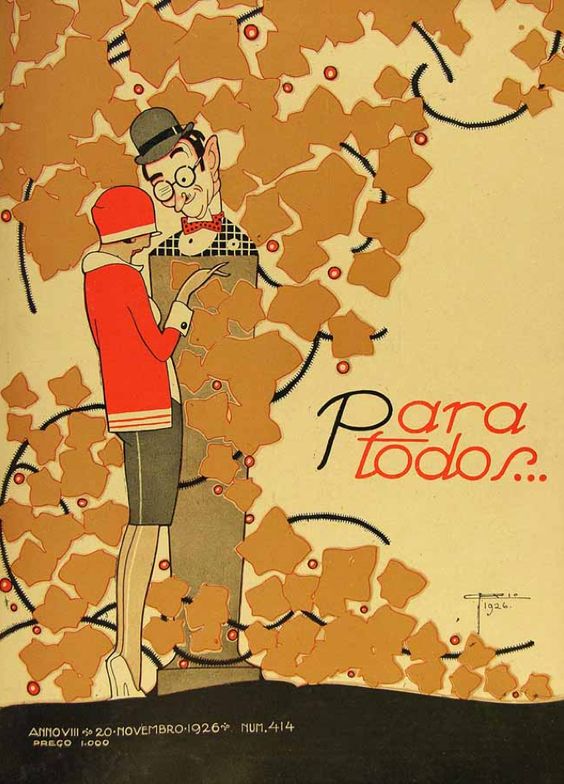
In 2009, Carlos received a posthumous honor that probably would have thrilled him in life, a tribute song by the Académicos da Rocinha samba club. Listen to it here and find several more of Carlos’ Para Todos covers at Messy Nessy, Print, and the Brazilian blog Os caminhos do Journalismo.
Related Content:
Download Hundreds of Issues of Jugend, Germany’s Pioneering Art Nouveau Magazine (1896–1940)
Harry Clarke’s 1926 Illustrations of Goethe’s Faust: Art That Inspired the Psychedelic 60s
Josh Jones is a writer and musician based in Durham, NC. Follow him at @jdmagness
Read More...Support Us
We're hoping to rely on loyal readers, rather than erratic ads. Please click the Donate button and support Open Culture. You can use Paypal, Venmo, Patreon, even Crypto! We thank you!

About Us

Open Culture scours the web for the best educational media. We find the free courses and audio books you need, the language lessons & educational videos you want, and plenty of enlightenment in between.
Advertise With Us

FREE UPDATES!
GET OUR DAILY EMAIL
Get the best cultural and educational resources on the web curated for you in a daily email. We never spam. Unsubscribe at any time.
FOLLOW ON SOCIAL MEDIA

Open Culture editor Dan Colman scours the web for the best educational media. He finds the free courses and audio books you need, the language lessons & movies you want, and plenty of enlightenment in between.
Advertise With Us