How Finland Created One of the Best Educational Systems in the World (by Doing the Opposite of U.S.)
Every conversation about education in the U.S. takes place in a minefield. Unless you’re a billionaire who bought the job of Secretary of Education, you’d better be prepared to answer questions about racial and economic equity, disability issues, protections for LGBTQ students, teacher pay and unions, religious charter schools, and many other pressing concerns. These issues are not mutually exclusive, nor are they distinct from questions of curriculum, testing, or achievement. The terrain is littered with possible explosive conflicts between educators, parents, administrators, legislators, activists, and profiteers.
The needs of the most deeply invested stakeholders, as they say, the students themselves, seem to get far too little consideration. What if we in the U.S., all of us, actually wanted to improve the educational experiences and academic outcomes for our children—all of them? Where might we look for a model? Many people have looked to Finland, at least since 2010, when the documentary Waiting for Superman contrasted struggling U.S. public schools with highly successful Finnish equivalents.
The film, a positive spin on the charter school movement, received significant backlash for its cherry-picked examples and blaming of teachers’ unions for America’s failing schools. By contrast, Finland’s schools have been described by William Doyle, an American Fulbright Scholar who studies them, as “the ‘ultimate charter school network’ ” (a phrase, we’ll see, that means little in the Finnish context.) There, Doyle writes at The Hechinger Report, “teachers are not strait-jacketed by bureaucrats, scripts or excessive regulations, but have the freedom to innovate and experiment as teams of trusted professionals.”
Last year, Michael Moore featured many of Finland’s innovative educational experiments in his humorous, hopeful travelogue Where to Invade Next. In the clip above, you can hear from the country’s Minister of Education, Krista Kiuru, who explains to him why Finnish children do not have homework; hear also from a group of high school students, high school principal Pasi Majassari, first grade teacher Anna Hart and many others. Shorter school hours—the “shortest school days and shortest school years in the entire Western world”—leave plenty of time for leisure and recreation. Kids bake, hike, build things, make art, conduct experiments, sing, and generally enjoy themselves.
“There are no mandated standardized tests,” writes LynNell Hancock at Smithsonian, “apart from one exam at the end of students’ senior year in high school… there are no rankings, no comparisons or competition between students, schools or regions.” Yet Finnish students have, in the past several years, consistently ranked in the top ten among millions of students worldwide in science, reading, and math. “If there was one thing I kept hearing over and over again from the Finns,” says Moore above, “it’s that America should get rid of standardized tests,” should stop teaching to those tests, stop designing entire curricula around multiple-choice tests. Hancock describes the results of the Finnish system, and its costs:
Ninety-three percent of Finns graduate from academic or vocational high schools, 17.5 percentage points higher than the United States, and 66 percent go on to higher education, the highest rate in the European Union. Yet Finland spends about 30 percent less per student than the United States.
Moore’s camera registers the shock on Finnish educators’ faces when they hear that many U.S. schools eliminated music, art, poetry and other pursuits in order to focus almost exclusively on testing. Though lighthearted in tone, the segment really drives home the depressing degree to which so many U.S. students receive an impoverished education—one barely worthy of the name—unless they luck into a voucher for a high-end charter school or have the independent means for an expensive private one. In Finland, says the Minister of Education, “all the schools are equal. You never ask where the best school is.”
It’s also illegal in Finland to profit from schooling. Wealthy parents have to ensure that neighborhood schools can give their kids the best education possible, because they are the only option. Many people in the U.S. object to comparisons like Moore’s by noting that societies like Finland are “homogenous” next to what may seem to them like maddening cultural diversity in the U.S. However, Finland has incorporated (not without difficulty) large immigrant and refugee populations—even as its schools continue to improve. The government has responded in part to rising immigration with educational solutions such as this one, a “national initiative to reinforce Finnish higher education institutions (HEIs) as significant stakeholders in migrants’ integration.”
The subtantive differences between the two countries’ educational systems may have less to do with demography and more to do with economics and the training and social status of teachers.
In Finland, writes Doyle, no teacher “is allowed to lead a primary school class without a master’s degree in education, with specialization in research and classroom practice.” Teaching “is the most admired job in Finland next to medical doctors.” And as Dana Goldstein points out at The Nation—a fact Waiting for Superman failed to mention—Finnish teachers are “gasp!—unionized and granted tenure.” Perhaps an even more significant difference the documentary glossed over: in Finland, “families benefit from a cradle-to-grave social welfare system that includes universal daycare, preschool and healthcare, all of which are proven to help children achieve better results at school.”
Hundreds of studies in recent years substantiate this claim. It would seem intuitive that stresses associated with hunger and poverty would have a pernicious effect on learning, especially when poorer schools are so egregiously under-resourced. And the data says as much, to varying degrees. And yet, we are now in the U.S. slashing breakfast and lunch programs that feed hungry children and deciding whether to uninsure millions of families as millions more still lack basic health coverage. Most every American parent knows that quality daycares and preschools can cost as much per year as a decent university education in this country.
It seems to many of us that the atrocious state of the U.S. educational system can only be attributed to an act of will on the part our political elite, who see schools as competition for fundamentalist belief systems, opportunities to punish their opponents out of spite, or as rich fields for private profit. But it needn’t be so. It took 40 years for the Finns to create their current system. In the 1960s, their schools ranked on the very low end—along with those in the U.S. By most accounts, they’ve since shown there can be systems that, while surely imperfect in their own way, work for all kids, embedded within larger systems that prize their teachers and families.
Related Content:
In Japanese Schools, Lunch Is As Much About Learning As It’s About Eating
Josh Jones is a writer and musician based in Durham, NC. Follow him at @jdmagness
Read More...Timelapse Animation Lets You See the Rise of Cities Across the Globe, from 3700 BC to 2000 AD
Last year, a Yale-led research project produced an innovative dataset that mapped the history of urban settlements. Covering a 6,000 year period, the project traced the location and size of cities across the world, starting in 3700 BC (when the first known urban dwellings emerged in Sumer) and continuing through 2000 AD. According to Yale’s Meredith Reba, if we understand “how cities have grown and changed over time, throughout history, it might tell us something useful about how they are changing today,” and particularly whether we can find ways to make modern cities sustainable.
The Yale dataset was originally published in Scientific Data in 2016. And before too long, some enterprising YouTuber brought the data to life. Above, the history of urban life unfolds before your eyes. The action starts off slow, but then later kicks into high gear.
You can read more about the mapping of urban settlements at this Yale website. And see the animated map in a larger format here.
If you would like to support the mission of Open Culture, consider making a donation to our site. It’s hard to rely 100% on ads, and your contributions will help us continue providing the best free cultural and educational materials to learners everywhere. You can contribute through PayPal, Patreon, and Venmo (@openculture). Thanks!
Related Content
The Rise & Fall of the Romans: Every Year Shown in a Timelapse Map Animation (753 BC ‑1479 AD)
200,000 Years of Staggering Human Population Growth Shown in an Animated Map
Read More...Watch a Mesmerizing Hourglass Filled with 1,250,000 “Nanoballs” (Created by the Designer of the Apple Watch)
Apple Watch designer Marc Newson has created an hourglass that stands about 6 inches tall, measures 5 inches wide, and features 1,249,996 tiny spheres called “nanoballs,” each made of stainless steel and covered with a fine copper coating. It takes 10 minutes for the nanoballs to pour through the glass, from first to last. The action looks pretty mesmerizing, to say the least.
You can pick up your very own hand-made hourglass for $12,000. But if your pockets don’t run quite that deep, you can settle for watching the time piece in the video above. Get more information on the Newson hourglass here.
If you would like to support the mission of Open Culture, consider making a donation to our site. It’s hard to rely 100% on ads, and your contributions will help us continue providing the best free cultural and educational materials to learners everywhere. You can contribute through PayPal, Patreon, and Venmo (@openculture). Thanks!
Related Content:
Why Time Seems to Speed Up as We Get Older: What the Research Says
How Clocks Changed Humanity Forever, Making Us Masters and Slaves of Time
Read More...Large Choir Sings “Black Hole Sun”: A Moving Tribute to Chris Cornell
They paid tribute to Prince last year. Now they’re doing the same for Chris Cornell. Choir!Choir!Choir!–a group that meets weekly and sings their hearts out in Toronto–got together and sang Soundgarden’s 1994 hit, “Black Hole Sun.” Turn up your speakers, await the goosebumps, and eventually wipe away a tear.
If you would like to support the mission of Open Culture, consider making a donation to our site. It’s hard to rely 100% on ads, and your contributions will help us continue providing the best free cultural and educational materials to learners everywhere. You can contribute through PayPal, Patreon, and Venmo (@openculture). Thanks!
Related Content:
Rufus Wainwright and 1,500 Singers Sing Leonard Cohen’s “Hallelujah”
This Is What It Sounds Like When 1999 People Sing Prince’s “When Doves Cry”
Read More...Kurt Vonnegut Ponders Why “Poor Americans Are Taught to Hate Themselves” in a Timely Passage from Slaughterhouse-Five

Image by Daniele Prati, via Flickr Commons
Amidst what is now an ordinary day’s chaos and turmoil in the news, you may have noticed some outrage circulating over comments made by erstwhile brain surgeon, former presidential candidate, and current Secretary of HUD Ben Carson. Poverty, he said, is a “state of mind.” The idea fits squarely in the wheelhouse of Carson’s brand of magical thinking, as well as into what has always been a self-help tradition in the U.S. since Poor Richard’s Almanac.
Consider, for example, the immense popularity of a book written during the Great Depression, Napoleon Hill’s 1937 Think and Grow Rich, which has increased every year since its publication. By 2015, the book had sold around 100 million copies worldwide. Hill’s prolific self-help cottage industry occupies a prominent place in a distinctly American genre, and an economy unto itself. Books, videos, seminars, and megachurches promise the faithful that they need only to change themselves to change their economic outcomes, in order not only thrive but to “grow rich.”
The notion has had purchase among wealthy opponents of a welfare state, who find it a convenient way to blame the poor for circumstances outside their control. But it also, as robust sales indicate, has wide appeal among the not-so-wealthy. Why? One reason—the presciently, acerbically insightful observer of American culture, Kurt Vonnegut might argue—has to do with the fact that Americans think of poverty as a personal failing rather than a social condition, and conversely conflate wealth with intelligence and capability.
Vonnegut articulates these observations in his 1969 classic Slaughterhouse-Five, through a character named Howard W. Campbell, Jr., an American playwright who becomes a Nazi propagandist (and who stands trial in Israel in an earlier novel, Mother Night). Ostensibly quoting from a monograph of Campbell’s, Vonnegut writes, “America is the wealthiest nation on Earth, but its people are mainly poor, and poor Americans are urged to hate themselves.” Campbell’s monograph continues:
To quote the American humorist Kin Hubbard, ‘It ain’t no disgrace to be poor, but might as well be.’ It is in fact a crime for an American to be poor, even though America is a nation of poor. Every other nation has folk traditions of men who were poor but extremely wise and virtuous, and therefore more estimable than anyone with power and gold. No such tales are told by the American poor. They mock themselves and glorify their betters. The meanest eating or drinking establishment, owned by a man who is himself poor, is very likely to have a sign on its wall asking this cruel question: ‘if you’re so smart why ain’t you rich?’ There will also be an American flag no larger than a child’s hand glued to a lollipop stick and flying from the cash register.
The Kin Hubbard quoted here may now be largely forgotten, but in the first three decades of the 20th century, he was a humorist as widely admired as Mark Twain or Will Rogers. Hubbard drew a popular comic strip based on a character called Abe Martin, and his humor was once described as a “comical mixture of hoss sense and no sense at all.” The quote above comes from one of Martin’s many pithy political ruminations, which include lines like “It’s all right t’ aspire to office, but when a feller begins t’ perspire fer one it’s time t’ watch out.”
The Hubbard-quoting Campbell, writes Vonnegut with wry humor, was “said by some to have had the highest I.Q., of all the war criminals who were made to face a death by hanging.” He also pitches his appeals to the common man, and ties together the “think and grow rich” phenomenon and the tendency of so many of the country’s less-well-off to support candidates and policies that routinely endanger access to public services, quality education, and healthcare.
Americans, like human beings everywhere, believe many things that are obviously untrue. Their most destructive untruth is that it is very easy for any American to make money. They will not acknowledge how in fact hard money is to come by, and therefore, those who have no money blame and blame and blame themselves. This inward blame has been a treasure for the rich and powerful, who have had to do less for their poor, publicly and privately, than any other ruling class since, say, Napoleonic times.
Campbell appears elsewhere in the novel in an attempt to recruit American POWs into “a German military unit called ‘The Free American Corps,” of which he is “the inventor and commander.” Near the top of the post, see the character in the 1972 Slaughterhouse-Five film defend his alliance with the Nazis and explain his bizarre uniform in terms one commentator sees as distinctly resonant with today’s far-right rhetoric. For all his outlandish presentation, he is a complicated figure—something of an amalgam of the far right’s showmen and hucksters and its cynical intellectuals, who often understand very well how the stark divisions of race and class are maintained in the U.S., and exploit that knowledge for political gain.
Related Content:
Hear Kurt Vonnegut Read Slaughterhouse-Five, Cat’s Cradle & Other Novels
Josh Jones is a writer and musician based in Durham, NC. Follow him at @jdmagness
Read More...Beat Club, the 1960s TV Show That Brought Rock Music to 70 Million Kids in Germany, Hungary, Thailand, Tanzania & Beyond
It took a bit longer for the youth rock revolution to hit German televisions compared to the United States–where American Bandstand was already in existence pre-Elvis–and the United Kingdom, where Oh Boy debuted in 1958 as that country’s first pop show. But when German television premiered Beat Club in September 1965, it would profoundly change the culture.
The show took its visual cues from both the UK–with its London Underground-aping logo–and the US, with its go-go dancers. It even borrowed some of its hosts from across the Channel, like Dave Lee Travis, who was working at pirate station Radio Caroline at the time.
The show’s producer Michael Leckebusch was a more traditional man who preferred musicals to rock, but he knew his market, and he knew how to check the pulse of the scene, by attending The Star Club in Hamburg–one of the venues where the Beatles paid their dues.
Over its seven years of shows, which went into color broadcast right when psychedelia was taking off, Beat Club introduced German teenagers to the likes of The Kinks, King Crimson, The Grateful Dead, Captain Beefheart, Cream, Frank Zappa, The Small Faces, The Rolling Stones, Steppenwolf, Led Zeppelin, Jimi Hendrix, The Who, and David Bowie, among many others.
In fact, German acts did not appear on the show until 1971. But by that time Beat Club had also strayed from rock and was exploring jazz-rock, fusion, and other non-pop formats.
The impact on a country that was used to quiz shows and coffee and cake on a Sunday afternoon can’t be overstated. It was, as the announcer Wilhelm Wiegen told the viewers, a show “by young people, for young people.” That sounds like basic marketing now, but at the time it was a lifeline to an entire generation.
And soon the effect was felt beyond Germany, according to German site Deutsche Welle.
But Beat-Club kept the youth on its side, pulling in 70 million viewers from approximately 30 countries — from Hungary and Finland to as far as Thailand and Tanzania. At its peak, 63 percent of Germany’s under-30s were regularly tuning in to the music show.
These were the beginnings of the youth that would become the Studentenbewegung (“student movement”), also known as the 68ers. With hits such as The Who’s “My Generation” and the Rolling Stones’ “Satisfaction,” Beat-Club gave its “Beat-friends” the motivation to stand up and fight back against an out-dated generation. It was a soundtrack for a new life.
There is plenty of footage of the show knocking around YouTube, including this channel devoted to full episodes, and numerous other clips. And though the show stopped in 1972, a nostalgic radio version continues to broadcast with its original female host Uschi Nerke.
Related Content:
Radio Caroline, the Pirate Radio Ship That Rocked the British Music World (1965)
Four Female Punk Bands That Changed Women’s Role in Rock
The Crazy, Iconic Life of Nico; Andy Warhol Muse, Velvet Underground Vocalist, Enigma in Amber
Ted Mills is a freelance writer on the arts who currently hosts the artist interview-based FunkZone Podcast and is the producer of KCRW’s Curious Coast. You can also follow him on Twitter at @tedmills, read his other arts writing at tedmills.com and/or watch his films here.
Read More...Animations Show the Melting Arctic Sea Ice, and What the Earth Would Look Like When All of the Ice Melts
It’s no secret that climate change has been taking a toll on the Arctic. But it’s one thing to read about it, another thing to see it in action. Above you can watch an animation narrated by NASA’s cryospheric scientist Dr. Walt Meier. Documenting changes between 1984 and 2016, the animation lets you see the Arctic sea ice shrinking. As the important perennial sea ice diminishes, the remaining ice cover “almost looks gelatinous as it pulses through the seasons.” For anyone interested, an updated version of this visualization can be downloaded in HD here.
If you’re curious what this could all lead to–well, you can also watch a harrowing video that models what would happen when all the ice melts and the seas rise some 216 feet. It isn’t pretty. The video below is based on the 2013 National Geographic story, “What the World Would Look Like if All the Ice Melted.”
If you would like to support the mission of Open Culture, consider making a donation to our site. It’s hard to rely 100% on ads, and your contributions will help us continue providing the best free cultural and educational materials to learners everywhere. You can contribute through PayPal, Patreon, and Venmo (@openculture). Thanks!
Related Content:
Global Warming: A Free Course from UChicago Explains Climate Change
132 Years of Global Warming Visualized in 26 Dramatically Animated Seconds
A Song of Our Warming Planet: Cellist Turns 130 Years of Climate Change Data into Music
Frank Capra’s Science Film The Unchained Goddess Warns of Climate Change in 1958
Watch Episode 1 of Years of Living Dangerously, The New Showtime Series on Climate Change
Read More...Stanford Researchers Discover a Smarter Way to Prepare for Exams: Introducing MetaCognition, the Art of Thinking About Your Thinking

Early in the second season of Noah Hawley’s excellent Fargo series, one of the gruff, laconic Gerhardt brothers shakes his head during a tense crime family moment and mutters sagely, “know thyself.” Challenged to produce the quotation’s source, he says, with irritated self-assurance, “It’s in the Bible.” The quote does have an ancient origin—maybe the temple of Apollo at Delphi, maybe the temple court at Luxor—and it’s an idea that reappears in every philosophical system from age to age. Even if the self doesn’t really exist, some thinkers have reasoned, we should still study it.
These days, psychologists call a certain kind of self-knowledge “metacognition,” a new word for what they recognize, Jennifer Livingston notes, as a concept that has been around “for as long as humans have been able to reflect on their cognitive experiences.” Developmental psychologist John Flavell used the term in 1979 to refer specifically to “how human beings learn and process information, as well as individual knowledge of one’s own learning processes.” Often defined as “thinking about thinking,” megacognition involves knowing what conditions best enable concentration and memory retention, for example, and practicing it can immensely improve study skills and academic achievement.
A new study published in Psychological Science by Stanford psychology researchers has validated the idea with experimental data. In two different experiments, students in a control group studied for exams in their ordinary way. Those in another group received an exercise called “Strategic Resource Use.” “They were asked,” Stanford News reports, to think about what might be on the exam, “and then strategize what kinds of resources they would use to study most effectively.” Then they reflected on “why each resource they chose would be useful” and how they planned on using them. It may seem like seriously front-loading a study session, but the intervention paid off. Students who got it scored on average a third of a letter grade higher than those who didn’t.
Postdoctoral fellow Patricia Chen, the study’s main author, undertook the experiment when she noticed that many of her own students genuinely worked hard but felt frustrated by the results. “Describe to me how you studied for the exam,” she began asking them. After conducting the metacognition studies, Chen concluded that “actively self-reflecting on the approaches that you are taking fosters a strategic stance that is really important in life. Strategic thinking distinguishes between people of comparable ability and effort. This can make the difference between people who achieve and people who have the potential to achieve, but don’t.”
Thinking about your thinking can’t make all the difference, of course, but the effect is dramatic among groups in relatively similar circumstances. An Australian study of 2000 Ph.D. students discovered a close correlation between “how they thought about the learning process,” notes Big Think, and “their successes and failures in achieving their degrees.” A broader study in Britain that accounted for class differences evaluated Year 6 and 7 students in 23 primary schools. In eleven of these schools, students were instructed in something called “Self-Regulated Strategy Development”—a means of consciously monitoring the writing techniques they used in assignments: “Overall,” the authors write, “the project appeared to have a large positive impact on writing outcomes,” especially among “pupils eligible for free school meals.”
Each of these studies necessitated methods of teaching self-regulation and metacognition, and each one formulated its own pedagogy. The British study specially trained a group of Year 6 teachers. “Part of the appeal of Chen’s approach,” writes Jenny Anderson at Quartz, “is its simplicity: any student, teacher or even parent could use it.” And one might reasonably assume that anyone could teach it to themselves. For parents and teachers of struggling students, Chen offers some straightforward advice. Rather than suggesting more study time and resources, first “Look at the way they are doing things. Do you think they could have gone about it in a better way?” As nearly every ancient philosopher would affirm, we better ourselves not by acquiring more, but by understanding and using wisely what we already have to work with.
Related Content:
32 Animated Videos by Wireless Philosophy Teach You the Essentials of Critical Thinking
Why You Do Your Best Thinking In The Shower: Creativity & the “Incubation Period”
Josh Jones is a writer and musician based in Durham, NC. Follow him at @jdmagness
Read More...Hear 4+ Hours of Jazz Noir: A Soundtrack for Strolling Under Street Lights on Foggy Nights
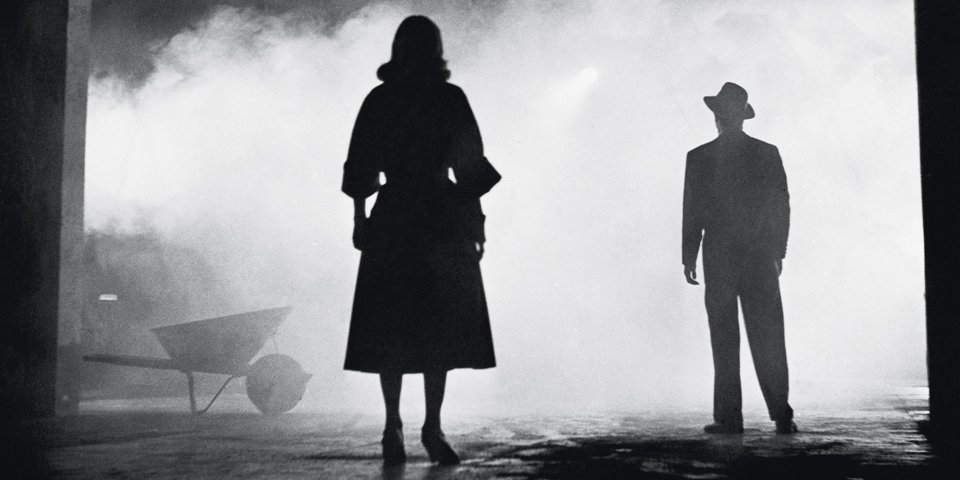
Image from The Big Combo, via Wikimedia Commons
Nowadays few crowds seem less likely to harbor criminal intent than the ones gathered to listen to jazz, but seventy, eighty years ago, American culture certainly didn’t see it that way. Back then, jazz accompanied the life of urban outsiders: those who dabbled in forbidden substances and forbidden activities, those influenced by the alien morality of Europe or even farther-away lands, those belonging to feared and mistreated social groups. That image stuck as much or even more firmly to jazz musicians as it did to jazz listeners, and when a new cinematic genre arose specifically to tell stories of urban outsiders — the lowlifes, the anti heroes, the femmes fatales — jazz provided the ideal soundtrack.
“Jazz dominates assumptions about the music used in film noir,” write Andre Spicer and Helen Hanson in A Companion to Film Noir, “and it is particularly prevalent in contemporary references to and recreations of film noir.”
And “although the number of films noir to employ jazz in their scores was relatively small, it was still notable in terms of the overall use of jazz in Hollywood films of the era — if jazz was an integral part of a film’s score then those productions tended to be films noir or social problem films.” The music first crept in diegetically, in the 1940s, by way of “club scenes, illicit jazz sessions, or on record players and jukeboxes,” and later, in the 50s, continued its “established association of sex and violence” even as changing attitudes “contributed to jazz being more acceptable in Hollywood films.”
A few years ago we featured classic works of “crime jazz” by Miles Davis, Count Basie, Duke Ellington and others, all meant to set the scene for the lawless worlds of films and television shows like Anatomy of a Murder, Elevator to the Gallows, Peter Gunn, and The M Squad. The two playlists we have for you today take a wider view, collecting more than four hours of “jazz noir” on Spotify (if you don’t have Spotify’s software, you can download it here). It features tracks by Miles Davis, Chet Baker, Benny Golson, Tom Waits and more. While listening — maybe with the lights dimmed, maybe with your preferred highball in hand — you might consider browsing the r/jazznoir, an entire subreddit dedicated to this “mysterious, melancholy and menacing music by swingin’ sax men and sultry sirens for hardboiled hepcats and leggy lookers,” this “late-night listening for luckless losers, and the soundtrack to strolls under street lights on foggy nights.”
Related Content:
The 5 Essential Rules of Film Noir
Roger Ebert Lists the 10 Essential Characteristics of Noir Films
The Essential Elements of Film Noir Explained in One Grand Infographic
Based in Seoul, Colin Marshall writes and broadcasts on cities and culture. He’s at work on a book about Los Angeles, A Los Angeles Primer, the video series The City in Cinema, the crowdfunded journalism project Where Is the City of the Future?, and the Los Angeles Review of Books’ Korea Blog. Follow him on Twitter at @colinmarshall or on Facebook.
Read More...“A Brief History of Goths”: From the Goths, to Gothic Literature, to Goth Music
The history of the word ‘Gothic,’” argues Dan Adams in the short, animated TED-Ed video above,” is embedded in thousands of years’ worth of countercultural movements.” It’s a provocative, if not entirely accurate, idea. We would hardly call an invading army of Germanic tribes a “counterculture.” In fact, when the Goths sacked Rome and deposed the Western Emperor, they did, at first, retain the dominant culture. But the Gothic has always referred to an oppositional force, a Dionysian counterweight to a rational, classical order.
We know the various versions: the Germanic instigators of the “Dark Ages,” early Christian architectural marvels, Romantic tales of terror and the supernatural, horror films, and gloomy, black-clad post punks and their moody teenage fans. Aside from obvious references like Bauhaus’ tongue-in-cheek ode, “Bela Lugosi’s Dead,” the connective tissue between all the uses of Gothic isn’t especially evident. “What do fans of atmospheric post-punk music,” asks Adams, “have in common with ancient barbarians?” The answer: not much. But the story that joins them involves some strange convergences, all of them having to do with the idea of “darkness.”
Two significant figures in the evolution of the Gothic as a consciously-defined aesthetic were both art historians. The first, Giorgio Vasari—considered the first art historian—wrote biographies of great Renaissance artists, and first used the term Gothic to refer to medieval cathedrals, which he saw as barbarous next to the neoclassical revival of the 14th-16th centuries. (Vasari was also the first to use the term “Renaissance” to describe his own period.) Two hundred years after Vasari’s Lives, art historian, antiquarian, and Whig politician Horace Walpole appropriated the term Gothic to describe The Castle of Otranto, his 1765 novel that started a literary trend.
Walpole also used the term to refer to art of the distant past, particularly the ruins of castles and cathedrals, with an eye toward the supposedly exotic, menacing aspects (for Protestant English readers at least) of the Catholic church and Continental European nobility. But for him, the associations were positive, and constituted a kitschy escape from Enlightenment rationalism. We have Walpole to thank, in some sense, for ersatz celebrations like Renaissance Fairs and Medieval Times restaurants, and for later Gothic novels like Bram Stoker’s Dracula, Mary Shelley’s Frankenstein, and the weird tales of Edgar Allan Poe.
We can see that it’s a rather short leap from classic horror stories and films to the dark makeup, teased hair, fog machines, and swirling atmospherics of The Cure and Siouxsie Sioux. In the history of the Gothic, especially between Vasari and Walpole, the word moves from a term of abuse—describing art thought to be “crude and inferior”—to one that describes art forms considered mysterious, and darkly Romantic. For another take on the subject, see Pitchfork’s music-focused, animated, and “surprisingly light-hearted” short, “A Brief History of Goth,” above, a presentation on the subculture’s rise, fall, and undead rise again.
Related Content:
Three-Hour Mixtape Offers a Sonic Introduction to Underground Goth Music
Josh Jones is a writer and musician based in Durham, NC. Follow him at @jdmagness
Read More...Support Us
We're hoping to rely on loyal readers, rather than erratic ads. Please click the Donate button and support Open Culture. You can use Paypal, Venmo, Patreon, even Crypto! We thank you!

About Us

Open Culture scours the web for the best educational media. We find the free courses and audio books you need, the language lessons & educational videos you want, and plenty of enlightenment in between.
Advertise With Us

FREE UPDATES!
GET OUR DAILY EMAIL
Get the best cultural and educational resources on the web curated for you in a daily email. We never spam. Unsubscribe at any time.
FOLLOW ON SOCIAL MEDIA

Open Culture editor Dan Colman scours the web for the best educational media. He finds the free courses and audio books you need, the language lessons & movies you want, and plenty of enlightenment in between.
Advertise With Us


