A 3,350-Song Playlist of Music from Haruki Murakami’s Personal Record Collection
Music and writing are inseparable in the hippest modern novels, from Kerouac to Nick Hornby to Irvine Welsh. It might even be said many such books would not exist without their internal soundtracks. When it comes to hip, prolific modern novelist Haruki Murakami, we might say the author himself may not exist without his soundtracks, and they are sprawling and extensive. Murakami, who is well known for his intense focus and heroic achievements as a marathon and double-marathon runner, exceeds even this consuming passion with his near-religious devotion to music.
Murakami became a convert to jazz fandom at the age of 15 and until age 30 ran a jazz club. Then he suddenly became a novelist after an epiphany at a baseball game. (Hear Ilana Simons read his version of that story in her short animated film above). His first book’s story unfolded in an environment totally permeated by music and music fan culture. From then on, musical references spilled from his characters’ lips, and swirled around their heads perpetually.
What sets Murakami apart from other music-obsessed novelists is not only the degree of his obsession, but the breadth of his musical knowledge. He is as fluent in classical as he as in jazz and sixties folk and pop, and his range in each genre is considerable. He has so much to say about classical music, in fact, that he once published a book of six conversations between himself and Seiji Ozawa, “one of the world’s leading orchestral conductors.” Murakami’s 2013 Colorless Tsukuru Tazaki and His Years of Pilgrimage—its title a reference to Franz Liszt—contains perhaps his most eloquent statement on the role music plays in his life and work, phrased in universal terms:
Our lives are like a complex musical score. Filled with all sorts of cryptic writing, sixteenth and thirty-second notes and other strange signs. It’s next to impossible to correctly interpret these, and even if you could, and could then transpose them into the correct sounds, there’s no guarantee that people would correctly understand, or appreciate, the meaning therein.
“At times,” writes Scott Meslow at The Week, “reading Murakami’s work can feel like flipping through his legendarily expansive record collection.” While we’ve previously featured playlists drawn from Murakami’s jazz obsession and from the general variety of his discriminating (yet thoroughly Western) musical palate, these have been minuscule by comparison with his personal library of LPs, an “inspirational… wall of 10,000 records,” the majority of which are jazz. Murakami admits he always listens to music when he works, and you can see part of his floor-to-ceiling record library, and huge speaker system, in a photo of his desk on his attractively-designed website. Down below, we bring you one of the next best things to actually sitting in his study, a playlist of 3,350 tracks from Murakami’s personal collection. (If you need Spotify’s free software, download it here.)
Hoagy Carmichael, Lionel Hampton, Herbie Hancock, Gene Krupa, Django Reinhardt, Sergei Prokofiev, Frederic Chopin… it’s quite a mix, and one that may not only remind you of several moments in Murakami’s body of work, but will also give you a sampling of the soundtrack to its author’s imagination as he transcribes the “cryptic writing” we have to “transpose… into the correct sounds” as we try to make sense of it.
If you would like to support the mission of Open Culture, consider making a donation to our site. It’s hard to rely 100% on ads, and your contributions will help us continue providing the best free cultural and educational materials to learners everywhere. You can contribute through PayPal, Patreon, and Venmo (@openculture). Thanks!
Related Content:
Haruki Murakami’s Passion for Jazz: Discover the Novelist’s Jazz Playlist, Jazz Essay & Jazz Bar
Josh Jones is a writer and musician based in Durham, NC. Follow him at @jdmagness
Read More...Artificial Neural Network Reveals What It Would Look Like to Watch Bob Ross’ The Joy of Painting on LSD
Anyone who watched Bob Ross’ The Joy of Painting from 1983 to 1994 knows the show had a bit of a surreal quality to it. With that soft voice, reduced often to a whisper, Ross slapped some paint onto the canvas, smeared it around, and eventually something magical appeared–a mountain, a stream, a forest, whatever. Nowadays, the show has experienced something of a renaissance and achieved cult status. 30 seasons of The Joy of Painting live on YouTube (legitimately, it seems), and they’ve become fodder for creative projects that take Bob Ross to new surreal heights. Exhibit 1, “Deeply Artificial Trees,” appears above.
This artwork represents what it would be like for an AI to watch Bob Ross on LSD (once someone invents digital drugs). It shows some of the unreasonable effectiveness and strange inner workings of deep learning systems. The unique characteristics of the human voice are learned and generated as well as hallucinations of a system trying to find images which are not there.
For a little on the science of artificial neural networks, see this related item in our archive: What Happens When Blade Runner & A Scanner Darkly Get Remade with an Artificial Neural Network.
If you would like to support the mission of Open Culture, consider making a donation to our site. It’s hard to rely 100% on ads, and your contributions will help us continue providing the best free cultural and educational materials to learners everywhere. You can contribute through PayPal, Patreon, and Venmo (@openculture). Thanks!
Related Content:
Watch Bob Ross’ The Joy of Painting Free Online: The First 27 Seasons
Neural Networks for Machine Learning: A Free Online Course
Read More...Are We Living in a Computer Simulation?: A 2‑Hour Debate with Neil Degrasse Tyson, David Chalmers, Lisa Randall, Max Tegmark & More
What do we live in: the only universe that exists, or an elaborate computer simulation of a universe? The question would have fascinated Isaac Asimov, and that presumably counts as one of the reasons the Isaac Asimov Memorial Debate took it as its subject last year. Though the so-called “simulation hypothesis” has, in various forms, crossed the minds of thinkers for millennia, it’s enjoyed a particular moment in the zeitgeist in recent years, not least because Elon Musk has publicly stated his view that, in all probability, we do indeed live in a simulation. And, if you can’t trust the guy who hit it big with Tesla and PayPal on the nature of reality, who can you?
Well, you might also consider listening to the perspectives of New York University philosopher David Chalmers, MIT cosmologist Max Tegmark, and three theoretical physicists, James Gates of the University of Maryland, Lisa Randall of Harvard, and Zohreh Davoudi of MIT.
They, with moderation by Neil DeGrasse Tyson, dig into the simulation hypothesis for two hours, approaching from all different angles its origin, its plausibility, and its implications. Davoudi, who has done serious research on the question, brings her work to bear; Randall, who finds little reason to credit the notion that we live in a simulation in the first place, has more of an interest in why others find it so compelling all of a sudden.
Whether you believe it, reject it, or simply enjoy entertaining the idea, you can’t help but feel a strong reaction of one kind or another to the simulation hypothesis, and Tyson contributes his usual humor to knock the discussion back down to Earth whenever it threatens to become too abstract. But how should we respond to the possibility of living in computed reality in the here and now (or “here” and now,” if you prefer)? The Matrix proposed a kind of simulation-hypothesis world whose heroes break out, but we may ultimately have no more ability to see the hardware running our world than Mario can see the hardware running his. “If you’re not sure whether you’re actually simulated or not,” says Tegmark, “my advice to you is to go out there and live really interesting lives and do unexpected things so the simulators don’t get bored and shut you down.” In these unreal times, you could certainly do worse.
Related Content:
Richard Dawkins and Jon Stewart Debate Whether Science or Religion Will Destroy Civilization
The Philosophy of The Matrix: From Plato and Descartes, to Eastern Philosophy
Based in Seoul, Colin Marshall writes and broadcasts on cities and culture. He’s at work on a book about Los Angeles, A Los Angeles Primer, the video series The City in Cinema, the crowdfunded journalism project Where Is the City of the Future?, and the Los Angeles Review of Books’ Korea Blog. Follow him on Twitter at @colinmarshall or on Facebook.
Read More...Watch Animated Introductions to 13 Classic Authors: Kafka, Austen, Dostoevsky, Dickens & Many More
Popular independent philosopher Alain de Botton has been providing mini-introductions to academic subjects for several years now through his School of Life. These take the form of animated précis of the life and work of a handful of prominent authors who might be considered representative, if not essential, to the discipline. In philosophy, we have such indispensable figures as Plato, Rene Descartes, and Immanuel Kant. In political theory, we have Adam Smith, John Rawls, Karl Marx. Wherever we land—conservative, liberal, or radical—we end up interacting with such thinkers. When it comes to the general category of “Literature,” however, it seems to me it should be a bit more difficult to choose only a few figureheads.
For a good part of European history, most people couldn’t read the languages they spoke, but even those who could were hardly considered literate. This distinction was reserved for elites with classical educations who read Latin and usually Greek. Literature meant Virgil, Ovid, Horace, Homer…. Even after the Reformation and the spread of literacy in “vulgar” tongues, the disdain for common tongues remained. The radicalism of Dante and later Cervantes was to write great literature in their national languages. During the 18th century, the novel was often considered primarily middle class women’s entertainment, and in much of the 19th, a popular diversion rarely worthy of the highest critical appraisal.
The 20th century brought not only modernist revolutions but social revolutions that opened doors for women voices and writers previously relegated to the margins. In our current age, a diversity of writers now firmly occupy the center of culture. The oughts were dominated by Junot Diaz’s Pulitzer Prize-winning The Brief Wondrous Life of Oscar Wao, for example. This year’s Pulitzer winners include Colson Whitehead and poet Tyehimba Jess. Nobel and Pulitzer winner Toni Morrison just swept up another award from the American Academy of Arts & Sciences. This is not to mention multiple-award-winning international writers like Derek Walcott, Gabriel Garcia Marquez, Chimamanda Ngozi Adichie.… Venerable western literary traditions have become global in composition.
But in every period of literary history, international writers interacted, corresponded, influenced, and plagiarized each other. There is no single line of descent through the history of literature, no singular imperial story that dominates its production and reception. Its location varies from age to age, its families are massive and sprawling, loosely connected at the edges, but sometimes only very loosely. Perhaps it is a testament to the patrician conservatism of philosophy that it remains a field dominated by responses to dead great men. Literature has proven much more dynamic. De Botton’s choices in his introductory video series on literature do not quite reflect this dynamism. Why Voltaire and not, well, Cervantes, generally considered for centuries the father of the modern novel form? Why no Faulkner, Gertrude Stein, Haruki Murakami, or Toni Morrison? No Allen Ginsberg, Margaret Atwood, James Baldwin?
These authors and many others may surely be to come. And we should bear in mind the source: not only is de Botton a pop philosopher first and critic secondarily, but he is also promoting a scholarly approach to self-help. The authors he chooses, therefore, all have life lessons to impart of the kind de Botton believes can help us be happier, nicer people who have better relationships. Charles Dickens, at the top, for example, teaches us to sympathize with others and to care about “serious things.” Jane Austen wanted us to be “better and wiser,” and her novels offer readers a course in personal development. From the existential bleakness of Fyodor Dostoyevsky, we can draw life lessons about hope and redemption in the midst of human failure. Even the claustrophobic nightmares of Franz Kafka have their utility as “redemptive, consoling art.” De Botton largely relies on biographical criticism and strays quite a ways from received interpretations.
His casual approach to literature as a didactic tool of personal betterment has the hallmarks of a very Victorian outlook, with both the drawbacks and the benefits such a view entails. While the School of Life series may have a narrow view of who produces art, culture, and philosophy, it also has a compelling argument to make that such things matter and matter greatly. The humanities need all the help they can get, and de Botton seems to argue that we need them more than ever as well. Most readers of Open Culture, I imagine, would surely agree. See de Botton’s full series, including such practical writers as James Joyce, Marcel Proust, George Orwell, and Leo Tolstoy, at the School of Life YouTube playlist.
Related Content:
Alain de Botton Shows How Art Can Answer Life’s Big Questions in Art as Therapy
Josh Jones is a writer and musician based in Durham, NC. Follow him at @jdmagness
Read More...Richard Dawkins on Why We Should Believe in Science: “It Works … Bitches”
Appearing at Oxford’s Sheldonian Theater in 2013, evolutionary biologist Richard Dawkins fielded a question that’s now being asked unnervingly often in our anti-Enlightenment age.
Audience member: “The question is about the nature of scientific evidence. You both said, and I think most people here would agree with you, that we’re justified in holding a belief if there is evidence for it, or there are logical arguments we can find that support it. But it seems like this in itself is a belief, which would require some form of evidence. If so, I’m wondering what you think would count as evidence in favour of that and, if not, how do we justify choosing that heuristic without appealing to the same standard that we are trying to justify?”
Dawkins: “How do we justify, as it were, that science would give us the truth? It works. Planes fly, cars drive, computers compute. If you base medicine on science, you cure people; if you base the design of planes on science, they fly; if you base the design of rockets on science, they reach the moon. It works … bitches.”
Now, someone please send that memo to the folks who call the shots.
Related Content:
Richard Dawkins’ Famous “What If You’re Wrong” Speech Animated in the Style of South Park
Richard Dawkins Explains Why There Was Never a First Human Being
Free Online Biology Courses
Read More...138 Short Animated Introductions to the World’s Greatest Ideas: Plato, Michel Foucault, Simone de Beauvoir & More
The Open Culture audience, by my estimation, divides into two basic groups: those who’ve read the collected works of the likes of Simone de Beauvoir, Michel Foucault, and Plato, and those who’d like to. Whichever body of oft-referenced ideas you’ve been wanting to dig deep into yourself, getting a brief, concept-distilling primer beforehand can make the task easier, improving your understanding and ability to contextualize the original texts when you get around to them. Online education company Macat has produced 138 such primers in the form of animated videos freely available on YouTube which can put you in the right frame of mind to study a variety of ideas in literature, economics, sociology, politics, history, and philosophy.
De Beauvoir, in Macat’s analysis, argued in The Second Sex that “the views of individuals are socially and culturally produced. Femininity is not inherent,” but a societal mechanism long used “to keep men dominant.”
According to their video on Foucault’s Discipline and Punish, that famous book “explores the evolution of power since the Middle Ages,” culminating in the argument that “modern states have moved away from exploring their authority physically to enforcing it psychologically,” a phenomenon exemplified as much by late 18th- and early 19th-century philosopher Jeremy Bentham’s Panopticon as by modern closed-circuit television urban omni-surveillance (a technology now spread far beyond the infamously CCTV-zealous London all the way to Seoul, where I live). In The Republic, Plato asks more basic questions about society: “What would an ideal state look like, and how would it work?”
For that ancient Greek, says the video’s narrator, “the ideal society offered the guarantee of justice and would be ruled over not by a tyrant, but by an all-powerful philosopher-king.” Whether or not that strikes you as an appealing prospect, or indeed whether you agree with de Beauvoir and Foucault’s bold propositions, you stand to sharpen your mind by engaging with these and other influential ideas, including (as covered in Macat’s other three- to four-minute analyses) those of Machiavelli, David Hume, Edward Said, and Thomas Piketty. “Critical thinking is about to become one of the most in-demand set of skills in the global jobs market,” insists Macat’s marketing. “Are you ready?” Whether or not you’ll ever reference these thinkers on the job, preparing yourself to read them with an active mind will put you on the fast track to the examined life.
You can find the complete list of animations here.
Related Content:
Free Online Philosophy Courses
47 Animated Videos Explain the History of Ideas: From Aristotle to Sartre
Plato’s Cave Allegory Animated Monty Python-Style
An Animated Introduction to the Feminist Philosophy of Simone de Beauvoir
Edward Said Recalls His Depressing Meeting With Sartre, de Beauvoir & Foucault (1979)
Based in Seoul, Colin Marshall writes and broadcasts on cities and culture. He’s at work on a book about Los Angeles, A Los Angeles Primer, the video series The City in Cinema, the crowdfunded journalism project Where Is the City of the Future?, and the Los Angeles Review of Books’ Korea Blog. Follow him on Twitter at @colinmarshall or on Facebook.
Read More...Photos of 19th-Century Black Women Activists Digitized and Put Online by The Library of Congress
A couple days ago, a visually compelling thread on Twitter exploded with thousands of shares and likes and dozens of users submitting their own contributions. The thread (a series of connected tweets for the Twitter uninitiated) has become an evolving photo essay of women activists standing up to walls of militarized riot police and mobs of angry bigots. The photos feature subjects like Tess Asplund, Leshia Evans, and Saffiyah Khan, and historical inspirations like Gloria Richardson and Bernadette Devlin. Many of the subjects are unknown or unnamed, but no less iconic. These images, from all over the world, of women standing defiantly and often alone, against heavily armed and armored, mostly male power structures inspire and, in the case of children like Ruby Bridges, can break your heart.
Photos like these serve as powerful and necessary testaments to the fact that in social movements throughout history, women have held the front lines. And photographers have captured their activist spirit since the early days of the medium. In the 19th century, long exposures and fragile, finicky equipment made action shots difficult-to-impossible, and for a variety of cultural reasons, many women were far less likely to confront armed men on the streets. Therefore, the portraits of women activists from the time tend toward traditional seated poses. But as famous photographs of Harriet Tubman and Sojourner Truth demonstrate, these images do not show us passive observers of history.
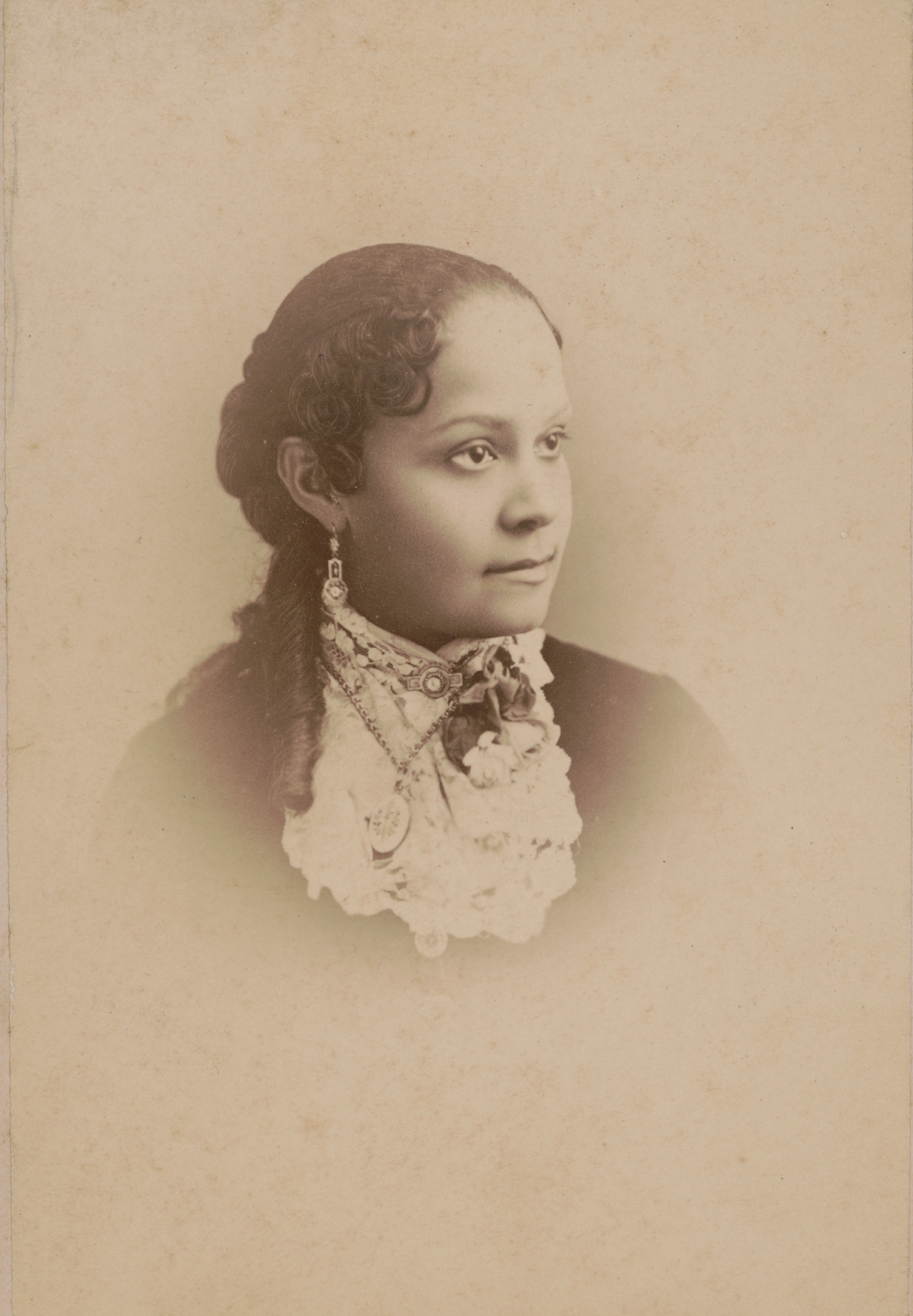
Pictures of Tubman and Truth have made their way into every elementary school history textbook. Far less well-known are the many other African-American women activists of the late-nineteenth and early twentieth centuries who fought for the rights of black Americans in education, at the voting booth, and everywhere else. During Reconstruction especially, many such activists rose to prominence in academia, journalism, and civic leadership. Women like Fannie Barrier Williams, at the top, whose wise, direct gaze illustrates her fearlessness as an educational reformer and suffragist, who, despite her maiden name, broke several barriers for black women in higher education and prominent public events like the 1893 Columbian Exposition. Against paternalistic claims that former slaves weren’t ready for citizenship, writes the Rochester Regional Library Council, Williams “called on all women to unite and claim their inalienable rights.”
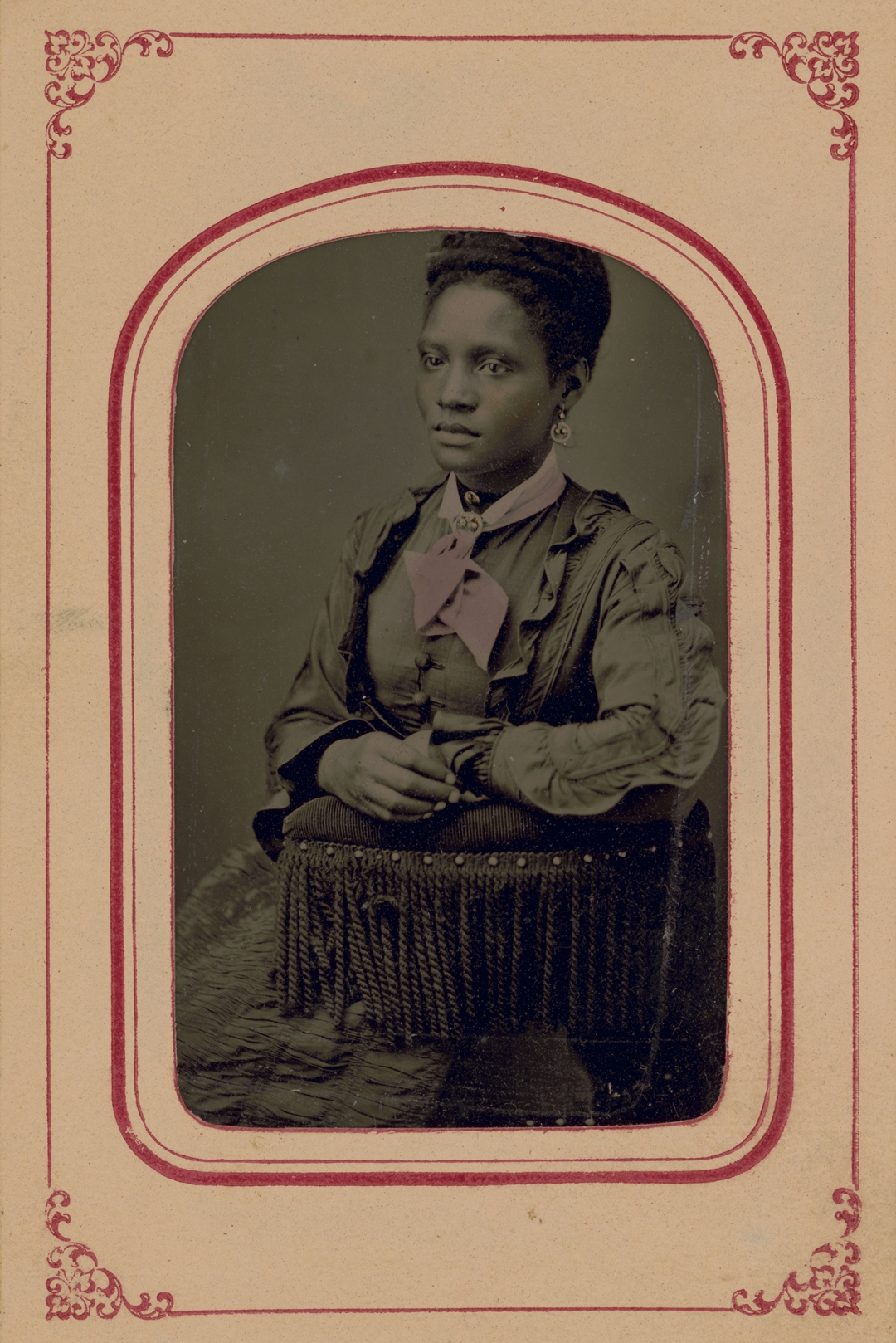
Above, we see Laura A. Moore Westbrook. Of the first generation to grow up after slavery, Westbrook received a master’s degree in 1880, the only woman in a class of four. She went on to teach and fight fiercely for formerly enslaved students in Texas, earning admiration, as Monroe Alphus Majors wrote in 1893, “in conspicuous instances and under very flattering circumstances” from contemporaries like Frederick Douglass. Majors’ characterization will sound patronizing to our ears, but in the rigid terms of the time, it offers nearly as vivid a portrait as her photograph: “Her motive to do good far surpasses her vanity, except when her race is attacked, then, manlike, she with the pen strikes back, and even goes beyond her loyalty to serve, but makes lasting impressions upon those who are so unfortunate to get within her range.”
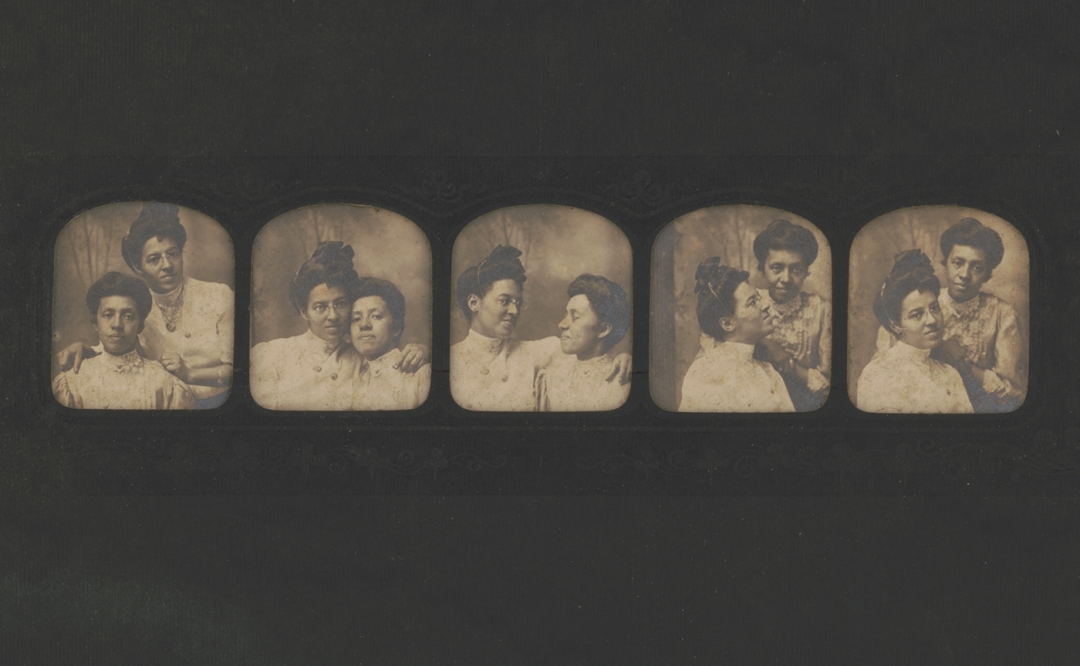
These images come from a Library of Congress archive of nineteenth-century African American activists from the collection of William Henry Richards, a professor at Howard University Law School from 1890 to 1928 and a staunch campaigner for civil rights and liberties. Most of the portraits are of the formal, staged variety, but we also have the more relaxed, even playful series of poses from activists Elizabeth Brooks and Emma Hackley, above. Richards’ collection, writes curator Beverly Brannon at the LoC site, includes many “people who joined him and others working in the suffrage and temperance movements and in education, journalism and the arts.” The photographs “show the women at earlier ages than most portraits previously available of them online.”
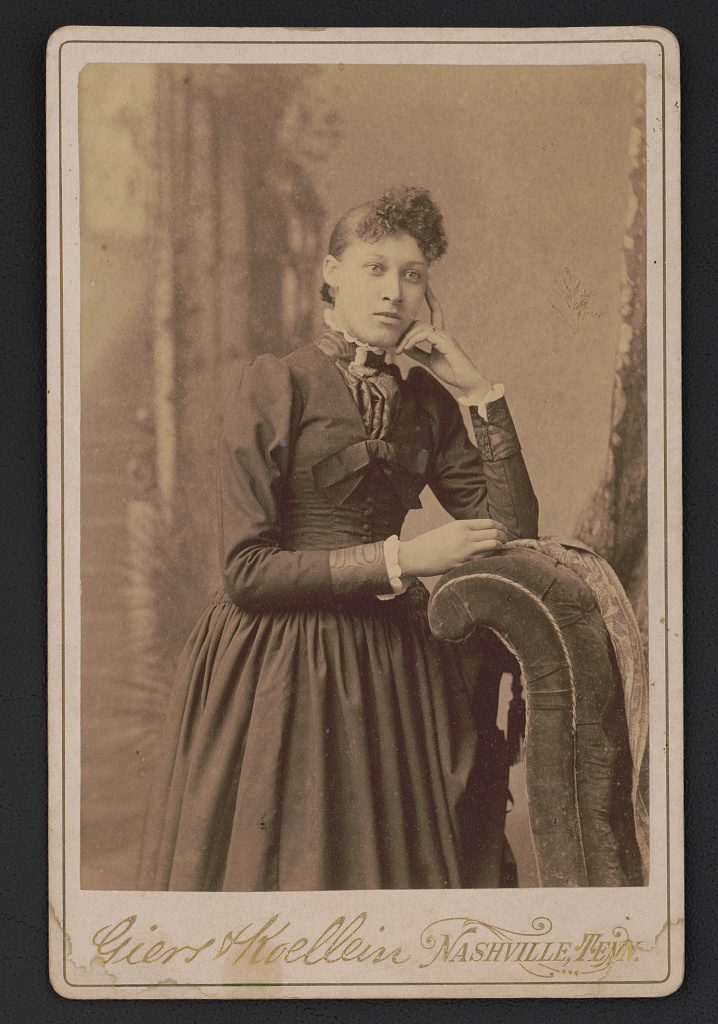
These portraits date from a time, notes Allison Meier at Hyperallergic, when “rights and opportunities for African Americans, especially women, remained severely limited.” Many “obscure black women writers,” journalists, and teachers “await their biographers,” argues Jonathan Daniel Wells, and perhaps the rediscovery of these photographs will prompt historians to reconsider their prominence. While they did not physically stand up to armed mobs or police battalions, these activists, writes Meier, “spoke out boldly against gender inequality, while at the same time remaining cognizant that especially in the so-called New South, racism, violence and murder were ever-present dangers for African American women and men.”
Hyperallergic/Library of Congress
Related Content:
Watch the Pioneering Films of Oscar Micheaux, America’s First Great African-American Filmmaker
Josh Jones is a writer and musician based in Durham, NC. Follow him at @jdmagness
Read More...How Ingenious Sign Language Interpreters Are Bringing Music to Life for the Deaf: Visualizing the Sound of Rhythm, Harmony & Melody
They are greeted like celebrities, with huge cheers and applause from the audience on Jimmy Kimmel Live!, for example, and it is well-deserved—they’re stars in their own right—but you probably won’t recognize their names. They’re American Sign Language interpreters of pop music, and their craft involves not only a mastery of ASL, but also empathy, creativity, spontaneity, dance, and some of the vivid interpretive moves of an air guitar champion (a rare art form indeed).
In the video explainer from Vox above, we meet one of the most talented of such interpreters, the poised yet highly animated Amber Galloway Gallego. She has interpreted over 400 artists—“literally every artist you could think of”—including stadium fillers like Adele, Kendrick Lamar, Drake, and, as you can see below in video from last year’s Lollapalooza, the Red Hot Chili Peppers, whose melancholy “Under the Bridge” takes on an entirely new energy through Gallego’s expressive hands, face, and body (she first appears at 1:22).
As she explains to Vox, ASL interpreters have for years communicated music to their audiences by drily making the sign in English for “Music” and leaving it at that. For Gallego, this was totally insufficient. The deaf community includes “a diverse group of people,” the Vox narrator says, “who have a wide range of residual hearing” across the audible spectrum. And everyone can feel music at certain volumes, especially in a live concert setting. But an interpreter, Gallego suggests, should be prepared not only to translate the lyrics of a song, but also the rhythm and, to a certain degree, the melody and harmony, as well as the general vibe, allowing deaf concert goers to be part of the total experience, as she puts it. (She can even interpret beatboxing.)
Since ASL already incorporates emotive gestures and facial expressions, Gallego simply adapted and expanded these into a repertoire of dance and musical sign. She interprets frequency, bringing her arms and hands closer to her waist for lower sounds and at her shoulders and above for high notes. She communicates pitch and rhythm with her face and hands in ways that both mimic the movement of sound waves and communicate how much she herself is grooving to a tune. “If we merely show the sign for music,” Gallego insists, “then we are doing an injustice as an interpreter.” Be warned, ASL interpreters, she sets the bar high.
To convey the meaning of a song’s lyrical content, a music interpreter must translate a tremendous amount of wordplay, rhyme, and metaphor into a visual form of communication. In the Vox video, Gallego shows how she does this effectively at the speed of Eminem’s motor mouth in a song like “The Monster,” and, though I can’t speak to the experience of someone from the deaf community, it’s impressive.
Gallego’s enthusiastic innovation and embrace of music signing has generated dozens of video interpretations on her YouTube channel (including classics of both Christmas and kids’ music and the irresistible glee of Chewbacca mom). And she has also promoted her rock-star-worthy work to millions on TV shows like Totally Biased with W. Kamau Bell and, as I mentioned, Jimmy Kimmel Live!, where, as you can see above, she tag teams (for the win) with two fellow music interpreters in a battle against rapper Wiz Khalifa.
Related Content:
“Alexander Hamilton” Performed with American Sign Language
Learn 48 Languages for Free Online: A Big Update to Our Master List
Josh Jones is a writer and musician based in Durham, NC. Follow him at @jdmagness
Read More...New Jim Jarmusch Documentary on Iggy Pop & The Stooges Now Streaming Free on Amazon Prime
FYI: Jim Jarmusch’s new documentary Gimme Danger–his “love letter” to punk icons Iggy Pop and The Stooges–is steaming free right now on Amazon Prime. If you have Amazon Prime, you can start streaming the film here. If you don’t, you can sign up for a 30-day free trial, watch the doc, and then decide whether to remain a subscriber or not. It’s your call. (Note: they also offer a similar deal for audiobooks from Audible.)
Having the watched the film just last weekend, I’ll say this: Gimme Danger is worth the watch. But it just scratches the surface of what Pop and the Stooges were all about. To go deeper, I’d recommend picking up a copy of Please Kill Me: The Uncensored Oral History of Punk (now released in a 20th anniversary edition), which gives you a more complete and raw account of the rise and fall of this influential band.
If you would like to support the mission of Open Culture, consider making a donation to our site. It’s hard to rely 100% on ads, and your contributions will help us continue providing the best free cultural and educational materials to learners everywhere. You can contribute through PayPal, Patreon, and Venmo (@openculture). Thanks!
Read More...An Epic Retelling of the Great Chinese Novel Romance of the Three Kingdoms: 110 Free Episodes and Counting
Romance of the Three Kingdoms is considered one of the Four Great Classical Novels of Chinese literature, and its literary influence in East Asia rivals that of Shakespeare in the English speaking world. “Written 600 years ago,” writes the BBC, “it is an historical novel that tells the story of a tumultuous period in Chinese history, the 2nd and 3rd centuries AD. Partly historical and partly legend, it recounts the fighting and scheming of the feudal lords and the three states which came to power as the Han Dynasty collapsed.”
And now the ancient meets the modern…
If you listen to the Romance of the Three Kingdoms podcast, you can hear John Zhu’s attempt to retell this epic tale and make it accessible to a Western audience. The first 110 episodes are available on YouTube, the web, and iTunes–with at least another 10 to come. Quite a feat. Have a listen.
To learn more about Romance of the Three Kingdoms, listen to this episode of the BBC’s In Our Time.
If you would like to support the mission of Open Culture, consider making a donation to our site. It’s hard to rely 100% on ads, and your contributions will help us continue providing the best free cultural and educational materials to learners everywhere. You can contribute through PayPal, Patreon, and Venmo (@openculture). Thanks!
Related Content:
1,000 Free Audio Books: Download Great Books for FreeThe History of Rome in 179 Podcasts
Read More...Support Us
We're hoping to rely on loyal readers, rather than erratic ads. Please click the Donate button and support Open Culture. You can use Paypal, Venmo, Patreon, even Crypto! We thank you!

About Us

Open Culture scours the web for the best educational media. We find the free courses and audio books you need, the language lessons & educational videos you want, and plenty of enlightenment in between.
Advertise With Us

FREE UPDATES!
GET OUR DAILY EMAIL
Get the best cultural and educational resources on the web curated for you in a daily email. We never spam. Unsubscribe at any time.
FOLLOW ON SOCIAL MEDIA

Open Culture editor Dan Colman scours the web for the best educational media. He finds the free courses and audio books you need, the language lessons & movies you want, and plenty of enlightenment in between.
Advertise With Us


