A Free Short Course on How Pixar Uses Physics to Make Its Effects
A new computer-animated spectacle that makes us rethink the relationship between imagination and technology seems, now, to come out every few months. Audiences have grown used to various computer animation studios all competing to wow them, but not so long ago the very notion of entertaining animation made with computers sounded like science fiction. All that changed in the mid-1980s when a young animator named John Lasseter breathed life into the CGI stars of such now simple-looking but then revolutionary shorts as The Adventures of André and Wally B. and Luxo Jr., the latter being the first independent production by a certain Pixar Animation Studios.
We know Pixar today as the outfit responsible for Toy Story, The Incredibles, WALL‑E, and other groundbreaking computer-animated features, each one more impressive than the last. How do they do it? Why, with ever-larger and more highly skilled creative and technological teams, of course, all of whom work atop a basic foundation laid by Lasseter and his predecessors in the art of computer animation, in the search for answers to one question: how can we get these digital machines to convincingly simulate our world?
After all, even imaginary characters must emote, move around, and bump into one another with conviction, and do it in a medium of light, wind, water, and much else at that, all ultimately undergirded by the laws of physics.
Thanks to Pixar and their competition, not a few members of the past couple generations have grown up dreaming of mastering computer animation themselves. Now, in partnership with online educational organization Khan Academy, they have a place to start: Pixar in a Box, a series of short interactive courses on how to “animate bouncing balls, build a swarm of robots, and make virtual fireworks explode,” which vividly demonstrates that “the subjects you learn in school — math, science, computer science, and humanities — are used every day to create amazing movies.” The effects course gets deeper into the nitty-gritty of just how computer animators have found ways of taking real physical phenomena and “breaking them down into millions of tiny particles and controlling them using computer programming.”
It all comes down to developing and using particle systems, programs designed to replicate the motion of the real particles that make up the physical world. “Using particles is a simplification of real physics,” says Pixar Effects Technical Director Matt Wong, “but it’s an effective tool for artists. The more particles you use, the closer you get to real physics. Most of our simulations require millions and millions of particles to create believable water,” for instance, which requires a level of computing power scarcely imaginable in 1982, when Pixar’s own effects artist Bill Reeves (who appears in the one of these videos) first used a particle system for a visual effect in Star Trek II. These effects have indeed come a long way, but as anyone who takes this course will suspect, computer animation has only begun to show us the worlds it can realize.
For more Pixar/Khan Academy courses, please see the items in the Relateds below.
Related Content:
Pixar & Khan Academy Offer a Free Online Course on Storytelling
Take a Free Online Course on Making Animations from Pixar & Khan Academy
Pixar’s 22 Rules of Storytelling … Makes for an Addictive Parlor Game
A Rare Look Inside Pixar Studios
The First 3D Digital Film Created by Ed Catmull, Co-Founder of Pixar (1970)
Based in Seoul, Colin Marshall writes and broadcasts on cities and culture. He’s at work on a book about Los Angeles, A Los Angeles Primer, the video series The City in Cinema, the crowdfunded journalism project Where Is the City of the Future?, and the Los Angeles Review of Books’ Korea Blog. Follow him on Twitter at @colinmarshall or on Facebook.
Read More...Bertrand Russell Writes an Artful Letter, Stating His Refusal to Debate British Fascist Leader Oswald Mosley (1962)
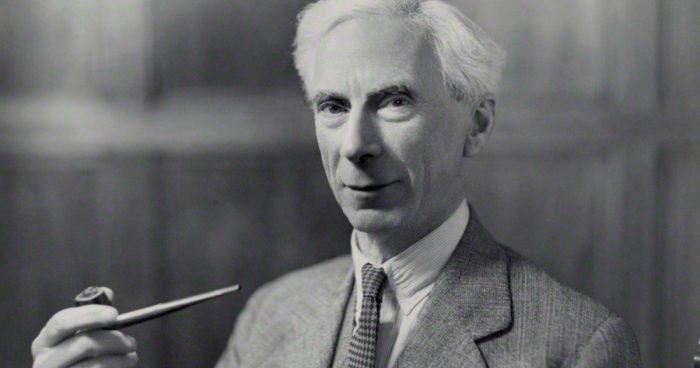
Image by National Portrait Gallery, via Wikimedia Commons
Changing the minds of others has never counted among humanity’s easiest tasks, and it seems only to have become an ever-stiffer challenge as history has ground along. Increasingly many, as Yale professor David Bromwich recently argued in the London Review of Books, “have had no practice in using words to influence people unlike themselves. That is an art that can be lost. It depends on a quantum of accidental communication that is missing in a life of organised contacts.” We might find ourselves in reasonably fruitful debates with basically like-minded friends, acquaintances, and strangers on the internet, but can we ever convince, or be convinced by, someone truly different from us?
Bertrand Russell doubted it. In 1962, long before the structures of the internet allowed us to build tighter echo chambers than ever before, the Nobel-winning philosopher “received a series of letters from an unlikely correspondent — Sir Oswald Mosley, who had founded the British Union of Fascists thirty years earlier,” writes Brain Pickings’ Maria Popova.
“Mosley was inviting — or, rather, provoking — Russell to engage in a debate, in which he could persuade the moral philosopher of the merits of fascism.” Even at the age of 89, with little time and much else to do, Russell declined with the utmost force and clarity in a piece of correspondence featured on Letters of Note:
Dear Sir Oswald,
Thank you for your letter and for your enclosures. I have given some thought to our recent correspondence. It is always difficult to decide on how to respond to people whose ethos is so alien and, in fact, repellent to one’s own. It is not that I take exception to the general points made by you but that every ounce of my energy has been devoted to an active opposition to cruel bigotry, compulsive violence, and the sadistic persecution which has characterised the philosophy and practice of fascism.
I feel obliged to say that the emotional universes we inhabit are so distinct, and in deepest ways opposed, that nothing fruitful or sincere could ever emerge from association between us.
I should like you to understand the intensity of this conviction on my part. It is not out of any attempt to be rude that I say this but because of all that I value in human experience and human achievement.
Yours sincerely,
Bertrand Russell
Russell passed on eight years later, in 1970, and Mosley a decade thereafter. “His final message to the British people appeared in a letter to the New Statesman written only a week earlier,” remembers journalist Hugh Purcell in that newspaper. It concerned an article’s description of the “Olympia rally,” the 1934 debacle that lost the British Union of Fascists much of what public support it enjoyed. “The largest audience ever seen at that time assembled to fill the Olympia hall and hear the speech,” Mosley insisted. “A small minority determined by continuous shouting to prevent my speech being heard. After due warning our stewards removed with their bare hands men among whom were some armed with such weapons as razors and knives. The audience were then able to listen to a speech which lasted for nearly two hours.”
The New Statesmen, printing Mosley’s letter posthumously, ran it under this introduction: “Throughout his life he was intent on persuading people that their view of history was mistaken.” Despite his unceasing efforts, he ultimately persuaded few — and it would hardly have required as keen an observer as Russell to see that someone like Mosley certainly wasn’t about to let himself be persuaded by anyone else.
via Letters of Note/Brain Pickings and The Bertrand Russell Archives, McMaster University Library
Related Content:
Bertrand Russell’s Ten Commandments for Living in a Healthy Democracy
Listen to ‘Why I Am Not a Christian,’ Bertrand Russell’s Powerful Critique of Religion (1927)
Bertrand Russell and F.C. Copleston Debate the Existence of God, 1948
Face to Face with Bertrand Russell: ‘Love is Wise, Hatred is Foolish’
How Bertrand Russell Turned The Beatles Against the Vietnam War
Based in Seoul, Colin Marshall writes and broadcasts on cities and culture. He’s at work on a book about Los Angeles, A Los Angeles Primer, the video series The City in Cinema, the crowdfunded journalism project Where Is the City of the Future?, and the Los Angeles Review of Books’ Korea Blog. Follow him on Twitter at @colinmarshall or on Facebook.
Read More...How Did Nietzsche Become the Most Misunderstood & Bastardized Philosopher?: A Video from Slate Explains
Is there a more misunderstood philosopher than Friedrich Nietzsche? Granted, the question makes two assumptions: 1) That people read philosophy 2) That people read Friedrich Nietzsche. Perhaps neither of these things is widely true. Many people get their philosophy from film and television: Good Will Hunting, True Detective, Coming to America.… There’s nothing inherently wrong with that. I don’t read medical books. Most of my knowledge of medicine comes from hospital dramas. (If you ever hear me make unsourced medical claims, please remind me of this.)
But back to Nietzsche…. If few people read philosophy in general and Nietzsche in particular, why is his name so well-known, why are his ideas so badly mangled? Because some of the people who read a little Nietzsche write films and television shows. In many of them, he emerges as a twisted nihilist with no scruples and little regard for human life. In the most infamous case of Nietzsche-twisting, the philosopher’s sister extracted from his books what she wanted them to say, which sounded very much like the ideas of the Nazis who later quoted him.
Nietzsche’s mastery of the aphorism and his fiercely polemical nature have made him supremely quotable: “God is dead,” “What does not kill us, makes us stronger.” And so on. Bring the context of these statements to bear and they sound nothing like what we have imagined. The video above from Shon Arieh-Lerer and Daniel Hubbard explains how Nietzsche became “the most absurdly bastardized philosopher in Hollywood.” It leads with a tellingly hilarious clip from The Sopranos in which A.J. calls the philosopher “Niche” and Tony tells him, “even if God is dead, you’re still gonna kiss his ass.”
We might half expect Tony to embrace the German philosopher. The way Nietzsche’s been interpreted seems to justify the principles of sociopaths. This should not be so. “In reality,” the video’s producers write at Slate, “Nietzsche was a very subtle thinker.” The two biggest misconceptions about Nietzsche, that he was a nihilist and an anti-Semite, get his philosophy grievously wrong. Nietzsche “wrote letters to his family and friends telling them to stop being anti-Semitic” (and calling anti-Semites “aborted fetuses.”) He famously broke off his intense friendship with Richard Wagner in part because of Wagner’s anti-Semitism. His work is not kind to Judaism, but he rages against anti-Semitism.
Far from endorsing nihilist ideas, Nietzsche feared their rise and consequences. So how did he become “a darling of Nazis and sad teenagers?” The caricature arose in part because readers from his day to ours have, like Tony Soprano, found his complete and total rejection of Judeo-Christian morality too shocking to get beyond, mischaracterizing it as tantamount to the rejection of all human values. On the contrary, Nietzsche argued for the “revaluation” of values, “the exact opposite of what one might expect,” he wrote,” not at all sad and gloomy, but much more like a new and barely describable type of light, happiness, relief, amusement, encouragement, dawn.”
Of course, the fact that Nietzsche—or a butchered version thereof—was co-opted by the Nazis did more to sully his name than anything he actually wrote. “By the time Nietzsche made his way into American pop culture,” says Arieh-Lerer, “we were predisposed to getting him wrong.” Nietzsche may have had some strange quasi-mystical conceptions, and he believed in a definite hierarchy of cultures, but he was not a racist or a psychopath. He has been as misunderstood as many of the sad teenagers who love him. Perhaps you will be moved to read him for yourself after seeing his rehabilitation above. If so, we can point you toward online editions of nearly all of his books here.
Related Content:
What Did Nietzsche Really Mean When He Wrote “God is Dead”?
Download Walter Kaufmann’s Lectures on Nietzsche, Kierkegaard, Sartre & Modern Thought (1960)
The Digital Nietzsche: Download Nietzsche’s Major Works as Free eBooks
Josh Jones is a writer and musician based in Durham, NC. Follow him at @jdmagness
Read More...Watch Leonard Bernstein Conduct the Vienna Philharmonic Using Only His Eyebrows
Perhaps you’ll recall the episode from Seinfeld when Bob Cobb, a conductor for The Police Orchestra, insists that everyone call him “maestro”–and only “maestro.” The pretentiousness of the suggestion makes for some good comedy, that’s for sure.
But occasionally the honorific title is fitting. Here’s one such instance. Above, watch Leonard Bernstein conduct the Vienna Philharmonic Orchestra, leading them through Haydn’s Symphony No. 88 … with only his eyebrows and small facial gestures. No baton, thank you. A maestro indeed.
If you would like to support the mission of Open Culture, consider making a donation to our site. It’s hard to rely 100% on ads, and your contributions will help us continue providing the best free cultural and educational materials to learners everywhere. You can contribute through PayPal, Patreon, and Venmo (@openculture). Thanks!
Related Content:
Hear What is Jazz?: Leonard Bernstein’s Introduction to the Great American Art Form (1956)
Leonard Bernstein Demystifies the Rock Revolution for Curious (if Square) Grown-Ups in 1967
Read More...“Stop It and Just DO”: Benedict Cumberbatch Reads Advice on Overcoming Creative Blocks, Written by Sol LeWitt to Eva Hesse (1965)
A quick fyi: this video is a little not safe for work.
You know you want to create something, but how on Earth to get it out of your mind and into reality? Sometimes you simply can’t see the way forward, a situation in which every creator finds themselves sooner or later. When the sculptor Eva Hesse hit a creative block in 1965, she wrote of her problem to a close friend, the conceptual artist Sol Lewitt. He emphatically suggested that she “just stop thinking, worrying, looking over your shoulder,” and furthermore that she stop
wondering, doubting, fearing, hurting, hoping for some easy way out, struggling, grasping, confusing, itching, scratching, mumbling, bumbling, grumbling, humbling, stumbling, numbling, rambling, gambling, tumbling, scumbling, scrambling, hitching, hatching, bitching, moaning, groaning, honing, boning, horse-shitting, hair-splitting, nit-picking, piss-trickling, nose sticking, ass-gouging, eyeball-poking, finger-pointing, alleyway-sneaking, long waiting, small stepping, evil-eyeing, back-scratching, searching, perching, besmirching, grinding, grinding, grinding away at yourself. Stop it and just
DO
You can read Lewitt’s reply in full, which offers much more colorful advice and supporting verbiage besides (as well as a far bolder “DO” than HTML can render), at Letters of Note. Though personally tailored to Hesse and her distinctive sensibilities, Lewitt’s suggestions also show the potential for wider application: “Try and tickle something inside you, your ‘weird humor.’ ” “Don’t worry about cool, make your own uncool.” “If you fear, make it work for you — draw & paint your fear & anxiety.” “Practice being stupid, dumb, unthinking, empty.” “Try to do some BAD work — the worst you can think of and see what happens but mainly relax and let everything go to hell — you are not responsible for the world — you are only responsible for your work — so DO IT.”
Though all this has plenty of impact on the page, it has an entirely different kind when performed by actor (and champion letter-reader) Benedict Cumberbatch, as seen and heard in the Letters Live video above. Putting on a not-overdone New York accent, the English star of Sherlock and The Imitation Game delivers with all necessary force Lewitt’s advice to “leave the ‘world’ and ‘ART’ alone and also quit fondling your ego,” to “empty your mind and concentrate on what you are doing,” to know “that you don’t have to justify your work — not even to yourself.” Be warned that this creative coaching session does gets a little NSFW at times, but then, so do some of the finest works of art — and so do the truths we need to hear to make them.
Related Content:
How Famous Writers Deal With Writer’s Block: Their Tips & Tricks
Based in Seoul, Colin Marshall writes and broadcasts on cities and culture. He’s at work on a book about Los Angeles, A Los Angeles Primer, the video series The City in Cinema, the crowdfunded journalism project Where Is the City of the Future?, and the Los Angeles Review of Books’ Korea Blog. Follow him on Twitter at @colinmarshall or on Facebook.
Read More...Rare Recordings of Burroughs, Bukowski, Ginsberg & More Now Available in a Digital Archive Created by the Maryland Institute College of Art (MICA)
Image via Christiaan Tonnis
Americans can be quite ignorant of the richness of our country’s cultural history. Part of this ignorance, I suspect, comes down to prejudice. Innovative American artists throughout history have come from groups often demonized and marginalized by the wider society. The dominance of corporate commerce also impoverishes the cultural landscape. Poetry and experimental art don’t sell much, so some people think they have little value.
Imagine if we were to invert these attitudes in public opinion: American poetry and art allow us to gain new perspectives from people and parts of the country we don’t know well; to enlarge and challenge our religious and political understanding; to experience a very different kind of economy, built on aesthetic invention and free intellectual enterprise rather than supply, demand, and profit. Creativity and finance are not, of course, mutually exclusive. But to consistently favor one at the expense of the other seems to me a great loss to everyone.
We find ourselves now in such a situation, as public universities, the National Endowment for the Arts, the National Endowment for the Humanities, and the Corporation for Public Broadcasting face severe cuts or possible de-funding.
Such a political move would devastate many of the institutions that foster and preserve the country’s art and culture, and relegate the arts to the private sphere, where only sums of private money determine whose voices get heard. We can, however, be very appreciative of private institutions who make their collections public through open access libraries like the Internet Archive.
One such collection comes from the Digital Initiatives Unit of Decker Library at the Maryland Institute College of Art (MICA), one of the oldest art colleges in the U.S., and one of the most highly regarded. They have digitally donated to Archive.org “a number of rare and previously unreleased audio recordings,” they write in a press release, “spanning the 1960s through the late 1990s” and consisting of “over 700 audiocassette tapes” documenting “literature and poetry readings, fine art and design lectures, race and culture discussions” and college events.
These include (enter the archive here) a two hour poetry reading from Allen Ginsberg in 1978, at the top, with several other readings and talks from Ginsberg in the archive, the reading below it from Eileen Myles in 1992, and readings and talks above and below from Amiri Baraka, Anne Waldman, and William S. Burroughs. The collection represents a “strong focus on literature and poetry,” and features “a symposium on the Black Mountain poets.” Given the school’s mission, you’ll also find in the archive “a large selection of talks and lectures by visual artists, such as Elaine de Kooning, Alice Neel, Gordon Parks, Ad Rhinehart and Ben Shahn.”
Collections like this one from MICA and the Internet Archive allow anyone with internet access to experience in some part the breadth and range of American art and poetry, no matter their level of access to private institutions and sources of wealth. But the internet cannot fully replace or supplant the need for publicly funded arts initiatives in communities nationwide.
Related Content:
An 18-Hour Playlist of Readings by the Beats: Kerouac, Ginsberg & Even Bukowski Too
13 Lectures from Allen Ginsberg’s “History of Poetry” Course (1975)
Josh Jones is a writer and musician based in Durham, NC. Follow him at @jdmagness
Read More...Alexis De Tocqueville’s Democracy in America: An Animated Introduction to the Most Insightful Study of American Democracy
We cannot rightly see ourselves without honest feedback. Those who surround themselves with sycophants and people just like them only hear what they want to hear, and never get an accurate sense of their capabilities and shortcomings. And so the best feedback often comes from people outside our in-groups. This can be as true of nations as it can be of individuals, provided our critics are charitable, even when unsparingly honest, and that they take a genuine interest in our well-being.
These qualities well describe one of the sharpest critics of the United States in the past two centuries. Alexis de Tocqueville, aristocratic French lawyer, historian, and political philosopher, who traveled to the fledgling country in 1831 to observe a nation then in the grip of a populist fever under Andrew Jackson, a president who became notorious for his expropriation of indigenous land, ruthless relocation policies, and embrace of Southern slavery. But the groups who flourished under Jackson’s rule did so with a tremendous enthusiasm that the French thinker admired but also viewed with a very skeptical eye.
De Tocqueville published his observations and analyses of the United States in a now-famous book, Democracy in America. Though we’ve come to take the idea of democracy for granted, for the young Frenchman, a child of Napoleonic Europe, it was “a highly exotic and new political option,” as Alain de Botton tells us in his animated video introduction above. De Tocqueville “presciently believed that democracy was going to be the future all over the world, and so he wanted to know, ‘what would that be like?’”
With a grant from the French government, De Tocqueville traveled the country (then less than half its current size) for nine months, getting to know its people and customs as best he could, and making a series of general observations that would form the vignettes and arguments in his book. He was “particularly alive to the problematic and darker sides of democracy.” De Botton discusses five critical insights from Democracy in America. See three of them below, with quotes from De Tocqueville himself.
1. Democracy Breeds Materialism.
For De Tocqueville one kind of materialism—the excessive pursuit of wealth—disposed the country to another, “a dangerous sickness of the human mind”—the denial of a spiritual or intellectual life. “While man takes pleasure in this honest and legitimate pursuit of well-being,” he wrote, “it is to be feared that in the end he may lose the use of his most sublime faculties, and that by wanting to improve everything around him, he may in the end degrade himself.”
De Tocqueville, says De Botton, observed that “money seemed to be quite simply the only achievement that Americans respected” and that “the only test of goodness for any item was how much money it happens to make.”
2. Democracy Breeds Envy & Shame
“When all the prerogatives of birth and fortune have been abolished,” wrote De Tocqueville, “when every profession is open to everyone, an ambitious man may think it is easy to launch himself on a great career and feel that he has been called to no common destiny. But this is a delusion which experience quickly corrects.” Unable to rise above his circumstances, and yet believing that he should be equal to his neighbors in achievements, such a person may blame himself and feel ashamed, or succumb to envy and ill will.
De Tocqueville was far too optimistic about the abolishment of “prerogatives of birth and fortune,” but many Americans might recognize themselves still in his general picture, in which “the sense of unlimited opportunity could initially encourage a surface cheerfulness.” And yet, De Botton notes, “as time passed and the majority failed to raise themselves, Tocqueville noted that their mood darkened, that bitterness took hold and choked their spirits, and that their hatred of themselves and their masters grew fierce.”
3. Tyranny of the Majority
De Tocqueville, De Botton says, thought that “democratic culture… often ends up demonizing any assertion of difference, and especially cultural superiority, even though such attitudes might be connected with real merit.” In such a state, “society has an aggressive leveling instinct.”
It wasn’t only attacks on high culture that De Tocqueville feared, but what he called the “Omnipotence of the Majority,” a phrase he used to denote the power of public opinion as an almost totalitarian means of social control. In volume two of his study, published in 1840, De Tocqueville devoted particular attention to “the power which that majority naturally exercises over the mind…. By whatever political laws men are governed in the ages of equality, it may be foreseen that faith in public opinion will become for them a species of religion, and the majority its ministering prophet.”
From this prediction, De Tocqueville foresaw “two tendencies; one leading the mind of every man to untried thoughts, the other prohibiting him from thinking at all.”
De Botton goes on to discuss two closely related critiques: democracy’s suspicion of all authority and its undermining of free thought. Rather than encountering the kind of marketplace of ideas the country prides itself on fostering, he found in few places “less independence of mind, and true freedom of discussion, than in America.” The criticism is harsh, and De Tocqueville did not flatter his hosts often, and yet for all of its “inherent drawbacks,” De Botton writes at the School of Life, the Frenchman “isn’t anti-democratic.”
His aim is “to get us to be realistic” about democratic society and its tendencies to inhibit rather than enlarge many freedoms. As Arthur Goldhammer observes at The Nation, De Tocqueville believed that “True freedom lay not in the pursuit of individualistic aims, but “in ‘slow and tranquil’ action in concert with others sharing some collective purpose.”
Related Content:
Bertrand Russell’s Ten Commandments for Living in a Healthy Democracy
Josh Jones is a writer and musician based in Durham, NC. Follow him at @jdmagness
Read More...Slavoj Žižek Expounds on His Hatred of Teaching, Grading Papers, and Particularly Holding Office Hours
“Those who can, do,” so we often used to hear, “and those who can’t, teach.” Nowadays the situation seems to have transformed into something more like, “Those who can, do, at least in the occasional free moments when they don’t have to teach.” At first you just take a teaching gig on the side to supplement your real career, and before you know it teaching has usurped that real career almost entirely. We’ve all heard complaints from academic friends about the seemingly unbreakable cycle of lecturing, grading, and holding office hours, but how many have put it in terms as stark as Slavoj Žižek does in the interview above?
“I hate, I hate, I hate — okay, talks are okay, but I hate giving classes,” says the Slovenian philosopher-critic-showman at a 2014 University of Cincinnati College of Design, Architecture, Art and Planning conference devoted to his work. “I’m proud to say, I did teach a couple of semesters here, and all the grading was pure bluff. I even openly told the students. I told them, I remember — at the New School, for example, in New York, ‘If you don’t give me any of your shitty papers, you’ll get an A. If you give me a paper, I may read it and not like it, you can get a lower grade.’ And it worked — I got no papers.” And so he solves the problem of grading.
But what of office hours? These he calls “the main reason I don’t want to teach,” because “students, they’re like other people; the majority are boring idiots, so I cannot imagine a worse experience than some idiot comes and starts to ask you questions.” In other countries one might find a way to endure it, but “the problem is, here in United States, students tend to be so open that if you’re kind to them, they even start to ask you personal questions, like private problems, could you help them, and so on. What should I tell them? ‘I don’t care. Kill yourself. Not my problem.’ ”
These teaching experiences led Žižek’s to one conclusion: “I like universities without students.” But not everyone cheers his pronouncement: “Whenever something like this pops up, I worry that some people will see it and say, ‘You see? That’s what I’ve been saying about those ivory tower types all along,’ ” writes one anonymous academic in response. “Žižek is an outlier, in terms of both his stature and his attitude. Most working academics can’t get away with being dismissive of students, and even if we could, almost all of us wouldn’t.”
Slate’s Rebecca Schuman argues that the “real problem with Žižek isn’t that he feels this way or that he says these things aloud. It’s that he does so and people think it’s hilarious. It’s that his view is, believe it or not, a common ‘superstar’ view of students — so common, in fact, that if you work at a research university and actually like teaching, you should maybe pretend you don’t, lest you appear not ‘serious’ enough about your research.” A semi-frequent critic of Žižek, most recently of his endorsement of Donald Trump (“after all, the two thrice-married, outspoken older gentlemen do have quite a bit in common, a fact that would surely horrify them both”), Schuman knows that the fault lies never so much with the provocateur himself as it does with our tendency to take his provocations at face value.
Related Content:
Slavoj Žižek Answers the Question “Should We Teach Children to Believe in Santa Claus?”
Slavoj Žižek Calls Political Correctness a Form of “Modern Totalitarianism”
Based in Seoul, Colin Marshall writes and broadcasts on cities and culture. He’s at work on a book about Los Angeles, A Los Angeles Primer, the video series The City in Cinema, the crowdfunded journalism project Where Is the City of the Future?, and the Los Angeles Review of Books’ Korea Blog. Follow him on Twitter at @colinmarshall or on Facebook.
Read More...Bach’s Most Famous Organ Piece Played on Wine Glasses
Robert Tiso takes stemmed wine glasses and turns them into a magical musical instrument–or what he calls the “glass harp.” As his website explains, “each glass is tuned by adding a precise amount of water (watch a tutorial here), while the sound is produced by rubbing the fingertips around the rims, simulating the friction of a violin bow.” Above you can watch him play Bach’s “Toccata and Fugue in D minor” (BWV 565), the free sheet music for which you can find here. And if you head over to Tiso’s YouTube channel, you can watch him tackle Ravel, Tchaikovsky, Beethoven, Pachelbel, and much more. Enjoy.
If you would like to support the mission of Open Culture, consider making a donation to our site. It’s hard to rely 100% on ads, and your contributions will help us continue providing the best free cultural and educational materials to learners everywhere. You can contribute through PayPal, Patreon, and Venmo (@openculture). Thanks!
Related Content:
All of Bach is Putting Bach’s Complete Works Online: 150 Done, 930 to Come
Download the Complete Organ Works of J.S. Bach for Free
JS Bach’s The Well-Tempered Clavier Artistically Animated with Pulsing Neon Lights
Download the Complete Organ Works of J.S. Bach for Free
Read More...Hamilton’s Lin-Manuel Miranda Creates a Playlist of Protest Music for Our Troubled Times

Photo by Steve Jurvetson, via Flickr Commons
In 1992 Ice‑T’s metal band Body Count mastered the art of shock politics when the song “Cop Killer” put them “at the centre of a national outrage.” But their political ferocity may have seemed much diminished when, in 2015, they released a tongue-in-cheek update of Suicidal Tendencies’ “Institutionalized” in which Ice‑T rails against his wife, bad tech support, and an interrupted ham sandwich while on the set of Law & Order.
The past year’s events have jolted Body Count back into fighting form. Their recent release “No Lives Matter” combines topical social critique with “Cop Killer”-style confrontation in a pummeling track reminiscent of another 90s rap-metal activist stalwart. Ice‑T may have moved on from L.A. gang life to comfortable TV stardom, but few would deny him his street cred or his continued ability to size up the situation of the American underclass.
Another rapper-slash-actor (slash-poet-slash-composer) has entered the world of protest music from a decidedly different sphere. Now internationally famous for his musical Hamilton, Lin-Manuel Miranda’s work doesn’t speak truth to power as much as it makes power speak its truth. Hamilton, writes Mary Grace Garis at Bustle, “is a searing reminder that America is very much founded by immigrants facing persecution, and that our freedom, likewise, was fought for by immigrants.”
Their musical venues and political visions may span a wide Venn diagram, but like Body Count’s latest, Hamilton draws on both contemporary political rhetoric and music from the heyday of “conscious” hip-hop and alternative. Miranda has widely shared his influences in his HAMthology Playlist, and he remade several of the show’s songs with some of his idols on The Hamilton Mixtape. Continuing his curatorial role, and having “learned how to use the Spotify thingy on my day off,” Miranda now brings his fans the playlist above, which he calls “Rise Up Eyes Up Wise Up.”
The new mix begins with The Hamilton Mixtape’s “Immigrants (We Get the Job Done)” and moves on to a thoroughly eclectic but SFW mix of Green Day, Talib Kweli, Regina Spektor, Bob Dylan, Ruben Blades, and many others. It’s downtempo protest music, overall—no Body Count or Rage Against the Machine. Even Green Day’s entry is a ballad, “Are We the Waiting” from American Idiot. But then again, Hamilton’s fans often tend toward the downtempo end of the spectrum. Let a thousand protest songs bloom, I say.
Miranda announced the playlist on a new Twitter account, where he’s received a couple hundred replies, including one from a fan who put the mix on Google Play. For those so inspired to revisit or hear for the first time Hamilton’s reimagining of the American experiment, find the original cast recording below. If you need Spotify’s free software, download it here.
via Bustle
Related Content:
A Whiskey-Fueled Lin-Manuel Miranda Reimagines Hamilton as a Girl on Drunk History
Alexander Hamilton: Hip-Hop Hero at the White House Poetry Evening
“Alexander Hamilton” Performed with American Sign Language
Josh Jones is a writer and musician based in Durham, NC. Follow him at @jdmagness
Read More...Support Us
We're hoping to rely on loyal readers, rather than erratic ads. Please click the Donate button and support Open Culture. You can use Paypal, Venmo, Patreon, even Crypto! We thank you!

About Us

Open Culture scours the web for the best educational media. We find the free courses and audio books you need, the language lessons & educational videos you want, and plenty of enlightenment in between.
Advertise With Us

FREE UPDATES!
GET OUR DAILY EMAIL
Get the best cultural and educational resources on the web curated for you in a daily email. We never spam. Unsubscribe at any time.
FOLLOW ON SOCIAL MEDIA

Open Culture editor Dan Colman scours the web for the best educational media. He finds the free courses and audio books you need, the language lessons & movies you want, and plenty of enlightenment in between.
Advertise With Us


