Seth Godin’s Startup School: A Free Mini-Course for New Entrepreneurs

Image by Joi Ito, via Wikimedia Commons
Briefly noted: If you’re interested in entrepreneurship and marketing, you’ve likely encountered Seth Godin and his ever popular blog. Or perhaps you’ve read some of his bestselling books? But maybe you’ve never come across this: the “Startup School” where Godin guides 30 entrepreneurs through “how to build and run their dream business.” On his blog, Godin wrote back in 2012:
I love startups. Not only do they bring the promise of rapid growth and real change, but everything is up for grabs. Organizations that start with a clean sheet of paper have the difficult task of paying the bills, but they also have the luxury of ignoring yesterday in order to focus exclusively on tomorrow.
Through the years, I’ve started a bunch of companies and enjoyed brainstorming with the people who have launched companies big and small, from AOL when they only had a dozen employees to some of the very cool organizations that come through the doors of NY Techstars.
Next month, I’m going to be running a small school–a few days for a few dozen startup founders… For those that won’t be able to make it, I’ll be recording the session and editing it down into something I can share here on the blog for free a few months later.
Below, you can stream those 15 free recordings, each of which runs 18–25 minutes. We’ve embedded the first segment, “Freelancer or Entrepreneur?.” Further down you’ll find links to the remaining ones, or you can get them on SoundCloud and iTunes. Godin’s “Startup School” will be added to our collection of Free Online Business Courses, where you’ll also find the useful YCombinator course, How to Start a Startup.
1) Freelancer or Entrepreneur?
7) Advertising and Competitors
10) Tactics
11) Cash Flow
12) The Dip
h/t Eli
Related Content:
Seth Godin: The Wealth of Free (Semi-Animated)
Free Online Business Courses
Start Your Startup with Free Stanford Courses and Lectures
Read More...Chris Rock Reads James Baldwin’s Still Timely Letter on Race in America: “We Can Make What America Must Become”
A black quarterback refuses to stand during the national anthem—a song, incidentally, written by a “patriot” who was also a “bigot” and slaveowner, “vehemently opposed to abolition.” The quarterback declares that he will not “show pride in a flag for a country that oppresses black people and people of color.” The quarterback is told he has disrespected the country, the police, and the military. His critics become enraged, apoplectic. He is told he should leave the country. He is mocked by thousands of people who point to his wealth and privileged, adoptive upbringing. An upbringing among white people. Such success, the underlying logic goes, and such a childhood should have made the quarterback patriotic, grateful, colorblind.…
What if the quarterback had not grown up privileged, but in one of many communities of color that bear the brunt of well-documented but mostly ignored police violence and institutional discrimination and impoverishment? How would his actions be received then? We can imagine much the same, given the reaction to earlier, less-privileged sports figures, to Black Lives Matter protesters around the country, and to movements of the past. (Until last year, nine men in South Carolina still bore convictions for trespassing after their sit-in protests in 1961.) Protesting the country’s racist past and present—like protesting the country’s wars, inequality, or environmental depredations—is criminal, we’re told, blasphemous, tantamount to treason… or terrorism. The nation is innocent of all charges, and the protestors are bitter, naive, hateful, and worse. For readers of James Baldwin, it all sounds terribly familiar.
Baldwin’s is a difficult literary legacy: while we rejoice that he is still so often read, we lament that so many of his contemporary observations remain relevant. In 1962, Baldwin published an essay in The Progressive in the form of a letter to his nephew, James. Later collected in The Fire Next Time, the letter provided the inspiration for Ta-Nehisi Coates’ recent bestseller, Between the World and Me, written as a letter to his then 15-year-old son. In the video above—from this January’s star-studded MLK Now celebration—Chris Rock reads Baldwin’s passionate letter, itself an act of protest, unpatriotic, if you like, in which he levies the same charges against the nation as Colin Kaepernick has fifty-four years later.
“This is the crime of which I accuse my country and my countrymen,” writes Baldwin, “and for which neither I nor time nor history will ever forgive them, that they have destroyed and are destroying hundreds of thousands of lives and do not know it and do not want to know it.”
Now, my dear namesake, these innocent and well meaning people, your countrymen, have caused you to be born under conditions not far removed from those described for us by Charles Dickens in the London of more than a hundred years ago. I hear the chorus of the innocents screaming, “No, this is not true. How bitter you are,” but I am writing this letter to you to try to tell you something about how to handle them, for most of them do not yet really know that you exist. I know the conditions under which you were born for I was there. Your countrymen were not there and haven’t made it yet. Your grandmother was also there and no one has ever accused her of being bitter. I suggest that the innocent check with her. She isn’t hard to find. Your countrymen don’t know that she exists either, though she has been working for them all their lives.
Baldwin’s ironic insistence on the country’s “innocence” is complex, his language filled with the cosmic imagery of the jeremiad. The people Baldwin speaks of really are in a sense “innocent,” in that they too are victims, “still trapped in a history which they do not understand and until they understand it, they cannot be released from it.” People, as Coates put it, trapped in an unreal dream. “We cannot be free,” he writes, “until they are free.” With the coming of civil rights-era fights against racism, however, “those innocents who believed that your imprisonment made them safe are losing their grasp of reality.”
Nonetheless, he urges his nephew to stay and “with love… force our brothers to see themselves as they are, to cease fleeing from reality and begin to change it.” Despite the grim, prophetic tenor of his message, Baldwin ends on a note of hope, one that recognizes love of country not as sentimental, ritualized loyalty pledges, but as a struggle and a reckoning with that country’s ugly truths:
For this is your home, my friend. Do not be driven from it. Great men have done great things here and will again and we can make America what America must become.
Related Content:
James Baldwin Debates Malcolm X (1963) and William F. Buckley (1965): Vintage Video & Audio
Ralph Ellison Reads from His Novel-in-Progress, Juneteenth, in Rare Video Footage (1966)
Josh Jones is a writer and musician based in Durham, NC. Follow him at @jdmagness
Read More...Hear 508 Hours of Songs Recorded by Rudy Van Gelder (1924–2016), the Engineer Who Created the Sound of Modern Jazz
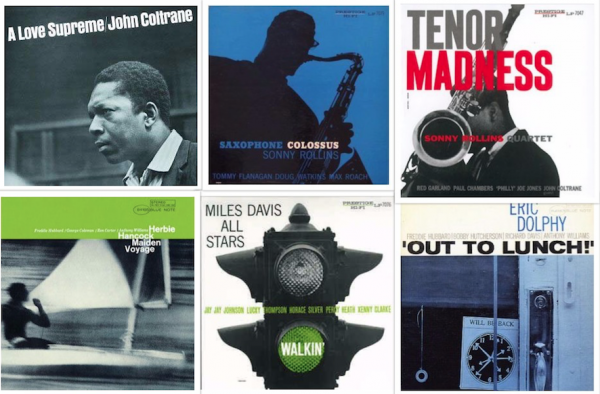
The art of audio engineering is mostly a dark one, an alchemy performed behind closed studio doors by people who speak a technical language most of us don’t recognize. That is until recently. Musicians amateur and professional have had to get behind the controls themselves and learn how to record their own music, a function of decimated studio budgets and easily available digital versions of once rarified and prohibitively expensive analog equipment. As with all technological developments that put more control into the hands of laypeople, the results are mixed: a proliferation of quirky, interesting, homemade music, yes, and artists with total control over their production methods and the means to release their music when and how they please…
But with the democratization of recording technology, I fear we may begin to forget what really great, really expensive, audio engineering sounds like, an unheard-of consideration in the fifties and sixties, when the process may as well have been magic to most record buyers, and when engineer Rudy Van Gelder recorded some of the greatest—and best sounding—jazz albums ever made. A Love Supreme? That was Van Gelder. Also Miles Davis’ Walkin’, Herbie Hancock’s Maiden Voyage, Sonny Rollins’ Saxophone Colossus, Horace Silver’s Song for My Father… Dexter Gordon, Donald Byrd, Wayne Shorter, Art Blakey…. You’re getting the idea. “Thelonious Monk composed a tribute to Van Gelder’s home studio,” writes The Guardian, and “recorded it there in 1954.”
What made Van Gelder’s albums so amazing, his skills so in-demand? Hear for yourself, in the incredible playlist below featuring 508 hours of music recorded by the man. (Need Spotify? Download it here.) We can also let the engineer—who died at his New Jersey home and studio at 91 last Thursday—tell us himself in rare interviews, and demystify some of the intrinsic properties of the recording process. “When people talk about my albums,” Van Gelder said, “they often say the music has ‘space.’ I tried to reproduce a sense of space in the overall sound picture.” His use of “specific microphones” located around the room to create “a sensation of dimension and depth” show us that recording isn’t simply reproducing the sound of the instruments and players, but of the space around them, which is why studio owners spend millions to build acoustically treated rooms.
But for all his professionalism and pioneering use of top equipment like German-made Neumann microphones, we should note that Van Gelder got his start, and did some of his best work, in his bedroom, so to speak. The fastidious recording engineer, who wore gloves while recording and dressed like a corporate accountant, actually worked as an optometrist by day for over a decade, making records, The New York Times writes, “out of a studio in his parents’ living room in Hackensack, N.J. Not until 1959—by which time he had already engineered some of the most celebrated recordings in jazz history—could he afford to make engineering his full-time occupation.”
That same studio in Van Gelder’s parents’ living room is the one to which Monk paid homage in ’54. Not only that, but like many of today’s self-taught home engineers, Van Gelder “was involved in every aspect of making records, from preparation to mastering.” Which goes to show, perhaps, that maybe great engineering, like great musicianship, isn’t about access to expensive gear or highly specialized training. Maybe it’s about something else. Van Gelder “had the final say in what the records sounded like, and he was, in the view of countless producers and listeners, better at that than anyone.” How? Aside from vague talk of “space” and “dimension,” writes Tape Op, Van Gelder “never discussed his techniques,” even in an interview with the respected recording magazine. Maybe there really was a kind of magic involved.
Related Content:
The Story of John Coltrane’s A Love Supreme, Released 50 Years Ago This Month
Jazz on the Tube: An Archive of 2,000 Classic Jazz Videos (and Much More)
Josh Jones is a writer and musician based in Durham, NC. Follow him at @jdmagness
Read More...Gene Wilder Recalls the Beginnings of His Creative Life in Two Hilarious, Poignant Stories
We’d grown accustomed to his face—that wry, distinctive mug, smirking at us from beneath his Willy Wonka purple top hat in millions of proliferating Condescending Wonka memes, the epitome of archness and smug condescension. Apologies to Johnny Depp, but no one else could have so perfectly inhabited Roald Dahl’s mercurial candyman like Gene Wilder, who passed away yesterday from Alzheimer’s at the age of 83. Wilder’s Wonka may casually torture his spoiled child guests, but we remember him as a sadist with a heart of gold.
Willy Wonka and the Chocolate Factory, like Pee Wee’s Big Adventure, is one of those rare films beloved both by children and adults (or at least I remember them that way); many future generations will discover Wilder’s manic brilliance in his collaborations with Mel Brooks—Blazing Saddles, Young Frankenstein, The Producers—and with Richard Pryor, his friend and frequent comic foil. And those who lived through the 80s will also remember Wilder for one of the great romances of the decade.
Wilder and Gilda Radner were a comedy power couple whose marriage ended tragically with her death from ovarian cancer in 1989. That same year he received a diagnosis of non-Hodgkin’s lymphoma. “Wilder was devastated by Radner’s death,” writes Variety, “and only worked intermittently after that.” But he never lost his sharp, madcap sense of humor and deep well of genuine vulnerability as his career shifted into lower gears in the ensuing decades. (He won an Emmy in 2003 for a guest role on Will & Grace and published a novel in 2007).
Wilder was always happy to share his creative insights and stories with fans, giving frequent interviews in the last few years and appearing on panels like that above, a 1999 forum on “The Wonders of Creativity” with Jane Alexander, Danny Glover, and others. Wilder shares a hilariously irreverent story from his childhood about how he learned to consciously make other people laugh by practicing on his mother after she’d had a heart attack.
This anecdote gives way to another, both laugh out loud funny and heartbreaking at once, of young, 1st-grade Gene (then Jerry Silberman) facing rejection from a teacher (“That stupid lady”) who told him his artwork wasn’t good enough to hang on the wall. The hurt stayed with him, so that in 1984, he tells us, “I began painting. Now I try to paint every day of my life.” Wilder communicates his creative philosophy through personal vignettes like these, colorfully illustrating how he became an actor Pauline Kael called “a superb technician… [and] an inspired original.”
In the animated Blank on Blank interview clip above—taken from his 2007 conversation with Letty Cottin Pogrebin at the 92nd Street Y after the debut of his novel—Wilder opens with another version of the story about his mother, the source, he says of his confidence as an actor. He began his career in the theater in the early sixties, and says he “felt on stage, or in the movies, I could do whatever I wanted to. I was free.” He also talks about actors’ mysterious motivations:
If you ask an actor, “Why do you want to act?,” I don’t think most of them know the real reasons. After seven and a half years of analysis, I have a fairly good idea why. My analyst said, “Well, it’s better than running around naked in Central Park, isn’t it?”
Wilder then tells the story of how he suggested Willy Wonka’s dramatic entrance to the film’s director—insisted on it, in fact, as a condition for taking the part. “From that time on,” he said of the character’s first moments on screen, “no one will know if I’m lying or telling the truth.” That was the comedic genius of Gene Wilder, may it live forever in some of the most sweetly hysterical and wickedly funny characters in film history. Learn more about Wilder’s life and long career in the retrospective documentary below.
Related Content:
Anne Bancroft and Mel Brooks Sing “Sweet Georgia Brown” Live…and in Polish
John Cleese’s Philosophy of Creativity: Creating Oases for Childlike Play
Richard Pryor Does Early Stand-Up Comedy Routine in New York, 1964
Josh Jones is a writer and musician based in Durham, NC. Follow him at @jdmagness
Read More...Ultra Orthodox Rabbis Sing Pink Floyd’s “Wish You Were Here” on the Streets of Jerusalem
Just when you thought you’ve seen it all, we give you this: Aryeh and Gil Gat, two once fairly-secular brothers-turned-ultra orthodox rabbis, playing Pink Floyd’s “Wish You Were Here” on the streets of Jerusalem. Intrigued? Ready for more? Watch them play Dire Straits “Sultans of Swing,” Clapton’s “Tears in Heaven,” The Beatles’ “Come Together,” The Eagles’ “Hotel California,” and Floyd’s “Shine On You Crazy Diamond.”
If you live in Israel, the brothers probably won’t be strangers to you. In 2013, they became stars on the top-rated TV talent show Rising Star. And, defying stereotypes about the ultra orthodox, they proved that rock and orthodox religion can go together. For Aryeh, “the power of music is above everything.” For Gil, it’s “holy, it’s God’s work, because it creates love and connection.” Watch them play Simon and Garfunkel’s “Sound of Silence” and let me know if you disagree.
If you would like to support the mission of Open Culture, consider making a donation to our site. It’s hard to rely 100% on ads, and your contributions will help us continue providing the best free cultural and educational materials to learners everywhere. You can contribute through PayPal, Patreon, and Venmo (@openculture). Thanks!
Related Content:
Pakistani Musicians Play a Delightful Version of Dave Brubeck’s Jazz Classic, “Take Five”
Pink Floyd’s David Gilmour Sings Shakespeare’s Sonnet 18
Read More...Why You Shouldn’t Drive Slowly in the Left Traffic Lane
If you tend to drive slowly in the left lane, then take note. At best, you’re creating more traffic. At worst, you’re increasing the chances of an accident. That’s what research indicates. And that’s why the authorities are now trying to discourage the practice. Above, you can watch a quick public service announcement from Vox. Read more on the cons of left-lane driving here.
If you would like to support the mission of Open Culture, consider making a donation to our site. It’s hard to rely 100% on ads, and your contributions will help us continue providing the best free cultural and educational materials to learners everywhere. You can contribute through PayPal, Patreon, and Venmo (@openculture). Thanks!
Read More...Download 100,000 Photos of 20 Great U.S. National Parks, Courtesy of the U.S. National Park Service
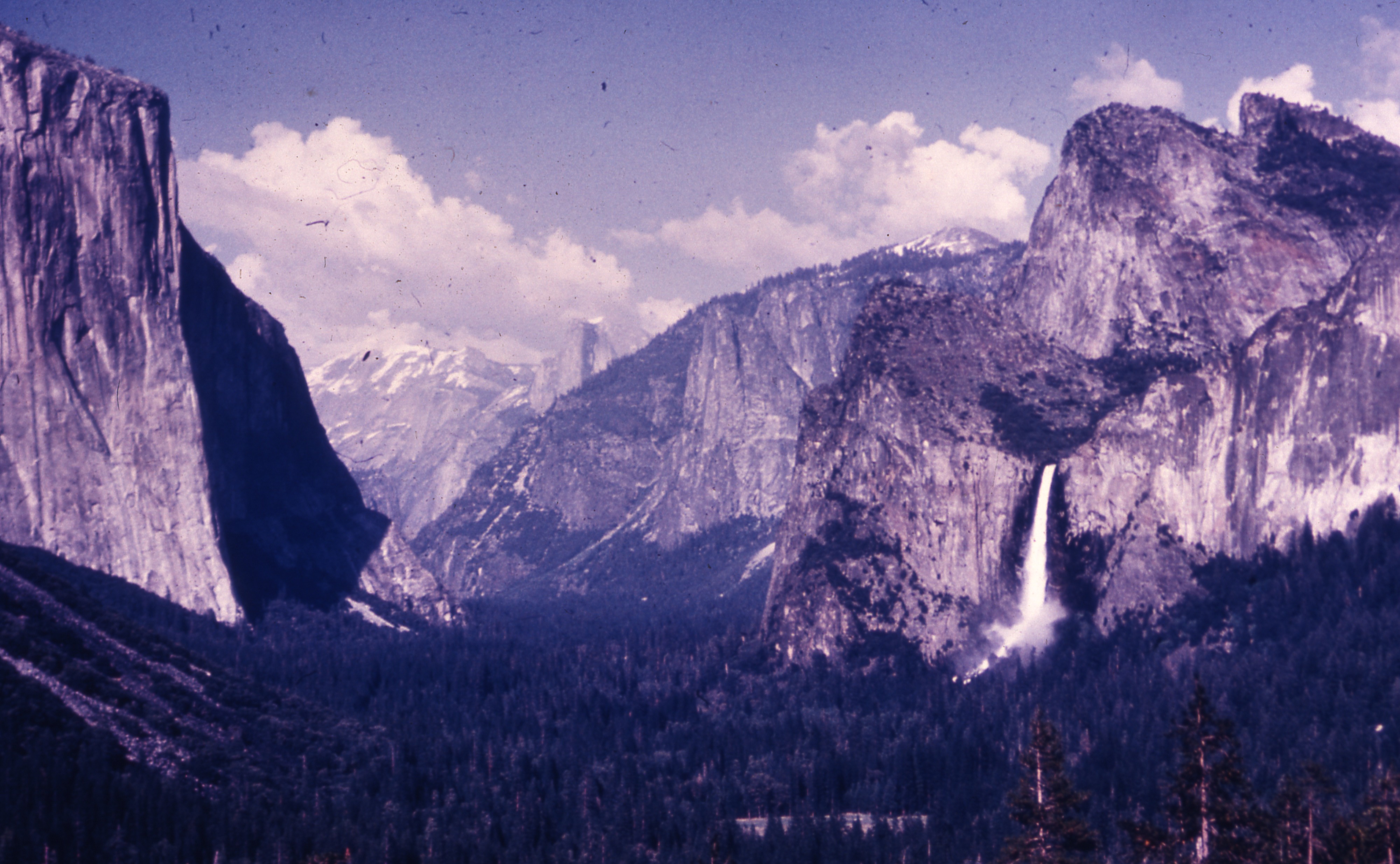
The story of the U.S.’s national parks isn’t one story, but many. These have been told and retold since the founding of the National Park Service, a century ago this past Thursday. And they stretch back even further, to the Civil War, the conquering and settling of the west, and the beginnings of the American conservation movement. Nearly every one of us who grew up within a cramped, contentious family car ride from one (or more) of those parks has our own story to tell. But our nostalgic memories can conflict with the history. Virginia and North Carolina’s Blue Ridge Parkway, for example—the park closest to my childhood home—offers visitors an idyllic vision of Appalachian life and landscape. But the founding and construction of the park in the 1930s and 40s was anything but.
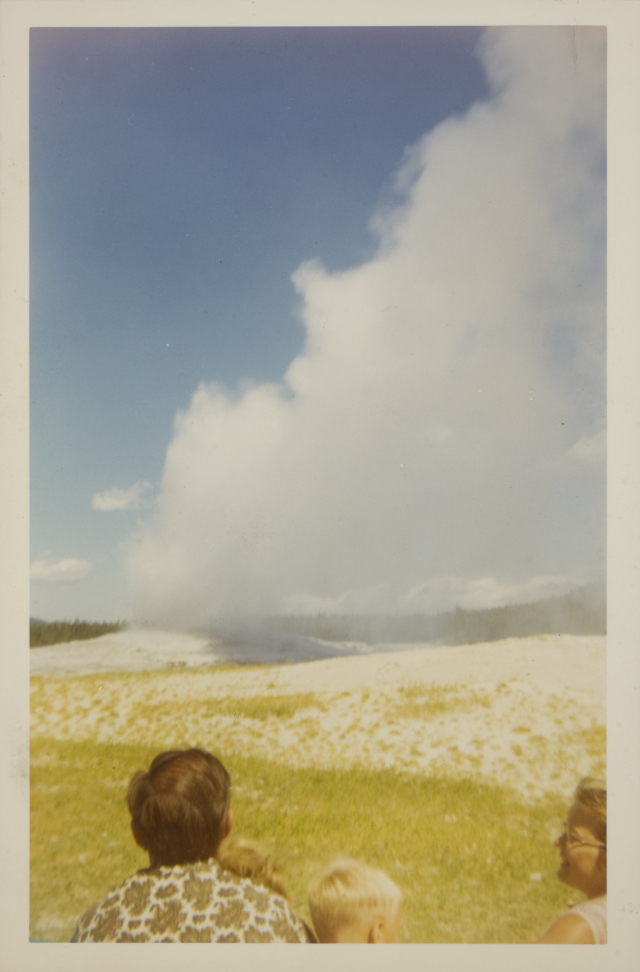
On the one hand, the building of the gorgeously scenic, 469-mile highway provided jobs for out-of-work civilians and, later, conscientious objectors under FDR’s Works Progress Administration, Emergency Relief Administration, and Civilian Conservation Corps. On the other hand, the federal government’s seizure of the land created hardships for existing farmers and landowners, forced sometimes to sell their property or to obtain permission for building and development. The Park Service project also engendered resentment among the Eastern Cherokee, who fought the Parkway, and won some concessions. (In one story that represents both of these hardships, a Cherokee man Jerry Wolfe tells WRAL what it was like to work on the road, one that ran directly through the cabin he once shared with his parents.)
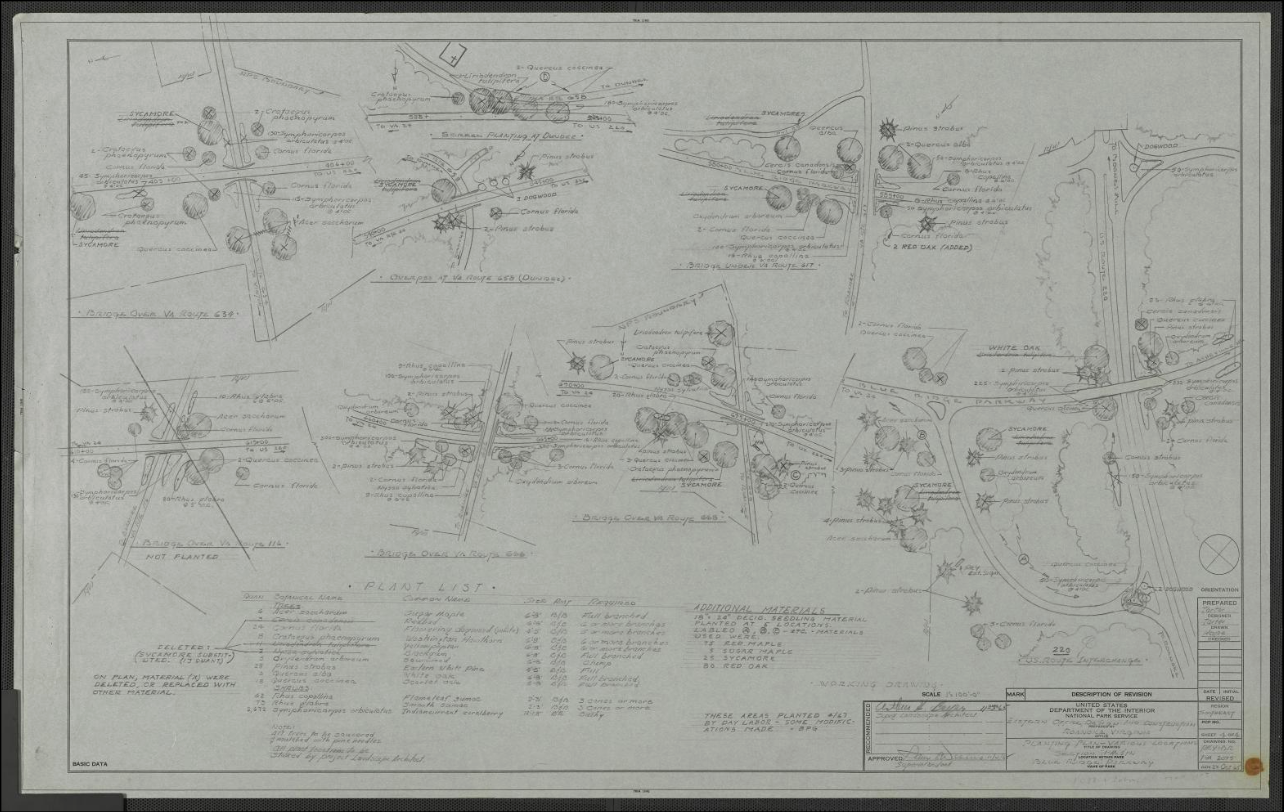
To celebrate their 100 years of existence, the National Park Service has launched what it calls its Open Parks Network, a portal to thousands of photographs and documents dating from the very beginnings of many of its parks—some of which, like Yosemite and Yellowstone, came under federal protection before the NPS existed, and some, like New York’s Stonewall Inn, only given protected monumental status this year. The Open Parks Network includes over 20 different parks and several dozen collections that document specific periods.
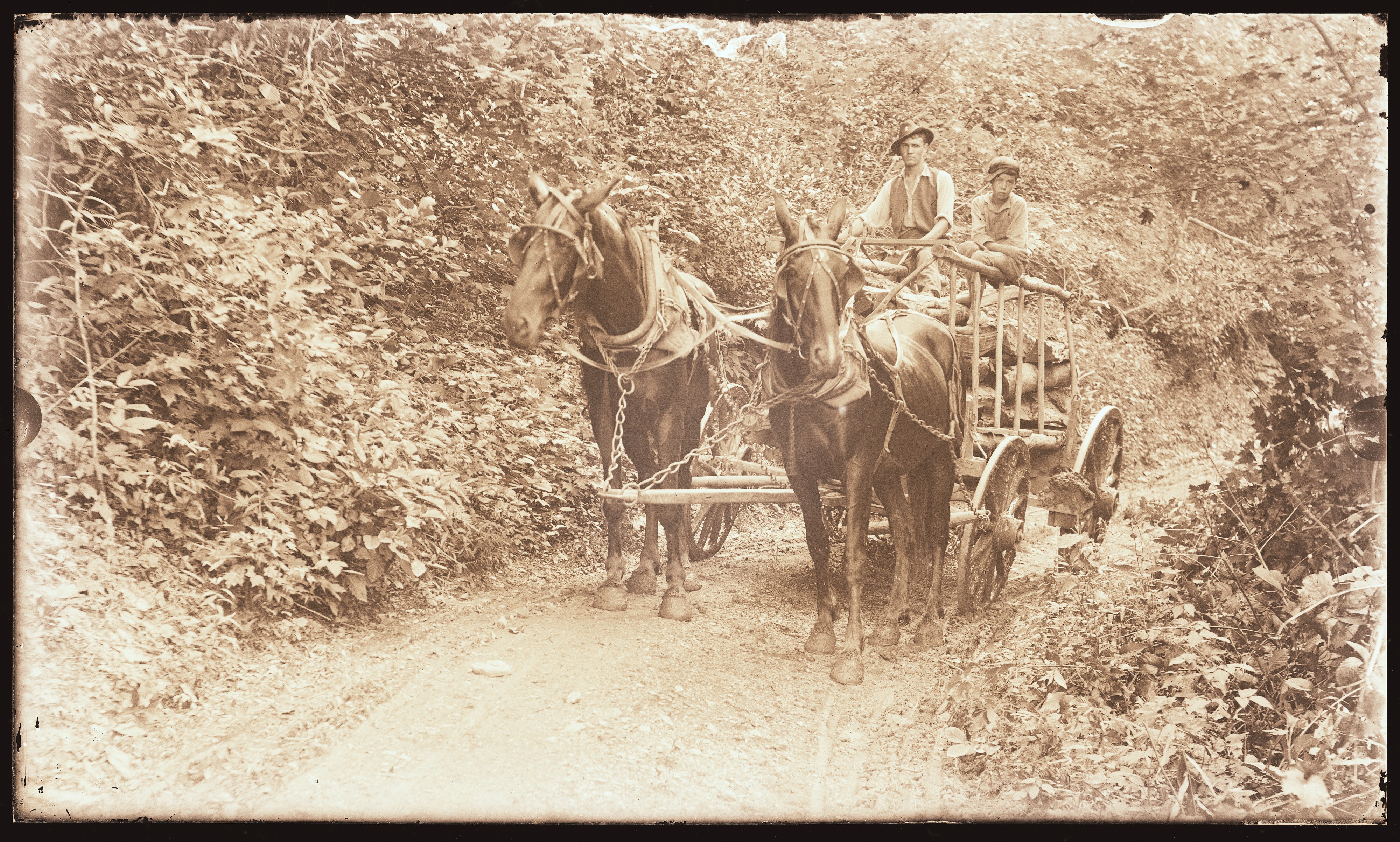
In the case of Blue Ridge Parkway, we have only one—a collection of the park’s engineering plans. One might hope for images of those toiling Depression-era crews, or of the anxious faces of the region’s residents. But instead we can piece together the story of the park through fascinating documents like the “Planting Plan” further up, from 1965, which reminds us how much the natural beauty of the Parkway is achieved through human intervention. And we can imagine what many of those early-20th century Appalachian folks looked like in historic photos like that above, from a collection of Great Smokey Mountains photographs taken in the teens and 20s by Jim Shelton.
Regardless of how much meddling we have done to create the scenic overlooks and mountain and Redwood underpasses that constitute the nation’s protected parks, there’s no denying their appeal to us all, nature lovers and otherwise, as symbols of the country’s rough grandeur. We can skip the hikes and long car rides, or plan for them in the future, surveying the parks’ beauty through over 100,000 high-resolution digital scans of photographs and 200,000 images in all, including more galleries of building plans, maps, and illustrations. Some of the galleries are quite unusual—like this collection of aerial infrared photographs of the Great Smoky Mountains, or this one of “historic goats” of the Carl Sandburg Home National Historic Site. And many of the photos—like the faded 1968 photo of Yellowstone’s Old Faithful geyser, further up, look just like your family vacation photos.
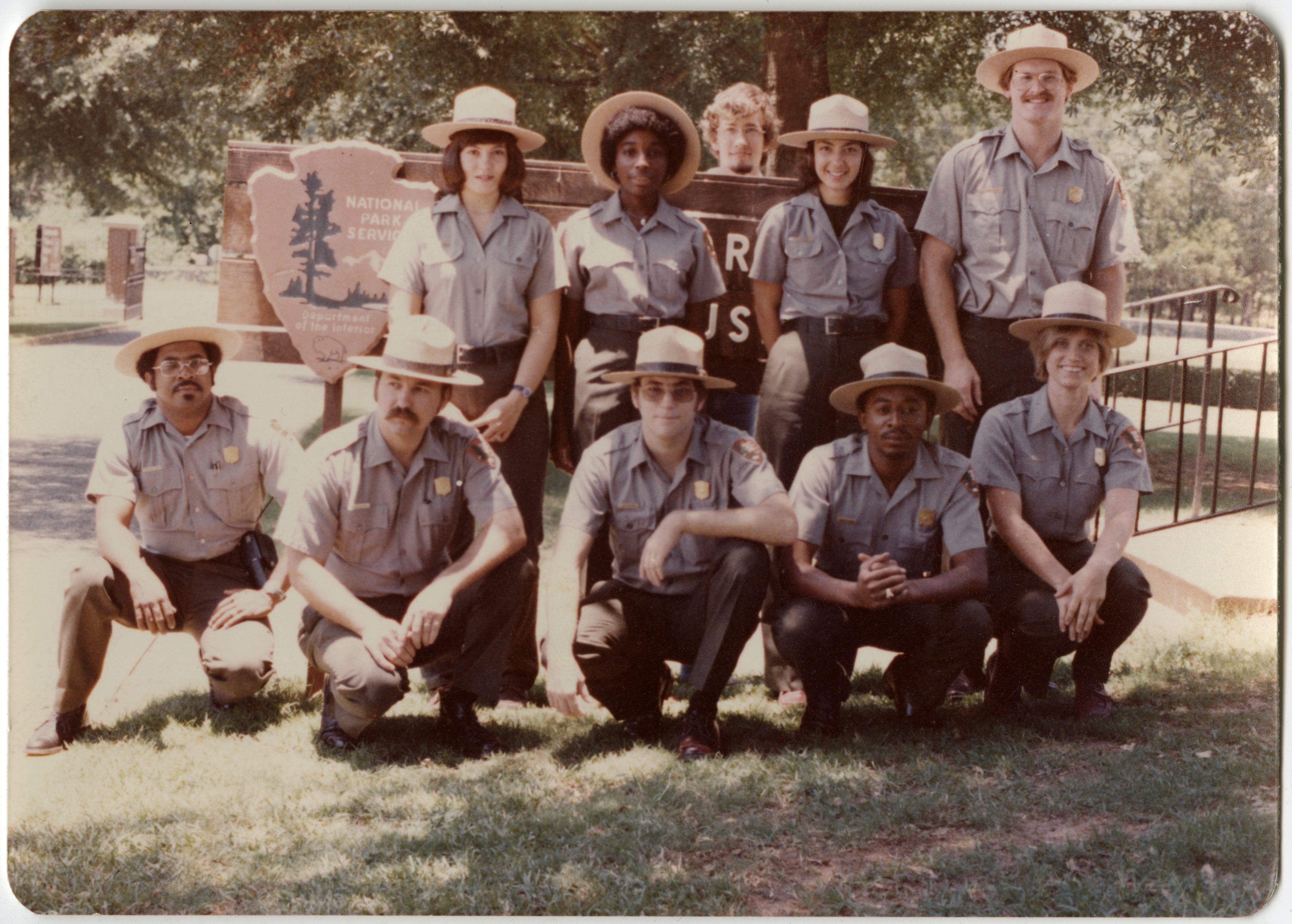
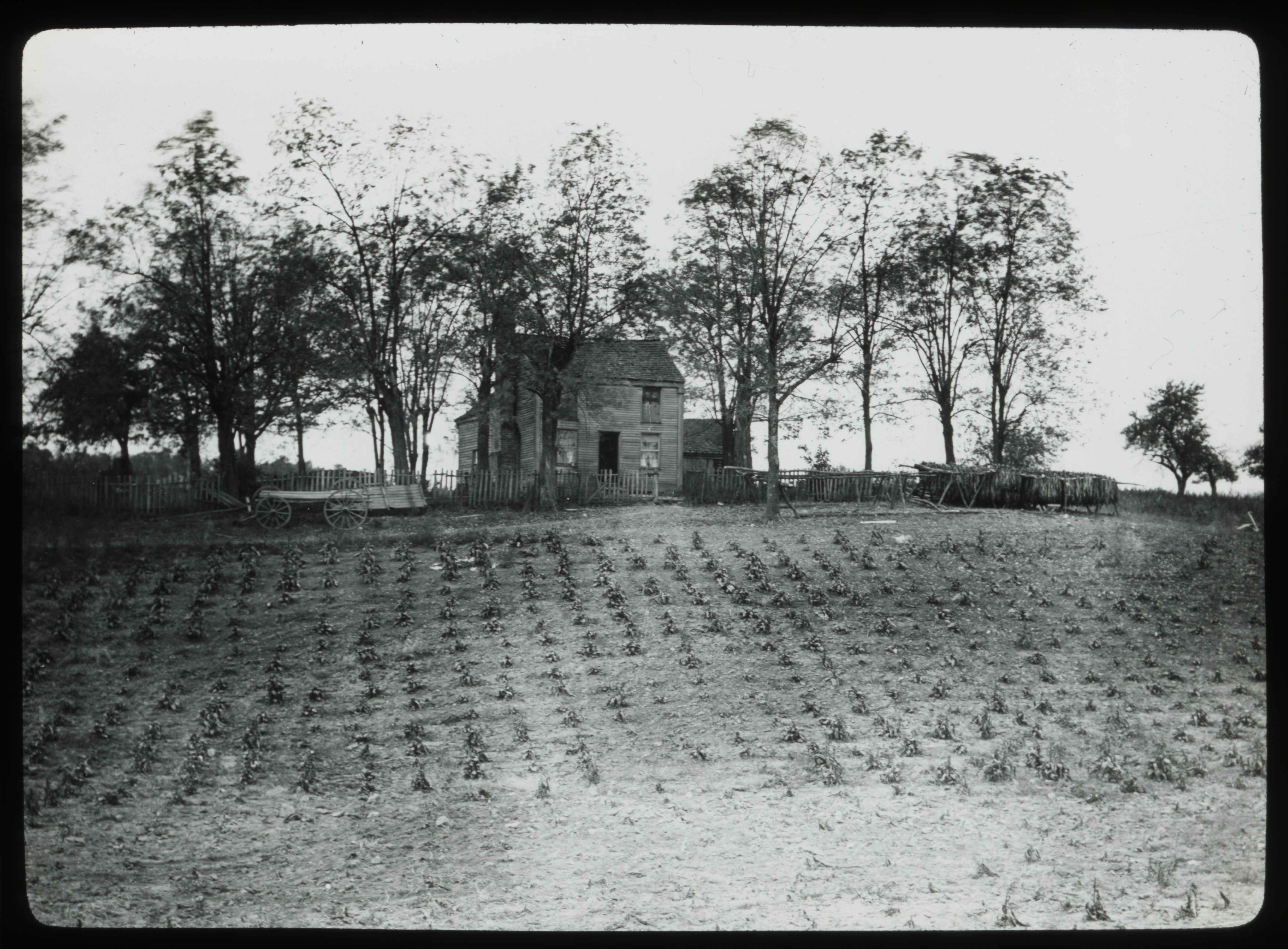
There are beautiful historical images like that of a house near Hodgenville, Kentucky, site of the Abraham Lincoln Birthplace National Historical Park, further up; images of park rangers and staff, like the charming group photo above from Andersonville National Historic Site in Georgia; and sublime vistas like the photo at the top of the post from the Kings Mountain National Military Park in Yosemite Valley. The Open Parks Network, writes Joe Toneli at Digg, “is constantly being added to, and is an important tool in preserving the history of the NPS and the national monuments it protects.” Developed in partnership with Clemson University since 2010, Open Parks hosts all public domain images, free to explore and download. See this guide for a detailed explanation on how to best navigate the collections, all of which are fully searchable.
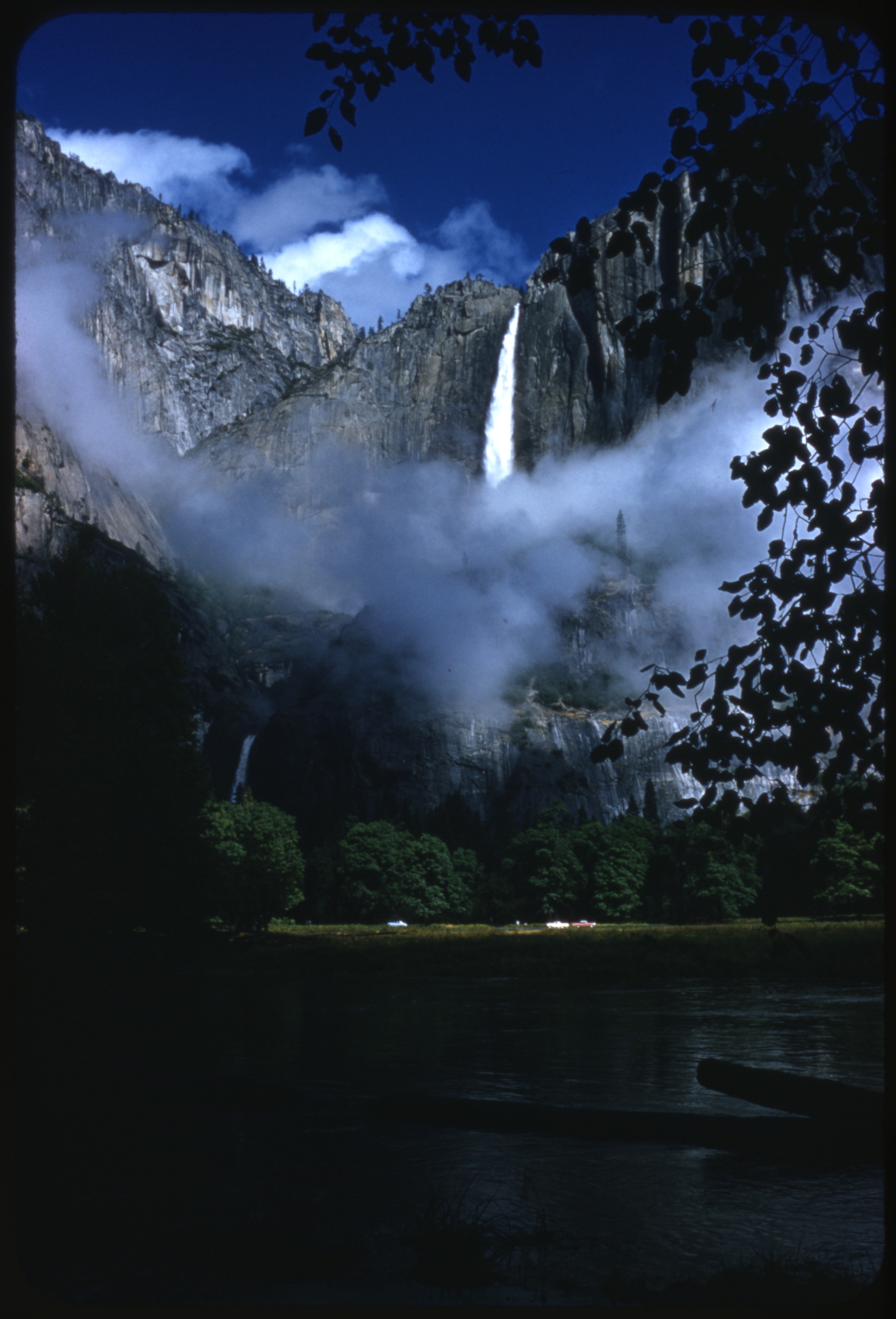
Each image, like that of Yosemite Falls, above, has options for viewing full-screen and zooming in and out. So absorbing are these archives, you may find yourself getting lost in them, and any one of these beautifully-preserved parks and their incredible histories offer welcome places to get lost for several hours, or several days. For even more historic photography from the nation’s many parks, see selections online from the Eastman Museum’s current exhibit, Photography and America’s National Parks, “designed,” writes Johnny Simon at Quartz, “to inspire people to look at national landscape just as Teddy Roosevelt once did, a century ago.”
Enter Open Parks here.
Related Content:
226 Ansel Adams Photographs of Great American National Parks Are Now Online
The Beauty of Space Photography
Josh Jones is a writer and musician based in Durham, NC. Follow him at @jdmagness
Read More...The Spellbinding Art of Human Anatomy: From the Renaissance to Our Modern Times
Many of us have a fraught relationship with what medical illustrator Vanessa Ruiz, above, refers to as our anatomical selves.
You may have received the Visible Man for your 8th birthday, only to forget, some thirty years later, what your spleen looks like, where it’s located and what it does.
We know more about the inner workings of our appliances than we do our own bodies. Why? Largely because we saved the manual that came with our dishwasher, and refer to it when our glassware is covered in spots.
As Ruiz noted in her TED-Med talk last November, there’s a wealth of easily accessible detailed anatomical illustrations, but we tend to keep them out of sight, and thus out of mind. Once a student is finished with his or her medical textbook or app, he or she rarely seeks those pictures out again. Those of us outside the medical profession have spent very little time considering the way our bodily systems are put together.
This lack of engagement prompted Ruiz to found the aggregate blog Street Anatomy, devoted to ferreting out the intersection between anatomical illustration and public art. Exposure is key. In creating startling, body-based images—and what is more startling than a flayed human or piece thereof?—the artist reminds viewers of what lurks beneath their own skin.
Ruiz is deeply interested in the history of her craft, a practice which can be dated to Renaissance man Leonardo da Vinci. She sees beauty in bizarre early examples which inserted severed limbs into still lives and posed semi-dissected cadavers next to popular attractions, such as Clara, the touring rhino.
These days, the subjects of those purposeful illustrations are more likely to be rendered as 3‑D computer-generated animations.
The more old school approach is visible in the work of the artists Ruiz champions, such as Fernando Vicente, who couches 19th-century male anatomical plates inside more contemporary female pin-ups and fashion illustrations.
Artist Jason Freeny gives Barbie, Legos, and Mario the Visible Man treatment.
Noah Scalin, who spent 2007 creating a skull a day, made a gut-filled gun and titled it “Anatomy of War.”
But let us not presume all viewers are in total ignorance of their bodies’ workings. A woman whose ankle had been smashed in a roller skating accident commissioned architect Federico Carbajal to document its reconstruction with one of his anatomically accurate wire sculptures. Carbajal incorporated his benefactor’s surgical screws.
Check out Ruiz’s recommended reading list to delve into the subject more deeply.
Related Content:
The Anatomical Drawings of Renaissance Man, Leonardo da Vinci
Microscopic Battlefield: Watch as a Killer T Cell Attacks a Cancer Cell
Ayun Halliday is an author, illustrator, theater maker and Chief Primatologist of the East Village Inky zine. Her latest script, Fawnbook, is available in a digital edition from Indie Theater Now. Follow her @AyunHalliday.
Read More...Hear the Beatles Play Their Final Concert 50 Years Ago Today (August 29, 1966)
50 years ago today, the Beatles played their final official concert and put an end to their touring career. It all happened at the now defunct Candlestick Park in San Francisco.
As Josh Jones told us in 2014, “knowing it would be their final show, the band brought a camera onstage to take photos of the crowd and themselves.” And “Paul McCartney asked the band’s press officer Tony Barrow to record the concert on a hand-held tape recorder.” Barrows eventually talked more about how this recording came to see the light of day. He said:
Back in London I kept the concert cassette under lock and key in a drawer of my office desk, making a single copy for my personal collection and passing the original to Paul for him to keep. Years later my Candlestick Park recording re-appeared in public as a bootleg album. If you hear a bootleg version of the final concert that finishes during Long Tall Sally it must have come either from Paul’s copy or mine, but we never did identify the music thief!
Above, you can hear the Beatles’ last 28 minutes as a live act—save, of course, their impromptu gig played on a London rooftop in 1969. For all its roughness, there’s a good chance that the sound quality rivals what fans heard that cold August night in Candlestick. Like other stadiums from that era, Candlestick had a god-awful sound system, ill-equipped to compete with an endless barrage of teenage screams and gusts of wind. But that didn’t stop fans from enjoying the show all the same.
Find a setlist for the 11-song concert below:
01. “Rock and Roll Music”
02. “She’s a Woman”
03. “If I Needed Someone”
04. “Day Tripper”
05. “Baby’s In Black”
06. “I Feel Fine”
07. “Yesterday”
08. “I Wanna Be Your Man”
09. “Nowhere Man”
10. “Paperback Writer”
11. “Long Tall Sally” (Incomplete)
If you would like to support the mission of Open Culture, consider making a donation to our site. It’s hard to rely 100% on ads, and your contributions will help us continue providing the best free cultural and educational materials to learners everywhere. You can contribute through PayPal, Patreon, and Venmo (@openculture). Thanks!
Related Content:
The Beatles’ Rooftop Concert: The Last Gig Filmed in January 1969
Read More...Nakedly Examined Music Podcast Explores Songwriting with Cracker, King Crimson, Cutting Crew, Jill Sobule & More
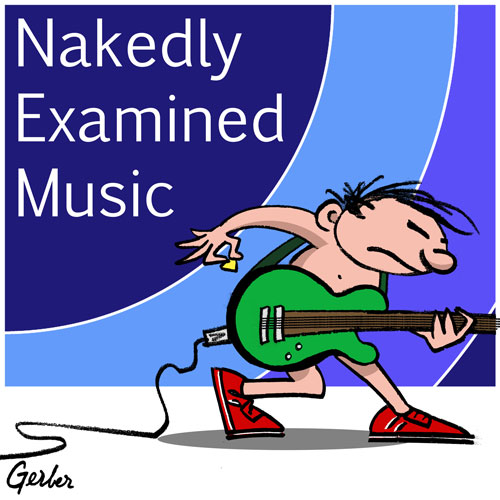
I’m Mark Linsenmayer, the host of The Partially Examined Life Philosophy Podcast, and I’d like to introduce you to a new-in-2016 interview series called Nakedly Examined Music (iTunes — Facebook — RSS) that features great songwriters talking about their motivations and techniques regarding specific songs.
In episode one, for instance, indie rock icon and activist for artist rights David Lowery deconstructed the lyrics for his story songs “All Her Favorite Fruit” (Camper Van Beethoven, 1989) and “I Sold the Arabs the Moon” (from his 2011 solo album), contrasting these with the nonsense song that launched his career, “Take the Skinheads Bowling.”
The songs discussed are played in full, and the idea is to get a sense of the artist’s approach in very specific terms, and how this has changed over time. In episode 15, Craig Wedren shows us his development from writing heavy (“post-hardcore”), dissonant music in the 90s with Shudder to Think, to creating disco synthscapes with his early 00’s band Baby, to now composing music for soundtracks like Netflix’s “Wet Hot American Summer: First Day of Camp.”
The emphasis in a given interview depends on the artist: Guitar virtuoso Gary Lucas (Captain Beefheart, Jeff Buckley) eschews music theory, so the focus is more on the ideology of creation, whereas tap-guitar wizard Trey Gunn (King Crimson, David Sylvian) instructs us in combining time signatures and soloing in modes. The interviews both teach us how to listen to and appreciate music by showing us what to focus on, and also serve to instruct songwriters real and vicarious about decisions that go into a choice of chord or lyric or instrumentation.
What kind of music can you expect to hear? Officially, anything that has thought behind it, but I’m starting with my experience as musician (see www.marklint.com) and music lover growing up in the 80s and 90s listening to popular, indie, folk, punk, and progressive rock. There hare been some movement into soul (Episode 16 features the great Narada Michael Walden, who produced Whitney Houston among many others), electronica (Gareth Mitchell), country (Beth Kille), and future episodes will venture into classical, hip-hop, and world music. More typical, however (i.e. more akin to my own writing), are figures like 90s sweetheart and political activist Jill Sobule, cow-punk pioneer Jon Langford (Mekons), grunge-peddler turned symphonist Jonathan Donahue (Mercury Rev), NPR darling Chad Clark (Beauty Pill), and 80s Cutting Crew front-man Nick Eede. One of the episodes next to be released will feature Bill Bruford (Yes, King Crimson, Earthworks).
Listen to Jill Sobule in episode 18:
In one of the most interesting interviews (episode 3), major league music video director–and member of 70s supergroup 10cc and 80s duo Godley & Creme–Kevin Godley takes us from 70s prog excess (and getting to record jazz legend Sarah Vaughan) into the New Wave and out of music altogether, only to rediscover it post-retirement.
This is not about getting behind the scenes with your favorite stars or any other hype of that sort, but about talking with smart people to figure out the language of music, the motivations behind creation, and the techniques available for self-expression. In the course of these discussions, we get into changing trends in making a living in music (or not!), new music technologies, and, of course, philosophical issues.
Mark Linsenmayer is a writer and musician in Madison, WI. His Partially Examined Life Philosophy Podcast has been downloaded more than 15 million times. Learn more about Nakedly Examined Music at www.nakedlyexaminedmusic.com, subscribe via iTunes, or follow on Facebook.
Read More...Support Us
We're hoping to rely on loyal readers, rather than erratic ads. Please click the Donate button and support Open Culture. You can use Paypal, Venmo, Patreon, even Crypto! We thank you!

About Us

Open Culture scours the web for the best educational media. We find the free courses and audio books you need, the language lessons & educational videos you want, and plenty of enlightenment in between.
Advertise With Us

FREE UPDATES!
GET OUR DAILY EMAIL
Get the best cultural and educational resources on the web curated for you in a daily email. We never spam. Unsubscribe at any time.
FOLLOW ON SOCIAL MEDIA

Open Culture editor Dan Colman scours the web for the best educational media. He finds the free courses and audio books you need, the language lessons & movies you want, and plenty of enlightenment in between.
Advertise With Us


