A Big Super Cut of Saturday Night Live Cast Members Breaking Character and Cracking Up
Corpsing—aka laughing inappropriately onstage—requires far less skill than soldiering on when the actor playing opposite loses control, an occurrence that almost always wins audience favor.
The recently released super cuts of Saturday Night Live cast members’ composure deserting them, above and below, suggest that the worst offenders are aware that viewers will lap up these lapses. Why strive to stay in character when blooper reel stardom awaits?
It’s a fact that these crack ups have the ability to loosen things up, recalling that freewheeling period before the show became the institution its cast members dreamed of auditioning for since childhood.
It’s unclear what—if any—meaning we should ascribe to the evidence that the most indulgent gigglers are all male.
Could it be that women are funny after all… enough to win the sort of punchlines that’ll make the boys lose it on camera?
If so, perhaps we can arrange for aliens to abduct the next commentator who suggests otherwise, probe him, then seat him opposite a bewigged Kate McKinnon. No offense to guest host Ryan Gosling, the embodiment of a good sport. His inability to stay in character was both understated and heartwarming, and he wasn’t pandering. SNL regulars Aidy Bryant and Bobby Moynihan struggled too. I still wager a lot of funny ladies watched that Close Encounters skit, and rooted for McKinnon to be given the opportunity to take down an old school chauvinist pig.
But not everyone delights in watching these guys run off the rails, as Slate’s Jessica Winter notes in a piece about SNL’s corpsing phenomenon:
Tracy Morgan excoriated his fellow cast member (Jimmy Fallon) for “laughing and all that dumb shit he used to do,” explaining, “That’s taking all the attention off of everybody else and putting it on you, like, ‘Oh, look at me, I’m the cute one.’
It’s true that the camera never could resist cast member Bill Hader’s elaborate, utterly unsuccessful attempts to bring his face to heel. Witness the dress rehearsal for the West Coast-flavored soap opera spoof, The Californians, below. Amazing how little it changed en route to performance.
The writers outdid themselves when they bestowed a signature gesture on another of Hader’s recurrent characters, New York City cultural commentator, Stefon. His newfound proclivity for hiding his face behind his hands could’ve helped the actor pull it together, but instead it turned into a bit. Wonder what Tracy Morgan thought when Hader attributed his inability to keep a straight face to his straight man / Weekend Update foil Seth Myers:
A person being patient with an insane person is my favorite thing in the world…. You were being so patient with this maniac who had the simplest job in the world.
Related Content:
Don Pardo (1918–2014), Voice of Saturday Night Live, Suggests Using Short Words
John Belushi’s Improvised Screen Test for Saturday Night Live (1975)
Father Guido Sarducci Pitches “The Five Minute University”
Ayun Halliday is an author, illustrator, theater maker and Chief Primatologist of the East Village Inky zine. Her latest script, Fawnbook, is available in a digital edition from Indie Theater Now. Follow her @AyunHalliday.
Read More...Hear the One Night Sun Ra & John Cage Played Together in Concert (1986)
It’s hard to imagine two figures more representative of two disparate directions experimental music took in the 20th century than John Cage and Sun Ra. Cage’s aleatory arrangements and instruments improvised from radios and TV sets left much to the discretion of the performer. And yet, oddly, he didn’t think much of improvisatory music, writing in his 1961 book Silence that he considered jazz “rather silly” and “unsuited,” notes Seth Colter Walls at Pitchfork, “for ‘serious’ contexts.”
Sun Ra, on the other hand, while a master improviser, left little to chance. He embraced the role of bandleader of his Arkestra with unique vigor, “completely obsessed with precision and discipline.” Cage preferred the plain-spoken, unspoken, and wordless. Ra delivered rococo treatises onstage, dressed in glittering capes and headdresses. How the two would, or could, come together may seem a mystery, but come together they did, for a one-time concert event at a Coney Island freak show.
The resulting album is “one of the most sought after records in either discography,” writes The Vinyl Factory in an announcement of the full performance’s recent release by label Modern Harmonic. Fans can finally purchase that double LP, or listen to the live recording for free below. (If you need Spotify’s software, download it here.) Though it may seem like a bit of a novelty, “the album gradually emerges as something greater than a footnote,” Walls writes, “despite the arms-length embrace, the overall concert has a surprisingly seamless quality.”
Cage’s contributions consist mainly of wordless vocalizations and poignant silences. Ra recites poetry and unleashes solo after solo on his Yamaha DX7 synthesizer, blending “sci-fi movie tones” with “sprightly figures” and “dense chords and drones.” The album’s trailer at the top of the post offers some rare black and white footage of the occasion, which briefly included a couple of additional artists–Arkestra saxophonist Marshall Allen and singer June Tyson. (Tyson’s intentionally strained performance “is beset by amplification problems,” Walls warns, “though the noise-damaged result works, in context.”
Throughout the one-off meeting, Ra and Cage trade solos, each respectfully yielding the stage to the other in turn. While this setup highlights the two giants’ profoundly different approaches to making–and conceiving of–music, Sun Ra’s “ability to meet Cage more than halfway… helps hold the entire gig together,” writes Walls. One of the few tracks on which the two collaborate directly, “Silent Duet,” is, well, exactly that. Since we cannot see the performance, we have to imagine the two of them, sitting side-by-side in silence, as the audience seems to all but hold its breath.
The odd thump of a foot against the mic stand aside, the recording documents almost total dead air. Then this gives way to Cage’s cryptic mumbling and Ra’s restrained keyboard taps in “Empty Words and Keyboard.” The effect is electric, the moment sacred, and the collaboration, though fleeting, reveals itself as genuinely inspired, not only for its careful play of contrasting avant-gardism’s against each other but for the extraordinary instances in which Afrofuturist free jazz and Fluxus minimalism find accord.
Related Content:
A Sun Ra Christmas: Hear His 1976 Radio Broadcast of Poetry and Music
The Music of Avant-Garde Composer John Cage Now Available in a Free Online Archive
The Curious Score for John Cage’s “Silent” Zen Composition 4’33”
Josh Jones is a writer and musician based in Durham, NC. Follow him at @jdmagness
Read More...Hear the Music of David Lynch’s Twin Peaks Played by the Danish National Symphony Orchestra
With Twin Peaks coming back to our TV screens next year, fans want to know who’s coming back from the original cast and crew. The same could be said for composer Angelo Badalamenti, whose theme music for the series still evokes shots of sawmills, high waterfalls, rustling pines, and a deep, dark sense of mystery combined with the pangs of doomed romance.
In this selection from an August 19, 2016 concert from the Danish National Symphony Orchestra, under the baton of Anthony Weeden, Badalamenti’s score is given a chance to stand alone as a composition without the visuals. Bathed in red light, the orchestra looks appropriately Lynchian, and all that’s missing is a large red curtain and zigzag flooring. The arrangement hews close to Badalamenti’s, though his small combo from the original soundtrack gets expanded to a full orchestra, with kettledrums, glockenspiel, harp, and concert bells. However, when “Laura Palmer’s Theme” segues into the title theme, the two-note twang is still played on electric guitar. (You can’t mess with that!)
In this context, Badalamenti’s nods to Bernard Hermann’s Vertigo score are even more apparent, especially in the delicate, swelling love melody that is always in danger of sad collapse. The concert also featured selections from other great television soundtracks, including Game of Thrones, Homeland, Breaking Bad, Six Feet Under, and more. The whole concert can be watched here.
“We had a fabulous time performing it —a very special part of the evening,” Anthony Weeden is quoted as saying on the go-to Welcome to Twin Peaks site. And he added, “I can’t wait for the new series!”
Neither can we, Mr. Weeden.
Related Content:
Play the Twin Peaks Video Game: Retro Fun for David Lynch Fans
David Lynch Draws a Map of Twin Peaks (to Help Pitch the Show to ABC)
Ted Mills is a freelance writer on the arts who currently hosts the artist interview-based FunkZone Podcast. You can also follow him on Twitter at @tedmills, read his other arts writing at tedmills.com and/or watch his films here.
Read More...Pizza Box Becomes a Playable DJ Turntable Through the Magic of Conductive Ink
Turns out Pizza Hut is good for something…
They’ve teamed up with the printed electronics company Novalia to turn cardboard pizza boxes into playable turntables. Specializing in technology that adds touch and connectivity to everyday surfaces, Novalia has created two scratchable decks, each with controls that let you fine-tune the volume, pitch, playback, and crossfading. And it’s all done with the magic of conductive ink.
According to Live for Music, “the battery-powered box can be hooked up to a computer or phone through Bluetooth, then connected to any DJ software like Serato or DJ Pro.” Right now, the playable pizza box is only available at a few Pizza Hut locations in the UK. Above, DJ Vectra offers a primer on using the new gadget.
If you would like to support the mission of Open Culture, consider making a donation to our site. It’s hard to rely 100% on ads, and your contributions will help us continue providing the best free cultural and educational materials to learners everywhere. You can contribute through PayPal, Patreon, and Venmo (@openculture). Thanks!
Related Content:
Listen to Tree Rings Getting Played on a Turntable and Turned into Music
How to Clean Your Vinyl Records with Wood Glue
Postage Stamps from Bhutan That Double as Playable Vinyl Records
The “Amen Break”: The Most Famous 6‑Second Drum Loop & How It Spawned a Sampling Revolution
Read More...Take a Virtual Reality Tour of the World’s Stolen Art
A museum which contains only works of art that nobody can find sounds like something Jorge Luis Borges would’ve dreamed up, but it has twice become a reality in the 21st century — or twice become a virtual reality, anyway. “The Concert by Johannes Vermeer. Poppy Flowers by Vincent van Gogh. Rembrandt’s The Storm on the Sea of Galilee. These are some of the world’s most famous and expensive paintings ever stolen,” writes Fast Company’s Mark Wilson. And though their whereabouts remain unknown, you can see them at The Museum of Stolen Art, “a virtual reality exhibition created by Ziv Schneider, a graduate student at Tisch ITP, that puts stolen works back on display.”
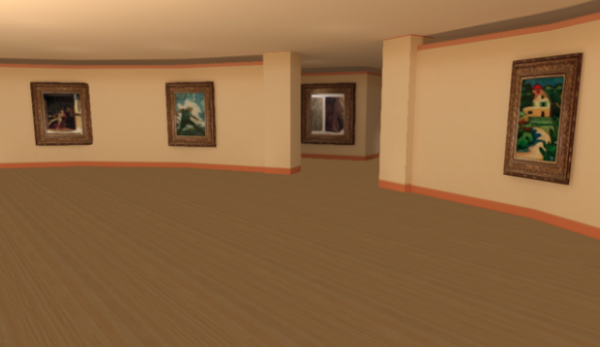
At the moment, Schneider’s project exists on Google’s virtual reality platform Cardboard, and you can download it as a smartphone app for iOS or Android. Its current exhibits include “a collection of photographs listed as stolen in the FBI’s art crime database”; the private collection of Ferdinand and Imelda Marcos, former president and first lady of the Philippines, now “being searched for by the PCGG – a Philippine government office in charge of seizing the Marcos’ ill gotten wealth and bringing it back”; and “a large collection of paintings stolen in some of the world’s most famous art heists, including the Stewart and Isabella Gardner Museum in Boston.”
But even before Schneider’s institution opened its virtual-reality doors, writes The Creators Project’s Becky Chung, “halfway across the world another institution — also called the Museum of Stolen Art — was debuting its gallery exhibition of works currently reported stolen or missing.” This Museum of Stolen Art, in the Netherlands, presents the Poppy Flowers and Waterloo Bridges of the art world in not virtual but augmented reality: its visitors raise their phones or tablets up to its meaningfully empty walls, and on their screens see the purloined works restored to their rightful frames. William Gibson, in some sense the Borgesian visionary of our tech-saturated time, has described augmented reality as the natural evolution of virtual reality. It’s made virtual art recovery possible; can virtual art theft be far behind?

Reminder: You can download The Museum of Stolen Art smartphone app on iOS and Android. The app is ideally designed for those with a Google cardboard viewer.
Related Content:
1.8 Million Free Works of Art from World-Class Museums: A Meta List of Great Art Available Online
Visit The Museum of Online Museums (MoOM): A Mega Collection of 220 Online Exhibitions
Take a Virtual Tour of the 1913 Exhibition That Introduced Avant-Garde Art to America
Based in Seoul, Colin Marshall writes and broadcasts on cities and culture. He’s at work on a book about Los Angeles, A Los Angeles Primer, the video series The City in Cinema, the crowdfunded journalism project Where Is the City of the Future?, and the Los Angeles Review of Books’ Korea Blog. Follow him on Twitter at @colinmarshall or on Facebook.
Read More...The Best 100 Movies of the 21st Century (So Far) Named by 177 Film Critics
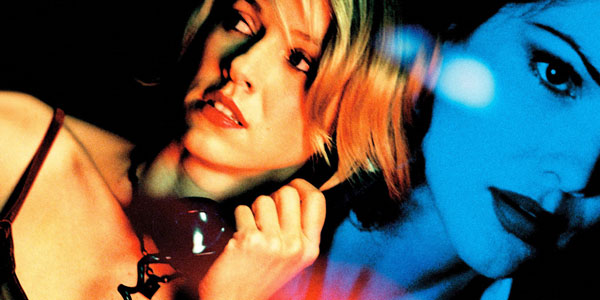
When prompted to think of the cinematic peaks of the 20th century, or of specific decades like the 1930s, the 1970s, or the 1990s, we can usually thread up specific examples in the projector of our mind right away. Grand Illusion and Gone with the Wind! Taxi Driver and The Godfather! Pulp Fiction and Fargo! But in this century it gets trickier. This probably doesn’t have to do with a precipitous drop in the quality of cinema itself, nor with a lack of films to consider — indeed, the 2000s and 2010s so far have burdened cinephiles with more critically-acclaimed pictures than they can get around to seeing.
The relative recency of the movies of the 21st century presents something of a challenge, since the zeitgeist hasn’t had quite enough time to digest most of them. And what now constitutes the “zeitgeist,” anyway? We live in a postmodern time, we often read, and that usually seems to mean that a greater variety of aesthetic sensibilities, historical periods, and world cultures now coexist for us on an essentially level playing field than ever before. The experience of the modern moviegoer reflects this condition, as does the BBC’s list of the 21st century’s 100 greatest films (so far), the top ten of which follow:
- Mulholland Drive (David Lynch, 2001)
- In the Mood for Love (Wong Kar-wai, 2000)
- There Will Be Blood (Paul Thomas Anderson, 2007)
- Spirited Away (Hayao Miyazaki, 2001)
- Boyhood (Richard Linklater, 2014)
- Eternal Sunshine of the Spotless Mind (Michel Gondry, 2004)
- The Tree of Life (Terrence Malick, 2011)
- Yi Yi: A One and a Two (Edward Yang, 2000)
- A Separation (Asghar Farhadi, 2011)
- No Country for Old Men (Joel and Ethan Coen, 2007)
To produce the list, the BBC surveyed 177 critics “from every continent except Antarctica. Some are newspaper or magazine reviewers, others write primarily for websites; academics and cinema curators are well-represented too.” They note that they include the year 2000, though not technically part of the century, since “not only did we all celebrate the turn of the millennium on 31 December 1999, but the year 2000 was a landmark in global cinema, and, in particular, saw the emergence of new classics from Asia like nothing we had ever seen before,” not just Yi Yi and In the Mood for Love but Ang Lee’s Crouching Tiger, Hidden Dragon a bit down the list.
France, though a country closely associated with mid-20th-century cinema, makes an admirable showing here with the likes of Agnès Varda’s The Gleaners & I, Michael Haneke’s Caché, Claire Denis’ White Material, and Jean-Luc Godard’s voyage into 3D, Goodbye to Language. Some films shamefully overlooked at their initial release, like Kenneth Lonergan’s Margaret and Andrew Dominik’s The Assassination of Jesse James by the Coward Robert Ford, appear here as perhaps a prelude to their rightful rediscovery. We can tell which auteurs have defined the cinematic century so far by the presence of more than one of their works: the late Abbas Kiarostami’s Ten and Certified Copy both appear, as do three films by Thailand’s Apichatpong Weerasethakul and six by those still-ambitious once-wunderkinds of American cinema, the Andersons Wes and Paul Thomas.
Most of these movies exploit, to a deeper extent than the critically acclaimed pictures of decades previous, the creation of dreamlike experiences possible in film. None do it more vividly, perhaps, than the occupier of the top spot, David Lynch’s Mulholland Drive. The selection will surprise some readers, and others not at all. What makes that particular movie so good? Conveniently, the BBC provides on the sidebar a link to an article by Luke Buckmaster explaining just that.
Buckmaster compares Mulholland Drive to Citizen Kane, “writer/director Orson Welles’ esteemed 1941 feature film debut – BBC Culture’s critics poll of the 100 greatest American films last year put Kane at number one. If Kane can be viewed as an essay on the nuts and bolts of film-making – a masterclass in technical processes, from montage to deep focus, dissolves and the manipulation of mise en scène – Mulholland Drive’s appeal is more thematic and conceptual. It is less a demonstration of how great cinema is achieved than what great cinema can achieve, its capacity for ideas seemingly endless.” May the remaining 84 years of the 21st century find that capacity more endless still.
See the BBC’s complete list here.
Related Content:
1,150 Free Movies Online: Great Classics, Indies, Noir, Westerns, etc.
The 10 Greatest Films of All Time According to 846 Film Critics
The 10 Greatest Films of All Time According to 358 Filmmakers
120 Artists Pick Their Top 10 Films in the Criterion Collection
Based in Seoul, Colin Marshall writes and broadcasts on cities and culture. He’s at work on a book about Los Angeles, A Los Angeles Primer, the video series The City in Cinema, the crowdfunded journalism project Where Is the City of the Future?, and the Los Angeles Review of Books’ Korea Blog. Follow him on Twitter at @colinmarshall or on Facebook.
Read More...Carl Dreyer’s The Passion of Joan of Arc (1928) Gets an Epic, Instrumental Soundtrack from the Indie Band Joan of Arc
The legacy of the silent film era is always with us, even as we move further and further away from film and closer to computer art. Not only do the compositions, costuming, and camerawork of golden age classics like Metropolis, Nosferatu, The Cabinet of Dr. Caligari and others continue to inform current directors’ work, CGI and otherwise, but these films have spawned their own prestigious form of music. In recent decades scores for classic silents have become the special provenance of avant-garde and experimental composers. The pairing makes sense. These are movies that raised the stakes for their medium and established the first generation of cinematic auteurs—Fritz Lang, F.W. Murnau, D.W. Griffith, Charlie Chaplin, and, of course, Carl Dreyer, the Danish director of 1928’s profoundly intense The Passion of Joan of Arc.
As with all of the acknowledged classics of the era, Dreyer’s masterpiece has received many contemporary musical treatments in the past few decades, including an original operetta by Richard Einhorn (on the Criterion Collection edition) and many more classical and modernist scores. But it has also been part of a parallel trend—of indie rock musicians like Dengue Fever, Yo La Tengo, Sparklehorse, and Dean and Britta scoring classic silent films. First, Australians Nick Cave and The Dirty Three came together in 1995 to play a live soundtrack for Joan of Arc in London. Then Cat Power accompanied the film in 1999 for several dates. In 2011, for one night only, Chicago indie stalwarts Joan of Arc performed their 80-minute instrumental score for a packed screening at the Chicago International Movies and Music Festival. Hear it, along with the film, above. (A copy can be purchased online here.) It was an “unexpected turn for the band,” their label Joyful Noise notes, given that they had just “released their most conventionally ‘rocking’ album in years, ‘Life Like.’”
Associated with singer and sole permanent member Tim Kinsella’s raspy yelps and warped songcraft, the band here takes a post-rock direction, loud and dirge-like. It may not be to everyone’s taste, but it does, writes Joyful Noise, offer a “dark, flowering sonic counterpart to the film’s grim subject matter (which is a rather haunting depiction of savage religious persecution).” Dreyer’s film is indeed a grim work of art, but it is not any less beautiful for its oppressive narrative. As running titles in the Joan of Arc-scored film’s intro inform us, like its protagonist, “The Passion of Joan of Arc was the victim of several ordeals,” including censorship upon release and the loss of the original negative and a re-edited copy to fire. Likewise for the film’s actress, the great Renee Maria Falconetti, “the performance was an ordeal,” as Roger Ebert points out, with legends telling “of Dreyer forcing her to kneel painfully on stone and then wipe all expression from her face.”
Known “only in mutilated copies” for over half a century, the 1985 restoration above comes from an original Danish copy discovered “complete and in very good condition” at a Norwegian mental institution in 1981. It is a curious story. Scholars have often speculated that the historical Joan of Arc was schizophrenic or that she suffered from “one of numerous neurological and psychiatric conditions that trigger hallucinations or delusions.” Falconetti’s performance of Joan is ambiguous, suggesting on the one hand, a “faith that seemed to stay any suggestion of irritation,” as one contemporary reviewer wrote, and on the other, the dazed, faraway look of a person in the throes of mental illness. And the film’s warped perspectives and extreme close-ups and angles suggest a kind of disturbance, of the corrupt, superstitious social order that interrogates and executes Joan, and also of Joan’s mind as she confronts her implacable judges. Joan of Arc’s pulsing, atmospheric soundtrack, draws out this very tension, written in Falconetti’s every exquisite expression.
This version of Dreyer’s Joan of Arc will be added to our collection, 4,000+ Free Movies Online: Great Classics, Indies, Noir, Westerns, Documentaries & More. Another version, without any sound whatsoever, can be found above.
Related Content:
Watch the German Expressionist Film, The Golem, with a Soundtrack by The Pixies’ Black Francis
Watch Online The Passion of Joan of Arc by Carl Theodor Dreyer (1928)
The 10 Greatest Films of All Time According to 358 Filmmakers
Josh Jones is a writer and musician based in Durham, NC. Follow him at @jdmagness
Read More...A 12-Hour Eastern Spirituality Playlist: Features Lectures & Readings by Joseph Campbell, Christopher Isherwood, the Dalai Lama & Others

Krishna teaching Arjuna, from the Bhagavata Gita, by Arnab Dutta, via Wikimedia Commons
Opening with 19th century British Prime Minister Benjamin Disraeli’s quote, “The East is a career,” Edward Said’s Orientalism traced the lineage of “the Orient” as “almost a European invention.” Through discourses scientific, political, philosophical, cultural, and otherwise, European thinkers, artists, and statesmen, Said contended, “accepted the basic distinction between East and West as the starting point for elaborate theories, epics, novels, social descriptions and political accounts.” But at the root of a long academic tradition of comparative analyses of “East” and “West,”—a relationship of dominance—there lay the recognition, however dim, that “The Orient is not only adjacent to Europe; it is also… the source of its civilizations and languages.”
The cultural debts that Europe owed its colonies were not the kind of thing most politicians liked to discuss, but many European and U.S. writers and scholars fascinated with the East have long recognized religious and philosophical continuities between the two hemispheres. The number of conversations between so-called Western and Eastern traditions only increased as the 20th century wore on and European Empires crumbled, giving rise mid-century to a whole society of comparative East/West religionists and writers: D.T. Suzuki, Alan Watts, Herman Hesse, Aldous Huxley, Allen Ginsberg.… Although many Western scholars’ pronouncements may have overgeneralized or distorted, interest in a dialogue has only grown since the 50s and 60s, and sympathetic presentations of Buddhism, Taoism, Hinduism, and other “Eastern religions” proliferated.
From this atmosphere emerged the work of Joseph Campbell, famous for The Hero with a Thousand Faces, published in 1949, a work of comparative religion that adopted a philological approach to myth like that of Campbell’s own hero, Nietzsche. Campbell may have seen East and West as distinct cultural entities—titling one lecture “The Eastern Way” and another “The Western Quest”—but his theory did not allow for a strict cultural hierarchy. In his many recorded lectures, Campbell stresses the similarities and common origins of world traditions, which inhabit, he says, a “single constellation.” We have a few of those talks in full in the 12 hour Spotify playlist on Eastern Spirituality above, including lectures on “Imagery of Rebirth Yoga” and “Hinduism,” delivered in the late sixties.
We also have Christopher Isherwood reading selections from his translation with Swami Prabhavananda of the Bhagavad-Gita. Isherwood’s famed embrace of Vedanta did much to foster inter-religious dialogue, and he left behind a “tremendous cache of self-revelatory works,” writes American Vedantist, “including essays, lectures, novels, his diaries, and the autobiographical My Guru and His Disciple.” Next to Campbell and Isherwood, we have Tibetan Buddhist authority the Dalai Lama giving an introductory lecture on Buddhism and a talk on “Cultivating Happiness.” Rounding out the playlist is another introduction to Buddhism by Emma Hignett, a reading of the Tao te Ching, and a reading by Robert Hamilton of his fascinating comparative study of world religions, Caduceus.
While each of us could, of course, take it upon ourselves to learn Sanskrit, or Pali, or Chinese, translate ancient religious literature and draw our own conclusions, we can also partake of the work of scholars and writers who have invested deeply in their subject, personally and professionally, and returned with a great deal of wisdom about global spiritual traditions. The lectures on this playlist (if you need Spotify’s free software, download it here) offer an excellent sampling of that wisdom and scholarship. You’ll find much more on our site in work by Jorge Luis Borges, Alan Watts, Robert Thurman, the Dalai Lama, Herbie Hancock, Sonny Rollins, Leonard Cohen, and many more.
Related Content:
Free Online Religion Courses
Martin Heidegger Talks Philosophy with a Buddhist Monk on German Television (1963)
The Wisdom of Alan Watts in Four Thought-Provoking Animations
The Dalai Lama’s Introduction to Buddhism
48 Hours of Joseph Campbell Lectures Free Online: The Power of Myth & Storytelling
Josh Jones is a writer and musician based in Durham, NC. Follow him at @jdmagness.
Read More...The History of Photography in Five Animated Minutes: From Camera Obscura to Camera Phone
We find ourselves, still early in the 21st century, in an unprecedented era in the history of photography. The consumers of the developed world have, of course, had access to cameras of their own for decades and decades, but now almost each and every one of us walks around with a camera in our pocket. When a particular landscape, building, animal, human being, or other sight strikes our fancy, we capture it without a moment’s hesitation — and, often, without having given a moment’s thought to the technological and artistic history of the discipline we are, if for little more than an instant, practicing.
Most of us, knowing ourselves to be no Ansel Adams, Henri Cartier-Bresson, or Diane Arbus, would hesitate to describe the snaps with which we document and share our daily lives as “photography.” But in taking any picture, no matter how mundane or even silly, we place ourselves in the stream of a tradition. But we can gain an understanding of that tradition, at least in broad strokes, from “The History of Photography in Five Minutes,” the Cooperative of Photography video above which, in the words of its narrator, offers an insight into — brace yourself for this and other puns — “how photography has developed.”
Beginning with the camera obscura, the reflection and tracing devices that date back to antiquity (later described and used by Leonardo da Vinci), the video moves swiftly from milestone to photographic milestone, including the first photograph, a “heliograph” taken in 1826; Louis Daguerre’s invention of “the first practical photographic process” in 1833; the first selfie, taken in 1839; the emergence of mobile photo studios in the 1850s; Eadweard Muybridge’s motion-photography studies of the 1870s; Kodak’s production of the first roll-film consumer camera in 1888; the game-changing Leica I hitting the market in 1925; the first single-lens reflex in 1949; the first digital camera in 1975; and, opening our own era, the first camera phone in 2000.
And now our smartphones and their “insanely powerful cameras” onboard have turned photography into a “global passion” that “has truly brought the world closer together.” The proliferation of hastily taken, essentially uncomposed shots of our purchases, our food, and ourselves have given old-school photography enthusiasts plenty to complain about, but the era of accessible photography has only just begun. Most of us are still, in some sense, taking heliographs and daguerreotypes; just imagine how the next fifteen years will, er, expose our true photographic capabilities.
Related Content:
Ansel Adams Reveals His Creative Process in 1958 Documentary
How to Take Photographs Like Ansel Adams: The Master Explains The Art of “Visualization”
Henri Cartier-Bresson and the Decisive Moment
Alfred Stieglitz: The Eloquent Eye, a Revealing Look at “The Father of Modern Photography”
1972 Diane Arbus Documentary Interviews Those Who Knew the American Photographer Best
Getty Images Makes 35 Million Photos Free to Use Online
Hunter S. Thompson’s Advice for Aspiring Photographers: Skip the Fancy Equipment & Just Shoot
Based in Seoul, Colin Marshall writes and broadcasts on cities and culture. He’s at work on a book about Los Angeles, A Los Angeles Primer, the video series The City in Cinema, the crowdfunded journalism project Where Is the City of the Future?, and the Los Angeles Review of Books’ Korea Blog. Follow him on Twitter at @colinmarshall or on Facebook.
Read More...The Hidden Secrets in “Daydreaming,” Paul Thomas Anderson’s New Radiohead Music Video
Paul Thomas Anderson, as his fans will tell you, makes the kind of large-scale cinema nobody else does anymore: intense of emotion, involved of story, colorfully populated, wide of aspect ratio (and even, in the case of The Master, shot on 70-millimeter film), no superheroes asked, none given. Having displayed unwavering commitment to his visions from the very beginning, it makes sense that, on his latest music video, he would work with Radiohead, a band no less committed to their own. Radiohead fans know the ambitiousness of a Radiohead song or album when they hear it, but what makes the video Anderson directed for “Daydreaming,” their single released this past May, Andersonian?
“Like many great works of art, Radiohead’s latest music video makes you struggle for its inner meaning,” says Rishi Kaneria in his explanatory video “Radiohead: the Secrets of ‘Daydreaming.’ ” His narration describes the video’s ostensibly simple form: “an older, tired-looking Thom Yorke” — Radiohead’s singer and co-founder — “opening door after door, and like a ghost, walking through the background of seemingly random people’s lives,” all “a metaphor for the choices Thom has had to make in his life, of the doors he’s stepped through, while never quite knowing what’s on the other side. Because he can never go back, we see him constantly pushing forward, continually searching for meaning and an ultimate resting place. ”
Kaneria keys in on details that only those with a thorough knowledge of the life and work of Yorke and his band could notice. In real life, Yorke had just split up with his partner of 23 years; in the video, he walks through 23 doors. In the video, he wears an outfit designed by Rick Owens; in real life, his partner was named Rachel Owens. (Well, Rachel Owen, but close enough.) The various rooms through which York passes contain women, usually mothers, even in a hospital ward. Can we consider that a reference to his recuperation from a “severe car crash in 1987, especially considering there’s a wheel on the wall”?
When Yorke’s character finally finds solace beside a fire in a cave, he speaks a backwards phrase to the camera which, reversed, sounds like, “Half of my life, half of my love.” 23 years, of course, constitutes just about half of the 47-year-old Yorke’s life — and, Kaneria notes, the number of years since the band began recording. The video also performs other exegeses numerical, lyrical, and visual, and zodiacal, everywhere finding references to Rachel as well as to Radiohead — song titles, album art, even the settings of past music videos — to the point that we see “how Thom’s personal life with Rachel is inescapably saturated and surrounded by all things Radiohead.”
Nobody ever called balancing the demands of domestic life and those of perhaps the biggest rock band in the world easy. Still, few recent works of art have illustrated this kind of struggle as vividly as the “Daydreaming” video, and Anderson, not just one of the most famous and respected filmmakers alive but a husband and a father to four children, surely knows something about it as well. So often compared to his cinema-redefining predecessors from Robert Altman to Stanley Kubrick, he must also know as well as Yorke does what it means to have your work subjected to such close scrutiny — and to want to create work that will repay that scrutiny.
The Anderson-Radiohead connection goes as least as far back as 2007’s There Will Be Blood, scored by the band’s guitarist Jonny Greenwood. Anderson commissioned Greenwood’s musical services again for his next two pictures, The Master, and Inherent Vice, and last year made a documentary called Junjun about Greenwood’s solo album of the same name. No matter how much of Kaneria’s presented revelation you believe, “Daydreaming” sits as suitably with the rest of Anderson’s filmography as it does in its treatment of an old theme: you can’t enjoy every kind of satisfaction — but from the lifelong battle to do so, mostly against oneself, emerges art.
Related Content:
Radiohead’s “Creep” Performed in a Vintage Jazz-Age Style
Michel Gondry’s Finest Music Videos for Björk, Radiohead & More: The Last of the Music Video Gods
Radiohead-Approved, Fan-Made Film of the Band at Roseland for 2011′s The King of Limbs Tour
Radiohead’s Thom Yorke Gives Teenage Girls Endearing Advice About Boys (And Much More)
Radiohead: Making Videos Without Cameras (or Lights)
Based in Seoul, Colin Marshall writes and broadcasts on cities and culture. He’s at work on a book about Los Angeles, A Los Angeles Primer, the video series The City in Cinema, the crowdfunded journalism project Where Is the City of the Future?, and the Los Angeles Review of Books’ Korea Blog. Follow him on Twitter at @colinmarshall or on Facebook.
Read More...Support Us
We're hoping to rely on loyal readers, rather than erratic ads. Please click the Donate button and support Open Culture. You can use Paypal, Venmo, Patreon, even Crypto! We thank you!

About Us

Open Culture scours the web for the best educational media. We find the free courses and audio books you need, the language lessons & educational videos you want, and plenty of enlightenment in between.
Advertise With Us

FREE UPDATES!
GET OUR DAILY EMAIL
Get the best cultural and educational resources on the web curated for you in a daily email. We never spam. Unsubscribe at any time.
FOLLOW ON SOCIAL MEDIA

Open Culture editor Dan Colman scours the web for the best educational media. He finds the free courses and audio books you need, the language lessons & movies you want, and plenty of enlightenment in between.
Advertise With Us


