Kubrick’s 2001: A Space Odyssey Rendered in the Style of Picasso; Blade Runner in the Style of Van Gogh
And now for something a little different.
Over on his Tumblr, “The Professional Dork,” Bhautik Joshi has posted 2001: A Space Odyssey “rendered in the style of Picasso using deep neural network based style transfer.” And also Blade Runner in the style of ‘Starry Night’ by Van Gogh. All of this is done using Deep Neural Networks, a programming paradigm that allows a computer to learn from observational data (including the painting styles of iconic painters). To learn more about Neural Networks and Deep Learning, you can read this free ebook by Michael Nielsen, which will be added to our collection of 200+ Free Textbooks. Enjoy.
If you would like to support the mission of Open Culture, consider making a donation to our site. It’s hard to rely 100% on ads, and your contributions will help us continue providing the best free cultural and educational materials to learners everywhere. You can contribute through PayPal, Patreon, and Venmo (@openculture). Thanks!
Related Content:
Van Gogh’s 1888 Painting, “The Night Cafe,” Animated with Oculus Virtual Reality Software
The Unexpected Math Behind Van Gogh’s “Starry Night”
Download Hundreds of Van Gogh Paintings, Sketches & Letters in High Resolution
Read More...Filmmaker Ken Burns Urges Stanford Graduates to Defeat Trump & the Retrograde Forces Threatening the U.S.
This time of year, we see graduation speeches popping up all over the web. The commencement address as a genre focuses on the opportunities, challenges, and responsibilities graduates will face post-college, and often espouses timeless life lessons and philosophies. But this year, as you may have seen, esteemed documentary filmmaker Ken Burns took the opportunity of his graduation speech, presented to the 2016 class at Stanford University, to address the timeliest of issues: the upcoming presidential election and the threat of “an incipient proto-fascism.” The graduation just happened to fall on the same day as the deadliest mass-shooting in recent American history.
Voters are angry at the system, we’re told again and again, and frankly the overwhelming majority of us have every reason to be. But anger can be intoxicating, and the segment of the electorate that carried Donald Trump to power seems drunk with rage and hostility. The promise of Trumpism puts me in mind of historian and critic Richard Slotkin’s classic study of U.S. mythology, Regeneration Through Violence, which describes the nation’s compulsion to purge the country of threatening others in order to restore some myth of lost innocence. “I will give you everything, I’m the only one,” the candidate vows, while scapegoating group after group for the country’s problems.
In his Stanford commencement speech on Sunday, Burns decried “the dictatorial tendencies of the candidate with zero experience in the much maligned but subtle art of governance; who is against lots of things, but doesn’t seem to be for anything, offering only bombastic and contradictory promises and terrifying Orwellian statements.” The Republican candidate for president is “a person,” Burns said in his impassioned speech, “who easily lies, creating an environment where truth doesn’t seem to matter.”
As a student of history, I recognize this type. He emerges everywhere and in all eras. We see nurtured in his campaign an incipient proto-fascism, a nativist anti-immigrant Know Nothing-ism, a disrespect for the judiciary, the prospect of women losing authority over their own bodies, African-Americans again asked to go to the back of the line, voter suppression gleefully promoted, jingoistic saber-rattling, a total lack of historical awareness, a political paranoia that, predictably, points fingers, always making the other wrong. These are all virulent strains that have at times infected us in the past. But they now loom in front of us again — all happening at once. We know from our history books that these are the diseases of ancient and now fallen empires. The sense of commonwealth, of shared sacrifice, of trust, so much a part of American life, is eroding fast, spurred along and amplified by an amoral internet that permits a lie to circle the globe three times before the truth can get started.
We no longer have the luxury of neutrality or “balance,” or even of bemused disdain. Many of our media institutions have largely failed to expose this charlatan, torn between a nagging responsibility to good journalism and the big ratings a media circus always delivers. In fact, they have given him the abundant airtime he so desperately craves, so much so that it has actually worn down our natural human revulsion to this kind of behavior. Hey, he’s rich; he must be doing something right. He is not. Edward R. Murrow would have exposed this naked emperor months ago. He is an insult to our history. Do not be deceived by his momentary “good behavior.” It is only a spoiled, misbehaving child hoping somehow to still have dessert.
And do not think that the tragedy in Orlando underscores his points. It does not. We must “disenthrall ourselves,” as Abraham Lincoln said, from the culture of violence and guns. And then “we shall save our country.”
The words of Lincoln that Burns quotes come from the president’s annual remarks to congress in 1862, in which Lincoln made the case for the Emancipation Proclamation, one month before signing it. (A document, ironically, that Slotkin says “radically expanded the existing powers of the presidency” in its pursuit of a just cause.) In his address, Lincoln makes a forceful moral argument, all the more eloquent for its characteristic brevity.
Fellow-citizens, we cannot escape history. We of this Congress and this administration, will be remembered in spite of ourselves. No personal significance, or insignificance, can spare one or another of us.
Likewise, Burns—addressing future leaders at an elite institution—makes his case for heeding the lessons of history, considering posterity, and rejecting Trump, independent of partisan interests: “This is not a liberal or conservative issue, a red state-blue state divide. This is an American issue.” He also implores “those ‘Vichy Republicans’ who have endorsed him to please, please reconsider.” The horrific mass murder in Orlando has further inflamed what Burns calls “the troubling, unfiltered Tourette’s of [Trump’s] tribalism”—with renewed calls for bans on all Muslims, more inflammatory insinuations that the president colludes with terrorists, and bizarre allegations that a Clinton aide is a Saudi agent.
Trump did not invent this rhetoric of bigotry, conspiracy, and paranoia, but he has manipulated and exploited it more effectively than anyone else, to potentially disastrous effect. “The next few months of your ‘commencement,’ ” Burns says, “that is to say, your future, will be critical to the survival of our republic.” He urges the graduating Stanford class to take action: “before you do anything with your well-earned degree, you must do everything you can to defeat the retrograde forces that have invaded our democratic process.” Those processes may already be deeply compromised by moneyed interests, but destroying the edifice on which they’re built, Burns suggests, will hardly restore any supposedly lost “greatness.” Watch Burns’ full commencement speech above.
Related Content:
Ken Burns on the Art of Storytelling: “It’s Lying Twenty-Four Times a Second”
Noam Chomsky on Whether the Rise of Trump Resembles the Rise of Fascism in 1930s Germany
Princeton Historian Sean Wilentz on How Trump May Change (If Not Destroy) the GOP
J.K. Rowling Defends Donald Trump’s Right to Be “Offensive and Bigoted”
Josh Jones is a writer and musician based in Durham, NC. Follow him at @jdmagness
Read More...Harvard Dean Lists the 5 Essential Questions to Ask In Life … Which Will Bring You Happiness & Success
And now for a different kind of graduation speech.
Most commencement speeches provide answers of sorts–pieces of wisdom you can carry with you, life strategies you can use down the road. Above James Ryan, Dean of Harvard’s School of Education, offers something else–not answers, but questions, the five essential questions to ask as you move through life. He elaborates on each above:
1.) Wait, what?
2.) I wonder, why/if?
3.) Couldn’t we at least?
4.) How can I help?
5.) What really matters?
Bonus question: And did you get what you wanted out of life, even so?
You can watch Ryan’s complete commencement speech here.
Related Content:
What Are the Keys to Happiness? Lessons from a 75-Year-Long Harvard Study
Oprah Winfrey’s Harvard Commencement Speech: Failure is Just Part of Moving Through Life
The Harvard Classics: Download All 51 Volumes as Free eBooks
Harvard’s Free Computer Science Course Teaches You to Code in 12 Weeks
Harvard Presents Two Free Online Courses on the Old Testament
Read More...“Forbidden Images,” a Compilation of Scandalous Scenes from the Early Days of Cinema (NSFW in 1926)
Last night I caught a screening of Park Chan-wook’s new movie The Handmaiden, whose daringly frank love scenes — by the standards of mainstream cinema, at least — have already drawn no small amount of international notoriety. That goes especially for a once censorship-heavy country like South Korea, where The Handmaiden came from and where I saw it. But it also comes just as one more push of the envelope in the process that has been broadening the range of “acceptable” imagery for high-profile productions ever since the birth of the medium. You can get a sense of just how much it has accomplished by watching “Forbidden Images,” the four-minute compilation just above.
“I made this film for the 2007 edition of the 72 Hour Film Fest in Frederick, MD,” writes its uploader, “These scenes come from a reel of 35mm nitrate that was discovered in the projection booth of an old movie theater in Pennsylvania. The projectionist spliced together this reel of banned, censored scenes to meet local moral standards or for late night, ‘personal’ screenings.” And what does this distillation of pure cinematic scandal show us? Bathing beauties, jubilating flappers, fainting damsels, whirling lady dervishes, skirts flying in the wind, and a whole lot of feet, most of them still shod — a far cry from what most of us, absent very specific desires indeed, would consider forms of titillation today.
Yet at the time, “Forbidden Images” tells us, filmmakers and theater owners had to cut out these shots lest they face arrest. But what films did they have to cut them out of? The video’s commenters on Youtube have identified scenes from Fritz Lang’s Metropolis and Greta Garbo in The Temptress, and a 1926 picture called The Black White Sheep. We may laugh at what people in the silent era considered unshowable, but this compilation presents us with the unavoidable question: “Will our current forms of censorship and moral standards appear just as ridiculous to future audiences?” After all, we can always push the envelope a little further — and thus far, we always have.
Related Content:
Watch After the Ball, the 1897 “Adult” Film by Pioneering Director Georges Méliès (Almost NSFW)
Metropolis: Watch a Restored Version of Fritz Lang’s Masterpiece (1927)
Watch Jean Genet’s Only Film, the Censored A Song of Love (1950)
Based in Seoul, Colin Marshall writes and broadcasts on cities, language, and style. He’s at work on a book about Los Angeles, A Los Angeles Primer, the video series The City in Cinema, the crowdfunded journalism project Where Is the City of the Future?, and the Los Angeles Review of Books’ Korea Blog. Follow him on Twitter at @colinmarshall or on Facebook.
Read More...Bertrand Russell Lists His 20 Favorite Words in 1958 (and What Are Some of Yours?)
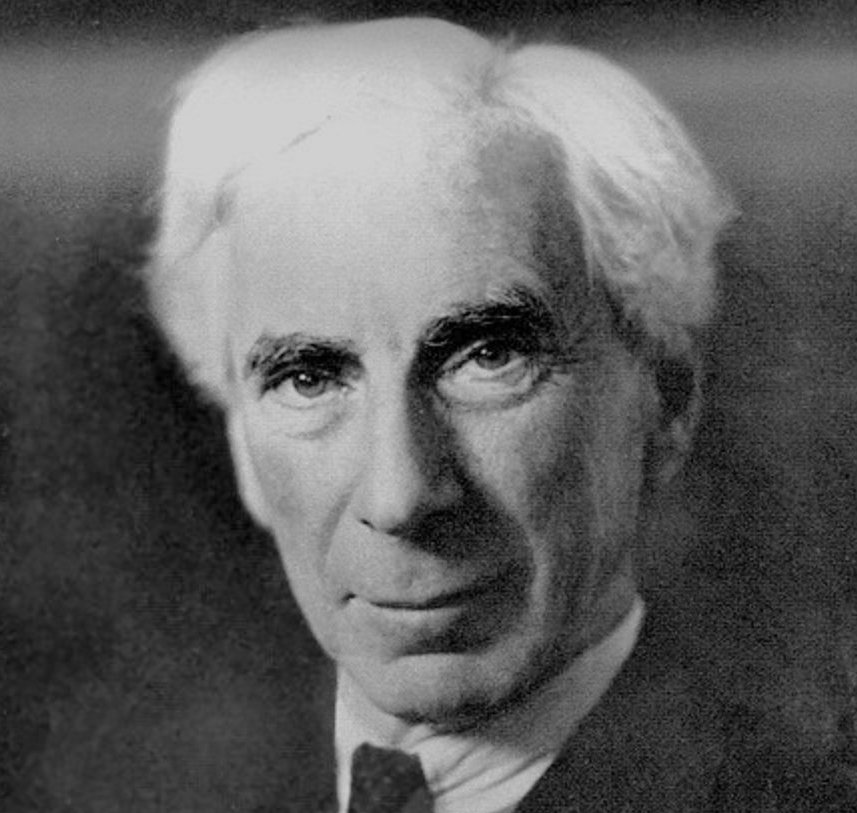
Image via Wikimedia Commons
Is it possible to fully separate a word’s sound from its meaning—to value words solely for their music? Some poets come close: Wallace Stevens, Sylvia Plath, John Ashbery. Rare phonetic metaphysicians. Surely we all do this when we hear words in a language we do not know. When I first encountered the Spanish word entonces, I thought it was the most beautiful three syllables I’d ever heard.
I still thought so, despite some disappointment, when I learned it was a commonplace adverb meaning “then,” not the rarified name of some magical being. My reverence for entonces will not impress a native Spanish speaker. Since I do not think in Spanish and struggle to find the right words when I speak it—always translating—the sound and sense of the language run on two different tracks in my mind.
An example from my native tongue: the word obdurate, which I adore, became an instant favorite for its sound the first time I said it aloud, before I’d ever used it in a sentence or parsed its meaning. It’s not a common English word, however, and maybe that makes it special. A word like always, which has a pretty sound, rarely strikes me as musical or interesting, though non-English speakers may find it so.
Every writer has favorite words. Some of those words are ordinary, some of them not so much. David Foster Wallace’s lists of favorite words consist of obscurities and archaisms unlikely to ever feature in the average conversation. “James Joyce thought cuspidor the most beautiful word in the English language,” writes the blog Futility Closet,” Arnold Bennet chose pavement. J.R.R. Tolkien felt the phrase cellar door had an especially beautiful sound.”
Who’s to say how much these authors could separate sound from sense? Futility Closet illustrates the problem with a humorous anecdote about Max Beerbohm, and brings us the list below of philosopher Bertrand Russell’s 20 favorite words, offered in response to a reader’s question in 1958. Though Russell himself had a fascinating theory about how we make words mean things, he supposedly made this list without regard for these words’ meanings.
- wind
- heath
- golden
- begrime
- pilgrim
- quagmire
- diapason
- alabaster
- chrysoprase
- astrolabe
- apocalyptic
- ineluctable
- terraqueous
- inspissated
- incarnadine
- sublunary
- chorasmean
- alembic
- fulminate
- ecstasy
So, what about you, reader? What are some of your favorite words in English—or whatever your native language happens to be? And do you, can you, choose them for their sound alone? Please let us know in the comments below.
Related Content:
Josh Jones is a writer and musician based in Durham, NC. Follow him at @jdmagness
Read More...Bertrand Russell: “The Problem with the World Is That Fools & Fanatics Are So Certain of Themselves”
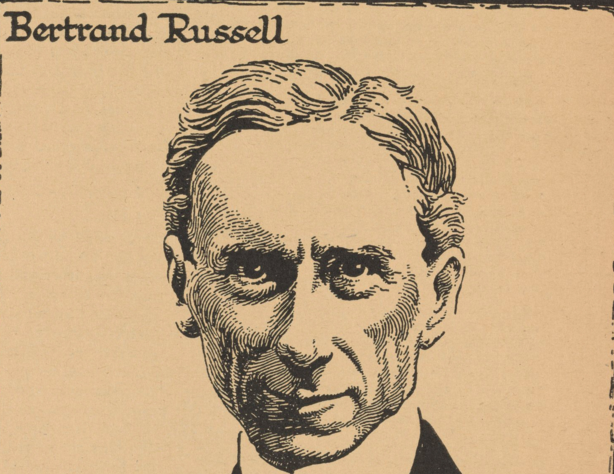
Image by J. F. Horrabin, via Wikimedia Commons
“The whole problem with the world is that fools and fanatics are always so certain of themselves, but wiser people so full of doubts.” — Bertrand Russell
Our hearts go out to the families and friends who lost loved ones in Orlando this morning.
Related Content:
Bertrand Russell’s Ten Commandments for Living in a Healthy Democracy
Listen to ‘Why I Am Not a Christian,’ Bertrand Russell’s Powerful Critique of Religion (1927)
Bertrand Russell and F.C. Copleston Debate the Existence of God, 1948
1,700 Free Online Courses from Top Universities
Read More...Helen Mirren Holds Her Own (and Then Some) in a Cringe-Inducingly Sexist TV Interview, 1975
Say what you will about Kim Kardashian. (Go ahead, I’ll wait.)
Yes, she may only be famous for being rich and famous—not a particularly admirable cultural achievement. But, “and this is the big word: B‑U-T-T‑,” says Helen Mirren, “it’s wonderful that you’re allowed to have a butt nowadays… Thanks to Madame Kardashian.” Should you think Madame Kardashian’s butt-baring shameful, you’ll have Dame Helen to deal with, and she may not deal with you kindly.
Though the Kardashians are “a phenomenon I just don’t find interesting,” Mirren said recently, she admires Kim and other women in pop culture for their body positivity: “When I was growing up, it was thought to be unbelievably sluttish to even have a bra strap showing. Everything was about women conforming…. Women were controlled by being shamed…. I love shameless women. Shameless and proud.”
Mirren knows well of what she speaks. Though an accomplished stage actress since the mid-sixties, she has been pigeonholed by critics as a sex symbol throughout her career in theatre and film. While performing with the Royal Shakespeare Company, one paper dubbed her “Stratford’s very own sex queen.” Mirren’s early film work included nude scenes in 1969’s Age of Consent and the 1979 Bob Guccione-produced Caligula, and she has called the decade between those two films the most sexist time in recent history, “worse than the 1940s or 50s,” she says, “It was horrible. That decade, after the sexual revolution but before feminism, was perilous for women.”
Some evidence is on display in the clips above from an infamous 1975 interview Mirren gave with a leering Michael Parkinson. The interview begins, at the top, with Parkinson quoting several critics on Mirren’s “sluttish eroticism,” among other things. It quickly goes downhill from there. Mirren shrugs off the sexist lingo; Parkinson can’t shut up about it, asking if “what can best be described as your ‘equipment’ hinders you, perhaps, in that pursuit” of being, he says, “in quotes a ‘serious actress.’” Asked to clarify, he stumbles, then says that her body “might detract from the performance, if you know what I mean.” She doesn’t.
Mirren doesn’t make this belittling sexism easy for Parkinson, but he can’t seem to stop himself. It’s hard to watch, but also inspiring to see her poise and confidence in the face of his boorishness. (She calls his questions “boring” and he finally vows to “leave off this sexy image thing,” though he comes back to it.) Yvonne Roberts in The Guardian calls the interview “far from unusual,” and the kind of thing that “gave Jimmy Savile his cover.” She also says that though “Mirren is right on the impact of the sexual revolution,” she is “wrong on chronology. The 70s was the decade when feminism took hold—and perhaps that’s why sexism became still more marked.” Pronounced backlash always follows social change, a phenomenon we’ve seen so often that it seems inevitable.
The Parkinson interview was Mirren’s first talk show appearance, and she remembers being “terrified” at the time. On re-watching the interview in 2011, she said, “I actually thought, bloody hell! I did really well. I was so young and inexperienced. And he was such a f***ing sexist old fart. He was.” She remembers him as “an extremely creepy interviewer” and told BUST magazine in 2010 she was “far more polite than I should have been.” Mirren got the chance to confront Parkinson about that creepy 1975 appearance when she returned as a guest on his show in 2006 to talk about her title role in The Queen.
In the clip above from that appearance, Parkinson returns to the subject of Mirren’s breasts in discussing her lead part in the BBC police procedural series Prime Suspect. She forthrightly takes him to task. “I’m glad you mentioned that, Michael,” she says, “because you can’t resist, can you?” Of the 1975 interview, she says, “I hated you. I thought you were a sexist person.” Parkinson hasn’t changed, it’s clear, but Mirren says she’s “mellowed.” The exchange is a lot less awkward, perhaps because Parkinson knows he can’t bully Mirren the movie star as he did the young stage actress.
Though Mirren now says she’s happy to no longer be a sex symbol, she also expresses admiration for “women who have claimed their own bodies…. They all raise their middle fingers to this epithet of ‘slut.’ They wear what they want to wear, behave as they want to behave.” Though she did not have children, she tells BUST she would have taught her daughter to “say ‘f*ck off’ in the face of sexism”: “It’s quite valuable to have the courage and the confidence to say, ‘No, f*ck off, leave me alone, thank you very much.” Sadly, as we see again and again, in a culture that still shames and devalues women, and enables rape and sexual violence, that courage and confidence, incredibly valuable as it is, isn’t enough to stop continued rampant sexism and abuse in the entertainment industry and everywhere else.
Related Content:
Helen Mirren Now Teaching Her First Online Course on Acting
Download All 239 Issues of Landmark UK Feminist Magazine Spare Rib Free Online
Simone de Beauvoir Tells Studs Terkel How She Became an Intellectual and Feminist (1960)
Josh Jones is a writer and musician based in Durham, NC. Follow him at @jdmagness
Read More...The Bizarre, Surviving Scene from the 1933 Soviet Animation Based on a Pushkin Tale and a Shostakovich Score
Hot dumplings! Marinated apples! A barrel of cucumbers!
Want to add some quick color to your performance or film? Slip in a quick non-narrative vendor scene. No need for character or plot development. The audience will be quite content with the hawkers’ musical recitation of their wares.
The Gershwin / Heyward opera Porgy and Bess’ comic “Vendor’s Trio” makes a nice break from the tragedy.
The lively market number Who Will Buy? temporarily sidelines Oliver’s orphans to showcase the talents of the adult chorus members.
When the Simpsons’ 179th episode took Homer to New York City back in 1997, he was able to purchase such exotic delicacies as Khlav Kalash and canned crab juice from a collection of pushcarts at the base of the World Trade Center.
Less well known is the above bazaar sequence from The Tale of the Priest and of His Workman Balda (1933), a classic of Soviet animation. This short clip is the only part of director Mikhail Tsekhanovsky’s unfinished feature-length work to survive. The rest was destroyed in a fire at the LenFilm archives in World War II, the seemingly final chapter in its troubled history.
The film was based on Alexander Pushkin’s poetic retelling of a Russian folk tale about a greedy priest, who strikes an ill-advised bargain with a brawny worker. It was published posthumously, and only after censors had changed the priest into a merchant.
As he began work on the production, Tsekhanovsky invited Dimitry Shostakovich to compose the score, an innovation at a time when musical accompaniment was added to completed silent films. Shostakovich started, but was derailed by Pravda’s 1936 denunciation of his work in an article titled “Muddle Instead of Music.”
Eventually Tsekhanovskiy threw in the towel, too.
It does not end there, however.
After Shostakovich’s death, his widow got his student, Vadim Biberga, to complete work on the unfinished score. The Russian Philharmonic Orchestra released it in 2006, as part of a Shostakovich centennial.
A commemorative live performance that same year drew fire from the local diocese of the Russian Orthodox Church, who objected to the mocking portrayal of the priest. The theater bowed to pressure, staging seven priest-free numbers from the opera.
This recent history adds an air of defiance to the grotesqueries of the surviving clip, with top honors going to the smut peddler entering at the one minute mark, to extol the virtues of “a Venus with no garments and fat thighs.”
You can listen to Shostakovich’s full score here.
Related Content:
Three Animated Shorts by the Groundbreaking Russian Animator Fyodor Khitruk
Soviet Animations of Ray Bradbury Stories: ‘Here There Be Tygers’ & ‘There Will Come Soft Rain’
Ayun Halliday is an author, illustrator, and Chief Primatologist of the East Village Inky zine. Follow her @AyunHalliday
Read More...Malcolm Gladwell Has Launched a New Podcast, Revisionist History: Hear the First Episode
Malcolm Gladwell has a podcast. Some of you will require no further information, and in fact have already clicked over to iTunes (or another podcast downloading application of your choice), desperate to download the first episode. Allow me to inform those cooler heads who remain that Revisionist History won’t begin its ten-week run, with one episode out per week, until June 16th. (Update: The first episode is now live and you can stream it below.) But you can subscribe right now (iTunes — Stitcher — RSS), and while you wait over the next few days, you can listen to the preview that Gladwell has already posted.
You can also get a little a taste of Gladwell’s new project by watching the trailer at the top of the post. “Every week, I’m going to take you back into the past,” Gladwell promises in the video’s narration, “to examine something that I think has been overlooked and misunderstood.”
He gets into more detail on the Brian Lehrer Show segment below, in which he describes the first episode of Revisionist History as about the question of what it means to be “the first outsider to enter a closed world,” starting from the career of British painter Elizabeth Thompson, whose 1874 canvas The Roll Call became, for a time, the most famous image in the country. It broke its female artist into the male-dominated world of painting, and seemed, for an even shorter time, to herald a new era rich with high-profile female painters. “Everyone waits and waits for the revolution to happen,” Gladwell says, already into his characteristic storytelling mode, “and it never happens.”
Lehrer reacts to Gladwell’s choice of the story of “the first woman to break through in a male-dominated field” with the obvious question: “Is that a coincidence?” It is absolutely not a coincidence, Gladwell replies, going on to connect the phenomenon in question to not just modern figures like Hillary Clinton but Barack Obama, Julia Gillard, and Margaret Thatcher as well, and in the podcast itself surely many others besides. He also hints at an episode later in the season that begins with an obscure Elvis Costello song — and a “terrible” one at that, he adds — and uses it “as a way of finding out how creativity works, and how an awful lot of what we consider works of genius had an incredibly circuitous path to greatness,” ending up at a gallery looking at Cézannes.
You can sign up for episode updates at the official Revisionist History site. The show comes as a product of Panoply, the podcast network of The Slate Group, and its first season promises slick production in addition to the kind of compelling stories and memorable social-science insights with which Gladwell has made himself famous. And we shouldn’t ignore his talent for marketing, either, fully in evidence from nothing more than the tagline he speaks in the trailer: “Because sometimes the past deserves a second chance.” All this together sounds like more than a good reason to give his podcast a first one.
Revisionist History is listed in our new collection, The 150 Best Podcasts to Enrich Your Mind.
Related Content:
The History of the World in 46 Lectures From Columbia University
Malcolm Gladwell: What We Can Learn from Spaghetti Sauce
Malcolm Gladwell: Taxes Were High and Life Was Just Fine
Based in Seoul, Colin Marshall writes and broadcasts on cities, language, and style. He’s at work on a book about Los Angeles, A Los Angeles Primer, the video series The City in Cinema, the crowdfunded journalism project Where Is the City of the Future?, and the Los Angeles Review of Books’ Korea Blog. Follow him on Twitter at @colinmarshall or on Facebook.
Read More...Martin Scorsese Sends a Sweet Video to the Young Creator a Kubrick/Scorsese Mashup
If you’re a veteran reader of Open Culture, you may remember a 2010 video tribute called “Kubrick vs Scorsese.” To make the video, Leandro Copperfield, a young cinephile living in Rio de Janeiro, spent 25 days re-watching 35 films, selecting more than 500 scenes, and then editing them into an homage to his two favorite directors. Watch it here.
No doubt, it must have come as a surprise when, six years later, Copperfield received a video from Scorsese himself, praising the montage Leandro made so long ago. Again, if you’re an old-timer here, you’ll know that this isn’t the first time Scorsese has shown kindness to younger artists. In 2014, we recounted the story of Colin Levy, a teenage filmmaker who met with Scorsese, and came away with a list of 39 Foreign Films Essential for a Young Filmmaker. Props to Marty for being a good mentor and teacher too.
If you would like to support the mission of Open Culture, consider making a donation to our site. It’s hard to rely 100% on ads, and your contributions will help us continue providing the best free cultural and educational materials to learners everywhere. You can contribute through PayPal, Patreon, and Venmo (@openculture). Thanks!
Related Content:
Martin Scorsese Creates a List of 39 Essential Foreign Films for a Young Filmmaker
Martin Scorsese Plays Vincent Van Gogh in a Short, Surreal Film by Akira Kurosawa
Martin Scorsese Makes a List of 85 Films Every Aspiring Filmmaker Needs to See
Read More...Support Us
We're hoping to rely on loyal readers, rather than erratic ads. Please click the Donate button and support Open Culture. You can use Paypal, Venmo, Patreon, even Crypto! We thank you!

About Us

Open Culture scours the web for the best educational media. We find the free courses and audio books you need, the language lessons & educational videos you want, and plenty of enlightenment in between.
Advertise With Us

FREE UPDATES!
GET OUR DAILY EMAIL
Get the best cultural and educational resources on the web curated for you in a daily email. We never spam. Unsubscribe at any time.
FOLLOW ON SOCIAL MEDIA

Open Culture editor Dan Colman scours the web for the best educational media. He finds the free courses and audio books you need, the language lessons & movies you want, and plenty of enlightenment in between.
Advertise With Us


