World Science U Lets You Take Free Physics Courses from Leading Minds in the Field
Two years ago, World Science U debuted on the net, promising to bring free science courses to anyone, from high schoolers to retirees. (We wrote about it here.) The courses would be taught by the top scientists in their fields, featuring lectures, animations, interactive exercises, feedback, and even virtual office hours. At the time, however, Brian Greene’s project to bring the latest in research on string theory, particle physics, dark energy, relativity and more featured only two courses.
Since then, World Science U has taken off. It now offers “Science Unplugged,” a series of short videos that offer answers to layperson questions about science; “Master Classes” which are short classes about various subjects (mostly in physics) that take a few hours to complete; and “University Courses” which take eight to ten weeks to complete and are designed for the more advanced learner. These latter two offerings offer certificates upon completion.
The current roster of lectures is impressive: MIT’s Alan Guth teaches Inflationary Cosmology; U. Chicago’s Michael Turner (who coined the term “dark energy”) presents the Dark Side of the Universe; Stanford’s Andrei Linde takes you into the Multiverse; and Caltech’s Maria Spiropulu probes Nature’s Constituents, to name a few Master Classes. Meanwhile Brian Greene currently teaches two of the university courses: “Special Relativity: A Math-Based Introduction” and (highlighted above) “Space, Time and Einstein: A Conceptual Tour of Special Relativity.”
All of the courses are absolutely free but the videos are only available if you register with World Science U.
Related Content:
Brian Greene Breaks Down Einstein’s Theory of Gravitational Waves for Stephen Colbert
Ted Mills is a freelance writer on the arts who currently hosts the artist interview-based FunkZone Podcast. You can also follow him on Twitter at @tedmills, read his other arts writing at tedmills.com and/or watch his films here.
Read More...Jean-Paul Sartre on How American Jazz Lets You Experience Existentialist Freedom & Transcendence
In Jean-Paul Sartre’s 1938 philosophical novel Nausea, which he considered one of his finest works of fiction or otherwise, the stricken protagonist Antoine Roquentin cures his existential horror and sickness with jazz—specifically with an old recording of the song “Some of These Days.” Which recording? We do not know. “I only wish Sartre had been more specific about the names of the musicians on the date,” writes critic Ted Gioia in a newly published essay, “I would love to hear the jazz record that trumps Freud, cures the ill, and solves existential angst.”
The song was first recorded in 1911 by a Ukranian-Jewish singer named Sophie Tucker, who made her name with it, and was written by a black Canadian named Shelton Brooks. But Sartre’s hero refers to the singer as an African-American, or as “the Negress,” and to its writer as “a Jew with Black eyebrows.” Was this a mix-up? Or did Sartre refer to another of the hundreds of recordings of the song? (Perhaps Ethel Waters, below?). Or, this being a work of fiction, and Roquentin himself a failed writer, are these identifications made up in his imagination?
In his description of the recording, Roquentin reduces the singer and composer to two broad types: the jazz singing “Negress” and the “Jew”—“a clean-shaven American with thick black eyebrows,” who sits in a “New York skyscraper.”
This stereotyping creates what Miriama Young calls “an objectification of the voice and the persona behind it.” In the novel’s strangely happy ending, Roquentin recovers his disintegrating self by attaching it to these nameless, static figures, who are as repetitious as the record playing over and over on the phonograph, and who are themselves somehow “saved” by the music.
Sartre,” James Donald argues, “still believed in the redemptive power of art.” In the last mention of the record, Roquentin asks to hear “the Negress sing…. She sings. So two of them are saved: the Jew and the Negress. Saved.” And yet, rather than discovering in the music a redemptive authenticity, argues Donald, Sartre’s use of jazz in Nausea is more like Al Jolson’s in The Jazz Singer, a “creative act of mishearing and ventriloquism,” or a “generative inauthenticity.”
Sartre’s early conception of “the redemptive power of art” depended on such inauthenticity; “the work of art is an irreality,” he writes in 1940 in The Imaginary: A Phenomenological Psychology of the Imagination. As in Roquentin’s diary, writes Adnan Menderes, or the novel itself, “in a work of art the here-and-now existence of human being could be shown as interwoven in necessary relations. But in contrast to the work of art, in the real world the existence of human being is contingent and for this very reason it is free.” It is that very freedom and contingency out in the world, the inability to ground himself in reality, that produces Roquentin’s nausea and the existentialist’s crisis. And it is the jazz recording’s “irreality” that resolves it.
Sartre’s use of the racialized types of “Negress” and “Jew” as foils for the complicated, troubled European psyche is reminiscent of Camus’ later use of “the Arab” in The Stranger. Though he critically explored issues of racism and anti-Semitism at length in his later writing, he was perhaps not immune to the primitivist tropes that dominated European modernism and that, for example, made Josephine Baker famous in Paris. (“The white imagination sure is something when it comes to blacks,” Baker herself once wearily observed.) But these types are themselves unreal, like the work of art, projections of Roquentin’s imaginative search for solidity in the exotic otherness of jazz. Nearly ten years after the publication of Nausea, Sartre wrote of the pull jazz had on him in a short, tongue-in-cheek essay called “I Discovered Jazz in America,” which Michelman describes as “like an anthropologist describing an alien culture.”
In the 1947 essay, Sartre writes of the music he hears at “Nick’s bar, in New York” as “dry, violent, pitiless. Not gay, not sad, inhuman. The cruel screech of a bird of prey.” The music is animalistic, immediate, and strange, unlike European formalism: “Chopin makes you dream, or Andre Claveau,” writes Sartre, “But not the jazz at Nick’s. It fascinates.” Like Roquentin’s recording, the Nick’s Bar jazz band is “speaking to the best part of you, to the toughest, to the freest, to the part which wants neither melody nor refrain, but the deafening climax of the moment.”
Gioia recommends that we abandon Theodor Adorno as the go-to European academic reference for jazz writing (I’d agree!) and instead refer to Sartre. But I’d be hesitant to recommend this description. Jazz, improvisatory or otherwise, does extraordinary things with melody and refrain, tearing apart traditional song structures and putting them back together. (See, for example, Dizzy Gillespie’s “Salt Peanuts” from 1947, above.) But it does not abandon musical form altogether in a sustained, formless “climax of the moment,” as Sartre’s sexualized phrase alleges.
Yet in this new jazz—the crashing, chaotic bebop so unlike the crooning big band and show tunes Sartre admired in the 30s—it would be easy for the enthusiast to hear only climax. This music excited Sartre very much, writes Gioia; he “called jazz ‘the music of the future’ and made an effort to get to know Miles Davis and Charlie Parker [above and below], and listen to John Coltrane,” though “his writings on the subject are more atmospheric than analytical.”
With humor and vivid description, Sartre’s essay does a wonderful job of conveying his experience of hearing live jazz as an amused and overawed outsider, though he seems to have some difficulty understanding exactly what the music is on terms outside his excitable emotional response. “The whole crowd shouts in time,” writes Sartre, “you can’t even hear the jazz, you watch some men on a bandstand sweating in time, you’d like to spin around, to howl at death, to slap the face of the girl next to you.”
Perhaps what Sartre heard, experienced, and felt in live bebop was what he had always wanted to hear in recorded jazz, an analogue to his own philosophical yearnings. In an article on one of his major influences, Husserl, written the year after the publication of Nausea, Sartre describes the way we “discover ourselves” as “outside, in the world, among others,” not “in some hiding place.” Strong emotions, “hatred, love, fear, sympathy—all those famous ‘subjective reactions that were floating in the malodorous brine of the mind…. They are simply ways of discovering the world.”
We come to authentic existence, writes Sartre—using a phrase that would soon resound in Jack Kerouac’s coming existential appropriation of jazz—“on the road, in the town, in the midst of the crowd, a thing among things, a human among humans.” In this way, Gioia speculates, Sartre likely “saw jazz as the musical manifestation of the existential freedom he described in his philosophical texts.” Sartre may have misread the formal discipline of jazz, but he describes hearing it live, among a sweating, throbbing crowd, as an authentic experience of freedom, unlike the recording that saves Roquentin through repetition and “irreality.” In both cases, however, Sartre finds in jazz a means of transcendence.
Related Content:
Lovers and Philosophers — Jean-Paul Sartre & Simone de Beauvoir Together in 1967
Jazz ‘Hot’: The Rare 1938 Short Film With Jazz Legend Django Reinhardt
Josh Jones is a writer and musician based in Durham, NC. Follow him at @jdmagness
Read More...
The Home Movies of Two Surrealists: Look Inside the Lives of Man Ray & René Magritte
“It happens all the time,” writes the New York Times’ Sala Elise Patterson, “A beautiful young woman decides she wants to become a model and asks a photographer friend to take some head shots. Seventy years ago this ordinary series of events took an unlikely turn. That was because the beautiful woman was black; the photographer was her lover Man Ray; and one of the photographs landed in the September 1937 issue of Harper’s Bazaar, making her the first black model to appear in a major fashion magazine.”
That counted as one of the particularly notable events in the brief life together of the surrealist photographer and his Guadaloupe-born “lover, model and muse“Adrienne, better known as Ady, Fidelin. Some of the less historical moments of that companionship we have captured in the clips above, a series of home movies of Man Ray and Ady shot in 1938.
We see the former working, the latter dancing, both traveling, and several other unguarded moments besides — very much the opposite of the still intricately (and sometimes disturbingly) vivid compositions that characterize the way Man Ray captured humanity in his own work.
Other surrealists also took to the then-nascent technology of home filmmaking. The painter René Magritte put a bit more deliberate craft into his own amateur productions, such as the minute-and-a-half-long short film you see just above. “He went out and purchased a lot of expensive equipment and spent much of the week composing a ‘script’ based on the images in his paintings,” remembers art critic and onetime Magritte actress Suzi Gablik in her autobiography Living the Magical Life: An Oracular Adventure. “When Saturday night arrived, we all took part in the drama. My role was to sit in a chair, wearing a red carnival mask over my eyes, giving birth to a tuba, which emerged slowly from under my skirt.”
An event better seen, perhaps, than described, and one that fits in with the rest of the antics the artist managed to stage and capture, including one fellow “playing the part of a hunchback thief” who — clearly possessed of a collector’s eye — goes around the house stealing Magritte’s paintings. Though both now remembered as top-of-the-line surrealists, Man Ray and Magritte took quite different approaches to their art — and, as we see, entirely different approaches to the things they made in their off hours. But both men’s cinematic impulses proved fruitful: Man Ray made several still-striking narrative films, and as for Magritte’s project, writes Gablik, it ended up shown years later “as a short accompanying the favorite film of the surrealists about Dracula, Nosferatu.” Not bad for a home movie.
Related Content:
Man Ray and the Cinéma Pur: Four Surrealist Films From the 1920s
Man Ray’s Portraits of Ernest Hemingway, Ezra Pound, Marcel Duchamp & Many Other 1920s Icons
René Magritte’s Early Art Deco Advertising Posters, 1924–1927
Based in Seoul, Colin Marshall writes and broadcasts on cities, language, and style. He’s at work on a book about Los Angeles, A Los Angeles Primer, the video series The City in Cinema, the crowdfunded journalism project Where Is the City of the Future?, and the Los Angeles Review of Books’ Korea Blog. Follow him on Twitter at @colinmarshall or on Facebook.
Read More...Walter Benjamin’s 13 Oracular Writing Tips

Image by Walter Benjamin Archiv, via Wikimedia Commons
The probability of Walter Benjamin’s name coming up in your average MFA workshop, or fiction writers’ group of any kind, likely approaches zero. But head over to a name-your-critical-political-literary-theory class and I’d be surprised not to hear it dropped at least once, if not half a dozen times. Benjamin, after all, mentored or befriended the first generation Frankfurt School, Hannah Arendt, Bertolt Brecht, Leo Strauss, and nearly every other twentieth-century German intellectual who escaped the Nazis. Tragically, Benjamin himself did not fare so well. It has long been believed that he killed himself rather than face Nazi capture. Another theory speculates that Stalin had him murdered.
Since his death, the legend of Benjamin as a kind of heterodox Marxist prophet—an image he fostered with his embrace of Jewish mysticism—has grown and grown. And yet, despite his rarified academic pedigree, I maintain that writers of all kinds, from the most pedantic to the most visceral, can learn much from him.
Benjamin did not strictly confine himself to the arcane textual analysis and literary-theological hermeneutics for which he’s best known; he spent most of his career working as a freelance critic and journalist, writing almost casual travelogues, personal reminiscences of Weimar Berlin, and approachable essays on a variety of subjects. For a few years, he even wrote and presented popular radio broadcasts for young adults—acting as a kind of “German Ira Glass for teens.”
And, like so many writers before and since, Benjamin once issued a list of “writer’s tips”—or, as he called it, “The Writer’s Technique in Thirteen Theses,” part of his 1928 treatise One-Way Street, one of only two books published in his lifetime. In Benjamin’s hands, that well-worn, well meaning, but often less than helpful genre becomes a series of oracular pronouncements that can seem, at first read, comical, superstitious, or puzzlingly idiosyncratic. But read them over a few times. Then read them again. Like all of his writing, Benjamin’s suggestions, some of which read like commandments, others like Nietzschean aphorisms, reveal their meanings slowly, illuminating the postures, attitudes, and physical and spiritual disciplines of writing in surprisingly humane and astute ways.
The Writer’s Technique in Thirteen Theses:
- Anyone intending to embark on a major work should be lenient with himself and, having completed a stint, deny himself nothing that will not prejudice the next.
- Talk about what you have written, by all means, but do not read from it while the work is in progress. Every gratification procured in this way will slacken your tempo. If this regime is followed, the growing desire to communicate will become in the end a motor for completion.
- In your working conditions avoid everyday mediocrity. Semi-relaxation, to a background of insipid sounds, is degrading. On the other hand, accompaniment by an etude or a cacophony of voices can become as significant for work as the perceptible silence of the night. If the latter sharpens the inner ear, the former acts as a touchstone for a diction ample enough to bury even the most wayward sounds.
- Avoid haphazard writing materials. A pedantic adherence to certain papers, pens, inks is beneficial. No luxury, but an abundance of these utensils is indispensable.
- Let no thought pass incognito, and keep your notebook as strictly as the authorities keep their register of aliens.
- Keep your pen aloof from inspiration, which it will then attract with magnetic power. The more circumspectly you delay writing down an idea, the more maturely developed it will be on surrendering itself. Speech conquers thought, but writing commands it.
- Never stop writing because you have run out of ideas. Literary honour requires that one break off only at an appointed moment (a mealtime, a meeting) or at the end of the work.
- Fill the lacunae of inspiration by tidily copying out what is already written. Intuition will awaken in the process.
- Nulla dies sine linea [‘No day without a line’] — but there may well be weeks.
- Consider no work perfect over which you have not once sat from evening to broad daylight.
- Do not write the conclusion of a work in your familiar study. You would not find the necessary courage there.
- Stages of composition: idea — style — writing. The value of the fair copy is that in producing it you confine attention to calligraphy. The idea kills inspiration, style fetters the idea, writing pays off style.
- The work is the death mask of its conception.
via Clarion 18/BrainPickings
Related Content:
Walter Benjamin’s Radio Plays for Kids (1929–1932)
Umberto Eco Dies at 84; Leaves Behind Advice to Aspiring Writers
David Ogilvy’s 1982 Memo “How to Write” Offers 10 Pieces of Timeless Advice
Josh Jones is a writer and musician based in Durham, NC. Follow him at @jdmagness
Read More...Watch Star Trek: New Voyages: The Original Fan-Made Sequel to the 1960s TV Series
Several weeks back, we featured for you Star Trek Continues, the critically-acclaimed, fan-made sequel to the original TV series, which tries to answer the questions: What if Star Trek had continued? How would the story have played out?
Others have tried to offer up answers to those questions too. And we’d be remiss, a reader reminded us, if we didn’t give a little airtime to Star Trek: New Voyages, “the longest-running, Star Trek original series fan production in the world.” Here’s a little more information about the production from the show’s web site:
Created in 2003 by James Cawley, along with producer Jack Marshall, the show strives to complete the “five-year mission” of the Starship Enterprise, “to boldly go where no man has gone before.” It’s celebration of Gene Roddenberry’s legacy has won critical acclaim and numerous accolades, as well as attracting the attention and participation of Star Trek alumni such as George Takei and Walter Koenig, who have returned to reprise their roles on NEW VOYAGES. We have even provided prop items for the actual STAR TREK franchise series “Enterprise”!
All 10 episodes can viewed online or downloaded from the show’s website. And you can also find them on YouTube too. Start with Episode 1 above.
If you would like to support the mission of Open Culture, consider making a donation to our site. It’s hard to rely 100% on ads, and your contributions will help us continue providing the best free cultural and educational materials to learners everywhere. You can contribute through PayPal, Patreon, and Venmo (@openculture). Thanks!
Related Content:
City of Scars: The Impressive Batman Fan Film Made for $27,000 in 21 Days
How Isaac Asimov Went from Star Trek Critic to Star TrekFan & Advisor
Nichelle Nichols Explains How Martin Luther King Convinced Her to Stay on Star Trek
Read More...David Bowie’s Music Video “Jump They Say” Pays Tribute to Marker’s La Jetée, Godard’s Alphaville, Welles’ The Trial & Kubrick’s 2001
Last week we featured William Gibson’s memory of the first time he saw La Jetée, Chris Marker’s influential 1962 science-fiction short film constructed almost entirely out of still photographs. In the Guardian article on the film’s legacy that quotes Gibson, we also hear from director Mark Romanek, who speaks of being “exposed to Chris Marker’s work at a particularly impressionable age.” Romanek, known for the feature films One Hour Photo and Never Let Me Go, has worked primarily as a music video director, and in 1993 he got the chance to do a tribute to Marker in the video for David Bowie’s “Jump They Say.”
“Bowie and I shared an admiration for La Jetée, so we contrived to pay homage to it,” says Romanek. “The idea of making those iconic still images move seemed both exciting and somehow a little sacrilegious.” The observant Marker fan will notice strong echoes of the film in the characters and the events of the music video, especially when Bowie’s character gets dragged off by a pack of post-apocalyptically Gallic-looking techno-thugs and strapped into what looks like the very same wired-up hammock and mask used to send the protagonist of La Jetée back through time.
But much more went into this influence-rich project than an appreciation for Chris Marker. Bowie described the song itself to the New Musical Express as “semi-based on my impression of my stepbrother” Terry Burns, who had taken his own life eight years earlier. In the video, the singer’s character winds up taking a flying leap from the 29th floor of an office building, thus escaping the oppression and paranoia of his slickly sinister near-future corporate setting, which owes much to the version of Paris that Jean-Luc Godard offered up in his 1965 sci-fi noir Alphaville.
We might say that the sharp-suited, sharper-haired incarnation of Bowie here jumps as a way out of a world with which he cannot reason, and artists who want to depict such a world have often looked to the work of Franz Kafka as an example. In this case, Bowie and Romanek draw from Orson Welles’ film adaptation of Kafka’s The Trial (especially its use of corridors), which came out the very same year as La Jetée did. Enthusiasts of 1960s film will also notice that 2001: A Space Odyssey also had its impact on the production design (especially as regards female costuming). But what did the man behind the main inspiration think? “I was deeply relieved,” says Romanek, “to hear that Mr. Marker was pleased and not offended by the gesture.”
Related Content:
David Bowie Releases 36 Music Videos of His Classic Songs from the 1970s and 1980s
How “Space Oddity” Launched David Bowie to Stardom: Watch the Original Music Video From 1969
The Story of Ziggy Stardust: How David Bowie Created the Character that Made Him Famous
Based in Seoul, Colin Marshall writes and broadcasts on cities, language, and style. He’s at work on a book about Los Angeles, A Los Angeles Primer, the video series The City in Cinema, the crowdfunded journalism project Where Is the City of the Future?, and the Los Angeles Review of Books’ Korea Blog. Follow him on Twitter at @colinmarshall or on Facebook.
Read More...Langston Hughes Reads Langston Hughes
James Mercer Langston Hughes’ poetry—joyful, celebratory, cutting, filled with deep longing, playful jabs, bittersweet images, and earnest affirmations—is pre-eminently African American poetry. But in saying that I mean also to say that it is pre-eminently American poetry, as the jazz and blues Hughes drew so much from is pre-eminently American music. Hughes was committed to the promises of the American experiment—despite and in full recognition of its vicious contradictions—and he was also in lively conversation with the poets who captured and transmuted the country’s unique voices.
His “major early influences,” writes critic Arnold Rampersad, “were Walt Whitman, Carl Sandburg, as well as the black poets Paul Lawrence Dunbar, a master of both dialect and standard verse, and Claude McKay, a radical socialist who also wrote accomplished lyric poetry.” All of these influences are readily apparent in his early work, and it was Sandburg who led him “toward free verse and a radically democratic modernist aesthetic.”
Hughes also descended from a radical political tradition, his chosen first name, Langston, the surname of an abolitionist grandfather who died fighting with John Brown; when his grandmother remarried, it was to a prominent Reconstruction politician. It’s a legacy that seems to have inspired in the poet a fierce hope for the country’s future that he expresses in that famous response to Whitman, “I, Too.”
Tomorrow,
I’ll be at the table
When company comes.
Nobody’ll dare
Say to me,
“Eat in the kitchen,”
Then.Besides,
They’ll see how beautiful I am
And be ashamed—
The lines of his collected works have been read aloud in countless classrooms and from countless stages as representing the best of the Harlem Renaissance’s buoyant critique and celebration of everything contained in the designation “African-American.” That’s not to say that Hughes’ poetry or his vision resonated with all of his contemporaries.
Two years after his death in 1967, author Lindsay Patterson in the New York Times called Hughes “the most abused poet in America…. Serious white critics ignored him, less serious ones compared his poetry to Cassius Clay doggerel, and most black critics only grudgingly admired him. Some like James Baldwin, were downright malicious about his poetic achievement.” Baldwin, writes Anita Patterson (no relation to Lindsay), “faulted Hughes for failing to follow through consistently on the artistic premises laid out in his early verse.” The later poems, wrote Baldwin in 1959, “take refuge, finally, in a fake simplicity.”
And yet, Lindsay Patterson pointed out, critics like Baldwin and others mistook “the simple form and language of Hughes’ poetry for paucity of meaning. His real meanings are never that apparent,” and his poetry “must be heard, rather than read silently, for one to realize its emotional scope.” In 1962 and 63, Hughes sat down with the BBC for a series of readings and interviews, and later, Caedmon Records, who have for many decades recorded and preserved the voices of 20th poetry, released portions of those sessions as part of their “Essential” series. That recording has now been fully released on Spotify (stream the 47 minute recording right below), and apparently YouTube too.
You can hear Hughes read the familiar favorite “The Negro Speaks of Rivers” (top) and below it, an autobiographical introduction to the poem. Further down, hear the less well-known, and much more trenchant, poem, “The South,” which begins with grotesque, almost Faulknerian images in its opening lines:
The lazy, laughing South
With blood on its mouth.
The sunny-faced South,
Beast-strong,
Idiot-brained.
The child-minded South
Of another lesser-known poem, “Merry-go-Round,” above, Hughes says in commentary titled “In My Poetry”: “I’ve never been at a loss for moving subject matter because I myself have faced many of these racial problems all over the United States, having lived from one end of the country to the other, in my now more than 50 years of life. One of the dramatic ways of expressing the race problem, I’ve found, is to express it through the eyes of a child, and I have done this through stories and poetry.”
In the short, violent “Ku Klux Klan,” above (sometimes published as just “Ku Klux”) —a poem still tragically all too relevant—Hughes dramatizes the brutality a racist ideology requires to force others to acknowledge it. The internal rhymes and brevity of the poem present us with an almost comic contrast to the subject. It is, writes critic John Moore, “a strangely humorous poem,” suggesting “the possibility that the man being lynched might be laughing” at “the ritualized bombasity of the Klansman,” further inciting his rage.
The early lyric poems in this recording show us Hughes engaging directly with the legacies of slavery and Jim Crow and their lasting effects; in these poems, he names “the bitter truth” Baldwin accused him, unfairly, of hiding behind the “hieroglyphics” of jazz idioms in later works like Montage of Dream Deferred. The bits of explanation and autobiography between the recorded readings make the whole album a very rewarding listen. Whether you already know Hughes’ poetry well or have only encountered famous poems like “Harlem,” The Essential Langston Hughes will likely show you a side of the poet you may not have known before.
Related Content:
Watch Langston Hughes Read Poetry from His First Collection, The Weary Blues (1958)
Langston Hughes Presents the History of Jazz in an Illustrated Children’s Book (1955)
Hear Hemingway Read Hemingway, and Faulkner Read Faulkner (90 Minutes of Classic Audio)
Hear Tennessee Williams Read Hart Crane’s “The Broken Tower” and “The Hurricane” (1960)
Josh Jones is a writer and musician based in Durham, NC. Follow him at @jdmagness
Read More...Download All 36 of Jan Vermeer’s Beautifully Rare Paintings (Most in Brilliant High Resolution)

Imagine the scene: you uncover a painting stored away in the closet of an elderly relative’s home, coated in a blanket of dust so thick you can hardly make out anything but more dust underneath. You slide it out, begin to carefully brush it off, and find two piercing eyes peering out at you. You brush away more dust, you are covered in it, and the image slowly reveals itself: a stunning oil painting of a young woman in a blue headdress and gold tunic, her red lips parted slightly in an enigmatic, over the shoulder glance.
You have just discovered Johannes (or Jan) Vermeer’s Girl with a Pearl Earring, the so-called “Dutch Mona Lisa.” The year is 1881, and the painting—in poor condition—will sell at auction for two guilders and thirty cents, the equivalent of about twenty-six U.S. dollars in today’s currency.
This mostly fictional anecdote is meant to illustrate just how much Vermeer’s fortunes—or rather those of the owners of his paintings—have risen since the late 19th century. (The painting was indeed sold in 1881—to an army officer and collector—for that tiny sum.)
Though Vermeer himself achieved modest fame during his own lifetime in his hometown of Delft and in The Hague, he died in debt in 1675, and was subsequently forgotten. Since then, of course, he has become one of the most famous European painters in history, with as much name recognition as fellow Dutch stars, Rembrandt and Van Gogh.
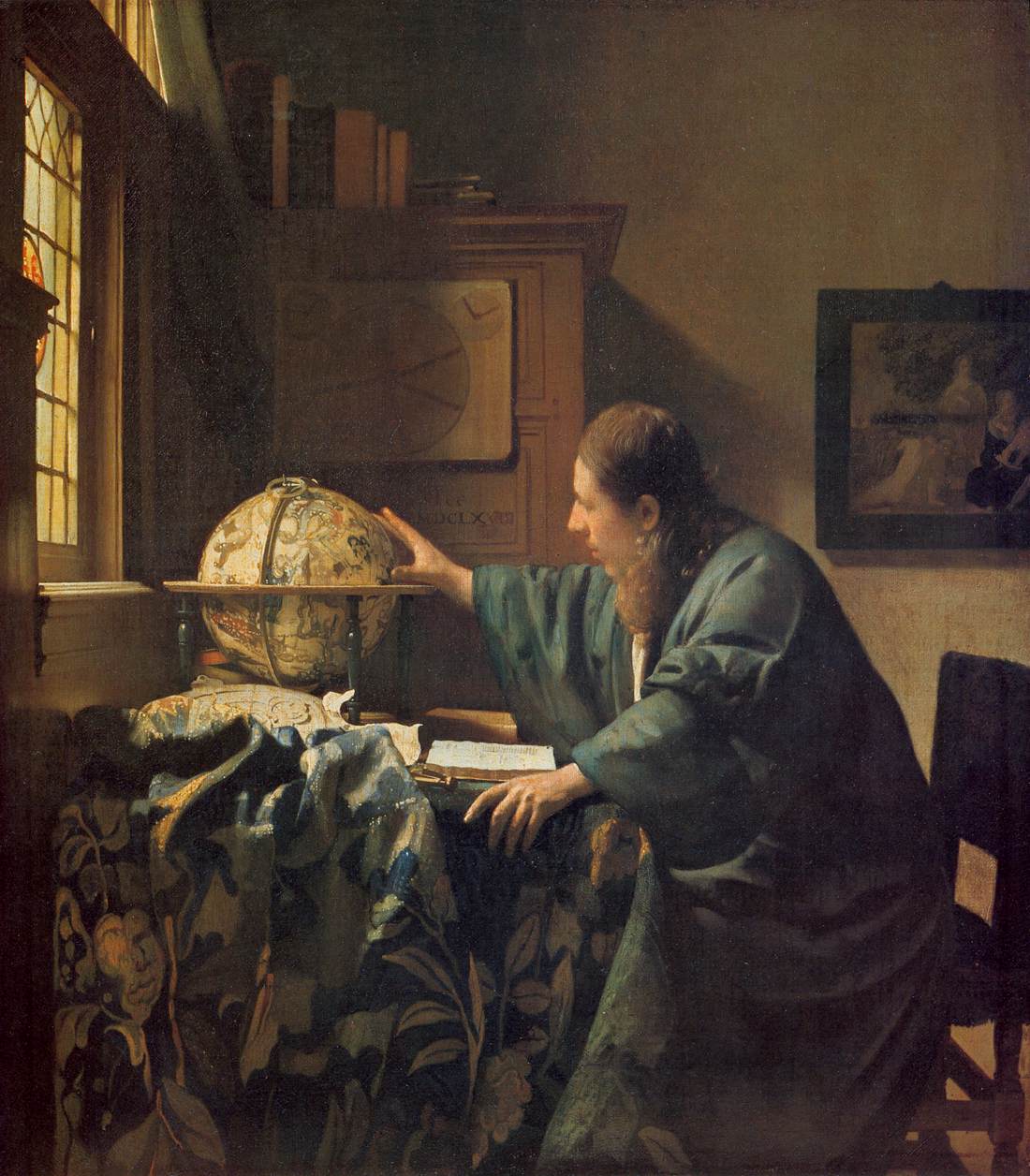
With the exception of the rare Biblical or mythological scene and two paintings of gentleman scholars, Vermeer’s few paintings—portraits and tranquil domestic scenes of almost preternatural stillness and poise—depict middle class women and their servants at work and at leisure. The Girl with a Pearl Earring is unusual: not a portrait—though the best-selling novel and award-winning film recreate its fictional referent—but what is called a “tronie,” depicting, writes The Hague’s Mauritshuis museum (who own the painting), “a certain type or character; in this case a girl in exotic dress, wearing an oriental turban and an improbably large pearl in her ear.”
Part of the reason for Vermeer’s obscurity is also the reason for his works’ precious rarity today—his relatively meager output compared to other Dutch painters of the period. “Most Dutch painters turned out hundreds of pictures for a much broader market,” writes the Metropolitan Museum of Art. Vermeer produced “perhaps about forty-five (of which thirty-six are known today).” To learn many fascinating details about the composition, technique, history, and influence of those thirty-six paintings, you should visit Essential Vermeer 2.0, a thoroughly comprehensive site with an interactive catalogue, bibliographies, research links, interviews, essays on technique, list of Vermeer events and online resources, and much, much more.
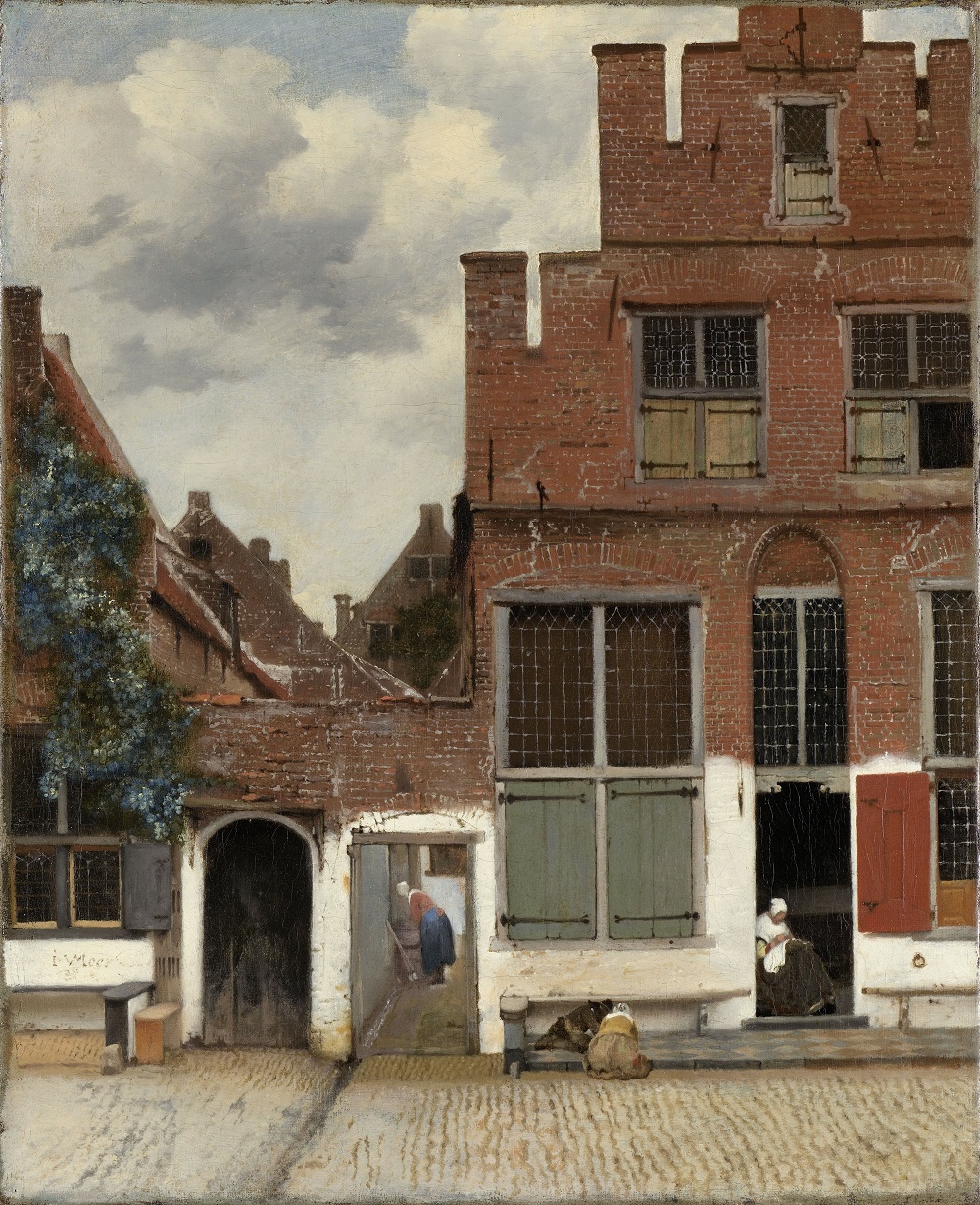
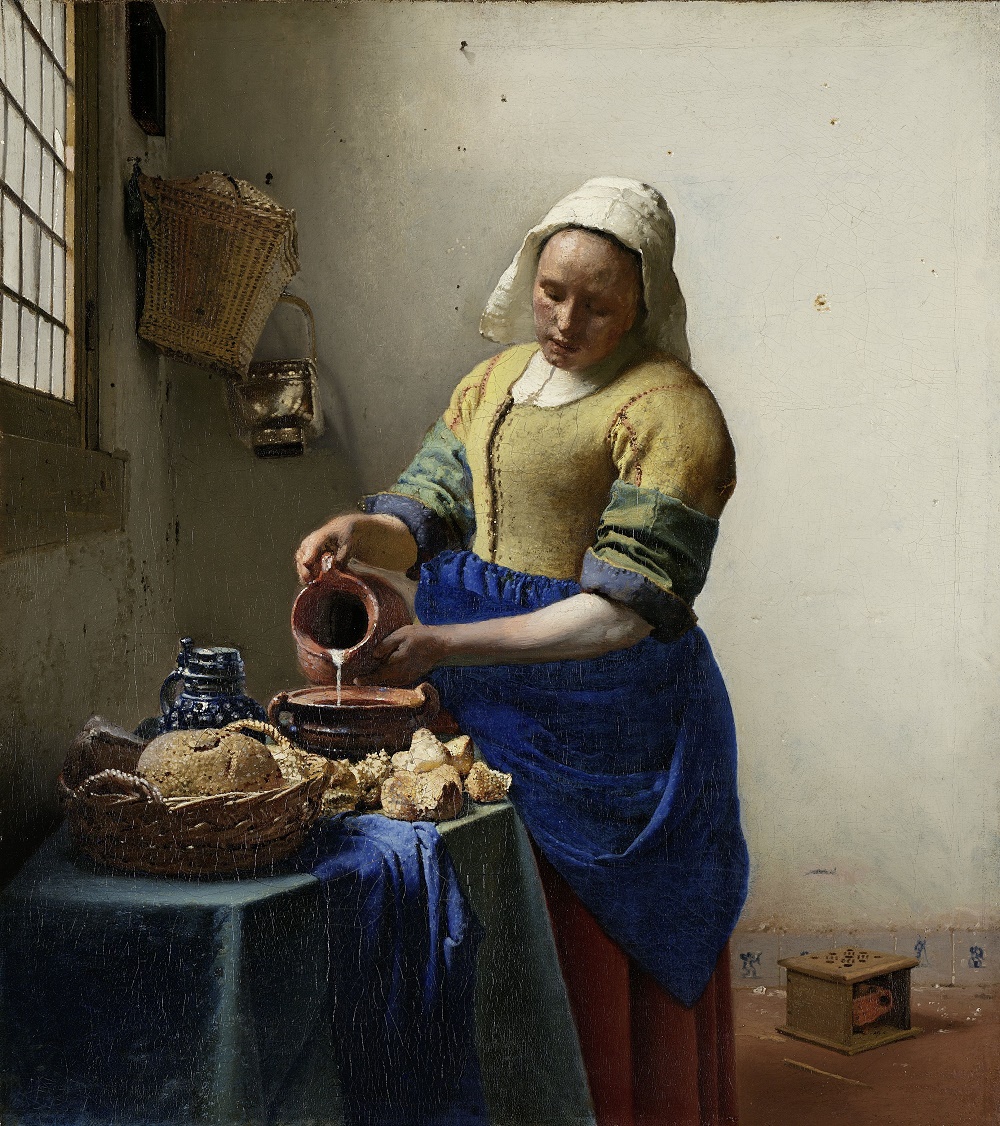
In one of the most recent postings on the site, emeritus professor of architecture Philip Steadman writes an intricately illustrated essay on the most probable location of the rare exterior painting, The Little Street (c.1658), which, the Rijksmuseum tells us, “occupies an exceptional place in Vermeer’s oeuvre.” The Rijksmuseum also allows you to download—with a free account—a very high resolution scan of the painting, as well as others like The Milkmaid (further up), Woman in Blue Reading a Letter, and more. Other galleries, physical and online, offer similarly high res Vermeer downloads, and students and devotees of his work can collect all thirty-six known paintings—digitally—by visiting the links below. As for the real thing… well… you’d need to cough up more than a couple dozen bucks for one these days.
Note: Although most images listed below are in high res, several aren’t, and they tend to appear toward the bottom of the list. If anyone knows where we can find better versions, please drop us a line.
- Girl with a Pearl Earring (Wikimedia Commons)
- The Little Street (Rijksmuseum)
- The Milkmaid (Rijksmuseum)
- Woman in Blue Reading a Letter (Rijksmuseum)
- The Love Letter (Rijksmuseum)
- A Maid Asleep (The Met)
- Woman Holding a Water Pitcher (The Met)
- Woman with a Lute (The Met)
- Study of a Young Woman (The Met)
- Allegory of the Catholic Faith (The Met)
- Girl with Red Hat (National Gallery of Art)
- Girl with a Flute (National Gallery of Art)
- A Lady Writing (National Gallery of Art)
- Woman Holding a Balance (National Gallery of Art)
- The Guitar Player (The National Gallery/Wikimedia Commons)
- Lady Seated at a Virginal (The National Gallery)
- Lady Standing at a Virginal (The National Gallery)
- Christ in the House of Martha and Mary (The National Gallery)
- Lady Writing a Letter with Her Maid (National Gallery of Ireland)
- Lady at the Virginals with a Gentleman/The Music Lesson (Royal Collection Trust)
- The Wine Glass (Google Art Project/Wikimedia Commons)
- Young Woman with a Pearl Necklace (Google Art Project/Wikimedia Commons)
- Officer and Laughing Girl (Google Art Project/Wikimedia Commons)
- The Art of Painting (Google Art Project/Wikimedia Commons)
- Girl Reading a Letter by an Open Window (Google Art Project/Wikimedia Commons)
- Mistress and Maid (The Frick/Wikimedia Commons)
- Girl Interrupted at Her Music (The Frick/Wikimedia Commons)
- View of Delft (Wikimedia Commons)
- The Geographer (Wikimedia Commons)
- Diana and Her Companions (Wikimedia Commons)
- The Procuress (Wikimedia Commons)
- The Girl with the Wine Glass (Wikimedia Commons)
- The Concert (Wikimedia Commons)
- The Astronomer (Wikimedia Commons)
- The Lacemaker (Wikimedia Commons)
- A Young Woman Seated at the Virginals (Wikimedia Commons)
Related Content:
300+ Etchings by Rembrandt Now Free Online, Thanks to the Morgan Library & Museum
Rijksmuseum Digitizes & Makes Free Online 210,000 Works of Art, Masterpieces Included!
Download Hundreds of Van Gogh Paintings, Sketches & Letters in High Resolution
Josh Jones is a writer and musician based in Durham, NC. Follow him at @jdmagness
Read More...New Rosa Parks Archive is Now Online: Features 7,500 Manuscripts & 2,500 Photographs, Courtesy of the Library of Congress

It’s telling that the Library of Congress, in digitizing its vast Rosa Parks Collection in close to its entirety, had to resort to a “representative sample” of children’s greeting cards. The lady had no shortage of admirers at the elementary school level.
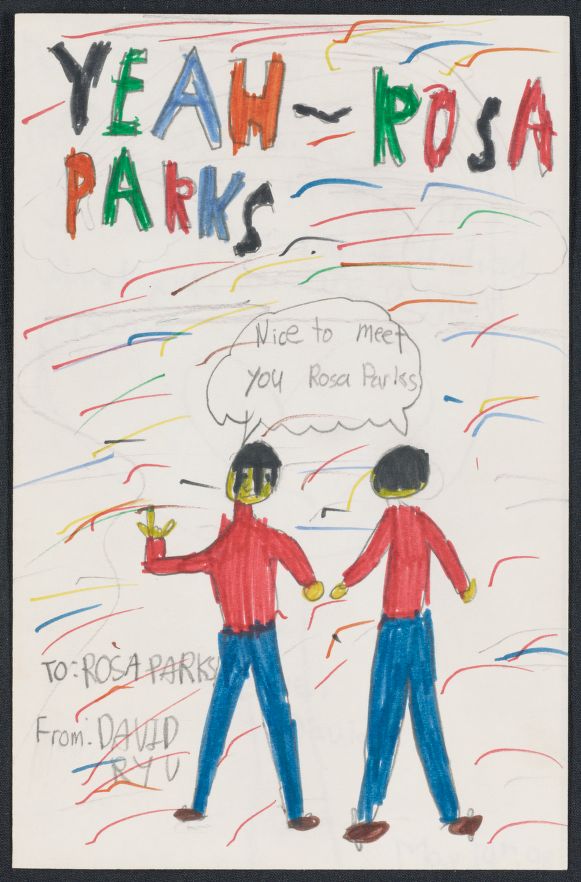
It’s not surprising that Parks’ refusal to yield her bus seat to a white passenger in Montgomery, Alabama in 1955 resonates with children. The story has the simplicity of a fable, and Parks’ pluck is irresistible. It’s as if she took a slingshot and aimed it right between the eyes of the segregated South.
It’s easy to convey how important her spontaneous act of resistance was to the Civil Rights Movement. However, those few minutes on Bus 2857 cannot be all there is to a woman whose life spanned nine decades (1913–2005). They are just the historical equivalent of a role that an actor cannot escape—great, but ultimately limiting.
The online archive helps to flesh out this iconic figure beyond the confines of a child’s crayoned portrait.
Among the treasures are:
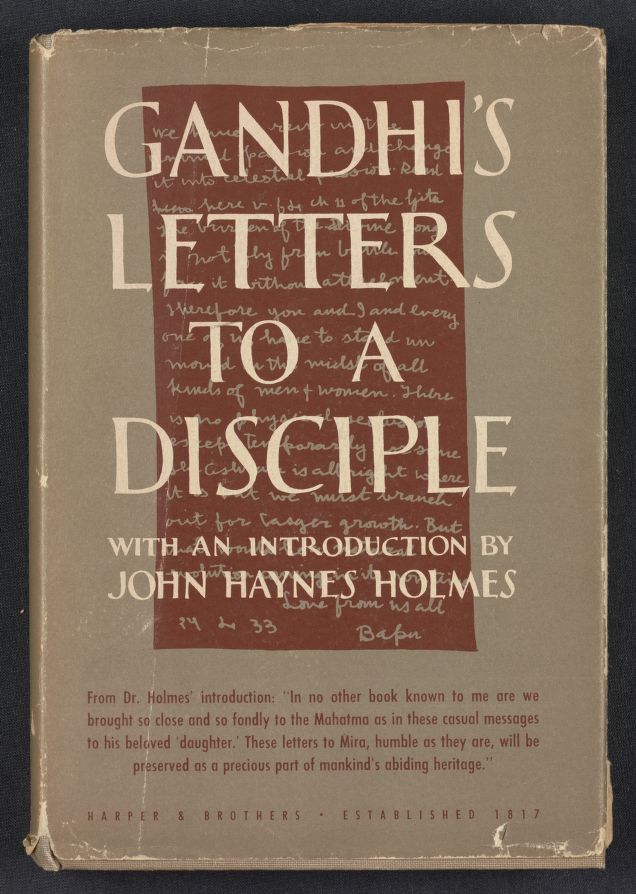
Scanned book covers from her personal library…
A business card from her stint as a staffer for Congressman John Conyers of Michigan… (Parks moved to Detroit shortly after the Montgomery Bus Boycott, after both she and her husband were dismissed from their jobs.)

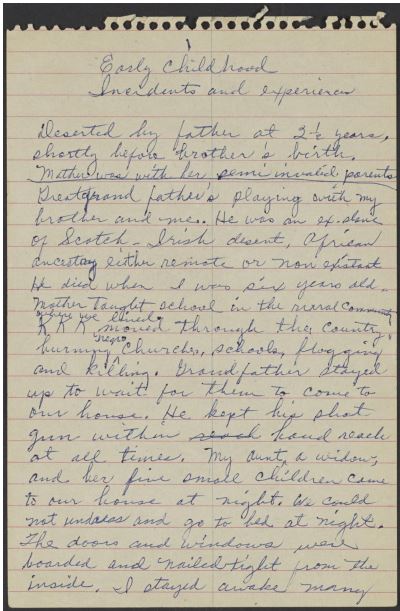
Handwritten reminiscences about her rural Alabama childhood…
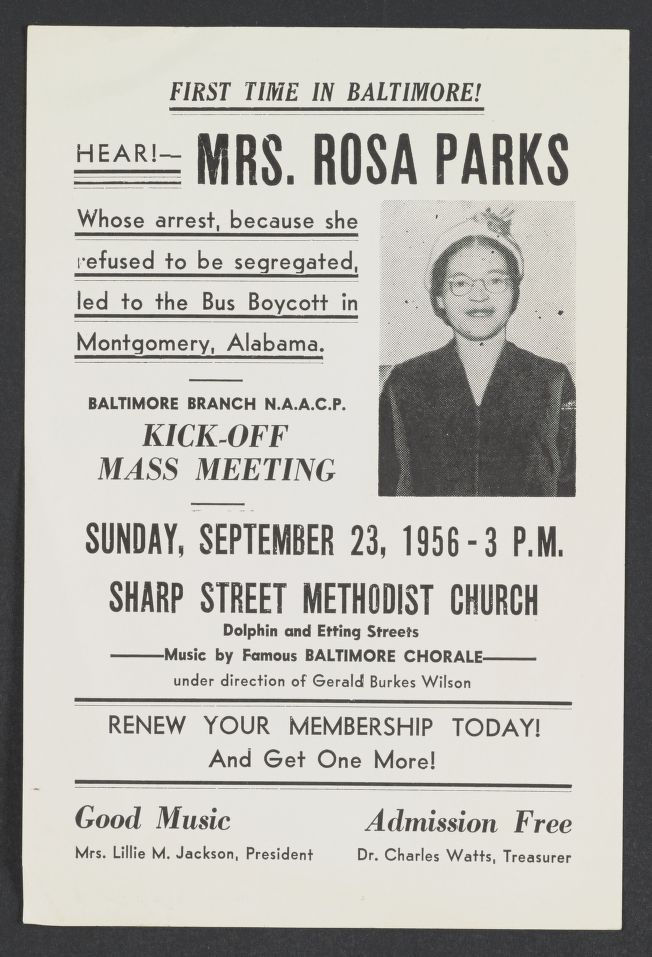
Documentation of speaking engagements and other public appearances…
A handwritten pancake recipe…

Correspondence from a bevy of highly recognizable names
And of course, many, many reflections having to do with the most publicly memorable day in an extremely long life.
Most of the collection can be viewed online and the Library has a teaching aid with suggestions on using these primary sources in the classroom. The video below contains some highlights of the collection, as well as technical information on how its contents have been preserved for future generations.
Related Content:
Ayun Halliday is an author, illustrator, and Chief Primatologist of the East Village Inky zine. Follow her @AyunHalliday
Read More...How the Coen Brothers Put Their Remarkable Stamp on the “Shot Reverse Shot,” the Fundamental Cinematic Technique
Even if you don’t think you know what a shot reverse shot is, you’ve probably seen thousands of them. Tony Zhou, creator of the video essay series Every Frame a Painting, calls it “the most basic thing we have in film grammar. Nearly everything you watch is going to be filled with it.” Why? Because a shot reverse shot brings together, and often oscillates between, two shots: one shot, say of a character, and its reverse shot, taken from a camera turned around to face whatever the character in the first shot faces — usually, another character.
“Most filmmakers use it as quick way to record dialogue,” Zhou says. “Keep the actors still, use multiple cameras, shoot ten takes, and then make decisions in post.” But not Joel and Ethan Coen (the auteurs behind films like Fargo, The Big Lebowski, No Country for Old Men, and A Serious Man).
In the new Every Frame a Painting video essay on their use of the shot reverse shot, Zhou finds what makes a Coen Brothers shot reverse shot a Coen Brothers shot reverse shot, including a tendency to film their dialogue “from inside the space of the conversation,” as well as to work with cinematographer Roger Deakins who—in a piece of interview footage Zhou includes—describes himself as a man with “a very strong feeling about lenses,” and who for dialogue scenes prefers wide-angle lenses rather than long ones.
These preferences and others result in a filmography full of shot reverse shots that feel both “kind of uncomfortable, and kind of funny,” a visual evocation of the Coen Brothers’ frequent use of isolated characters trapped in “situations they really have no control over” — and because of the choice of lens and placement of the camera, “you’re trapped with them.” And that setup gives them a host of options when they want to emphasize or even exaggerate certain qualities of the characters talking or the situation the story has put them in.
It even allows them to show more of the setting in which that story takes place, whether snowy North Dakota, Los Angeles by night, 1980s west Texas, a 1960s Minnesota suburb, or any other of the regions and eras of which they’ve so vividly made use. Add to that the kind of snappy editing rhythm that can make their movies’ dialogue itself so memorable, and you may never feel satisfied by other filmmakers’ shot reverse shots again.
Related Content:
The Art of Making Intelligent Comedy Movies: 8 Take-Aways from the Films of Edgar Wright
The Geometric Beauty of Akira Kurosawa and Wes Anderson’s Films
Watch the Coen Brothers’ TV Commercials: Swiss Cigarettes, Gap Jeans, Taxes & Clean Coal
Based in Seoul, Colin Marshall writes and broadcasts on cities, language, and style. He’s at work on a book about Los Angeles, A Los Angeles Primer, the video series The City in Cinema, the crowdfunded journalism project Where Is the City of the Future?, and the Los Angeles Review of Books’ Korea Blog. Follow him on Twitter at @colinmarshall or on Facebook.
Read More...Support Us
We're hoping to rely on loyal readers, rather than erratic ads. Please click the Donate button and support Open Culture. You can use Paypal, Venmo, Patreon, even Crypto! We thank you!

About Us

Open Culture scours the web for the best educational media. We find the free courses and audio books you need, the language lessons & educational videos you want, and plenty of enlightenment in between.
Advertise With Us

FREE UPDATES!
GET OUR DAILY EMAIL
Get the best cultural and educational resources on the web curated for you in a daily email. We never spam. Unsubscribe at any time.
FOLLOW ON SOCIAL MEDIA

Open Culture editor Dan Colman scours the web for the best educational media. He finds the free courses and audio books you need, the language lessons & movies you want, and plenty of enlightenment in between.
Advertise With Us