Mapping the Sounds of Greek Byzantine Churches: How Researchers Are Creating “Museums of Lost Sound”
Unless you’re an audio engineer, you’ll have little reason to know what the term “convolution reverb” means. But it’s a fascinating concept nonetheless. Technicians bring high-end microphones, speakers, and recording equipment to a particularly resonant space—a grain silo, for example, or famous concert hall. They capture what are called “impulse responses,” signals that contain the acoustic characteristics of the location. The technique produces a three dimensional audio imprint—enabling us to recreate what it would sound like to sing, play the piano or guitar, or stage an entire concert in that space. As Adrienne LaFrance writes in The Atlantic, “you can apply [impulse responses] to a recording captured in another space and make it sound as though that recording had taken place in the original building.”
This kind of mapping, writes Allison Meier at Hyperallergic, allows researchers to “build an archive of a building’s sound, with all its nuances, echoes, and ricochets, that could survive even if the building fell.” And that is precisely what researchers have been doing since 2014 in ancient Greek Byzantine churches. The project began when Sharon Gerstel, Professor of Byzantine Art History and Archeology at UCLA, and Chris Kyriakakis, director of the Immersive Audio Laboratory at the University of Southern California, met to discuss their mutual interest in capturing the sound of these spaces.
(Hear them both explain the genesis of the project in the CBC interview above.) The two researchers traveled to Thessaloniki, coincidentally, Kyriakakis’ hometown, and began, as Gerstel puts it, to “measure the churches.” LaFrance’s Atlantic article gives us a detailed description of the measurement process, which involves playing and recording a tone that sweeps through the audible frequency spectrum. You’ll hear it in the video at the top of the post as a “chirp”—bouncing off the various architectural surfaces as the voices of singers would have hundreds of years ago.
In that video and in the audio recording above, chanters in a studio had the audio characteristics of these churches applied to their voices, recreating the sounds that filled the spaces in the early Christian centuries. As another member of the team, James Donahue—Professor of Music Production and Engineering at Berklee College of Music—discovered, the churches had been acoustically designed to produce specific sound effects. “It wasn’t just about the architecture,” says Donahue, “they had these big jugs that were put up there to sip certain frequencies out of the air… They built diffusion, a way to break up the sound waves… They were actively trying to tune the space.” In addition, the builders “discovered something that we call slap echo. [In the ancient world], they described it as the sound of angels’ wings.”
The project not only allows art historians to enter the past, but it also preserves that past far into the future, creating what LaFrance calls a “museum of lost sound.” After all, the churches themselves will eventually recede into history. “Some of these buildings may not exist later,” says Kyriakakis, “Some of these historic buildings are being destroyed.” With immersive video and audio technology, we will still be able to experience much of their grandeur long after they’re gone.
Related Content:
David Byrne: How Architecture Helped Music Evolve
The History of Western Architecture: From Ancient Greece to Rococo (A Free Online Course)
Josh Jones is a writer and musician based in Durham, NC. Follow him at @jdmagness
Read More...Stephen Fry Launches Pindex, a “Pinterest for Education”
Who can now deny that, in the internet, we have the greatest educational tool ever conceived by mankind? Surely no Open Culture reader would deny it, anyway, nor could they fail to take an interest in a new startup aiming to increase the internet’s educational power further still: Pindex, which calls itself “a Pinterest for education.” No other company has yet staked that territory out, and certainly no other company has done it with the support of Stephen Fry.
The Telegraph’s Cara McCoogan describes Pindex, which launched just last month (visit it here), as “a self-funded online platform that creates and curates educational videos and infographics for teachers and students,” founded and run by a four-person team.
Fry’s role in the quartet includes offering “creative direction,” but he’s also put his unmistakable voice to one of Pindex’s first videos, an “explainer about the Large Hadron Collider, dark matter and extra dimensions. Other videos will focus on science and technology, including ones on the Hyperloop, colonising Mars, and robots and drones. Mr Fry is expected to do the voiceovers for several of these.”
Have a look around the site and you’ll also find a collection of material on gravitational waves, some creative writing resources, an infographic guide to nutrition, details on a variety of fun science experiments, and much more besides. There’s even a guide to Pindex itself, which explains how to use the site and what you can get out of it going forward, whether as a teacher, a student, or just someone into learning as much as possible — a pursuit that, even in what Fry calls “a time when it is easy to lose faith in an online world that seems to centre around trolling, bullying, hating, trivializing and belittling,” gets more rewarding by the day.
via The Telegraph
Related Content:
The Higgs Boson and Its Discovery Explained with Animation
Start Your Startup with Free Stanford Courses and Lectures
Stephen Fry: What I Wish I Knew When I Was 18
Stephen Fry Explains the Rules of Cricket in 10 Animated Videos
Based in Seoul, Colin Marshall writes and broadcasts on cities, language, and style. He’s at work on a book about Los Angeles, A Los Angeles Primer, the video series The City in Cinema, the crowdfunded journalism project Where Is the City of the Future?, and the Los Angeles Review of Books’ Korea Blog. Follow him on Twitter at @colinmarshall or on Facebook.
Read More...A Collection of Sun Ra’s Business Cards from the 1950s: They’re Out of This World
One of the hardest things to master as an independent musician is the art of promotion. Though many artists are extroverts and attention-seekers, many more are by nature introverted, or at least inner-directed, and disinclined to embrace the tools of the marketing trade. In days of yore, when such things as major record labels still roamed the earth at large, much of the promotion could be left up to those majestic, lumbering beasts. These days, when the majority of working musicians have to keep their day jobs and learn to do their own production, styling, booking, and PR, it’s essential to get over any squeamishness about blowing your own horn. If you’re looking for pointers, consider the example of self-invented musical genius Sun Ra, a master of self-promotion.
No one better understood what Sun Ra was up to than Sun Ra himself, and he knew how to sell his very out-there free jazz movement to a public used to more mundane presentations. As Mike Walsh at Mission Creep succinctly puts it, “nothing about Sun Ra’s six-decade musical career could be called normal.” He more or less re-invented what it meant to be a jazz musician and bandleader. It was in the 1950s that he really came into his own. After working steadily as a touring sideman for several other musicians, the man born Herman Blount changed his name first to Le Sony’r Ra, then Sun Ra, and put together his famous “Arkestra.”
His shows began to incorporate the elaborate costuming he became known for, and he would often stop the music “to lecture on his favorite subjects,” writes Jez Nelson at The Guardian, “Egyptology and space. He began to claim he had been abducted by aliens and was in fact from Saturn.” The act was both deadly serious space opera (he rehearsed his band for 12 hours at a stretch, after all) and absurdist schtick, and it both transported audiences to new worlds and made them laugh out loud.
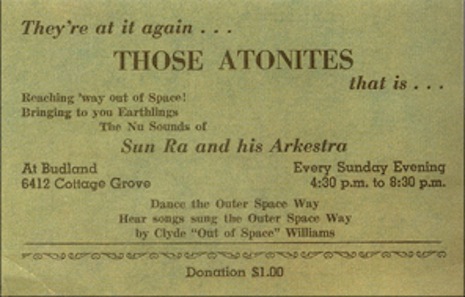
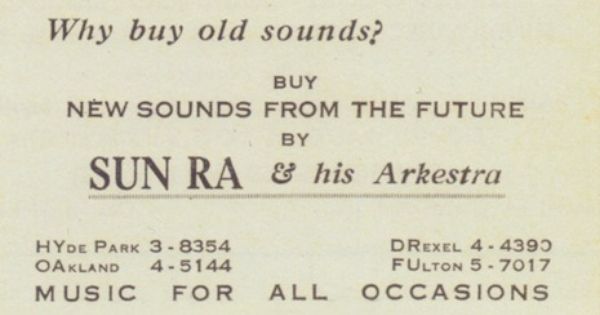
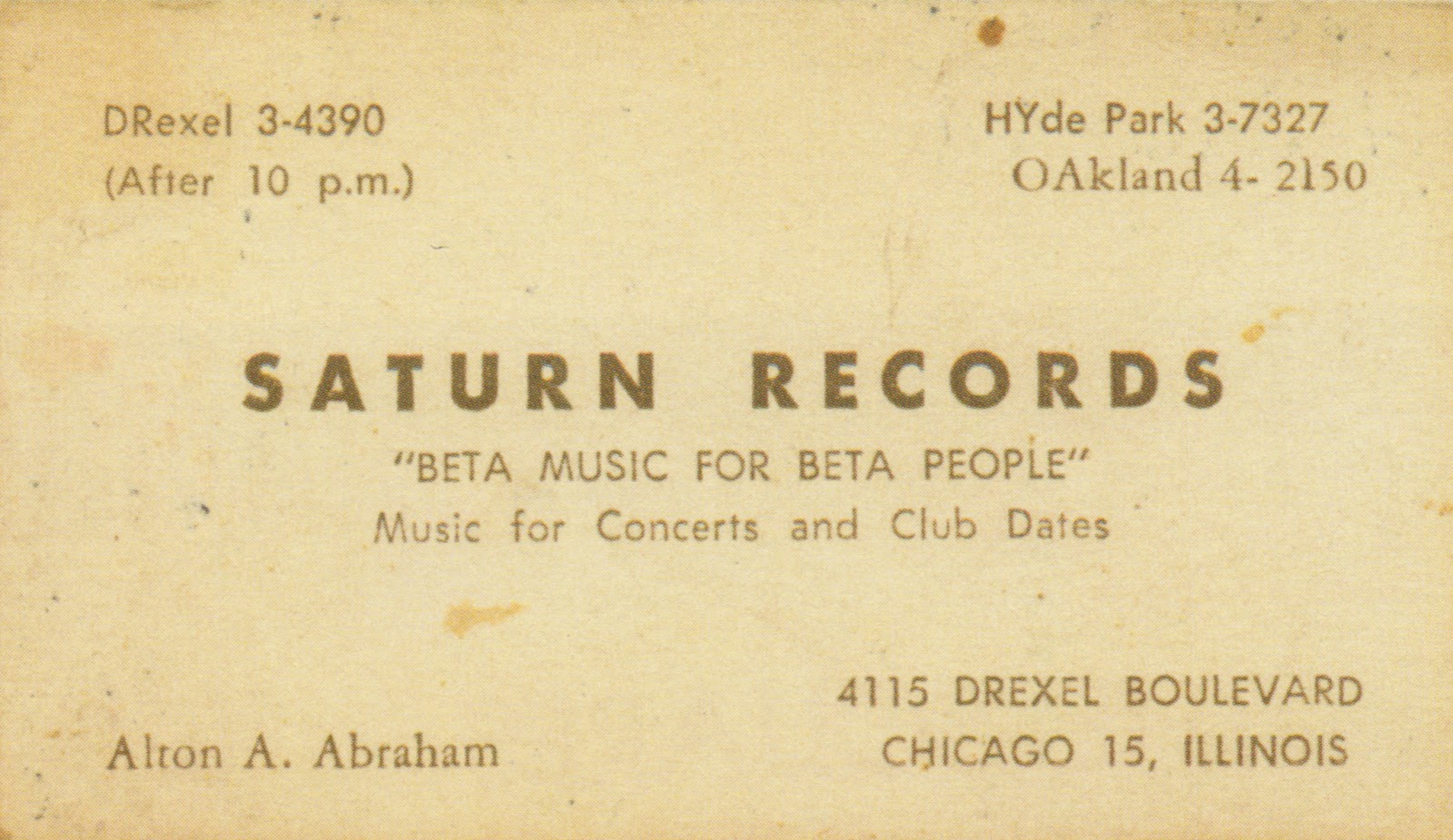
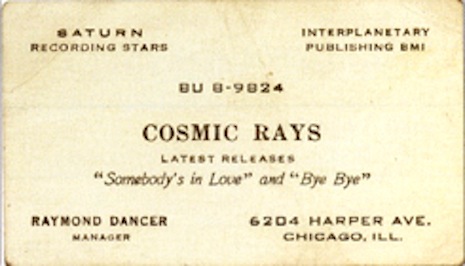
Sun Ra’s business cards from the 50s capture this tonal spectrum between avant-garde performance art and high-concept free jazz comedy. Advertising new releases, a band-for-hire, and ongoing local Chicago residencies, they combine the strict professionalism of a working bandleader with the wordplay and silliness Ra loved: he calls his coterie “Atonites,” which psychology professor Robert L. Campbell reads as meaning both “worshippers of Aton,” Egyptian sun god, and “performers of atonal music.” Audiences are invited to “Dance the Outer Space Way. Hear songs sung the Outer Space Way by Clyde ‘Out of Space’ Williams” (onetime singer with the band). And the card at the top of the post makes perhaps the simplest, most compelling pitch of them all: “Why buy old sounds?” Indeed.
Related Content:
Josh Jones is a writer and musician based in Durham, NC. Follow him at @jdmagness
Read More...A Clockwork Orange Author Anthony Burgess Lists His Five Favorite Dystopian Novels: Orwell’s 1984, Huxley’s Island & More

From Sir Thomas More’s 1516 philosophical novel Utopia to Disney’s 2016 adult-friendly kids’ movie Zootopia, the genre of the “-topia” has been remarkably durable. Taking Plato’s Republic as their model, the first utopian fictions flourished in an optimistic age, when political philosophy imagined a perfect union between government and science. Such fiction portrayed mostly harmonious, high-functioning civilizations as contrasts to real, imperfect societies—and yet, as modern industry began to threaten human well-being and formerly idealized forms of government acquired a tyrannical hue, the genre began to project into the future not hopes of freedom, ease, and plenty but rather fears of mass suffering, imprisonment, and misrule. In place of utopias, modernity gave us dystopias, terrifying fictions of a hellish future birthed by war, totalitarian rule, gross economic inequality, and misapplied technologies.
Before John Stuart Mill coined the word “dystopia” in 1868, pessimistic post-Enlightenment thinker Jeremy Bentham created an earlier, perhaps even scarier, word, “cacotopia,” the “imagined seat of the worst government.” This was the term favored by Anthony Burgess, author of one of the most unsettling dystopian novels of the last century, A Clockwork Orange. Depicting a chaotic future England filled with extreme criminal violence and an unnerving government solution, the novel can be read as either, writes Ted Gioia, “a look into the morality of an individual, or as an inquiry into the morality of the State.” It seems to me that this dual focus marks a central feature of much successful dystopian fiction: despite its thoroughly grim and pessimistic nature, the best representatives of the genre present us with human characters who have some agency, however limited, and who can choose to revolt from the oppressive conditions (and usually fail in the attempt) or to fully acquiesce and remain complicit.
The rebellion of a single non-conformist generally forms the basis of conflict in dystopian fiction, as we’ve seen in recent, populist iterations like The Hunger Games series and their more derivative counterparts. And yet, in most classic dystopian novels, the hero remains an anti-hero—or an un-hero, rather: unexceptional, unimportant, and generally unnoticed until he or she decides to cross a line. A few of Burgess’s own favorites of the genre roughly follow this classic formula, including Orwell’s 1984. In the short list below, Burgess comments on five works of dystopian fiction he held in particularly high regard. Two of them, Aldous Huxley’s Island and Russell Hoban’s Riddley Walker, break the mold, and show us two opposite extremes of civilizations perfected, and completely annihilated, by Western progress. Burgess’s first choice, Norman Mailer’s The Naked and the Dead seems not to fit at all, being an account of past atrocities rather than a speculative look into the future.
Nevertheless, Burgess seems willing to stretch the boundaries of what we typically think of as dystopian fiction in order to include books that offer, as Mailer’s novel has it, “a preview of the future.” See Burgess’s picks below, and read excerpts from his commentary on these five novels. You can read his full descriptions at The International Anthony Burgess Foundation website.
- The Naked and the Dead by Norman Mailer
The futility of war is well presented. The island to be captured has no strategic importance. The spirit of revolt among the men is stirred by an accident: the patrol stumbles into a hornets’ nest and runs away, dropping weapons and equipment, the naked leaving the dead behind them. An impulse can contain seeds of human choice: we have not yet been turned entirely into machines. Mailer’s pessimism was to come later — in The Deer Park and Barbary Shore and An American Dream — but here, with men granting themselves the power to opt out of the collective suicide of war, there is a heartening vision of hope. This is an astonishingly mature book for a twenty-five-year-old novelist. It remains Mailer’s best, and certainly the best war novel to emerge from the United States.
- Nineteen Eighty-Four by George Orwell
This is one of the few dystopian or cacotopian visions which have changed our habits of thought. It is possible to say that the ghastly future Orwell foretold has not come about simply because he foretold it: we were warned in time. On the other hand, it is possible to think of this novel as less a prophecy than the comic joining together of two disparate things — an image of England as it was in the immediate post-war era, a land of gloom and shortages, and the bizarrely impossible notion of British intellectuals taking over the government of the country (and, for that matter, the whole of the English-speaking world).
- Facial Justice by L.P. Hartley
Jael 97 is facially overprivileged: her beauty must be reduced to a drab norm. But, like the heroes and heroines of all cacotopian novels, she is an eccentric. Seeing for the first time the west tower of Ely Cathedral, one of the few lofty structures left unflattened by the war, she experiences a transport of ecstasy and wishes to cherish her beauty. Her revolt against the regime results in no brutal reimposition of conformity — only in the persuasions of sweet reason. This is no Orwellian future. It is a world incapable of the dynamic of tyranny. Even the weather is always cool and grey, with no room for either fire or ice. The state motto is ‘Every valley shall be exalted.’ This is a brilliant projection of tendencies already apparent in the post-war British welfare state but, because the book lacks the expected horrors of cacotopian fiction, it has met less appreciation than Nineteen Eighty-Four.
- Island by Aldous Huxley
Nobody is scientifically conditioned to be happy: this new world is really brave. It has learned a great deal from Eastern religion and philosophy, but it is prepared to take the best of Western science, technology and art. The people themselves are a sort of ideal Eurasian race, equipped with fine bodies and Huxleyan brains, and they have read all the books that Huxley has read.
All this sounds like an intellectual game, a hopeless dream in a foundering world, but Huxley was always enough of a realist to know that there is a place for optimism. Indeed, no teacher can be a pessimist, and Huxley was essentially a teacher. In Island the good life is eventually destroyed by a brutal, stupid, materialistic young raja who wants to exploit the island’s mineral resources.
- Riddley Walker by Russell Hoban
England… after nuclear war, is trying to organize tribal culture after the total destruction of a centralized industrial civilization. The past has been forgotten, and even the art of making fire has to be relearned. The novel is remarkable not only for its language but for its creation of a whole set of rituals, myths and poems. Hoban has built a whole world from scratch.
Burgess’s list gives us such a small sampling of dystopian fiction, and with so many classic and contemporary examples about, it’s tempting to add to his list (one wonders why he chooses Huxley’s Island and not Brave New World). There’s no reason why we can’t. If you’re so inclined, tell us your favorite dystopian novels, or films, in the comments, with a brief description of their merits.
H/T to one of our fans on our Facebook page, John B.
Related Content:
Vladimir Nabokov Names the Greatest (and Most Overrated) Novels of the 20th Century
David Foster Wallace’s Surprising List of His 10 Favorite Books, from C.S. Lewis to Tom Clancy
Stephen King’s Top 10 All-Time Favorite Books
Josh Jones is a writer and musician based in Durham, NC. Follow him at @jdmagness
Read More...Learn How to Code for Free: A DIY Guide for Learning HTML, Python, Javascript & More

This week, we’re launching the beginning of a new, ongoing series. We’re creating guides that will teach you how to learn important subjects on your own, using free resources available on the web. Want an example? Just look below. Here you’ll find a list of free resources–online courses, instructional videos, YouTube channels, textbooks, etc.–that will teach how to code for free. If we’re missing great items, please add your suggestions in the comments below.
This collection is just a start, and it will continue to grow over time. In the meantime, if there are other guides you’d like to see us develop in the coming weeks, please let us know in the comments section too. We’re happy to get your feedback.
How to Code (Software)
- Codecademy: A free site for learning everything from Making a Website to Python in a “user active” style—meaning that users can use tutorials to design projects of their own choosing. The site also makes it easy to track your progress. Other topics you can learn include: Create an Interactive Website, Ruby, Javascript, HTML & CSS, SQL and more. Register and sign up for all classes here. (See our post on Codecademy here.)
- Code School: Code School courses are built around a creative theme and storyline so that it feels like you’re playing a game, not sitting in a classroom. The site offers a set of free courses covering JavaScript, jQuery, Python, Ruby and more.
- Free Code Camp: An open source community that helps you learn to code. You can work through self-paced coding challenges, build projects, and earn certifications. According to Wired, the site “features a sequence of online tutorials to help the absolute beginner learn become a web developer, starting with building a simple webpage. Students move on to programming with JavaScript and, eventually, learning to build complete web applications using modern frameworks such as Angular and Node.”
- The Odin Project: Made by the creators of Viking Code School, an online coding bootcamp, the Odin Project offers free coding lessons in web development. Topics include: HTML, CSS, JavaScript & jQuery, Ruby programming, Ruby on Rails. Find an introduction to the curriculum here.
- Google’s Python Class: A free class (used within Google itself) for people with a little bit of programming experience who want to learn Python. The class includes written materials, lecture videos, and lots of code exercises to practice Python coding.
- Google’s C++ Course: Welcome to Google’s C++ Class. This class includes written materials, lecture videos, examples, and exercises to practice C++ coding.
- Coding for Kids from Code.org: Code.org, a non-profit, has created a fun way for students to learn the basics of coding. They’ve launched Star Wars: Building a Galaxy with Code, a tutorial designed to teach students how to write JavaScript. There’s also a version that teaches code with Minecraft, and a separate beginner’s tutorial for kids between the ages of 6 and 10.
- Online Computer/Coding Courses from Major Universities:
- You can find dozens of free courses, covering all facets of coding, listed in our collection of Free Online Computer Science Courses. The courses come from top universities.
- Massive Open Online Courses (MOOCs) focused on Coding are regularly offered through providers like Coursera, edx, Udacity, Alison, FutureLearn, MIT, and Khan Academy. Udemy itself has a short course called “The Best Free Resources To Learn How To Program.”
- Harvard’s Popular Intro to Computer Science: Get free access to Harvard’s popular introductory coding course designed for majors and non-majors alike. Combines courses typically known elsewhere as “CS1” and “CS2.”
- Stanford’s Free Course on Developing Apps with iOS: If you’re looking to develop apps for iPhone or iPad, this handy Stanford course will go a long way.
- YouTube Channels for Learning Coding: Channels you might want to visit include:
- Coder’s Guide: Features videos on HTML web development, cross-platform Java programming, beginner .net programming with Visual Basic and client side JavaScript web development.
- Code Course: Learn to code and build things with easy to follow tutorials. A number of videos focus on PHP. Find more materials on the channel’s web site.
- LearnCode.academy: HTML, CSS, JavaScript, CSS Layouts, Responsive Design etc.
- DevTips: Web design and web development.
- The New Boston: Programming, web design, networking, video game development, graphic design, etc.
- The Google Developers Channel: Offers lessons, talks, the latest news & best practices in subjects like Android, Chrome, Web Development, Polymer, Performance, iOS & more.
- You can find more YouTube Channels here: 33 Useful Youtube-channels for learning Web Design and Development.
- Free Programming Textbooks from Github: Access 500+ “free programming books that cover more than 80 different programming languages on the popular web-based Git repository hosting service.”
- Free Computer Science Textbooks: On our site, find a list of free textbooks (aka open textbooks) written by knowledgable scholars.
Sources that helped us create this list above include: Inc., Learn to Code with Me, and WebBuildDesign.
If you would like to support the mission of Open Culture, consider making a donation to our site. It’s hard to rely 100% on ads, and your contributions will help us continue providing the best free cultural and educational materials to learners everywhere. You can contribute through PayPal, Patreon, and Venmo (@openculture). Thanks!
Read More...Charlie Chaplin Gets Strapped into a Dystopian “Rube Goldberg Machine,” a Frightful Commentary on Modern Capitalism
I get into a lot of conversations these days about how we used to consider technological progress good by definition, but now — despite or maybe because of the farther-progressed-than-ever state of our technology — we feel a bit wary about it all. We line up for the latest smartphone, but as we do we reflect upon how it increasingly looks we’ll never line up for the jetpacks, flying cars, and moon colonies we dreamed of in childhood. We enjoy our phones, but we resent them as well, remembering those long-ago assurances that technology would increase our leisure, not fill it with anxiety about insufficiently rapid responses, nagging leftover work, and missed-out-on information of every kind. When did the trust between our tech and ourselves break down?
Not so recently, it turns out — or rather, not just recently. The human-technology relationship goes through its good times and its bad patches, and at any given time some of us like the direction its progress looks to be moving in more than others do. You may have heard of one particularly well-known technological critic of the early twentieth century, a cartoonist by the name of Rube Goldberg. More likely, you’ve heard of the preposterously elaborate machines he drew in his cartoons.
One representative example, an “automatic suicide device for unlucky stock speculators,” involves the ring of a phone (“probably a message from your broker saying you are wiped out”) which wakes up a dozing office manager whose stretching hits a lever which launches a toy glider which hits a dwarf whose jumping up and down in pain works a jack which lifts up a pig to the level of a potato, and when he eats the potato… well, in any case, the process ends up, some time later, pulling the trigger of a gun mounted right over the tickertape machine. “If the telephone call is not from your broker,” Goldberg notes, you’ll never find out the mistake because you’ll be dead anyway.
“The surrealism of Goldberg’s cartoon inventions,” writes Brendan O’Connor at The Verge, while meant to entertain, “also reveals a dark skepticism of the era in which they were made. The machines were symbols, Goldberg wrote, of ‘man’s capacity for exerting maximum effort to accomplish minimal results.’ ” They had a strong appeal in that “era of increasing automation, and increasing concern about automation, exemplified in Charlie Chaplin’s 1936 masterpiece Modern Times. One of the film’s dystopian curiosities, the Billows Feeding Machine, invented by Mr. J. Widdecombe Billows, has a distinctly Rube Goldbergian quality to it — this is likely no coincidence, as Goldberg and Chaplin were friends.”
In the clip at the top, we see the Billows Feeding Machine in action, not quite fulfilling its promise to “eliminate the lunch hour, increase your production, and decrease your overhead.” The disappointed higher-ups render their verdict: “It’s no good — it isn’t practical.” A modern-day J. Widdecombe Billows would know better how to respond to them: it’s still in beta.
Related Content:
The Falling Water: A Rube Goldberg Machine That Makes a Fine Cocktail
Students Tells the Passover Story with a Rube Goldberg Machine
Charlie Chaplin Does Cocaine and Saves the Day in Modern Times (1936)
Three Great Films Starring Charlie Chaplin, the True Icon of Silent Comedy
Discover the Cinematic & Comedic Genius of Charlie Chaplin with 60+ Free Movies Online
Based in Seoul, Colin Marshall writes and broadcasts on cities, language, and style. He’s at work on a book about Los Angeles, A Los Angeles Primer, the video series The City in Cinema, the crowdfunded journalism project Where Is the City of the Future?, and the Los Angeles Review of Books’ Korea Blog. Follow him on Twitter at @colinmarshall or on Facebook.
Read More...American History: An Off-Kilter 1992 Student Film from South Park Creator Trey Parker
Here’s a little exercise:
Spend five minutes recording yourself recapping everything you know about Japanese history.
(International Studies majors and Japanese citizens, please sit this one out.)
Most of us will wind up with a pastiche that’s heavy on pop culture and relatively recent events. The average Japanese schoolchild should have no difficulty identifying the glaring holes and factual errors in our narratives.
If this idea amuses you, you’ll likely enjoy American History, above, South Park creator Trey Parker’s early animated short, a 1993 Student Academy Award silver medalist.
Parker’s Japanese-born University of Colorado classmate, Junichi Nishimura, provided the narration, beginning with Christopher Columbus in 1492 and ending with the “Japan bashing” 41st president, George H.W. Bush. Highlights along the way include the Salem Witch Trials, the Boston Tea Party, the assassinations of Presidents Lincoln and Kennedy, Leave It to Beaver, and that time Bush barfed at a state dinner hosted by Japanese Prime Minister Kiichi Miyazawa.
He also remembers the Alamo, proving one Reddit wag’s hypothesis: If there’s one thing people remember about the Alamo, it is to remember the Alamo…
And then….
Parker and another classmate, Chris Graves, his soon-to-be DP on Cannibal: The Musical, animated the results using the most rudimentary of paper cut outs. It’s easy to spot the fledgling South Park style, as well as Python animator Terry Gilliam’s influence. This may be American history, but the anonymous top hatted hordes bear an awfully close resemblance to South Park’s resident Canadians, Terrance and Phillip.
If the phonetic spellings of non-native speaker Nishimura’s pronunciation makes you uncomfortable, it’s worth noting that he not only worked as an animator on South Park, but also represented his country by playing “President” Hirohito on the extremely funny (and NSFW) “Chinpokomon” episode.
American History will be added to the Animation section of our collection,
Related Content:
The Zen Wisdom of Alan Watts Animated by the Creators of South Park, Trey Parker and Matt Stone
John Green’s Crash Course in U.S. History: From Colonialism to Obama in 47 Videos
Ayun Halliday is an author, illustrator, and Chief Primatologist of the East Village Inky zine. Read her most recent drama-in-real comic on Narratively. Follow her @AyunHalliday
Read More...Unearthed Songs by Jeff Buckley Now Streaming Online (Free For a Limited Time)
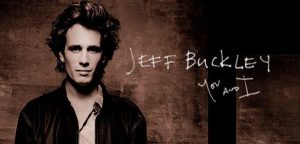
A quick fyi: Thanks to NPR, you can now stream You and I, a not-yet released album featuring long-lost recordings by Jeff Buckley, the singer-song writer who died in 1997, just as he seemed poised to be the heir apparent to Bob Dylan and Bruce Springsteen. Here’s how NPR describes the album that will be officially released next week:
You And I collects 10 of his demos, which were recorded in February 1993, shortly after he’d signed to his label. For more than 20 years, they sat forgotten in the vaults — and, more to the point, were never bootlegged or otherwise circulated. Newly unearthed, they showcase a late-blooming 26-year-old artist who’s still finding and harnessing his voice: learning how to manipulate its gale-force power, learning when and whether to hold back, and learning how to fully translate his influences into a sound of his own.
The songs are mostly covers of artists like The Smiths, Bob Dylan, Sly & The Family Stone, and Led Zeppelin. You can stream the album below, or hear it over at NPR. But hurry up, it will only be free for a limited time.
If you would like to support the mission of Open Culture, consider making a donation to our site. It’s hard to rely 100% on ads, and your contributions will help us continue providing the best free cultural and educational materials to learners everywhere. You can contribute through PayPal, Patreon, and Venmo (@openculture). Thanks!
Read More...3,900 Pages of Paul Klee’s Personal Notebooks Are Now Online, Presenting His Bauhaus Teachings (1921–1931)
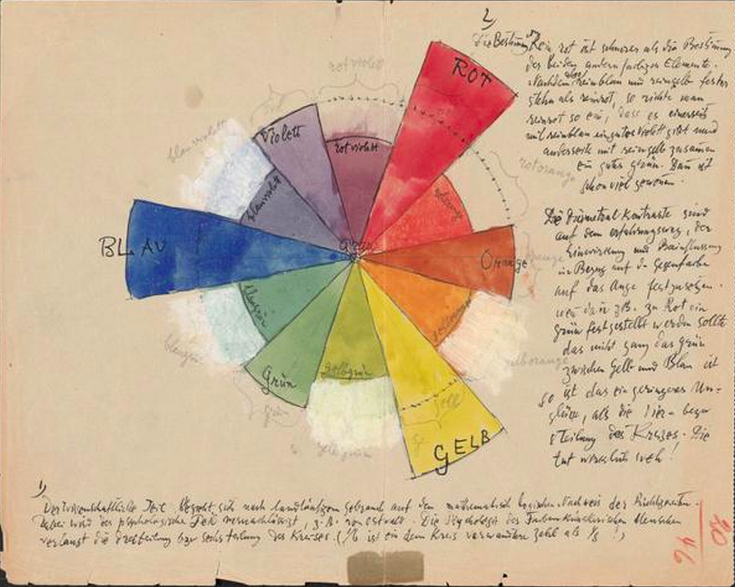
Paul Klee led an artistic life that spanned the 19th and 20th centuries, but he kept his aesthetic sensibility tuned to the future. Because of that, much of the Swiss-German Bauhaus-associated painter’s work, which at its most distinctive defines its own category of abstraction, still exudes a vitality today.
And he left behind not just those 9,000 pieces of art (not counting the hand puppets he made for his son), but plenty of writings as well, the best known of which came out in English as Paul Klee Notebooks, two volumes (The Thinking Eye and The Nature of Nature) collecting the artist’s essays on modern art and the lectures he gave at the Bauhaus schools in the 1920s.
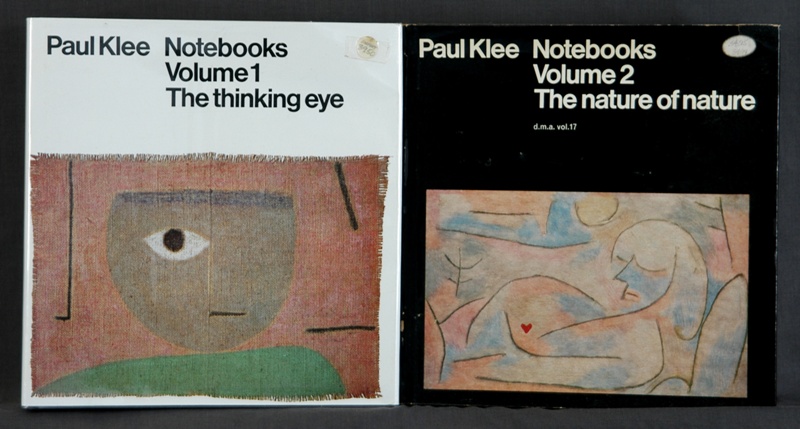
“These works are considered so important for understanding modern art that they are compared to the importance that Leonardo’s A Treatise on Painting had for Renaissance,” says Monoskop. Their description also quotes critic Herbert Read, who described the books as “the most complete presentation of the principles of design ever made by a modern artist – it constitutes the Principia Aesthetica of a new era of art, in which Klee occupies a position comparable to Newton’s in the realm of physics.”
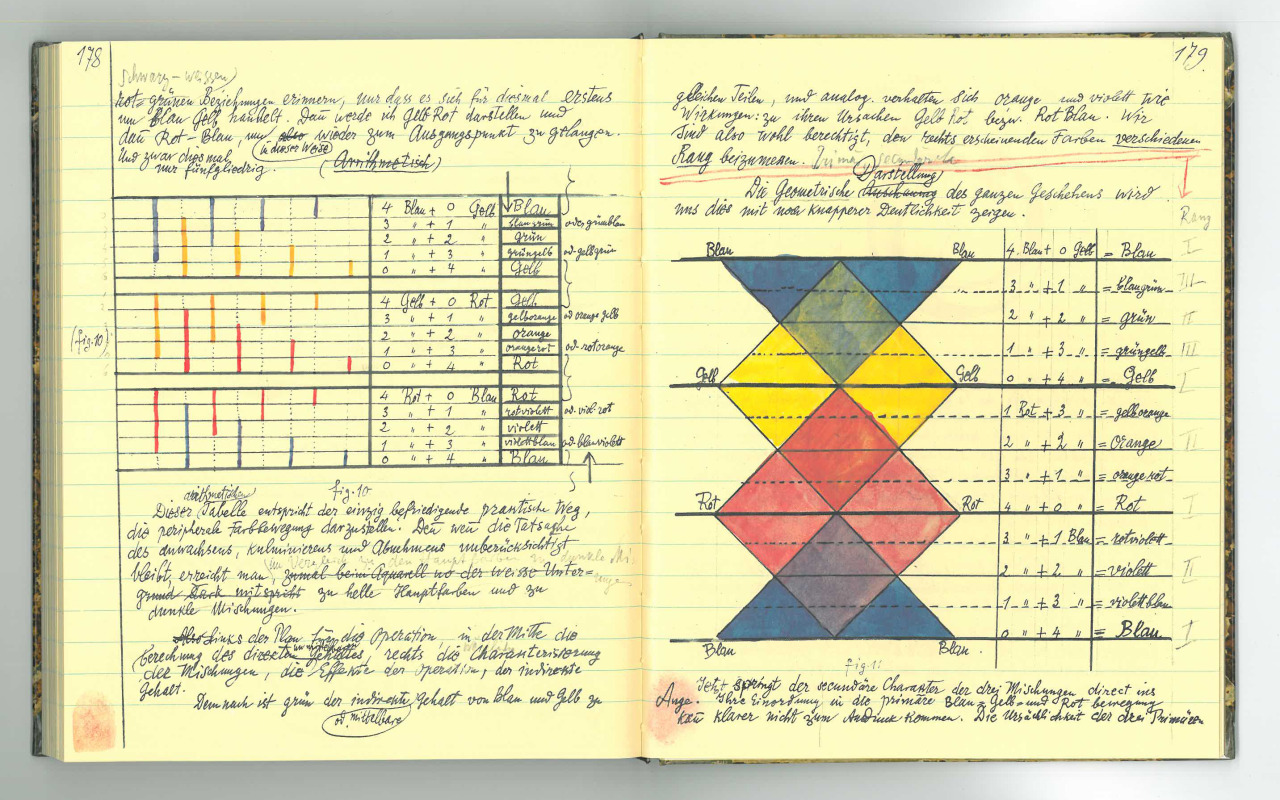
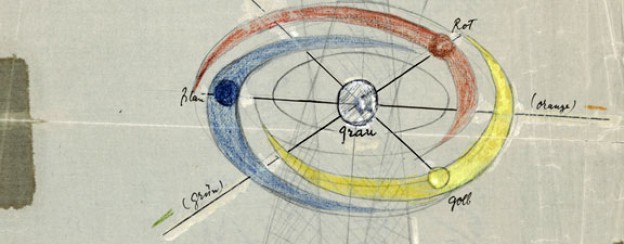
More recently, the Zentrum Paul Klee made available online almost all 3,900 pages of Klee’s personal notebooks, which he used as the source for his Bauhaus teaching between 1921 and 1931. If you can’t read German, his extensively detailed textual theorizing on the mechanics of art (especially the use of color, with which he struggled before returning from a 1914 trip to Tunisia declaring, “Color and I are one. I am a painter”) may not immediately resonate with you. But his copious illustrations of all these observations and principles, in their vividness, clarity, and reflection of a truly active mind, can still captivate anybody — just as his paintings do.
If you would like to support the mission of Open Culture, consider making a donation to our site. It’s hard to rely 100% on ads, and your contributions will help us continue providing the best free cultural and educational materials to learners everywhere. You can contribute through PayPal, Patreon, and Venmo (@openculture). Thanks!
Related Content:
The Homemade Hand Puppets of Bauhaus Artist Paul Klee
815 Free Art Books from World Class Museums: The Met, the Guggenheim, the Getty & LACMA
The Nazi’s Philistine Grudge Against Abstract Art and The “Degenerate Art Exhibition” of 1937
Bauhaus, Modernism & Other Design Movements Explained by New Animated Video Series
Based in Seoul, Colin Marshall writes and broadcasts on cities, language, and style. He’s at work on a book about Los Angeles, A Los Angeles Primer, the video series The City in Cinema, the crowdfunded journalism project Where Is the City of the Future?, and the Los Angeles Review of Books’ Korea Blog. Follow him on Twitter at @colinmarshall or on Facebook.
Read More...Pink Floyd’s “Another Brick in the Wall” Played with Medieval Instruments, and Kickstart More Medieval Covers
Last year, we introduced you to Stary Olsa, a band from Eastern Europe (Belarus, to be precise) who has a knack for reworking famous rock songs in a Medieval Belarusian folk style. Our original post featured adaptations of classic songs by The Beatles, Red Hot Chili Peppers, Metallica and Deep Purple. Above you can watch Stary Olsa play “Another Brick in the Wall” by Pink Floyd on the Belarusian TV-show “Legends Live.” Part of the reason we’re featuring the band again is because Stary Olsa has launched a Kickstarter campaign to fund the recording of its 12th album, Old Time Rock n Roll, which will bring more metal music back to the Middle Ages. You can watch the video for the campaign below, and make your contribution, however big or small, here. They’ll super appreciate any support you can offer. Enjoy.
Related Content:
Finnish Musicians Play Bluegrass Versions of AC/DC, Iron Maiden & Ronnie James Dio
Pakistani Musicians Play Amazing Version of Dave Brubeck’s Jazz Classic, “Take Five”
Watch Jimi Hendrix’s ‘Voodoo Chile’ Performed on a Gayageum, a Traditional Korean Instrument
Read More...
Support Us
We're hoping to rely on loyal readers, rather than erratic ads. Please click the Donate button and support Open Culture. You can use Paypal, Venmo, Patreon, even Crypto! We thank you!

About Us

Open Culture scours the web for the best educational media. We find the free courses and audio books you need, the language lessons & educational videos you want, and plenty of enlightenment in between.
Advertise With Us

FREE UPDATES!
GET OUR DAILY EMAIL
Get the best cultural and educational resources on the web curated for you in a daily email. We never spam. Unsubscribe at any time.
FOLLOW ON SOCIAL MEDIA

Open Culture editor Dan Colman scours the web for the best educational media. He finds the free courses and audio books you need, the language lessons & movies you want, and plenty of enlightenment in between.
Advertise With Us


