“The only thing necessary for the triumph of evil is for good men to do nothing,” a Quote Falsely Attributed to Edmund Burke
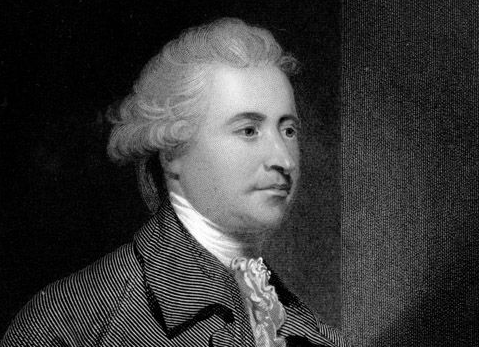
“The only thing necessary for the triumph of evil is for good men to do nothing.” It’s a quote routinely attributed to Edmund Burke. But it turns out falsely so. Apparently, he never uttered these words. At best, the essence of the quote can be traced back to the utilitarian philosopher John Stuart Mill, who delivered an 1867 inaugural address at the University of St. Andrews and stated: “Let not any one pacify his conscience by the delusion that he can do no harm if he takes no part, and forms no opinion. Bad men need nothing more to compass their ends, than that good men should look on and do nothing. He is not a good man who, without a protest, allows wrong to be committed in his name, and with the means which he helps to supply, because he will not trouble himself to use his mind on the subject.”
If you came to this page looking for Burke to help support ideas of social upheaval, we’d suggest watching the video below, or better yet reading Reflections on the Revolution in France, a fundamental text in the canon of conservative literature where Burke cautioned against abrupt or violent social change.
If you would like to support the mission of Open Culture, consider making a donation to our site. It’s hard to rely 100% on ads, and your contributions will help us continue providing the best free cultural and educational materials to learners everywhere. You can contribute through PayPal, Patreon, and Venmo (@openculture). Thanks!
Related Content:
1,700 Free Online Courses from Top UniversitiesJeremy Bentham’s Mummified Body Is Still on Display–Much Like Other Aging British Rock Stars
Read More...Download the Complete Archive of Oz, “the Most Controversial Magazine of the 60s,” Featuring R. Crumb, Germaine Greer & More
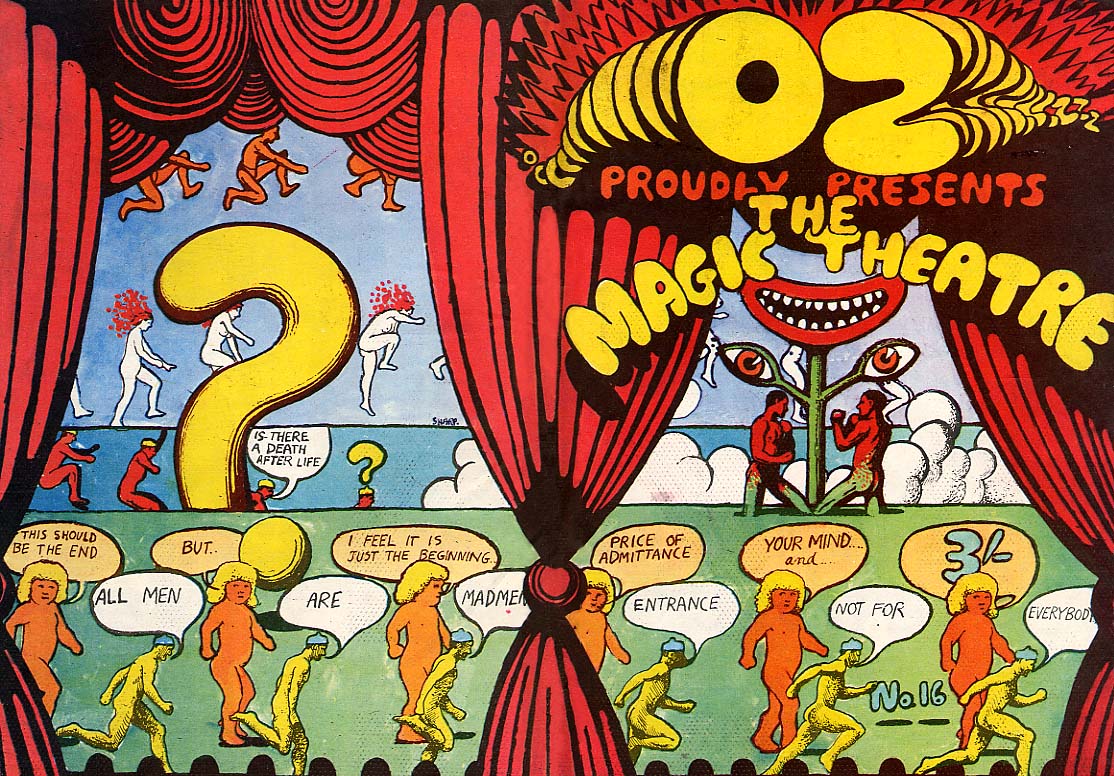
“If you remember the sixties,” goes the famous and variously attributed quotation, “you weren’t really there.” And, psychological after-effects of first-hand exposure to that era aside, increasingly many of us weren’t born anywhere near in time to take part.
Those of us from the wrong place or the wrong time have had to draw what understanding of the sixties we could from that much-mythologized period’s music and movies, as well as the cloudy reflections of those who lived through it (or claimed to). But now we can get a much more direct sense through the complete digital archives of Oz, sometimes called the most controversial magazine of the sixties.
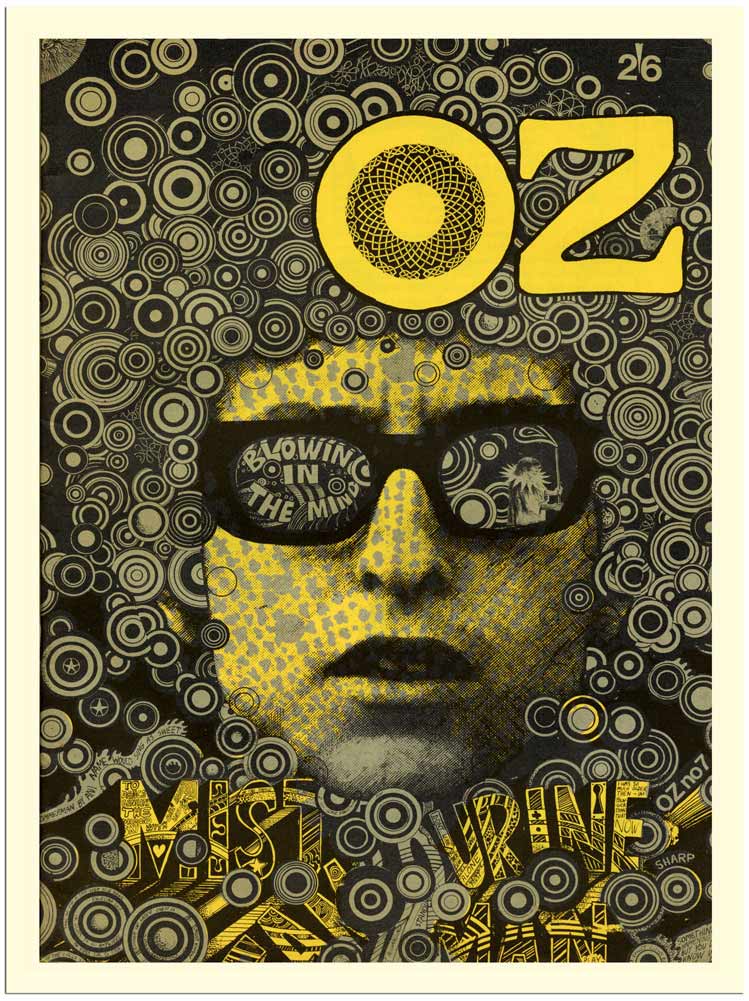
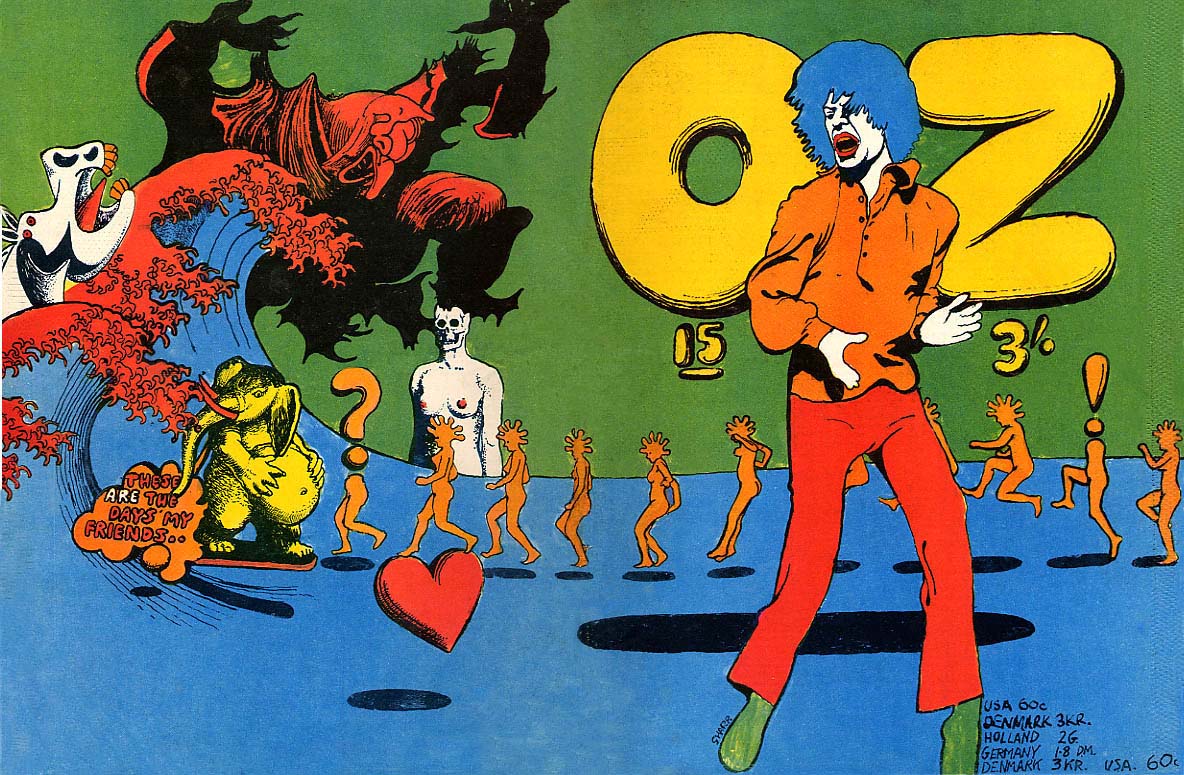
In The Guardian, Chitra Ramaswamy describes the London magazine as “the icon – and the enfant terrible – of the underground press. Produced in a basement flat off Notting Hill Gate, Oz was soon renowned for psychedelic covers by pop artist Martin Sharp, cartoons by Robert Crumb, radical feminist manifestos by Germaine Greer, and anything else that would send the establishment apoplectic. By August 1971, it had been the subject of the longest obscenity trial in British history. It doesn’t get more 60s than that.” Even its print run, which began in 1967 and ended in 1973, perfectly brackets the period people really talk about when they talk about the sixties.
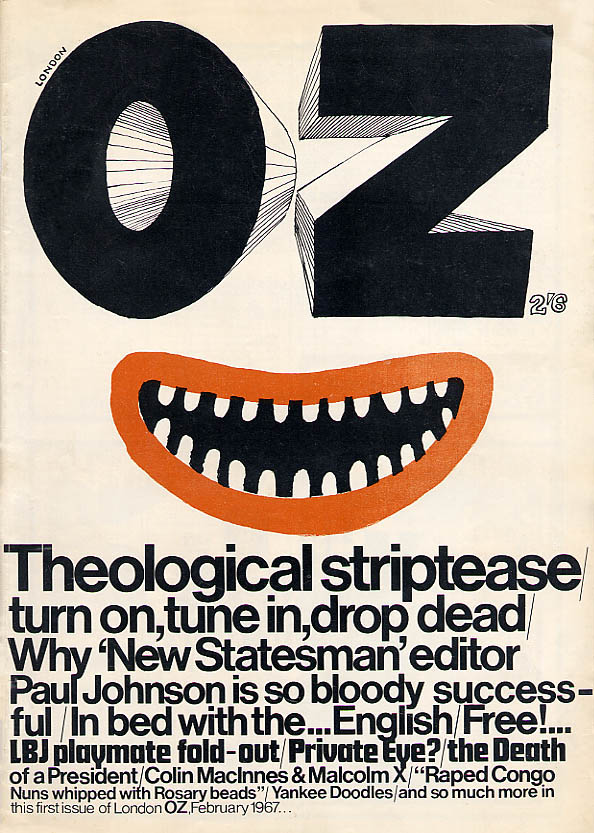
The online archive has gone up at the web site of the University of Wollongong, who two years ago put up a similar digital collection of all the issues of Oz’s eponymous satirical predecessor produced in Sydney. “Please be advised,” notes the front page, “this collection has been made available due to its historical and research importance. It contains explicit language and images that reflect attitudes of the era in which the material was originally published, and that some viewers may find confronting.” And while Oz today wouldn’t likely get into the kind of deep and high-profile legal trouble it did back then — in addition to the famous 1971 trial for the London version, the Sydney one got hit with two obscenity charges during the previous decade — the sheer transgressive zeal on display all over the magazine’s pages in its heyday still impresses.
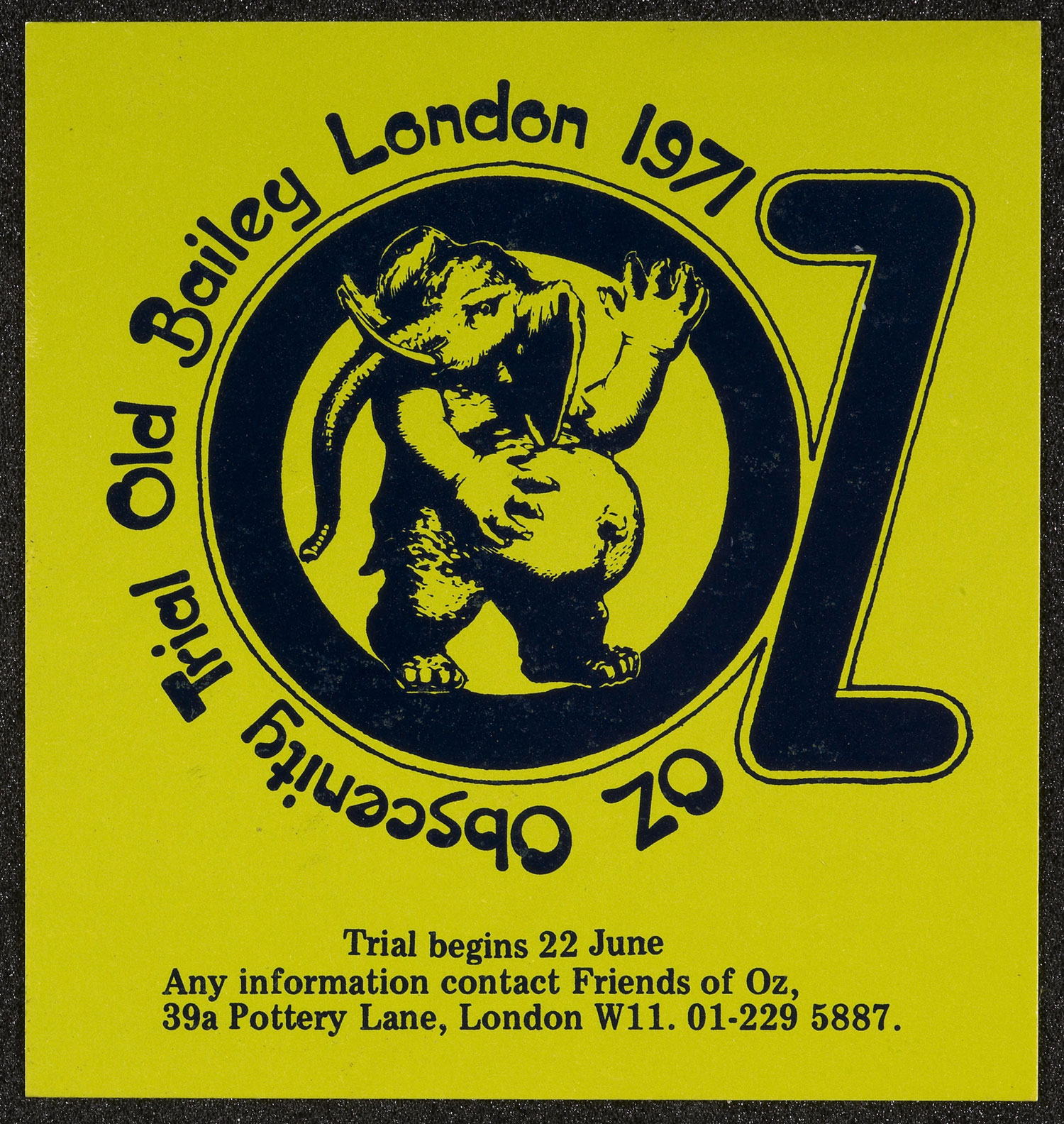
“Fifty years later, it’s important as a capsule of the times, but also as a work of art,” says Michael Organ, a library manager at the university, in the Guardian article. “Oz is a record of the cultural revolution. Many of the issues it raised, such as the environment, sexuality and drug use, are no longer contentious. In fact, they have now become mainstream.”
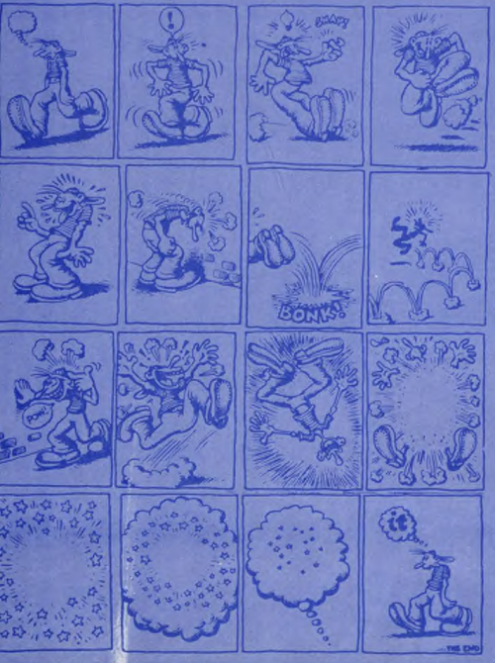
All this goes for the deliberately provocative editorial content — the stuff some viewers may find “confronting” — as well as the incidental content: ads for novels by Henry Miller and Jean Genet, “dates computer matched to your personality and tastes,” a machine promising “a hot line to infinity/journey through the incredible landscapes of your mind/kaleidoscopic moving changing image on which your mind projects its own changing/stun yourself & astonish friends,” and the “liquid luxury” of the Aquarius Water Bed. It does not, indeed, get more sixties than that. Enter the Oz archive here.
Related Content:
Tonite Let’s All Make Love in London (1968): An Insider’s View of 60s London Counterculture
R. Crumb Describes How He Dropped LSD in the 60s & Instantly Discovered His Artistic Style
62 Psychedelic Classics: A Free Playlist Created by Sean Lennon
Based in Seoul, Colin Marshall writes and broadcasts on cities, language, and style. He’s at work on a book about Los Angeles, A Los Angeles Primer, the video series The City in Cinema, the crowdfunded journalism project Where Is the City of the Future?, and the Los Angeles Review of Books’ Korea Blog. Follow him on Twitter at @colinmarshall or on Facebook.
Read More...Download 1800 Fin de Siècle French Posters & Prints: Iconic Works by Toulouse-Lautrec & Many More
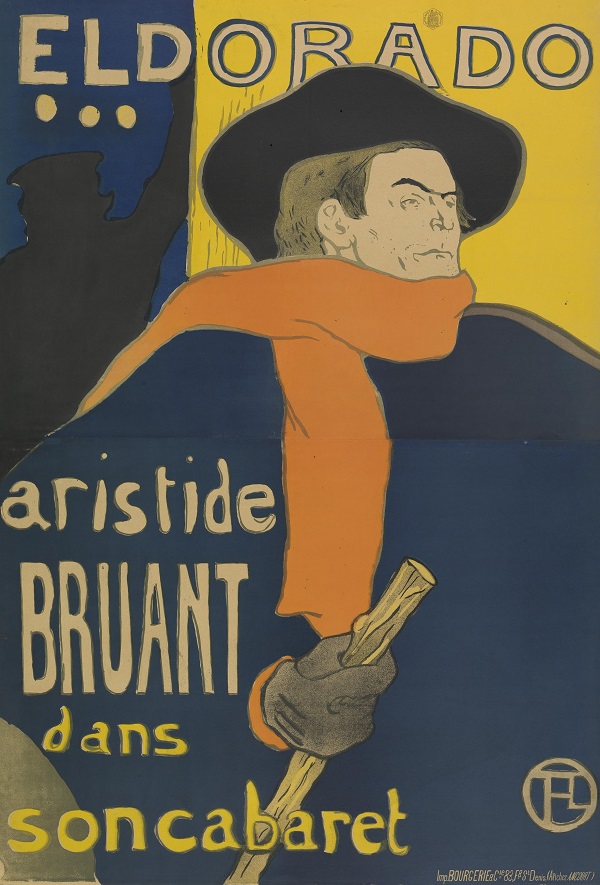
Théophile Steinlen’s poster for Le Chat Noir, Leonetto Cappiello’s advertisement for Café Martin, Henri de Toulouse-Lautrec’s portraits of the cabaret singer Aristide Bruant — through these and other much-reproduced and often-seen images, we’ve all gained some familiarity, however unconscious, with the art of the fin de siècle French print.
But even so, most of us have seen only a small fraction of all the striking works of art a late-nineteenth-century Parisian would have encountered on the streetscape every day. Until they invent a time machine to drop us straight into the cultural vibrancy of that time and place, we’ve got the next best thing in the form of the Van Gogh Museum’s online French print collection.
“In France, until the mid-nineteenth century, the art of printmaking had been used primarily to reproduce existing works of art in print, such as paintings and sculptures, so that they could be available for a broad public,” says the museum’s announcement of the online collection, which opened in February.
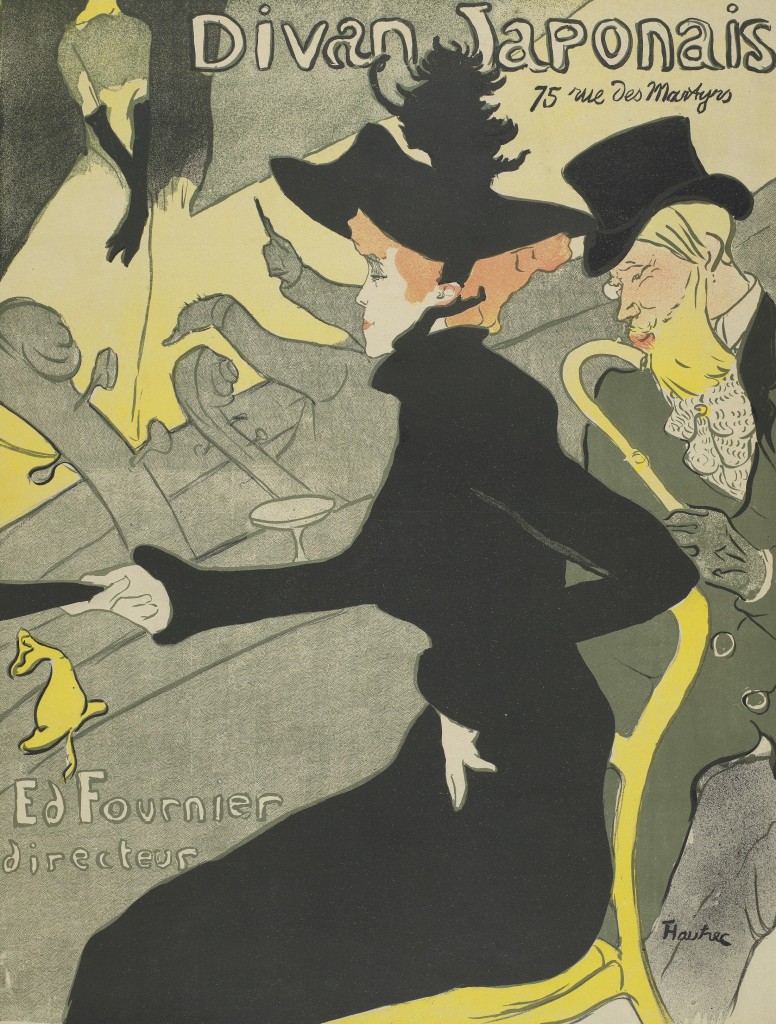
But in the second half of the nineteenth century, “as artists began to experiment with the medium as a fertile mode of creative expression, each print came to be considered a work of art in its own right.” In the aesthetically explosive years between 1890 to 1905, “a new generation of artists took up the art of printmaking as a modern medium,” driven by a “fascination for modern life, including the scintillating Paris nightlife, Japanese woodblock prints, and the intimate domestic lifestyle of the well-to-do bourgeois.”
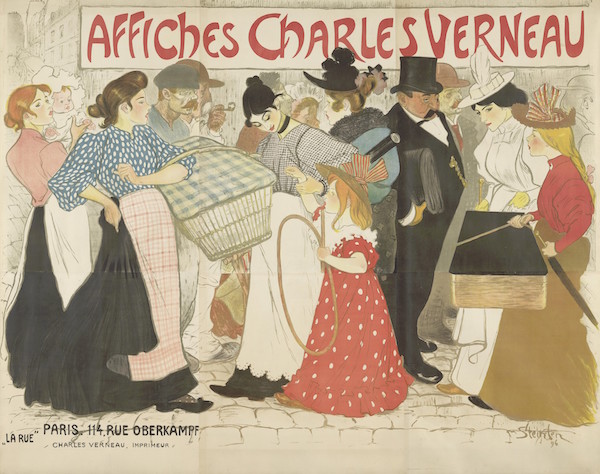
The online collection offers not just high-resolution images of nearly 1800 prints, posters, and books from this movement, but information that “reveals and elaborates on innumerable artistic and historical connections using interactive tags and hyperlinks,” shedding light on the “tightly knit community” of the Parisian print world, whose “each individual print is connected with countless other prints in many different ways,” from shared influences to subjects to artistic techniques to types of paper — and even to clients, who quickly realized the commercial value of all the eye-catching qualities pioneered in this revolution in reproducible visual art.
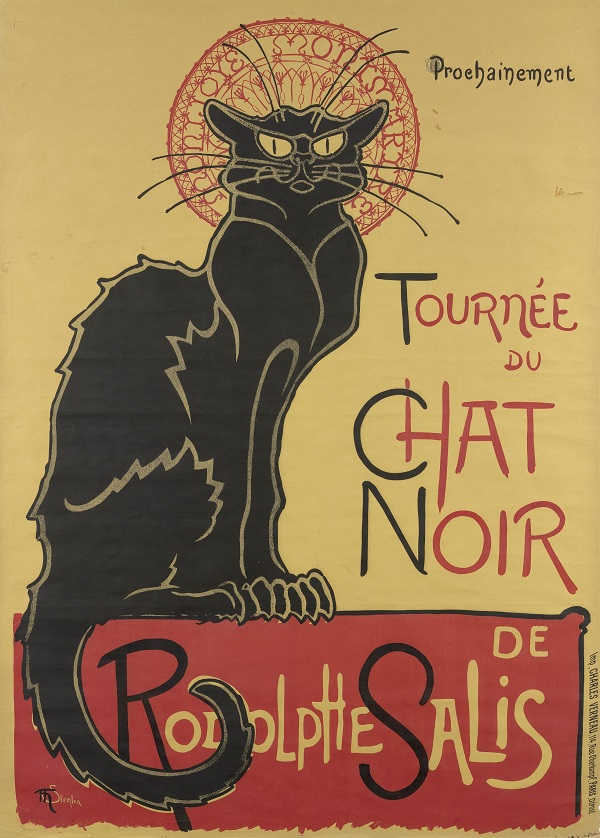
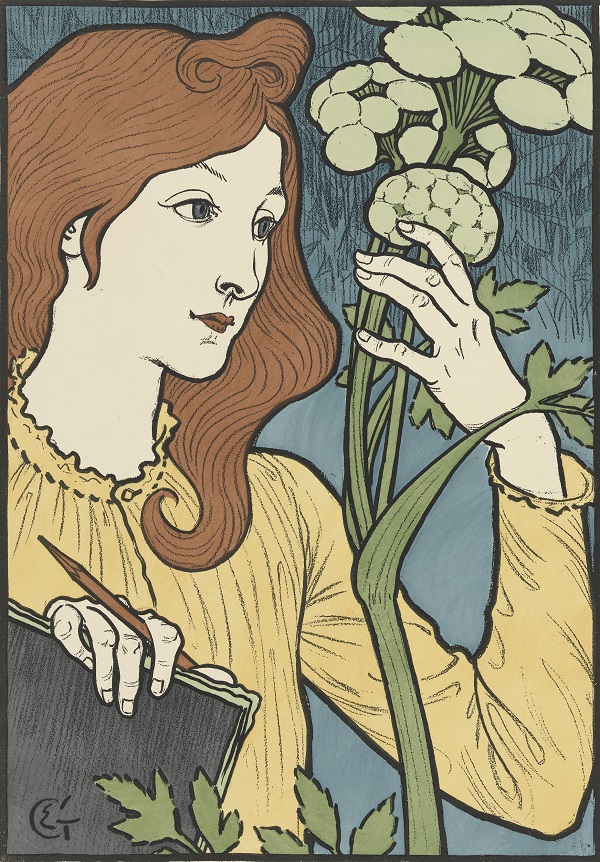
You can browse the collection in a variety of ways with its index: by artists like Steinlen, Toulouse-Lautrec, or Paul Gauguin; by technique like woodcut, aquatint, or photogravure; by theme like beauty, nightlife, or capitalism; and even by object type, from books to playbills to all those still-eye-catching advertisements. To Francophiles, Paris has long stood as a place where even the businessmen care about art. Presumably the coffee companies, eateries, bars, music halls, and publishers who commissioned so many of these posters had at least a certain regard for it, but if only they knew what a good bargain they were getting in purchasing the attention of consumers for about 120 years and counting. Enter the complete online collection of prints here, or click here to see some highlights.
Related Content:
René Magritte’s Early Art Deco Advertising Posters, 1924–1927
Advertisements from Japan’s Golden Age of Art Deco
Based in Seoul, Colin Marshall writes and broadcasts on cities, language, and style. He’s at work on a book about Los Angeles, A Los Angeles Primer, the video series The City in Cinema, the crowdfunded journalism project Where Is the City of the Future?, and the Los Angeles Review of Books’ Korea Blog. Follow him on Twitter at @colinmarshall or on Facebook.
Read More...Who the F*@% is Frank Zappa?: Kickstart the Making of the Definitive Frank Zappa Documentary
You may know Alex Winter best for his role as Bill S. Preston, Esq. in the 1989 film Bill & Ted’s Excellent Adventure. But nowadays, many years later, he’s making films. And if we can help out, he’ll soon be making the definitive documentary of Frank Zappa’s life.
On Kickstarter this week, Winter announced:
Frank Zappa is one of the strangest, most amazing and influential figures of our era, but his definitive story has never been told.
Now, for the first time, the Zappas have given us complete, unrestricted access to the contents of Frank’s private vault, and their full blessing and support, to tell his story.
But before we can finish telling his story, we have to catalog, save, digitize, and preserve a vast archive of unreleased audio, video, images, documents and more.
Together we can save Frank’s vault.
And when we do, we’ll have everything we need to answer the question:
Who the F*@% is Frank Zappa?
Just a few days into the Kickstarter campaign, Winter has already raised roughly half ($231,000) of the total amount ($500,000) needed to move forward with the project.
Through contributions large or small, you can help with the other half, and make sure that the definitive Zappa documentary sees the light of day. Contribute here.
Related Content:
Stream 82 Hours of Frank Zappa Music: Free Playlists of Songs He Composed & Performed
Frank Zappa Debates Censorship on CNN’s Crossfire (1986)
A Young Frank Zappa Turns the Bicycle into a Musical Instrument on The Steve Allen Show (1963)
Read More...Dick Clark Introduces Jefferson Airplane & the Sounds of Psychedelic San Francisco to America: Yes Parents, You Should Be Afraid (1967)
It must have been odd for “America’s Teenager” Dick Clark to watch the almost weekly revolutions in rock and roll as he continued to host American Bandstand through the ‘60s. By the time of the above clip, June 1967, Clark had relocated his show from the East Coast to the West, and San Francisco was exporting its first round of hippie rock bands, with Jefferson Airplane one of the biggest.
As you’ll see, Clark, dressed as usual in suit and tie, asks his young audience if they’ve been to San Francisco and what they thought of it. “This is where it’s at, that’s where everything is happening,” he concludes and then gives the stage over to the young and revolutionary band.
They mime their way through their two singles–Jack Casady could care less about verisimilitude and makes his way around a guitar covered in cables and poor drummer Spencer Dryden just kind of sits there. But Grace Slick, 28 years old or thereabouts, and looking like some magick princess, calls the followers to the service. Yeah, it’s good stuff.
That leaves Clark with less than two minutes to interview the band. The Summer of Love is about to kick into high gear a couple of hundred miles away.
“Do parents have anything to worry about?” Clark asks Paul Kantner.
“I think so,” he replies. “Their children are doing things that they didn’t do and they don’t understand.”
Related Content:
Jefferson Airplane Plays on a New York Rooftop; Jean-Luc Godard Captures It (1968)
Ted Mills is a freelance writer on the arts who currently hosts the artist interview-based FunkZone Podcast. You can also follow him on Twitter at @tedmills, read his other arts writing at tedmills.com and/or watch his films here.
Read More...Hear the Unique, Original Compositions of George Martin, Beloved Beatles Producer (RIP)
Quincy Jones, Phil Spector, Brian Wilson… these are people who changed the sound of modern music by taking big risks in the studio. But even if these three had not made the albums they’re best known for, they would still be known for their popular work as musicians and producers. That may not have been the case with perhaps one of the most innovative producers of them all: George Martin, who died this past Tuesday. Had Martin not steered the Beatles through their radical transformation from pop sensations to psychedelic bards, we may not have heard his name outside of the small worlds of classical and film music and British comedy records.
Was he the “fifth Beatle” or more of a paternal figure, as Paul McCartney wrote yesterday? Is it hyperbole to call him, as Mick Ronson did in tribute, “the greatest British record producer ever”? Maybe not. In any case, just as Martin changed the Beatles—prompting them to recruit Ringo and bring complex orchestrations into their arrangements—the Beatles changed Martin, from a rather conservative, cautious producer and composer to an adventurous creative force.
That’s not to say that Martin didn’t have an eccentric streak before he signed the band that would secure his name in rock and roll history. He spent a good bit of his early career producing novelty albums. “Time Beat” and “Waltz in Orbit”—his compositions at the top of the post, created with Maddalena Fagandini of the famed BBC Radiophonic Workshop—show an eccentric, playful side of the buttoned-up producer. It was perhaps a side Martin preferred to keep hidden; he released the single under a pseudonym, “Ray Cathode.”
Just a few months later, Martin auditioned the Beatles and brought them into Abbey Road Studios to record their first album. While the band’s early sixties records are forever beloved for their songwriting and performances, the production itself didn’t stray far from the conventional. The early albums, writes Mike Brown at The Telegraph, “evinced a youthful freshness and exuberance that hinted at promise, but showed no great originality. Certainly there was nothing that anticipated the flowering of genius to come.” Likewise, Martin’s own releases at the time, such as the big band orchestrations of Beatles songs from 1964 (further up) and a lounge-jazz, bossanova-tinged instrumental version of Help! from the following year, show none of the wizardry to come in Sgt. Pepper’s or Abbey Road.
After the Beatles’ psychedelic break, so to speak, in 1966/67, Martin himself moved in an entirely new direction as a composer, as you can hear in his very Beatlesesque “Theme One,” which served, writes Dangerous Minds, as the “ceremonial first song” every morning for BBC Radio 1 when it launched in ’67 until the mid-70s. The thrillingly Baroque piece of chamber pop could easily have been an extended outro on Sgt. Pepper’s; it shows Martin fully embracing the Beatles’ sound. Hear both the robust original and a tinnier, more Beatles‑y version above.
As skilled as he was at creating instantly recognizable experimental pop melodies, Martin never left his classical roots far behind. In the video of “A Day in the Life,” above—shot on location during recording sessions—Martin conducts the orchestra, Brown observes, “in white shirt and bow tie, hair neatly trimmed, stoutly refusing to embrace the affectations of drooping mustache and Nehru jacket that afflicted other record producers.” The famed producer, “forever maintained the calm, unruffled demeanour and the stiff-backed sartorial rectitude of the officer class.”
Martin’s musical discipline reigned in and gave shape to the Beatles’ wildest ideas, and gave their most tender and dramatic songs an immensity and lushness that still leaves us in awe. He combined conventional and avant-garde sensibilities seamlessly. (As McCartney once remarked, Martin was “quite experimental for who he was, a grown-up.”) Just above hear an example of that synthesis, the sweeping, powerful “Pepperland Suite,” composed in 1968 for the Yellow Submarine film. It represents some of the best original work from an incredible producer who also became, we must remember as we say our goodbyes, an astoundingly original composer.
Related Content:
George Martin, Legendary Beatles Producer, Shows How to Mix the Perfect Song Dry Martini
Here Comes The Sun: The Lost Guitar Solo by George Harrison, Discovered by George Martin
Josh Jones is a writer and musician based in Durham, NC. Follow him at @jdmagness
Read More...The History of Rock Told in a Whirlwind 15-Minute Video
Based in England, Ithaca Audio specializes in creating music for film, TV, animations and games. And they also have a knack for remixing audio visuals and producing mashups. Care to sample their work? Watch the video above.
The History of Rock takes you from Elvis to The White Stripes, traveling from 1957 to 2003, in the space of 15 minutes. 348 rockstars, 84 guitarists, 64 songs, 44 drummers — they’re all knitted into a narrative using a device–the Facebook timeline–that came into existence in 2004. It’s anachronistic but clever, and I’m willing to suspend disbelief and take the ride. A bigger complaint might be the one made by Forrest Wickman over at Slate. “No Little Richard. No Ike Turner and Jackie Brenston. No Sister Rosetta Tharpe. No Bo Diddley or Big Joe Turner,” he observes. The History of Rock would have you believe that “rock was [originally] pioneered exclusively by white artists.” Give Keith Richards and Mick Jagger the chance–two icons who originally saw themselves as just playing the American blues–and they might tell the origin story of rock n roll a little differently.
Below you can see a list of tracks used in the mashup. And if you head over to the Ithaca Audio website, you can download the soundtrack in full.
Elvis Presley — Jailhouse Rock
The Yardbirds — For your Love
The Rolling Stones — Honky Tonk Women
The Rolling Stones — (I Can’t Get No) Satisfaction
Cream — Sunshine of your Love
Led Zeppelin — Whole Lotta Love
Led Zeppelin — Good Times, Bad Times
Led Zeppelin — Immigrant Song
Jimi Hendrix — Hey Joe
Jimi Hendrix — Purple Haze
Fleetwood Mac — Oh Well (Part 1)
The Kinks — You Really Got Me
The Doors — Riders on the Storm
Queen — Don’t Stop Me
Queen — Radio Ga Ga
Queen — Another One Bites the Dust
Queen — A Kind of Magic
The Beatles — Sgt. Pepper’s Lonely Hearts Club Band
The Who — Baba O’Riley
The Who — Eminence Front
Black Sabbath — Iron Man
Black Sabbath — War Pigs
Deep Purple — Woman From Tokyo
Deep Purple — Smoke on the Water
Deep Purple — Living Wreck
The Eagles — Life in the Fast Lane
Aerosmith — Walk this Way
Aerosmith — Dude Looks Like a Lady
Alice Cooper — I’m Eighteen
The Clash — Train in Vain (Stand by Me)
The Police — Roxanne
Journey — Don’t Stop Believin’
Dire Straits — Sultans of Swing
Duran Duran — Girls on Film
Duran Duran — Wild Boys
Pink Floyd — Another Brick in the Wall
David Bowie — Let’s Dance
David Bowie & Queen — Under Pressure
Iron Maiden — Run to the Hills
Def Leppard — Pour Some Sugar on Me
Guns N’ Roses — Mr Brownstone
Guns N’ Roses — Sweet Child O’ Mine
AC/DC — Back in Black
Rage Against the Machine — Bombtrack
Rage Against the Machine — Guerrilla Radio
Rage Against the Machine — Killing in the Name
Metallica — Enter Sandman
Nirvana — Smells Like Teen Spirit
Nirvana — Heart Shaped Box
Oasis — Supersonic
Oasis — Live Forever
Blur — Song 2
The Verve — Bittersweet Symphony
Radiohead — High and Dry
Radiohead — Idioteque
Red Hot Chili Peppers — Can’t Stop
The Killers — All These Things That I’ve Done
Foo Fighters — All My Life
U2 — Hold Me, Thrill Me, Kiss Me, Kill Me
Linkin Park — One Step Closer
The White Stripes — Seven Nation Army
The Strokes — 12 51
Gorillaz — Clint Eastwood
Kings of Leon — Sex on Fire
If you would like to support the mission of Open Culture, consider making a donation to our site. It’s hard to rely 100% on ads, and your contributions will help us continue providing the best free cultural and educational materials to learners everywhere. You can contribute through PayPal, Patreon, and Venmo (@openculture). Thanks!
Related Content:
A History of Rock ‘n’ Roll in 100 Riffs
Rock Critic Greil Marcus Picks 10 Unexpected Songs That Tell the Story of Rock ‘n’ Roll
The Evolution of the Rock Guitar Solo: 28 Solos, Spanning 50 Years, Played in 6 Fun Minutes
Read More...New Order’s “Blue Monday” Played with Obsolete 1930s Instruments
Released 33 years ago this week, New Order’s “Blue Monday” (hear the original EP version here) became, according to the BBC, “a crucial link between Seventies disco and the dance/house boom that took off at the end of the Eighties.” If you frequented a dance club during the 1980s, you almost certainly know the song.
The original “Blue Monday” never quite won me over. I’m much more Rolling Stones than New Order. But I’m taken with the adaptation above. Created by the “Orkestra Obsolete,” this version tries to imagine what the song would have sounded like in 1933, using only instruments available at the time— for example, writes the BBC, the theremin, musical saw, harmonium and prepared piano. Quite a change from the Powertron Sequencer, Moog Source synthesizer, and Oberheim DMX drum machine used to record the song in the 80s. Enjoy this little thought experiment put in action.
If you would like to support the mission of Open Culture, consider making a donation to our site. It’s hard to rely 100% on ads, and your contributions will help us continue providing the best free cultural and educational materials to learners everywhere. You can contribute through PayPal, Patreon, and Venmo (@openculture). Thanks!
Related Content:
Beethoven’s Ode to Joy Played With 167 Theremins Placed Inside Matryoshka Dolls in Japan
Read More...10 Must-Read Dystopian Novels: Our Readers’ Picks
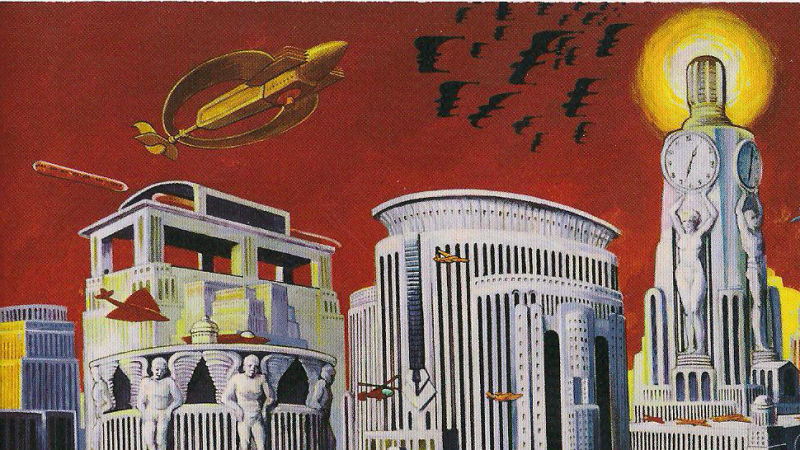
While not all science fiction is dystopian—far from it—a question does arise when the subject of that most pessimistic of genres comes up: is all dystopian literature science fiction? In a post a couple days ago, we brought you five of Anthony Burgess’s favorite dystopian novels, a list that would seem to answer with a resounding No. For one thing, Burgess includes what we might count as historical fiction on his list—Norman Mailer’s The Naked and the Dead. Is Orwell’s 1984 science fiction? It makes more sense, perhaps, to call it political satire, or “speculative fiction,” the term dystopian novelist Margaret Atwood prefers.
In the introduction to her essay collection In Other Worlds, Atwood defines “speculative fiction” as “realistic and plausible” whereas science fiction contains more fantastic elements. Hairsplitting maybe, but for Atwood it means that dystopias—at least her dystopias—are not simply philosophical thought experiments divorced from lived reality, like much utopian fiction. They are projections, and at times imaginative transcriptions, of the present, showing us what may already be happening right under our noses, or what might be right around the corner.
As Burgess wrote of 1984, “It is possible to say that the ghastly future Orwell foretold has not come about simply because he foretold it: we were warned in time.” In other words—the totalitarian future Orwell foresaw was entirely possible in England and America, and needless to say, already largely a reality in places like Stalin’s Soviet Union and current-day North Korea. In our Burgess post, we asked our readers to name their favorite dystopian novels (or films). However we define dystopia—as dark futurist fantasy, sci-fi, or “speculative fiction” about nasty things on the verge of coming to pass, we’ll never lack for examples.
The list of novels below below offers a range of futuristic tales, some more realistic and plausible, some more fantastic. Like Burgess, readers had a broad definition of “dystopian” as a genre. I was surprised, however, that no one mentioned any of Atwood’s excellent novels, so I’ll throw in both Oryx and Crake and The Handmaid’s Tale as my picks.
- We, by Yevgeny Zamyatin
- Dahlgren, by Samuel R. Delany
- The Road, by Cormac McCarthy
- Market Forces, by Richard K. Morgan
- Never Let Me Go, by Kazuo Ishiguro
- A Canticle for Leibowitz, by Walter M. Miller Jr.
- In the Country of Last Things, by Paul Auster
- The Iron Heel, by Jack London
- The Gate to Women’s Country, by Sherri S. Tepper
- This Perfect Day, by Ira Levin
Related Content:
Huxley to Orwell: My Hellish Vision of the Future is Better Than Yours (1949)
Hear Ray Bradbury’s Classic Sci-Fi Story Fahrenheit 451 as a Radio Drama
Josh Jones is a writer and musician based in Durham, NC. Follow him at @jdmagness
Read More...
11 Essential Feminist Books: A Reading List by The New York Public Library
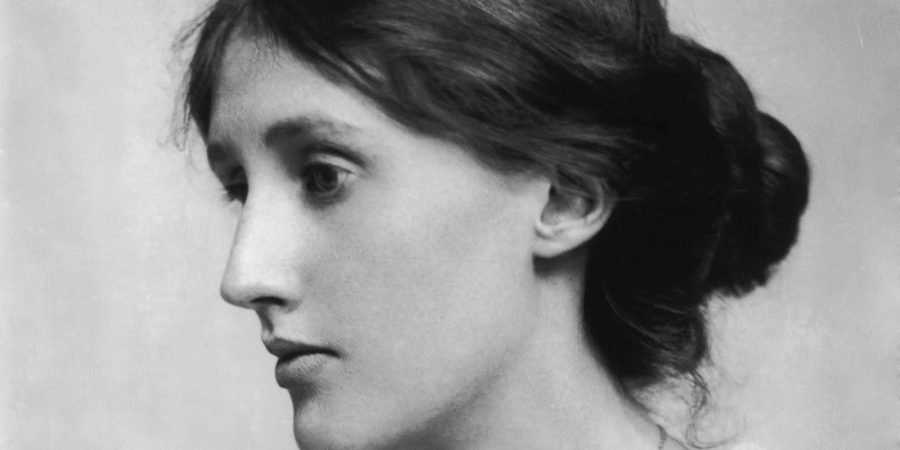
We now find ourselves about a third of the way through March, more interestingly known as Women’s History Month, a time filled with occasions to round up and learn more about the creations and accomplishments of women through the centuries. And “who better to honor this March than history’s influential feminists?” writes Lynn Lobash on the New York Public Library’s website.
We’ve previously featured treasures from the New York Public Library, including art posters, maps, restaurant menus, theater ephemera, and a host of digitized high-resolution images. Today it’s time to highlight one of the many recommended reading lists that the NYPL’s librarians regularly create for the reading public. “Know Your Feminisms”–a book list “essential for understanding the history of feminism and the women’s rights movement”–could easily be used in a Feminism 101 course. It runs chronologically, beginning with these ten volumes (the quoted descriptions come from Lynn Lobash):
- A Room of One’s Own by Virginia Woolf (1929). “This essay examines the question of whether a woman is capable of producing work on par with Shakespeare. Woolf asserts that ‘a woman must have money and a room of her own if she is to write fiction.’ ”
- The Second Sex by Simone de Beauvoir (1949). “A major work of feminist philosophy, the book is a survey of the treatment of women throughout history.”
- The Feminine Mystique by Betty Friedan (1963). “Friedan examines what she calls ‘the problem that has no name’ – the general sense of malaise among women in the 1950s and 1960s.”
- Les Guérillères by Monique Wittig (1969). “An imagining of an actual war of the sexes in which women warriors are equipped with knives and guns.”
- The Female Eunuch by Germaine Greer (1970). “Greer makes the argument that women have been cut off from their sexuality through (a male conceived) consumer society-produced notion of the ‘normal’ woman.”
- Sexual Politics by Kate Millett (1970). “Based on her PhD dissertation, Millett’s book discusses the role patriarchy (in the political sense) plays in sexual relations. To make her argument, she (unfavorably) explores the work of D.H Lawrence, Henry Miller, and Sigmund Freud, among others.”
- Sister Outsider by Audre Lorde (1984). “In this collection of essays and speeches, Lorde addresses sexism, racism, black lesbians, and more.”
- The Beauty Myth by Naomi Wolf (1990). “Wolf explores “normative standards of beauty” which undermine women politically and psychologically and are propagated by the fashion, beauty, and advertising industries.”
- Gender Trouble by Judith Butler (1990). “Influential in feminist and queer theory, this book introduces the concept of ‘gender performativity’ which essentially means, your behavior creates your gender.”
- Feminism is for everybody by bell hooks (2000). “Hooks focuses on the intersection of gender, race, and the sociopolitical.”
To see the very newest books the NYPL has put in this particular canon, the latest of which came out just last year, take a look at the complete list on their site. There you’ll also find “Well Done, Sister Suffragette!,” a shorter collection of five books on history’s fighters for women’s rights: the slave-turned-orator Sojourner Truth, activist Elizabeth Cady Stanton, social reformer Susan B. Anthony, nineteenth amendment-promoter Alice Paul, and radical Catholic journalist Dorothy Day.
Note: You can download Gloria Steinem’s recent autobiography, My Life on the Road, as a free audiobook if you sign up for Audible.com’s free trial program. It’s narrated by Debra Winger and Steinem herself. Learn more about Audible’s free trial program here.
Related Content:
Simone de Beauvoir Explains “Why I’m a Feminist” in a Rare TV Interview (1975)
Simone de Beauvoir Tells Studs Terkel How She Became an Intellectual and Feminist (1960)
The First Feminist Film, Germaine Dulac’s The Smiling Madame Beudet (1922)
The Feminist Theory of Simone de Beauvoir Explained with 8‑Bit Video Games (and More)
100,000+ Wonderful Pieces of Theater Ephemera Digitized by The New York Public Library
Foodie Alert: New York Public Library Presents an Archive of 17,000 Restaurant Menus (1851–2008)
New York Public Library Puts 20,000 Hi-Res Maps Online & Makes Them Free to Download and Use
Based in Seoul, Colin Marshall writes and broadcasts on cities, language, and style. He’s at work on a book about Los Angeles, A Los Angeles Primer, the video series The City in Cinema, the crowdfunded journalism project Where Is the City of the Future?, and the Los Angeles Review of Books’ Korea Blog. Follow him on Twitter at @colinmarshall or on Facebook.
Read More...Support Us
We're hoping to rely on loyal readers, rather than erratic ads. Please click the Donate button and support Open Culture. You can use Paypal, Venmo, Patreon, even Crypto! We thank you!

About Us

Open Culture scours the web for the best educational media. We find the free courses and audio books you need, the language lessons & educational videos you want, and plenty of enlightenment in between.
Advertise With Us

FREE UPDATES!
GET OUR DAILY EMAIL
Get the best cultural and educational resources on the web curated for you in a daily email. We never spam. Unsubscribe at any time.
FOLLOW ON SOCIAL MEDIA

Open Culture editor Dan Colman scours the web for the best educational media. He finds the free courses and audio books you need, the language lessons & movies you want, and plenty of enlightenment in between.
Advertise With Us


