The Syrian Conflict & The European Refugee Crisis Explained in an Animated Primer
In a quick six minutes, the animation above explains the origins of two very related problems — the Syrian Conflict & the European Refugee Crisis. How did the crisis first erupt? How did it lead to a refugee crisis? And why should we why put xenophobic fears aside and provide refugees with a safe haven in the West? All of these questions get addressed by “Kurzgesagt” (“in a nutshell” in German), whose timely animations you can find on Youtube (including a separate video on the rise of ISIS in Iraq).
Follow us on Facebook, Twitter, Google Plus and LinkedIn and share intelligent media with your friends. And if you want to make sure that our posts definitely appear in your Facebook newsfeed, just follow these simple steps.
Read More...The History of Philosophy Without Any Gaps Podcast, Now at 370 Episodes, Expands into Eastern Philosophy
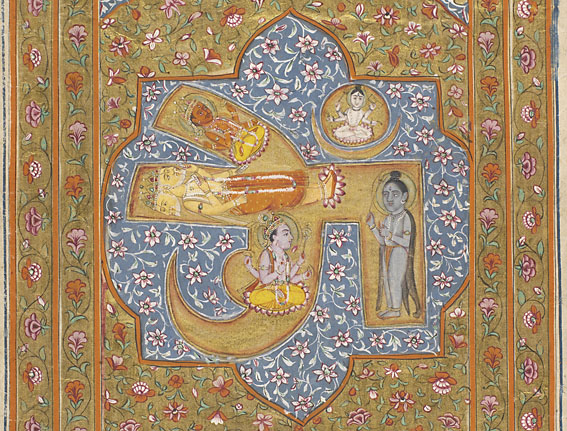
Perhaps you’ve heard of a phenomenon called “podfade,” wherein a podcast — particularly an ambitious podcast — begins by putting out episodes regularly, then misses one or two, then lets more and more time elapse between each episode, one day ceasing to update entirely. It pleases us to report that The History of Philosophy Without Any Gaps, the podcast offering just that, on whose progress we’ve kept you posted over the past three years, not only shows no signs of podfade, but has even broadened its mandate to include a greater variety of philosophical traditions than before.
For those who haven’t heard the show, The History of Philosophy Without Any Gaps comes from Peter Adamson, philosophy professor at Ludwig Maximilians University Munich and King’s College London, and “looks at the ideas, lives and historical context of the major philosophers as well as the lesser-known figures of the tradition.”
The main show has put out 379 episodes so far, beginning with the pre-Socratics (specifically Thales) and most recently examining Franciscan poverty, and now a new branch has grown, starting from Adamson and collaborator Jonardon Ganeri’s introduction to Indian Philosophy. (Hear the first episode of the Indian Philosophy series below.)
Episodes of this new series on the Indian tradition, Adamson writes, “will appear in alternating weeks with episodes on European philosophy.” He also mentions a “further ambition to cover the other philosophical traditions of Asia (especially Chinese) and also African philosophy and the philosophy of the African diaspora, but of course India will take a while so you’ll have to be patient if you are waiting for me to get to that!”
You can subscribe to The History of Philosophy Without Any Gaps’ Indian philosophy series on its very own podcast RSS feed, or on iTunes here. Philosophically-minded binge-listeners beware; you could lose a lot of time to these two shows. “I’ve been doing my laundry to it for months and I’m only up to Maimonides,” says one commenter on a Metafilter thread about the new series. “I am totally not ready for this Patañjali.”
Related Content:
200+ Free Online Philosophy Courses
Death: A Free Philosophy Course from Yale
Introduction to Political Philosophy: A Free Online Course from Yale University
Colin Marshall writes elsewhere on cities, language, Asia, and men’s style. He’s at work on a book about Los Angeles, A Los Angeles Primer, the video series The City in Cinema, and the crowdfunded journalism project Where Is the City of the Future? Follow him on Twitter at @colinmarshall or on Facebook.
Read More...Sylvia Plath, Girl Detective Offers a Hilariously Cheery Take on the Poet’s College Years
Conventional wisdom has it that one’s college years are the best of one’s life, a maxim Sylvia Plath: Girl Detective, above, seems to embrace.
The real Plath experienced deep depression and attempted suicide while a student at Smith College. Her fictional counterpart—-played by writer-director Mike Simses’ sister and co-producer, Kate—exudes a pert Nancy Drew spirit.
She juggles multiple admirers, glows with self-satisfaction when her poem, “I Thought That I Could Not Be Hurt,” receives an A+, and cooly holds her ground against statuesque and seemingly better-heeled classmate, Jane.
It doesn’t matter that it’s never particularly clear what mystery this girl detective is solving… the Case of the Missing Tuition Check perhaps.
(Eager to stay on the good side of her benefactress, Now, Voyager author Olive Higgins Prouty, she brightly acquiesces to a shot of insulin from a giant metal syringe.)
I love how she quotes from her own poetry with an intensity that should feel familiar to anyone who’s ever been called upon to read aloud from “Daddy” or “Lady Lazarus” in an undergraduate Women’s Studies class.
(Speaking of Daddy, Plath’s gets a notable cameo. Shades of Hamlet’s father, but funny!)
This Writers Guild Association New Media award winner is supported by high production values that range from tony locations and antique cars to Simses’ sheitel.
Find Sylvia Plath, Girl Detective added to our collection, 4,000+ Free Movies Online: Great Classics, Indies, Noir, Westerns, Documentaries & More.
Related Content:
Hear Sylvia Plath Read Fifteen Poems From Her Final Collection, Ariel, in 1962 Recording
Sylvia Plath’s 10 Back to School Commandments (1953)
The Mirrors of Ingmar Bergman, Narrated with the Poetry of Sylvia Plath
Ayun Halliday is an author, illustrator, and Chief Primatologist of the East Village Inky zine. Her play, Fawnbook, opens in New York City later this fall. Follow her @AyunHalliday
Read More...Pope Francis Set to Release a Rock/Pop Album: Listen to the First Single
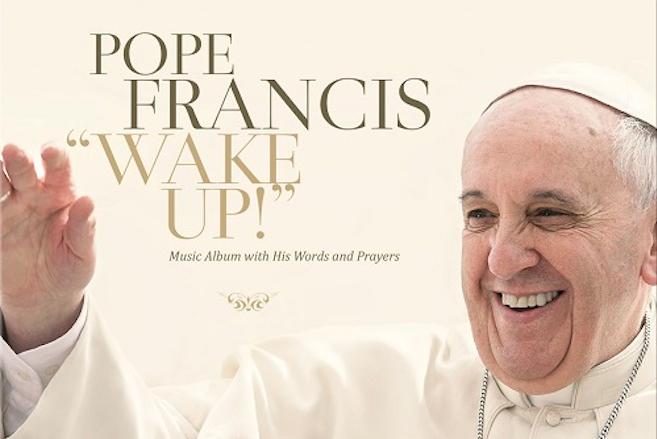
That’s right, I said it. In November, the Pope will officially release a rock/pop album called Pope Francis: Wake Up! (which you can already pre-order on iTunes). And below, you can hear the first single, “Wake Up! Go! Go! Forward!” It’s one of 11 tracks.
According to Rolling Stone, “The Vatican-approved LP … features the Pontiff delivering sacred hymns and excerpts of his most moving speeches in multiple languages paired with uplifting musical accompaniment ranging from pop-rock to Gregorian chant.” The Pope’s songs will focus on themes that Americans are getting familiar with this week: “peace, dignity, environmental concerns and helping those most in need.“Pope Francis: Wake Up! will officially go on sale on November 27th. Yup, Black Friday.
via Rolling Stone
If you would like to support the mission of Open Culture, consider making a donation to our site. It’s hard to rely 100% on ads, and your contributions will help us continue providing the best free cultural and educational materials to learners everywhere. You can contribute through PayPal, Patreon, and Venmo (@openculture). Thanks!
Read More...Revel in The William Faulkner Audio Archive on the Author’s 118th Birthday
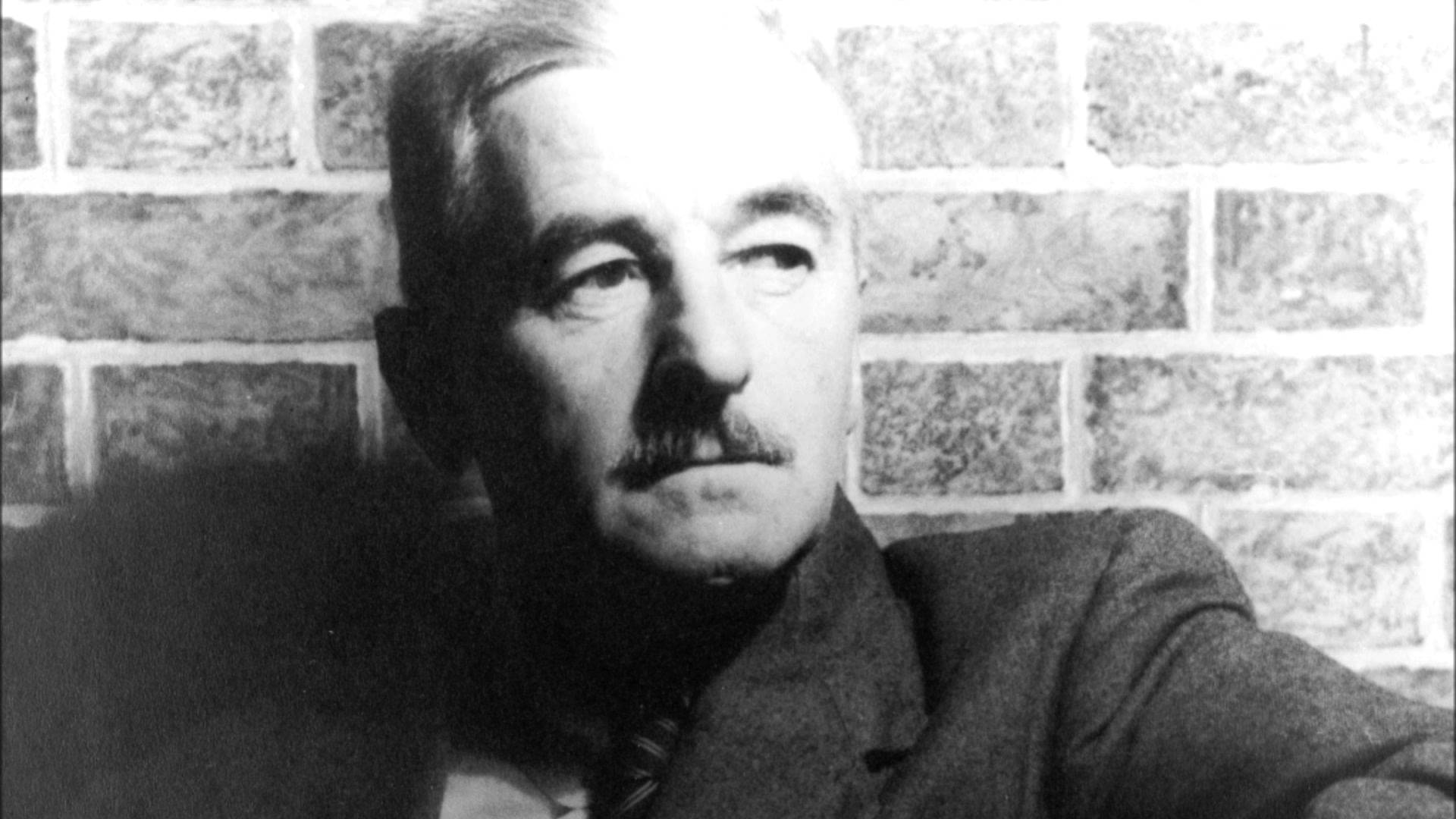
There was once a time that I intended to make a career out of writing about and teaching the work of William Faulkner. Plans—and economies—change, but my admiration and enthusiasm for the U.S.‘s foremost modernist novelist has not dimmed one bit as time goes on. There’s something about the breathless urgency of Faulkner’s prose—combined with its thick haze of obscurity, seeming to represent the mists of time, and timelessness, itself—that never fails to entrance me. Despite his committed regionalism, Faulkner’s themes never slip from relevance, his archetypal characters rarely seem dated, and even his lesser works, like Sanctuary, reach sublime heights of tragicomedy few contemporary writers can scale.
Like all great writers, Faulkner had his flaws and blind spots. Many of his personal attitudes and writerly quirks might be called quaint or provincial. And yet, as Toni Morrison once told The Paris Review, incredibly dizzying novels like Absalom, Absalom! also reveal “the insanity of racism…. No one has done anything quite like that ever.” Whatever attitudes Faulkner inherited from his family and culture, he never sat comfortably with them as a writer, nor shrunk from interrogating the perverse contradictions of white supremacy and the pseudo-historical, fever-dream fantasies of the “The Lost Cause.” These themes have found resonance in nearly every cultural milieu. Faulkner’s “metaphysics” provoked Jean-Paul Sartre, and his very presence gave rise to an Oedipal struggle in writers like Gabriel Garcia Marquez; he is read in Japan, Martinique, the Ivory Coast…. This is but a tiny sampling of the Mississippi novelist’s global reach.
Even before Faulkner was an academic industry or an Everest so many ambitious writers feel the need to conquer, he became a national treasure in his lifetime, winning the Nobel Prize for literature in 1954 and serving as an (often drunk) cultural ambassador for his country. In 1957, Faulkner began his year as writer-in-residence at the University of Virginia. Though he joked at the time that he was “just the writer-in-residence, not the speaker-in-residence,” he nonetheless “gave two addresses, read a dozen times from eight of his works, and answered over 1400 questions from audiences made up of various groups, ranging from UVA students and faculty to interested local citizens.” A majority of these moments were captured on tape, and the UVA Library’s “Faulkner at Virginia” project has them all available online. You can search for specific references or browse the entire archive, and each page has a full transcript of the audio.
You can hear, for example, Faulkner instruct his audience on the correct pronunciation of “Yoknapatawpha,” the fictional county setting of his Mississippi fiction (top). You can hear him read his story “Shingles for the Lord” (middle), and hear (above) his humorous answer to a question about Jack Kerouac’s On the Road. (He confesses he hasn’t read it yet, then concludes, “I consider writing my hobby, not my trade. I’m a farmer, actually, and the people I know are not literary people, and I don’t keep up with [these] books.”) He gives many more lively answers about fellow writers and talks about his time in Hollywood (“It was a—a pleasant way to make some money.”)
Faulkner also touches on social issues, albeit reluctantly. In a tense moment during a session at Virginia’s Washington and Lee University (above), he gives an ambivalent response to a question about Brown vs. Board of Ed:
That’s sort of got out of fiction, hasn’t it? [audience laughter] I would say it was something that—that had to—to come. There was a—the dean of the law school at the University of Mississippi said ten, twelve years ago that in time the Supreme Court would—would hand down that opinion. Nobody believed him. It’s—it’s our fault. If we had—had given the Negro a chance to find whether or not he can be equal, there wouldn’t have been any need for it. It has set relations between the races back for some time, but it had to come. It’s our fault. [We could have prevented it.]
Like most of Faulkner’s responses to the burgeoning Civil Rights movement, this answer is halting and noncommittal, offering both support for “the Negro” and an oblique endorsement of segregation. It’s a moment that well represents Faulkner’s contradictions; he was a writer who posed formidable challenges to the South’s ethos, and yet he was also—in his pose a gentleman farmer and his devotion to tradition—a self-conscious representative of the region in all its stubbornness and fear of change. “We are living in a time of impossible revolutions,” wrote Sartre in 1939, “and Faulkner uses his extraordinary art to describe our suffocation and a world dying of old age.”
Whether you agree with this critical assessment or not, you’ll be hard-pressed to find anyone who disagrees that Faulkner’s was an “extraordinary art.” The “Faulkner at Virginia” audio archive gives us an opportunity to get to know the man behind it, with all his self-effacing good humor, plainspoken wisdom, and, yes, Southern charm.
If you’re new to Faulkner and wondering which novel to start with, take Faulkner’s advice below. (The answer, in short, is Sartoris.) And if you want to know what book Faulkner considered his best, click here.
Related Content:
Vintage Audio: William Faulkner Reads From As I Lay Dying
William Faulkner Reads His Nobel Prize Speech
Josh Jones is a writer and musician based in Durham, NC. Follow him at @jdmagness
Read More...Queenie: A Handmade Paper Animation About a Lovesick Professor and His Strange Academic Project
From director Paul Neason comes Queenie, an animated short film handmade with paper and cardboard. This tragicomic short follows Danny, a university Geography tutor/professor, as he and his students embark on a cutting-edge academic project, which has nothing to do with his recent divorce from his wife.
Created by National Park Studios in New Zealand, Queenie premiered at SXSW 2014, and, after gathering a few awards, it’s now making its debut online. It will be housed in the Animation section of our collection, 4,000+ Free Movies Online: Great Classics, Indies, Noir, Westerns, Documentaries & More.
If you would like to support the mission of Open Culture, consider making a donation to our site. It’s hard to rely 100% on ads, and your contributions will help us continue providing the best free cultural and educational materials to learners everywhere. You can contribute through PayPal, Patreon, and Venmo (@openculture). Thanks!
Read More...Stream 82 Hours of Frank Zappa Music: Free Playlists of Songs He Composed & Performed
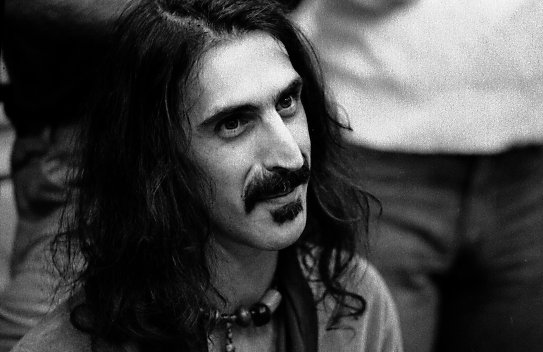
Creative Commons image by Jean-Luc Ourlin
When we think of 60s avant-gardism, we likely think of literary figures like William S. Burroughs or John Barth, filmmakers like Stan Brakhage or Kenneth Anger, and art stars (and perhaps inventor of the “art star”) like Andy Warhol. In music, we may drop names like La Monte Young, Terry Riley, Philip Glass, Sun Ra, or even Ornette Coleman, who began developing his improvisatory theory of “harmolodics” in the late sixties, changing the way many musicians—in every possible style—approached their own experimentalism.
We may not often be inclined, however—as students of the avant-garde—to include the name Frank Zappa in the company of such “serious” artists. There are many reasons for this, many of them attributable to deliberate choices Zappa himself made to occupy a space in-between that of a serious experimental composer and a popular rock and roll provocateur whose music and lyrics parodied the counterculture and whose impossible-to-classify albums skirted novelty status.
And yet, writes Allmusic, Zappa’s “comic and serious sides were complementary, not contradictory… most of all, he was a composer far more ambitious than any other rock musician of his time and most classical musicians, as well.” You don’t have to take my word for it—or the word of such a standardized reference guide as Allmusic. You can hear for yourself, for free, a playlist of Zappa-as-composer, thanks to Spotify Classical Playlists.
Yes, you do have to download, if you don’t already have, the free Spotify software. But the rewards are great. You’ll hear interpretations of Zappa in New Orleans-style jazz and funk in tracks like “Zomby Wolf,” performed by Asphalt Orchestra; musical manifestos against conformism in “Hungry Freaks Daddy,” performed by the Frank Zappa Meridian Arts Ensemble; satirical, dystopian collages like “Food Gathering in Post-Industrial America, 1992,” performed by The Yellow Shark.
The catalog is vast and impossible to summarize, the music performed by jazz and classical ensembles of all kinds. Fans of canonical Zappa will be equally well-served by another Spotify Classical Playlist which aims to make all of the eccentric guitarist/composer/bandleader/shameless self-promoter’s recorded output with his band The Mothers of Invention (or just The Mothers) available to stream in a chronological discography.
Depending on your location—and the date you’re reading this post—you will be able to hear most or all of 917 tracks over 56 albums, from the debut 1966 album Freak Out! to the posthumous 1998 compilation Mystery Disc. Read more about Zappa-as-composer and the complete Zappa discography project at Spotify Classical. For those with objections to streaming music services, Ulysses—compiler of the Spotify Classical Playlists—observes that “the man himself came up with an idea for music subscription in 1983.” Like Zappa’s music, and like the man himself, his proposal was completely ahead of its time—and perhaps ahead of ours as well.
Related Content:
A Young Frank Zappa Turns the Bicycle into a Musical Instrument on The Steve Allen Show (1963)
The Night Frank Zappa Jammed With Pink Floyd … and Captain Beefheart Too (Belgium, 1969)
Frank Zappa Debates Censorship on CNN’s Crossfire (1986)
Josh Jones is a writer and musician based in Durham, NC. Follow him at @jdmagness
Read More...When Brian Eno & Other Artists Peed in Marcel Duchamp’s Famous Urinal
Ask the man on the street what he knows about the work of Marcel Duchamp, and he’ll almost certainly respond with some description of a urinal. He would be referring to 1917’s Fountain, a piece whose unusual content and context you can get a solid introduction to in the three-minute Smarthistory video above. In it, Dr. Beth Harris and Dr. Steven Zucker discuss how and why Duchamp went down to the plumbing store, purchased a plain, simple urinal, turned it on its side, signed it, titled it, and submitted it to a gallery show.
“He made it as a work of art, through the alchemy of the artist transformed it,” says Zucker on this piece of what Duchamp described as “readymade” art. “One of the ways we can think about what art is,” says Harris, “is as a kind of transformation of ordinary materials into something wonderful. It transports us, and that makes us see things in a new way. Even though he didn’t make anything, he is asking us to see the urinal in a new way: not, necessarily, as an aesthetic object, but to make us ask these philosophical questions about what art is and what the artist does.”
And what does another artist do when confronted with all this? Brian Eno, musician, producer, and visual artist in his own right, decided to treat Fountain not philosophically, but rather literally. At Dangerous Minds, Martin Schneider writes up the story as heard from a 1993 interview on European television. Seeing Duchamp’s by-then-sacred urinal on display at the Museum of Modern Art in New York,
I thought, how ridiculous that this particular … pisspot gets carried around the world at—it costs about thirty or forty thousand dollars to insure it every time it travels. I thought, How absolutely stupid, the whole message of this work is, “You can take any object and put it in a gallery.” It doesn’t have to be that one, that’s losing the point completely. And this seemed to me an example of the art world once again covering itself by drawing a fence around that thing, saying, “This isn’t just any ordinary piss pot, this is THE one, the special one, the one that is worth all this money.”
So I thought, somebody should piss in that thing, to sort of bring it back to where it belonged. So I decided it had to be me.
Schneider also quotes from Eno’s description of the incident in his diary, A Year with Swollen Appendices, in which he describes exactly how he pulled this operation off. It involved obtaining “a couple of feet of clear plastic tubing, along with a similar length of galvanized wire,” filling the wired tube with urine, then inserting “the whole apparatus down my trouser-leg,” returning to the museum, and — with a guard standing right there — sticking the tube through a slot in the display case, “peeing” into “the famous john,” and using the experience of Fountain’s “re-commode-ification” as the basis of a talk he gave that very night.
But Eno isn’t the only one to have used Duchamp’s urinal for its original purpose. According to Art Damaged, “French artist Pierre Pinoncelli urinated into the piece while it was on display in Nimes, France in 1993,” and at a 2006 exhibition in Paris “attacked the work with a hammer” (later, and under arrest, describing the attack as “a work of performance art that Duchamp himself would have appreciated”). In 2000, “Chinese performance art duo Yuan Chai and Jian Jun Xi urinated on the work while it was on display in London,” though they could make a direct hit only on its Perspex case. “The urinal is there – it’s an invitation,” Chai explained. “As Duchamp said himself, it’s the artist’s choice. He chooses what is art. We just added to it.”
The list goes on: in 1993, South African artist and readymade enthusiast Kendell Geers peed on another one of the Fountain replicas in circulation, then on display in Venice; in 1999, Swedish student Björn Kjelltoft similarly befouled another in Stockholm. “I wanted to have a dialogue with Duchamp,” said Kjelltoft. “He raised an everyday object to a work of art and I’m turning it back again into an everyday object.” That quote appears in “Pissing in Duchamp’s Fountain” by 3:AM Magazine’s Paul Ingram, a piece offering details on all these incidents, and even photos of two of them. “These acts of vandalism, almost constituting a tradition, might be imagined as an accompaniment to the unending stream of critical commentary on this work of art, to which [this] case study makes its own contribution.” The pee-ers, perhaps, have by now made their point — but the philosophy continues.
via Dangerous Minds/Art Damaged
Related Content:
Anémic Cinéma: Marcel Duchamp’s Whirling Avant-Garde Film (1926)
Jump Start Your Creative Process with Brian Eno’s “Oblique Strategies”
Brian Eno on Creating Music and Art As Imaginary Landscapes (1989)
Colin Marshall writes elsewhere on cities, language, Asia, and men’s style. He’s at work on a book about Los Angeles, A Los Angeles Primer, the video series The City in Cinema, and the crowdfunded journalism project Where Is the City of the Future? Follow him on Twitter at @colinmarshall or on Facebook.
Read More...Young Orson Welles Directs “Voodoo Macbeth,” the First Shakespeare Production With An All-Black Cast: Footage from 1936
In 1935, a 19-year-old Orson Welles—just becoming well-known as a radio actor—found himself part of the Federal Theatre Project, a New Deal program started to help struggling writers, actors, directors, and theater workers. Hired by John Houseman, then director of New York’s Negro Theatre Unit, Welles threw himself into the project, even investing his own earnings from his radio work to speed productions along and make them more professional. He would later tell Peter Bogdanovich, “Roosevelt once said that I was the only operator in history who ever illegally siphoned money into a Washington project.”
For his first play, Welles adapted Shakespeare’s Macbeth, setting it on the island of Haiti under post-revolutionary ruler King Henri Christophe. Instead of the Scottish witchcraft of the original, Welles’ production featured Haitian vodou rituals, and it thus acquired the name “Voodoo Macbeth.”
You can see four minutes of the production in the film above. Despite the change of setting, a voiceover announcer tells us, “the spirit of Macbeth and every line of the play has remained intact.”
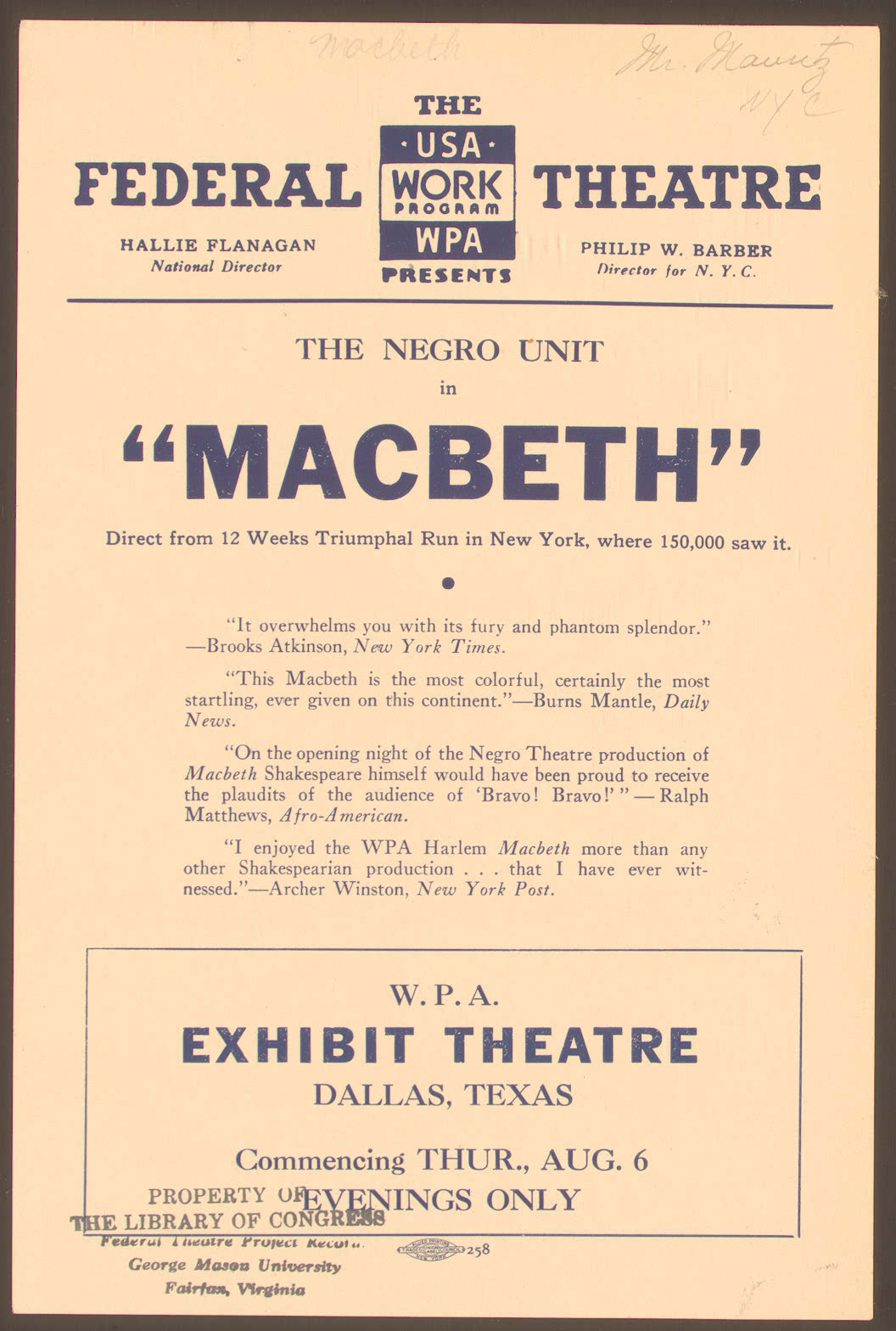
The play debuted in 1936 at Harlem’s Lafayette Theater and was performed for segregated audiences. It was so popular that it exceeded its initial run, then toured the country, spending two weeks in Dallas at the Texas Centennial Exposition (see a playbill above). Welles, at 20 years of age, was hailed as a prodigy. The adaptation, writes the Digital Public Library of America, “brought magical realism and aspects of Haitian culture to the production.”
The play included drummers who played and sang chants from voodoo ceremonies. Welles reimagined the witches from the original Macbeth as voodoo priestesses. Costumes reflected fashion from Haiti’s nineteenth-century colonial period.
As with so many of Welles’ theater experiments, critical opinion divided sharply. Some, including the Harlem Communists, saw the play as racist comedy. Many others “felt that Welles’ casting of an entire company of African-American actors allowed these actors to show their talent and tenacity during performances in front of segregated audiences.”
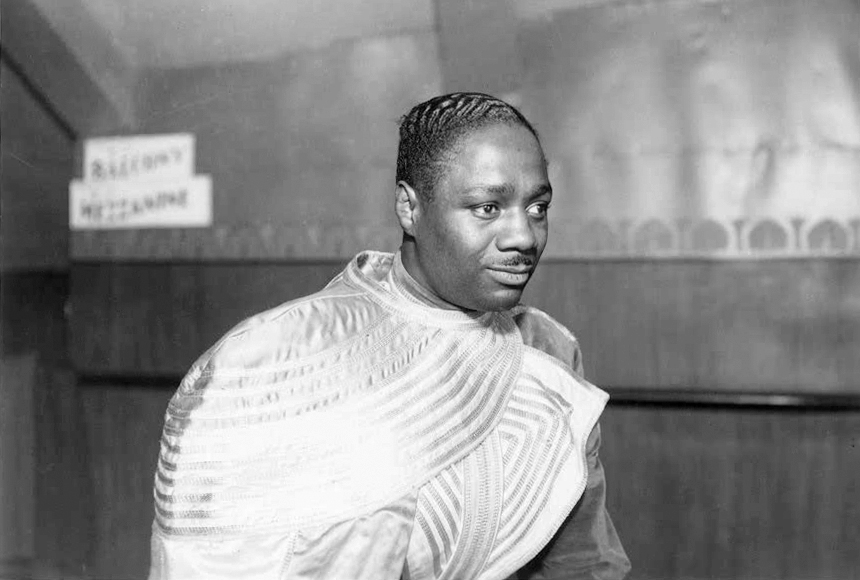
The play employed 150 actors, including boxer and successful film actor Canada Lee as Banquo (above), and “raised contemporary social issues that for some drew uncomfortable attention to national problems.” (Wikipedia has a full cast list and several production stills.)
All footage of the production was thought lost for several years, until the four minutes at the top were discovered in the short film above, “We Work Again.” Produced by Alfred Edgar Smith—a civil rights activist and onetime member of F.D.R.‘s so-called “Black Cabinet”—this film details in optimistic tones the WPA’s success in creating jobs for unemployed African-Americans. Smith worked, writes The New York Times, “to ban differential pay rates and to hire black case workers in the South,” and he made “We Work Again” as one of many “studies on how blacks fared under relief programs.” His efforts, of course, have their own historical significance, but we can also thank Smith for preserving the only surviving sound and moving image of Welles’ first major theatrical production. “The ‘Voodoo’ Macbeth,” writes Shakespeare scholar Susan McCloskey, is notable as “the first black professional production of Shakespeare, an important critical and commercial success for the Federal Theatre, and an appropriately dazzling debut for its twenty-year-old director.”
Related Content:
Orson Welles’ Radio Performances of 10 Shakespeare Plays
Orson Welles Turns Heart of Darkness Into a Radio Drama, and Almost His First Great Film
The Hearts of Age: Orson Welles’ Surrealist First Film (1934)
Josh Jones is a writer and musician based in Durham, NC. Follow him at @jdmagness
Read More...The New Yorker’s “Comma Queen” Mercifully Explains the Difference Between Who/Whom, Lay/Lie, Less/Fewer & Beyond
From The New Yorker comes “The Comma Queen” video series, which features Mary Norris talking about the finer points of language that come up again and again in our everyday writing. Some of it, no doubt, will come in handy.
Norris began working at The New Yorker in 1978, and has served as a copy editor/proofreader for much of that time. Suffice it to say, she can tell you some instructive things about language.
Above, we start you off with Norris explaining the difference “who” and “whom,” and then “lay” and “lie.” (Bob Dylan take note.) This other clip — focusing on “less” v. “fewer” — gets into a pet peeve of mine. By the way, did I use those dashes correctly in the previous sentence? Well, there’s a video about that too.
You can watch all of the Comma Queen videos over at The New Yorker, or via this YouTube playlist.
And it’s worth noting that Norris has a new book out called Between You and Me: Confessions of a Comma Queen.
Follow us on Facebook, Twitter, Google Plus and LinkedIn and share intelligent media with your friends. Or better yet, sign up for our daily email and get a daily dose of Open Culture in your inbox.
Read More...Support Us
We're hoping to rely on loyal readers, rather than erratic ads. Please click the Donate button and support Open Culture. You can use Paypal, Venmo, Patreon, even Crypto! We thank you!

About Us

Open Culture scours the web for the best educational media. We find the free courses and audio books you need, the language lessons & educational videos you want, and plenty of enlightenment in between.
Advertise With Us

FREE UPDATES!
GET OUR DAILY EMAIL
Get the best cultural and educational resources on the web curated for you in a daily email. We never spam. Unsubscribe at any time.
FOLLOW ON SOCIAL MEDIA

Open Culture editor Dan Colman scours the web for the best educational media. He finds the free courses and audio books you need, the language lessons & movies you want, and plenty of enlightenment in between.
Advertise With Us

