Aubrey Beardsley’s Macabre Illustrations of Edgar Allan Poe’s Short Stories (1894)
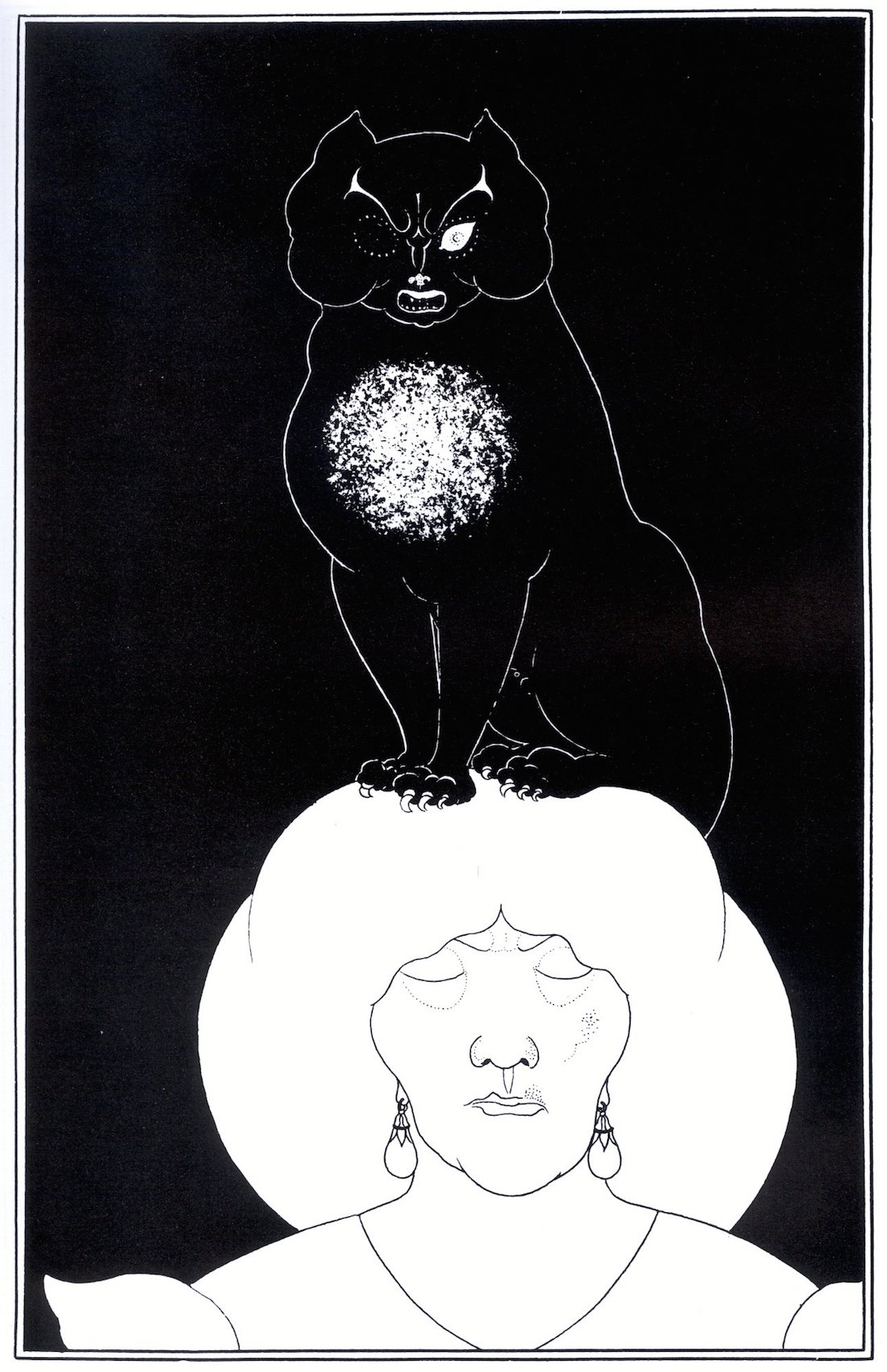
Earlier this month, we featured Oscar Wilde’s scandalous play Salome as illustrated by Aubrey Beardsley in 1894. Though Beardsley’s short life and career would end a scant four years later at the age of 25, the illustrator still had more than enough time to develop a clear and bold, yet elaborate and even decadent style, still immediately recognizable and deeply influential today.
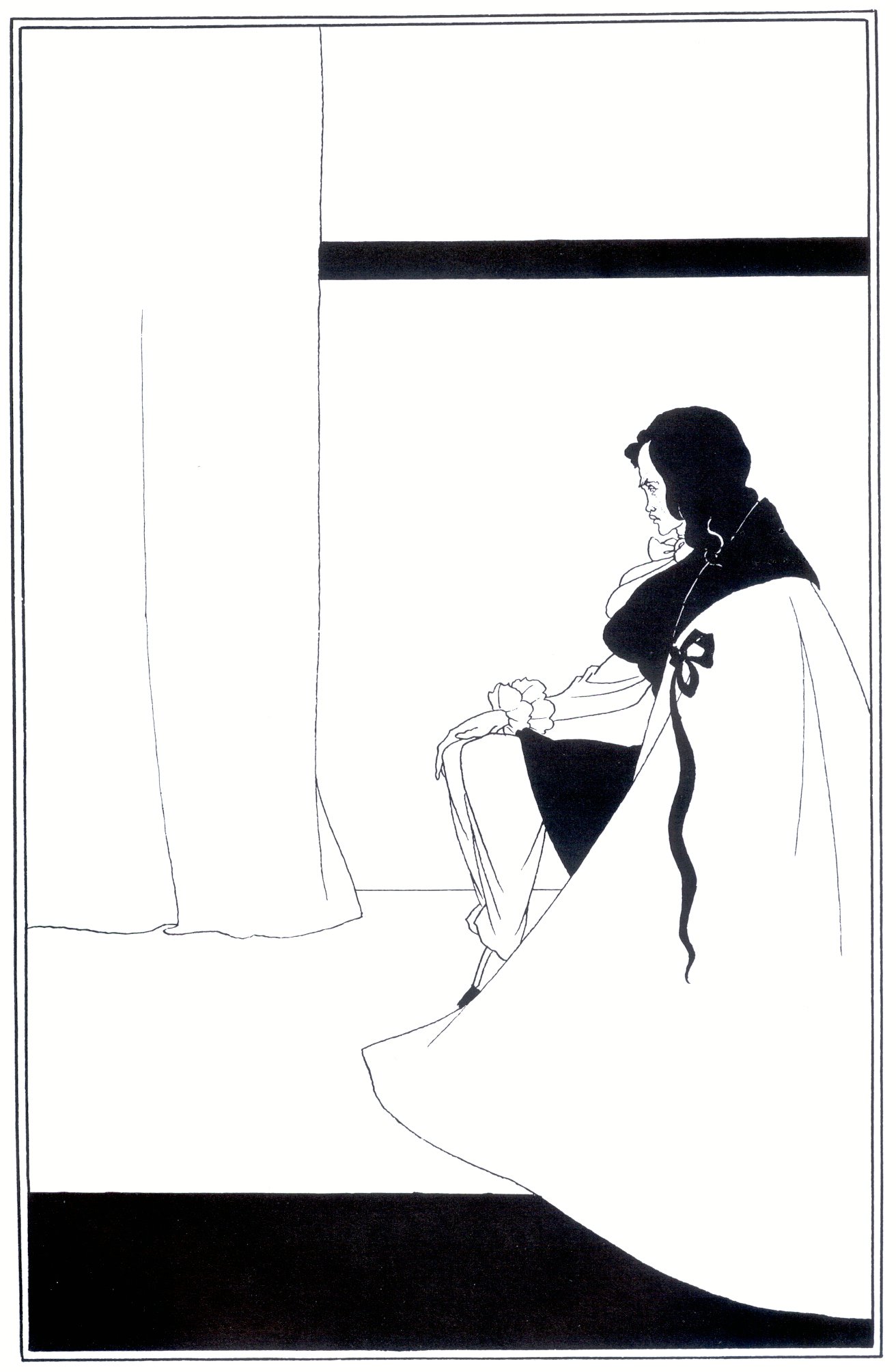
He also managed to visualize an impressively wide range of material, one that includes — in the very same year — the transgressively witty writing of Oscar Wilde as well as the groundbreakingly macabre writings of Edgar Allan Poe.
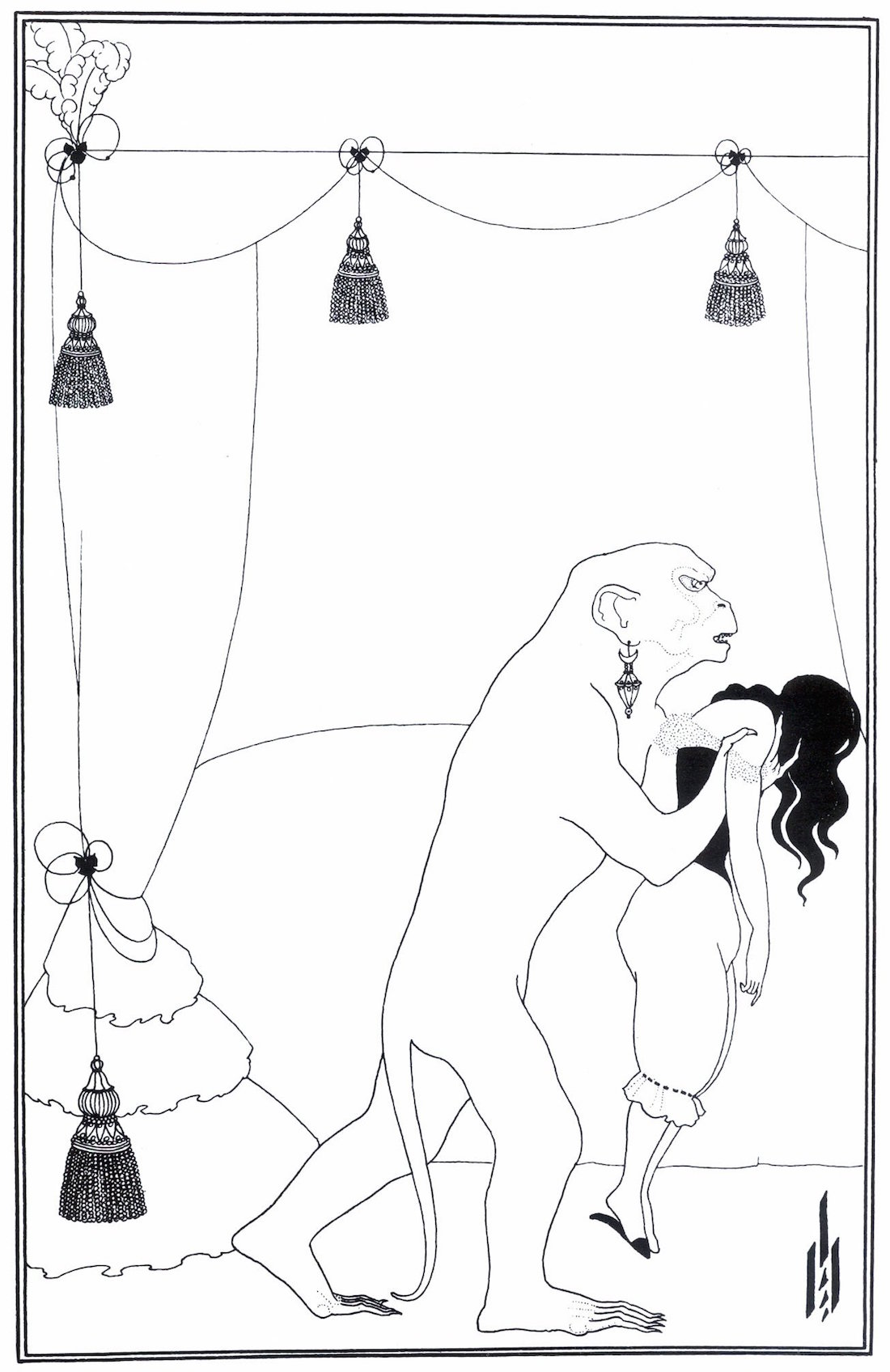
“Aubrey Beardsley’s four Poe illustrations were commissioned by Herbert S. Stone and Company, Chicago, in 1894 as embellishment for a multi-volume collection of the author’s works,” writes artist and designer John Coulthart. “The Black Cat (above) is justifiably the most reproduced of these.” The Literary Archive blog argues that “what Beardsley’s illustrations do tell us of is that Poe’s stories are not static, but living works that each new generation gets to experience in [its] own way,” and that they “give us a glimpse into a slight decadence and gothic-ness still preferred in horror at the time (a giant orangutan envelopes the girl in his arms—King Kong anyone?)”

They also remind us that “our taste for creepiness, for hearing tales about the darker side of human life, hasn’t changed appreciably in over 150 years.” If the American author and the English illustrator would seem to make for odd literary and artistic bedfellows, well, therein lies the appeal: when one strong creative sensibility comes up against another, things can well go off in the kind of richly bizarre directions you see hinted at in the images here.
If you’d like to own a piece of this odd chapter in the history of illustrated texts, keep your eye on Sotheby’s — you’ll only have to come up with between 4,000 and 6,000 pounds.
via The Paris Review
Related Content:
Gustave Doré’s Splendid Illustrations of Edgar Allan Poe’s “The Raven” (1884)
5 Hours of Edgar Allan Poe Stories Read by Vincent Price & Basil Rathbone
Colin Marshall writes elsewhere on cities, language, Asia, and men’s style. He’s at work on a book about Los Angeles, A Los Angeles Primer, the video series The City in Cinema, and the crowdfunded journalism project Where Is the City of the Future? Follow him on Twitter at @colinmarshall or on Facebook.
Read More...Hear Ray Bradbury’s Beloved Sci-Fi Stories as Classic Radio Dramas
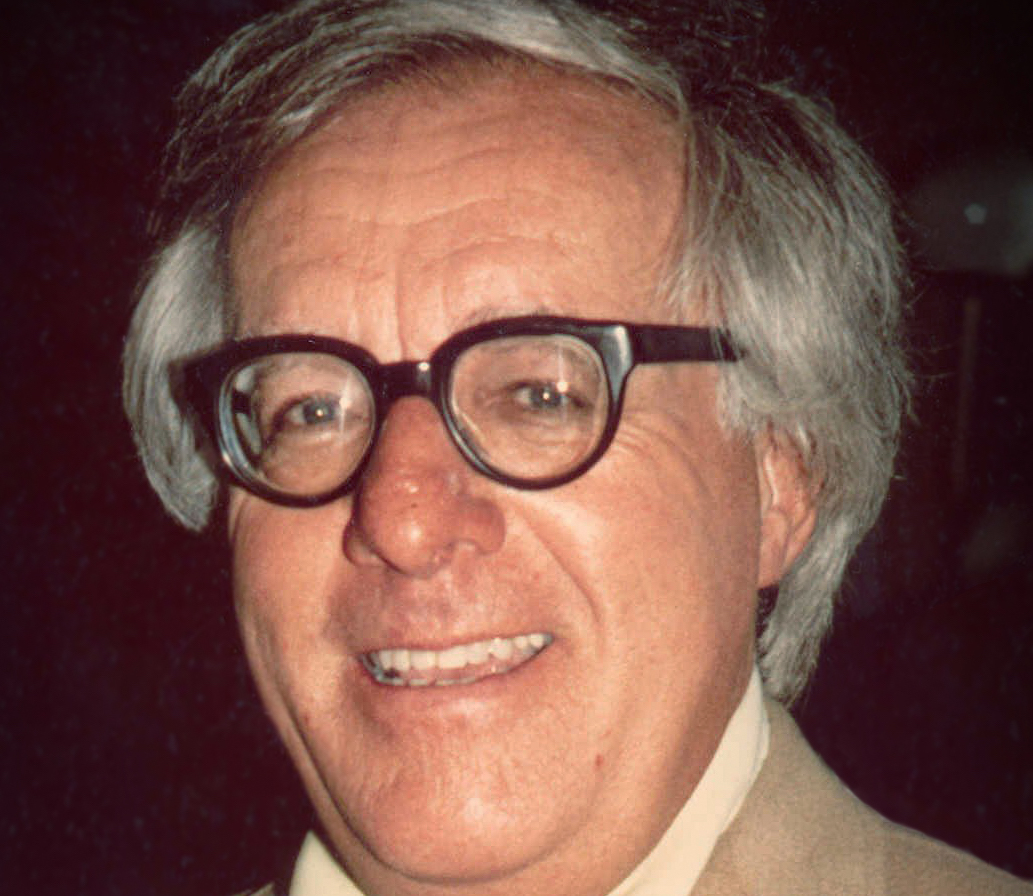
Image by Alan Light released under Creative Commons license.
When he passed away in 2012, science fiction master Ray Bradbury left us with a number of instantly quotable lines. There are aphorisms like “You don’t have to burn books to destroy a culture. Just get people to stop reading them.” There are more humorous, but no less memorable lines he delivers in his advice to writers, such as, “writing is not a serious business… I want you to envy me my joy.” A seemingly endless source of wisdom and enthusiasm, Bradbury’s creative forces seemed in no danger of waning in his later years as he gave impassioned talks and interviews well into his 70s and 80 and his work received renewed appreciation. As one writer declared in 2001, “Ray Bradbury is on fire!”
Of course Bradbury’s been hot since the fifties. That headline alludes to his classic 1953 novel of futuristic book-burning, Fahrenheit 451, which you’ve likely read if you’ve read any Bradbury at all. Or perhaps you’re familiar with Bradbury’s non-sci-fi novel of childhood lost, Dandelion Wine? Both are excellent books well-deserving of the awards and praise heaped upon them. But if they’re all you know of Ray Bradbury, you’re seriously missing out.
Bradbury began his career as a writer of short sci-fi and horror stories that excel in their richness of language and careful plotting. So imaginative is his work that it warranted adaptation into a star-studded television series, The Ray Bradbury Theater. And before that vehicle brought Bradbury’s brilliance into people’s homes, many of those same stories appeared in radio plays produced by shows like NBC’s Dimension X and X Minus One.
From the latter program, at the top, we bring you Mars is Heaven!, a disturbing 1948 tale of interstellar deception. “When the first space rocket lands on Mars,” begins the announcer, “what will we find? Only the ruins of a dead, deserted planet, or will there be life?” Pertinent questions indeed. Bradbury speculated for decades about the meaning of Mars. “The Martian Chronicles,” adapted above by Dimension X, used a story about colonization of the planet as an allegory for humanity’s avarice and folly. Hear many more Dimension X radio plays from The Martian Chronicles collection here, and also the story, “There Will Come Soft Rains.”
The year after 1950’s The Martian Chronicles came 1951’s The Illustrated Man, a collection of shorts that included the tragic, lost-in-space tale “Kaleidoscope,” dramatized above by Mind Webs, a series from Madison, Wisconsin that ran from the 70s through the mid-90s. Though produced well after the golden age of radio drama, the series nonetheless managed to perfectly capture the engrossing sound of that specialized form—with ominous music, and a baritone-voiced narrator with some serious voice-acting chops.
While regional productions like Mind Webs have kept the radio drama fires burning in the U.S., the BBC has continued to produce high-quality radio adaptations on a larger scale. In 1991, they took on eight stories from another fifties Bradbury collection, The Golden Apples of the Sun. The two hour production dramatized the title story and the tales “Hail and Farewell,” “The Flying Machine,” “The Fruit at the Bottom of the Bowl,” “A Sound of Thunder,” “The Murderer,” “The April Witch,” and “The Foghorn.” You can hear them just above. Or stream and download the complete audio at the Internet Archive.
Related Content:
1,000 Free Audio Books: Download Great Books for Free
X Minus One: More Classic 1950s Sci-Fi Radio from Asimov, Heinlein, Bradbury & Dick
Ray Bradbury Gives 12 Pieces of Writing Advice to Young Authors (2001)
Hear Radio Dramas of Isaac Asimov’s Foundation Trilogy & 7 Classic Asimov Stories
Josh Jones is a writer and musician based in Durham, NC. Follow him at @jdmagness
Read More...An Animated Tom Waits Talks About Laughing at Funerals & the Moles Under Stonehenge (1988)
Popular music has a rich tradition of literary songwriters, including—to name but a few—Leonard Cohen, Bob Dylan, Patti Smith, Kate Bush, and even Alan Parsons, who released not one, but two concept albums based on the work of Edgar Allan Poe. And then there’s the inimitable Tom Waits, who doesn’t just work in a literary vein, but is a succession of pulpy characters, each one with the ability to light up a stage. Waits proved as much in 1988 when he toured his album Big Time, as alter-ego Frank O’Brien, a character he described as “a combination of Will Rogers and Mark Twain, playing accordion—but without the wisdom they possessed.” The Big Time tour, writes Dangerous Minds, was “like entering a sideshow tent in Tom Wait’s brain.”
In a review of the concert film of the same name, also released that year, the New York Times described Waits as a “gang of overlapping personas, a bunch of derelict philosopher-kings who rasp out romantic metaphors between wisecracks,” inhabiting “a seedy urban world of pawnshops and tattoos, of cigarette butts and polyester and triple‑X movies.” It’s hard to know, listening to Waits in the interview above from the year of Big Time the album, tour, and film, how many of his personae emerge from the woodshed and how many spring from grizzled voices in that sideshow brain, which must sound like a cacophony of old-time waltzes and scurrilous ragtimes; boozy big-band numbers carousing in louche cabarets; pianos drunkenly falling down stairs. Waits can tell stories beautiful and terrible, in talking blues, broken ballads, and sprechgesang, rivaling the best compositions of the Delta, the beats, and sailors and hoboes.
Or he can tell stories—as he does above—about moles, building under Stonehenge “the most elaborate system of mole catacombs,” being rewarded for “having the courage to tunnel under great rivers,” staging executions. Then he shifts the scene to New York, and a Mercedes pulls up in a puddle of blood. “I think you just write,” says Waits, “and you don’t try to make sense of it. You just put it down the way you got it.” Waits gets it in vivid, surrealist images, one bizarre and sordid detail after another. To hear him speak is to hear him compose. You can read the transcript of the short interview, recorded in London by Chris Roberts, but the effect of Waits-the-performer is entirely lost. Better to hear his cracked inflection, his driest of comic timing, and watch the excellent animation of PBS’s Blank on Blank team, who have previously brought us amusing cartoon accompaniments for interviews with B.B. King, Ray Charles, the Beastie Boys, and even Fidel Castro. Tom Waits, I think, has given them their best material yet.
Related Content:
Tom Waits, Playing the Down-and-Out Barfly, Appears in Classic 1978 TV Performance
Tom Waits Reads Two Charles Bukowski Poems, “The Laughing Heart” and “Nirvana”
Watch Tom Waits’ Classic Appearance on Australian TV, 1979
Josh Jones is a writer and musician based in Durham, NC. Follow him at @jdmagness
Read More...“A Glorious Hour”: Helen Keller Describes The Ecstasy of Feeling Beethoven’s Ninth Played on the Radio (1924)
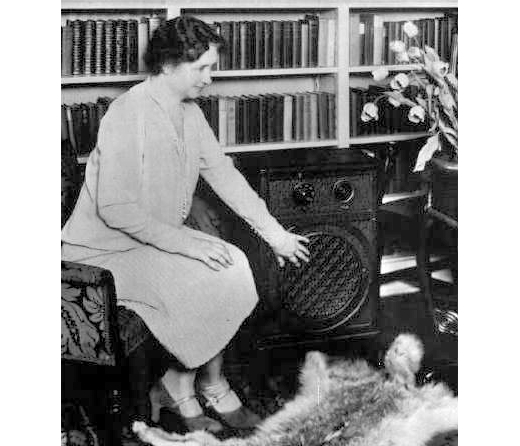
These days, if you like a piece of music, you might well say that you’re “feeling it” — or you might have said it a decade or two ago, anyway. But deaf music-lovers (who, as one may not immediately assume, exist) do literally that, feeling the actual vibrations of the sound with not their ears, but the rest of their bodies. Not only could the deaf and blind Helen Keller, a pioneer in so many ways, enjoy music, she could do it over the radio and articulate the experience vividly. We know that thanks to a 1924 piece of correspondence posted at Letters of Note.
“On the evening of February 1st, 1924, the New York Symphony Orchestra played Beethoven’s Ninth Symphony at Carnegie Hall in New York,” writes the site’s author Shaun Usher. “Thankfully for those who couldn’t attend, the performance was broadcast live on the radio. A couple of days later, the orchestra received a stunning letter of thanks from the unlikeliest of sources: Helen Keller.” The first ecstatic paragraph of her missive, which you can read whole at the original post, runs as follows:
I have the joy of being able to tell you that, though deaf and blind, I spent a glorious hour last night listening over the radio to Beethoven’s “Ninth Symphony.” I do not mean to say that I “heard” the music in the sense that other people heard it; and I do not know whether I can make you understand how it was possible for me to derive pleasure from the symphony. It was a great surprise to myself. I had been reading in my magazine for the blind of the happiness that the radio was bringing to the sightless everywhere. I was delighted to know that the blind had gained a new source of enjoyment; but I did not dream that I could have any part in their joy. Last night, when the family was listening to your wonderful rendering of the immortal symphony someone suggested that I put my hand on the receiver and see if I could get any of the vibrations. He unscrewed the cap, and I lightly touched the sensitive diaphragm. What was my amazement to discover that I could feel, not only the vibrations, but also the impassioned rhythm, the throb and the urge of the music! The intertwined and intermingling vibrations from different instruments enchanted me. I could actually distinguish the cornets, the roll of the drums, deep-toned violas and violins singing in exquisite unison. How the lovely speech of the violins flowed and plowed over the deepest tones of the other instruments! When the human voice leaped up trilling from the surge of harmony, I recognized them instantly as voices. I felt the chorus grow more exultant, more ecstatic, upcurving swift and flame-like, until my heart almost stood still. The women’s voices seemed an embodiment of all the angelic voices rushing in a harmonious flood of beautiful and inspiring sound. The great chorus throbbed against my fingers with poignant pause and flow. Then all the instruments and voices together burst forth—an ocean of heavenly vibration—and died away like winds when the atom is spent, ending in a delicate shower of sweet notes.
Keller ends the letter by emphasizing her desire to “thank Station WEAF for the joy they are broadcasting in the world,” and since she first enjoyed the symphony on the radio, it makes sense, in a way, that we should enjoy her letter on the radio. Not long after Letters of Note made its post, NPR picked up on the story, and Weekend Edition’s Scott Simon read an excerpt over a musical backdrop, which you can hear above. And if we have any deaf readers who listen to, say, NPR in Keller’s manner, let me say how curious I’d be to hear the details of that experience as well.
And deaf, hearing, or otherwise, you’ll find much more of this sort of thing in Letters of Note’s immaculately designed new print collection More Letters of Note, about which you can find all the details here. It goes on sale on October 1.
Related Content:
Helen Keller Speaks About Her Greatest Regret — Never Mastering Speech
Helen Keller & Annie Sullivan Appear Together in Moving 1930 Newsreel
Leonard Bernstein Conducts Beethoven’s 9th in a Classic 1979 Performance
Slavoj Žižek Examines the Perverse Ideology of Beethoven’s Ode to Joy
Colin Marshall writes elsewhere on cities, language, Asia, and men’s style. He’s at work on a book about Los Angeles, A Los Angeles Primer, the video series The City in Cinema, and the crowdfunded journalism project Where Is the City of the Future? Follow him on Twitter at @colinmarshall or on Facebook.
Read More...Human: The Movie Features Interviews with 2,020 People from 60 Countries on What It Means to Be Human
What is it that makes us human? And how best to ensure that we all get our fair say?
For director, photographer, and environmental activist Yann Arthus-Bertrand, the answers lay in framing all of his interview subjects using the same single image layout. The formal simplicity and unwavering gaze of his new documentary, Human, encourage viewers to perceive his 2,020 subjects as equals in the storytelling realm.
There’s a deep diversity of experiences on display here, arranged for maximum resonance.
The quietly content first wife of a polygamist marriage is followed by a polyamorous fellow, whose unconventional lifestyle is a source of both torment and joy.
There’s a death row inmate. A lady so confident she appears with her hair in curlers.
Where on earth did he find them?
His subjects hail from 60 countries. Arthus-Bertrand obviously went out of his way to be inclusive, resulting in a wide spectrum of gender and sexual orientations, and subjects with disabilities, one a Hiroshima survivor.
Tears, laughter, conflicting emotions… students of theater and psychiatry would do well to bookmark this page. There’s a lot one can glean from observing these subjects’ unguarded faces.
The project was inspired by an impromptu chat with a Malian farmer. The director was impressed by the frankness with which this stranger spoke of his life and dreams:
I dreamed of a film in which the power of words would resonate with the beauty of the world. Putting the ills of humanity at the heart of my work—poverty, war, immigration, homophobia—I made certain choices. Committed, political choices. But the men talked to me about everything: their difficulty in growing as well as their love and happiness. This richness of the human word lies at the heart of Human.
In Volume I, above, the interviewees consider love, women, work, and poverty. Volume II deals with war, forgiveness, homosexuality, family, and the afterlife. Happiness, education, disability, immigration, corruption, and the meaning of life are the concerns of the third volume .
The interview segments are broken up by aerial sequences, reminiscent of the images in Arthus-Bertrand’s book, The Earth from Above. It’s a good reminder of how small we all are in the grand scheme of things.
Appropriately, given the subject matter, and the director’s longtime interest in environmental issues, the filming and promotion were accomplished in the most sustainable way, with the support of the GoodPlanet Foundation and the United Carbon Action program. It would be lovely for all humanity if this is a feature of filmmaking going forward.
The Google Cultural Institute has a collection of related material, from the making of the soundtrack to behind-the-scenes reminiscences of the interview team.
Human will be added to our collection, 4,000+ Free Movies Online: Great Classics, Indies, Noir, Westerns, Documentaries & More.
Related Content:
What Makes Us Human?: Chomsky, Locke & Marx Introduced by New Animated Videos from the BBC
Richard Dawkins Explains Why There Was Never a First Human Being
Biology That Makes Us Tick: Free Stanford Course by Robert Sapolsky
Ayun Halliday is an author, illustrator, and Chief Primatologist of the East Village Inky zine. Her new play, Fawnbook, opens in New York City later this fall. Follow her @AyunHalliday.
Read More...Fantastic Mr. Fox Meets The Shining in an Animated, Cautionary Tale About Consumerism
In this short stop-motion film, Alexandra Lemay draws some creative inspiration from Wes Anderson and Stanley Kubrick and leaves us with a “cautionary tale of what happens when we don’t think enough about what we buy.” Produced as part of the National Film Board of Canada’s Hothouse apprenticeship program, All the Rage follows a mink’s experience shopping in a luxury fur store. It’s perhaps not too much of a spoiler to say, it doesn’t end well. Lemay tells you more about the making of the film here. And don’t miss the many great films in the Animation section of our collection, 4,000+ Free Movies Online: Great Classics, Indies, Noir, Westerns, Documentaries & More.
Follow us on Facebook, Twitter, Google Plus and LinkedIn and share intelligent media with your friends. And if you want to make sure that our posts definitely appear in your Facebook newsfeed, just follow these simple steps.
Read More...Gabriel García Márquez Describes the Cultural Merits of Soap Operas, and Even Wrote a Script for One
The relationship between literary writers and the film industry has given us many a story of major creative tension or downward mobility. Most famously, we have Fitzgerald—who gravitated to Hollywood like most writers did, including the more successful Faulkner—for money. When we look at the career of one of Latin America’s most celebrated writers, however, we find a very different dynamic. Although Gabriel García Márquez did not have what we might consider a successful career in the movies, his interest in cinema—as a screenwriter, critic, and even as an actor—stemmed from a genuine, lifelong love of the medium, which he considered equal to or surpassing literature as a form of storytelling.
“I thought of myself as a writer of literature,” says Márquez at the beginning of the documentary Marquez: Tales Beyond Solitude, “but it was my conviction that the cinema, the image, had more possibilities of expression than literature.” And yet, he goes on…
Films and television have industrial, technical and mechanical limitations that literature doesn’t have. That’s why I said once, in a period of falling out with films, “My relationship with film has always been that of an uneasy marriage. We can’t live together or apart.”
Film eventually needed Márquez more than he needed film. And yet he never disdained more popular entertainments, “producing more than twenty screenplays, some of them for television,” according to Alessandro Rocco’s Gabriel Garcia Marquez and the Cinema. He even relished the chance to write soap operas. In 1987, he told an interviewer, “I’ve always wanted to write soap operas. They’re wonderful. They reach far more people than books do…. The problem is that we’re condition [sic] to think that a soap opera is necessarily in bad taste, and I don’t believe this to be so.” Márquez felt that the “only difference between La bella palomera” [a TV film based on his Love in the Time of Cholera] and “a bad soap opera is that the former is well written.” Though his pronouncements on the creative potential of television may seem prescient today, they did not seem so at the time.
In 1989, Márquez got his chance to write for television soap operas, with a script, The Telegraph tells us, “about an English governess in Venezuela called I Rent Myself Out to Dream.” In the clip above from Tales Beyond Solitude, Márquez gives us his democratic philosophy of the arts: “To me music, literature, film, soap operas are different genres with one common end: to reach people…. In one single night, one episode of a TV soap can reach, in Colombia alone, 10 to 15 million people.” He contrasts this with his book sales and concludes, “it’s only natural that someone who wants to reach people is attracted to TV soap like to a magnetic pole. He cannot resist it.”
Márquez also served as the president of the International Film and Television School, in which position, he said, “I can’t start by being scornful of TV.” And yet the novelist’s regard for soaps was not simply a matter of professionalism. “For me,” he said, “there’s no dividing line between cinema and television, they’re just images in motion.” Ultimately, we can see Garcia Márquez’s total faith in the narrative potential of all forms of popular narrative—film, folk tale, the cherished telenovela—as an essential part of his writerly ethos, which has taken him from the daily scrum of the newsroom to the Nobel ceremony stage in Stockholm. “Ultimately all culture,” he says elsewhere in the documentary, “is popular culture.”
Related Content:
Read 10 Short Stories by Gabriel García Márquez Free Online (Plus More Essays & Interviews)
Literary Remains of Gabriel García Márquez Will Rest in Texas
Josh Jones is a writer and musician based in Durham, NC. Follow him at @jdmagness
Read More...“Bleu, Blanc, Rouge”: a Striking Supercut of the Vivid Colors in Jean-Luc Godard’s 1960s Films
What’s your favorite color? A simple question, sure — the very first one many of us learn to ask — but one to consider seriously if you see a future for yourself in filmmaking. Earlier this year, we featured video studies on the use of the color red by Wes Anderson and Stanley Kubrick. Yasujiro Ozu, as Jonathan Crow points out in that post, “made the jump to color movies very reluctantly late in his career and promptly became obsessed with the color red,” and a teakettle of that color even became his visual signature. No less an auteur than Krzysztof Kieślowski made not just a picture called Red, but another called Blue and another called White, which together form the acclaimed “Three Colors” trilogy.
Jean-Luc Godard, never one to be outdone, has also made vivid use throughout his career of not just red but white and blue as well. The video above, “Bleu, Blanc, Rouge — A Godard Supercut,” compiles three minutes of such colorful moments from the Godard filmography, drawing from his works A Woman Is a Woman, Contempt, Pierrot le Fou, and Made in U.S.A., all of which did much to define 1960s world cinema, capturing with their vivid colors performances by Godardian icons Jean-Paul Belmondo and Anna Karina.
“Bleu, Blanc, Rouge” comes from Cinema Sem Lei, the source of another aesthetically driven video essay we’ve previously featured on how German Expressionism influenced Tim Burton. This one makes less of an argument than that one did, but truly obsessive cinephiles may still find themselves able to construct one. An obvious starting point: we consider few filmmakers as French as Godard, and which country’s flag has these very colors? Well, besides those of America, Australia, Cambodia, Chile, Cuba, Iceland, North Korea, Luxembourg, Schleswig-Holstein, Thailand, and so on. And in interviews, Godard has distanced himself from pure Frenchness, preferring the designation “Franco-Swiss.” But still, you can start thinking there. Or you can just enjoy the images.
Related Content:
How German Expressionism Influenced Tim Burton: A Video Essay
Wes Anderson Likes the Color Red (and Yellow)
A Young Jean-Luc Godard Picks the 10 Best American Films Ever Made (1963)
Jean-Luc Godard’s After-Shave Commercial for Schick (1971)
Jean-Luc Godard’s Debut, Opération béton(1955) — a Construction Documentary
Colin Marshall writes elsewhere on cities, language, Asia, and men’s style. He’s at work on a book about Los Angeles, A Los Angeles Primer, the video series The City in Cinema, and the crowdfunded journalism project Where Is the City of the Future? Follow him on Twitter at @colinmarshall or on Facebook.
Read More...John Lennon’s “Imagine” & Paul McCartney’s “Yesterday” Adapted into Smart, Moving Webcomics
Would John Lennon’s “Imagine” have been such a big hit if it had come from an unknown singer/songwriter instead of one of the most famous rock stars in the world? Impossible to say. Maybe a better question is: could anyone else have written the song? “Imagine” has become much more than a soft rock anthem since its release in 1971; it has become a global phenomenon. Among the innumerable big events at which the humanist hymn appears we can include, since 2005, New York’s New Year’s Eve celebration and, just recently, a performance by pop star Shakira at the UN General Assembly just before Pope Francis’ historical appearance.
It seems an odd choice, given the song’s apparent anti-religious message. And yet, though Lennon was no fan of organized religion, he told Playboy magazine in a 1980 interview that the song was inspired by “the concept of positive prayer” in a Christian prayer book given to him by Dick Gregory. “If you can imagine a world at peace,” said Lennon, “with no denominations of religion—not without religion but without this my God-is-bigger-than-your-God-thing—then it can be true….” As if to underscore that particular point in his adaptation of “Imagine” in the video above, cartoonist Pablo Stanley includes such religiously diverse, yet ecumenical figures as the agnostic Albert Einstein, Protestant Martin Luther King, Jr., Hindu Mahatma Gandhi, and Rastafarian Bob Marley, along with less-famous freedom fighters like Harvey Milk and murdered Russian journalist Anna Politkovskaya.
Stanley’s “Imagine” originally appeared in webcomic form, sans music, on his blog Stanleycolors.com. It seems that several people took exception to an earlier, mostly black-and-white draft (which also included what looks like the once-very-Southern-Baptist Jimmy Carter), so Stanley issued a multi-point disclaimer under his revised, full-color version. He states that this “is NOT an anti-religion/atheist propaganda comic”—charges also unfairly levied at Lennon’s song. Stanley doesn’t address the fact that most of the famous people in his comic, including Lennon, were assassinated, though this blog post offers a suggestive theory with interview footage from Lennon himself.
In every respect, the comic adaption of “Imagine” hews pretty closely to Lennon’s call for world peace. In another Beatles-penned ballad-adaptation, however, things take a much darker turn. Stanley uses his personal experience of near-suicidal depression in his comic realization of Paul McCartney’s song of lost love, “Yesterday.” (See a video version above, webcomic version here.) This is grim stuff, to be sure, but Stanley assures us that he “overcame that situation.” His commentary offers a hopeful take on the painful ending: “Looking at the yesterday reminds me that I should thrive for the tomorrow.” I’m sure McCartney would agree with the sentiment.
For many more smart, moving—though non-Beatles-related—comics from Pablo Stanley, see his blog, Stanley Colors.
Related Content:
The John Lennon Sketchbook, a Short Animation Made of Lennon’s Drawings, Premieres on YouTube
Hear John Lennon’s Final Interview, Taped on the Last Day of His Life (December 8, 1980)
The Rolling Stone Interview with John Lennon (1970)
Josh Jones is a writer and musician based in Durham, NC. Follow him at @jdmagness
Read More...The World’s Oldest Surviving Pair of Glasses (Circa 1475)
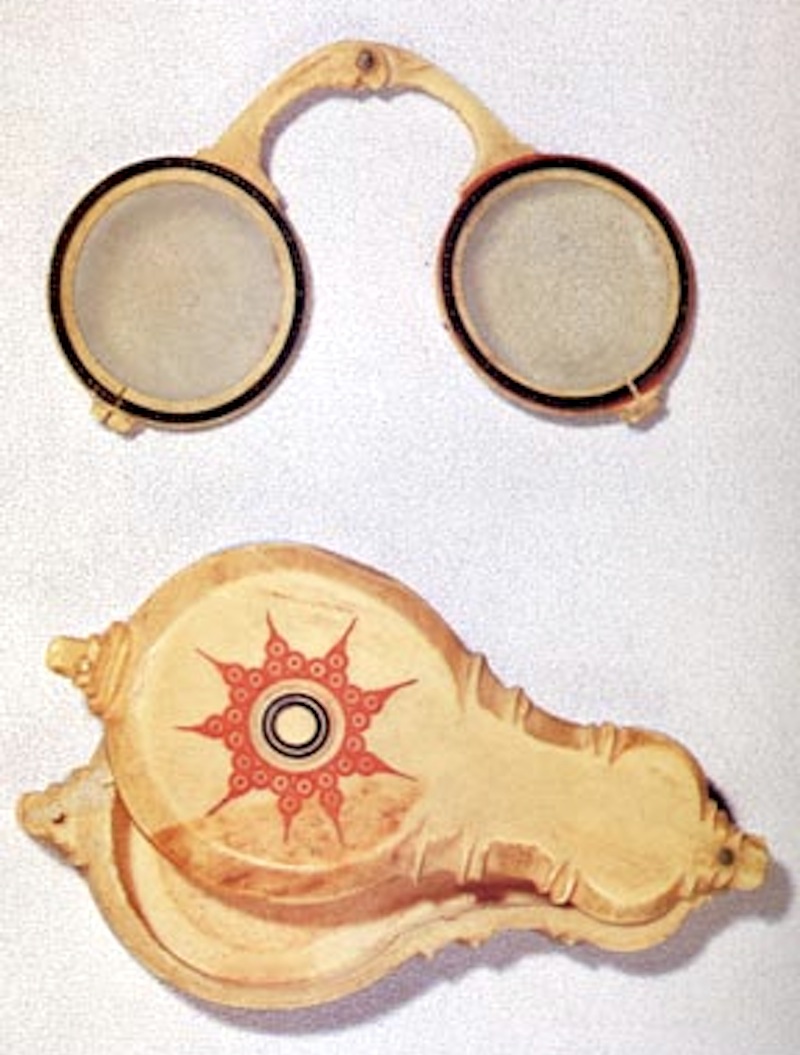
Above, we have what The On-Line Museum and Encyclopedia of Vision Aids believes is the world’s oldest surviving pair of glasses. Dating back to the 15th century, the glasses belonged to the Eighth Shogun, Yoshimasa Ashikaga, who reigned from 1449 to 1473, during the Muromachi period of Japanese history. Both the glasses and their accompanying case were made of hand-carved white ivory.
Glasses were actually first invented, however, in Italy (some say Florence, to be precise) in 1286 or thereabouts. In a sermon from 1306, a Dominican friar wrote: “It is not yet twenty years since there was found the art of making eyeglasses, which make for good vision… And it is so short a time that this new art, never before extant, was discovered.” In the mid 14th century, paintings started to appear with people wearing eyeglasses. (Take for example Tommaso da Modena’s 1352 portrait showing the cardinal Hugh de Provence reading.) A gallery of other historic eyewear can be viewed here.
Follow us on Facebook, Twitter, Google Plus and LinkedIn and share intelligent media with your friends. Or better yet, sign up for our daily email and get a daily dose of Open Culture in your inbox.
Read More...Support Us
We're hoping to rely on loyal readers, rather than erratic ads. Please click the Donate button and support Open Culture. You can use Paypal, Venmo, Patreon, even Crypto! We thank you!

About Us

Open Culture scours the web for the best educational media. We find the free courses and audio books you need, the language lessons & educational videos you want, and plenty of enlightenment in between.
Advertise With Us

FREE UPDATES!
GET OUR DAILY EMAIL
Get the best cultural and educational resources on the web curated for you in a daily email. We never spam. Unsubscribe at any time.
FOLLOW ON SOCIAL MEDIA

Open Culture editor Dan Colman scours the web for the best educational media. He finds the free courses and audio books you need, the language lessons & movies you want, and plenty of enlightenment in between.
Advertise With Us


