The Keys to Happiness: The Emerging Science and the Upcoming MOOC by Raj Raghunathan
Psychology has made many advances in the past few decades, notably in cognitive science, neuroscience, and behavioral psychology. A major new focus area in psychology that draws upon these disciplines started in 1998 when Martin Seligman, then president of the American Psychological Association, called on his colleagues to start studying happiness, rather than illnesses, the traditional focus of psychology. The result was an explosion of research, academic departments, and popular books and the creation of a new field of ‘positive psychology’. It is this field that Dr. Raj Raghunathan studies, and he passionately teaches his students about the science of happiness at the McCombs School of Business at the University of Texas at Austin. He also writes a blog column for Psychology Today. This summer, Raghunathan, who is currently visiting professor at the Indian School of Business, will be offering his MOOC, A Life of Happiness and Fulfillment, to the public on the Coursera platform.
It may be surprising that a course on happiness is being offered in business school, the supposed factory of budding ruthless capitalists. However, times are changing, and enlightened business schools can be a good setting to think about the social and economic means and ends in our current society. In fact, it was a business context which steered Raghunathan towards studying happiness in the first place:
When I visited India in 2007 I met up with my classmates from 15 years ago and I discovered two things. One, there’s very little correlation between academic success and career success. The people who were at the top weren’t necessarily the ones who were doing well in their careers, which is, of course, quite well known in the research. But second, there was an even smaller correlation between career success and life success. The guys who were really successful weren’t able to maintain a conversation with me and weren’t able to be present, they were constantly distracted. They had bags under their eyes, had put on weight, and it was clear that they weren’t very happy.
Fast forward and you find Raghunathan, after obtaining a PhD at New York University, a tenured faculty member at the McCombs School of Business, a top-20 U.S. business school, teaching students about happiness. There are only a few tenure-track professors in the country teaching a whole course on happiness in U.S. business schools, so Raghunathan has been a trailblazer. It is also a great testament to the Indian School of Business, a premier business program in a rapidly industrializing country, that this subject was chosen to be their first MOOC offering in its new partnership with Coursera.
Happiness Science vs. the Wisdom Literature
As people have been concerned with happiness from before the dawn of civilization, we’ve had many sources to turn to with regard to happiness: intuition, tradition, reason, but mostly, religious and spiritual wisdom. Now science has recently added a new dimension to our understanding. We can see, for example, which parts of the brain are active during different emotional states, and understand better the role of neurotransmitters, such as serotonin and dopamine. One very convenient, practical result for psychology is that these changes in brain states are largely correlated with self-reported answers of how happy people feel—so happiness is fairly straightforward to measure (you can take a 20-minute happiness test here if you are interested). So what have we found out about happiness? It turns out that many of the findings support the religious/spiritual viewpoints. For example:
- Money cannot buy you happiness, unless you’re poor. Robust surveys among a broad array of people across countries indicate that beyond a certain threshold, people do not report being happier. Specifically, in the U.S., Daniel Kahneman and Angus Deaton found through a robust survey of 450,000 Americans that once people reach an income threshold of around $75,000 per year, they tend not to be any happier.
- Caring for others is one of the most important things you can do. Another specific finding that the science brings us is the value of altruism. Studies have shown, for example, that when given a small sum of money, the people who give it to others, rather than spending it on themselves, actually report being happier. Raghunathan also adds that being altruistic doesn’t have to mean being boring, and he has his classes experiment with fun ways to be altruistic.
These findings are similar to the teachings of many wisdom traditions, but they also give more specifics and provide insight into the underlying mechanisms involved. These can result in practical suggestions and tips for managing ourselves better through setting up helpful habits, mindsets, and triggers. But a puzzling question has emerged: why do we often not pursue what we supposedly want?
The Fundamental Happiness Paradox
There is a phenomenon that most of us will probably recognize, which Raghunathan calls the Fundamental Happiness Paradox: we want to achieve happiness, but often pursue things that clearly don’t lead to it. Raghunathan elaborates:
On the one hand people think happiness is very, very important to them, so therefore you would think that they ought to be making decisions are consistent with that, but when we observe their decisions, a good 50–60 percent of the time they are sacrificing happiness for the sake of other things as they go about their daily lives, in little small ways, and even in big ways.
The problem is that we pursue happiness through various means, such as money, status, esteem, or health, but we sometimes overly fixate on these means rather than the ends. As a society we do recognize this on some level—think of all the movies and television shows that end with the protagonists realizing what’s really important to them. Yet, it tells you something if we keep having to remind ourselves about this constantly and repetitively in our cultural stories. Psychology has already explained why we eat the last few Cheetos in a bowl, and in the future may help explain this mystery of why we don’t pursue our happiness as directly as we could.
Happiness Comes in Threes
The Three Pillars of Happiness
So what should we do to pursue happiness? Raghunathan groups the research findings into three main pillars:
- Pursue meaningful work – Try to spend your energy in ways that are meaningful to you, at work or at home. Mihaly Csikszentmihaly has popularized the notion of “flow”, those times when we are doing something that so fully absorbs our attention that we lose track of time (I guess I must be in “flow” whenever I’m watching Grey’s Anatomy…). From a career standpoint, Raghunathan recommends making passion a criterion for choosing your work: “you spend so much time at work you might as well make that a meaningful thing that you are doing in your life”. Perhaps this is not feasible for everyone at every point in their career, but it is surely a sound guiding principle, as it has been echoed by Steve Jobs, Thoreau, Gloria Estefan, and others.
- Maintain close relationships – Most people, upon reflection, consider the relationships they’ve developed with family, friends, colleagues, and others to be the most meaningful part of their lives. However, we often don’t place a high priority on building or maintaining these. Relationships are like investments that require time and attention, and they are bonds that represent commitments and expectations, yet we are quick to downplay or dismiss them. Social science offers tips and practical suggestions for improving relationships, such as: giving your brain a cooling off period when you are angry, seeing forgiveness as an integral part of freeing up your own mind, and cultivating face-to-face time in our mobile connected world.
- Have a spiritual attitude – A strong sense of spirituality, whether religiously or otherwise sourced, has been associated with reduced stress levels, and we know we can’t be happy when we are over-stressed. There is also growing evidence that meditation practices have beneficial effects. In fact, in the MOOC, Raghunathan will have a couple of experts leading participants through the steps of the meditation process.
Do these three pillars reveal any shocking surprises? No, and thankfully not–otherwise it would be a declaration that previous generations had missed the boat on understanding happiness (though Raghunathan points out that few spiritual traditions emphasize the first pillar –pursuing meaningful work). Rather, the contribution of science is in the details. We start to see what cognitive drivers and barriers to happiness are. From this understanding comes evidence-based techniques and frameworks we can use to help ourselves construct happier lives.
There is some serious research on happiness, and it has the potential to directly impact our lives. Whether you are in business school or high school, on the farm or in city hall, in a cubicle or at a retirement home—why wouldn’t you want to know more about what makes us happy? And you have the opportunity to be guided by Dr. Raghunathan by signing up for his free MOOC: A Life of Happiness and Fulfillment, which starts this summer.
Charlie Chung is passionate about the intersection of learning and technology. He is Chief Editor at Class Central, a MOOC search engine and reviews site. Special thanks to Raj Raghunathan, who agreed to be interviewed for this article, the Indian School of Business, and Coursera.
Read More...Bob Dylan Goes Film Noir in His New Music Video
Bob Dylan’s newly-released album, Shadows in the Night, features Dylan covering pop standards made famous by Frank Sinatra during the 1940s and 1950s. And what better way to promote the album than to release a music video that pays homage to a great style of film from the same era — film noir. The track showcased in the noir video, “The Night We Called It A Day,” was recorded by Sinatra not once, not twice, but three times — in 1942, 1947 and 1957. Between the second and third recordings, Sinatra starred in a noir film of his own. Now in the public domain, Suddenly (1954) can be viewed online. It also appears in our collection of 60 Free Noir Films.
Follow us on Facebook, Twitter, Google Plus, and LinkedIn and share intelligent media with your friends. Or better yet, sign up for our daily email and get a daily dose of Open Culture in your inbox.
Related Content:
Roger Ebert Lists the 10 Essential Characteristics of Noir Films
Watch Bob Dylan Play a Private Concert for One Lucky Fan
The 5 Essential Rules of Film Noir
Bob Dylan Reads From T.S. Eliot’s Great Modernist Poem The Waste Land
Bob Dylan and The Grateful Dead Rehearse Together in Summer 1987. Listen to 74 Tracks.
Read More...74 Essential Books for Your Personal Library: A List Curated by Female Creatives
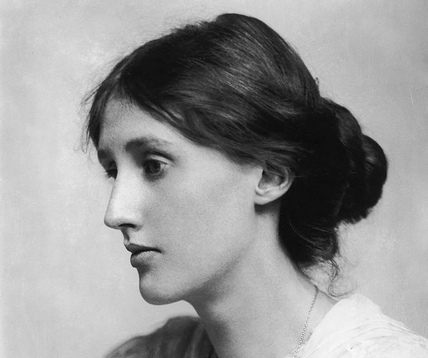
Public domain image originally taken by George Charles Beresford.
When Open Culture recently published Jorge Luis Borges’ self-compiled list of 74 ‘great works of literature’, commissioned by Argentine publisher Hyspamerica, I, along with many others, saw one glaring issue in the otherwise fantastically diverse list: it included no works by female writers.
Whether intentional or not, the fact that women are excluded from Borges’ noteworthies (and in 1985, no less) means that a vast number of historically and culturally significant books and writings have been overlooked. While this ought not to discredit the works listed in any way, after witnessing the immense popularity of Borges’ list I certainly felt that for his selection to be relevant today it needed to be accompanied by a list of works which had been overlooked due to the gender of their respective authors.
I decided to put a suggestion to a group of international women writers, artists and curators, and we compiled our own list of 74 ‘great works of literature’ — one just as varied, loose and substantial as that of Borges, but made up solely of writers identifying as women or non-gender-binary. Over two days we amassed many suggestions, which I’ve now curated to form the list below. It’s not intended to invalidate the original, but rather to serve as an accompaniment to highlight and encourage a dialogue on gender imbalances in creative and intellectual realms, as well as to provide a balance by actively ‘equalising’ that of Jorge Luis Borges.
- Agatha Christie — The Mousetrap
- Albertine Sarrazin — L’Astragale
- Alice Walker — The Color Purple
- Anaïs Nin — Little Birds
- Angela Carter — Nights at the Circus
- Angela Davis — Are Prisons Obselete?
- Anita Desai — Clear Light of Day
- Anne Carson — Autobiography of Red
- Anne Frank — The Diary of a Young Girl
- Anne Sexton — Live or Die
- Arundhati Roy — The God of Small Things
- Banana Yoshimoto — Kitchen
- bell hooks — Ain’t I a Woman?
- Beryl Bainbridge — Master Georgie
- Beryl Markham — West with the Night
- Buchi Emecheta — The Joys of Motherhood
- Carson McCullers — The Heart is a Lonely Hunter
- Charlotte Bronte — Jane Eyre
- Charlotte Roche — Feuchtgebiete
- Chris Kraus — I Love Dick
- Colette — Chéri
- Daphne du Maurier — Rebecca
- Doris Lessing — The Golden Notebook
- Edith Wharton — Age of Innocence
- Eileen Myles — Inferno
- Elfriede Jelinek — Women as Lovers
- Emily Bronte — Wuthering Heights
- Flannery O’Connor — Complete Stories
- Françoise Sagan — Bonjour Tristesse
- George Eliot — Silas Marner
- Gertrude Stein — The Making of Americans
- Gwendolyn Brooks — To Disembark
- Hannah Arendt — The Human Condition
- Harper Lee — To Kill a Mockingbird
- Hillary Mantel — Wolf Hall
- Iris Murdoch — The Sea, The Sea
- James Tiptree Jr. — Her Smoke Rose Up Forever
- Jean Rhys — Wide Sargasso Sea
- Jhumpa Lahiri — Interpreter of Maladies
- Joan Didion — Slouching Towards Bethlehem
- Joyce Carol Oats — A Bloodsmoore Romance
- Jung Chang — Wild Swans
- Kate Zambreno — Heroines
- Kathy Acker — Blood and Guts in High School
- Leonora Carrington — The Hearing Trumpet
- Leslie Feinberg — Stone Butch Blues
- Lorrie Moore — Who Will Run the Frog Hospital?
- Louise Erdrich — The Beet Queen
- Margaret Atwood — The Handmaid’s Tale
- Marguerite Duras — Le ravissement de Lol V. Stein
- Mary Shelley — Frankenstein
- Mary Wollstonecraft — A Vindication of the Rights of Women
- Maya Angelou — I Know Why the Caged Bird Sings
- Michelle Cliff — Abeng
- Miranda July — No One Belongs Here More Than You
- Monique Wittig — Les Guérillères
- Murasaki Shikibu — Genji Monogatari
- Muriel Spark — The Driver’s Seat
- Octavia Butler — Kindred
- Rachel Carson — Silent Spring
- Roxane Gay — An Untamed State
- Sappho — Fragments
- Sara Stridsberg — Darling River
- Sei Shōnagon — The Pillow Book
- Simone Weil — Gravity and Grace
- Sylvia Plath — The Bell Jar
- Theresa Hak Kyung Cha — Dictée
- Toni Morrison — Beloved
- Tove Jansson — Mumintroll series
- Tsitsi Dangarembga — Nervous Conditions
- Ursula K Le Guin — The Left Hand of Darkness
- Virginia Woolf — The Waves
- Willa Cather — The Song of the Lark
- Zadie Smith — On Beauty
Lulu Nunn is a London-based artist, writer, curator and editor of HOAX, an international journal publishing creative work incorporating text. You can follow her at @lulu_nunn and HOAX at @hoaxpublication.
Read More...
Late Rembrandts Come to Life: Watch Animations of Paintings Now on Display at the Rijksmuseum
Last week, we featured three terminally ill art-lovers’ journey to the Rijksmuseum to see their Rembrandts for one last time. They saw those paintings far more vividly, no doubt, than would those of us lucky enough to have longer on this Earth. Though nothing can convey the experience of seeing anything, artwork or otherwise, for the last time, these animations will at least give you the experience of seeing Rembrandt’s work in an entirely new way.
The videos (see them all here) bring to life six of the twelve canvases from The Late Rembrandt Exhibition, the very same one to which Stichting Ambulance Wens Nederland took the three patients nearing their ends. Even if you’ve never considered yourself particularly up on the Dutch Masters, you’ll more than likely recognize most of these paintings. Just above we have, for instance, 1642’s The Night Watch (or, more properly, Militia Company of District II under the Command of Captain Frans Banninck Cocq, or The Shooting Company of Frans Banning Cocq and Willem van Ruytenburch), perhaps Rembrandt’s best-known work, and one you may remember Peter Greenaway bringing to his own brand of life in Nightwatching.
If all this strikes you as an exercise in high-tech desecration, give the animations a watch and you’ll find them more subtly and tastefully executed than you might have imagined. You can see all six at the Youtube page of CS Digital Media, who produced them for Dutch telecommunications KPN, the Rijksmuseum’s main sponsor — art having its patrons as much now as it did in Rembrandt’s day.
Related Content:
The Rijksmuseum Puts 125,000 Dutch Masterpieces Online, and Lets You Remix Its Art
Rembrandt’s Facebook Timeline
16th-Century Amsterdam Stunningly Visualized with 3D Animation
Colin Marshall hosts and produces Notebook on Cities and Culture as well as the video series The City in Cinema and writes essays on cities, language, Asia, and men’s style. He’s at work on a book about Los Angeles, A Los Angeles Primer. Follow him on Twitter at @colinmarshall or on Facebook.
Read More...Heidegger’s “Black Notebooks” Suggest He Was a Serious Anti-Semite, Not Just a Naive Nazi

German philosopher Martin Heidegger, widely considered one of the most influential philosophers of the 20th century, was a Nazi, a fact known to most anyone with more than a passing knowledge of the subject. In a New York Review of Books essay, Harvard intellectual historian Peter E. Gordon points out that “the philosopher’s complicity with the Nazis first became a topic of controversy in the pages of Les Temps modernes shortly after the war.” The issue arose again when a former student of Heidegger published “a vigorous denunciation” in 1987. In these cases, and others—like his protégé and onetime lover Hannah Arendt’s defense of her former teacher—the scandal tends to “always end with the same unsurprising discovery that Heidegger was a Nazi.”
What stirs up controversy isn’t Heidegger’s membership in the party, but his motivations. Was he simply a shrewd, if craven, careerist, or a genuinely hateful anti-Semite, or a little from each column? Whatever the explanation, Heideggerians have been able to wall off the philosophy from supposed moral or political lapses in judgment. Arendt did so by claiming that Heidegger, and all of philosophy, was politically naïve. Recalls Adam Kirsch in the Times:
The seal was set on his absolution by Hannah Arendt, in a birthday address broadcast on West German radio. Heidegger’s Nazism, she explained, was an “escapade,” a mistake, which happened only because the thinker naïvely “succumbed to the temptation … to ‘intervene’ in the world of human affairs.” The moral to be drawn from the Heidegger case was that “the thinking ‘I’ is entirely different from the self of consciousness,” so that Heidegger’s thought cannot be contaminated by the actions of the mere man.
The publication of Heidegger’s so-called “black notebooks,” journals that he kept assiduously from 1931–1941, may change all that. They show Heidegger formulating a philosophy of anti-Semitism—using the central categories of his thought—one that operates, as Michel Foucault might say, along “the rules of exclusion.”
In published excerpts of a translation by Richard Polt, an executive member of the Heidegger Circle, Critical Theory shows how much Heidegger turned his own conceptual apparatus against Jews. At one point, he writes:
One of the most secret forms of the gigantic, and perhaps the oldest, is the tenacious skillfulness in calculating, hustling, and intermingling through which the worldlessness of Jewry is grounded.
In this short passage alone, Heidegger invokes lazy stereotypes of Jews as “calculating” and “hustling.” He also, more importantly, describes the Jewish people as “worldless.” As Critical Theory writes, “Being-in-the-world (In-der-Welt-sein) is the basic activity of human existing. To say that the Jews are ‘worldless’… is more than a confused stereotype.” It is Heidegger’s way of casting Jews out of Dasein, his most important category, a word that means something like “being-there” or “presence.” Jews, he writes, are “historyless” and “are not being, but merely ‘calculate with being.’”
Moreover, Heidegger took up the Nazi characterization of Jews as corrupt underminers of society. As representatives of modernity, and its technocratic domination of humanity, the Jews threatened “being” in another way:
What is happening now is the end of the history of the great inception of Occidental humanity, in which inception humanity was called to the guardianship of be-ing, only to transform this calling right away into the pretension to re-present beings in their machinational unessence…
The except goes on at length in this vein, with Jewish “technological machinery” posing a threat to civilization. Perhaps most shockingly, Heidegger attributed Nazi concentration camps to “self-destruction,” completely absolving by omission, and minimizing and excusing, the crimes of his party. An article in Italian newspaper Corriere Della Sera documents Heidegger’s defense of Nazism and his claim in 1942 that “the community of Jews” is “the principle of destruction” and that the camps were only a logical outcome of this principle, the “supreme fulfillment of technology,” “corpse factories.” The real victims, of course, are the Germans, and the Allies are guilty of ”repressing our will for the world.”
Heidegger intended the “black notebooks,” so damning that several scholars of Heidegger fought their publication, to be released after all of his work was published. As with all of the philosopher’s difficult work, the notebooks are often obscure; it is not always clear what he means to say. But major Heidegger scholars have responded in a variety of ways—including resigning a chairship of the Martin Heidegger Society—that suggest the worst. According to Daily Nous, a website about the philosophy profession, when Günter Figal resigned his position in January as chair of the Martin Heidegger Society, he said:
As chairman of a society, which is named after a person, one is in certain way a representative of that person. After reading the Schwarze Hefte [Black Notebooks], especially the antisemitic passages, I do not wish to be such a representative any longer. These statements have not only shocked me, but have turned me around to such an extent that it has become difficult to be a co-representative of this.
Whether or not this new evidence will cause more of his adherents to renounce his work remains to be seen, but the notebooks, writes Peter Gordon, will surely “cast a dark shadow over Heidegger’s legacy.” A very dark shadow.
Related Content:
Martin Heidegger Talks About Language, Being, Marx & Religion in Vintage 1960s Interviews
Martin Heidegger Talks Philosophy with a Buddhist Monk on German Television (1963)
Human, All Too Human: 3‑Part Documentary Profiles Nietzsche, Heidegger & Sartre
Find courses on Heidegger in our collection, 1,700 Free Online Courses from Top Universities
Josh Jones is a writer and musician based in Durham, NC. Follow him at @jdmagness
Read More...Sci-Fi Legend Ray Bradbury Creates a Visionary Plan to Redesign Los Angeles
Most of Ray Bradbury’s fans think of him first as a science-fiction writer, but I think of him as a fellow Angeleno. Though born in Waukegan, Illinois, the man who would write The Martian Chronicles and Fahrenheit 451 moved with his family to Los Angeles as a teenager in 1934. Just as he used his imagination to envision the futures in which he set many of his stories, he also used it to envision the future of his adopted hometown.
“Gathering and staring is one of the great pastimes in the countries of the world,” Bradbury wrote in a 1970 article called “The Small-Town Plaza: What Life Is All About.” “But not in Los Angeles. We have forgotten how to gather. So we have forgotten how to stare. And we forgot not because we wanted to, but because, by fluke or plan, we were pushed off the familiar sidewalks or banned from the old places. Change crept up on us as we slept. We are lemmings in slow motion now, with nowhere to go.”
He lamented the fact that Los Angeles, along with most other American cities, had sacrificed its most vital gathering spaces — especially “the theater, the sweet shop, the drugstore fountain” of his childhood, and of his nostalgic novel Dandelion Wine — on the altar of the automobile. “We climb in our cars. We drive… and drive… and drive… and come home blind with exhaustion. We have seen nothing, nor have we been seen.”
Bradbury approached this grand urban planning problem, which hit its nadir in the 70s, from his then-unusual perspective of the non-driving Angeleno. Having thus never forgotten the value of the old ways, he proposes a return in the form of “a vast, dramatically planned city block” offering “a gathering place for each population nucleus” where “people would be tempted to linger, loiter, stay, rather than fly off in their chairs to already overcrowded places.”
The block would feature “a round bandstand or stage,” “a huge conversation pit [ … ] so that four hundred people can sit out under the stars drinking coffee or Cokes,” “a huge plaza walk where more hundreds might stroll at their leisure to see and be seen,” an “immense quadrangle of three dozen shops and stores,” theaters for films new and old as well as live drama and lectures, and “a coffee house for rock-folk groups.”
He described this tantalizing urban space as a proof of concept, “one to start with. Later on, one or more for each of the 80 towns in L.A.” But how to get between them? Bradbury had something of a side career advocating for a monorail system, which he summed up in a 2006 Los Angeles Times essay:
More than 40 years ago, in 1963, I attended a meeting of the L.A. County Board of Supervisors at which the Alweg Monorail company outlined a plan to construct one or more monorails crossing L.A. north, south, east and west. The company said that if it were allowed to build the system, it would give the monorails to us for free — absolutely gratis. The company would operate the system and collect the fare revenues.
It seemed a reasonable bargain to me. But at the end of a long day of discussion, the Board of Supervisors rejected Alweg Monorail.
I was stunned. I dimly saw, even at that time, the future of freeways, which would, in the end, go nowhere.
While not a single monorail line ever appeared Bradbury’s city, one did appear, three years after that faithful Board of Supervisors meeting, in François Truffaut’s adaptation of Bradbury’s Fahrenheit 451. You can see it in the clip at the top of the post. Notice that it seems to drop Oskar Werner and Julie Christie off in the middle of nowhere; hardly an ideal placement for a rapid-transit station, but then, the monorail itself was just a prototype, running on a test track put up at Châteauneuf-sur-Loire by its developer, the consortium SAFEGE (French Limited Company for the Study of Management and Business).
General Electric licensed SAFEGE’s monorail technology in the United States, and to promote it produced this delightfully midcentury (and no doubt Bradbury-approved) 1967 film just above. Alas, it didn’t take anywhere in the country, but you can find two still futuristic-looking SAFEGE monorails still operating in — where else? — that futuristic land known as Japan, specifically in Chiba and Fujisawa.
Los Angeles may have rejected the monorail, and it certainly has a long way to go before it matches the development of any major city in Japan, but this town has, in many ways and in many places, realized the writer’s vision of an ideal urban life. America’s 21st-century revival of city centers has begun to make theater- and coffee shop-goers, gatherers and starers, and transit-riders of us again. And not owning a car has, in Los Angeles, become almost fashionable — an idea even an imagination as capacious as Ray Bradbury’s may once have never dared to contemplate.
Related Content:
Ray Bradbury: “I Am Not Afraid of Robots. I Am Afraid of People” (1974)
Ray Bradbury: “The Things That You Love Should Be Things That You Do.” “Books Teach Us That”
Ray Bradbury: Story of a Writer 1963 Film Captures the Paradoxical Late Sci-Fi Author
Ray Bradbury: Literature is the Safety Valve of Civilization
The Secret of Life and Love, According to Ray Bradbury (1968)
Colin Marshall hosts and produces Notebook on Cities and Culture as well as the video series The City in Cinema and writes essays on cities, language, Asia, and men’s style. He’s at work on a book about Los Angeles, A Los Angeles Primer. Follow him on Twitter at @colinmarshall or on Facebook.
Read More...Kapow! Stan Lee Is Co-Teaching a Free Comic Book MOOC, and You Can Enroll for Free
“Why did superheroes first arise in 1938 and experience what we refer to as their ‘Golden Age’ during World War II?” “How have comic books, published weekly since the mid-1930’s, mirrored a changing American society, reflecting our mores, slang, fads, biases and prejudices?” “Why was the comic book industry nearly shut down in the McCarthy Era of the 1950’s?” And “When and how did comic book artwork become accepted as a true American art form as indigenous to this country as jazz?”
All of these questions … and more … will be explored in an upcoming MOOC (Massive Open Online Course) co-taught by the legendary comic book artist, Stan Lee. He will be joined by experts from the Smithsonian, and Michael Uslan, the producer of the Batman movies who’s also considered the first instructor to have taught an accredited course on comic book folklore at any university.
The course called The Rise of Superheroes and Their Impact On Pop Culture will be offered through edX, starting on May 5th. You can enroll in the course for free today.
If you would like to support the mission of Open Culture, consider making a donation to our site. It’s hard to rely 100% on ads, and your contributions will help us continue providing the best free cultural and educational materials to learners everywhere. You can contribute through PayPal, Patreon, and Venmo (@openculture). Thanks!
Related Content:
Download Over 22,000 Golden & Silver Age Comic Books from the Comic Book Plus Archive
Free Comic Books Turns Kids Onto Physics: Start With the Adventures of Nikola Tesla
Download 15,000+ Free Golden Age Comics from the Digital Comic Museum
Download Pink Floyd’s 1975 Comic Book Program for The Dark Side of the Moon Tour
Read More...Watch Charles Burns’ Illustrations Come to Life in the Animated French Horror Film, Fear of the Dark
Since Charles Burns’ ‘70s-set sex-horror graphic novel Black Hole won a Harvey, Eisner, and an Ignatz Award in 2006, Hollywood has been toying with bringing the cartoonist’s dark visions to the screen. David Fincher was rumored to be developing Black Hole, until he picked up a copy of The Girl with the Dragon Tattoo instead.
But why wait to see Burns turned into a live-action film when the comic artist himself wrote and directed a segment for an animated French horror anthology called Peur(s) du noir/Fear(s) of the Dark in 2007.
The film never received American distribution, which is a shame, because this CG-animation brings Burns’ beautiful black and white brushwork to life, with a story of a college romance gone horribly, obsessively wrong. It’s close in subject matter to the “bug” at the center of Black Hole, but (maybe it’s the French dialog) with a nouvelle vague twist. There are creepy insects aplenty, too.
The film also contains animated horror tales directed by other cartoonists who might not be as familiar to American audiences: Blutch, Marie Caillou, Pierre di Sciullo, Lorenzo Mattotti, and Richard McGuire. Having seen the whole film, despite being hit-and-miss like all anthology features, it makes one wish there was more opportunities for comic artists to venture into film without having to compromise for live action, or exhaust an idea for a big budget.
In the meantime, the future of a live action Black Hole is up in the air. According a year-old posting on ScreenRant, Fincher was out and Rupert Sanders was in. But that was before he signed on to direct a live action version of the manga Ghost in the Shell (with ScarJo!). However, he did have the idea to make an 11-minute short film teaser just in case.
Related Content
The Confessions of Robert Crumb: A Portrait Scripted by the Underground Comics Legend Himself (1987)
Cartoonist Lynda Barry Shows You How to Draw Batman in Her UW-Madison Course, “Making Comics”
Ted Mills is a freelance writer on the arts who currently hosts the FunkZone Podcast. You can also follow him on Twitter at @tedmills and/or watch his films here.
Read More...Hear the Never Released Jimi Hendrix Track, “Station Break,” Which Shows Us the Guitar Legend as an R&B Sideman
As we’ve previously noted, Jimi Hendrix spent several years as a journeyman guitarist, playing the early rock ‘n’ roll circuit with stars like Wilson Pickett and Little Richard, before he finally came into his own. One point in his career, writes the Daily Beast, found him “on the bad side of a horrible recording contract” with “notoriously shady label owner and producer” Ed Chalpin of RSVP Records. This was during his tenure with a group called Curtis Knight & The Squires, many of whose recordings ended up “locked in litigation for years, a period that stretched to decades.”
Now that these tracks have been acquired by the Hendrix-family run company Experience Hendrix, they can finally be heard for the first time. Soon to be released as part of the compilation You Can’t Use My Name: Curtis Knight & The Squires (Featuring Jimi Hendrix), the instrumental above, “Station Break”—unlike so many other supposedly “new” Hendrix releases—has never appeared before in any other version. It’s not a Hendrix composition, but it’s his guitar, restrained in some fairly standard R&B licks.
“What makes [the recordings] so special” on the new compilation album, says Hendrix’s sister Janie, “is that they provide an honest look at a great artist during a pivotal time when he was on the cusp of his breakthrough.” Though Hendrix may seem to have descended from outer space, he actually honed his skills in groups like the Squires, before Animals bassist Chas Chandler discovered him and brought him to the UK. These early R&B releases “represent a significant segment in the timeline of Jimi’s musical existence.” They may not be as mind-blowing as, say, the psychedelic riffs in “Third Stone From the Sun,” but they show us an incredibly talented guitarist at work, straining to break free of a pop template and venture into musical realms uncharted.
via The Daily Beast,
Related Content:
Jimi Hendrix’s Final Interview on September 11, 1970: Listen to the Complete Audio
Jimi Hendrix at Woodstock: The Complete Performance in Video & Audio (1969)
Josh Jones is a writer and musician based in Durham, NC. Follow him at @jdmagness
Read More...Noam Chomsky Talks About How Kids Acquire Language & Ideas in an Animated Video by Michel Gondry
These days Noam Chomsky is probably most famous for his consistent, outspoken criticism of U.S. foreign policy. Yet before the War on Terror and the War on Drugs, Chomsky became internationally famous for proposing a novel solution to an age-old question: what does a baby know?
Plato argued that infants retain memories of past lives and thus come into this world with a grasp of language. John Locke countered that a baby’s mind is a blank slate onto which the world etches its impression. After years of research, Chomsky proposed that newborns have a hard-wired ability to understand grammar. Language acquisition is as elemental to being human as, say, dam building is to a beaver. It’s just what we’re programmed to do. Chomsky’s theories revolutionized the way we understand linguistics and the mind.
A little while ago, film director and music video auteur Michel Gondry interviewed Chomsky and then turned the whole thing into an extended animated documentary called Is the Man Who Is Tall Happy? (which is currently available on Netflix’s streaming service).
Above is a clip from the film. In his thick French accent, Gondry asks if there is a correlation between language acquisition and early memories. For anyone who’s watched Eternal Sunshine of the Spotless Mind, you know that memory is one of the director’s major obsessions. Over Gondry’s rough-hewn drawings, Chomsky expounds: “Children know quite a lot of a language, much more than you would expect, before they can exhibit that knowledge.” He goes on to talk about new techniques for teaching deaf-blind children and how a day-old infant interprets the world.
As the father of a toddler who is at the cusp of learning to form thoughts in words, I found the clip to be fascinating. Now, if only Chomsky can explain why my son has taken to shouting the word “bacon” over and over and over again.
To gain a deeper understanding of Chomsky’s thoughts on linguistics, see our previous post: The Ideas of Noam Chomsky: An Introduction to His Theories on Language & Knowledge (1977)
If you would like to support the mission of Open Culture, consider making a donation to our site. It’s hard to rely 100% on ads, and your contributions will help us continue providing the best free cultural and educational materials to learners everywhere. You can contribute through PayPal, Patreon, and Venmo (@openculture). Thanks!
Related content:
Michel Gondry’s Finest Music Videos for Björk, Radiohead & More: The Last of the Music Video Gods
Noam Chomsky & Michel Foucault Debate Human Nature & Power (1971)
What Makes Us Human?: Chomsky, Locke & Marx Introduced by New Animated Videos from the BBC
Jonathan Crow is a Los Angeles-based writer and filmmaker whose work has appeared in Yahoo!, The Hollywood Reporter, and other publications. You can follow him at @jonccrow. And check out his blog Veeptopus, featuring lots of pictures of badgers and even more pictures of vice presidents with octopuses on their heads. The Veeptopus store is here.
Read More...Support Us
We're hoping to rely on loyal readers, rather than erratic ads. Please click the Donate button and support Open Culture. You can use Paypal, Venmo, Patreon, even Crypto! We thank you!

About Us

Open Culture scours the web for the best educational media. We find the free courses and audio books you need, the language lessons & educational videos you want, and plenty of enlightenment in between.
Advertise With Us

FREE UPDATES!
GET OUR DAILY EMAIL
Get the best cultural and educational resources on the web curated for you in a daily email. We never spam. Unsubscribe at any time.
FOLLOW ON SOCIAL MEDIA

Open Culture editor Dan Colman scours the web for the best educational media. He finds the free courses and audio books you need, the language lessons & movies you want, and plenty of enlightenment in between.
Advertise With Us

