Nina Simone Sings Her Breakthrough Song, ‘I Loves You Porgy,’ in 1962
Here’s an achingly beautiful 1962 performance by Nina Simone of the song that started her career: “I Loves You Porgy,” from the 1935 George Gershwin opera Porgy and Bess. The performance begins with Simone’s own plaintive version of the calls of the Strawberry Woman and the Crab Man from Act II:
They’re so soft and fine
And they’re just off the vine
Strawberries
I’m talkin’ about the food I sell
I’m talkin’ about my devil crabs
Devil crabs
She then transitions into “I Loves You Porgy,” with lyrics by Ira Gershwin. The song was written as a duet, but was later performed solo by a number of artists, including Billie Holiday. Simone recorded it in December of 1957, when she was 24 years old. It was released the following year on her debut album Little Girl Blue. At the time, she was still hoping for a career as a classical pianist. “I Loves You Porgy” was a big success for the young Simone–the only top 40 hit she would ever have– and it helped chart the course of her career as a blues and jazz musician with strong classical influences.
Related content:
Nina Simone Sings of Social Injustice in a 1965 Dutch TV Broadcast
Ella Fitzgerald Sings ‘Summertime’ by George Gershwin, Berlin 1968
Read More...Pixar’s 22 Rules of Storytelling
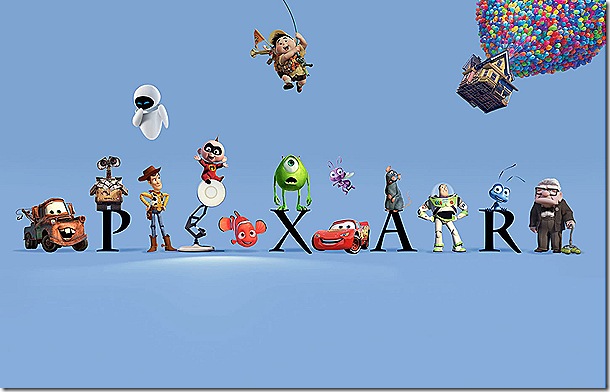
Everyone from Kurt Vonnegut to Ernest Hemingway has shared his ideas on crafting solid narrative writing. One of the most recent sages to join the canon is Emma Coates, Pixar’s former story artist. Her list of the 22 Rules of Good Storytelling gleaned on the job has been gaining Internet traction since it was published last June.
Twenty two? That’s twenty more than Tolstoy. I know some people enjoy a lot of direction, but those of us who relish bushwhacking start to chafe when the road is that heavily signposted.
By all means, sample Coates’ Pixar 22 (see them all below). Apply any and all that work for you, though don’t get your hopes up if your ultimate goal is to sell a story to Dreamworks or Disney. They’ve got formulas of their own.
As for myself, I am repurposing #4 — the only rule that doesn’t contain an implied order or some derivative of “you” — as an extremely jolly parlor game.
Here it is in its original form:
Once upon a time there was ___. Every day, ___. One day ___. Because of that, ___. Because of that, ___. Until finally ___.
While it’s entirely possible to fill in those blanks with the fruits of your own imagination, it’s a true joy to subject one’s most cherished literary, cinematic, and dramatic works to this retroactive Mad Lib. (It works pretty well with established religions too, but I’m not here to tread on the faithful’s toes.)
Warning: there are some major spoilers below. Now that that’s out of the way, let the guessing begin!
Once upon a time there was a poor family in Oklahoma. Every day, they tried to make it work on their hardscrabble farm. One day their last speck of top soil blew away. Because of that, they decided to seek a better life in California. Because of that, every able bodied young male left the family. Until finally their oldest daughter ends up breastfeeding a starving stranger.
How about this?
Once upon a time there was a poor young soldier. Every day, he dreamed of rising above his station. One day he met a beautiful rich girl named Daisy. Because of that, he bought a mansion where he threw enormous parties. Because of that, he hooked back up with Daisy. Until finally, he gets shot to death in his pool.
There’s no denying that it fits this one like a glove:
Once upon a time there was a kid. Every day, he played with his cowboy doll. One day he got a spaceman doll. Because of that, his interest in the cowboy took a serious nosedive. Because of that, the cowboy and the spaceman each swore vengeance upon the other’s house. Until finally there’s a bloodbath from which no one emerges unscathed.
I could keep go on forever, but I don’t want to come off as a toy hog. Instead, I invite you to share your filled out Number Fours in the comments section…or tell us which of the other twenty-one seem most suited to its intended purpose.
Pixar’s 22 Rules for Storytelling
#1: You admire a character for trying more than for their successes.
#2: You gotta keep in mind what’s interesting to you as an audience, not what’s fun to do as a writer. They can be v. different.
#3: Trying for theme is important, but you won’t see what the story is actually about til you’re at the end of it. Now rewrite.
#4: Once upon a time there was ___. Every day, ___. One day ___. Because of that, ___. Because of that, ___. Until finally ___.
#5: Simplify. Focus. Combine characters. Hop over detours. You’ll feel like you’re losing valuable stuff but it sets you free.
#6: What is your character good at, comfortable with? Throw the polar opposite at them. Challenge them. How do they deal?
#7: Come up with your ending before you figure out your middle. Seriously. Endings are hard, get yours working up front.
#8: Finish your story, let go even if it’s not perfect. In an ideal world you have both, but move on. Do better next time.
#9: When you’re stuck, make a list of what WOULDN’T happen next. Lots of times the material to get you unstuck will show up.
#10: Pull apart the stories you like. What you like in them is a part of you; you’ve got to recognize it before you can use it.
#11: Putting it on paper lets you start fixing it. If it stays in your head, a perfect idea, you’ll never share it with anyone.
#12: Discount the 1st thing that comes to mind. And the 2nd, 3rd, 4th, 5th – get the obvious out of the way. Surprise yourself.
#13: Give your characters opinions. Passive/malleable might seem likable to you as you write, but it’s poison to the audience.
#14: Why must you tell THIS story? What’s the belief burning within you that your story feeds off of? That’s the heart of it.
#15: If you were your character, in this situation, how would you feel? Honesty lends credibility to unbelievable situations.
#16: What are the stakes? Give us reason to root for the character. What happens if they don’t succeed? Stack the odds against.
#17: No work is ever wasted. If it’s not working, let go and move on — it’ll come back around to be useful later.
#18: You have to know yourself: the difference between doing your best & fussing. Story is testing, not refining.
#19: Coincidences to get characters into trouble are great; coincidences to get them out of it are cheating.
#20: Exercise: take the building blocks of a movie you dislike. How d’you rearrange them into what you DO like?
#21: You gotta identify with your situation/characters, can’t just write ‘cool’. What would make YOU act that way?
#22: What’s the essence of your story? Most economical telling of it? If you know that, you can build out from there.
via BoingBoing
- Ayun Halliday was not raised to question authority.
Read More...Storm: New Short Film Captures the Artistry of Winemaking
In many ways food—its production, preparation and consumption—is the hottest art form today. Chefs are like celebrity auteurs, revered for their passion and dedication. We even watch reality television shows about the drama of commercial restaurant kitchens.
The newest documentary by Daniel Addelson puts another one of these artists in the spotlight. Addelson’s new film Storm follows vintner Ernst Storm, a native of South Africa who makes wine in the Santa Ynez Valley near Santa Barbara, through a fall grape harvest. The film is as earthy, bright and moody as the beautiful land where it is set. Storm tromps around his land in shorts and boots and a hat operating fork lifts and hoisting pitchforks full of grapes into huge tubs. We also see him in the lab, tracking the chemical transactions taking place in his current batch.
The movie doesn’t shy away from the industrial side of winemaking, all the hoses and vats and stainless steel casks. But Storm’s voiceover reminds us that behind the heavy lifting is the dream of coaxing something pleasurable out of nature’s bounty.
Storm will premiere at the Sonoma Film Festival in April. Clocking in just over eight minutes, Storm conveys the hard work of making wine, the solitude and the fun. Most of all the film conveys the craft’s artistry. The sensual stuff—the smells and colors and flavors—are what drive Storm’s affection for process. He is discerning and attentive. We see him climbing to the top barrel in a high pyramid, with a glass and a fancy turkey baster in hand. Removing the big cork, Storm sucks out a bit and swishes it around in his glass, then tasting it to see how things are going. Each variety must be cared for, he says.
As a filmmaker Addelson isn’t making a commercial for Storm Wines. He’s interested in the ingredients that make for a creative person—the perseverance, passion and attention to detail necessary to follow an idea through.
He will pick up this thread again in his next film, which looks at the benefits of teaching character to children in school.
Kate Rix writes about digital media and education. Read more of her work at .
Read More...33 Sci-Fi Stories by Philip K. Dick as Free Audio Books & Free eBooks
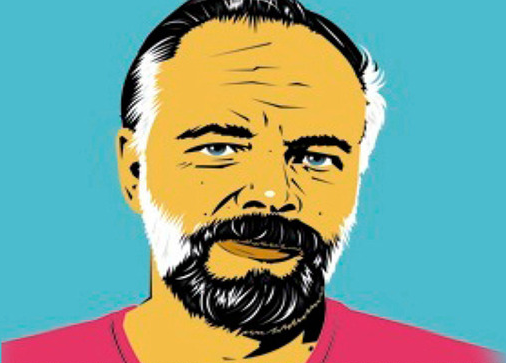
Image by Pete Wesch, via Wikimedia Commons
Although he died when he was only 53 years old, Philip K. Dick (1928 – 1982) published 44 novels and 121 short stories during his lifetime and solidified his position as the most literary of science fiction writers. His novel Ubik appears on TIME magazine’s list of the 100 best English-language novels, and Dick is the only science fiction writer to get honored in the prestigious Library of America series, a kind of pantheon of American literature.
If you’re not intimately familiar with his novels, then you assuredly know major films based on Dick’s work – Blade Runner, Total Recall, A Scanner Darkly and Minority Report. Today, we bring you another way to get acquainted with his writing. We’re presenting a selection of Dick’s stories available for free on the web. Below we have culled together 33 short stories from our two collections, 800 Free eBooks for iPad, Kindle & Other Devices and 1,000 Free Audio Books: Download Great Books for Free. The stories, it appears, are all in the public domain.
NOTE: The recent update to this page was assisted by this helpful resource at SFF Audio, which has researched the public domain status of many PKD stories and amassed a handy list.
eTexts (find download instructions here)
- “Adjustment Team”
- “Beyond the Door”
- “Beyond Lies the Wub”
- “Breakfast at Twilight”
- “Exhibit Piece”
- “Foster You’re Dead”
- “Human Is”
- “James P. Crow”
- “Meddler”
- “Mr. Spaceship”
- “Piper in the Woods”
- “Progeny”
- “Prominent Author”
- “Sales Pitch”
- PDF — eText
- “Second Variety”
- “Shell Game”
- “Small Town”
- “Souvenir”
- “Survey Team”
- “The Crawlers”
- “The Crystal Crypt”
- “The Defenders”
- “The Eyes Have It”
- “The Golden Man”
- “The Gun”
- “The Hanging Stranger”
- “The Last of tbe Masters”
- “The Skull”
- “The Turning Wheel”
- “The Variable Man”
- “Tony and the Beetles”
- “Upon the Dull Earth”:
Audio
- “Beyond Lies the Wub” – Free MP3
- “Beyond the Door” – Free MP3
- “Second Variety” – Free MP3 Zip File – Stream Online
- “The Defenders” — Free MP3
- “The Hanging Stranger” — Free MP3
- “The Variable Man” – Free MP3 Zip File – Stream Online
- “Tony and the Beetles” — MP3 Part 1 — MP3 Part II
Related Content:
Free: Isaac Asimov’s Epic Foundation Trilogy Dramatized in Classic Audio
Neil Gaiman’s Free Short Stories and New Year’s Wishes
Read More...Support The Public Domain Review
The Public Domain Review is a not-for-profit project dedicated to showcasing the most interesting and unusual artefacts in the history of art, literature and ideas — all of which have fallen into the public domain and so are free for everyone to enjoy, reuse and share. Started in 2011, the site has created a large and ever growing archive of the beautiful and bizarre. Highlights from their collections include a ghostly series of decayed daguerrotypes, a dictionary of Victorian slang, a set of 19th century French postcards of the year 2000, and a 1930s Michigan farmer playing the tune of Yankee Doodle with “hand-farts”.
In addition to showcasing their picks from the world’s digital archives, The Public Domain Review provides a platform for leading writers, scholars and curators to write about the things they love. A whole host of weird and wonderful topics are covered, including an Italian cardinal who could speak over 70 languages, Gerard Manley Hopkins’s soaring meteorology of volcano sunsets, Thomas Browne’s list of imaginary artefacts, and, in an article from Man Booker prize winner Julian Barnes, a tale of strange encounters with monkey-eating poets.
It’s a great project, and it needs your support to continue. With their initial funding now coming to an end, The Public Domain Review is turning to its community of readers to help it continue to tell the world about the importance of the public domain. If you’d like to see the project continue, then they need your donations. If you make a donation of $40 or more you’ll get a rather wonderful looking Tote Bag. Learn more about the campaign and donate on their support page. Again, click here to give The Public Domain Review your support!
Read More...Michael Sandel’s Famous Harvard Course on Justice Launches as a MOOC on Tuesday
Back in 2009, Harvard political philosopher Michael Sandel made his course, Justice: What’s the Right Thing to Do?, available on the web for free (YouTube — iTunes — Web). Suddenly lifelong learners around the world had access to a popular course enjoyed by more than 14,000 Harvard students over 30 years. Starting this Tuesday, Sandel plans to offer Justice as a free course through edX, the provider of MOOCs (or Massive Open Online Courses) created by Harvard and MIT. And here’s one thing you can guarantee: In a single offering, Sandel will bring his course to more students worldwide than he did through his decades teaching at Harvard. You can enroll and reserve your free seat here. Students who receive a passing grade in the course can earn a certificate of mastery, which will bear the name HarvardX.
Justice has been added to our every growing list of MOOCs from Great Universities.
Related Content:
Walter Lewin, the Original Star of Open Education, Returns with a Brand New Physics MOOC
Get Ready for MIT’s “Introduction to Biology: The Secret of Life” on edX
Harvard and MIT Create EDX to Offer Free Online Courses Worldwide
Learn to Code with Harvard’s Intro to Computer Science Course And Other Free Tech Classes
Read More...Can’t Get That Song Out of My Head: An Animation of a Psychological Phenomenon We All Know
You know what it feels like when, no matter how hard you try to shake it, you can’t get that song out of your head. Psychologists have a technical name for this phenomenon. They call it an “earworm,” referring to those songs that “arrive without permission and refuse to leave when we tell them to.” In the video above, the Danish design agency Benny Box has created a short animated film — called Jazz that nobody asked for — that serves as an “ode to all those unwanted songs out there, that have nowhere to go.” The music taunting the main character is “Quaker City Jazz” (1937) by Jan Savitt and His Top Hatters Orchestra. If you’ve had your own earworm — your own maddening soundtrack for this film — let us know in the comments section below.
Related Content:
Classic Jazz Album Covers Animated, or the Re-Birth of Cool
Kermit the Frog Learns to Love Jazz Through “Visual Thinking” (1959)
Jazz Toons: Allen Mezquida’s Journey from Bebop to Smigly
Read More...The Physics Professor, the Glamour Model, and a Whole Suitcase Full of Trouble
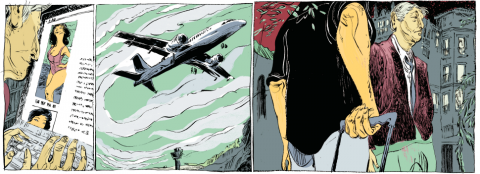 From the annals of Why Smart People Do Dumb Things: The New York Times has a long piece on Paul Frampton, a theoretical physicist at the University of North Carolina-Chapel Hill, who meets a Czech model online, then, rather gullibly, travels to South America to get to know her in person. Instead of finding love in La Paz, Frampton winds up in a dilapidated Buenos Aires prison. It’s a bizarre tale, a story of hubris, naivete, lust, and deception all rolled into one. Grab a coffee, set aside some time, and have a read.
Find us on Facebook, Twitter and Google Plus and we’ll deliver our posts right to your virtual doorstep. Or sign up for our Daily Email!
Read More...Charlie Parker Plays with Dizzy Gillespie in the Only Footage Capturing the “Bird” in True Live Performance
Here’s a historic TV broadcast of the founding fathers of bebop, Charlie Parker and Dizzy Gillespie, playing together in 1952. It’s one of only two known sound films of Parker playing–and the only one of him playing live, rather than synching to a prerecorded track.
The performance is from a February 24, 1952 broadcast on the pioneering DuMont Television Network. The full segment begins with a brief ceremony in which Parker and Gillespie receive awards from Down Beat magazine, but the clip above cuts straight to the music: a performance of the bebop standard “Hot House,” composed by Tad Dameron around the harmonic structure of Cole Porter’s “What Is This Thing Called Love?.”
The quintet includes Parker on alto saxophone, Gillespie on trumpet, Sandy Block on bass, Charlie Smith on drums and Dick Hyman on piano.
It was Hyman, who had played with Parker and had his own nightly show on the DuMont network, who helped organize the appearance. In a 2010 interview with JazzWax, Hyman talked about what it was like playing on the show with Parker and Gillespie. “It was together,” he said. “Those guys played with such a good time and feel. It’s a terrific performance considering it was a pop show with just two cameras.”
If you would like to support the mission of Open Culture, consider making a donation to our site. It’s hard to rely 100% on ads, and your contributions will help us continue providing the best free cultural and educational materials to learners everywhere. You can contribute through PayPal, Patreon, and Venmo (@openculture). Thanks!
Related Content:
The Nazis’ 10 Control-Freak Rules for Jazz Performers: A Strange List from World War II
Jazz ‘Hot’: The Rare 1938 Short Film With Jazz Legend Django Reinhardt
Read More...Watch The Band Play “The Weight,” “Up On Cripple Creek” and More in Rare 1970 Concert Footage
In the late-sixties/early seventies, a new genre—pioneered by CSNY, Gram Parsons, Dylan, the Grateful Dead, and a host of others—brought down-home country sounds to mainstream rock audiences. So-called “Country Rock,” however, mostly emanated from a Los Angeles scene that grew farther from both country and rock and strayed into easy listening territory (or “Yacht-rock”; think late-period Eagles), or jam-band land. But one band never dissolved into soft rock or aging psychedelia: The Band. The four hard-working Canadians and a man from Arkansas named Levon Helm took their country sound more from Helm’s hometown of Turkey Scratch than Laurel Canyon. The Band ignored almost every trend in contemporary pop music and focused on tightly crafted, loosely-played songs that hewed close to the roots music that seemingly ran through their veins.
In 1970, when they played the concert recorded above, the five unassuming mustachioed men also graced a Time magazine cover under the banner “The New Sound of Country Rock.” With songs like “Up on Cripple Creek” and “The Weight,” The Band earned the distinction. Their journey brought them from backing band for rockabilly singer Ronnie Hawkins, then Bob Dylan, then finally emerging on their own with their nondescript name in 1968. The name says a lot about The Band’s ethos—there didn’t seem to be an ounce of vanity in what they did, with each member contributing to songwriting and vocal duties. It might be said that the “country” in their sound was powered by drummer, mandolin-player, and sometime lead singer Helm (they once briefly broke off from Hawkins and toured and recorded as Levon and the Hawks), but The Band, and Levon, were also a top-notch blue-eyed soul singers, as you can hear clearly in their mid-sixties output.
In the footage above, from a show at Pittsburgh’s Syria Mosque, watch Helm, Rick Danko, Robbie Robertson, Garth Hudson, and Richard Manuel work their saloon-room country/soul magic and smooth vocal harmonies on four songs: “Time to Kill,” “The Weight,” “This Wheel’s on Fire,” and “Up on Cripple Creek.” And don’t let the term “country rock” put you off. You don’t have to like country music to love what these guys do so well.
Related Content:
Martin Scorsese Captures Levon Helm and The Band Performing “The Weight” in The Last Waltz
The 1969 Bob Dylan-Johnny Cash Sessions: Twelve Rare Recordings
Bob Dylan and The Grateful Dead Rehearse Together in Summer 1987. Listen to 74 Tracks
Josh Jones is a writer, editor, and musician based in Washington, DC. Follow him @jdmagness
Read More...Support Us
We're hoping to rely on loyal readers, rather than erratic ads. Please click the Donate button and support Open Culture. You can use Paypal, Venmo, Patreon, even Crypto! We thank you!

About Us

Open Culture scours the web for the best educational media. We find the free courses and audio books you need, the language lessons & educational videos you want, and plenty of enlightenment in between.
Advertise With Us

FREE UPDATES!
GET OUR DAILY EMAIL
Get the best cultural and educational resources on the web curated for you in a daily email. We never spam. Unsubscribe at any time.
FOLLOW ON SOCIAL MEDIA

Open Culture editor Dan Colman scours the web for the best educational media. He finds the free courses and audio books you need, the language lessons & movies you want, and plenty of enlightenment in between.
Advertise With Us


