Alfred Hitchcock Presents Ghost Stories for Young People (1962)
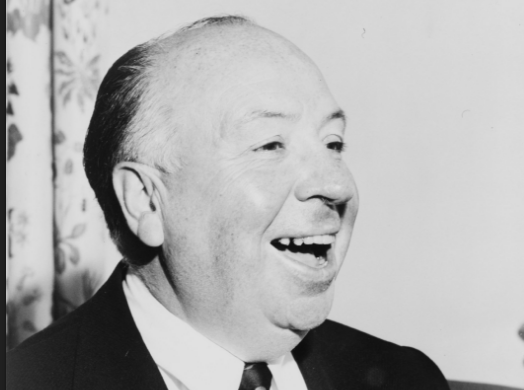
Image by Fred Palumbo, via Wikimedia Commons
Close the doors. Shut the blinds. Turn out the lights. Make that room dark. Get ready for Alfred Hitchcock Presents Ghost Stories for Young People. Originally recorded in 1962, the album features 11 ghost stories introduced by Hitchcock himself and then read by actor John Allen. If you were a kid during the early 60s, this may bring back some very good memories. The recording is available on YouTube and Spotify, embedded below. (Download Spotify’s software for free here.)
Here’s a playlist of the tracks:
- The Haunted And The Haunters (The Pirate’s Curse)
- The Magician (’til Death Do Us Part)
- Johnny Takes A Dare (The More The Merrier)
- The Open Window (Special Adaptation)
- The Helpful Hitchhiker
- Jimmy Takes Vanishing Lessons
h/t @BrainPicker
Related Content:
21 Free Hitchcock Movies Online
Alfred Hitchcock’s Seven-Minute Editing Master Class
François Truffaut’s Big Interview with Alfred Hitchcock (Free Audio)
Alfred Hitchcock’s Rules for Watching Psycho (1960)
1,000 Free Audio Books: Download Great Books for Free Read More...Getz and Gilberto Perform ‘The Girl from Ipanema’ (and the Woman Who Inspired the Song)
Take a deep breath and watch this 1964 television performance of “The Girl from Ipanema” by Brazilian bossa nova singer Astrud Gilberto and American jazz saxophonist Stan Getz.
The arrangement is from the classic album, Getz/Gilberto, which launched the bossa nova craze of the early 60’s. The album was primarily a collaboration between Getz and Astrud’s husband, the guitarist and vocalist João Gilberto, but when someone got the idea of including an English translation of Antonio Carlos Jobim’s “The Girl from Ipanema,” Astrud was recruited. She had never sung professionally before. The recordings launched her as an international sensation.
Since then, “The Girl from Ipanema” has weathered a half-century of heavy rotation on the Holiday Inn lounge circuit and Muzak. (Remember the elevator scene in The Blues Brothers?) So it can be hard to imagine just how cool the song must have seemed in 1964 with the release of Getz/Gilberto. That saxophone. That voice. As the person who posted this video on YouTube put it: “Chill, baby, chill…”
When it’s all said and done, you can also meet Heloisa Pinheiro, the woman who inspired the song all of those years ago.
Related Content:
Classic Jazz Album Covers Animated, or the Re-Birth of Cool
Billie Holiday Sings “Strange Fruit”
Learn Brazilian Portuguese and 40 Other Languages for Free
Read More...Ai Weiwei and the Seeds of Freedom
In the state-controlled propaganda art of revolutionary China, sunflowers carried a blunt symbolism: Mao Zedong was the sun and the Chinese people were the sunflowers, all facing one direction to receive the nourishing rays.
A generation later, in the work of Chinese artist Ai Weiwei, the symbolism is a bit more subversive. In 2010 Ai launched a show called Sunflower Seeds, where a riot of individual porcelain seeds–more than a hundred million of them, all hand-painted–were spread across the floor of a large hall at the Tate Modern in London. Ai wanted visitors to move freely across the installation, picking the seeds up, moving them around, doing whatever they wanted — all shown in the video above.
As a champion of freedom and an outspoken critic of China’s human rights record, Ai has come under heavy pressure from the Chinese regime. Early this year his Shanghai studio was demolished and he was later arrested and detained at secret locations for 81 days. Now he is forbidden from giving interviews or using the Internet. But before he was arrested, Ai was able to send a videotaped speech to the TED conference, outlining his views. You can watch it below. To learn more about the extraordinary Sunflower Seeds 2010 exhibit, you can watch the “TateShots” film above.
Read More...Noam Chomsky & Michel Foucault Debate Human Nature & Power (1971)
Once again, we’re heading back to 1971. Yesterday we had Dick Cavett’s 1971 interview with George Harrison. Today, it’s the clash of two intellectual titans, Noam Chomsky and Michel Foucault. In ’71, at the height of the Vietnam War, the American linguist and French historian/social theorist appeared on Dutch TV to debate a fundamental question: Is there such a thing as innate human nature? Or are we shaped by experiences and the power of cultural and social institutions around us?
40 years later, you can find the classic debate on YouTube. If you need subtitles, make sure you turn on the captions function at the bottom of the video.
A full transcript of the debate can be read online, or you can purchase a copy in book format. Finally, a recent BBC program revisits and analyzes the Chomsky-Foucault encounter. H/T Metafilter
Related Content:
Free Online Courses in Philosophy
Jacques Lacan Speaks; Zizek Provides Free Cliffs Notes
Download Free Courses from Famous Philosophers: From Bertrand Russell to Michel Foucault
Noam Chomsky vs. William F. Buckley, 1969
Ali G and Noam Chomsky Talk Linguistics
Read More...Richard Feynman on Beauty
After dismissing the popular notion that scientists are unable to truly appreciate beauty in nature, physicist Richard Feynman (1918 — 1988) explains what a scientist really is and does. Here are some of the most memorable lines from this beautiful mix of Feynman quotes and (mostly) BBC and NASA footage:
- People say to me, Are you looking for the ultimate laws of physics? — No, I’m not. I’m just looking to find out more about the world.
- When we’re going to investigate [nature], we shouldn’t predecide what it is we’re trying to do, except to find out more about it.
- I can live with doubt and uncertainty and not knowing. I think it’s much more interesting to live not knowing than to have answers that might be wrong. (…) I don’t feel frightened by not knowing things, by being lost in the mysterious universe without having any purpose.
- When you doubt and ask, it gets a little harder to believe.
Beauty is the first video in The Feynman Series, along with Honours and Curiosity. The sequence is a companion to The Sagan Series, which pays tribute to the late Carl Sagan. H/T Kottke
By profession, Matthias Rascher teaches English and History at a High School in northern Bavaria, Germany. In his free time he scours the web for good links and posts the best finds on Twitter.
Related Content:
Richard Feynman’s Physics Lectures Online
The Pleasure of Finding Things Out
The Last Journey Of A Genius: Richard Feynman Dreams of Tannu Tuva
Read More...
Frank W. Buckles, The Last U.S. Veteran of World War I
Frank Woodruff Buckles was born on February 1st, 1901. At the age of 16, he enlisted in the U.S. Army by convincing recruiting officers that he was, in fact, 21. In this short film, Buckles recalls this time so long ago and the last year of the Great War. There are two particularly moving passages in this documentary: when he talks about the difficulties veterans experienced after returning home, and when Buckles voices his opinions on war in general, and particularly war today (“How did we get involved in this thing, Iraq? It was crazy, we have no damn business in there.”)
Frank died on February 27th, 2011, at the age of 110. The last surviving U.S. veteran of World War I, he was properly laid to rest at Arlington National Cemetery (find video of the ceremony here). There are two tributes to Mr Buckles that offer more insight into his life: a short video by the United States Department of Veterans Affairs and an obituary in the Washington Post.
By profession, Matthias Rascher teaches English and History at a High School in northern Bavaria, Germany. In his free time he scours the web for good links and posts the best finds on Twitter.
Read More...Jack Nicholson Puts His Star Power Behind “Green” Cars, 1978
Long before anyone started talking about “green” or “sustainability,” Jack Nicholson put his money and star power behind a new alternative energy — solar-powered hydrogen. The year was 1978, and solar hydrogen, a limitless resource, promised to lower energy costs and pollution levels, all at once. Fast forward 30+ years, and we know one thing: hydrogen Chevys never saw the light of day … until 2007.
This clip has been added to our collection of 275 Cultural Icons, where you’ll find great artists and thinkers speaking in their own words, mostly on video. The collection includes footage of Tolstoy and Twain and, of course, more contemporary figures.
Get more cultural nuggets daily by following us on Facebook and Twitter.
Read More...The Sounds That Made Pop
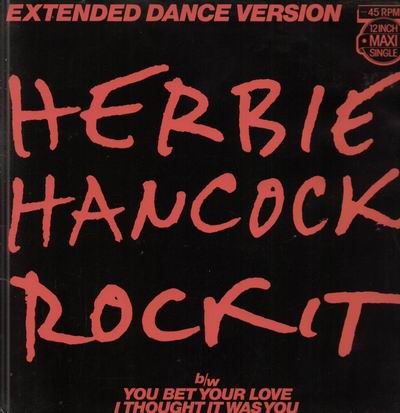
Earlier this summer, the good folks at The Word assembled 40 Noises That Built Pop, a collection of distinctive pop music sounds that have “caused your ears to prick up, or your eyebrows to raise.” Some were originally created in quite calculated ways. Others were happy accidents. Either way, theses sounds are now part of the pop tradition. We have highlighted four sounds that speak to us. But you should really dive into and enjoy The Word’s collection that was clearly put together with loving care.
The Power Chord from The Kinks: You Really Got Me (1964)
“It’s the essential building block of rock; the root and the fifth of the chord played at substantial volume on guitar and distorted to taste. It’s also the musical equivalent of the poker face; with just the two notes, it’s neither a sunny-sounding major chord nor a gloomy minor… Without the power chord entire genres of metal simply wouldn’t exist.”
Vinyl Scratch from Herbie Hancock: Rockit (1983)
“Any DJ cueing up a record through one ear of a pair of headphones will have heard the sound of scratching, but it wasn’t until the early days of hip hop that it was incorporated into musical performance… Grandmaster Flash, Afrika Bambaataa and Kool Herc became the pioneers of “turntablism”, while Grand Mixer DXT’s work on Rockit propelled the sound into the mainstream and transformed the DJ into an unlikely frontman.”
Handclap from Kool & The Gang: Ladies Night (1979)
“As a percussive sound, [the handclap has] been used by everyone from flamenco dancers to Steve Reich, but it was in the mid-1970s when it found its true calling. Layered on top of the snare drum to emphasise the second and fourth beats of the bar, its formidable “crack” can be heard throughout disco and funk, and has since been employed by anyone wishing to hint at a party atmosphere…”
Guitar Feedback from Gang Of Four: Anthrax (1981)
“A classic case of rock music taking an undesirable noise and moulding it to suit its own purposes. The reason for feedback is simple: the guitar pickup “hears” itself being blasted out of a speaker cabinet, processes the sound and passes it to the speaker: noise piled upon noise. As rock music became less polite, more liberties were taken with feedback; while there’s an unintentional burst at the front end of I Feel Fine by The Beatles, the outro to The Who’s My Generation uses the sound more creatively.”
H/T Metafilter
And, on a totally unrelated note: Sun Ra and The Blues Project do Batman & Robin songs. Courtesy of the WFMU Blog Wayback Machine.
Read More...Whose Line Is It Anyway? The Complete Improv Series Now Free Online
The improv/comedy series Whose Line Is It Anyway? aired on British television for a good decade, from 1988 to 1998. Then it made its way to America and enjoyed an eight-season run. Thanks to some dedicated fans, you can now watch the complete US and UK series online. Find Season One of the UK series here, and the first season of the US series here. Or the rest along the top navigation bar of the site.
Need an introduction to the show? How about we get you started with an early appearance by British actor and writer Stephen Fry, someone we have happily featured here on many other occasions. Enjoy.
If you would like to support the mission of Open Culture, consider making a donation to our site. It’s hard to rely 100% on ads, and your contributions will help us continue providing the best free cultural and educational materials to learners everywhere. You can contribute through PayPal, Patreon, and Venmo (@openculture). Thanks!
Read More...The Sins of the Renaissance, or The History That Shaped Michele Bachmann’s Worldview
During the 1970s, Francis A. Schaeffer, an evangelical theologian, wrote and narrated How Should We Then Live?, a ten-part film series that traced the history of Western culture and thought. Lots of art and philosophy were put on display. But the real narrative focused on something a little different — the history of humanity’s lapse from God and a Biblical worldview. The film became a sensation at evangelical churches across America, sometimes drawing 5,000 people per screening. And, as Ryan Lizza writes in a New Yorker profile published this week, the film had a life-altering effect on Michele Bachmann, the US Representative now vying for the presidency.
For Schaeffer, the big turning point came during the Renaissance. That’s when things went wrong. He laments (starting around the 10:45 mark above):
At the beginning of the Renaissance, it could have gone either way. Nature could have had its proper place. Man could have been in his proper place, and it would have been absolutely beautiful. But at a certain point in the Renaissance, the scales tipped, and man put himself at the center absolutely, and this opened the door completely to the whole destructive force of humanism that followed down through the Enlightenment [otherwise called “The Age of Non Reason”] and into our own day.
If you want to see where this destructive force brings us, you need only turn to the last segment “Final Choices.” (Part 1 — Part 2 — Part 3) According to Schaeffer, we end up under the control of an authoritarian elite that imposes its arbitrary will on the people, sometimes injecting birth control into the water supply, and sometimes deciding who will be born, and who won’t. The authoritarian elite resides in no one place. It’s shadowy, doing its work in many places. But one place you definitely find it? The Supreme Court that gave us Roe v. Wade.
Should you wish, you can watch the remaining segments via the links below.
Episode I — The Roman Age
Episode II — The Middle Ages
Episode III — The Renaissance
Episode IV — The Reformation
Episode V — The Revolutionary Age
Episode VI — The Scientific Age
Episode VII — The Age of Non Reason
Episode VIII — The Age of Fragmentation
Episode IX — The Age of Personal Peace & Affluence
Episode X — Final Choices (Part 1 — Part 2 — Part 3)
via The LA Times
Read More...Support Us
We're hoping to rely on loyal readers, rather than erratic ads. Please click the Donate button and support Open Culture. You can use Paypal, Venmo, Patreon, even Crypto! We thank you!

About Us

Open Culture scours the web for the best educational media. We find the free courses and audio books you need, the language lessons & educational videos you want, and plenty of enlightenment in between.
Advertise With Us

FREE UPDATES!
GET OUR DAILY EMAIL
Get the best cultural and educational resources on the web curated for you in a daily email. We never spam. Unsubscribe at any time.
FOLLOW ON SOCIAL MEDIA

Open Culture editor Dan Colman scours the web for the best educational media. He finds the free courses and audio books you need, the language lessons & movies you want, and plenty of enlightenment in between.
Advertise With Us


