A Quay Brothers Animation Explains Anamorphosis, the Renaissance Illusion That Hides Pictures within Pictures
First appearances can be deceiving.
Take physicist Emmanuel Maignan’s 1642 fresco in a corridor of Rome’s Trinità dei Monti monastery.
Viewed head on, it appears to be a somewhat unconventional landscape in which one of the few remaining branches of a mutilated tree spreads over a city, far in the distance. Streaky clouds suggest heavy weather is brewing.

Stroll to the end of the corridor and take another look. You’ll find that the tree has contracted, and the clouds have reconfigured themselves into a portrait of Saint Francesco of Paola, praying beneath its boughs.
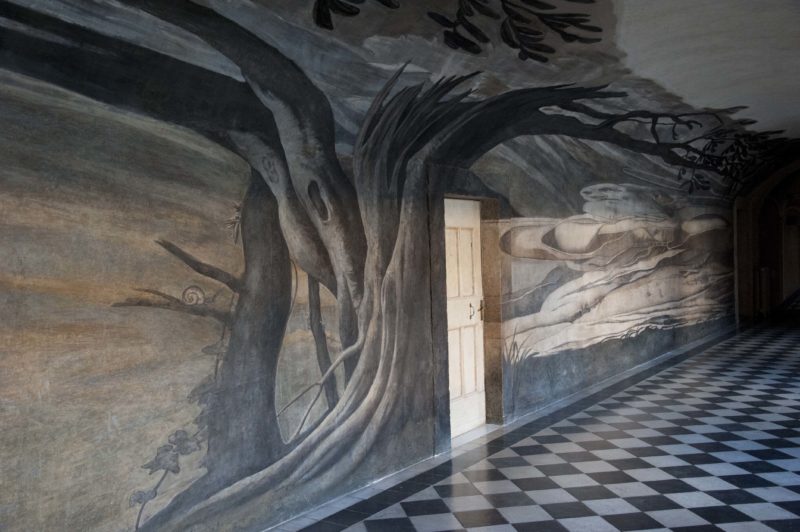
It’s a prime example of oblique anamorphosis, an image that has been deliberately distorted by an artist well versed in perspective, with the end result that the image’s true nature will only be revealed to those viewing the work from an unconventional point.
The Quay Brothers’ documentary short, above, a collaboration with art historian Roger Cardinal, uses a combination of their delightfully creepy signature puppet stop motion, as well as animated 3‑D cut outs, to lift the curtains on how the human eye can be manipulated, using principles of perspective.
Anamorphosis may not seem like such a feat in an age when a number of software programs can provide a major assist, but why would Renaissance artists put themselves to so much extra trouble?
The Quay Brothers delve into this too.
Perhaps the artist was injecting a bit of social criticism, like Hans Holbein the Younger, whose 1533 portrait, The Ambassadors, includes a secret anamorphic skull. This could be taken as a jab at the excesses of the wealthy young diplomats who provide the painting’s subject, except that the one who commissioned the work, Jean de Dinteville, prized the motto “Memento mori.”
Maybe he knowingly ordered up the naked death’s head to go along with his ermine and bling, an example of having one’s cake and eating it too, and yet another dizzying head trip for those viewing the painting from the intended angle.
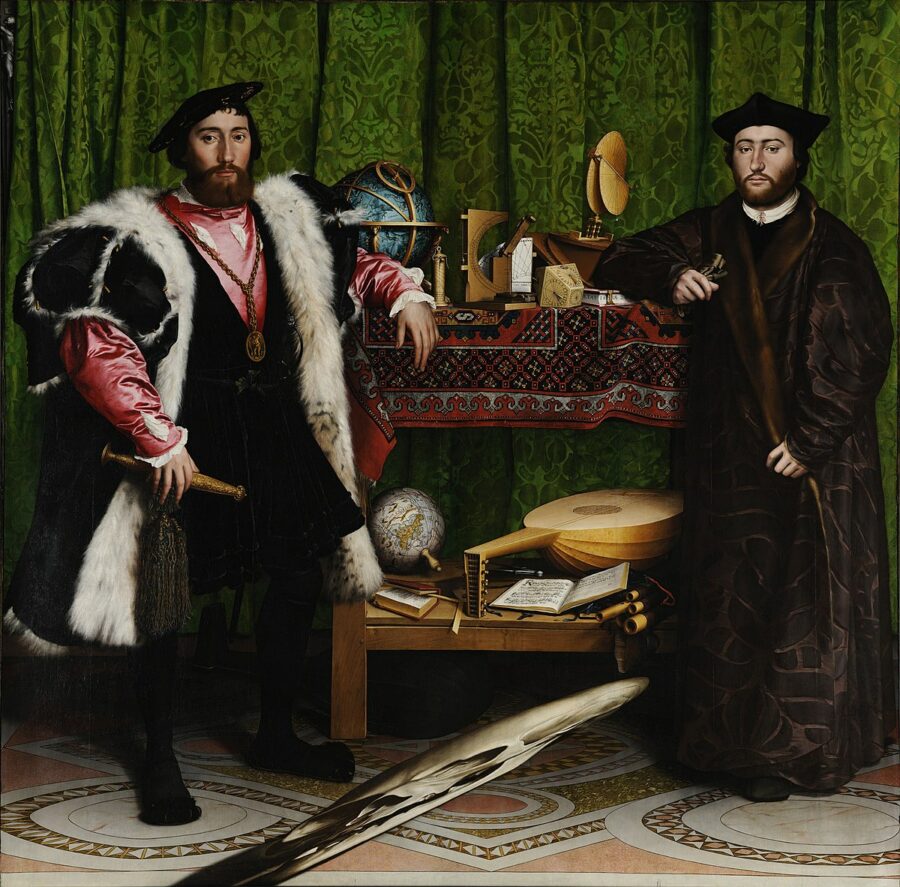
(Betcha didn’t have to work too hard to guess the skull’s location, though…)

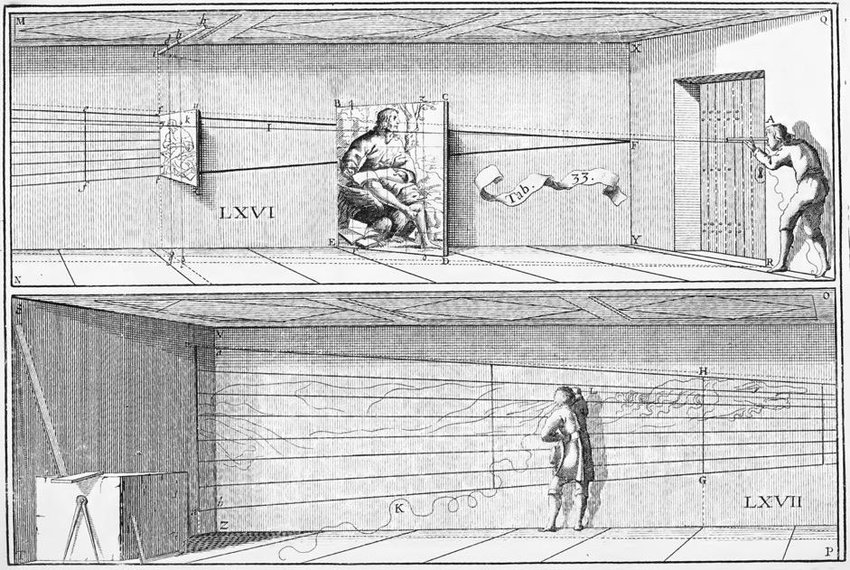
Or an artist might choose to employ anamorphosis as a brown paper wrapper of sorts, as in the case of Erhard Schön’s erotic woodblock prints.
Elsewhere, the goal was to emphasize patience, reflection, and cleaving to a pious path by rewarding those who craned their necks toward a spiritual peephole with an appropriately religious view.
(Pity the poor pilgrim who stepped up expecting Erhard Schön…)
For a 21st-century take on anamorphic art, have a look at the work of the graffiti collective TRULY | Urban Artists here.
The Quay Brothers’ short film, “De Artificiali Perspectiva, or Anamorphosis,” has been made available on The Met Museum’s YouTube channel.
via Aeon
Related Content:
Optical Poems by Oskar Fischinger, the Avant-Garde Animator Despised by Hitler, Dissed by Disney
The Anatomical Drawings of Renaissance Man, Leonardo da Vinci
Ayun Halliday is an author, illustrator, theater maker and Chief Primatologist of the East Village Inky zine. Follow her @AyunHalliday.
Read More...John Coltrane’s “Giant Steps” & Bach’s “Prelude in C Major” Get Turned into Dazzling Musical Animations by an Artist with Synesthesia
Colour is the keyboard, the eyes are the harmonies, the soul is the piano with many strings. The artist is the hand that plays, touching one key or another, to cause vibrations in the soul.
—Wassily Kandinsky
We may owe the history of modern art to the condition of synesthesia, which causes those who have it to hear colors, see sounds, taste smells, etc. Wassily Kandinsky, who pioneered abstract expressionism in the early 20th century, did so “after having an unusually visual response to a performance of Wagner’s composition Lohengrin at the Bolshoi Theatre,” the Denver Museum of Art notes. He was so moved by the moment that he “abandoned his law career to study painting at the prestigious Munich Academy of Fine Arts. He later described the life-changing experience: ‘I saw all my colors in spirit, before my eyes. Wild, almost crazy lines were sketched in front of me.’”
Kandinsky never heard Coltrane, but if he had, and had access to 3D rendering software, he might have made something very much like the short animation above from Israeli artist Michal Levy. “Roughly 3 per cent of people experience synaesthesia,” writes Aeon, “a neurological condition in which people have a recurring sensory overlap, such as … envisioning letters and numbers each with their own inherent colour.”
Levy’s condition is one of the most common forms, like Kandinsky’s: “chromaesthesia, in which sounds and music provoke visuals.” Where the Russian painter saw Wagner in “wild, almost crazy lines,” Levy sees the “rollicking notes” of Coltrane’s Giant Steps as a “kinetic, cascading cityscape built from colourful blocks of sound.”
After visualizing her experience of Coltrane, Levy created the animation above, Dance of Harmony, to illustrate what happens when she hears Bach. During a maternity leave, working with her friend, animator Hagai Azaz, she set herself the challenge of showing, as she describes it, “the cascading flow of emotion, to make the feeling contagious, by using only color, the basic shape of circles, and minimalist motion, assigning to each musical chord the visual elements that correspond to it synaesthetically.”
It is fascinating to compare Levy’s descriptions of her condition with those of other famous synesthetes like Vladimir Nabokov and, especially Kandinsky, who in essence first showed the world what music looks like, thereby giving art a new visual language. Levy calls her synesthesia art, an “emotional voyage of harmony,” and includes in her visualization of Bach’s famous prelude an “unexpected elegiac sidebar of love and loss,” Maria Popova writes. Read Levy’s full description of Dance of Harmony here and learn more about the “extraordinary sensory condition called synesthesia” here.
via Aeon
Related Content:
An Artist with Synesthesia Turns Jazz & Rock Classics Into Colorful Abstract Paintings
Jazz Deconstructed: What Makes John Coltrane’s “Giant Steps” So Groundbreaking and Radical?
Deconstructing Bach’s Famous Cello Prelude–the One You’ve Heard in Hundreds of TV Shows & Films
Josh Jones is a writer and musician based in Durham, NC. Follow him at @jdmagnes
Read More...11 Hypnotic, Close-Up Minutes Watching Tool’s Legendary Drummer Danny Carey in Action
Like the great prog drummers of old—Bill Bruford, Neil Peart, Phil Collins—Tool’s Danny Carey is an artisan. They don’t make drumming like that anymore. He says so himself (sort of) in an interview with Music Radar about his side project Legend of the Seagullmen with Mastadon’s Brent Hinds. Remembering how Robert Fripp would stand on the edge of the stage, watching Tool play when King Crimson opened for the modern prog-metal giants, Carey remarks, “We weren’t syncing to some bullshit like so many other bands. We were actually playing live. It’s a sad thing when almost every band you see isn’t doing that. It’s the clicks and backing tracks that are keeping time. I’ve never played to a click on stage in my life.”
A “click track,” for those who don’t know, is exactly what it sounds like: a playback of clicks (or any percussive sound) to the desired tempo, pumped into a musician’s earpiece to keep them playing in time. A useful tool of the recording studio, many musicians, as Carey says, now use it on stage, along with vocal pitch correction software and pre-recorded backing tracks to make sure everything sounds exactly like it does on record.
All of this technology ruins the feel of live performance, Carey maintains. He would know. He’s been playing live since the 80s and playing with Tool since the band formed thirty years ago. He also jams every other month, he says, “with these weird dudes who played with Miles Davis or Mahavishnu Orchestra.” So… yeah. The dude’s got some classic chops.
But technology isn’t all bad in live music, far from it. Being a drummer used to mean that hardly anyone could see you on a big stage. You might be the most talented, best-looking member of the band, but you were hidden away behind your kit with the singers and guitarists soaking up the glory. Even when certain celebrity rock drummers get their own stages (with their own mini-roller coasters), it can be impossible to see what they’re doing up close. No longer. Thanks to unobtrusive cameras that can stream video from anywhere, no corner of the stage need be obscured. We can watch a Tool show from over Carey’s shoulder, as in the video of “Pneuma,” live in concert, at the top, produced by drum equipment company Vic Firth to demonstrate Carey’s new signature sticks.
It’s better to let Carey’s playing speak for itself, but for reference, “Pneuma” comes from Tool’s very eagerly-awaited 2019 album Fear Inoculum, just one of many tracks “filled with twist after turn, conventional song structure be damned,” Ilya Stemkovsky writes at Modern Drummer, “with Carey at the center of the storm, providing the heaviest, most massive bottom possible. He even gets his own solo percussion track, ‘Chocolate Chip Trip,’ on which he incorporates gongs and bells, among other sounds.” Maybe this live view, and Tool’s well-deserved Grammy Win for Best Metal Performance this year for “7empest,” will inspire more drummers to drop the click and bring back what Carey calls the “dedication to your vibe” from the days of artisanal drumming.
Related Content:
The Neuroscience of Drumming: Researchers Discover the Secrets of Drumming & The Human Brain
Witness Rush Drummer Neil Peart’s (RIP) Finest Moments On Stage and Screen
What Makes John Bonham Such a Good Drummer? A New Video Essay Breaks Down His Inimitable Style
See Why Ginger Baker (RIP) Was One of the Greatest Drummers in Rock & World Music
Josh Jones is a writer and musician based in Durham, NC. Follow him at @jdmagness
Read More...The Story of the SynthAxe, the Astonishing 1980s Guitar Synthesizer: Only 100 Were Ever Made
What is the musical instrument most thoroughly of the 1980s? Many would say the “keytar,” a class of synthesizer keyboards shaped and worn like a guitar. Their relatively light weights and affordable prices, even when first brought to market, put keytars within the reach of musicians who wanted to possess both the wide sonic palette of digital synthesis and the inherent cool of the guitarist. This arrangement wasn’t without its compromises: few keytar players enjoyed the full range of that sonic palette, to say nothing of that cool. But in 1985, a new hope appeared for the synthesizer-envying guitarist and guitar-envying synthesist alike: the SynthAxe.

Created by English inventors Bill Aitken, Mike Dixon, and Tony Sedivy (and funded in part by Richard Branson’s Virgin Group), the SynthAxe made a quantum leap in the development of synthesizer-guitars, or guitar-synthesizers. Unlike a keytar, it used actual strings — not just one but two independent sets of them — that when played could control any synthesizer compatible with the recently introduced Musical Instrument Digital Interface (MIDI) standard.
As Guitarist magazine editor Neville Marten demonstrates in the contemporary promotional video at the top of the post, this granted anyone who could play the guitar command of all the sounds cutting-edge synthesizers could make.
Not that mastery of the guitar translated immediately into mastery of the SynthAxe: even the most proficient guitarist had to get used to the unusually sharp angle of its neck, its evenly spaced frets, and the set of keys embedded in its body. (“That is the point, it’s not a guitar,” as Aitken took pains to explain.) You can see Lee Ritenour make use of both the SynthAxe’s strings and keys in the 1985 concert clip above. Nicknamed “Captain Fingers” due to his sheer dexterity, Ritenour had been in search of ways to expand his sound, experimenting with guitar-synthesizer hybrid systems even in the 70s. When the SynthAxe came along, not only did he record a whole album with it, that album’s cover is a painting of him with the striking new instrument in hand.
So is the cover of Atavachron, the first album Allan Holdsworth recorded after meeting the SynthAxe’s creators at a trade show. No guitarist would take up the SynthAxe with the same fervor: Holdsworth, seen playing it with a breath controller (!) in the clip above, would continue to use it on his recordings up until his death in 2017. “People used to write notes on my amp, asking me to stop playing the SynthAxe and play the guitar instead,” he told Guitar World in his final interview that year. “But now people often ask me, ‘We’d love to hear you play the SynthAxe — did you bring it?’ I rarely play it onstage anymore because it’s too costly to take on the road and it requires a lot of equipment.”
The amount of associated gear no doubt put many an aspiring synthesizer-guitarist off the SynthAxe. (“It’s about as portable as a drum kit isn’t,” writes early adopter John Hollis.) So must the price tag, a cool £10,000 back in 1985. This didn’t put off guitarist Alec Stansfield, whose enthusiasm for the SynthAxe as was such that he joined the company, having “knocked long and hard on their door until they gave me a job as a production engineer.” Alas, he writes, “the instrument was never a commercial success and eventually the company ceased trading. Fewer than 100 instruments had been produced in total. In the final months I was paid with a SynthAxe system since cash was tight” — a system he shows off in the video above.
Stansfield sold off his SynthAxe in 2013, but what has become of the others? One of Ritenour’s SynthAxes eventually found its way into the possession of Roy Wilfred Wooten, better known as Future Man of Béla Fleck and the Flecktones. “Over a period of time, he began modifying it into an almost entirely new instrument: the SynthAxe Drumitar,” writes Computer History Museum curator Chris Garcia. “This system, which replaced the strings as the primary triggering mechanism, allowed Wooten to play the ‘drums’ using the guitar-like device.” In the concert clip just above, you can behold Future Man playing and explaining this “SynthAxeDrumitar,” sounds like a drum kit but looks like a guitar — though rather vaguely, at this point. Call it SynthAxe-meets-Mad Max.
Related Content:
Behold the First Electric Guitar: The 1931 “Frying Pan”
Brian May’s Homemade Guitar, Made From Old Tables, Bike and Motorcycle Parts & More
Hear Musicians Play the Only Playable Stradivarius Guitar in the World: The “Sabionari”
The Nano Guitar: Discover the World’s Smallest, Playable Microscopic Guitar
How the Yamaha DX7 Digital Synthesizer Defined the Sound of 1980s Music
Based in Seoul, Colin Marshall writes and broadcasts on cities, language, and culture. His projects include the Substack newsletter Books on Cities, the book The Stateless City: a Walk through 21st-Century Los Angeles and the video series The City in Cinema. Follow him on Twitter at @colinmarshall, on Facebook, or on Instagram.
Read More...How Vividly Colorized Photos Helped Introduce Japan to the World in the 19th Century
Since the mid-20th century heyday of Sony transistor radios, the world has associated Japan with high technology. But between the mid-17th and mid-19th century, the world could barely associate Japan with anything at all. The isolationist policy of sakoku, or “closed country,” kept the Land of the Rising Sun virtually free of outside influence — especially Western religious and colonial influence — until, in 1853, the American Navy commodore Matthew Perry rolled up in his “Black Ships” and demanded an opening of its ports. Thereafter, according to the Vox Darkroom video above, “foreigners coming to Japan brought their clothes, their culture, and their cameras.”

The cameras in particular made it possible for everyone around the world to finally get a glimpse of this mysterious island nation they’d previously known only in their imagination. Photography, itself an excitingly new technology at the time, rapidly boomed in the newly opened Japan as an industry.
“Photographers — mostly European, but some Japanese — documented Japan’s landscape and people, creating collectible and highly prized images of Japanese culture,” first in black-and-white and subsequently with early colorization methods. Then, as would happen over and over again in subsequent decades, Western technology and Japanese craftsmanship united to take it to the next level.

An Italian-British photographer named Felice Beato “made expert-quality hand-coloring the defining characteristic of this era of Japanese photography,” drawing on a “large body of highly trained artisans from the ukiyo‑e woodblock print industry.” By the time foreigners began using cameras to capture images of Japanese life, the Japanese had already been capturing Japanese life with ukiyo‑e, or “pictures of the floating world,” for centuries. Photographers soon discovered they could tap into the “expertise of patient precision in the application of color on to flat images that had been in place in Japan for generations.”

This new wave of Japanese “color” photography studios set themselves apart with masterful watercoloring that “added to the sense of realism in these images, which made them even more collectible.” Some photographers, such as Kusakabe Kimbei, got even more artistic, “staging elaborate, sometimes mythic scenes of Japanese culture” in the studio, then adding not just watercolors but other visual effects: in Girl in Heavy Storm, the photograph above, “the ‘rain’ is simulated by scratches into the glass plate negative.” Her kimono is also pinned in places to the background, all in the name of capturing another of the industry’s “supposedly typical scenes of Japanese life.” Even when it’s right before your eyes, Japan is in the imagination.
Related Content:
1850s Japan Comes to Life in 3D, Color Photos: See the Stereoscopic Photography of T. Enami
Hand-Colored 1860s Photographs Reveal the Last Days of Samurai Japan
Download Hundreds of 19th-Century Japanese Woodblock Prints by Masters of the Tradition
Watch Vintage Footage of Tokyo, Circa 1910, Get Brought to Life with Artificial Intelligence
Watch Chilling Footage of the Hiroshima & Nagasaki Bombings in Restored Color
Based in Seoul, Colin Marshall writes and broadcasts on cities, language, and culture. His projects include the Substack newsletter Books on Cities, the book The Stateless City: a Walk through 21st-Century Los Angeles and the video series The City in Cinema. Follow him on Twitter at @colinmarshall, on Facebook, or on Instagram.
Read More...When R.E.M.‘s Michael Stipe Created the Lyrics for “The Voice of Harold” by Riffing on the Liner Notes of an Old Gospel Album (1983)
R.E.M. is one of those bands that just thinking about can send me into a reverie of memories of the rooms of friends with whom I listened to “Pretty Persuasion,” “Rockville,” and the poetry of “7 Chinese Bros.”—one of Michael Stipe’s early, incomprehensible songs, like “Swan Swan H,” whose cryptic lyrics one must seemingly take on faith. The song must mean something, after all, to Stipe. Maybe the mystery of who, exactly, the “seven Chinese brothers swallowing the ocean” were to him would be revealed someday in an interview or stray reference in a biography….
Now that we live in an age of instant information gratification, we can skip the years of wonder and find the answer right away: the song was partly inspired, we learn at Songfacts, by a 1938 children’s book called The Five Chinese Brothers, based on a traditional folk tale of young brothers with supernatural powers. (It’s also partly a tribute to photographer Carol Levy, a friend who died in a car crash before the recording of Reckoning.) Needing another syllable, maybe, Stipe changed the number to seven, an oddly prophetic move given that a new version of the story, published ten years later, also featured seven brothers.
The reference shows how many great songwriters work: picking at bits and pieces from their memories and whatever captivating text happens to be laying around…. And Stipe is one of those singers, like Elton John, who can sell any line, no matter how obscure or absurd.
In early songs, especially, he showed an uncanny ability to invest incantatory combinations of words with haunting pathos and urgency. He could sing from the phone book or the back of a cereal box and make it compelling. In fact, the story of “7 Chinese Bros.” involves an almost similar feat in the form of “Voice of Harold,” familiar to fans as the B‑side to “So. Central Rain” and part of the 1987 odds and ends collection Dead Letter Office. What possible explanation could there be for these non sequitur gospel lyrics, sung to the tune of… “7 Chinese Bros.”?
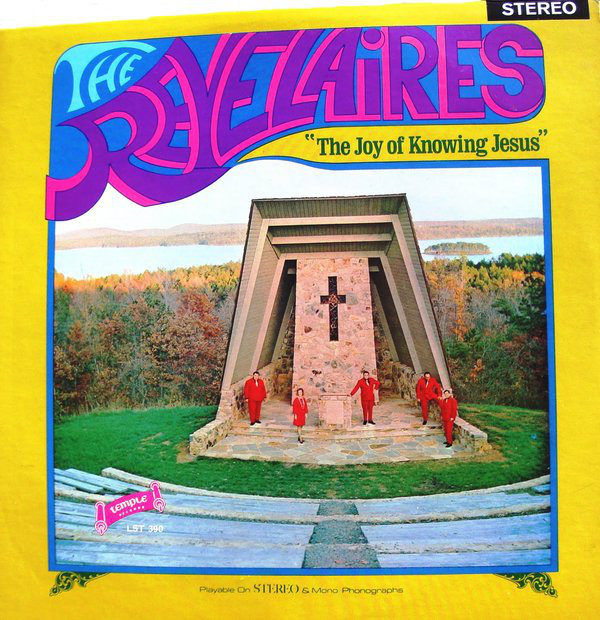
Was Stipe a secret Evangelist, hoping to win converts by extolling “the pure tenor quality of the voice of Harold Montgomery”? More teasingly vague themes emerge, along with references to figures like the Reverend Bill Funderburk, Charles Surratt, John Barbee, and Rhonda Montgomery (“That’s Rhonda! An artist!”). Instead of “Seven Chinese brothers swallowing the ocean,” the chorus introduces us to “The Revelaires, A must / The Revelaires / A must.” If you’re one of those who heard this song and thought, “What…?”, you can wonder no more.
The explanation comes to us from a 2009 interview producer Don Dixon gave to Uncut magazine. (For some reason, Dixon refers to “7 Chinese Bros.” as “7 Chinese Blues,” never a title of the song). The story begins with Stipe feeling down in the dumps in a stairwell outfitted as a lounge for him in the studio.
We were working on the vocal for “7 Chinese Blues,” but Michael just wasn’t into it. He was down in his stairwell. I hit the talk-back to let him know I was coming through to make an adjustment… This was just an excuse to take a look at him, see if I could loosen him up a little. While I was in the attic, I’d noticed a stack of old records that had been taken up there to die, local R&B and gospel stuff mostly. I grabbed the one off the top (a gospel record entitled The Joy of Knowing Jesus by the Revelaires) and as I passed Michael on the way to the Control Room, I tossed it down to him. I thought he might be amused. When I fired up the tape a few seconds later, Michael was singing, but not the lyrics to “7 Chinese Blues.” He was singing the liner notes to the LP I’d tossed him. When Michael began to sing these liner notes, he was much louder than he’d been earlier and it took a few seconds for me to realise what was going on and adjust the levels. He made it all the way through the song, working in every word on the back of that album! I rewound the tape, we had a chuckle and proceeded to sing the beautiful one-take vocal of the real words that you hear on Reckoning. He seemed more confident after that day.
Stipe didn’t just sing the words from the back of the album, he improvised cut-ups as he went, re-arranging phrases to fit the meter of the original song. “Voice of Harold” became a fan favorite for much the same reason as “7 Chinese Bros.” and “Swan Swan H”—it seemed to hide a mystery in plain view, its impassioned delivery at odds with its nonsensical narrative. Released after Reckoning, it turns a spontaneous motivational tool during the making of the album into a creation all its own.
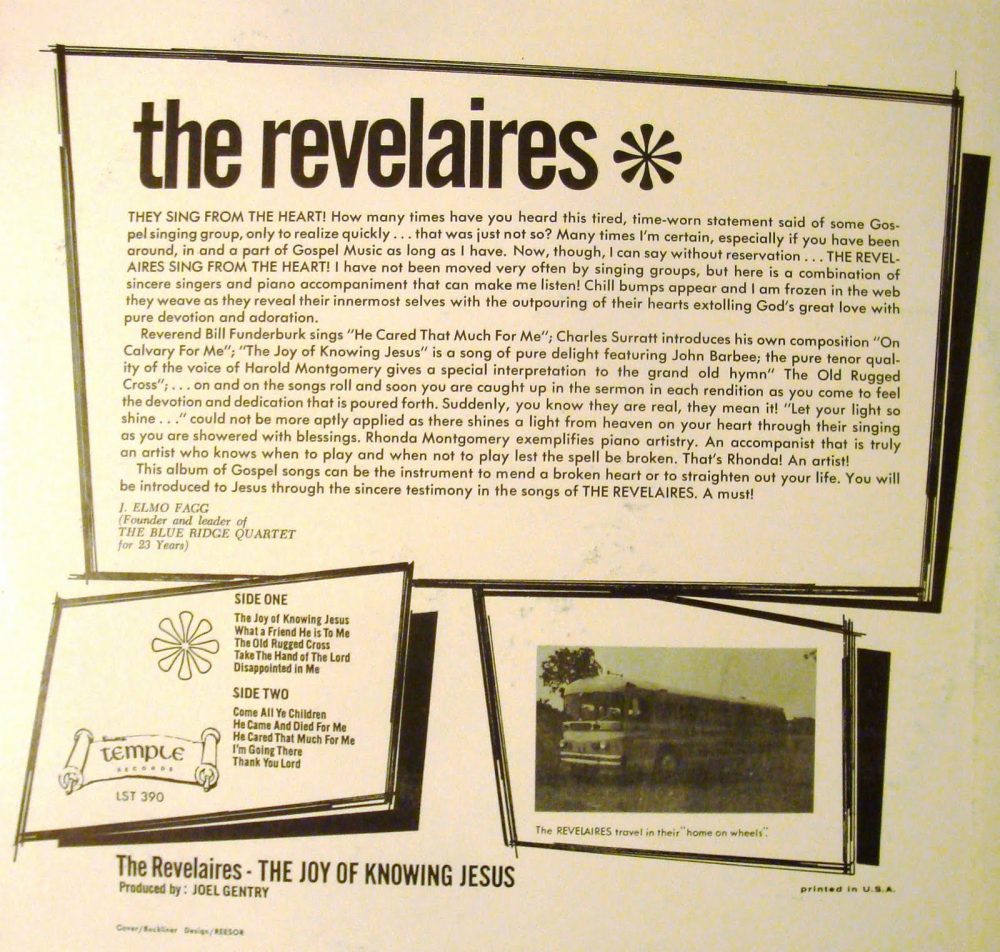
Jim Connelly explores the relationship between “7 Chinese Bros.” and “Voice of Harold” even further in a post at Medialoper, pointing to the firm conviction that’s so “chill-inducing” in the latter (and that comes through in the former recording, made immediately afterward). They may be found words, serendipitously picked up and put together on the spot, but in Stipe’s voice we can tell that “He’s real. He means it,” whatever the hell it is. See a video of “Voice of Harold” with lyrics, at the top, and follow along with the liner notes on the back of Revelaires’ gospel album The Joy of Knowing Jesus just above.
Related Content:
“It’s the End of the World as We Know It,” Michael Stipe Proclaims Again, and He Still Feels Fine
Why R.E.M.’s 1991 Out of Time May Be the “Most Politically Important Album” Ever
R.E.M.’s “Losing My Religion” Reworked from Minor to Major Scale
Josh Jones is a writer and musician based in Durham, NC. Follow him at @jdmagness
Read More...Is Mail-In Voting New in the United States?: It Actually Goes Back to the Civil War
Let’s say you go home for the holidays. Anything’s possible, who knows. It’s a wild world. Let’s say you get there and someone starts laying on you that trip about how Q Continuum said mail-in voting was orchestrated by satanic cables from Anarchist HQ. Let’s say you overhear something more down-to-earth, like how if mail-in voting happens, billions of people will vote illegally… even more people than live in the country, which is how you’ll know….
Maybe you’ll want to speak up and say, hey I know something about this topic, except then maybe you realize you don’t actually know much, but you know something ain’t right with this talk and maybe it’s probably good to have a functioning Postal Service and maybe people should be able to vote. In such situations (who can say how often these things happen), you might wish to have a little information at the ready, to educate yourself and share with others.
You might share information about how mail-in voting has been around since 1775. It has worked pretty well at scale since “about 150,000 of the 1 million Union soldiers were able to vote absentee in the 1864 presidential election in what became the first widespread use of non-in person voting in American history,” Alex Seitz-Wald explains at NBC News. Since the federal government has managed to make mail-in voting work for soldiers serving away from home for over 150 years, “it’s now easier in some ways for a Marine in Afghanistan to vote than it is for an American stuck at home during the COVID-19 lockdown.”
“Some part of the military has been voting absentee since the American Revolution,” Donald Inbody, former Navy Captain turned political science professor at Texas State University, tells NBC News. Inbody refers to one of the first documented instances, when Continental Army soldiers voted in a town meeting by proxy in New Hampshire. But history is complicated, and “mail-in voting has worked just fine so shut up” needs some nuance.
In the very same election in which 150,000 Union soldiers mailed their ballots, Lincoln urged Sherman to send troops stationed in Democratic-controlled Indiana—which had banned absentee voting—back to their home states so that they could vote. The practice has always had its vocal critics and suffered accusations of fraud from all sides, though little evidence seems to have emerged. Absentee voting helped win the Civil War, Blake Stilwell argues at Military.com, in spite of a conspiracy theory alleging fraud that might have unseated Lincoln.

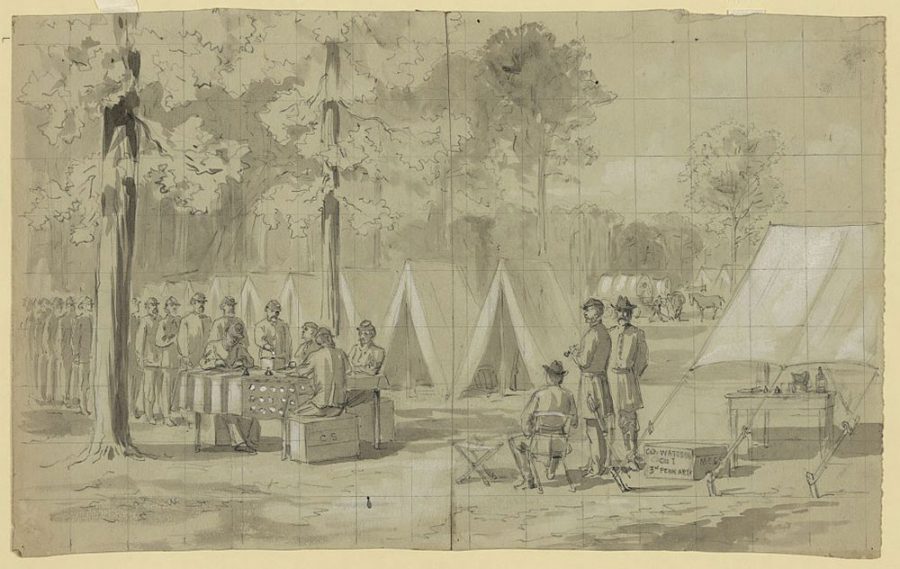
There are several remnants from the time of careful record-keeping, like the pre-printed envelope above that “contained a tally sheet of votes from the soldiers of Highland County the Field Hospital 2nd Division 23rd Army Corps,” notes the Smithsonian National Postal Museum. (The drawing at the top shows Pennsylvania soldiers voting in 1864.) And this is all fascinating stuff. But soldiers are actually absent, which is why they vote absentee, right? I mean, if you’re at home, why can’t you just go to the polling place in the global pandemic in your city that closed all the polling places?
It’s true that civilian mail-in voting often works differently from military absentee voting. While every state offers some version, some restrict it to voters temporarily out of state or suffering an illness. Currently, only “30 states have adopted ‘no-excuse absentee balloting,’ which allows anyone to request an absentee ballot,” Nina Strochlic reports at National Geographic. State laws vary further among those 30.
“In 2000,” for example, “Oregon became the first state to switch to fully vote-by-mail elections.” Things have rapidly changed, however. “In the face of the coronavirus pandemic, voters in every state but Mississippi and Texas were allowed to vote by mail or by absentee ballot in this year’s primaries.” If you live in the U.S. (or outside it) and don’t know what happened next… bless you. It involves defunding the post office instead of the police.
Voting by mail has expanded to meet major crises throughout history, says Alex Keyssar, history professor at the Kennedy School of Government at Harvard. “That’s the logical trajectory” and “we are not in normal times.” If a highly infectious disease that has killed at least 200,000 Americans on top of ongoing voter suppression and an election security crisis and massive civil unrest and economic turmoil aren’t reasons enough to expand the vote-by-mail franchise to every state, I couldn’t say what is.
Should only soldiers have the ability to vote easily? I imagine someone might say YES, loudly over the centerpiece, because voting is a privilege not a right!
You, empowered purveyor of accurate information, understander of absentee voting history, change-maker, will pull out your pocket Constitution and ask someone to find the word “privilege” in amendments that start with “The right of citizens of the United States to vote shall not be denied or abridged by the United States or by any State,” etc. That’ll show ’em. But if the gambit fails to impress, you’ve still got a better understanding of why voting by mail may not be one of the signs of the end times.
Related Content:
Take The Near Impossible Literacy Test Louisiana Used to Suppress the Black Vote (1964)
Three Public Service Announcements by Frank Zappa: Vote, Brush Your Teeth, and Don’t Do Speed
Sal Khan & the Muppets’ Grover Explain the Electoral College
Josh Jones is a writer and musician based in Durham, NC. Follow him at @jdmagness
Read More...High-Resolution Walking Tours of Italy’s Most Historic Places: The Colosseum, Pompeii, St. Peter’s Basilica & More
The global tourism industry has seen better days than these. In regions like western Europe, to which travelers from all parts have long flocked and spent their money, the coronavirus’ curtailment of world travel this year has surely come as a severe blow. This goes even more so for a country like Italy, whose stock of historic structures, both ruined and immaculately preserved, has long assured it touristic preeminence in its part of the world. So much the worse, then, when Italy became one of the countries hardest hit by the virus this past spring. But its recovery is well underway, as is Europe’s reopening to travelers.
Or at least Europe is reopening to certain travelers: much of the continent has remained closed to those from certain afflicted countries, including but not limited to the United States of America. Of course, the U.S. has also banned entry to travelers who have recently been in many of those European countries, and however you look at it, this situation will take some time to untangle.
Until that happens, those of us who’ve had to indefinitely suspend our planned trips to Italy — or even those of us who’d never considered going before the option was removed from the table — can content ourselves with this set of high-resolution journeys on foot from the Youtube channel ProWalk Tours, all shot at length in real tourist spots amid visitors and locals alike.
Whether the Colosseum and Palatine Hill in Rome, St. Peter’s Basilica in Vatican City, and the towns of Pompeii (in two parts) and Herculaneum both ruined and preserved by Mt. Vesuvius, ProWalk’s videos show you all you’d see on an in-person waking tour. But they also include features like maps, marks in the timeline denoting each important site, and onscreen facts and explanations of the features of these historic places. Combine these with the immersive virtual museum tours previously featured here on Open Culture, as well as the recreations of ancient Rome in its prime and Pompeii on the day of Vesuvius eruption, and you’ll have the kind of understanding you couldn’t get in person — and with no danger of being whacked by your fellow tourists’ selfie sticks.
Related Content:
Based in Seoul, Colin Marshall writes and broadcasts on cities, language, and culture. His projects include the Substack newsletter Books on Cities, the book The Stateless City: a Walk through 21st-Century Los Angeles and the video series The City in Cinema. Follow him on Twitter at @colinmarshall, on Facebook, or on Instagram.
Read More...David Lynch Tries to Make a List of the Good Things Happening in the World … and Comes Up Blank
David Lynch’s weather report for Sunday September 13th: “Here in LA, grey. Again, smoke-filled sky. Very still right now. 61 degrees fahrenheit. Today I’m making a list of all the good things that are happening in the world. [Pause.] I’m still thinking… No blue skies, no golden sunshine today.”
Maybe David Byrne, creator of the “Reasons to Be Cheerful” web site, would have a better shot at filling out the page. Have your own list of good things happening in the world? Add them to the comments below…
If you would like to support the mission of Open Culture, consider making a donation to our site. It’s hard to rely 100% on ads, and your contributions will help us continue providing the best free cultural and educational materials to learners everywhere. You can contribute through PayPal, Patreon, and Venmo (@openculture). Thanks!
Related Content:
Read More...Monty Python’s Michael Palin Is Also an Art Critic: Watch Him Explore His Favorite Paintings by Andrew Wyeth & Other Artists
Many a parent who caught their kid watching Monty Python’s Flying Circus in the 1970s felt, as one 70s American dad proclaimed, that “it was the singularly dumbest thing ever broadcast on the tube.” Fans of the show know otherwise. The Pythons created some of sharpest satire of conservative authority figures and middle-class mores. But they did it in the broadly silliest of ways. The troupe, who met at Oxford and Cambridge, where they’d been studying for professional careers, decided they preferred to follow in the footsteps of their heroes on The Goon Show. What must their parents have thought?
But the Pythons made good. They grew up to be avuncular authorities themselves, of the kind they might have skewered in their younger days. After several decades of making highly regarded travel documentaries, Michael Palin became president of the Royal Geographical Society, an office one can imagine him occupying in the short-pants uniform of a Bruce. Instead, photographed in academic casual holding a globe, he was dubbed by The Independent as “a man with the world in his hands.”
Unlike fellow accomplished Python John Cleese, who can never resist getting in a joke, Palin has mostly played the straight man in his TV presenter career. He brings to this role an earnestness that endeared viewers for decades. It’s a quality that shines through in his documentaries on art for BBC Scotland, in which he explores the worlds of his favorite painters without a hint of the pretentiousness we would find in a Python caricature. Just above, Palin travels to Maine to learn about the life of Andrew Wyeth and the setting of his most famous work, Christina’s World.
Palin’s passion for art and for travel are of a piece—driven not by ideas about what art or travel should be, but rather by what they were like for him. Palin brings this personal approach to the conversation above with Caroline Campbell, Head of Curatorial at the British National Gallery. Here, he discusses “ten paintings which I cannot avoid when I’m going in the gallery. They always catch my eye, and each one means something to me.” Artists included in his “rather esoteric” collection include the late-Medieval/early-Renaissance pioneer Duccio, Hans Holbein the Younger, William Hogarth, and Joseph Mallord William Turner.
While these may be familiar names to any art lover, the works Palin chooses from each artist may not be. His thoughtful, perceptive responses to these works are not those of the professional critic or of the professional comedian. They are the responses of a frequent traveler who notices something new on every trip.
Related Content:
New Animated Film Tells the Life Story of Monty Python’s Graham Chapman
Josh Jones is a writer and musician based in Durham, NC. Follow him at @jdmagness
Read More...Support Us
We're hoping to rely on loyal readers, rather than erratic ads. Please click the Donate button and support Open Culture. You can use Paypal, Venmo, Patreon, even Crypto! We thank you!

About Us

Open Culture scours the web for the best educational media. We find the free courses and audio books you need, the language lessons & educational videos you want, and plenty of enlightenment in between.
Advertise With Us

FREE UPDATES!
GET OUR DAILY EMAIL
Get the best cultural and educational resources on the web curated for you in a daily email. We never spam. Unsubscribe at any time.
FOLLOW ON SOCIAL MEDIA

Open Culture editor Dan Colman scours the web for the best educational media. He finds the free courses and audio books you need, the language lessons & movies you want, and plenty of enlightenment in between.
Advertise With Us


