Download Original Bauhaus Books & Journals for Free: A Digital Celebration of the Founding of the Bauhaus School 100 Years Ago
In 1919, German architect Walter Gropius founded Bauhaus, the most influential art school of the 20th century. Bauhaus defined modernist design and radically changed our relationship with everyday objects. Gropius wrote in his manifesto Programm des Staatlichen Bauhauses Weimar that “There is no essential difference between the artist and the artisan.” His new school, which featured faculty that included the likes of Paul Klee, László Moholy-Nagy, Josef Albers and Wassily Kandinsky, did indeed erase the centuries-old line between applied arts and fine arts.
Bauhaus architecture sandblasted away the ornate flourishes common with early 20th century buildings, favoring instead the clean, sleek lines of industrial factories. Designer Marcel Breuer reimagined the common chair by stripping it down to its most elemental form.
Herbert Bayer reinvented and modernized graphic design by focusing on visual clarity. Gunta Stölzl, Marianne Brandt and Christian Dell radically remade such diverse objects as fabrics and tea kettles.

Nowadays, of course, getting one of those Bauhaus tea kettles, or even an original copy of Gropius’s manifesto, would cost a small fortune. Fortunately for design nerds, typography mavens and architecture enthusiasts everywhere, the good folks over at Monoskop have posted online a whole set of beautifully designed publications from the storied school.
Click here to pick out individual works or here to just get all of them. Sadly, though, you can’t download a teakettle.
The list of Books in the Monoskop Bauhaus archive includes:
- 1. Walter Gropius (ed.), Internationale Architektur, Munich: Albert Langen, 1925.
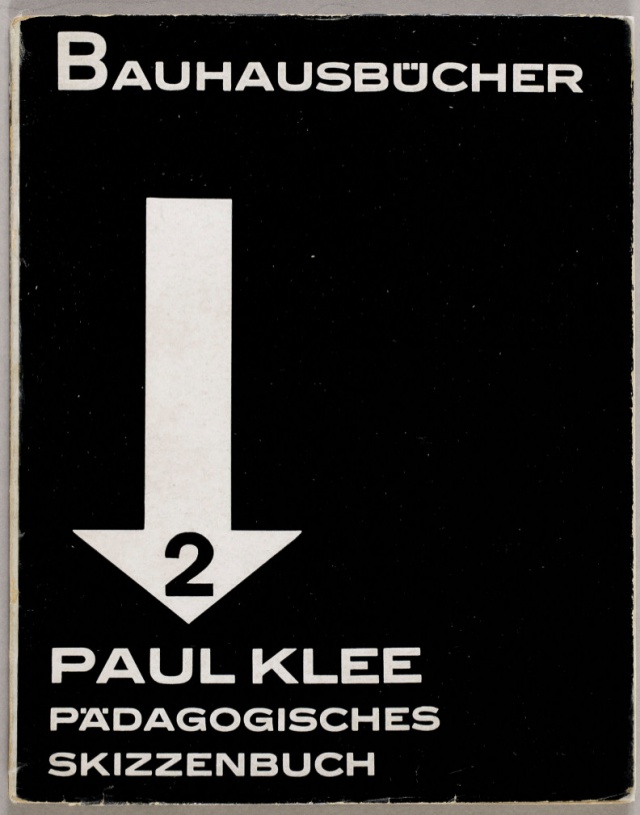
- 2. Paul Klee, Pädagogisches Skizzenbuch, Munich: Albert Langen, 1925, 50 pp.
- Pedagogical Sketchbook, intro. & trans. Sibyl Moholy-Nagy, New York: Frederick A. Praeger, 1953 (in English)
- Παιδαγωγικό Σημειωματάριο, trans. Β. Λαγοπούλου, 1976. (in Greek)
- Pedagogikheskie eskizy, trans. N. Druzhkovoy, 2005. (in Russian)
- 3. Adolf Meyer (ed.), Ein Versuchshaus des Bauhauses in Weimar, Munich: Albert Langen, 1924.
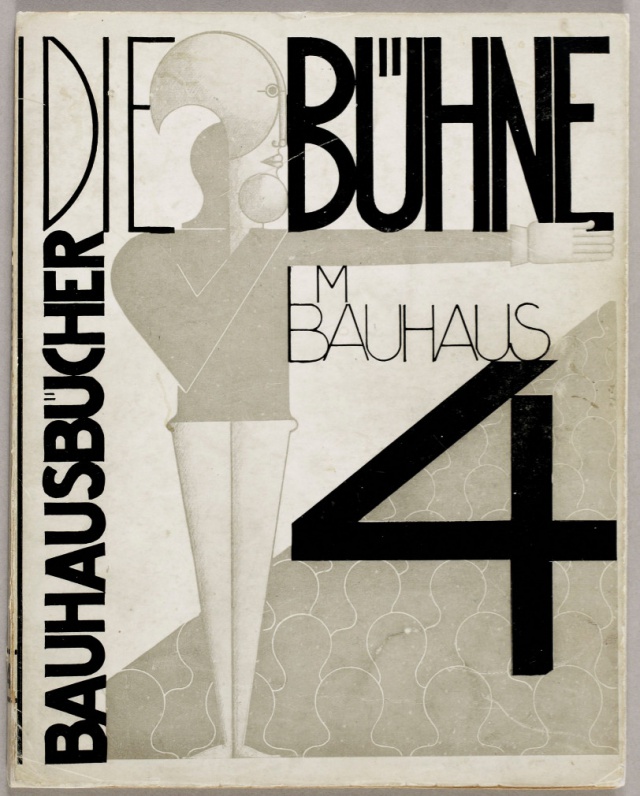
- 4. Die Bühne am Bauhaus, Munich: Albert Langen, 1925.
- The Theater of the Bauhaus, trans. Arthur S. Wensinger, Middletown, Conn.: Wesleyan University Press, 1961. (in English)
- 5. Piet Mondrian, Neue Gestaltung, Neoplastizimus, Nieuwe Beelding, Munich: Albert Langen, 1925.
- 6. Theo van Doesburg, Grundbegriffe der neuen gestaltenden Kunst, Munich: Albert Langen, 1925.
- Principles of Neo-Plastic Art, London: Lund Humphries, 1969. (in English)
- 7. Walter Gropius (ed.), Neue Arbeiten der Bauhauswerkstäffen, Munich: Albert Langen, 1925.
- 8. L. Moholy-Nagy, Malerei, Fotografie, Film, Munich: Albert Langen, 1925, 115 pp; 2nd ed., 1927, 140 pp. Incl. “Dynamik der Gross-Stadt.”
- Painting Photography Film, trans. Janet Seligman, London: Lund Humphries, 1969. (in English)
- 9. Kandinsky, Punkt und Linie zu Fläche: Beitrag zur Analyse der malerischen Elemente, Munich: Albert Langen, 1926.
- Point and Line to Plane: Contribution to the Analysis of the Pictorial Elements, trans. Howard Dearstyne and Hilla Rebay, New York: Solomon R. Guggenheim Foundation, 1947, 200 pp. (in English)
- 10. J.J.P. Oud, Holländische Architektur, Munich: Albert Langen, 1929.
- 11. Kasimir Malewitsch, Die gegenstandslose Welt, Munich: Albert Langen, 1927.
- 12. Walter Gropius, Bauhausbauten Dessau, Munich: Albert Langen, 1930.
- 13. Albert Gleizes, Kubismus, Munich: Albert Langen, 1928.
- 14. László Moholy-Nagy, Von Material zur Architektur, Munich: Albert Langen, 1929, 241 pp; facsimile repr., Mainz and Berlin: Florian Kupferberg, 1968.
- The New Vision: From Material to Architecture, trans. Daphne M. Hoffman, New York: Breuer Warren and Putnam, 1930; exp.rev.ed. as The New Vision and Abstract of an Artist, New York: George Wittenborn, 1947, 92 pp. (in English)
And here are some key Bauhaus journals:
- bauhaus 1 (1926). 5 pages, 42 cm. Download (23 MB).
- bauhaus: zeitschrift für bau und gestaltung 2:1 (Feb 1928). Download (17 MB).
- bauhaus: zeitschrift für gestaltung 3:1 (Jan 1929). Download (17 MB).
- bauhaus: zeitschrift für gestaltung 3:2 (Apr-Jun 1929). Download (15 MB).
- bauhaus: zeitschrift für gestaltung 3:3 (Jul-Sep 1929). Download (16 MB).
- bauhaus: zeitschrift für gestaltung 2 (Jul 1931). Download (15 MB).
Get more in the Monoskop Bauhaus archive.
Note: An earlier version of this post appeared on our site in 2015. We’re bringing it back to celebrate the founding of the Bauhaus school 100 years ago–on April 1, 1919.
Related Content:
Harvard Puts Online a Huge Collection of Bauhaus Art Objects
Jonathan Crow is a Los Angeles-based writer and filmmaker whose work has appeared in Yahoo!, The Hollywood Reporter, and other publications. You can follow him at @jonccrow. And check out his blog Veeptopus, featuring lots of pictures of vice presidents with octopuses on their heads. The Veeptopus store is here.
Read More...The Amazing Isolated Drums of Dennis Davis, David Bowie’s Master Drummer, Revisited by Producer Tony Visconti
“Look Back in Anger” is an underrated Bowie song on an underrated Bowie album (Lodger) but it’s always been a favorite because of the fury and thunder of the backing band. And the MVP of that six person group is drummer Dennis Davis. A member of Roy Ayers’ jazz-funk group at first, he joined Bowie’s session/touring band during the Young Americans sessions and stayed through Scary Monsters. He’s that most perfect of drummers too: endlessly inventive, yet never gets in the way of the funk.
But this track might be one of his crowning achievements. A nervous, propulsive rhythm on the drums carries the song, doubled on congas/percussion, but producer Tony Visconti buries it in the mix a bit so it doesn’t overwhelm the operatic arc of the song.
Recently, Davis’ young son Hikaru has been making a video exploring his father’s legacy, after Dennis passed away in 2016. Which means that this adorable elementary school student has been sitting down with the likes of Bowie sidemen Sterling Campbell, Carlos Alomar, Jan Michael Alejandro, Emir Ksasan, and George Murray, along with Roy Ayers and the members of his band.
In the above video, Hikaru interviews Tony Visconti about the aforementioned track (the producer’s favorite) and we get to hear for the first time ever Davis’ isolated drum and conga tracks.
“He’s playing so many things at once…and yet it never sounds busy,” Visconti says.
Davis incorporated a lot of Latin influences and loved triplets wherever he could drop them in.
Visconti doesn’t really add much more. They, like most of you will probably do, just sit there and listen, jaws hanging open.
Because Davis is on pretty much every post-Spiders Bowie album of the ‘70s he really should be mentioned in the same breath as the Bonhams and Keith Moons of the world, but in the meantime here’s a few more classic Davis moments:
Although slathered with Brian Eno’s noise-gate treatments, Davis’ beat is solid and prominent on “Sound and Vision”
This live version of “Station to Station” from 1978 showcases what an unstoppable force Davis was live. Adrian Belew (King Crimson, Talking Heads) provides searing guitar work. Transcendent.
A classic track from Roy Ayers Ubiquity, heavy in the Afro-Cuban groove, and Davis is front and center.
Related Content:
What Makes John Bonham Such a Good Drummer? A New Video Essay Breaks Down His Inimitable Style
Isolated Drum Tracks From Six of Rock’s Greatest: Bonham, Moon, Peart, Copeland, Grohl & Starr
Ted Mills is a freelance writer on the arts who currently hosts the artist interview-based FunkZone Podcast and is the producer of KCRW’s Curious Coast. You can also follow him on Twitter at @tedmills, read his other arts writing at tedmills.com and/or watch his films here.
Read More...William S. Burroughs’ Manifesto for Overthrowing a Corrupt Government with Fake News and Other Prophetic Methods: It’s Now Published for the First Time

The Boy Scouts of America have faced some deserved criticism, undeserved ridicule, and have been cruelly used as props, but I think it’s safe to say that they still bear a pretty wholesome image for a majority of Americans. That was probably no less the case and perhaps a good deal more so in 1969, but the end of the sixties was not by any stretch a simpler time. It was a period, writes Scott McLemee, “when the My Lai Massacre, the Manson Family and the Weather Underground were all in the news.” The Zodiac Killer was on the loose, a general air of bleakness prevailed.
William S. Burroughs responded to this madness with a counter-madness of his own in “The Revised Boy Scout Manual,” “an impassioned yet sometimes incoherent rebuke to ossified political ideologies,” writes Kirkus. We can presume Burroughs meant his instructions for overthrowing corrupt governments to satirically comment on the outdoorsy status quo youth cult. But we can also see the manual taking as its starting point certain values the Scouts champion, at their best: obsessive attention to detail, MacGyver-like ingenuity, and good old American self-reliance.
Want to bring down the government? You can do it yourself… with fake news.
Boing Boing quotes a long passage from the book that shows Burroughs as a comprehensive, if not quite wholesome, Scout advisor, describing how one might use mass media’s methods to disrupt its message, and to transmit messages of your own. We might think he is foreseeing, even recommending, techniques we now see used to a no-longer-shocking degree.
You have an advantage which your opposing player does not have. He must conceal his manipulations. You are under no such necessity. In fact you can advertise the fact that you are writing news in advance and trying to make it happen by techniques which anybody can use.
And that makes you NEWS. And a TV personality as well, if you play it right.
You construct fake news broadcasts on video camera… And you scramble your fabricated news in with actual news broadcasts.
We might read in Burroughs’ instructions the methods of YouTube propagandists, social media manipulators, and some of the most powerful people in the world. Burroughs does not recommend taking over the media apparatus by seizing its power, but rather using technology to make “cutup video tapes” and ham radio broadcasts featuring documentary media spliced together with fabrications. These “techniques could swamp the mass media with total illusion,” he writes. “It will be seen that the falsifications in syllabic Western languages are in point of fact actual virus mechanisms.”
Burroughs is not simply writing a reference for making fearmongering propaganda. Even when it comes to the subject of fear, he sometimes sounds as if he is revising Sergei Eisenstein’s montage theory for his own similarly violent times. “Let us say the message is fear. For this we take all the past fear shots of the subject we can collect or evoke. We cut these in with fear words and pictures, with threats, etc. This is all acted out and would be upsetting enough in any case. Now let’s try it scrambled and see if we get an even stronger effect.”
What would this effect be? One “comparable to post-hypnotic suggestion”? Who is the audience, and would they be, a la Clockwork Orange, a captive one? Did Burroughs see people on street corners screening their cut-up videos, despite the fact that consumer-level video technology did not yet exist? Is this a cinematic experiment, mass media-age occult ritual, compendium of practical magic for insider media adepts?
See what you can make of Burroughs’ “The Revised Boy Scout Manual” (subtitled “an electronic revolution”). The book has been reissued by the Ohio State Press, with an afterword (read it here) by V. Vale, publisher of the legendary, radical magazine RE/Search, who excerpted a part of the “Revised Manual” in the early 1980s and planned to publish it in full before “a personal relationship blowup” put an end to the project.
McLemee titles his review of Burrough’s rediscovered manifesto “Distant Early Warning,” and much of it does indeed sound eerily prophetic. But we should also bear in mind the book is itself a countercultural pastiche, designed to scramble minds for reasons only Burroughs truly knew. He was a “practicing Scientologist at the time” of the book’s composition, “albeit not for much longer,” and he does prescribe use of the e‑meter and makes scattered references to L. Ron Hubbard. But as a practitioner of his own precepts, Burroughs would not have written a monograph uncritically promoting one belief system or another. (Well, maybe just the once.) He also quotes Hassan‑I Sabbah, discusses Mayan hieroglyphics, and talks General Semantics.
“The Revised Boy Scout Manual” “has elements of libertarian manifesto, paramilitary handbook, revenge fantasy and dark satire,” McLemee writes, “and wherever the line between fiction and nonfiction may be, it’s never clear for long.” In this, Burroughs only scrambles elements already in abundance at the end of the sixties and in the early seventies, during which he revised and recorded the work several times as he transitioned himself out of an organization that maintained total control through mass media. Like Marshall McLuhan, Noam Chomsky and others, he was beginning to see this phenomenon everywhere he looked. Burroughs’ most lasting influence may be that, like the late-60s Situationists, he devised a cunning and effective way to turn mass media in on itself, one with perhaps more sinister implications.
Related Content:
When William S. Burroughs Appeared on Saturday Night Live: His First TV Appearance (1981)
Josh Jones is a writer and musician based in Durham, NC. Follow him at @jdmagness
Read More...Lawrence Ferlinghetti Turns 100: Hear the Great San Francisco Poet Read “Trump’s Trojan Horse,” “Pity the Nation” & Many Other Poems
It has been a season of mourning for literature: first the death of Mary Oliver and now W.S. Merwin, two writers who left a considerable imprint on over half a century of American poetry. Considering the fact that founding father of the Beats and proprietor of world-renowned City Lights Bookstore, Lawrence Ferlinghetti, turns 100 on March 24th, maybe a few more people have glanced over to check on him. How’s he doing?
He’s grown “frail and nearly blind,” writes Chloe Veltman at The Guardian in an interview with the poet this month, “but his mind is still on fire.” Ferlinghetti “has not mellowed,” says Washington Post book critic Ron Charles, “at all.” If you’re looking for him at any of the events planned in his honor, City Lights announces, he will not be in attendance, but he has been busy promoting his latest book, a thinly-veiled autobiographical novel about his early life called Little Boy.
In the book Ferlinghetti describes his childhood in images right out of Edward Gorey. He was a “Little Lord Fauntleroy” in a Bronxville mansion 20 miles outside New York, an orphan taken in and raised by descendants of the founders of Sarah Lawrence. “His new guardians spoke to one another in courtly tones and dressed in Victorian garb,” notes Charles. “They sent him to private school, and, more important, they possessed a fine library, which he was encouraged to use.”
The poet would later write he was a “social climber climbing downward,” an ironic reference to how some people might have seen the trajectory of his career. After serving in the Navy during World War II, earning a master’s at Columbia, and a Ph.D. at the Sorbonne, Ferlinghetti decamped to San Francisco, and founded the small magazine City Lights with Peter D. Martin. Then he opened a bookstore on the edge of Chinatown to fund the publishing venture.
The shop became a haunt for writers and poets. Ferlinghetti started publishing them, starting with himself in 1955. The following year he gained international infamy for publishing Allen Ginsberg’s Howl (hear Ginsberg read the poem in ’56). The book was banned, and Ferlinghetti put on trial for obscenity. If anyone thought this would be the end of Lawrence Ferlinghetti, they were mistaken.
He has published somewhere around forty books of poetry and criticism, novels and plays, been a prolific painter for sixty years, as well as a publisher, bookseller, and activist. He does not consider himself a Beat poet, but from his influential first two books—Pictures of the Gone World and 1958’s A Coney Island of the Mind—onward, Ferlinghetti’s philosophical outlook has more or less breathed the same air as Ginsberg et al.’s.
Quoting from Coney Island, Andrew Shapiro writes, “he counseled us to ‘confound the system,’ ‘to empty out our pockets… missing our appointments’ and to leave ‘our neckties behind’ and ‘take up the full beard of walking anarchy.’” He is still doing this, every way that he can, in public readings, media appearances, and a canny use of YouTube. His is not a call to flower power but to full immersion in the chaos of life, or, as he writes in “Coney Island of the Mind 1” in the “veritable rage / of adversity / Heaped up / groaning with babies and bayonets / under cement skies / in an abstract landscape of blasted trees.”
Ferlinghetti urged poets and writers to “create works capable of answering the challenge of apocalyptic times, even if this meaning sounds apocalyptic… you can conquer the conquerors with words.” Despite this stridency, he has never taken himself too seriously. Ferlinghetti is as relaxed as they come—he hasn’t mellowed, but he also hasn’t needed to. He’s a loose, natural storyteller and comedian and he’s still delivering sober, prophetic pronouncements with gravitas.
See and hear Ferlinghetti take on conquerors, bullies, and xenophobes, underwear, and other subjects in the readings here from his throughout his career, including a full, 40-minute reading in 2005 at UC Berkeley, below, an album of Ferlinghetti and Kenneth Rexroth, above, and at the top, a video made last year of the 99-year-old poet, in Lady Liberty mask, reading “Trump’s Trojan Horse” under a grinning, gray-bearded self-portrait of his younger self. Happy 100th to him. “I figure that with another 100 birthdays,” he says, “that’ll be about enough!”
Related Content:
The First Recording of Allen Ginsberg Reading “Howl” (1956)
Josh Jones is a writer and musician based in Durham, NC. Follow him at @jdmagness
Read More...The Gnarly Surf Rock of Dick Dale (RIP): Watch the Legend Play “Misirlou,” Surfin’ the Wedge,” and “Pipeline” (with Stevie Ray Vaughan)
The Endless Summer is over. The archetypal 1966 surf documentary might have been scored by The Sandals, but the sound and the cultural dominance of surf culture would perhaps never come into being, and may not have survived the decade, without Dick Dale, who died on March 18th at the age of 81. His gnarly, menacing guitar on songs like “Miserlou” and “Pipeline” turned a fad dominated by the teen anthems of The Beach Boys and Annette Funicello’s post-Mouseketeers bikini and beehive into genuinely gritty rock and roll.
Dale’s sound defined the risky wanderlust of surfing that early skateboarders picked up on in the 70s and 80s, snowboarders in the 90s, and so on. Hundreds of guitarists stole from his distinctive technique long after the 60s surf rock craze died at the hands of British invaders. Dale rode the sound into the 21st century, touring and performing across a United States whose popular culture he helped invent by appearing on (where else) The Ed Sullivan Show.
But it’s arguable whether his fame would have survived as long without Quentin Tarantino’s shrewd use of “Misirlou” in Pulp Fiction’s opening credits. It so happens that Dale almost didn’t survive past the sixties himself. If he had died from what seemed like a terminal cancer in 1965, it’s possible surf guitar would have died with him, become a curious relic rather than a living tradition.
Jimi Hendrix thought so—at least according to Dale in the liner notes to 1997’s Better Shred Than Dead: The Dick Dale Anthology. “Then you’ll never hear surf music again,” Hendrix supposedly said. Maybe in the purest sense, it’s true. Only Dale truly “transferred,” as he put it, the “tremendous amount of power” of surfing into the guitar. His playing was an extreme sport; his shows were “stomps”; the audience never stopped moving for a minute, whooping and hollering along with him.
And still, his cavernous guitar filled ballrooms. He pushed Fender to build louder and louder amplifiers, and everyone else along with them. Like Hendrix, he was a lefty who played a flipped-over right-handed Fender Strat. Yet Dale didn’t restring the guitar, effectively playing it upside-down. He used the heaviest strings he could find, the loudest amps that could be made, and more reverb than anyone had previously thought advisable. “Bands like the Beach Boys,” writes Amanda Petrusich at The New Yorker, “often sang about surfing,” but the genre Dale invented “was wet and gnarly and unconcerned with romance or sweetness.”
His style earned Dale the title of “King of the Surf Guitar,” also the title of his second album and a fact he liked to trumpet as often as he could, along with claims that he was called the “Father of Heavy Metal.” (Link Wray might like a word.) He was a tireless promoter and performer without whose influence there may’ve been no Endless Summer-scoring Sandals or Surfaris’ “Wipe Out”—surf culture essentials that traveled the world.
Surf rock became a niche sound, popular with increasingly specialized audiences, before Quentin Tarantino made it cool again. Pulp Fiction’s use of the song was not an ironic detournement, but a genuine reminder of how dangerous Dale sounded. He buzzsawed through the early-sixties scene of skinny ties and big hair. The footage of him above playing “Misirlou” with The Del Tones—all of whom wear terrified smiles and identical suits, above—is strangely Lynchian.
Part of the incongruity comes from watching square white Americans bounce through a haunting Egyptian folk song, while looking like they should be playing “Mr. Sandman.” Dale made 50s pop seem childish, and sound-tracked the entry of mildly adult situations in 60s surf movies. He deserved to have fared better from his influence and fame.
Dale’s last couple decades were spent like too many other people in the U.S. He couldn’t stop touring, he said, “because I will die. Physically and literally, I will die.” After his first recovery from colorectal cancer in 1965, he continued to battle the disease,” writes The Washington Post. “Up until the end of his life, Dale was explicit that he toured to fund his treatment” after his cancer returned. He couldn’t retire even when his career rebounded, twice after his early sixties’ heyday: first in 1987 when he recorded “Pipeline” (further up) with Stevie Ray Vaughan and again after Pulp Fiction.
His fans continued to support him not because he was a hip nostalgia act, but, he said, because he grew and branched out as a guitar player and he was honest about his difficulties, and people connected. He was an American original. The son of Lebanese immigrants, he took the music of his parents’ home country, blended it with country swing and blues, and played it dirty, wet, and as loud as it could go, something no one had quite done before and thousands have done since.
Related Content:
Quentin Tarantino Explains The Art of the Music in His Films
The Beach Party Film: A Short Appreciation of One of the Oddest Subgenres in Film History
A History of Rock ‘n’ Roll in 100 Riffs
Josh Jones is a writer and musician based in Durham, NC. Follow him at @jdmagness
Read More...An Animated Introduction to Friedrich Nietzsche’s Life & Thought
There’s no shame if you’ve never known how to pronounce Friedrich Nietzsche’s name correctly. Even less if you never remember how to spell it. If these happen to be the case, you may be less than familiar with his philosophy. Let Alain de Botton’s animated School of Life video briefly introduce you, and you’ll never forget how to say it: “Knee Cha.” (As for remembering the spelling, you’re on your own.) You’ll also get a short biography of the disgruntled, dyspeptic German philosopher, who left a promising academic career at the University of Basel in his mid-20s and embarked to the Swiss Alps to write his violently original books in solitude before succumbing to a mental breakdown at 44 when he saw a cart driver beating a horse.
Nietzsche died after remaining almost entirely silent for 11 years. In these years and after his death, thanks to the machinations of his sister Elizabeth, his thought was twisted into a hateful caricature. He has since been rehabilitated from associations with the Nazis, but he still calls up fear and loathing for many people because of his relentless critiques of Christianity and reputation for staring too long into abysses. Maybe we can’t help but hear fascistic overtones in his concept of the ubermensch, and his ideas about slave morality can make for uncomfortable reading. Those steeped in Nietzsche’s thought may not feel that de Botton’s commentary gives these ideas their proper critical due.
Likewise, Nietzsche himself is treated as something of an ubermensch, an approach that pulls him out of his social world. Important figures who had a tremendous impact on his personal and intellectual life—like Arthur Schopenhauer, Richard and Cosima Wagner, Lou Salomé, and Nietzsche’s sister—don’t even receive a mention. But this is a lot to ask from a six-minute summary. De Botton hits some of philosophical highlights and explains some misconceptions. Yes, Nietzsche held no brief for Christianity at all, but this was because it caused tremendous suffering, he thought, by making people morally stunted and bitterly resentful.
Instead, he argued, we should embrace our desires, and use so-called sinful passions like envy to leverage our ambitions. Nietzsche is not a seducer, corrupting the youth with promises of greatness. You may very well fail, he admitted, and fail miserably. But to deny yourself is to never become who you are. Nietzsche scholar Babette Babich has described this aspect of the philosopher’s thought as the ethics of the supportive friend. She quotes David B. Allison, who writes that Nietzsche’s advice comes to us “like a friend who seems to share your every concern—and your aversions and suspicions as well. Like a true friend, he rarely tells you what you should do.”
Except that he often does. Babich also writes about Nietzsche as educator, and indeed he considered education one of the highest human goods, too precious to be squandered on those who do not appreciate it. His philosophy of education is consistent with his views on culture. Since God is Dead, we must replace scripture and liturgy with art, literature, and music. So far, so many a young Nietzsche enthusiast, pursuing their own form of Nietzschean education, will be on board with the philosopher’s program.
But as de Botton also explains, Nietzsche, who turned Dionysus into a philosophical ideal, might have issued one prescription too many for the average college student: no drinking. If that’s too much to stomach, we should at least take seriously that stuff about staring into abysses. Nietzsche meant it as a warning. Instead, writes Peter Prevos at The Horizon of Reason, “we should go beyond staring and bravely leap into the boundless chasm and practice philosophical base jumping.” No matter how much Nietzsche you read, he’s never going to tell you that means. We only become who we are, he suggests, when we figure it on our own.
Related Content:
Free Online Philosophy Courses
Josh Jones is a writer and musician based in Durham, NC. Follow him at @jdmagness
Read More...Why Should We Read Sylvia Plath? An Animated Video Makes the Case
In “Morning Song,” from Sylvia Plath’s posthumous 1965 collection Ariel, published two years after her suicide, a newborn infant is a “fat gold watch.” Among the incessant lists of adjectives in both her work, “fat” is one that stands out, appearing often, in several synonyms, as a celebration of abundance and real anxiety over weight gain and a general too-muchness. In the same poem, the baby is a work of art, a “new statue.” Its mother, on the other hand, is in one stanza a cloud effaced by the wind in a mirror, and a clumsy animal, “cow-heavy and floral / In my Victorian nightgown. / Your mouth opens clean as a cat’s.”
Plath’s images are bracing and unexpected, awed and stricken, usually at once. She deploys them so quickly and adroitly that even when one fails to land, the others immediately take up the slack, making even her less-great poems impressive for a line or stanza that takes hold in the mind for days. This ability was not the result of either divine inspiration or mental illness, but talent honed through hard work and commitment. Plath “chose the artist’s way. Poetry was her calling,” the animated TED-Ed video by Iseult Gillespie tells us above. As such, she persevered even through severe bouts with depression and many suicide attempts before she finally succumbed at age 30.
Plath’s semi-autobiographical novel, The Bell Jar, which dramatizes these themes, as well as a handful of her darkest poems, have come to popularly symbolize her legacy. You’ve heard of them even if you’ve never read them. Yet she composed a “large bulk of poetry,” her husband, poet Ted Hughes, wrote in the introduction to her Collected Works, published and unpublished, never throwing anything out. “She brought every piece she worked on to some final form acceptable to her, rejecting at most the odd verse…. Her attitude to her verse was artisan-like: if she couldn’t get a table out of the material, she was quite happy to get a chair, or even a toy.”
His characterization may not sound like the most charitable, and as her literary executor, Hughes was accused of refusing to publish some of her work. But he was also a fellow poet who watched her tirelessly write and revise. Quoting from her journals, Hughes shows how her first collection, 1960’s The Colossus and Other Poems, came together over a period of many years, its title changing every few months, new poems appearing and old ones falling away. The result is a debut whose “breathtaking perspectives on emotion, nature, and art continue to captivate and resonate,” notes the video’s narrator.
Despite her major presence in the literary magazines and the respect she won especially in the UK, The Colossus and Other Poems would be Plath’s only published collection in her lifetime. It made her a well-respected poet, but did not make her the celebrity she became after the publication of The Bell Jar three years later and her suicide the following month. “Within a week of her death,” writes Time magazine in its review of Ariel in 1966, “intellectual London was hunched over copies of a strange and terrible poem she had written during her last sick slide toward suicide. ‘Daddy’ was its title.”
After the publication of Ariel, readers fixed on “Daddy” and “Lady Lazarus,” sensational poems in which “fear, hate, love, death and the poet’s own identity become fused at bleak heat with the figure of her father, and through him, with the guilt of the German exterminators and the suffering of their Jewish victims.” These are poems, wrote Robert Lowell in his preface, that “play Russian roulette with six cartridges in the cylinder.” As feminist scholars embraced her work in the 1970s, a morbid fascination with her image only grew. This is the Plath many people know by word of mouth. But those who haven’t read more of her will miss out.
Plath doesn’t shy away from staring at suicide, abuse, and mass murder. She helped to “break the silence surrounding issues of trauma, frustration, and sexuality.” Ariel and her dozens of uncollected poems are also “filled with moving meditations on heartbreak and creativity,” including the heartbreak and creativity of motherhood, a theme always fraught with fears of love and death. Plath’s work can be dark, and it can be at once luminous in its imaginative candor. In writing about life with depression and the domestic misery visited on her in her marriage to Hughes, she celebrates life’s sublime pleasures and mourns its depths of suffering, in poem ofter poem, with near-constant ingenuity, wit, and courage.
Related Content:
Hear Sylvia Plath Read 50+ of Her Dark, Compelling Poems
Sylvia Plath, Ted Hughes & Peter Porter Read Their Poetry: Free Audio
Sylvia Plath, Girl Detective Offers a Hilariously Cheery Take on the Poet’s College Years
Josh Jones is a writer and musician based in Durham, NC. Follow him at @jdmagness
Read More...Hear Patti Smith’s New Work With The Soundwalk Collective, a Tribute to the Avant-Garde Poet Antonin Artaud
The Soundwalk Collective has made music art out of found sounds since 2004. They recorded 2012’s Medea while traversing the Black Sea and fishing for sounds using a scanner and high powered aerial antennas; 2014’s Last Beat used contact microphones on the architecture of a music club to collect vibrations instead of music; 2017’s Before Music There Is Blood collaged deep echoing recordings of classical music played in various halls. This time, in their upcoming The Peyote Dance, they have brought in poet and rock goddess Patti Smith for a trip into Mexico.
The above track “The New Revelations of Being” is a preview of what’s to come. The album title comes from a book by Antonin Artaud, the avant-garde theater director and author, who traveled to Mexico to explore revelatory visions with the Rarámuri people in 1936. Artaud was hoping that peyote would shake his opioid addiction. When he later returned to France, Artaud stayed and remained in an insane asylum, receiving electric shock therapy. His time with the Rarámuri stayed a touchstone of happiness during his darkest days.
With a shared belief that travel expands the mind, the Soundwalk Collective traveled to the same Sierra Tarahumarar region of Mexico as Artaud, visited the same places he stayed, and indeed also took peyote. They recorded instruments and soundscapes, and then back in the States, Patti Smith wrote and recorded poems based on Artaud’s book, his other works, and her own responses to the sound fields.
“The poets enter the bloodstream, they enter the cells. For a moment, one is Artaud,” Smith said about the recording. “You can’t ask for it, you can’t buy it, you can’t take drugs for it to be authentic. It just has to happen, you have to be chosen as well as choose.”
The album is the first in a trilogy with Smith about poets and travel. The other two albums will be based on works and journeys by Arthur Rimbaud and René Daumal, and feature sounds recorded at the Abyssinian valley of Ethiopia and the Himalayan Summit of India respectively.
This not the first time the group has collaborated with Patti Smith. In 2016, they released Killer Road a tribute to Nico and her final days on the island of Ibiza, where the singer plunged to her death on a bicycle ride. The album also featured vocals by Smith’s daughter Jessie Paris Smith.
Soundwalk Collective member Stephan Crasneanscki first met Patti Smith, fittingly, at an airport in Paris, as the two were returning from separate artistic travels: Crasneanscki from Eastern Europe and Russia, Smith from French Guiana and Tangiers.
The Peyote Dance will be released May 31 on Bella Union.
Related Content:
Patti Smith’s List of Favorite Books: From Rimbaud to Susan Sontag
Patti Smith’s Award-Winning Memoir, Just Kids, Now Available in a New Illustrated Edition
Hear Antonin Artaud’s Censored, Never-Aired Radio Play: To Have Done With The Judgment of God (1947)
Ted Mills is a freelance writer on the arts who currently hosts the artist interview-based FunkZone Podcast and is the producer of KCRW’s Curious Coast. You can also follow him on Twitter at @tedmills, read his other arts writing at tedmills.com and/or watch his films here.
Read More...97-Year-Old Philosopher Ponders the Meaning of Life: “What Is the Point of It All?”
If you’ve sat by the bedside of a dying friend or relative, or recovered from a terminal illness yourself, you may know too well: the concerns of yesterday—career anxieties, political high stakes, personal grudges—can slip away into the rear view, becoming smaller and more meaningless as hours pass into final days. What takes their place? Maybe a savoring of the moment, maybe regrets over moments not savored, maybe a growing acknowledgment that gratitude matters more than being right. Maybe a willingness to let go of prior ideas—not to adopt new ones, but to open to the questions again.
Sometimes, this experience is bewildering and frightening, especially when coupled with the pains of illness and old age. Whatever insights one might have at the threshold of death, they cannot easily overcome “lifelong habits,” says Herbert Fingarette in the candid short film Being 97, a documentary made in the last months of the contrarian American philosopher’s life. By the time of his death,” notes Aeon, “Fingarette (1921–2018) had lived what most would consider a full and meaningful life. His marriage to his wife, Leslie, was long and happy. His career as a professor of philosophy at the University of California was both accomplished and controversial.”
By this time, his wife of seventy years had been gone for seven. And at 97, physically frail and his career long over, Fingarette was coming to terms with “loneliness and absence” as well as with his need for help from other people to do simple tasks. After 42 years of teaching—and writing on subjects like self-deception, Confucianism, ethical responsibility, and addiction—he was also grappling with the fact he had been wrong about one particularly pressing matter, at least.
Fingarette became infamous when, without undertaking any scientific research himself, he claimed in the 1988 book Heavy Drinking that alcoholism was a problem of self control, not a disease. But he does not speak of the political furor in this minor controversy. Eleven years later, he took on an even heavier subject in Death: Philosophical Soundings. “What I said was in a nutshell,” he recalls, “is there’s no reason to be afraid or concerned or anything about death because when you die, there’s nothing. You’re not going to suffer, you’re not going to be unhappy… you’re not going to be…. It’s not rational to be afraid of death.”
He admits, “I now think that is not a good statement, because I think it’s important to figure out why it is then that people are afraid of death. Why am I concerned about it?” His best thinking aside, “my sense of realism tells me, well, no good reason or not, it is something that haunts me. I walk around the house and I ask myself, ‘What is the point of it all? There must be something I’m missing in this argument.’” He asks, he says, knowing “that there isn’t any good answer.” But that doesn’t stop him from looking for one. We see Fingarette’s lifelong habits as a thinker push him forward in pursuit of what he calls a “foolish question,” although he intuits that “the answer might be… the silent answer.”
It’s a painful existential realization for a man so devoted to logical argument and pronouncements of certainty. This film of Fingarette in his last months is both a personally moving portrait and a drama in miniature of a universal human dilemma: why is it so hard to accept the inevitable? Why do we have minds that struggle against it? The multitude of possible answers may be far less meaningful than the experience of the question itself, painful and transcendent as it is, whether we are grieving the loss of others, facing our own mortality, or, as in Fingarette’s case, both at once.
Being 97 will be added to our list of Free Online Documentaries, a subset of our collection, 4,000+ Free Movies Online: Great Classics, Indies, Noir, Westerns, Documentaries & More.
via Aeon
Related Content:
Death: A Free Philosophy Course from Yale Helps You Grapple with the Inescapable
Alan Watts Explains Why Death is an Art, Adventure and Creative Act
Josh Jones is a writer and musician based in Durham, NC. Follow him at @jdmagness
Read More...
60 Free-to-Stream Movies for Women’s History Month: Classic Agnès Varda, a Portrait of Susan Sontag, Greta Gerwig’s Lady Bird, and More
March is Women’s History Month, and every month is a good one for watching movies. Well aware of both those facts, the people behind free-to-user online streaming service Kanopy have made a range of 60 woman-centric and mostly woman-made films available this month. Some of the women involved include Nouvelle Vague auteur Agnès Varda, director of Cléo from 5 to 7 and The Beaches of Agnès; Susan Sontag, the prolific writer and subject of Regarding Susan Sontag; and Greta Gerwig, who went from respected indie-cinema actress to even more respected indie-cinema director with 2017’s Lady Bird.
If the trailers for these films in this post intrigue you, you can, of course, go right to Kanopy to watch them in full. First, though, you’ll want to pull out your local library card. “We stream thoughtful entertainment to your preferred device with no fees and no commercials by partnering with public libraries and universities,” says Kanopy’s about page, explaining that you need only “log in with your library membership and enjoy our diverse catalog with new titles added every month.”
To check and see whether your library (or university) is among Kanopy’s partners, just type it into the search window on this page.
After logging in you can explore the full breadth of Kanopy’s list of Women’s History Month selections, which also includes documentaries like Wonder Women: The Untold Story of American Superheroines, The Girls in the Band: Female Jazz Musicians, Who Does She Think She Is?: A Portrait of Female Artists, and Women of ’69: Unboxed: Women from the Sixties Share their Stories, as well as other examinations of women in politics, women in gaming, women in STEM, and women in prison. Once you’ve seen them all, you might consider exploring Kanopy’s other cinematic offerings, from a variety of other documentaries to drama, comedy, and even horror and thriller as well as science fiction and fantasy.
That last section, one can’t help but notice, comes headed by Mark Sawers’ No Men Beyond This Point, which takes as its setting a world that hasn’t been able to produce male babies for the past 60 years. Its main character is the last man alive. Kanopy describes it as “a wry mockumentary that asks the question, what would the world be like if women were in charge?” However positive or negative an answer to that question just popped into your head, all these films will surely give it a bit more nuance, and at no charge at that.
Kanopy’s own list of five Women’s History Month films recommended from each of their major collection runs as follows:
Films Directed by Women
- Lady Bird — Directed by Greta Gerwig and nominated for five Oscars, this warm, affecting comedy follows a high schooler who must navigate a loving, but turbulent relationship with her strong-willed mother over the course of her eventful and poignant senior year of high school.
- Cleo from 5 to 7 — Director Agnes Varda eloquently captures Paris in the ‘60s with this real-time portrait of a singer (Corinne Marchand) set adrift as she awaits test results following a biopsy.
- The Miseducation of Cameron Post — Directed by Desiree Akhavan and Grand Jury Prize winner at the Sundance Film Festival, the film follows Cameron when she’s sent to a gay conversion therapy center after getting caught with another girl in the backseat of a car.
- American Honey — Nominated for six Film Independent Spirit Awards and winner of two Special Jury Prizes at the Cannes Film Festival, the film follows an adolescent girl from a troubled home who runs away with a traveling sales crew across the American Midwest to sell subscriptions door-to-door.
- Madeline’s Madeline — From director Josephine Decker, the lines between performance and reality begin to blur when a young actress is pushed too far. An Official Selection at the Berlin International Festival, Madeline’s Madeline stars Molly Parker (“Lost in Space”).
History
- Anita — Against a backdrop of sex, politics, and race, Anita reveals the intimate story of a woman who spoke truth to power.
- Killing Us Softly (Four-Part Series) — Jean Kilbourne takes a fresh look at how print and television advertisements bare a stunning pattern of damaging gender stereotypes, distorting the ideals of femininity over the decades.
- Women of ’69: Unboxed — An intimate, personalized portrait of women of the 1960s through the eyes of one colorful class that graduated in 1969 and started to explore the New Old Age.
- Political Animals — This multi-award winning film tells the story of the civil rights struggle of this century — the gay rights movement — through the eyes of the first four members of the LGBT Legislative Caucus.
- The Girls in the Band — An award-winning documentary film that tells the poignant, untold stories of female jazz and big band instrumentalists and their fascinating, history-making journeys from the late ‘30s to present day.
Major Figures
- Regarding Susan Sontag — An intimate and nuanced investigation into the life of one of the most important literary, political and feminist icons of the 20th century, Susan Sontag.
- Maya Angelou: And Still I Rise — The film traces Dr. Angelou’s incredible journey, shedding light on the untold aspects of her life through never-before-seen footage, rare archival photographs and videos in her own words.
- Jane’s Journey — A 2010 film that follows Jane Goodall across several continents, from her childhood home in England to the Gombe National Park in Tanzania, where she began her groundbreaking research and where she still returns every year to enjoy the company of chimpanzees.
- The Beaches of Agnes — From director Agnes Varda, this cinematic self-portrait touches on everything from the feminist movement and the Black Panthers to the filmmaker’s husband Jacques Demy and the birth of the French New Wave.
- Mavis! — An award-winning documentary on gospel/soul music legend and civil rights icon, Mavis Staples and her family group, The Staple Singers.
Current Events
- Women’s March — Shot on location in five U.S. cities in 2017, this is a story about democracy, human rights and what it means to stand up for values in today’s America.
- I am a Girl — Nominated for four Australian Academy Awards including Best Documentary and Best Director, this inspirational feature-length documentary follows six girls from around the world, painting a clear picture of the reality of what it means to be a female in the 21st century.
- Miss Representation — Written and directed by Jennifer Siebel Newsom, this film exposes how mainstream media contributes to the under-representation of women in positions of power and influence in America.
- Starless Dreams — A stark testimonial of the previously unseen and unheard, this award-winning documentary plunges into the lives of young teenage girls sharing temporary quarters at a rehabilitation and correction center on the outskirts of Tehran.
- Hooligan Sparrow — Maverick activist Ye Haiyan (a.k.a Hooligan Sparrow) and her band of colleagues travel to Hainan Province in southern China to protest the case of six elementary school girls who were sexually abused by their principal.
Related Content:
1,150 Free Movies Online: Great Classics, Indies, Noir, Westerns, etc.
An Ambitious List of 1400 Films Made by Female Filmmakers
The First Feminist Film, Germaine Dulac’s The Smiling Madame Beudet (1922)
11 Essential Feminist Books: A New Reading List by The New York Public Library
Based in Seoul, Colin Marshall writes and broadcasts on cities, language, and culture. His projects include the book The Stateless City: a Walk through 21st-Century Los Angeles and the video series The City in Cinema. Follow him on Twitter at @colinmarshall or on Facebook.
Read More...Support Us
We're hoping to rely on loyal readers, rather than erratic ads. Please click the Donate button and support Open Culture. You can use Paypal, Venmo, Patreon, even Crypto! We thank you!

About Us

Open Culture scours the web for the best educational media. We find the free courses and audio books you need, the language lessons & educational videos you want, and plenty of enlightenment in between.
Advertise With Us

FREE UPDATES!
GET OUR DAILY EMAIL
Get the best cultural and educational resources on the web curated for you in a daily email. We never spam. Unsubscribe at any time.
FOLLOW ON SOCIAL MEDIA

Open Culture editor Dan Colman scours the web for the best educational media. He finds the free courses and audio books you need, the language lessons & movies you want, and plenty of enlightenment in between.
Advertise With Us

