Enter “The Magazine Rack,” the Internet Archive’s Collection of 34,000 Digitized Magazines
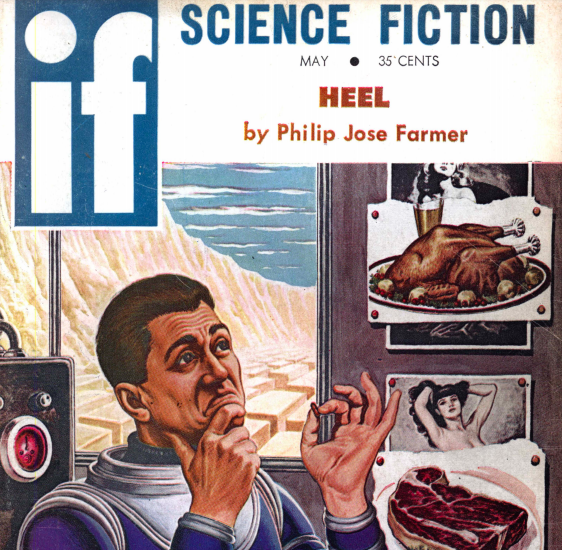
Before we kept up with culture through the internet, we kept up with culture through magazines. That historical fact may at first strike those of us over 30 as trivial and those half a generation down as irrelevant, but now, thanks to the Internet Archive, we can all easily experience the depth and breadth of the magazine era as something more than an abstraction or an increasingly distant memory. In keeping with their apparent mission to become the predominant archive of pre-internet media, they’ve set up the Magazine Rack, a downloadable collection of over 34,000 digitized magazines and other monthly publications.
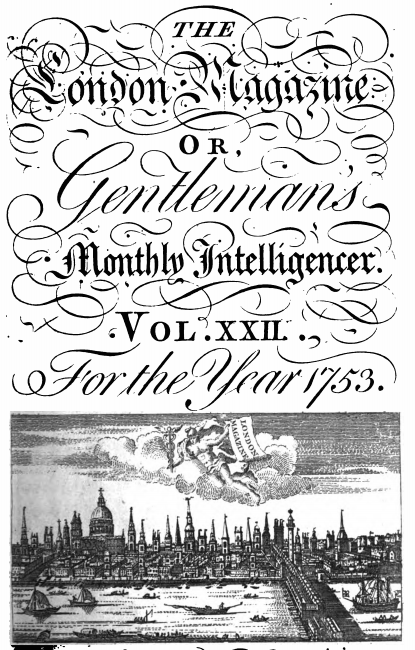
Magazines haven’t gone away, of course, and at the Internet Archive’s Magazine Rack you can do just what you might have done at a traditional magazine rack: flip through brand new issues of publications like Tech Advisor, Aviation History, and America’s Civil War. But quite unlike a traditional magazine rack, where recency was all, you can also read back issues — in some cases quite far-back issues, stretching all the way to the mid-18th century. The London Magazine, or, Gentleman’s Monthly Intelligencer vol. XXII for the Year 1753, the oldest magazine on these digital shelves, offers such articles as “Remarkable accidents,” “Danger of the empire’s being without a head,” and “Life and character of Christina, queen of Sweden.”
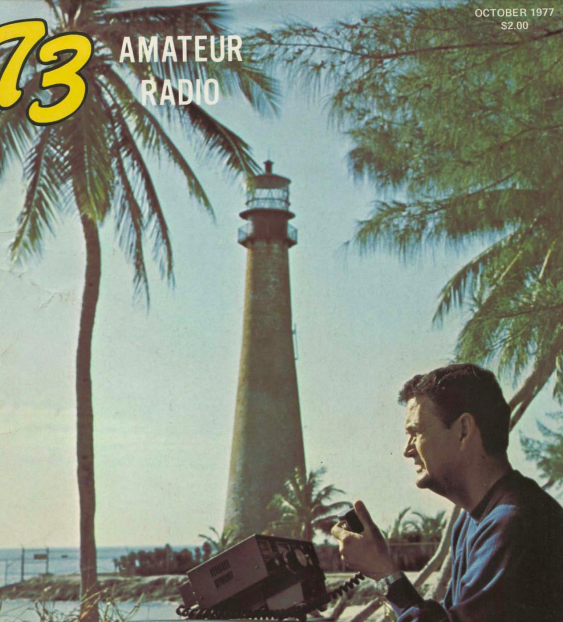
As British magazines of the past go, it also delighted me personally to find in the Magazine Rack many issues of Computer and Video Games (also known as CVG) which did much, given its inexplicable availability at the library of the Seattle suburb where I grew up, to shape my worldview. Other titles catering to “nerdy” interests, broadly speaking, have — perhaps predictably — been archived with a special extensiveness: computer and gaming magazines have their own vast sections, but the collections of early Scientific American, sci-fi fan magazine Starlog, vintage men’s magazines (some, of course, NSFW), and the long-running amateur radio journal 73 Magazine come not far behind.

The Magazine Rack also contains plenty of publications of the kind we tend to reference here on Open Culture, including quite a few titles devoted to pulp fiction, the influential Moebius- and H.R. Giger-featuring “adult fantasy magazine” Heavy Metal, the Hugo Award-winning science fiction magazine IF, and the made-for-PDF-format international art magazine Revolutionart. Spend enough browsing time there and you’ll remember — or learn — that, especially in the print-saturated twentieth century, magazines didn’t just let us keep up with the culture, they helped create it.
Related Content:
Read 1,000 Editions of The Village Voice: A Digital Archive of the Iconic New York City Paper
Based in Seoul, Colin Marshall writes and broadcasts on cities and culture. His projects include the book The Stateless City: a Walk through 21st-Century Los Angeles and the video series The City in Cinema. Follow him on Twitter at @colinmarshall or on Facebook.
Read More...Meet Nadia Boulanger, “The Most Influential Teacher Since Socrates,” Who Mentored Philip Glass, Leonard Bernstein, Aaron Copland, Quincy Jones & Other Legends
We recently featured a video of Brian Eno giving controversial advice to artists: “don’t get a job.” Easier said than done, of course, but he makes a compelling case. Along the way, he says something interesting about the fetish we make of genius—an obsessive focus on lone, and almost always male, artists as self-made, heroic embodiments of greatness. “Although great new ideas are usually articulated by individuals,” he says, “they’re nearly always generated by communities.” (He proposes the neologism “scenius” in place of “genius” to describe “cooperative intelligence.”) Eno would probably agree that great art not only comes out of creative communities of peers, but also from the influence of great teachers.
One such figure, Nadia Boulanger (1887 –1979), has been described as “the most influential teacher since Socrates.” This is hardly hyperbole. As Clemency Burton-Hill notes at the BBC, “her roster of music students reads like the ultimate 20th Century Hall of Fame. Leonard Bernstein. Aaron Copland. Quincy Jones. Astor Piazzolla. Philip Glass,” and so on.
“It is no exaggeration, then, to consider Boulanger the most important musical pedagogue of the modern—or indeed any—era.” She was also a talented composer, a mentor and fierce champion of Igor Stravinsky, and the first woman to conduct major symphonies in Europe and the U.S., such as the New York Philharmonic and the Boston Symphony Orchestra.
Boulanger had her own take on genius: “We are as fools to say, ‘he’s a genius,’” she opines in the interview at the top. She also describes her method of weeding out unserious students by asking them, “Can you live without music?” If the answer is yes, she tells them “thank the Lord and goodbye!” Even at an advanced age, her fiercely uncompromising approach is palpable, a quality Philip Glass remembers from his first meeting with her in 1964, when “she was already a relic,” writes Matthew Guerrieri at Red Bull Academy. She identified a bar from one of Glass’s compositions as “written by a real composer,” says Glass. “It was “the first and last time she said anything nice to me for the next two years.”
American composers subjected themselves to Boulanger’s harsh discipline as a “rite of passage,” visiting her in her Paris apartment where she did most of her teaching. She also made her way through “leading conservatoires,” Burton-Hill notes, “including the Juilliard School, the Yehudi Menuhin School, the Royal College of Music and the Royal Academy of Music.” Boulanger’s early life is as fascinating as her teaching career; she was the definition of “a tough, aristocratic Frenchwoman,” as Glass describes her, and grew up surrounded by music. Her father, Ernest, was a composer, conductor, and singing professor. Her younger sister Lili, who died in 1918 at the age of 24, was the more talented composer. (Nadia, writes Burton-Hill, was “riven with envy.”)
A few years after Lili’s tragic death, Nadia abandoned composition to focus primarily on her teaching, mentoring students with tremendous promise and those with less evident gifts alike. “Anyone could be a Boulanger student,” Guerrieri writes (provided they couldn’t live without music): “Those with lesser skills were taken in alongside prodigies and professionals.” She did not discriminate on any basis, though her political attitudes make her a difficult figure for many people to fully embrace. “She espoused nationalism, monarchism and, although her good manners kept it from her often-Jewish students, anti-Semitism.” She held democracy in contempt and did not believe women should vote. And she was especially hard on her female students. (When one woman finally met her approval, Boulanger addressed her as “Monsieur.”)
Boulanger was as traditional in her musical attitudes—spurning Arnold Schoenberg’s innovations, for example—as in her politics. Yet she worked with jazz musicians like Jones and Donald Byrd, and with composers like Joe Raposo, “the musical chameleon behind the songs of Sesame Street and The Electric Company.” She was an encouraging presence in the lives of her students long after they had gone on to success and fame. When Leonard Bernstein sent her the score to West Side Story, she pronounced, “I am enchanted by its dazzling nature” (though she added a critique about its “facility”). Perhaps her most radical student, Philip Glass, has never been accused of musical conservatism. But through his difficult course of study with Boulanger, he says, “I learned to hear.”
“To undergo Boulanger’s rigorous training,” writes Guerrieri, “was to absorb her sense of music history: evolution, not revolution.” Then again, many of history’s revolutionaries have also been some of the keenest students of tradition, usually assisted, guided, and trained by history’s great teachers.
via @dark_shark/Red Bull Academy
Related Content:
A Minimal Glimpse of Philip Glass
Josh Jones is a writer and musician based in Durham, NC. Follow him at @jdmagness.
Read More...A Free Oxford Course on Deep Learning: Cutting Edge Lessons in Artificial Intelligence
Nando de Freitas is a “machine learning professor at Oxford University, a lead research scientist at Google DeepMind, and a Fellow of the Canadian Institute For Advanced Research (CIFAR) in the Neural Computation and Adaptive Perception program.”
Above, you can watch him teach an Oxford course on Deep Learning, a hot subfield of machine learning and artificial intelligence which creates neural networks–essentially complex algorithms modeled loosely after the human brain–that can recognize patterns and learn to perform tasks.
To complement the 16 lectures you can also find lecture slides, practicals, and problems sets on this Oxford web site. If you’d like to learn about Deep Learning in a MOOC format, be sure to check out the new series of courses created by Andrew Ng on Coursera.
Oxford’s Deep Learning course will be added to our list of Free Online Computer Science Courses, part of our meta collection, 1,700 Free Online Courses from Top Universities.
Related Content:
Neural Networks for Machine Learning: A Free Online Course
Read More...Bill Murray Reads the Poetry of Lawrence Ferlinghetti, Wallace Stevens, Emily Dickinson, Billy Collins, Lorine Niedecker, Lucille Clifton & More
Who among us wouldn’t want the ineffably mellow, witty, and wise Bill Murray to crash their party, wedding, or White House press briefing room? Maybe you’re one of the few who could resist his comic charms. But could you throw him out if he brought along a cellist and read Lawrence Ferlinghetti’s poem “Dog”? Not I.
Murray appeared at SXSW on Monday and read the poem as part of the promotional campaign for Wes Anderson’s new stop-motion animation film Isle of Dogs. And it can seem when we look back at Murray’s many public appearances over the last few years, that the one thing he’s done more than crash other people’s parties and star in Wes Anderson films has been read poetry in public.
Murray, as Ayun Halliday pointed out in a previous post, is a “documented poetry nut,” who once wrote poetry himself as a much younger man. He’s been “wise enough,” writes Gavin Edwards at Rolling Stone “not to share it with the world.” Perhaps we’re missing out.
But we do have many, many clips of Murray reading his favorites from other poets he admires, like Ferlinghetti, and like Wallace Stevens, whose “The Planet on The Table” and “A Rabbit as King of the Ghosts,” he reads above at New York’s Poets House, an institution he has wholeheartedly supported.
Wallace Stevens is a famously difficult poet, but he is also quite funny, in an obliquely droll way, and its no wonder Murray likes his verse. Poets House director Lee Bricoccetti observes that there is “an alignment between comedy and poetry… a precision in the way you handle language.” Some of my own favorite poets—like Frank O’Hara and the “willfully ridiculous” Stevie Smith—are also some of the funniest writers I’ve ever encountered in any form. Murray’s own poetic efforts, were we ever to hear them, may not measure up to the work of his favorites, but he is undoubtedly “a master of linguistic control and pacing.”
We also know that he can turn in finely nuanced dramatic performances when he wants to, and his mastery of the spoken word contributes just as much to moodier poets like Emily Dickinson, whom he reads above in a surprise performance for construction workers at work on the new Poets House home in 2009. You might agree, however, that he really shines with comic fare, like Billy Collins “Another Reason I Don’t Keep a Gun in the House” and Lorine Niedecker’s majorly condensed “Poet’s Work.”
Any of these readings should grant Murray admission into the most uptight of literary affairs. If anyone still doubts his skill in the craft of reading literature well in public—which, any writer will you, is no easy thing by far—then hear him read Lucille Clifton’s uplifting “What the Mirror Said” (above), or Sarah Manguso’s “What We Miss,” Billy Collins’ “Forgetfulness,” and Cole Porter’s song “Brush Up on Your Shakespeare.” Hear him read from Huckleberry Finn and mumble his way through Bob Dylan’s “Shelter from the Storm,” in character in the film St. Vincent.
Oh, but does the multitalented Bill Murray, “master of linguistic control and pacing,” sing show tunes? Does he ever….
Find these poetry readings added to OC’s collection, 1,000 Free Audio Books: Download Great Books for Free
Related Content:
Hear Bill Murray’s Favorite Poems Read Aloud by Murray Himself & Their Authors
Bill Murray Gives a Delightful Reading of Twain’sHuckleberry Finn (1996)
The Philosophy of Bill Murray: The Intellectual Foundations of His Comedic Persona
Josh Jones is a writer and musician based in Durham, NC. Follow him at @jdmagness
Read More...Stephen Hawking (RIP) Explains His Revolutionary Theory of Black Holes with the Help of Chalkboard Animations
Stephen Hawking died last night at age of 76. I can think of no better, brief social media tribute than that from the @thetweetofgod: “It’s only been a few hours and Stephen Hawking already mathematically proved, to My face, that I don’t exist.” Hawking was an atheist, but he didn’t claim to have eliminated the idea with pure mathematics. But if he had, it would have been brilliantly elegant, even—as he used the phrase in his popular 1988 cosmology A Brief History of Time—to a theoretical “mind of God.”
Hawking himself used the word “elegant,” with modesty, to describe his discovery that “general relativity can be combined with quantum theory,” that is, “if one replaces ordinary time with so-called imaginary time.” In the bestselling A Brief History of Time, he described how one might possibly reconcile the two. His search for this “Grand Unified Theory of Everything,” writes his editor Peter Guzzardi, represented “the quest for the holy grail of science—one theory that could unite two separate fields that worked individually but wholly independently of each other.”
The physicist had to help Guzzardi translate rarified concepts into readable prose for bookbuyers at “drugstores, supermarkets, and airport shops.” But this is not to say A Brief History of Time is an easy read. (In the midst of that process, Hawking also had to learn how to translate his own thoughts again, as a tracheotomy ended his speech, and he transitioned to the computer devices we came to know as his only voice.) Most who read Hawking’s book, or just skimmed it, might remember it for its take on the big bang. It’s an aspect of his theory that piqued the usual creationist suspects, and thus generated innumerable headlines.
But it was the other term in Hawking’s subtitle, “from the Big Bang to Black Holes,” that really occupied the central place in his extensive body of less accessible scientific work. He wrote his thesis on the expanding universe, but gave his final lectures on black holes. The discoveries in Hawking’s cosmology came from his intensive focus on black holes, beginning in 1970 with his innovation of the second law of black hole dynamics and continuing through groundbreaking work in the mid-70s that his former dissertation advisor, eminent physicist Dennis Sciama, pronounced “a new revolution in our understanding.”
Hawking continued to revolutionize theoretical physics through the study of black holes into the last years of his life. In January 2016, he published a paper on arXiv.org called “Soft Hair on Black Holes,” proposing “a possible solution to his black hole information paradox,” as Fiona MacDonald writes at Science Alert. Hawking’s final contributions show that black holes have what he calls “soft hair” around them—or waves of zero-energy particles. Contrary to his previous conclusion that nothing can escape from a black hole, Hawking believed that this quantum “hair” could store information previously thought lost forever.
Hawking followed up these intriguing, but exceptionally dense, findings with a much more approachable text, his talks for the BBC’s Reith Lectures, which artist Andrew Park illustrated with the chalkboard drawings you see above. The first talk, “Do Black Holes Have No Hair?” walks us briskly through the formation of black holes and the big names in black hole science before moving on to the heavy quantum theory. The second talk continues to sketch its way through the theory, using striking metaphors and witticisms to get the point across.
Hawking’s explanations of phenomena are as profound, verging on mystical, as they are thorough. He doesn’t forget the human dimension or the emotional resonance of science, occasionally suggesting metaphysical—or meta-psychological—implications. Thanks in part to his work, we first thought of black holes as nihilistic voids from which nothing could escape. He left us, however with a radical new view, which he sums up cheerfully as “if you feel you are in a black hole, don’t give up, There’s a way out.” Or, even more Zen-like, as he proclaimed in a 2014 paper, “there are no black holes.”
Related Content:
Watch A Brief History of Time, Errol Morris’ Film About the Life & Work of Stephen Hawking
The Big Ideas of Stephen Hawking Explained with Simple Animation
Josh Jones is a writer and musician based in Durham, NC. Follow him at @jdmagness
Read More...David Sedaris Creates a List of His 10 Favorite Jazz Tracks: Stream Them Online

Image by WBUR, via Wikimedia Commons
You can’t read far into David Sedaris’ writing without encountering his father Lou, a curmudgeonly, decades-and-decades-retired IBM engineer with a stiffly practical mind and a harsh word for everybody — especially his misfit son, dedicating his life as he has to the quasi-occupation of writing while living in far-flung places like Paris and rural England. Even now, solidly into his nineties, Sedaris père keeps on providing the sixtysomething Sedaris fils with material, all of it — once polished up just right — a source of laughter for the latter’s many readers and listeners. But Lou has also given David something else: a passion for jazz.
“My father loves jazz and has an extensive collection of records and reel-to-reel tapes he used to enjoy after returning home from work,” writes Sedaris in one essay. “He might have entered the house in a foul mood, but once he had his Dexter Gordon and a vodka martini, the stress melted away and everything was ‘Beautiful, baby, just beautiful.’ ” He then goes on to tell the story of how his father once attempted to train young David and his sisters into a Brubeck-style family jazz combo — a hopeless dream from the start, but one that has since entertained his fans around the world. (Not that Sedaris hasn’t provided some of that entertainment by performing commercial jingles in the voice of Billie Holiday.)
Appearing on a guest DJ segment on Los Angeles public radio station KCRW, Sedaris told of how his father introduced him to jazz: “I remember seeing the movie Lady Sings the Blues, right, and thinking Diana Ross did such a good job. And my Dad saying, ‘Oh boy, you’ve got a lot to learn,’ and then him playing Billie Holiday 78s for me… and then him taking it back even further and sitting me down to listen to Mabel Mercer. He really did give me quite an education and it’s the music that’s stuck with me.” As for the first jazz album he ever heard, he names in a recent JazzTimes interview Charles Mingus’ The Clown, the one “with a close-up of a clown’s face on the cover” that still, in his estimation, “looks so modern and it sounds so modern.”
When Sedaris’ official Facebook page posted ten of his favorite songs, he came up with an all-jazz list including the work of Nina Simone, Antonio Carlos Jobim, John Coltrane, and other luminaries of the tradition. (He did not, of course, neglect Billie Holiday.) A fan turned it into a Spotify playlist, which you’ll find embedded below (and if you don’t have Spotify’s free software, you can download it here):
“I used to work in complete silence,” Sedaris tells JazzTimes, but “about three or four years ago I started listening to music [while I work], but not music with lyrics in it.” Much of the jazz he loves fits that description, and he’s also, in combination with the variety of music-streaming services available now, discovered new jazz artists while writing. Having put drinking and smoking completely behind him — and having written about both of those experiences — Sedaris retains jazz as one of the substances that keeps him going. It certainly seems to have worked for the man who brought the music into his life, whom Sedaris has imagined may yet outlive us all: “If anything happens to me,” he says, “the one thing my father wants is my iPod.”
Related Content:
20 Free Essays & Stories by David Sedaris: A Sampling of His Inimitable Humor
Be His Guest: David Sedaris at Home in Rural West Sussex, England
David Sedaris Sings the Oscar Mayer Theme Song in the Voice of Billie Holiday
Haruki Murakami’s Passion for Jazz: Discover the Novelist’s Jazz Playlist, Jazz Essay & Jazz Bar
The Best Music to Write By: Give Us Your Recommendations
Based in Seoul, Colin Marshall writes and broadcasts on cities and culture. His projects include the book The Stateless City: a Walk through 21st-Century Los Angeles and the video series The City in Cinema. Follow him on Twitter at @colinmarshall or on Facebook.
Read More...How Much Money Do You Need to Be Happy? A New Study Gives Us Some Exact Figures
“If I gave you a million dollars, would you…?” (insert possibly life-altering risk, humiliation, or soul-selling crime here). What about ten million? 100 million? One BILLION dollars? Put another way, in the terms social scientists use these days, how much money is enough to make you happy?
If you’re Montgomery Burns, it’s at least a billion dollars, lest you be forced to suffer the torments of the Millionaire’s Camp. (“Just kill me now!”) As it tends to do, The Simpsons’ dark humor nails the insatiable greed that seems the scourge of our time, when the richest 1 percent take 82 percent of the world’s wealth, and the poorest 50 percent get nothing at all.
Hypothetical windfalls aside, the question of how much is enough is an urgent one for many people: as in, how much to feed a family, supply life’s necessities, purchase just enough leisure for some small degree of personal fulfilment?
As the misery of Monty Burns demonstrates, we have a sense of the 1% as eternally unfulfilled. He’s the wicked heir to more serious tragic figures like Charles Foster Kane and Jay Gatsby. But satire is one thing, and desire, that linchpin of the economy, is another.
“What we see on TV and what advertisers tell us we need would indicate there is no ceiling when it comes to how much money is needed for happiness,” says Purdue University psychologist Andrew T. Jebb, “but we now see there are some thresholds.” In short: money is a good thing, but there is such a thing as too much of it.
Jebb and his colleagues from Purdue and the University of Virginia addressed questions in their study “Happiness, income satiation and turning points around the world” like, “Does happiness rise indefinitely with income, or is there a point at which higher incomes no longer lead to greater wellbeing?” What they found in data from an international Gallup World Poll survey of over 1.7 million people in 164 countries varies widely across the world.
People in wealthier areas seem to require more income for happiness (or “Subjective Well Being” in the social science terminology). In many parts of the world, higher incomes, “beyond satiation”—a metric that measures how much is enough—“are associated with lower life evaluations.” The authors also note that “a recent study at the country level found a slight but significant decline in life evaluation” among very high earners “in the richest countries.”
You can see the wide variance in happiness worldwide in the “Happiness” study. As Dan Kopf notes at Quartz, these research findings are consistent with those of other researchers of happiness and income, though they go into much more detail. Problems with the methodology of these studies—primarily their reliance on self-reported data—make them vulnerable to several critiques.
But, assuming they demonstrate real quantities, what, on average, do they tell us? “We found that the ideal income point,” averaged out in U.S. dollars, “is $95,000 for [overall life satisfaction],” says Jebb, “and $60,000 to $75,000 for emotional well-being,” a measure of day-to-day happiness. These are, mind you, individual incomes and “would likely be higher for families,” he says.
Peter Dockrill at Science Alert summarizes some other interesting findings: “Globally, it’s cheaper for men to be satisfied with their lives ($90,000) than women ($100,000), and for people of low ($70,000) or moderate education ($85,000) than people with higher education ($115,000).”
Yes, the study, like those before it, shows that after the “satiation point,” happiness decreases, though perhaps not to Monty Burns levels of dissatisfaction. But where does this leave most of us in the new Gilded Age? Given that “satiation” in the U.S. is around $105K, with day-to-day happiness around $85K, the majority of Americans fall well below the happiness line. The median salary for U.S. workers at the end of 2017 was $44, 564, according to the Bureau of Labor Statistics. Managers and professionals averaged $64,220 and service workers around $28,000. (As you might imagine, income inequality diverged sharply along racial lines.)
And while the middle class saw a slight bump in income in the last couple years, median household income was still only $59,039 in 2016. However, we measure it the “middle class… has been declining for four decades,” admits Business Insider—“identifying with the middle class is, in part, a state of mind” rather than a state of debt-to-income ratios. (One study shows that Millennials make 20% less than Baby Boomers did at the same age.) Meanwhile, as wealth increases at the top, “the country’s bottom 20% of earners became worse off.”
This may all sound like bad news for the happiness quotient of the majority, if happiness (or Subjective Well Being) requires a certain amount of material security. Maybe one positive takeaway is that it doesn’t require nearly the amount of vast private wealth that has accumulated in the hands of a very few people. According to this research, significantly redistributing that wealth might actually make the wealthy a little happier, and less Mr. Burns-like, even as it raised happiness standards a great deal for millions of others.
Not only are higher incomes “usually accompanied by higher demands,” as Jebb and his colleagues conclude—on one’s time, and perhaps on one’s conscience—but “additional factors” may also play a role in decreasing happiness as incomes rise, including “an increase in materialistic values, additional material aspirations that may go unfulfilled, increased social comparisons,” etc. The longstanding truism about money not buying love—or fulfillment, meaning, peace of mind, what-have-you—may well just be true.
You can dig further into Andrew T. Jebb’s study here: “Happiness, income satiation and turning points around the world.”
Related Content:
Josh Jones is a writer and musician based in Durham, NC. Follow him at @jdmagness
Read More...What Ancient Chinese Philosophy Can Teach Us About Living the Good Life Today: Lessons from Harvard’s Popular Professor, Michael Puett
It has at times been concerning for some Buddhist scholars and teachers to watch mindfulness become an integral part of self-help programs. A casual attitude toward the practice of mindfulness meditation can make it seem accessible by making it seem relaxing and effortless, which often results in missing the point entirely. Whatever the school, lineage, or particular tradition from which they come, the source texts and sages tend to agree: the purpose of meditation is not self improvement—but to realize that there may, indeed, be no such thing as a self.
Instead, we are all epiphenomenon arising from combinations of ever-shifting elements (the aggregates, or skandhas). The self is a conventionally useful illusion. This notion in the ancient Indian texts has its echo in Scottish enlightenment philosopher David Hume’s so-called “bundle theory,” but Hume’s thoughts about the self have mostly remained obscure footnotes in western thought, rather than central premises in its philosophies and religions. But as thinkers in India took the self apart, so too did philosophers in ancient China, before Buddhism reached the country during the Han Dynasty.
Harvard Professor Michael Puett has been lecturing on Chinese philosophy to audiences of hundreds of students—and at 21st century temples of self-actualization like TED and the School of Life. He has co-authored a book on the subject, The Path: What Chinese Philosophers Can Teach Us About the Good Life, drawn from his enormously popular university courses, in which he expounds the philosophies of Confucius, Mencius, Zhuangzi, and Xunzi. The book has found a ready audience, and Puett’s “Classical Chinese Ethical and Political Theory” is the 3rd most popular class among Harvard undergraduates, behind intro to economics and computer science. What Professor Puett offers, in his distillation of ancient Chinese wisdom, is not at all to be construed as self-help.
Rather, he says, “I think of it as sort of anti-self-help. Self-help tends to be about learning to love yourself and embrace yourself for who you are. A lot of these ideas are saying precisely the opposite—no, you overcome the self, you break the self. You should not be happy with who you are.” Lest this sound like some form of violence, we must understand, Puett tells Tim Dowling at The Guardian, that in “breaking” the self, we are only doing harm to an illusion. As in the Buddhist thought that took root in China, so too in the earlier Confucianism: there is no self, just a “a messy and potentially ugly bunch of stuff.”
While our current circumstances may seem unique in world history, Puett shows his students how Chinese philosophers 2,500 years ago also experienced rapid societal change and upheaval, as his co-author Christine Gross-Loh writes at The Atlantic; they navigated and understood “a world where human relationships are challenging, narcissism and self-centeredness are on the rise, and there is disagreement on the best way for people to live harmoniously together.” A majority of students at Harvard are driven to pursue “practical, predetermined” careers. By teaching them Confucian and Daoist philosophy, Puett tries to help them become more spontaneous and open to change.
Whatever we call it, the interacting phenomenon that give rise to the self cannot, we know, be observed in anything resembling an unchanging steady state. Yet Western culture (for several motivated reasons) has lagged far behind both intuitive and scientific observations of this fact. Puett’s students have been told, “’Find your true self, especially during these four years of college,’” and “try and be sincere and authentic to who you really are” in making choices about careers, partners, passions, and consumer products. They take to his class because “they’ve spent 20 years looking for this true self and not finding it.”
In the two lectures above—a shorter one at the top from TEDx Nashville and a longer talk above for Ivy, “The Social University”—you can get a taste of Puett’s enthusiastic style. Chinese philosophy, “in its strong form,” he says above, “can truly change one’s life.” Not by making us more empowered, personally-fulfilled agents who re-create reality to better meet our narrow specs. But rather, as he tells Dowling, by training us “to become incredibly good at dealing with this capricious world.”
Related Content:
An Introduction to Confucius’ Life & Thought Through Two Animated Videos
Josh Jones is a writer and musician based in Durham, NC. Follow him at @jdmagness
Read More...Is Charles Bukowski a Self-Help Guru? Hear Five of His Brutally Honest, Yet Oddly Inspiring, Poems and Decide for Yourself
I don’t know if he’s been replaced as a major influence on young, restless (and almost exclusively male) aspiring writers, but once upon a time—if you weren’t into the romantic wanderlust of Kerouac but still considered yourself a fringe character—it might be to the hard-boiled shit-talking of wise old man Charles Bukowski that you turned. Upon first learning this, and being a busy college student, I decided to take a crash course and checked out a documentary.
I did not find myself charmed all at once. But one can fall in love with an author’s persona yet loathe them on the page. Bukowski’s crudeness and bad humor on film could not hide the deep wells of sadness in which he seemed to swim, as if—like some ancient cynic philosopher—he knew something profound and terrible and spared us the telling of it by posing as a drunken, half-mad street-corner raconteur. I had to go and read him.
In his idiom—that of an eloquent streetwise barfly—Bukowski can be every bit as passionate and profound as his hero Dostoevsky. His unforgettable mixing of comic seediness and casual abuse with a deeply tragic mourning over the human condition, while not to everyone’s taste, make his decades-long struggle out of penury and obscurity a feat worthy of the telling in his semi-autobiographical prose and poetry.
But does it make him a role model? For anyone but certain young, mostly male, aspiring writers maybe spending more time drinking than writing, that is?
A fair number of people seem to think so, and I leave it to you to decide, first by listening to the Bukowski poems read here, posted on YouTube with heavy, inspirational background music. Some are given new titles to sound more like self-help seminars—such as “Reinvent Your Life” at the top (originally “No Leaders, Please”). The video reading called “Go all the way,” second from top, changes the title of “Roll the Dice,” a classic picture of Bukowski’s uncompromising commitment to “going all the way,” even if it means “freezing on a park bench” and “losing girlfriends, wives, relatives, jobs and maybe your mind.”
Solidly middle-class parents might approve of the first poem’s sentiments, which could be wedged into a suitably vague, yet bold-sounding commencement speech or a job recruiter’s pep talk. But “Roll the Dice” simply goes too far. “It could mean jail, it could mean derision, mockery, isolation”? This won’t do at all. Hear another reading of “Roll the Dice” by inspirational rock star Bono further up, just after the more Bukowski-like Tom Waits reads “The Laughing Heart,” frequently referenced for its intensity of feeling. Like Thomas Hardy or Leonard Cohen, the bard of the barstools could look life straight in the eye, see all of its bleakness and violence, and still manage at times to catch a divine glimmer.
And for the many aspirants to whom Bukowski has appealed, we have, further up, “So, You Want to Be a Writer?” Before you hear, or read, this poem, be advised: these are not warm words of encouragement or helpful life-coaching in verse. It is the kind of raw talk no respectable writing teacher will give you, and maybe they’re right not to, who’s to say? Except a man who went all the way, froze on park benches, went to jail, lost girlfriends, wives, relatives, jobs and maybe his mind? Read an excerpt of Bukowski’s writing advice below, and just above, hear the author himself read “Friendly Advice to a Lot of Young Men,” which urges them to do virtually anything they like, “But don’t write poetry.”
don’t be like so many writers,
don’t be like so many thousands of
people who call themselves writers,
don’t be dull and boring and
pretentious, don’t be consumed with self-
love.
the libraries of the world have
yawned themselves to
sleep
over your kind.
don’t add to that.
don’t do it.
unless it comes out of
your soul like a rocket,
unless being still would
drive you to madness or
suicide or murder,
don’t do it.
unless the sun inside you is
burning your gut,
don’t do it.
Related Content:
Harry Dean Stanton (RIP) Reads Poems by Charles Bukowski
Charles Bukowski Reads His Poem “The Secret of My Endurance”
Josh Jones is a writer and musician based in Durham, NC. Follow him at @jdmagness
Read More...The Brian Eno Discography: Stream 29 Hours of Recordings by the Master of Ambient Music
45 years have passed since Brian Eno left Roxy Music to strike out on his own, launching a more or less unprecedented career spread across music popular and experimental as well as other forms of art entirely. It seems to have worked out for him: young stars like James Blake, Owen Pallett, and Seun Kuti continue to seek out the boundary-pushing creative oversight he previously brought as producer to acts like David Bowie and U2, and his own work as a “non-musician” (which began with him twisting knobs and pushing buttons almost at random with Roxy Music) continues apace, his latest album Reflection having come out just last year.
If you looked for Reflection at the record store, physical or digital, you might well find it filed under “ambient,” a genre Brian Eno often gets credited with, though never seems to claim credit for, inventing.
Whether or not he came up with that atmospheric, almost spatial form of music single-handedly — or its computer-composed cousin generative music, which you can experience with Reflection in app form — matters less than the intellectual framework he’s built, and that he continually dismantles and rebuilds, around it.
Though Eno has always insisted on the importance of deep feeling in music, perceiving a kind of sacredness in acts like singing and dancing, the creation of his own music has also involved no small amount of cogitation, the fruits of which you can hear in the 29-hour Spotify playlist above. (If you don’t have Spotify’s free software, you can download it here.) If you got into Eno through his ambient work, what you hear on much of this sonic journey through his discography might surprise you: the jaggedness of a “Sky Saw” from Another Green World, the cyberpunk beats of Nerve Net, or the nervy grooves on his collaborations with former Talking Heads David Byrne. All of it evidences that Eno never runs out of musical ideas, nor the fascination to execute them; no wonder Roxy Music leader Bryan Ferry, nearly half a century later, wants to collaborate with him again.
The playlist starts with Eno’s first album, 1974’s Here Come the Warm Jets, and then moves through the rest of his discography chronologically. It may not include every album Eno ever made. But it certainly seems to include every Eno album currently available on the streaming service.
Related Content:
The “True” Story Of How Brian Eno Invented Ambient Music
Brian Eno Explains the Loss of Humanity in Modern Music
Brian Eno on Why Do We Make Art & What’s It Good For?: Download His 2015 John Peel Lecture
Based in Seoul, Colin Marshall writes and broadcasts on cities and culture. His projects include the book The Stateless City: a Walk through 21st-Century Los Angeles and the video series The City in Cinema. Follow him on Twitter at @colinmarshall or on Facebook.
Read More...Support Us
We're hoping to rely on loyal readers, rather than erratic ads. Please click the Donate button and support Open Culture. You can use Paypal, Venmo, Patreon, even Crypto! We thank you!

About Us

Open Culture scours the web for the best educational media. We find the free courses and audio books you need, the language lessons & educational videos you want, and plenty of enlightenment in between.
Advertise With Us

FREE UPDATES!
GET OUR DAILY EMAIL
Get the best cultural and educational resources on the web curated for you in a daily email. We never spam. Unsubscribe at any time.
FOLLOW ON SOCIAL MEDIA

Open Culture editor Dan Colman scours the web for the best educational media. He finds the free courses and audio books you need, the language lessons & movies you want, and plenty of enlightenment in between.
Advertise With Us


