Doc Martens Boots Now Come Adorned with Traditional Japanese Art

In wake of a recent prom cheongsam dust up, it remains to be seen whether Doc Martens’ special edition Eastern Art shoes and boots will be regarded as a misstep.
Dr. Martens’ Artist Series paid tribute to Western heavy hitters like Hieronymus Bosch, William Hogarth, JMW Turner, and William Blake.
Those eye-catching kicks may have inspired more than a few fashion-conscious punks to delve into art history, but what will consumers—and more importantly activists on the alert for cultural appropriation—make of the Eastern Art line?
The company website describes the inaugural design as:
…a new homage to traditional Japanese art with a fresh, contemporary … spin. Featuring detailed hand-drawn paintings, the art is digitally printed on a textured leather designed to emulate traditional Japanese parchment, while gold-tone eyelets and studding complete the look.
One wonders what led the footwear giant to go with a mishmash “inspired by” approach, when there are so many wonderful Edo period artists who merit a boot of their own?
Katsushika Hokusai’s The Dream of the Fisherman’s Wife (see here) would make for an unforgettable toe cap…

Kitagawa Utamaro could shod heels and ankles with the floating world.

Tawaraya Sōtatsu’s work would easily transfer from screen to shoe.
Thus far, the lone complaints have centered on the pain of breaking in the new boots, a badge of honor among longtime wearers of the company’s best-selling 1460 Pascal style.
Asia Trend reports that Doc Martens has two shops in Japan, with plans to open more.

If you’re inclined to stomp around in a pair of Dr. Martens 1460 Pascal Eastern Art boots or 1461 Oxfords, best place your order soon, as these special editions have a way of selling out quickly.
Related Content:
Doc Martens Now Come Adorned with William Blake’s Art, Thanks to a Partnership with Tate Britain
Doc Martens Boots Adorned with Hieronymus Bosch’s “Garden of Earthly Delights”
Download 2,500 Beautiful Woodblock Prints and Drawings by Japanese Masters (1600–1915)
Ayun Halliday is an author, illustrator, theater maker and Chief Primatologist of the East Village Inky zine. Follow her @AyunHalliday.
Read More...How David Bowie Turned His “Adequate” Voice into a Powerful Instrument: Hear Isolated Vocal Tracks from “Life on Mars,” “Starman,” “Modern Love” “Under Pressure” & More
Believe it or not, the odds were against David Bowie becoming an international pop superstar. When it seemed he’d finally arrived, with the release of Ziggy Stardust and the Spiders from Mars in 1972, “we didn’t realize,” says Jarvis Cocker in a 2012 documentary, “that he’d been trying to be successful for 10 years.” Bowie was 24, a ripe old age in pop star years, and already had four albums under his belt as a solo artist, the first a total commercial failure, and the second notable for its one hit, “Space Oddity,” which seemed like it might have been the artist’s big break in 1969, but somehow wasn’t.
He had played in several bands and tried performing under his given name, Davy Jones, which he just happened to share with one of the biggest pop stars of the day. Had he not persisted, changed his name and style, and, crucially, invented his Martian glam persona, he might have remained a one-hit-wonder, his excellent The Man Who Sold the World and Hunky Dory revered as underrated cult favorites among fans in the know.
In addition to the difficulty Bowie had finding his niche, he was not a naturally gifted singer and was a reluctant performer. Drawn early to “movement and music” classes in school, Bowie’s teachers called his idiosyncratic style “vividly artistic,” but only rated his voice as “adequate.” As voice coach Lisa Popeil writes, “though vocally agile as an adult, Bowie was never known for great pitch accuracy.”
Such things matter less these days, what with pitch correction software. In the old days of analog, singers couldn’t lean on digital wizardry to make them sound better than they were. Bowie wasn’t “particularly fond” of his own voice, he revealed in an interview, and unlike most hungry, young would-be stars, he didn’t set out to put himself in the spotlight—not at first.
“I thought that I wrote songs and wrote music and that was sort of what I thought I was best at doing. And because nobody else was ever doing my songs, I felt, you know, I had to go out and do them.”
So the shy, retiring Bowie charged ahead. “With his theatrical bent and fearlessness,” Popeil writes, his “ability to create memorable and emotional vocal stylings was of the highest order.” This, we might say, is almost an understatement. Aspiring singers and musicians can learn much from Bowie’s career, perhaps foremost the lesson that one needn’t be a prodigy or a bubbly extrovert to follow a musical passion. Bowie honed his vocal skills and achieved mastery over his haunting baritone, while also learning to move into a powerful tenor range.
Witness these isolated vocal tracks from throughout this career. At the top, the vocal mix from “Life on Mars” shows, as Classic fM writes, that “while unpolished, his tremulous voice has real quality and range.” Further down, we hear Bowie goofing around a bit in the vocal booth before launching into his first hit, “Space Oddity,” his voice a bit thin in the verse, then hitting its full stride in the chorus. Three years later, on “Starman” from Ziggy Stardust, we hear more confidence and control in the vocal track. Then, ten years after Ziggy, Bowie belts it out on “Modern Love,” above, having already kept pace with arguably the greatest rock singer of all time on “Under Pressure,” further up.
On “Golden Years,” above, Bowie explores his full range, from deepest baritone to falsetto. His voice inevitably waned with age and the sickness of his final years, but he never lost the ability to imbue a song with maximal emotional range, making the ragged vocals on his last album, especially its chilling single “Lazarus,” some of the most gripping in his entire body of work. The video below from The Last Five Years documentary strips away the instrumentation, leaving us with the image of an aged, blinded Bowie in bed, singing “Look up here man, I’m in danger/I’ve got nothing left to lose.” His breathing is audibly labored, giving the recording a poignant immediacy. But the forever-distinctive Bowie vocal style is as deeply moving as ever.
Related Content:
The Story of Ziggy Stardust: How David Bowie Created the Character that Made Him Famous
Hear Freddie Mercury’s Vocals Soar in the Isolated Vocal Track for “Somebody to Love”
Josh Jones is a writer and musician based in Durham, NC. Follow him at @jdmagness
Read More...The 16,000 Artworks the Nazis Censored and Labeled “Degenerate Art”: The Complete Historic Inventory Is Now Online
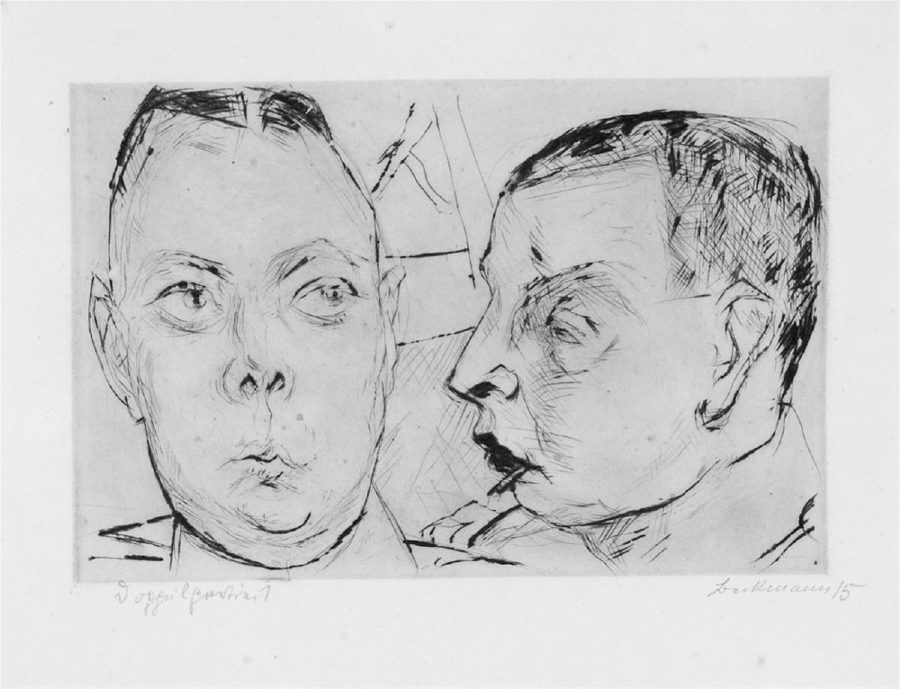
The Nazis may not have known art, but they knew what they liked, and much more so what they didn’t. We’ve previously featured here on Open Culture the “Degenerate Art Exhibition” of 1937, put on by Hitler’s party four years after it rose to power. Following on a show of only Nazi-approved works — including many depictions of classically Germanic landscapes, robust soldiers in action, blonde nudes — it toured the country with the intent of revealing to the German people the “insult to German feeling” committed by Entartete Kunst (Degenerate art), a Nazi-defined category of art created by the likes of Paul Klee, Wassily Kandinsky, Max Beckmann, George Grosz, and others, a roster heavy on the abstract, the expressionistic, and the Jewish.
Now, thanks to the Victoria and Albert Museum, we know exactly which works of art the Nazis condemned. “The V&A holds the only known copy of a complete inventory of ‘Entartete Kunst’ confiscated by the Nazi regime from public institutions in Germany, mostly during 1937 and 1938,” says the museum’s site.
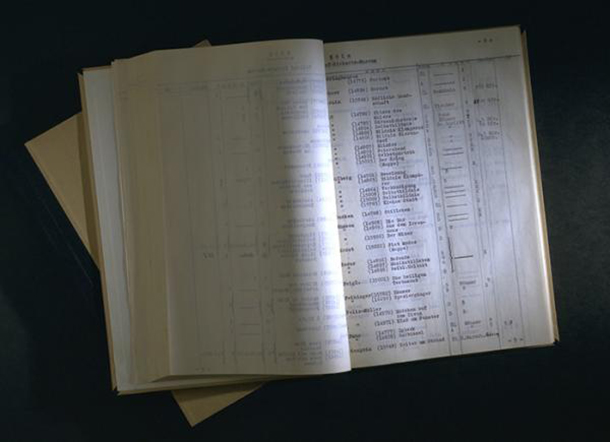
“The list of more than 16,000 artworks was produced by the Reichsministerium für Volksaufklärung und Propaganda (Reich Ministry for Public Enlightenment and Propaganda) in 1942 or thereabouts. It seems that the inventory was compiled as a final record, after the sales and disposals of the confiscated art had been completed in the summer of 1941.”
You can read and download the entire document, which provides “crucial information about the provenance, exhibition history and fate of each artwork,” in PDF form at the V&A’s page about it.

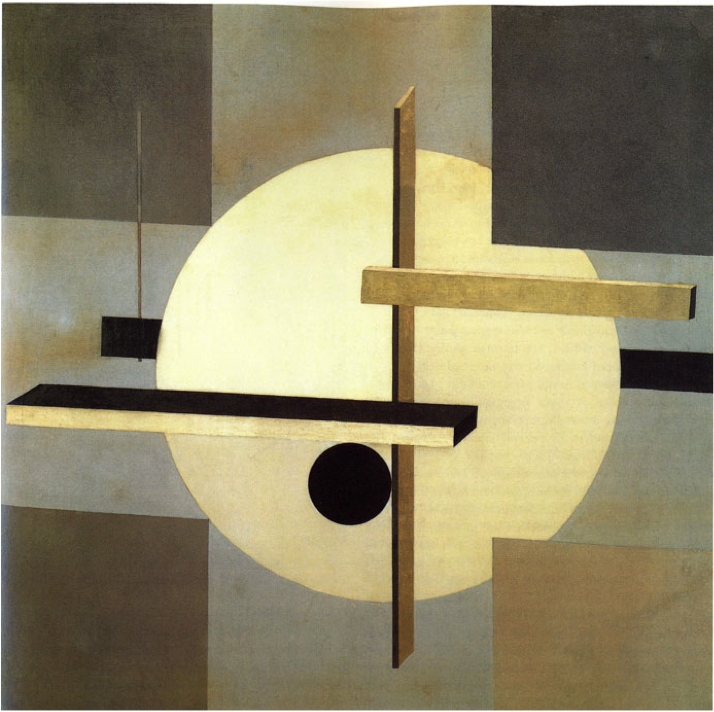
Daunting though the inventory itself may seem, Hyperallergic’s Jillian Steinhauer points out “a way to connect many of these pieces to the present day: an online database maintained by the Freie Universität Berlin. You can plug an artwork’s inventory number from the Nazi log books directly into their search engine, and it will pull up a record.” Here you see Max Beckmann’s Zwei Auto-Offiziere, El Lissitzky’s Proun R.V.N. 2, and Paul Klee’s Garten der Leidenschaft, just three examples of the thousands upon thousands of images that Hitler and company considered a threat to their regime. Today, the artistic merits of work by these and other artists once labeled Entartete Kunst have drawn more admirers than ever — though the very fact that the Nazis didn’t like it constitutes a decent reason for appreciation as well.
via Hyperallergic
Related Content:
The Nazi’s Philistine Grudge Against Abstract Art and The “Degenerate Art Exhibition” of 1937
How the CIA Secretly Funded Abstract Expressionism During the Cold War
The Nazis’ 10 Control-Freak Rules for Jazz Performers: A Strange List from World War II
Joseph Stalin, a Lifelong Editor, Wielded a Big, Blue, Dangerous Pencil
Based in Seoul, Colin Marshall writes and broadcasts on cities and culture. His projects include the book The Stateless City: a Walk through 21st-Century Los Angeles and the video series The City in Cinema. Follow him on Twitter at @colinmarshall or on Facebook.
Read More...Chess Grandmaster Garry Kasparov Relives His Four Most Memorable Games
FYI: If you sign up for a MasterClass course by clicking on the affiliate links in this post, Open Culture will receive a small fee that helps support our operation.
Many consider Garry Kasparov one of the greatest chess players of all time. And for good reason. In 1985, at the age of 22, Kasparov defeated the reigning champion Anatoly Karpov. From that moment, until his retirement in 2005, he dominated. For the next 225 out of 228 months, he was the #1 ranked player in the game. Above, in a video created by The New Yorker, Kasparov “replays some of his most unforgettable games,” and “relives the happiest and the most painful moments of his career,” including:
- Garry Kasparov vs. Anatoly Karpov: World Championship Match 1985
- Garry Kasparov vs. Anatoly Karpov: World Championship Match 1987
- Garry Kasparov vs. Viswanathan Anand: PCA-GP Credit Suisse Rapid Final Blitz Playoff 1996
- Garry Kasparov vs. Deep Blue: I.B.M. Man vs. Machine 1997
In recent months, Kasparov has also created an online course for Masterclass, Garry Kasparov Teaches Chess, which–in 29 video lessons–offers a deeper exploration of his chess theory, tactics, and strategy.
If you would like to support the mission of Open Culture, consider making a donation to our site. It’s hard to rely 100% on ads, and your contributions will help us continue providing the best free cultural and educational materials to learners everywhere. You can contribute through PayPal, Patreon, and Venmo (@openculture). Thanks!
Related Content:
A Free 700-Page Chess Manual Explains 1,000 Chess Tactics in Plain English
Claymation Film Recreates Historic Chess Match Immortalized in Kubrick’s 2001: A Space Odyssey
A Human Chess Match Gets Played in Leningrad, 1924
Play Chess Against the Ghost of Marcel Duchamp: A Free Online Chess Game
Watch Bill Gates Lose a Chess Match in 79 Seconds to the New World Chess Champion Magnus Carlsen
Read More...Watch Life on the Streets of Tokyo in Footage Recorded in 1913: Caught Between the Traditional and the Modern
What cities have, over the past century, defined in our imaginations the very concept of the city? Obvious choices include New York and London, and here on Open Culture we’ve featured historic street-level footage of both (New York in 1911, London between 1890 and 1920) that vividly reveals how, even over a hundred years ago, they’d already matured as commercially, technologically, and demographically impressive metropolises. At the turn of the 20th century, the 6.5 million-strong London ranked as the most populous city on Earth, and New York had overtaken it within a few decades. But by the mid-1960s, a new contender had suddenly risen to the top spot: Tokyo.
Historically speaking, of course, the word “new” doesn’t quite apply to the Japanese capital, since as a settled area it goes back to the third millennium BC. But Tokyo didn’t become the capital, effectively, until 1869 (not that even today’s denizens of Kyoto, the country’s previous capital, seem ever to have ceded the distinction in their own minds), around the same time that the previously closed-off island nation opened up to the rest of the world. Provided by Amsterdam’s EYE Filmmuseum, the footage at the top of the post dates from less than half a century thereafter and conveys something of what it must have felt like to live in not just a country zealously engaged in the project of modernization, but in the very center of that project.
These clips were shot on the streets of Tokyo in 1913 and 1915, just after the death of Emperor Meiji, who since 1868 had presided over the so-called Meiji Restoration. That period saw not just a re-consolidation of power under the Emperor, but an assimilation of all things Western — or at least an assimilation of all things Western that official Japan saw as advantageous in its mission to “catch up” with the existing world powers. For the citizens of Tokyo, these, most benignly, included urban parks: “Japanese enjoy to the fullest the pleasures afforded by the numerous parks of the Empire,” says one of the film’s title cards. “Uyeno Park, Tokio, is a very popular place, especially on Sunday afternoons.” But then, going by what we see in the footage, every place in Tokyo seems popular.
On the brink of thoroughgoing urbanization, the cityscape includes shrines, woodblock prints, signs and banners filled to bursting with text (and presumably color), and hand-painted advertisements for the then-novelty of the motion picture. The Tokyoites inhabiting it wear traditional kimono as well as the occasional Western suit and hat. Young men pull rickshaws and ride bicycles (those latter having grown much more numerous since). Peripatetic merchants sell their wares from enormous wooden frames strapped to their backs. Countless children, both in and out of school uniform, stare curiously at the camera. None, surely, could imagine the destruction soon to come with the 1923 Kanto Earthquake, let alone the firebombing of World War II — nor the astonishingly fast development thereafter that would, by the time of the reborn city’s 1964 Olympic Games, make it the largest in the world.
Related Content:
Immaculately Restored Film Lets You Revisit Life in New York City in 1911
The Oldest Known Footage of London (1890–1920) Features the City’s Great Landmarks
Berlin Street Scenes Beautifully Caught on Film (1900–1914)
Download Hundreds of 19th-Century Japanese Woodblock Prints by Masters of the Tradition
Based in Seoul, Colin Marshall writes and broadcasts on cities and culture. His projects include the book The Stateless City: a Walk through 21st-Century Los Angeles and the video series The City in Cinema. Follow him on Twitter at @colinmarshall or on Facebook.
Read More...Listen to an Archive of Recordings by Delia Derbyshire, the Electronic Music Pioneer & Composer of the Dr. Who Theme Song
Delia Derbyshire, composer of the Dr. Who theme song and musical pioneer, has not quite become a household name, but readers of this site surely know who she is, as well should every student of avant garde, electronic, and experimental pop music. Along with other often unsung female electronic composers of the 60s and beyond—like fellow BBC Radiophonic Workshop doyenne, Daphne Oram—Derbyshire brought the early electronic techniques of musique concrete and tape manipulation to a wider audience, who mostly had no idea where the sounds they heard came from.
As part of the unit responsible for creating the sounds of British television, Derbyshire’s unusual instincts took her to places no composer had ever ventured before. In her sound work for a documentary called The World About Us, on the Tuareg people of the Sahara, she “used her voice for the sound of the [camels’] hooves,” writes her onetime colleague Brian Hodgson at The Guardian, “cut up into an obbligato rhythm. And she added a thin, high electronic sound using virtually all the filters and oscillators in the workshop.” As Derbyshire recalls it:
My most beautiful sound at the time was a tatty BBC lampshade. It was the wrong colour, but it had a beautiful ringing sound to it. I hit the lampshade, recorded that, faded it up into the ringing part without the percussive start. I… reconstructed the sound of the workshop’s famous 12 oscillators to give it a whooshing sound. So the camels rode off into the sunset with my voice in their hooves and a green lampshade on their backs.
What the color of the lampshade had to do with the sound, only Derbyshire could know for sure. But it clearly had a psychological impact on the way she heard it. “I suppose in a way,” she said, “I was experimenting in psycho-acoustics.”
This was an immersive experience for her, and for everyone who heard the results, no matter whether they could identify what it was they were hearing. Derbyshire’s sound design revolutionized the industry, but we cannot overlook her extracurricular work—experimental sound collages and musical pieces made with several close collaborators, including Hodgson, which sound remarkably ahead of their time.
In 1964, Derbyshire collaborated with poet and dramatist Barry Bermange on The Dreams, a work that showed her, Hodgson writes, “at her elegant best.” The two put together a collage, with people describing their dreams in snippets of cut-up monologues, backed by a pulsing, throbbing, buzzing, humming ominous score. (Listen to “Running” further up.) In 1966, she worked with David Bowie’s favorite performer Anthony Newley on “Moogles Bloogles,” above, which Ubuweb calls “an unreleased perv-pop classic in the 1966 novelty vein.” She was not privy to what the song would become. “I’d written this beautiful innocent tune,” she said, “all sensitive love and innocence, and he made it into a dirty old raincoat song. But he was really chuffed!”
In the late sixties, Derbyshire joined Hodgson and bass player David Vorhaus to form White Noise, an experimental electronic pop project whose “Love Without Sound” you can hear at the top of the post (behind scenes from Jean Cocteau’s Orphée.) In 1972, Derbyshire teamed with Hodgson and Don Harper, all “moonlighting from day jobs” at the BBC, for an album called Electrosonic, a “haunting batch of spare electronic tracks.” Just above, hear “Liquid Energy (Bubbling Rhythm)” from that collection.
These tracks represent just a fraction of the Derbyshire music available at Ubuweb’s Delia Derbyshire library, including a compilation of Radiophonic Workshop soundtrack pieces like “Environmental Studies,” above, from 1969, as well as an audio documentary on her work made in 2010. Soon after her early 70s musical experiments, Derbyshire retired from music to work as a radio operator and in an art gallery and bookshop, disgusted with the state of contemporary sound. But in her last few years, she had the pleasure of watching a new generation discover her work. As Hodgson writes in his touching eulogy, “the technology she had left behind was finally catching up to her vision.”
Hear more recording at Ubuweb’s Delia Derbyshire library.
Related Content:
Two Documentaries Introduce Delia Derbyshire, the Pioneer in Electronic Music
The Fascinating Story of How Delia Derbyshire Created the Original Doctor Who Theme
Josh Jones is a writer and musician based in Durham, NC. Follow him at @jdmagness
Read More...What Makes This Song Great?: Producer Rick Beato Breaks Down the Greatness of Classic Rock Songs in His New Video Series
Last night I had dinner at a local restaurant that happened to have a playlist on of great songs from my high school years. As one after another came on I thought, “wow, I forgot how good these songs are.” But after a while I realized I couldn’t really separate the songs themselves from my memories of listening to them back in the old days. Nostalgia, as we know, plays a significant role in how we respond to recorded music. But as to the question of what makes a song great to begin with, what separates it from thousands of other songs released around the same time… this is much more difficult for many people to answer.
We might pull out one or two musical elements—“this beat is amazing” or “those heavy guitars are awesome” or “her voice is just so powerful”—before falling back on subjective criteria about how the song makes us feel and what we think of when we hear it. Most people can’t identify with precision how and why certain songs sound like they do because developing such an ear takes years of training. It’s a skill learned by studying theory, recording, and musical technique, and by listening critically to lots and lots of music. Ask a musician, producer, or engineer what makes a song great and you might get a seminar on its mixing, arrangement, chord progressions, and use of studio effects.
That’s what we get in the YouTube series What Makes This Song Great?, created by musician and producer Rick Beato. Here, as Metafilter writes, he “breaks down the musical structure and production techniques in popular songs. Working from the stems [pre-mixed groupings of drums, guitars, vocals, keys, etc] of each song, he discusses everything from Sting’s Lydian mode bassline, to the use of Neumann mics to capture the intensity of Chris Cornell’s vocals; from sidechain compression in an Ariana Grande song, to the use of a flat 6th to introduce a melancholy air into the vocal melody of a Tool song.”
Now, everyone’s entitled to their tastes, and you might find yourself looking over his choices and thinking of some of them, “this song’s not great!” And, well, fair enough. But give it a chance anyway. Because you can gain new levels of appreciation even for music you don’t subjectively enjoy, just by learning how that music was constructed. When I first began to learn about the skill and effort that goes into writing, recording, mixing, and mastering studio-quality music, the experience was quite humbling, and I found myself listening to songs I didn’t love, exactly, but could very much appreciate from a technical point of view.
I also found my tastes expanding, even to include some pop music I had dismissed as meaningless fluff. Because I could hear interesting uses of reverb, or stereo panning, or delay, or chord voicings. In short, with careful, informed, listening, you can learn to appreciate the architecture of recorded music, rather than just the choice of exterior paint colors or obvious decorative elements. And songs don’t always need to land emotionally to still tickle your interest. Does that mean that I’m now a fan of Blink 182’s “All the Small Things” (top)? Well, no. But instead of rolling my eyes when it comes on, I can hear the small things (see what I did?) Beato points out and think, okay, that is actually kinda cool.
The little hook in the intro, that one muted chord in the opening progression, a sus4 chord thrown in for a dissonant instant. Maybe it also helps that, with the vocals stripped out, this could be another three-chord punk song and not that song, but, hey, it’s a learning process. Many of the other songs in the series might be more universally acknowledged as “great” for their musicianship and songcraft. But that doesn’t mean we can’t glean something from all of Beato’s videos. Getting expert perspectives like his can expand our appreciation for any kind of music, and the best producers and musicians tend to have the most eclectic tastes.
Further up, see Beato’s videos on The Police’s “Every Little Thing She Does is Magic,” Steely Dan’s “Kid Charlemagne,” Rage Against the Machine’s “Killing in the Name Of,” and, just above, Tom Petty’s “I Won’t Back Down.” And check out all of the videos on his channel here.
Related Content:
Stream David Bowie’s Complete Discography in a 19-Hour Playlist: From His Very First Recordings to His Last
I wish a had a better answer to the question “where were you when David Bowie died?” than, “sitting at my desk, staring dumbly at the computer screen.” While the ideal place to read every instant online tribute and RIP, it was hardly a memorable location to get the news that one of our era’s most brilliant creative lights had gone out, leaving in his wake millions of broken-hearted fans and a discography unequaled in modern music.
But, like millions of other Bowie lovers at their computers, I could meditate on his music videos—from the painfully ill-conceived to the harrowing and profound; contemplate his film work; and call up with a mouse click my favorite songs. It’s beyond cliché to point out Bowie’s exuberant embrace of change, but it bears repeating that his embrace of technology was a key component in the evolution of his many personae.
Bowie was as adaptable to the age of YouTube as he was to the analog days of glam. Several lesser albums notwithstanding, the major Bowie upgrades inspired adoration from new generations of fans in every decade of his career since the 70s. Always “willing to take risks and do something different,” writes Nicholas Pell at L.A. Weekly, “what he was not willing to do is become an oldies act.”
Pell also advances an “unpopular opinion” sure to irritate many a Bowie fan. Bowie, he argues, “wasn’t an innovator,” but “an early adopter of what the real vanguard artists were doing.” Skipping the strange, unsuccessful late 60s recordings and “standard, psychedelic-tinged folk” cribbed largely from Donovan, Pell begins by noting that Ziggy Stardust and Aladdin Sane were basically variations on T. Rex’s Marc Bolan, “a pretty specific form of inspiration, not exactly imitation.”
The Thin White Duke period was a take on Roxy Music’s Bryan Ferry, and Bowie recorded his most lauded work—the Berlin Trilogy—with Roxy Music’s keyboardist, Brian Eno, without whose sound and vision those albums could hardly have been made. In the nineties, he pulled from Nine Inch Nails and drum and bass; in his swan song Black Star, from Kendrick Lamar.
But so what? In each incarnation, “influence, not imitation” is the least one can say about what he did with others’ styles. The proper word, perhaps, is transmutation—Bowie turned glam rock into mesmerizing musical theater, combining Bolan’s flamboyant swagger with mime, dada, modern dance, and sci-fi absurdity.
He took Bryan Ferry’s art rock, smooth, romantic moves, and suits and turned them into dark, Teutonic, brooding soundscapes and haunting Cold War anthems like the utterly perfect “Heroes.” Into the frenetic clatter of drum and bass he injected paranoia, alienation, and unsettling narratives of personal fragmentation. If these aren’t innovations, I don’t know what the word means. Every artist copies; Bowie was at his best when he stole from the best.
The more forgettable albums show him in uncertain phases, lacking the right muses and collaborators to make him shine. But his catalog is enormous and still full of surprises, even in records critics pan or mostly ignore. In the 19-hour playlist above, you can follow it all from start to finish, “from glam to folk, dance to rock and roll,” as Stereogum’s Aaron Lariviere sums it up in his exhaustive ranking of Bowie albums from worst to best, “heavy metal, musical theater, art-rock, soul, electronica, industrial, ambient, all of it.”
Lean back in your desk chair, click play and “relive it all—album by album… turn by left-turn,” influence by influence. Bowie was a collector of sounds new and old who never let himself become a museum piece.
Related Content:
In 1999, David Bowie Predicts the Good and Bad of the Internet
Josh Jones is a writer and musician based in Durham, NC. Follow him at @jdmagness
Read More...Stephen King Creates a List of His 10 Favorite Novels

Image by The USO, via Flickr Commons
If you’ve ever had to name your ten favorite of anything, you know how much trickier such a list is to compose than it sounds. Not because you don’t know of ten books, movies, albums, or what have you, of course, but because you don’t know if the favorites that come to mind today would also come to mind tomorrow. Stephen King, a man apparently often asked for top-however-many lists (see the related posts below for more examples), acknowledges this truth in his approach to the task, as when he drew up this top-ten-favorite-books list for Goodreads:
- Lord of the Flies by William Golding
- Ship of Fools by Katherine Anne Porter
- Watership Down by Richard Adams
- The Orphan Master’s Son by Adam Johnson
- The Hair of Harold Roux by Thomas Williams
- Blood Meridian by Cormac McCarthy
- Invisible Man by Ralph Ellison
- 1984 by George Orwell
- American Pastoral by Philip Roth
- The Lord of the Rings by J.R.R. Tolkien
“Any list like this is slightly ridiculous,” King admits. “On another day, ten different titles might come to mind, like The Exorcist, or All the Pretty Horses in place of Blood Meridian. On another day I’d be sure to include Light in August or Scott Smith’s superb A Simple Plan. The Sea, the Sea, by Iris Murdoch. But what the hell, I stand by these. Although Anthony Powell’s novels should probably be here, especially the sublimely titled Casanova’s Chinese Restaurant and Books Do Furnish a Room. And Paul Scott’s Raj Quartet. And at least six novels by Patricia Highsmith. What about Patrick O’Brian? See how hard this is to let go?”
Thus King, as prolific in his appreciation of novels as he is in his writing of novels, expands his number of selections from ten to at least 28. You can actually compare this list to one he made on another day by having a look at another “all-time favorite book list” of his we featured a few years ago. The common titles between them include Lord of the Flies, Blood Meridian, and 1984. (Light in August and the Raj Quartet also made it onto the list proper.) We might draw from King’s lists the lesson that we shouldn’t sweat tasks like this too much: the important thing isn’t to nail down an unchanging personal canon, but to spread the love across the aesthetic and intellectual spectrum (how many of us would think to name the likes of Roth, Tolkien, Orwell, and Porter all in one place?) and, even more important than that, to simply keep reading.
Related content:
Stephen King’s Top 10 All-Time Favorite Books
Stephen King’s Top 20 Rules for Writers
Stephen King Creates a List of 96 Books for Aspiring Writers to Read
Stephen King’s 22 Favorite Movies: Full of Horror & Suspense
Based in Seoul, Colin Marshall writes and broadcasts on cities and culture. His projects include the book The Stateless City: a Walk through 21st-Century Los Angeles and the video series The City in Cinema. Follow him on Twitter at @colinmarshall or on Facebook.
Read More...Doc Martens Now Come Adorned with William Blake’s Art, Thanks to a Partnership with Tate Britain

On a recent trip to Portland, I found myself at the city’s flagship Pearl District Dr. Martens’ store and was instantly transported back to much younger days when I scrimped and saved to buy my first pair of “Docs” at the local DC punk boutique. Big and clunky, the boots and shoes have been associated with outsider and alternative culture for decades (and, sadly, through no fault of their own, with neo-Nazis, as a recent Portland controversy reminded). The brand has since applied its “AirWair” sole to styles much less evocative of leather-clad punks, but the originals–the eight-eye “1460” boot and three-eye “1461” shoe–will forever retain their iconic status, in the classic colors of black and “oxblood” red.
“Originally a modest work-boot that was even sold as a gardening shoe,” as the company’s history tells it, the nearly indestructible footwear first achieved cult status in working-class British subcultures in the early days of “glam, punk, Two Tone, and early goth.”
The flamboyance of the Dr. Martens’ clientele gave it license to experiment with unorthodox styles, like shiny patent leather in eye-popping colors, an animal print series and, most recently, an artist series, featuring 1460s and 1461s covered in leather reproductions of paintings by artists like Hieronymus Bosch, Giannicola Di Paolo, and William Hogarth (unfortunately all sold out on their website).

One of the recent additions to this pantheon seems like a perfect fit: the William Blake Docs, offering your “choice of gnostic kicks for a night out,” as Dangerous Minds quips. A partnership with Tate Britain, the boot version is wrapped in Blake’s Satan Smiting Job with Sore Boils (c. 1826) and the shoe displays The House of Death (c. 1795). See both paintings below.
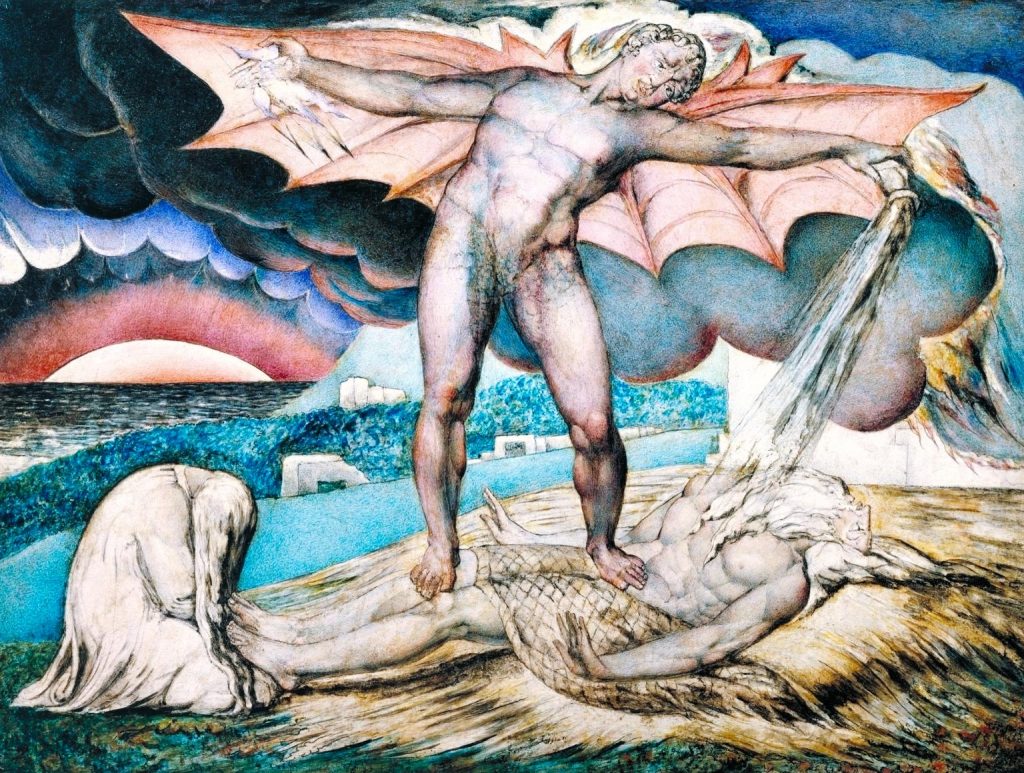
Like another new addition to the artist series—with artwork from J.M.W. Turner—the Blake Dr. Martens draw on the work of a violently original English artist with solidly working-class roots. Unlike his contemporary Turner, Blake spent most of his days in obscurity, creating a DIY visual and poetic mythology rich enough to counter the religious and philosophical hegemony of the day, which was a totally punk rock thing to do in the 18th century.
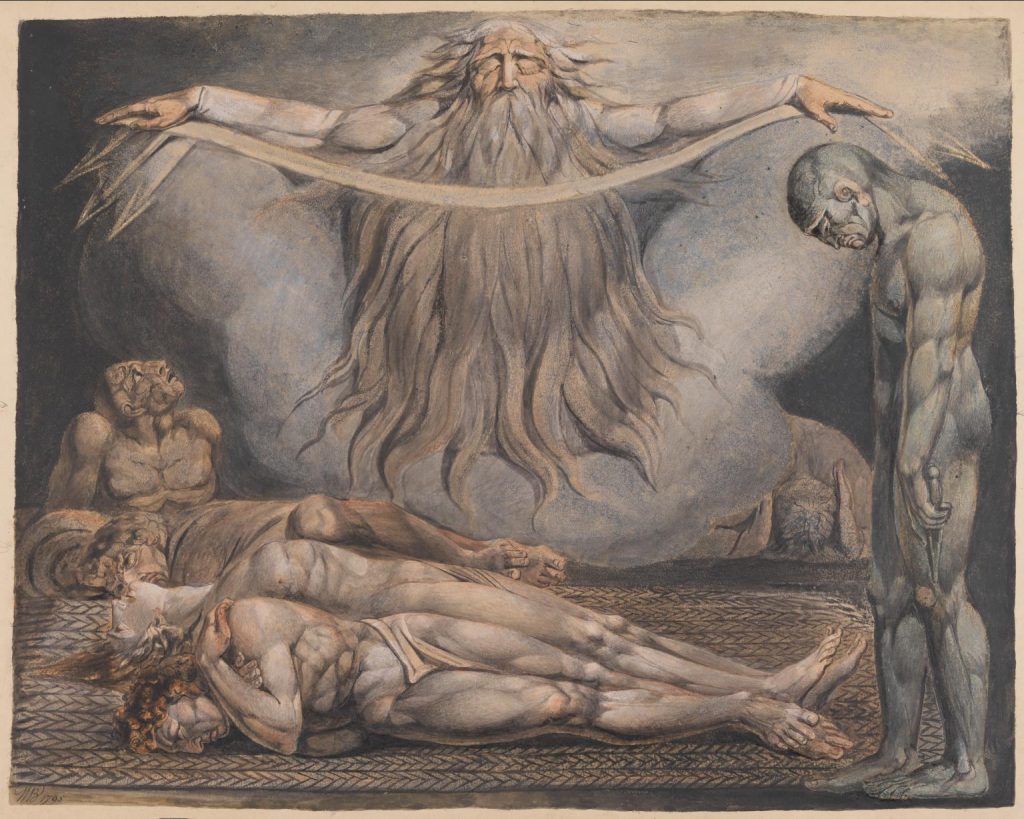
“I must create a system, or be enslaved by another man’s,” Blake wrote. Does the stamping of his iconoclastic artwork on a culturally iconic, commercially successful boot (and shoe, and leather satchel, and T‑shirt) mean that he’s been absorbed into exactly the kind of system he spent his life opposing? Isn’t that just punk’s eternal dilemma.…
See a short film from Tate Britain celebrating their collaboration with Dr. Martens at the shoemaker’s website and see much more William Blake in the Related Content links below.
If you want to snag your own William Blake Dr. Martens, you can find the 3‑Eye Oxfords and 1460 Boot on Amazon.
Related Content:
William Blake’s Hallucinatory Illustrations of John Milton’s Paradise Lost
William Blake’s Masterpiece Illustrations of the Book of Job (1793–1827)
William Blake’s Last Work: Illustrations for Dante’s Divine Comedy (1827)
Josh Jones is a writer and musician based in Durham, NC. Follow him at @jdmagness
Read More...Support Us
We're hoping to rely on loyal readers, rather than erratic ads. Please click the Donate button and support Open Culture. You can use Paypal, Venmo, Patreon, even Crypto! We thank you!

About Us

Open Culture scours the web for the best educational media. We find the free courses and audio books you need, the language lessons & educational videos you want, and plenty of enlightenment in between.
Advertise With Us

FREE UPDATES!
GET OUR DAILY EMAIL
Get the best cultural and educational resources on the web curated for you in a daily email. We never spam. Unsubscribe at any time.
FOLLOW ON SOCIAL MEDIA

Open Culture editor Dan Colman scours the web for the best educational media. He finds the free courses and audio books you need, the language lessons & movies you want, and plenty of enlightenment in between.
Advertise With Us

