Jeff Buckley released just one studio album, Grace, before the emerging star died unexpectedly in May, 1997, drowning while swimming in the waters flowing from the Mississippi River. He was only 30 years old.
Given his painfully short discography, fans will delight in the newly-dropped album, You and I, which features, among other things, previously-unreleased Buckley covers of songs originally recorded by Bob Dylan (“Just Like a Woman”); Sly & the Family Stone (“Everyday People”); Led Zeppelin (“Night Flight”) and more. The album is now streaming on Spotify.
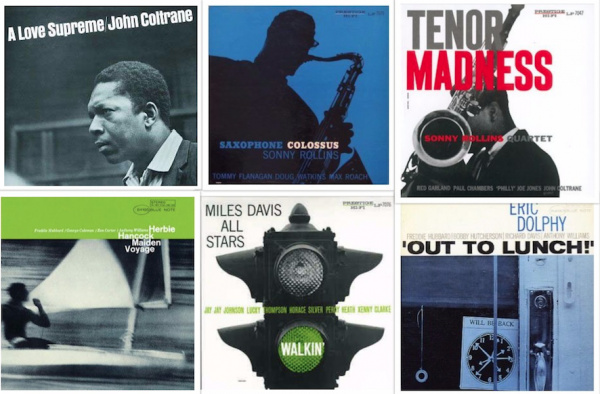
Starved for some more Buckley music? Then you’ll also want to check out this new interactive website which lets you browse/stream every album in Buckley’s varied vinyl record collection. Miles Davis, Billie Holiday, Siouxsie and the Banshees, Van Morrison, the Stones, Dylan, Bowie, Coltrane and The Clash–they’re all part of the collection. The video above shows you how to take full advantage of the new site. Enjoy.
If you would like to sign up for Open Culture’s free email newsletter, please find it here. It’s a great way to see our new posts, all bundled in one email, each day.
If you would like to support the mission of Open Culture, consider making a donation to our site. It’s hard to rely 100% on ads, and your contributions will help us continue providing the best free cultural and educational materials to learners everywhere. You can contribute through PayPal, Patreon, and Venmo (@openculture). Thanks!
The mind of Kurt Vonnegut, like the protagonist of his best-known novel Slaughterhouse-Five, must have got “unstuck in time” somewhere along the line. How else could he have managed to write his distinctive brand of satirical but sincere fiction, hyper-aware of past, present, and future all at once? It must have made him a promising contributor indeed for Volkswagen’s 1988 Time magazine ad campaign, when the company “approached a number of notable thinkers and asked them to write a letter to the future — some words of advice to those living in 2088, to be precise.”
The beloved writer’s letter to the “Ladies & Gentlemen of A.D. 2088” begins as follows:
It has been suggested that you might welcome words of wisdom from the past, and that several of us in the twentieth century should send you some. Do you know this advice from Polonius in Shakespeare’s Hamlet: ‘This above all: to thine own self be true’? Or what about these instructions from St. John the Divine: ‘Fear God, and give glory to Him; for the hour of His judgment has come’? The best advice from my own era for you or for just about anybody anytime, I guess, is a prayer first used by alcoholics who hoped to never take a drink again: ‘God grant me the serenity to accept the things I cannot change, courage to change the things I can, and wisdom to know the difference.’
Our century hasn’t been as free with words of wisdom as some others, I think, because we were the first to get reliable information about the human situation: how many of us there were, how much food we could raise or gather, how fast we were reproducing, what made us sick, what made us die, how much damage we were doing to the air and water and topsoil on which most life forms depended, how violent and heartless nature can be, and on and on. Who could wax wise with so much bad news pouring in?
For me, the most paralyzing news was that Nature was no conservationist. It needed no help from us in taking the planet apart and putting it back together some different way, not necessarily improving it from the viewpoint of living things. It set fire to forests with lightning bolts. It paved vast tracts of arable land with lava, which could no more support life than big-city parking lots. It had in the past sent glaciers down from the North Pole to grind up major portions of Asia, Europe, and North America. Nor was there any reason to think that it wouldn’t do that again someday. At this very moment it is turning African farms to deserts, and can be expected to heave up tidal waves or shower down white-hot boulders from outer space at any time. It has not only exterminated exquisitely evolved species in a twinkling, but drained oceans and drowned continents as well. If people think Nature is their friend, then they sure don’t need an enemy.
You can read the whole thing at Letters of Note, where Vonnegut goes on to give his own interpretation of humanity’s perspective at the time, when “we were seeing ourselves as a new sort of glacier, warm-blooded and clever, unstoppable, about to gobble up everything and then make love — and then double in size again.” He puts the question to his future-inhabiting readers directly: “Is it possible that we aimed rockets with hydrogen bomb warheads at each other, all set to go, in order to take our minds off the deeper problem—how cruelly Nature can be expected to treat us, Nature being Nature, in the by-and-by?”
Finally, Vonnegut issues seven commandments — as much directed to readers of the late 20th century as to readers of the late 21st, or indeed to those of the early 21st in which you read this now — intended to help humanity avert what he sees as the utter catastrophe looming ahead:
Reduce and stabilize your population.
Stop poisoning the air, the water, and the topsoil.
Stop preparing for war and start dealing with your real problems.
Teach your kids, and yourselves, too, while you’re at it, how to inhabit a small planet without helping to kill it.
Stop thinking science can fix anything if you give it a trillion dollars.
Stop thinking your grandchildren will be OK no matter how wasteful or destructive you may be, since they can go to a nice new planet on a spaceship. That is really mean, and stupid.
And so on. Or else.
Volkswagen had asked him to look one hundred years into the future. As of this writing, 2088 lies less than 75 years ahead, and how many of us would agree that we’ve heeded most or even any of his prescriptions? Then again, Vonnegut grants that pessimism may have got the better of him; perhaps the future will bring with it a utopia after all, one where “nobody will have to leave home to go to work or school, or even stop watching television. Everybody will sit around all day punching the keys of computer terminals connected to everything there is, and sip orange drink through straws like the astronauts,” a comically dystopian utopia, and not an entirely un-prescient one — a Vonnegutian vision indeed.
I was surprised there’s an actual, medical name for it: pareidolia, defined by Merriam-Webster as “the tendency to perceive a specific, often meaningful, image in a random or ambiguous visual pattern.”
Thomas Lamadieu, the artist whose work is showcased above, has a different, but not wholly unrelated condition.
Most of us prefer to contemplate the heavens in a bucolic setting. Lamadieu’s art compels him to look upwards from a more urban landscape. The tops of the buildings hemming him in supply with irregularly shaped frames, which he captures using a fish eye lens. Later, he fills them in with Microsoft Paint drawings, which frequently feature a bearded man whose t‑shirt is striped in sky blue. Negative space, not Crayola, supplies the color here.
Think of it as street art in the sky.
Not every day can be a brilliant azure, but it hardly matters when even Lamadieu’s grayest views exhibit a determined playfulness. It takes a very unique sort of eye to tease a pink nippled, stripe-limbed bunny from a steely UK sky.
Like many street artists, he takes a global approach, traveling the world in search of giant unclaimed canvases. His portfolio contains vistas originally captured in Hong Kong, South Korea, Germany, Spain, Austria, Canada, Belgium, and the United States, as well as his native France.
“The bearded man in my images stands for the sky itself,” he told The Independent, adding that his is a wholly secular vision.
If you have any entrepreneurial aspirations, you’ve likely heard of Y Combinator (YC), an accelerator based in Silicon Valley that’s been called “the world’s most powerful start-up incubator” (Fast Company) or “a spawning ground for emerging tech giants” (Fortune). Twice a year, YC carefully selects a batch of start-ups, gives them $120,000 of seed funding each (in exchange for some equity), and then helps nurture the fledgling ventures to the next stage of development. YC hosts dinners where prominent entrepreneurs come to speak and offer advice. They hold “Demo Days,” where the start-ups can pitch their concepts and products to investors, and they have “Office Hours,” where budding entrepreneurs can work through problems with the seasoned entrepreneurs who run YC. Then, with a little luck, these new start-ups will experience the same success as previous YC companies, Dropbox and Airbnb.
Given Y Combinator’s mission, it makes perfect sense that YC has ties with Stanford University, another institution that has hatched giant tech companies–Google, Cisco, Yahoo and more. Back in 2014, Sam Altman (the president of Y Combinator) put together a course at Stanford called “How to Start a Start-Up,” which essentially offers students an introduction to the key lessons taught to YC companies. Altman presents the first two lectures. Then some of the biggest names in Silicon Valley take over. Dustin Moskovitz (Facebook co-founder), Peter Thiel (PayPal co-founder), Marc Andreessen (Netscape creator/general partner of Andreessen Horowitz), Marissa Mayer (Yahoo CEO, prominent Googler), Reid Hoffman (LinkedIn co-founder), Ron Conway (Silicon Valley super angel), Paul Graham (YC founder)–they all make an appearance in the course.
If you would like to sign up for Open Culture’s free email newsletter, please find it here. It’s a great way to see our new posts, all bundled in one email, each day.
If you would like to support the mission of Open Culture, consider making a donation to our site. It’s hard to rely 100% on ads, and your contributions will help us continue providing the best free cultural and educational materials to learners everywhere. You can contribute through PayPal, Patreon, and Venmo (@openculture). Thanks!
Over on iTunes, you can find a short course (8 lectures in total) on the age-old mystery: How did Hannibal and his elephants cross the Alps during the Second Punic War? The course was presented by archeologist Patrick Hunt in the Continuing Studies program at Stanford University, back in 2007. Here’s the description for the course:
Hannibal is a name that evoked fear among the ancient Romans for decades. His courage, cunning and intrepid march across the dangerous Alps in 218 BCE with his army and war elephants make for some of the most exciting passages found in ancient historical texts written by Polybius, Livy, and Appian. And they continue to inspire historians and archaeologists today. The mystery of his exact route is still a topic of debate, one that has consumed Patrick Hunt (Director of Stanford’s Alpine Archaeology Project) for more than a decade. This course examines Hannibal’s childhood and his young soldierly exploits in Spain. Then it follows him over the Pyrenees and into Gaul, the Alps, Italy, and beyond, examining his victories over the Romans, his brilliance as a military strategist, and his legacy after the Punic Wars. Along the way, students will learn about archaeologists’ efforts to retrace Hannibal’s journey through the Alps and the cutting-edge methods that they are using. Hunt has been on foot over every major Alpine pass and has now determined the most probable sites where archaeological evidence can be found to help solve the mystery.
If you live in the San Francisco Bay Are, you’ll definitely want to check out the courses offered by Stanford Continuing Studies (where I also happen to work). The program also regularly offers online courses, for students living anywhere on this planet.
If you would like to sign up for Open Culture’s free email newsletter, please find it here. It’s a great way to see our new posts, all bundled in one email, each day.
If you would like to support the mission of Open Culture, consider making a donation to our site. It’s hard to rely 100% on ads, and your contributions will help us continue providing the best free cultural and educational materials to learners everywhere. You can contribute through PayPal, Patreon, and Venmo (@openculture). Thanks!
It’s fair to say that every period which has celebrated the literature of antiquity has held epic Roman poet Virgil in extremely high regard, and that was never more the case than during the early Christian and medieval eras. Born in 70 B.C.—writes Clyde Pharr in the introduction to his scholarly Latin text—“Vergil was ardently admired even in his own day, and his fame continued to increase with the passing centuries. Under the later Roman Empire the reverence for his works reached the point where the Sortes Virgilianae came into vogue; that is, the Aeneid was opened at random, and the first line on which the eyes fell was taken as an omen of good or evil.”
This cult of Virgil only grew until “a great circle of legends and stories of miracles gathered around his name, and the Vergil of history was transformed into the Vergil of magic.” The spelling of his name also transformed from Vergil to Virgil, “thus associating the great poet with the magic or prophetic wand, virgo.” Pharr quotes from J.S. Tunison’s Master Virgil, a study of the poet “as he seemed in the Middle Ages”:
The medieval world looked upon him as a poet of prophetic insight, who contained within himself all the potentialities of wisdom. He was called the Poet, as if no other existed; the Roman, as if the ideal of the commonwealth were embodied in him; the Perfect in Style, with whom no other writer could be compared; the Philosopher, who grasped the ideas of all things…
Virgil, after all, acted as the wise guide through the Inferno for late medieval poet Dante, who was accorded a similar degree of reverence in the early modern period.
We should keep the cult of Virgil, and of his epic poem The Aeneid, in mind as we survey the text you see represented here—an illuminated manuscript from Rome created sometime around the year 400 (view the full, digitized manuscript here). Beginning at the end of another great epic—The Iliad—Virgil’s long poem connects the world of Homer to his own through Aeneas and his companions, Trojan refugees and mythical founders of Rome. It is somewhat ironic that the Christian world came to venerate the poem for centuries—claiming that Virgil predicted the birth of Christ—since the Roman poet’s purpose, writes Pharr, was “to see effected… a revival of faith in the old-time religion”—the old-time pagan religion, that is.
But the careful preservation of this ancient manuscript, some 1,600 years old, testifies to the Catholic church’s profound respect for Virgil. “Known as the Vergilius Vaticanus,” writes Hyperallergic, it’s one of the world’s oldest versions of the Latin epic poem, and you can browse it for free online” at Digita Vatica, a nonprofit affiliated with the Vatican Library.
Written by a single master scribe in rustic capitals, an ancient Roman calligraphic script, and illustrated by three different painters, Vergilius Vaticanus is one of only three illuminated manuscripts of classic literature. Granulated gold, applied with a brush, highlights meticulously colored images of famous scenes from the poem: Creusa as she tries to keep her husband Aeneas from going into battle; the islands of the Cyclades and the city of Pergamea destroyed by pestilence and drought; Dido on her funeral pyre, speaking her final soliloquy.
Hyperallergic describes the painstaking care a Tokyo-based firm took in digitizing the fragile text. Digita Vaticana is currently in the midst of scanning its entire collection of 80,000 delicate, ancient manuscripts, a process expected to take 15 years and cost 50 million euros.
Should you wish to contribute to the effort, you can make a donation to the project. The first 200 donors willing and able to fork over at least 500 euros (currently about $533), will receive a printed reproduction of the Vergilius Vaticanus, sure to impress the classics lovers in your life. Should you wish to read the Aeneid in its original language, a true undertaking of love, you can’t go wrong with Pharr’s excellent scholarly text of the first six books (or see an online Latin text here). If you’d rather skip the genuinely difficult and laborious translation, you can always read John Dryden’s translation free online.
She was a little bit country. He was a little bit rock and roll.
Turns out Marie was also more than a little bit Dada.
From 1985 to 1986, Marie served as actor Jack Palance’s cohost on Ripley’s Believe It or Not, a TV series exploring strange occurrences, bizarre historical facts, and other such crowd-pleasing oddities… one of which was apparently the aforementioned European avant-garde art movement, founded a hundred years ago this week.
If you don’t know as much about Dada as you’d like, Ms. Osmond’s brief primer is a surprisingly sturdy introduction.
No cutesy bootsy, easy references to melting clocks here.
The highlight is her performance of Dada poet and manifesto author Hugo Ball’s nonsensical 1916 sound poem “Karawane.”
Lose the yellow bathrobe and she could be a captive warrior princess onGame of Thrones, fiercely petitioning the Mother of Dragons on behalf of her people. (Invent some subtitles for extra Dada-inflected fun!)
A sharp eyed young art student named Ethan Bates did catch one error in Marie’s lesson. The ’13’ costume she pulls from a handy dressing room niche was not worn by Hugo Ball, but rather Dutch painter Theo Van Doesburg, one of the founders of the De Stijl movement.
Still you’ve got to hand it to Marie, who was slated to perform just a single line of the poem. When it came time to tape, she abandoned the cue cards, blowing producers’ and crew’s minds by delivering the poem in its unhinged entirety from memory.
Now that’s rock and roll.
Below you’ll find footage of Ball himself performing the work in 1916.
People have spoken for decades, and with great certainty, of the impending death of print. But even here into the 21st century, presses continue to run around the world, putting out books and periodicals of all different shapes, sizes, and print runs. The technology has endured so well in part because it has had so long to evolve. Everyone knows that printing began with something called the Gutenberg Press, and many know that Gutenberg himself (Johannes, a German blacksmith) unveiled his invention in 1440, introducing movable type to the world. Ten years later came the Gutenberg Bible, the first major book printed using it, still considered among the most beautiful books ever mass-produced.
But how did the Gutenberg press actually work? In the video above, you can watch a demonstration of “the most complete and functioning Gutenberg Press in the world” at the Crandall Historical Printing Museum in Provo, Utah. While it certainly marked a vast improvement in efficiency over the hand-copying used to make books before, it still required no small amount of labor on the part of an entire staff specially trained to apply the ink, square up the paper, and turn a not-that-easy-to-turn lever. The guide, who’s clearly put in the years mastering his routine, has both clear explanations and plenty of corny jokes at hand throughout the process.
One can hardly overstate the importance of the machine we see in action here, which facilitated the spread of ideas all around Europe and the world and turned the book into what no less a technophile than Stephen Fry calls “the building block of our civilization.” He says that in an episode of the BBC series The Medieval Mind in which he explores the world of Gutenberg printing in even greater depth. We’ve grown so accustomed to the near-instantaneous transfer of information over the internet that dealing with print can feel like a hassle. I myself just recently resented having to buy a printer for work reasons, even though its sheer speed and clarity would have seemed like a miracle to Gutenberg, whose invention — and the labor of the countless skilled workers who operated it — set in motion the developments that let us spread ideas so impossibly fast on sites like this today.
Everyone’s favorite alcoholic poet and dirty old man Charles Bukowski was hardly what you’d call a romantic, though he had a softer side: a vulnerability and compassion for the lonely, poor, and suffering. But we don’t love Bukowski because he prettied up the nasty business of being human. We love him—those of us who do (I won’t presume to speak for his detractors)—because he was honest: about his own desires and disappointments, about the beauty and the sordid ugliness of things. Mostly the ugliness.
Often the ugliness in Bukowski’s work comes from Bukowski himself—or the voice he adopts of the leering old man on the corner who makes women cross the street: voyeuristic, sardonic, imaginative, self-aware, miserable, embittered, contemptuous…. We see this Bukowski encountering strange women—sometimes ogling, sometimes sneering—in poems like “The Girl Outside the Supermarket,” “Girl in a Miniskirt Reading the Bible Outside My Window,” and “Girl on the Escalator,” all in their way offering candidly narcissistic insights into the male gaze and male ego.
In “Girl on the Escalator,” Bukowski’s speaker both ogles and sneers, and drifts into an imaginative fugue as he constructs a fantasy life for the “girl” of the title, then deconstructs her in the grossest, most visceral way. Feminist he ain’t, and the new short film above, created by Kayhan Lannes Ozmen, gives us a very literal interpretation of every one of the poem’s images, as a deadpan narrator reads Bukowski’s poem. One fan recommends that you read the poem yourself (find it here) before watching the film, and see what you make of it first. I’d agree, but that is, of course, up to you.
Daily Nous, a website about philosophy and the philosophy profession, recently featured a detailed mapping of the entire discipline of philosophy, created by an enterprising French grad student, Valentin Lageard. Drawing on a taxonomy provided by PhilPapers, Lageard used NetworkX (a Python software package that lets you study the structure and dynamics of complex networks) to map out the major fields of philosophy, and show how they relate to various sub-fields and even sub-sub-fields. The image above shows the complete map, revealing the astonishing size of philosophy as an overall field. The images below let you see what happens when you zoom in and move down to different levels.
To explore the map, head over to Daily Nous–or open this image, click on it, wait for it to expand (it takes a second), and then start maneuvering through the networks.
If you would like to sign up for Open Culture’s free email newsletter, please find it here. It’s a great way to see our new posts, all bundled in one email, each day.
If you would like to support the mission of Open Culture, consider making a donation to our site. It’s hard to rely 100% on ads, and your contributions will help us continue providing the best free cultural and educational materials to learners everywhere. You can contribute through PayPal, Patreon, and Venmo (@openculture). Thanks!
Fifty years on, you can read all you want about the Beach Boys’ 1966 masterpiece Pet Sounds (and here’s twobooks that are great), but to really appreciate the intricate nature of the arrangements, you have to turn to the multi-tracks themselves.
Working with session players that could pick up the ideas tumbling from his head (and hurriedly transcribe them), Brian Wilson created a sonic tapestry at L.A.‘s Gold Star Studios that still sounds fresh and, as the years go by, otherworldly. Influenced by Phil Spector’s work, along with the textures of the songs of Burt Bacharach and Martin Denny, Wilson created something as unique as his own DNA. Pet Sounds continues to reveal secrets and treasures the more you listen to it–as this series of YouTube mini-docs from user Behind the Sounds reveals.
These videos use the raw session recordings that were released in 1997, and annotates them, pointing out moments of Wilson’s artistry as we hear these classic tracks assembled. (Wilson, it’s said, kept his swearing to a minimum in order to be taken seriously by the musicians.)
An experienced arranger would probably never have come up with the recipe for “Wouldn’t It Be Nice,” for example: two pianos, three guitars, three basses, four horns, two accordions, drums, and percussion. And certainly not for a pop song. But there it is.
Yet, as amazing as Pet Sounds is, the album was also a cry for help as mental illness began to really take hold of Wilson. The album would be the high point before a slow decline. It’s as if one man couldn’t hold all this art in his head. It was too much. Aware of the endless possibilities of the studio as instrument, and owning a perfectionist nature, Wilson came undone. These docs are an excellent insight into a beautiful, troubled mind, but one that recovered after a long spell. Wilson continues to record and tour, including full performances of Pet Sounds. Click here to find tour dates for Brian Wilson’s “Pet Sounds 50th Anniversary World Tour.”
Ted Mills is a freelance writer on the arts who currently hosts the artist interview-based FunkZone Podcast. You can also follow him on Twitter at @tedmills, read his other arts writing at tedmills.com and/or watch his films here.
We're hoping to rely on loyal readers, rather than erratic ads. Please click the Donate button and support Open Culture. You can use Paypal, Venmo, Patreon, even Crypto! We thank you!
Open Culture scours the web for the best educational media. We find the free courses and audio books you need, the language lessons & educational videos you want, and plenty of enlightenment in between.