Over at The Intercept, Josh Begley, a data visualization artist, has posted a video entitled “Field of Vision — Concussion Protocol.” By way of introduction, he writes:
Since the season started, there have been more than 280 concussions in the NFL. That is an average of 12 concussions per week. Though it claims to take head injuries very seriously, the National Football League holds this data relatively close. It releases yearly statistics, but those numbers are published in aggregate, making it difficult to glean specific insights.
I have been tracking these injuries all season. Using a variety of methods, including reviewing daily injury reports from NFL.com, I have created what I believe is the most complete dataset of individual concussions sustained during the 2017–2018 season.
The resulting film, “Concussion Protocol,” is a visual record of every concussion in the NFL this year.
He goes on to add: “This film does not make an argument for ending football. Rather, it invites a set of questions… When we watch American football, what are we seeing?” Or, really, what are we missing? It’s only by “cutting together these scenes of injury — moments of impact, of intimacy, of trauma — and reversing them,” that we “see some of this violence anew” and underscore the sheer brutality of the game.
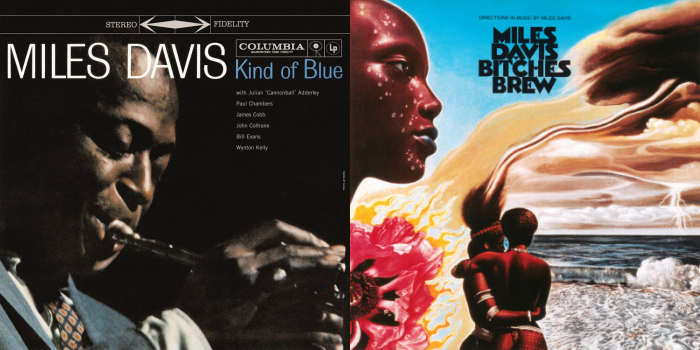
When Miles Davis attended a White House dinner in 1987, he was asked what he had done to deserve to be there. No modest man, Davis, he responded “Well, I’ve changed music five or six times.”
Is it bragging when it’s absolutely true? In this recent Spotify playlist, Steve Henry takes on the Miles Davis discography in roughly a chronological order, a stunning 569 songs and 65 hours of music. That makes that, what, over 90 tracks per revolution in music?
Technically, Davis’ first recorded appearance was as a member of Charlie Parker’s quintet in 1944, and his first as a leader was a 1946 78rpm recording of “Milestones” on the Savoy label. But this playlist starts with the 1951 Prestige album The New Sounds (which later made up the first side of Conception). By this time, Davis had taken the jaunty bebop of mentor and idol Parker and helped create a more relaxed style, a “cool” jazz that would come to dominate the 1950s. Privately he swung between extremes: a health nut who got into boxing, or a heroin addict and hustler/pimp, and he would oscillate between health and illness for the rest of his life.
During the 1950s however, he also created some of his most stunning classics, first for Prestige and Blue Note, where he developed the style to be known as “hard bop; then for Columbia, a label relationship that would result in some of his most revolutionary music. (Note: to get out of his Prestige contract that wanted four more albums out of him, Davis and his Quintet booked two session dates and recorded four albums worth of material, the Cookin’Relaxin’Workin’ and Steamin’ albums that in no way sounds like an obligation.)
At Columbia, Davis made history with 1959’s Kind of Blue, considered by many as one of the greatest jazz albums of all time, along with his collaborations with arranger Gil Evans (Sketches of Spain, Porgy and Bess, Miles Ahead). After a lull in the mid-‘60s where the music press expected either a resurgence or a tragic end, Davis returned with second quintet (Wayne Shorter, Herbie Hancock, Ron Carter, Tony Williams) for another run of albums in his then “time, no changes” free jazz style, including Miles Smiles, Sorcerer, and Filles de Kilimanjaro.
But none of those prepared anybody for the giant leap beyond jazz itself into proto-ambient with In a Silent Way and the menacing misterioso-funk of Bitches Brew of 1970. Davis had watched rock and funk go from teenager pop music at the beginning of the decade to literally changing the world. He responded by creating one of the densest, weirdest albums which both owed some of its sound to rock and at the same time refuted almost everything about the genre (as well as the history of jazz). He was 44 years old.
His band members went on to shape jazz in the ‘70s: Wayne Shorter and Joe Zawinul formed Weather Report; John McLaughlin formed the Mahavishnu Orchestra; Herbie Hancock, although already established as a solo artist, brought forth the Headhunters album; Chick Corea helped form Return to Forever.
As for Davis, he delved deeper into funk and fusion with a series of albums, including On the Corner, that would go unappreciated at the time, but are now seen as influential in the world of hip hop and beyond. By the ‘80s, after a few years where he just disappeared into reclusion, he returned with some final albums that are all over the map: covering pop hits by Cyndi Lauper and Michael Jackson much in the same way that Coltrane covered The Sound of Music; experimental soundtracks; and experimenting with loops, sequencers, beats, and hip hop. Having struggled with illness and addiction all his life, he passed away at 65 years old in 1991, leaving behind this stunning discography, still offering up surprises to those looking to explore his legacy.
Ted Mills is a freelance writer on the arts who currently hosts the artist interview-based FunkZone Podcast and is the producer of KCRW’s Curious Coast. You can also follow him on Twitter at @tedmills, read his other arts writing at tedmills.com and/or watch his films here.
It says something about the human brain that we so often see the shape of human faces in inanimate things — and that we feel such amusement and even delight about it when we do. If you don’t believe it, just ask the 618,000 followers of the Twitter account Faces in Things, which posts images of nothing else. Or go to Chichibu, Japan, two hours northwest of Tokyo, where you’ll find the Chinsekikan, a small museum that has collected over 1,700 “curious rocks,” all 100 percent organically formed, about a thousand of which resemble human faces, sometimes even famous ones.
“The museum’s founder, who passed away in 2010, collected rocks for over fifty years,” writes Kotaku’s Brian Ashcraft. “Initially, he was drawn to rare rocks, but that evolved into collecting, well, strange rocks — especially unaltered rocks that naturally resemble celebrities, religious figures, movie characters, and more.
These days, the founder’s daughter keeps the museum running, and it has been featured on popular, nationwide Japanese TV programs.” It has also, more recently, become a subject of CNN’s internet video series Great Big Story, which highlights interesting people and places all around the world.
The Chinsekikan stands in walking distance of a local river rich with rocks, where we see the museum’s proprietor Yoshiko Hayama performing one of her routine searches for wee faces staring back at her. “To find rocks, we walk step-by-step,” she says. “If we walk too fast, we won’t find them.” She explains that a proper jinmenseki, or face-shaped stone, needs at least eyes and a mouth, reasonably well-aligned, with a nose being a rare bonus. Only decades of adherence to these standards, and hunting with such deliberateness, can yield such prize specimens as a rock that looks like Elvis Presley, a rock that looks (vaguely) like Johnny Depp, and a rock that looks like Donald Trump — though that one does benefit from what looks like a pile of thread on top, of a color best described as not found in nature.
Based in Seoul, Colin Marshall writes and broadcasts on cities and culture. His projects include the book The Stateless City: a Walk through 21st-Century Los Angeles and the video series The City in Cinema. Follow him on Twitter at @colinmarshall or on Facebook.
Back in 2011, in Tokyo, 167 musicians performed some classic Beethoven with the “Matryomin,” a new-fangled instrument that lodges a theremin inside a matryoshka. A matryoshka, of course, is one of those Russian nested dolls where you find wooden dolls of decreasing size placed one inside the other. As for the theremin, it’s a century-old electronic musical instrument that requires no physical contact from the player. You can watch its inventor, Leon Theremin, give it a demo in the vintage video below. Or via these links you can see the Matryomin Ensemble performing versions of Amazing Grace and Memory of Russia. Enjoy.
Note: An earlier version of this post appeared on Open Culture in July, 2013. It’s like the Olympics. It comes back once every four years.
If you would like to support the mission of Open Culture, consider making a donation to our site. It’s hard to rely 100% on ads, and your contributions will help us continue providing the best free cultural and educational materials to learners everywhere. You can contribute through PayPal, Patreon, and Venmo (@openculture). Thanks!
Just when you think the fabled downtown New York 70s punk scene centered around CBGBs has no more secrets to offer, another homegrown documentarian appears to show us photographs (on Instagram) we’ve never seen and tell some pretty nifty stories to go along with them. Julia Gorton came to New York from her native Delaware in 1976 and used a Polaroid camera to capture her firsthand encounters with legends like Debbie Harry, Patti Smith, David Byrne, Tom Verlaine, Iggy Pop, Richard Hell, and Teenage Jesus and the Jerks’ Lydia Lunch (below), “a natural for the glamorous black-and-white photos I liked to make,” she says, and a “a real partner” in Gorton’s enterprise and her most-photographed subject.
In Christina Cacouris’ interview with Gorton at Garage, we learn that the photographer “ended up meeting Tom’s mom [Television singer and guitarist Tom Verlaine] at the flea market in Wilmington [Delaware]. She was a proud mom who played her son’s single on a cassette player in the back of her station wagon while she sold things on a folding table.”
Exactly this kind of intimacy and family atmosphere pervades Gorton’s work in the punk clubs, downtown streets, and record stores. Like most of the performers onstage, Gorton was a relative amateur, learning her craft alongside the musicians and artists she photographed. “You didn’t need to be perfect before you started,” she says.
Although she found her lack of technical ability frustrating, in hindsight, Gorton says, “images that I perceived at the time as failures actually represent the true character of the time period more honestly and powerfully than the images I thought were ‘successful.’” In many cases, however, it has taken 21st century digital technology to unearth some of her most revealing shots.
The cost of film prohibited her from taking multiple exposures, and the darkness of CBGBs left many prints too murky. Using Photoshop, Gorton has been able to revisit many of these seemingly failed attempts, like the moody portrait above of Tom Verlaine. “I was able to scan and finally pull him out of the shadows of decades past,” she muses.
Along with the glamour of her portraits, Gorton’s candid shots of the period capture downtown legends in rare moments and poses. (Check out John Cale above at CBGBs, for example, or Jean Michel Basquiat, then known as SAMO, dancing on the right, below.) Shot while she was a student at the Parsons School of Design, Gorton’s photos of the punk, New Wave, and No Wave scene were the beginning of her long career as a photographer, illustrator, and graphic designer.
On her Instagram feed, 70s and 80s images mix in with her current projects, and the juxtaposition of contemporary musicians and artists with their counterparts from 40 years ago gives a sense of the long continuity reflected in Gorton’s engagement with street art and underground rock culture. Explore her photo collection here.
When punk rock began to wend its way out of the three-chord guitar attack and into a new generation of mannerisms, it tended to be bass players who led the way. Joy Division’s Peter Hook, Public Image Ltd’s Jah Wobble, The Cure’s Simon Gallup, Bauhaus’s David J. With their moody takes on dub reggae, chord-driven melodicism, and lead lines on the upper frets, these were innovative players, but they still embraced the relative simplicity of punk at their core. Across the pond, then across the continent, however, in Southern California, punk bass took a much more animated, virtuosic character, thanks to jazz and funk-inspired legends like Minutemen’s Mike Watt and the Red Hot Chili Peppers’ Flea, who has become, since his early 80s beginnings one of the most famous rock musicians in the world for his speed and unparalleled technique.
The shirtless wonder, who comes across both onstage and off as incredibly gregarious, yet humble, was once voted by Rolling Stone readers as the second best bassist of all time, and it’s not hard to see why, for example, in the mind-blowing video just above. But it is hard to see how. How does he do it? And what exactly is “it,” that incomparable Flea style? Where did it come from?
The Polyphonic video at the top breaks it down for us, the combination of funk slapping and popping and punk speed and aggression, combined with a melodicism Flea developed as a counterpoint to John Frusciante’s rhythmic guitar lines. Flea’s incredibly detailed attacks stand out for their novelty and precision, but it’s his ear for melody that makes his playing so distinctively musical, even when pared down and slowed down in RHCP’s ballads.
Some bassists weave lines around guitars and vocals, some mostly synchronize with the drummer’s kicks and hits—Flea does both, shifting from style to style within songs, and sometimes sounding like he’s playing two basses at once. His syncopated slap bass hits, courtesy of Sly Stone’s Larry Graham, create a secondary backbeat slightly ahead or behind Chad Smith’s drumming; his use of strummed chords, wild leaps around the neck, and beautifully melodic voicing make his bass playing an essential element of every song, rather than a just a low-end harmonic underpinning for more noticeable instrumentation. Funk music has always been bass-driven, and the Chili Peppers’ funkiest tracks, and most excellent covers, follow the tradition. But in rock the bass can feel “like an afterthought.”
In Flea’s more than capable hands, a simple rock bass riff, as in “Snow,” just above, can suddenly become a thing of wonder (check it out at 1:51), even on its own and unaccompanied. Perhaps no bassist since Paul McCartney or John Paul Jones has done as much to turn rock bass into a lead instrument or has written as many memorable bass lines, only Flea can play them ten times faster while leaping several feet in the air. His “astounding instrumentalism” has always been amazing to behold, and not easy to imitate, to say the least. But why try? Bass players can learn a lot from watching Flea and incorporating his expressive techniques into their repertoire. But even Flea himself, perhaps the most recognizable bass player in rock, understands the instrument first and foremost as a supporting player. His best advice? Play in the “spirit of givingness,” as he says in his video lesson below, and listen to the subtleties of the other musicians’ playing. “You want to make everyone else sound good.” Hey, if it’s good enough for Flea.…
Last year, we shined a light on Buckminster Fuller’s Dymaxion Map. Unveiled back in 1943, the Dymaxion Map (shown below) revolutionized map design, allowing us to see our world in an entirely new way. As the Buckminster Fuller Institute describes it:
Also known as the “Dymaxion Map,” the Fuller Projection Map is the only flat map of the entire surface of the Earth which reveals our planet as one island in one ocean, without any visually obvious distortion of the relative shapes and sizes of the land areas, and without splitting any continents.
Fuller’s map has since inspired the award-winning AuthaGraph World Map, created by Japanese architect and artist Hajime Narukawa. And it led robotics engineer Gavin Smith to fashion The Dymaxion Globe, essentially by dividing the Dymaxion Map into triangles and and folding them into a three-dimensional figure. Smith explains the process of making a Dymaxion Globe over at Make Magazine. But above, you can watch it all happen in a video produced by Adam Savage’s Tested YouTube channel. They walk you through the creation of a laser-cut Dymaxion Globe. Enjoy.
Wim Wenders began his prolific feature filmmaking career in 1970, and nearly half a century later — having directed such cinephile favorites as Alice in the Cities, The American Friend, Paris, Texas, and Wings of Desire along the way — he shows no signs of slowing down. Known for his collaboration with cinematographers, and with Robby Müller in particular, Wenders has worked in everything from black-and-white 16-millimeter film, when he first started out, to digital 3D, which he’s spent recent years putting to a variety of cinematic ends. But we can trace all of his visions back, in one way or another, to the humble Polaroid instant camera.
“Every movie starts with a certain idea,” says Wenders in the short “Photographers in Focus” video above, and the Polaroid was just a collection of constant ideas.” The auteur speaks over images of some of the Polaroids he’s taken throughout his life, relating his history with the medium.
“My very first Polaroid camera was a very simple one. Mid-sixties. I was 20, and I used Polaroid cameras exclusively until I was about 35 or so. Most of them I gave away, because when you took Polaroids, people were always greedy and wanted them because it was an object, it was a singular thing.”
Wenders describes his Polaroids as “very insightful into the process of my first six, seven movies, all the movies I did through the seventies,” the era in which he mastered the form of the road movie first in his native Germany, then in the much-mythologized United States. He not only shot Polaroids in preparation, but during production, snapping them casually, much as one would on a genuine road trip. “Polaroids were never so exact about the framing. You didn’t really care about that. It was about the immediacy of it. It’s almost a subconscious act, and then it became something real. That makes it such a window into your soul as well.” Polaroid photographs, as Wenders sees them, capture a deeper kind of truth. It’s no surprise, then, even in age of the 3D digital camera, to see them making a comeback.
Based in Seoul, Colin Marshall writes and broadcasts on cities and culture. His projects include the book The Stateless City: a Walk through 21st-Century Los Angeles and the video series The City in Cinema. Follow him on Twitter at @colinmarshall or on Facebook.
What is it about the Voynich Manuscript—that cryptic, illustrated 15th century text of unknown origin and meaning—that has so fascinated and obsessed scholars for centuries? Written in what appears to be an invented language, with bizarre illustrations of otherworldly botany, mysterious cosmology, and strange anatomy, the book resembles other proto-scientific texts of the time, except for the fact that it is totally indecipherable, “a certain riddle of the Sphinx,” as one alchemist described it. The 240-page enigma inspires attempt after attempt by cryptologists, linguists, and historians eager to understand its secrets—that is if it doesn’t turn out to be a too-clever Medieval joke.
One recent try, by Nicholas Gibbs, has perhaps not lived up to the hype. Another recent attempt by Stephen Bax, who wrote the short TED Ed lesson above, has also come in for its share of criticism. Given the investment of scholars since the 17th century in cracking the Voynich code, both of these efforts might justifiably be called quite optimistic. The Voynich may forever elude human understanding, though it was, presumably, created by human hands. Perhaps it will take a machine to finally solve the puzzle, an artificial brain that can process more data than the combined efforts of every scholar who has ever applied their talents to the text. Computer scientists at the University of Alberta think so and claim to have cracked the Voynich code with artificial intelligence (AI).
Computer science professor Greg Kondrak and graduate student Bradley Hauer began their project by feeding a computer program 400 different languages, taken from the “Universal Declaration of Human Rights.” While “they initially hypothesized that the Voynich manuscript was written in [ancient] Arabic,” reports Jennifer Pascoe, “it turned out that the most likely language was [ancient] Hebrew.” (Previous guesses, the CBC notes, “have ranged from a type of Latin to a derivation of Sino-Tibetan.”) The next step involved deciphering the manuscript’s code. Kondrak and Hauer discovered that “the letters in each word… had been reordered. Vowels had been dropped.” The theory seemed promising, but the pair were unable to find any Hebrew scholars who would look at their findings.
Without human expertise to guide them, they turned to another AI, whose results, we know, can be notoriously unreliable. Nonetheless, feeding the first sentence into Google translate yielded the following: “She made recommendations to the priest, man of the house and me and people.” It’s at least grammatical, though Kondrak admits “it’s a kind of strange sentence to start a manuscript.” Other analyses of the first section have turned up several other words, such as “farmer,” “light,” “air,” and “fire”—indeed the scientists have found 80 percent of the manuscript’s words in ancient Hebrew dictionaries. Figuring out how they fit together in a comprehensible syntax has proven much more difficult. Kondrak and Hauer admit these results are tentative, and may be wrong. Without corroboration from Hebrew experts, they are also unlikely to be taken very seriously by the scholarly community.
But the primary goal was not to translate the Voynich but to use it as a means of creating algorithms that could decipher ancient languages. “Importantly,” notes Gizmodo, “the researchers aren’t saying they’ve deciphered the entire Voynich manuscript,” far from it. But they might have discovered the keys that others may use to do so. Or they may—as have so many others—have been led down another blind alley, as one commenter at IFL Science suggests, sarcastically quoting the wise Bullwinkle Moose: “This time for sure!”
Arguments are woven throughout our public and private lives. What determines which win the day? Renowned literary and legal theorist Stanley Fish leads us through literature, politics and the domestic to reveal the power — and inevitability — of rhetoric.
From the courtroom to the bedroom, arguments are woven throughout our private and public lives: they are how we decide what’s right, what’s true and what we should do. With examples ranging from Milton’s Paradise Lost to the legalization of same sex marriage and Donald Trump, Fish shows us how the rules of engagement shift between contexts — and how rhetoric is the key to success in all of them.
Drawing from his bestselling book Winning Arguments, Fish makes the controversial claim that facts are merely opinions that have been made to stick — and what makes them stick is nothing more than successfully deployed arguments.
Take the course to learn:
–What Milton’s Paradise Lost teaches us about the power of rhetoric and the first ever domestic quarrel
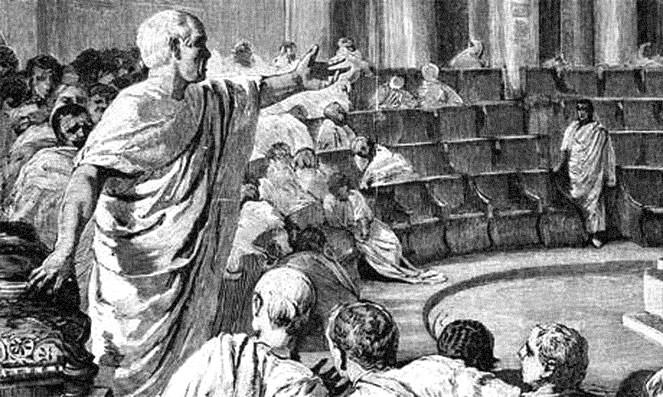
–The techniques Shakespeare’s Mark Anthony uses to provoke his audience to violence
–What characterizes Donald Trump’s rhetorical style – and how it breaks all the rules
–How the case for same sex marriage was really won through a cultural shift rather than careful legal argument
–The tricks climate change deniers use to sow doubt
–The Five Key Truths about domestic quarrels – and why self-help guides to marital harmony almost never work
We can hardly understand America without understanding American history. Can we understand American history without understanding slavery? Many a historian would answer with an unqualified no, and not simply because they want to see Americans meditate on the sins of their ancestors: plunging into the controversies around slavery, seeing how Americans made arguments for and against it at the time, can help us approach and interpret the other large-scale legal and moral battles that have since raged in the country, and continue to rage in it today.
The Boston Public Library’s Anti-Slavery Collection, one particularly important resource in that intellectual effort, could use our help in making its considerable resources more readily available. “For the past several years, we have been diligently cataloging and digitizing manuscript correspondences from our Anti-Slavery collection,” writes the BPL’s Tom Blake, all of which “document the thoughts, transactions, and activities of the abolitionist movement in Boston, Massachusetts, and throughout New England.”
Now, “in order to make this collection more valuable to researchers, scholars, and historians we are pleased to announce the launch of a new website which will make these handwritten items available for you to transcribe into machine readable text.”
It’s no small job: the collection contains roughly 40,000 pieces of “correspondence, broadsides, newspapers, pamphlets, books, and memorabilia from the 1830s through the 1870s,” including the work of some of the most notable American, British, and Irish abolitionists of the day. But the combined efforts of everyone willing to transcribe a few documents, will, in Blake’s words, “allow the text corpus to be more precisely searchable and better suited for natural language processing applications – helping researchers better understand patterns, relationships, and trends embedded in the linguistics of this particular community.” Which, ultimately, will help us all to better understand America. If you’d like to lend a hand, you can create an account and start transcribing at the Anti-Slavery Collection’s site today.
Based in Seoul, Colin Marshall writes and broadcasts on cities and culture. His projects include the book The Stateless City: a Walk through 21st-Century Los Angeles and the video series The City in Cinema. Follow him on Twitter at @colinmarshall or on Facebook.
We're hoping to rely on loyal readers, rather than erratic ads. Please click the Donate button and support Open Culture. You can use Paypal, Venmo, Patreon, even Crypto! We thank you!
Open Culture scours the web for the best educational media. We find the free courses and audio books you need, the language lessons & educational videos you want, and plenty of enlightenment in between.