Artists in turbulent times often must resort to extreme measures to compensate for the general state of cultural disorder. How can one be heard over the sounds of civil unrest? Dada and surrealist artists adopted an archly gibberish music hall idiom during World War I. Amidst the tumult of the 60s, some avant-gardists like Frank Zappa used more populist means, an ostensibly rock and roll format and image, as a vehicle for his influential classical-prog-jazz.
Like the first Dadaists, however, Zappa was a physical artist. He started small in the early sixties, if you can call an appearance on the Steve Allen Show small. The act certainly seems so at first. A young Zappa, clean-shaven with a well-tailored suit and dapper haircut, appears solo on Allen’s show. He’s taciturn at first during the interview, admitting that he can play guitar, vibes, bass, and drums. He has chosen, however, to help the audience recover what he suggests is a childhood delight, playing the bicycle. “How long have you been playing bike, Frank?” Allen asks. “About two weeks,” says Zappa, getting his first big laugh.
Zappa also talks about an early, pre-Mothers of Invention project, scoring the 1962 film The World’s Greatest Sinner, which he calls “the world’s worst movie.” The film, it turned out, didn’t air until 50 years later (Martin Scorsese names it as a favorite). But the mention gives Zappa a chance to show off how much he knows about composing for a 55-piece orchestra. Allen seems unimpressed, and remains so when Zappa begins his performance art. Then the gag strays into a Salvador Dali spoof via a John Cage performance, with Zappa as the weird, debonair straight man to Allen’s mouthy comic.
Zappa plays both the right-side-up and the upside-down bike, which involve different techniques. Though it all, he keeps up the patter of a seasoned showman, the directness of a determined bandleader, and a straight face. And perhaps that’s really what’s on display here—not the bicycle as a musical instrument, but the physical act of playing and conducting, using precise movements and sequences to elicit specific effects. For all the humor, there’s no reason not to think Zappa isn’t completely serious about all of this, as it expands into the kind of organized chaos only he could so masterly orchestrate.
As I write this, it’s election night, and I do not need to tell you about the thick haze of fear in the air. I have already had a couple friends ask me about resources for meditation and relaxation. I’m no expert, but I have looked into various ways to deal with stress and hypertension. Meditation tops my list (and those of many mental health professionals). At a very close second place: Music.
We’ve brought you many meditation resources in the past (see here, here, here, and here). And we’ve pointed you toward four hours of free original meditation music to help you “not panic,” courtesy of Moby. We’ve also brought you music to help you sleep, from composer Max Richter and many others. Now, we bring you what “a team of scientists and sound therapists” claim is “the most relaxing song ever,” as Electronic Beats informs us. You can hear the track, “Weightless”—by Manchester band Marconi Union and Lyz Cooper, founder of the British Academy of Sound Therapy—above.
The song’s relaxing properties supposedly work “by using specific rhythms, tones, frequencies and intervals to relax the listener,” writes ShortList. I’ve had it on repeat for an hour and will testify to its efficacy. So can 40 women who “found it to be more effective at helping them relax than songs by Enya, Mozart and Coldplay.” In this experiment and others, says UK stress specialist Dr. David Lewis, “Brain imaging studies have shown that music works at a very deep level within the brain, stimulating not only those regions responsible for processing sound but also ones associated with emotions.”
Emotions—fear, rage, and disgust—are running wild nationwide. Justifiable or not, they can wreak havoc on our mental and physical health if we can’t find ways to relax. “Weightless,” reports The Telegraph, “induced a 65 per cent reduction in overall anxiety and brought [study participants] to a level 35 per cent lower than their usual resting rates.” That’s no small change in attitude, but if you find this atmospheric track doesn’t do it for you, maybe try out some other tunes from the research team’s top 10 list of most relaxing (hear them all in the playlist above):
Marconi Union and Lyz Cooper – Weightless
Airstream – Electra
DJ Shah – Mellomaniac (Chill Out Mix)
Enya – Watermark
Coldplay – Strawberry Swing
Barcelona – Please Don’t Go
All Saints – Pure Shores
AdelevSomeone Like You
Mozart – Canzonetta Sull’aria
Cafe Del Mar – We Can Fly
And then, again, there’s Moby’s four hours of ambient sounds, Max Richter’s eight-hour Sleep, the work of German ambient composer Gas, and hundreds of other supremely relaxing pieces of music to bring your stress levels down to manageable. Maybe keep some relaxing music on hand for extra-stressful moments, and as always, don’t forget to breathe.
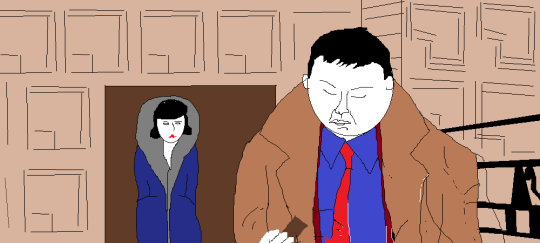
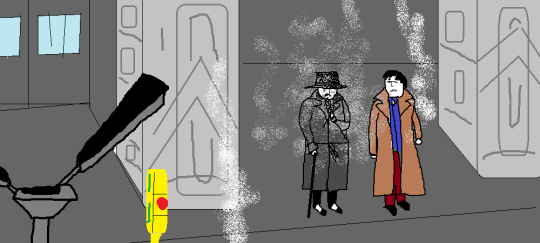
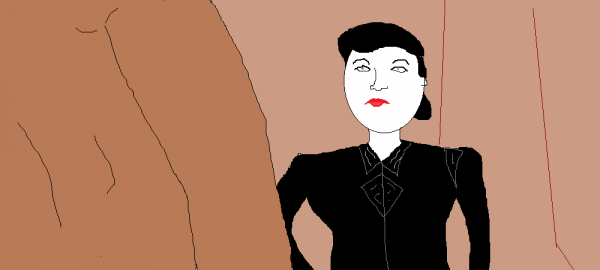
The Big Lebowski, Joel and Ethan Coen’s seventh and most polarizing film, has raised every feeling in its viewers from immediate and utter devotion to simple puzzlement. When someone says “I don’t get it,” fans may find themselves tempted to quote Louis Armstrong on the nature of jazz — but they’ll probably quote Walter, Donny, or the Dude himself instead. The film’s very quotability, longevity, and ambiguity have enthralled some and frustrated others, suggesting that, as with any important work of art, you can see The Big Lebowski in a number of different ways. The Film School’d video essay above examines one of those ways with the question, “Is The Big Lebowski a Film Noir?”
“We know film noir for its black-and-white cinematography, gritty voiceovers, venetian blinds, detectives in trench coats, troubled dames, and femme fatales with legs that go all the way up,” says its narrator, beginning in an imitation of the mid-Atlantic accent so often heard in movies of the noir era. “But what if a film doesn’t immediately qualify as film noir? What if that film utilizes all the major elements, but carries a sardonic tone that, at times, still takes itself very seriously? What if that film doesn’t really look like a film noir right away? What if, on the surface, that film appears to be an absurdist stoner comedy about mistaken identity, bowling, and a stolen rug?”
We’ve covered lists of the essentialelements of film noir here at Open Culture, and this video essay does a comparative study, lining aspects of The Big Lebowski against those of such classics of the genre — or maybe movement, or maybe just fad — as The Big Sleep, Touch of Evil, The Big Heat, D.O.A., and Murder My Sweet. Like those pictures, Lebowski also uses the much-photographed city of Los Angeles in a strikingly different way from its contemporaries, and it provides the Coen brothers a golden opportunity to indulge their skill for repurposing 20th-century genre conventions (most recently on display in the 1951 Hollywood-set Hail, Caesar!).
“The Big Lebowski is about an attitude, not a story,” wrote Roger Ebert , who also once drew up his own list of the rules of film noir, upon inducting The Big Lebowski into his pantheon of great movies. “It’s easy to miss that, because the story is so urgently pursued.” He could have said the same about the pictures in the core film noir canon, which you can kick back and catch up on from the comfort of your own pad with our free film noircollection. The Dude, and Ebert, would most certainly abide.
1959 was a watershed for jazz, a form of music that often looks backward and forward at once. That year, virtuoso composers and soloists like Miles Davis, John Coltrane, Charles Mingus, Dave Brubeck, and Ornette Coleman pulled jazz in all sorts of temporal and spatial dimensions, giving new shape to bebop, cool jazz, hard bop, and whatever Ornette Coleman was up to. 1959 also brought us perhaps one of the most traditional records by a jazz great that year, Louis Armstrong’s Satchmo Plays King Oliver, a tribute album to his “earliest musical hero,” writes Allmusic, “and the man who enabled two of his breakout gigs” in 1918 and 1922.
Armstrong reached back to those years in his selection of material, with his All-Stars playing such classic Oliver compositions as “New Orleans stomp” and “Dr. Jazz,” along with a handful of tunes Armstrong “admitted with a sly smile, ‘Joe [Oliver] might have played.’” The recording sessions for that album ended up on a “33-minute, 16mm film,” writes The Guardian. “The record producer, Sid Frey, had the film professionally shot but wound up not doing anything with it or telling anyone about it.” Just recently, that film was discovered in a storage facility and acquired by the Louis Armstrong House Museum. It’s the only known footage of Armstrong in the studio.
See Armstrong and his All-Stars record “I Ain’t Got Nobody” at Audio Fidelity in Los Angeles above. Here, as in the other cuts, Armstrong revisits his New Orleans swing and ragtime roots, in stark contrast to the forward-looking wave of records from a new generation. But in doing so, he also created an instant classic tribute that “deserves to be placed on the shelf alongside Armstrong Plays W.C. Handy and Satch Plays Fats,” writes Jazzviews, “and in some aspects is superior to them both.… ‘I Ain’t Got Nobody’ is a tune that could have been written by Louis and the group, it fits them well. The whole group are in top form and Louis’s vocal is a gem.” It certainly puts David Lee Roth’s hammy version to shame.
This represents one of “two complete takes,” The Guardian notes, presumably the first. Afterward, at 4:22, watch Louis and the band take five and talk things over. There’s no audio, but it’s cool nonetheless to see them casually lounge around smoking cigarettes and cracking jokes. “For now, the museum will post one complete song on its website and social media”—it’s current song being that above. “It plans to show the complete film at a future date.” For now, it’s housed at the museum’s Corona, Queens location, “in the modest brick building where Armstrong lived for 28 years and died in 1971.”
In 1909, early cinematic auteur D.W. Griffith offered his seven-minute interpretation of Edgar Allan Poe composing his acclaimed and widely-read poem “The Raven.” In 2011, filmmaker Don Thiel offered his twelve-minute interpretation of an encounter between a writer named Poe, apparently young and not long out of the military, and a stately talking raven — an encounter that takes place not in the modern day, nor in the first half of the nineteenth century during which the real Poe lived, but in the winter of 1959, over a century after Poe died — and in a Hollywood room, no less.
Poe made his name on tales of mystery and imagination; Edgar Allan Poe’s the Ravenadds another layer of mystery and imagination atop it all. The effort won the film several awards, including Best Short at the H.P. Lovecraft Film Festival.
That might at first seem like an odd place for an adaptation of a poem of longing like “The Raven,” however deliberately skewed, to earn its honors. But you could see Lovecraft, who launched his own life’s career in elaborate explorations of dread beyond man’s direct comprehension almost exactly a century ago, as Poe’s literary heir.
But then, unlike Poe and “The Raven,” Lovecraft never claimed to have written anything deliberately and singlemindedly to maximize the satisfaction of the widest possible audience. Indeed, Lovecraft’s work, however influential on that of later imaginative writers, remains in the shadowy realm of the “cult,” while Poe’s has ascended onto the plane of required reading. Edgar Allan Poe’s the Raven, which envisions Poe’s most famous piece of work with booze, cigarettes, yellowing patterned wallpaper, lurid lighting, eight-millimeter film, a Corona typewriter, and other artifacts of midcentury dissolution, shows us that they’ve done so in part by transcending time and place. Longing, it seems, never gets old.
Last night, Bruce Springsteen played a three-song acoustic set at a Hillary Clinton rally in Philadelphia, First came “Thunder Road,” then “Long Walk Home” and “Dancing in the Dark. At the 6:00 mark, the Boss makes his pitch for Hillary, whose candidacy is “based on intelligence, experience, preparation and an actual vision of America where everyone counts.” And the case against Donald, a “man whose vision is limited to little beyond himself, who has a profound lack of decency,” and puts his ego before American democracy itself. Amen, now let’s hear Bruce play.
If you would like to support the mission of Open Culture, consider making a donation to our site. It’s hard to rely 100% on ads, and your contributions will help us continue providing the best free cultural and educational materials to learners everywhere. You can contribute through PayPal, Patreon, and Venmo (@openculture). Thanks!
Just before his death this year, David Bowie revealed that what turned out to be his final album, Blackstar, was largely inspired by the experimental sounds of Kendrick Lamar’s To Pimp a Butterfly. And just this past August, Bowie’s name appeared in the credits of the much-anticipated Blonde from Frank Ocean (as an “influence”). This melding of style and influence between rock, pop, hip-hop, and R&B giants is a hallmark of 2016, but in 1975 such crossovers were rare. When David Bowie began working with Luther Vandross and Carlos Alomar on his Philly soul-inspired Young Americans album, “no other established rock musician had yet tried to do anything similar,” writes Douglas Wolk at Pitchfork, “and Bowie pulled it off in a way that not only didn’t seem crass but gave Luther Vandross his big break.”
The album’s first big single, “Fame,” (above) “landed Bowie on Soul Train,” Wolk notes, and though “he wasn’t the first white solo performer to play the show [that would be Dennis Coffey] he was damn close.” Bowie and Alomar’s hip confection later inspired George Clinton’s “Give Up the Funk,” and James Brown released an instrumental track in 1976 that was a “note-for-note duplicate of ‘Fame.’”
That kind of genuine admiration for Bowie’s deft take on funk and soul extended to ordinary fans as well. In a Q&A before his Soul Train performances, one audience member asked him “when did you actually start getting into soul music? You know, when did you start wanting to do soul music? I mean you’re doin’ it now!” Bowie gives a somewhat garbled answer, then launches into miming “Golden Years” (below).
Fansite Bowie Golden Years claims he “had been drinking to calm his nerves before his performance” and “spoke thickly with disconnected sentences.” We can see him flub a few lines as he lip-synchs. This was also the year Bowie presented the best female R&B vocal Grammy to Aretha Franklin apparently so high on coke that he didn’t remember being there afterward. A lot of Young Americans, especially “Fame,” addresses exactly the state he was in, “at a moment,” writes Wolk, “when [pop stardom] seemed likely to destroy him.” Bowie’s appearance on Soul Train coincided with the release of the “Golden Years” single from 1976’s Station to Station, the album on which he bridged his obsessions with soul music and krautrock, and adopted the persona of the Thin White Duke, “a nasty character indeed,” as he once said.
Vast numbers of Bowie fans consider his subsequent three albums, known as The Berlin Trilogy, to be the best work of the artist’s career, but for a brief moment in the mid-seventies, he was fully immersed in black American music, and those influences continued to inform his work through the decade and throughout the rest of his life. Bowie also gave back as much as he borrowed: “black radio stations that never thought twice about ‘The Man Who Sold the World’ or ‘Changes’ ate up ‘Fame’ and ‘Golden Years,’” writes Renée Graham at the Boston Globe, and artists like Clinton, Brown, and a few dozen future hip-hop DJs took note.
The quote inspired an anxious 1966 Time magazine cover, and a preachy 2016 movie franchise that works hard to inoculate the faithful against atheism’s threatening seductions: “God is Dead,” wrote Friedrich Nietzsche in his 1882 book of incisive aphorisms, The Gay Science, and unwittingly coined a phrase now inseparable from 20th century culture wars. Of course, Nietzsche knew he was tossing a Molotov cocktail into the fraught culture wars of his own time, but he didn’t blow things up for the sheer pleasure of it. Instead, his blunt assertion lay at the heart of what Nietzsche saw as both a tremendous problem and a necessary realization.
To clarify, Nietzsche never meant to say that there had been some sort of god but that he had died in recent history. “Rather,” writes Scotty Hendricks at Big Think, “that our idea of one had” been rendered a relic of a pre-scientific age. The philosopher, “an atheist for his adult life,” found no place for Christian belief in a post-Enlightenment world: “Europe no longer needed God as the source for all morality, value, or order in the universe; philosophy and science were capable of doing that for us.” Accepting this brute fact can impose a heavy existentialist burden, as well as a heavy philosophical and ethical one: theological thinking is deeply embedded in Western philosophy and language, or as Nietzsche wrote, “I am afraid we are not rid of God because we still have faith in grammar.”
A committed metaphysical naturalist, Nietzsche nonetheless saw that just as he was haunted by his strict religious upbringing, unable to easily rid himself of the traces of the Christian God, so too was European civilization haunted, particularly the bourgeois German society he often savaged. “God is dead; but given the way people are, there may still for millennia be caves in which they show his shadow.—And we—we must still defeat his shadow as well!” The “shadow” of god trails our ideas about morality. Fearing to give up religious thought, we cling to it even in the absence of religion. What is to take its place, we wonder, except for widespread, destructive nihilism, a condition Nietzsche feared inevitable?
Nietzsche even saw scientific discourse as haunted by ideas of divine agency. “Let us beware of saying that there are laws in nature,” he writes in The Gay Science, “There are only necessities: there is no one who commands, no one who obeys, no one who transgresses. Once you know that there are no purposes, you also know that there is no accident; for only against a world of purposes does the word ‘accident’ have a meaning.” Far from pulling away the source of human meaning, however, Nietzsche seeks to liberate his readers from the idea that “death is opposed to life”—or that losing a cherished belief is a catastrophe.
On the contrary—as philosopher Simon Critchley aptly paraphrases in a brief video at Big Think— Nietzsche thought that belief in God made us “cringing, cowardly, submissive creatures,” and profoundly unfree. He believed we would continue to be so until we accepted our place in nature—no easy feat in an age so steeped in god-think. “When will we be done with our caution and care?” Nietzsche wondered, “When will all these shadows of god no longer darken us? When will we have completely de-deified nature? When will we begin to naturalize humanity with a pure, newly discovered, newly redeemed nature?”
For Nietzsche, the mass of people may never do so. He reserves his redemption for “the kind of people who alone matter; I mean the heroic.” Failing to become heroes, ordinary people in modernity are fated to go the way of “the Last Man,” a figure, writes Hendricks, “who lives a quiet life of comfort, without thought for individuality or personal growth.” A passive consumer. We can read Nietzsche’s philosophy as thoroughgoing elitism, or as a call to the reader to personal heroism. Either way, the anxiety he tapped into has persisted for 134 years, and shows little sign of abating for many people. For others, the nonexistence of a supreme being has no effect on their psychological health.
For billions of Daoists and Buddhists, for example, the problem has never existed. Nietzsche knew perhaps as much about Eastern religion as his contemporaries, much of his knowledge tainted by Arthur Schopenhauer’s pessimistic take on Buddhism. “Compared to [Schopenhauer’s] world view,” writes Peter Abelson, “which is very severe, Buddhism seems almost cheerful.” Nietzsche could be equally severe, often as a matter of polemic, often as matter of mood, sometimes dismissing other religious systems with only slightly less contempt than he did Christianity. But he sums up one of his key atheistic values in a supposed quote from the Buddha: “Don’t flatter your benefactors! Repeat this saying in a Christian church, and it will instantly clear the air of everything Christian.” To live without belief in god, he suggests over and over, is to be fully free from servitude, and fully responsible for oneself.
On a road trip across America last year, I made a stop in Santa Fe, New Mexico, and thus had the chance to visit the Georgia O’Keeffe Museum. Though I’d already known something of the influential American painter’s life and work, I hadn’t understood the depth of her connection to, and the extent of the inspiration she drew from, the American Southwest. “This is O’Keeffe country,” says Gene Hackman, narrator of the thirteen-minute documentary Georgia O’Keeffe: A Life in Art that screens perpetually at the museum but which you can also watch just above, “a land the painter made indelibly her own. Northern New Mexico transformed the artist’s work and changed her life.”
“As soon as I saw it, that was my country,” says the artist herself. “I’d never seen anything like it before, but it fitted to me exactly. There’s something in the air; it’s just different. The sky is different, the stars are different, the wind is different.”
I have to agree with her; my own great American road trip showed me not only that the states really do look different from each other, but that New Mexico — which at first struck me as a Krazy Kat landscape come to life — looks most different of all. O’Keeffe first went to New Mexico for a year and a half in 1929, in her early forties, and returned each year over the next two decades, moving there permanently in 1949 and dying in Santa Fe in 1986, at the age of 98.
Though she remains best known in art history for her paintings of flowers that make their viewers see them in a way they’ve never seen flowers before, New Mexico introduced a whole new sensibility into O’Keeffe’s body of work. This holds especially true of her time at Ghost Ranch, whose location in an area called Piedra Lumbre, or “Shining Rock,” provided the painter with the strikingly colored cliffs and other almost unreal-looking natural forms that made their way into her equally sublime landscapes. “The best place in the world,” she called it, and if we can measure places by what they move human beings to create, her words hardly sound like an exaggeration.
The stunt, entitled “Face the Rear,” was pulled off by a handful of “agents”—a phrase coined by Improv Everywhere’s founder Charlie Todd to describe the poker-faced participants conjuring a secretly agreed upon alternate reality to confound (and not always delight) its target subject, along with unsuspecting bystanders.
It succeeds on our tacit understanding of what constitutes proper elevator behavior when others passengers are present. Left to our own devices, we can sing, dance, and let the mask of propriety slip in any number of ways. Once others enter? We share the space and face forward.
But what if everyone who enters inexplicably faces the back wall?
What would you do?
As hypotheticals go, this one’s not nearly so weighty as considering whether you’d have followed the script of Stanley Milgram’s obedience experiments or put your own family at risk by hiding Anne Frank.
Still…
For the subjects of Candid Camera’s elevator gag, the pressure to succumb to group think quickly overruled years of learned physical behavior.
I know a psychologist who works with teenagers who have autism who—he uses encouraging to learn skills that will allow them to be independent in the world to get out on their own. And one of his lessons with some of the teenagers is what to do in an elevator because he says that the typical kid that he works with, when the door is opened, and he’s been told that he should step inside, will step inside and face the back wall because nobody has told him that everybody else in the elevator is going to turn around and face the front doors…
Candid Camera’s stunts were always framed as comedy, though its creator, Funt, was well versed in psychology, having served as child psychologist Kurt Lewin’s research assistant at Cornell University.
Exposing basic human weaknesses such as ignorance or vanity
Using the element of surprise
Fulfilling fantasies
Placing something in a bizarre or inappropriate setting
“Face the Rear” was a case where conformity born of an unexpected reversal in normal procedure yielded laughs, at the gentle expense of a series of unsuspecting subjects, whose solo rides were disrupted by a bunch of Candid Camera operatives.
Ayun Halliday is an author, illustrator, theater maker and Chief Primatologist of the East Village Inky zine. Her play Zamboni Godot is opening in New York City in March 2017. Follow her @AyunHalliday.
We're hoping to rely on loyal readers, rather than erratic ads. Please click the Donate button and support Open Culture. You can use Paypal, Venmo, Patreon, even Crypto! We thank you!
Open Culture scours the web for the best educational media. We find the free courses and audio books you need, the language lessons & educational videos you want, and plenty of enlightenment in between.