Third Man Records, the record label created by The White Stripes’ Jack White, announced Saturday that they’ve made history by launching a “space-proof” turntable into space (near space, to be precise), using a high-altitude balloon to reach a peak altitude of 94,413 feet. Their goal was to “send a vinyl record up as high as possible and document it being played there.” And that they did.
According to their press release, for “the entire hour and twenty minutes of ascension, the Icarus turntable faithfully played Carl Sagan’s “A Glorious Dawn” (from “Cosmos” by Symphony of Science composer John Boswell) on repeat, using an impressively sturdy phono cartridge and stylus as well as an onboard flight computer programmed with a few different actions to keep the record playing while it was safe to do so.” Eventually, when the balloon popped (around the 83rd minute), the turntable went into “turbulence mode” and safely survived the descent back down to earth. You can watch the entire historic voyage–all two hours of it–in the video above.
If you would like to sign up for Open Culture’s free email newsletter, please find it here. It’s a great way to see our new posts, all bundled in one email, each day.
If you would like to support the mission of Open Culture, consider making a donation to our site. It’s hard to rely 100% on ads, and your contributions will help us continue providing the best free cultural and educational materials to learners everywhere. You can contribute through PayPal, Patreon, and Venmo (@openculture). Thanks!
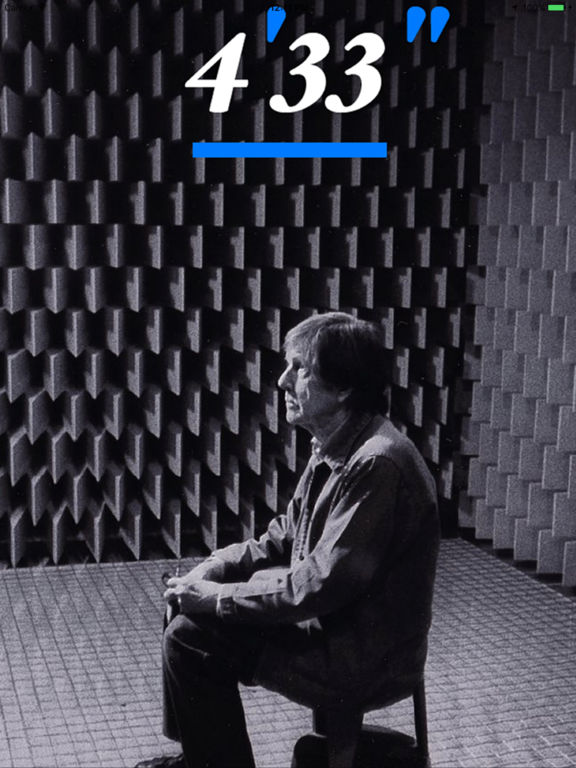
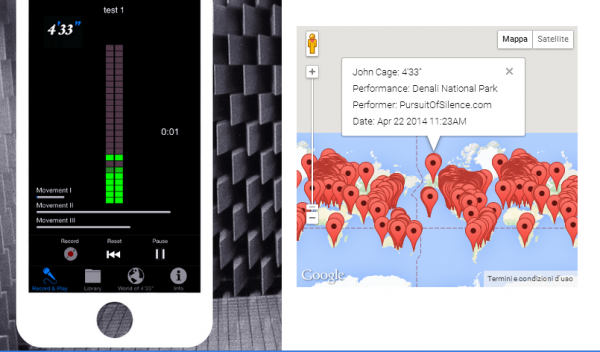
When we think of silence, we think of meditative stretches of calm: hikes through deserted forest paths, an early morning sunset before the world awakes, a staycation at home with a good book. But we know other silences: awkward silences, ominous silences, and—in the case of John Cage’s infamous conceptual piece 4’33”—a mystifying silence that asks us to listen, not to nothing, but to everything. Instead of focusing our aural attention, Cage’s formalized exercise in listening disperses it, to the nervous coughs and squeaking shoes of a restless audience, the ceaseless ebb and flow of traffic and breathing, the ambient white noise of heating and AC…
and the suspended black noise of death metal….
We’re used to seeing 4’33” “performed” as a classical exercise, with a dignified pianist seated at the bench, ostentatiously turning the pages of Cage’s “score.” But there’s no reason at all the exercise—or hoax, some insist—can’t work in any genre, including metal. NPR’s All Songs TV brings us the video above, in which “64 years after its debut performance by pianist David Tudor,” death metal band Dead Territory lines behind their instruments, tunes up, and takes on Cage: “There’s a setup, earplugs go in, a brief guitar chug, a drum-stick count-off and… silence.”
As in every performance of 4’33”, we’re drawn not only to what we hear, in this case the sounds in whatever room we watch the video, but also to what we see. And watching these five metalheads, who are so used to delivering a continuous assault, nod their heads solemnly in silence for over four minutes adds yet another interpretive layer to Cage’s experiment, asking us to consider the performative avant-garde as a domain fit not only for rarified classical and art house audiences but for everyone and anyone.
Also, despite their seriousness, NPR reminds us that Dead Territory’s take is “another in a long line of 4′33″ performances that understand Cage had a sense of humor while expanding our musical universe.” Cage happily gave his experiments to the world to adapt and improvise as it sees fit, and—as we see in his own performance of 4’33” in Harvard Square—he was happy to make his own changes to silence as well.
Edgar Allan Poe: anyone with an interest in scary stories—and not just scary, but deeply, whole-other-level scary stories—quickly learns the name. Presumably they also learn the proper spelling of the name: “Allan” with two As, not “Allen” with an E. But despite using the incorrect latter, the good people at Spotify have still managed to craft the most expansive Poeian playlist currently available on the internet, whose fourteen hours constitute “the essential Poe listening experience, from vintage radio versions to contemporary readings.” (If you don’t have Spotify’s free software, download it here.)
Though he composed his entire body of work in the first half of the nineteenth century, Poe lives on, for those who like their cocktails of mystery and the macabre with a long-lasting (and long-troubling) psychological aftertaste, as the storyteller to beat. As impressive a number of his writings—“The Tell-Tale Heart,”“The Fall of the House of Usher,”“The Cask of Amontillado,” and “The Pit and the Pendulum”—have taken a permanent place in not just the American but human consciousness, none have attained as much universality as “The Raven,” the poem of loneliness and the supernatural which justifiably begins the playlist.
Given its sheer length, Spotify’s Essential Edgar Allen Allan Poe doesn’t just play the hits: even avowed Poe appreciators will likely hear a few intriguing literary B‑sides they never have before. They’ll certainly hear more than a few productions and interpretations of their favorite pieces from the Poe canon. The playlist would also make a fine, if intense, introduction for those who have yet settled in with the work of the man who defined modern psychological horror. If you crave more afterward—and getting his readership hooked ranked not least among Poe’s concerns—do delve into the copious amount of Poe material we’ve previously featured here on Open Culture, a few selections from which appear below. You’ll find it all enduringly and dreadfully compelling, no matter how you spell its author’s name.
You’ll be directed to a shelf—possibly an entire section—brimming with prompts, exercises, formulae, and Jedi mind tricks. Round out your purchase with a journal, a fancy pen, or an inspirational quote in bookmark form.
Few of author Stephen King’s books would be at home in this section, but his 2000 memoir, On Writing, a combination of personal history and practical advice, certainly is. The writing rules listed therein are numerous enough to yield a top 20. He makes no bones about reading being a mandatory activity:
If you don’t have time to read, you don’t have the time (or the tools) to write. Simple as that.
Not surprisingly, given his prodigious output, he also believes that writers must write daily. Practice helps shape a writer’s voice. Daily practice keeps him or her on intimate terms with characters and plot.
Got that?
Nose to the grindstone, young writer! Quit looking for fairy godmothers and making excuses! Though you might be able to fast track to the magical moment King revealed in a 2003 speech at Yale, above.
Go back to the bookstore.
Ask the clerk to point you toward the shelves of whatever genre has traditionally made your flesh crawl. Chick lit…vampire erotica…manly airplane reads. Select the most odious seeming title. Buy it. Read it. And heed the words of King:
There’s a magic moment, a really magic moment if you read enough, it will always come to you if you want to be a writer, when you put down some book and say, This really sucks. I can do better than this, and this got published!
(It’s really more of a spontaneously occurring rite of passage than magic moment, but who are we to fault Stephen King for giving it a crowd-pleasing supernatural spin?)
In 1958, Link Wray released his bluesy instrumental “Rumble,” known for its pioneering use of reverb and distortion. The gritty, seductive tune became a huge hit with the kids, but grown-ups found the sound threatening, reminiscent of scary gang scenes in West Side Story and growing fears over “Juvenile Delinquency”—a national anxiety marked by the 1955 release of Blackboard Jungle and its introduction of Bill Haley’s “Rock Around the Clock.”
Just three years later, “Rumble” made middle class citizens so nervous that the song has the distinction of being the only instrumental ever banned from radio play in the U.S. And yet, that honor is somewhat misleading. It’s true many radio stations refused to play the song, or any rock and roll records at all, but it did receive enough exposure—from people like American Bandstand’s Dick Clark, no less—to remain in the top 40 for ten weeks in 1958.
Fast-forward thirty years from Blackboard Jungle panic, and we find the country in the midst of another national freakout about the kids and their music, this one spearheaded by the Parents Music Resource Center (PMRC), formed by Tipper Gore and three other so-called “Washington Wives” who sought to place warning labels on “explicit” popular albums and otherwise impose moralistic guidelines on music and movies. Congressional hearings in 1985 saw the odd trio of Twisted Sister’s Dee Snider, mild-mannered folk star John Denver, and virtuoso prog-weirdo Frank Zappa testifying before the Senate against censorship. The fiercely libertarian Zappa’s opposition to the PMRC became something of a crusade, and the following year he appeared on Crossfire to argue his case.
PMRC backlash from musicians everywhere began to clutter the pop cultural landscape. Glenn Danzig released his anti-PMRC anthem, “Mother”; Ice‑T’s The Iceberg/Freedom of Speechviciously attacked Gore and her organization; NOFX released their E.P. The P.M.R.C. Can Suck on This… just a small sampling of dozens of anti-PMRC songs/albums/messages after those infamous hearings. But we can credit Zappa with founding the musical subgenera in his 1985 Frank Zappa Meets the Mothers of Prevention, which included “Porn Wars,” above, a mashup of distorted samples from the hearings.
All of these records received the requisite “Good Housekeeping Seal of Disapproval,” the now-familiar stark black-and-white parental warning label (top). Zappa’s album cover pre-empted the inevitable stickering with a bright yellow and red box reading “Warning Guarantee,” full of tongue-in-cheek small print like “GUARANTEED NOT TO CAUSE ETERNAL TORMENT IN THE PLACE WHERE THE GUY WITH THE HORNS AND POINTED STICK CONDUCTS HIS BUSINESS.” All this incessant needling of the PMRC must have really got to them, fans figured, when Zappa’s 1986 record Jazz from Hell began appearing, it’s said, in record stores with a parental advisory label—on an album without lyrics of any kind.
But did Zappa’s Grammy-award-winning instrumental record (above) really get the explicit content label? And was such labeling retaliation from the PMRC, as some believed? These claims have circulated for years on message boards, in books like Peter Blecha’s Taboo Tunes: A History of Banned Bands & Censored Songs, and on Wikipedia. And the answer is both yes, and no. Jazz from Hell did not get the familiar “Parental Advisory: Explicit Lyrics” label, nor was it specifically targeted by Gore’s organization.
The album was, however, stickered in 1990—notes Dave Thompson’s The Music Lover’s Guide to Record Collecting—by “the Pacific Northwest chain of Fred Meyer department stores,” who gave it “the retailer’s own ‘Explicit Lyrics’ warning, despite the fact that the album was wholly instrumental.” This is likely due to the word “hell” and the title of the song “G‑Spot Tornado.” So it may be fair to say that Zappa’s Jazz from Hell is the only fully instrumental album to receive an “Explicit Lyrics” warning, inspired by, if not directly ordered by, the PMRC. Like the radio censorship of Link Wray’s “Rumble,” this regional seal of disapproval did not in the least prevent the record from receiving due recognition. But it makes for a curious historical example of the absurd lengths people have gone to in their fear of modern pop music.
“The part of the site that draws the most attention is the underground burial chamber of a Nubian king who conquered Egypt in 715 B.C.,” writes National Geographic’s Nora Rappaport. She quotes Turchik on the benefits of his chosen photographic technology, which allows him to “fly over and gain this connection between all the other burial sites, between the pyramid and the temple, and get an understanding of what that is from the air.”
Just as you’ll visit the pyramids if you take a trip to Cairo, you’ll visit the pyramids if you take a trip to Mexico City — but the pyramids of the still-impressive, still-mysterious ancient city of Teotihuacán. “Helicopters illegally fly over this area for foreign dignitaries, but we were told we might be the first to have filmed the pyramids with a drone,” writes the uploader of the video just above. He and his collaborators shot it early one morning for a Boston University research project on “what the ruins of a pre-Aztec metropolis can teach us about today’s cities.” History and urbanism buffs alike will want to read the accompanying article, but even just a glance at these clips tells you one thing for sure: whether old and long-ruined or relatively new and thriving, every city looks good from above.
You don’t have to know your Zn(NO3)2 from your CuSO4 to appreciate these absolutely beautiful videos of chemical reactions created for a site called Beautiful Chemistry.
Professor Yan Liang of the University of Science and Technology of China, along with co-creators Xiangang Tao and Wei Huang, and in collaboration with Tsinghua University Press, are all behind the project, which focuses a hi-def microscopic camera on chemical reactions like bubbling, metal displacement, crystallization, smoke and liquids.
It may sound like an effects menu in a computer rendering program, and indeed some of these videos look so beautiful in terms of lighting and color that CGI could be suspected. (Some commenters have added the videos to their VFX/Computer Graphics viewing lists.) But according to the site, this is not the case.
For an example of the beauty, just check out at the six-second mark when Cobalt Chloride and Sodium Silicate meet, resulting in bulbous blue and purple growths:
Or look at the wintry fractal forests that spawn when zinc meets silver nitrate (AgNO3), copper sulfate (CuSO4), and lead nitrate (Pb(NO3)2):
Ted Mills is a freelance writer on the arts who currently hosts the FunkZone Podcast. You can also follow him on Twitter at @tedmills, read his other arts writing at tedmills.com and/or watch his films here.
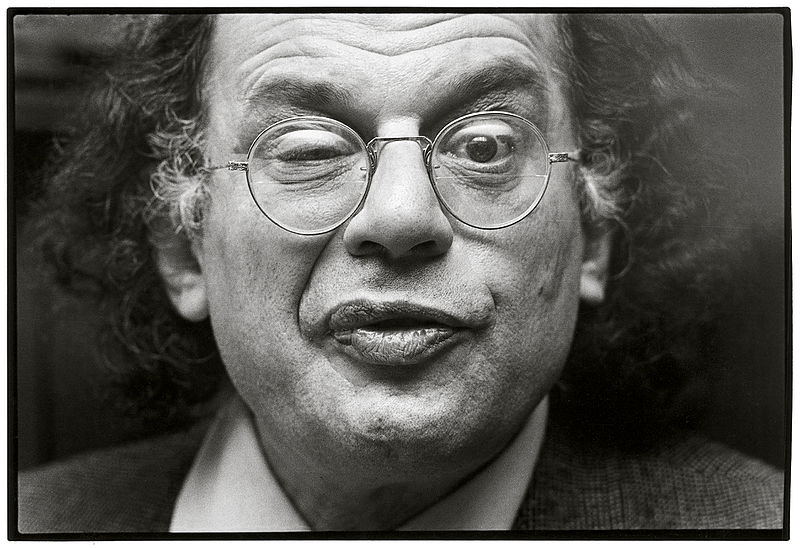
This year’s crazed election got you stressed out? Or just life in general? “It’s never too late,” Allen Ginsberg reminds us, “to meditate.” On Monday, we brought you several versions of Ginsberg’s meditation instructions, which he set to song and recorded with Bob Dylan and disco maven/experimental cellist Arthur Russell, among others. Ginsberg’s “sugar-coated dharma,” as he called it, does a great job of drawing attention to meditation and its benefits, personal and global, but it’s hardly the soothing soundtrack one needs to get in the right posture and frame of mind.
For that, you might try Moby’s 4 hours of ambient music, which he released free to the public through his website last month. Traditionally speaking, no music is necessary, but there’s also no need go the way of Zen monks, or to embrace any form of Buddhism or other religion. Wholly secular forms of mindfulness meditation have been shown to reduce stress, depression, and anxiety, help manage physical pain, improve concentration, and promote a host of other benefits.
These include more religiously-oriented kinds of meditations like “Guided Chakra Balancing” and the mystical philosophies of Deepak Chopra, but don’t run off yet if all that’s too woo for you. There are also several hours of very practical, non-religious instruction from teachers like Professor Mark Williams of the Oxford Mindfulness Centre, who offers meditations for cognitive therapy. See Williams discuss mindfulness research and meditation as an effective means of managing depression in the video above. (Catch a full mindfulness lecture from Professor Williams and hear another guided meditation from him on Youtube).
You’ll also find a 30-minute guided meditation for sleep, sitar music from Ravi Shankar, and many other guided meditations at various points on the spectrum from the mystical to the wholly practical. Something for everyone here, in other words. Go ahead and give it a try. No matter if you can manage ten minutes or an hour a day, it’s never too late.
Think you know literature inside and out? If you’re feeling confident, then we’d suggest taking the literary matching quizzes that the great Strand Bookstore (located in New York City, of course) has given to its prospective employees since the 1970s. Click here, and you can take a series of 5 quizzes (each with 10 questions) where you’re asked to match authors and titles. When you’re done, let us know how you did in the comments section below. Best of luck.
If you would like to sign up for Open Culture’s free email newsletter, please find it here. It’s a great way to see our new posts, all bundled in one email, each day.
If you would like to support the mission of Open Culture, consider making a donation to our site. It’s hard to rely 100% on ads, and your contributions will help us continue providing the best free cultural and educational materials to learners everywhere. You can contribute through PayPal, Patreon, and Venmo (@openculture). Thanks!
Not a day now goes by without the appearance of new infographics, each of them meant to bring its viewers a fuller understanding of a subject or phenomenon (or convince them of an argument) at a glance. Modern technology has made it possible for us to see, as well as create, a wider variety of infographics filled with more data than ever, but their creation as an artistic and intellectual pursuit began longer ago than you might think. Here we have two handmade infographics by the 18th-century English polymath Joseph Priestley, notable not just for their earliness, but for the fact that they remain among the most impressive examples of the form.
Priestley’s 1769 A New Chart of History appears at the top of the post (click for larger version or see this one too). Accompanied by a description and subtitles, “A View of the Principal Revolutions of Empire that have taken place in the World” literally illustrates its creator’s view, unconventional at the time, that to truly understand history requires more than just examining the history of one country or one people. It requires examining the history of all the civilizations of Earth, which he divided into Scandinavia, Poland, Russia, Great Britain, Spain, France, Italy, “Turkey in Europe” and “Turkey in Asia,” Germany, Persia, India, China, Africa, and America.
His earlier A Chart of Biography (1765), a piece of which appears just above, had visualized not the fortunes of empires but the fortunes of individuals, more than 2000 statesmen, warriors, divines, metaphysicians, mathematicians, physicians, poets, artists, orators, critics, historians, and antiquarians who lived between 1200 BC and his own day. “What makes this viz especially amazing,” says a presentation by Tableau Software on the five most influential data visualizations of all time, “is that we can still learn from it at the aggregate level when we combine it with the second part of his two-part visualization” — the New Chart of History.
“Together, they weave an intricate story. They explain and document both the rise and fall of empires, and the unique thinkers that defined those nations,” the leading lights of the Greeks, the Romans, the Enlightenment, and other civilizations and periods besides. They make history, at least as Priestley and his students knew it, quickly graspable at a combination of scales seldom considered before, and one which has influenced thinking ever since about how civilizations grow, collapse, expand, and collide. After their initial publication, the Chart of Biography and New Chart of History met with great acclaim and decades of popular demand, and they still read as not just historical, geographical, and political, but somehow poetic — poetic in the manner, specifically, of Shelly’s Ozymandias.
It’s got to be one of my favorite ledes of all time: “The Doors legend Jim Morrison ‘faked his own death’ and is living as an aging homeless hippy in New York, according to a conspiracy theorist.”
This deadpan gem from wacky UK tabloid Express might convince the credulous, with its photo spread comparing white-bearded “Richard”—the aged, supposedly re-surfaced Morrison—with those of Morrison in his last years: bearded, bloated, and looking ten years older.
These are often the images we remember, but the photos in the video montage above (set to some inexplicably un-Door-sy music that you might want to mute) show us a more youthful, clean-shaven, baby-faced, and much healthier lizard king, traveling through Paris with his girlfriend Pamela Courson and their friend Alain Ronay, who took the photos on June 28th, 1971. (See a photo spread here at Vintage Everyday.)
Morrison was “clearly not in a good way,” writes Ultimate Classic Rock, “when he headed off for Paris,” but in these images, he appears fully ready to embark on a new career as a published poet instead of joining the “27 Club,” as he would just days later, when Courson awoke to find him dead in the bathtub of their Paris apartment on July 3rd.
Part of the reason fans have doggedly held on to the theory Morrison faked his death has to do with the mysterious circumstances surrounding that discovery–the “naggingly non-specific ‘heart failure’” ascribed as the cause by French authorities, the lack of an autopsy, and the “dozens of rumors—many of them unfounded” that proliferated around the mystery.
It turns out that circumstances of Jim Morrison’s death were sordidly predictable, if we believe onetime Doors publicist Danny Sugerman, who wrote in his 1989 memoir Wonderland Avenue about conversations with Courson, who “stated that Morrison had died of an accidental heroin overdose, having snorted what he believed to be cocaine,” writes The Vintage News.
Her account is supported by the confession of Alain Ronay—in a 1991 issue of Paris Match, where many of these photos appeared—who wrote that Courson nodded off instead of getting help for Morrison. Ronay also describes in his account (read it in full, translated, here), how he and filmmaker Agnes Varda helped mislead authorities as to Morrison’s identity, covered up his prior drug use, threw the press off track, and guided the investigation away from the drugs and Courson’s involvement.
We're hoping to rely on loyal readers, rather than erratic ads. Please click the Donate button and support Open Culture. You can use Paypal, Venmo, Patreon, even Crypto! We thank you!
Open Culture scours the web for the best educational media. We find the free courses and audio books you need, the language lessons & educational videos you want, and plenty of enlightenment in between.