We’ve told you how to open wine bottles with your shoe.
And how to peel a head of garlic in less than 10 seconds.
Now, by way of Asia, comes our latest DIY tip — an easy way to extract egg yolks lickety-split.
via Kottke
We’ve told you how to open wine bottles with your shoe.
And how to peel a head of garlic in less than 10 seconds.
Now, by way of Asia, comes our latest DIY tip — an easy way to extract egg yolks lickety-split.
via Kottke
In May of 1968 Aretha Franklin was at the top of her form. It was only a year since she had switched record companies and exploded into fame with a string of top-ten hits that have since become classics. Her third album with Atlantic Records, Lady Soul, had just come out and Franklin was on her first-ever tour of Europe. On the second night she performed at Amsterdam’s historic Concertgebouw, or “concert building,” and fortunately for us a camera crew was there to record the show.
The resulting 42-minute film is a remarkable document of one of pop music’s most important artists performing in her prime before a wildly enthusiastic audience. The film opens with an awkward backstage interview, but the real excitement begins at the 6:30 mark, when Franklin and her backing singers hit the stage to thunderous applause and launch into an rhythm and blues arrangement of the Rolling Stones’ “Satisfaction.” The audience rushes the stage and begins pelting Franklin and the other singers with flowers. The musicians manage to finish the song, but before the concert can continue the master of ceremonies has to come back out and demand that everyone take their seats. Here’s the set list:
Although the concert was billed as “Aretha Franklin with the Sweet Inspirations,” Franklin’s backing singers in the film are her sister Carolyn Franklin, Charnissa Jones and Wyline Ivey. It’s a fast-moving, energetic performance. Franklin’s voice is strong and beautiful, straight through to the triumphant show-closer, “Respect.”
Not having grown up during the Muppets’ first and highest wave of popularity, I’ve always wondered how something like The Muppet Show could possibly have attained such mainstream cultural primacy. A friend of mine who did spend his childhood watching puppeteer Jim Henson’s array of creatures do their thing on national television offers a simple explanation: “It was the seventies.” Though Henson began his puppetry career twenty years before The Muppet Show’s 1974 pilot episode, his distinctively earnest yet presciently post-psychedelic vision seemed made for that decade. America responded by elevating his work into the zeitgeist, and not just the stuff properly involving Muppets. Above, you can watch a 1974 clip from The Tonight Show featuring a short performance from Henson and fellow Muppeteer Dave Goelz called Limbo, the Organized Mind.
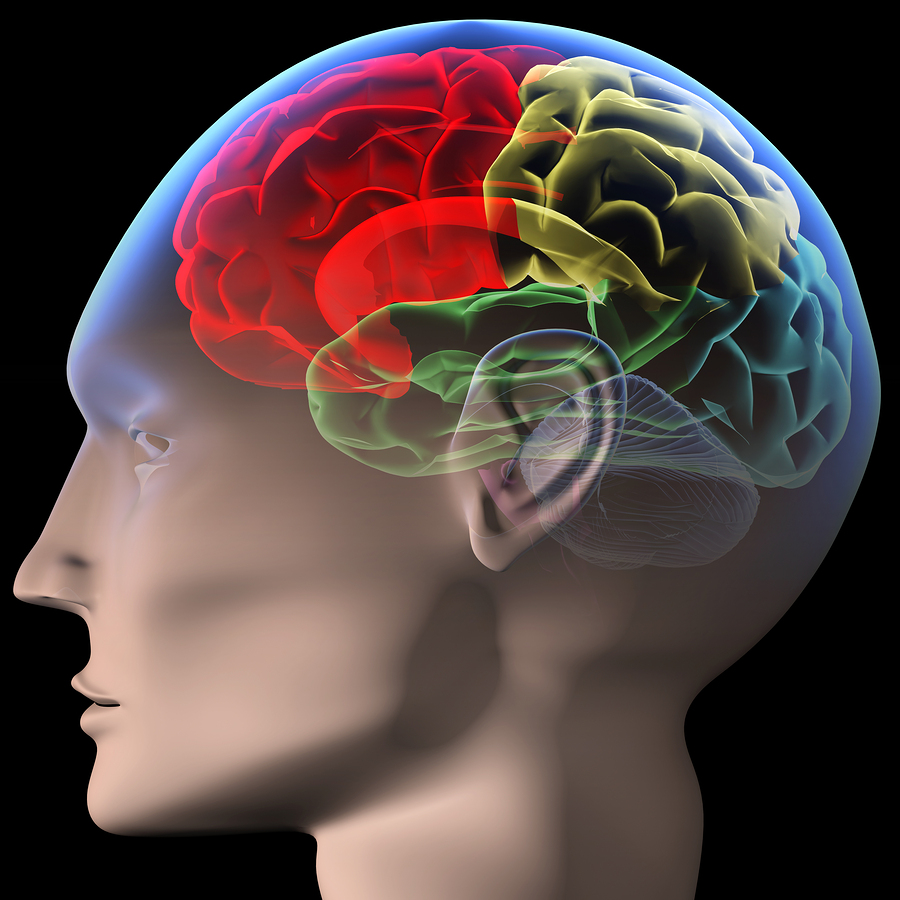
Henson and Goelz treat Johnny Carson and the Tonight Show audience to a journey through the brain, as an abstracted, hand-operated face narrates the passage through organic structures like his medulla oblongata, and cerebrum, and the seats of things less definable, like thoughts of his family, thoughts of his enemies, his “extra-special section of good thoughts,” his evil thoughts, and his fears. The score comes from electronic composition pioneer Raymond Scott, whose 1964 album Soothing Sounds for Baby has won great respect among enthusiasts of ambient music. Watching Limbo, the Organized Mind in 2012 brings one obvious lament to mind: why don’t they make such delightfully eccentric and artistic television anymore? But of course they do make it, in stranger and less predictable ways than even Henson did, but mainly in the countless fragmented, comparatively marginal venues of modern media. Limbo aired on a show that half the people you knew would have seen. It was the seventies.
Related content:
Jim Henson’s Violent Wilkins Coffee Commercials (1957–1961)
Jim Henson’s Zany 1963 Robot Film Uncovered by AT&T: Watch Online
Jim Henson’s Short, Oscar-Nominated Film (1965)
Colin Marshall hosts and produces Notebook on Cities and Culture. Follow him on Twitter at @colinmarshall.
By the 1980s, Frank Zappa was entering the third decade of his musical career. An icon of the avant-garde music scene, Zappa had cultural capital to spend. And spend he did. On one occasion in 1986, Zappa appeared on CNN’s Crossfire, where he sparred with conservatives looking to censor rock lyrics. On other occasions, he recorded public service announcements (PSAs) that encouraged a younger generation to make better life decisions. The PSAs dealt with the mundane and the deadly serious, and things that fell somewhere in between. But they were always presented in Zappa’s own distinctive way.
Above we start you off with Zappa’s “Register to Vote” PSAs from 1984. It’s worth recalling that the ’84 presidential election pitted the incumbent Ronald Reagan against Walter Mondale. That’s followed by Zappa (now reborn as “The Dental Floss Tycoon”) recording PSAs for the American Dental Association in 1981. And finally we head back to the late 1960s, when Zappa cut announcements for The Do It Now Foundation, an organization dedicated to highlighting the dangers of amphetamine abuse. At its height, the campaign aired on 1,500 radio stations across the US and beyond.
Brush Your Teeth
Don’t Do Speed
If you would like to sign up for Open Culture’s free email newsletter, please find it here. It’s a great way to see our new posts, all bundled in one email, each day.
If you would like to support the mission of Open Culture, consider making a donation to our site. It’s hard to rely 100% on ads, and your contributions will help us continue providing the best free cultural and educational materials to learners everywhere. You can contribute through PayPal, Patreon, and Venmo (@openculture). Thanks!
The world be an infinitely more cheerful place if every 20th Century Fox Film started like this, wouldn’t it?
Find us on Facebook and Twitter, and don’t forget to check out our collection of 500 Free Online Movies.
Steven Pinker is an experimental psychologist and one of the world’s foremost writers on language, mind, and human nature. Currently at Harvard, Pinker has also taught at Stanford and MIT, and his research on visual cognition and the psychology of language has won prizes from the National Academy of Sciences, the Royal Institution of Great Britain, the Cognitive Neuroscience Society, and the American Psychological Association.
This video (find part 1 above, part 2 below, and the transcript here) is taken from a talk given on September 10, 2008 at Warwick’s Bookstore in La Jolla, California. Here, we find Pinker talking about his then new book, The Stuff of Thought: Language as a Window into Human Nature, and doing what he does best: combining psychology and neuroscience with linguistics. The result is as entertaining (and not safe for work) as it is insightful.
Related content:
Stephen Fry, Language Enthusiast, Defends The “Unnecessary” Art Of Swearing
George Carlin Performs His “Seven Dirty Words” Routine: Historic and Completely NSFW
By profession, Matthias Rascher teaches English and History at a High School in northern Bavaria, Germany. In his free time he scours the web for good links and posts the best finds on Twitter.
Finding this short documentary on “Queen of British Pop” Kate Bush was a treat for me, I must confess, not least because of the always entertaining presence of John Lydon (Johnny Rotten from the Sex Pistols). Having nurtured a deep love for Bush’s music in my youth as a sort of guilty pleasure, it’s only in my adulthood that I decided it’s ok to say, dammit, I think Kate Bush is just absolutely brilliant and I don’t care who knows it. It’s probably the case that with age, all guilty pleasures just become pleasures (or should, anyway). Alright, she may have single-handedly inspired every melodramatic 80s teenager in a theater club to put on gauzy, homemade dresses and twirl around warbling and swooning, but what, I ask, is wrong with that? There are worse things birthed by pop trends, that’s for sure, and it’s arguable, really, how much of Bush’s music can be called “pop,” anyway, since she includes so many British and international folk influences in her repertoire. And yes, it’s true, some people, like Lydon’s mother (whom he quotes above), think her singing sounds less pop star and more like “a bag of cats”–a reaction that seems to thrill him–but she certainly made an impression on David Gilmour, who passed her demo on to EMI and helped launch her career. In addition to Lydon, Kate Bush: Queen of British Pop includes interviews with Lily Allen, her early producers, and her brother, John Carder Bush, discussing her songwriting process as a young teenager.
It wasn’t long after her earliest writing efforts that Bush was signed to EMI at the age of 16 and set about recording her first album The Kick Inside. While she’s typically remembered for hits from her 1985 Hounds of Love—including “Cloudbusting” and “Running up that Hill” (and their incorporation into several dancefloor hits of the 90s)—Bush’s first single “Wuthering Heights,” released when she was just nineteen, hit number one on the UK and Australian charts in 1978. Bush insisted that this be the first single from her album, despite the fact that, well, it’s an incredibly bizarre song for a pop release, in its arrangement and its subject matter—Emily Bronte’s 1847 gothic novel. But it works in a way that only Bush could get away with (covers of the song are generally risible and unconvincing). She somehow manages to perfectly encapsulate the novel’s chill and its poignancy, alternately pleading and threatening in the voice of Cathy’s ghost, imploring the haunted Heathcliff to let her in again. (For a truly haunting experience, see this video of the track slowed down to an ethereal 36-minute crawl). No one else could pull off this almost-pretentious balance between the sublime and the ridiculous, combined with her interpretive dance and rolling eyes, without getting labeled as some sort of a novelty act, but as Lydon puts it, her “shrieks and warbles are beauty beyond belief” to many ears, and she was taken seriously and awarded an iconic status. Or, in another one of Lydon’s little gems: “Kate Bush and her grand piano… that’s like John Wayne and his saddle.” I already warned you I’m a fan. You may just hear a bag of cats.
After the release of The Kick Inside, Bush embarked on her first and only tour in 1979. The video below is a performance of “Wuthering Heights” from a German appearance:
For a variety of reasons, she would never tour again and only perform live sporadically. This is in part due to her desire to control every part of her career, from writing and producing, to performing and promotion. In “Queen of British Pop,” her brother describes her frustration with the world of talk shows and magazine interviews, which tended to trivialize her music and ask condescending questions about her love life and hair styling. Any pop sensation should expect this, I suppose, but Bush resented the way she was objectified by her label and the press. She considered herself a serious artist and set out to prove it by focusing exclusively on her work, not herself, as the product, a decision that earned her a reputation (not entirely undeserved) as a “weirdo recluse,” but also enabled her to retain complete creative control, make a series of remarkably eclectic and personal records, and become a pioneer and a positive figure for dozens of female artists after her. She did make the occasional foray onto television and film after her retreat from the limelight. A memorable example is this silly duet with Rowan Atkinson (in character as a sleazy American lounge singer) for a 1986 Comic Relief concert.
Bush won high praise from critics and peers last year for her return to “sublime and ridiculous” territory with latest album 50 Words for Snow. A 1993 documentary called “This Woman’s Work,” available free here, presents a longer exploration of her work, with several interviews with Bush.
Josh Jones is a doctoral candidate in English at Fordham University and a co-founder and former managing editor of Guernica / A Magazine of Arts and Politics.
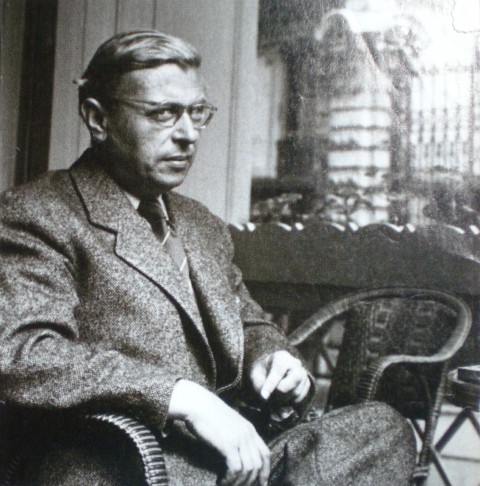
In this week’s issue of the New Yorker, neurologist and writer Oliver Sacks has an article titled “Altered States.” Subtitled “Self-experiments in chemistry,” it covers, to be blunter, what Sacks experienced and learned — or failed to learn, substance depending — when he began doing drugs.
His desire to conduct these self-experiments flared up in his thirties, when, among other sudden jolts of curiosity, he felt a suspicion that he had never really seen the color indigo. “One sunny Saturday in 1964, I developed a pharmacologic launchpad consisting of a base of amphetamine (for general arousal), LSD (for hallucinogenic intensity), and a touch of cannabis (for a little added delirium). About twenty minutes after taking this, I faced a white wall and exclaimed, ‘I want to see indigo now — now!’ ” The resulting experience, and surely many others besides, should appear in detail in Sacks’ upcoming book Hallucinations. While you need to subscribe to the magazine to read the New Yorker piece, anyone can watch the video above, which spends a few minutes with Sacks talking about what drugs taught him about the brain.
Every subject Sacks writes about seems to start with his interest in our unusual sensory experiences and end in the organic workings of our brains. His body of work comprises books on migraine, encephalitis, visual agnosia, deafness, autism, color blindness, and various other perceptual impairments. Thinking back to his self-induced hallucinations, he remembers feeling that “the drugs might sensitize me to experiences of a sort my patients could have,” making him more empathetic to what they were going through. On the other hand, he says, some drugs “gave me some very direct knowledge of what physiologists would call the reward systems of the brain,” producing “intense pleasure, sometimes pleasure of an almost orgasmic degree, with no particular content,” the kind that made him fear he would become one of those famous lab rats with an electrode connected to its brain’s pleasure center, pushing and pushing the lever to stimulate that center to the very end. But he stepped back, observed, wrote, and avoided that fate, or at least its equivalent in the human domain, living to tell the tale more eloquently than most any writer around.
(See also: more from Oliver Sacks on the New Yorker’s Out Loud podcast.)
Related content:
Oliver Sacks Talks Music with Jon Stewart
Colin Marshall hosts and produces Notebook on Cities and Culture. Follow him on Twitter at @colinmarshall.
Intelligence comes at a price. The human species, despite its talent for solving problems, has managed over the millennia to turn one of its most basic survival mechanisms–the stress response–against itself. “Essentially,” says Stanford University neurobiologist Robert Sapolsky, “we’ve evolved to be smart enough to make ourselves sick.”
In the 2008 National Geographic documentary Stress: Portrait of a Killer (above), Sapolsky and fellow scientists explain the deadly consequences of prolonged stress. “If you’re a normal mammal,” Sapolsky says, “what stress is about is three minutes of screaming terror on the savannah, after which either it’s over with or you’re over with.” During those three minutes of terror the body responds to imminent danger by deploying stress hormones that stimulate the heart rate and blood pressure while inhibiting other functions, like digestion, growth and reproduction.
The problem is, human beings tend to secrete these hormones constantly in response to the pressures of everyday life. “If you turn on the stress response chronically for purely psychological reasons,” Sapolsky told Mark Shwartz in a 2007 interview for the Stanford News Service, “you increase your risk of adult onset diabetes and high blood pressure. If you’re chronically shutting down the digestive system, there’s a bunch of gastrointestinal disorders you’re more at risk for as well.”
Chronic stress has also been shown in scientific studies to diminish brain cells needed for memory and learning, and to adversely affect the way fat is distributed in the body. It has even been shown to measurably accelerate the aging process in chromosomes, a result that confirms our intuitive sense that people who live stressful lives grow old faster.
By studying baboon populations in East Africa, Sapolsky has found that individuals lower down in the social hierarchy suffer more stress, and consequently more stress-related health problems, than dominant individuals. The same trend in human populations was discovered in the British Whitehall Study. People with more control in work environments have lower stress, and better health, than subordinates.
Stress: Portrait of a Killer is a fascinating and important documentary–well worth the 52 minutes it takes to watch.
Related content:
Sapolsky Breaks Down Depression
Dopamine Jackpot! Robert Sapolsky on the Science of Pleasure
Biology That Makes Us Tick: Free Stanford Course by Robert Sapolsky
Henry Rollins had dropped out of college and was working at a Haagen-Dazs in Washington, DC when he joined the seminal L.A. hardcore punk band Black Flag in 1981, a career move that would shape the rest of the singer/author/actor/activist’s life. And although he left higher education for a more individualized path, Rollins has a very high regard for the potential of a good education to change people’s lives.
We’ve previously featured Rollins’ motivational Big Think talk to young people on the dangers of resentment. In the short, but equally inspiring, talk above–from the same set of interviews–Rollins describes education as the engine of a democratic society, “the great equalizer.” For Rollins, education is the key to a “more vigorous democracy.” And although he makes some arguable claims about the possibility of educational reform to substantially diminish the effects of institutionalized racism and poverty, his view of what an education should be corresponds to what educational reformers have stressed for decades—that moving to a focus on critical thinking, rather than “teaching to the test,” is a shift that needs to happen in order for students to become curious, intentional, and independent learners and, ultimately, free and independent citizens.
Rollins speculates that certain political actors and vested interests deliberately block educational reform to maintain the status quo. Whether or not you accept his analysis, there’s no denying that the state of primary, secondary, and higher education in the U.S. is dire, and the functional efficacy of our democratic process seems constantly in jeopardy. Alluding to the dictum attributed to Thomas Jefferson (who may not have actually written this) that “An educated citizenry is a vital requisite for our survival as a free people,” Rollins believes that educational reforms offer “the way out” of our current political gridlock and of the despairing situations underprivileged people are born into. I think he makes a pretty compelling case in just under four minutes.
Josh Jones is a doctoral candidate in English at Fordham University and a co-founder and former managing editor of Guernica / A Magazine of Arts and Politics.
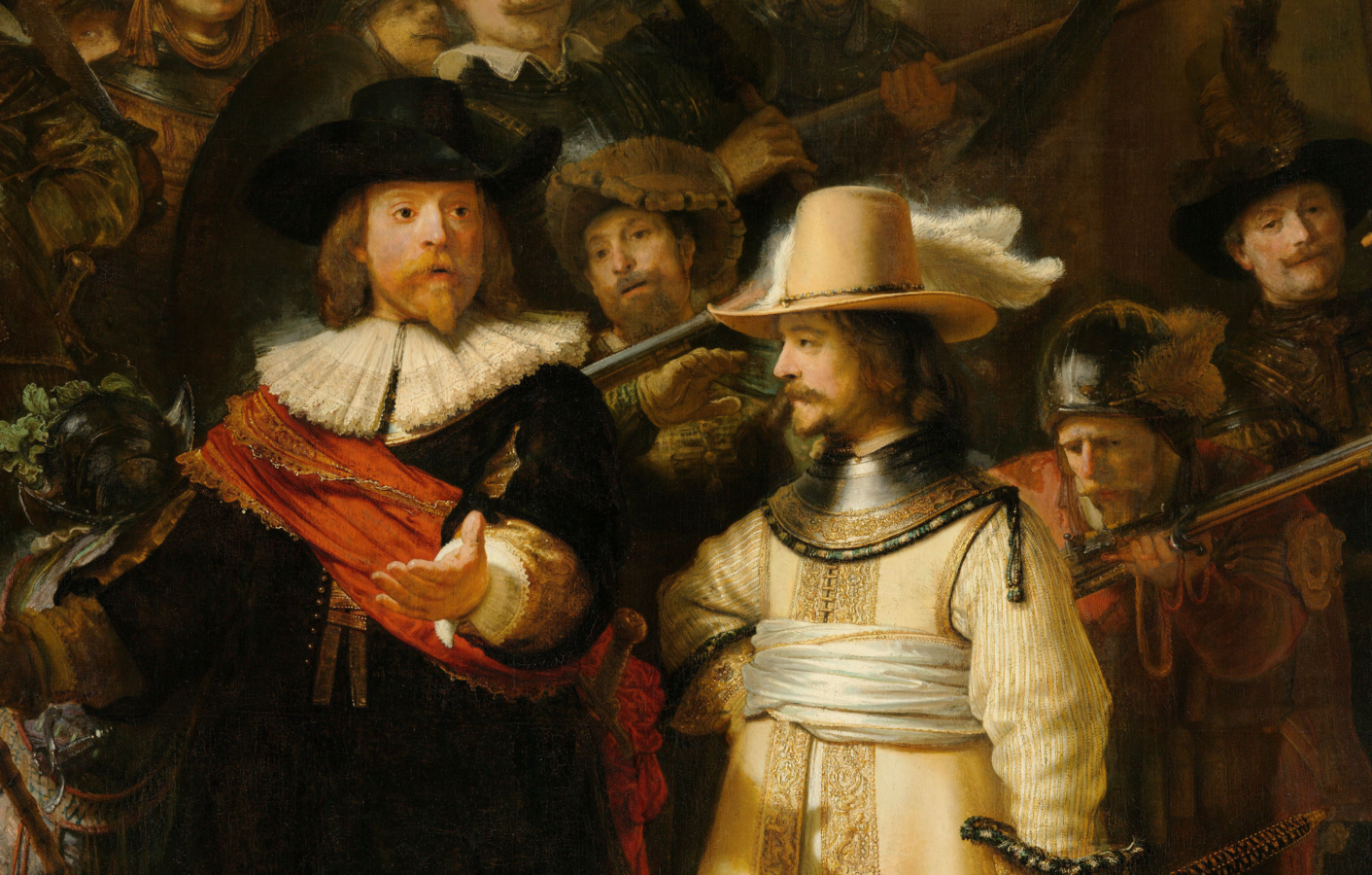
Even those of us who have never read The Importance of Being Earnest, The Picture of Dorian Gray, or anything else Oscar Wilde wrote can still recite a thing or two he said. “A little sincerity is a dangerous thing, and a great deal of it is absolutely fatal,” for example, or that jewel of so many Facebook profiles, “We are all in the gutter, but some of us are looking at the stars.” I personally prefer “I can resist everything except temptation,” but none of these quite hold the power of Wilde’s immortal (if seemingly unconfirmed) dying line: “Either those drapes go or I do.” Now you can hear the poet, playwright, one-time novelist, and dedicated raconteur speak his own words in this recording of two verses from his 1897 poem The Ballad of Reading Gaol, embedded above.
Wilde got his material for this work straight from the source: convicted in 1895 of “gross indecency,” he did the following two years of “hard bed, hard fare, hard labour” at HM’s Prison, Reading. There he witnessed a Royal Horse Guard trooper hang for cutting his wife’s throat. Sensing a theme of the human condition, Wilde would later write: “Yet each man kills the thing he loves / By each let this be heard. / Some do it with a bitter look / Some with a flattering word. / The coward does it with a kiss / The brave man with a sword!” The earlier verses you hear Wilde read — for whatever definition of “hear” the limitations of eighteenth-century recording devices allowed — end in a summation of just what struck him so deeply about all this business: “The man had killed the thing he loved / And so he had to die.”
Find more works by Oscar Wilde in our collections of Free Audio Books and Free eBooks.
Related content:
“Jersey Shore” in the Style of Oscar Wilde
Colin Marshall hosts and produces Notebook on Cities and Culture. Follow him on Twitter at @colinmarshall.