Last month, the Mariachi band, “Los Trovadores de America,” played at a wedding held at the Mystic Aquarium in Stonington, Connecticut. Before wrapping up, the guys were good enough to serenade one of the beluga whales. And, you know, the sea creature seemed to appreciate it. Enjoy the weekend … H/T @sheerly
Dave Eggers: The Teacher Who Encouraged Me to Write

Image by Rhododendrites, via Wikimedia Commons
Thousands of public school teachers won’t be returning to the classroom this fall, thanks to budget cuts nationwide. And that means more than a few Jay Criche’s won’t get the chance to tap the hidden talents of young students. Jay Criche, in case you’re wondering, taught English at Lake Forest High School and counted Dave Eggers (A Heartbreaking Work of Staggering Genius and What Is the What) as one of his students. Criche passed away recently, and, writing in Salon, Eggers remembers his teacher’s deep influence:
He was kind to me, but I had no sense that he took particular notice of me. There were other, smarter kids in the class, and soon I fell back into my usual position — of thinking I was just a little over average in most things. But near the end of the semester, we read “Macbeth.” Believe me, this is not an easy play to connect to the lives of suburban high schoolers, but somehow he made the play seem electric, dangerous, relevant. After procrastinating till the night before it was due, I wrote a paper about the play — the first paper I typed on a typewriter — and turned it in the next day.
I got a good grade on it, and below the grade Mr. Criche wrote, “Sure hope you become a writer.” That was it. Just those six words, written in his signature handwriting — a bit shaky, but with a very steady baseline. It was the first time he or anyone had indicated in any way that writing was a career option for me. We’d never had any writers in our family line, and we didn’t know any writers personally, even distantly, so writing for a living didn’t seem something available to me. But then, just like that, it was as if he’d ripped off the ceiling and shown me the sky.
Over the next 10 years, I thought often about Mr. Criche’s six words. Whenever I felt discouraged, and this was often, it was those six words that came back to me and gave me strength. When a few instructors in college gently and not-so-gently tried to tell me I had no talent, I held Mr. Criche’s words before me like a shield. I didn’t care what anyone else thought. Mr. Criche, head of the whole damned English department at Lake Forest High, said I could be a writer. So I put my head down and trudged forward.
You can read Egger’s remembrance in full here.
The Last Surviving Witness of the Lincoln Assassination Appears on a Game Show (1956)
Let’s rewind the videotape to 1956, to Samuel James Seymour’s appearance on the CBS television show, “I’ve Got a Secret.” At 96 years of age, Seymour was the last surviving person present at Ford’s Theater the night Abraham Lincoln was assassinated by John Wilkes Booth (April 14, 1865).
Only five years old at the time, Mr. Seymour traveled with his father to Washington D.C. on a business trip, where they attended a performance of Our American Cousin. The youngster caught a quick glimpse of the president, the play began, and the rest … as they say … is history.
A quick footnote: Samuel Seymour died two months after his TV appearance. His longevity had something to do, I’d think, with declining those Winstons over the years.
Find courses on the Civil War in our list of Free History Courses, a subset of our collection, 1,700 Free Online Courses from Top Universities.
If you would like to support the mission of Open Culture, consider making a donation to our site. It’s hard to rely 100% on ads, and your contributions will help us continue providing the best free cultural and educational materials to learners everywhere. You can contribute through PayPal, Patreon, and Venmo (@openculture). Thanks!
The Adoration of the Mona Lisa Begins with Theft
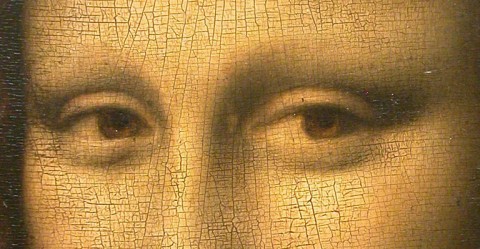
Every year, five million visitors stream into the Louvre in Paris, making it the most visited museum in the world. And, more than any other painting, visitors head to see Leonardo da Vinci’s Mona Lisa, painted circa 1503 — 1519.
It’s tempting to attribute the popularity of the Mona Lisa to the enduring genius of da Vinci. But, as NPR’s All Things Considered recounts, there was a time when the painting hardly attracted public attention, and what turned the painting into an object of public adoration was something baser than genius itself: brazen theft. Click here and NPR will tell you the story of the great Mona Lisa heist that went down on August 21, 1911, almost 100 years ago…
Related Content:
A Virtual Tour of the Sistine Chapel
Google “Art Project” Brings Great Paintings & Museums to You
MoMA Puts Pollock, Rothko & de Kooning on Your iPad
David Lynch’s Video Response to Washington Debt Deal
No one is happy with Washington D.C. this week, and that includes filmmaker David Lynch, who gives you his commentary in sounds and images, not words. The symbolism? America is in a dark position and moving backwards? The deficit deal is flat out garbage?
H/T @opedr
Related Content:
David Lynch and Interpol Team Up on Short Film
David Lynch’s Organic Coffee (Barbie Head Not Included)
David Lynch on his Favorite Movies and Filmmakers
Hear Voices from the 19th Century: Tennyson, Gladstone & Tchaikovsky
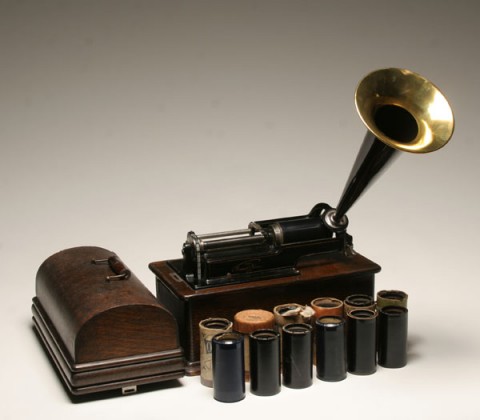
Head over to SoundCloud, and you’ll find 10 audio files that span three centuries. It’s a fairly random collection, we’ll admit. But two recordings from the 19th century immediately stand out.
First we have Alfred Lord Tennyson (1809 – 1892), Poet Laureate of the United Kingdom during Queen Victoria’s reign, reading “The Charge of the Light Brigade” on the wax cylinder in 1890.
And then we get to hear echoes of the voice of William Gladstone, the four-time Prime Minister of Great Britain (1809 — 1898). Here, Gladstone’s voice was recorded by Thomas Edison’s phonograph cylinder (1888), the same device that lets us listen to Tchaikovsky (The Nutcracker, the 1812 Overture, etc.) chatting with his friends. Some have doubted the authenticity of the Gladstone recording, but it still remains generally accepted.
For more on recordings from the 19th century, we’d recommend spending some time with a five-part BBC series called Gramophones & Grooves. It takes you into the early recording industry and lets you hear countless other voices.
Follow Open Culture on Facebook and Twitter and share intelligent media with your friends. Or better yet, sign up for our daily email and get a daily dose of Open Culture in your inbox. And if you want to make sure that our posts definitely appear in your Facebook newsfeed, just follow these simple steps.
Al Jazeera: The Top 1% in America
Al Jazeera forced many Westerns viewers to take their reporting seriously during the Egyptian uprising this spring, and now the Qatar-based news network has released a timely reportage (Aug. 2) on the fault lines in America — on the gap between rich and poor that only grew wider this week. Alexis de Tocqueville they’re not. There’s no subtle sociology here. But, at the same time, I suspect that this foreign perspective on the U.S. won’t appear unfamiliar to many Americans. The program runs 24 minutes, and other shows in the Fault Lines series can be viewed on YouTube here. H/T @courosa
Richard Feynman: The Likelihood of Flying Saucers
Richard Feynman was a once in a generation intellectual. He had no shortage of brains. (In 1965, he won the Nobel Prize in Physics for his work on quantum electrodynamics.) He had charisma. (Witness this outtake from his 1964 Cornell physics lectures available here.) He knew how to make science and academic thought available, even entertaining, to a broader public. (We’ve highlighted two public TV programs hosted by Feynman here and here.) And he knew how to have fun. The clip above brings it all together. Hope you enjoy, and don’t miss our collection of Great Science Videos, or many free physics courses in our big collection of Free Online Courses.
Download The Edupunks’ Guide to a DIY Credential (Free eBook)
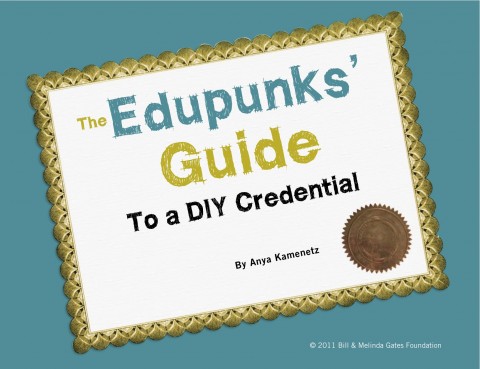 It’s hot off the digital press. Anya Kamenetz, a senior writer at Fast Company Magazine and author of DIY U: Edupunks, Edupreneurs, and the Coming Transformation of Higher Education, has teamed up with the Gates Foundation to release a free ebook, The Edupunks’ Guide to a DIY Credential.
The new ebook offers a “comprehensive guide to learning online and charting a personalized path to an affordable credential,” and it comes complete with some handy-sounding tutorials: how to write a personal learning plan, how to teach yourself online, how to build your personal learning network, 7 ways to get college credit without taking a college course, etc.
The book also smartly features a long list of open educational resources, where the author was nice enough to give us a small mention.
You can read The Edupunks’ Guide to a DIY Credential on Scribd, or alternatively you can download it in multiple formats (PDF, Kindle, ePub, RTF, etc.) at the bottom of this page.
Animated: Stephen Fry & Ann Widdecombe Debate the Catholic Church
Intelligence Squared (iTunes – Feed – Web Site) brings Oxford-style debating to America. Each debate features one motion, one moderator, and three panelists arguing for a motion, and three arguing against. Should Airports Use Racial and Religious Profiling? Is Islam A Religion Of Peace? Is The Two-Party System Making the U.S. Ungovernable? These are some of the recent topics that have been tackled.
Now, taking a page out of the RSA playbook, Intelligence Squared has produced a short animated video that gives artistic life to a debate held in October 2009. The motion — “The Catholic Church is a force for good in the world” — was supported by Ann Noreen Widdecombe, a former British Conservative Party politician turned novelist. And taking the contrary position was popular British actor and writer Stephen Fry.
You can watch the animated version above, and the full debate (which also featured Christopher Hitchens) here. More iq2 videos can be found at their Youtube Channel, which otherwise appears in our collection of Intelligent YouTube Channels. H/T @joabaldwin
Related Content:
Stephen Fry on Philosophy and Unbelief
Stephen Fry: What I Wish I Had Known When I Was 18
Stephen Fry Gets Animated about Language
The First 10 Videos Played on MTV: Rewind the Videotape to August 1, 1981
On August 1, 1981, MTV took to the U.S. airwaves, forever changing the landscape of American music and pop culture. If you were around then, you’ll remember the Apollo 11 moon landing, the astronaut planting the MTV flag on the moon’s surface, and then the first aptly picked video — the Buggles’ “Video Killed the Radio Star.” Fast forward four years, and we were all saying, I Want My MTV.
A list of the first ten videos aired on MTV appears below. Click the links to take a walk down memory lane.
- “Video Killed the Radio Star” by The Buggles
- “You Better Run” by Pat Benatar
- “She Won’t Dance with Me” by Rod Stewart
- “You Better You Bet” by The Who
- “Little Suzi’s on the Up” by Ph.D.
- “We Don’t Talk Anymore” by Cliff Richard
- “Brass in Pocket” by The Pretenders
- “Time Heals” by Todd Rundgren
- “Take It on the Run” by REO Speedwagon (not original)
- “Rockin’ the Paradise” by Styx (ditto)
Thanks Robin for the reminder…
Related Content:
Time Capsule: The Internet in 1995
“Jersey Shore” in the Style of Oscar Wilde
Support Us
We're hoping to rely on loyal readers, rather than erratic ads. Please click the Donate button and support Open Culture. You can use Paypal, Venmo, Patreon, even Crypto! We thank you!

Great Lectures
About Us

Open Culture scours the web for the best educational media. We find the free courses and audio books you need, the language lessons & educational videos you want, and plenty of enlightenment in between.
Advertise With Us
Archives
- October 2026
- September 2026
- August 2026
- July 2026
- June 2026
- May 2026
- April 2026
- March 2026
- February 2026
- January 2026
- December 2025
- November 2025
- October 2025
- September 2025
- August 2025
- July 2025
- June 2025
- May 2025
- April 2025
- March 2025
- February 2025
- January 2025
- December 2024
- November 2024
- October 2024
- September 2024
- August 2024
- July 2024
- June 2024
- May 2024
- April 2024
- March 2024
- February 2024
- January 2024
- December 2023
- November 2023
- October 2023
- September 2023
- August 2023
- July 2023
- June 2023
- May 2023
- April 2023
- March 2023
- February 2023
- January 2023
- December 2022
- November 2022
- October 2022
- September 2022
- August 2022
- July 2022
- June 2022
- May 2022
- April 2022
- March 2022
- February 2022
- January 2022
- December 2021
- November 2021
- October 2021
- September 2021
- August 2021
- July 2021
- June 2021
- May 2021
- April 2021
- March 2021
- February 2021
- January 2021
- December 2020
- November 2020
- October 2020
- September 2020
- August 2020
- July 2020
- June 2020
- May 2020
- April 2020
- March 2020
- February 2020
- January 2020
- December 2019
- November 2019
- October 2019
- September 2019
- August 2019
- July 2019
- June 2019
- May 2019
- April 2019
- March 2019
- February 2019
- January 2019
- December 2018
- November 2018
- October 2018
- September 2018
- August 2018
- July 2018
- June 2018
- May 2018
- April 2018
- March 2018
- February 2018
- January 2018
- December 2017
- November 2017
- October 2017
- September 2017
- August 2017
- July 2017
- June 2017
- May 2017
- April 2017
- March 2017
- February 2017
- January 2017
- December 2016
- November 2016
- October 2016
- September 2016
- August 2016
- July 2016
- June 2016
- May 2016
- April 2016
- March 2016
- February 2016
- January 2016
- December 2015
- November 2015
- October 2015
- September 2015
- August 2015
- July 2015
- June 2015
- May 2015
- April 2015
- March 2015
- February 2015
- January 2015
- December 2014
- November 2014
- October 2014
- September 2014
- August 2014
- July 2014
- June 2014
- May 2014
- April 2014
- March 2014
- February 2014
- January 2014
- December 2013
- November 2013
- October 2013
- September 2013
- August 2013
- July 2013
- June 2013
- May 2013
- April 2013
- March 2013
- February 2013
- January 2013
- December 2012
- November 2012
- October 2012
- September 2012
- August 2012
- July 2012
- June 2012
- May 2012
- April 2012
- March 2012
- February 2012
- January 2012
- December 2011
- November 2011
- October 2011
- September 2011
- August 2011
- July 2011
- June 2011
- May 2011
- April 2011
- March 2011
- February 2011
- January 2011
- December 2010
- November 2010
- October 2010
- September 2010
- August 2010
- July 2010
- June 2010
- May 2010
- April 2010
- March 2010
- February 2010
- January 2010
- December 2009
- November 2009
- October 2009
- September 2009
- August 2009
- July 2009
- June 2009
- May 2009
- April 2009
- March 2009
- February 2009
- January 2009
- December 2008
- November 2008
- October 2008
- September 2008
- August 2008
- July 2008
- June 2008
- May 2008
- April 2008
- March 2008
- February 2008
- January 2008
- December 2007
- November 2007
- October 2007
- September 2007
- August 2007
- July 2007
- June 2007
- May 2007
- April 2007
- March 2007
- February 2007
- January 2007
- December 2006
- November 2006
- October 2006
- September 2006


.jpg)