As part of Google’s push into the digital book market (see Friday’s post), the company launched last week My Library, which lets you create lists of your own books, search the content of your book inventory by keyword, and then share your book lists with friends. (You can see examples of these book lists here and here, and also get Google’s official spiel on the project here.) It’s a nice idea for students and scholars, but will it have much take-up with the broader reading public? I’m skeptical, but you tell me? We’ve got many bona fide readers here. Will you be sinking time into building your Google Library? Or are you instead ever-refining your Facebook profile and sharing booklists there? Yeah, that’s what I thought.
Check out the Visual Bookshelf app on Facebook, which offers an effective way of sharing your books with your social network. Also be sure to scan Deeplinking’s compilation, The Big List of Bookish Social Networks. Finally, if you create a booklist on Google Library (start making one here), send the urls our way and we’ll post them.
Publisher’s Weekly announced last week that Lars Brownworth, a New York high school teacher, will publish with Crown (a Random House division) a new book that covers “1,200 years of Byzantine history, examining the culture’s forgotten role in preserving classical thought, connecting East and West, and building modern Western society.” It’s expected to hit the bookstores in early 2009.
There’s lots to say about this deal, but we wanted to delve a little into the backstory, and particularly how an unexpected chain of events, all built into Web 2.0, made this deal possible. (And, yes, we’ll also touch briefly on where Open Culture fits into the picture.)
The story begins in March 2005, back when Brownworth started distributing on iTunes an educational podcast called 12 Byzantine Rulers: The History of the Byzantine Empire (iTunes — Feed — Site). Released in installments, the podcasts gave users the rare ability to download a complete academic course to their MP3 player, anytime, anywhere, for free. Brownworth was a pioneer, and by late 2006, people started taking notice. In December, Wired mentioned 12 Byzantine Rulers in a short web feature, which netted the podcast a small uptick in downloads. Then, days later, our fledgling blog followed up with a short piece —The Hottest Course on iTunes (and the Future of Digital Education). From there, things got interesting. Our post got almost immediately picked up on Digg.com, a massively popular website, and its users catapulted the story to Digg’s homepage. Downloads of Brownworth’s podcasts surged; the power of Web 2.0 was kicking in. Brownworth speculated during an interview last week that the “Digg effect” widely broadened the exposure of his podcast, and, soon enough, The New York Times was knocking on his door. By late January, the pillar of American journalism published a flattering feature: History Teacher Becomes Podcast Celebrity. Then, it all started again. Podcast downloads spiked higher, far exceeding the previous wave from Digg. More articles and an NPR interview followed. Next came the book agents’ calls. … That’s, in short, how we got to last week’s announcement.
Brownworth’s story, although unusual, is part of a growing trend. Book publishers seem increasingly willing to let the wisdom of crowds identify podcasts that translate into marketable books, and then let the podcasts stimulate book sales. This year, Mignon Fogarty notably inked deals to release spinoff books and audiobooks of her popular Grammar Girl podcast (iTunes — Feed — Web Site). And given that 12 Byzantine Rulers has been downloaded 735,000 times just this year, Brownworth and his new publisher felt rightly justified in taking a similar approach.
We’ll gradually find out whether this developing model provides a way for innovative podcasters to monetize their successful content. In the meantime, Lars is giving it all a good go. He recently gave up his New York teaching job, relocated to North Carolina (where his brother Anders provides technology and business support), and is now dedicating himself full-time to podcasting and writing. It’s a big change, but a change worth making. “Web 2.0 has enabled me,” Brownworth says, “to do things that I never would have been able to do otherwise. It’s a bit humbling to find myself on the ground floor of a revolution, but this move is undoubtedly the most exciting opportunity I’ve ever had.”
We’re pleased to have played even a bit part in Brownworth’s success. Keep an eye out for his book and, until then, give his podcast a good listen: 12 Byzantine Rulers: The History of the Byzantine Empire (iTunes — Feed — Site).
An organization called College Scholarships is offering a $10,000 scholarship this year for a college student who blogs about “unique and interesting information about you and/or things you are passionate about.” We’re not shilling for a nomination here, but perhaps you know an aspiring blogger somewhere who could use the extra cash.
This contest raises an interesting question: are there any college students out there who support their education through blogging? It’s not a far stretch from working part-time (or full-time) to help pay the bills, but blogging seems like an unlikely way to earn enough money to buy books, let alone pay tuition.
The Stanley Kubrick classic Dr. Strangelove or: How I Learned to Stop Worrying and Love the Bomb centers around a Soviet doomsday device. If Russia is attacked by nuclear weapons, the device will set off countless nuclear bombs automatically, thereby rendering the Earth uninhabitable. It was dark humor when Peter Sellers brought it to life on the silver screen…but what if it’s real?
That’s just what a new book from the U.K. is arguing. Doomsday Men by P. D. Smith provides evidence that a Russian doomsday system called “Perimetr” went operational in the mid-1980s, and still is. As Ron Rosenbaum points out in Slate, this is particularly upsetting news since Vladimir Putin recently announced that Russian nuclear bombers would recommence “strategic flights”–potentially armed with nukes. The prospect of war between the U.S. and Russia might seem remote, but the return to nuclear posturing is not a good sign for humanity. Rosenbaum once interviewed some of the Minuteman commanders who control our own nuclear arsenal and his article makes a great read:
“This doomsday apparatus, which became operational in 1984, during the height of the Reagan-era nuclear tensions, is an amazing feat of creative engineering.” According to Blair, if Perimetr senses a nuclear explosion in Russian territory and then receives no communication from Moscow, it will assume the incapacity of human leadership in Moscow or elsewhere, and will then grant a single human being deep within the Kosvinsky mountains the authority and capability to launch the entire Soviet nuclear arsenal.
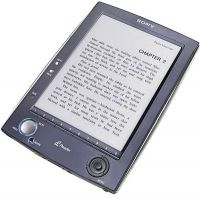
In case you missed it, The New York Times published a piece yesterday previewing two new efforts to bring electronic books to the mass market. In October, Amazon.com will roll out the Kindle (check out leaked pictures here), an ebook reader, priced somewhere between $400 to $500, that will wirelessly connect to an e‑book store on Amazon’s site, from which readers can download books in electronic format. (Think iTunes for ebooks.) Meanwhile, Google will start “charging users for full online access to the digital copies of some books in its database” and share revenue with publishers. The whole idea here is to disrupt the $35 billion book market in much the same way that the Apple has dislocated the music market with the iPod. But whether consumers will see digital books as having comparable advantages to the iPod remains TBD, and the doubters are certainly out there. Read more here.And, in the meantime, if you want a lot of free audiobooks, check out our Audiobook Podcast Collection.
One aspect of Web 2.0 that seems to be just taking off now is geotagging. Yes, we have Google Earth and the ancien regime of Mapquest. But more and more people are uploading geotagged photos, blog posts, et cetera, making all sorts of new projects possible from the 9/11 Archive to HousingMaps.com. How long before geotagging becomes as ubiquitous as blogging is today?
Quick fyi: Bruce Springsteen’s next album, Magic, will be released on October 2. To whet appetites, the lead single, “Radio Nowhere,” has been released. You can download the mp3 here. (PC users, right click ‘save target as’; Mac users, control and click, then Download Linked File.) To watch the free music video of the single, just click here and scroll down. Finally, here are the newly announced dates for Springsteen’s upcoming tour.
By now, millions of web users have watched Miss Teen South Carolina explain in mortifying fashion (see below) why many Americans can’t find the United States on a map. And, in their own unintended way, her comments effectively answered the question posed to her. Education simply isn’t what it should be in America. And that holds true for many other nations.
All of this sets the stage for explaining Open Culture’s reason for being. Put simply, we try to put people, no matter what their age or where they live, in a position to continue learning and improving themselves. With the help of our podcast collections, you can now start learning over 25 foreign languages, listen to over 100 audiobooks, including classic works in literature, poetry and philosophy, and take over 75 complete courses from some of the world’s leading universities (MIT, Stanford, UC Berkeley, Oxford, etc.). Our podcast library includes many more educational resources as well, and the best part is that they’re completely free. Hours of free education are at your disposal whenever you want it. To benefit, you simply need the desire and the will, and the ability to use podcasts. (If you don’t know how, simply read our Podcast Primer. We’ll get you up to speed.) We hope that you profit from these podcast collections and our daily posts (subscribe to our feed), and, if they can benefit a friend, please let them know about us at www.oculture.com.
P.S. For those who want to bone up on geography, check out Geography of World Cultures on iTunes. This informative course was taught by Martin Lewis at Stanford University.
Here’s a handy tool that many of our readers will appreciate. Skreemr allows you to search the web for audio content of your choice. It works like your typical search engine. Type “Mozart” and this is what you get. For tips on how to search most effectively, click here. If you’re running Firefox, you should consider installing the Firefox SkreemR search plugin. Source: Lifehacker
Jack Kerouac’s “On the Road” is turning 50 this month, something we recently noted. And to commemorate the event, Viking has just published the original draft of the novel (check it out here) that Kerouac banged out in three quick weeks, in a New York apartment, on eight long sheets of tracing paper, which he later taped together to create a 120-foot scroll (see photo). This new publication offers a reproduction of Kerouac’s first draft and lets you see how the beat classic changed from initial draft to publication. In the scroll, Kerouac uses the real names of friends instead of pseudonyms, and some of the details are a little more graphic. If you want to see footage of Kerouac reading from “On the Road,” feel free to refer back to our post on August 15.
We’re taking you back to 1980, to the evening when John Lennon was shot in New York City. This sound file lets you listen in on what New Yorkers heard that evening — December 8 — as they switched from one radio station to another. The event was covered across the radio dial, and you hear the news media starting to piece together exactly what happened at the Dakota. This recording was put online by Beware of the Blog, which we indexed in our list of MP3 Music Blogs.
We're hoping to rely on loyal readers, rather than erratic ads. Please click the Donate button and support Open Culture. You can use Paypal, Venmo, Patreon, even Crypto! We thank you!
Open Culture scours the web for the best educational media. We find the free courses and audio books you need, the language lessons & educational videos you want, and plenty of enlightenment in between.
 Subscribe to our feed in a reader.