Radio David Byrne: Stream Free Music Playlists Created Every Month by the Frontman of Talking Heads

640px-David_Byrne_2009.04.24_016
Pho­to cour­tesy of LivePict.com CC-BY-SA‑3.0.

David Byrne has played many roles: front­man of Talk­ing Heads, archi­tec­tur­al observ­er, com­pos­er of opera (specif­i­cal­ly opera about Imel­da Mar­cos, for­mer first lady of the Philip­pines, the coun­try from which I write this post today), enthu­si­as­tic musi­cal col­lab­o­ra­tor, urban cycling advo­cate — and that only counts the ones he’s played here in Open Cul­ture posts. (Some­day, we’ve got to write up his love of Pow­er­point.) But did you know he’s also done a free inter­net radio show, and for near­ly a decade at that? “For one or two days a month I queue up David Byrne’s Radio Sta­tion on the web and lis­ten to his two-hour loop of new, won­der­ful, deli­cious tunes,” writes Kevin Kel­ly in a Cool Tools post from 2008, just over halfway into the life of the show so far. “Rock-star Byrne is a pro­fes­sion­al musi­cal pio­neer, admirably eclec­tic in his taste, yet astute­ly dis­crim­i­nat­ing at the same time. Over years of lis­ten­ing to all kinds of music — exper­i­men­tal, indie, inter­na­tion­al, fringe, clas­si­cal, pop — he’s heard enough to make some great rec­om­men­da­tions.”

Kel­ly cites such tan­ta­liz­ing Byrnean playlists as “Ice­landic Pop,” “Opera high­lights,” “Eclec­tic Stuff,” and “African Fusion Pop.” More recent ses­sions, which can run for three hours or longer, include “South­ern Writ­ers,” “Songs of Burt Bacharach,” and “Raga Rock.” A new playlist comes out every month. You can list to his August playlist, “Cus­tom Jack­ets, Now and Then,” a cel­e­bra­tion of women “who have been taint­ed or touched by coun­try music” includ­ing Neko Case, Emmy­lou Har­ris, Gillian Welch, and Lucin­da Williams. You can also hear a brand new Novem­ber playlist on the davidbyrne.com front page, which uses a new­er audio play­er than all the pre­vi­ous install­ments. “Viva Mex­i­co Part 1” promis­es a selec­tion of artists from that vibrant coun­try who “have found ways to incor­po­rate their Mex­i­can musi­cal her­itage and cul­ture into what might be called the glob­al pop form,” result­ing not in “imi­ta­tions of North Amer­i­can or UK alt-rock” but songs that “sound like noth­ing but them­selves.” And if you can’t trust David Byrne to know musi­cal unique­ness when he hears it, who can you trust?

Relat­ed Con­tent:

David Byrne: How Archi­tec­ture Helped Music Evolve

David Byrne: From Talk­ing Heads Front­man to Lead­ing Urban Cyclist

David Byrne’s Grad­u­a­tion Speech Offers Trou­bling and Encour­ag­ing Advice for Stu­dents in the Arts

Col­in Mar­shall hosts and pro­duces Note­book on Cities and Cul­ture and writes essays on cities, lan­guage, Asia, and men’s style. He’s at work on a book about Los Ange­les, A Los Ange­les Primer. Fol­low him on Twit­ter at @colinmarshall or on Face­book.

Charles Dickens Gave His Cat “Bob” a Second Life as a Letter Opener

dicken's cat letter opener
Image via New York Pub­lic Library

Increas­ing­ly Face­book seems a vir­tu­al pet ceme­tery, with images of recent­ly depart­ed cats and dogs but­tressed with words of heart­break and con­so­la­tion. It feels hard-heart­ed to scroll past with­out lay­ing a com­ment at each fresh­ly dug cyber-mound, even when one has no per­son­al rela­tion­ship with the deceased, or, to large degree, the own­er. The lazy man may “like” news of a beloved Airedale’s demise, but acknowl­edg­ment can­not always be said to equal respect.

And what, pray tell, is the pro­to­col after? How many min­utes should elapse before it is accept­able to post Throw­back Thurs­day shots of one’s younger, big-haired self? What if one acci­den­tal­ly sends a Far­mville noti­fi­ca­tion to the bereaved?

If only we had a Vic­to­ri­an we could ask.

Prefer­ably, Charles Dick­ens.

He went to his reward eleven years before “Poor Cher­ry,” the first dog plant­ed in Hyde Park’s small pet ceme­tery, but he was a keen observ­er of mourn­ing cus­toms.

He was also an ani­mal lover, as his daugh­ter, Mamie not­ed in My Father as I Recall Him:

On account of our birds, cats were not allowed in the house; but from a friend in Lon­don I received a present of a white kit­ten — Williami­na — and she and her numer­ous off­spring had a hap­py home at “Gad’s Hill.” … As the kit­tens grow old­er they became more and more frol­ic­some, swarm­ing up the cur­tains, play­ing about on the writ­ing table and scam­per­ing behind the book­shelves. But they were nev­er com­plained of and lived hap­pi­ly in the study until the time came for find­ing them oth­er homes. One of these kit­tens was kept, who, as he was quite deaf, was left unnamed, and became known by ser­vants as “the mas­ter’s cat,” because of his devo­tion to my father. He was always with him, and used to fol­low him about the gar­den like a dog, and sit with him while he wrote. One evening we were all, except father, going to a ball, and when we start­ed, left “the mas­ter” and his cat in the draw­ing-room togeth­er. “The mas­ter” was read­ing at a small table, on which a light­ed can­dle was placed. Sud­den­ly the can­dle went out. My father, who was much inter­est­ed in his book, relight­ed the can­dle, stroked the cat, who was look­ing at him pathet­i­cal­ly he noticed, and con­tin­ued his read­ing. A few min­utes lat­er, as the light became dim, he looked up just in time to see puss delib­er­ate­ly put out the can­dle with his paw, and then look appeal­ing­ly towards him. This sec­ond and unmis­tak­able hint was not dis­re­gard­ed, and puss was giv­en the pet­ting he craved. Father was full of this anec­dote when all met at break­fast the next morn­ing.

One anec­dote Mamie chose not to include is that when Dick­ens’ Bob, the deaf kit­ten men­tioned above, left this earth­ly plane, the mas­ter turned him into a let­ter open­er.

Well, not the whole cat, actu­al­ly. Just a sin­gle paw, which the author had stuffed and attached to an ivory blade. The blade is engraved “C.D. In Mem­o­ry of Bob 1862” which is more grave mark­er than most pussy­cats can hope for.

Should any­one ever pub­lish a His­to­ry of Charles Dick­ens in 100 Objects, count on this object to make the cut.

Still, it’s an odd­i­ty most con­tem­po­rary West­ern­ers would view with dis­taste. (But not all. The Mor­bid Anato­my Museum’s fre­quent small mam­mal taxi­dermy work­shops draw might­i­ly from the ranks of Brook­lyn hip­sters.)

I cer­tain­ly felt the need to hus­tle my then 12-year-old son past this unusu­al sou­venir when it was dis­played as part of the New York Pub­lic Library’s cozy exhib­it, Charles Dick­ens: The Key to Char­ac­ter. The kid’s an ani­mal lover who was in Oliv­er!  at the time. I feared he’d respond with Tale of Two Cities-lev­el peas­ant rage, which is accept­able, except when there’s a show that must go on.

Pre­served!, a British taxi­dermy blog spon­sored by the Arts and Human­i­ties Research Coun­cil offers a ten­der take on Dick­ens’ moti­va­tion. Over the years, he had sev­er­al ani­mals, includ­ing a pet raven, stuffed, but his close­ness with Bob called for a spe­cial approach. 19th-cen­tu­ry lit­er­a­ture schol­ar Jen­ny Pyke writes that “the taxi­der­mied cat paw stands out in its tac­tile soft­ness and emo­tion­al ten­der­ness. Most often, as pop­u­lar as it was in the nine­teenth cen­tu­ry, taxi­dermy was con­sumed visu­al­ly only, dis­played in glass cas­es or crowd­ed cab­i­nets. With Bob’s paw, Dick­ens cre­at­ed an object meant to be held dai­ly.”

It’s not for the squea­mish, but I can see how this can­ni­ly orches­trat­ed hand-hold­ing could bring ongo­ing com­fort. More than the fleet­ing con­do­lences pro­lif­er­at­ing on Face­book, any­way.

via Slate

Relat­ed Con­tent:

Charles Dick­ens’ Hand-Edit­ed Copy of His Clas­sic Hol­i­day Tale, A Christ­mas Car­ol

T.S. Eliot Reads Old Possum’s Book of Prac­ti­cal Cats & Oth­er Clas­sic Poems (75 Min­utes, 1955)

Medieval Cats Behav­ing Bad­ly: Kit­ties That Left Paw Prints … and Peed … on 15th Cen­tu­ry Man­u­scripts

Ayun Hal­l­i­day is an author, home­school­er, and Chief Pri­ma­tol­o­gist of the East Vil­lage Inky zine. Fol­low her @AyunHalliday

Watch the New Trailer for the Upcoming Joan Didion Documentary, We Tell Ourselves Stories In Order to Live

It did­n’t take long, only 25 hours, for Grif­fin Dunne and Susanne Ros­tock to raise enough mon­ey on Kick­starter to com­plete a doc­u­men­tary on nov­el­ist and essay­ist Joan Did­ion. Ini­tial­ly hop­ing to raise $80,000, they’ve already received com­mit­ments exceed­ing $211,000, and they still have four days to go.

We Tell Our­selves Sto­ries In Order to Live will be the first and only doc­u­men­tary about Joan Did­ion. And it will be made with Joan, using her own words.  The trail­er for the doc­u­men­tary just pre­miered on Vogue. It’s fit­ting, see­ing that Did­ion land­ed her first job, at Vogue, after win­ning an essay con­test spon­sored by the mag­a­zine. She also pub­lished her sem­i­nal essay, ““On Self Respect” in Vogue in 1961.

You can watch the trail­er above. Also don’t miss our roundup from ear­li­er this year: 13 Mas­ter­ful Essays by Joan Did­ion Free Online

via @michikokakutani

Fol­low us on Face­bookTwit­ter and Google Plus and share intel­li­gent media with your friends. Or bet­ter yet, sign up for our dai­ly email and get a dai­ly dose of Open Cul­ture in your inbox.

by | Permalink | Make a Comment ( 2 ) |

Watch Harvard Students Fail the Literacy Test Louisiana Used to Suppress the Black Vote in 1964

This sum­mer, we revis­it­ed a lit­er­a­cy test from the Jim Crow South. Giv­en pre­dom­i­nant­ly to African-Amer­i­cans liv­ing in Louisiana in 1964, the test con­sist­ed of 30 ambigu­ous ques­tions to be answered in 10 min­utes. One wrong answer, and the test-tak­er was denied the right to vote. It was all part of the South’s attempt to impede free and fair elec­tions, and ensure that African-Amer­i­cans had no access to pol­i­tics or mech­a­nisms of pow­er.

How hard was the test? You can take it your­self below (see an answer key here)  and find out. Just recent­ly, the same lit­er­a­cy test was also admin­is­tered to Har­vard stu­dents — stu­dents who can, if any­thing, ace a stan­dard­ized test — and not one passed. The ques­tions are tricky. But even worse, if push comes to shove, the ques­tions and answers can be inter­pret­ed in dif­fer­ent ways by offi­cials grad­ing the exam. Carl Miller, a res­i­dent tutor at Har­vard and a fel­low at the law school, told The Dai­ly Mail: “Louisiana’s lit­er­a­cy test was designed to be failed. Just like all the oth­er lit­er­a­cy tests issued in the South at the time, this test was not about test­ing lit­er­a­cy at all. It was a … devi­ous mea­sure that the State of Louisiana used to dis­en­fran­chise peo­ple that had the wrong skin tone or belonged to the wrong social class.” (Some­times the test was also giv­en to poor whites.) Above, you can watch scenes from the Har­vard exper­i­ment and stu­dents’ reac­tions.

Test1.jpg.CROP.article920-large

Test2.jpg.CROP.article920-large

Test3.jpg.CROP.article920-large

Fol­low us on Face­bookTwit­ter and Google Plus and share intel­li­gent media with your friends. Or bet­ter yet, sign up for our dai­ly email and get a dai­ly dose of Open Cul­ture in your inbox.

by | Permalink | Make a Comment ( 35 ) |

Follow Us on Facebook, Twitter … Or, Better Yet, Get Our Daily Email

Read­ers often ask us, “What’s the best way to make sure that I don’t miss any of your posts?” First and fore­most we rec­om­mend sign­ing up for our dai­ly email. Each day, you will receive an email that tidi­ly wraps up every­thing we’ve fea­tured on the site over a 24 hour peri­od. Faith­ful­ly it will appear in your inbox each day. Sign up for the free email here. And, to ini­ti­ate the email sub­scrip­tion, please make sure that you click the ver­i­fi­ca­tion link in the email you will receive upon reg­is­tra­tion.

You can always fol­low us on Twit­ter (@openculture) where we high­light our dai­ly posts, plus many oth­er cul­tur­al curiosi­ties found on the web. Def­i­nite­ly give that a shot.

You can also like our Face­book page, and then Face­book will decide whether you get to see our posts. They just do the think­ing for you. Lucky you.

Final­ly, con­sid­er sub­scrib­ing to our RSS feed, espe­cial­ly if you use feed read­ers like Feed­ly. That will let you keep tabs on each and every post. The RSS address is: http://feeds.feedburner.com/OpenCulture

by | Permalink | Make a Comment ( 2 ) |

Download 135 Free Philosophy eBooks: From Aristotle to Nietzsche & Wittgenstein


Nietzsche

Just want­ed to give you a quick heads up that we’ve recent­ly spun out a col­lec­tion of Free Phi­los­o­phy eBooks (from our larg­er, more diverse col­lec­tion of 600 Free eBooks). Right now, you will find 110 clas­sic works on the new list — foun­da­tion­al texts writ­ten by Aris­to­tle, Descartes, Hegel and Kant, not to men­tion Kierkegaard, Wittgen­stein and Niet­zsche, too. The list will keep grow­ing at a steady clip. But if you see any cru­cial texts miss­ing, please let us know, and we will try to get them added ASAP. Of course, we’re look­ing for works in the pub­lic domain.

You can gen­er­al­ly down­load the Free Phi­los­o­phy eBooks to your Kin­dle, iPad, iPhone and oth­er devices. (Kin­dle users can use these instruc­tions to get .mobi files onto their devices.) Or, in most cas­es, we give you the option to read the books in your web brows­er. Take your pick.

As a quick last note, you might want to com­ple­ment the Phi­los­o­phy eBooks with our big list of Free Online Phi­los­o­phy Cours­es. The two col­lec­tions go hand in hand.

Fol­low us on Face­bookTwit­ter and Google Plus and share intel­li­gent media with your friends. Or bet­ter yet, sign up for our dai­ly email and get a dai­ly dose of Open Cul­ture in your inbox.

Relat­ed Con­tent:

28 Impor­tant Philoso­phers List the Books That Influ­enced Them Most Dur­ing Their Col­lege Days

The Epis­te­mol­o­gy of Dr. Seuss & More Phi­los­o­phy Lessons from Great Children’s Sto­ries

44 Essen­tial Movies for the Stu­dent of Phi­los­o­phy

Down­load 100 Free Phi­los­o­phy Cours­es and Start Liv­ing the Exam­ined Life

The Har­vard Clas­sics: A Free, Dig­i­tal Col­lec­tion

1,700 Free Online Cours­es from Top Uni­ver­si­ties

by | Permalink | Make a Comment ( 63 ) |

The Great War: Video Series Will Document How WWI Unfolded, Week-by-Week, for the Next 4 Years

This ambi­tious project deserves a men­tion: Medi­akraft Net­works has launched a video series on Youtube that will doc­u­ment how World War I unfold­ed, week-by-week, over a four-year peri­od, from 1914 to 1918. A new video will be released every Thurs­day, and it will reflect on what hap­pened dur­ing the same week 100 years pri­or. Launched in late July, the series has already cov­ered 16 weeks of The Great War, with lat­est video show­ing how World War I became a defen­sive war and trench­es began to scar the land. Host­ed by Indy Nei­dell (read an inter­view with him here), each video fea­tures archival footage from British Pathé, the news­reel archive com­pa­ny that put over 85,000 his­tor­i­cal films on YouTube ear­li­er this year.

the great war video series

You can watch all 16 episodes above, along with a few help­ful primers that explain why the War start­ed in the first place. To view new videos as they get released, keep tabs on this Youtube page. There should even­tu­al­ly be close to 300 episodes. Quite an under­tak­ing!

As a side note, I noticed that a Dutch pod­cast (in Eng­lish) will cov­er “The First World War in 261 weeks.” That’s the title of the pod­cast itself. Find it here.

via Kottke.org

Relat­ed Con­tent:

Free: British Pathé Puts Over 85,000 His­tor­i­cal Films on YouTube

Free Online His­to­ry Cours­es

The His­to­ry of Rome in 179 Pod­casts

Learn The His­to­ry of Phi­los­o­phy in 197 Pod­casts (With More to Come)

Read Joyce’s Ulysses Line by Line, for the Next 22 Years, with Frank Delaney’s Pod­cast

by | Permalink | Make a Comment ( 3 ) |

The Art of Leo Tolstoy: See His Drawings in the War & Peace Manuscript & Other Literary Texts

War and Peace sketch

Like all great writ­ers, Leo Tol­stoy has inspired a great many visu­al adap­ta­tions of his work, of vary­ing degrees of qual­i­ty. Just this past month, the Vol­gograd Fine Arts Muse­um in Rus­sia held an exhi­bi­tion of “92 graph­ic works from the col­lec­tion of the Yas­naya Polyana Estate-Muse­um,” the author’s coun­try estate and birth­place. Each work of art “recre­ates immor­tal images of the char­ac­ters, recon­structs the his­toric epoch, and reflects the dynam­ics” of his mas­ter­pieces Anna Karen­i­na and War and Peace, as well as his short sto­ries for chil­dren.

ABC sketch

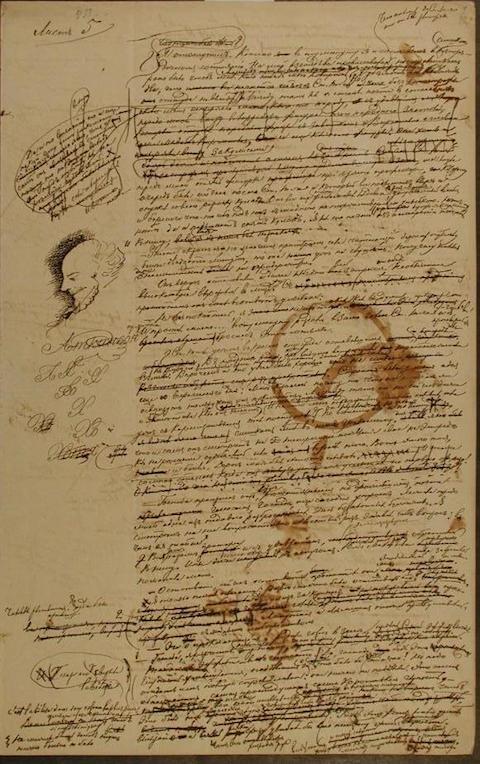
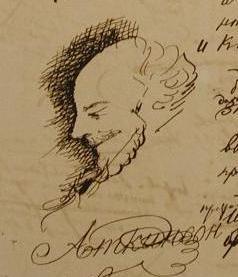
Trav­el to Moscow, how­ev­er, to the Leo Tol­stoy State Muse­um, and you’ll find Tolstoy’s own visu­al art, which he sketched both on the very man­u­script pages of those nov­els and sto­ries and in the note­books that inspired them. At the top of the post, see a man­u­script page of War and Peace with the fig­ures of a boy and a well-dressed woman drawn very faint­ly into the text. Direct­ly above, see a sketch for his ABC book, a primer he cre­at­ed for his peas­ant schools at Yas­naya Polyana.

Jules Verne sketch

Tol­stoy didn’t only illus­trate his own work; he also made some sketch­es of his con­tem­po­rary Jules Verne’s Around the World in Eighty Days—see one above—which he read in French with his chil­dren. These few draw­ings may seem like lit­tle more than doo­dles, but Tol­stoy in fact had a very fine hand, as you can see in the two sketch­es below from note­books he kept dur­ing his time in the Cau­cusus. It was then, while serv­ing in the army, that Tol­stoy began writ­ing, and the note­books he kept would even­tu­al­ly inspire his 1863 nov­el, The Cos­sacks.

Old Man sketch

These draw­ings are so well ren­dered they make me think Tol­stoy could have become a visu­al artist as well as a great writer. But per­haps the exact­ing nov­el­ist was too harsh a crit­ic to allow him­self to pur­sue that course. Over forty years after mak­ing these draw­ings, Tol­stoy pub­lished his thoughts on art in essay called What is Art?. In it, the great Russ­ian writer cre­ates what Gary R. Jahn in The Jour­nal of Aes­thet­ics and Art Crit­i­cism admits are some “unrea­son­ably nar­row, exclu­sive” cri­te­ria for defin­ing art.

Old Man 2 sketch

Tol­stoy also pro­pounds some­thing akin to a meme the­o­ry, which he calls a qual­i­ty of “infec­tious­ness.” Art, he writes, is “a human activ­i­ty con­sist­ing in this, that one man con­scious­ly, by means of cer­tain exter­nal signs, hands on to oth­ers feel­ings he has lived through, and that oth­er peo­ple are infect­ed by these feel­ings and also expe­ri­ence them.” At the cru­cial­ly for­ma­tive peri­od when these draw­ings were made, Tol­stoy obvi­ous­ly decid­ed he could best “infect” oth­ers through writ­ing. That same year, he pub­lished the first part of his auto­bi­o­graph­i­cal tril­o­gy, Child­hood, under a pseu­do­nym, fol­lowed quick­ly by Boy­hood. By the time he retired from the army in 1856 and left the Cau­cusus for St. Peters­burg, he was already a lit­er­ary celebri­ty. See more of Tolstoy’s draw­ings from his Cau­cusus note­books here.

Relat­ed Con­tent:

Leo Tol­stoy Cre­ates a List of the 50+ Books That Influ­enced Him Most (1891)

Rare Record­ing: Leo Tol­stoy Reads From His Last Major Work in Four Lan­guages, 1909

Fyo­dor Dos­to­evsky Draws Elab­o­rate Doo­dles In His Man­u­scripts

The Art of William Faulkn­er: Draw­ings from 1916–1925

The Draw­ings of Jean-Paul Sartre

Josh Jones is a writer and musi­cian based in Durham, NC. Fol­low him at @jdmagness
Watch Entr’Acte: René Clair’s Dadaist Masterpiece, Scored by Erik Satie and with Cameos by Marcel Duchamp & Man Ray (1924)

René Clair’s 1924 avant-garde mas­ter­piece Entr’Acte opens with a can­non fir­ing into the audi­ence and that’s pret­ty much a state­ment of pur­pose for the whole movie. Clair want­ed to shake up the audi­ence, throw­ing it into a dis­ori­ent­ing world of visu­al brava­do and nar­ra­tive absur­di­ty. You can watch it above.

The film was orig­i­nal­ly designed to be screened between two acts of Fran­cis Picabia’s 1924 opera Relâche. Picabia report­ed­ly wrote the syn­op­sis for the film on a sin­gle sheet of paper while din­ing at the famous Parisian restau­rant Maxim’s and sent it to Clair. While that hand­writ­ten note was the gen­e­sis of what we see on screen, it’s Clair sheer cin­e­mat­ic inven­tive­ness that is why the film is still shown in film schools today.

Clair sought to cre­ate a work of “pure cin­e­ma,” so he filled the film with just about every cam­era trick in the book: slow motion, fast motion, split screen and super­im­po­si­tions among oth­ers. The cam­era is unbound and wild­ly kinet­ic. At one point, Clair mounts the cam­era upside down to the front of a roller­coast­er.

In true Dadaist fash­ion, Clair cre­ates a series of strik­ing images – an upskirt shot of a leap­ing bal­le­ri­na; a funer­al pro­ces­sion bound­ing down the street in slow motion; a corpse spring­ing out of a cof­fin – that seem to cry out for an expla­na­tion but remain mad­den­ing­ly, fre­quent­ly hilar­i­ous­ly obscure.

The movie also serves as a class por­trait of the Parisian avant-garde scene of the ear­ly ‘20s. Picabia and Erik Satie – who scored the movie – are the ones who fired that can­non. In anoth­er scene, Mar­cel Duchamp and Man Ray can be seen play­ing chess with each oth­er on a Parisian rooftop.

Com­pared to Luis Bunuel and Sal­vador Dali’s noto­ri­ous 1928 short Un Chien Andalou – a movie that is still quite shock­ing today – Entr’Acte is a much lighter, fun­nier work, one that looks to thwart bour­geois expec­ta­tions of nar­ra­tive log­ic but doesn’t quite try to shock them into indig­nant out­rage. In fact, to mod­ern eyes, the movie feels at times like a par­tic­u­lar­ly unhinged Mon­ty Python skit. Picabia him­self once assert­ed that Entr’acte “respects noth­ing except the right to roar with laugh­ter.” So watch, laugh and pre­pare to be con­fused.

Entr’Acte will be added to our col­lec­tion, 4,000+ Free Movies Online: Great Clas­sics, Indies, Noir, West­erns, Doc­u­men­taries & More.

Relat­ed Con­tent: 

Two Vin­tage Films by Sal­vador Dalí and Luis Buñuel: Un Chien Andalou and L’Age d’Or

The Seashell and the Cler­gy­man: The World’s First Sur­re­al­ist Film

David Lynch Presents the His­to­ry of Sur­re­al­ist Film (1987)

A Tour Inside Sal­vador Dalí’s Labyrinthine Span­ish Home

Jonathan Crow is a Los Ange­les-based writer and film­mak­er whose work has appeared in Yahoo!, The Hol­ly­wood Reporter, and oth­er pub­li­ca­tions. You can fol­low him at @jonccrow. And check out his blog Veep­to­pus, fea­tur­ing lots of pic­tures of vice pres­i­dents with octo­pus­es on their heads.  The Veep­to­pus store is here.

‘You Are Done’: The Chilling “Suicide Letter” Sent to Martin Luther King by the F.B.I.

mlk uncovered letter

In Novem­ber of 1964, Mar­tin Luther King received a chill­ing let­ter, pur­port­ed­ly from a dis­il­lu­sioned mem­ber of the African-Amer­i­can com­mu­ni­ty. “King, look into your heart,” writes MLK’s crit­ic. “You know you are a com­plete fraud and a great lia­bil­i­ty to all of us Negroes.”

The let­ter then turns men­ac­ing. It gives the civ­il rights leader a choice. Com­mit sui­cide or get killed:

You are done.

King, there is only one thing left for you to do. You know what it is. You have just 34 days in which to do it (this exact num­ber has been select­ed for a spe­cif­ic rea­son, it has def­i­nite prac­ti­cal sig­nif­i­cance). You are done. There is but one way out for you. You bet­ter take it before your filthy, abnor­mal fraud­u­lent self is bared to the nation.

Straight from the begin­ning, King knew the real author behind the “sui­cide let­ter,” as it’s now called. It was the FBI, led by J. Edgar Hoover, who har­bored a deep and abid­ing hatred for King. For years, the pub­lic only had access to redact­ed copies of the let­ter. The redac­tions obscured the meth­ods of the FBI — the way the agency tried to “frac­ture move­ments and pit lead­ers against one anoth­er,” writes the Elec­tron­ic Fron­tier Foun­da­tion, and the way it used sur­veil­lance to invade King’s per­son­al life and then black­mailed him with the infor­ma­tion it gath­ered. That’s what’s hap­pen­ing in the para­graph that begins “No per­son can over­come the facts, not even a fraud like your­self.”

This sum­mer, while research­ing at the Nation­al Archives, Bev­er­ly Gage, a pro­fes­sor of Amer­i­can his­to­ry at Yale, stum­bled upon an unredact­ed copy. You can read it above. On Tues­day, Gage wrote about the let­ter and its his­tor­i­cal sig­nif­i­cance in The New York Times. The unredact­ed let­ter was also pub­lished in the Times.

via Boing­Bo­ing/EFF

Relat­ed Con­tent:

Read Mar­tin Luther King and The Mont­gomery Sto­ry: The Influ­en­tial 1957 Civ­il Rights Com­ic Book

200,000 Mar­tin Luther King Papers Go Online

The Exis­ten­tial­ism Files: How the FBI Tar­get­ed Camus, and Then Sartre After the JFK Assas­si­na­tion

Free Online His­to­ry Cours­es

David Foster Wallace’s Syllabus for His 2008 Creative Nonfiction Course: Includes Reading List & Footnotes

The_best_people_you_will_ever_know

Pho­to cour­tesy of Clau­dia Sher­man.

The term “cre­ative non­fic­tion” has picked up a great deal of trac­tion over the past decade — per­haps too much, depend­ing upon how valid or invalid you find it. Mean­ing­ful or not, the label has come into its cur­rent pop­u­lar­i­ty in part thanks to the essays of nov­el­ist David Fos­ter Wal­lace: whether writ­ing non­fic­tion­al­ly about the Illi­nois State Fair, David Lynch, pro­fes­sion­al ten­nis, or a sev­en-night Caribbean cruise, he did it in a way unlike any oth­er man or woman of let­ters. While nobody can learn to write quite like him — this we’ve seen when Wal­lace-imi­ta­tors write pas­tich­es of their own — he did spend time teach­ing the art of cre­ative non­fic­tion as he saw it,

a broad cat­e­go­ry of prose works such as per­son­al essays and mem­oirs, pro­files, nature and trav­el writ­ing, nar­ra­tive essays, obser­va­tion­al or descrip­tive essays, gen­er­al-inter­est tech­ni­cal writ­ing, argu­men­ta­tive or idea-based essays, gen­er­al-inter­est crit­i­cism, lit­er­ary jour­nal­ism, and so on. The term’s con­stituent words sug­gest a con­cep­tu­al axis on which these sorts of prose works lie. As non­fic­tion, the works are con­nect­ed to actu­al states of affairs in the world, are “true” to some reli­able extent. If, for exam­ple, a cer­tain event is alleged to have occurred, it must real­ly have occurred; if a propo­si­tion is assert­ed, the read­er expects some proof of (or argu­ment for) its accu­ra­cy. At the same time, the adjec­tive cre­ative sig­ni­fies that some goal(s) oth­er than sheer truth­ful­ness moti­vates the writer and informs her work. This cre­ative goal, broad­ly stat­ed, may be to inter­est read­ers, or to instruct them, or to enter­tain them, to move or per­suade, to edi­fy, to redeem, to amuse, to get read­ers to look more close­ly at or think more deeply about some­thing that’s worth their atten­tion… or some combination(s) of these.

This comes straight from the syl­labus of Eng­lish 183D, a work­shop Wal­lace taught at Pomona Col­lege in the spring of 2008, which you can read in its entire­ty at Salon (reprint­ed from The David Fos­ter Wal­lace Read­er). As you may remem­ber from the pre­vi­ous Wal­lace syl­labus we fea­tured, from a 1994 semes­ter of Eng­lish 102 — Lit­er­ary Analy­sis I: Prose Fic­tion at Illi­nois State Uni­ver­si­ty, the man could real­ly assem­ble a read­ing list. For his cre­ative non­fic­tion course, he had stu­dents read Jo Ann Beard’s “Wern­er,” Stephen Elliott’s “Where I Slept,” George Orwell’s clas­sic “Pol­i­tics and the Eng­lish Lan­guage,” Don­na Steiner’s “Cold,” David Gessner’s “Learn­ing to Surf,” Kathryn Harrison’s “The For­est of Mem­o­ry,” Hes­ter Kaplan’s “The Pri­vate Life of Skin,” and George Saunders’s “The Brain­dead Mega­phone.”

In some ways, Wal­lace syl­labi them­selves count as pieces of cre­ative non­fic­tion. What oth­er pro­fes­sor ever had the prose chops to make you actu­al­ly want to read any­thing under the “Class Rules & Pro­ce­dures” head­ing? In the ninth of its thir­teen points, he lays out the work­shop’s oper­a­tive belief:

that you’ll improve as a writer not just by writ­ing a lot and receiv­ing detailed crit­i­cism but also by becom­ing a more sophis­ti­cat­ed and artic­u­late crit­ic of oth­er writ­ers’ work. You are thus required to read each of your col­leagues’ essays at least twice, mak­ing help­ful and spe­cif­ic com­ments on the man­u­script copy wher­ev­er appro­pri­ate. You will then com­pose a one-to-three-page let­ter to the essay’s author, com­mu­ni­cat­ing your sense of the draft’s strengths and weak­ness­es and mak­ing clear, spe­cif­ic sug­ges­tions for revi­sion.

But what­ev­er the rig­ors of Eng­lish 183D, Wal­lace would have suc­ceed­ed, to my mind, if he’d instilled noth­ing more than this in the minds of his depart­ing stu­dents:

In the grown-up world, cre­ative non­fic­tion is not expres­sive writ­ing but rather com­mu­nica­tive writ­ing. And an axiom of com­mu­nica­tive writ­ing is that the read­er does not auto­mat­i­cal­ly care about you (the writer), nor does she find you fas­ci­nat­ing as a per­son, nor does she feel a deep nat­ur­al inter­est in the same things that inter­est you.

True to form, DFW’s syl­labus comes com­plete with foot­notes.

1 (A good dic­tio­nary and usage dic­tio­nary are strong­ly rec­om­mend­ed. You’re insane if you don’t own these already.)

You can read the Cre­ative Non­fic­tion syl­labus in full here.

Relat­ed Con­tent:

30 Free Essays & Sto­ries by David Fos­ter Wal­lace on the Web

David Fos­ter Wallace’s 1994 Syl­labus: How to Teach Seri­ous Lit­er­a­ture with Light­weight Books

Read David Fos­ter Wallace’s Notes From a Tax Account­ing Class, Tak­en to Help Him Write The Pale King

David Fos­ter Wal­lace Breaks Down Five Com­mon Word Usage Mis­takes in Eng­lish

Col­in Mar­shall hosts and pro­duces Note­book on Cities and Cul­ture and writes essays on cities, lan­guage, Asia, and men’s style. He’s at work on a book about Los Ange­les, A Los Ange­les Primer. Fol­low him on Twit­ter at @colinmarshall or on Face­book.


  • Great Lectures

  • Sign up for Newsletter

  • About Us

    Open Culture scours the web for the best educational media. We find the free courses and audio books you need, the language lessons & educational videos you want, and plenty of enlightenment in between.


    Advertise With Us

  • Archives

  • Search

  • Quantcast