A quick note: If you’re not already familiar with it, Tor.com is a web site dedicated to “science fiction, fantasy, and all the things that interest SF and fantasy readers.” And, among other things, the site regularly publishes original sci-fi stories. To celebrate its 5th birthday, Tor has decided to assemble the last five years of its original fiction and make it available as downloadable ebook files. You will need to register with the site beforehand, and then you can download the texts in various formats — PDF, Mobi, and ePub — all of which can be loaded onto ebook readers. And, yes, it’s all free.
If you’re a sci-fan, we’d encourage you to see our post from earlier this week, 100 Great Sci-Fi Stories by Women Writers and then some of the great related material below.
Let’s set the scene: The Brooklyn Dodgers are playing the Philadelphia Phillies at Ebbets Field on July 1, 1941, and the game is being aired on WNBT-TV (later to become WNBC). Before the game begins, TV viewers see this: a 10-second advertisement for Bulova clocks and watches. The ad shows a clock and a map of the United States, with a voice-over that says, “America runs on Bulova time.” This litte spot (which ran at 2:29 pm, if you’re keeping Bulova time) marked the advent of something much bigger — commercialized television. Earlier in 1941, the FCC had approved a plan to turn TV into big business. When Bulova paid $9 dollars to plug its brand, the plan was actualized. Every advertisement seen since (for better or worse) has a common lineage in this moment.
If you would like to support the mission of Open Culture, consider making a donation to our site. It’s hard to rely 100% on ads, and your contributions will help us continue providing the best free cultural and educational materials to learners everywhere. You can contribute through PayPal, Patreon, and Venmo (@openculture). Thanks!
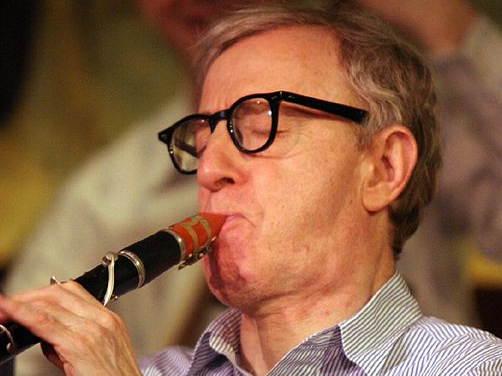
It comes as no shock that Ingmar Bergman makes the list, given Allen’s well-documented and openly admitted enthusiasm for (and, in cases like Interiors, direct imitation of) the man who made The Seventh Seal. If that vote represents Allen’s contemplative, morally serious side, then the vote for Luis Buñuel’s enduringly funny surrealist farce The Discreet Charm of the Bourgeoisie represents his well-known predilection for humor, often class-based, which occasionally melts into silliness.
Like Scorsese, Allen includes Kubrick, though for his early Paths of Glory rather than the more widely-seen 2001. Like both Scorsese and Kubrick, he picks a Fellini — two, in fact — and all three of their lists illustrate that it would take a contrarian filmgoer indeed to deny Orson Welles’ Citizen Kane a vote. Kubrick, you’ll recall, also had great praise for Vittorio de Sica and François Truffaut, and their early pictures show up among Allen’s selections. Take Kubrick, Scorsese, and Allen’s lists together, and you have a few principles to guide your viewing: concentrate on the midcentury masters. Citizen Kane really does merit all those accolades. And above all, make sure you watch your Fellini. But which films did Fellini love?
A quick heads up: The Lollapalooza 2013 music festival is getting going in Chicago. And it’s streaming live (for free) all this weekend on YouTube. Right now, you can catch The Killers on stage. Nine Inch Nails will be performing later tonight (Friday). You can find the lineup for Saturday and Sunday here. Enjoy the shows.
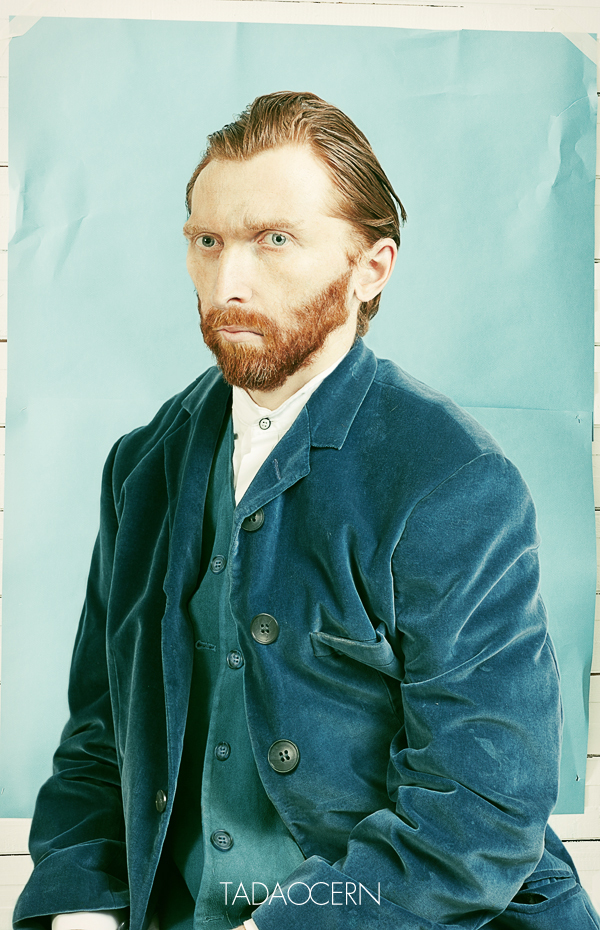
It’s a reality of big city living that one occasionally stumbles upon some famous person behaving like a mere civilian, out walking the dog, buying a latte, or taking the kids to some child-centric event. I’m bad at recognizing these luminaries out of context, which may be why I’m great at mistakenly believing some random citizen standing beside me at an intersection is in fact a noted author or beloved character actor. I have thus far never labored under the delusion that the guy across the aisle on the F train to Brooklyn is a one-eared Dutch post-Impressionist who died over a hundred years ago, but that could change.
Or not. According to Lithuanian architect and photographer Tadao Cern, the friend who served as the model for his digital recreation of Vincent Van Gogh’s iconic self-portrait doesn’t resemble the painter all that much beyond his ginger hair and beard. After taking his picture, Cern devoted a day to adjusting colors and exposure in Lightroom and fine tuning a host of details in Photoshop. Suddenly, the similarities were uncanny.
And since every Frankenstein needs a bride, Cern has cobbled together a Mona Lisa to keep Van Gogh company.
Ayun Halliday is posting from the wilds of Cape Cod, where she once spotted John Waters riding his bicycle to Safeway in a yellow slicker and matching all-weather pants. Follow her @AyunHalliday
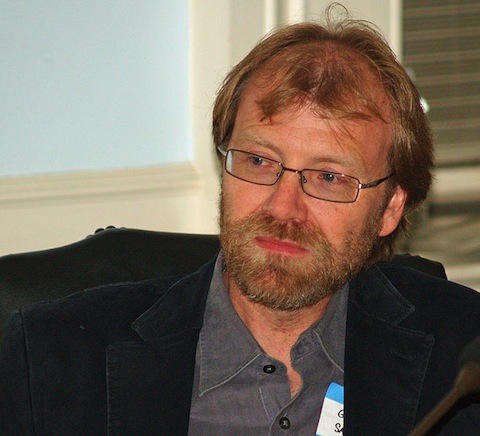
Full disclosure: I love George Saunders. Can I say that? Can I say that George Saunders rekindled my faith in contemporary fiction? Is that too fawning? Obsequious, but true! Oh, how bored I had become with fourth-hand derivative Carver, cheapened Cheever, sometimes the sad approximations of Chuck Palahniuk. So boring. It had gotten so all I could read was Philip K. Dick, over and over and over. And Alice Walker. And Wuthering Heights. And Thomas Hardy. Do you see the pass I’d come to? Then Saunders. In a writing class I took, with one of Gordon Lish’s acolytes (no names), I read Saunders. I read Wells Towers, Padgett Powell, Aimee Bender—a host of modern writers who were doing something new, in short, sometimes very short, forms, but explosive!
What is it about George Saunders that grips? He has mastered frivolity, turned it into an art of diamond-like compression. And for this, he gets a MacArthur Fellowship? Well, yes. Because what he does is brilliant, in its shockingly unaffected observations of humanity. George Saunders is an accomplished writer who puts little store in his accomplishments. Instead, he values kindness most of all, and generosity. These are the qualities he extols, in his typically droll manner, in a graduation speech he delivered to the 2013 graduating class at Syracuse University. Kindness: a little virtue, you might say. The New York Timeshas published his speech, and I urge you to read it in full. I’m going to give you half, below, and challenge you to find George Saunders wanting.
Down through the ages, a traditional form has evolved for this type of speech, which is: Some old fart, his best years behind him, who, over the course of his life, has made a series of dreadful mistakes (that would be me), gives heartfelt advice to a group of shining, energetic young people, with all of their best years ahead of them (that would be you).
And I intend to respect that tradition.
Now, one useful thing you can do with an old person, in addition to borrowing money from them, or asking them to do one of their old-time “dances,” so you can watch, while laughing, is ask: “Looking back, what do you regret?” And they’ll tell you. Sometimes, as you know, they’ll tell you even if you haven’t asked. Sometimes, even when you’ve specifically requested they not tell you, they’ll tell you.
So: What do I regret? Being poor from time to time? Not really. Working terrible jobs, like “knuckle-puller in a slaughterhouse?” (And don’t even ASK what that entails.) No. I don’t regret that. Skinny-dipping in a river in Sumatra, a little buzzed, and looking up and seeing like 300 monkeys sitting on a pipeline, pooping down into the river, the river in which I was swimming, with my mouth open, naked? And getting deathly ill afterwards, and staying sick for the next seven months? Not so much. Do I regret the occasional humiliation? Like once, playing hockey in front of a big crowd, including this girl I really liked, I somehow managed, while falling and emitting this weird whooping noise, to score on my own goalie, while also sending my stick flying into the crowd, nearly hitting that girl? No. I don’t even regret that.
But here’s something I do regret:
In seventh grade, this new kid joined our class. In the interest of confidentiality, her Convocation Speech name will be “ELLEN.” ELLEN was small, shy. She wore these blue cat’s‑eye glasses that, at the time, only old ladies wore. When nervous, which was pretty much always, she had a habit of taking a strand of hair into her mouth and chewing on it.
So she came to our school and our neighborhood, and was mostly ignored, occasionally teased (“Your hair taste good?” – that sort of thing). I could see this hurt her. I still remember the way she’d look after such an insult: eyes cast down, a little gut-kicked, as if, having just been reminded of her place in things, she was trying, as much as possible, to disappear. After awhile she’d drift away, hair-strand still in her mouth. At home, I imagined, after school, her mother would say, you know: “How was your day, sweetie?” and she’d say, “Oh, fine.” And her mother would say, “Making any friends?” and she’d go, “Sure, lots.”
Sometimes I’d see her hanging around alone in her front yard, as if afraid to leave it.
And then – they moved. That was it. No tragedy, no big final hazing.
One day she was there, next day she wasn’t.
End of story.
Now, why do I regret that? Why, forty-two years later, am I still thinking about it? Relative to most of the other kids, I was actually pretty nice to her. I never said an unkind word to her. In fact, I sometimes even (mildly) defended her.
But still. It bothers me. So here’s something I know to be true, although it’s a little corny, and I don’t quite know what to do with it:
What I regret most in my life are failures of kindness.
Those moments when another human being was there, in front of me, suffering, and I responded…sensibly. Reservedly. Mildly.
Or, to look at it from the other end of the telescope: Who, in your life, do you remember most fondly, with the most undeniable feelings of warmth?
Those who were kindest to you, I bet.
It’s a little facile, maybe, and certainly hard to implement, but I’d say, as a goal in life, you could do worse than: Try to be kinder.
Courtesy of NASA comes a visualization showing how global temperatures have changed since 1880. According to NASA’s web site, this “color-coded map shows a progression of changing global surface temperatures from 1884 to 2012. Dark blue indicates areas cooler than average. Dark red indicates areas warmer than average.” And the difference between dark blue and dark red is about 7.2 degrees fahrenheit. NASA scientists note that “2012 was the ninth warmest of any year since 1880, continuing a long-term trend of rising global temperatures. With the exception of 1998, the nine warmest years in the 132-year record all have occurred since 2000, with 2010 and 2005 ranking as the hottest years on record.” Copies of the video above and still shots can be freely downloaded from the NASA web site. To deepen your understanding of climate change, spend some time with Global Warming, a freeonline course from the University of Chicago.
It often seems, at least to me, that our culture is slowly sliding backward when it comes to science education. As a humanities person, my observations may not count for much, but I do find myself getting nostalgic for popular science communicators like Carl Sagan and Richard Feynman; people who could appear in America’s living room and enthrall even the most hardened and recalcitrant of minds. Sagan’s influence peaked at the dawn of the culture wars, and it doesn’t seem like anyone could fill his shoes.
But several influential science communicators have made significant strides in bringing science to a popular audience in the past few decades. Among them is the very affable astrophysicist Neil DeGrasse Tyson, who takes Sagan’s mantle in the Cosmos reboot on Fox next year. There are media figures like NPR’s Ira Flatow, Bill Nye the Science Guy, sci-fi author Neal Stephenson, and Emmy-award-winning Tracy Day, co-founder of the World Science Festival. Physicist and popular science writer Brian Greene has done excellent work for NOVA, and scientific heavyweights Lawrence Krauss and Richard Dawkins reach millions with popular books and media appearances.
Now imagine all these people on the same stage together, trading stories, jamming, riffing like great jazz musicians, like some Justice League of 21st century science lovers. Well, you don’t have to, because this happened, not on primetime television (alas), but at Arizona State University under the aegis of their “Origins Project,” whose mission is to foster interdisciplinary research, build scientific partnerships, and “raise the profile of origins-related issues and broaden scientific literacy.” Origins Project director Lawrence Krauss MC’ed the March 30th event, and the panel filled a 3,000-seat auditorium for a two-hour session that focuses on “the storytelling of science” (part one at top, part two above).
The event harnesses the slick, entertaining format of TED Talks to demonstrate how cutting-edge research can reach a wide audience eager for a fuller understanding of the physical universe. The first video up top opens with a quote from Michael Shermer: “Humans are pattern-seeking story-telling animals, and we are quite adept at telling stories about patterns, whether they exist or not.” The stories that the members of this exciting panel discussion tell are connected to physical reality through scientific evidence that—without artful and compelling narrative—can seem bewilderingly complex.
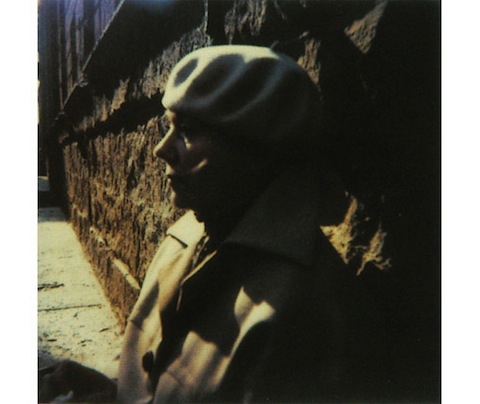
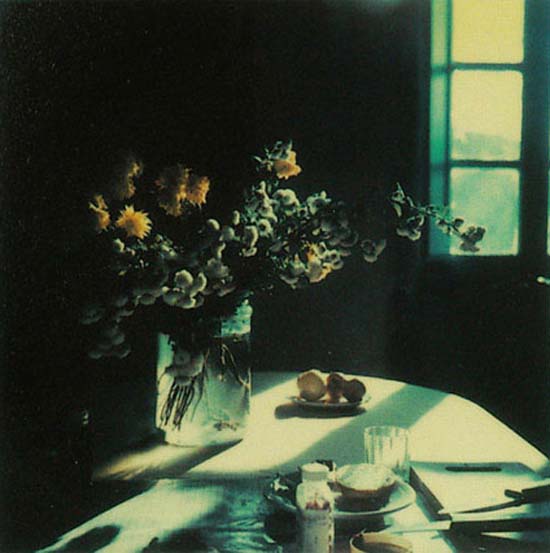
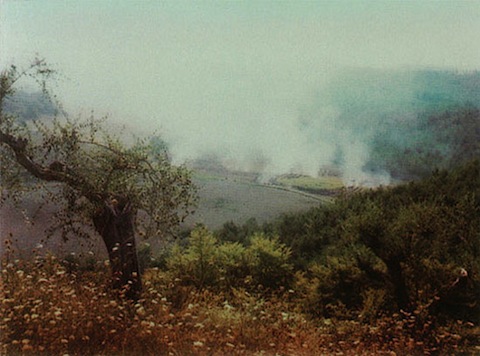
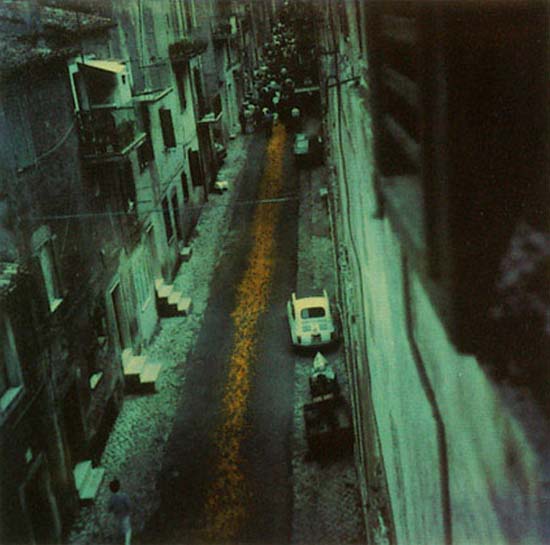
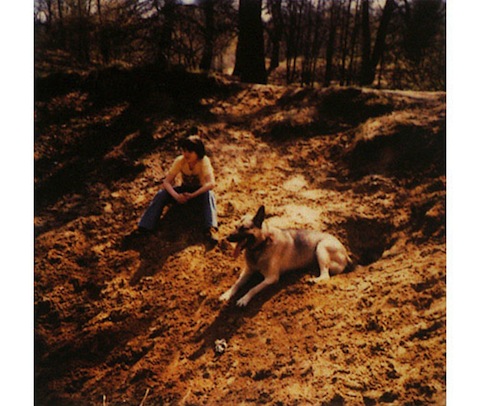
Today, digitally empowered to take, view, and share a photograph in the span of seconds, we think nothing of the phrase “ïnstant camera.” But to celebrated Russian filmmaker Andrei Tarkovsky, who died in 1986 after living almost his entire life in the Soviet Union, the technology came as a revelation. He had, of course, to use a primitive Polaroid camera, but, Tarkovsky being Tarkovsky, his aesthetic sense still came through its little square, self-developing frames loud and clear — or rather, it came through, rich, pensive, solemn, and autumnal.
In 2006, Thames & Hudson published Instant Light, a book collecting “a selection of color Polaroids the filmmaker took from 1979 to 1984 of his home, family, and friends in Russia and of places he visited in Italy,” and you can see some of these images on the blog Poemas del río Wang, or on this Facebook page.
The post quotes Tarkovsky’s friend Tonino Guerra, remembering the auteur’s Polaroid period: “In 1977, on my wedding ceremony in Moscow, Tarkovsky appeared with a Polaroid camera. He had just shortly discovered this instrument and used it with great pleasure among us. [ … ] Tarkovsky thought a lot about the ‘flight’ of time and wanted to do only one thing: to stop it — even if only for a moment, on the pictures of the Polaroid camera.”
Now that we find ourselves in a new wave of Polaroidism — you can even buy the cameras and their film at Urban Outfitters — we’d do well to study these pictures taken by a man who mastered their form just as thoroughly as he mastered cinema. And if you want evidence of the latter, look no further than our collection of Tarkovsky films free online.
Since 2009, the organization VIDA: Women in the Literary Arts has sought to bring balance to the representation of female authors in the literary world. As revealed by the 2010 controversy begun by author Jodi Picoult over the gushing treatment Jonathan Franzen’s Freedom received in the New York Times, the disparity, and the bias, are real. Author Jennifer Weiner chimed in as well, writing: “when a man writes about family and feelings, it’s literature with a capital L, but when a woman considers the same topics, it’s romance, or a beach book.” This fracas—involving a number of mostly New York literati and the death of the term “chick lit”—didn’t split evenly down gender lines. Both male and female writers lined up to defend Picoult and Franzen, but it did open up legitimate questions about the old (mostly white) boys club that claims the upper echelons of literary fiction and the brass ring that is the New York Times book review.
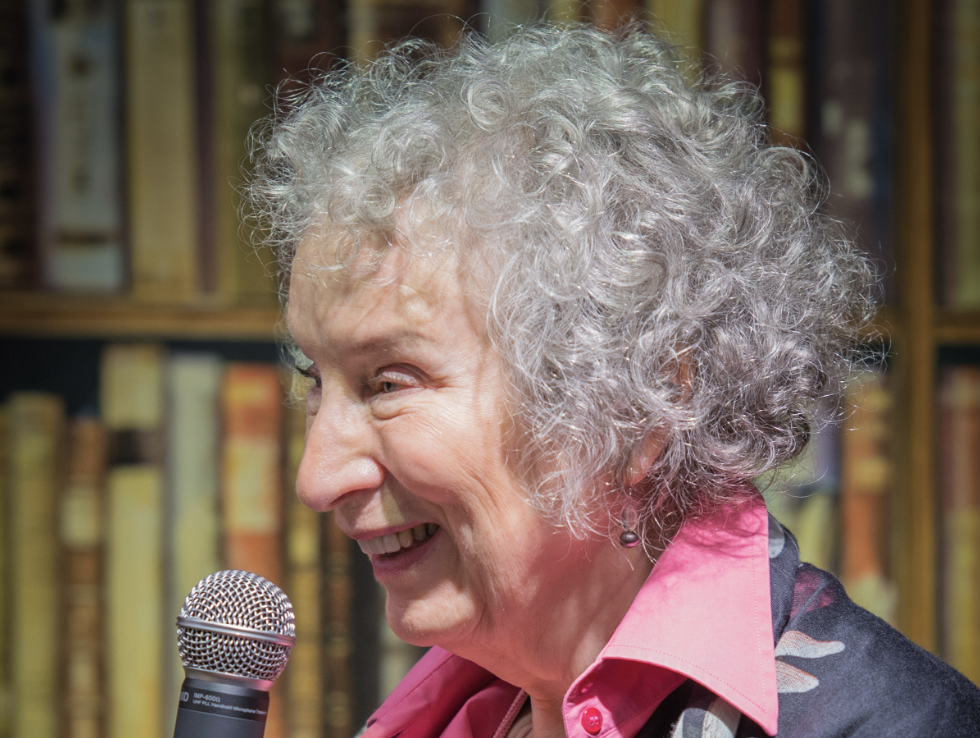
What received no notice in the popular media during all this chatter was the place of women writers in genre fiction, which mostly lives outside the gates and rarely gets much notice from the critics (with the exception of a handful of “serious” writers and the Young Adult market). Well, there is a discussion about gender parity in the science fiction world taking place now on the blog of sci-fi critic and writer Ian Sales. Sales curates SF Mistressworks—a blog for women sci-fi writers—and after reviewing a 1975 anthology called Women of Wonder, he asked readers over at his blog to submit their favorite short fiction by women writers. His goal? To collect 100 stories and novellas as a counter to the classic, and almost wholly male-dominated collection, 100 Great Science Fiction Short Short Stories, edited by Isaac Asimov. You can read the full list of 100 over at Sales’ blog. Below, we’ve excerpted those stories that are freely available online. If you’re a science fiction fan and find yourself unable to name more than one or two female authors in the genre (everyone knows, for example, the fabulous Ursula K. Le Guin and Margaret Atwood, pictured above), you might want to take a look at some of the great work you’ve missed out on.
Sales’ list spans several decades and, as he writes, demonstrates “a good spread of styles and themes and approaches across the genre.”
1 ‘The Fate of the Poseidonia’, Clare Winger Harris (1927, short story) online here
12 ‘The New You’, Kit Reed (1962, short story) online here
13 ‘The Putnam Tradition’, Sonya Dorman (1963, short story) online here
16 ‘The Heat Death of the Universe’, Pamela Zoline (1967, short story) online here
28 ‘The View from Endless Scarp’, Marta Randall (1978, short story) online here
51 ‘The Road to Jerusalem’, Mary Gentle (1991, short story) online here
71 ‘Captive Girl’, Jennifer Pelland (2006, short story) online here
79 ‘Spider the Artist’, Nnedi Okrafor (2008, short story) online here
81 ‘Eros, Philia, Agape’, Rachel Swirsky (2009, novelette) online here
82 ‘Non-Zero Probabilities’, NK Jemisin (2009, short story) online here
85 ‘Blood, Blood’, Abbey Mei Otis (2010, short story) online here and here
88 ‘Amaryllis’, Carrie Vaughn (2010, short story) online here
89 ‘I’m Alive, I Love You, I’ll See You in Reno’, Vylar Kaftan (2010, short story) online here
91 ‘Six Months, Three Days’, Charlie Jane Anders (2011, short story) online here
93 ‘The Cartographer Bees and the Anarchist Wasps’, E Lily Yu (2011, short story) online here
94 ‘Silently and Very Fast’, Catherynne M Valente (2011, novella) online here, here and here
96 ‘A Vector Alphabet of Interstellar Travel’, Yoon Ha Lee (2011, short story) online here
97 ‘Immersion’, Aliette de Bodard (2012, short story) online here
98 ‘The Lady Astronaut of Mars’, Mary Robinette Kowal (2012, novelette) online here
* Please note: an earlier version of this post was titled “The 100 Best Sci-Fi Stories by Women Writers (Read 20 for Free Online).” As this list’s curator, Ian Sales, points out unequivocally below, this is not meant to be a definitive “best of” in any sense. Our apologies for misreading his intentions.
We're hoping to rely on loyal readers, rather than erratic ads. Please click the Donate button and support Open Culture. You can use Paypal, Venmo, Patreon, even Crypto! We thank you!
Open Culture scours the web for the best educational media. We find the free courses and audio books you need, the language lessons & educational videos you want, and plenty of enlightenment in between.





_2.jpg)

