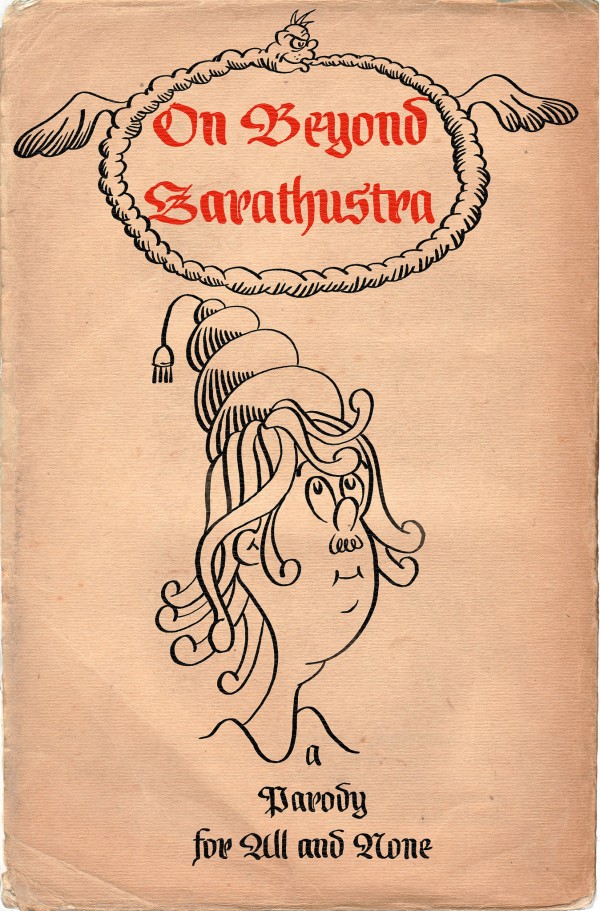
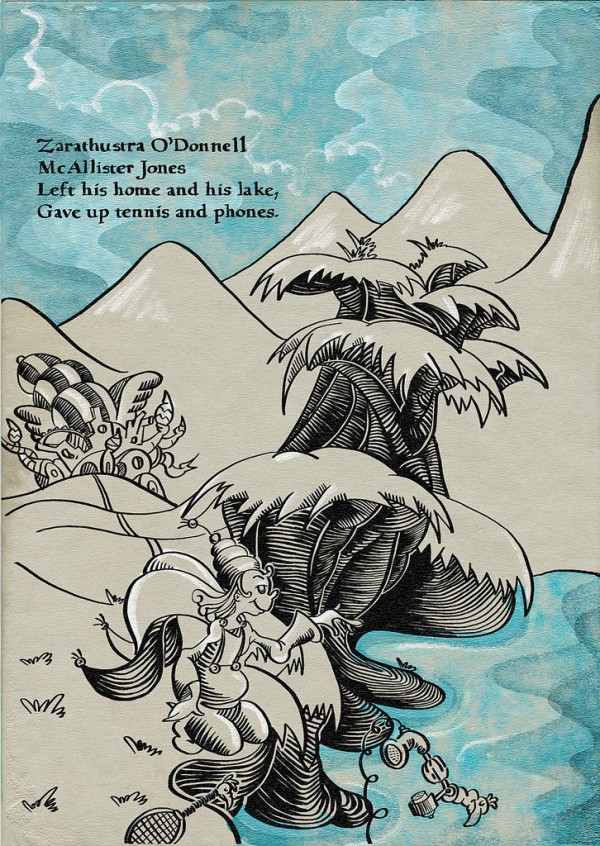
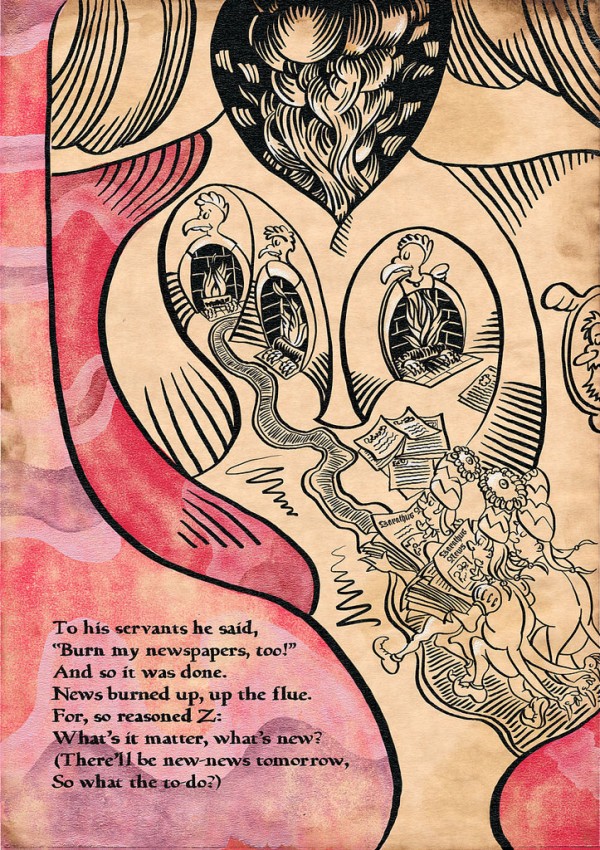
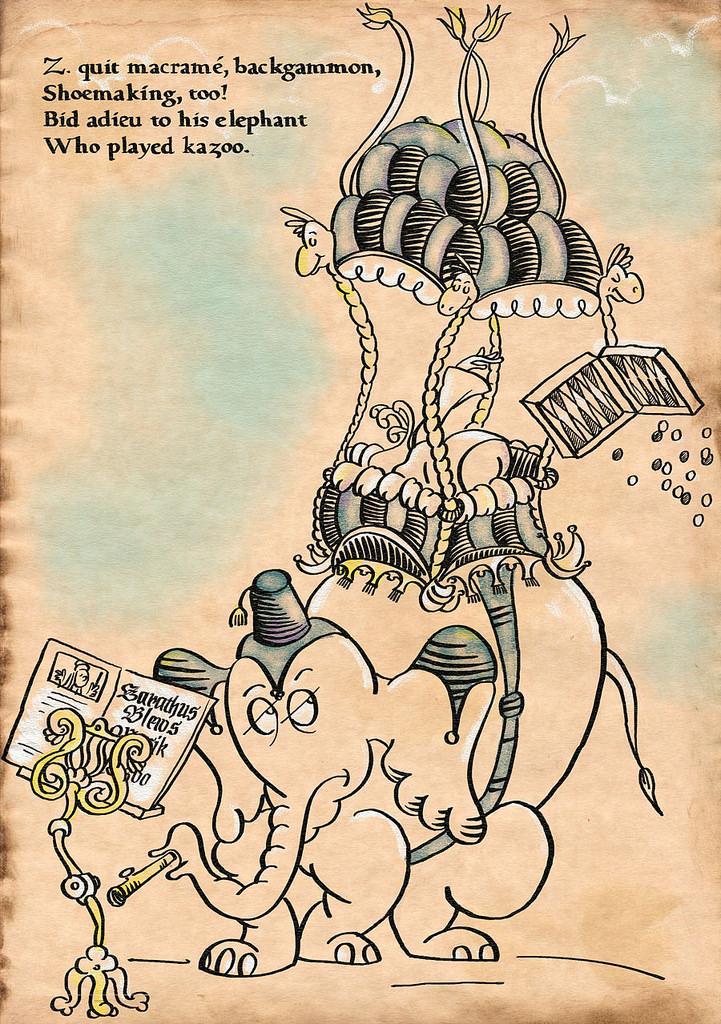
John Holbo, a philosophy prof at the National University of Singapore, recently gave the world a free illustrated edition of three dialogues by Plato (get it as a free PDF, or via Amazon). Now he’s embarking on a new creative project called On Beyond Zarathustra.
Over on the Crooked Timber blog, Holbo light-heartedly launched the project with these words:
Ever since Plato wrote Socrates “Will You Please Go Now!” and “If I Ran The Polis!” great philosophers have mostly started out as authors of (what we would now call) Dr. Seuss-style children’s books. A lot of this old stuff has been lost. Scholars have neglected it. But I’m undertaking a project of restoration and study, starting with Nietzsche.
I’ll be posting updates regularly to the Flickr page – few pages a week as my work proceeds. We’re just getting to the good bits: The Rope Dancer and the Last Man!
Please do feel to share with any friends who may have a scholarly interest in the historiography of philosophy. (I’ll have some more notes about that soon.)
We’ve posted here the first four pages of Holbo’s new graphical project.
To see how the project unfolds, you can regularly visit this album on Flickr. The are currently 22 pages, with the promise of many more to come soon.
And, take note, once he’s done with Friedrich, Holbo promises to turn to Descartes and Kierkegaard and give them the same Dr. Seuss treatment. Enjoy the ride.
If you would like to support the mission of Open Culture, consider making a donation to our site. It’s hard to rely 100% on ads, and your contributions will help us continue providing the best free cultural and educational materials to learners everywhere. You can contribute through PayPal, Patreon, and Venmo (@openculture). Thanks!
“A shadow shaped like a tadpole suddenly appeared at one corner of the screen,” recalls Virginia Woolf. “It swelled to an immense size, quivered, bulged, and sank back again into nonentity. For a moment it seemed to embody some monstrous diseased imagination of the lunatic’s brain. For a moment it seemed as if thought could be conveyed by shape more effectively than by words. The monstrous quivering tadpole seemed to be fear itself, and not the statement ‘I am afraid.’ ” She witnessed this at a screening of the silent German Expressionist horror film The Cabinet of Dr. Caligari(which you can watch for yourself above), and in it glimpsed the future of cinema itself.
Woolf elaborates on this glimpse in her essay “The Cinema,” first published in a 1926 issue of the journal The Nation and Athenaeum. (The British Library has a scan from the publication here.) “People say that the savage no longer exists in us, that we are at the fag-end of civilization, that everything has been said already, and that it is too late to be ambitious,” she begins. “But these philosophers have presumably forgotten the movies.” She goes on, in this short piece, to come to grips with this new artistic medium, to articulate her experience of it (as “the eye licks it up all instantaneously”) as well as its potential and then-current limitations, such as an over-reliance on literary material.
“The alliance is unnatural,” the author of Mrs. Dalloway (filmed in 1997, and two years later more imaginatively used as the basis for Michael Cunningham’s novel The Hours, turned into cinema itself in 2002) declares about the adaptation of novels into movies. “Eye and brain are torn asunder ruthlessly as they try vainly to work in couples. The eye says ‘Here is Anna Karenina.’ A voluptuous lady in black velvet wearing pearls comes before us. But the brain says, ‘That is no more Anna Karenina than it is Queen Victoria.’ ” She complains, as New Yorker film critic Richard Brody puts it, “that moviemakers, instead of relying on the inherent properties of cinema, harness the making of images to storytelling by way of literature,” presumably failing to understand that “the cinema’s distinctive power involves creating a new kind of visual experience.”
“It is only when we give up trying to connect the pictures with the book,” writes Woolf, “that we guess from some accidental scene — like the gardener mowing the lawn — what the cinema might do if left to its own devices.” Ninety years later, many cinephiles still dream of that gardener mowing the lawn, awaiting the day that cinema gets left to its own devices to fulfill the vast creative and artistic promise only occasionally explored by the filmmakers. Woolf likens them to a “savage tribe” who, “instead of finding two bars of iron to play with, had found scattering the seashore fiddles, flutes, saxophones, trumpets, grand pianos by Erard and Bechstein, and had begun with incredible energy, but without knowing a note of music, to hammer and thump upon them all at the same time.” Cinema developed rapidly in the day of Dr. Caligari, and has developed in certain ways since, but its greatest expressions lie ahead — an observation as true now as when Woolf, with slight disappointment but nevertheless great expectation, first made it. You can read here seminal essay, “The Cinema,” here.
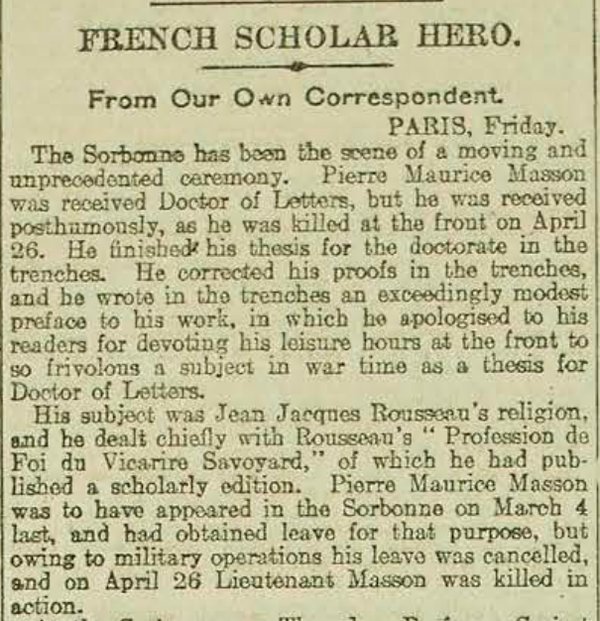
Connie Ruzich, a WWI poetry blogger, recently highlighted on Twitter a historic newspaper clipping that will put the travails of academe into perspective. Getting a Ph.D. is always hard. But hard is relative.
Case in point…
100 years ago, Pierre Maurice Masson, a young scholar, found himself fighting in north-eastern France. Drafted in 1914, Masson rose through the military ranks, moving from sergeant, to sub-lieutenant, to lieutenant. Meanwhile, in the discomfort of the trenches, he continued working on his doctoral thesis–a long dissertation on the religious training of Jean-Jacques Rousseau. By the spring of 1916, he had completed the text, corrected the proofs, and drafted an introduction (of course, that comes last). Finally, he announced to friends, “The monster is ready!” And he sought a leave of absence to return to the Sorbonne to receive his doctorate.
Alas, that didn’t happen. The newspaper clip above tells the rest of the poignant story.
You can read Masson’s posthumously published thesis, La formation religieuse de Rousseau, free online.
If you would like to support the mission of Open Culture, consider making a donation to our site. It’s hard to rely 100% on ads, and your contributions will help us continue providing the best free cultural and educational materials to learners everywhere. You can contribute through PayPal, Patreon, and Venmo (@openculture). Thanks!
Inquiring minds want to know, immediately and without any egghead qualifications: Does King Tut’s tomb have hidden rooms or does it not have hidden rooms? Answer? Well, it depends who you ask….
That’s unsatisfying isn’t it? If real life were directed by Spielberg, there would be no question: of course there are hidden rooms, and they’re filled with ingenious, deadly booby traps and priceless magical objects.
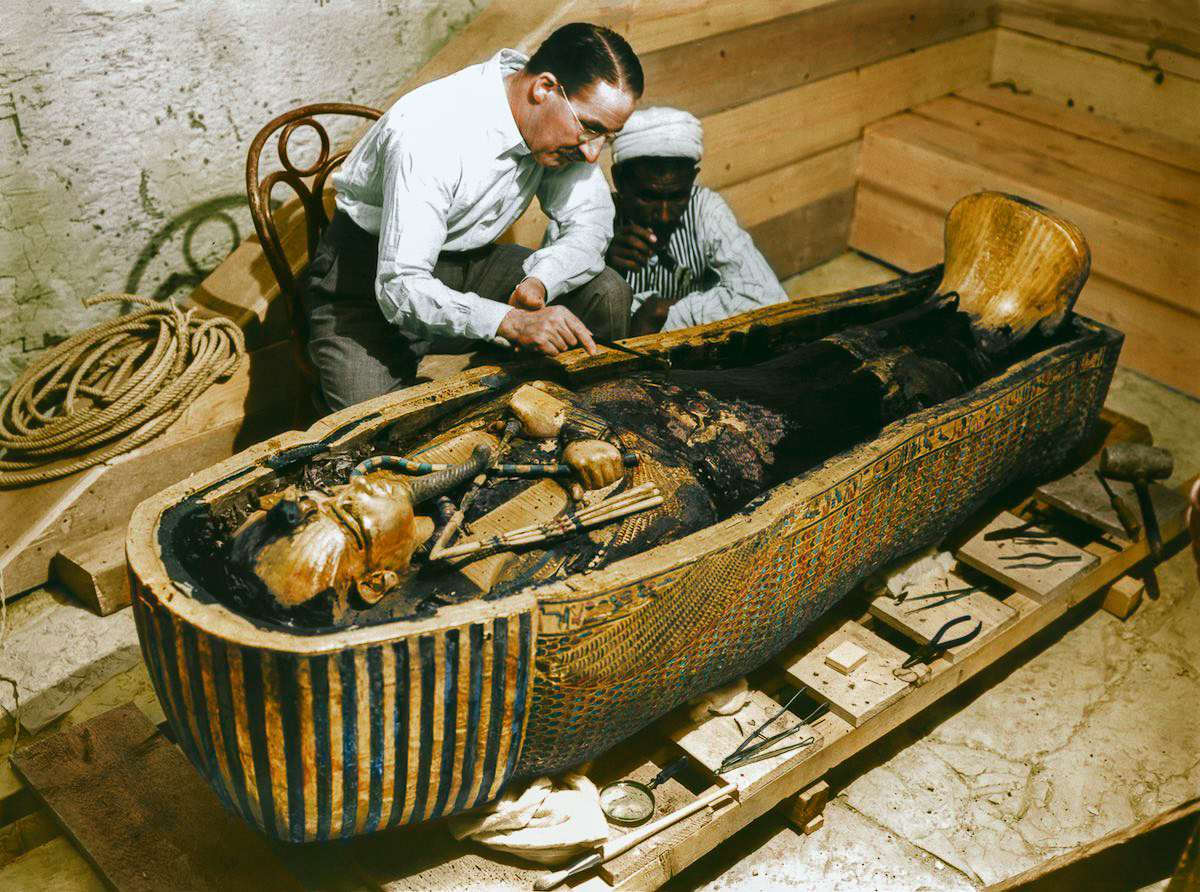
If you need some Tomb-Raider-style drama, however, you could do worse than to read the original accounts of Howard Carter (above, with anonymous worker), the English Egyptologist who originally opened Tut’s tomb in 1922 after five years of fruitless searching.
Slowly, desperately slowly it seemed to us as we watched, the remains of passage debris that encumbered the lower part of the doorway were removed, until at last we had the whole door clear before us. The decisive moment had arrived. With trembling hands I made a tiny breach in the upper left hand corner. Darkness and blank space… not filled like the passage we had just cleared.… For the moment —an eternity it must have seemed to the others standing by—I was struck dumb with amazement, and when Lord Carnarvon, unable to stand the suspense any longer, inquired anxiously, ‘Can you see anything?’ it was all I could do to get out the words, ‘Yes, wonderful things.’
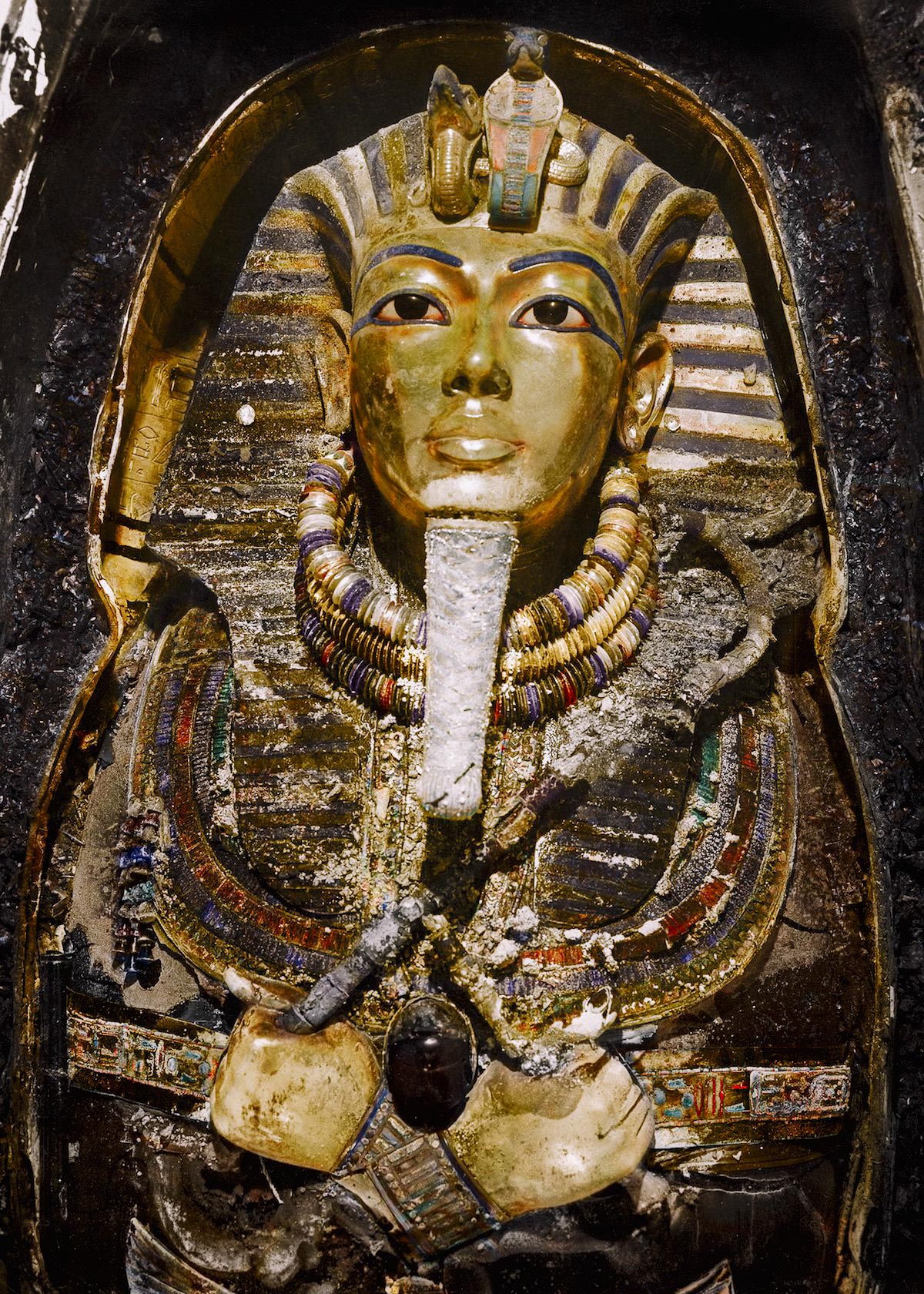
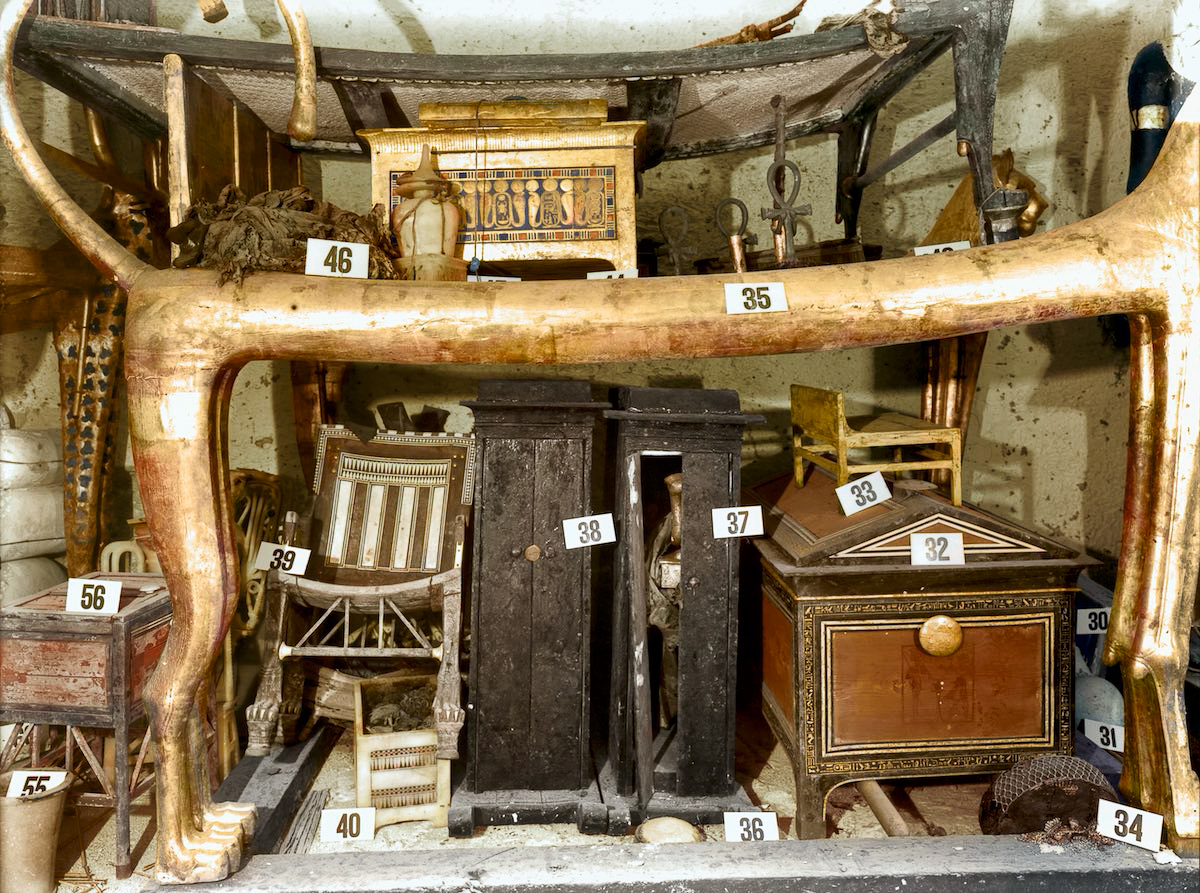
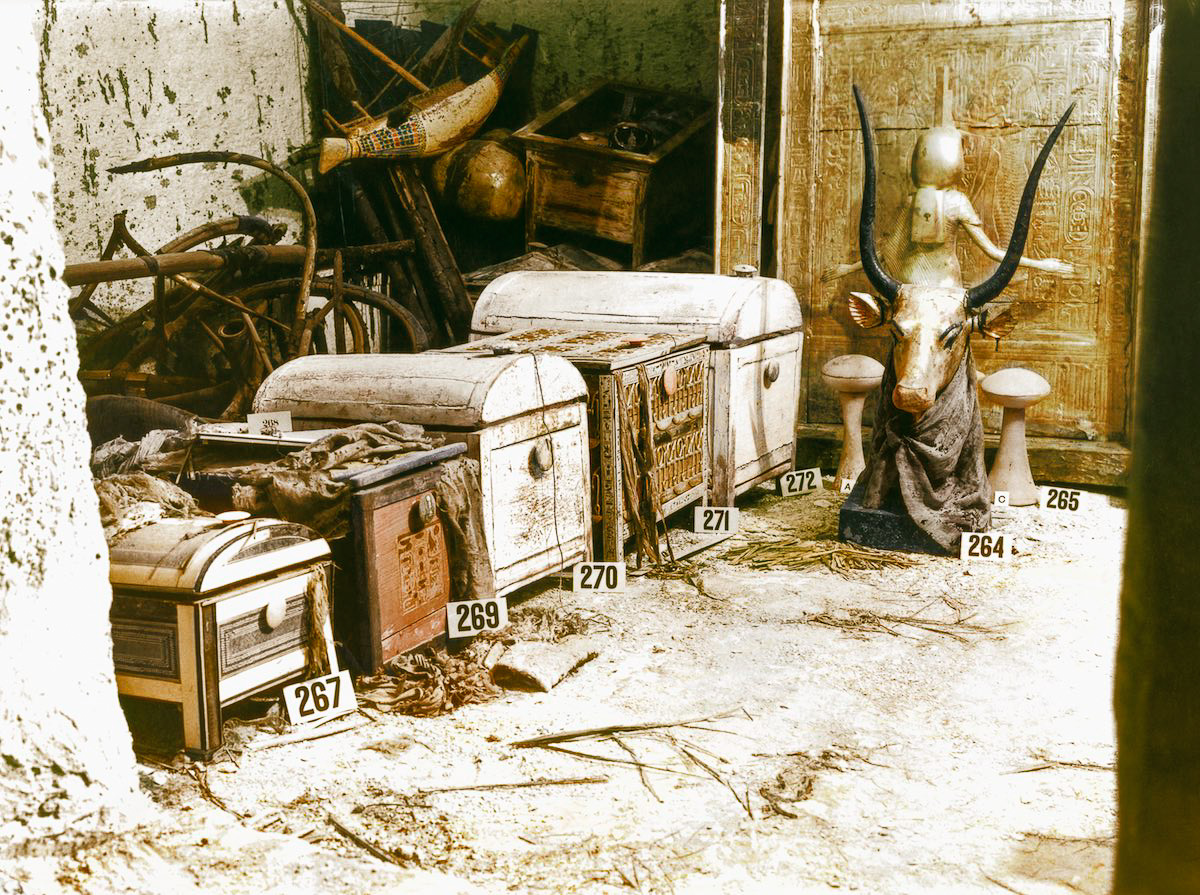
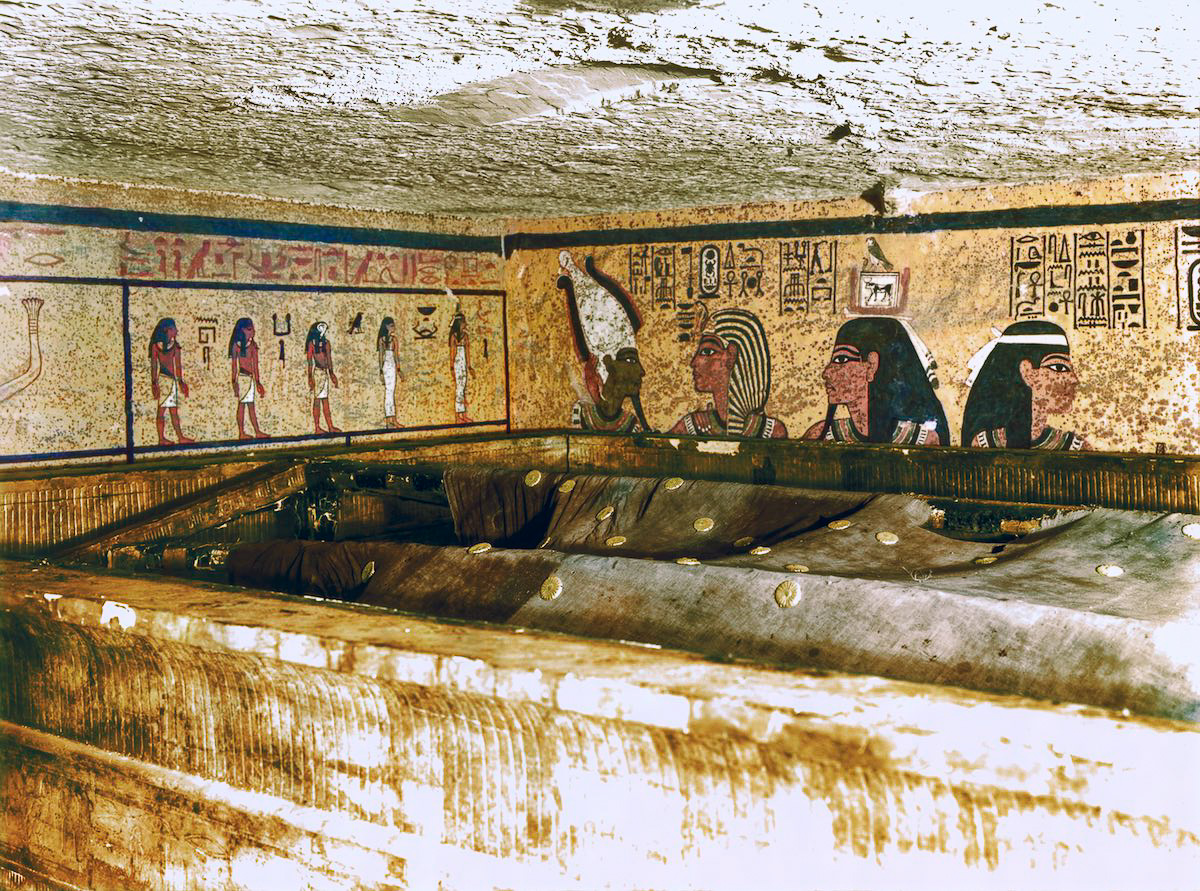
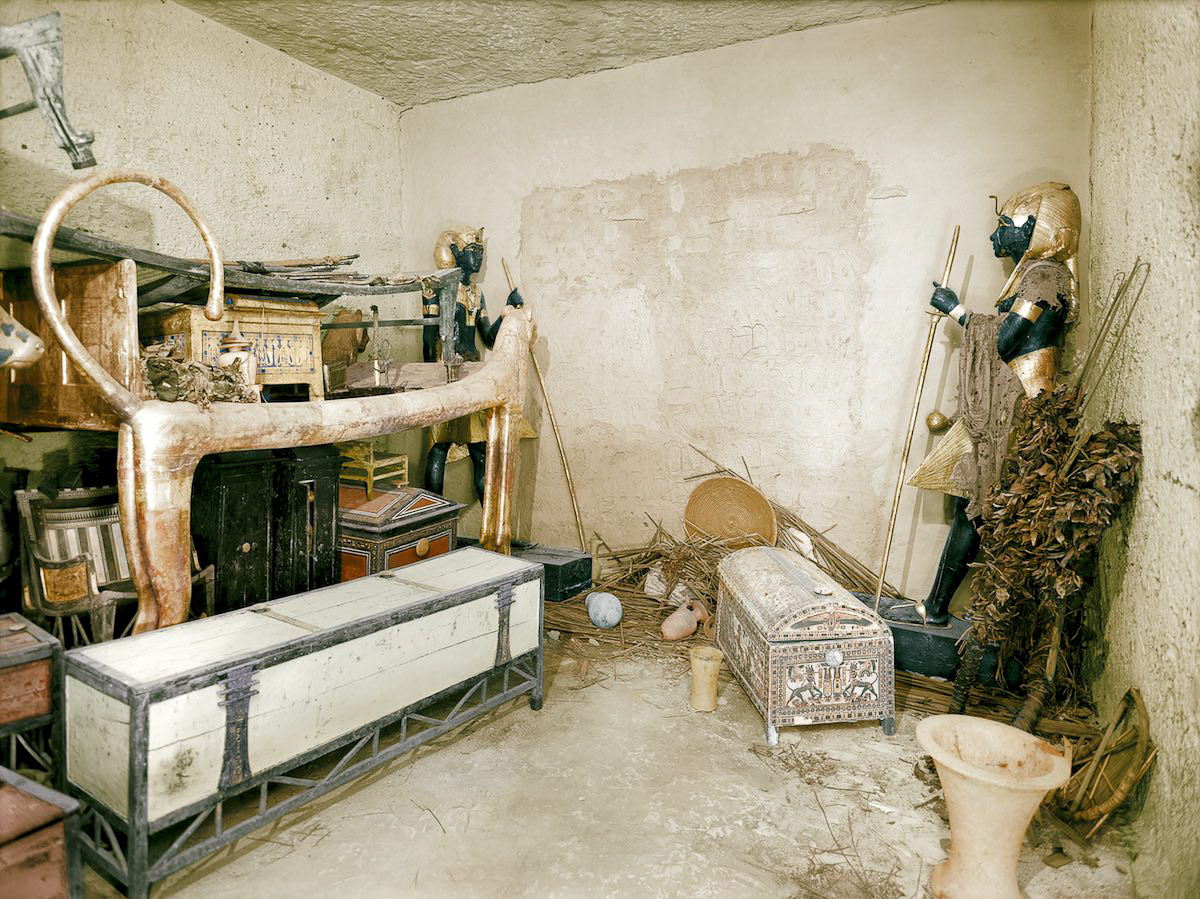
Pair this narrative with the photographs you see here of the treasure horde Carter and his aristocratic benefactors stole, er, discovered in the tomb, and you’ve got yourself one heck of a real-life-adventure. Taken between 1923–25, the photos document many of the 5,298 items that needed to be “recorded, sketched, and in some cases documented photographically,” the short video below tells us, the first in a 15-part mini video series created for a huge New York exhibition, The Discovery of King Tut, which just closed on May 15th.
You may have missed the big show—with its life-sized recreations of the tomb’s chambers— but you can still experience much of the grandeur at its website. And Mashable brings us these photographs, colorized for the event by a company called Dynamichrome. The photos were taken by Metropolitan Museum of Art photographer Harry Burton (aka The Pharaoh’s Photogarpher), the exhibition website informs us (“Only in Burton’s photographs did the young pharaoh achieve true immortality”!), and the story of their creation is integral to the opulent tomb’s excavation.
Acting as “Carter’s eyes and memory,” Burton “trekked between the discovery site, his laboratory (which he had set up in the tomb of King Seti II) and improvised darkroom in the neighboring tomb KV 55.”
The results of Burton’s labors are 2,800 large-format glass negatives, which document all of the finds, their location in the tomb and every single step of the excavators’ work with the utmost precision. Carter patiently and unconditionally encouraged him like no other member of his team and, thanks to his photos, Burton was the first and only archaeological photographer to achieve worldwide fame.
The entire process of removing the ancient treasures from Tut’s tomb took ten years, partly due to the difficulty of preserving organic artifacts like textiles, fragile wood furniture, and footwear.
Thankfully for us museumgoers and lovers of ancient history, the tomb’s discoverers treated the artifacts with great care. This has not always been the case. Throughout the nineteenth and twentieth centuries, actual tomb raiders, whose motives were less noble, took whatever they could find from ancient burial sites in order to make a quick sale, without regard for the careful cataloguing and conservation efforts Carter and his team observed. Theft and trafficking of artifacts is still rampant today.
In an interview with U.S. News & World Report, Hawass describes not only how the ravages of time and neglect have damaged some of Egypt’s precious history—including Tut’s burial mask—but also how “nearly two thirds of Egyptian antiquities were smuggled abroad in 2011, 2012, and 2013.” Such trafficking, he says, “is ongoing, but to a lesser degree.” Much of it was the result of “museum-looting” during the revolution. Hawass also disputes the hidden chambers theory, contending that “Nefertiti could not have been buried in the Valley of the Kings, as she used to worship King Tut. The High Priests of Amun would not have allowed it.”
Unfortunately, says Hawass, the only way to know for sure is to “dig through the northern wall” of the tomb, causing it to collapse. But we should not give up hope yet of Tut’s tomb yielding more secrets. Archaeologist Nicholas Reeves, who published a paper in 2015 on the existence of hidden chambers, has further validated his conclusions with scans that suggest metal and organic materials beyond the tomb’s north wall. Maybe Hawass is wrong, and we’ll soon be posting pictures of the treasures gathered from Nefertiti’s tomb. See many more of the colorized Tut photos at Mashable.
Surely you’re familiar with the work of Dick Flash, the tireless writer for Pork magazine who asks the most brilliant minds in music today the deepest, most serious, most probing questions. Take, for instance, his interview of artist/producer/ambient-music-inventor Brian Eno. “I was going to ask you whether you thought technology had affected music very deeply,” Flash begins, “but then I thought, ‘Well, that’s a bloody stupid question to ask Brian Eno. I know you’ll agree that you just can’t imagine rock music without all the technology which goes into making it and getting it heard. How do you think that process has affected what you’re doing?”
“Well —”
“I mean, when you’re making music, what eventually comes out has almost nothing to do with performance at all. I mean, I wonder if you sometimes feel more like a painter than a composer.”
“The thing about this new record —”
“Because after all, your music is basically scenic. It’s not only that you make it more like a painter than a composer, but also, it doesn’t have a narrative. There’s no sort of teleological structure to it. It’s not goal-directed. Instead it’s a bit like a sort of emotional microclimate, a place more than an event. Does that make any sense to you?”
“Yeah, well, I —”
“I mean, I’m not trying to put words into your mouth, but the real question is, should this stuff be called music at all, or is it a new art form? Do you think that this and other media suffer from the carryover of their original names, when in fact they’ve changed into something completely different.”
“Well, I like painting, yeah. I really like it. Um…”
The interview, conducted at the time of the release of Eno’s album Small Craft on a Milk Sea (which Flash calls Milk Crate on a Small Sea) constitutes a true meeting of the minds. The conversation covers all the subjects that matter: ecology, film scores, the 1956 Copyright Act, the human need for surrender, “the internet and all that,” the Edge’s hat, and why Eno does so much collaboration in the studio. As to that last, the interviewer has a theory: “You love playing with what somebody else is playing as much as you enjoy playing with yourself.”
But wait — you say you’ve never heard of Dick Flash? Watch the interview again: doesn’t he sound and look, behind that hip hair and spectacles, at least a little bit familiar? And doesn’t Eno himself, confusing Malcolm McLaren with Marshall McLuhan and going on about Annie Lennox’s neck, seem uncharacteristically inarticulate, almost as if he’s poking fun at himself? (And who’s that in the picture on his computer desktop, anyway?) Like all the finest interviews throughout the history of journalism, this one leaves us with more questions than answers.
Apologies to Stephen King, but when I think of The Shining, I think of Stanley Kubrick’s 1980 film. While King has long and vigorously objected to Kubrick’s liberties in adapting the story, I’d argue it’s one of those oft-listicled cases where the film is better than the book. Granted, the horror writer has made several justified criticisms of the film’s misogynistic portrayal of Shelly Duvall’s character, but he has also confessed to a total indifference to movies, telling Rolling Stone, “I see [film] as a lesser medium than fiction, than literature, and a more ephemeral medium.” In this instance, at least, he’s dead wrong. Movie lovers have been obsessing over every blessed detail of Kubrick’s The Shining for 36 years and show no signs of stopping.
Part of the reason the story works better on film than on the page is that The Shining is what one might call an architectural horror—its monster is a building, the Overlook Hotel, and Kubrick wisely exploited the idea to its maximum potential, adding an additional structure, the topiary maze, as a further instantiation of the story’s themes of isolation, entrapment, and existential dead ends. Video game designers—many the same age as the film’s young protagonist Danny when the movie came out—surely paid attention. The long takes of Danny’s exploration of the ominous, empty mountain lodge now, in hindsight, resemble any number of virtual console and PC worlds in many a first-person game.
Now joining the architecturally-obsessed reimaginings of The Shining is “Shining 360,” a project by digital artist Claire Hentschker. She describes it as:
a 30-minute audio-visual experiment for VR derived from the physical space within Stanley Kubrick’s film ‘The Shining.’ Using photogrammetry, 3D elements are extracted and extruded from the original film stills, and the subsequent fragments are stitched together and viewed along the original camera path.
In other words, the project allows viewers to move around, using 360-degree Youtube video, in a digitally fragmented space built out of the first 30 minutes of the film. Be aware that there are browser restrictions, but if you open the video in Chrome, Firefox, Internet Explorer, or Opera, you’ll be able to navigate through the space using your mouse or the WASD keys.
It’s a very weird experience. The Overlook’s interior exists in contiguous 3D photographic blobs suspended in black nothingness—giving one the feeling of reaching the edge of some previously-believable video game world and finding out there’s nothing beyond it. And it’s made all the creepier by the near-exclusion of the very few people the hotel does contain—with the exception of a kind of residue of partial bodies—and by a droning, one-note ambient synthesizer score. This isn’t the first time Hentschker has used the film’s spatial uniqueness as computer art. In the short student video above from 2015, she introduces a wonky technical precursor to “Shining 360” that also thematically addresses the movie’s misogyny: “Mapping the Female Gaze in Horror Movies.”
If you would like to support the mission of Open Culture, consider making a donation to our site. It’s hard to rely 100% on ads, and your contributions will help us continue providing the best free cultural and educational materials to learners everywhere. You can contribute through PayPal, Patreon, and Venmo (@openculture). Thanks!
At the time, the collection contained 2.6 million public domain images, but “eventually,” we noted in a previous post, “this archive will grow to 14.6 million images.” Well, it has almost doubled in size since our first post, and it now features over 5.3 million images, thanks again to Kalev Leetaru, who headed the digitization project while on a Yahoo-sponsored fellowship at Georgetown University.
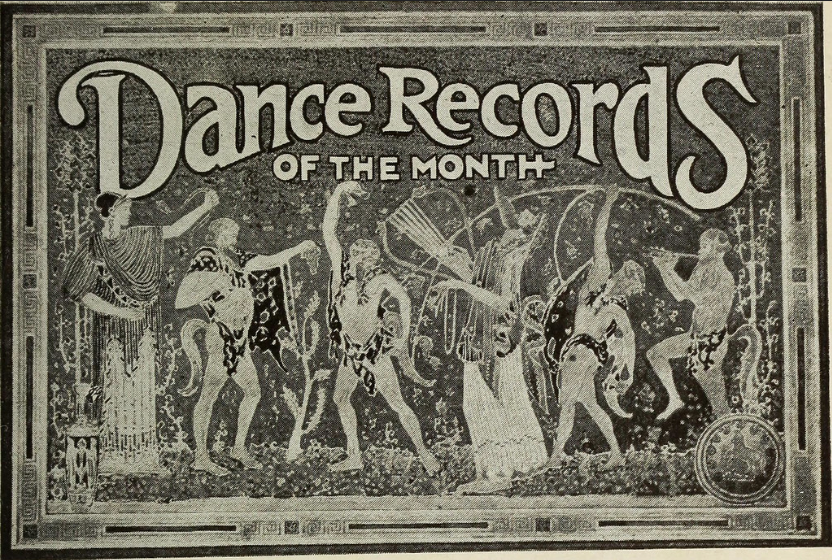
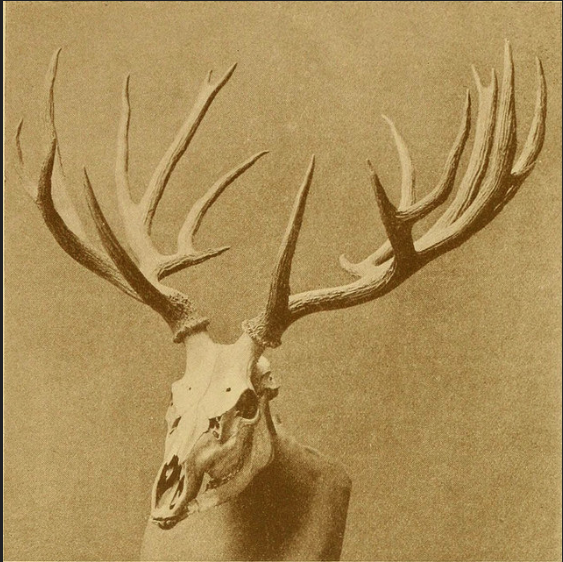
Rather than using optical character recognition (OCR), as most digitization software does to scan only the text of books, Leetaru’s code reversed the process, extracting the images the Internet Archive’s OCR typically ignores. Thousands of graphic illustrations and photographs await your discovery in the searchable database. Type in “records,” for example, and you’ll run into the 1917 ad in “Colombia Records for June” (top) or the creepy 1910 photograph above from “Records of big game: with their distribution, characteristics, dimensions, weights, and horn & tusk measurements.” Two of many gems amidst utilitarian images from dull corporate and government record books.
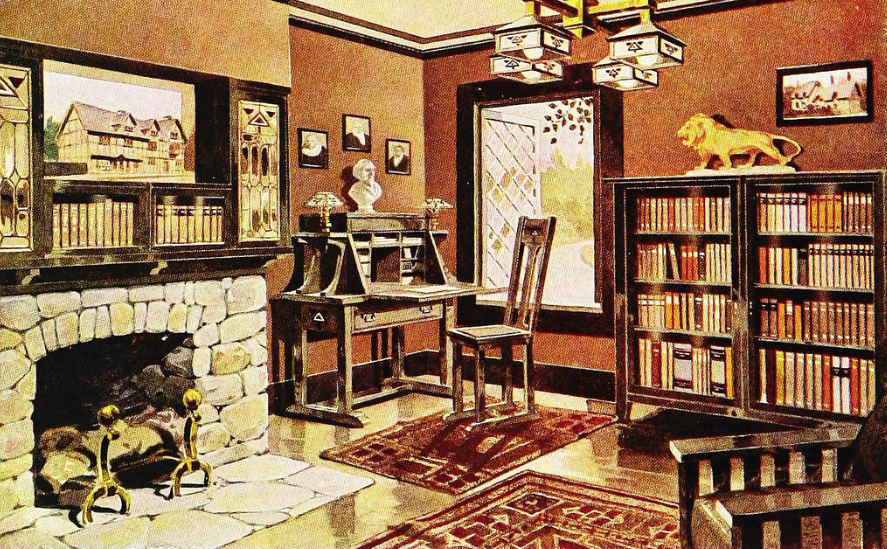
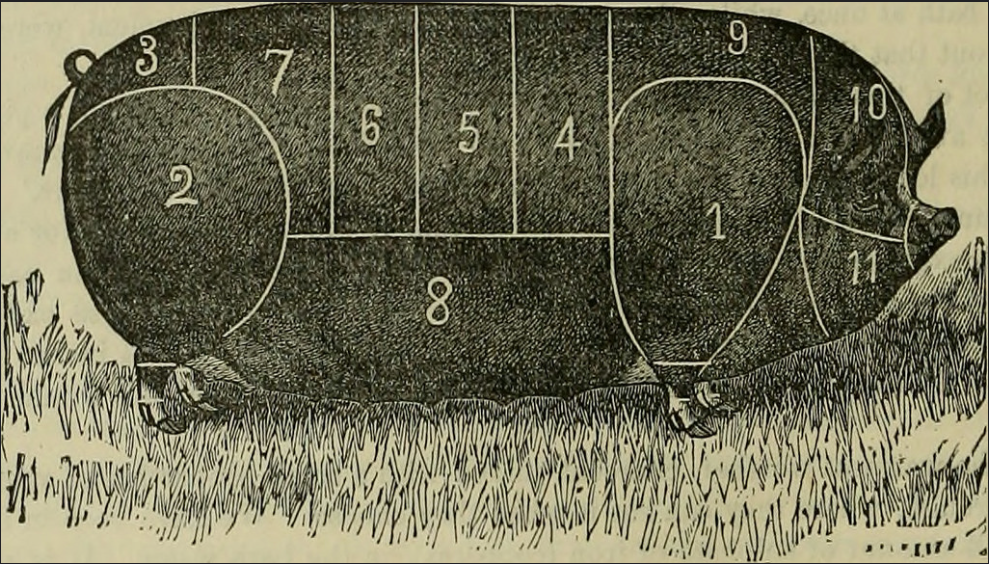
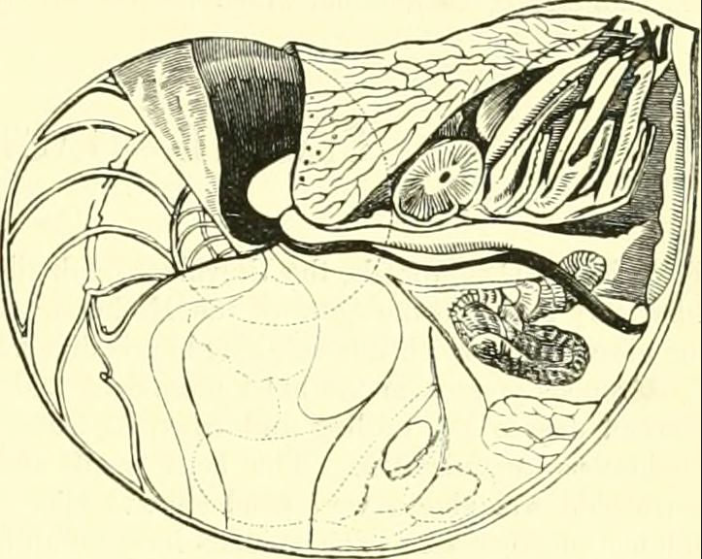
Search “library” and you’ll arrive at a fascinating assemblage, from the fashionable room above from 1912’s “Book of Home Building and Decoration,” to the rotund, mournful, soon-to-be carved pig below from 1882’s “The American Farmer: A Complete Agricultural Library,” to the nifty Nautilus drawing further down from an 1869 British Museum of Natural History publication. To see more images from any of the sources, simply click on the title of the book that appears in the search results. The organization of the archive could use some improvement: as yet millions of images have not been organized into thematic albums, which would greatly streamline browsing through them. But it’s a minor gripe given the number and variety of free, public domain images available for any kind of use.
Moreover, Leetaru has planned to offer his code to institutions, telling the BBC, “Any library could repeat this process. That’s actually my hope, that libraries around the world run this same process of their digitized books to constantly expand this universe of images.” Scholars and archivists of book and art history and visual culture will find such a “universe of images” invaluable, as will editors of Wikipedia. “What I want to see,” Leetaru also said, “is… Wikipedia have a national day of going through this [collection] to illustrate Wikipedia articles.”
Short of that, individual editors and users can sort through images of all kinds when they can’t find freely available pictures of their subject. And, of course, sites like Open Culture—which rely mainly on public domain and creative commons images—benefit greatly as well. So, thanks, Internet Archive Book Images Collection! We’ll check back later and let you know when they’ve grown even more.
As a young college student, I spent hours wandering through my university’s library, looking in a state of awe at the number of books contained therein by writers whose names I knew or who seemed vaguely familiar, and by hundreds, thousands, more I’d never heard of. Always content to immerse myself in secluded corners for days on end with a good book, I couldn’t have felt more at home.
The internet was in its infancy, and my online life at the time consisted of awkward, plain-text emails sent once or twice a week and the occasional clunky, slow-loading website, promising much but delivering little. Excitable futurists made extravagant predictions about how hypertext and interactivity would revolutionize the book. These seemed like intriguing but unnecessary solutions in search of a problem.
To the bookish, the book is a perfected technology that cannot be improved upon except by the publishing of more books. While interactive texts—with linked annotations, biographies, historical precis, critical essays, and the like—have much enhanced life for students, they have not in any way improved upon the simple act of reading for pleasure and edification—an activity, wrote Virginia Woolf, requiring nothing more than “the rarest qualities of imagination, insight, and judgment.”
Though Woolf would likely have been unimpressed with all that talk of hypertextual innovation, I imagine she would have marveled at the online world for offering something to the reader we have never had until the past couple decades: free and instant access to thousands of books, from literary classics to biographies to histories to poetry—all genres upon which Woolf offered advice about how to read on their own terms. Without the anxious admissions process and costly tuition, anyone with a computer now has access to a significant portion of the average college library.
And now anyone with a computer has access to a significant portion of the British Library’s rare collections as well, thanks to the venerable institution’s new online collection: “Discovering Literature: 20th Century.”
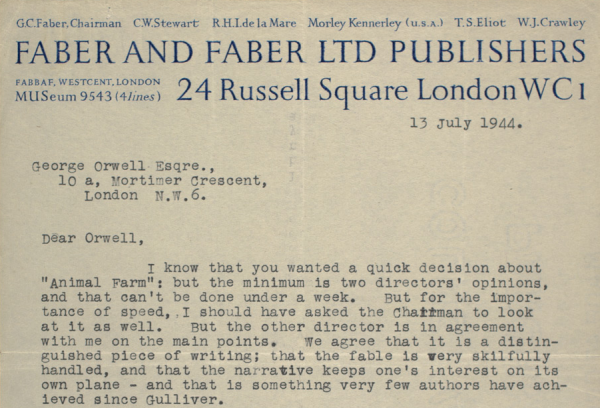
The online library offers a paradise for readers, certainly. And also a heaven for scholars. Included among the rare first editions and critical essays and interviews on the site’s main page are “online for the first time… literary drafts… notebooks, letters, diaries, newspapers and photographs from Virginia Woolf, Ted Hughes, Angela Carter and Hanif Kureishi among others.”
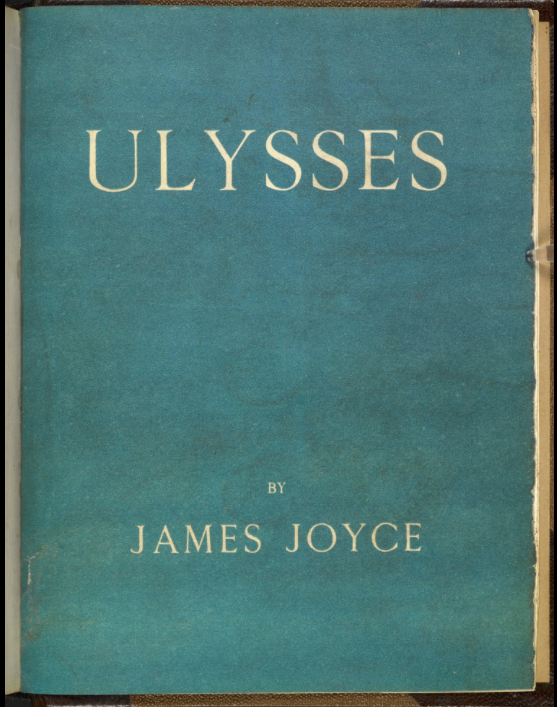
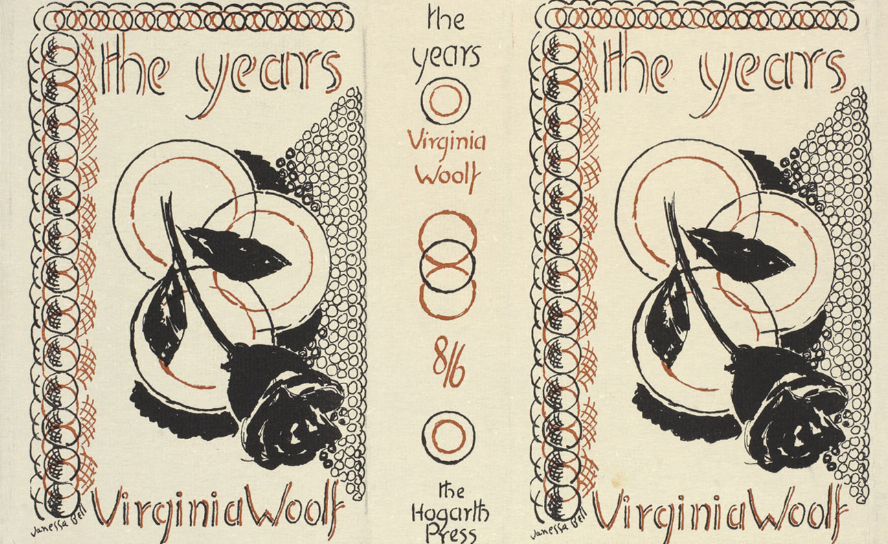
“Until now,” says Anna Lobbenberg, the Library’s Digital Programmes Manager, “these treasures could only be viewed in the British Library Reading Rooms or on display in exhibitions—now Discovery Literature: 20th Century will bring these items to anyone in the world with an internet connection.” It truly is, for the lover of books, a brave new world (a book whose 1932 original dust jacket you can see here).
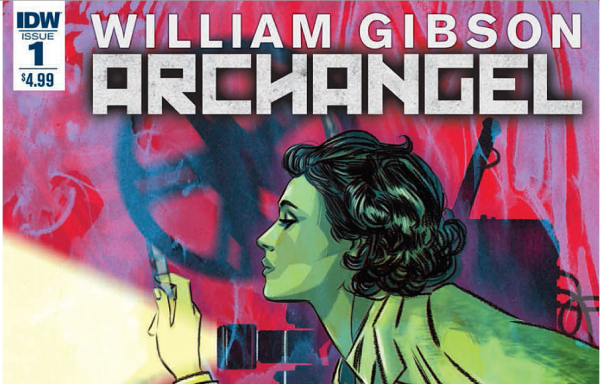
“The world is in ruins. The White House relocated to the ominous-sounding National Emergency Federal District in Montana. They have technology that far outstrips our own.” A dystopian vision of the distant future? Nope, a dystopian vision of February 2016 — the February 2016 of Archangel, a new comic-book series from actor-writer Michael St. John Smith, artist Butch Guice, and none other than novelist William Gibson, author of such sui generis works of science fiction, pillars of cyberpunk, or prophecies of the present as Neuromancer, All Tomorrow’s Parties, Pattern Recognition, and most recently The Peripheral, a predecessor, in a way, of Archangel’s story that plays out on more than one timeline.
“A father and son occupy the new White House as President and Vice President,” writes Ars Technica’s Jonathan M. Gitlin. The younger overlord of America “has been surgically altered to resemble his grandfather, because Junior is about travel to an alternate Earth in 1945 to take grandpa’s place, with the intent of remaking that world more to his liking.” In response, “a pair of tattooed Marines go back in time to stop him, but things start to unravel when their stealth plane materializes in a formation of B‑17s in the skies above Berlin.” In that alternate 1945, “British intelligence officer Naomi Givens is tasked with finding out what just fell out of the skies of Berlin.” If you feel your curiosity piqued — and how couldn’t you? — you can read through (above) pages of Archangel’s first issue, whose paper version quickly sold out. (You can also purchase the digital one here.)
As the series goes on, it will surely deliver more of the “alternate-history/cross-worlds story” that Gibson describes as “Band Of Brothers vs. Blackwater,” not to mention plenty of heroics on the part of another one of his signature protagonists, the “over-the-top female character who just never gets killed.” Enthusiasts of both comic books and William Gibson have long and patiently waited for those worlds to collide, and they’ll presumably wait a little less patiently for Archangel’s next issue, since its first one holds out enough promise to make them want to time-travel back to an alternate 1984, the year of Neuromancer’s publication, and get its author writing comics right away.
Like everything else these days, education has become a 24/7 affair. Yes, things are slowing down on college campuses this summer. But, on the internet, it’s full steam ahead. This June alone, over 300 free MOOCs (Massive Open Online Courses) are getting underway. They’re all neatly catalogued by the education web site Class Central, which also tracks the most popular MOOCS offered each month. What’s hot in June? Find the top 10 below. And don’t hesitate to enroll in any of the courses. They’re all free.
Personal Finance Planning Purdue University via edX Manage your money more effectively by learning practical solutions to key investment, credit, insurance and retirement questions. Bookmark | Next Session : 15th Jun, 2016
Nutrition and Health: Food Safety Wageningen University via edX Learn about bacteria, pesticides and health hazards present in food. Bookmark | Next Session : 1st Jun, 2016
Islam Through Its Scriptures Harvard University via edX Learn about the Quran, the central sacred text of Islam, through an exploration of the rich diversity of roles and interpretations in Muslim societies. Bookmark | Next Session : 1st Jun, 2016
History of Graphic Design California Institute of the Arts via Coursera This condensed survey course focuses on four major areas of design and their history: Typography, Image-Making, Interactive Media, and Branding. Bookmark | Next Session : 20th Jun, 2016
Big Data: Data Visualisation Queensland University of Technology via FutureLearn Data visualisation is vital in bridging the gap between data and decisions. Discover the methods, tools and processes involved. Bookmark | Next Session : 27th Jun, 2016
Microeconomics: When Markets Fail University of Pennsylvania via Coursera Perfect markets achieve efficiency: maximizing total surplus generated. But real markets are imperfect. This course will explore a set of market imperfections to understand why they fail and to explore possible remedies, including antitrust policy, regulation, and government intervention. Bookmark | Next Session : 6th Jun, 2016
Single Page Web Applications with AngularJS Johns Hopkins University via Coursera Do you want to write powerful, maintainable, and testable front end applications faster and with less code? Then consider joining this course to gain skills in one of the most popular Single Page Application (SPA) frameworks today, AngularJS Bookmark | Next Session : 20th Jun, 2016
Machine Learning: Clustering & Retrieval University of Washington via Coursera A reader is interested in a specific news article and you want to find similar articles to recommend. What is the right notion of similarity? Moreover, what if there are millions of other documents? Bookmark | Next Session : 15th Jun, 2016
Introduction to Engineering University of Texas at Arlington via edX The application of knowledge to design and build devices, systems, materials and processes in engineering. Bookmark | Next Session : 8th, Jun, 2016
Social Norms, Social Change University of Pennsylvania via Coursera This is a course on social norms, the rules that glue societies together. It teaches how to diagnose social norms, and how to distinguish them from other social constructs, like customs or conventions. Bookmark | Next Session : 20th Jun, 2016
For a complete list of courses starting in June, click here.
If you would like to support the mission of Open Culture, consider making a donation to our site. It’s hard to rely 100% on ads, and your contributions will help us continue providing the best free cultural and educational materials to learners everywhere. You can contribute through PayPal, Patreon, and Venmo (@openculture). Thanks!
We're hoping to rely on loyal readers, rather than erratic ads. Please click the Donate button and support Open Culture. You can use Paypal, Venmo, Patreon, even Crypto! We thank you!
Open Culture scours the web for the best educational media. We find the free courses and audio books you need, the language lessons & educational videos you want, and plenty of enlightenment in between.