Watch Steven Spielberg’s Rarely Seen 1968 Film, Amblin’

In 1968, Steven Spiel­berg was 21 years old and the hip­pie coun­ter­cul­ture was swirling all around, but his mind was focused on one thing only: mak­ing movies.

Spiel­berg had been crank­ing out 8mm films since he was 12 years old, and he had been hang­ing around the sound stages and edit­ing rooms of Uni­ver­sal Pic­tures as an unpaid clerk and errand boy since the sum­mer after his junior year in high school, absorb­ing every­thing he could about the process of film­mak­ing. He hoped some­one would give him a chance to direct a project–any project. He tried to gen­er­ate inter­est by tak­ing his child­hood films around to pro­duc­ers. “I would bun­dle the pic­tures in a brief­case and lit­er­al­ly car­ry my pro­jec­tor over to some­body’s office,” Spiel­berg told Enter­tain­ment Week­ly last year. “It was like I was a very young Willy Loman; box­ing up my wares and going from stu­dio office to stu­dio office. Not a lot, but maybe 10 per­cent of the pro­duc­ers that I tried to get to see my films did see my films.”

Spiel­berg real­ized he need­ed some­thing more pro­fes­sion­al to show. He found a busi­ness­man to finance a 35mm short film. Denis C. Hoff­man, who ran an opti­cal effects house called Cine­fx, read a script Spiel­berg had writ­ten and agreed to give the young man $10,000 to make the film , so long as it fea­tured music by a band he man­aged, called Octo­ber Coun­try. The film was to be called Amblin’.

“It was going to be a tone poem about a boy and a girl who meet in the desert, hitch­hik­ing their way to the Pacif­ic Ocean,” Spiel­berg told EW. “Very sim­ple sto­ry. I wrote it in a day.” Spiel­berg asked Richard Levin, a young man work­ing at the Bev­er­ly Hills library, to play the male lead. He found the female lead, Pamela McMyler, in a direc­to­ry of actors. The sto­ry is told in pic­tures and sound effects, with no dia­logue. Spiel­berg would lat­er dis­miss Amblin’ as lit­tle more than a “Pep­si com­mer­cial,” but the film clear­ly shows Spiel­berg’s gift for visu­al sto­ry­telling. His ear­ly men­tor at Uni­ver­sal Pic­tures, Chuck Sil­vers, said of his reac­tion to Amblin’: “I looked at what I still feel is the per­fect motion pic­ture.”

Although Spiel­berg would go on to name his film and tele­vi­sion com­pa­ny Amblin Enter­tain­ment, he’s not all that fond of Amblin’ the film. “I can’t look at it now,” he said in 1978. “It real­ly proved how apa­thet­ic I was dur­ing the Six­ties. When I look back at that film, I can eas­i­ly say, ‘No won­der I did­n’t go to Kent State,’ or ‘No won­der I did­n’t go to Viet­nam or I was­n’t protest­ing when all my friends were car­ry­ing signs and get­ting clubbed in Cen­tu­ry City.’ I was off mak­ing movies, and Amblin’ is the slick by-prod­uct of a kid immersed up to his nose in film.”

Relat­ed Con­tent:

Watch Steven Spielberg’s Debut: Two Films He Direct­ed as a Teenag­er

Ter­ry Gilliam: The Dif­fer­ence Between Kubrick (Great Film­mak­er) and Spiel­berg (Less So)

Steven Spiel­berg on the Genius of Stan­ley Kubrick

Troma Entertainment, the Maker of Acclaimed B‑Movies, Puts 150 Free Films on YouTube

It all began in 1974. That’s when Tro­ma Enter­tain­ment began pump­ing out schlocky, low-bud­get B‑films that some­how gar­ner the respect of seri­ous cineast­es. As you may know, Tro­ma’s films often fea­ture sex, gore, and graph­ic vio­lence. They also seem cus­tom made for the low-def, pell-mell world of YouTube. Which brings me to my point: Tro­ma has put over 150 movies from its back cat­a­logue on a new YouTube chan­nel, giv­ing users every­where free access to their dis­tinc­tive low­brow films.

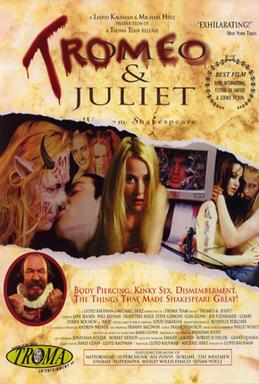
The col­lec­tion includes Can­ni­bal! The Musi­cal, the first fea­ture film cre­at­ed by South Park cre­ators Trey Park­er and Matt Stone. But let’s not over­look these hon­or­able men­tions: The Bat­tle of Love’s Return where Oliv­er Stone made his act­ing debut; Night­beast, which fea­tures music writ­ten by JJ Abrams; and Tromeo and Juli­et, the well-reviewed 1996 film that lured in view­ers by promis­ing “Body Pierc­ing, Kinky Sex, Dis­mem­ber­ment, The Things That Made Shake­speare Great!”

The Tro­ma cat­a­logue also offers some clas­sic films, includ­ing the 1932 film White Zom­bie with Bela Lugosi and No Sub­sti­tute For Vic­to­ry!, a pro­pa­gan­dis­tic pro-Viet­nam War doc­u­men­tary host­ed by John Wayne. Select films from the Tro­ma YouTube col­lec­tion will find their way onto our list of 500 Free Movies Online.

Thanks go to Car­los S. for flag­ging these for us.

Relat­ed Con­tent:

21 Free Hitch­cock Movies Online

John Wayne: 25 Free West­ern Films on the Web

Tarkovsky Films Now Free Online

by | Permalink | Make a Comment ( 4 ) |

Joseph Campbell and Bill Moyers Break Down Star Wars as an Epic, Universal Myth

Some of Star Wars’ detrac­tors call the series schlocky, blunt, pre­dictable, and implau­si­ble even by fan­ta­sy’s stan­dards. A defend­er might respond that they’re look­ing at it all wrong: to appre­ci­ate Star Wars, you need to watch it as an epic myth. George Lucas him­self, who has more or less mount­ed this argu­ment in response to charges of unsub­tle­ty, rarely seems far from drop­ping the phrase “the pow­er of myth.” That, sure­ly not coin­ci­den­tal­ly, is also the title of a 1988 Bill Moy­ers tele­vi­sion series on mythol­o­gist Joseph Camp­bell and his ideas about myth through time and across human cul­tures. Moy­ers and Camp­bell actu­al­ly con­duct­ed their first five episodes’ worth of con­ver­sa­tions at Lucas’ Sky­walk­er Ranch. Just as Lucas did his read­ing of Camp­bell, Camp­bell did his read­ing of Star Wars: in the brief clip from The Pow­er of Myth above, the schol­ar express­es his enthu­si­asm for the films’ use of mytho­log­i­cal ele­ments drawn from across the world. (Find the com­plete Pow­er of Myth series on DVD here.)

If you want to know about myth, Camp­bell remains the go-to guy. You can hear more from him on the Joseph Camp­bell Foun­da­tion’s YouTube chan­nel, which fea­tures clips of Camp­bell on the mythol­o­gy of the trick­ster, on myth as mir­ror for the ego, and, of course, on cir­cum­ci­sion. Though obvi­ous­ly not as exten­sive as the afore­men­tioned in-depth six-hour sit-down between Camp­bell and Moy­ers, they’ll still give you a sense of why Camp­bel­l’s obser­va­tions about the eter­nal rel­e­vance of the strongest myths have them­selves stayed so rel­e­vant a quar­ter-cen­tu­ry after his pass­ing. Applic­a­ble essay ques­tion: to what extent can we put the rel­a­tive lack of enthu­si­asm for the new­er Star Wars pre­quels down to George Lucas not hav­ing cracked his copy of The Hero With a Thou­sand Faces in a while?

Relat­ed con­tent:

Star Wars as Silent Film

The Exis­ten­tial Star Wars: Sartre Meets Darth Vad­er

Star Wars is a Remix

Col­in Mar­shall hosts and pro­duces Note­book on Cities and Cul­ture. Fol­low him on Twit­ter at @colinmarshall.

Hunter S. Thompson Interviews Keith Richards, and Very Little Makes Sense (1993)

Let’s rewind the video­tape to 1993. Gonzo jour­nal­ist Hunter S. Thomp­son final­ly gets to inter­view Rolling Stones gui­tarist Kei­th Richards. The con­ver­sa­tion is utter­ly and pre­dictably incom­pre­hen­si­ble. But it’s amus­ing nonethe­less.

Deci­pher­able con­ver­sa­tion top­ics include: if J. Edgar Hoover returned to this world, what form might he take? (A worm? a fart? a weasel?) What was Kei­th doing on Christ­mas Eve in 1962, 1966, and 1969? And what exact­ly went down at the infa­mous Alta­mont con­cert in Decem­ber 1969?

If you would like to sup­port the mis­sion of Open Cul­ture, con­sid­er mak­ing a dona­tion to our site. It’s hard to rely 100% on ads, and your con­tri­bu­tions will help us con­tin­ue pro­vid­ing the best free cul­tur­al and edu­ca­tion­al mate­ri­als to learn­ers every­where. You can con­tribute through Pay­Pal, Patre­on, and Ven­mo (@openculture). Thanks!

Relat­ed Con­tent:

John­ny Depp Reads Let­ters from Hunter S. Thomp­son

Hunter S. Thomp­son Calls Tech Sup­port, Unleash­es a Tirade Full of Fear and Loathing (NSFW)

Kei­th Richards Inter­viewed at The New York Pub­lic Library

Hunter S. Thomp­son Gets Con­front­ed by The Hell’s Angels

by | Permalink | Make a Comment ( 6 ) |

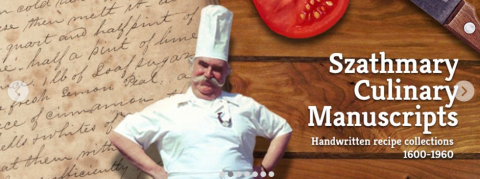
Archive of Handwritten Recipes (1600 — 1960) Will Teach You How to Stew a Calf’s Head and More

If you’ve ever tried to fol­low a recipe from your grandmother’s col­lec­tion, squint­ing at her spi­dery writ­ing on a stained 3x5 card, you might be a can­di­date for the Uni­ver­si­ty of Iowa Libraries’ lat­est DIY His­to­ry project.

The University’s spe­cial col­lec­tions man­ages the Sza­th­mary Culi­nary Man­u­s­cipts and Cook­books, a hand­writ­ten col­lec­tion of Amer­i­can and Euro­pean recipes from the 1600s to the 1960s.

Help­ful food­ies, his­to­ry buffs and hand­writ­ing sleuths are invit­ed to par­tic­i­pate in UI’s crowd­sourc­ing his­to­ry project by tran­scrib­ing dig­i­tized images of recipes.

It’s not the first time the uni­ver­si­ty has out­sourced a por­tion of its archival hand­work. Last year the Civ­il War Diaries and Let­ters Tran­scrip­tion Project was pow­ered by vol­un­teers, who tran­scribed more than 15,000 pages of mate­r­i­al. All you need to do is select a page from with­in the col­lec­tion and get start­ed. So far more than 17,000 pages have been tran­scribed and vol­un­teers chat and post ques­tions on a dis­cus­sion forum.

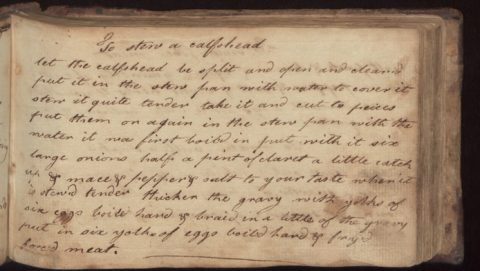
An exam­ple of the his­tor­i­cal nuggets uncov­ered while tran­scrib­ing: a pos­net is an 18th cen­tu­ry term for a small met­al pot, a spi­der is a skil­let, and to scearce is to sift. Of course no cook­book his­to­ri­an has com­plet­ed their task until they have actu­al­ly tried the recipes them­selves. This could be inter­est­ing for the lucky tran­scriber of a recipe from Abi­gail Welling­ton Townsend’s cook­book, cir­ca 1840:

To stew a calf­shead, let the calf­shead be split and open and cleaned put it in the stew pan with water to cov­er it stew it quite ten­der take it and cut it to pieces put them on again in the stew pan with the water it was first boiled in  put with it six large onions half a pint of claret a lit­tle catch up a lit­tle mace & pep­per & salt to your taste when it is stewed ten­der thick­en the gravy with yolks of six eggs boiled hard & braid in a lit­tle of the gravy put in six yolks of eggs boiled hard & fry’d forced meat.

Kate Rix writes about dig­i­tal media and edu­ca­tion. Find more of her work at  and thenifty.blogspot.com.

Mountain Biker Joy Rides on a $13,000 Carbon Road Bike

Pro­fes­sion­al cycling has cer­tain­ly seen bet­ter days. Last week, the Inter­na­tion­al Cycling Union for­mal­ly stripped Lance Arm­strong of his sev­en Tour de France titles. This came after Arm­strong refused to con­test an evi­dence-filled case pre­pared by the U.S. Anti-Dop­ing Agency, and after Arm­strong’s for­mer team­mates start­ed con­fess­ing to dop­ing one by one. (On that note, Tyler Hamil­ton, once a domes­tique for Lance, gave a rather reveal­ing radio inter­view this week, along with Daniel Coyle. Togeth­er they co-wrote a new book, The Secret Race: Inside the Hid­den World of the Tour de France: Dop­ing, Cov­er-ups, and Win­ning at All Costs.) Any­way, this is all a long way of say­ing that cycling fans could use some­thing to smile about. And maybe this fits the bill: Above, we have Mar­tyn Ash­ton, a well-known moun­tain bik­er, tak­ing a $13,000 Pinarel­lo Dog­ma 2 out for a very casu­al rad­i­cal spin. Enjoy.

by | Permalink | Make a Comment ( 1 ) |

Boris Karloff and Bela Lugosi Square Off in a Monstrous Game of Chess (1934)

Long before the release of the cult film Drac­u­la vs. Franken­stein (Rot­ten Toma­toes calls the 1971 movie “a slap­dash epic of bad film­mak­ing”), the orig­i­nal stars of Drac­u­la and Franken­stein met face to face–for a game of chess.

The scene is from an ear­ly 1934 episode of Colum­bia Pic­tures’ Screen Snap­shots, a series of short films fea­tur­ing the off-screen lives of Hol­ly­wood stars. Carl Laemm­le at Uni­ver­sal Pic­tures had recent­ly come up with the idea of cast­ing Boris Karloff, who played the mon­ster in the 1931 film Franken­stein, and Bela Lugosi, star of the same year’s Drac­u­la, togeth­er in one movie. The Black Cat, based very loose­ly on the short sto­ry by Edgar Allan Poe, pre­miered in May of 1934 with Karloff and Lugosi at the top of the bill.

The appear­ance by Karloff and Lugosi on Screen Snap­shots #11 was essen­tial­ly a covert pro­mo­tion for The Black Cat, but because Colum­bia and Uni­ver­sal were rivals the film isn’t men­tioned. Instead, the two hor­ror stars talk about the “Film Stars Frol­ic,” a fundrais­ing event for the Screen Actors Guild that coin­cid­ed with the open­ing of Gilmore Sta­di­um in Los Angeles–and, as it hap­pened, with the pre­miere of The Black Cat. The Screen Snap­shots vignette begins with an atmos­phere of men­ace as the two men frown at one anoth­er.

“Are you ready for the test, Drac­u­la?” says Karloff.

“I’m ready, Franken­stein,” says Lugosi.

“Then–let us begin.”

At which point the two men break out laugh­ing as the cam­era pulls back to reveal a chess board. For some rea­son Drac­u­la has the white pieces.

Relat­ed con­tent:

Bela Lugosi Dis­cuss­es his Drug Habit as He Leaves the Hos­pi­tal in 1955

The Known Universe: The Hayden Planetarium’s Tour of the Cosmos Gets a Hans Zimmer Soundtrack

The Ger­man com­pos­er Hans Zim­mer has made a name for him­self (and earned a star on the Hol­ly­wood Walk of Fame) by cre­at­ing orig­i­nal scores for films. You’ve heard his music, even if you haven’t heard of him. The Lion King, The Dark Knight and Incep­tion are a few of the films he scored.

If you’ve seen Incep­tion then the music behind this video will sound famil­iar. Zim­mer’s music plays behind a small video with vast sub­ject mat­ter: The Known Uni­verse, a six minute tour of, that’s right, the entire known uni­verse. Put togeth­er in 2009 by the Hay­den Plan­e­tar­i­um in NYC, the video orig­i­nal­ly had a more New Agey, orches­tral score. Zimmer’s track is beau­ti­ful and thank­ful­ly some­body decid­ed to lay it down behind the Plan­e­tar­i­um’s video. The results are amaz­ing, a slick­er ver­sion of Charles and Ray Eames’ famous film Pow­ers of Ten, but with a more dis­tant start­ing and end­ing point.

Where Pow­ers of Ten start­ed its tour out at a bird’s eye lev­el above Earth, The Known Uni­verse begins above the planet’s high­est point, above the Himalayan Moun­tains, and quick­ly pans out to show the Moon’s orbit, the orbits of the oth­er plan­ets in our solar sys­tem, and beyond.

Real­ly beyond—all the way into the after­glow of the Big Bang. And even though it’s a sim­u­la­tion, it’s an accu­rate one.

The Known Uni­verse was made using the Dig­i­tal Uni­verse Atlas, a four-dimen­sion­al map of the uni­verse main­tained and updat­ed by astro­physi­cists at the Amer­i­can Muse­um of Nat­ur­al His­to­ry.

Slip into your head­phones and enjoy Zimmer’s music. The piece is called “Time (We Plants are Hap­py Plants Remix)” and it’s a tune­ful, upbeat sound­track that’s out of our galaxy.

Are you watch­ing, Carl Sagan?

Kate Rix writes about dig­i­tal media and edu­ca­tion. Find more of her work at .

« Go BackMore in this category... »
Quantcast