Watch Dating Dos and Don’ts: An Old-School Instructional Guide to Teenage Romance (1949)

From the mid-1940s to the mid-1970s, Coro­net Instruc­tion­al Media, that for­mi­da­ble fac­to­ry of class­room edu­ca­tion­al films, taught Amer­i­ca’s school­child­ren how to study, how to land a job, how to per­form their soci­etal and fil­ial duties, how to bathe. Cer­tain gen­er­a­tions no doubt retain vivid mem­o­ries, fond or oth­er­wise, of such 16-mil­lime­ter stand­bys as Good Eat­ing HabitsJoan Avoids a ColdAre You Pop­u­lar? and Com­mu­nism. In 1949, Coro­net came up with a short sub­ject rather clos­er to the eter­nal inter­ests of the teenag­er: Dat­ing: Do’s and Don’ts. This twelve-minute film, direct­ed Gilbert Altschul with the assis­tance of Reuben Hill, Research Pro­fes­sor of Fam­i­ly Life at the Uni­ver­si­ty of North Car­oli­na, nav­i­gates the gar­den of fork­ing paths formed by all the choic­es, from ide­al­ly gen­tle­man-like to poten­tial­ly dis­as­trous, that con­front young Woody on his very first date.

Who, for instance, should Woody ask to join him at Cen­tral High­’s Hi-Teen Car­ni­val? “Whose com­pa­ny would you enjoy?” asks the voice-of-mid­cen­tu­ry-author­i­ty nar­ra­tor.” “Well, one thing you can con­sid­er is looks. Woody thought of Jan­ice, and how good-look­ing she was. He real­ly had to rate to date some­body like her.” Still: “It’s too bad Jan­ice always acts so supe­ri­or and bored. She’d make a fel­low feel awk­ward and infe­ri­or.” Per­haps the more ground­ed Bet­ty? “And yet, it just does­n’t seem as if she’d be much fun. What about Anne? She knows how to have a good time.” Even 64 years on, I dare­say fel­lows would still do well to cleave to the Annes of the world. But giv­en how far the pen­du­lum of sex­u­al pol­i­tics has swung since Coro­net’s hey­day, oth­er pieces of of Dat­ing: Do’s and Don’ts advice seems more quaint than cur­rent. For a more mod­ern per­spec­tive, see also How to Be a “Mr. Good-Date,” a Looney Tunes par­o­dy star­ring Bugs Bun­ny as the hope­ful suit­or Reg­gie Geran­de­vu and Elmer Fudd as the pro­tec­tive home­own­er of whom he runs afoul.

When you’re done watch­ing Dat­ing: Do’s and Don’ts, don’t miss Coro­net’s 1951 sequel of sorts “Going Steady.”

Relat­ed Con­tent:

The Sto­ry Of Men­stru­a­tion: Walt Disney’s Sex Ed Film from 1946

Duck and Cov­er, or: How I Learned to Elude the Bomb

How to Spot a Com­mu­nist Using Lit­er­ary Crit­i­cism: A 1955 Man­u­al from the U.S. Mil­i­tary

Col­in Mar­shall hosts and pro­duces Note­book on Cities and Cul­ture and writes essays on lit­er­a­ture, film, cities, Asia, and aes­thet­ics. He’s at work on a book about Los Ange­lesA Los Ange­les PrimerFol­low him on Twit­ter at @colinmarshall.

The 10 Greatest Books Ever, According to 125 Top Authors (Download Them for Free)

ak cover 2

Ear­li­er this month, we high­light­ed The 10 Great­est Films of All Time Accord­ing to 846 Film Crit­ics. Fea­tur­ing films by Hitch­cock, Kubrick, Welles and Felli­ni, this mas­ter list came togeth­er in 2012 when Sight & Sound (the cin­e­ma jour­nal of the British Film Insti­tute) asked con­tem­po­rary crit­ics and direc­tors to name their 12 favorite movies. Near­ly 900 cinephiles respond­ed, and, from those sub­mis­sions, a meta list of 10 was culled.

So how about some­thing sim­i­lar for books, you ask? For that, we can look back to 2007, when J. Ped­er Zane, the book edi­tor of the Raleigh News & Observ­er, asked 125 top writ­ers to name their favorite books — writ­ers like Nor­man Mail­er, Annie Proulx, Stephen King, Jonathan Franzen, Claire Mes­sud, and Michael Chabon. The lists were all com­piled in an edit­ed col­lec­tion, The Top Ten: Writ­ers Pick Their Favorite Books, and then pref­aced by one uber list, “The Top Top Ten.”

Zane explained the method­ol­o­gy behind the uber list as fol­lows: “The par­tic­i­pants could pick any work, by any writer, by any time peri­od.… After award­ing ten points to each first-place pick, nine to sec­ond-place picks, and so on, the results were tab­u­lat­ed to cre­ate the Top Top Ten List — the very best of the best.”

The short list appears below, along with links to elec­tron­ic ver­sions of the works (and tra­di­tion­al pub­lished edi­tions). There’s one notable excep­tion, Vladimir Nabokov’s Loli­ta. We could­n’t pro­vide that elec­tron­ic text, but we do have some­thing spe­cial — an audio record­ing of Nabokov read­ing a chap­ter from his con­tro­ver­sial 1955 nov­el.

The texts list­ed below are per­ma­nent­ly housed in our col­lec­tion of Free eBooks, along with many oth­er clas­sics. In many cas­es, you’ll find audio ver­sions of the same works in our ever-grow­ing col­lec­tion of Free Audio Books. If you have ques­tions about how to load files onto your Kin­dle, please see this relat­ed instruc­tion­al video.

Got an issue with any of the selec­tions? Tell us all about it in the com­ments sec­tion below.

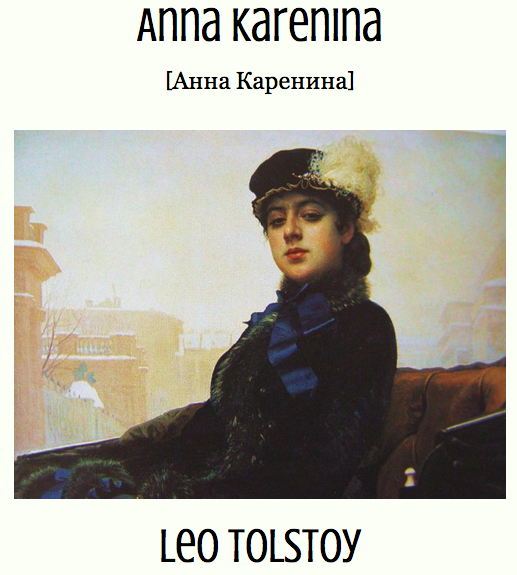
1. Anna Karen­i­na, by Leo Tol­stoy

iPad/iPhone — Kin­dle + Oth­er For­mats

2. Madame Bovary, by Gus­tave Flaubert

3. War and Peace, by Leo Tol­stoy

4. Loli­ta, by Vladimir Nabokov

5. The Adven­tures of Huck­le­ber­ry Finn, by Mark Twain

6. Ham­let, by William Shake­speare

7. The Great Gats­by, by F. Scott Fitzger­ald

8. In Search of Lost Time, by Mar­cel Proust

9. The Sto­ries of Anton Chekhov

10. Mid­dle­march, by George Eliot

Relat­ed Con­tent:

1,700 Free Online Cours­es from Top Uni­ver­si­ties.

The Ten Great­est Films of All Time Accord­ing to 358 Film­mak­ers

1,000 Free Audio Books: Down­load Great Books for Free.

Nabokov Reads Loli­ta, Names the Great Books of the 20th Cen­tu­ry

18 (Free) Books Ernest Hem­ing­way Wished He Could Read Again for the First Time

Neil deGrasse Tyson Lists 8 (Free) Books Every Intel­li­gent Per­son Should Read

F. Scott Fitzger­ald Cre­ates a List of 22 Essen­tial Books, 1936

Down­load 55 Free Online Lit­er­a­ture Cours­es: From Dante and Mil­ton to Ker­ouac and Tolkien

Portraits of Virginia Woolf, James Joyce, Walter Benjamin & Other Literary Legends by Gisèle Freund

James_Joyce_with_grandson

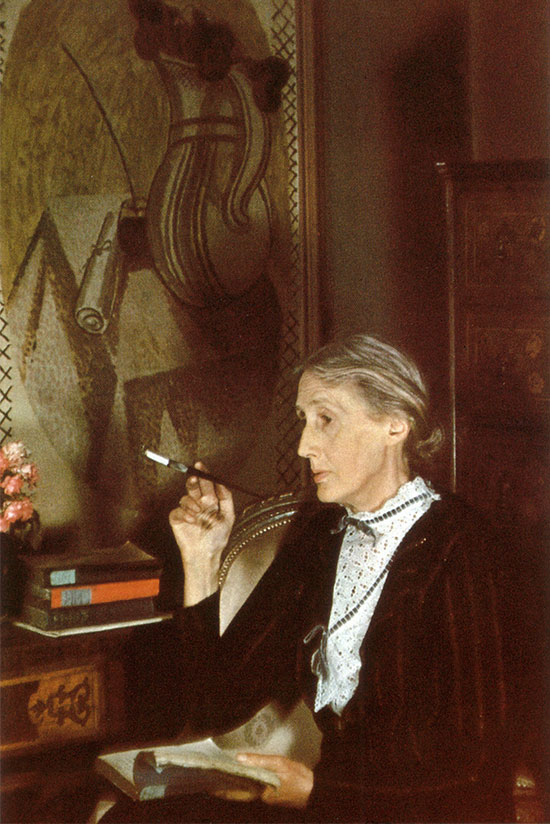
Gisèle Fre­und, the Ger­man-born pho­tog­ra­ph­er who died in 2000 at 91, is both famous and not famous enough,” writes Kather­ine Knorr in the New York Times. “She was some­times cha­grined to be best known for some of her por­traits,” whose lumi­nary sub­jects includ­ed artists, film stars, and writ­ers. At the top, we have Fre­und’s 1938 shot of James Joyce with his grand­son in Paris. Just below, her pho­to­graph of a pen­sive Wal­ter Ben­jamin from that same year. At the bot­tom, her 1939 por­trait of a smok­ing Vir­ginia Woolf. (French nov­el­ist, the­o­rist and, Min­is­ter for Cul­tur­al Affairs André Mal­raux also sport­ed a cig­a­rette in his 1935 por­trait by Fre­und, an image which made it to a postage stamp in 1996, though with his smoke care­ful­ly removed.) For­mer Pres­i­dent Jacques Chirac pub­licly praised Fre­und’s abil­i­ty to “reveal the essence of beings through their expres­sions.” In Woolf’s case, Fre­und pro­duced the being in ques­tion’s first-ever col­or por­trait.

Walter_Benjamin_Paris_1938

“[Fre­und] was an ear­ly adapter to col­or, in 1938, and her first exhi­bi­tion was in fact a pro­jec­tion of col­or por­traits giv­en in Monnier’s book shop,” Knorr writes. She goes on to describe anoth­er exhi­bi­tion, in 2011, that “sim­i­lar­ly projects the por­traits with­in its mock book­shop, turn­ing the show into a guess­ing game since some of those pho­tographed have enor­mous­ly famous faces,” while oth­ers “are a lot of French intel­lec­tu­als that most young French peo­ple today would not rec­og­nize.” While we nat­u­ral­ly assume that you, as an Open Cul­ture read­er, rec­og­nize a fair few more French intel­lec­tu­als than the aver­age gallery-goer, we can’t help but focus on the fact that so many of the writ­ers of whom Fre­und’s eye saw the defin­i­tive images — not just Joyce, Ben­jamin, and Woolf, but Beck­ett, Eliot, Hesse, the list goes on — became the defin­ing writ­ers of their era. Fre­und her­self had just one ques­tion: “Explain to me why writ­ers want to be pho­tographed like stars,” she wrote, “and the lat­ter like writ­ers.”

Images by Fre­und have been col­lect­ed in the book, Gisèle Fre­und: Pho­tographs & Mem­oirs. You can also vis­it the Fre­und web­site to view a col­lec­tion of por­traits.

Virginia_Woolf_smoking_London_1939

via A Piece of Mono­logue

Relat­ed Con­tent:

Philoso­pher Por­traits: Famous Philoso­phers Paint­ed in the Style of Influ­en­tial Artists

A‑List Authors, Artists & Thinkers Draw Self Por­traits

Col­in Mar­shall hosts and pro­duces Note­book on Cities and Cul­ture and writes essays on lit­er­a­ture, film, cities, Asia, and aes­thet­ics. He’s at work on a book about Los Ange­lesA Los Ange­les PrimerFol­low him on Twit­ter at @colinmarshall.

The Evolution of the Rock Guitar Solo: 28 Solos, Spanning 50 Years, Played in 6 Fun Minutes

In this fun new video from CDZA, gui­tarist Mark Sid­ney John­son takes us on an enter­tain­ing romp through more than fifty years of the rock gui­tar solo, from Chuck Berry to John May­er.

Along the way John­son rips through a suc­ces­sion of famous riffs and solos by Kei­th Richards, Jimi Hen­drix, Car­los San­tana, Jim­my Page, Eric Clap­ton, Mark Knopfler, Randy Rhoads, Eddie Van Halen, Slash … and those are only a few from the first half of the video.

John­son is an Eng­lish mul­ti-instru­men­tal­ist and song­writer based in New York. He works reg­u­lar­ly as a ses­sion gui­tarist and plays with The Brit Pack as well as the exper­i­men­tal music video group CDZA, short for Col­lec­tive Caden­za. For more exam­ples of their off­beat and inno­v­a­tive work, vis­it the CDZA Web site.

via That Eric Alper

Relat­ed Con­tent:

Eric Clapton’s Iso­lat­ed Gui­tar Track From the Clas­sic Bea­t­les Song, ‘While My Gui­tar Gen­tly Weeps’ (1968)

Gui­tar Sto­ries: Mark Knopfler on the Six Gui­tars That Shaped His Career

The Sto­ry of the Gui­tar: The Com­plete Three-Part Doc­u­men­tary

Here Comes The Sun: The Lost Gui­tar Solo by George Har­ri­son

A His­to­ry of Rock ‘n’ Roll in 100 Riffs

Watch the Sex Pistols’ Very Last Concert (San Francisco, 1978)

Many things have hap­pened on the inter­net this week, among them some get off my lawn out­rage at a $375 Urban Out­fit­ters leather jack­et designed to repli­cate the home­made swag every punk rock kid once draped over their shoul­ders. Then there’s the Justin Bieber/Black Flag mash-up t‑shirt that “ruined punk for­ev­er.” I may have spent some for­ma­tive years immersed in ersatz punk and hard­core cul­ture, but no mat­ter how old and cranky I may be com­pared to the tar­get mar­ket of this mer­chan­dise, I just can’t bring myself to get both­ered. No one has said it bet­ter than Dave Berman: “punk rock died when the first kid said / ‘punk’s not dead, punk’s not dead.’”

The stri­dent desire of some to cling to a punk rock ethos can be amus­ing since the move­men­t’s most famous fig­ure­heads, the Sex Pis­tols, crashed and burned a lit­tle over three years after form­ing and one year after intro­duc­ing their mas­cot, Sid Vicious. The band’s cre­ative destruc­tion often seems like the most viable expres­sion of punk. It burns itself out on its own ener­gy. Every­thing else you can say about it is just more Mal­colm McLaren mar­ket­ing.

Or, put dif­fer­ent­ly, maybe the only dis­cus­sion worth hav­ing about punk rock is archival. It came, it went, get over it—but oh, what a glo­ri­ous comet trail left by the likes of John­ny Rot­ten! And we have evi­dence of the tail end on film. Above, you can see the Pis­tols very last per­for­mance at San Francisco’s Win­ter­land Ball­room in Jan­u­ary of 1978.

The film opens with text excus­ing some qual­i­ty con­trol issues: “The footage con­tained in this video is rare archive mate­r­i­al and irre­place­able. The pub­lish­ers feel that the qual­i­ty of the con­tent… far out­weighs any minor… short­com­ings of sound and vision.” Then we’re off to the races, intro­duced by a pair of announc­ers, male and female, like an Olympic event. Despite the dis­claimer, this is decent film and audio, and def­i­nite­ly “qual­i­ty con­tent.” Bril­liant, in fact (Sid actu­al­ly plays!), and an excel­lent argu­ment for why this band need­ed no future. A YouTube com­menter help­ful­ly breaks down the video into the track­list below. Great stuff.

01:45 — God Save The Queen , 05:56 — I Wan­na Be Me , 10:04 — Sev­en­teen , 12:27 — New York , 15:54 — EMI , 19:38 — Belsen Was Gas , 21:50 — Bod­ies , 25:50 — Hol­i­days In The Sun , 31:17 — Liar , 35:40 — No Feel­ings , 38:55 — Prob­lems , 43:26 — Pret­ty Vacant, 46:57 — Anar­chy In The UK , 52:43 — No Fun

Relat­ed Con­tent:

Sex Pis­tols Front­man John­ny Rot­ten Weighs In On Lady Gaga, Paul McCart­ney, Madon­na & Katy Per­ry

John­ny Rotten’s Cor­dial Let­ter to the Rock and Roll Hall of Fame: Next to the Sex Pis­tols, You’re ‘a Piss Stain’

Mal­colm McLaren: The Quest for Authen­tic Cre­ativ­i­ty

The His­to­ry of Punk Rock

Josh Jones is a writer and musi­cian based in Durham, NC. Fol­low him at @jdmagness

The Science of Breaking Bad: Professor Donna Nelson Explains How the Show Gets it Right

There’s noth­ing fun­ny about the rav­ages of high­ly addic­tive nar­cotics or gang­land turf wars. Nev­er­the­less, Vince Gilligan’s riv­et­ing hit Break­ing Bad man­aged to start on a (yes, dark­ly) com­ic note that still sounds occa­sion­al­ly as the show hur­tles toward its fate­ful con­clu­sion this Sun­day. (Conan O’Brien has had a lot of fun with these moments in par­o­dies of the show’s char­ac­ters’ quirks and its some­times-grue­some desert absur­di­ties.)

What anchors the show, even when it veers into gal­lows humor, is its sense of authen­tic­i­ty. Despite Break­ing Bad’s theatrical—almost Shakespearean—plotting, Gilli­gan and his writ­ers have tak­en care to build a very believ­able scaf­fold­ing behind every out­ra­geous set piece, even when it comes to the sci­ence of per­fec­tion­is­tic chem­istry teacher Wal­ter White’s super high-qual­i­ty crys­tal metham­phet­a­mine. In order to get the sci­ence right, Gilli­gan approached Don­na Nel­son, Pro­fes­sor of Organ­ic Chem­istry at the Uni­ver­si­ty of Okla­homa.

Nel­son doesn’t only con­sult on the nature of illic­it chem­i­cal com­pounds; she has also pro­vid­ed the show’s writ­ers with insights into the moti­va­tions and meth­ods of chemists and teach­ers. As Nel­son says, “to us who are edu­cat­ed in sci­ence, when­ev­er we see sci­ence pre­sent­ed inac­cu­rate­ly, it’s like fin­ger­nails on a black­board. It just dri­ves us crazy, and we can’t stay immersed in the show.” As a Break­ing Bad fan who is, I’ll be hon­est, large­ly chem­istry-illit­er­ate, I’d still cred­it some of my immer­sion to how real the sci­ence feels, a by-prod­uct, sure­ly, of how gen­uine it is. Watch Pro­fes­sor Nel­son in the video above, pro­duced by the Amer­i­can Chem­i­cal Soci­ety, explain how the show cre­at­ed its illu­sions with the stuff of 100% real sci­ence.

Well, okay, it’s maybe more like 96%. As you might have sus­pect­ed, the sig­na­ture pow­der blue col­or of Walter’s prod­uct is pure dra­mat­ic inven­tion.

Relat­ed Con­tent:

Watch the Orig­i­nal Audi­tion Tapes for Break­ing Bad Before the Final Sea­son Debuts

The Break­ing Bad Theme Played with Meth Lab Equip­ment

Inside Break­ing Bad: Watch Conan O’Brien’s Extend­ed Inter­view with the Show’s Cast and Cre­ator

Down­load Free Online Chem­istry Cours­es

Josh Jones is a writer and musi­cian based in Durham, NC. Fol­low him at @jdmagness

Discover Thomas Jefferson’s Cut-and-Paste Version of the Bible, and Read the Curious Edition Online

TJ Bible 2

Had he lived dur­ing the Inqui­si­tionThomas Jef­fer­son would have been burned at the stake. His ideas about Jesus and Chris­tian­i­ty were far from ortho­dox. A prod­uct of the Enlight­en­ment, Jef­fer­son believed that every­thing, includ­ing reli­gion, should be exam­ined in the light of rea­son.

When Jef­fer­son exam­ined the Gospels he came away with a strong­ly divid­ed opin­ion. “I find many pas­sages of fine imag­i­na­tion, cor­rect moral­i­ty, and of the most love­ly benev­o­lence,” he wrote in an 1820 let­ter to William Short, “and oth­ers again of so much igno­rance, so much absur­di­ty, so much untruth, char­la­tanism, and impos­ture, as to pro­nounce it impos­si­ble that such con­tra­dic­tions should have pro­ceed­ed from the same being.”

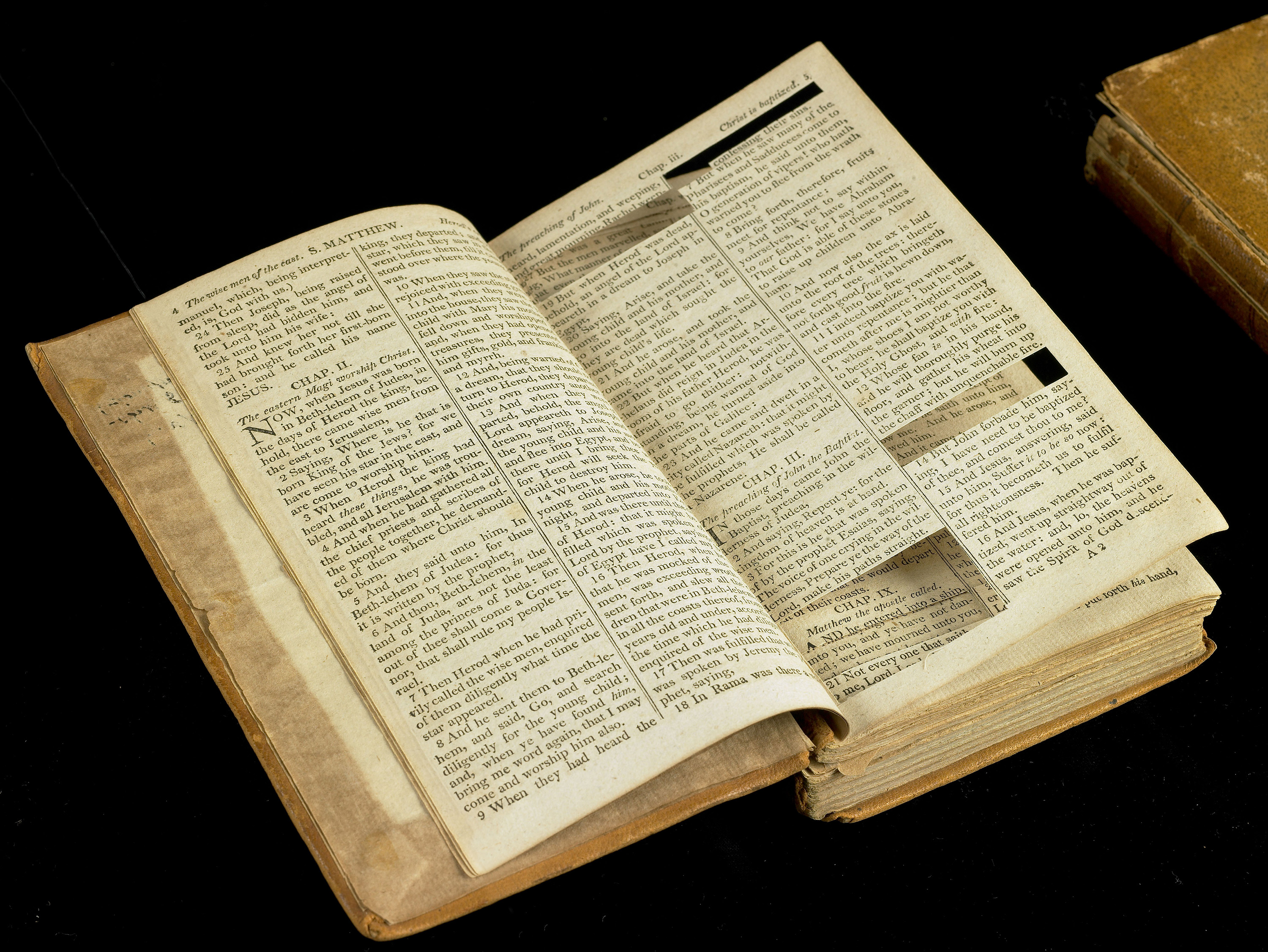
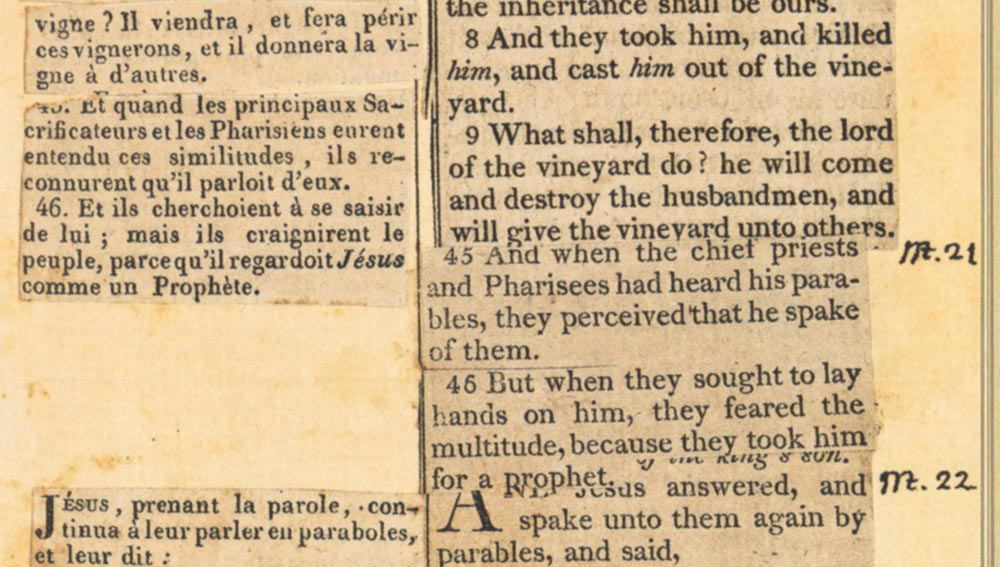
As ear­ly as 1804, when he was still pres­i­dent, Jef­fer­son began sep­a­rat­ing “the dia­mond from the dunghill,” as he lat­er put it, to assem­ble his own ver­sion of the Bible. He con­tin­ued the project in earnest dur­ing his lat­er years at Mon­ti­cel­lo, por­ing over var­i­ous edi­tions in Greek, Latin, French and King James Eng­lish. He clipped the pas­sages he thought were gen­uine teach­ings of Jesus and past­ed them, in the four lan­guages side by side, onto pages.

In 1820 — six years before his death at the age of 83 — Jef­fer­son pro­duced a leather-bound, 84-page vol­ume titled The Life and Morals of Jesus of Nazareth, Extract­ed Tex­tu­al­ly From the Gospels in Greek, Latin, French & Eng­lish. Jef­fer­son elim­i­nat­ed every­thing in the Bible con­cern­ing mir­a­cles. He end­ed the Gospel sto­ry with the exe­cu­tion and bur­ial of Jesus, omit­ting the res­ur­rec­tion. The retained pas­sages, Jef­fer­son explained in an 1813 let­ter to John Adams, con­tain “the most sub­lime and benev­o­lent code of morals which has ever been offered to man.”

You can exam­ine and read Jef­fer­son­’s com­plete 1820 Bible online by vis­it­ing the Smith­son­ian Insti­tu­tion’s inter­ac­tive Web dis­play.

Repro­duc­tions of Jef­fer­son­’s Bible can be pur­chased online.

The images above come cour­tesy of The Smith­son­ian.

Watch The Surreal 1960s Films and Commercials of Jim Henson

Today marks the 77th anniver­sary of Jim Hen­son’s birth. To cel­e­brate the pup­peteer, film­mak­er, and Mup­pet inven­tor’s life and career, we offer here three of his ear­ly short works. Most of us know only cer­tain high-pro­file pieces of Hen­son’s oeu­vre: The Mup­pet Show, the Mup­pet movies, Sesame Street, or per­haps such pic­tures now much attend­ed on the camp revival cir­cuit as Labyrinth and The Dark Crys­tal. But even by the Mup­pet Show’s 1974 debut, Hen­son (1936–1990) had already put in decades devel­op­ing his dis­tinc­tive aes­thet­ic of pup­pets and pup­petry. We’ve pre­vi­ous­ly fea­tured the unchar­ac­ter­is­ti­cal­ly vio­lent com­mer­cials he pro­duced for Wilkins Cof­fee between 1957 and 1961 and Lim­bo, the Orga­nized Mind, his sev­en­ties trip of a John­ny Car­son seg­ment. But unless you count your­self as a seri­ous Hen­son, fan, you prob­a­bly haven’t yet seen the likes of Mem­o­ries, The Paper­work Explo­sion, and Rip­ples. Cre­at­ing each of these shorts, the young Hen­son col­lab­o­rat­ed with pianist, jazz com­pos­er, and sound engi­neer Ray­mond Scott, now remem­bered as a pio­neer in mod­ern elec­tron­ic music.

The par­tic­u­lar sound of Scott, no stranger to scor­ing car­toons (we’ve by now heard it in every­thing from Looney Tunes to Ren and Stimpy to The Simp­sons), also suit­ed the sorts of visions Hen­son real­ized for his var­i­ous projects of the six­ties. Mem­o­ries, which plunges into a man’s mind as he remem­bers (with nar­ra­tion by Hen­son him­self) one par­tic­u­lar­ly pleas­ant after­noon near­ly ruined by a headache, appeared in 1967 as a con­tin­u­a­tion of Hen­son’s com­mer­cial career; the pain reliev­er Bufferin, you see, lit­er­al­ly saved the day. That same year, the com­mer­cial (and in form, almost mini-doc­u­men­tary) The Paper­work Explo­sion illus­trates the time- space‑, and labor-sav­ing advan­tages of IBM’s then-new word-pro­cess­ing sys­tem, the MT/STRip­ples Hen­son and Scott put togeth­er for Mon­tre­al’s Expo 1967. It takes place, like Mem­o­ries and Lim­bo, inside human con­scious­ness: an archi­tect (Sesame Street writer-pro­duc­er Jon Stone) drops a sug­ar cube in his cof­fee, and its rip­ples trig­ger a mem­o­ry of throw­ing peb­bles into a pond, which itself sends rip­ples through a host of his oth­er poten­tial thoughts. You’ve got to watch to under­stand how Hen­son and Scott pulled this off; con­ve­nient­ly, they only take one minute to do it.

For more ear­ly works by Hen­son, see this Metafil­ter post.

Relat­ed Con­tent:

Jim Henson’s Ani­mat­ed Film, Lim­bo, the Orga­nized Mind, Pre­sent­ed by John­ny Car­son (1974)

Jim Henson’s Orig­i­nal, Spunky Pitch for The Mup­pet Show

Jim Hen­son Pilots The Mup­pet Show with Adult Episode, “Sex and Vio­lence” (1975)

Jim Henson’s Zany 1963 Robot Film Uncov­ered by AT&T: Watch Online

Col­in Mar­shall hosts and pro­duces Note­book on Cities and Cul­ture and writes essays on lit­er­a­ture, film, cities, Asia, and aes­thet­ics. He’s at work on a book about Los Ange­lesA Los Ange­les PrimerFol­low him on Twit­ter at @colinmarshall.

« Go BackMore in this category... »
Quantcast