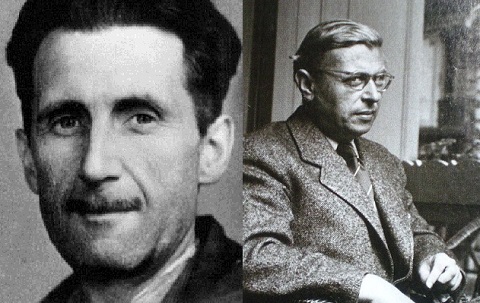
George Orwell Reviews a Book by That “Bag of Wind,” Jean-Paul Sartre (1948)

OrwellSartre
Yes­ter­day we fea­tured George Orwell’s review of Adolf Hitler’s Mein Kampf — not just an iso­lat­ed news­pa­per piece, or one of a scat­tered few, in a life oth­er­wise spent churn­ing out impor­tant nov­els like Ani­mal Farm and 1984, but a par­tic­u­lar­ly per­cep­tive book review among the many in his pro­lif­ic jour­nal­is­tic career. (He even wrote “Con­fes­sions of a Book Review­er,” the defin­i­tive arti­cle on that prac­tice.) Today we have anoth­er of Orwell’s pieces tak­ing on a well-known 20th-cen­tu­ry Con­ti­nen­tal fig­ure: this time, the French exis­ten­tial­ist philoso­pher Jean-Paul Sartre and his book Por­trait of the Anti­semite.

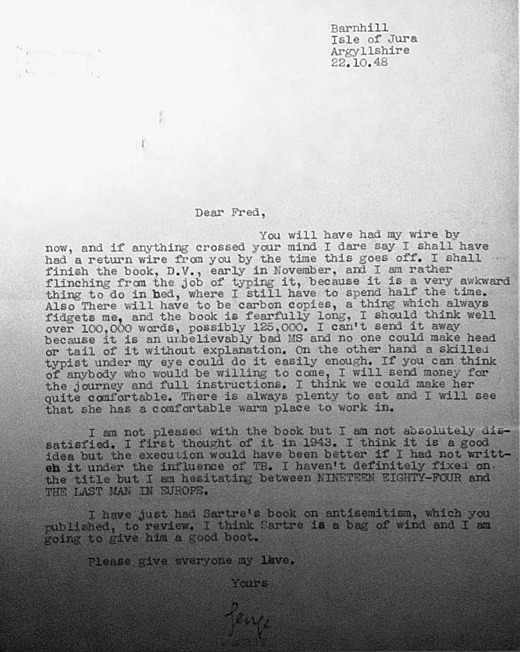
orwell letter

But as a pre­lude to the review, have a look at the Octo­ber 1948 let­ter above, post­ed orig­i­nal­ly at Let­ters of Note. In it, Orwell writes to his pub­lish­er Fred­er­ic War­burg, keep­ing him post­ed on the state of the man­u­script of 1984. Then, at the very end, he adds that “I have just had Sartre’s book on anti­semitism, which you pub­lished, to review. I think Sartre is a bag of wind and I am going to give him a good boot.” That “good boot,” which ran in The Observ­er the next month, goes like this:

Anti­semitism is obvi­ous­ly a sub­ject that needs seri­ous study, but it seems unlike­ly that it will get it in the near future. The trou­ble is that so long as anti­semitism is regard­ed sim­ply as a dis­grace­ful aber­ra­tion, almost a crime, any­one lit­er­ate enough to have heard the word will nat­u­ral­ly claim to be immune from it; with the result that books on anti­semitism tend to be mere exer­cis­es in cast­ing motes out of oth­er peo­ple’s eyes. M. Sartre’s book is no excep­tion, and it is prob­a­bly no bet­ter for hav­ing been writ­ten in 1944, in the uneasy, self-jus­ti­fy­ing, quis­ling-hunt­ing peri­od that fol­lowed on the Lib­er­a­tion.

At the begin­ning, M. Sartre informs us that anti­semitism has no ratio­nal basis: at the end, that it will not exist in a class­less soci­ety, and that in the mean­time it can per­haps be com­bat­ed to some extent by edu­ca­tion and pro­pa­gan­da. These con­clu­sions would hard­ly be worth stat­ing for their own sake, and in between them there is, in spite of much cer­e­bra­tion, lit­tle real dis­cus­sion of the sub­ject, and no fac­tu­al evi­dence worth men­tion­ing.

We are solemn­ly informed that anti­semitism is almost unknown among the work­ing class. It is a mal­a­dy of the bour­geoisie, and, above all, of that goat upon whom all our sins are laid, the “pet­ty bour­geois.” With­in the bour­geoisie it is sel­dom found among sci­en­tists and engi­neers. It is a pecu­liar­i­ty of peo­ple who think of nation­al­i­ty in terms of inher­it­ed cul­ture and prop­er­ty in terms of land.

Why these peo­ple should pick on Jews rather than some oth­er vic­tim M. Sartre does not dis­cuss, except, in one place, by putting for­ward the ancient and very dubi­ous the­o­ry that the Jews are hat­ed because they are sup­posed to have been respon­si­ble for the Cru­ci­fix­ion. He makes no attempt to relate anti­semitism to such obvi­ous­ly allied phe­nom­e­na as for instance, colour prej­u­dice.

Part of what is wrong with M. Sartre’s approach is indi­cat­ed by his title. “The” anti-Semi­te, he seems to imply all through the book, is always the same kind of per­son, rec­og­niz­able at a glance and, so to speak, in action the whole time. Actu­al­ly one has only to use a lit­tle obser­va­tion to see that anti­semitism is extreme­ly wide­spread, is not con­fined to any one class, and, above all, in any but the worst cas­es, is inter­mit­tent.

But these facts would not square with M. Sartre’s atom­ised vision of soci­ety. There is, he comes near to say­ing, no such thing as a human being, there are only dif­fer­ent cat­e­gories of men, such as “the” work­er and “the” bour­geois, all clas­si­fi­able in much the same way as insects. Anoth­er of these insect-like crea­tures is “the” Jew, who, it seems, can usu­al­ly be dis­tin­guished by his phys­i­cal appear­ance. It is true that there are two kinds of Jew, the “Authen­tic Jew,” who wants to remain Jew­ish, and the “Inau­then­tic Jew,” who would like to be assim­i­lat­ed; but a Jew, of whichev­er vari­ety, is not just anoth­er human being. He is wrong, at this stage of his­to­ry, if he tries to assim­i­late him­self, and we are wrong if we try to ignore his racial ori­gin. He should be accept­ed into the nation­al com­mu­ni­ty, not as an ordi­nary Eng­lish­man, French­man, or what­ev­er it may be, but as a Jew.

It will be seen that this posi­tion is itself dan­ger­ous­ly close to anti-semi­tism. Race prej­u­dice of any kind is a neu­ro­sis, and it is doubt­ful whether argu­ment can either increase or dimin­ish it, but the net effect of books of this kind, if they have an effect, is prob­a­bly to make anti­semitism slight­ly more preva­lent than it was before. The first step towards seri­ous study of anti­semitism is to stop regard­ing it as a crime. Mean­while, the less talk there is about “the” Jew or “the” anti­semite, as a species of ani­mal dif­fer­ent from our­selves, the bet­ter.

In Phi­los­o­phy Now, Mar­tin Tyrrell writes on Orwell’s rela­tion­ship to the sub­ject, which he saw “as a kind of gra­tu­itous clev­er­ness and he had no appetite for that. In Orwell’s writ­ings, fic­tion or non-fic­tion, there are few good intel­lec­tu­als. Where they appear, then it is usu­al­ly only to spin words with­out mean­ing. At best, they are inad­ver­tent­ly con­fus­ing; at worst, delib­er­ate­ly so: Marx­ists, for exam­ple, or nation­al­ists or Anglo or Roman Catholics. Or Jean-Paul Sartre. [ … ] Bewil­dered by exis­ten­tial­ism, what most irked Orwell about Sartre was his seem­ing denial of indi­vid­u­al­i­ty.” Tyrrell describes Orwell as “an indi­vid­u­al­ist so much so that, when he came to list his rea­sons for becom­ing a writer, he put ‘sheer ego­ism’ at the top. In addi­tion, and much more con­tro­ver­sial­ly, his review of Mein Kampf sees in Hitler more than a lit­tle of the trag­ic Orwellian hero, the small man embarked upon a doomed revolt.” Not every­one, of course, will agree with Orwell’s aggres­sive­ly plain­spo­ken takes on Hitler and Nazism, or Sartre and exis­ten­tial­ism, but try sub­sti­tut­ing a vari­ety of oth­er con­tro­ver­sial “-isms” for “anti­semitism” in the review above, and you’ll see how we’d still think more clear­ly if we bore his obser­va­tions in mind today.

via Let­ters of Note 

Relat­ed Con­tent:

George Orwell Reviews Mein Kampf (1940)

George Orwell Explains in a Reveal­ing 1944 Let­ter Why He’d Write 1984

George Orwell’s 1984: Free eBook, Audio Book & Study Resources

Jean-Paul Sartre Breaks Down the Bad Faith of Intel­lec­tu­als

Sartre, Hei­deg­ger, Niet­zsche: Doc­u­men­tary Presents Three Philoso­phers in Three Hours

Wal­ter Kaufmann’s Clas­sic Lec­tures on Niet­zsche, Kierkegaard and Sartre (1960)

Col­in Mar­shall hosts and pro­duces Note­book on Cities and Cul­ture and writes essays on cities, lan­guage, Asia, and men’s style. He’s at work on a book about Los Ange­les, A Los Ange­les Primer. Fol­low him on Twit­ter at @colinmarshall or on Face­book.

Folger Shakespeare Library Puts 80,000 Images of Literary Art Online, and They’re All Free to Use

TheLondonStage

Has a writer ever inspired as many adap­ta­tions and ref­er­ences as William Shake­speare? In the four hun­dred years since his death, his work has pat­terned much of the fab­ric of world lit­er­a­ture and seen count­less per­mu­ta­tions on stage and screen. Less dis­cussed are the visu­al rep­re­sen­ta­tions of Shake­speare in fine art and illus­tra­tion, but they are mul­ti­tude. In one small sam­pling, Richard Altick notes in his exten­sive study Paint­ings from Books, that “pic­tures from Shake­speare account­ed for about one fifth—some 2,300—of the total num­ber of lit­er­ary paint­ings record­ed between 1760 and 1900” among British artists.

FolgerMidsummer

In the peri­od Altick doc­u­ments, a rapid­ly ris­ing mid­dle class drove a mar­ket for lit­er­ary art­works, which were, “in effect, exten­sions of the books them­selves: they were detached forms of book illus­tra­tion, in which were con­stant­ly assim­i­lat­ed the lit­er­ary and artis­tic tastes of the time.”

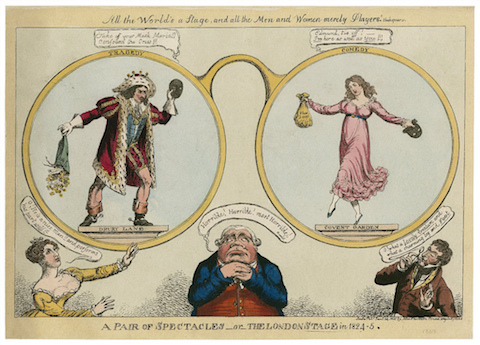
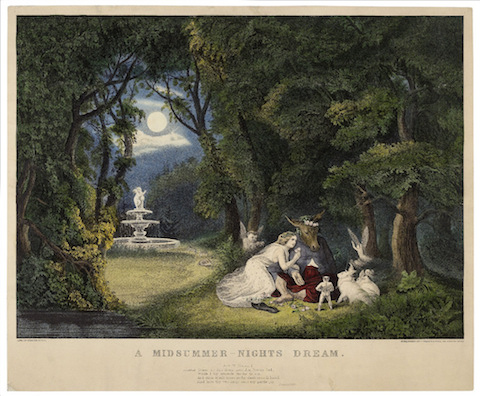
These works took the form of humor­ous illustrations—such as the As You Like It-inspired satir­i­cal piece at the top from 1824—and much more seri­ous rep­re­sen­ta­tions, like the undat­ed Cur­ri­er & Ives Midsummer-Night’s Dream lith­o­graph above. Now, thanks to the Fol­ger Shake­speare Library, these images, and tens of thou­sands more from their Dig­i­tal Image Col­lec­tion, are avail­able online. And they’re free to use under a CC BY-SA Cre­ative Com­mons license.

RichardIIICostume

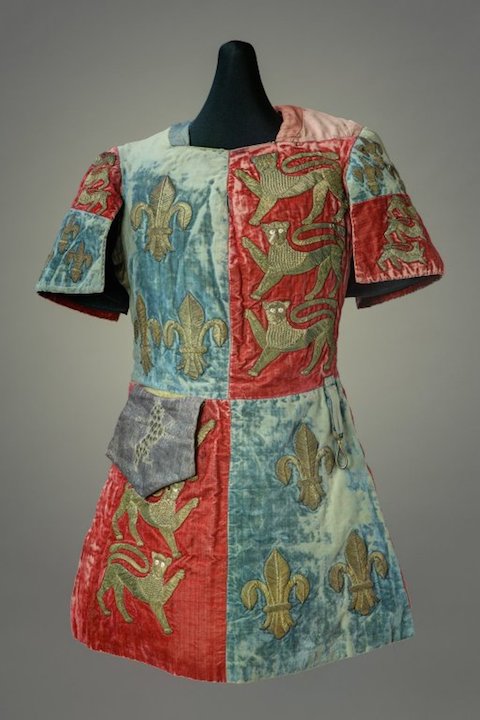
As Head of Col­lec­tion Infor­ma­tion Ser­vices Erin Blake explains, “basi­cal­ly this means you can do what­ev­er you want with Fol­ger dig­i­tal images as long as you say that they’re from the Fol­ger, and as long a you keep the cycle of shar­ing going by freely shar­ing what­ev­er you’re mak­ing.” The Folger’s impres­sive repos­i­to­ry has been called “the world’s finest col­lec­tion of Shakespere­an art.” As well as tra­di­tion­al paint­ings and illus­tra­tions, it includes “dozens of cos­tumes and props used in nine­teenth-cen­tu­ry Shake­speare pro­duc­tions,” such as the embroi­dered vel­vet cos­tume above, worn by Edwin Booth as Richard III, cir­ca 1870. You’ll also find pho­tographs and scans of “’extra-illus­trat­ed’ books filled with insert­ed engrav­ings, man­u­script let­ters, and play­bills asso­ci­at­ed with par­tic­u­lar actors or pro­duc­tions; and a great vari­ety of sou­venirs, com­ic books, and oth­er ephemera asso­ci­at­ed with Shake­speare and his works.”

FolgerFuseli

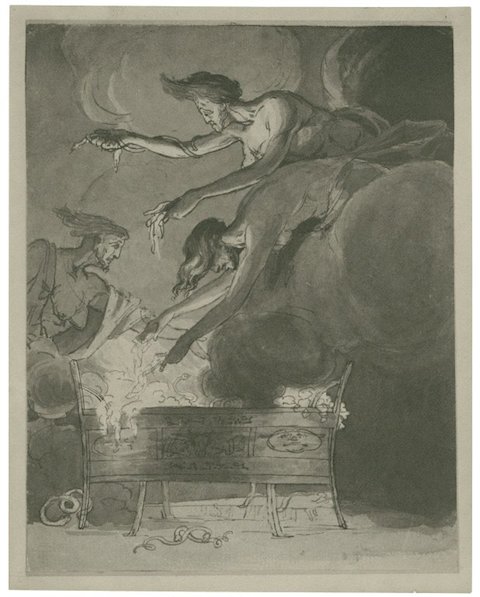
In addi­tion to illus­tra­tions and mem­o­ra­bil­ia, the Fol­ger con­tains “some 200 paint­ings” and draw­ings by fine artists like “Hen­ry Fuseli, Ben­jamin West, George Rom­ney, and Thomas Nast, as well as such Eliz­a­bethan artists as George Gow­er and Nicholas Hilliard.” (The strik­ing print above by Fuseli shows Mac­beth’s three witch­es hov­er­ing over their caul­dron.) Great and var­ied as the Folger’s col­lec­tion of Shake­speare­an art may be, it rep­re­sents only a part of their exten­sive hold­ings. You’ll also find in the Dig­i­tal Images Col­lec­tion images of antique book­bind­ings, like the 1532 vol­ume of a work by Agrip­pa von Nettescheim (Hein­rich Cor­nelius), below.

Folger1532Binding

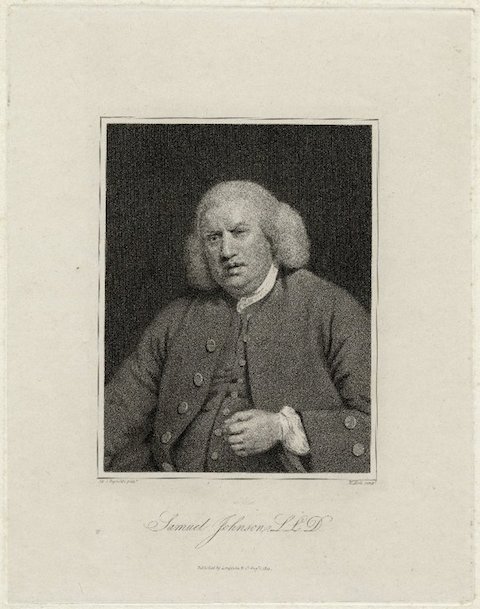
The col­lec­tion’s enor­mous archive of 19th cen­tu­ry prints is an espe­cial treat. Just below, see a print of that tow­er of 18th cen­tu­ry learn­ing, Samuel John­son, who, in his famous pref­ace to an edi­tion of the Bard’s works declared, “Shake­speare is above all writ­ers.” All in all, the immense dig­i­tal col­lec­tion rep­re­sents, writes The Pub­lic Domain Review, “a huge injec­tion of some won­der­ful mate­r­i­al into the open dig­i­tal com­mons.” Already, the Fol­ger has begun adding images to Wiki­me­dia Com­mons for use free and open use in Wikipedia and else­where on the web. And should you some­how man­age, through some vora­cious feat of dig­i­tal con­sump­tion, to exhaust this trea­sure hold of images, you need not fear—they’ll be adding more and more as time goes on. Enter the col­lec­tion here.

FolgerDrJohnson

via The Pub­lic Domain Review

Relat­ed Con­tent:

Read All of Shakespeare’s Plays Free Online, Cour­tesy of the Fol­ger Shake­speare Library

The Met­ro­pol­i­tan Muse­um of Art Puts 400,000 High-Res Images Online & Makes Them Free to Use

Down­load 35,000 Works of Art from the Nation­al Gallery, Includ­ing Mas­ter­pieces by Van Gogh, Gau­guin, Rem­brandt & More

Free Online Shake­speare Cours­es: Primers on the Bard from Oxford, Har­vard, Berke­ley & More

Josh Jones is a writer and musi­cian based in Durham, NC. Fol­low him at @jdmagness

Dr. Seuss Draws Anti-Japanese Cartoons During WWII, Then Atones with Horton Hears a Who!

seuss japan 1

Before Theodor Seuss Geisel AKA Dr. Seuss con­vinced gen­er­a­tions of chil­dren that a wock­et might just be in their pock­et, he was the chief edi­to­r­i­al car­toon­ist for the New York news­pa­per PM from 1940 to 1948. Dur­ing his tenure he cranked out some 400 car­toons that, among oth­er things, praised FDR’s poli­cies, chid­ed iso­la­tion­ists like Charles Lind­bergh and sup­port­ed civ­il rights for blacks and Jews. He also staunch­ly sup­port­ed America’s war effort.

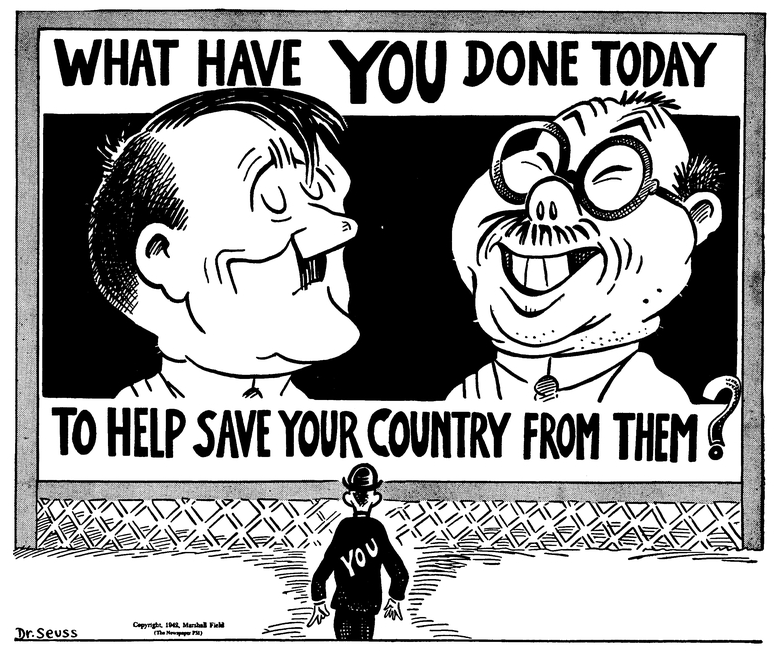
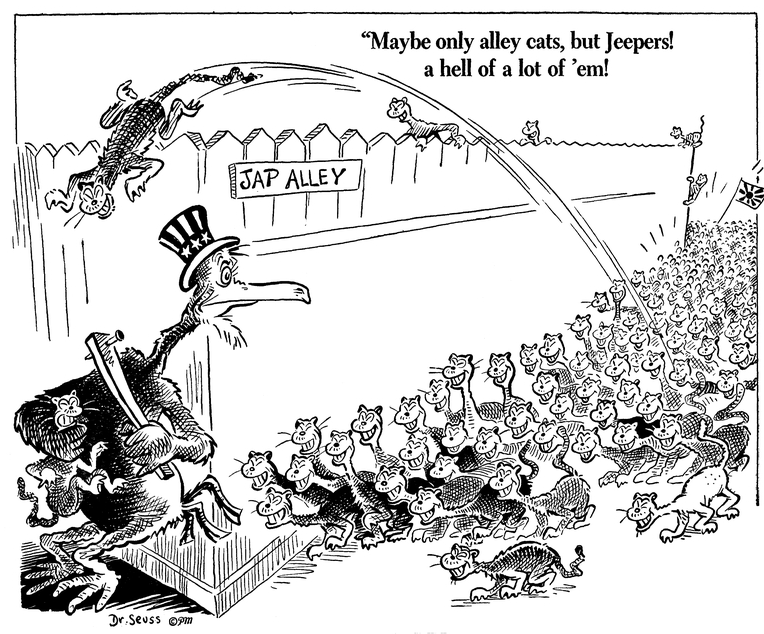
To that end, Dr. Seuss drew many car­toons that, to today’s eyes, are breath­tak­ing­ly racist. Check out the car­toon above. It shows an arro­gant-look­ing Hitler next to a pig-nosed, slant­ed-eye car­i­ca­ture of a Japan­ese guy. The pic­ture isn’t real­ly a like­ness of either of the men respon­si­ble for the Japan­ese war effort – Emper­or Hiro­hi­to and Gen­er­al Tojo. Instead, it’s just an ugly rep­re­sen­ta­tion of a peo­ple.

In the bat­tle for home­land morale, Amer­i­can pro­pa­gan­da mak­ers depict­ed Ger­many in a very dif­fer­ent light than Japan. Ger­many was seen as a great nation gone mad. The Nazis might have been evil but there was still room for the “Good Ger­man.” Japan, on the oth­er hand, was depict­ed entire­ly as a bru­tal mono­lith; Hiro­hi­to and the guy on the street were uni­form­ly evil. Such think­ing paved the way for the U.S. Air Force fire­bomb­ing of Tokyo, where over 100,000 civil­ians died, and for its nuclear bomb­ing of Hiroshi­ma and Nagasa­ki. And it def­i­nite­ly laid the ground­work for one of the sor­ri­est chap­ters of Amer­i­can 20th cen­tu­ry his­to­ry, the uncon­sti­tu­tion­al incar­cer­a­tion of Japan­ese-Amer­i­cans.

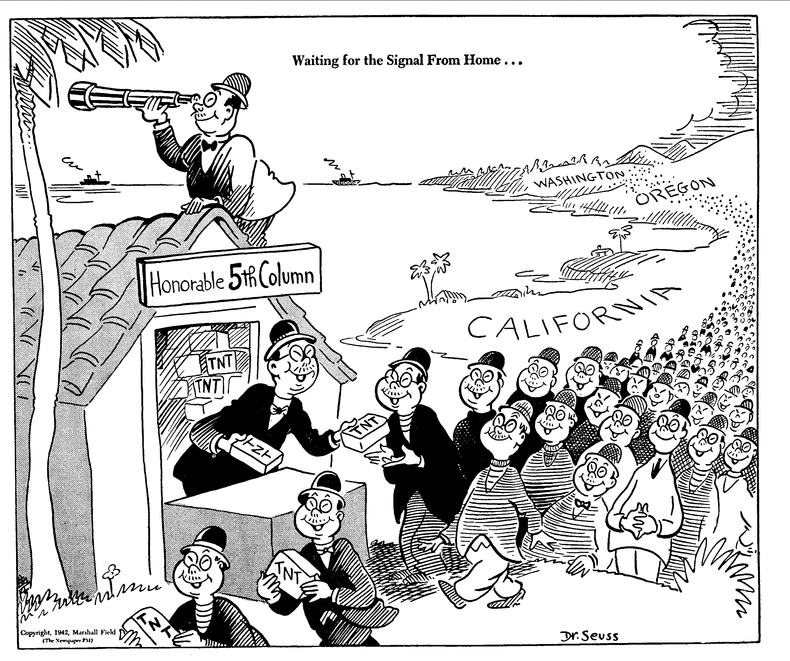
waiting for signals

Geisel him­self was vocal­ly anti-Japan­ese dur­ing the war and had no trou­ble with round­ing up an entire pop­u­la­tion of U.S. cit­i­zens and putting them in camps.

But right now, when the Japs are plant­i­ng their hatch­ets in our skulls, it seems like a hell of a time for us to smile and war­ble: “Broth­ers!” It is a rather flab­by bat­tle cry. If we want to win, we’ve got to kill Japs, whether it depress­es John Haynes Holmes or not. We can get pal­sy-wal­sy after­ward with those that are left.

Geisel was hard­ly alone in such beliefs but it’s still dis­con­cert­ing to see ugly car­toons like these drawn in the same hand that did The Cat in the Hat.

jap alley

In 1953, Geisel vis­it­ed Japan where he met and talked with its peo­ple and wit­nessed the hor­rif­ic after­math of the bomb­ing of Hiroshi­ma. He soon start­ed to rethink his anti-Japan­ese vehe­mence. So he issued an apol­o­gy in the only way that Dr. Seuss could.

He wrote a children’s book.

Hor­ton Hears a Who!, pub­lished in 1954, is about an ele­phant that has to pro­tect a speck of dust pop­u­lat­ed by lit­tle tiny peo­ple. The book’s hope­ful, inclu­sive refrain – “A per­son is a per­son no mat­ter how small” — is about as far away as you can get from his igno­ble words about the Japan­ese a decade ear­li­er. He even ded­i­cat­ed the book to “My Great Friend, Mit­su­gi Naka­mu­ra of Kyoto, Japan.”

You can view an assort­ment of Dr. Seuss’s wartime draw­ings in gen­er­al, and his car­toons of the Japan­ese in par­tic­u­lar, at the Dr. Went to War Archive host­ed by UCSD.

via Dart­mouth

Relat­ed Con­tent:

Pri­vate Sna­fu: The World War II Pro­pa­gan­da Car­toons Cre­at­ed by Dr. Seuss, Frank Capra & Mel Blanc

New Archive Show­cas­es Dr. Seuss’s Ear­ly Work as an Adver­tis­ing Illus­tra­tor and Polit­i­cal Car­toon­ist

Fake Bob Dylan Sings Real Dr. Seuss

The Epis­te­mol­o­gy of Dr. Seuss & More Phi­los­o­phy Lessons from Great Children’s Sto­ries

Jonathan Crow is a Los Ange­les-based writer and film­mak­er whose work has appeared in Yahoo!, The Hol­ly­wood Reporter, and oth­er pub­li­ca­tions. You can fol­low him at @jonccrowAnd check out his blog Veep­to­pus, fea­tur­ing one new draw­ing of a vice pres­i­dent with an octo­pus on his head dai­ly. 

Willie Nelson Shows You a Delightful Card Trick

Sit back and let Willie Nel­son, accom­pa­nied by his sis­ter Bob­bie, show you a great card trick. It’s a vari­a­tion on a trick called “Sam the Bell­hop,” which sleight of hand expert Bill Mal­one pop­u­lar­ized, it not invent­ed. If you want to fig­ure out how the wiz­ardy is done, you’ll need to look else­where. We’re not going to spoil this bit of fun.

via Men­tal Floss

Relat­ed Con­tent:

Orson Welles Per­forms A Mag­ic Trick

Skep­tic Michael Sher­mer Shows You How to Bend Spoons with Your Mind

Willie Nel­son Audi­tions for The Hob­bit Film Sequel, Turns 80 Today

Dave Grohl Raises the ALS Ice Bucket Challenge to an Art Form

Foo Fight­ers front­man Dave Grohl raised an inter­net meme to an art form when he took the ALS Ice Buck­et Chal­lenge while par­o­dy­ing the epic prom scene from Car­rie. John Tra­vol­ta appeared in the 1976 hor­ror film, and Stephen King wrote the book behind it. So Grohl name checks them both. Where Jack Black fits into the pic­ture, I’m not exact­ly sure.

Dona­tions to help find a cure for the hor­rif­ic dis­ease can be made over at the ALS Asso­ci­a­tion. For a tru­ly sober­ing account of what it’s like to live with ALS, read Tony Judt’s essay, “Night,”  in The New York Review of Books. It was pub­lished in Feb­ru­ary 2010, short­ly before the dis­ease took his life.

by | Permalink | Make a Comment ( 1 ) |

The ABCs of Dada Explains the Anarchic, Irrational “Anti-Art” Movement of Dadaism

If asked to explain the art move­ment known as Dada, I’d feel tempt­ed to quote Louis Arm­strong on the music move­ment known as jazz: “Man, if you have to ask, you’ll nev­er know.” But maybe I’d do bet­ter to sit them down in front of the half-hour doc­u­men­tary The ABCs of Dada. They may still come away con­fused, but not quite so deeply as before — or maybe they’ll feel more con­fused, but in an enriched way.

Even the video, which gets pret­ty thor­ough about the ori­gins of and con­trib­u­tors to Dada, quotes heav­i­ly from the rel­e­vant Wikipedia arti­cle in its descrip­tion, fram­ing the move­ment as “a protest against the bar­barism of World War I, the bour­geois inter­ests that Dada adher­ents believed inspired the war, and what they believed was an oppres­sive intel­lec­tu­al rigid­i­ty in both art and every­day soci­ety.” They came to the con­clu­sion that “rea­son and log­ic had led peo­ple into the hor­rors of war, so the only route to sal­va­tion was to reject log­ic and embrace anar­chy and irra­tional­i­ty.” So there you have it; don’t try to under­stand.

Per­haps you remem­ber that vin­tage Onion arti­cle, “Repub­li­cans, Dadaists Declare War on Art,” sat­i­riz­ing, among oth­er things, the way pro­po­nents of Dada called its fruit not art, but “anti-art.” They made it delib­er­ate­ly mean­ing­less where “real” art strove to deliv­er mes­sages, delib­er­ate­ly offen­sive where it strained to appeal to com­mon sen­si­bil­i­ties. The ABCs of Dada exam­ines Dada through a great many of these Dadaists them­selves, such as Sophie Taeu­ber-Arp, a teacher and dancer forced to wear a mask for her Dada activ­i­ties due to the group’s scan­dalous rep­u­ta­tion in the acad­e­my; archi­tect Mar­cel Jan­co, who remem­bers of the group that “among us were nei­ther blasé peo­ple nor cyn­ics, actors nor anar­chists who took the Dada scan­dal seri­ous­ly”; and “Dada-mar­shal” George Grosz, who declared that “if one calls my work art depends on whether one believes that the future belongs to the work­ing class.” You can find fur­ther clar­i­fi­ca­tion among UBUwe­b’s col­lec­tion of Dada, Sur­re­al­ism, & De Sti­jl Mag­a­zines, such as Zurich’s Cabaret Voltaire and Berlin’s Der Dada. Or per­haps you’ll find fur­ther obfus­ca­tion, but that aligns with the Dada spir­it — in a world that has ceased to make sense, so the Dadaists believed, the duty falls to you to make even less.

Relat­ed Con­tent:

William S. Bur­roughs on the Art of Cut-up Writ­ing

Anémic Ciné­ma: Mar­cel Duchamp’s Whirling Avant-Garde Film (1926)

Man Ray and the Ciné­ma Pur: Four Sur­re­al­ist Films From the 1920s

Col­in Mar­shall hosts and pro­duces Note­book on Cities and Cul­ture and writes essays on cities, lan­guage, Asia, and men’s style. He’s at work on a book about Los Ange­les, A Los Ange­les Primer. Fol­low him on Twit­ter at @colinmarshall or on Face­book.

Don Pardo (1918–2014), Voice of Saturday Night Live, Suggests Using Short Words

Don Par­do voiced the intro­duc­tions of Sat­ur­day Night Live for 38 sea­sons. He began call­ing out the names of the S.N.L. cast mem­bers dur­ing the first episode in Octo­ber, 1975, and (except for the 1981–82 sea­son) he kept call­ing out those names straight through last May. Chevy Chase, Gil­da Rad­ner, John Belushi, Bill Mur­ray, Eddie Mur­phy, Tina Fey — he called them all. Thanks to an imper­son­ator, you can hear a com­pi­la­tion of Par­do’s call for every cast mem­ber.

Don Par­do died yes­ter­day at 96 years of age. Ear­li­er in his career, he was the announc­er for a num­ber of Amer­i­can TV shows, includ­ing The Price Is Right, Jack­pot, and Jeop­ardy!. But his voice became part of the fab­ric of Amer­i­ca’s great­est com­e­dy show, Sat­ur­day Night Live. And he con­tin­ued voic­ing the intro long after his for­mal retire­ment from NBC in 2004. Not lack­ing ener­gy (watch him blow out his can­dles on his 90th birth­day), Par­do flew from Tuc­son to New York week­ly to get S.N.L. start­ed. Above, we have a short video that fea­tures Par­do, then 88, show­ing off, his sheer lin­guis­tic awe­some­ness.

Some­how, I’m now hop­ing that when­ev­er my day comes, Don Par­do’s voice will intro­duce me on the oth­er side.

Relat­ed Con­tent:

The Stunt That Got Elvis Costel­lo Banned From Sat­ur­day Night Live

William S. Bur­roughs on Sat­ur­day Night Live, 1981

Lorne Michaels Intro­duces Sat­ur­day Night Live and Its Bril­liant First Cast for the Very First Time (1975)

Michael Sandel on the Partially Examined Life Podcast Talks About the Limits of a Free Market Society

Sandel-1024x1011

Har­vard pro­fes­sor Michael J. Sandel is one of our most famous liv­ing philoso­phers. His course, Jus­tice: What’s the Right Thing to Do? (avail­able via YouTube, iTunes, or Har­vard’s web page) has been enjoyed by more than 14,000 stu­dents over 30 years, and was recent­ly offered as a Mas­sive Open Online Course.

In July, the Par­tial­ly Exam­ined Life phi­los­o­phy pod­cast dis­cussed Sandel’s first (and most aca­d­e­m­i­cal­ly influ­en­tial) book, 1982’s Lib­er­al­ism and the Lim­its of Jus­tice, in which he argued that soci­ety can’t be neu­tral with regard to claims about what the good life amounts to. Mod­ern lib­er­al­ism (by which he means the tra­di­tion com­ing from John Locke focus­ing on rights; this includes both Amer­i­ca’s cur­rent lib­er­als and con­ser­v­a­tives) acknowl­edges that peo­ple want dif­fer­ent things and tries to keep gov­ern­ment in a mere­ly medi­at­ing role, giv­ing peo­ple as much free­dom as pos­si­ble.

So what’s the alter­na­tive? Sandel thinks that pub­lic dis­course should­n’t just be about peo­ple push­ing for what they want, but a dia­logue about what is real­ly good for us. He gives the famous exam­ple of the Nazis march­ing in Skok­ie. A lib­er­al would defend free speech, even if the speech is repel­lent. Sandel thinks that we can acknowl­edge that some speech is actu­al­ly per­ni­cious, that the inter­ests of that com­mu­ni­ty’s Holo­caust sur­vivors are sim­ply more impor­tant than the inter­ests of those who want to spread a mes­sage of hate.

You can lis­ten to the dis­cus­sion of Sandel’s views below or at the Par­tial­ly Exam­ined Life web­site:

A week lat­er, a fol­low-up episode brought Sandel him­self onto the pod­cast, pri­mar­i­ly to speak about his most recent book, What Mon­ey Can’t Buy: The Moral Lim­its of Mar­kets. A more pop­u­lar work, this book con­sid­ers numer­ous exam­ples of the mar­ket soci­ety gone amok, where every­thing from sex to body parts to adver­tis­ing space on the side of one’s house is poten­tial­ly for sale.

Sandel helped us under­stand the con­nec­tion between this and his ear­li­er work: In remain­ing neu­tral among com­pet­ing con­cep­tions of what’s real­ly good for us, lib­er­al­ism has made an all-too-quick peace with unfet­tered exchange. If two peo­ple want to make a deal, who are the rest of us to step in and stop it? Lib­er­al think­ing does jus­ti­fy pre­vent­ing sup­pos­ed­ly free exchanges on the grounds that they might not actu­al­ly be free, e.g. one side is under undue eco­nom­ic pres­sure, not mature or ful­ly informed, in some way coerced or incom­pe­tent. But Sandel wants to argue that some prac­tices can be mere­ly degrad­ing, even if per­formed will­ing­ly, and that a moral­ly neu­tral soci­ety does­n’t have the con­cep­tu­al appa­ra­tus to for­mu­late such a claim. Instead, as exem­pli­fied by his course on jus­tice, Sandel thinks that moral issues need to be a part of pub­lic debate. By exten­sion, we can’t pre­tend that eco­nom­ics is a moral­ly neu­tral sci­ence that mere­ly mea­sures human behav­ior. Our empha­sis on eco­nom­ics in pub­lic pol­i­cy crowds out oth­er pos­i­tive goods like cit­i­zen­ship and integri­ty.

For addi­tion­al back­ground, lis­ten to the Par­tial­ly Exam­ined Life’s ear­li­er dis­cus­sion of John Rawls, the father of mod­ern lib­er­al­ism who is Sandel’s main tar­get in his dis­cus­sion of lib­er­al­ism. You could also watch Sandel’s lec­ture on Rawls from his Jus­tice course.

Mark Lin­sen­may­er runs the Par­tial­ly Exam­ined Life phi­los­o­phy pod­cast and blog, which has just hit episode 100 with a spe­cial live-in-front-of-an-audi­ence dis­cus­sion of Pla­to’s Sym­po­sium, now avail­able on audio or video. You can access the Par­tial­ly Exam­ined Life pod­cast via iTunes or the PEL web site.

Relat­ed Con­tent:

What’s the Right Thing to Do?: Pop­u­lar Har­vard Course Now Online

Free Online Phi­los­o­phy Cours­es

Actress­es Lucy Law­less & Jaime Mur­ray Per­form Jean-Paul Sartre’s “No Exit” for The Par­tial­ly Exam­ined Life Pod­cast

« Go BackMore in this category... »
Quantcast