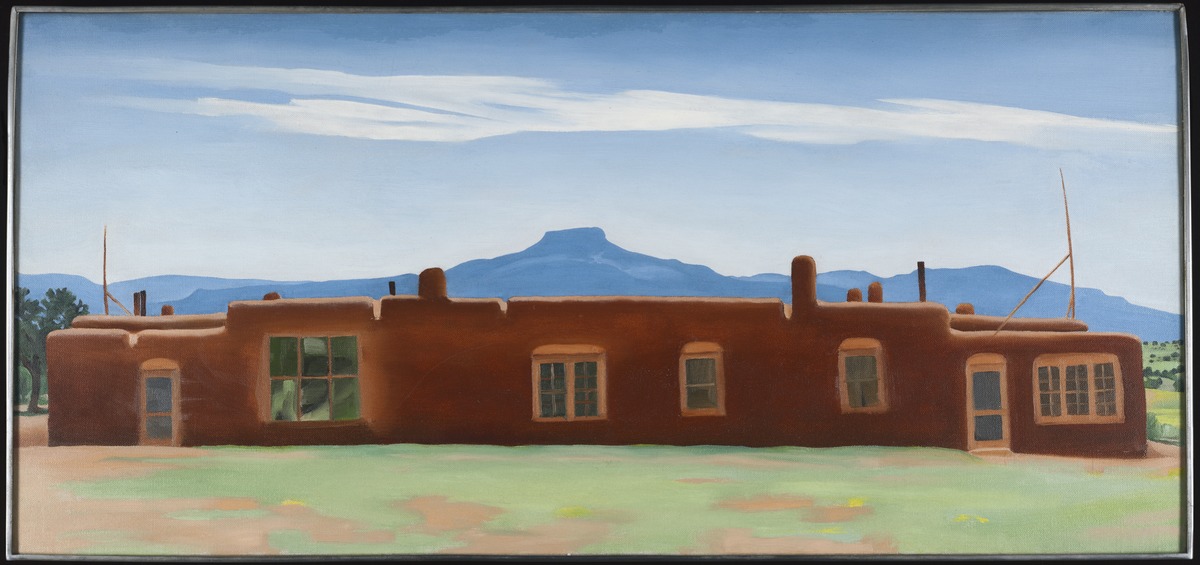
Browse Paintings, Photos, Papers & More in the Archive of Alfred Stieglitz and Georgia O’Keeffe, America’s Original Art Power Couple

O'Keeffe 1

Does any cou­ple loom larg­er in the world of twen­ti­eth-cen­tu­ry Amer­i­can art than Alfred Stieglitz and Geor­gia O’Ke­effe? Not if you believe the Alfred Stieglitz/Georgia O’Ke­effe Archive at Yale Uni­ver­si­ty’s Bei­necke Rare Book and Man­u­script Library. If you go there, you’ll find “thou­sands of let­ters and hun­dreds of pho­tographs in addi­tion to a col­lec­tion of lit­er­ary man­u­scripts, scrap­books, ephemera, fine art, and realia, pri­mar­i­ly dat­ing between 1880 and 1980, which doc­u­ment the lives and careers of the photographer/publisher/gallery own­er Alfred Stieglitz and the painter Geor­gia O’Ke­effe.” But you can even view some of its mate­r­i­al here on the inter­net, includ­ing pho­tos by and of “Stieglitz and his cir­cle of artists and writ­ers” and “a vari­ety of paint­ings and draw­ings, let­ters and ephemera, and medals and awards.”
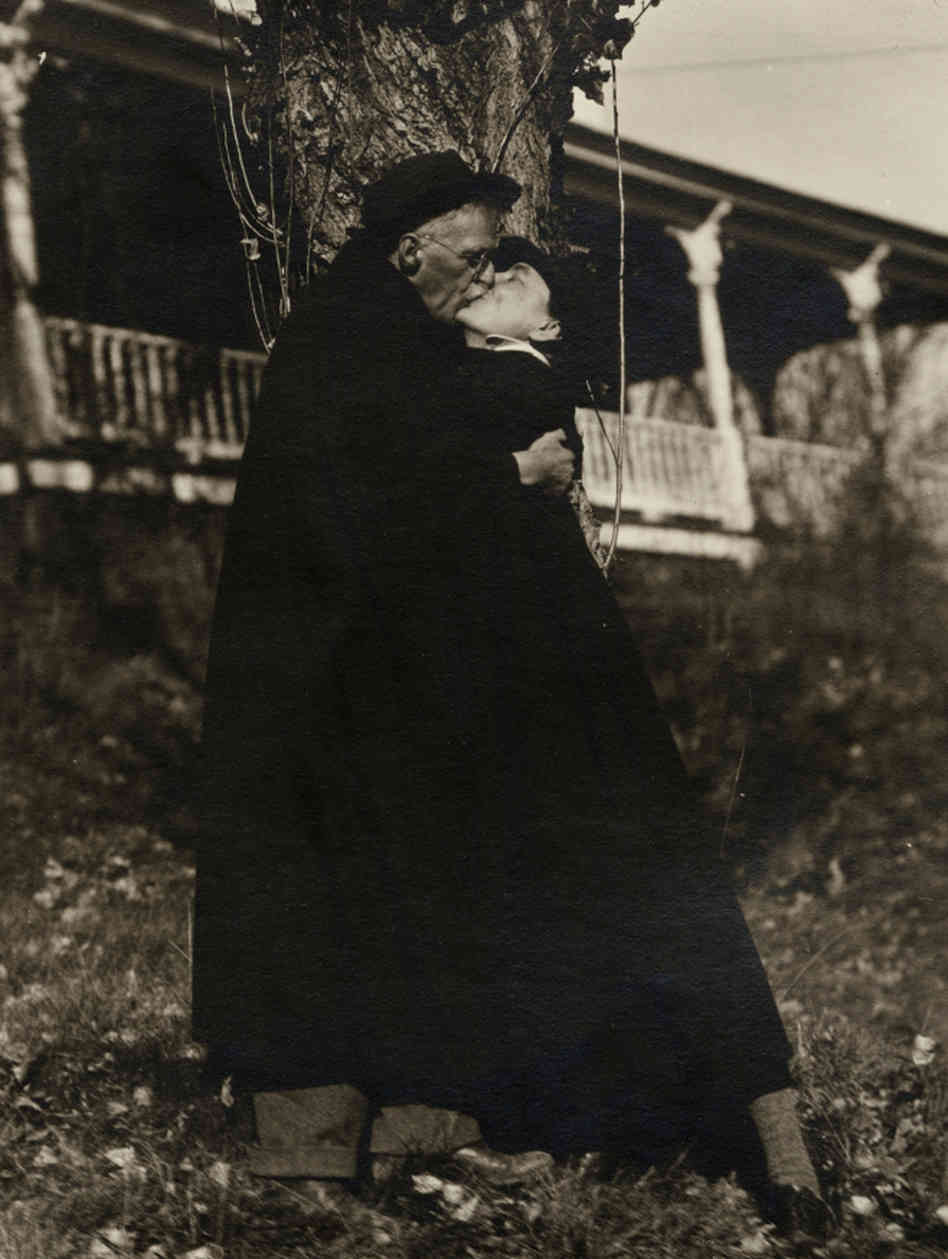
Steiglitz O'Keeffe

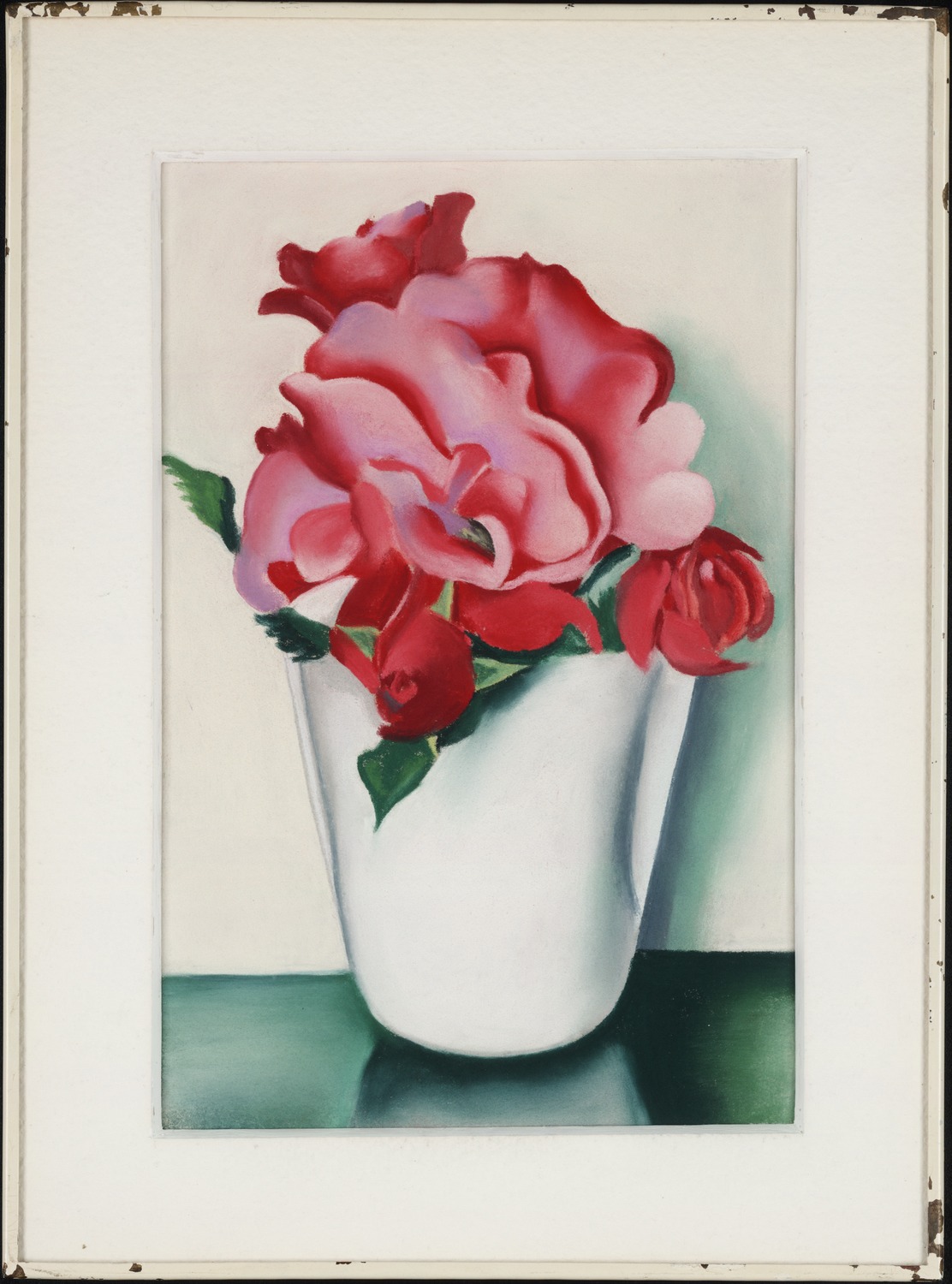
The online archive does, of course, con­tain some paint­ings from O’Ke­effe, such as House I Live in 1937 at the top of the post or, more in line with her famous­ly flo­ral focus, Pink Ros­es just below. But you’ll also find behind-the-work per­son­al arti­facts like the 1929 image of Stieglitz and O’Ke­effe togeth­er at Lake George, New York just above. You can browse through all the mate­r­i­al avail­able with this list, or you can fil­ter it down to the items per­tain­ing specif­i­cal­ly to O’Ke­effe or those per­tain­ing specif­i­cal­ly to Stieglitz, though in life the two had an “instant men­tal and phys­i­cal attrac­tion” that kept them on some lev­el insep­a­ra­ble dur­ing the course of their forty-year rela­tion­ship.

O'Keeffe 2

They even enjoyed a kind of artis­tic togeth­er­ness dur­ing the long-dis­tance stretch­es of that rela­tion­ship, when O’Ke­effe “dis­cov­ered her love for the land­scape of the Amer­i­can South­west and spent increas­ing amounts of time liv­ing and work­ing there.”

stieglitz flat iron

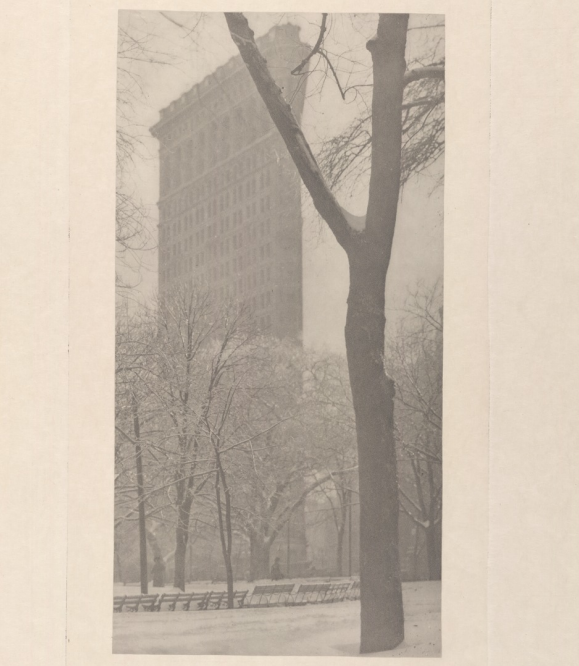
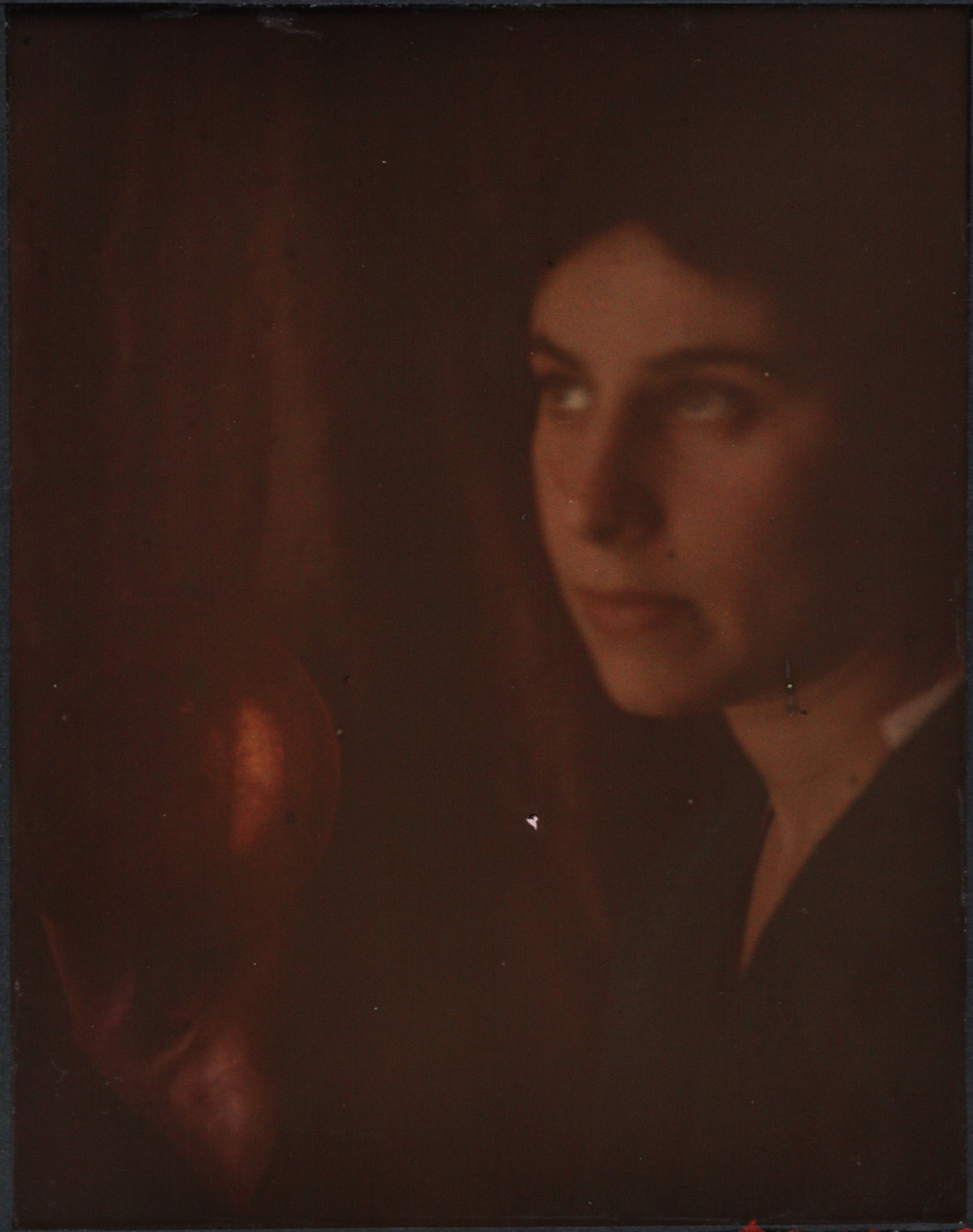
And while many of us already know about her favorite sub­jects and the ways in which she real­ized them on can­vas, few­er of us know about the efforts Stieglitz took to make pho­tog­ra­phy into not just a legit­i­mate but respect­ed art form. To get a sense of what that took, start with Stieglitz’s autochromes (below), some of the ear­li­est ven­tures made by an Amer­i­can artist into the realm of col­or pho­tog­ra­phy. Both Stieglitz and O’Ke­effe, each in there own medi­um, made us see things dif­fer­ent­ly. How many art-world pow­er cou­ples can say the same?

O'Keeffe 3

Relat­ed Con­tent:

The Real Geor­gia O’Keeffe: The Artist Reveals Her­self in Vin­tage Doc­u­men­tary Clips

Alfred Stieglitz: The Elo­quent Eye, a Reveal­ing Look at “The Father of Mod­ern Pho­tog­ra­phy”

Fri­da Kahlo Writes a Per­son­al Let­ter to Geor­gia O’Keeffe After O’Keeffe’s Ner­vous Break­down (1933)

Whit­ney Muse­um Puts Online 21,000 Works of Amer­i­can Art, By 3,000 Artists

Col­in Mar­shall writes else­where on cities, lan­guage, Asia, and men’s style. He’s at work on a book about Los Ange­les, A Los Ange­les Primer, the video series The City in Cin­e­maand the crowd­fund­ed jour­nal­ism project Where Is the City of the Future? Fol­low him on Twit­ter at @colinmarshall or on Face­book.

Amazing Miniature Sculptures of New York City Landmarks: CBGB, Katz’s Deli, Vesuvio Bakery & More

If you’re near Pasade­na, Cal­i­for­nia, stop by the Flower Pep­per Gallery and see Facade, the new exhi­bi­tion fea­tur­ing the work of visu­al artist Randy Hage. For decades now, Hage has been fas­ci­nat­ed by the beau­ty of aging struc­tures in New York City. This led him, begin­ning in the late 1990s, to start pho­tograph­ing aging store­fronts in the city, “with their hand paint­ed signs, lay­ers of archi­tec­ture, won­der­ful pati­nas and intrigu­ing his­to­ry.” Lat­er, he decid­ed to pre­serve their mem­o­ry in minia­tur­ized, hyper-real­is­tic sculp­tures (like the ones now on dis­play in Pasade­na through Novem­ber 18th). In the video above, see just how per­fect­ly Hage man­ages to recre­ate New York store­fronts in minia­ture. Here’s anoth­er famous-but-now-defunct facade you might rec­og­nize:

To take a clos­er look at his work, vis­it Hage’s Insta­gram page where you will see mini sculp­tures of fad­ing New York insti­tu­tions like Katz’s Deli, CBGB, McSor­ley’s Old Ale House, Vesu­vio Bak­ery, and more.

via Super­Son­ic Art/Boing­Bo­ing

Fol­low Open Cul­ture on Face­book and Twit­ter and share intel­li­gent media with your friends. Or bet­ter yet, sign up for our dai­ly email and get a dai­ly dose of Open Cul­ture in your inbox. And if you want to make sure that our posts def­i­nite­ly appear in your Face­book news­feed, just fol­low these sim­ple steps.

Free Course: An Introduction to the Art of the Italian Renaissance

In 43 lec­tures, Dr. Vida Hull offers an intro­duc­tion to the art of the Ital­ian Renais­sance. Packed with slides of great paint­ings, the lec­tures (all stream­able above or avail­able indi­vid­u­al­ly here), cov­er painters like Masac­cio and Bot­ti­cel­liTit­ian, da Vin­ci, RaphaelMichelan­ge­lo and more. Hull, who taught the course at East Ten­nessee State, earned her Ph.D. at Bryn Mawr Col­lege. Her course has been added to the Art His­to­ry sec­tion of our col­lec­tion, 1,700 Free Online Cours­es from Top Uni­ver­si­ties.

If you would like to sign up for Open Culture’s free email newslet­ter, please find it here. It’s a great way to see our new posts, all bun­dled in one email, each day.

If you would like to sup­port the mis­sion of Open Cul­ture, con­sid­er mak­ing a dona­tion to our site. It’s hard to rely 100% on ads, and your con­tri­bu­tions will help us con­tin­ue pro­vid­ing the best free cul­tur­al and edu­ca­tion­al mate­ri­als to learn­ers every­where. You can con­tribute through Pay­Pal, Patre­on, and Ven­mo (@openculture). Thanks!

Relat­ed Con­tent:

Dis­cov­er 100 Great Works of Art with Videos Cre­at­ed by Khan Acad­e­my & Google Art Project

The British Library Puts 1,000,000 Images into the Pub­lic Domain, Mak­ing Them Free to Reuse & Remix

The Rijksmu­se­um Puts 125,000 Dutch Mas­ter­pieces Online, and Lets You Remix Its Art

The His­to­ry of West­ern Archi­tec­ture: From Ancient Greece to Roco­co (A Free Online Course)

by | Permalink | Make a Comment ( 12 ) |

1200 Years of Women Composers: A Free 78-Hour Music Playlist That Takes You From Medieval Times to Now

kassia cropped 1

In mod­ern times, we don’t regard female musi­cians as in and of them­selves unusu­al. Our ros­ters of favorite rock­ers, pop-stars, solo singer-song­writ­ers, and what have you might well fea­ture as many women as men — or, depend­ing on the sub­genre, many more women than men. But those of us who lis­ten to a great deal of clas­si­cal music might feel a tad sheep­ish about how much more heav­i­ly male our playlists slant, at least in terms of the com­posers. For a vari­ety of his­tor­i­cal and cul­tur­al rea­sons, the clas­si­cal canon can feel like a man’s world indeed.

But it does­n’t have to! The Spo­ti­fy playlist above, “1200 Years of Women Com­posers: From Hilde­gard To Hig­don,” reveals that women start­ed shap­ing what we now know as clas­si­cal music far longer ago than most of us real­ize. (If you don’t have Spo­ti­fy’s free soft­ware, down­load it here.) The playlist, which con­tains over 900 pieces and will take you days to lis­ten to, begins in medieval times with the Byzan­tine abbess, poet, com­pos­er, and hymno­g­ra­ph­er Kas­sia (shown above) and ends with female com­posers from around the world not only liv­ing but (espe­cial­ly by the stan­dards of those who write orches­tral music) still young, like Mis­ato Mochizu­ki, Hele­na Tul­ve, and Lera Auer­bach.

This comes arranged by Spo­ti­fy Clas­si­cal Playlists, whose site describes how the playlist offers not just an anthol­o­gy of women com­posers, but also “a brief his­to­ry of west­ern clas­si­cal music. It’s real­ly fas­ci­nat­ing to hear music con­stant­ly rein­vent­ing itself from the mono­phon­ic and deeply spir­i­tu­al medieval chant of Hilde­gard [of Bin­gen] all the way into Hig­don’s lush and ultra-mod­ern per­cus­sion con­cer­to.” And before you begin this epic lis­ten, bear in mind the quote from Faust that appears there: “Das Ewig Weib­liche Zieht ins hinan” — “The eter­nal fem­i­nine leads us upwards.”

Relat­ed Con­tent:

Hear Sev­en Hours of Women Mak­ing Elec­tron­ic Music (1938- 2014)

Stream 58 Hours of Free Clas­si­cal Music Select­ed to Help You Study, Work, or Sim­ply Relax

Hear All of Mozart in a Free 127-Hour Playlist

Hear Clas­si­cal Music Com­posed by Friedrich Niet­zsche: 43 Orig­i­nal Tracks

Col­in Mar­shall writes else­where on cities, lan­guage, Asia, and men’s style. He’s at work on a book about Los Ange­les, A Los Ange­les Primer, the video series The City in Cin­e­maand the crowd­fund­ed jour­nal­ism project Where Is the City of the Future? Fol­low him on Twit­ter at @colinmarshall or on Face­book.

Hear The Epic of Gilgamesh Read in its Original Ancient Language, Akkadian

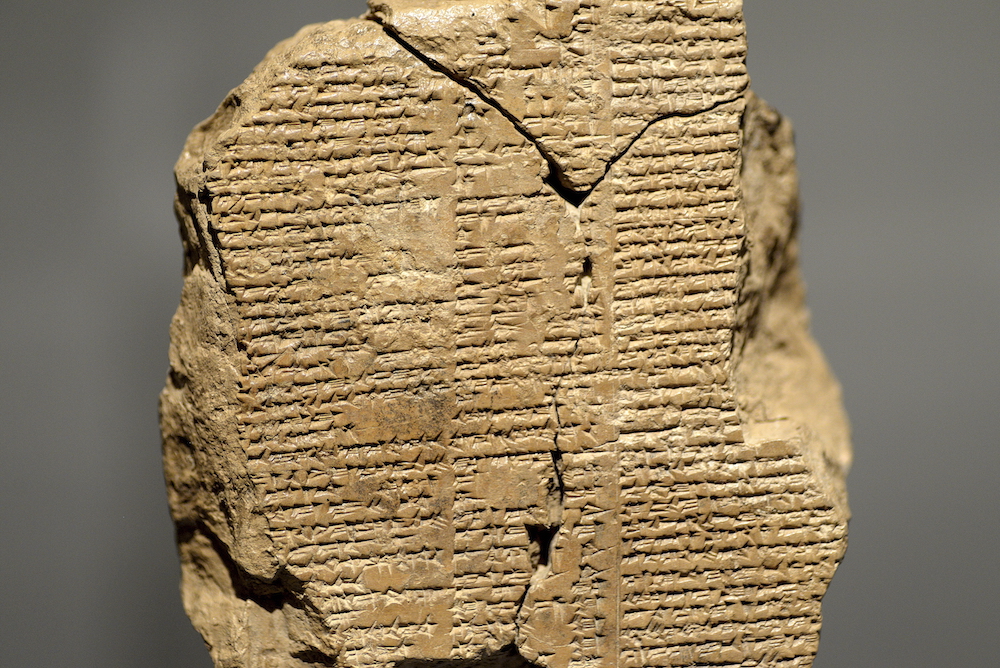
Tablet_V_of_the_Epic_of_Gligamesh._Newly_discovered._The_Sulaymaniyah_Museum,_Iraq.

Cre­ative Com­mons image by Osama Shukir Muhammed Amin

When one enters the world of The Epic of Gil­gamesh, the old­est epic poem we know of, one enters a world lost to time. Though its strange gods and cus­toms would have seemed per­fect­ly nat­ur­al to its inhab­i­tants, the cul­ture of Gil­gamesh has so far reced­ed from his­tor­i­cal mem­o­ry that there’s lit­tle left with which we might iden­ti­fy. Schol­ars believe Gil­gamesh the demi-god mytho­log­i­cal char­ac­ter may have descend­ed from leg­ends (such as a 126-year reign and super­hu­man strength) told about a his­tor­i­cal 5th king of Uruk. Buried under the fan­tas­tic sto­ries lies some doc­u­men­tary impulse. On the oth­er hand, Gil­gamesh—like all mythology—exists out­side of time. Gil­gamesh and Enkidu always kill the Bull of Heav­en, again and again for­ev­er. That, per­haps, is the secret Gil­gamesh dis­cov­ers at the end of his long jour­ney, the secret of Keats’ Gre­cian Urn: eter­nal life resides only in works of art.

And per­haps the only way to approach some com­mon under­stand­ing of myths as both prod­ucts of their age and as arche­types in realms of pure thought comes through a deep immer­sion in their his­tor­i­cal lan­guages. In the case of Gil­gamesh, that means learn­ing the extra­or­di­nar­i­ly long-lived Akka­di­an, a Mesopotami­an lan­guage that dates from about 2,800 BCE to around 100 CE. In order to do so, arche­ol­o­gists and Assyri­ol­o­gists had to deci­pher frag­ments of cuneiform stone tablets like those on which Gil­gamesh was dis­cov­ered. The task proved excep­tion­al­ly dif­fi­cult, such that when George Smith announced his trans­la­tion of the epic’s so-called “Flood Tablet” in 1872, it had lain “undis­turbed in the [British] Muse­um for near­ly 20 years,” writes The Tele­graph, since “there were so few peo­ple in the world able to read ancient cuneiform.”

Cuneiform is not a lan­guage, but an alpha­bet. The script’s wedge-shaped let­ters (cuneus is Latin for wedge) are formed by impress­ing a cut reed into soft clay. It was used by speak­ers of sev­er­al Near East­ern lan­guages includ­ing Sumer­ian, Akka­di­an, Urart­ian and Hit­tite; depend­ing on the lan­guage and date of a giv­en script, its alpha­bet could con­sist of many hun­dreds of let­ters. If this weren’t chal­leng­ing enough, cuneiform employs no punc­tu­a­tion (no sen­tences or para­graphs), it does not sep­a­rate words, there aren’t any vow­els and most tablets are frag­ment­ed and erod­ed.

Nonethe­less, Smith, an entire­ly self-edu­cat­ed schol­ar, broke the code, and when he dis­cov­ered the frag­ment con­tain­ing a flood nar­ra­tive that pre­dat­ed the Bib­li­cal account by at least 1,000 years, he report­ed­ly “became so ani­mat­ed that, mute with excite­ment, he began to tear his clothes off.” That sto­ry may also be leg­end, but it is one that cap­tures the pas­sion­ate­ly obses­sive char­ac­ter of George Smith. Thanks to his efforts, those of many oth­er 19th cen­tu­ry aca­d­e­mics, trea­sure hunters, and tomb raiders, and mod­ern schol­ars toil­ing away at the Uni­ver­si­ty of Lon­don, we can now hear Gil­gamesh read not only in Old Akka­di­an (the orig­i­nal lan­guage), but also lat­er Baby­lon­ian dialects, the lan­guages used to record the Code of Ham­mura­bi and a lat­er, more frag­ment­ed ver­sion of the Gil­gamesh epic.

The Uni­ver­si­ty of London’s Depart­ment of the Lan­guages and Cul­tures of the Ancient Near East hosts on its web­site sev­er­al read­ings in dif­fer­ent schol­ars’ voic­es of Gil­gamesh, The Epic of Anzu, the Codex Ham­mura­bi and oth­er Baby­lon­ian texts. Above, you can hear Karl Heck­er read the first 163 lines of Tablet XI of the Stan­dard Akka­di­an Gil­gamesh. These lines tell the sto­ry of Utnapish­tim, the myth­i­cal and lit­er­ary pre­cur­sor to the Bib­li­cal Noah. So impor­tant was the dis­cov­ery of this flood sto­ry that it “chal­lenged lit­er­ary and bib­li­cal schol­ar­ship and would help to rede­fine beliefs about the age of the Earth,” writes The Tele­graph. When George Smith made his announce­ment in 1872, “even the Prime Min­is­ter, William Glad­stone, was in atten­dance.” Unfor­tu­nate­ly, things did not end well for Smith, but because of his efforts, we can come as close as pos­si­ble to the sound of Gil­gamesh’s world, one that may remind us of a great many mod­ern lan­guages, but that unique­ly pre­serves ancient his­to­ry and age­less myth.

The Uni­ver­si­ty of Lon­don site also includes trans­la­tions and translit­er­a­tions of the cuneiform writ­ing, from Pro­fes­sor Andrew George’s 2003 The Baby­lon­ian Gil­gamesh Epic: Intro­duc­tion, Crit­i­cal Edi­tion and Cuneiform Texts. Fur­ther­more, there are answers to Fre­quent­ly Asked Ques­tions, many of which you may your­self be ask­ing, such as “What are Baby­lon­ian and Assyr­i­an?”; “Giv­en they are dead, how can one tell how Baby­lon­ian and Assyr­i­an were pro­nounced?”; “Did Baby­lon­ian and Assyr­i­an poet­ry have rhyme and metre, like Eng­lish poet­ry?”; and—for those with a desire to enter fur­ther into the ancient world of Gil­gamesh and oth­er Akka­di­an, Baby­lon­ian, and Assyr­i­an semi-myth­i­cal figures—“What if I actu­al­ly want to learn Baby­lon­ian and Assyr­i­an?”

Then, of course, you’ll want to learn about the 20 new lines from Gil­gamesh just dis­cov­ered in Iraq.…

Relat­ed Con­tent:

Lis­ten to the Old­est Song in the World: A Sumer­ian Hymn Writ­ten 3,400 Years Ago

Hear the “Seik­i­los Epi­taph,” the Old­est Com­plete Song in the World: An Inspir­ing Tune from 100 BC

Hear Beowulf Read In the Orig­i­nal Old Eng­lish: How Many Words Do You Rec­og­nize?

Josh Jones is a writer and musi­cian based in Durham, NC. Fol­low him at @jdmagness

Browse a Gallery of Kurt Vonnegut Tattoos, and See Why He’s the Big Gorilla of Literary Tattoos

Vonnegut Tattoos 1

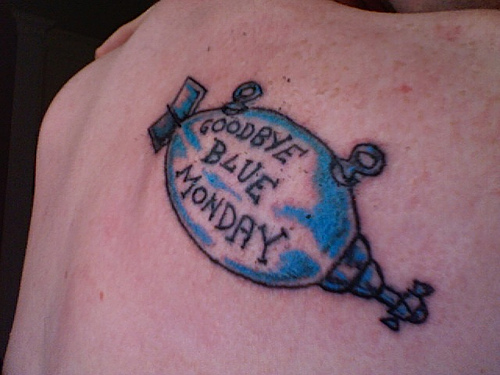
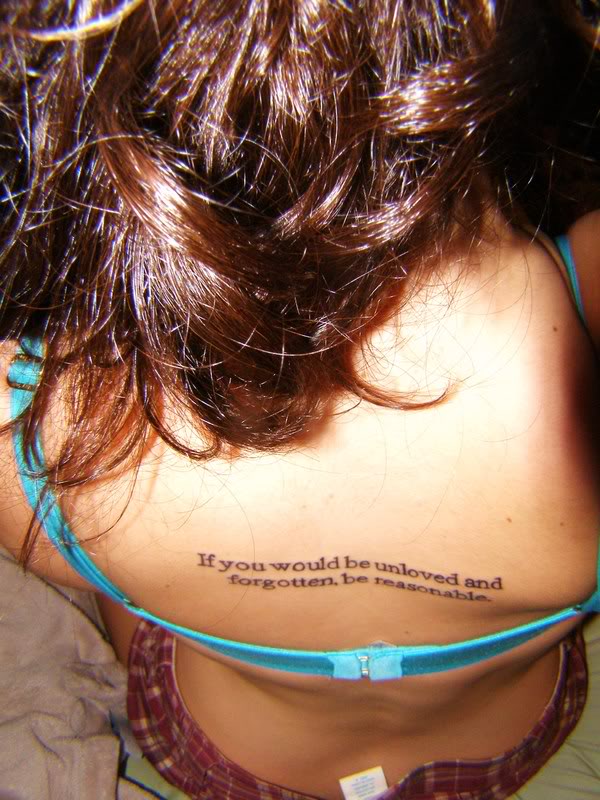
Accord­ing to Eva Tal­madge, co-author of The Word Made Flesh: Lit­er­ary Tat­toos from Book­worms World­wide, Kurt Von­negut is the big goril­la of lit tat­toos (a dis­tinc­tion he shares with poet e.e. cum­mings).

It’s not sur­pris­ing. Vonnegut’s humor and con­ci­sion make him one of the most quotable authors of all time, per­fect­ly suit­ed to the task.

Rep­e­ti­tion is the price Von­negut tat­too enthu­si­asts must pay for such endur­ing pop­u­lar­i­ty.

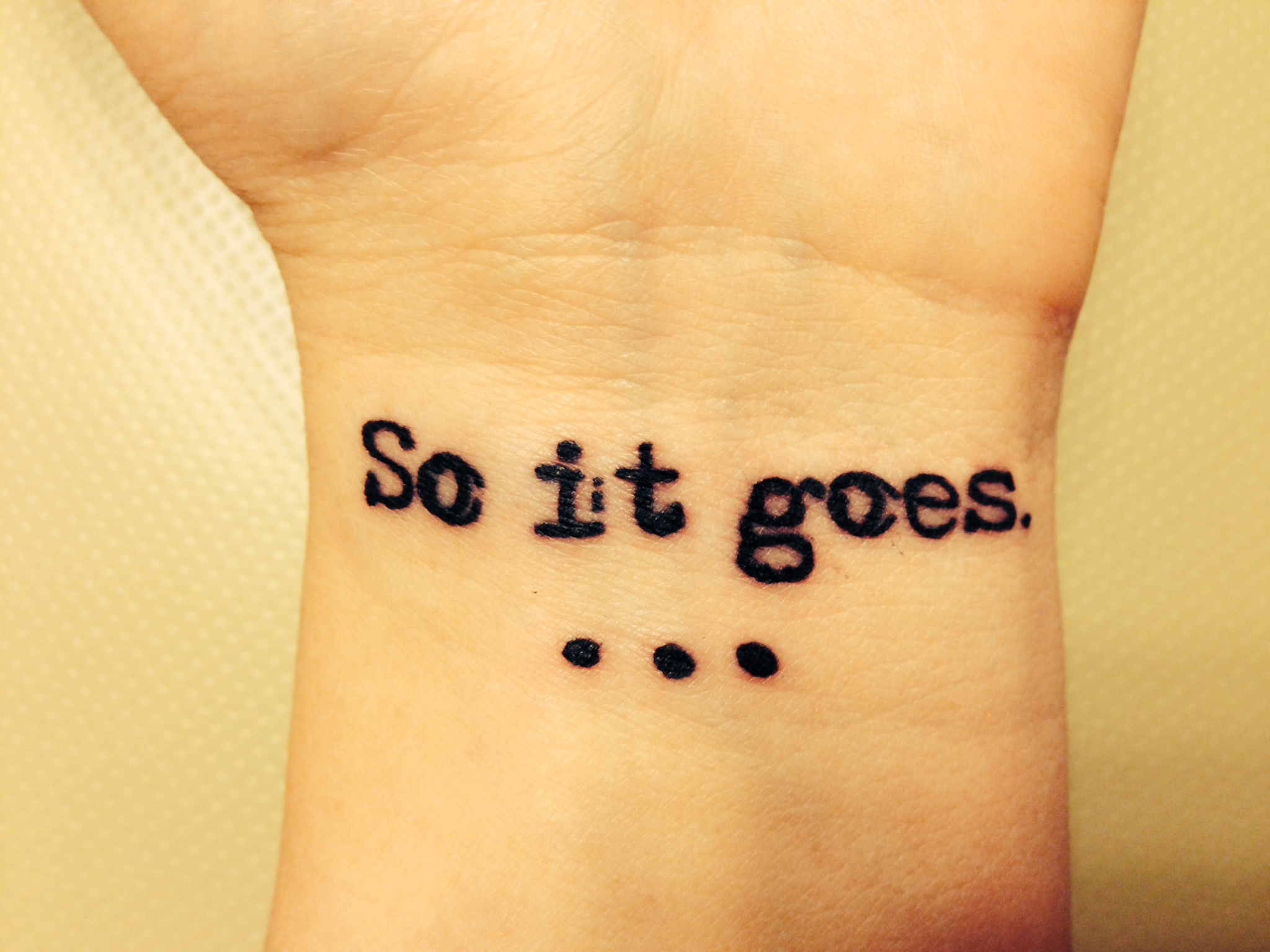
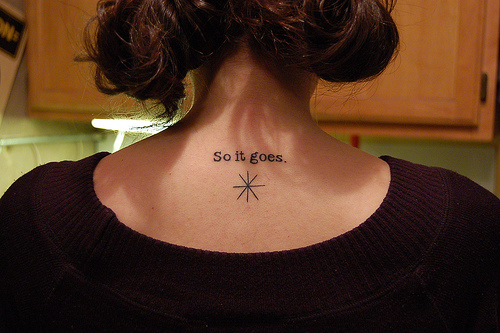
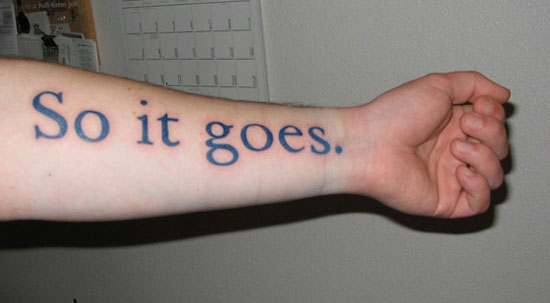
The phrase “so it goes” occurs 106 times in Slaugh­ter­house-Five, a fig­ure dwarfed many times over by the num­ber of hides upon which it is per­ma­nent­ly inked. Recur­rence is so fre­quent that the lit­er­ary tat­too blog, Con­trari­wise, recent­ly host­ed a round of So It Goes Sat­ur­days. So it goes.

Vonnegut 2

Vonnegut Tattoos 3

Vonnegut Tattoos 4

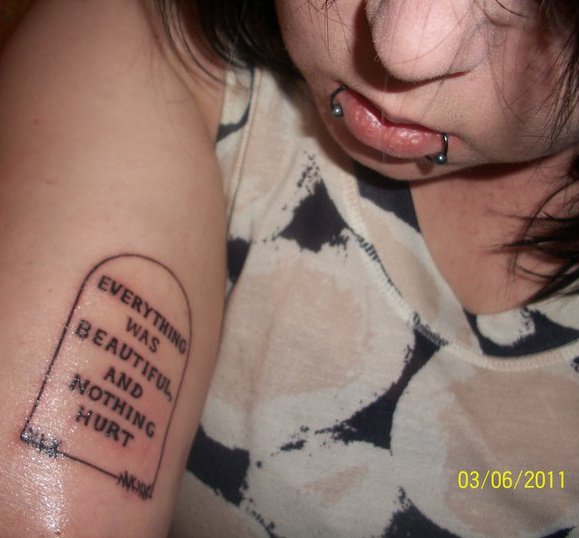
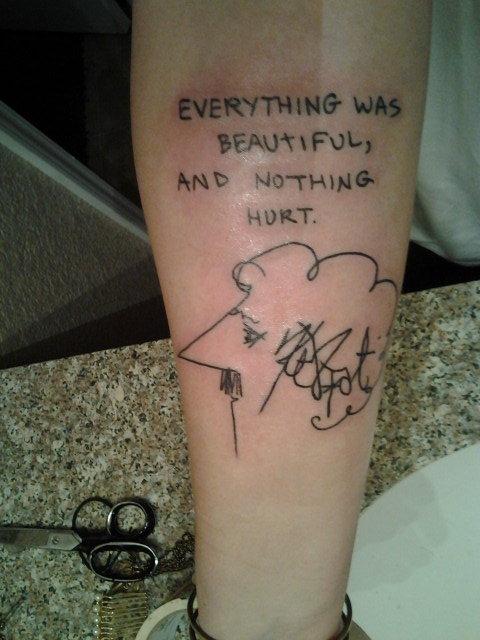
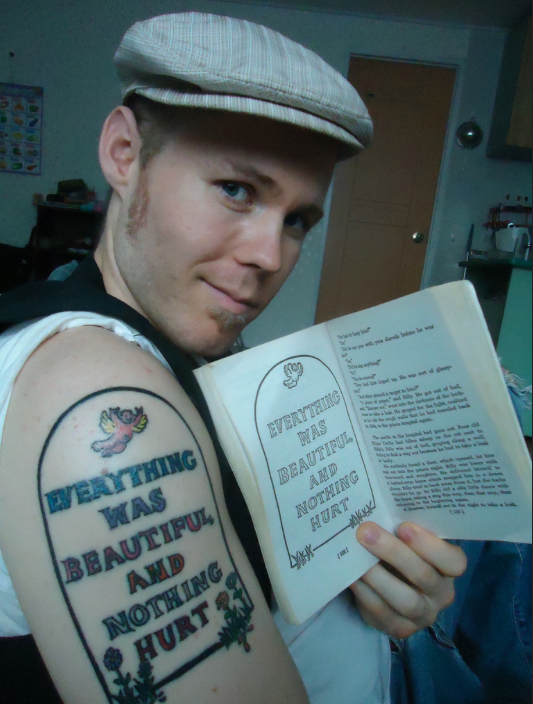
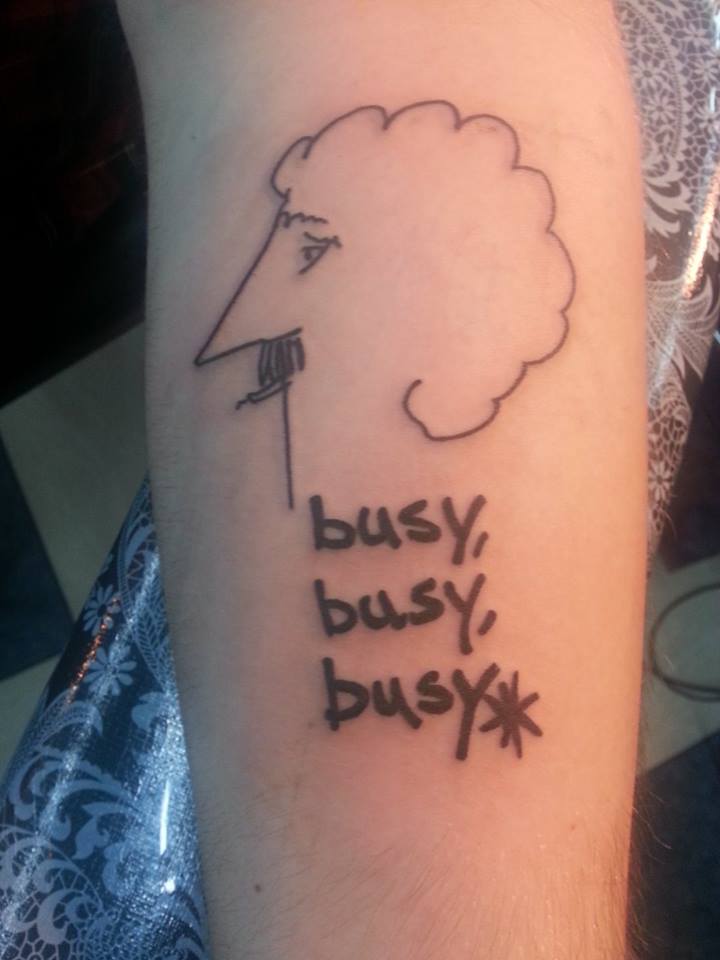
The sec­ond run­ner up, also from Slaugh­ter­house-Five,  is the painful­ly iron­ic “Every­thing was Beau­ti­ful and Noth­ing Hurt.”

Vonnegut Tattoos 5

Vonnegut Tattoos 6

Vonnegut Tattoos 7

Vonnegut Tattoos 8

Vonnegut Tattoos 9

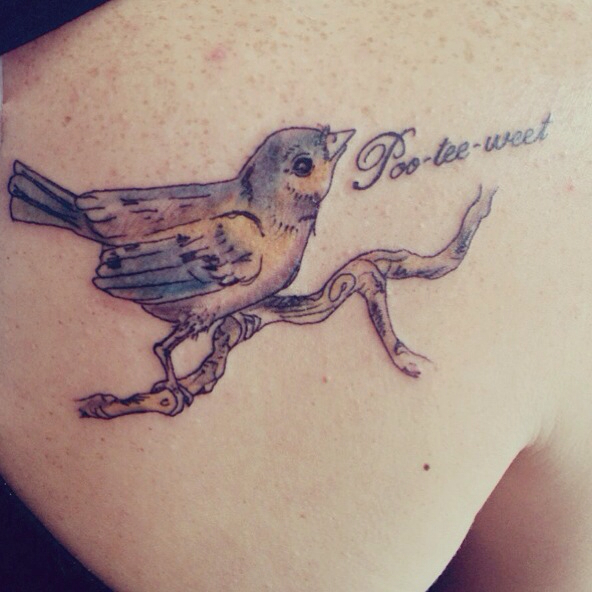
Those who’d rather put a bird on it than present an acces­si­ble sen­ti­ment to the unini­ti­at­ed can opt for “poo-tee-weet,” the catch­phrase of a bird who’s a wit­ness to war.  Cer­tain to con­found the folks star­ing at your tri­ceps in the gro­cery line.

Vonnegut Tattoos 10

Vonnegut Tattoos 11

Slaugh­ter­house Five is not Vonnegut’s only tat­too-friend­ly nov­el, of course.

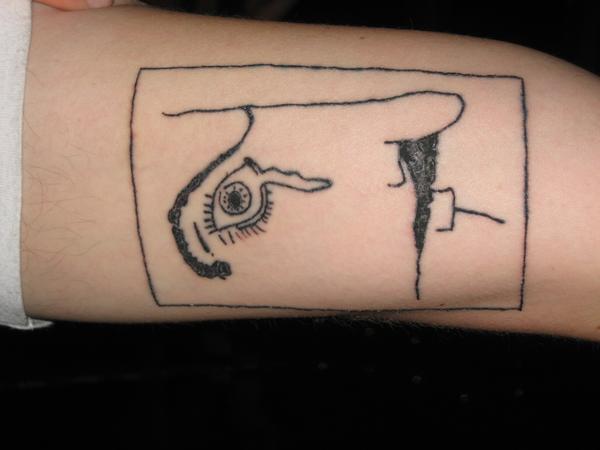
Break­fast of Cham­pi­ons is par­tic­u­lar­ly well suit­ed to the form, thanks to the author’s own line draw­ings.

Vonnegut Tattoos 12

Vonnegut Tattoos 15

There’s also Slap­stick:

Vonnegut Tattoos 16

Hocus Pocus:

Vonnegut Tattoos 17

Cat’s Cra­dle:

Vonnegut Tattoos 18

God Bless You Mr. Rose­wa­ter:

OLYMPUS DIGITAL CAMERA

And then there’s the infa­mous aster­isk, whose first appear­ance in Break­fast in Cham­pi­ons is pre­ced­ed thus­ly:

…to give an idea of the matu­ri­ty of my illus­tra­tions for this book, here is my pic­ture of an ass­hole”

Vonnegut Tattoos 20

Hard­core fans can can prove their ded­i­ca­tion by tak­ing a por­trait of the mas­ter to the grave with them.

Vonnegut Tattoos 22

Vonnegut Tattoos 23

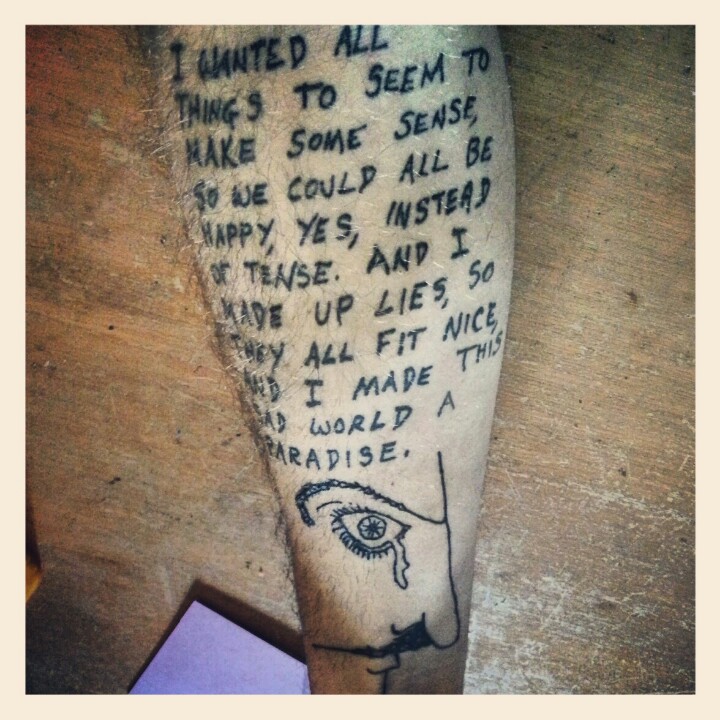
Depend­ing on your tol­er­ance for pain, you could squeeze in a longer sen­ti­ment:

Vonnegut Tattoos 24

“I want­ed all things

To seem to make some sense,

So we could all be hap­py, yes,

Instead of tense.

And I made up lies

So that they all fit nice,

And I made this sad world

A par-a-dise.”

― Kurt Von­negut, A Man With­out a Coun­try

Relat­ed Con­tent:

A Daz­zling Gallery of Clock­work Orange Tat­toos

Meet Amer­i­ca & Britain’s First Female Tat­too Artists: Maud Wag­n­er (1877–1961) & Jessie Knight (1904–1994)

Why Tat­toos Are Per­ma­nent? New TED Ed Video Explains with Ani­ma­tion

Hear Kurt Von­negut Read Slaugh­ter­house-Five, Cat’s Cra­dle & Oth­er Nov­els

Kurt Von­negut Cre­ates a Report Card for His Nov­els, Rank­ing Them From A+ to D

Ayun Hal­l­i­day is an author, illus­tra­tor, and Chief Pri­ma­tol­o­gist of the East Vil­lage Inky zine. Her play, Fawn­book, opens in New York City lat­er this month. Fol­low her @AyunHalliday

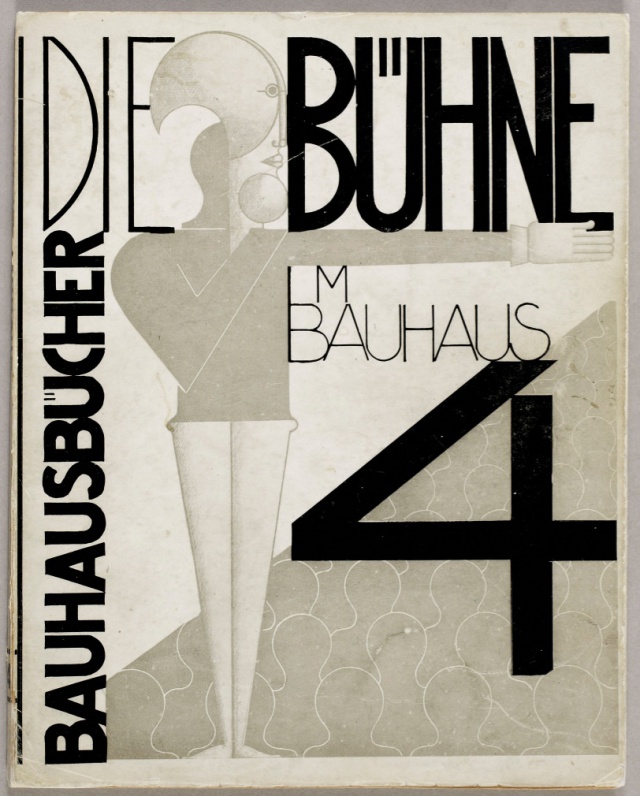
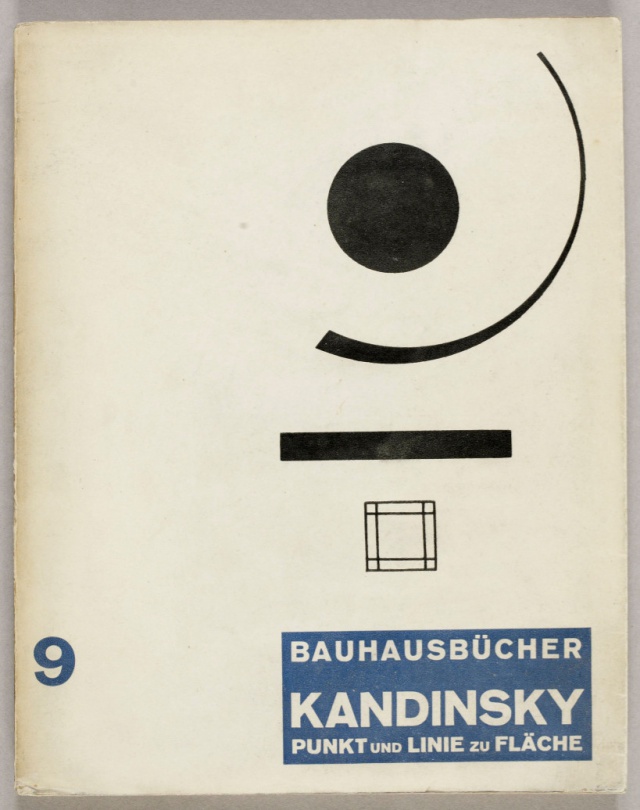
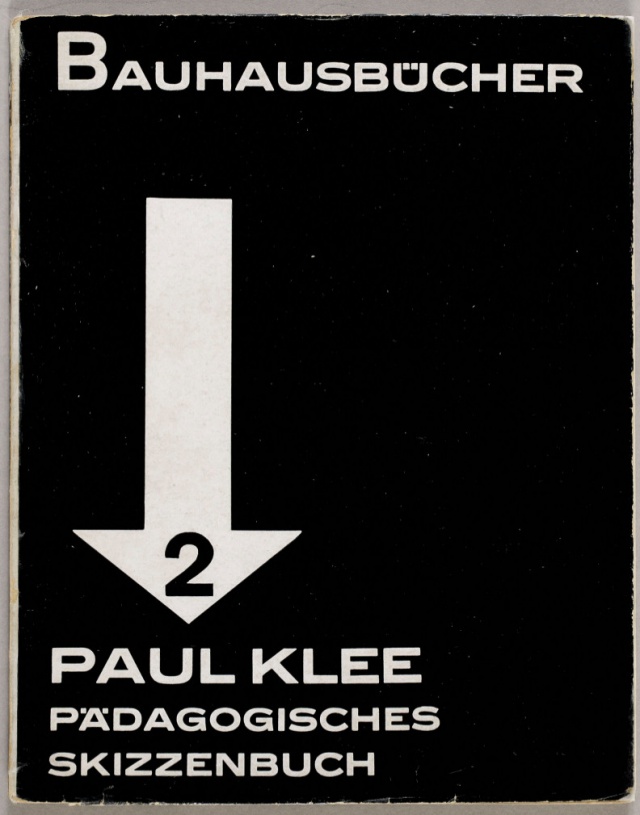
Download Original Bauhaus Books & Journals for Free: Gropius, Klee, Kandinsky, Moholy-Nagy & More

640px-Die_Buehne_im_Bauhaus

In 1919, Ger­man archi­tect Wal­ter Gropius found­ed Bauhaus, the most influ­en­tial art school of the 20th cen­tu­ry. Bauhaus defined mod­ernist design and rad­i­cal­ly changed our rela­tion­ship with every­day objects. Gropius wrote in his man­i­festo Pro­gramm des Staatlichen Bauhaus­es Weimar that “There is no essen­tial dif­fer­ence between the artist and the arti­san.” His new school, which fea­tured fac­ul­ty that includ­ed the likes of Paul Klee, Lás­zló Moholy-Nagy, Josef Albers and Wass­i­ly Kandin­sky, did indeed erase the cen­turies-old line between applied arts and fine arts.

Bauhaus archi­tec­ture sand­blast­ed away the ornate flour­ish­es com­mon with ear­ly 20th cen­tu­ry build­ings, favor­ing instead the clean, sleek lines of indus­tri­al fac­to­ries. Design­er Mar­cel Breuer reimag­ined the com­mon chair by strip­ping it down to its most ele­men­tal form. Her­bert Bay­er rein­vent­ed and mod­ern­ized graph­ic design by focus­ing on visu­al clar­i­ty. Gun­ta Stöl­zl, Mar­i­anne Brandt and Chris­t­ian Dell rad­i­cal­ly remade such diverse objects as fab­rics and tea ket­tles.

640px-Kandinsky_Punkt_und_Linie_zu_Flaeche

Nowa­days, of course, get­ting one of those Bauhaus tea ket­tles, or even an orig­i­nal copy of Gropius’s man­i­festo, would cost a small for­tune. For­tu­nate­ly for design nerds, typog­ra­phy mavens and archi­tec­ture enthu­si­asts every­where, the good folks over at Mono­skop have post­ed online a whole set of beau­ti­ful­ly designed pub­li­ca­tions from the sto­ried school.

640px-Klee_Paul_Paedagogisches_Skizzenbuch

Click here to pick out indi­vid­ual works or here to just get all of them. Sad­ly, though, you can’t down­load a teaket­tle.

The list of Books in the Mono­skop Bauhaus archive includes:

And here are some key Bauhaus jour­nals:

  1. bauhaus 1 (1926). 5 pages, 42 cm. Down­load (23 MB).
  2. bauhaus: zeitschrift für bau und gestal­tung 2:1 (Feb 1928). Down­load (17 MB).
  3. bauhaus: zeitschrift für gestal­tung 3:1 (Jan 1929). Down­load (17 MB).
  4. bauhaus: zeitschrift für gestal­tung 3:2 (Apr-Jun 1929). Down­load (15 MB).
  5. bauhaus: zeitschrift für gestal­tung 3:3 (Jul-Sep 1929). Down­load (16 MB).
  6. bauhaus: zeitschrift für gestal­tung 2 (Jul 1931). Down­load (15 MB).

Get more in the Mono­skop Bauhaus archive.

Relat­ed Con­tent:

The Home­made Hand Pup­pets of Bauhaus Artist Paul Klee

Time Trav­el Back to 1926 and Watch Wass­i­ly Kandin­sky Cre­ate an Abstract Com­po­si­tion

Bauhaus, Mod­ernism & Oth­er Design Move­ments Explained by New Ani­mat­ed Video Series

Jonathan Crow is a Los Ange­les-based writer and film­mak­er whose work has appeared in Yahoo!, The Hol­ly­wood Reporter, and oth­er pub­li­ca­tions. You can fol­low him at @jonccrow. And check out his blog Veep­to­pus, fea­tur­ing lots of pic­tures of vice pres­i­dents with octo­pus­es on their heads.  The Veep­to­pus store is here.

Hear Ursula K. Le Guin’s Story, “The End” Dramatized: A Rare Audio Treat

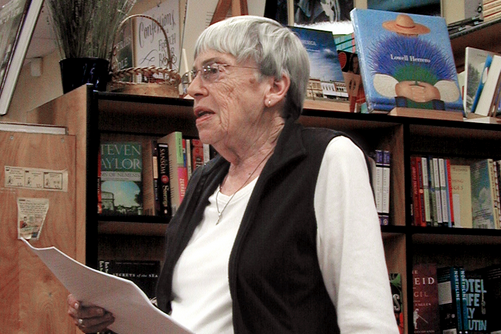
le guin

Cre­ative Com­mons image by Gor­thi­an

Mind Webs, a 1970’s radio series cre­at­ed by WHA Radio in Wis­con­sin, fea­tured dra­ma­tized read­ings of clas­sic sci fi sto­ries by the likes of Arthur C. Clarke, Ray Brad­bury and Philip K. Dick. You can learn more about the series, and access a com­plete set of record­ings here. Below, we’ve high­light­ed for you a drama­ti­za­tion of an Ursu­la K. Le Guin sto­ry, “The End.” It’s rare to encounter an audio record­ing of a Le Guin sto­ry online, so we hope you enjoy. “The End” is now added to our col­lec­tion: 1,000 Free Audio Books: Down­load Great Books for Free. And if you’re look­ing to immerse your­self in Le Guin’s fic­tion, give her ground­break­ing nov­el The Left Hand of Dark­ness a try. It won the Hugo and Neb­u­la Awards (the top award for fan­ta­sy/s­ci-fi nov­els) in 1969.

Look­ing for free, pro­fes­sion­al­ly-read audio books from Audible.com? Here’s a great, no-strings-attached deal. If you start a 30 day free tri­al with Audible.com, you can down­load two free audio books of your choice. Get more details on the offer here.

And note this: Audiobooks.com also has a free tri­al offer where you can down­load a free audio­book. Details.

« Go BackMore in this category... »
Quantcast