When Glenn O’Brien’s TV Party Brought Klaus Nomi, Blondie & Basquiat to Public Access TV (1978–82)

“This is not a test!” the host shouts into his micro­phone. “This is an actu­al show!” If you lived in New York and had cable in the late 1970s, you may have wit­nessed it your­self — and you may well have need­ed the reminder, because this show nei­ther looked nor felt like any­thing that ever aired before. A fix­ture on pub­lic access Chan­nel D and Chan­nel J from 1972 to 1982, it threw down a rede­f­i­n­i­tion of tele­vi­su­al pos­si­bil­i­ties that has­n’t just sur­vived as a time cap­sule of the down­town Man­hat­tan scene at its cre­ative rolling boil, but retains its anar­chic charge to this day. Wel­come, whether you first tuned in back then or have only just tuned in on the inter­net now, to Glenn O’Brien’s TV Par­ty.

O’Brien, who co-cre­at­ed and presided over the show, did­n’t always shout, but when he did, he man­aged to retain his dead­pan self-pos­ses­sion. He even kept his cool when hang­ing out, live on the air, with the reg­u­lars of a guest list includ­ing “David Bowie, David Byrne, Robert Fripp, the B‑52s, Chris Bur­den, George Clin­ton, Iggy Pop, Steven Meisel, Mick Jones, James Chance, John Lurie, Klaus Nomi, Kraftwerk, the Scream­ers, Robert Map­plethor­pe, Jean-Michel Basquiat, Nile Rodgers, Kid Cre­ole, the Offs, Alex Chilton, the Brides of Funken­stein, Arthur Rus­sell, David McDer­mott, and Charles Rock­et, just to name a few.” At its height, TV Par­ty let its audi­ence hang out with such lumi­nar­ies almost every week as well — lit­er­al­ly, if they man­aged to find their way to the stu­dio.

Hav­ing attained sub­cul­tur­al fame as the first edi­tor of Andy Warhol’s Inter­view mag­a­zine, the Cleve­land-born O’Brien also engaged in such straight­for­ward­ly coun­ter­cul­tur­al efforts as writ­ing for, and lat­er edit­ing, the infa­mous jour­nal of the cannabis lifestyle High Times.

That bit of sta­tus drew an invi­ta­tion to appear on the ear­ly pub­lic-access vari­ety pro­gram The Coca Crys­tal Show. The expe­ri­ence imme­di­ate­ly inspired him to cre­ate one of his own, a strike against the threat to free speech he sensed when mass media meant just a few main­stream tele­vi­sion chan­nels. And so O’Brien, along with Blondie co-founder and gui­tarist Chris Stein, launched TV Par­ty, a drug-fueled re-inter­pre­ta­tion of Hugh Hefn­er’s Play­boy After Dark, “the TV show that’s a par­ty,” as he put it in a mem­o­rably askew phras­ing on its very first broad­cast, “but which could be a polit­i­cal par­ty.”

Here we have a few par­tic­u­lar­ly mem­o­rable TV Par­ty evenings, includ­ing a per­for­mance by the not-of-this-earth pro­to-glam-rock­er Klaus Nomi, an inter­view of painter Jean-Michel Basquiat (who became a reg­u­lar pres­ence on the show and a “lit­tle broth­er” fig­ure to the crew), and an episode with Blondie. Vice put up TV Par­ty best-of a cou­ple years ago, which has let a new gen­er­a­tion expe­ri­ence what now seems strik­ing­ly like a pre­de­ces­sor of the shows cre­at­ed for the inter­net video plat­forms they fre­quent today. It also includes a 90-minute doc­u­men­tary about the his­to­ry of TV Par­ty, which pro­vides the nec­es­sary his­tor­i­cal and cul­tur­al con­text for those unfa­mil­iar with the New York O’Brien describes as “like a third-world coun­try.” Shot in the ghost­ly black-and-white one asso­ciates with 1970s video artists, its visu­al ele­ments either psy­che­del­i­cal­ly bleed­ing into or jagged­ly cut­ting between one anoth­er, “the show could get abstract quick­ly,” remem­bers O’Brien.

But in uphold­ing its mis­sion to erase the dis­tinc­tion between per­former and audi­ence, TV Par­ty belongs as much to the late 70s as it does to the 21st cen­tu­ry. It used to the fullest extent pos­si­ble the free­dom of pub­lic-access tele­vi­sion, very much the Youtube of its day. (Cer­tain­ly the callers-in could sound just as abu­sive as Youtube com­menters.) It even end­ed in the high­ly mod­ern fash­ion of not get­ting can­celed, but sim­ply fad­ing away, the stretch­es between episodes grow­ing longer and longer. “Maybe Chris and I will start it up again,” O’Brien spec­u­lates in the doc­u­men­tary, but he pre­sum­ably has his hands full with his lat­est talk show: Tea at the Beat­rice with Glenn O’Brien, cre­at­ed espe­cial­ly for the inter­net. The sen­si­bil­i­ty may have changed — nobody fires up a joint on cam­era any­more — but the excite­ment of explor­ing unchart­ed media ter­ri­to­ry remains.

Relat­ed Con­tent:

Blondie Plays CBGB in the Mid-70s in Two Vin­tage Clips

Klaus Nomi: The Bril­liant Per­for­mance of a Dying Man

David Bowie and Klaus Nomi’s Hyp­not­ic Per­for­mance on SNL (1979)

The Odd Cou­ple: Jean-Michel Basquiat and Andy Warhol, 1986

Based in Seoul, Col­in Mar­shall writes and broad­casts on cities and cul­ture. He’s at work on a book about Los Ange­les, A Los Ange­les Primer, the video series The City in Cin­e­ma, the crowd­fund­ed jour­nal­ism project Where Is the City of the Future?, and the Los Ange­les Review of Books’ Korea Blog. Fol­low him on Twit­ter at @colinmarshall or on Face­book.

Three-Hour Mixtape Offers a Sonic Introduction to Underground Goth Music

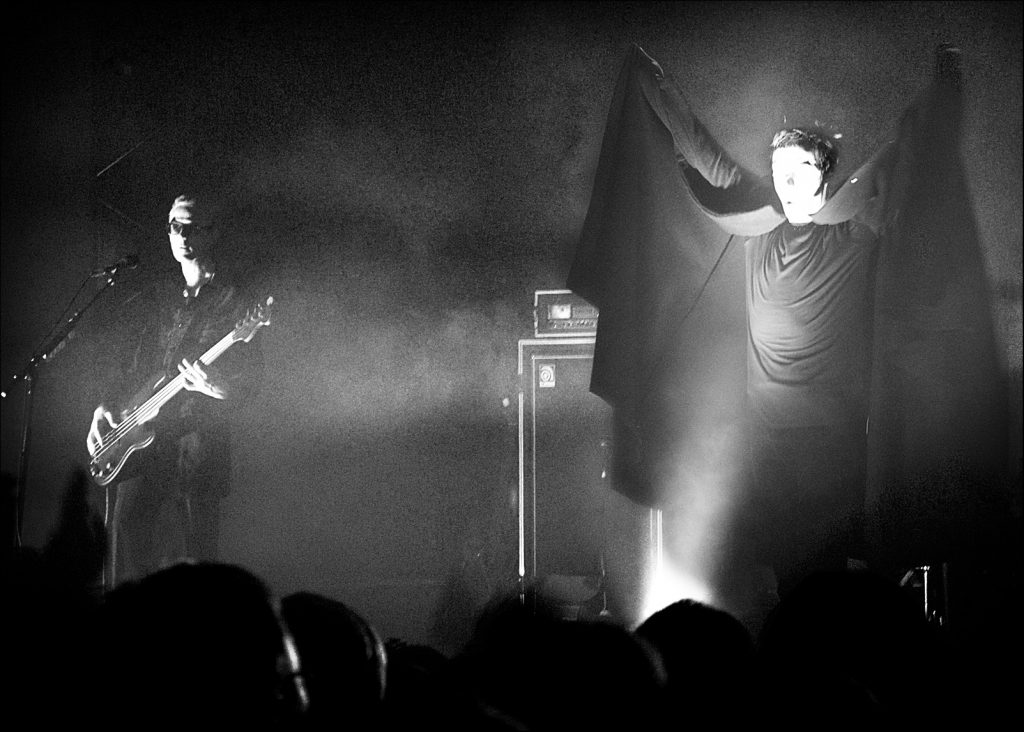
Bauhaus_Belalugosi

Image by Pedro Figueire­do, via Wiki­me­dia Com­mons

Why, in my day we called it “post-punk” and we walked miles to find it in cat­a­combs with secret pass­words, far away from any mall appar­el stores or bev­er­age-spon­sored music fes­ti­vals….

Most­ly rub­bish, though I have heard many an old cam­paign­er say as much, decry­ing Goth rock as a recent, devo­lu­tion from more seri­ous, avant-garde trends. Some amal­gam of The Doors, Leonard Cohen, Nico and the Vel­vet Under­ground, The Damned, Screamin’ Jay Hawkins, and Ham­mer hor­ror films, ear­ly goth rock went spare, atmos­pher­ic, and punky, like the ear­ly Cure, or baroque, morose, and cabaret like Bauhaus, or any oth­er num­ber of respectable art-rock direc­tions.

These bands, many of my cohort believe, had integri­ty, and much bet­ter taste than kids today. All that get off my lawn-ness makes an easy tar­get, as does the increas­ing pop­u­lar­i­ty of a genre of music made for and by unpop­u­lar peo­ple.

Mix blog Secret Thir­teen, cura­tor of the goth rock mix above, admits as much. “Goth has nev­er been an easy affair to dis­cuss,” reads the mix intro in idio­syn­crat­ic Eng­lish: “Kitschy atmos­phere of mas­sive con­tem­po­rary goth fes­ti­vals and stereo­typ­ing dis­cours­es usu­al­ly over­whelmed the tex­tur­al and emo­tion­al core of goth.” Con­tem­po­rary per­cep­tions, fair or not, obscure the diversity—stylistically, that is… of the music, with its “diverse ele­ments includ­ing Dada move­ment, sur­re­al­ist aes­thet­ics, post-mod­ernism, French ‘fin-de-siecle’ poet­ry, 19th cen­tu­ry roman­ti­cism, punk, kraut, glam, shoegaze, ambi­ent, folk, etc….”

Indeed, it’s all there, when a band with the abra­sive low-camp, grind­house punk of Nick Cave’s The Birth­day Par­ty shares a musi­cal lin­eage with the ear­ly syn­th­pop of Min­istry (with DJ-scratch­ing!) and the medieval- and world music-obsessed Dead Can Dance. But the key oper­a­tor in these extremes is the­atri­cal­i­ty. Since Siouxsie Sioux’s fish­nets and swastikas, Dave Vanian’s vam­pire cos­tumes and pan­cake make­up, and Robert Smith’s enor­mous weep­ing wil­low hair and onstage mist-shroud­ed cathe­drals of despair, goth has had to make over­wrought spec­ta­cles of itself, at times hor­ri­bly tacky ones.

But the Secret Thir­teen mix, com­piled by founder Justi­nas Mikul­skis, reminds us it’s real­ly about the music, by putting togeth­er “the deep cuts,” writes Elec­tron­ic Beats, “none of this ‘Bela’s Lugosi’s Dead’ stuff” (refer­ring to Bauhaus’ biggest hit).

Here instead we find “the bois­ter­ous deathrock of Mighty Sphinc­ter, Specimen’s Bat­cave thrashi­ness, the art­sy weird­ness of Red Wed­ding and ear­ly 4AD stal­warts Mass.” It’s a very 80s mix, but unless you were dig­ging deep in the crates of alter­na­tive record stores at the time, few names may be famil­iar. The Birth­day Par­ty shows up, and a band called Kom­mu­ni­ty FK that had a very minor hit. For­mer Sex Pis­tol John Lydon’s Pub­lic Image Ltd. appears with their pound­ing rant “Reli­gion II.” The Vir­gin Prunes also make the cut, num­ber 42 in the mix—a very much over­looked, and very dis­turb­ing band, often only known for their child­hood and fam­i­ly asso­ci­a­tion with U2. Find a com­plete list of the tracks at the bot­tom of this page.

It is over­all, I think, an excel­lent way to approach “goth”—or one def­i­n­i­tion of it—free from the wardrobe squab­bles and gen­er­a­tional con­de­scen­sion. The mix, writes Secret Thir­teen, isn’t intend­ed as “ency­clo­pe­dic or antho­log­i­cal” in nature, but is “rather pre­sent­ed as a nar­ra­tive with unex­pect­ed twists and turns show­cas­ing a wide vari­ety of ele­ments, moods.” Sort of like a good sto­ry by Poe, or a good B hor­ror movie.

via Elec­tron­ic Beats

Relat­ed Con­tent:

A Mas­sive 800-Track Playlist of 90s Indie & Alter­na­tive Music, in Chrono­log­i­cal Order

The 120 Min­utes Archive Com­piles Clips & Playlists from 956 Episodes of MTV’s Alter­na­tive Music Show (1986–2013)

Stream 15 Hours of the John Peel Ses­sions: 255 Tracks by Syd Bar­rett, David Bowie, Siouxsie and the Ban­shees & Oth­er Artists

Josh Jones is a writer and musi­cian based in Durham, NC. Fol­low him at @jdmagness

Hear Marc Maron’s Long Talk with Werner Herzog

herzog and maron

Image by Erinc Salor and The Nec­es­sary Evil, via Wiki­me­dia Com­mons

Heads up: In the lat­est episode of the WTF pod­cast, film­mak­er Wern­er Her­zog pays a vis­it to Marc Maron’s garage in Los Ange­les, and they get into a wide-rang­ing con­ver­sa­tion, talk­ing about Her­zog’s upbring­ing in war-torn Ger­many, his upcom­ing film projects and a good deal more. But inevitably they focus on Her­zog’s new film, a med­i­ta­tion on the inter­net and tech­nol­o­gy called Lo And Behold: Rever­ies Of The Con­nect­ed World, which opens in the­aters this Fri­day. You can also watch it at home.

Feel free to stream Maron and Her­zog’s con­ver­sa­tion below. It starts around the 33:30 mark. Or hear it over at Maron’s web­site.


If you would like to sign up for Open Culture’s free email newslet­ter, please find it here. It’s a great way to see our new posts, all bun­dled in one email, each day.

If you would like to sup­port the mis­sion of Open Cul­ture, con­sid­er mak­ing a dona­tion to our site. It’s hard to rely 100% on ads, and your con­tri­bu­tions will help us con­tin­ue pro­vid­ing the best free cul­tur­al and edu­ca­tion­al mate­ri­als to learn­ers every­where. You can con­tribute through Pay­Pal, Patre­on, and Ven­mo (@openculture). Thanks!

Relat­ed Con­tent:

Wern­er Her­zog Will Teach His First Online Course on Film­mak­ing

Wern­er Herzog’s Rogue Film School: Apply & Learn the Art of Gueril­la Film­mak­ing & Lock-Pick­ing

Wern­er Her­zog Picks His 5 Favorite Films

33 Songs That Document the History of Feminist Punk (1975–2015): A Playlist Curated by Pitchfork

Women have always been cen­tral to punk rock, even though they had to fight very hard to get and stay there. As vet­er­an punk jour­nal­ist and musi­cian Vivien Gold­man writes at Pitch­fork, “Resis­tance to our exis­tence was an acknowl­edged fact of life.” And yet, “punk freed female musi­cians,” she argues. She knows of what she speaks, hav­ing observed first­hand the “lad­dist boys­town” of rock before punk broke bar­ri­ers for women, and hav­ing been a part of that bar­ri­er-break­ing her­self. Gold­stein’s essay intro­duces us to a playlist (stream it above) com­piled by the Pitch­fork staff called “The Sto­ry of Fem­i­nist Punk in 33 Songs,” which in a way acts as a crit­i­cal com­ple­ment to a recent pub­lish­ing trend.

In the past few years, we’ve learned a lot about what cen­tral moments in punk looked like in mem­oirs from big names like Son­ic Youth’s Kim Gor­don, the Slits’ Viv Alber­tine, and Sleater-Kinney’s Car­rie Brown­stein. In Girl in a Band: A Mem­oir, Gor­don describes scrap­ing by in the “postapoc­a­lyp­tic hell” of New York cir­ca 1979; Albertine’s book shows us the “aston­ish­ing lev­el of vio­lence” the Slits faced on the streets of Lon­don around the same time; and Brownstein’s auto­bi­og­ra­phy immers­es us in the mid-90s Pacif­ic North­west scene and her band’s attempt to “expand the notion of what it means to be female.”

That’s not even to men­tion Pat­ti Smith’s Nation­al Book Award-win­ning mem­oir or Kath­leen Han­na’s pub­lic remem­brances. The wave of press does risk obscur­ing some­thing cru­cial, how­ev­er; punk has always had its stars, but its pri­ma­ry appeal has been that any­one, no mat­ter who, can do it, and all of the women above began in that spir­it. Even if many of the women who left their stamp on ear­ly and lat­er punk did not become famous, their fans remem­ber them, as do the many thou­sands of peo­ple who heard them and then went out to start their own bands.

But the angle in Pitch­fork’s com­pi­la­tion is not sim­ply “women in punk.” Their 33-song playlist fol­lows the spe­cif­ic thread of what they call “fem­i­nist punk,” mean­ing “songs that make their fem­i­nist mes­sages clear—not just songs by punks who are fem­i­nists.” The rubric means that in addi­tion to all of the artists men­tioned above, and obscure bands like The Bags and The Brat, the all-male Fugazi get a men­tion for their song “Sug­ges­tion,” in which Ian MacK­aye sings from a woman’s per­spec­tive about “the aggres­sive objec­ti­fi­ca­tion of women’s bod­ies.” The song is a “tent­pole for male fem­i­nism in punk,” and we can think of it as a kind of benign tokenism and an impor­tant moment for oth­er male punk bands who fol­lowed suit in denounc­ing the patri­archy.

The playlist spans four decades, begin­ning with Pat­ti Smith in 1975 and end­ing with Down­town Boys in 2015. The best-known artists hap­pen to arrive in the late 70s and the mid-90s (Han­na makes the list thrice with three dif­fer­ent bands). Not coin­ci­den­tal­ly, these are the moments—in Eng­land and the U.S.—when fem­i­nist punks made the most noise, and Gold­man points out just how much the women in these eras had in com­mon:

Because women’s con­tri­bu­tions are so often hid­den from her­sto­ry, when the riot grrrl move­ment began in Amer­i­ca, those women were vir­tu­al­ly unaware that their UK sis­ters had been fight­ing par­al­lel bat­tles two decades ear­li­er. But the Amer­i­cans were way bet­ter fund­ed and orga­nized than we had been, lurch­ing through no-woman’s‑land to make our­selves heard. It took awhile before Kurt Cobain cham­pi­oned the Rain­coats and Son­ic Youth bond­ed with the Slits.

Punk may be dead, or it may remain what Gold­stein calls the “glob­al music of rebel­lion.” Either way, Pitchfork’s playlist—with its crit­i­cal com­men­tary on each selection—offers young female artists mak­ing music in their bed­rooms a sense of con­ti­nu­ity with a long line of most­ly DIY fem­i­nist punks who made “fis­sures and cracks, some crum­bling walls” in the edi­fice of rock’s boy’s club. Gold­man warns her tar­get readers—who so clear­ly are those young bed­room gui­tarists, singers, pro­duc­ers, etc.—against com­pla­cen­cy, but also leaves them with some clear, con­cise advice: “Where pos­si­ble, please cre­ate a com­mu­ni­ty with com­ple­men­tary skills. Nowa­days, it often starts online. Still, try and find a way to actu­al­ly, phys­i­cal­ly be with your new cre­ative cohorts. Because noth­ing beats jam­ming with your sis­ters.”

See Pitch­fork for the full, anno­tat­ed playlist with Goldman’s intro­duc­tion and hear the full playlist in order at the top of the post.

Relat­ed Con­tent:

Four Female Punk Bands That Changed Women’s Role in Rock

Chrissie Hynde’s 10 Pieces of Advice for “Chick Rock­ers” (1994)

Pat­ti Smith Doc­u­men­tary Dream of Life Beau­ti­ful­ly Cap­tures the Author’s Life and Long Career (2008)

Josh Jones is a writer and musi­cian based in Durham, NC. Fol­low him at @jdmagness

Oliver Sacks Explains the Biology of Hallucinations: “We See with the Eyes, But with the Brain as Well”

We all under­stand that hal­lu­ci­na­tion involves see­ing things that aren’t real­ly there, but what are hal­lu­ci­na­tions them­selves? “They don’t seem to be of our cre­ation. They don’t seem to be under our con­trol. They seem to come from the out­side, and to mim­ic per­cep­tion.” Those words come from Oliv­er Sacks, who would know. We fea­tured a short clip of him dis­cussing what he learned from his per­son­al expe­ri­ence with LSD and amphet­a­mines back in 2012, when his book Hal­lu­ci­na­tions had just come out. He died almost exact­ly three years lat­er — and there­fore just under a year ago — leav­ing behind a body of work from which we all stand to gain much under­stand­ing of the work­ings of the brain, as illu­mi­nat­ed by both its nor­mal and abnor­mal states.

In this 2009 TED Talk on what hal­lu­ci­na­tions reveal about our minds, Sacks tells of his expe­ri­ences with one patient, elder­ly and blind, who kept “see­ing” visions of “peo­ple in East­ern dress, in drapes, walk­ing up and down stairs.” Anoth­er, with lim­it­ed eye­sight, ” said she saw a man in a striped shirt in a restau­rant. And he turned around. And then he divid­ed into six fig­ures in striped shirts, who start­ed walk­ing towards her. And then the six fig­ures came togeth­er again, like a con­certi­na.” Anoth­er, with a small tumor on the occip­i­tal cor­tex, “would see car­toons. These car­toons would be trans­par­ent and would cov­er half the visu­al field, like a screen. And espe­cial­ly she saw car­toons of Ker­mit the Frog.”

Sacks con­nects all this to some­thing called Charles Bon­net syn­drome, first described by the nat­u­ral­ist of that name in 1760. Bon­net’s grand­fa­ther, who’d had cataract surgery (and 18th-cen­tu­ry cataract surgery at that), said he saw things like hand­ker­chiefs and wheels float­ing in midair. These hal­lu­ci­na­tions work dif­fer­ent­ly than psy­chot­ic ones, which “address you. They accuse you. They seduce you. They humil­i­ate you. They jeer at you.” But Charles Bon­net syn­drome pro­duces an expe­ri­ence more like watch­ing a film — a term Sacks’ patients could use to describe it, though obvi­ous­ly nobody could have in Bon­net’s day.

Bon­net, Sacks con­cludes, “won­dered how, think­ing about these hal­lu­ci­na­tions, as he put it, the the­ater of the mind could be gen­er­at­ed by the machin­ery of the brain. Now, 250 years lat­er, I think we’re begin­ning to glimpse how this is done.” Thanks to Sacks’ inspi­ra­tion of suc­ceed­ing gen­er­a­tions of neu­ro­sci­en­tif­ic researchers, that glimpse of how we “see with the eyes, but with the brain as well” will only widen.

Relat­ed Con­tent:

Oliv­er Sacks’ Last Tweet Shows Beethoven’s “Ode to Joy” Mov­ing­ly Flash­mobbed in Spain

This is What Oliv­er Sacks Learned on LSD and Amphet­a­mines

Oliv­er Sacks Con­tem­plates Mor­tal­i­ty (and His Ter­mi­nal Can­cer Diag­no­sis) in a Thought­ful, Poignant Let­ter

Based in Seoul, Col­in Mar­shall writes and broad­casts on cities and cul­ture. He’s at work on a book about Los Ange­les, A Los Ange­les Primer, the video series The City in Cin­e­ma, the crowd­fund­ed jour­nal­ism project Where Is the City of the Future?, and the Los Ange­les Review of Books’ Korea Blog. Fol­low him on Twit­ter at @colinmarshall or on Face­book.

The 5 Books on President Obama’s 2016 Summer Reading List

readinglist2016_1200

As he kicked off a sum­mer vaca­tion, Pres­i­dent Oba­ma released last week a free 39-song playlist for a sum­mer day–essen­tial­ly a sound­track for a sum­mer vaca­tion. He also shared his sum­mer read­ing list–five books which offer, notes the White House, “a mix of fic­tion and non-fic­tion, includ­ing a Pulitzer Prize-win­ning surf mem­oir, a psy­cho­log­i­cal thriller, and a sci­ence fic­tion nov­el. They include:


For any­one inter­est­ed in revis­it­ing Pres. Oba­ma’s five picks from last sum­mer, we have them here:

If you would like to sign up for Open Culture’s free email newslet­ter, please find it here. It’s a great way to see our new posts, all bun­dled in one email, each day.

If you would like to sup­port the mis­sion of Open Cul­ture, con­sid­er mak­ing a dona­tion to our site. It’s hard to rely 100% on ads, and your con­tri­bu­tions will help us con­tin­ue pro­vid­ing the best free cul­tur­al and edu­ca­tion­al mate­ri­als to learn­ers every­where. You can con­tribute through Pay­Pal, Patre­on, and Ven­mo (@openculture). Thanks!

Relat­ed Con­tent:

Ta-Nehisi Coates’ List of 13 Rec­om­mend­ed Books

Pat­ti Smith’s List of Favorite Books: Camus, Shake­speare, Woolf, Wilde & More

David Bowie’s Top 100 Books

800 Free eBooks for iPad, Kin­dle & Oth­er Devices

Harvard Puts Online a Huge Collection of Bauhaus Art Objects

Klee

You may have first encoun­tered the word Bauhaus as the name of a campy, arty post-punk band that influ­enced goth music and fash­ion. But you’ll also know that the band took its name from an even more influ­en­tial art move­ment begun in Ger­many in 1919 by Wal­ter Gropius. The appro­pri­a­tion makes sense; like the band, Bauhaus artists often leaned toward camp—see, for exam­ple, their cos­tume par­ties—and despite their seri­ous com­mit­ment, had a sense of humor about their endeav­or to rad­i­cal­ly alter Euro­pean art and design. But the Bauhaus move­ment has been unfair­ly pegged at times as over­ly seri­ous: cold tech­nol­o­gists and pro­po­nents of face­less glass and steel build­ings and aus­tere mod­ernist fur­ni­ture. That impres­sion only tells a part of the tale.

Kandinsky

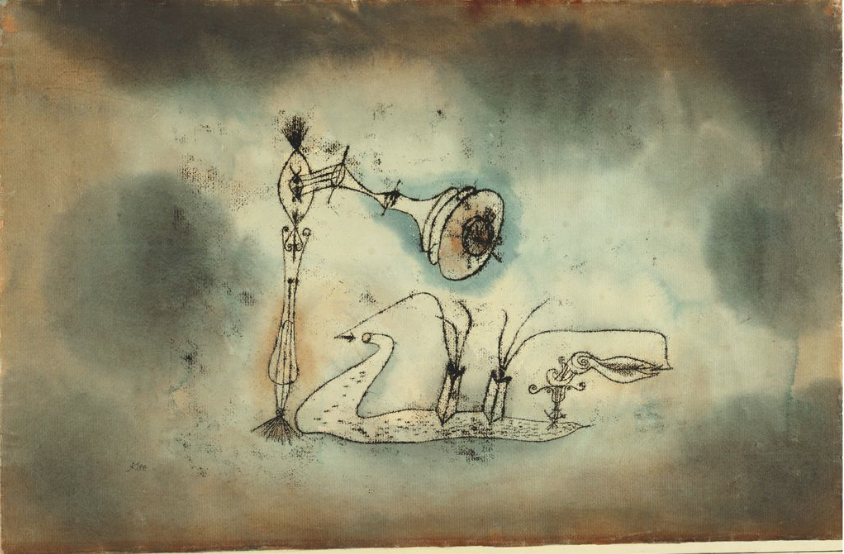
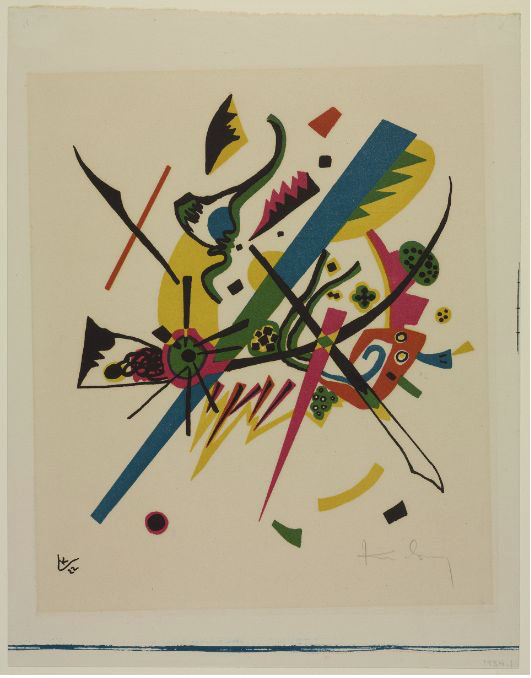
When we speak of Bauhaus design, we often for­get that the Bauhaus was also—and first principally—an art school. Until bro­ken up by the Nazis in 1933, it oper­at­ed under a rig­or­ous course of train­ing with a fac­ul­ty who brought with them a vari­ety of organ­ic the­o­ries and practices—not all of them enam­ored of tech­nol­o­gy or 90-degree angles. Paul Klee, for exam­ple, mocked our fas­ci­na­tion with machines in works like Appa­ra­tus for the Mag­net­ic Treat­ment of Plants (top) and Wass­i­ly Kandin­sky enact­ed his mys­ti­cal the­o­ries of sym­bol­ism in increas­ing­ly abstract, vibrant can­vas­es like Small Worlds, above.

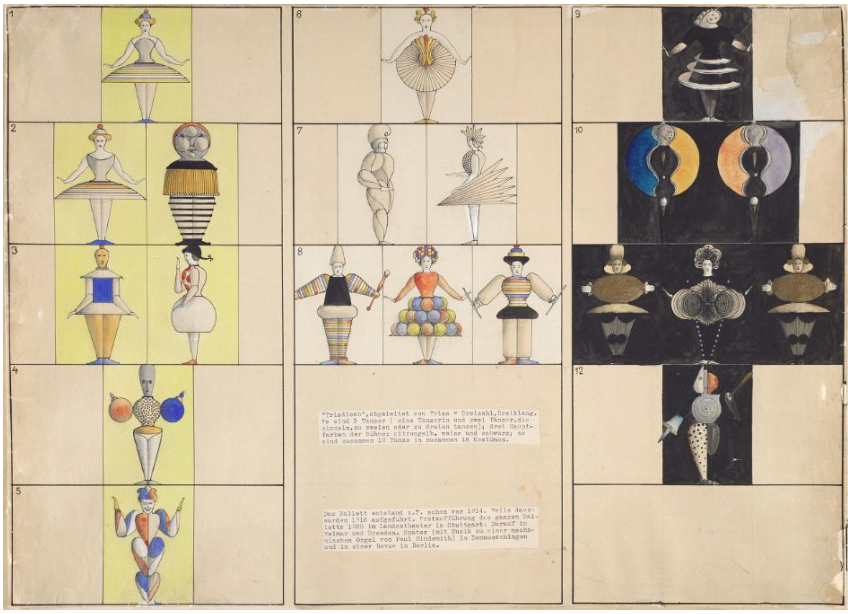
Both of these paint­ings reside in Harvard’s spe­cial col­lec­tion, “one of the first and largest col­lec­tions relat­ing to the Bauhaus,” and at the Har­vard Muse­ums web­site, you can find more works–in fact, more than 32,000 objects–by these artists and oth­ers like Oskar Schlem­mer, who designed many of those out­landish cos­tumes. (See some of those designs in his cos­tumes for the Tri­adic Bal­let, below.)

Schlemmer

The Har­vard Bauhaus col­lec­tion demon­strates how the Bauhaus school “served as hot­house for a vari­ety of ‘isms,’ from expres­sion­ism, Dadaism, con­struc­tivism, and func­tion­al­ism.” The ten­den­cy to asso­ciate Bauhaus with pri­ma­ry col­ors and min­i­mal­ist glass, steel, and con­crete has much to do with some of its best-known faculty/alumni, like founder Gropius, and architects/designers Mies Van der Rohe, Le Cor­busier, Eero Saari­nen, and his stu­dent Charles Eames.

These names are rep­re­sent­ed in the Har­vard col­lec­tion, but so are “dif­fer­ent facets of the Bauhaus and its lega­cy.” Paint­ings, pho­tographs, ceram­ics, tex­tiles, met­al­work…. One sec­tion of the site, Ped­a­gogy, shows us stu­dent work of artists like Her­bert Bay­er, below. Known for his “hard-edged ‘machine aes­thet­ic,” Bayer’s tra­di­tion­al char­coal study of wool and wood shav­ings “appears anti­thet­i­cal to the school’s rev­o­lu­tion­ary pro­gram.” Yet it is an exam­ple of Bauhaus’ empha­sis on fun­da­men­tals of tech­nique, “ped­a­gog­i­cal meth­ods that per­sist in var­i­ous form in art schools today.”

Bayer

Harvard’s web site rep­re­sents its phys­i­cal col­lec­tion, but it does not dupli­cate it. Many of the small images in its online archive do not expand to larg­er ver­sions and can­not be down­loaded. How­ev­er, if you fol­low the guid­ed tour by click­ing “Con­tin­ue Read­ing” under the site’s intro­duc­tion, you’ll be able to click on the sev­er­al dozen exam­ples in each sec­tion and see them up close. You’ll also get a thor­ough sur­vey of the Bauhaus school’s brief his­to­ry and mis­sion. The best way to access the col­lec­tion is to click here, then scroll down to the box where it says “Search the Bauhaus spe­cial col­lec­tion by key­word, title, artist, or object num­ber, and by using the fil­ters below.”

gropius

The only U.S. exhi­bi­tion of Bauhaus artists dur­ing the school’s life­time took place at Har­vard in 1930, orga­nized by under­grad­u­ates. And Wal­ter Gropius taught for fif­teen years at Harvard’s Grad­u­ate School of Design, dur­ing which time “he built the school up as a bas­tion of archi­tec­tur­al mod­ernism.” Gropius and his stu­dents and col­leagues changed the way we build and design. (See Gropius’ Total The­ater for Erwin Pis­ca­tor, above). The Har­vard Muse­um Bauhaus col­lec­tion also reminds us that they rev­o­lu­tion­ized art edu­ca­tion in Europe and the U.S.

Relat­ed Con­tent:

Down­load Orig­i­nal Bauhaus Books & Jour­nals for Free: Gropius, Klee, Kandin­sky, Moholy-Nagy & More

Kandin­sky, Klee & Oth­er Bauhaus Artists Designed Inge­nious Cos­tumes Like You’ve Nev­er Seen Before

Time Trav­el Back to 1926 and Watch Wass­i­ly Kandin­sky Cre­ate an Abstract Com­po­si­tion

Josh Jones is a writer and musi­cian based in Durham, NC. Fol­low him at @jdmagness

When James Joyce & Marcel Proust Met in 1922, and Totally Bored Each Other

Joyce Proust

When we invoke the names of famous artists of the past, we refer to their most hal­lowed work—Orson Welles simul­ta­ne­ous­ly means Cit­i­zen Kane, for exam­ple, or War of the Worlds, and H.G. Wells means The Time Machine or…  War of the Words. It hap­pens that when these two artists got togeth­er in 1940, they found that their worlds, which had already met in Welles’ noto­ri­ous broad­cast, had quite a lot to say to each oth­er, genial­ly trad­ing sto­ries, ideas, and mutu­al admi­ra­tion.

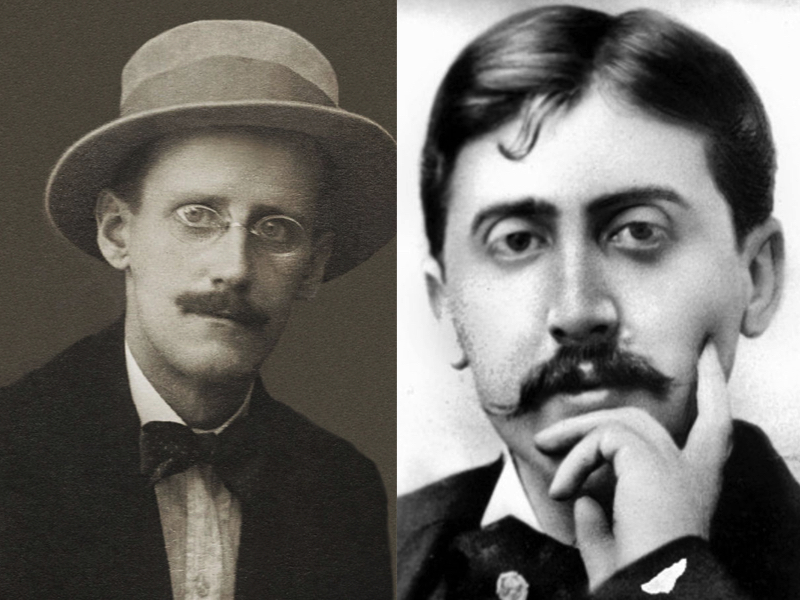
Anoth­er his­toric meet­ing between two artists we might con­sid­er kin­dred, James Joyce of Ulysses fame and Mar­cel Proust of In Search of Lost Time, did not pro­duce such a rich exchange. As Irish crit­ic Arthur Pow­er remarked, “Here are the two great­est lit­er­ary fig­ures of our time meet­ing and they ask each oth­er if they like truf­fles.”

That, at least, is one account of the occa­sion in May of 1922, near the end of Proust’s life. The meet­ing took place at a par­ty for Igor Stravin­sky and Sergei Diaghilev at the Majes­tic Hotel. Though both nov­el­ists pro­pelled their great­est work for­ward by extrap­o­lat­ing from their favorite sub­ject, them­selves, the selves in their work are expan­sive and vast, tak­ing in whole cities, nations, and social worlds. Both were vora­cious read­ers with incred­i­ble mem­o­ries (as we cer­tain­ly know of Proust) and an intu­itive grasp of the cul­tur­al mech­a­nisms of moder­ni­ty. Such seri­ous con­ver­sa­tions the two of them might have.…

But one attendee, William Car­los Williams, paints a much more com­ic pic­ture.….

Joyce, writes Ben Jack­son at the Lon­don Review of Books, “arrived drunk and poor­ly dressed; Proust, draped in furs, opened the door.” Then, writes Williams, the two men sat in chairs side by side, while “par­ti­sans” wait­ed for “the wits to sparkle and flash.” Instead, they kvetched in the sports-and-weath­er small talk of two elder­ly men meet­ing in a doctor’s wait­ing room, or two Samuel Beck­ett char­ac­ters, beset by pet­ty com­plaints of ulti­mate impor­tance.

Joyce said, “I’ve headaches every day. My eyes are ter­ri­ble.”
Proust replied, “My poor stom­ach. What am I going to do? It’s killing me. In fact, I must leave at once.”
“I’m in the same sit­u­a­tion,’ replied Joyce. ‘If I can find some­one to take me by the arm. Good­bye!”
“Char­mé,” said Proust. “Oh, my stom­ach, my stom­ach.”

Ford Madox Ford con­firms the account, but the party’s host, nov­el­ist Syd­ney Schiff denied it, reports Joyce’s most respect­ed biog­ra­ph­er Richard Ell­mann. Ell­mann doesn’t seem to favor one ver­sion or anoth­er, but he does give us Joyce’s own ver­sion, mul­ti­ply attest­ed. The Ulysses author remem­bered that their “talk con­sist­ed sole­ly of the word ‘No.’ Proust asked me if I knew the duc du so-and-so. I said, ‘No.’” Proust was asked if he’d read Ulysses, and like­wise replied in the neg­a­tive. “The sit­u­a­tion,” Joyce remem­bered, “was impos­si­ble.” Oth­er guests remem­bered the meet­ing sim­i­lar­ly.

In yet anoth­er ver­sion, we see the after­math of their conference—in a sto­ry that resem­bles many an end-of-the-night-gone-sour sce­nario. Syd­ney Schiff’s wife Vio­let recalled Joyce drunk­en­ly invit­ing him­self into a taxi with the two of them and Proust, and prompt­ly open­ing the win­dow. “Know­ing Proust’s dead­ly fear of drafts,” writes a Proust site, Vio­let “imme­di­ate­ly closed the win­dow.” When the cab arrived at Proust’s apart­ment, the French nov­el­ist “urged the Irish­man to let the taxi take him home,” then “fled to his apart­ment.”

The many con­flict­ing ren­di­tions all seem to agree on one thing: the meet­ing was a wash. Nonethe­less, one author recent­ly pub­lished what pur­ports to be an entire book on the sub­ject. Even he con­cludes “no one can say for cer­tain exact­ly what they said to each oth­er.” It’s tempt­ing to think things might have gone oth­er­wise, had they met ear­li­er or in dif­fer­ent cir­cum­stances, giv­en Joyce’s ten­den­cy to get too drunk and Proust’s ill health and aver­sion to, well, com­pa­ny. The New Inquiry cites a remark Joyce made to Samuel Beck­ett about Proust: “If we had been allowed to meet and have a talk some­where….”

Although it’s said that both writ­ers con­fessed to not hav­ing read the oth­er, Jack­son notes that when Joyce “did admit to pass­ing his eyes over a few pages he declared that he did not see ‘any spe­cial tal­ent.’” He also con­fessed to some envy of Proust’s com­fort­able cir­cum­stances. Proust, who died six months lat­er, left no men­tion of their meet­ing.

Relat­ed Con­tent:

Orson Welles Meets H.G. Wells in 1940: The Leg­ends Dis­cuss War of the Worlds, Cit­i­zen Kane, and WWII

The His­toric Meet­ing Between Dick­ens and Dos­to­evsky Revealed as a Great Lit­er­ary Hoax

Edward Said Recalls His Depress­ing Meet­ing With Sartre, de Beau­voir & Fou­cault (1979)

Josh Jones is a writer and musi­cian based in Durham, NC. Fol­low him at @jdmagness

« Go BackMore in this category... »
Quantcast