The History of Civilization Mapped in 13 Minutes: 5000 BC to 2014 AD

Above, watch “a geopo­lit­i­cal his­to­ry of all empires, nations, king­doms, armies and republics” unfold in 13 min­utes. Cre­at­ed by a YouTu­ber who sim­ply goes by the name “kard­board­king,” the video stitch­es togeth­er “more than 500 world maps span­ning all his­tor­i­cal events.” We start in Sumer, some­where around 5500–4000 BC. And end in 2014, with the world as we know it today.

Kard­board­king is care­ful to point out that the clip fea­tures civ­i­liza­tions with a writ­ing sys­tem and urban cen­ters. Hence “pre-his­tor­i­cal cul­tures” don’t make an appear­ance here. For a tru­ly com­pre­hen­sive his­to­ry of the world, see: The His­to­ry of the World in 46 Lec­tures From Colum­bia Uni­ver­si­ty.

If you would like to sign up for Open Culture’s free email newslet­ter, please find it here. It’s a great way to see our new posts, all bun­dled in one email, each day.

If you would like to sup­port the mis­sion of Open Cul­ture, con­sid­er mak­ing a dona­tion to our site. It’s hard to rely 100% on ads, and your con­tri­bu­tions will help us con­tin­ue pro­vid­ing the best free cul­tur­al and edu­ca­tion­al mate­ri­als to learn­ers every­where. You can con­tribute through Pay­Pal, Patre­on, and Ven­mo (@openculture). Thanks!

Relat­ed Con­tent:

Free: Nation­al Geo­graph­ic Lets You Down­load Thou­sands of Maps from the Unit­ed States Geo­log­i­cal Sur­vey

Down­load 67,000 His­toric Maps (in High Res­o­lu­tion) from the Won­der­ful David Rum­sey Map Col­lec­tion

The His­to­ry of Car­tog­ra­phy, the “Most Ambi­tious Overview of Map Mak­ing Ever,” Now Free Online

New York Pub­lic Library Puts 20,000 Hi-Res Maps Online & Makes Them Free to Down­load and Use

Free Online His­to­ry Cours­es

by | Permalink | Make a Comment ( 6 ) |

Watch Sunspring, the Sci-Fi Film Written with Artificial Intelligence, Starring Thomas Middleditch (Silicon Valley)

This past spring the streets of Seoul, where I live, felt more like a sci-fi movie than usu­al. Large over­head video screens kept the pop­u­la­tion post­ed on the progress of a series of Go match­es between 18-time world cham­pi­on Lee Sedol and Alpha­Go, a piece of arti­fi­cial intel­li­gence devel­oped by Google Deep­Mind. Com­put­ers have long had a spe­cial dif­fi­cul­ty mas­ter­ing that tra­di­tion­al game, but before long it became clear that this com­put­er would win most of the match­es, despite the human’s for­mer­ly unshak­able pre­dic­tion of the oppo­site out­come. What would arti­fi­cial intel­li­gence achieve next?

“In the wake of Google’s AI Go vic­to­ry, film­mak­er Oscar Sharp turned to his tech­nol­o­gist col­lab­o­ra­tor Ross Good­win to build a machine that could write screen­plays,” say the video notes for the new short film Sun­spring. They assem­bled hun­dreds of sci­ence fic­tion scripts, most­ly from 1980s and 90s tele­vi­sion shows and movies, and fed them into the arti­fi­cial intel­li­gence, which even­tu­al­ly named itself Ben­jamin, so as to teach it the mechan­ics of screen­writ­ing. “Build­ing a team includ­ing Thomas Mid­dled­itch, star of HBO’s Sil­i­con Val­ley, they gave them­selves 48 hours to shoot and edit what­ev­er Ben­jamin decid­ed to write.” Ben­jamin decid­ed to write eight min­utes’ worth of its own inter­pre­ta­tion of the tropes of a cer­tain kind of sci-fi enter­tain­ment.

It did come up with, fair to say, some dia­logue a human screen­writer could only dream of — that is to say, words with the kind of uncon­scious log­ic that, deliv­ered by liv­ing, breath­ing actors in phys­i­cal spaces, take on weight, humor, and even an askew kind of mean­ing. (Mid­dled­itch’s despon­dent “I am not a bright light” will sure­ly stay quotable for years to come.) You can learn more about the mak­ing of Sun­spring from this Ars Tech­ni­ca piece by Annalee Newitz. Ben­jamin won’t put any sci-fi scribes out of work just yet, haunt­ing though it may seem for a pro­gram to have come so close to doing some­thing clas­si­cal­ly human as telling a sto­ry about the future. But remem­ber, peo­ple had to write that pro­gram, just as peo­ple had to cre­ate Alpha­Go; every achieve­ment of arti­fi­cial intel­li­gence thus also counts as an achieve­ment of human­i­ty.

Relat­ed Con­tent:

The Soci­ety of Mind: A Free Online Course from Mar­vin Min­sky, Pio­neer of Arti­fi­cial Intel­li­gence

Two Arti­fi­cial Intel­li­gence Chat­bots Talk to Each Oth­er & Get Into a Deep Philo­soph­i­cal Con­ver­sa­tion

Noam Chom­sky Explains Where Arti­fi­cial Intel­li­gence Went Wrong

Based in Seoul, Col­in Mar­shall writes and broad­casts on cities and cul­ture. He’s at work on a book about Los Ange­les, A Los Ange­les Primer, the video series The City in Cin­e­ma, the crowd­fund­ed jour­nal­ism project Where Is the City of the Future?, and the Los Ange­les Review of Books’ Korea Blog. Fol­low him on Twit­ter at @colinmarshall or on Face­book.

Mashup Weaves Together 57 Famous Classical Pieces by 33 Composers: From Bach to Wagner

Musi­cal mash up artist Grant Woolard has found a per­fect­ly eth­i­cal way to side­step copy­right issues. Sam­ple the great­est hits of long dead clas­si­cal com­posers.

The prag­mat­i­cal­ly titled “Clas­si­cal Music Mashup,” above, weaves 57 melodies by Mozart, Beethoven, Ver­di, and 30 oth­er greats into one six minute com­po­si­tion.

Woolard invites lis­ten­ers to sep­a­rate out the strands, most of which will sound famil­iar, even if you are unable to name that tune.

(One sharp-eared lis­ten­er not only accept­ed the chal­lenge, but post­ed a com­plete list­ing of all the com­posers and com­po­si­tions in chrono­log­i­cal order with time stamps. Those who don’t mind SPOILERS can view it at the end of this post.)

Those who crave an even more inter­ac­tive assign­ment can down­load the sheet music (for a small fee), then recruit two more pianists to per­form the six-hand­ed piece.

You can also buy an audio track of the com­po­si­tion here.

And now, the list of Woolard’s raw ingre­di­ents, com­pli­ments of youtube com­menter, Yifeng Huang:

1. Mozart Eine Kleine Nacht­musik K525 0:01

2. Haydn Sym­pho­ny 94 “Sur­prise” II 0:01

3. Beethoven Sym­pho­ny 9 IV (Ode to Joy) 0:06

4. Mendelssohn Wed­ding March in Mid­sum­mer Night’s Dream, sec­ond theme 0:06

5. Dvo­rak Humoresque No.7 0:13

6. Wag­n­er Lohen­gerin, Bridal Cho­rus 0:13

7. Tchaikovsky Piano Con­cer­to 1 0:19

8. Saint-Saens Car­ni­val of Ani­mals: Swan 0:19

9. Bach Well Tem­pered Clavier Book 1 Pre­lude 1 0:19

10. Tchaikovsky 1812 Over­ture 0:29

11. Bach Cel­lo Suite No. 1 0:32

12. Mendelssohn Song with­out Words “Spring” 0:33

13. Schu­bert Ave Maria 0:40

14. Schu­bert Sym­pho­ny 8 “Unfin­ished” 0:46

15. Ver­di “La Don­na è Mobile” in Rigo­let­to 0:51

16. Boc­cheri­ni String Quar­tet in E, Op.11 No.5, III. Min­uet­to 0:55

17. Beethoven für Elise 1:03

18. CPE Bach Solfeg­gi­et­to 1:04

19. Pagani­ni Capric­cio 24 1:11

20. Mozart Piano Sonata No.11 III (Turk­ish March) 1:15

21. Grieg Piano Con­cer­to 1:22

22. Mozart Requiem Lac­rimosa 1:26

23. Schu­bert Ser­e­nade 1:30

24. Chopin Pre­lude in C minor 1:35

25. Strauss II Over­ture from Die Fle­d­er­maus (Bat) 1:46

26. Brahms 5 Lieder Op.49, IV. Wiegen­lied (Lul­la­by) 1:46

27. Satie Gymno­pe­die 1:56

28. Debussy Arabesque 2:00

29. Holst Plan­ets, Jupiter 2:05

30. Schu­bert Trout 2:14

31. Liszt Hun­gar­i­an Rhap­sody No.2 2:28

32. Mozart Vari­a­tion on Twin­kle Twin­kle Lit­tle Star 2:41

33. Schu­mann Op.68, No.10 Mer­ry Peas­ant 2:47

34. Schu­bert Mil­i­tary March in D 2:54

35. Bach* (could be Pet­zold) Min­uet in G 3:00

36. Mozart Piano Sonata No.16 in C, K545 3:07

37. Offen­bach Can-can in “Orpheus in the under­world” 3:08

38. Beethoven Piano Sonata No.8 “Pathe­tique” II 3:18

39. Mozart Die Zauber­flöte Over­ture 3:24

40. Tchaikovsky Romeo and Juli­et Over­ture 3:31

18′. CPE Bach Solfeg­gi­et­to 3:44

41. Beethoven Sym­pho­ny 5 “Fate” 3:47

6′. Wag­n­er Wed­ding March 3:52

42. Rach­mani­noff Pre­lude Op.3 No.2 in C# minor 3:53

18′. CPE Bach Solfeg­gi­et­to 3:56

43. Chopin Piano Sonata No. 2 III. Funer­al March 4:11

44. Williams Impe­r­i­al March in Star War 4:19

45. Tchaikovsky Marche Slave 4:25

46. Smetana Ma Vlast II. Moldau 4:38

47. Tchaikovsky Nut­crack­er — Flower Waltz (not the main theme!) 4:45

48. Borodin Polovt­sian Dances 4:45

49. Strauss II Blue Danube 4:58

50. Vival­di Four Sea­sons I. Spring 5:03

51. Han­del Mes­si­ah, Hal­lelu­jah 5:03

52. Han­del The Entrance of the Queen of She­ba 5:08

53. Elgar Pomp and Cir­cum­stance March­es No. 1 5:15

54. Pachel­bel Canon in D 5:21

55. Mozart Sym­pho­ny No. 35 in D major (Haffn­er) K. 385, IV. Finale, Presto 5:27

56. Chopin Etude Op.25 No.9 in G flat, “But­ter­fly” 5:34

57. Bach Gavotte from French Suite No. 5 in G Major, BWV 816 5:42


Relat­ed Con­tent:

The World Con­cert Hall: Lis­ten To The Best Live Clas­si­cal Music Con­certs for Free

1200 Years of Women Com­posers: A Free 78-Hour Music Playlist That Takes You From Medieval Times to Now

Debussy’s Clair de lune: The Clas­si­cal Music Visu­al­iza­tion with 21 Mil­lion Views

Ayun Hal­l­i­day is an author, illus­tra­tor, the­ater mak­er and Chief Pri­ma­tol­o­gist of the East Vil­lage Inky zine.  Her lat­est script, Fawn­book, is avail­able in a dig­i­tal edi­tion from Indie The­ater Now.  Fol­low her @AyunHalliday.

Watch What Happens When 100 Metronomes Perform György Ligeti’s Controversial Poème Symphonique

A loose asso­ci­a­tion of mid-20th cen­tu­ry artists includ­ing at times John Cage, Yoko Ono, and Joseph Bueys, the Fluxus group pro­duced a lot of strange per­for­ma­tive work and anti-art stunts influ­enced by sim­i­lar provo­ca­tions from ear­li­er Dada artists. The movement’s “patron saint,” Martha Schwen­den­er writes at The New York Times, was Mar­cel Duchamp, whose “idea of art (or life) as a game in which the artist recon­fig­ures the rules is cen­tral to Fluxus.” Also cen­tral was Duchamp’s con­cept of the “ready-made”—everyday objects turned into objets d’art by means part rit­u­al and part prank.

We can think of the piece above in both reg­is­ters. Györ­gy Ligeti’s Poème sym­phonique, a com­po­si­tion involv­ing 100 metronomes and ten oper­a­tors, fit right in with Fluxus dur­ing Ligeti’s brief asso­ci­a­tion with them.

Writ­ten in 1962—and yes, it has a writ­ten score—Ligeti’s piece “owes much of its suc­cess to its pre­sen­ta­tion as a ridicu­lous spec­ta­cle,” writes com­pos­er Jason Char­ney, who has made a dig­i­tal recre­ation. Ligeti pro­vides spe­cif­ic instruc­tions for the per­for­mance.

The work is per­formed by 10 play­ers under the lead­er­ship of a con­duc­tor … Each play­er oper­ates 10 metronomes … The metronomes must be brought onto the stage with a com­plete­ly run-down clock­work … the play­ers wind up the metronomes …  at a sign from the con­duc­tor, all the metronomes are set in motion by the play­ers.

These are fol­lowed almost to the let­ter in the video at the top of the page, with the added bonus of hold­ing the per­for­mance in a Goth­ic church. What does it sound like? A cacoph­o­nous rack­et. A water­fall of type­writ­ers. And yet, believe it or not, some­thing inter­est­ing does hap­pen after a while; you become attuned to its inter­nal log­ic. Pat­terns emerge and dis­ap­pear in the rever­ber­a­tion from the church walls: A wave of robot applause, then sooth­ing white noise, then a move­ment or two of a fac­to­ry sym­pho­ny.…

“The score,” notes Matt Jol­ly, who shot the video, “calls for a long silence and then up to an hour of tick­ing. We decid­ed to short­en this con­sid­er­ably. The metronomes are sup­posed be ful­ly wound but we had to lim­it that to 13 turns on aver­age.” The inge­nu­ity of Ligeti’s piece far sur­pass­es that of any mere prank, as does the logis­ti­cal and mate­r­i­al demand. The com­pos­er ful­ly acknowl­edged this, pro­vid­ing specifics as to how per­form­ers might go about secur­ing their “instru­ments,” hard to come by in such large quan­ti­ty even in 1962. (Mechan­i­cal metronomes are now all but obso­lete.) Char­ney quotes from Ligeti’s help­ful sug­ges­tions, which include enlist­ing the ser­vices of an “exec­u­tive coun­cil of a city, one or more of the music schools, one or more busi­ness­es, one or more pri­vate per­sons….”

I doubt he meant any of this seri­ous­ly. Dutch Tele­vi­sion can­celed a planned 1963 broad­cast of Poème sym­phonique from an ear­ly per­for­mance in the Nether­lands. The event includ­ed speech­es by local politi­cians and an audi­ence who had no idea what to expect. As you might imag­ine, they did not react favor­ably. Like the ear­li­er anti-art Ligeti’s idea draws from, he explic­it­ly framed the com­po­si­tion as “a spe­cial sort of cri­tique,” whose score is “admit­ted­ly rather iron­ic” and in which he rants vague­ly against “all ide­olo­gies” and “rad­i­cal­ism and petit-bour­geois atti­tudes” alike. How seri­ous­ly he means this is also anyone’s guess. And yet, prank or art, peo­ple con­tin­ue to per­form the piece, as in the even short­er ren­di­tion above, which goes even fur­ther in remov­ing the human ele­ment by design­ing a machine to start all the metronomes simul­ta­ne­ous­ly.

Relat­ed Con­tent:

Hear the Rad­i­cal Musi­cal Com­po­si­tions of Mar­cel Duchamp (1912–1915)

Hear the Exper­i­men­tal Music of the Dada Move­ment: Avant-Garde Sounds from a Cen­tu­ry Ago

The Music of Avant-Garde Com­pos­er John Cage Now Avail­able in a Free Online Archive

Josh Jones is a writer and musi­cian based in Durham, NC. Fol­low him at @jdmagness

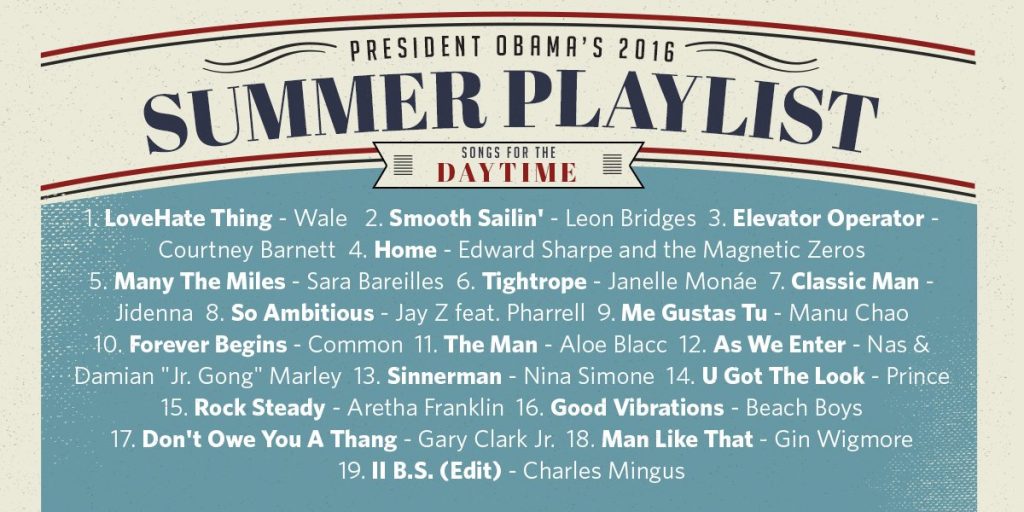
A Free POTUS Summer Playlist: Pres. Obama Curates 39 Songs for a Summer Day

Cplc_Y9UkAAabrS

Like he did last sum­mer, Pres­i­dent Oba­ma has put togeth­er two eclec­tic music playlists–one for a hot sum­mer day, and anoth­er for a sum­mer evening. And they’re both pret­ty chill, the stuff vaca­tions are made of. If you have Spo­ti­fy (down­load it here), you can start stream­ing all of the songs below. And if you want to know more about Clin­ton and Trump’s favorite songs, check out this piece on Rolling Stone.

The Pres­i­den­t’s Sum­mer Playlist: Day­time

  1. Love­Hate Thing — Wale
  2. Smooth Sailin’ — Leon Bridges
  3. Ele­va­tor Oper­a­tor — Court­ney Bar­nett
  4. Home — Edward Sharpe and the Mag­net­ic Zeros
  5. Many the Miles — Sara Bareilles
  6. Tightrope — Janelle Mon­ae
  7. Clas­sic Man — Jiden­na
  8. So Ambi­tious — Jay‑Z, feat. Phar­rell
  9. Me Gus­tas Tu — Manu Chao
  10. For­ev­er Begins — Com­mon
  11. The Man — Aloe Blacc
  12. As We Enter — Nas & Dami­an “Jr. Gong” Mar­ley
  13. Sin­ner­man — Nina Simone
  14. U Got the Look — Prince
  15. Rock Steady — Aretha Franklin
  16. Good Vibra­tions — Beach Boys
  17. Don’t Owe You A Thang — Gary Clark Jr.
  18. Man Like That — Gin Wig­more
  19. II B.S. (edit) — Charles Min­gus

The Pres­i­den­t’s Sum­mer Playlist: Night­time

  1. If I Have My Way — Chrisette Michelle
  2. Espera — Esper­an­za Spald­ing
  3. Tell It Like It Is — Aaron Neville
  4. Alright — Ledisi
  5. Trapped By A Thing Called Love — Denise Lasalle
  6. Lady — D’An­ge­lo
  7. So Very Hard to Go — Tow­er of Pow­er
  8. Mid­night Sun — Car­men McCrae
  9. Cucur­ru­cu­cu Palo­ma — Cae­tano Veloso
  10. Green Aphro­disi­ac — Corinne Bai­ley Rae
  11. I’ll Be There for You / You’re All I Need — Mary J Blige / Method Man
  12. Lover Man — Bil­lie Hol­i­day
  13. Crim­i­nal — Fiona Apple
  14. Acid Rain — Chance the Rap­per
  15. My Fun­ny Valen­tine — Miles Davis
  16. Do You Feel Me — Antho­ny Hamil­ton
  17. I Get Lone­ly — Janet Jack­son
  18. Lean In — Lizz Wright
  19. All Day Music — War
  20. Say Yes — Floetry

via CNN.

If you would like to sign up for Open Culture’s free email newslet­ter, please find it here. It’s a great way to see our new posts, all bun­dled in one email, each day.

If you would like to sup­port the mis­sion of Open Cul­ture, con­sid­er mak­ing a dona­tion to our site. It’s hard to rely 100% on ads, and your con­tri­bu­tions will help us con­tin­ue pro­vid­ing the best free cul­tur­al and edu­ca­tion­al mate­ri­als to learn­ers every­where. You can con­tribute through Pay­Pal, Patre­on, and Ven­mo (@openculture). Thanks!

by | Permalink | Make a Comment ( 5 ) |

Watch collective:unconscious, the Acclaimed Indie Film Where 5 Filmmakers Adapt Each Other’s Dreams for the Screen

What an irony that, when you have a vivid, fun­ny, ter­ri­fy­ing, elab­o­rate dream, you dare not tell any­one for fear of bor­ing them. But what if you could let some­one else expe­ri­ence your dreams first-hand? The group of inde­pen­dent film­mak­ers behind this year’s collective:unconscious (not to be con­fused with the New York artist group of almost the same name) have put their wak­ing heads togeth­er to come as close as pos­si­ble to doing just that. Daniel Patrick Car­bone, Josephine Deck­er, Lau­ren Wolk­stein, Frances Bodomo, and Lily Bald­win have cre­at­ed a port­man­teau film by adapt­ing one anoth­er’s dreams for the screen, which you can dream along with them by watch­ing free on Vimeo.

“I remem­ber back when I was a teen, watch­ing Mul­hol­land Dri­ve for the first time in the the­ater,” writes collective:unconscious’ pro­duc­er Dan Schoen­brun in an essay on the mak­ing of the film at Indiewire. “I remem­ber my mind being blown. I remem­ber think­ing, ‘Movies can do that?’ ”

David Lynch has made his name with pic­tures, Mul­hol­land Dri­ve and oth­ers, that feel dream­like in the rich­est, most haunt­ing sense of the word. But rather than a set of Lynch homages, each of the five film­mak­ers con­tribut­ing here come at the project of cin­e­ma­tiz­ing the uncon­scious expe­ri­ence dif­fer­ent­ly. Some may feel just like your own dreams; oth­ers may feel noth­ing like them.

Rolling Stone sum­ma­rizes the “hyp­not­i­cal­ly sense­less” results neat­ly: “a gor­geous sketch about a wood­land sniper drifts into a Mal­ick-esque por­trait of an ex-con’s first day of free­dom; a gym teacher pre­pares his class for a vol­cano drill; a young moth­er who’s giv­ing birth to an ele­men­tal mon­ster; the grim reaper hosts a TV show about mur­dered black chil­dren.” The film has already made an impres­sive cir­cuit around the fes­ti­vals, includ­ing his year’s South by South­west (where the New York­er’s Richard Brody named it as a favorite), so clear­ly their review com­mit­tees saw some­thing much more inter­est­ing going on than the kind of recount­ing of dreams that goes on over break­fast. As they say, there’s much more going on in the uncon­scious — more of artis­tic use, any­way — than we under­stand.

collective:unconscious will be added to our col­lec­tion, 4,000+ Free Movies Online: Great Clas­sics, Indies, Noir, West­erns, Doc­u­men­taries & More.

Relat­ed Con­tent:

Watch Dreams That Mon­ey Can Buy, a Sur­re­al­ist Film by Man Ray, Mar­cel Duchamp, Alexan­der Calder, Fer­nand Léger & Hans Richter

David Lynch Presents the His­to­ry of Sur­re­al­ist Film (1987)

Based in Seoul, Col­in Mar­shall writes and broad­casts on cities and cul­ture. He’s at work on a book about Los Ange­les, A Los Ange­les Primer, the video series The City in Cin­e­ma, the crowd­fund­ed jour­nal­ism project Where Is the City of the Future?, and the Los Ange­les Review of Books’ Korea Blog. Fol­low him on Twit­ter at @colinmarshall or on Face­book.

A Six-Hour Playlist of Shel Silverstein’s Poems & Songs: Where the Sidewalk Ends, A Light in the Attic & More

Shel_Silverstein_Signature.svg

Image via Wiki­me­dia Com­mons

Ah, the dog days of sum­mer…

Is your fam­i­ly hot and cranky? Crammed togeth­er in a car for the long ride home? Has bore­dom set in, despite the thou­sands of Poké­mon still at large?

The per­fect anti­dote, dear read­ers, is this six-hour playlist of poet and musi­cian Shel Sil­ver­stein’s best loved work. If you need Spo­ti­fy, down­load it here.

Uncle Shel­by him­self kicks things off with an invi­ta­tion to all dream­ers, wish­ers, liars, hop­ers, pray-ers, mag­ic-bean-buy­ers, and pre­tenders.

That net seems suf­fi­cient­ly wide to encom­pass just about every­one, even (espe­cial­ly!) the sullen teen who wasn’t allowed to stay home by him or her­self.

Sil­ver­stein did not sub­scribe to the dry nar­ra­tive style that E.B.White used to such great effect on the audio­book of Charlotte’s Web.

Instead, he cracks him­self up, hiss­ing, yip­ping and howl­ing his way through Where the Side­walk Ends and A Light in the Attic. A vet­er­an of Off-Broad­way and the author of over a hun­dred one-act plays, Sil­ver­stein clear­ly rel­ished per­form­ing his own work.

(As evi­dence, we sub­mit “Warn­ing,” an instruc­tion­al poem con­cern­ing the sharp-toothed snail dwelling inside every human nose.)

His unhinged gus­to is dou­bly pleas­ing when one recalls the attempts to ban his work from libraries and ele­men­tary schools due to the pres­ence of demons, dev­ils, ghosts, and a manip­u­la­tive lit­tle girl who makes good on her threat to die if her par­ents won’t buy her a pony.

The back end of the playlist is a tes­ta­ment to the poet’s musi­cal abil­i­ties. Per­haps the best known song in his mas­sive cat­a­log is John­ny Cash’s hit “A Boy Named Sue,” above. In addi­tion to Cash and Silverstein’s own hoarse tenor, you’ll encounter the likes of Willie Nel­son, Bob­by Bare and long­time Sil­ver­stein col­lab­o­ra­tor Dr. Hook.

My only regret is the absence of my per­son­al favorite Sil­ver­stein poem …it seems unlike­ly that such a track exists, but I do love imag­in­ing the hav­oc it could wreak in the fam­i­ly car. Chil­dren, don’t for­get your eggs.

Relat­ed Con­tent:

Six Ani­ma­tions of Sto­ries and Poems by Shel Sil­ver­stein

Shel Sil­ver­stein Nar­rates an Ani­mat­ed Ver­sion of The Giv­ing Tree (1973)

Studs Terkel Inter­views Bob Dylan, Shel Sil­ver­stein, Maya Angelou & More in New Audio Trove

Ayun Hal­l­i­day is an author, illus­tra­tor, the­ater mak­er and Chief Pri­ma­tol­o­gist of the East Vil­lage Inky zine.  Her lat­est script, Fawn­book, is avail­able in a dig­i­tal edi­tion from Indie The­ater Now.  Fol­low her @AyunHalliday.

Cate Blanchett Stars in a New Massive Attack Video, Which Doubles as a Short Art-House Film

Every direc­tor who casts Cate Blanchett—whether in peri­od block­busters like Eliz­a­beth or Aus­tralian indies like Lit­tle Fish­es—lets the cam­era dwell on her face for sev­er­al silent beats in almost every scene she’s in. It’s almost a way of estab­lish­ing her face as a char­ac­ter all its own, with its sharp fea­tures and con­sum­ing stare. Just above, Mas­sive Attack’s video for their new song, “The Spoils,” takes this ten­den­cy deep into the uncan­ny val­ley.

Open­ing with a shot of Blanchett’s eyes, then sev­er­al long, lin­ger­ing looks at her face in close-up and deep chiaroscuro, the video quick­ly becomes more abstract and alien as it decon­structs her beau­ty into var­i­ous kinds of arti­fice. It’s an art-house motif we’ve seen used effec­tive­ly with oth­er actress­es known for their strik­ing good looks—Scarlett Johans­son in 2013’s Under the Skin, for exam­ple, or last year’s Ex Machi­na with Ali­cia Vikan­der.

These are films that defa­mil­iar­ize their famous actress­es and dis­rupt our com­fort­ably shal­low ideas about beau­ty and gen­der. “The Spoils”—scored by a band known for their cin­e­mat­ic sound (and occa­sion­al­ly Oscar-win­ning film sound­tracks) and their polit­i­cal stances—functions beau­ti­ful­ly as a mini-exper­i­men­tal film that takes us into pro­found and unset­tling ter­ri­to­ry. This should come as no sur­prise; its direc­tor, John Hill­coat, also adapt­ed Cor­mac McCarthy’s The Road into a film from which, for all its bleak­ness, we can hard­ly look away.

Mas­sive Attack is also known for work­ing with some of the most soul­ful of UK singers, includ­ing Shara Nel­son, Tracey Thorn, Eliz­a­beth Fras­er, and Sinead O’Connor. In “The Spoils,” they col­lab­o­rate with an Amer­i­can, anoth­er name we asso­ciate with the best of hazy, atmos­pher­ic 90s chill-out music, Mazzy Star’s Hope San­doval. The results are hyp­not­ic, as in all Sandoval’s work, and lush­ly, metic­u­lous­ly pro­duced.

That said, tak­en sep­a­rate­ly, the song los­es some of the arrest­ing emo­tion­al pow­er it has accom­pa­ny­ing HIll­coat’s Twi­light Zone images. You may be put in mind of the House intro with its x‑rays and organs shroud­ed in dark­ness, scored to Mas­sive Attack’s “Teardrop.” But we can also com­pare “The Spoils” to “Teardrop”’s offi­cial video, above, anoth­er lin­ger­ing med­i­ta­tion on human iden­ti­ty and per­son­al­i­ty.

via Elec­tron­ic Beats

Relat­ed Con­tent:

Michel Gondry’s Finest Music Videos for Björk, Radio­head & More: The Last of the Music Video Gods

The New Radio­head Album is Out; Watch a Paul Thomas Ander­son-Direct­ed Music Video for One of the New Sin­gles

David Fincher’s Five Finest Music Videos: From Madon­na to Aero­smith

Josh Jones is a writer and musi­cian based in Durham, NC. Fol­low him at @jdmagness

« Go BackMore in this category... »
Quantcast