The History of Rock Told in a Whirlwind 15-Minute Video

Based in Eng­land, Itha­ca Audio spe­cial­izes in cre­at­ing music for film, TV, ani­ma­tions and games. And they also have a knack for remix­ing audio visu­als and pro­duc­ing mashups. Care to sam­ple their work? Watch the video above.

The His­to­ry of Rock takes you from Elvis to The White Stripes, trav­el­ing from 1957 to 2003, in the space of 15 min­utes. 348 rock­stars, 84 gui­tarists, 64 songs, 44 drum­mers — they’re all knit­ted into a nar­ra­tive using a device–the Face­book timeline–that came into exis­tence in 2004. It’s anachro­nis­tic but clever, and I’m will­ing to sus­pend dis­be­lief and take the ride. A big­ger com­plaint might be the one made by For­rest Wick­man over at Slate. “No Lit­tle Richard. No Ike Turn­er and Jack­ie Bren­ston. No Sis­ter Roset­ta Tharpe. No Bo Did­dley or Big Joe Turn­er,” he observes. The His­to­ry of Rock would have you believe that “rock was [orig­i­nal­ly] pio­neered exclu­sive­ly by white artists.” Give Kei­th Richards and Mick Jag­ger the chance–two icons who orig­i­nal­ly saw them­selves as just play­ing the Amer­i­can blues–and they might tell the ori­gin sto­ry of rock n roll a lit­tle dif­fer­ent­ly.

Below you can see a list of tracks used in the mashup. And if you head over to the Itha­ca Audio web­site, you can down­load the sound­track in full.

Elvis Pres­ley — Jail­house Rock
The Yard­birds — For your Love
The Rolling Stones — Honky Tonk Women
The Rolling Stones — (I Can’t Get No) Sat­is­fac­tion
Cream — Sun­shine of your Love
Led Zep­pelin — Whole Lot­ta Love
Led Zep­pelin — Good Times, Bad Times
Led Zep­pelin — Immi­grant Song
Jimi Hen­drix — Hey Joe
Jimi Hen­drix — Pur­ple Haze
Fleet­wood Mac — Oh Well (Part 1)
The Kinks — You Real­ly Got Me
The Doors — Rid­ers on the Storm
Queen — Don’t Stop Me
Queen — Radio Ga Ga
Queen — Anoth­er One Bites the Dust
Queen — A Kind of Mag­ic
The Bea­t­les — Sgt. Pep­per’s Lone­ly Hearts Club Band
The Who — Baba O’Ri­ley
The Who — Emi­nence Front
Black Sab­bath — Iron Man
Black Sab­bath — War Pigs
Deep Pur­ple — Woman From Tokyo
Deep Pur­ple — Smoke on the Water
Deep Pur­ple — Liv­ing Wreck
The Eagles — Life in the Fast Lane
Aero­smith — Walk this Way
Aero­smith — Dude Looks Like a Lady
Alice Coop­er — I’m Eigh­teen
The Clash — Train in Vain (Stand by Me)
The Police — Rox­anne
Jour­ney — Don’t Stop Believin’
Dire Straits — Sul­tans of Swing
Duran Duran — Girls on Film
Duran Duran — Wild Boys
Pink Floyd — Anoth­er Brick in the Wall
David Bowie — Let’s Dance
David Bowie & Queen — Under Pres­sure
Iron Maid­en — Run to the Hills
Def Lep­pard — Pour Some Sug­ar on Me
Guns N’ Ros­es — Mr Brown­stone
Guns N’ Ros­es — Sweet Child O’ Mine
AC/DC — Back in Black
Rage Against the Machine — Bomb­track
Rage Against the Machine — Guer­ril­la Radio
Rage Against the Machine — Killing in the Name
Metal­li­ca — Enter Sand­man
Nir­vana — Smells Like Teen Spir­it
Nir­vana — Heart Shaped Box
Oasis — Super­son­ic
Oasis — Live For­ev­er
Blur — Song 2
The Verve — Bit­ter­sweet Sym­pho­ny
Radio­head — High and Dry
Radio­head — Idioteque
Red Hot Chili Pep­pers — Can’t Stop
The Killers — All These Things That I’ve Done
Foo Fight­ers — All My Life
U2 — Hold Me, Thrill Me, Kiss Me, Kill Me
Linkin Park — One Step Clos­er
The White Stripes — Sev­en Nation Army
The Strokes — 12 51
Goril­laz — Clint East­wood
Kings of Leon — Sex on Fire

If you would like to sign up for Open Culture’s free email newslet­ter, please find it here. It’s a great way to see our new posts, all bun­dled in one email, each day.

If you would like to sup­port the mis­sion of Open Cul­ture, con­sid­er mak­ing a dona­tion to our site. It’s hard to rely 100% on ads, and your con­tri­bu­tions will help us con­tin­ue pro­vid­ing the best free cul­tur­al and edu­ca­tion­al mate­ri­als to learn­ers every­where. You can con­tribute through Pay­Pal, Patre­on, and Ven­mo (@openculture). Thanks!

Relat­ed Con­tent:

A His­to­ry of Rock ‘n’ Roll in 100 Riffs

Rock Crit­ic Greil Mar­cus Picks 10 Unex­pect­ed Songs That Tell the Sto­ry of Rock ‘n’ Roll

The Evo­lu­tion of the Rock Gui­tar Solo: 28 Solos, Span­ning 50 Years, Played in 6 Fun Min­utes

by | Permalink | Make a Comment ( 10 ) |

New Order’s “Blue Monday” Played with Obsolete 1930s Instruments

Released 33 years ago this week, New Order’s “Blue Mon­day” (hear the orig­i­nal EP ver­sion here) became, accord­ing to the BBC, “a cru­cial link between Sev­en­ties dis­co and the dance/house boom that took off at the end of the Eight­ies.” If you fre­quent­ed a dance club dur­ing the 1980s, you almost cer­tain­ly know the song.

The orig­i­nal “Blue Mon­day” nev­er quite won me over. I’m much more Rolling Stones than New Order. But I’m tak­en with the adap­ta­tion above. Cre­at­ed by the “Orkestra Obso­lete,” this ver­sion tries to imag­ine what the song would have sound­ed like in 1933, using only instru­ments avail­able at the time— for exam­ple, writes the BBC, the theremin, musi­cal saw, har­mo­ni­um and pre­pared piano. Quite a change from the Pow­ertron Sequencer, Moog Source syn­the­siz­er, and Ober­heim DMX drum machine used to record the song in the 80s. Enjoy this lit­tle thought exper­i­ment put in action.

If you would like to sign up for Open Culture’s free email newslet­ter, please find it here. It’s a great way to see our new posts, all bun­dled in one email, each day.

If you would like to sup­port the mis­sion of Open Cul­ture, con­sid­er mak­ing a dona­tion to our site. It’s hard to rely 100% on ads, and your con­tri­bu­tions will help us con­tin­ue pro­vid­ing the best free cul­tur­al and edu­ca­tion­al mate­ri­als to learn­ers every­where. You can con­tribute through Pay­Pal, Patre­on, and Ven­mo (@openculture). Thanks!

Relat­ed Con­tent:

Sovi­et Inven­tor Léon Theremin Shows Off the Theremin, the Ear­ly Elec­tron­ic Instru­ment That Could Be Played With­out Being Touched (1954)

Meet the “Tel­har­mo­ni­um,” the First Syn­the­siz­er (and Pre­de­ces­sor to Muzak), Invent­ed in 1897

Beethoven’s Ode to Joy Played With 167 Theremins Placed Inside Matryosh­ka Dolls in Japan

by | Permalink | Make a Comment ( 66 ) |

10 Must-Read Dystopian Novels: Our Readers’ Picks

we dystopia

While not all sci­ence fic­tion is dystopian—far from it—a ques­tion does arise when the sub­ject of that most pes­simistic of gen­res comes up: is all dystopi­an lit­er­a­ture sci­ence fic­tion? In a post a cou­ple days ago, we brought you five of Antho­ny Burgess’s favorite dystopi­an nov­els, a list that would seem to answer with a resound­ing No. For one thing, Burgess includes what we might count as his­tor­i­cal fic­tion on his list—Norman Mailer’s The Naked and the Dead. Is Orwell’s 1984 sci­ence fic­tion? It makes more sense, per­haps, to call it polit­i­cal satire, or “spec­u­la­tive fic­tion,” the term dystopi­an nov­el­ist Mar­garet Atwood prefers.

In the intro­duc­tion to her essay col­lec­tion In Other Worlds, Atwood defines “spec­u­la­tive fic­tion” as “real­is­tic and plau­si­ble” where­as sci­ence fic­tion con­tains more fan­tas­tic ele­ments. Hair­split­ting maybe, but for Atwood it means that dystopias—at least her dystopias—are not sim­ply philo­soph­i­cal thought exper­i­ments divorced from lived real­i­ty, like much utopi­an fic­tion. They are pro­jec­tions, and at times imag­i­na­tive tran­scrip­tions, of the present, show­ing us what may already be hap­pen­ing right under our noses, or what might be right around the cor­ner.

As Burgess wrote of 1984, “It is pos­si­ble to say that the ghast­ly future Orwell fore­told has not come about sim­ply because he fore­told it: we were warned in time.” In oth­er words—the total­i­tar­i­an future Orwell fore­saw was entire­ly pos­si­ble in Eng­land and Amer­i­ca, and need­less to say, already large­ly a real­i­ty in places like Stalin’s Sovi­et Union and cur­rent-day North Korea. In our Burgess post, we asked our read­ers to name their favorite dystopi­an nov­els (or films). How­ev­er we define dystopia—as dark futur­ist fan­ta­sy, sci-fi, or “spec­u­la­tive fic­tion” about nasty things on the verge of com­ing to pass, we’ll nev­er lack for exam­ples.

The list of nov­els below below offers a range of futur­is­tic tales, some more real­is­tic and plau­si­ble, some more fan­tas­tic. Like Burgess, read­ers had a broad def­i­n­i­tion of “dystopi­an” as a genre. I was sur­prised, how­ev­er, that no one men­tioned any of Atwood’s excel­lent nov­els, so I’ll throw in both Oryx and Crake and The Handmaid’s Tale as my picks.


Relat­ed Con­tent:

A Clock­work Orange Author Antho­ny Burgess Lists His Five Favorite Dystopi­an Nov­els: Orwell’s 1984, Huxley’s Island & More

Hux­ley to Orwell: My Hell­ish Vision of the Future is Bet­ter Than Yours (1949)

Hear Ray Bradbury’s Clas­sic Sci-Fi Sto­ry Fahren­heit 451 as a Radio Dra­ma

Josh Jones is a writer and musi­cian based in Durham, NC. Fol­low him at @jdmagness


11 Essential Feminist Books: A Reading List by The New York Public Library

We now find our­selves about a third of the way through March, more inter­est­ing­ly known as Wom­en’s His­to­ry Month, a time filled with occa­sions to round up and learn more about the cre­ations and accom­plish­ments of women through the cen­turies. And “who bet­ter to hon­or this March than his­to­ry’s influ­en­tial fem­i­nists?” writes Lynn Lobash on the New York Pub­lic Library’s web­site.

We’ve pre­vi­ous­ly fea­tured trea­sures from the New York Pub­lic Library, includ­ing art postersmapsrestau­rant menusthe­ater ephemera, and a host of dig­i­tized high-res­o­lu­tion images. Today it’s time to high­light one of the many rec­om­mend­ed read­ing lists that the NYPL’s librar­i­ans reg­u­lar­ly cre­ate for the read­ing pub­lic. “Know Your Fem­i­nisms”–a book list “essen­tial for under­stand­ing the his­to­ry of fem­i­nism and the wom­en’s rights movement”–could eas­i­ly be used in a Fem­i­nism 101 course. It runs chrono­log­i­cal­ly, begin­ning with these ten vol­umes (the quot­ed descrip­tions come from Lynn Lobash):

  • A Room of One’s Own by Vir­ginia Woolf (1929). “This essay exam­ines the ques­tion of whether a woman is capa­ble of pro­duc­ing work on par with Shake­speare. Woolf asserts that ‘a woman must have mon­ey and a room of her own if she is to write fic­tion.’ ”
  • The Sec­ond Sex by Simone de Beau­voir (1949). “A major work of fem­i­nist phi­los­o­phy, the book is a sur­vey of the treat­ment of women through­out his­to­ry.”
  • The Fem­i­nine Mys­tique by Bet­ty Friedan (1963). “Friedan exam­ines what she calls ‘the prob­lem that has no name’ – the gen­er­al sense of malaise among women in the 1950s and 1960s.”
  • Les Guéril­lères by Monique Wit­tig (1969). “An imag­in­ing of an actu­al war of the sex­es in which women war­riors are equipped with knives and guns.”
  • The Female Eunuch by Ger­maine Greer (1970). “Greer makes the argu­ment that women have been cut off from their sex­u­al­i­ty through (a male con­ceived) con­sumer soci­ety-pro­duced notion of the ‘nor­mal’ woman.”
  • Sex­u­al Pol­i­tics by Kate Mil­lett (1970). “Based on her PhD dis­ser­ta­tion, Millett’s book dis­cuss­es the role patri­archy (in the polit­i­cal sense) plays in sex­u­al rela­tions. To make her argu­ment, she (unfa­vor­ably) explores the work of D.H Lawrence, Hen­ry Miller, and Sig­mund Freud, among oth­ers.”
  • Sis­ter Out­sider by Audre Lorde (1984). “In this col­lec­tion of essays and speech­es, Lorde address­es sex­ism, racism, black les­bians, and more.”
  • The Beau­ty Myth by Nao­mi Wolf (1990). “Wolf explores “nor­ma­tive stan­dards of beau­ty” which under­mine women polit­i­cal­ly and psy­cho­log­i­cal­ly and are prop­a­gat­ed by the fash­ion, beau­ty, and adver­tis­ing indus­tries.”
  • Gen­der Trou­ble by Judith But­ler (1990). “Influ­en­tial in fem­i­nist and queer the­o­ry, this book intro­duces the con­cept of ‘gen­der per­for­ma­tiv­i­ty’ which essen­tial­ly means, your behav­ior cre­ates your gen­der.”
  • Fem­i­nism is for every­body by bell hooks (2000). “Hooks focus­es on the inter­sec­tion of gen­der, race, and the sociopo­lit­i­cal.”

To see the very newest books the NYPL has put in this par­tic­u­lar canon, the lat­est of which came out just last year, take a look at the com­plete list on their site. There you’ll also find “Well Done, Sis­ter Suf­fragette!,” a short­er col­lec­tion of five books on his­to­ry’s fight­ers for wom­en’s rights: the slave-turned-ora­tor Sojourn­er Truth, activist Eliz­a­beth Cady Stan­ton, social reformer Susan B. Antho­ny, nine­teenth amend­ment-pro­mot­er Alice Paul, and rad­i­cal Catholic jour­nal­ist Dorothy Day.

Note: You can down­load Glo­ria Steinem’s recent auto­bi­og­ra­phy, My Life on the Road, as a free audio­book if you sign up for Audible.com’s free tri­al pro­gram. It’s nar­rat­ed by Debra Winger and Steinem her­self.  Learn more about Audible’s free tri­al pro­gram here.

Relat­ed Con­tent:

Simone de Beau­voir Explains “Why I’m a Fem­i­nist” in a Rare TV Inter­view (1975)

Simone de Beau­voir Tells Studs Terkel How She Became an Intel­lec­tu­al and Fem­i­nist (1960)

The First Fem­i­nist Film, Ger­maine Dulac’s The Smil­ing Madame Beudet (1922)

The Fem­i­nist The­o­ry of Simone de Beau­voir Explained with 8‑Bit Video Games (and More)

100,000+ Won­der­ful Pieces of The­ater Ephemera Dig­i­tized by The New York Pub­lic Library

Food­ie Alert: New York Pub­lic Library Presents an Archive of 17,000 Restau­rant Menus (1851–2008)

New York Pub­lic Library Puts 20,000 Hi-Res Maps Online & Makes Them Free to Down­load and Use

The New York Pub­lic Library Lets You Down­load 180,000 Images in High Res­o­lu­tion: His­toric Pho­tographs, Maps, Let­ters & More

Down­load 2,000 Mag­nif­i­cent Turn-of-the-Cen­tu­ry Art Posters, Cour­tesy of the New York Pub­lic Library

Based in Seoul, Col­in Mar­shall writes and broad­casts on cities, lan­guage, and style. He’s at work on a book about Los Ange­les, A Los Ange­les Primer, the video series The City in Cin­e­ma, the crowd­fund­ed jour­nal­ism project Where Is the City of the Future?, and the Los Ange­les Review of Books’ Korea Blog. Fol­low him on Twit­ter at @colinmarshall or on Face­book.

Mapping the Sounds of Greek Byzantine Churches: How Researchers Are Creating “Museums of Lost Sound”

Unless you’re an audio engi­neer, you’ll have lit­tle rea­son to know what the term “con­vo­lu­tion reverb” means. But it’s a fas­ci­nat­ing con­cept nonethe­less. Tech­ni­cians bring high-end micro­phones, speak­ers, and record­ing equip­ment to a par­tic­u­lar­ly res­o­nant space—a grain silo, for exam­ple, or famous con­cert hall. They cap­ture what are called “impulse respons­es,” sig­nals that con­tain the acoustic char­ac­ter­is­tics of the loca­tion. The tech­nique pro­duces a three dimen­sion­al audio imprint—enabling us to recre­ate what it would sound like to sing, play the piano or gui­tar, or stage an entire con­cert in that space. As Adri­enne LaFrance writes in The Atlantic, “you can apply [impulse respons­es] to a record­ing cap­tured in anoth­er space and make it sound as though that record­ing had tak­en place in the orig­i­nal build­ing.”

This kind of map­ping, writes Alli­son Meier at Hyper­al­ler­gic, allows researchers to “build an archive of a building’s sound, with all its nuances, echoes, and ric­o­chets, that could sur­vive even if the build­ing fell.” And that is pre­cise­ly what researchers have been doing since 2014 in ancient Greek Byzan­tine church­es. The project began when Sharon Ger­s­tel, Pro­fes­sor of Byzan­tine Art His­to­ry and Arche­ol­o­gy at UCLA, and Chris Kyr­i­akakis, direc­tor of the Immer­sive Audio Lab­o­ra­to­ry at the Uni­ver­si­ty of South­ern Cal­i­for­nia, met to dis­cuss their mutu­al inter­est in cap­tur­ing the sound of these spaces.

(Hear them both explain the gen­e­sis of the project in the CBC inter­view above.) The two researchers trav­eled to Thes­sa­loni­ki, coin­ci­den­tal­ly, Kyr­i­akakis’ home­town, and began, as Ger­s­tel puts it, to “mea­sure the church­es.” LaFrance’s Atlantic arti­cle gives us a detailed descrip­tion of the mea­sure­ment process, which involves play­ing and record­ing a tone that sweeps through the audi­ble fre­quen­cy spec­trum. You’ll hear it in the video at the top of the post as a “chirp”—bouncing off the var­i­ous archi­tec­tur­al sur­faces as the voic­es of singers would have hun­dreds of years ago.

In that video and in the audio record­ing above, chanters in a stu­dio had the audio char­ac­ter­is­tics of these church­es applied to their voic­es, recre­at­ing the sounds that filled the spaces in the ear­ly Chris­t­ian cen­turies. As anoth­er mem­ber of the team, James Don­ahue—Pro­fes­sor of Music Pro­duc­tion and Engi­neer­ing at Berklee Col­lege of Music—discovered, the church­es had been acousti­cal­ly designed to pro­duce spe­cif­ic sound effects. “It wasn’t just about the archi­tec­ture,” says Don­ahue, “they had these big jugs that were put up there to sip cer­tain fre­quen­cies out of the air… They built dif­fu­sion, a way to break up the sound waves… They were active­ly try­ing to tune the space.” In addi­tion, the builders “dis­cov­ered some­thing that we call slap echo. [In the ancient world], they described it as the sound of angels’ wings.”

The project not only allows art his­to­ri­ans to enter the past, but it also pre­serves that past far into the future, cre­at­ing what LaFrance calls a “muse­um of lost sound.” After all, the church­es them­selves will even­tu­al­ly recede into his­to­ry. “Some of these build­ings may not exist lat­er,” says Kyr­i­akakis, “Some of these his­toric build­ings are being destroyed.” With immer­sive video and audio tech­nol­o­gy, we will still be able to expe­ri­ence much of their grandeur long after they’re gone.

via the CBC/Hyper­al­ler­gic

Relat­ed Con­tent:

The Same Song Sung in 15 Places: A Won­der­ful Case Study of How Land­scape & Archi­tec­ture Shape the Sounds of Music

David Byrne: How Archi­tec­ture Helped Music Evolve

The His­to­ry of West­ern Archi­tec­ture: From Ancient Greece to Roco­co (A Free Online Course)

Josh Jones is a writer and musi­cian based in Durham, NC. Fol­low him at @jdmagness

Stephen Fry Launches Pindex, a “Pinterest for Education”

Who can now deny that, in the inter­net, we have the great­est edu­ca­tion­al tool ever con­ceived by mankind? Sure­ly no Open Cul­ture read­er would deny it, any­way, nor could they fail to take an inter­est in a new start­up aim­ing to increase the inter­net’s edu­ca­tion­al pow­er fur­ther still: Pin­dex, which calls itself “a Pin­ter­est for edu­ca­tion.” No oth­er com­pa­ny has yet staked that ter­ri­to­ry out, and cer­tain­ly no oth­er com­pa­ny has done it with the sup­port of Stephen Fry.

The Tele­graph’s Cara McCoogan describes Pin­dex, which launched just last month (vis­it it here), as “a self-fund­ed online plat­form that cre­ates and curates edu­ca­tion­al videos and info­graph­ics for teach­ers and stu­dents,” found­ed and run by a four-per­son team.

Fry’s role in the quar­tet includes offer­ing “cre­ative direc­tion,” but he’s also put his unmis­tak­able voice to one of Pin­dex’s first videos, an “explain­er about the Large Hadron Col­lid­er, dark mat­ter and extra dimen­sions. Oth­er videos will focus on sci­ence and tech­nol­o­gy, includ­ing ones on the Hyper­loop, colonis­ing Mars, and robots and drones. Mr Fry is expect­ed to do the voiceovers for sev­er­al of these.”

Have a look around the site and you’ll also find a col­lec­tion of mate­r­i­al on grav­i­ta­tion­al waves, some cre­ative writ­ing resources, an info­graph­ic guide to nutri­tion, details on a vari­ety of fun sci­ence exper­i­ments, and much more besides. There’s even a guide to Pin­dex itself, which explains how to use the site and what you can get out of it going for­ward, whether as a teacher, a stu­dent, or just some­one into learn­ing as much as pos­si­ble — a pur­suit that, even in what Fry calls “a time when it is easy to lose faith in an online world that seems to cen­tre around trolling, bul­ly­ing, hat­ing, triv­i­al­iz­ing and belit­tling,” gets more reward­ing by the day.

via The Tele­graph

Relat­ed Con­tent:

The Hig­gs Boson and Its Dis­cov­ery Explained with Ani­ma­tion

Stephen Fry Hosts “The Sci­ence of Opera,” a Dis­cus­sion of How Music Moves Us Phys­i­cal­ly to Tears

Start Your Start­up with Free Stan­ford Cours­es and Lec­tures

Stephen Fry: What I Wish I Knew When I Was 18

Stephen Fry Explains Human­ism in 4 Ani­mat­ed Videos: Hap­pi­ness, Truth and the Mean­ing of Life & Death

Stephen Fry Explains the Rules of Crick­et in 10 Ani­mat­ed Videos

Based in Seoul, Col­in Mar­shall writes and broad­casts on cities, lan­guage, and style. He’s at work on a book about Los Ange­les, A Los Ange­les Primer, the video series The City in Cin­e­ma, the crowd­fund­ed jour­nal­ism project Where Is the City of the Future?, and the Los Ange­les Review of Books’ Korea Blog. Fol­low him on Twit­ter at @colinmarshall or on Face­book.

A Collection of Sun Ra’s Business Cards from the 1950s: They’re Out of This World

why_buy_old_sounds

One of the hard­est things to mas­ter as an inde­pen­dent musi­cian is the art of pro­mo­tion. Though many artists are extro­verts and atten­tion-seek­ers, many more are by nature intro­vert­ed, or at least inner-direct­ed, and dis­in­clined to embrace the tools of the mar­ket­ing trade. In days of yore, when such things as major record labels still roamed the earth at large, much of the pro­mo­tion could be left up to those majes­tic, lum­ber­ing beasts. These days, when the major­i­ty of work­ing musi­cians have to keep their day jobs and learn to do their own pro­duc­tion, styling, book­ing, and PR, it’s essen­tial to get over any squea­mish­ness about blow­ing your own horn. If you’re look­ing for point­ers, con­sid­er the exam­ple of self-invent­ed musi­cal genius Sun Ra, a mas­ter of self-pro­mo­tion.

Saturn_1Sun_ra_ra_ra

No one bet­ter under­stood what Sun Ra was up to than Sun Ra him­self, and he knew how to sell his very out-there free jazz move­ment to a pub­lic used to more mun­dane pre­sen­ta­tions. As Mike Walsh at Mis­sion Creep suc­cinct­ly puts it, “noth­ing about Sun Ra’s six-decade musi­cal career could be called nor­mal.” He more or less re-invent­ed what it meant to be a jazz musi­cian and band­leader. It was in the 1950s that he real­ly came into his own. After work­ing steadi­ly as a tour­ing side­man for sev­er­al oth­er musi­cians, the man born Her­man Blount changed his name first to Le Sony’r Ra, then Sun Ra, and put togeth­er his famous “Arkestra.”

dancercardsmallsunrararara

His shows began to incor­po­rate the elab­o­rate cos­tum­ing he became known for, and he would often stop the music “to lec­ture on his favorite sub­jects,” writes Jez Nel­son at The Guardian, “Egyp­tol­ogy and space. He began to claim he had been abduct­ed by aliens and was in fact from Sat­urn.” The act was both dead­ly seri­ous space opera (he rehearsed his band for 12 hours at a stretch, after all) and absur­dist schtick, and it both trans­port­ed audi­ences to new worlds and made them laugh out loud.

atonitessmall

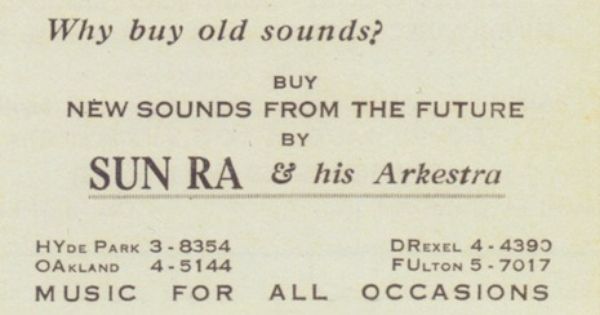
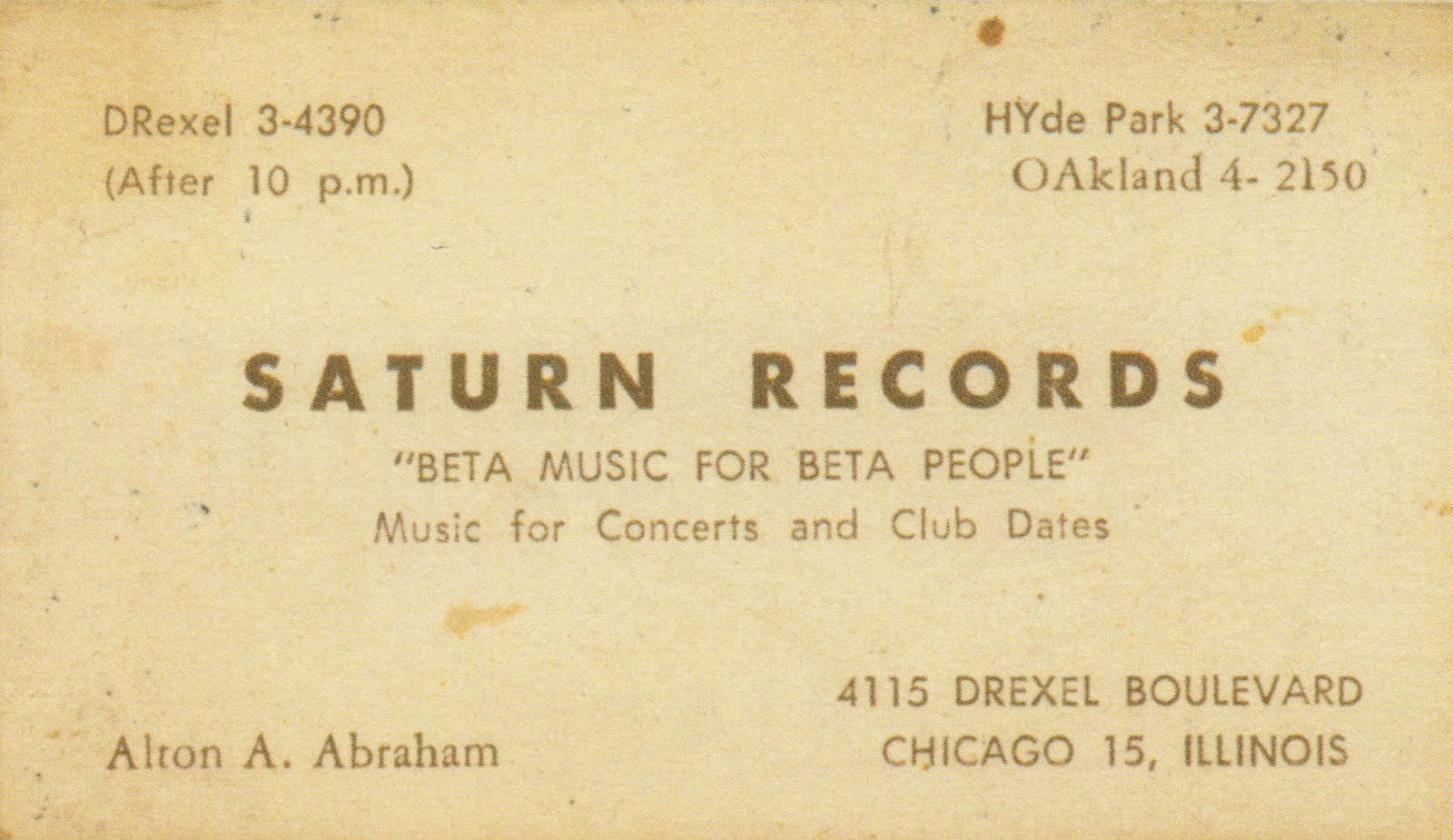
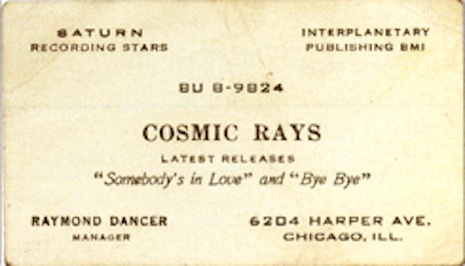
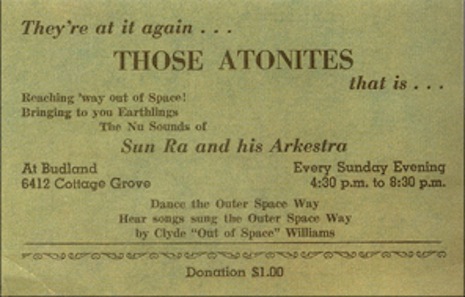
Sun Ra’s busi­ness cards from the 50s cap­ture this tonal spec­trum between avant-garde per­for­mance art and high-con­cept free jazz com­e­dy. Adver­tis­ing new releas­es, a band-for-hire, and ongo­ing local Chica­go res­i­den­cies, they com­bine the strict pro­fes­sion­al­ism of a work­ing band­leader with the word­play and silli­ness Ra loved: he calls his coterie “Atonites,” which psy­chol­o­gy pro­fes­sor Robert L. Camp­bell reads as mean­ing both “wor­ship­pers of Aton,” Egypt­ian sun god, and “per­form­ers of aton­al music.” Audi­ences are invit­ed to “Dance the Out­er Space Way. Hear songs sung the Out­er Space Way by Clyde ‘Out of Space’ Williams” (one­time singer with the band). And the card at the top of the post makes per­haps the sim­plest, most com­pelling pitch of them all: “Why buy old sounds?” Indeed.

via Elec­tron­ic Beats

Relat­ed Con­tent:

Sun Ra’s Full Lec­ture & Read­ing List From His 1971 UC Berke­ley Course, “The Black Man in the Cos­mos”

Sun Ra Plays a Music Ther­a­py Gig at a Men­tal Hos­pi­tal; Inspires Patient to Talk for the First Time in Years

The Cry of Jazz: 1958’s High­ly Con­tro­ver­sial Film on Jazz & Race in Amer­i­ca (With Music by Sun Ra)

Josh Jones is a writer and musi­cian based in Durham, NC. Fol­low him at @jdmagness

Free: Read All of George Orwell’s War Diaries Online (1938–1942)

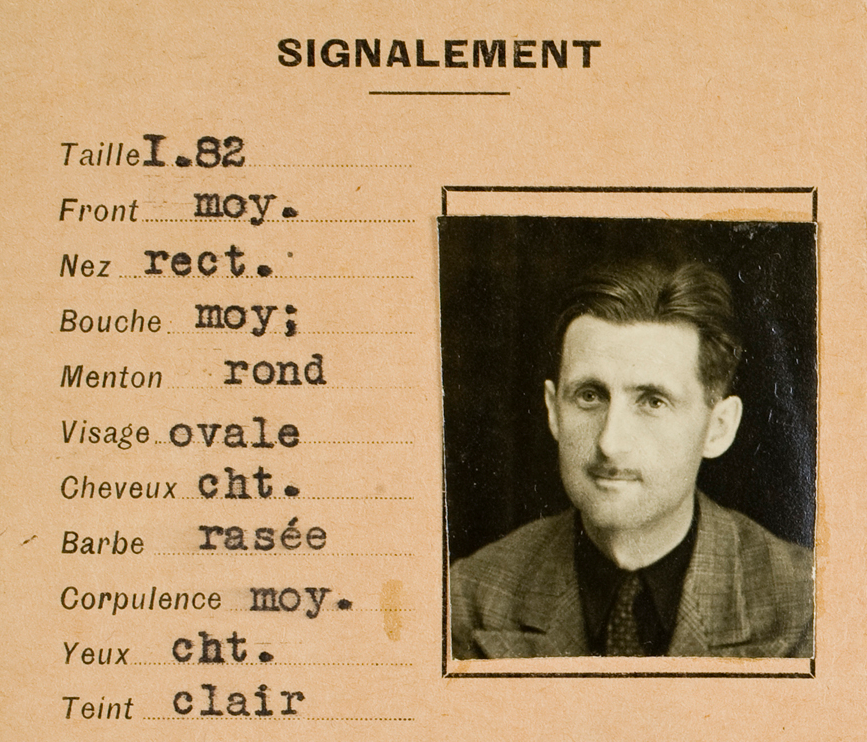
Orwell ID Card

Jour­nal­ist, essay­ist, and nov­el­ist Eric Blair, bet­ter known as George Orwell, has the dis­tinc­tion of writ­ing not just one, but two of the most well-known cau­tion­ary nov­els about total­i­tar­i­an gov­ern­ments: 1984 and Ani­mal Farm. You’ve like­ly read at least one of them, per­haps both, and you’ve like­ly seen either or both of the film adap­ta­tions based on these books. Were this the total­i­ty of Orwell’s lega­cy, it would sure­ly be secure for many decades to come—and per­haps many hun­dreds of years. Who knows how our descen­dants will remem­ber us; but whether they man­age to ful­ly tran­scend author­i­tar­i­an­ism or still wres­tle with it many gen­er­a­tions lat­er, the name of Orwell may for­ev­er be asso­ci­at­ed with its threat­en­ing rise.

And yet, had Orwell nev­er writ­ten a word of fic­tion­al prose, we would prob­a­bly still invoke his name as an impor­tant jour­nal­is­tic wit­ness to the 20th century’s blood­i­est con­flicts over fas­cism. He direct­ly par­tic­i­pat­ed in the Span­ish Civ­il War, fight­ing with the Marx­ist resis­tance group POUM (Par­tido Obrero de Unifi­cación Marx­ista). The hor­rif­ic takeover of Spain by Fran­cis­co Fran­co, with help from Hitler’s Luft­waffe, par­al­leled the Nazi’s grad­ual takeover of West­ern Europe, and the expe­ri­ence changed not only Orwell’s out­look, but that of Euro­peans gen­er­al­ly. As he wrote in his per­son­al account of the war, Homage to Cat­alo­nia, “Peo­ple then had some­thing we haven’t got now. They didn’t think of the future as some­thing to be ter­ri­fied of….”

Eileen Orwell ID Card

Orwell’s tour of duty in Spain end­ed in 1937 when he was shot in the throat; lat­er he and his wife Eileen were charged with “rabid Trot­sky­ism” by pro-Sovi­et Span­ish com­mu­nists. The Orwells retired to Moroc­co to recu­per­ate. There, Orwell began keep­ing a diary, which he main­tained until 1942, chron­i­cling his impres­sions and expe­ri­ences through­out the war years as he and Eileen made their way out of Moroc­co and back to Eng­land. You can fol­low their jour­neys in a Google Maps project here. And you can read all of Orwell’s diary entries at the web­site of The Orwell Prize, “Britain’s most pres­ti­gious prize for polit­i­cal writ­ing.” The Prize site began blog­ging Orwell’s entries in 2008—70 years to the day after the first entry—and con­tin­ued in “real time” there­after until 2012.

The first entries reveal lit­tle, show­ing us “a large­ly unknown Orwell, whose great curios­i­ty is focused on plants, ani­mals, wood­work,” and oth­er domes­tic con­cerns. Then, from about Sep­tem­ber, 1938 on, we see “the Orwell whose polit­i­cal obser­va­tions and crit­i­cal think­ing have enthralled and inspired gen­er­a­tions since his death in 1950. Whether writ­ing about the Span­ish Civ­il War or sloe gin, gera­ni­ums or Ger­many, Orwell’s per­cep­tive eye and rebel­lion against the ‘gramo­phone mind’ he so despised are obvi­ous.” These diaries—post­ed with explana­to­ry footnotes—preserve a keen eye­wit­ness to his­to­ry, one who had been test­ed in war and seen first­hand the dan­ger fas­cism posed. Orwell’s expe­ri­ences gave him mate­r­i­al for the nov­els for which we best remem­ber him. And his per­son­al and jour­nal­is­tic accounts give us a grip­ping first­hand por­trait of life under the threat of Nazi vic­to­ry.

Start read­ing Orwell’s War Diaries, begin­ning with the last one, at the Orwell Prize site. Along with the diaries them­selves, you’ll find con­tex­tu­al arti­cles and an image gallery with scanned clip­pings and doc­u­ments like the 1938 ID cards for George and Eileen Orwell, above.

Orwell’s War Diaries will be added to our col­lec­tion, 800 Free eBooks for iPad, Kin­dle & Oth­er Devices.

Relat­ed Con­tent:

George Orwell’s Five Great­est Essays (as Select­ed by Pulitzer-Prize Win­ning Colum­nist Michael Hiltzik)

George Orwell Explains in a Reveal­ing 1944 Let­ter Why He’d Write 1984

George Orwell’s Final Warn­ing: Don’t Let This Night­mare Sit­u­a­tion Hap­pen. It Depends on You! 

Clock­work Orange Author Antho­ny Burgess Lists His Five Favorite Dystopi­an Nov­els: Orwell’s 1984, Huxley’s Island & More

Josh Jones is a writer and musi­cian based in Durham, NC. Fol­low him at @jdmagness

« Go BackMore in this category... »
Quantcast