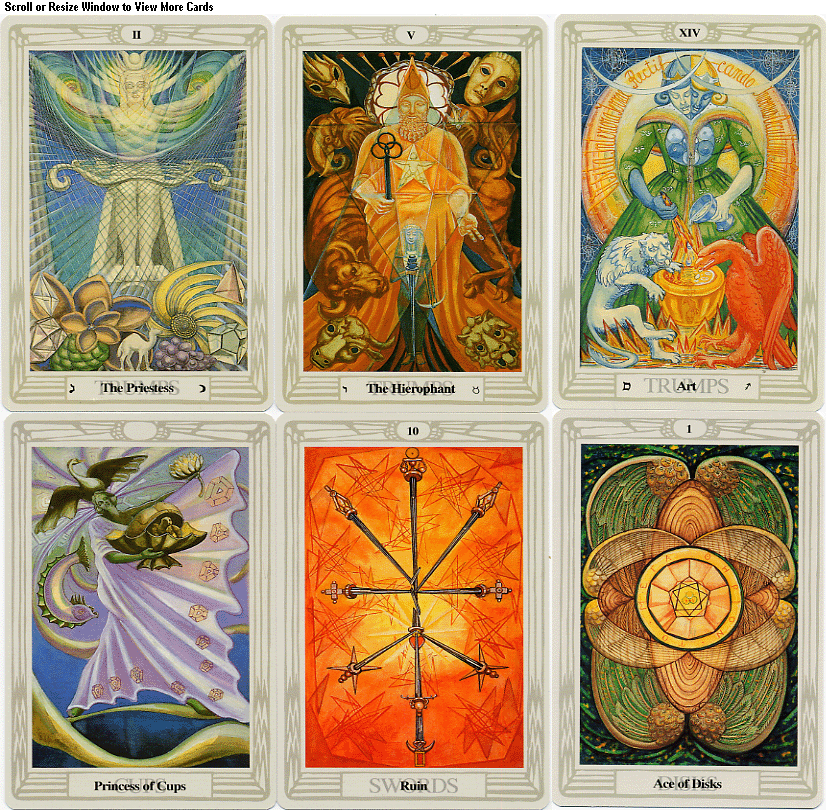
The Thoth Tarot Deck Designed by Famed Occultist Aleister Crowley

Back in 2014 we fea­tured a short primer and doc­u­men­tary on the life and work of Aleis­ter Crow­ley, also known — at least to the British press of the time — as “the wickedest man in the world.” The name rings a bell to just about every­one, and for many of us sum­mons up vague notions of a life ded­i­cat­ed to the pro­mo­tion of alter­na­tive moral­i­ty or pagan­ism or trick­ery or some kind of rel­ished evil, but how many of us can name one of Crow­ley’s works? The best-known occultist-artist-moun­taineer of the ear­ly 20th cen­tu­ry left behind a rich and col­or­ful lega­cy, and here we have one of its most tan­gi­ble prod­ucts: the Thoth tarot deck.

Crow­ley worked on the deck, says Learntarot.com (itself draw­ing from Stu­art Kaplan’s Ency­clo­pe­dia of Tarot), from 1938 to 1943, accord­ing to prin­ci­ples laid out in his Book of Thoth. The artist, Lady Frie­da Har­ris, “worked with Crow­ley’s rough sketch­es to pro­duce images that would be faith­ful to his inter­pre­ta­tions and her own vision.” You can pur­chase copies of the Thoth Tarot Deck here.

Raven’s Tarot Site offers a piece of cor­re­spon­dence from Har­ris to Crow­ley dat­ing from 1940, around the mid­dle of the project. “I do not pre­tend to appre­hend it, only it is like music, and the only kind of writ­ing I want to read,” she writes of his famous­ly dif­fi­cult-to-com­pre­hend but (under the right cir­cum­stances) enter­tain­ing writ­ing on the occult, “only it makes me feel as if I lived in a desert and I am mighty thirsty.”

Crow­ley had — and near­ly 70 years after his death, still has — that effect on some peo­ple. He inspired Har­ris, who would become one of the stand­out dis­ci­ples, to pro­duce a work of div­ina­to­ry art whose aes­thet­ics reflect as much his own as those of the Aus­tri­an eso­teri­cist Rudolf Stein­er. Now best known for his role in devel­op­ing the Wal­dorf sys­tem of child­hood edu­ca­tion, Stein­er also came up with a philo­soph­i­cal sys­tem called anthro­pos­o­phy that posits the human abil­i­ty to con­tact the spir­i­tu­al realm. It may lack the same dan­ger­ous and flam­boy­ant black-mag­ic (or rather, black-mag­ick) appeal of Crow­ley’s visions, but both men, in their own way, spent a life­time striv­ing for ways to tap into a world hid­den beneath the sur­face of exis­tence. For those with an inter­est in that sort of thing, turn­ing over a few tarot cards remains one of the eas­i­est ways to knock on its door.

Relat­ed Con­tent:

Aleis­ter Crow­ley: The Wickedest Man in the World Doc­u­ments the Life of the Bizarre Occultist, Poet & Moun­taineer

Aleis­ter Crow­ley & William But­ler Yeats Get into an Occult Bat­tle, Pit­ting White Mag­ic Against Black Mag­ic (1900)      

Carl Jung: Tarot Cards Pro­vide Door­ways to the Uncon­scious, and Maybe a Way to Pre­dict the Future

Ale­jan­dro Jodor­owsky Explains How Tarot Cards Can Give You Cre­ative Inspi­ra­tion

H.R. Giger’s Tarot Cards: The Swiss Artist, Famous for His Design Work on Alien, Takes a Jour­ney into the Occult

The Tarot Card Deck Designed by Sal­vador Dalí

Based in Seoul, Col­in Mar­shall writes and broad­casts on cities and cul­ture. His projects include the book The State­less City: a Walk through 21st-Cen­tu­ry Los Ange­les and the video series The City in Cin­e­ma. Fol­low him on Twit­ter at @colinmarshall or on Face­book.

MIT Is Digitizing a Huge Archive of Noam Chomsky’s Lectures, Papers and Other Documents & Will Put Them Online

Image by Andrew Rusk, via Wiki­me­dia Com­mons

If you’re a lin­guist, you’ve read Noam Chomsky—no way of get­ting around that. There may be rea­sons to dis­agree with Chomsky’s lin­guis­tic the­o­ries but—as Newton’s the­o­ries do in physics—his break­throughs rep­re­sent a par­a­dig­mat­ic shift in the study of lan­guage, an implic­it or explic­it ref­er­ence point for near­ly every lin­guis­tic analy­sis in the past few decades.

If you’re on the polit­i­cal left, you’ve read Chom­sky, or you should. Even if there are sig­nif­i­cant rea­sons to dis­agree with what­ev­er con­tro­ver­sial stance he’s tak­en over the years, few polit­i­cal the­o­rists have approached their sub­ject with the degree of dogged­ness, intel­lec­tu­al integri­ty, and eru­di­tion as he has. Chom­sky began his sec­ond career as a polit­i­cal activist and philoso­pher in the late six­ties, speak­ing out in oppo­si­tion to the Viet­nam war. Since then, he’s writ­ten major­ly influ­en­tial works on mass media pro­pa­gan­da, Cold War pol­i­tics and inter­ven­tion­ist war, eco­nom­ic impe­ri­al­ism, anar­chism, etc.

Now an emer­i­tus pro­fes­sor from MIT, where he began teach­ing in 1955, and a lau­re­ate pro­fes­sor at the Uni­ver­si­ty of Ari­zona, Chom­sky has reached that stage in every pub­lic intellectual’s career when archivists and cura­tors begin con­sol­i­dat­ing a doc­u­men­tary lega­cy. Librar­i­ans at MIT start­ed doing so a few years ago when, in 2012, the MIT Libraries Insti­tute Archives received over 260 box­es of Chomsky’s per­son­al papers. You can hear the man him­self dis­cuss the archive’s impor­tance in the short inter­view at the top. And at the MIT Library site unBox Chom­sky Archive, you’ll find slideshow pre­views of its con­tents.

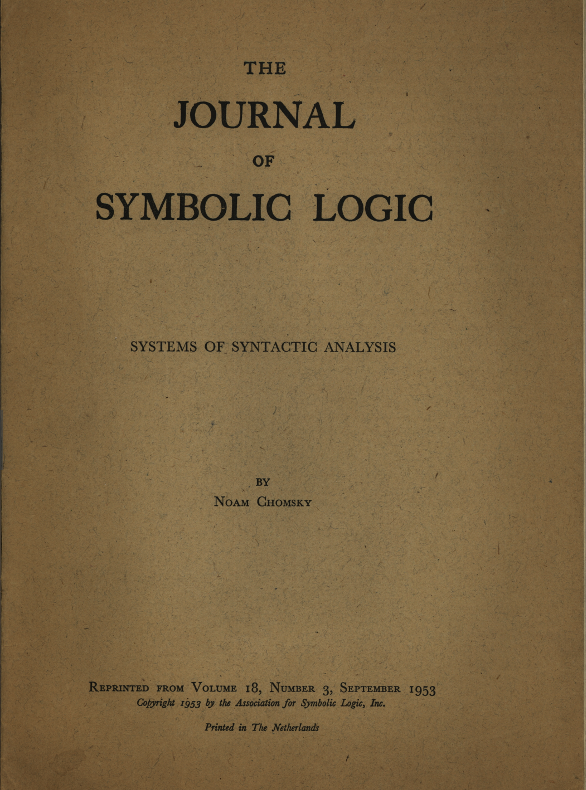
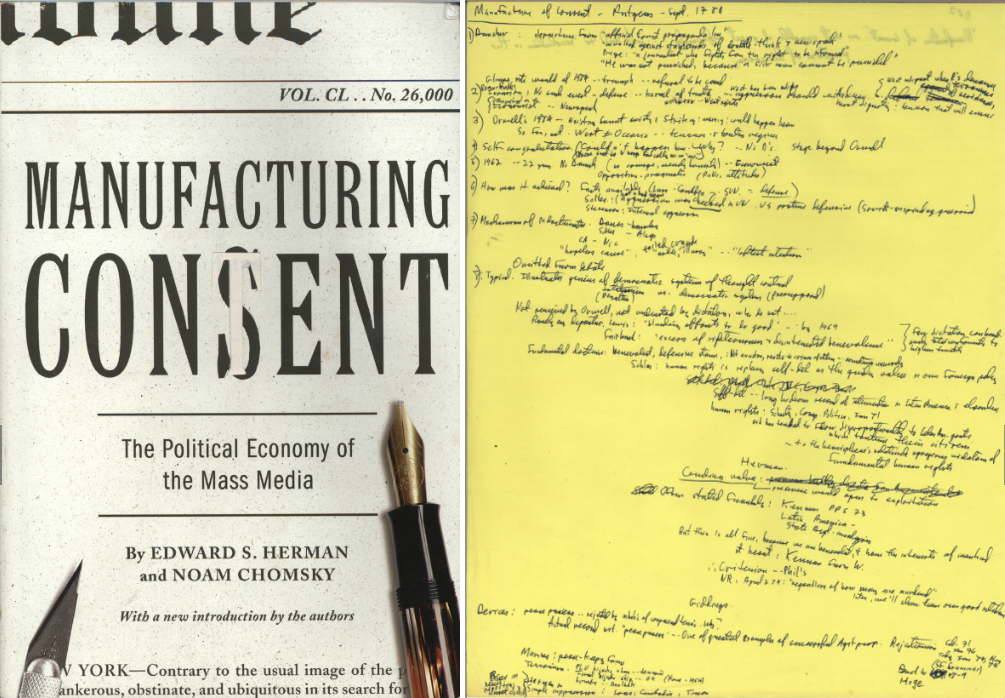
Those con­tents include the 1953 paper “Sys­tems of Syn­tac­tic Analy­sis,” which “appears to be Chomsky’s first for­ay in print of what would become trans­for­ma­tion­al gen­er­a­tive gram­mar.” Also archived are notes from a 1984 talk on “Man­u­fac­tur­ing Con­sent” giv­en at Rut­gers Uni­ver­si­ty, out­lin­ing the ideas Chom­sky and Edward S. Her­man would ful­ly explore in the 1988 book of the same name on “the polit­i­cal econ­o­my of the mass media.” And in the cat­e­go­ry of “activism,” we find mate­ri­als like the newslet­ter below, pub­lished by an anti-war orga­ni­za­tion Chom­sky co-found­ed in the 60s called RESIST.

MIT hopes to “dig­i­tize the hun­dreds of thou­sands of pieces” in the col­lec­tion, “to make it acces­si­ble to the pub­lic.” Such a mas­sive under­tak­ing exceeds the library’s bud­get, so they have asked for finan­cial sup­port. At unBox­ing the Chom­sky Archive, you can make a dona­tion, or just peruse the slideshow pre­views and con­sid­er the lega­cy of one of the U.S.’s most for­mi­da­ble liv­ing sci­en­tif­ic and polit­i­cal thinkers.

Relat­ed Con­tent:

An Ani­mat­ed Intro­duc­tion to Noam Chomsky’s Man­u­fac­tur­ing Con­sent and How the Media Cre­ates the Illu­sion of Democ­ra­cy

Noam Chom­sky Explains the Best Way for Ordi­nary Peo­ple to Make Change in the World, Even When It Seems Daunt­ing

Read 9 Free Books By Noam Chom­sky Online

Josh Jones is a writer and musi­cian based in Durham, NC. Fol­low him at @jdmagness

The Edvard Munch Scream Action Figure

“I was out walk­ing with two friends – the sun began to set – sud­den­ly the sky turned blood red – I paused, feel­ing exhaust­ed, and leaned on the fence – there was blood and tongues of fire above the blue-black fjord and the city – my friends walked on, and I stood there trem­bling with anx­i­ety – and I sensed an end­less scream pass­ing through nature.”― Edvard Munch

That’s how painter Edvard Munch described the dread-filled scene that led him to paint “The Scream” in 1910. As Dr. Noelle Paul­son notes over at Smarthis­to­ry, except for da Vinci’s Mona Lisa, Munch’s paint­ing “may be the most icon­ic human fig­ure in the his­to­ry of West­ern art. Its androg­y­nous, skull-shaped head, elon­gat­ed hands, wide eyes, flar­ing nos­trils and ovoid mouth have been engrained in our col­lec­tive cul­tur­al con­scious­ness.”

“The Scream” might also be one of the more fetishized and com­mod­i­fied paint­ings we’ve seen to date. These days, you’ll find “The Scream” on t‑shirts, jig­saw puz­zles, and non-slip jar grip­pers. And, thanks to a Japan­ese com­pa­ny called Good Smile, you can now buy The Scream Action fig­ure. It has pos­able joints, allow­ing you to put the fig­ure into dif­fer­ent pos­es (wit­ness above). Or you can stand it along­side the oth­er art his­to­ry fig­ures in Good Smile’s collection–da Vin­ci’s Vit­ru­vian Man, Rod­in’s The Thinker, and The Venus de Milo. Oh, the fun you could have this week­end.

If you would like to sign up for Open Culture’s free email newslet­ter, please find it here. It’s a great way to see our new posts, all bun­dled in one email, each day.

If you would like to sup­port the mis­sion of Open Cul­ture, con­sid­er mak­ing a dona­tion to our site. It’s hard to rely 100% on ads, and your con­tri­bu­tions will help us con­tin­ue pro­vid­ing the best free cul­tur­al and edu­ca­tion­al mate­ri­als to learn­ers every­where. You can con­tribute through Pay­Pal, Patre­on, and Ven­mo (@openculture). Thanks!

via io9

Relat­ed Con­tent:

Edvard Munch’s Famous Paint­ing “The Scream” Ani­mat­ed to the Sound of Pink Floyd’s Pri­mal Music

30,000 Works of Art by Edvard Munch & Oth­er Artists Put Online by Norway’s Nation­al Muse­um of Art

Hierony­mus Bosch Fig­urines: Col­lect Sur­re­al Char­ac­ters from Bosch’s Paint­ings & Put Them on Your Book­shelf

Sal­vador Dalí’s 1973 Cook­book Gets Reis­sued: Sur­re­al­ist Art Meets Haute Cui­sine

The Tarot Card Deck Designed by Sal­vador Dalí

Sal­vador Dalí Fig­urines Let You Bring the Artist’s Sur­re­al Paint­ings Into Your Home

by | Permalink | Make a Comment ( 2 ) |

The Philosophy of Rick and Morty: What Everyone’s New Favorite Cartoon Has in Common with Albert Camus

“Nobody exists on pur­pose, nobody belongs any­where, every­body’s gonna die.” So, in one episode of Rick and Morty, says the four­teen-year-old Morty Smith, one of the show’s tit­u­lar co-pro­tag­o­nists. With the oth­er, a mad sci­en­tist by the name of Rick Sanchez, who also hap­pens to be Morty’s grand­fa­ther, he con­sti­tutes the ani­mat­ed team that has enter­tained thou­sands and thou­sands of view­ers — and made insa­tiable fans of seem­ing­ly all of them — over the past four years. To those few who haven’t yet seen the show, it may just look like a sil­ly car­toon, but the true fans under­stand that under­neath all of the mem­o­rable gags and quotable lines lies an unusu­al philo­soph­i­cal depth.

“The human desire to ful­fill some spe­cial exis­ten­tial pur­pose has exist­ed through­out his­to­ry,” says video essay­ist Will Schoder in his analy­sis of the phi­los­o­phy of Rick and Morty. But the tit­u­lar duo’s adven­tures through all pos­si­ble real­i­ties of the “mul­ti­verse” ensure that they expe­ri­ence first­hand the utter mean­ing­less­ness of each indi­vid­ual real­i­ty.

When Morty breaks that bleak-sound­ing news to his sis­ter Sum­mer with the now oft-quot­ed line above, he actu­al­ly deliv­ers a “com­fort­ing mes­sage”: once you con­front the ran­dom­ness of the uni­verse, as Rick and Morty con­stant­ly do, “the only option is to find impor­tance in the stuff right in front of you,” and their adven­tures show that “friends, fam­i­ly, and doing what we enjoy are far more impor­tant than any unsolv­able ques­tions about exis­tence.”

Schoder, also the author of a video essay on Rick and Morty co-cre­ator Dan Har­mon’s mytho­log­i­cal sto­ry­telling tech­nique as well as one we’ve pre­vi­ous­ly fea­tured about David Fos­ter Wal­lace’s cri­tique of post­mod­ernism, makes the clear philo­soph­i­cal con­nec­tion to Albert Camus. The philoso­pher and author of The Stranger wrote and thought a great deal about the “con­tra­dic­tion between humans’ desire to find mean­ing in life and the mean­ing­less­ness of the uni­verse,” and the absur­di­ty that results, a notion the car­toon has dra­ma­tized over and over again, with an ever-height­en­ing absur­di­ty. We must, like Sisy­phus eter­nal­ly push­ing his rock uphill, rec­og­nize the true nature of our sit­u­a­tion yet defi­ant­ly con­tin­ue “to explore and search for mean­ing.” Morty, as any fan well knows, offers Sum­mer anoth­er solu­tion to her despair: “Come watch TV.”

Relat­ed Con­tent:

Albert Camus: The Mad­ness of Sin­cer­i­ty — 1997 Doc­u­men­tary Revis­its the Philosopher’s Life & Work

David Fos­ter Wal­lace on What’s Wrong with Post­mod­ernism: A Video Essay

The Phi­los­o­phy of The Matrix: From Pla­to and Descartes, to East­ern Phi­los­o­phy

The Phi­los­o­phy of Bill Mur­ray: The Intel­lec­tu­al Foun­da­tions of His Comedic Per­sona

Based in Seoul, Col­in Mar­shall writes and broad­casts on cities and cul­ture. His projects include the book The State­less City: a Walk through 21st-Cen­tu­ry Los Ange­les and the video series The City in Cin­e­ma. Fol­low him on Twit­ter at @colinmarshall or on Face­book.

See Mozart Played on Mozart’s Own Fortepiano, the Instrument That Most Authentically Captures the Sound of His Music

I’ve been a fan of the Acad­e­my of Ancient Music since I picked up its per­for­mance of Vivaldi’s The Four Sea­sons as a teenag­er in the UK. Though into rock and prog at the time, I was always try­ing to expand my learn­ing and would occa­sion­al­ly turn the dial from BBC Radio One (for John Peel, late at night) to Radio Four where I tried to make my way in the heady world of clas­si­cal music. It was how the album was pro­mot­ed and sold: you’ve nev­er heard Vival­di until you’ve heard it on the orig­i­nal instru­ments! I mean, this tied right in at the time to the advent of CDs (“hear it as the musi­cians did in the con­trol room!”) and the begin­ning of “from the orig­i­nal mas­ter tapes!” turn­ing up on record­ings. I was all in, and it’s a thrilling record­ing.

That thrill nev­er goes away, as demon­strat­ed with the above video of Robert Levin, recent­ly announced as the first Hog­wood Fel­low of the Acad­e­my, play­ing Mozart on Mozart’s own piano. Or rather, Mozart’s fortepi­ano, a small­er and much lighter ver­sion of the piano. It is two octaves short­er, and only sev­en feet long.

Mozart used this fortepi­ano for both com­pos­ing and per­form­ing from 1785 until his death in 1791. He wrote over 50 works on it. The instru­ment dates to 1782, built by Anton Wal­ter, one of the best-known piano mak­ers in Vien­na at that time. In 2012 it final­ly returned to Mozart’s Salzburg home (now a muse­um), hav­ing been in the pos­ses­sion of the Cathe­dral Music Asso­ci­a­tion and Mozar­teum for the major­i­ty of the years since the composer’s death.

“One writes for acousti­cal and aes­thet­ic prop­er­ties of the instru­ments at hand,” Levin says, explain­ing the Academy’s mis­sion and ide­ol­o­gy. Nat­u­ral­ly it fol­lows that Mozart sounds the best on Mozart’s instru­ment. The fortepi­ano is brighter and jaun­tier, and can be a rev­e­la­tion for those with the tal­ent and for­tune to play it. Levin says:

“So sit­ting down at Mozart’s piano, sit­ting down at an organ which Bach played him­self, you under­stand things about the weight of the keys going down and the rep­e­ti­tion and the bal­ance in sound. And all of these things bring you very, very close to the music and make you say ‘A‑ha, that’s why it’s writ­ten that way’, which is not the kind of thing you’re going to get if you’re play­ing on the stan­dard instru­ments that are being man­u­fac­tured today”

Levin is cur­rent­ly record­ing Mozart’s piano sonatas on this very fortepi­ano. The piece he plays in the video is Mozart’s Sonata No. 17 in B flat major KV 570 (3rd move­ment).

via Clas­sic FM

Relat­ed Con­tent:

Hear the Pieces Mozart Com­posed When He Was Only Five Years Old

Watch a Musi­cian Impro­vise on a 500-Year-Old Music Instru­ment, The Car­il­lon

Watch Leonar­do da Vinci’s Musi­cal Inven­tion, the Vio­la Organ­ista, Being Played for the Very First Time

Ted Mills is a free­lance writer on the arts who cur­rent­ly hosts the artist inter­view-based FunkZone Pod­cast and is the pro­duc­er of KCR­W’s Curi­ous Coast. You can also fol­low him on Twit­ter at @tedmills, read his oth­er arts writ­ing at tedmills.com and/or watch his films here.

Pop Art Posters Celebrate Pioneering Women Scientists: Download Free Posters of Marie Curie, Ada Lovelace & More

We all know the name Marie Curie—or at least I hope we do. But for far too many peo­ple, that’s where their knowl­edge of women in sci­ence ends. Which means that thou­sands of young boys and girls who read about Isaac New­ton and Louis Pas­teur nev­er also learn the sto­ry of Car­o­line Her­schel (1750–1848), the first woman to dis­cov­er a comet, pub­lish with the Roy­al Soci­ety, and receive a salary for sci­en­tif­ic work—as the assis­tant to the king’s astronomer, her broth­er, in 19th cen­tu­ry Eng­land. Her­schel dis­cov­ered and cat­a­logued new neb­u­lae and star clus­ters; received a gold medal from the Roy­al Astro­nom­i­cal Soci­ety; and she and her broth­er William “increased the num­ber of known star clus­ters,” writes the Smith­son­ian, “from 100 to 2,500.” And yet, she remains almost total­ly obscure.

Open a math or physics text­book and you may not come across the name Emmy Noe­ther (1882–1935), either, despite the fact that she “proved two the­o­rems,” the San Diego Super­com­put­er Cen­ter (SDSC) notes, “that were basic for both gen­er­al rel­a­tiv­i­ty and ele­men­tary par­ti­cle physics. One is still known as ‘Noether’s The­o­rem.’”

Noe­ther fought hard for recog­ni­tion in life. She received her Ph.D. in math­e­mat­ics from the Uni­ver­si­ty of Göt­tin­gen in 1907, and she even­tu­al­ly sur­passed her sci­en­tist father and broth­ers. But at first, she could only secure work at the Math­e­mat­i­cal Insti­tute of Erlan­gen in a posi­tion with­out title or pay. And despite her bril­liance, she was only allowed to teach at Göt­tin­gen Uni­ver­si­ty as the assis­tant to David Hilbert, also with­out a salary.

Noe­ther suf­fered dis­crim­i­na­tion in Ger­many “owing not only to prej­u­dices against women, but also because she was a Jew, a Social Demo­c­rat, and a paci­fist.” Oth­er promi­nent women in sci­en­tif­ic his­to­ry have encoun­tered sim­i­lar­ly inter­sect­ing forms of dis­crim­i­na­tion, and con­tin­ue to do so. Much has changed since the times of Her­schel and of Noe­ther, but “there is much work to be done,” writes Eamon O’Flynn of the Perime­ter Insti­tute for The­o­ret­i­cal Physics. “Part of mak­ing pos­i­tive change includes cel­e­brat­ing the con­tri­bu­tions women have made to sci­ence, espe­cial­ly those women over­looked in their time.” For this rea­son, the Perime­ter Insti­tute has cre­at­ed a poster series, called “Forces of Nature,” for “class­rooms, dorm rooms, liv­ing rooms, offices, and physics depart­ments.”

The posters fea­ture Curie, Noe­ther, com­put­ing pio­neer Ada Lovelace, stel­lar astronomer Annie Jump Can­non, and “first lady of physics” Chien-Shi­ung Wu. Should you want one or all of these as high-res­o­lu­tion images print­able up to 24”x36”, vis­it the Perime­ter Institute’s site and fol­low the links to fill out a short form. Whether you’re a par­ent, teacher, or mentor—these strik­ing pop art posters seem like an excel­lent way to get a con­ver­sa­tion about women in sci­ence start­ed. Fol­low up with the Smithsonian’s “Ten His­toric Female Sci­en­tists You Should Know,” SDSC’s Women in Sci­ence project, Rachel Ignotofsky’s Women in Sci­ence: 50 Fear­less Pio­neers Who Changed the World, and—for a con­tem­po­rary view of women work­ing in every pos­si­ble STEM field—the Asso­ci­a­tion for Women in Sci­ence.

Relat­ed Con­tent:

Marie Curie Attend­ed a Secret, Under­ground “Fly­ing Uni­ver­si­ty” When Women Were Banned from Pol­ish Uni­ver­si­ties

How Ada Lovelace, Daugh­ter of Lord Byron, Wrote the First Com­put­er Pro­gram in 1842–a Cen­tu­ry Before the First Com­put­er

Josh Jones is a writer and musi­cian based in Durham, NC. Fol­low him at @jdmagness

The Art of the Japanese Teapot: Watch a Master Craftsman at Work, from the Beginning Until the Startling End

Peo­ple all over the world enjoy Japan­ese tea, but few of them have wit­nessed a prop­er Japan­ese tea cer­e­mo­ny — and see­ing as a prop­er Japan­ese tea cer­e­mo­ny can last up to four hours, many prob­a­bly imag­ine they don’t have the endurance. But Japan­ese tea cul­ture holds up metic­u­lous­ness as a high virtue for the pre­par­er, the drinker, and even more so the crafts­man who makes the tea ware both of them use. In the video above, you can see one such mas­ter named Shimizu Gen­ji at work in his stu­dio in Tokon­ame, a city known as a ceram­ics cen­ter for hun­dreds and hun­dreds of years.

Shimizu, writes the pro­pri­etor of pot­tery site Artisticnippon.com about a vis­it to his work­shop, “throws a block of clay onto the wheel, cre­at­ing the teapot’s body, han­dle, spout and lid one after anoth­er, all from the same block. It real­ly is quite mes­meris­ing and awe-inspir­ing to watch.”

Once he assem­bles these for­mi­da­bly sol­id-look­ing but decep­tive­ly light pieces, he dries them out over three days, a process that offers “just one exam­ple of the time and care invest­ed in the craft­ing of exquis­ite Tokon­ame teapots.” Final­ly comes the sea­weed, of which cer­tain pieces get a lay­er applied before fir­ing. After­ward, the traces left by the sea­weed cre­ate a “charred” pat­tern­ing called mogake.

We would sure­ly wel­come any of Shimizu’s prod­ucts, or those by the oth­er respect­ed prac­ti­tion­ers of his tra­di­tion, into our home. But as with all Japan­ese crafts honed over count­less gen­er­a­tions, the process counts for just as much as the prod­uct, or even more so. Take, for instance, Shimizu’s process as cap­tured by this video: we appre­ci­ate the con­cen­tra­tion, delib­er­a­tion, and sen­si­tiv­i­ty shown at each and every stage, and the pieces of the teapot as they come into exis­tence don’t look half bad either. But if we become too attached to the final result we’ve been antic­i­pat­ing over these four­teen min­utes — well, suf­fice it to say that the mas­ter crafts­man has a les­son in imper­ma­nence in store for us.

Relat­ed Con­tent:

Japan­ese Crafts­man Spends His Life Try­ing to Recre­ate a Thou­sand-Year-Old Sword

The Mak­ing of Japan­ese Hand­made Paper: A Short Film Doc­u­ments an 800-Year-Old Tra­di­tion

Watch a Japan­ese Crafts­man Lov­ing­ly Bring a Tat­tered Old Book Back to Near Mint Con­di­tion

The Art of Col­lo­type: See a Near Extinct Print­ing Tech­nique, as Lov­ing­ly Prac­ticed by a Japan­ese Mas­ter Crafts­man

Based in Seoul, Col­in Mar­shall writes and broad­casts on cities and cul­ture. His projects include the book The State­less City: a Walk through 21st-Cen­tu­ry Los Ange­les and the video series The City in Cin­e­ma. Fol­low him on Twit­ter at @colinmarshall or on Face­book.

25 Million Images From 14 Art Institutions to Be Digitized & Put Online In One Huge Scholarly Archive

Dig­i­tal art archives, says Thomas Gae­ht­gens, direc­tor of the Get­ty Research Insti­tute, are “Sleep­ing Beau­ties, and they are wait­ing to be dis­cov­ered and kissed.” It’s an odd metaphor, espe­cial­ly since the archive to which Gae­ht­gens refers cur­rent­ly con­tains pho­to­graph­ic trea­sures like that of Medieval Chris­t­ian art from the Nether­lands Insti­tute for Art His­to­ry. But soon, Pharos, the “Inter­na­tion­al Con­sor­tium of Pho­to Archives,” will host 25 mil­lion images, Ted Loos reports at The New York Times, “17 mil­lion of them art­works and the rest sup­ple­men­tal mate­r­i­al.” The archive aims to have 7 mil­lion online by 2020.

Pharos is the joint effort of 14 dif­fer­ent insti­tu­tions, includ­ing the Get­ty and the Frick, the Nation­al Gallery of Art, the Yale Cen­ter for British Art, Rome’s Bib­lio­the­ca Hertziana, the Cour­tauld Insti­tute, and more. Even­tu­al­ly “users will be able to search the restora­tion his­to­ry of the works, includ­ing dif­fer­ent states of the same piece over time… past own­er­ship; and even back­ground on relat­ed works that have been lost or destroyed.” As Art­net puts it, “art his­to­ry just got a lot more acces­si­ble.”

Once the pri­ma­ry domain of well-appoint­ed pro­fes­sors with insti­tu­tion­al con­nec­tions and the bud­get to fly around the world, the dis­ci­pline can soon be pur­sued by any­one with an inter­net con­nec­tion, though there is, of course, no vir­tu­al sub­sti­tute yet for engag­ing with art in three-dimen­sions. Claire Voon explains at Hyper­al­ler­gic, “Pharos’s data­base is pri­mar­i­ly aimed at scholars—although it is freely avail­able for all to use—and is ded­i­cat­ed to upload­ing a work’s attri­bu­tion and prove­nance as well as con­ser­va­tion, exhi­bi­tion, and bib­li­o­graph­ic his­to­ries.” All of the infor­ma­tion, in oth­er words, required for seri­ous research.

Cur­rent­ly fea­tur­ing almost 100,000 images and over 60,000 sep­a­rate art­works, Pharos con­tains clas­si­cal and Byzan­tine art and mosaics from the Frick; ear­ly Chris­t­ian art from the Nation­al Gallery; many pho­tographs of Roman pot­tery, sculp­ture, and stat­u­ary from the Bib­lio­the­ca Hertziana, and much more. The Frick com­pris­es the bulk of the col­lec­tion, and the muse­um is Pharos’s pri­ma­ry part­ner and “home to the very first pho­toarchive in the Unit­ed States, thanks to the ini­tia­tive of its founder’s daugh­ter.” (Most of the images cur­rent­ly in the Frick archive are in black and white.)

While the cur­rent insti­tu­tions are all based in North Amer­i­ca and Europe, the “data­base will even­tu­al­ly expand,” writes Voon, “to include records from more pho­toarchives around the world.” Schol­ars and art lovers world­wide may not nec­es­sar­i­ly think of these trea­sures as kiss­able “sleep­ing beau­ties,” but their plen­ti­ful appear­ance in such rich detail and easy acces­si­bil­i­ty may indeed seem like a fairy tale come true.

Enter the Pharos data­base here.

via Hyper­al­ler­gic

Relat­ed Con­tent:

The British Muse­um Cre­ates 3D Mod­els of the Roset­ta Stone & 200+ Oth­er His­toric Arti­facts: Down­load or View in Vir­tu­al Real­i­ty

The Smith­son­ian Design Muse­um Dig­i­tizes 200,000 Objects, Giv­ing You Access to 3,000 Years of Design Inno­va­tion & His­to­ry

1,000+ His­toric Japan­ese Illus­trat­ed Books Dig­i­tized & Put Online by the Smith­son­ian: From the Edo & Meji Eras (1600–1912)

Josh Jones is a writer and musi­cian based in Durham, NC. Fol­low him at @jdmagness

« Go BackMore in this category... »
Quantcast