Back in 2009, the musician who goes by the name “Cheesy Nirvosa” began experimenting with ambient music, before eventually launching a YouTube channel where he “composes longform space and scifi ambience.” Or what he otherwise calls “ambient geek sleep aids.” Click on the video above, and you can get lulled to sleep listening to the ambient droning sound–get ready Blade Runner fans!– heard in Rich Deckard’s apartment. It runs a good continuous 12 hours.
You’re more a Star Trek fan? Ok, try nodding off to the idling engine noise of a ship featured in Star Trek: The Next Generation. Mr. Nirvosa cleaned up a sample from the show and then looped it for 24 hours. That makes for one long sleep.
Or how about 12 hours of ambient engine noise generated by the USCSS Nostromo in Alien?
Finally, and perhaps my favorite, Cheesy created a 12 hour clip of the ambient sounds made by the Tardis, the time machine made famous by the British sci-fi TV show, Doctor Who. But watch out. You might wake up living in a different time and place.
Note: An earlier version of this post appeared on our site in March 2017.
If you would like to support the mission of Open Culture, consider making a donation to our site. It’s hard to rely 100% on ads, and your contributions will help us continue providing the best free cultural and educational materials to learners everywhere. You can contribute through PayPal, Patreon, and Venmo (@openculture). Thanks!
The 2020 Academy Awards are nearly upon us! Realistically, most of you will find this episode well after the winners have already been announced, but seriously, that should not affect your enjoyment of this discussion. Your intrepid non-film-critic Pretty Much Pop: A Culture Podcast hosts have each been randomly assigned three of the best picture nominees to argue for either for why it should with the Oscar, or if we really don’t like it, why we think it will win anyway. The assignments were as follows:
Mark Linsenmayer: 1917, Little Women, Joker
Erica Spyres: Jojo Rabbit, Parasite, Once Upon a Time…in Hollywood*
Brian Hirt: Ford v Ferrari, Marriage Story, The Irishman**
*Covered in our ep. 12.
**Covered in our ep. 29.
As we hash out the relative merits of these films, we reflect on what it is to be an Oscar-winning type-of-film as opposed to one people might actually enjoy watching, patterns of what kinds of films win in which categories, and the effect of viewing conditions, prior knowledge, and preconceptions on our enjoyment.
In preparation, we all watched all nine films and looked at some of the positive and negative reviews about them. Here are a few more articles covering the Oscars more generally that we also used to make ourselves more susceptible to OSCAR FEVER.
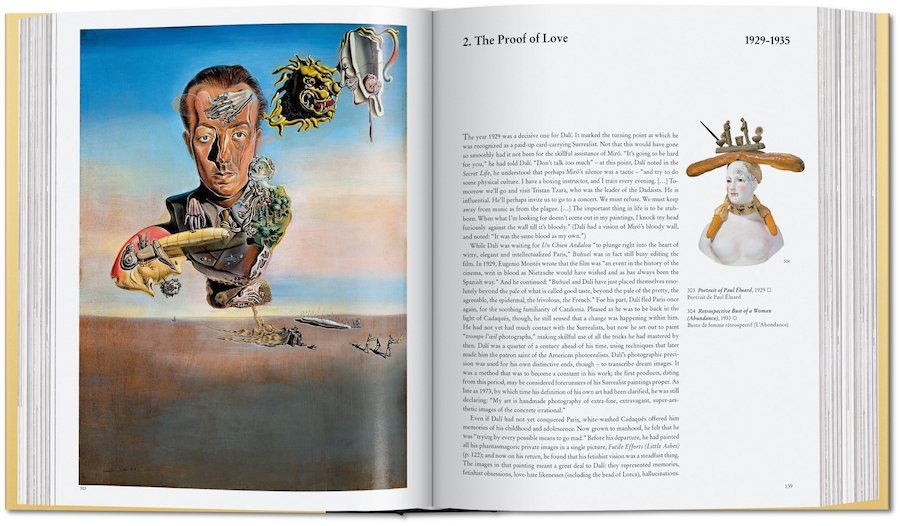
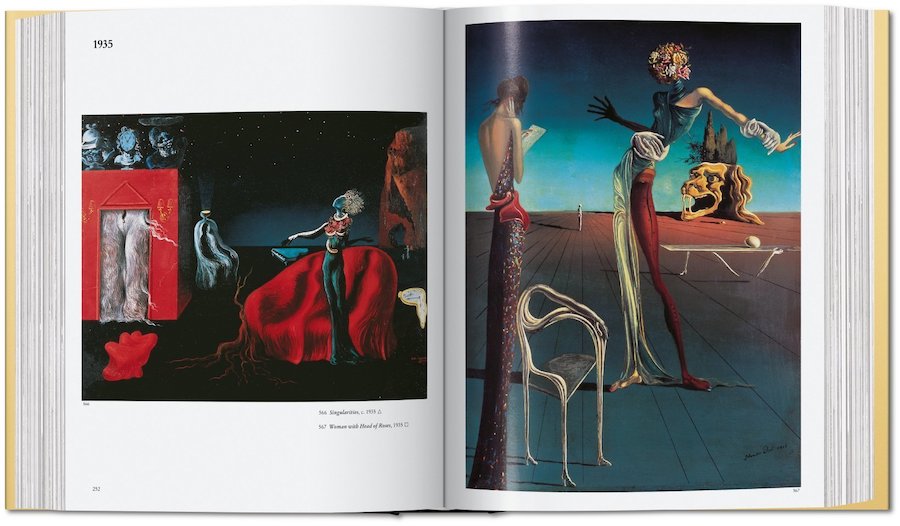
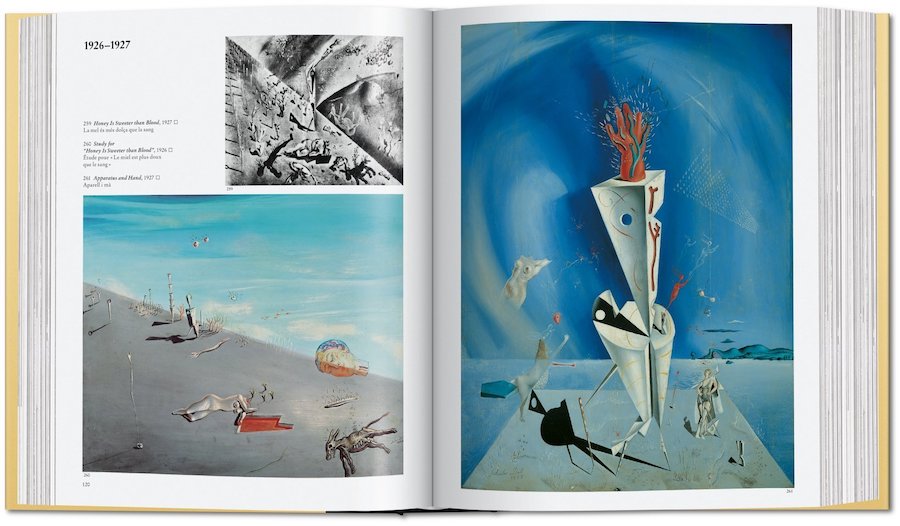
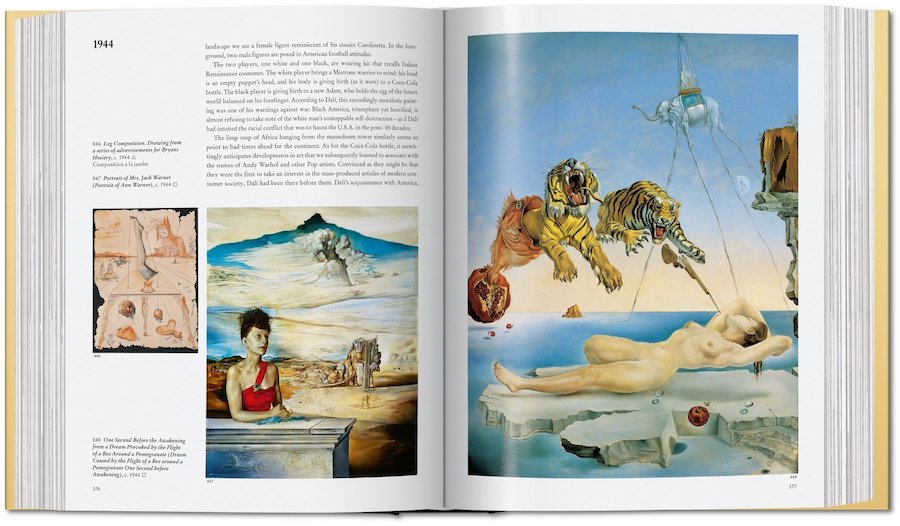
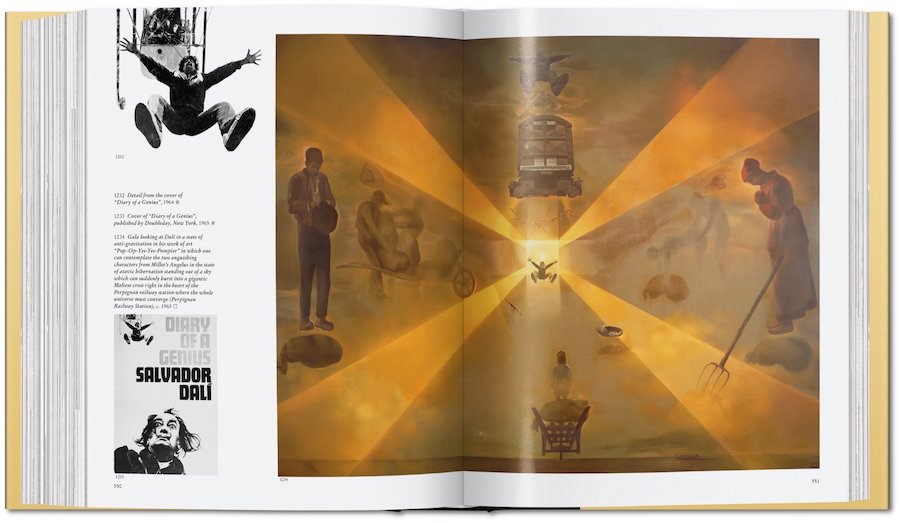
Salvador Dali was that rare avant-garde artist whose work earned the respect of nearly everyone, even those who hated him personally. George Orwell called Dali a “disgusting human being,” but added “Dali is a draughtsman of very exceptional gifts…. He has fifty times more talent than most of the people who would denounce his morals and jeer at his paintings.”
It’s hard to imagine that Orwell, Disney, and Freud would agree on much else, but when it came to Dali, all three saw what is universally apparent: as an artist, he was “not a fraud,” as Orwell grudgingly admitted.
It is also clear that Dali was a “very hard worker.” For all the time he spent in absolutely shameless self-promotion—a full career’s worth of activity for many a current celebrity—Dali still found the time to leave behind hundreds of highly accomplished canvases, drawings, photographs, films, multimedia projects, and more. A trip to the Dali Museum in Tampa, Florida can be a disorienting experience.
Despite the already sizable body of work we might have seen on view or reproduced, however, the editors of Taschen’s newest, updated edition of Dali: The Paintings have “located painted works by the master that had been inaccessible for years,” as the influential arts publisher notes, “so many, in fact, that almost half the featured illustrations appear in public for the first time.” In addition to the “opulent” presentation of the artwork, the book (which expands on a first edition published last year) also “contextualizes Dali’s oeuvre and its meanings by examining contemporary documents, from writings and drawings to material from other facets of his work, including ballet, cinema, fashion, advertising, and objets d’art.”
The first section of the book reveals how Dali found his own style by mastering everyone else’s. He “deployed all the isms… with playful mastery” and “would borrow from prevailing trends before ridiculing and abandoning them.” Dali wanted us to know that he could have painted anything he wanted, throwing into even higher relief the confounding dream logic of his chosen subjects. Perhaps Dali himself made it impossible—as Orwell had wanted to do—to separate Dali the person from the technical achievements of his art.
As the artist himself saw things, his life and work were all wrapped up together in a singular performance. At the age of seven, he wrote, he had decided he wanted to be Napoleon. “Since then,” Dali mock-humbly confessed, “my ambition has steadily grown, and my megalomania with it. Now I want only to be Salvador Dali, I have no greater wish.” A great part of Dali’s magnetism, of course, is due to what he calls his “megalomania,” or rather to his uncompromising life’s work of becoming fully, completely, himself.
People’s eyes tend to glaze over when they hear the phrase “digital humanities.” Granted, it’s not the most thrilling combination of words. But when you show them what’s possible at the intersection of technology and the arts, the glaze turns to a gleam: a Shazam-like app for scanning, identifying, and learning about fine art? Yes, please…. An iPad app introducing the works of Shakespeare, with contextual notes, summaries, essays, and videos featuring Sir Ian McKellen? Fascinating….
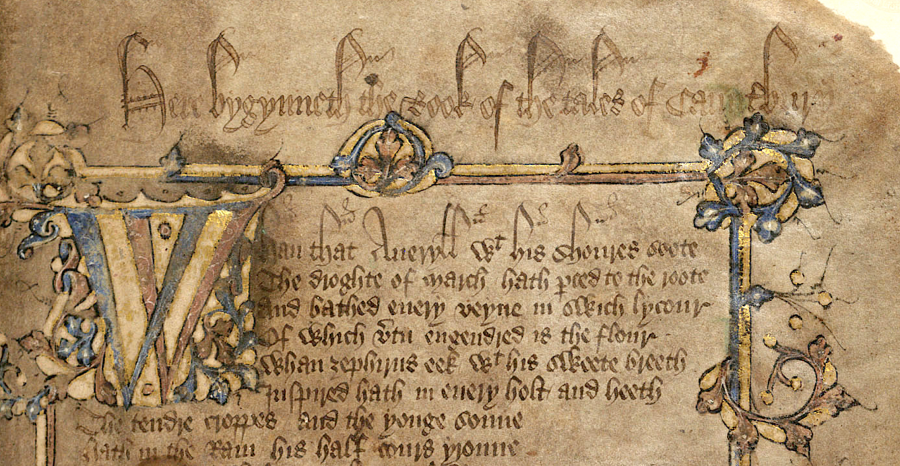
The possibilities for casual learners and serious students alike are vast. You just have to know where to look. And if you’re looking for a tech-savvy way into Chaucer’s Canterbury Tales, the classic medieval story cycle written in Middle English verse and prose, you’ve found it. Thanks in part to medieval scholar Terry Jones, formerly a member of Monty Python—and the writer and director of Monty Python and the Holy Grail—we now have a Chaucer app.
“The project… features a 45-minute audio performance of the General Prologue of the Tales,” writes Henry Bodkin at the Independent. “While listening to the reading, users have access to a modern translation, explanatory notes and a vocabulary explaining Middle English words used by Chaucer, as well as a digitized version of the original 14th century manuscript.” The project was Jones’ final scholarly work—he passed away last month—but his contribution is significant.
Jones’ two books on Chaucer and his translation of the “General Prologue” are both featured in the app’s introduction and notes, as Ellen Gutoskey notes at Mental Floss. One of the project’s leaders, Peter Robinson of the University of Saskatchewan, also points to his behind-the-scenes influence. “His work and his passion for Chaucer was an inspiration for us. We talked a lot about Chaucer and it was his idea that the Tales would be turned into a performance.”
We can enjoy many a modern English translation of Chaucer, and there’s nothing wrong with doing so, but to truly understand what made the text so revolutionary, we should hear it in its original language. Middle English is beautifully musical, but it was not in Chaucer’s time a literary tongue. Like Dante, he broke new ground by writing in the vernacular when most everyone else wrote in Latin or French.
The strangeness of Middle English to our eyes and ears can make approaching the Canterbury Tales for the first time a daunting experience. The Chaucer app is an excellent research tool for scholars, yet the researchers want “the public, not just academics to see the manuscript as Chaucer would have likely thought of it,” says Robinson, “as a performance that mixed drama and humor.” In other words, reading Chaucer should be fun.
Why else would Terry Jones—a man who knew his comedy as well as his medieval history—spend decades reading and writing about him? Find out for yourself at theCanterbury Tales app, where, with a click of a few buttons at the top of the page, you can see part of the original manuscript, a transcription of the Middle English text, explanatory notes, and Jones’ translation of the “General Prologue.”
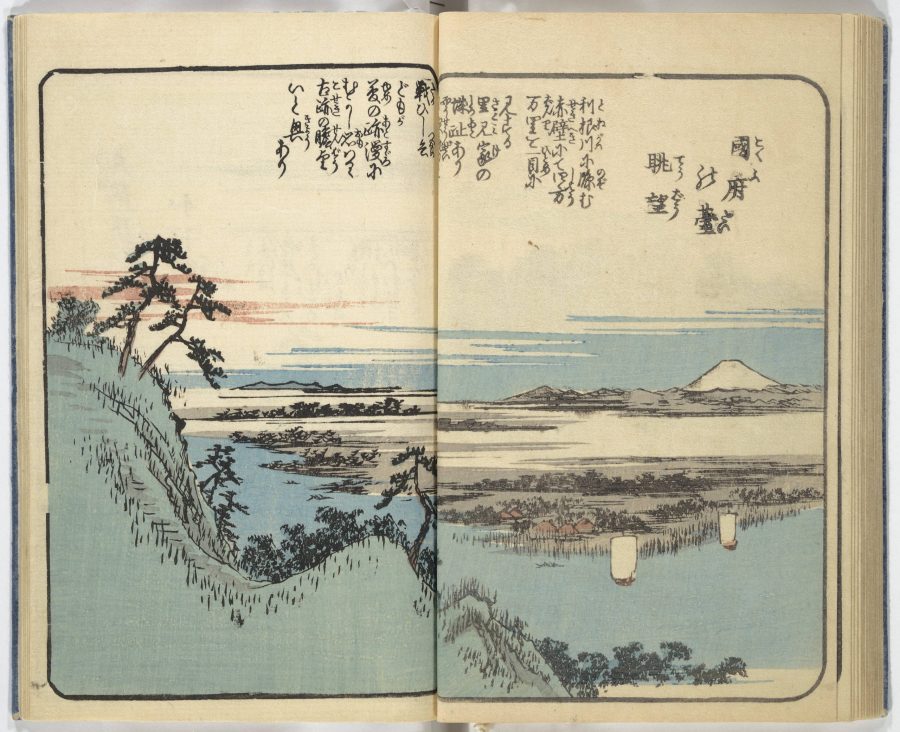
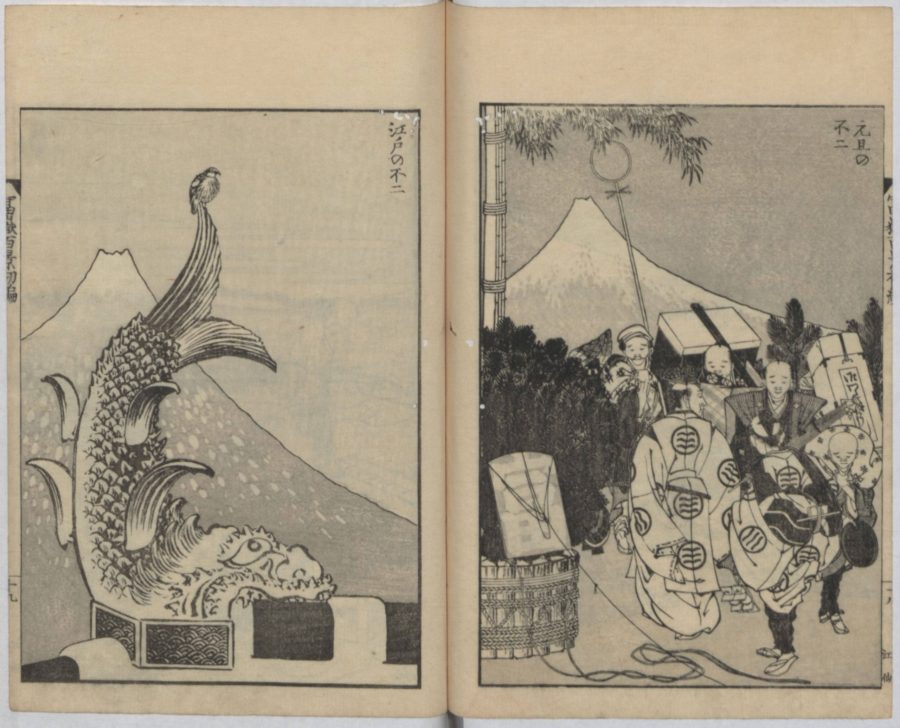
There are certain Japanese woodblock prints many of us can picture in our minds: Hokusai Katsushika’s The Great Wave off Kanagawa, Utagawa Hiroshige’s Sudden Shower over Shin-Ōhashi bridge and Atake, Kitagawa Utamaro’s Three Beauties of the Present Day. Even when we find vast archives of such works, known as ukiyo‑e or “pictures of the floating world,” we tend to appreciate the works themselves one piece at a time; we imagine them on walls, not in books. But it was in books that much of the work of ukiyo‑e masters first appeared in the first place. Hokusai, Hiroshige, and Utamaro, as the three are usually called, “are best known today for their woodblock prints, but also excelled at illustrations for deluxe poetry anthologies and popular literature.”
So writes John Carpenter, Curator of the Department of Asian Art at the Metropolitan Museum of Art, describing the “fell swoop” in which the Met acquired “a superb collection of Japanese books to complement its excellent holdings in paintings and prints of the Edo period (1615–1868).” Once the personal collection of Arthur and Charlotte Vershbow, these books came into the museum’s possession in 2013, and have now come available to browse on and even download from its web site.
Carpenter describes the collection as “particularly strong in works by ukiyo‑e artists, but includes representative examples of all the various schools of Japanese art. Included in the collection of some 250 titles — more than 400 volumes — are numerous masterpieces of woodblock printing, many of which are nearly impossible to find in such fine condition today.”
Based in Seoul, Colin Marshall writes and broadcasts on cities, language, and culture. His projects include the book The Stateless City: a Walk through 21st-Century Los Angeles and the video series The City in Cinema. Follow him on Twitter at @colinmarshall or on Facebook.
This is a very quick FYI for anyone who happens to be an Audible subscriber. If you’re not, you can start a free trial here.
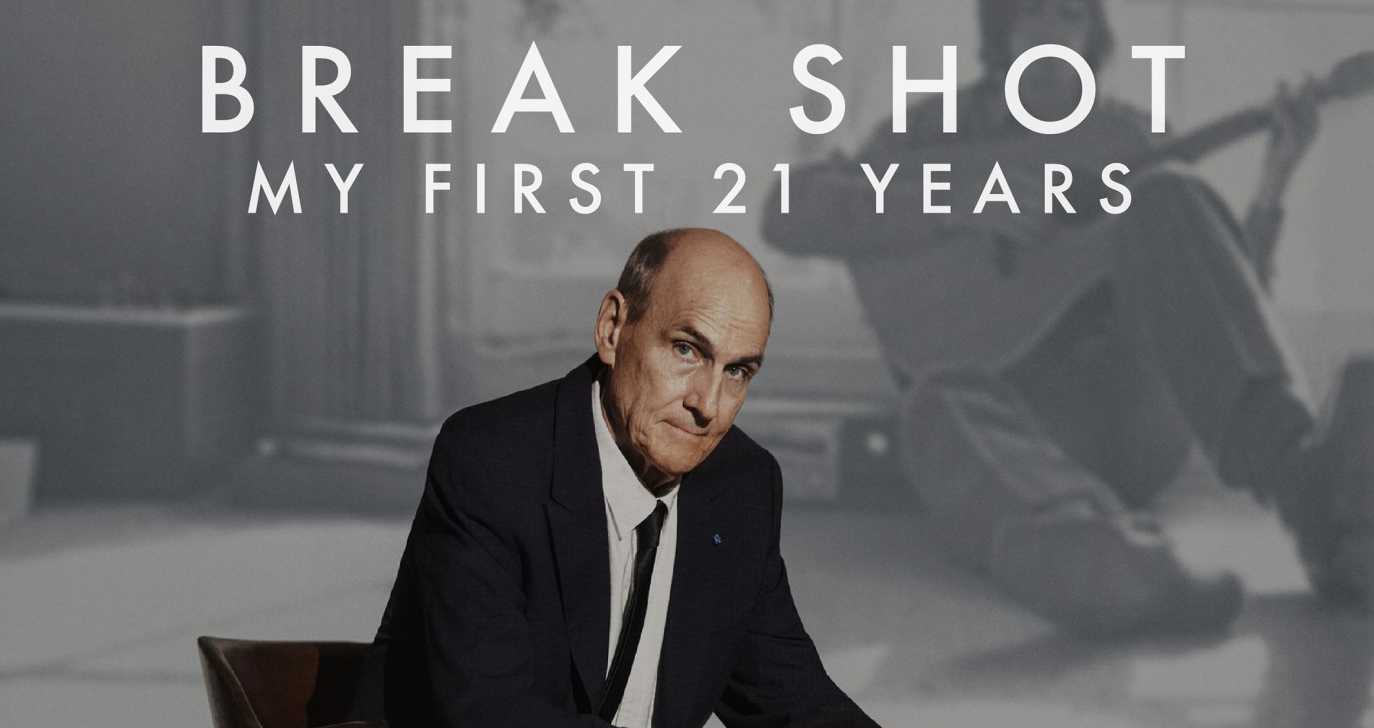
This month, all Audible members can get free access to James Taylor’s new short memoir called Break Shot: My First 21 Years. Read by James Taylor himself, the book revisits the musician’s turbulent childhood and his emergence as an artist. It also features recorded music by the singer-songwriter.
In addition, Michael Pollan has released a new short audiobook, Caffeine: How Caffeine Created the Modern World. Read by Pollan, the book (only available in audio format) “takes us on a journey through the history of the drug, which was first discovered in a small part of East Africa and within a century became an addiction affecting most of the human species.”
Both books are part of the Audible Originals program. So if you download them, you won’t be using any of your monthly credits. They are free bonus material.
And now for an extra bonus: You can listen to Annette Bening, Jon Hamm, Matthew Rhys, Maura Tierney and others read “The Senate Intelligence Committee Report on Torture.” It’s free for all–whether you’re an Audible subscriber or not.
To sign up for an Audible free trial, click here.
If you would like to support the mission of Open Culture, consider making a donation to our site. It’s hard to rely 100% on ads, and your contributions will help us continue providing the best free cultural and educational materials to learners everywhere. You can contribute through PayPal, Patreon, and Venmo (@openculture). Thanks!
Why, in the course of two extraordinary films by Ridley Scott and Denis Villeneuve, do we never learn what the term Blade Runner actually means? Perhaps the mystery only deepens the sense of “super-realism” with which the film leaves audiences, including—and especially—Philip K. Dick, who only lived long enough to see excerpts. “The impact of Blade Runner is simply going to be overwhelming, both on the public and on creative people,” he wrote. As usual, Dick saw beyond his contemporaries, who mostly panned or ignored the film.
Dick seemed to have “had no beef with the fact Blade Runner was not a faithful adaptation of his novel,” writes David Barnett at the Independent. Not only did he not write a book called Blade Runner—the film was loosely adapted from his 1968 book Do Androids Dream of Electric Sheep?—but he also never used those words, “Blade Runner,” to describe his characters. “It’s not a phrase used in the book and it doesn’t really make much sense in the context of the movie…. It’s simply a throwaway slang for cops who hunt replicants.”
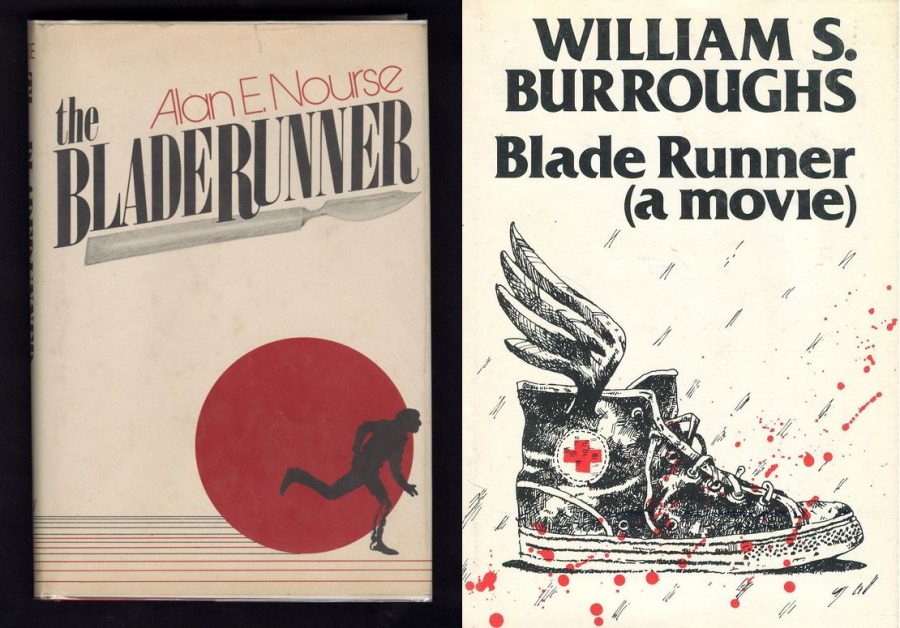
The phrase, as Keele University professor Oliver Harris tells The Quietus, is so much more than that. It brings along with it “a weird backstory that tells us something about how the Burroughs virus spreads around,” infecting nearly everything science fictional and countercultural over the past half-century or so. That’s William S. Burroughs, of course, author of—among a few other things—a 1979 novelistic film treatment called Blade Runner: A Movie.
If Scott and screenwriter Hampton Fancher had adapted Burroughs’ nightmarish 21st century to the cinema, we would have seen a much different film—though one as wholly resonant with our current dystopia. The story imagines “a medical-care apocalypse,” in which medical supplies like scalpels become smuggled contraband—hence “blade runners.” Burroughs’ book is itself an adaptation—or a re-writing and re-editing—of sci-fi writer Alan Nourse’s 1974 pulp sci-fi novel The Bladerunner.
It is Nourse who introduced the scenario of a “medical apocalypse” and who coined the term “blade runner,” though we owe its separation into two words to Burroughs. “Reading one text against the other is fascinating,” says Harris. “Nourse writes pedestrian, realist prose with two-dimensional characters who all talk in the same colourless style.” Burroughs, on the other hand, writes with “extraordinary economy, mastery of idiom, and wildly unbound imagination.”
In the crumbling New York (not L.A.) of Burroughs’ future world, the government controls its citizens “through the ability to withhold essential services including work, credit, housing, retirement benefits and medical care through computerization.” Granted, this might not seem to lend itself to a very cinematic treatment, but Burroughs was attracted to the central concept of Nourse’s book, one inherently rich in human tragedy: “medical pandemics appealed to his vision of a species in peril, a planet heading for terminal disaster.”
Dick imagined a species in peril from a different kind of infection, as Burroughs would have it—artificial intelligence. Was the most cinematically-adapted sci-fi novelist aware that he had indirectly helped reintroduce a strain of the Burroughs virus—a paranoid, if justified, suspicion of authority—back into popular culture through Blade Runner? We might expect, given his status in the science fiction community at the time of his death, three months before the film debuted, that he might be aware of the connection. But he gave no hint of it, leaving us to ponder what Burroughs’ Blade Runner: The Movie, the movie, would be like, made with the skill and sensibility of a Scott or Villeneuve.
Adobe has announced that the Flash Player will come to the official end of its life on the last day of this year, December 31, 2020. News of the demise of an obsolete internet multimedia platform presumably bothers few of today’s web-surfers, but those of us belonging to a certain generation feel in it the end of an era. First introduced by Macromedia in 1996, Flash made possible the kind of animation and sound we’d seldom seen and heard — assuming we could manage to load it through our sluggish connections at all — on the internet before. By the early 2000s, Flash seemed to power most everything fun on the internet, especially everything fun to the kids then in middle and high school who’d grown up alongside the World Wide Web.
Though now deep into adulthood, we all remember the hours of the early 21st century we happily whiled away on Flash games, racing cars, solving puzzles, shooting zombies, dodging comets, firing cannons, and piloting helicopters on classroom computers. We could, in theory, find many of these games and play them still today, but that may become impossible next year when all major web browsers will discontinue their support for Flash.
On Flashpoint’s download page you’ll find its full 290-gigabyte collection of Flash games, as well as a smaller version that only downloads games as you play them. “While Flash games might not be as impressive today, they are still an important part of gaming history,” writes Zwiezen. “These small web games can be directly linked to the later rise of mobile and indie games and helped many creators get their feet wet with building and creating video games.” In other words, the simple Flash amusements of our schooldays gave rise to the graphically and sonically intense games that we play so compulsively today. Now we have kids who play those sorts of games too, but who among us will initiate the next generation into the ways of Crush the Castle, Age of War, and Bubble Trouble?
Based in Seoul, Colin Marshall writes and broadcasts on cities, language, and culture. His projects include the book The Stateless City: a Walk through 21st-Century Los Angeles and the video series The City in Cinema. Follow him on Twitter at @colinmarshall or on Facebook.
We're hoping to rely on loyal readers, rather than erratic ads. Please click the Donate button and support Open Culture. You can use Paypal, Venmo, Patreon, even Crypto! We thank you!
Open Culture scours the web for the best educational media. We find the free courses and audio books you need, the language lessons & educational videos you want, and plenty of enlightenment in between.